Ask ChatGPT

 Worklife with Molly Graham
23 Dec 2025 · 40m
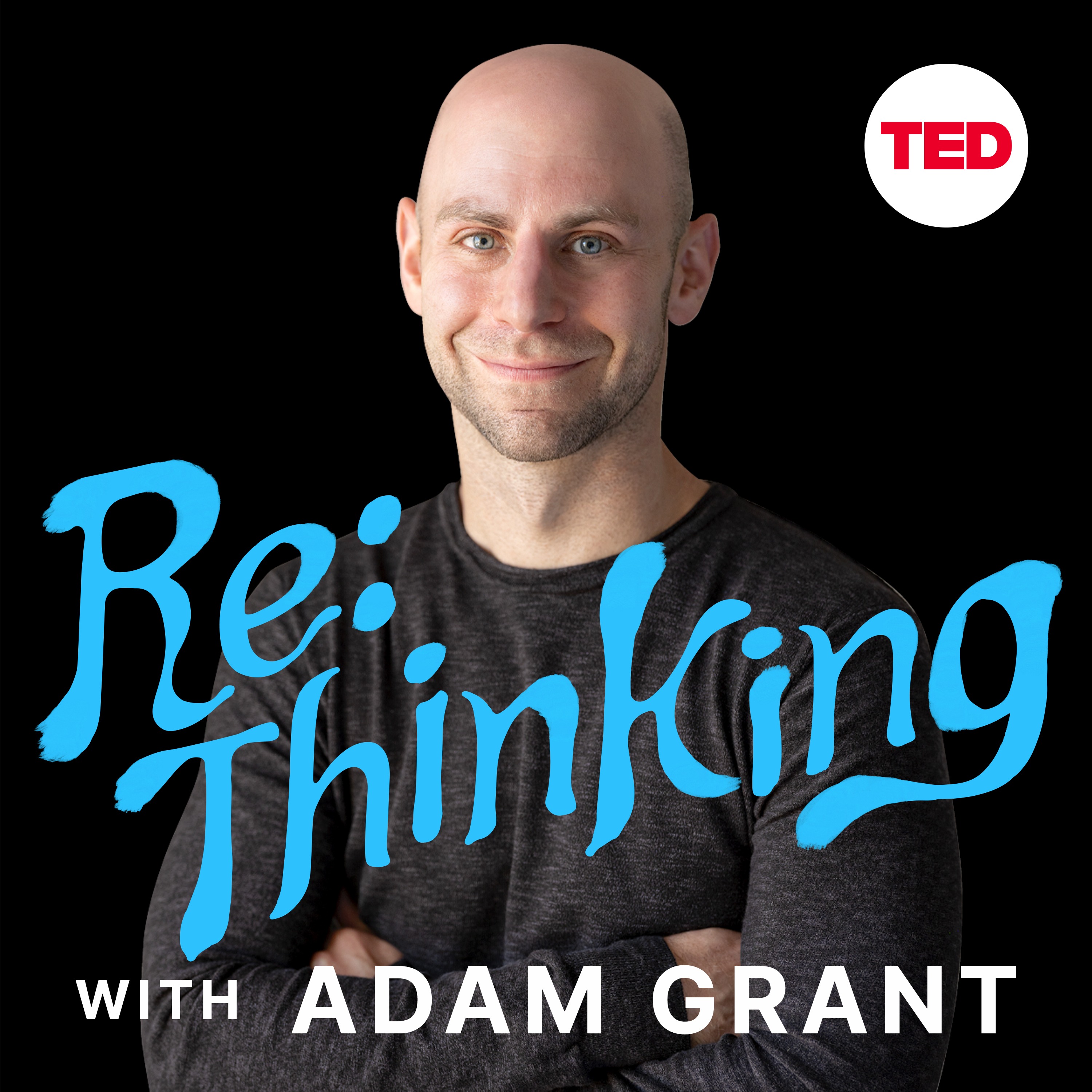
In this episode, Adam Grant is joined by Shannon Hale, a successful author with over 50 books to her name, and Adam’s daughter Joanna, a fan of Hale’s work. They discuss the vital role of books in teaching empathy, the decline of leisure reading, and ways to encourage a new generation of readers. The conversation emphasizes the importance of allowing children to explore literature without the constraints of gender stereotypes and societal norms.
Written by AI. May contain mistakes.

Get the gist, explore an idea or ask about something said.
 Claude
On Worklife with Molly Graham, what are the key points of this episode?
Searching your listeningAutomatic transcript. May contain errors.
0:00This story, like any good superhero, actually has an origin story. So I've got four kids. My second, her name's Magnolia. And one day she was wearing this butterfly skirt. And she pointed to the different colors on it. And she said, Mama, pink is a girl color and purple is a girl color and yellow is a girl color, but not black. And I was like, what? Like, of course girls can wear black. And she said, but Mama, princesses don't wear black. And for her, a princess wasn't about a royal title or being the child of a monarchy. That didn't make sense to her. A princess was, you know, a girl plus. In fact, one time when she was even littler, she asked me, mama, do you want to see me turn into a princess?
0:42And I was like, yes. And she clenched her fists and her face scrunched up real tight and she began to shake, shake, shake. And then she went, it was like the Hulk transforming. And I realized, okay, her concept of a princess is just a girl coming into her full power. So if you limit what a princess can do, you're limiting what a girl can do. So when she said a princess can't wear black, I was like, well, we got to make sure we've got a princess who can do anything so that a girl knows she can do anything too. Hey everyone, it's Adam Grant. Welcome back to Rethinking, my podcast with Ted on the science of what makes us tick.
1:23I'm an organizational psychologist and I'm taking you inside the minds of fascinating people to explore new thoughts and new ways of thinking.
1:34Shannon Hale is one of my favorite authors of children's and young adult books. They've been a huge hit in our household, starting when our kids were little. Joanna, my oldest, started with Shannon's Princess Academy series, and then, as a middle schooler, moved on to her graphic novel memoirs, which she's read hundreds of times, which encouraged me to reach out to Shannon for a conversation on this podcast. And when Shannon said yes, I couldn't pass up the opportunity to invite Joanna to join in too.
2:04Well, Shannon, what a treat to meet you. Great to meet you too, Adam. Thank you. Okay, so I did the math. I think that Princess in Black came out when Joanna was six. I remember the day it arrived, my wife Allison and I brought it up to her room, and we opened it. And we ended up reading the book out loud together, taking turns. And so, of course, we immediately pre-ordered every subsequent book in the series, only Joanna sped ahead without telling us. And when it came time to read the second book, we were going through out loud, and we found out partway through that she had already read it completely.
2:39Yeah, that sounds about right. I remember reading all of the books as soon as I got home from wherever I was. Every time I saw that a new one was out, I would be so excited to pick it up. You wouldn't find a lot of books like it, The combination of the ninja and the princess, it was just so unique and such a special way to spend time with my parents and to get into reading. Oh, it makes me so happy. Also, to have a female protagonist who's a superhero, that was a rare find. We've got a house full of superheroes, so it was pretty natural for us. Watching our kids wearing princess dresses while picking up foam swords to attack monsters, it was a no-brainer.
3:18Love it. So how did you become a writer, Shannon? I was always making up stories. I was the kid in my friend group who was making up the games to get other people to play. And then in fourth grade, I had a teacher, Mrs. Spackman, who started us writing stories and poems. And it was the first time I was like, oh, my word, all this stuff in my head. If I write it down into a story, then I can share it because stories are about connection, right? I longed for connection. I longed for friendship. I longed like that human need to be seen as you are. I couldn't seem to explain all the kind of splendor and wonder inside of me.
3:53And I started writing stories and they weren't great. It turns out that you like it's a skill that I had to work on to get better at so that I could use that skill to express what was inside of me. But for whatever reason, I was motivated. I declared I wanted to be a writer when I was 10 and I published my first thing when I was 29. Took a long time. Wow. So we read that when you were doing your master's in creative writing, you wrote a lot of short stories and faced a lot of rejection. Yes. Just so much rejection. And I still get rejected. To be clear, I've published 50 books. I've been publishing now for 22 or three years.
4:32And I still get rejected. It hurts so much at the beginning. and then you start to realize, oh, okay. Rejection is really saying not that you're worthless, but this is not right time, not right place, not here, not now. I actually didn't try to get things published at the beginning. I think I was savvy enough at least to realize that I was not great yet. And so when I did start trying to get published, I had been writing for so many years. And, you know, of course, I don't just write things once. I revise and revise over and over again. So it was a bit of a shock when I was finally like, now I'm ready.
5:10And the world was like, no, you're not. And just for like two years, it was back before we were emailing. So we were, I was literally mailing in manuscripts and then getting letters in the mail saying, no, no, no. I kept, someone advised me so wisely to keep my rejection letters. And now I laminated them into a long roll that I could unroll at school visits and show kids, you know, this is what rejection looked like before I ever got an acceptance. And many of those things never were published, but my very first novel is called The Goose Girl. It was rejected by everybody, the who's who of young adult publishers.
5:47And eventually when it was published by a new publisher at the time, that year it was voted by teens across the U.S. as one of their top 10 favorite books of the year, won a major award. And all these decades later, I still meet people everywhere I go, every state I go that tell me it's their favorite book of all time and they reread it every year. And for me, that is a sign, again, that the rejection is not about, it wasn't that the book wasn't good enough. It just was wrong time, wrong place, wrong people. And while I'm waiting to find the right time for that, I'm writing something else. The role of rejection letters, that might be the best way I've ever heard to present yourself to a group of students.
6:30I love that so much. that reminds me of the rejection that a lot of students face, you know, in the college process and high school and everything. And I think, unfortunately, it makes me so sad. There's definitely been a decline in reading as kids get older. So do you have any ways to get older kids or even adults back into reading? I am so passionate about the idea that everybody is a reader and it's finding the right books for you. I think sometimes we do a disservice to kids by trying to tell them what they're supposed to like or supposed to be interested in. One reason why I started getting into graphic novels is because I was meeting kids in the early and mid-aughts that they were not the right audience for my 380-page fantasy novel.
7:14And at the time, children's book publishers were not publishing comics and graphic novels, and I was desperate to find more books for the visual learners. Graphic novels now are the fastest growing segment of children's literature. And I think they're so accessible to so many kids. But what comes with that is a lot of adults who mean well, but say, oh, those are not real books. And when you're shaming a kid for what they're interested in, they're going to be less interested in pursuing that. So I think acknowledging, first of all, that all reading is reading. Audiobooks are reading. Reading fan fiction on your phone is reading.
7:54Validating all forms of reading instead of like shaming kids into having to care about Moby Dick. You're still a reader if you don't like Moby Dick. Most adults don't like Moby Dick. Let's just be honest about it. Not every book is for everybody. You're still a reader if you don't like most books and allowing yourself to find what you do like. That definitely resonates. And Shannon, just to pick up on what Joanna was asking about or observing, I've become increasingly concerned that the love of reading as an endangered species. Looking at recent stats, 16 % of Americans do regular leisure reading, which is down from 28 % in 2003.
8:34And then I just came across a survey in the UK showing that only 41 % of parents read daily to their toddlers, which is down from 64 % in 2012. It makes me so, so sad to hear that kids aren't even getting exposure to books as much now. We got to talk to the expert. Do you have any ways to nurture a new reader? Yes. I would say my number one piece of advice for parents is utilize your library. Libraries are the best. Children's librarians are like the best humans on earth. And getting your kid their own library card as soon as they're old enough and putting the choice in their hands is a way to help them take control of their own reading life.
9:17I think a lot of parents are intimidated to read to their kids. Sometimes they're afraid they're not smart enough, that they're not doing it right. There's a lot of fear with parents around reading. And I would say to the parents, can you remember what you loved to read when you were 10? Go back to that place and see if you can re-nurture the love of reading in your own self. Go to a librarian and be like, this is what I liked when I was 10. Can you help me find a book that I might like? Joanna, what did you love to read when you were 10? Like, what was your passion at that age? I got super into a lot of graphic novels then.
9:58I was really into art, so I was like, I have to combine, you know, my love of reading and my love of drawing. You do that a lot when you're younger. And then as soon as you hit high school, it's, like you said, Moby Dick and all of those kinds of books that are maybe a little bit outdated. Like, I feel like a lot of what I read in high school now is Shakespeare, which, of course, I love Shakespeare. He's great, but there definitely needs to be more exposure to different genres. I think you've been a big part of exposing kids to that. Yeah. So everything you're saying, Joanna, just resonates so much with me.
10:31I love to read. And then by the time I got into high school, all of the things we were assigned in high school had no genre. It was all tragedies and books written mostly, almost entirely by men and by men who are now dead. So it was a subtle way, like no one told my daughter princesses can't wear black. No one told me that in order to be a smart grownup, you have to only read things that are miserable and sad. But that's still the information that I absorbed based on what we were assigned. I was like, there's no more fantasy in science fiction. There's no humor. Those things are things you have to grow out of.
11:08And I literally fell out of love with reading for several years. When I was in college, I remember I was in a bookstore and my friend was running his fingers along the spines of books and he was like taking them out and smelling them. And he said, oh, don't you love books? And I had this epiphany that I was like, no, I don't. And it made me so sad. And I had to look back and be like, how did this happen? How did I fall out of love? It's because it became a chore. And I thought in order to be smart and mature, I had to like almost read things that I didn't like. So I started giving myself permission to read things again that I did like.
11:43That strikes a chord for me, Shannon. I was a kid who loved reading probably more than anything else. I think most of my friends were books growing up. And I remember, like Joanna was describing, getting into high school and hating reading, hating it. I remember, you know, sort of being force-fed the classics. And it was like the equivalent of somebody shoving broccoli down my throat and telling me, you're not going to like it, but this is what eating is all about. Yes. And I don't understand why teachers are still doing that. Haven't we learned that the best way to nurture intrinsic motivation is to provide students with a sense of free choice?
12:19Whether that's, you know, the class votes on novels from a category or whether that's each student gets to pick a book that they want to read and present to the class. I don't want to pigeonhole all teachers. But why do you think so many teachers are so attached to books that just suck the joy out of reading? Yes. It's because parents are so afraid of books that if you change the curriculum to include books that weren't on the same ones that the parents read, then they look at them so closely and they start to object to the content. The truth is that the stuff that I read was the same stuff that my parents read.
12:57And the stuff I was assigned in school had way more, you know, adult content, so to speak, in it than the young adult books that are being banned right now. But because they're on those old lists and parents are familiar with them, they feel safer with them for some reason. And the book banning, of course, is just is completely out of control. I'm in Utah. We're the fourth worst state in the nation for book banning. There's so much fear around books, which is really misguided. A book is a safe way to engage with mature concepts. It's a compassionate way to engage with mature concepts. and it actually protects kids by giving them more information and understanding and resources than not reading it.
13:43But I wish we could get out of reading the same books over and over again. There are so many incredible books that are age-appropriate for teens and relatable to teens in lots of different genres with beautiful writing, award-winning, gorgeous stories that would serve them so much better. But parents have to get on board and trust the teachers and librarians to make those choices. Wait, so if, Shannon, And if I'm hearing you correctly, what you're saying is that teachers don't want to inflict terrible books on kids, but they're forced to because parents are already comfortable with them? Yes. Yikes.
14:18Yes. I mean, of course, there are many teachers, so I'm sure there's many different opinions, but the ones I've talked to, yes. And many teachers who are already underpaid and overworked are literally, in some states, taking their lives into their own hands by teaching books that they feel passionate about, that they think that will engage the kids and will help the kids navigate these tricky teen years. Teachers are working so hard, and we could do so much better at supporting them.
14:48I wanted to go back to what you said about having the kids choose their own books and maybe voting on the genres. I love that idea. My English class this year, the class is called Great Books. And the curriculum is set. We're reading Hamlet, Huck Finn, 1984, and we also get to choose one independent reading book for the semester. But something that I think the class has done so well is after we finish every book or even after we finish a scene in Hamlet, we discuss, do you think this was a great book? Do we think it should be used again? It's been so much fun saying, this is a terrible book. It shouldn't be taught anymore.
15:25Or I thought it was really interesting because I know you think it's not relevant today, but it really is. So I think that's something that should totally be done in other classes. I love when you empower teens to be able to say, this is terrible. You should be able to say that. That's part of the problem with teaching the classics, I think, because they're already sainted. And it doesn't give the reader room to come and say, but wait a minute, is this actually great? And it all comes back to what is the purpose of story anyway? What is the purpose of English class? For me, it's not a literature class necessarily where you have to know certain great works so that when South Park makes fun of Scarlet Letter, you're in on the joke.
16:05I mean, that's nice, but that's not really the purpose of it. The purpose is critical thinking and engaging with stories in order to learn critical thinking. And it's also the study of the human experience. Stories don't tell us how to be. They give us a really deep and empathetic way to get inside of a character and live a different life. And that kind of experience cannot be duplicated in any other way. So the books that we choose are really important. And by keeping choosing the same books over and over again, many of those things aren't really relevant to our current society. When we have to go back and do history lessons to explain what this line meant, is this really the best use of time?
16:53Maybe I personally hated reading Shakespeare in high school. And then I went and saw a play and I was like, oh, he's great. But he was meant to be performed, not read and analyzed. Let the Shakespeare majors in college read Shakespeare. How about we give teens stuff that's really relatable? When I was assigned Death of a Salesman at age 16, I was like, really? Come on, man. There's so many more choices now. I hated Death of a Salesman until I read The Grapes of Wrath. And then I thought The Death of a Salesman was okay. By comparison, it's a slug. Oh, my gosh. Grapes of Wrath is a slug. Yes. So, Shannon, I wanted to pick up on the gender theme that you mentioned a little while ago.
17:38I'm struck that, like so many other domains of life, there are books about boys that everyone reads. And then there are books about girls that only girls read. And I imagine you've encountered that, given that you have a lot of female protagonists. I'd love to hear your take on that. And, Joanna, yours too. Who wants to go first? Go ahead, Shannon. Okay, I'll jump in. You bet. So my third book was called Princess Academy and immediately was marketed for girls. And I didn't really question it. I was taken aback, but I was like, I don't feel like this is anything in here that a boy couldn't like, but okay.
18:18And then it won a Newbery honor, which puts this shiny stamp of approval on it. And teachers started to teach it in their elementary school classes. And I started to hear the same thing over and over again from teachers, which was when I told the class that we were going to read a book called Princess Academy, the girls went, yay, and the boys went, boo. And then after we read it, the boys liked it as much or even more than the girls did. And for the first time, I had this data that was showing me, oh, actually, boys are capable of liking this book. And I started to notice the many, many ways that we signal to boys that they shouldn't read stories about girls.
18:53For example, a librarian introducing me at a school visit at an assembly saying, girls, I'm so excited for you. You're going to love Shannon Hill's books. Boys, I expect you to behave anyway. These little ways that we indicate there's something wrong with a boy reading books about a girl. And because reading stories is this great exercise in empathy, what we're really communicating is, girls, you are expected and encouraged to learn to have empathy and understanding for boys as well as girls. Boys, you are only expected to have empathy for boys. And in fact, there's something shameful about having empathy for girls.
19:33We don't even see this in reading. We see this in many, many ways throughout our culture. But as I began to speak about it, I received so much pushback. It just so entrenched this idea. And well, it comes back to how humans, we tend to make binary opposites and then put them into hierarchies, good and bad, light and dark, male and female. And there's an inherent hierarchy in the masculine and feminine with the masculine being superior and feminine being inferior. So it's aspirational for girls to read books about boys and learn and understand and care about them, but it's demeaning for boys to take interest in girls understanding them.
20:15But on the other side of it, boys who do, it's so powerful. I'll give you one quick example. A friend of mine who's an English teacher in high school, she taught Speak by Laurie House Anderson, which is about a freshman girl who gets raped. It's been read by millions of people across the country. And after reading the book, this freshman boy wrote in his paper, he said, I'm stuck. In Speak, the girl gets raped, but she was drunk. Before I read this book, I would have said if a girl gets drunk and gets raped, then it's her fault. But now I'm not so sure. He shouldn't have done that no matter what.
20:52And that just gives me chills. So that boy is now changed by reading that book, by having empathy. He would never before in his life been asked to empathize with a girl. And now he's outliving his life in the world, making different choices. Maybe is he noticing where when boys are doing things that he thinks could hurt someone, is he stepping in? Is he less likely to hurt someone himself? How is he treating the girls and women in his life because he sees them as fully human? This is a powerful exercise. And I think people who try to keep, some of it is just blind cultural ideology, right? But some of it is on purpose to keep boys from empathizing with girls because it's going to upset power dynamics if boys really did care.
21:40And I think also that there is a homophobia underneath it, a fear that if a boy empathizes with and relates with a girl, that it will turn him gay. To speak very frankly, I really think this is a deep fear that a lot of people have. So when I speak about this, I want to just encourage people to, it's not like we have to shove books at boys that are about girls, but if we just change the way we talk, if we just, through our manner, don't indicate that there's something wrong with a boy if he has empathy for a girl or reads a story about a girl, if when we're recommending books to a boy, one of them happens to have a female character and it's written by a woman.
22:22Even these little changes can make a big, profound difference. I feel like my curriculum has been pretty balanced, which is great, and I'm so happy about it. But there's definitely a little bit of an imbalance where most of the books we read are about boys. And if it is about a girl, like you said, something terrible is happening to her and she can't do anything about it. But if it's about a boy, then he's the one who is preventing all the terrible things from happening. So that impact really resonated with me. And I think that definitely needs to happen elsewhere. Wait, Joanna, what you just said, there's some recent research on it.
22:57Did you read the studies or did you just figure this out yourself? I think I figured it out myself. What are you talking about? I was actually just reading this a week or two ago. It was a study of how male and female characters are depicted in, I think it was on TV shows, over a 60-year period. And when girls were characters, they were passive. They were being acted upon. Whereas when boys were characters, they had agency. They were the ones who were in charge and making things happen. So clearly we didn't need the research because you knew. I have a question that I think picks up Shannon on where you just were on the homophobia piece.
23:39I think it's, first of all, it's just, it's so surprising to me given all we know about the biological origins of people's sexual preferences. And if there's nothing that turns someone straight, they shouldn't worry about anyone being turned gay. But I think, you know, in this one, I wonder if the medium matters. So I know tons of boys and men who are big fans of superhero movies starring female protagonists. I have not seen anyone say, don't see Gal Gadot in Wonder Woman because you might turn gay. I have not seen anyone say, don't go see ScarJo as Black Widow or Jen Garner as Elektra because you might develop a preference for boys.
24:29Is it different with books? Yeah, it is. And I don't know why. But to be fair, I mean, the movie industry doesn't have a great track record. We certainly have many, many more movies about men from men's points of view. and even in the movies that are about women it tends to prioritize their love stories over their superpower and their personal development that it's as though their relationship with a man is is the most important part of them and when you look at say the avengers there was one female character and she was not super powered but we are really weird about books like this even just this movement, which is costing taxpayers millions and millions of dollars, these small groups, the small minority people who want to ban books, is causing so much heartache and grief and fear with librarians and teachers especially.
25:25But there's not that same movement to ban the internet or TV or movies. What is it about books? And I personally believe that it's because they are such powerful tools of empathy. And what I see quite often is the majority of books that are challenged and banned are written by women and about female characters, are written and about LGBTQ characters, and are written by and about authors and characters of color. So there is a movement by some people to try to limit who their kids learn to empathize with. There is a power dynamic at play. When you can control the narrative, when you can control who gets to have stories told about them, who gets to be the hero, that has a real effect in our actual society and how things are governed and what people are going to put up with and what they're not going to put up with.
26:21I mean, as a high school student, Joanna, have you seen books be banned in your state? Have you seen people try to interfere? How is it affecting you? I'm curious. So at my school, we read a lot of banned books, but I totally agree. All of the banned books are either about girls or by girls. And that makes me very sad. And I think that's very telling of society today. The other thing that jumps out at me, Shannon, is I think, just to reflect back on this books versus movies distinction, one of the things that's always missing from a movie for me is you're an observer. You're a third party watching other characters.
26:59So you never fully embody them. You never get into their heads or into their bodies. Whereas when you read a book, you feel like you are them. And I wonder if that's part of why both the empathy can be more powerful and also people are a little bit afraid of it. Because asking a boy to imagine himself as a girl, wow. To your point, he might start to care in a different way, in a way that we only see in some deeply disappointing research showing that when men have daughters, all of a sudden, they open their eyes to the ways that the world is unfair to girls and women and become more compassionate and caring.
27:41And as CEOs, they even pay their own female employees more when they have daughters. And I look at that and I think, wait, I'm sorry, you couldn't care about your mother, your sister, your female friends, your aunt. The list is endless. Yeah, if you have one. And then the other layer of that that I just find really disconcerting is, okay, yeah, so now you've put yourself in a girl's shoes and then all of a sudden you're going to be attracted to boys? That's just a ridiculous leap, isn't it? Yeah. No, it doesn't make any sense. But fear doesn't have to make sense, right? And there is really amazing research about what our brain does when we're reading a book, how the parts of our brains light up as though we're actually experiencing it.
28:29And it doesn't in the same way when we have these other really strong connections with other people and their lives, like having personal one-on-one conversations or watching a movie about them. And so one powerful thing about books is you get to live other lives, experience other things safely. So I can read about a heroin addict and understand more about what that would feel like without hopefully, you know, ever touching heroin. in. There are many examples of this, but a lot of parents, I think, misunderstand what the purpose of books and stories are. Books are not supposed to be, here's what you should do.
29:05They're not a plan of, here's the right and wrong way to be. They are actually just really immersive stories. And the power in those stories is there whether you agree with what the character did or disagree, or whether you relate to the character or you don't. When you see yourself in a character, then you're getting validated and you understand yourself a little bit better. And when you don't see yourself in a character, you understand other people a little bit better. One of the most powerful experiences I've had with this, with publishing books, is I wrote some graphic novel memoirs. And these were really hard to write for many reasons.
29:41But one reason why is as I'm writing the first one, I mean, almost the entire time I had a voice in my head telling me, shut up, Shannon, no one cares if someone was mean to you in fourth grade. But I kept thinking of that adage, you know, the more specific you make a story, the more universal it becomes. And it really, the more, as we know, I mean, Brene Brown, hallelujah, the more compassion we have for ourselves, the more we can have for other people. And I had faith. I'd been writing long enough. I had faith that if I just told my story, the truth of it, how it felt to me to be in third, fourth, fifth grade, how it felt to me to have trouble with friends and be really honest and vulnerable with all of it and show all my ugly parts as well, that other readers could connect with it.
30:25And what I saw with this book, adults that read it told me this is too much. This is too hard. And this is too heavy for kids to deal with. And kids read it like, oh, what a relief. Finally, someone's just showing me what's actually going on. It came out on a Tuesday. And by Friday, I was meeting kids who'd read it 20 times. I've never had that happen with a book before. I can't explain it any other way than it's magic. Anyway, books, beautiful. It's a magical, gorgeous process. Janet, that was a perfect summary of everything I love about the Friends series. You mentioned Brene Brown. We had a recent conversation about what she calls enmeshment, which I have seen so many parents struggle with, where they lose sight of the distance between themselves and their kids, and they start to over-identify with their kids.
31:23And every little insult that happens on the playground is kind of a personal blow. And every imperfect grade, every missed opportunity to be invited to a kid's birthday party, they take it really personally and they feel it as if they themselves are going through it. And on the one hand, I think that's a beautiful thing because it shows deep, deep care. On the other hand, I think it often prevents kids from building resilience because their parents are kind of feeling the pain with them and they're too deep in it to step outside of it and say, okay, this is hard, but it doesn't have to define you.
32:05It doesn't have to ruin your life. Let's figure out how we're going to move forward through it. Yeah, that really resonates with me. Absolutely. And I'm sure Brene Brown probably talks about the difference between having empathy and compassion for someone and being enmeshed in their feelings. That we can still be empathetic and have compassion and be present with their dismay and disheartenedness without having to, like, feel the emotions and get lost in it. Because we need to be that sturdy leader that's there for them. I mean, that's the ultimate goal. Parents, it's hard to be a parent. None of us are perfect.
32:32But I think it's a worthy goal. Shannon, I have one more question for you. Will there ever be a fourth book in the Friends series? is that it wait i'm sorry joanna is that a question or is that a request i need like 50 of them oh so i'm waiting i do have one more book outlined about my senior year in high school i don't know if i will ever do it i'm not currently doing it but there is a possibility okay now this is a demand i i will wait until the day that is published and we'll probably finish it in like an hour. Well, now that I know it's got at least one reader, I'm going to have to do it. I can promise it has every single person who's a child right now as a reader.
33:18Thank you. So, Shannon, what advice do you have for someone who wants to write their story? Because we're speaking about memoir, I would recommend everyone keep a journal. You'll never be sorry that you kept a journal. But also, I wouldn't be in a rush to try and publish something, especially if it's memoir and it's real. I think having years of growing up and having some perspective and distance from it is really wise. And then, just like for reading, if you do it for fun, you're more likely to do it. And writing for fun is delightful. My kids are writing fan fiction of Doctor Who lately. I could not love it more.
34:05It's just a great way to play around with words. And right now when AI is stealing creativity from growing brains, more than ever, like giving people a place and support to create for fun and do it badly and make bad art all of their own so their brain keeps developing and has the ability to one day make the kind of art they really want to make. Encouraging that is so great. Make bad art is one of the best things I think you can tell anybody. So finding a way to take joy in the process and how it changes you, that's my personal ideal. And that's why I think I'll be able to write as much as I have, because I love the process.
34:44Well, as long as you don't try to publish your splatter paint, I'm all in. I will. I promise I will not.
34:55The Princess in Black and the Perfect Princess Party. Oh, Adam, I wanted to tell you that after I produced this episode, we got all of the Princess in Black books from the library, and me and my kids whipped through them. That's awesome. Did you do that as a result of the podcast? Yeah. Oh, that's so cool. Well, you know, this is actually why I brought Shannon on. You know what Jessica needs to do with her kids? They need to read Princess in Black. It worked. All right, let's go to a lightning round. Okay. Are you ready? Yes. All right, what is the worst writing advice you've ever gotten? Only write what you know.
35:35I mean, writing is discovery. So if I only set out to write what I know, then I cannot discover anything. And then it becomes pedantic. And like, let me tell you everything I know. That's not a good story. What's your favorite writing tip that we haven't heard yet? Snacks. Choose your snacks carefully and use them as rewards. You are a dog learning to sit and heal. When you finish this page, you get a cracker. That is not where I thought you were going. What's your best writing advice? Snacks. Eat snacks instead of writing. I was trying to think of something you might not have heard before. I love it.
36:17May I ask, are you a Froyo fan? That's my favorite reward. Oh, I'm currently off sugar. So that makes me really boring. Like my writing snack yesterday that was my reward was almond crackers with cream cheese. Is that so sad? Is that pathetic? No comment. I was like, yeah, yeah, it kind of is. All right. Who are your dream at dinner party guests? I mean, Jane Austen. I'm currently working in my third book, Inspired by Her Books. and having just read her a lot and just would love to sit down and get to know her. I think she would be hilarious. I love comedians. Who would you pick? Kamil Nanjiani, John Mulaney, and Nate Bargetsy.
37:03I would want all of them. That's a great list. Okay, Shannon, what is something you've rethought or changed your mind about lately? Everything. I'm constantly rethinking and changing my mind about stuff. I mean, I really grew up believing there was a right and a wrong, that there were absolute rights and absolute wrongs. And the older I get, the more I can't see anything in a binary and everything is a spectrum. And the beauty of that and the freedom of that and the love of that has been something that I continually rediscover all the time. Do you have a favorite hot take? No. I have no hot takes whatsoever.
37:41However, I like hot takeout. Indian, Thai, ramen, bring it on. Shannon, I'll just say as we wrap up, this has been every bit as enjoyable as your books, which is really, really hard. That's an extremely high bar. Well, the last thing I wanted to say, Shannon, is just your books have had a profound impact on me. Like my dad said, I've read them a million times. I just wanted to say you've been a very big part of my life, even if you didn't know it. Thank you so much, Joanna. That means everything to me. To be part of a kid's reading journey is to be a part of their skeletal system. So I take it very seriously.
38:22You know, it's funny, as a writer, you're writing alone, and I feel like I'm writing in a little cave. And it takes some faith that, okay, if I work really hard on this, and then if I toss my book out of the cave, is there going to be anybody there to catch it? You just never know. And sometimes there isn't. Sometimes the book lands in mud and dissolves and back into little particles. But then sometimes there's someone like you who I've never met and I don't know, and you caught the book and there's like this fishing line of connection between us. It's a beautiful thing.
38:54Rethinking is hosted by me, Adam Grant. The show is produced by TED with Cosmic Standard. Our producer is Jessica Glazer. Our editor is Alejandra Salazar. Our engineer is Asia Pilar Simpson. Our technical director is Jacob Winnick. And our fact checker is Paul Durbin. Our team includes Eliza Smith, Roxanne Hilash, Banban Chang, Julia Dickerson, Tansika Sung Manivong, and Whitney Pennington Rogers. Original music by Hans Dale Su and Alison Leighton Brown.
39:25I have this new graphic novel called Dream On, and I offered my children 20 bucks each if they would read it. And they wouldn't do it. So sad. Joanna, have you read your dad's books? I've read all of originals, all of Think Again, and then parts of the others. Whoa, no wonder you've been using the ideas against me.
Shannon Hale is the author of more than 50 books for all ages, including the Princess Academy series and her graphic novel memoirs. In this episode, Adam and his daughter Joanna (a longtime fan of Shannon’s books) talk to Shannon about the powerful lessons books teach us about empathy, and take a closer look at how stories can either reinforce or dismantle the gender stereotypes kids learn early on. The three lament the decline in leisure reading, and brainstorm ways to nurture new readers and keep students interested in books.
Host & Guest
Adam Grant (Instagram: @adamgrant | LinkedIn: @adammgrant | Website: https://adamgrant.net/)
Shannon Hale (Instagram: @squeetus | Website: https://shannonhale.com/)
Follow TED!
X: https://www.twitter.com/TEDTalks
Instagram: https://www.instagram.com/ted
Facebook: https://facebook.com/TED
LinkedIn: https://www.linkedin.com/company/ted-conferences
TikTok: https://www.tiktok.com/@tedtoks
Podcasts: https://www.ted.com/podcasts
For the full text transcript, visit ted.com/podcasts/worklife/worklife-with-adam-grant-transcripts
Hosted on Acast. See acast.com/privacy for more information.