

 World of Secrets
10 Jun 2025 · 35m

 Add vo to ChatGPT or Claude to ask about everything you hear
vo listened to this episode to put together the overview and transcript, so there may be the odd mistake.
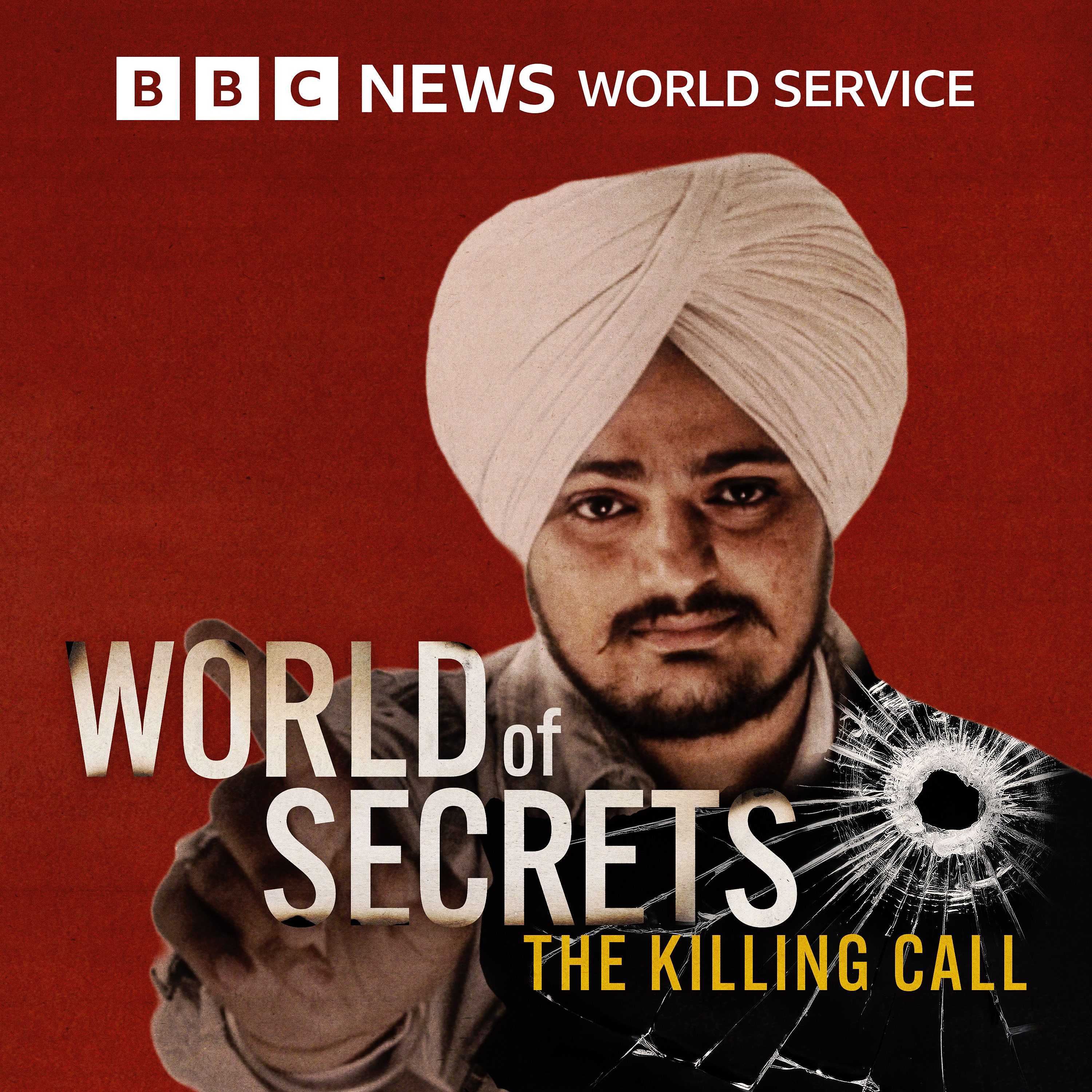
The BBC World Service investigation into why Punjabi rapper Sidhu Musiwala received death threats and was murdered in May 2022, framed as “fame, power and vengeance” within a global criminal underworld.
The episode is narrated by investigative journalist Ishleen Kaur and DJ/broadcaster Bobby Friction. It also includes interviews with Sidhu Musiwala’s childhood friend/roommate Pushpdeep (engineering student at Ludhiana) and Sidhu’s music collaborators/industry contacts, including producer “Big Bird” and another producer “Katagan” (mentioned).
Sidhu’s early defiance and violent lyrical themes drew enemies; his political/anti-government stance and controversial songs increased threats. Rumours and fear prevented people from sharing facts publicly.
The Edmonton concert where Sidhu says he received a call threatening to kill him if he performed; his Toronto breakthrough with tracks “G-Wagon” and “So High”; his return to Punjab; the May 29, 2022 ambush where gunmen fired on his SUV and he died at 28.
0:00This BBC podcast is supported by ads outside the UK.
0:30Listen to The Global Story on bbc.com or wherever you listen.
0:42A summer storm has just swept off the plains. Steam is rising from hot concrete walkways. We're in Canada's northernmost big city, Edmonton. It's August 2018. In the south of the city, on the edge of an industrial estate, a stream of cars pulls into a parking lot of a low-slung ranch-style building. It's a bar where the bouncers have a reputation for taking no-nonsense. People are gathering in the early evening sun. There's a buzz in the air, a chatter of expectation. Inside, the dance floor is already packed. A mass of bodies jostling to get closer to the stage. Their phones raised at the ready.
1:41Onto the stage strides a young rapper. He's over six feet tall, wearing a reddish-pink turban, combat trousers and a T-shirt covered in silhouettes of guns. This is the man they've come to see. He calls himself Sidhu Musiala. The fans at the front bang the stage in a frenzy. It's only been a year since he exploded onto the music scene, but he's already on his way to being a star.
2:18The music is raw. It's a fusion of two worlds, hip-hop with the poetic language of rural Punjab. And it's not like any music that's come before.
2:37The audience knows every word. They scream the lyrics back to him. He paces back and forth across the stage, like a caged tiger, about to spring. He's only 25, but he owns the stage. He's got swagger, confidence. And then he stops, and he drops a bombshell.
3:06Today, he says in Punjabi, I received a call, a personal threat. They told me, don't perform here. They said, if you come to Edmonton, we'll kill you. Who is this they that he's talking about? The crowd doesn't seem phased. Maybe this is all part of the act. They keep chanting his name, but Sidhu just stares back at them. He doesn't look scared. He doesn't even look surprised. He looks defiant.
3:51God gave me this life, he chants, half-talking, half-rhyming poetry. He glares out into the lights. If I go down, I'll take my enemies with me, he says. I swear, those who dream of crushing me, I'll never let them sleep. It's fighting talk.
4:20Siddhu launches into the track Lifestyle. We live by gun, we die by gun, go the lyrics.
4:33Looking at him on stage that night, as his fans gaze up, you can see there's something special about him. It's not the way he looks. It's not just the way he sings or his lyrics. It's this defiance, this supreme self-confidence. He's going to be a star, but not just that, he's going to be one of the greats. This determination will be at the root of Sid du Moussel's success. Sid du Moussel! Sid du Moussel! Sid du Moussel! Sid du Moussel! The voice of a generation of Punjabis. A voice that will put Punjabi music onto the global stage. But will this defiance also be the reason for his downfall? He's entered a dangerous world.
5:28Less than four years later, he'll be dead.
5:35This is World of Secrets Season 8. The killing call, Sidhu Musiala and the murder that shook India. A BBC World Service investigation into a global criminal underworld. It's a story of fame, power and vengeance echoing far beyond India's borders. I'm Ishleen Kaur, an investigative journalist. And I'm DJ and broadcaster Bobby Friction.
6:06Episode 1. The Death of a Star.
6:13What kind of world was Sidhu Musiala caught up in? Why was he getting death threats? Who wanted him dead? I've been looking for answers to these questions for the last two years. And right from the start, I've been warned not to ask them. Everyone is afraid of this. No one wants to talk. The facts, they aren't out in the open. There are so many rumours. There might be repercussions. I'm really scared.
6:49It's two years before that concert in Edmonton. on another summer evening, in another city, on another continent. We're in Ludhiana, the biggest and one of the richest cities in Punjab, India. There's an energy about this place, a feeling that anything's possible. Luxury cars cruise through the streets, but they weave through the traffic beside battered mopeds and rickshaws. Ludhiana is where young Punjabis come from poor surrounding villages searching for work. Or, if their families can afford it, they study at one of the city's universities.
7:31On the leafy campus of one of these is a student called Sidhu. His full name is Shubhdeep Singh Sidhu. And he's in his final year studying electrical engineering. Another student called Pushbdeep ends up sharing a room with him. In the evening we used to gather together near the hostel so a few friends, five or six friends who used to be there and Siddhi used to tease everybody. He was goofy, he was mischievous, he was always trying to make everybody laugh and everybody loved him. With similar backgrounds the two young men hit it off immediately. Can you tell me more about his family, his parents and what were they like?
8:17What did they want for their son? He didn't come from a rich family, but his heart was really big. He was literally a village boy. My village is also in Mansa. So when he came to know that my grandparents are from Mansa too, that made like a simple bond between us. Mansa is a backward area. It's like recognized by the Indian government that Mansa is a backward area. People used to make living out of farming, but the land wasn't that fertile. So the people don't have like big dreams. Before long, Pushpdeep and Sidhu are inseparable. He used to discuss everything with me, everything. Like we switched our phones with each other.
9:06There was nothing that wasn't shared between us. Pushpdeep remembers Sidhu being obsessed with one thing and one thing only. He was so passionate about the singing stuff, I would say, like he was dreaming that all day, all night. They spend hours talking about Sindhu's hero, Tupac Shakur, one of the most influential American rappers of all time. And whenever he saw Tupac's videos, you can see a sparkle in his eyes that he want to become like him. he told me that that guy wanted to stand up for his community, for the black culture, all that stuff. And he told me that he also wanted to do something big just like him.
9:55Years later, Sidhu in interviews described what Tupac meant to him.
10:04To me, he's a legend. He used to rap freestyle. He never wrote lyrics under pressure from anyone. He brought his black community together through the power of his pen. If I had to be like anyone, I'd want to be like him.
10:23Most days after college, Sidhu and Pashtip head out into the countryside on Sidhu's motorbike. There was a small roadside restaurant, we call it Tabba in Punjabi. so we used to go there like I used to ride the bike and Sidhu used to sit in the backseat writing his songs so whenever I was trying to talk to him he would say just wait, just wait he was trying to shush me he would say that I am thinking about the song a line is coming in my mind you are interrupting me I would say man you are making me bored you have to talk to me
11:09So you met in an engineering college, but he was an aspiring artist. It was almost like his dream was conflicting with his reality. He knew that he has some talent in him, but he wasn't that confident at that point about what he's going to do with that. And his parents, they just want him to focus on his engineering. They didn't have that much resources and that much income. And Sidhu, he was a really good kid for his parents. But that drive to make music, it just won't go away.
11:51That summer, a television talent show arrives on campus and Sidhu signs up. When the presenter signals to him to come forward, he steps out in front of the crowd. He's dressed in a green turban and a neat checked shirt. The presenter asks his name.
12:11Siddhu smiles shyly. He looks nervous, unsure what to do with his hands. He tells the anchor he's into singing and he's got a song that he'd like to perform. Immediately, Siddhu's whole demeanour changes. His posture straightens, his shyness evaporates and he begins belting out the lyrics. They're about how real men don't get gun licences for their guns.
12:44The crowd and even the interviewer begins clapping along. When Sindhu finishes, the interviewer says, well written, but then adds, I hope you won't act on the song's violent message. Siddhu is quick to reassure him. No, no, no, sir.
13:05Siddhu's starting to get some campus kicks. And there's a bit of a following too. But there's also some mockery. He used to practice every day in the morning and people used to laugh at him behind his back and that wasn't good. They would make fun of his appearance a lot. His songs too. They didn't believe that he's going to be a singer. They used to make fun of him because he wasn't that handsome. It was really bad. He knew about that, but he didn't care about it. His single-mindedness is starting to emerge. A determination that no matter what people say about him, behind his back or to his face, he's not going to be stopped.
13:51His ambition is growing, but so is that feeling of defiance. He approaches a famous songwriter and asks to get some lyrics from him. The guy agrees, but he keeps putting Sidhu off.
14:07I kept chasing the songwriter, and he kept saying yes. Then finally he said, come to my village and I'll give them to you. It's a two-hour bus journey, but the guy has promised he'll pick him up when he gets there. So Sidhu sets off. The weather is terrible. It was raining really heavily that day. And when I got to the village, there was nowhere to shelter. So I kept calling the songwriter, saying, bro, could you come now and meet me? But he said, I'm not coming, it's raining, go home. We'll do it another day. And I was drenched, you know. My eyes were tearing up and I was thinking, this is wrong.
14:53And when he called me, he was really emotional. He was really angry. He told me that he cried at that bus stop.
15:07I had travelled so far to meet him. And I was so wet. And I swore from that day on, I was never going to sing anyone else's song. I'm going to write my own songs. I used to respect that guy. I still do. And actually, you know, I wouldn't be anything now if he hadn't said no to me that day. So I would say that that was really one of the key points in his life that changed him, for sure. If he used to say something, he used to do it. He used to stand by his words. From now on, Sidhu tells Pashtip, not only is he going to write his own songs, he's going to give music everything. He made up his mind.
15:49I'm going to give a best shot that I could give to this because I want to do this for the rest of my life.
15:58One day Sidhu comes back to college after a weekend at home in his village of Musa and he tells Pushpadeep he's decided on a stage name. And Sidhu asked me, what do you think about this name, Sidhu Musiwala? I said, I loved it, man. So he said that the sole purpose of doing that was because he wanted his village name to come forward. He loved where he came from. And Sidhu told me that when he would get famous, he's going to make his village famous.
16:35For me, my village is like heaven. And what I wanted is that wherever I go, the name of my village goes with me. That's why I call myself Sidhu Musayala. I always believed in him. He was so confident always. You would say that he was a thousand percent confident. He used to claim that he's going to rip everything apart and whatever it's going to take, he's going to be a successful singer. He's going to sing that kind of stuff that nobody has ever imagined. He is going to sing the kind of stuff nobody could ever have imagined. But this fame will come at a cost.
17:52The World War II politician. Today on the show, we explore why. Listen to the global story on bbc.com or wherever you listen.
18:13Toronto's Pearson International is Canada's busiest airport. For over 40 years, it's been the gateway for hundreds of thousands of young Indians, especially Punjabis, drawn by the promise of a better life, a college education, and crucially, a Canadian passport. Canada now has the biggest Punjabi population outside of India and Pakistan. Families mortgage their land to send their children. So to Sindhu's parents, it's the obvious choice for their only child after he finishes college, a way to give him the best start in life. But Sidhu doesn't want to go.
18:58At first, I refused to come to Canada, even though I had a visa. But then I thought, my parents have taken so many good decisions for me. And they've taken this decision too. So they must be right. Ever the loyal son, in December 2016, Sidhu Musiala finds himself in the arrivals hall, one of the first young men from his village to travel to Canada. He enrolls himself at a college in northern Toronto. To pay his way, he works in a hotel kitchen at night, washing pots and pans. And in the day, he lugs lighting equipment around for a film crew. Any free time he has, he's hustling, reaching out to music producers Katagan, hoping someone will take notice.
19:50Then, one day, he's working for the film crew. They're shooting a music video in a Toronto parking lot, and on set is a well-known music producer. Sidhu's holding the lights, but he's got something else in mind. He just needs one minute with this big shot producer. So he asks someone to introduce them. And then he launches into a song he's written right there in the middle of the shoot.
20:24The producer is visibly impressed. He tells Sidhu to bring him more songs. They'll record something. That something is the first track Siddhu releases. It's called G-Wagon.
20:43And it's a hit. G-Wagon goes viral. But it's just the start.
20:56Siddhu reaches out to another music producer in Toronto. He's called Big Bird. And no, not the one from Sesame Street. You know, I kind of like made it my own. I just changed the spelling of it just because I thought I didn't want any legal issues or, you know, just changed the I's to the Y. So B-Y-G, B-Y-R-D. And you're not wearing your gold chain today. Yeah, I forgot it at home. I was in a rush. I was kind of sad about that, you know. I always got to wear my chain. That's my signature.
21:31He actually reached out to me on Facebook. Basically, he just told me, hey, I'm Shubdeep Singh Sidhu. I'm looking for a music production. Can you please call me? I don't even think I replied back. I just got my manager to just call them. And then he came to the studio. And what happened at the studio? I mean, I could feel from his energy that he was about to really do something. So I said, oh, what song do you want to record? And he's like, I have this one song written. And after he was done recording, which was super easy to record him, he's like a machine. He was very efficient. He didn't take many takes, like so organic and so on point and precise.
22:16So after he was done recording and he came out before he left, I asked him, like, oh, how do you want the music to sound, right? All he said was, he's like, hey, bro, I want to make this sound like an anthem. And it's an anthem, all right. The track is called So High.
22:41I had Sidhu come back in a few days later to actually listen to the song in person. And his reaction was just speechless. And I could see the excitement. I mean, eventually I sent it to him because he asked me, like, I want to listen to this in the car. I mean, I'm like, yeah, no problem. Tell me if you want any changes or you want to add anything. And the crazy part was like a few days after that, I was outside of my house and I heard like cars going by and they're playing the song. And I was just taken back by that. I'm like, wait, how is this song playing? Like what's going on? I don't know how that happened, but it was just a really good feeling because even when I was out and about, I would hear the song blasting in people's songs everywhere.
23:26And I was like... Even before it officially released, you were getting feelers. Yes. Before it even dropped officially, it was already out there in the world and people were already listening to the rough, unmixed and unmastered version. And people were going crazy. Like, who is this guy? Who is this Sidhu guy?
23:48Bobby, tell me, what was your reaction when you first heard So High? Well, I was sitting in my studio and Big Bird actually sends me the link to the track. And I click on it and I start watching. And honestly, it was like a concrete breeze block hitting me in the head. It was just everything I wanted from a true Punjabi artist. It had that kind of pinned Punjabi, you know, that village Punjabi. Punjabi, the way his mouth and his tongue kind of went around all the words, the colors. And also, you know, when you watch videos, sometimes one singular person really stands out. You can't take your eyes off them.
24:30That was Siddu in that video. I didn't really know what was going on in the rest of the video because I was just drawn towards Siddu's presence. And then on top of that, you then had these real gangster beats, well-produced, amazing beats done by Big Bird. And I just remember going, this is going on the playlist straight away. And that literally never happens. So I heard it as a DJ. You heard it as a punter. I'm so jealous. How did you hear it? So in a Punjabi family, you end up discussing Punjabi music. And cut to when my brother was getting married a few months later. I remember the only track that we played was so high.
25:08So it felt like one Punjabi song that has cut through generations. So it wasn't just for me, a millennial, but also for my parents, my puas, my aunts, grandparents. We were all dancing to this one track, So High.
25:28So it's only been eight months since Sindhu landed at Toronto Airport. And his song, So High, is getting airplay all over the globe.
25:41Siddhu and Big Bird start playing shows across Canada. It's one thing where you're out and about and you know you hear it playing in the car but being in front of like a crowd and they're chanting, they're singing along and then I'm looking into the crowd with the bright lights and then I see like everybody's cameras are out. People are just so happy to see us on stage and they're cheering us on. It's hard to describe in words, right? But the best way I could say it, it felt magical. It was like a magical moment any time I performed with him. Hit after hit follows. His music is everywhere.
26:29The turning point for him was the Just Listen song. Even with the actual music video, they put a spin on it where little kids are looking up to him and they're not wearing a turban, but because they see him wearing a turban, they wanted to look like him and wear a turban. And there was numerous cases of this in real life. That's how much an impact that he had. Sidhu starts winning awards, like Asia's best lyricist. I've seen people come, I've seen people go. This guy is definitely here to stay. He's a bad boy lyricist. He's an amazing performer. And he is none other than Sidhu Musyara. Love you, Jaco.
27:17Thank you, Jaco. Thank you, God bless you. His songs make the charts in Canada and in India, the UK, New Zealand, Pakistan. He's collaborating and performing alongside big names in music, Steph London, Mist, Steel Bangles. And obviously we've got another guest with us, International Vibes. This is the biggest international superstar, yeah? This is Sid Dumusawala, yeah? Make some noise for Sid Dumusawala, he's crazy. Even Drake, the most successful Canadian rapper of them all, is a fan.
27:55Back home in India, he's also getting a big following. He even has his own catchphrase.
28:12You can hear it whenever people talk about Sidhu. It means I'm not a bad person or I've got a good heart. It's even on car stickers. Sidhu's evenings washing dirty pots and pans in a hotel kitchen are long gone. He's achieved what many Punjabis who come to Canada can only dream of. But then, suddenly, Sidhu Mursiara makes a decision that no one's expecting.
28:43Canada made all of this possible for me. But somehow I couldn't live without my parents. I thought, they're in their 50s and 60s now. And if something happens to them, I'm going to regret it. I need to be near them. I need to spend time with them.
29:03Siddhu decided to go back to Punjab because he really loved his place, his band Musa. So basically, in 2019, he decided to go back. And I thought it was just temporary, but he felt obviously at home with his parents. I remember thinking, why are you doing this, bro? He's a massive figure by now. He's leaving the place where he literally created Siddam Husayala. He is the Canadian voice for Punjab, a voice for the entire diaspora. But what I didn't really understand was just how hungry Punjabis in India were for his kind of vision. They needed someone to come along and change the game. And he does change the game.
29:51He'd begun his career singing about the classic gangster rap stuff like, Look at my cars, look at my guns. But he's returning to a place, Indian Punjab, that has a troubled and violent past. And gradually, those ghosts of unresolved grievances and the problems of the present begin to influence his songs. Fresh violence today erupted in the north Indian state of Punjab. Fighting has been continuing around the Golden Temple in Amritsar. Indira Gandhi, ruler of the world's largest democracy, died today. has now grown into a mass movement, one that's become about more than just the agriculture law.
30:31Patience in the shield and the sword that the farmers are using is this agitation. For some reason, the government... With his lyrics, he's literally making poetry of what's happening politically in India. He's challenging the government. To many Punjabis, he's becoming an icon, a modern-day poet. But he's also controversial. Inevitably, when you're that famous, When you're that outspoken, not everyone's a fan. His vulgar songs dishonor our region. You only sing about weapons. Do something new. And he's making enemies in all sorts of places. Get lost, you Khalistani. You bring shame on your turban.
31:20Fast forward three years and Sidhu Musayala is one of the highest-grossing rappers in India, a global star. But he's chosen to live back in the village where he was born. I'm a farmer first, he tells people, riding his tractor out in the fields, nothing like a star.
31:45It's the 29th of May, 2022. It's a Sunday and it's just gone five o 'clock. The early evening sun sending slants of light across the fields and the air's still heavy with the heat of the day. A black SUV pulls out of the gateway of a brand new mansion Sid who's built for his parents. Sid who's driving and in the car with him is his cousin and a friend. They're going to visit Sidhu's aunt in a nearby village. They haven't gone far along the dusty dirt roads lined with fields, when they notice a car that seems to be following them. Suddenly, another saloon car swings out, overtaking the car behind.
32:30After a while, it draws parallel with Sidhu's SUV, forcing it into the wall. They both stop The man in the passenger seat of the car gets out He's armed Sidhu grabs his own pistol They both fire The gunman stands on the front bumper of Sidhu's SUV And he opens fire with an assault rifle The other car that was following is now stopped as well Four more gunmen jump out and they spray Sidhu's vehicle with bullets. The air is thick with gun smoke and the sounds of metal hitting metal and of breaking glass. And then the gunmen are gone.
33:26The crowd gathers around the gym. Is it Sidhu Mursiara, someone asks. He's still alive, another person says. Quick, quick, people shout. Get him out. Someone call an ambulance. They manage to slide Sidhu from the driver's seat. The other two are helped out as well. They sit at the side of the road, bloody and dazed. But by the time Sidhu reaches the hospital, he's dead. He was 28.
34:03Back at the family home, it's hard to imagine the shock and disbelief they must have felt. The horror as news filters in. We've got some breaking news that's coming in right now. The deep, raw, burning, all-consuming grief. Their only son, their only child.
34:32seem to have been fired at the three passengers of the Thar vehicle. Who would want to kill Sidhu Musayala? And why? That's what we want to find out. Next time on World of Secrets.
34:59This has been episode one of five of The Killing Call, season eight of World of Secrets from the BBC World Service. The Killing Call is a BBC Eye production. We hope you've enjoyed listening. Do post about World of Secrets on social media and tell people you know. and follow or subscribe so you get every episode automatically. World of Secrets The Killing Call is presented by me, Ishleen Kaur. And me, Bobby Friction. It's produced by Louise Hidalgo, Rob Wilson and Eamon Kwajah with script advice from Matt Willis. Sound design and mix is by Tom Brignall and the executive producer is Rebecca Henschke.
35:44The editor is Daniel Adamson and the BBC Eye series producer is Ankur Jain. Original music by Ashish Zakaria. Fact-checking is by Curtis Galland. Additional research by Ajit Sarati and Arvin Chabra. The production manager is Dawn MacDonald. And the production coordinator is Katie Morrison. Many thanks to the BBC World Service Commissioning Team that's behind World of Secrets. And thank you for listening.
36:25How's a movement that started off as a meme taking on India's Prime Minister? I'm Tristan Redmond, co-host of the BBC's Global Story podcast. On today's show, we hear how the so-called cockroach movement has motivated young people across the world's biggest democracy to protest for their rights. How could they reshape the country? For more, listen to The Global Story on bbc.com or wherever you get your pods.
Sidhu Moose Wala explodes onto the Canadian music scene. His sound is a fusion of two worlds - hip-hop with the poetic language of rural Punjab, where he is from. After years of struggle he’s making it. But with the spotlight comes a dark side. As his fame grows, so do the threats. "We will kill you."
Presented by broadcaster and DJ Bobby Friction and investigative journalist Ishleen Kaur.
Season 8 of World of Secrets, The Killing Call, is a BBC Eye investigation for the BBC World Service.
Archive audio credits: Lovepreet Waraich, Malwa TV, BritAsia TV, MPHONE Canteeni Mandeer, GK Digital, Thakur Media, Capital Extra, Famous Punjab TV, ModernSings, Dheeth.jeha, RealRohitBlogs, Mirror Now, India Today.
Here’s a link to the BBC Eye two-part documentary films, which we recommend you watch after listening to this podcast: https://bit.ly/thekillingcall
If you are in the UK, you can watch on iPlayer: https://www.bbc.co.uk/programmes/m002f18y
Scan the code with your iPhone camera
Listen in the app.