Ask ChatGPT



The DOJ’s midterm-era lawsuits and threats aimed at state/local election officials, focusing on alleged non-citizen voting in California and ballot/ballot-counting disputes in Alaska, and what election administrators say about the legality, impact, and voter intimidation.
Justin Levitt, constitutional law scholar at Loyola Law School; former Deputy Assistant Attorney General in DOJ Civil Rights Division (2015–2017). Dion Nissenbaum, senior national reporter for VoteBeat (nonprofit newsroom). Dean Logan, Los Angeles County registrar/recorder/county clerk.
DOJ’s California “20,000” non-citizen list is unreliable; judges appear skeptical; DOJ’s remedy is untimely because voter-roll challenges should be settled 90 days before elections. DOJ is portrayed as seeking chaos/press and lacking authority to force ballot segregation. Election officials say they’re complying with state/federal law and will handle disputes in court.
LA County sample of DOJ list records showed many already canceled/inactive and many indicating U.S. place of birth; DOJ charges against 28 green-card holders with some voting-related charges reportedly dropped in 5 cases. Alaska case involves two candidates named Dan Sullivan; Alaska Supreme Court allowed both.
Written by AI. May contain mistakes.
Analysis of the DOJ's unprecedented actions ahead of the midterm elections.
“Early voting is underway all across America for the midterm elections.”
Discussion on the DOJ's charges against alleged non-citizen voters in California.
“On Sunday, just over the weekend, a three-judge panel in a federal appeals court heard the DOJ suit against California.”
The DOJ has charged non-citizen voters in California, raising questions about the actual prevalence of illegal voting.
“Let's pick back up in California, where, as we mentioned, the Justice Department has concentrated a lot of claims of noncitizen voters in that state.”
Discussion on the motivations behind the DOJ's focus on non-citizen voting, including potential political implications.
“They're trying to create the atmosphere that there's serious wrongdoing afoot.”
Analysis of public trust in elections despite attempts at misinformation and the impact of the DOJ's actions on voter confidence.
“He's been screaming about non-citizen fraud and about fraud in the election process with absolutely no evidence for 10 years.”
Dean Logan discusses the challenges posed by the DOJ's demands and the importance of maintaining focus on the election.
“Well, Dean, the DOJ sent a letter Friday.”
Discussion on the importance of voter participation amidst security concerns in elections.
“Now, that's not final determination, but that's just what the record shows on that.”
Encouragement for listeners to participate in polling and address doubts about the electoral process.
“Over 71 percent, I think, had never voted on that list is what I read.”
Explaining the legal framework surrounding ballot processing and DOJ requests.
“We've heard a lot already about the idea, the demand from the Justice Department for setting aside ballots.”
Discussion on public confidence in voting and addressing misinformation.
“And then we would look to the law for guidance on what to do with those if and when they were segregated.”
Exploring reports of voting machine issues and the importance of vigilance.
“You know, there's sometimes when if you want to find out if it's raining, the best way to find out isn't to look on the weather app, it's to look outside.”
Insights on federal election monitors and their role in maintaining election integrity.
“And so you'll be touching the screen and you'll be able to check whether it's properly recorded on the paper that you turn in.”
Concerns about post-election scenarios and the DOJ's potential actions.
“So we train our workers and our own observers or field staff that are out there to be on alert for anything of that nature.”
Explore the ambiguity surrounding the DOJ's potential actions regarding election certification.
“What happens after Election Day remains a huge question mark.”
Understand key messages for voters on participation and staying informed during elections.
“We're going to wrap up the hour here, but Justin and Dean, I just want to hear from both of you briefly before we do.”

Get the gist, explore an idea or ask about something said.
 Claude
On 1A, what are the key points of this episode?
Searching your listeningAutomatic transcript. May contain errors.
0:00Support for this podcast and the following message come from Allianz Travel Insurance. Barcelona's beaches heavenly until a jellyfish joins you for a swim. Emergency medical benefits can help take the sting out of travel challenges. Learn more at AllianzTravelInsurance.com.
0:26Early voting is underway all across America for the midterm elections. Election Day is just over a week away. Now the president, facing likely losses in the House and possibly in the Senate too, is ramping up his campaign to intervene in midterm voting and vote counting like no other president ever has in history. Despite voting already happening, President Trump's Justice Department has filed suit in Alaska asking for unheard of procedures in case the Republican incumbent loses the race there. DOJ is alleging widespread non-citizen voting in California on what data show is flimsy evidence. We'll talk to the Los Angeles election official at the center of that fight.
1:12DOJ is also filing high-profile criminal charges alleging non-citizen voting and threatening local election officials in California that they could face legal actions if the Justice Department disapproves of how they handle ballots in their own jurisdictions. The attorney general, Todd Blanche, last week dispelled any notion that the Justice Department is independent from the president, who's campaigned for years to undermine American elections. There's this separation and independence between the Department of Justice and the White House, and everybody likes to champion that, and they accuse me of not suffering from independence.
1:51I don't. I work for President Trump. I'm Todd Zwillick, in for Jen White, and you're listening to the 1A Podcast. Today, for our weekly democracy series, If You Can Keep It, our last before Election Day, we look at what these unprecedented moves from the Justice Department mean, why the White House is trying to intervene in voting and vote counting so close to the midterms, and how state and local election administrators who run our elections are responding. Stay with us.
2:23Stay tuned for the following announcements and messages from our sponsors. This message comes from Midi Health. Most women never get real answers about their hormone health. Midi is changing that. Built by women for women, Midi connects you with clinicians who specialize in hormone health with virtual care covered by most major insurance plans. Getting started is easy. Sign up with Midi and book your first visit with a clinician right away. Understand your hormones. Visit joinmidi.com to book your first visit. That's joinmidi.com. Hey, it's Latif from Radiolab. Our goal with each episode is to make you think, how did I live this long and not know that?
3:05Radiolab, adventures on the edge of what we think we know. Listen wherever you get podcasts. This week on Up First, we're in the final days before the midterm elections, and this is one of the wonderful things about politics, one of the wonderful things about humanity. We have all this data, we have all this information, and nobody really knows what's going to happen. We're going to follow it day by day through Election Day and beyond. And you can listen to Up First every morning on the NPR app or wherever you get your podcasts. Let's get into it now with our guests. Joining us from Los Angeles is Justin Levitt.
3:40He's a constitutional law scholar and professor at Loyola Law School. He was also the Deputy Assistant Attorney General in the Justice Department Civil Rights Division from 2015 to 2017. Justin, welcome back to the show. Great to be with you, Todd. Great to have you. And joining us from Houston, Texas, is Dion Nissenbaum. He's a senior national reporter for the nonprofit newsroom Vote Beat. Dion, welcome to 1A. Hi, Todd. Thanks for having me. Justin, let's start with the latest. On Sunday, just over the weekend, a three-judge panel in a federal appeals court heard the DOJ suit against California.
4:17This is the list of up to 20 ,000 people who the Justice Department alleges are non-citizen voters or people on voting rolls in California. That panel included two Trump-appointed judges. Justin, they seem skeptical of the Trump administration's demand that California election officials separate these people out from the rest of the voters when election time comes. Where do you see this case going next? Give us an update on what's going on here. It's going nowhere fast. So you said they seem skeptical. I think everyone seems skeptical. I think there's lots of reason to be skeptical because, and this pains me to say as a former DOJ employee, DOJ is wrong on the law and wrong on the facts here.
5:02First of all, nobody believes the 20 ,000 number. Nobody. In Nevada, they alleged 15 ,900 people were non-citizens. Nevada said, okay, help me out. Show me who they are. They said, okay, maybe we've got 185, which is a pretty steep drop off. And then that boiled down to zero. I want to say that again, zero non-citizens actually on DOJ's list. California, the initial inquiries look remarkably similar. That list of 20 ,000 is just a list of names. It's not actually a list of people who are ineligible to vote because DOJ doesn't know what it's doing. But beyond that, even if the list were good, this isn't a remedy for DOJ to seek, and it's certainly not a remedy for DOJ to seek now.
5:44As you said, about 29 million people have already cast ballots. And the time for doing this sort of review of the voter rolls, federal law requires, have happened already. 90 days before an election so that we're sure who is on the rolls and who's not, that's the time that things are supposed to settle down. DOJ is just wrong here. And I think the judges of all stripes, Democrat, Republican appointed by Donald Trump, I think judges of all stripes know it. Justin, there are 23 million registered voters just in the state of California. This list has 20 ,000 people, even if the people on the list had registered improperly.
6:24It's a fraction of a fraction of a fraction of the total voters in California. So why do this? What's the point? I think because they're wrong on the facts and they're wrong on the law, I think the point is press, honestly, or at least I can't come up with a real reason. This isn't a winning litigation strategy. It's not a winning law enforcement strategy. And so I think the objective, to the extent there is one, might just be to get chaos and get the notion of chaos into the press. The president's a comms guy. He spent decades on marketing. That's how he got success in his business. And I think it's a mistake to attribute four-dimensional chess strategy when, over and over again, we see they're playing checkers and they're eating the pieces because they just happen to be on the board.
7:11Well, here's another move from the legal world, and maybe you'd call this comms as well. Last Friday, DOJ sent a letter to election officials in 57 of California's 58 counties asking for their help finding potential non-citizens on the rolls. Again, that list that they sent. Not only that, they demanded that these officials set aside any ballots related to the voters on DOJ's list. And that came less than two weeks before Election Day, as we said. What is this? I mean, I think you're right that this is more comms. They didn't send the list to 57 counties. They just sent a threatening letter saying, take these people off.
7:52But in the counties, they have no idea who these people even ostensibly are. And that's not something you do if you're actually serious. Again, this gives me no pleasure as a former law enforcement official at the Department of Justice. I don't like seeing this. But it appears as if DOJ is simply flailing around like an aggressive bully because it knows it's got no actual authority. The good news for California voters, I think, and for voters around the country, is that we have local election officials who stand up to aggressive bullies. And I don't think any single voter is going to find their own status or their own ability to vote affected by this nonsense.
8:30DOJ is going to scream for a while, and we're just going to have to let them ride out the tantrum. Dion, I want to bring you in here. Also in that letter we just mentioned sent to counties last week was a threat. If local officials don't comply with the demands, they would, and here's a quote, risk significant federal scrutiny. You and your colleagues have spoken to local election officials all year. What are they telling you about this kind of threat that they've been hearing and how they're reacting. Yeah, I think the big difference this year for elections officials is that they are looking at the federal government as an adversary as opposed to a partner in running these elections.
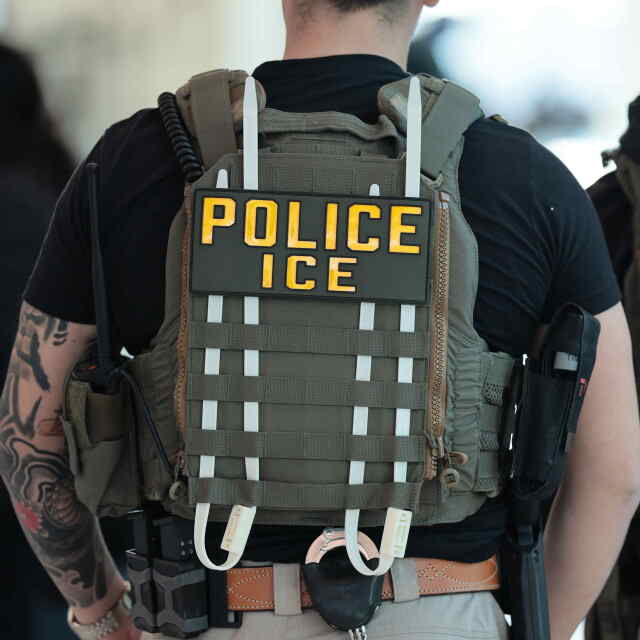
9:10And that's kind of been a mind shift for a lot of people. They've been conducting war games across the country where they game out what happens if FBI agents turn up at a polling place and want to seize our ballots or our voting machines? What do we do if ICE tries to carry out a raid near or inside a polling place? These are things that are beyond the pale in a normal situation, but this year they have to consider these things. I spend my time talking to Justin about these things and he has a cooler head than most, But I think elections officials, what they do is they hope for the best and prepare for the worst.
9:56And this year, that's taking in a lot of these kind of scary scenarios. Whether they happen or not, they are on tender hooks. And these threats are something they have to take seriously. But, Diane, let's leave California to the side just for a moment because we have to talk about Alaska, where the Justice Department this past week is also suing, demanding that election officials there set aside ballots because of what they say is confusion over two candidates named Dan Sullivan, the incumbent Senator Dan Sullivan, and another candidate, Dan Sullivan. They're concerned that the incumbent Republican Senator Dan Sullivan might lose.
10:42What do we need to know about this case? Yeah, this is another one where we are really gaming out how this could play. So Alaska itself, its Supreme Court, has ruled that both Dan Sullivans are allowed to be on the ballot. They are pretty clearly marked. The incumbent is marked as a Republican and an incumbent. And the other, Dan Sullivan, the retired schoolteacher, is not listed with either of those. and the Trump administration is trying to basically overrule Alaska's decision on this and say that the confusion could lead to the incumbent losing. And Justin will say and others say, like California, that this has no standing, that it bumps up against the fundamental question that we face with all of Trump's efforts here is that states and local officials run elections and the executive has a very limited role in oversight of these things.
11:42For me, gaming this out, there is actually precedent for the Senate to not seat a senator in a disputed election like this. And we still have to see if that's gonna be something that happens down the road, but we're not that far down the road yet. Well, here's the president on Friday saying that he's the one who told the Justice Department to file this suit in Alaska. Any thoughts on the Alaska lawsuit? Well, I'm the one that said do it. They have two guys around named Dan Sullivan running. I'm the one that said do it, says the president of the United States. We're going to talk a lot more about these cases.
12:20And if Justin Levitt says that these cases are just for press, essentially, we'll talk about why. Why the press? To what end? That and much more right after a short break.
12:35Stay tuned for the following announcements and messages from our sponsors. This message comes from Midi Health. Most women never get real answers about their hormone health. Midi is changing that. Built by women for women, Midi connects you with clinicians who specialize in hormone health with virtual care covered by most major insurance plans. Getting started is easy. Sign up with Midi and book your first visit with a clinician right away. Understand your hormones. Visit joinmidi.com to book your first visit. That's joinmidi.com. This message comes from Squarespace. A beautifully designed Squarespace website is the difference between thinking about photography school and selling your portraits online.
13:17It's the difference between giving away cookies for free and running your cookie empire. A beautifully designed Squarespace website is the difference between having a movie reviewing hobby and a movie reviewing career. Squarespace, because no matter what you're into, a website makes it real. Use offer code DIFFERENCE for 50 % off select plans. Terms and conditions apply. This election season, let the NPR Politics podcast save your time and your sanity. We'll help you understand key races, which polls you can safely ignore, and what might happen if power shifts in Congress. Our short daily episodes come out every afternoon so you can spend less time scrolling through each chaotic news cycle.
13:54Make NPR politics your hub for midterm election coverage. Follow our podcast on the NPR app or wherever you get your podcasts. I'm Justin Levitt. Let's pick back up in California, where, as we mentioned, the Justice Department has concentrated a lot of claims of noncitizen voters in that state. DOJ has actually charged 28 non-citizen green card holders with crimes. The department asserts that 21 of that group cast ballots illegally. Others registered to vote but did not cast ballots according to the Justice Department, although some of those people identified registered to vote more than 20 years ago.
14:34New reporting just this morning from MS Now says that a review of charging documents says that in five of those cases, voting-related criminal charges have already been dropped out of that 28. That's of the charging documents that have been publicly revealed. Other haven't. So, Justin Levitt, some of these charges, at least relating to voting, are already falling away, according to that reporting. What's the connection between these arrests and the fights between the DOJ and California officials that we've been talking about so far? I think more publicity. So I want to be clear, the cases in California, the case in Alaska, they are, I think, as frivolous as it gets.
15:18There's no facts. There's no law. It's possible that for these 28 individuals, and by the way, I think that's statewide, not just in Los Angeles, for these 28 individuals, it's possible that there was some wrongdoing at some point along the line. But as you pointed out, 23 million voters in California and 28 people is a drop in the bucket. They're sweeping up people who made mistakes or perhaps where elections officials made mistakes at some point along the line. It's an infinitesimal amount of activity. But they're bringing these people out on publicized perp walks as if they're public enemy number one.
15:52And I think that's, again, for press. They're trying to create the atmosphere that there's serious wrongdoing afoot. But I keep wondering with all of the resources that they're spending on this tiny, tiny, tiny number of people, what actual big crimes they're really missing. They've been pulling a lot of people off of a far more serious beat in order to go after this. I want to be clear. I don't condone misconduct in the election process, but it sure seems like this is much ado about very, very little. Dion, if DOJ's charges prove correct, you know, beyond a reasonable doubt, and there are around 21 ballots that non-citizens cast illegally, as we said before, California has 23 million registered voters.
16:37Has there ever been a case where officials discovered illegal voting that was significant enough to alter the outcome of an election? Not with non-citizen voters, no. Over the course of history, there have been a couple of examples in small local jurisdictions where there have been intentional voter fraud efforts using mail ballots, but not with non-citizens. And, you know, the case in California, I think, is quite telling because you've got this list of 20 ,000 names across the state. And if you're going to bore down into this, you would have to show in each congressional district where there is a close vote that there are enough of these questionable votes in each district.
17:24And as Justin has pointed out, the Justice Department this time around has run such a haphazard effort here that nobody really knows where these names are. And there's really no indication that there would be enough names on this list that they could verify that would change the results in any way. So I want to talk a little bit more about the why. Justin Levitt, you've been clear that you think the goal here is press, to make headlines, to have perp walks, to have splashy headlines about potential interference. Okay, headlines are fine, but why? Headlines to what end? What is your suspicion, your worry?
18:02I am asking you to speculate, but lots of experts have come on this program and speculated about what this is all for in the end. So, yeah, to be clear, I don't know. One possibility is that it's just instinct. To ask why with this administration is sometimes to ask one question too many. The president is, as I said, a comms guy, and his instinct is to lash back publicly against anything and everything that puts a bee in his bonnet. And one possibility is just this is another version of that. He's been screaming about non-citizen fraud and about fraud in the election process with absolutely no evidence for 10 years.
18:42Boy who cries wolf is going to cry wolf. And this is just more press around, hey, there's a wolf out there somewhere, even when the wolf doesn't exist. So that's option one, is it's just knee-jerk instinct. Option two is that he's actively trying to sow distrust and discord in the election process. That's significantly more disturbing that we would have an American president who's so unattached to democracy that he would be trying to convince people that they can't trust what they see with their own eyes in the outcome of elections. I mean, Justin, the president already tried to overturn one election.
19:17It happened. So option two seems like it needs attention. So fair, but it didn't work and was never gonna. You can't magic away 100 million votes. And I think the attempts this time are similarly tragic, but doomed to failure. Pew has done a survey every two years, at least back to 2018, where they say, what's people's trust in the election process, both nationally and locally? And nationally, there's a little bit of variation, as you might expect. But locally, it is remarkably stable, remarkably consistent across party, across geography, across time. 90 to 92 % of the public believes that their local elections will be free, fair, and well run.
20:01And that's because their local elections will be free, fair, and well run. People actually trust that when neighbors are helping neighbors express their preferences, it's going to work and work well. And I don't think the president's message is breaking through there locally where it counts. We'll talk a little bit more about voter sentiment and how they're digesting all of this news. Diane, I want to ask you about the potential why here and what you're hearing from election experts or even members of Congress. There have been fears on this air aired out that the why here, all of the press, could be intended on political cover for when the House is seated in January, that Donald Trump and his allies might have plans for confusion then.
20:48Have people expressed that worry to you in your reporting? For sure. For sure. And that gets back to this Alaska seat. It could be vital to which party controls the Senate. And there are pathways that Republicans could go down to block the Democrat from being seated in January. And yeah, I think January 6 looms over everybody's thoughts here. This is a president that pushes the boundaries as far as he can go until someone pushes back. And you see that happening now. There was a lot of talk before we got into the heat of this election about the fact that the president had directed the FBI to seize ballots in Fulton County, Georgia, from the 2020 election.
21:42And that was unprecedented. And the FBI was there. He called the FBI agents there and thanked him. And people were like, well, that was an election from six years ago. So he's not intervening in anything now. And now he is directly intervening in California while elections are live and trying to get courts to order California to segregate as many as 20 ,000 ballots in an ongoing election. And even Republican analysts I talk to say this is new territory. And so he continues to push the boundaries. And, you know, when I talk to people like Justin, sometimes he'll calm me down about the concerns here.
22:20but other people I talk to are more alarmed. And I think everybody is waiting to see how far this could go. Justin, go ahead. So I want to be real clear about this. I am alarmed. There are lots of people that are alarmed. It's alarming to watch the president engage in this amount of attempted interference. But part of the reason why I can help calm Dion down, and I hope the rest of the listeners, is that attempted interference doesn't actually need to lead to actual interference. unless the plans work. And down every scenario, I want to be really clear, it's really alarming that these things are even being attempted.
22:59But down every scenario, the plans reliably fail at some point. There may be pathways that get some of the way there, but none of the pathways actually get to magically throwing out tens of millions of votes in any contest, much less many of them. Now, Justin Levitt, you mentioned voter confidence despite the attempts at press propaganda throwing up uncertainty around this election. Here's another data point. New York Times-Siena poll conducted mid-October found 74 % of respondents felt the results of the midterms would be accurate. That's three quarters. Democrats, independents, and Republicans all responded in the 70 % to 80 % range.
23:38So that's pretty high. But 50 percent of respondents said that they were worried that Republicans would try to overturn those results through illegal means. 31 percent said they were worried that Democrats would do the same. So, Diane, how do you interpret those results? On the one hand, strong confidence in the election, which is what Justin Levitt is pointing to here, but also almost a majority worried about interference. Yeah, I think a lot of that is a result, an outgrowth of the president's consistent attack on the elections. You are seeing, I think, people reacting to these attacks on both sides of the aisle.
24:24Democrats and Republicans both have these concerns. And I do think that's one of the trend lines that I'm following at VoteBeat and we are following at VoteBeat is kind of this erosion and confidence in the system. And I think that can have some real concerning long-term effects for democracy and for the country. Let's add another voice to the conversation now. one of the key election officials in California, somebody who's at the center of the DOJ lawsuit and the charges that we've been talking about, this administration's attempt to change how a state runs its election. Dean Logan is the registrar, recorder, and county clerk for Los Angeles County.
25:04He runs elections for Los Angeles County, which is home to 5.8 million registered voters. And he joins us from Norwalk, California. Dean, welcome to 1A. Thank you for having me. Well, Dean, the DOJ sent a letter Friday. We mentioned it to local election officials across California, people who run elections at the county level like you, demanding that they help the feds identify potential noncitizens on county voter rolls and to set them aside, to set those ballots aside against current procedures. Your county was already targeted by the DOJ and told to review voter rolls. Now you're a party to the lawsuits that have been going on.
25:43You were named in the lawsuit that was argued yesterday in federal appeals court. What's your reaction to this request that all California counties set aside the ballots that DOJ wants you to set aside? Well, I think that the letters that went out last week continue to show a pattern of confusion and misinformation and misrepresentation of the facts. And I think for those of us who serve as election administrators, we're nine days away from an election and we are heads down, all hands on deck, conducting the election in accordance with state and federal laws. And I think that's where our focus needs to be.
26:28This is clearly in the courts now. There were robust arguments made yesterday. There's going to be another hearing in court tomorrow. But we have an enormous task before us and we have to stay balanced on that and we can't be distracted by this kind of activity. And, you know, the threats and the attempted intimidation that is present in those letters doesn't help in the administration of the election. But I think what I can share with you is that election administrators anticipated that this type of thing can happen and were prepared to stay focused on the task before us. Dean, I took a look at some of the court filings from yesterday.
27:08Your county, L.A. County, ran a sample analysis on more than 7 ,000 ballots. from that DOJ list of 20 ,000 of DOJ's supposed non-citizen voters or voting registrants. What did you find? Well, first, let's clarify that that's 7 ,000 records from the list that the Department of Justice sent us. It doesn't represent ballots. Records, indeed. I misspoke. Yeah. Go ahead. No, no, but understandably so, because that's how it's been represented. So what we found in the sample, it was a 200 sample of records that had addresses associated with Los Angeles County. We found that over half of those are records that are already either in canceled or in active status, which means those voters were never mailed a ballot for this election.
27:58In the other cases, we found a fair number of those who, on their voter registration record, had indicated that their place of birth was within the United States, which would lead to a conclusion that they are citizens. Now, that's not final determination, but that's just what the record shows on that. So I think what we found in that sample is that it represents a couple of things. One, it seems clear that whatever data that the government is using to create that list is at best outdated and possibly inaccurate. And it's being misrepresented in terms of the potential impact in this election. Because just as we just talked about, the message that's out there is that these are ballots that are out there and that they're all coming back.
28:52The reality is that the vast majority of those records also showed individuals who have never cast a ballot in any election. Over 71 percent, I think, had never voted on that list is what I read. Dean, we're going to head to a break in just a moment. Angelenos are seeing these headlines. They're seeing DOJ lists of 20 ,000 people. They're seeing charges being filed. As they head to vote early or on Election Day, what do you want them to know? about how elections are being run in L.A. County? I think our bottom line message is that the best security in an election comes through participation, and we don't want voters to be distracted by this activity.
29:34We're going to deal with it in court. We're going to take the steps necessary, but voters should know that we're going to conduct this election accurately, fairly, and transparently, and the best thing they can do is show up and cast their ballot. Kathleen in Pittsburgh writes this. To any of you out there who have even the slightest doubt about the elections, Sign up to work at the polls, either as a volunteer or a paid worker. Contact your county. It's not too late and they need you. Once you go through the training, you will have no more doubts. Kathleen, thank you. And we've heard that suggestion from so many listeners over the last many months here on If You Can Keep It.
30:12Much more to come on the midterm elections after a break. I'm Todd Zwillick. This is 1A.
30:20Stay tuned for the following announcements and messages from our sponsors.
30:46Visit JoinMidi.com to book your first visit. That's JoinMidi.com. The NPR app cuts through the noise, bringing you local, national, and global coverage. No paywalls, no profits, no nonsense. Download it in your app store today.
31:08We've heard a lot already about the idea, the demand from the Justice Department for setting aside ballots. In California, DOJ wants county clerks like you to set aside ballots. In Alaska, they want officials to set aside ballots because two candidates have the same name. What is setting aside a ballot? What does that mean practically? What are they asking you all to do and what impact does it have on how votes are tabulated? Well, I think it's not clear exactly what they're asking us to do. They keep trying to make the distinction between segregating ballots and not counting ballots. But the reality is that in an election administration, the process is highly regulated.
31:54We operate in accordance with mostly state law, but in some cases, federal law. And state and federal law have very specific guidance on when you can hold a ballot and what actions you can take to not count a ballot. And none of those provisions that exist in current law address the situation that is before us here where we have unverified assertions of the possibility of non-citizens being on the voter roll. So I think the key issue here is segregating the ballots first requires, in a jurisdiction like mine with over worth close to 6 million registered voters requires systematic means to actually create a particular flag that would tell our systems to pull out ballots for particular voters.
32:49And then we would look to the law for guidance on what to do with those if and when they were segregated. And none of that is clear in what's going on here. What is clear is that we're in the middle of an election and that it would be highly risky to go in and modify the systems to do something of that nature. Justin Levitt, he looks for the law. Is there federal law here? I mean, this is the Federal Justice Department in Washington. We said at the top of the show, we say all the time, states and localities run elections. Is there a law here for the DOJ to be standing on in the first place? Not only is there not a law for the DOJ to be standing on, but there is law that says DOJ can't get what it wants.
33:32As you just heard from Dean, the law actually very closely regulates what can be done with ballots, and refusal to count or tabulate a ballot from an eligible voter is against the law. And simply, I say that that person might or might not be eligible is not a reason to hold that ballot or refuse to count it. So the law seems to run precisely in the opposite direction, unfortunately, from what the DOJ is requesting. We've been hearing from lots of listeners, I want to get to some of these questions. Susan writes, I agree it would be difficult to overturn election results, but I'm not positive that's the point of the lawsuit in California.
34:10Aren't they working to ensure that enough people will just be afraid to vote because of fear of prosecution and then stay home? Justin? So I think this is, unfortunately, this is part of my second scenario where they actually do have a plan. They're hoping to convince people that their votes don't matter, that they don't have agency here. The good news is I don't think Americans are buying it. I don't think Americans are that stupid. I have more faith in us than that. We're in charge here. And the best thing we can do at the moment is tune out the noise. You know, there's sometimes when if you want to find out if it's raining, the best way to find out isn't to look on the weather app, it's to look outside.
34:48And this is one of those, right? For 99.999 % of Americans, they go, they make a plan to vote, They vote. It'll work very smoothly and normally. And I think to your listeners that are worried about the attempt to get people to stay home, we're in charge of that and we don't have to buy into the attempt. Now, here's a set of questions we got from several listeners, voting machines, electronic voting machines in these elections. Allison emailed us. I've heard of reports that voters in Florida and Tennessee have had their selections for Democrats flipped to Republicans and they've had to change them back manually.
35:24Is there any truth to this? Another one of you wrote, why is nobody talking about all of these people saying that their computers are defaulting back to Republican votes after they voted for a Democrat? Diane Nissenbaum, we've gotten a lot of questions along these lines. There's certainly a lot of posting on social media about it. We don't want to give those posts too much credence, so let's explain it. I mean, Dolly Parton's sister, Stella Parton, who's famous, I guess, posted on Facebook that she had to correct her ballot in Tennessee because the machine she was voting on kept selecting the Republican gubernatorial candidate instead of her preferred candidate.
36:00That's one person posting. Can you break down what's likely happening in most of these cases, Dion? Yeah, yeah. Dolly Parton's sister certainly put it on the map this time around. We did look into that. We have been looking into that. And there's no evidence, bottom line, that there's any kind of vote tampering or vote switching at all. Most of these issues, when they come up across the country, usually relate to just a glitch with someone hitting the wrong spot on the touchscreen. In some cases, there can be a calibration effort with the individual voting machine. You know, the people voting, elections officials will say people hit it too hard and it gets out of whack and they need to reset the machines.
36:46But for the majority of people across the country, there is a paper trail here when you vote. And so you'll be touching the screen and you'll be able to check whether it's properly recorded on the paper that you turn in. And so there is a verification process here, and people just need to be vigilant when they are doing this to make sure there isn't a glitch with their particular machine. But there's no evidence at this point of any problems or anybody hacking machines or anybody, you know, any machines being calibrated to flip results. There's just no evidence of that. We got this note from Brian in Indiana who says, Recently, Marion County was alerted that there will be federal agents at the polls.
37:32How is this not voter intimidation? And what are the optics that one of the sole Democratic strongholds in a Republican-run state gets federal oversight? So, Justin, I suspect that Brian might be talking about election monitors coming to his community. I don't know that for sure, but that's sure what it sounds like. The DOJ has announced that they have dispatched and are dispatching monitors all across the country, used to be involved with this program during the Obama administration. What's important to know about election monitoring, what it is and what it isn't? Yeah, so I suspect the same thing.
38:10I share your sense that that's what they're talking about. The DOJ sends out monitors in every election to keep an eye on long-term violations of federal law, like not putting language access materials out in the right place, not having disability access machines, things like that. They've said this year that they're going to be sending 1 ,000 people. I'm not sure they'll get there. Maybe they will, maybe they won't. But even if they do, that's a remarkably small number for the entire country. Your listeners in Marion County will probably see two or three people throughout the county amongst hundreds of polling places.
38:45They'll be in suits or in khakis. They'll be standing at the back of the polling place and watching, and that's it. And they have no more rights to be in the polling place than any other observer. Just because they're DOJ doesn't mean they can interfere. In fact, election officials not only have the responsibility, but know they have the duty to toss out anybody who is causing problems or disrupting or intimidating. So I think what you'll see, if you see these folks at all, I think you'll see a person or two hovering in the back of the room with a clipboard and nothing to worry about in terms of actually casting your ballot.
39:22Dean Logan, in L.A. County, you run it. Are you as sanguine as Justin about federal election monitors in your jurisdiction? What are you telling your people? Yeah, I think that that is Justin's description is exactly what we've experienced at L.A. County before. It's not unusual to have observers at our voting locations. And we certainly have had Department of Justice monitors in prior elections. We're very proud to operate a very transparent and open elections process. It belongs to the voters of L.A. County and people ought to be able to see that it's working and working appropriately. But as Justin indicates, on the flip side, what's not appropriate is any disruption of the voting process or any attempt to prevent somebody from voting.
40:09So we train our workers and our own observers or field staff that are out there to be on alert for anything of that nature. But as far as just general observation and taking notes about the process, we've actually found that to be fruitful in demonstrating the efficacy of the process in past elections. Virginia in Michigan says maybe these attempts to challenge elections eventually fail, but they have led to violent threats against people who have to administer and protect the election process. Dean, how are your people doing? What's the security posture like around your offices? Well, I think it's an important point.
40:49I think when you have this kind of rhetoric, especially when it's playing out on social media and in areas where people are getting their information both quickly but also from a very narrow perspective based on an algorithm of those things that they watch and listen to, that can cause people to take actions or to become agitated in a way that puts others at risk. And so we take that very seriously. We have had to increase our security posture at our facilities for our staff. And, you know, that's just an unfortunate part of the environment that we're operating in in this election. But just like the litigation, we're not going to let that get in the way of our proper administration of the election.
41:40So we take it seriously and we're taking steps to ensure that everybody is OK, but we're still doing what we need to do to get the job done. Well, we got this email from Don in Alexandria, Virginia, who says, what specific concerns are there for what the president might do after he says the elections were rigged? And I think Don is presuming that the president will say the elections are rigged if Republicans lose in these midterms. What happens after Election Day remains a huge question mark. We hear the mixed messaging from the Attorney General, Todd Blanche, about what the Justice Department might or might not do, no matter what they can do legally.
42:19Here's Blanche. I want to play you this. Last Thursday, a reporter asked about if the DOJ would try to block election certification in some states. Listen. I mean, is there any scenario? Yes, of course, there's scenarios that we can all come up with, hypothetically. You know, some doomsday scenario, for example, right? So I don't think it's proper to make any kind of conclusory statements about what's going to happen in the future because I have no idea what's going to happen in the future. It is not DOJ's intention to and it's never our intention to improperly interfere with elections or the state confirmation process or certification process.
42:56But, you know, to say that there's no circumstances that we would ever do that, of course, I'm not going to say that. Dion Nissenbaum, there's the attorney general leaving the question open about whether DOJ would try to deny certification if they even have legal basis to do so. So what do election officials and experts you talk to hear when they hear that kind of ambiguity? I think, you know, the alarm bells go off. As I was saying earlier, this is a president that, you know, is pushing the boundaries as far as he can go until somebody pushes back. And, you know, there's lawsuit after lawsuit being filed to prevent this from happening.
43:38But it creates concerns. The president's going to push as far as he can go. He's pushing the Justice Department as far as he can and happily doing it, openly admitting to getting them to file the lawsuit in Alaska. And it leaves this uncertainty in place for all of us about how this is going to go. And none of our work is going to be done on Election Day. In many ways, it's just starting. So there is some uncertainty. We're going to wrap up the hour here, but Justin and Dean, I just want to hear from both of you briefly before we do. We're going to hear a lot more stories about this midterm election before November 3rd, I'm sure of it, and after Election Day, as Dion says.
44:22What's your message to voters, Justin, about what they need to know? I think voters should know that there's going to be an immense amount of noise over the coming weeks and, as Dion says, months. And the best thing they can do is tune out the noise. The president's going to try to affect the results. That's a given. The DOJ is going to try to affect the results. That's a given. But that's not going to work. Courts aren't going to buy it because they simply have no role here. We're in charge, and we can relax knowing that. Dean Logan, you're at the center of this now in L.A. What's your message?
44:57Yeah, I think, again, for me, the message is that the best way to secure the election is through participation. If we don't have high turnout and participation, then the underlying issues really don't matter. So we want voters to be focused on making sure that their voice is heard by casting their vote. And we want them to be confident that election officials across the country are going to make sure that that vote is handled appropriately, accurately, and that the election will be certified in a timely and legal manner. Agency, says Dean Logan, the registrar, recorder, and county clerk for Los Angeles County.
45:32Through your vote, Susan in Michigan said, hey, volunteer at your local polling place. Nothing, says agency, like participating in the actual process. I want to thank all of you. Dean Logan, registrar, recorder, and county clerk for Los Angeles County. Dion Nissenbaum, senior national reporter for the nonprofit newsroom VoteBeat. And Justin Levitt, constitutional law scholar and professor at Loyola Law School and former official in the Civil Rights Division at DOJ. Remember 1A Vox Pop, that app is free. It's an easy way to get your voice heard on the show and you can share your experience of this election.
46:09You'll find that wherever you get your apps. Today's producer was Michael Falero. This program comes to you from WAMU, part of American University in Washington, distributed by NPR. I'm Todd Zwillick. We'll talk more tomorrow. This is 1A.
46:42Stay tuned for the following announcements and messages from our sponsors. This message comes from MidiHealth. Most women never get real answers about their hormone health. MIDI is changing that. Built by women for women, MIDI connects you with clinicians who specialize in hormone health with virtual care covered by most major insurance plans. Getting started is easy. Sign up with MIDI and book your first visit with a clinician right away. Understand your hormones. Visit joinmidi.com to book your first visit. That's joinmidi.com. What happens at the ballot box when the cheapest places to live in America have become unaffordable?
47:20I'm thinking about how I'm going to rob Peter to pay Paul because food prices are extremely high. On the Sunday story, Midwesterners say they're fed up and plan to take their anger to the polls in November. Listen now to the Sunday story from the Up First podcast on the NPR app.