Ask ChatGPT



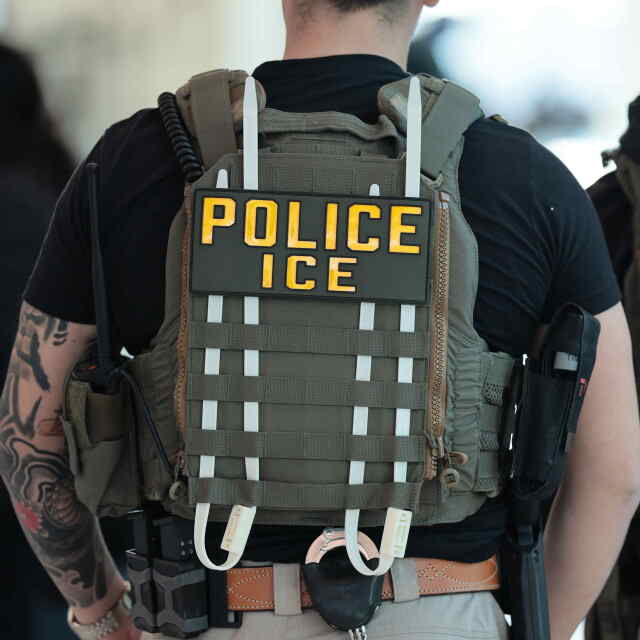
The episode examines President Trump’s decision to deploy the National Guard and active-duty Marines to Los Angeles amid protests tied to ICE immigration raids, focusing on legal boundaries (Posse Comitatus and the Insurrection Act) and the implications for democracy and civil liberties.
Mark Nevitt, attorney; former U.S. Navy JAG; aviator; retired commander; law professor at Emory University School of Law. Elizabeth Goiten (Goyteen), Senior Director at the Brennan Center’s Liberty and National Security Program; previously legal counsel to Sen. Russ Feingold and a DOJ trial attorney.
Posse Comitatus generally bars federal troops from direct law-enforcement actions; Insurrection Act is the major exception but was not invoked. The administration instead relied on 10 U.S.C. 12406 and an asserted inherent executive power to protect federal functions, which a California judge rejected for Los Angeles. The episode argues the deployment risks chilling First Amendment protest rights and militarizing immigration enforcement.
1992 LA riots (Insurrection Act invoked; Marines reportedly misapplied “cover me” tactics); a 1970 Nixon mail-delivery troop deployment; reports of Marines accompanying ICE and detaining civilians; Newsom’s legal challenge and emergency court order blocking the Guard; discussion of 287(g) agreements expanding local capacity for immigration enforcement.
Written by AI. May contain mistakes.
Explore the legal frameworks governing military deployment in domestic situations.
“Let's get right into the conversation with our guests.”
Discuss the historical reasons behind the creation of these laws and their implications.
“Well, Mark, I want you to take us inside the military conversations that have around posse comitatus and deploying active duty troops on U.S.”
Analyze President Trump's justification for deploying troops without invoking the Insurrection Act.
“Well, as far as the Insurrection Act goes, because that actually came first, the Insurrection Act refers to an amalgamation of laws passed between 1792 and 1871.”
Investigate the implications of using military forces to manage civilian protests.
“even though the principle was not sort of officially codified until the Posse Comitatus Act.”
Understand the challenges faced by Marines transitioning to law enforcement duties.
“Mark, I want to pull you in here because I want to get an idea of the, perhaps, the legal conversations that are had within the military when orders like these are received.”
Explore the complexities of military rules of engagement in civilian contexts.
“protections, Fourth Amendment, First Amendment, Fifth Amendment, all of those apply in the law enforcement context.”
Discuss California Governor Newsom's legal challenges against troop deployment.
“Well, and just to be clear, Mark, If those rules are broken in a scenario like that, who's held accountable?”
Learn about 287G agreements and their impact on local law enforcement and immigration.
“His agents are arresting dishwashers, gardeners, day laborers and seamstresses.”
Delve into the implications of short-circuited training for immigration enforcement.
“And so you basically are empowering the state and localities.”
Explore the potential dangers of interpreting protests as rebellion against the government.
“It also says protests and acts of violence that prevent carrying out federal immigration laws, quote, constitute a form of rebellion against the authority of the government of the United States, end quote.”
Hear insights from experts on the implications of military presence at protests.
“this is about chilling or suppressing the right to exercise, the right to dissent or disagree with this administration.”

Get the gist, explore an idea or ask about something said.
 Claude
On 1A, what are the key points of this episode?
Searching your listeningAutomatic transcript. May contain errors.
0:12Around the country this weekend, millions were protesting the president's administration, including his actions in Los Angeles. President Trump announced he was deploying the National Guard as well as Marines just over a week ago in response to protests downtown against ICE immigration raids in businesses and schools. It's the first time since the 1992 riots over the acquittal of four police officers charged with assaulting Rodney King. The president has called the National Guard into Los Angeles, but unlike in 1992, California's governor, Democrat Gavin Newsom, and the city's mayor, Democrat Karen Bass, do not want federal troops there.
0:50For today's installment of our series, If You Can Keep It, where we discuss the big political stories of the moment and what they mean for the future of our democracy, we ask, what are the legal boundaries and norms when it comes to deploying active duty troops in U.S. cities? What does it mean for a president to use the military to tamp down protests and help him achieve his goal of more deportations. I'm Jen White. You're listening to the 1A Podcast. That and more in a moment.
1:20Let's get right into the conversation with our guests. We're joined now from Portland, Oregon by Mark Nevitt. He's an attorney who served in the Judge Advocate Generals Corps, or JAG, in the U.S. Navy. He's also an aviator and retired commander. He's now a law professor at Emory University School of Law. Mark, welcome to 1A. Great to be here. And joining us from Washington, D.C. is Elizabeth Goitin. She's Senior Director of the Liberty and National Security Program at the Brennan Center for Justice. She was previously legal counsel to Senator Russ Feingold and a trial attorney in the Department of Justice.
1:54Liza, welcome. Thanks so much for having me. Now, Liza, there are two laws from the 1800s that regulate how the U.S. government can deploy troops within the country's borders. There's posse comitatus and the Insurrection Act. Let's start with posse comitatus. Explain what that says. Sure. The Posse Comitatus Act prohibits federal armed forces from participating directly in core law enforcement activities, things like arrests, detentions, searches and seizures, unless expressly authorized by Congress or by the Constitution. This law is an absolutely vital protection for individual liberty and for democracy.
2:34for obvious reasons. If the president can turn the military inward against the people, it can be a very powerful instrument of oppression or tyranny. But Congress has enacted some exceptions to the Posse Comitatus Act, and the one you mentioned is the Insurrection Act. That's probably the biggest exception to the Posse Comitatus Act. And that law, on its face, gives the president significant discretion to deploy federal troops to suppress insurrections or rebellions, quell domestic violence, or enforce the law when it's being obstructed. Now, if you look at the law, it seems to give the president almost complete discretion.
3:15However, the Department of Justice has historically interpreted the law much more narrowly in keeping with the Constitution and tradition. And it has taken the position that the Insurrection Act should not be invoked unless there is, certainly, sorry, to quell civil unrest, it should not be invoked unless there is a state request for assistance or where state and local law enforcement are themselves obstructing a federal court order or where state and local law enforcement have completely broken down. And obviously, none of those conditions were met in Los Angeles, although, as I'm sure we'll get to, the president didn't actually rely on the Insurrection Act.
4:01He relied on other authorities. Well, Mark, I want you to take us inside the military conversations that have around posse comitatus and deploying active duty troops on U.S. soil. Presidents have only used the Insurrection Act to send troops onto U.S. soil only 30 times in the country's history. Why is there such a high threshold? What conversations are had within the military about this? Well, historically, the military, it's important to note, has been reluctant to get overly involved in domestic military operations, particularly for the law enforcement mission because we have a strong tradition in this country dating back to our founding of the military staying out of civilian affairs.
4:47You see that in the Constitution's text where there's a division between the National Guard and sort of federal military forces, sort of a fear of a standing army that's throughout the Constitution's text and really codified in the Posse Comitatus Act that Liza alluded to. So within the military, the military has historically responded to disaster response, emergency response, things along those lines. And those are increasing in the face of natural disasters and climate change. But when the military is asked to do a law enforcement mission or supporting the law enforcement mission, that is just a different shift in mindset from more of the combat, you know, traditional roles that the military is trained for versus more of a domestic law enforcement mindset, which is really foreign to most military units.
5:35Liza, what's the broad reasoning behind why Congress passed Posse Comitatus and the Insurrection Act in the first place? Take us into that history. Sure. Well, as far as the Insurrection Act goes, because that actually came first, the Insurrection Act refers to an amalgamation of laws passed between 1792 and 1871. The idea there was that there could be situations, there could be emergency scenarios where law enforcement would not be adequate to handle that situation. And back at the founding of the country, we didn't have professionalized police departments. There were, you know, sheriffs. There were a handful of U.S.
6:21marshals. But we really didn't have the kind of capacity to address serious crises through civilian law enforcement that we do today. And so Congress provided for the president to be able to call up the militia in situations of rebellion or insurrection or where necessary to enforce the law. And then in the beginning, when that law was passed, there were some pretty significant checks put in place. A judge had to approve deployment before it happened, and deployments to enforce the law were time-limited, so that Congress actually had to approve them in order to extend them. Those protections were stripped out over time, mostly, at least in the beginning, because presidents were really very much adhering to the law.
7:13And so there was a sense of, OK, we can relax and get rid of some of these safeguards. Now, of course, it's probably not a great idea to take your umbrella down because it's been keeping you dry in the rain, but that's sort of what happened with the Insurrection Act. The Posse Comitatus Act was passed later in 1878. It has some ignominious origins. It was basically passed so that federal troops couldn't prevent the establishment of Jim Crow in the post-Reconstruction South. But despite that fact, the principle underlying the law has deep roots, not only in our country, but in Anglo-American law more broadly.
7:51It dates back centuries, all the way to the Magna Carta. And the reason for that, of course, as I was saying, is to protect individual liberty, is to prevent leaders from becoming dictators. And obviously, under British rule, the colonies experienced force at the hands of the military in a way that really informed the way the framers put the Constitution together, which included this principle, even though the principle was not sort of officially codified until the Posse Comitatus Act. Well, we are getting questions from you, and we got this one from Los Angeles about President Trump deploying both the National Guard and Marines to the city.
8:32My question is I want to know how that's constitutional when he has not invoked the Insurrection Act and what we can do as citizens to prevent things from escalating any further. Thanks for that question. Now, Liza, as you said, President Trump is not relying on the Insurrection Act to send in the National Guard and active duty Marines to L.A. right now. What is he relying on? He is relying on a couple of different authorities that are much more obscure than the Insurrection Act. One of them is a law 10 U.S.C. 12406. I wish it had a catchy title, but it doesn't. That is a very obscure law that has never been used on its own to quell civil unrest.
9:19It applies during rebellions or when there's a threat of a rebellion or where the president cannot execute the law without using the military. And a federal judge in California held that those circumstances were not met in this case. The other authority that the administration has relied on is a claim of inherent constitutional power to deploy troops to protect federal property personnel and functions. This is an executive branch theory that goes back a very long time. It's actually never been sort of officially endorsed by the courts. And, you know, the problem in this case is that the military isn't just standing there in a line guarding federal property.
10:07First of all, there have been reports of soldiers accompanying ICE on its raids. And it's also been confirmed that U.S. Marines have detained at least one civilian. And we've seen videos of them forcibly pushing people down off the steps of the federal building in Los Angeles. These kinds of direct confrontations are exactly what the Posse Comitatus Act was designed to prevent. And briefly, Liza, you said this idea of there being no constitutional exceptions to the president's use of these troops that it hasn't been endorsed by the court, but has it been tested legally? It has certainly happened in the past.
10:58And it has not been tested in the courts, which is basically what I mean when I say it hasn't been tested. It has happened in the past. I think the administration would probably point to a situation in 1970 that's somewhat well-known, where President Nixon deployed troops in order to make sure that the mail could be delivered when there was a postal strike and mail delivery was ground to a halt. And so the National Guard was federalized, active duty troops were deployed, and there were 25 ,000 soldiers basically delivering the mail. I would say what's different in this case is a couple of things.
11:35First of all, the federal function that's being protected here isn't mail delivery. It is law enforcement. And so when the federal function itself is law enforcement, it's sort of splitting legal hairs to say that the military isn't doing law enforcement. They're just protecting a federal function that happens to be law enforcement. We have to pause for a quick break. But before we do, one of you sent us this message. I am a 24-year active National Guardsman here in Virginia, and I find what the administration is doing is disrespectful and deplorable to use the National Guard against its citizens.
12:16And as a Guards member, I did not join to fight my fellow Virginians. Thanks for that message. Another review in the 1A Text Club says, The military is designed to protect from foreign and domestic threats. So I can understand how protests could be considered a domestic threat, but it does seem like a disproportionate response. Back with more in a moment.
12:42Mark, I want to pull you in here because I want to get an idea of the, perhaps, the legal conversations that are had within the military when orders like these are received. So the 700 Marines that the president ordered to L.A. were meant to protect federal property and ICE agents. That's what we've been told. But as we've heard from Liza, posse comitatus applies to Marines and what they can and can't do within the U.S. So what activities would these Marines in Los Angeles not be legally allowed to do, and how is that enforced? So, sure. So, historically, Eliza is exactly correct that the Marines are covered by posse comitatus, which prohibits direct support to the law enforcement.
13:28That's traditional. We conceive that as searching, seizing, detention, arresting, interrogation, things along those lines. And so as a military commander right now, this operation is held by Northern Command. They're issuing orders to the Marines consistent with these legal principles. the challenge, number one, is that the Marines, which have historically been trained for what's called rules of engagement, or I'll just call it shorthand combat rules, now need to shift for the rules for the use of force, which are law enforcement rules, where all the constitutional protections, Fourth Amendment, First Amendment, Fifth Amendment, all of those apply in the law enforcement context.
14:10So the challenge, I think, is that it's a little bit a legal tetris. And what I mean by that is that you have these court cases talking about the Posse Comitatus Act, what is direct support, what is indirect support, but now you have the rules for the use of force which do authorize the Marines to take sort of action to include the use of deadly force when faced with a hostile act or a demonstrated hostile intent. And so right now the military commanders, the military JAGs, immediately before the Marines deploying to Los Angeles, make this pretty big shift from the combat rules to the law enforcement rules, and they walk through the different tactics, training procedures, and scenarios that the Marines may face.
14:55And so we saw a detention of someone who was allegedly trespassing into the ICE complex two days ago. And so the Marines, sort of very troubling, temporarily detained that person, which under some court's reasoning that is a violation of the Posse Comitatus Act, but it would be consistent with the Marine sort of rules for the use of force in defending that federal property. So again, it's a very, very, very challenging environment as you're bringing these two sort of bodies of law together. Well, and this is part of the concern from California officials like Governor Newsom. It stems from the reality that active duty soldiers have different training than state and local police.
15:36And so how are these Marines then trained, informed, prepared for the boundaries around how they should or should not interact with the civilian population in the U.S., Mark? Sure. So they did receive training. Northern Command did notify publicly that they received training in both these law enforcement rules, as well as the escalation, crowd control, things along those lines. In fact, the Marines, my understanding, they were in San Diego sort of pre-positioned going through this final training scenario. But this is quite a shift from the normal training they get at 29 POMS focused on the combat rules to, again, the law enforcement rules.
16:20And there are some challenges as you sort of make this shift. And I'll give you one example. During the 1992 Los Angeles riots, which this was an instance where Liza mentioned the Insurrection Act. The Insurrection Act was invoked. Governor Wilson actually requested President Bush's entry of U.S. troops to include Marines into Los Angeles for a period of time. And during that deployment, some Marines were accompanying the Los Angeles Police Department to a domestic disturbance. And again, they're shifting from the combat sort of rules of engagement more to the law enforcement rules. And it's a really big shift in mindset as well as terminology and communication.
17:04As they were entering the apartment, the LAPD officer turned to the Marines and he said, I want you to cover me. And cover me to the Marines essentially means under the combat rules, lay down a series of fire as the force advances. In a law enforcement context, it's quite the opposite. It essentially means take your gun off safety and be ready to engage if necessary. So the Marines defaulted to what they understood to be the terminology of cover me, and they essentially laid down 200 bullets in the actual apartment complex. Now, thankfully, no one was harmed or injured somewhat miraculously, but it does sort of show the disconnect between the combat rules and the law enforcement rules and the challenges and terminology.
17:55Again, it's a legal Tetris and a real, is really ripe for miscommunication. Well, and just to be clear, Mark, If those rules are broken in a scenario like that, who's held accountable? So ultimately, the Marines comply with the Uniform Code, a military justice. And if you misapplied the rules, each individual Marine would be held accountable. And I should note, during the Los Angeles training in 1992, we have on evidence, we have the rules of force that were in place during that time. It's now public record. And we do know that every Marine received training on this. And they also had to sign and date and basically attest that they understood the above rules for application of force.
18:48So that's under the Uniform Court of Military Justice. In theory, a Marine could be held accountable for misapplication. But again, it's a really, really challenging environment for a young Marine, man or woman, put in that scenario. And again, I think for many people who have not served or don't have loved ones, close loved ones who have served, when we talk about this training, they're receiving this training ahead of being deployed into a U.S. civilian scenario, correct? So it's not as if they're getting combat training alongside this other training. This is training that they're receiving in preparation for being deployed in this civilian context in the U.S.
19:32Is that correct? Exactly right. And you almost need a little bit of a rules lobotomy, so to speak, because this is not Iraq. This is not Afghanistan. This is not a sort of operational, very sort of uncertain environment overseas. Now it's a domestic environment. The Constitution doesn't apply to sort of the combat rules overseas, but all these different complexities associated with application of the Constitution protections do apply. So they're getting this training. We think they got this training in San Diego. I would imagine it was very similar to 1992 on the law enforcement. But this is very, very, very sort of last minute.
20:08They may have some exposure of this training beforehand, but for many Marines, this is the first time they're really thinking about how to apply it in a very uncertain situation in L.A. Well, last Tuesday, California Governor Gavin Newsom spoke out against the president's decision to send troops to Los Angeles in response to the immigration protests. His agents are arresting dishwashers, gardeners, day laborers and seamstresses. That's just weakness, weakness masquerading as strength. Donald Trump's government isn't protecting our communities. They're traumatizing our communities. And that seems to be the entire point.
20:47California will keep fighting. We'll keep fighting on behalf of our people, all of our people, including in the courts. Just yesterday, we filed a legal challenge to Donald Trump's reckless deployment of American troops to a major American city. Today, we sought an emergency court order to stop the use of the American military to engage in law enforcement activities across Los Angeles. Again, that legal challenge from the governor resulted in one federal court judge blocking the president's mobilization of the National Guard. And appeals court then put that ruling on hold temporarily. The president will have control of the National Guard at least until a hearing at noon Pacific time on Tuesday.
21:27Liza, how often is it the case that a governor of a state opposes a president's decision to send a National Guard troops during a time of crisis or at least perceived crisis? Well, it's very rare. And the cases in which troops have been deployed into states to quell civil unrest have generally fallen into two categories. Either state and local law enforcement are completely overwhelmed. overwhelmed. They're doing their best to control the situation, but it's not working, in which case they almost always ask for help. Or the second set of circumstances is where state and local law enforcement are not solving the problem because they are the problem.
22:07You know, maybe they're not protecting certain classes of people against mob violence, or they are obstructing a federal court order, such as during the civil rights era, where state and local authorities were actively obstructing federal orders to desegregate the schools. And so the situation like we have here, where state-on-law enforcement officials are very much on the scene and really working, I would say, frankly, quite aggressively to address the situation. And we've all seen the videos of LAPD and LA Sheriff's Department firing rubber bullets and deploying flashbang grenades and tear gas, right?
22:48In situations like that, and as of Sunday, which is when President Trump—last Sunday, when President Trump deployed the National Guard, things were quiet in Los Angeles. So they had, in fact, gotten the situation under control. Now, at the time, Governor Newsom said, you know, if you deploy troops, that is going to be inflammatory. That is going to be escalatory rather than de-escalatory. And that does appear to be the case. But again, in these situations where federal, sorry, state and law enforcement officials are doing their best to control the situation and they say, we've got it, we're on top of it, extraordinarily rare to see a federal deployment of troops in those circumstances.
23:34Mark, at the core of the standoff is President Trump's efforts to expand the work of immigration and customs enforcement to detain and deport people from the U.S., including at businesses and schools in Los Angeles. Now, ISIS money and manpower is stretched thin, carrying out that priority from the president. So that's led to more agreements with local law enforcement. These are known as 287G agreements. The number of these ICE agreements signed during the Trump administration has quadrupled to nearly 650 since January. Explain what a 287G agreement does. Right. So again, like 12406, there's not a clean name for this agreement.
24:13287G refers to the Immigration Nationality Act, and this is the provision in the U.S. Code. And essentially what it does, it authorizes the Department of Homeland Security to enter into law enforcement agreements with state and local law enforcement agencies. And what we've seen since the Trump administration is just an explosion in these agreements. And so right now it's 650 and counting. I think at the end of the Biden administration, it was in the low 100. So we've seen a quadrupling of these agreements. And on the military front, we've seen agreements with both the Texas National Guard and the Florida National Guard, which essentially authorizes the National Guard when operating in a state status to be sort of a supercharged federal immigration force.
25:11And so these 287 agreements, I think as we speak, are in 40 some odd states. And also the National Guard is now implicated in Texas and Florida and maybe more states coming online. So it's a further example of an aggressive immigration policy that also further militarizes the immigration approach. So when we look at the expansion of the number of these agreements over the past six months, what does that mean for the administration's capacity then to carry out its immigration enforcement policies? It's a remarkable increase in capacity. And I'm really glad you're asking about this because this really deserves, I think, more attention because ICE's 15 ,000, 20 ,000 officers, that's about the same number of people that are in, I think, the Texas National Guard, just one of these 650 agreements.
26:04And so you basically are empowering the state and localities. And I should note that these are consensual. These are not imposed upon the states. These are fully consensual between the respective law enforcement body or the National Guard and the Department of Homeland Security. So it just has a remarkable increase in immigration enforcement capacities. And we're going to see how this unfolds because These have really been signed in the last couple months of going through training for this. Again, federal immigration enforcement training, I have some concerns about that. It's sort of much of the training is done online.
26:40Much of the training seems to be sort of short-circuited to meet the 287G agreement mission. And so it's just a massive increase in resources and capacity that the Department of Homeland Security has at its disposal. Well, and if that training is, as you said, short-circuited, what concerns does that raise for you? Again, civil liberty concerns, not unlike what I mentioned with the Marines in Los Angeles. It's a federal immigration mission. And so hopefully you would take your time on this. Hopefully you would go to some kind of federal law enforcement training center, which would be very methodical, ask questions, walk through all the different scenarios and, you know, just situations that you may be in.
27:27And so I'm concerned having the training done online, done in a very, very kind of perfunctory manner. There could be a host of civil liberty concerns that flow from that. Well, Liza, the president issued a memo in early June, and it uses a federal statute to call on the National Guard to protect ICE agents in their work. But it applies to locations beyond Los Angeles. It requests the National Guard to protect federal personnel and federal property. And I'll quote it here, at locations where protests against these functions are occurring or are likely to occur based on current threat assessments and planned operations.
28:01It also says protests and acts of violence that prevent carrying out federal immigration laws, quote, constitute a form of rebellion against the authority of the government of the United States, end quote. Very briefly, what are the implications of how the administration worded that presidential memorandum? Sure. Well, one of the parts of the judge's opinion in California holding that 10 U.S.C. 12406 could not be used to federalize the National Guard made the point that if the line between a First Amendment-protected protest and a rebellion is as flimsy as the president seems to interpret it, that that is an untenable and dangerous situation.
28:45So that really speaks to this sort of reliance on the rebellion concept. As for the authorization to deploy troops anywhere in the country where protests against ICE activity or other federal functions are occurring or places where they are just likely to occur, that is truly unprecedented. This authorization is not tied to any violence that might be happening in these protests or any kind of vandalism or unlawful activity. It's literally any protests, whether they're happening or not even happening yet. And we have never seen anything like that in this country. The president sort of doubled down a few days later when he said that any protester who came out to protest the military parade that happened on Saturday would be met with very heavy force.
29:39And again, it wasn't any protester who engages in violence or who obstructs the parade. It was any protester. So to me, what that says is that this is not about violence. This is not about enforcing the law. this is about chilling or suppressing the right to exercise, the right to dissent or disagree with this administration. And that right is probably the most fundamental right that people have in a democracy. Well, lots more to watch in the days and weeks to come. That's Elizabeth Goyteen. She's senior director of the Liberty and National Security Program at the Brennan Center for Justice. Also with us, Mark Nevitt, a law professor at Emory University School of Law.
30:24He's formerly a JAG and an aviator in the U.S. Navy. He's also a retired commander. Mark, Liza, thanks to you both. Today's producer was Michael Falero. This program comes to you from WAMU, part of American University in Washington, distributed by NPR. I'm Jen White. Thanks for listening. And we'll talk again tomorrow. This is 1A.
30:52Thank you.