
In short
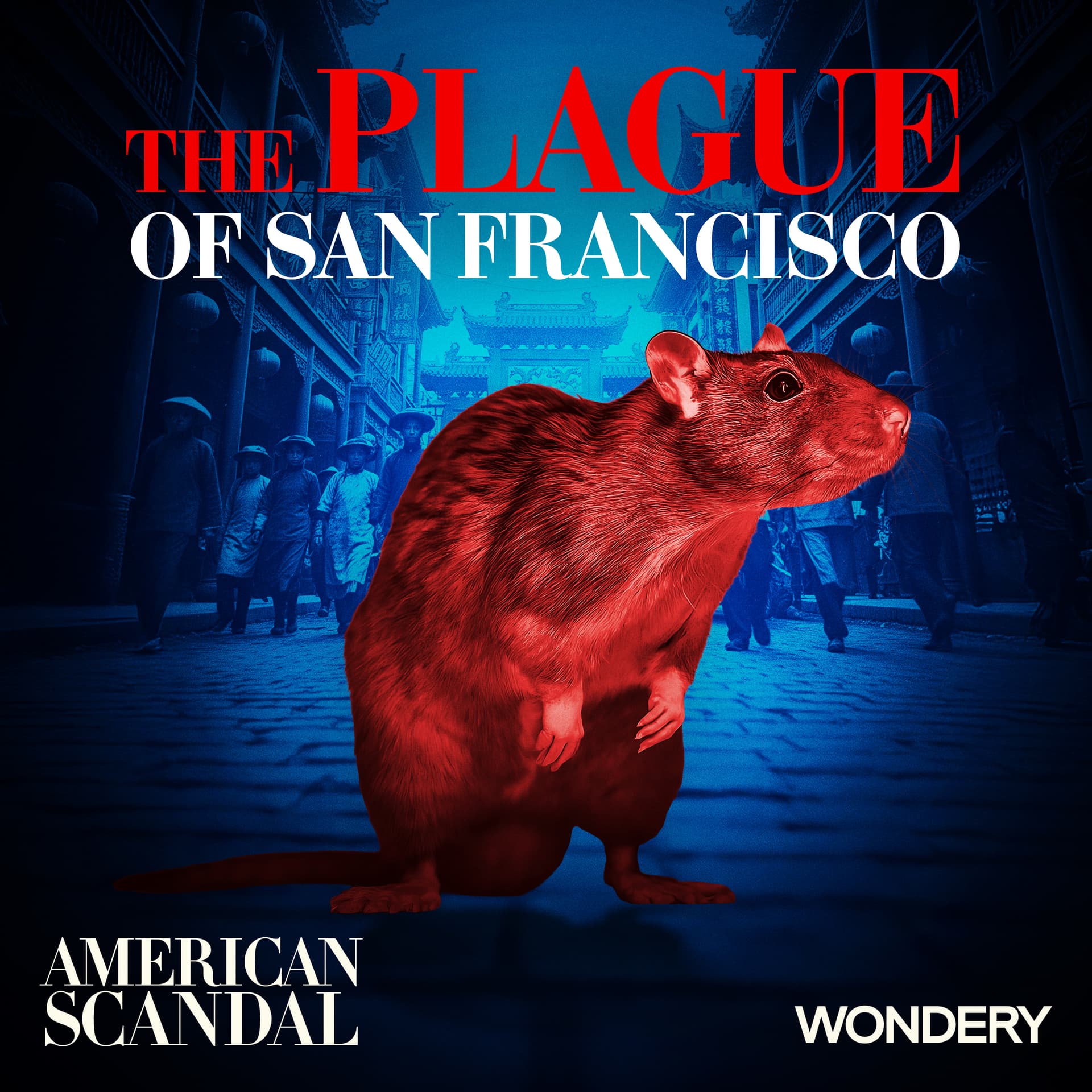
Early 1901–1903 San Francisco’s bubonic plague crisis, focusing on how politics and media suppression obstruct federal health work, allowing the disease to spread beyond Chinatown.
Guest backgrounds
No podcast guests are named in this episode transcript. (It includes narrative characters and historical figures, not interview guests.)
Key claims
Governor Henry Gage and allies suppress an independent doctors’ report to protect California’s economy; Surgeon General Walter Wyman privately agrees to bury the report and reassign Dr. Joseph Kenyon; Mayor Eugene Schmitz (backed by Abe Roof) halts sanitation and denies the plague; later, federal doctors must rebuild cooperation to prevent nationwide spread.
Notable examples
Gage’s meeting with San Francisco newspaper editors; Wyman’s deal to remove Kenyon; obstruction of Dr. Joe White’s autopsy (notebook/file seized, tissue slides hidden); Blue’s Chinatown outreach and lab relocation; Schmitz dismissing the Board of Health and declaring “There is no plague in this city.”
Written by AI. May contain mistakes. Listen to the episode to check what was said.
Chapters
Tap a time to open that second in VODr. Kenyon's Dilemma
0:26 to 3:24
Dr. Joseph Kenyon fears for his career as he awaits a pivotal commission's report.
“It's early February 1901 at the Angel Island Quarantine Station in San Francisco Bay.”
Political Maneuvering in California
4:23 to 8:59
Governor Gage seeks to suppress the report on the plague to protect California's economy.
“From Wondery, I'm Lindsey Graham, and this is American Scandal.”
A Deal with Consequences
8:59 to 12:21
Surgeon General Wyman engages in a deal to suppress the plague report, affecting Dr. Kenyon's future.
“he immediately dashes off a telegram to Wyman.”
Dr. Kenyon's Departure
12:21 to 14:00
Dr. Kenyon leaves California, reflecting on his failures and the state of public health.
“Wyman says Kenyon must set aside his pride in the wider interests of public health.”
Dr. White's Struggles with Plague Diagnosis
14:00 to 16:50
Learn about Dr. White's challenges in diagnosing the plague amidst political obstruction.
“and managing relations between city, state, and federal officials, it quickly becomes too much for him.”
Dr. White's Struggles with Plague Diagnosis
16:51 to 17:26
Learn about Dr. White's challenges in diagnosing the plague amidst political obstruction.
“Soccer's biggest tournament is here, and Enterprise is turning every corner kick goal into your chance to win a car.”
Rupert Blue's Journey to San Francisco
17:51 to 21:17
Discover Dr. Rupert Blue's background and his new assignment in San Francisco.
“I'm a podcast host, a journalist, and now with my newest project, the author of my own manifesto.”
Blue's Approach to the Epidemic
21:18 to 22:34
Learn how Dr. Blue tries to build trust with the Chinese community to combat the plague.
“He begins implementing changes immediately.”
Political Manipulations and New Challenges
22:35 to 25:33
Examine the political landscape as Dr. Blue faces new challenges with the election.
“The man who intends to pull the strings is 37-year-old Abe Roof, who on one hot evening in July of 1901 sits in an upscale restaurant, patiently watching the door.”
Schmitz's Mayoral Rise and Blue's Struggles
25:34 to 28:01
Understand the implications of Eugene Schmitz's election on plague management efforts.
“Instead, his wife Juliet has quickly grown tired of the disease-ridden city.”
Show all 12 chapters
Mayor Schmitz's Controversial Decisions
28:01 to 29:31
Learn about the drastic measures taken by Mayor Schmitz regarding the Board of Health.
“These are the names of the municipal advisory board members.”
The Escalating Plague Crisis
31:32 to 39:21
Details on the rising death toll and political ramifications of the plague in California.
“Rupert Blue still recovering in Milwaukee, the remaining federal health officials in San Francisco are soon overwhelmed.”
Transcript
Automatic transcript. May contain errors.0:00American scandal uses dramatizations that are based on true events. Some elements, including dialogue, might be invented, but everything is based on historical research.
0:26It's early February 1901 at the Angel Island Quarantine Station in San Francisco Bay. Dr. Joseph Kenyon is in his lab, searching frantically through his files. Last week, an independent commission of three doctors arrived in California from the East Coast. Their purpose was to establish once and for all whether Kenyon has been telling the truth about the bubonic plague in San Francisco. If those three doctors back him, Kenyon hopes the city will finally agree to do what is necessary to stop the spread of the disease. But if they rule against him, his once-glittering career is likely over. Damn it.
1:32Ah, damn it! The laboratory door opens and Kenyon's wife Lizzie rushes in. Joseph, are you hurt? Watch out for the glass. The damn ladder fell down. You're bleeding. No, I'm fine. It's nothing. Let me see. I said I'm fine. Kenyon hauls himself upright, wincing. His hair hangs damp and unkempt around his face. His shirt clings with sweat. Lizzie frowns with concern. What were you even doing up there? Looking for some autopsy records. The commission needs to see them before they make their decision. Well, Joseph, they'll see the truth. But will they speak it? Schrader didn't. White didn't. Wyman practically handed me my walking papers rather than support me.
2:11Kenyon has been disappointed by his fellow doctors before. He showed compelling proof of the plague to the famous physician George F. Schrader. But Schrader didn't support him. And when Surgeon General Walter Wyman sent a new doctor to take charge in San Francisco, he distanced himself from Kenyon as well. Kenyon just shakes his head. You know, I really thought I could count on them. Well, that wasn't your fault. You gave them the facts. They chose politics instead. And what if these men do the same? What if they decide that Joseph Kenyon is just too poisonous to associate themselves with? Well, you said they're good doctors, right?
2:43They came here to judge the evidence, not your reputation. That's the whole point, isn't it? Kenyon doesn't answer. Lizzie eases a stray hair away from his face and smiles. Trust the science, right? You told that to everyone else. Maybe it's time to tell it to yourself. When Dr. Joseph Kenyon first arrived in San Francisco in 1899, he wanted nothing more than to be transferred back east. Now, though, he's desperate not to leave, not with his work unfinished and his name in the gutter. For months, he's been vilified by the local press and ostracized by fellow doctors in California. But Kenyon knows he's right.
3:18The plague is here in this city, and the Independent Commission isn't just his last chance. It's San Francisco's as well.
3:54www.armandhammer.com With the VentureX Business Card from Capital One, you earn unlimited double miles on every purchase. Plus, big purchasing power means you can spend more and earn more. The Capital One VentureX Business Card. What's in your wallet? Terms apply. See CapitalOne.com for details.
4:23From Wondery, I'm Lindsey Graham, and this is American Scandal.
4:47By January of 1901, San Francisco's bubonic plague crisis was 10 months old. But despite the rising body count, local politicians, business leaders, and newspaper reporters continued to downplay the seriousness of the outbreak. They believed the health measures designed to contain the plague were a greater threat than the disease itself, and they attacked anyone who suggested otherwise. As head of the federal quarantine station in the city, Dr. Joseph Kenyon was soon in their crosshairs. But Kenyon received little support from his bosses in Washington, D.C. Instead, he was demoted, and another doctor was put in charge in San Francisco.
5:22So with his reputation shredded and his career in freefall, Kenyon pinned his hopes for redemption on an independent commission of doctors. But as he anxiously awaited their report on the spread of the plague in San Francisco, powerful forces were already moving in the shadows to suppress it. This is Episode 3, Duty and Truth.
5:45It's February 28, 1901, at the Governor's Mansion in Sacramento, California. Governor Henry Gage paces in front of the fireplace, the heels of his cowboy boots thumping on the polished floor. Behind him, his butler pours a brandy for his visitors, the editors of the four most popular newspapers in San Francisco. For the past year, Governor Gage has been defending California's reputation against what he sees as a medical conspiracy against his state. He's convinced these rumors about bubonic plague in San Francisco are all vicious lies, concocted by the federal government to punish California for its economic independence.
6:20dependence. But just a few days ago, he heard disturbing news. An independent commission of three doctors has confirmed the presence of plague in Chinatown, and now the report is headed to Washington for publication. So Gage knows he must act quickly. If this doctor's report is made public, the consequences for California's economy could be disastrous. So Gage has summoned the editors of the San Francisco Chronicle, The Call, The Bulletin, and The Examiner to his home in Sacramento for a talk. Once the butler has finished filling their drinks, Gage gets down to business. He tells the editors that the commission's verdict could be a death sentence for their city.
6:57Looking the man right in the eye, Gage says it's up to them to stop that from happening. News of the doctor's impending report must be buried. The newspaper men share cautious glances with each other, and after a pause, the editor of the examiner clears his throat. He says it'll be difficult to suppress the report if it's endorsed by the federal government. But Gage just waves away at that objection. He's sending men to Washington to ensure the report disappears into a forgotten office somewhere. But in the meantime, the newspapers in California must do their part. He points out that they've been unified in their opposition to Dr.
7:32Kenyon so far. For months, the Examiner has done nothing but mock and scorn him. Gage is simply asking that they continue. But the editor shakes his head. Criticizing the activities of one single doctor is different from taking a stand against the entire U.S. government. Gage tightens his grip on his brandy and then takes a moment to calm down. He knows intimidation won't work with these men. They've seen it all before. Instead, he decides to target what he knows matters to them more than anything else, money and power. So with a low growl, Gage says that if the commissioner's report is ever made public, California's economy wouldn't just suffer, it would collapse.
8:11The tycoons who owned the local newspapers would lose millions. And who could say how they would react then? They might cut costs at their newspapers. Or they could even shut them down entirely. The editors look at each other again, knowing most of their owners wouldn't think twice about firing them if it came to it. So with a nod, one by one, they all agree to Governor Gage's demands. So having secured a media blackout, Gage moves on to the next phase of his plan. He sends some of San Francisco's top power brokers across the country to Washington. Among them are industrial leaders and executives from the mighty Southern Pacific Railroad.
8:47Their goal is to put pressure on Surgeon General Walter Wyman to suppress the commission's findings. But once Dr. Joseph Kenyon learns that Gage has sent this small army of influential men to D.C., he immediately dashes off a telegram to Wyman. He alerts him to the scheme and tells him that any representatives of the governor are not to be trusted. But he fears this warning will go ignored because Henry Gage and his delegates are not the only ones with an interest in burying the truth.
9:18Surgeon General Walter Wyman sits in his office at the Marine Hospital Service headquarters in Washington, D.C. Rain and fog swirl outside the window, casting weak gray light on the dark wood and brass of the room. California Governor Henry Gage's delegates sit across from Wyman, and one of the Southern Pacific's impeccably-dressed executives holds up a copy of the commission's report. Well, Surgeon General Wyman, may I say this is an exceptionally thorough document. Your commission has done excellent work. They are diligent men. Well, you know, in my experience, diligence only tends to flourish under strong leadership.
9:52Washington is fortunate to have such a steady hand at the helm. I think you're flattering me, sir. Well, it's true. Now, may I ask who else has read this report? Aside from its authors, no one outside this room. Well, that's good. The executive leans forward. Because, Doctor, I have been empowered by Governor Gage to make a proposal. Ah, I see. And what does the governor have in mind? He proposes a full sanitation campaign in Chinatown, removing all the trash, fumigating infected areas, a thorough cleanup paid for by the city and the state. I see. And in return? Well, the governor, all of us, would wish for this report to remain confidential.
10:28Its findings would cause irreparable harm to commerce, to the state's reputation, to the trust our citizens place in their superiors. Wyman leans back in his chair. Then he opens the desk drawer beside him and places his copy of the doctor's report inside. Then he closes the drawer and nods to the men across the table. It's for the greater good. Well, then we have only one final concern. Your man in San Francisco, Dr. Kenyon, he's a... Well, he's not inclined toward discretion, is he? If he suspects an arrangement has been made, he'll shout it from the rooftops. You want him removed? We wouldn't be so bold to make any demands, but your cooperation would be more enthusiastic without him.
11:10Perhaps it would just be best if he were moved on, for the greater good, as you said. Well, you know, I had high hopes for Kinion once, and I thought of him as a protege. So I understand this is not an easy decision for you. Well, sadly for all his many gifts, Dr. Kinion is yet to appreciate the value of compromise and diplomacy. I think it might be time for him to learn that lesson, but somewhere else. Despite the fears that he expressed privately, Surgeon General Walter Wyman has never publicly acknowledged the plague in San Francisco. He saw what happened to Joseph Kinion for speaking out, and so he stayed silent.
11:47But if the commission's report is published, Kinion will be vindicated, and questions might be asked of Wyman about why he refused to speak out earlier and act more forcefully. So he struck a deal to bury the report and Kenyon's career along with it.
12:05Soon after this meeting in Washington, Dr. Joseph Kenyon receives a telegram. In it, Surgeon General Walter Wyman explains his decision not to publish the commission's report and announces that Kenyon is being reassigned to a less politically sensitive role in Detroit. Wyman says Kenyon must set aside his pride in the wider interests of public health. It's all for the greater good. But Kenyon sees through his boss's ruse, and he has no intention of going quietly. Against Wyman's wishes, Kenyon uses his remaining time on the West Coast to give lectures and speeches to other doctors. He justifies his actions as sharing what he's learned during his tenure in San Francisco, but he can't hide his bitterness at how he's been treated.
12:47Addressing physicians in Sacramento, he says that any doctor reporting plague must be prepared to be made a target, to submit to all the lowest forms of persecution, simply because he had no more sense than to do his duty and to tell the truth. But soon enough, Kenyon's time in San Francisco comes to an end. In early May of 1901, he and his family pack up their belongings on Angel Island and take the ferry across the bay for the final time, and there's no leaving party to see them off. Kenyon stands on the deck of the ferry, watching the quarantine station fade into the fog behind him. Feels very different from the young doctor who arrived in California only two years ago.
13:25Back then, despite his unwanted assignment in San Francisco, Kenyon believed his future in the Marine Hospital Service was full of promise. Now he's been sidelined and humiliated. He leaves California with nothing except bad memories. But he still hopes for the sake of the nation, that Dr. Joe White, his replacement on Angel Island, can succeed where he did not. Dr. White has experienced epidemics in Europe and elsewhere in the United States. But when he arrives on Angel Island, he understands that the scale of this new job is daunting. Between overseeing health inspections of incoming ships, tracking new cases of the plague, and managing relations between city, state, and federal officials, it quickly becomes too much for him.
14:07He realizes that the stubborn, argumentative Kenyon may have been the only thing preventing a full-blown public health catastrophe in San Francisco. And what's worse, White quickly sees that the deal struck between California and the federal authorities was a sham. The promised cleanup of Chinatown is half-hearted at best, and despite Governor Gage's pledges of cooperation, he is in fact doing everything he can to disrupt the work of federal health inspectors. So in late May of 1901, White himself goes down to a morgue in Chinatown to conduct an autopsy on a suspected plague victim. He's still completing his initial assessment when the door flies open.
14:45Two men in dark suits and protective face masks stride into the room. They tell the startled White that they're representatives of the governor tasked with overseeing the plague sanitation efforts in Chinatown. One of the men steps forward and grabs White's notebook out of the doctor's hands. Staring at the contents inside, he can't decipher the medical shorthand. His brow furrows. He grows angry as he demands to know what White is hiding with this strange code. White tells him that he's just taking note that the bacteria in the tissue extracted from this body indicates bubonic plague. But before White can finish, the other man interrupts.
15:20He argues that the body shows none of the usual signs of plague. There are no swollen lymph nodes, no blackened skin, no pustules. Dr. White tries to explain that plague symptoms can differ from case to case. In fact, the most deadly form of the disease attacks the lungs and kills the victim before any external signs can develop. So the only definitive diagnosis can come from a microscope. But the governor's men just scoff. One of them snatches the patient's medical file, stripping White of the documents he needs to record an official cause of death. And when he demands them back, the two men refuse, accusing him of fabricating the diagnosis.
15:56Burning with indignation, White picks up his microscope and stashes the tissue slides inside his briefcase, then strides out of the morgue before the governor's men can do any more harm. But over the weeks that follow, Governor Gage and his agents continue to obstruct, disrupt, and delay the work of federal health officers as they try to track the spread of the plague. Dr. White feels increasingly overwhelmed by the job he's inherited. He writes to Surgeon General Wyman, urgently requesting reinforcements. He's only been in San Francisco for a few months but already he's drowning. So a few weeks later, yet another young Marine Hospital Service doctor will pack his bags and head west, hoping to succeed where first Dr.
16:35Joseph Kinion and then Dr. Joe White failed. Because if there is plague in San Francisco, this new doctor must turn back the time and stop the Black Death from marching across the country.
16:50Here it is. This corner kick could be a big one. There's the cross. He rises to meet it. And it's a car! Soccer's biggest tournament is here, and Enterprise is turning every corner kick goal into your chance to win a car. The moment a corner kick is called, post on X with hashtag on every corner, hashtag sweepstakes, and tag Enterprise. If it's a corner kick goal, you could win. Winners may pick up their cars at an enterprise or an enterprise car sales location on a corner near them. With over 1 ,000 corner kicks expected, that's a lot of chances to win. For more details and an additional chance to win, visit OneEveryCorner.com.
17:32No purchase necessary for legal residents of the 50 U.S. states in D.C., Puerto Rico, Canada, Ireland, the United Kingdom, France, Germany, and Spain who are 21 and older. Sweepstakes end July 19, 2026. Void where prohibited. Prize awarded if a corner kick goal is scored. For entry details and official rules, visit oneverycorner.com. Hey, Dan Taberski here. I'm a podcast host, a journalist, and now with my newest project, the author of my own manifesto. Well, it's a manifesto about manifestos. My search for inspiration in a world that feels more infuriating, more out of its freaking mind with each passing hour.
18:07Manifestos are a call to action, an artful scream. They capture our anger and they try to do something with it. This is my attempt to take the Manifesto back from mass shooters and nihilists and return it to its rightful place with the warriors, the visionaries, the regular folks with just the right amount of crazy. I compare notes with radicals, secessionists, internet trolls out for a laugh, and punk singers screaming their guts out, all trying to turn their anger into the world they want to see. Listen to Manifesto wherever you get your podcasts. Audible subscribers can binge all episodes of Manifesto early and ad-free right now.
18:42Join Audible in the Audible app or by subscribing on Apple Podcasts.
18:59For most of his life, 33-year-old Rupert Blue has lived in the shadows of others. The son of a Civil War hero and the brother of another decorated soldier, there were high expectations that he would follow his family members into the military. He shared their tall build and boxer's frame. But the bookish Blue was never cut out for Army life. Instead, he decided to carve out a name for himself by becoming a doctor. He enrolled in medical school in 1890, then applied to the Marine Hospital Service. He specialized in bacteriology. Blue had always wanted to travel the world, studying infectious diseases, and in 1900, he got his wish.
19:37He was posted to Italy, where he investigated rumors of plagues spreading in Rome. Blue and his wife Juliet loved the glamour and romance of life in Europe, so they were disappointed when he was brought back to the U.S. on assignment to Milwaukee. But that was a short-term appointment. Only a few months later, Blue accepted a new posting to San Francisco. Dr. Blue hoped that on the West Coast, he and Juliet would be able to recapture some of the excitement they experienced in Rome. But when they arrived, they realized there's nothing romantic about San Francisco in 1901. So Dr. Blue dedicates himself to the work he's here in the city to do.
20:14As Dr. Joe White's second-in-command, Blue is tasked with overseeing the heart of the epidemic, Chinatown. Tensions remain high in the district, where the authorities are still regarded with fear and suspicion. If he's to succeed in this mission, Blue quickly realizes that he will have to do something few white doctors have managed before, win the trust of the local population. For all his strengths, Dr. Joseph Kenyon was not a people person. He was cool and aloof and saw Chinatown more as a petri dish than a place where real people lived and worked. But Dr. Blue is more affable by nature. He treats the Chinese residents with respect, and in return, they begin opening their doors to him.
20:54and for the first time, Marine Hospital Service staff are granted access to the parts of the district most in need of sanitation, the garbage-filled back alleys and wood-lined basements overflowing with sewage. Blue's progress and hard work impress his superiors. Within weeks, the exhausted Joe White steps down and recommends that Blue replace him. Surgeon General Walter Wyman agrees. White is transferred out of San Francisco, and responsibility for fighting the plague falls to the young Rupert Blue. He begins implementing changes immediately. For over a year, the federal efforts to fight the plague have been managed from Angel Island, the remote quarantine station five miles offshore.
21:33There's plenty of peace and quiet there, but Blue believes it's cut off Marine Hospital Service staff from the people they're meant to be helping. So he relocates his headquarters from Angel Island to a rented office in Chinatown and sets up a new laboratory near the heart of the outbreak. He's convinced that if he can show the people of Chinatown that he is on their side, they will be more willing to help him fight the plague that is stalking their district. But it's not just Chinatown where Blue needs to win hearts and minds. San Francisco's mayor, James D. Phelan, isn't actively blocking Blue's efforts, but he hasn't endorsed them either.
22:07Meanwhile, the city's press remains hostile to all federal interventions, and Blue knows that the majority of the San Francisco public still doesn't take the plague threat seriously. But by the summer of 1901, Blue hopes that one of those obstacles is about to disappear. Phelan's time in office is coming to an end, and the city is getting ready to elect a new mayor. Blue prays that the people will choose someone more responsible, who might acknowledge the danger of the plague and welcome efforts to contain it. But unfortunately, there is already a plot brewing to elect a mere puppet as the next mayor of San Francisco.
22:40The man who intends to pull the strings is 37-year-old Abe Roof, who on one hot evening in July of 1901 sits in an upscale restaurant, patiently watching the door. Roof is a successful attorney who established himself as a major power broker in San Francisco. And recently, he took control of local political group the Union Labor Party. But Roof doesn't really care about workers' rights. What he wants is influence. Taking over this political party was just the first step. Now he intends to find a candidate for mayor who can, with the right manipulation, win the election. Roof looks up as a tall, handsome man enters the restaurant.
Read the full transcript
23:18He's not the only one who takes notice. 36-year-old Eugene Schmitz is famous in San Francisco as the leader of the orchestra at the fashionable Columbia Theater. And almost all eyes in the place are following him as Schmitz is guided across the restaurant by the maitre d'. Standing up, Roof welcomes him with a warm smile and an outstretched hand. Schmitz takes a seat as the waiter fills his wine glass. Then, once they're alone, Roof explains the purpose of this invitation. He says that with the mayoral election coming up, the Union Labor Party has been searching for just the right candidate, and he believes that Schmitz is that man.
23:53Leaning back in his seat, Schmitz seems surprised. He says he's never considered running for office before. He's a bandleader, not a politician. But Roof insists that Schmitz is the ideal candidate. He's good-looking, charismatic, and commanding on stage. But what Roof does not say is that he also thinks Schmitz is so inexperienced and naive that controlling him will be easy. Instead, Roof smiles again and says that Schmitz will be a big hit with voters. And if he can lead a city hall as well as he conducts an orchestra, then San Francisco will thrive. Schmitz runs a hand through his shiny black hair.
24:28But then he shakes his head. He says that now seems like a bad time to try his hand at politics, with his plague controversy still rumbling on. You wouldn't want to get mixed up in any of that. But again, Roof dismisses the concern. The plague is a hoax, and the city's already wasted too much money on it. He insists that if they controlled City Hall, then they could make the plague problem disappear in a single day. Schmitz nods approvingly, which leads Roof to believe that Schmitz is entertaining the idea, so he offers one final incentive. With a glint in his eye, he tells Schmitz that he knows plenty of very rich men who would be grateful to have a friend running City Hall.
25:05A grin spreads over Schmitz's face. He likes what he's hearing. And a few weeks later, Schmitz announces his candidacy under the banner of the Union Labor Party. Just as Roof predicted, Schmitz's good looks and commanding stage presence are a hit with the public, and he quickly surges in the polls. But the rise of a plague skeptic is a disturbing development for Dr. Rupert Blue. It's not the only one, though. Away from work, Blue's personal life is unraveling. When he was given his new assignment, he'd hoped that San Francisco would be just what his marriage needed. Instead, his wife Juliet has quickly grown tired of the disease-ridden city.
25:42And in August 1901, she returns to Washington and never comes back. Heartbroken and ashamed, Blue starts working tirelessly to distract himself. Eager to build more bridges with the Chinese community, he hires a local interpreter to liaise between Chinatown residents and his officers. And with this interpreter's help, more cases of the plague are brought to Blue's attention. Slowly, the map of Chinatown he's pinned to his laboratory wall begins to fill with red crosses, marking the discovery of new victims. But each new red cross is just another question. It's been known for centuries that rats can carry the plague from port to port, but their possible role in human infection baffles Blue.
26:23So as the death toll keeps climbing, he drives himself half mad with this puzzle of how the disease is being transmitted. Working every hour and even sleeping in his lab, eventually he burns out. Exhausted, Dr. Blue requests a temporary transfer back to Milwaukee. He hopes that the wide open spaces of the Midwest will heal him. And in late 1901, the request is reluctantly granted. San Francisco has chewed up and spat out yet another federal doctor. And in Blue's absence, the city will only become more hostile to the officers of the Marine Hospital Service because in January 1902, a new mayor takes charge in San Francisco.
27:02And as he ambles to his new plush office in City Hall, Eugene Schmitz makes sure to flash a smile and warmly greet his staff and constituents. Just because the campaign is over doesn't mean he can turn off the charm. And besides, this new position suits him. So he's glad to see the man responsible for all of it, Abe Roof, waiting for him in his office.
27:25Hey, morning, Abe. Good morning, Mr. Mayor. Eugene Schmitz flops into his chair and laces his fingers behind his head. You know, I've got to say, you were dead right. Running for mayor might have been the smartest thing I've ever done. Well, I knew you'd take to it, and I knew the city would take to you. Have you seen the papers, the Chronicle, the Bulletin? They're all in love with you. Roof tosses a pile of newspapers in front of Schmitz, who eagerly reaches forward to read them. Ah, look at this. The musical mayor. I like that. It does have a ring to it, doesn't it? Roof reaches down and grabs his briefcase.
27:57He clicks it open and takes out a stack of documents. Schmitz frowns. Oh, no, what's all this? These are the names of the municipal advisory board members. We need to go through them and make sure we're all on the same page. Geez, Abe, that looks like a lot of paperwork. Well, Mr. Mayor, that's why I'm here. I can take this off your hands so you can get on with more important things. Still, I'm going to walk you through the game plan. All right. The first order of business is the Board of Health. Biggest liability we've got. They are just throwing city money at sanitation, pushing this big plague lie.
28:28And they're getting a little too cozy with the feds, too. If Washington forces another quarantine on us, they're sure to go along with it. And then you can kiss that public support goodbye. But we can't have that, can we? But what do we do? We just swap them out, bring in new doctors? You know, Mr. Mayor, that is an excellent idea. We need men of learning who will focus more on making San Francisco healthy than making Washington happy. And we can just do that? Clean house? Well, who is sitting behind the mayor's desk? I am. Precisely. You've got a mandate, Mr. Mayor. The people of San Francisco voted for change, and we're going to give it to them.
29:03Soon afterward, Abe Roof and Mayor Schmitz march into the health department at City Hall, accompanied by four hand-picked physicians. Schmitz announces that he is dismissing the current Board of Health and appointing these new doctors in their place. All ongoing sanitation campaigns in San Francisco are to be halted immediately. As Roof watches on with a satisfied smile, Schmitz loudly proclaims, There is no plague in this city.
29:32Yo there! Tis I, Queen Mortuana of the Night Realm, a.k.a. Kate McKinnon. and her Raven minion JoJo, a.k.a. Emily Lynn. If you do not download and binge my show, Heads Will Roll, Air Apparent, on Audible, I will cut off your head! Oh no, maybe just tell them about the guest stars like Richard Kind, Carrie Coon, Jimmy Fallon, et al. But they were in it, and if you don't listen to them, then I will cut off your tongue, then cut off your head, and then put the tongue in the head hole. Aw, you tried. Listen now exclusively on Audible and Dental of the Audible app today or off with your head! I'm kidding.
30:35After a war that nearly tore us apart, we came as close as we've come to answering it. And it's a story worth a closer look. I'm Michelle Obama, and I'm proud to announce Higher Ground's new podcast, Reconstruction, The Unfinished Promise. Guided by best-selling author Malcolm Gladwell and featuring my husband, Barack Obama, This limited series uncovers the untold stories of Reconstruction, what they mean for us today, and how our past can shape the future we choose to build. Reconstruction, the unfinished promise, is available now on Audible or wherever you get your podcasts.
31:30With all state and city sanitation efforts suspended, and Dr. Rupert Blue still recovering in Milwaukee, the remaining federal health officials in San Francisco are soon overwhelmed. The plague is spreading faster and faster, with every week seeming to bring another death and another Red Cross on the map in the Chinatown laboratory. While Dr. Blue is away, the federal health efforts are led by another doctor, a 48-year-old veteran of the service named Arthur Glennon. But for all his experience, Glennon doesn't share Dr. Blue's charm. The Chinese don't trust him, and all the progress that Blue made with the Chinatown community withers away.
32:07So that by September 1902, the official death toll is up to 80, though the true number is far higher. But if things are looking dire for the doctors in San Francisco, they aren't looking much better for California Governor Henry Gage. Gage's popularity has collapsed after a series of public scandals, and the California Republican Party has refused to nominate him for re-election. During his last days in office, he becomes reclusive and bitter. He blames his downfall on Dr. Joseph Kinion and the plague hoax. But it's another doctor that ultimately ends Gage's political career. After rejecting Gage, the Republican Party turned to Dr.
32:45George Pardee, a physician and former mayor of Oakland. In November 1902, he narrowly wins the statewide election by less than 3 ,000 votes to become California's newest governor. But the prospect of a doctor in the governor's mansion is a boost to the beleaguered staff of the Marine Hospital Service. Arthur Glennon and his colleagues look forward to improved cooperation and assistance battling the epidemic. But during his inaugural address in January 1903, Pardee disturbingly makes no mention of the plague. It seems that the issue has become so politically toxic in California that Pardee simply doesn't want to get involved.
33:21And without his support, and the City Board of Health still hopelessly compromised by Mayor Schmitz, the Marine Hospital Service is on its own. But the deepening crisis in California has not gone unnoticed beyond its borders. And in mid-January 1903, an emergency meeting is held at a Grand Hotel in Washington, D.C. It's attended by United States Surgeon General Walter Wyman and representatives from the health boards of 11 different states, including California. These men meet in an opulent private dining room, but the soaring stone columns and glittering mirrors soon echo to the sounds of raised voices.
33:56The representative from California sinks deeper in his chair as the other board members take turns haranguing him. They call him negligent and say that the state's refusal to act is putting the entire country at risk. The man from California tries to stammer a justification, but the others don't want to hear it. They threaten to introduce a full quarantine of the entire state unless things improve. If enacted, this nationwide embargo would deprive California of millions of dollars in revenue and end San Francisco's status as the foremost port on the West Coast. So pale-faced, the California delegate says he'll relay the message to the governor's office at once and promises that improvements will be made.
34:34But the meeting's not over yet. Once the members of the Boards of Health are finished with the California representative, they turn to Surgeon General Wyman. He's been quiet so far, hoping to avoid direct criticism. But now the other men around the table demand to know what the Marine Hospital Service has been doing for the past three years and why so little progress has been made in fighting the disease. For Wyman, this extended interrogation is nothing short of humiliating. Throughout the entire epidemic, he's been trying to keep his head down and let others, like Joseph Kinion, take the flack for controversial decisions.
35:07But the ongoing plague in San Francisco is becoming an embarrassment to the Marine Hospital Service. It looks weak, and that makes Wyman look weak too. So when the meeting finally comes to an end, Wyman makes a quick exit. He knows he must act decisively to save his reputation. He immediately sends a telegram to Arthur Glennon in California, writing that the situation is now entirely changed and demands absolute frankness on the part of the authorities in the city and state. Then he suggests that he send back the only man who has ever made any real progress in San Francisco.
35:43So in late February of 1903, locomotive screeches into the Southern Pacific Terminal and Dr. Rupert Blue steps down onto the platform. In his hand, he clutches a single suitcase. Blue's marriage is over. His home in Milwaukee is empty. All he has left is this city, his lab, and one final shot at finishing what he started. He's making his way through the station toward the exit when he hears a voice above the throng of passengers around him. Dr. Blue! Dr. Blue! Blue turns to see fellow Dr. Arthur Glennon, pushing his way through the crowd. Finally reaching Blue, he clasps his hand tightly. Dr. Blue, Arthur Glennon, a real pleasure.
36:23Nice to meet you, but please call me, Rupert. How was your journey? Long, but I'm glad to be back. I understand we've got our work cut out. Yes, Dr. Wyman tells me you're staying at the Occidental. That's right. Well, I'll walk you there. They step out into the streets. The noise of the city clamors around them, and Blue realizes he's missed it. As they walk, Glennon updates him on the dismal situation in Chinatown. I'm afraid things have gotten worse since you've left. Officially, we're up to 93 deaths, but you and I both know that's a low estimate. Relations with the Chinese are strained, to put it mildly.
36:56I'm quite certain they're hiding bodies from us. Although, frankly, with the number coming through the lab already, they may be doing us a favor there. The two men cross Market Street into Union Square. Lou dodges around a carriage. And what about the state officials? Any movement since the conference in D.C.? I've not noticed any great change so far. Well, the new governor won't want to make California any more of a pariah. That may be true, but even if Pardee plays ball, Mayor Schmitz is still a problem. And perhaps we'll have to pay him a visit, try to bring him around. I'll be honest with you, you're wasting your breath.
37:26That man is as crooked as they come. He's gutted the City Board of Health, and he's repeatedly denied even the existence of Clay. Well, there's got to be another angle, right? Maybe the press? Chamber of Commerce? I mean, the mayor wouldn't want to cross the business community. What if he just digs in his heels? Then we have to find another way. This epidemic is on the cusp of breaking out of San Francisco. We cannot afford to delay a moment longer. It's up to us now. With Dr. Rupert Blue's encouragement, Arthur Glennon drafts a public declaration to be signed by all major political figures in San Francisco.
38:01It confirms the presence of the plague and pledges support for a comprehensive plan to stamp it out. They take it first to a group of prominent businessmen who have heard about the threat of a state embargo. It doesn't take much convincing to make them sign. And with these signatures on the document, Glennon then marches into the mayor's office and demands Eugene Schmitz sign it too. Unwilling to risk alienating the local business community, Schmitz reluctantly adds his name to the paper as well. But Glennon and Blue aren't finished there. Glennon catches a train to Sacramento, where he secures the signature of the last major power broker in the region, Governor Pardee, making it the first time since the beginning of the outbreak that there is a shared public commitment to addressing the crisis.
38:44But as the health inspectors return to Chinatown in force, and the sanitation campaign begins again, Dr. Blue can't help thinking about the map on the wall of his lab. The streets of Chinatown can barely be seen for the red crosses covering them, one for each victim of the plague. But now more and more crosses are appearing in blocks outside the district as well. The plague is beginning to escape. And unless Dr. Blue can figure out how the disease is spreading and stop it, those red crosses will keep multiplying. Soon, they won't just cover maps of San Francisco, but of the entire United States.
39:22From Wondery, this is episode three of The Plague in San Francisco for American Scandal. In our next episode, just as San Francisco seems to be finally turning a corner, a catastrophic natural disaster thrusts the city into a renewed battle against the plague.
39:46Follow American Scandal on the Audible app or wherever you get your podcasts. You can listen to all episodes of American Scandal ad-free by joining Audible. And to find out more about me and my other projects, including my live stage show coming to a theater near you, go to NotThatLindsayGraham.com. That's notthatlindseygram.com.
40:41This episode is written and researched by Joe Viner. Fact-checking by Alyssa Jung Perry. Managing producer Emily Burke. Development by Stephanie Jens. Senior producer Andy Beckerman. Executive producers are William Simpson for Airship and Jenny Lauer Beckman, Marshall Louis, and Aaron O 'Flaherty for Wondery.
41:07I'm Raza Jaffray, and in the new season of The Spy Who, they open the file on Benedict Arnold, the spy who betrayed the American Revolution. America is fighting to free itself from the British Empire, and one of its foremost generals is Benedict Arnold. He's a smuggler turned battlefield hero and admired for his aggressive tactics. But when a war wound, a new wife, debts and politics test his loyalty to the mags, he turns spy and devises a plot to shatter the revolution and help Britain capture rebel commander-in-chief General George Washington. And that plot would make him the most infamous traitor in US history.
41:51Follow The Spy Who now, wherever you listen to podcasts. You can also listen to the full season of The Spy Who Betrayed the American Revolution, early and ad-free on Audible.
From the publisher
The sharks are circling for Joseph Kinyoun. After trying and failing to convince San Francisco to take the plague seriously, his sole objective is now to defend himself and save his career.
Be the first to know about Wondery’s newest podcasts, curated recommendations, and more! Sign up now at https://wondery.fm/wonderynewsletter
Listen to American Scandal on the Wondery App or wherever you get your podcasts. Experience all episodes ad-free and be the first to binge the newest season. Unlock exclusive early access by joining Wondery+ in the Wondery App, Apple Podcasts or Spotify. Start your free trial today by visiting wondery.com/links/american-scandal/ now.
See Privacy Policy at https://art19.com/privacy and California Privacy Notice at https://art19.com/privacy#do-not-sell-my-info.
