
In short
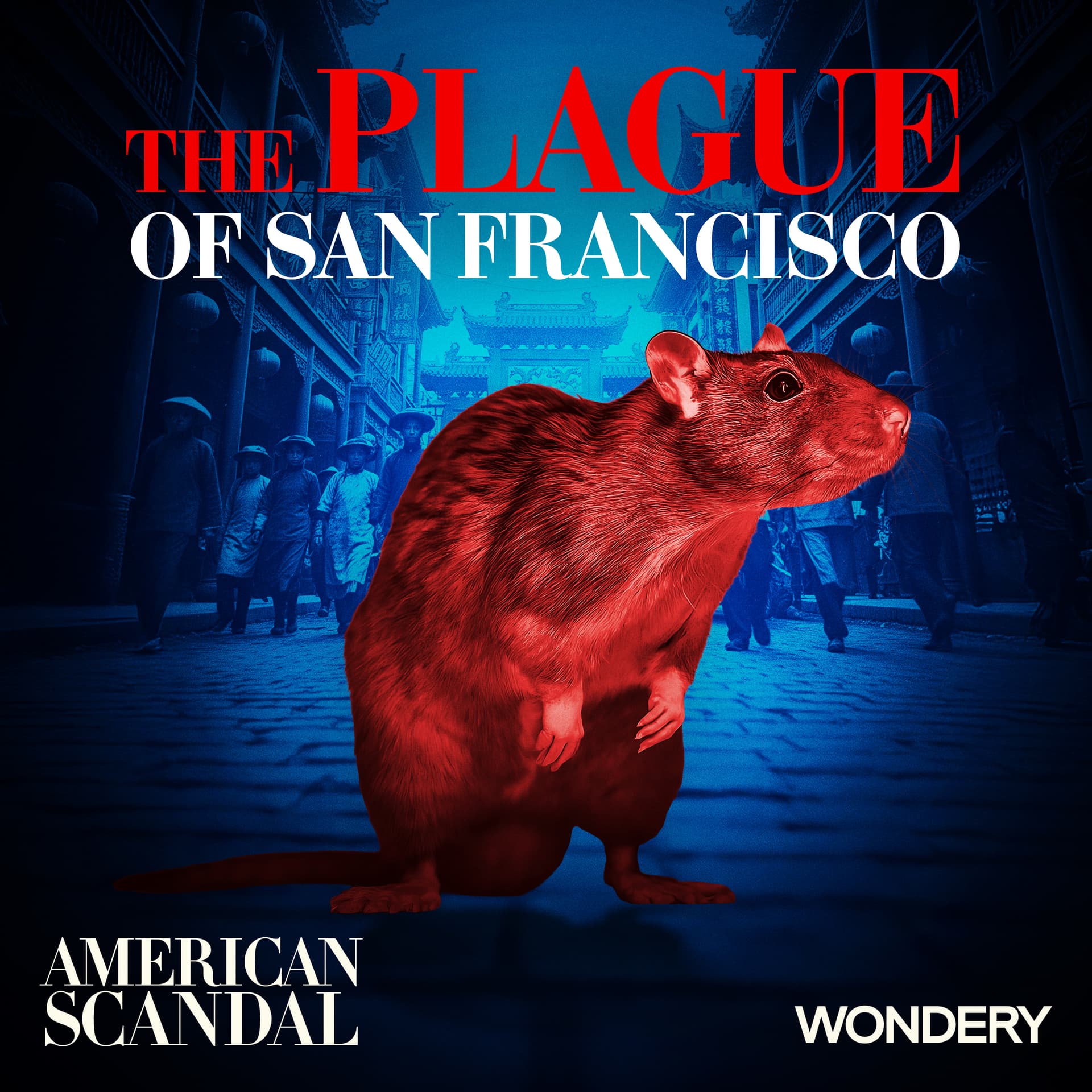
Dr. Rupert Blue’s federal sanitation campaign to stop bubonic plague in 1903–1904 San Francisco, the discovery that infected fleas in stolen lumber spread the disease, and the later 1907–1908 resurgence after the 1906 earthquake, culminating in rat control, public messaging, and the Great White Fleet arriving without a plague outbreak.
Guest backgrounds
No episode guests are introduced in the transcript. (It’s a dramatized historical narrative with recurring narrator/host segments.)
Key claims
Plague spread from rats to humans via fleas, not primarily person-to-person; removing balconies/stoops and disinfecting/controlling rodents reduces cases; focusing only on Chinatown rat control can push rodents into other districts; after the earthquake, military-led sanitation fails and plague returns; Blue’s success depends on community cooperation and avoiding quarantines/travel bans.
Notable examples
Pietro Spadafora stealing firewood from Chinatown and dying with plague bacteria; the Rossi family in the Latin Quarter dying after Irena’s pneumonic plague; rat infection rates dropping from 2% to 1.2%; Great White Fleet docking in May 1908 with no new cases.
Written by AI. May contain mistakes. Listen to the episode to check what was said.
Chapters
Tap a time to open that second in VODr. Rupert Blue's Sanitation Campaign
0:45 to 4:49
Dr. Blue makes a case for a sanitation campaign to combat bubonic plague in San Francisco.
“But Blue has finally secured the backing of city and state authorities for a sanitation campaign to eliminate bubonic plague from the city once and for all.”
Cooperation Against Plague
4:49 to 5:43
A turning point in the fight against the plague as communities unite for health.
“What happens when OnlyFans becomes more than just a side hustle?”
The Tragic Spread of Disease
5:43 to 11:28
The story of Pietro Spadafora highlights the dangers of bubonic plague and its carriers.
“The spring of 1903 marked a turning point in San Francisco's battle against bubonic plague.”
The Rossi Family's Tragedy
11:28 to 14:00
The investigation into the deaths of the Rossi family reveals the ongoing threat of plague.
“but also finally confirmed how the terrible disease spreads.”
San Francisco's Battle Against Plague
14:00 to 15:38
Learn how Dr. Blue's sanitation efforts averted a plague outbreak in San Francisco.
“So it comes as little surprise to the doctors when just days after her death, both Giuseppe and Luisa also succumbed to the disease.”
The Devastating Earthquake of 1906
15:38 to 17:37
Explore the immediate effects of the 1906 earthquake on San Francisco's population.
“Their city has emerged from the crisis as a more modern metropolis, poised to embrace the promise of the 20th century.”
Crisis Management Post-Earthquake
20:02 to 22:34
Understand how Mayor Schmitz dealt with the aftermath and escalating crisis in San Francisco.
“San Francisco Mayor Eugene Schmitz holds an emergency meeting in the rubble of City Hall.”
Dr. Blue Returns to Combat the Plague
22:34 to 28:06
Learn about Dr. Blue's renewed efforts against the bubonic plague in a recovering San Francisco.
“When he arrives, he finds San Francisco on the brink of crisis yet again.”
The Plague Crisis Intensifies
28:06 to 30:09
Learn about the growing concerns surrounding the plague in San Francisco and its potential impact on a major celebration.
“The death toll from the latest outbreak is up to 74, making it officially the deadliest stretch of the entire plague crisis so far.”
Community Mobilizes Against the Plague
31:29 to 34:26
Explore how the San Francisco community rallied to combat the plague and the role of religious leaders in public health.
“Rupert Blue's public relations gamble has paid off.”
Show all 13 chapters
The Great White Fleet Arrives
34:26 to 37:55
Follow Dr. Blue's decisions as the Great White Fleet arrives in a city still coping with the plague.
“It seems at last the plague is in retreat.”
The Legacy of the Plague
37:55 to 39:29
Understand the long-term effects of the bubonic plague in San Francisco and its eventual return decades later.
“A new chapter in the city's history can now begin, but the bubonic plague was not over.”
A Historical Perspective
42:08 to 42:21
Learn about the historical context of societal change post-war and its significance.
“But once, just after a war that nearly tore us apart, we came as close as we've come to answering it.”
Transcript
Automatic transcript. May contain errors.0:00American scandal uses dramatizations that are based on true events. Some elements, including dialogue, might be invented, but everything is based on historical research.
0:25It's February of 1903 at San Francisco City Hall. Inside a packed hearing room, 34-year-old federal doctor Rupert Blue stands before a fractious meeting of local landlords. Dr. Blue is in charge of the Marine Hospital Service in San Francisco. He and his predecessors in the job have faced years of hostility from newspapers and politicians. But Blue has finally secured the backing of city and state authorities for a sanitation campaign to eliminate bubonic plague from the city once and for all. He's proposed a huge demolition scheme in Chinatown to sweep the cramped and unhygienic streets that provide ideal conditions for the disease to spread.
1:04But landlords in Chinatown are seeking a legal injunction to stop the plan. So if Blue is to move forward, he must win them over.
1:16He tries to raise his voice above the chatter. Gentlemen, if I may please, just a moment of your time. Thank you. Now, I understand these measures might sound radical. They sound crackpot is what they sound. Blue peers through the crowd. A pink-faced landlord at the back of the hall is jabbing a finger at him. You're asking us to tear down property we spent years building. And for what? Sir, if you don't mind waiting until the end, please, I'll answer all your questions then. No, no, no, I don't have any questions. I have some statements. I own a row of properties between Stockton Street and Waverly Place, and I will not see them destroyed.
1:52They are mine. Sir, I appreciate your concern, but rest assured our plans do not include the demolition of entire buildings, just the balconies and stoops. And how will tearing down balconies get rid of the plague? That is a fair question, sir, and the answer is actually pretty simple. These balconies block sunlight and restrict airflow, leaving the streets below them damp, poorly ventilated, and vulnerable to rot and decay. So you're asking us to believe that a little sunlight is going to miraculously end the plague? No, sir, of course not. Sunlight alone will not achieve much. But combined with our other sanitary measures, it could make a real difference.
2:30Uh-huh. But who's going to pay for the price of all this disruption? It's going to be us, right? The landlords and the business owners who are just trying to earn an honest living here. Well, you're right. There will be some disruption. But we will try to keep that to an absolute minimum. And I promise we're going to work with the utmost efficiency. Well, I have a hell of an efficient fix for you. Why don't you get rid of the Chinese? They're the ones spreading this disease. Actually, sir, it is I say we have them moved to Angel Island, or better yet, back to China. Blue suppresses a sigh. To him, it's clear that the real blame lies with the landlords and their cramped, squalid buildings.
3:05Still, Blue knows he must tread carefully because he can't afford to alienate these men. Gentlemen, gentlemen, look, look, I give you my word. If you support our efforts, my staff and I will work tirelessly to make this city healthy again. But you have to trust us. Because if we don't act now, this disease will not stay in Chinatown. It will spread. It will spread to your families. It will spread to your homes. And I think you'd agree it's well worth losing a balcony or two to prevent that. Eventually, the landlords reluctantly agree to back Dr. Rupert Blue's campaign. Their threat of legal injunctions has dropped.
3:41And soon after, sanitation teams begin removing stoops, dismantling balconies, and clearing away piles of rotting timber in Chinatown. They go from house to house, fumigating rooms, scrubbing down surfaces, and sprinkling floors with chlorinated lime. And slowly, the district's familiar stench of decay is replaced by the acrid smell of antiseptic. Dr. Blue begins to feel encouraged, but only slightly. He's still terrified that another outbreak of the plague will erupt elsewhere in the city and overwhelm the already strained Marine Hospital service. If that happens, Blue fears that he'll have no chance of containing the plague to San Francisco.
4:18It will spread beyond the city's limits, and Blue will become just the latest in a long line of federal doctors who failed to stop it.
4:48Follow This Is Actually Happening wherever you get your podcasts. I'm Leon Nafok. What happens when OnlyFans becomes more than just a side hustle? OnlyFantasy is an in-depth look at the world's newest profession and how the rules of human intimacy are being rewritten online. Listen wherever you get your podcasts, or binge all episodes of OnlyFantasy ad-free only on Audible.
5:19From Wondery, I'm Lindsey Graham, and this is American Scandal.
5:43The spring of 1903 marked a turning point in San Francisco's battle against bubonic plague. After almost three years of denial and obstruction, California's politicians, reporters, and businessmen finally came together to fight the disease spreading on the West Coast. This new era of cooperation gave Dr. Rupert Blue something he'd never had before in San Francisco, some time to think. So while sanitation teams did their work in Chinatown, Blue and his staff began looking into the question of exactly how bubonic plague was spread. Although it had been known for centuries that rats were carriers of the disease, little was understood about how it spread from animals to humans.
6:22Dr. Blue was about to get a lead on the mystery, but more people would have to die first. This is Episode 4, The Golden City.
6:34It's July 1903 in San Francisco's Chinatown. 35-year-old Italian laborer Pietro Spadafora weaves his way through the crowds on his way home from work. Spadafora doesn't live in Chinatown, but he's gotten into the habit of passing through to pick up cheap produce. And as he walks through the maze of alleyways today, Spadafora notices a change in the neighborhood. Many of the buildings have been partially torn down. Their balconies, stoops, and awnings have been stripped away, leaving the streets feeling wider and more open. Then Spadafora spots something on a street corner that makes him pause.
7:09It's a pile of discarded lumber, just sitting out, abandoned in the open. Spadafore smiles because to him it's free firewood. He checks to make sure the coast is clear before helping himself to several planks. Hoisting them onto his shoulder, he hurries off down an alleyway. Then he heads north before crossing Broadway into the Latin Quarter, home to the majority of San Francisco's Italian, Mexican, and Spanish residents. His ragged leather shoes splash through puddles, tramping over discarded newspapers bearing headlines about Dr. Rupert Blue and his campaign to rid Chinatown of rats. But Spadafore doesn't read the newspapers, and he doesn't concern himself with politics or public health.
7:49Like countless other poor immigrant laborers here, his every waking moment is devoted to scraping together a living to support his family. So when Spadafore arrives at his tenement building, he carries the free firewood up the creaking staircase to the apartment he shares with his wife, mother, and two small children. There, Spadafore breaks the planks into smaller pieces and then places a few inside their stove. Soon, the dingy apartment is filled with warm, flickering light and the smell of hot food. But when Spadafora lies down to sleep that night, he notices an itchy red bump on his arm. He scratches at it a few times and then drifts off happily to sleep.
8:26A few days later, Spadafora comes down with a fever. Unable to report for work, he remains bedbound for several days as his condition steadily worsens. Eventually, his desperate family takes him to the Southern Pacific Hospital on Mission Street, but it's too late. On July 19, 1903, Pietro Spadafora succumbs to his sudden illness, and by then his elderly mother is exhibiting the same symptoms, and soon she too is dead. These fatalities are quickly reported to the Marine Hospital Service. Autopsies uncover tissue samples teeming with plague bacteria. At his headquarters in Chinatown, Dr. Rupert Blue reads the case reports with a growing sense of dread.
9:07The Latin Quarter is another densely populated district, and if plague gains a foothold there, then a second outbreak in San Francisco is almost inevitable. So Blue and his team trace Spadafora's movements. They soon find out about his habit of walking through Chinatown. That alone is unlikely to have exposed him to plague, but when health officers search the dead man's property, they find the stolen firewood. This lumber must have been the source of the disease. Something about it killed Spadafora and his mother. Blue soon discovers what it is. The wood is crawling with fleas. At this point in time, few scientists have made any connection between fleas and the spread of bubonic plague.
9:49The prevailing theory is that although rats can introduce the disease to a new place, it spreads primarily from person to person. But there are other theories. Four years ago, a French medical researcher began noticing insect bites on the bodies of plague victims in South Asia. He proposed that fleas, commonly found on rats, could transmit the disease to humans through their bites. But the international medical community dismissed the idea. They clung to the belief that plague primarily affected Asians due to their poverty and perceived poor hygiene. In the U.S., this racist theory was advanced by those at the very top of the medical profession, including Surgeon General Walter Wyman himself.
10:30But after the deaths of Pietro Spatafora and his mother, Dr. Rupert Blue begins to think that the flea hypothesis is correct. Spatafora has no identifiable close contact with rats or anyone infected by the plague, but he has been exposed to fleas. Blue immediately orders all lumber removed from buildings in Chinatown to be disinfected before it's dumped. Then he concentrates the ongoing sanitation campaign on purging the city of rodents. He advocates the use of traps and poison, but also introduces a bounty of 10 cents for every rat, dead or alive, brought to his Chinatown laboratory. There, Blue's team of doctors carefully examine the rodents, searching for evidence of plague before incinerating the remains.
11:16The work is grim and painstaking, but as the pile of dead rats grows over the weeks that follow, the number of plague cases falls. Dr. Blue begins to feel cautiously optimistic. He may not only have ended the plague in California, but also finally confirmed how the terrible disease spreads. But by early the following year, that optimism looks suddenly premature. Months after the death of Pietro Spadafora, there's a new surge of cases in San Francisco's Latin Quarter. And as Dr. Blue pours over the data, a dreadful new possibility dawns on him. By focusing on rat control in Chinatown, he may have simply just driven the rodents out of one district and into another.
12:00It's February 1904 in a ramshackle row house in the Latin Quarter. Inside a gloomy parlor, Giuseppe and Luisa Rossi are holding a funeral for their 18-year-old daughter, Irina. Candles flicker beside the open casket, throwing shadows on a crucifix on the wall and a framed image of the Madonna. Dressed in black, Giuseppe gazes down at his daughter's body and tugs at the beads of her rosary. Last week, Irena fell ill with a high fever. Giuseppe and Luisa could only wait and watch, bewildered and horrified, as their daughter got sicker and sicker. She died earlier this morning. A knock at the door interrupts their silent vigil.
12:41Assuming it's the priest, Giuseppe goes to open the door. But it's not a clergyman waiting there. Instead, two federal health inspectors stand on the doorstep. They've received word that an Italian girl in the Latin Quarter has been bedbound with a high fever, and they've come to investigate it as a possible case of plague. Giuseppe tells them that they're too late. Irene passed away this morning. But the officials aren't here to save her. They want to determine what killed her. Giuseppe recoils, refusing, asking the inspectors to leave and let them mourn their daughter in peace. But the officials stand their ground.
13:16They have a duty to investigate every suspicious death, and that means conducting an autopsy. After much debate, Giuseppe relents, but on two conditions. First, the autopsy must be done right away so Arena can be buried tomorrow. Second, he demands to be present to ensure his daughter's body is treated with respect. After a short conference, the officials agree. So that night, Giuseppe sits in the Marine Hospital Service Laboratory in Chinatown, watching surgeons make careful incisions in Arena's body. Tears brim in his eyes as the doctors removed tissue samples from his daughter's lungs and spleen, and lab results soon confirm Irena died of pneumonic plague, the most aggressive form of the disease that attacks the lungs.
14:00So it comes as little surprise to the doctors when just days after her death, both Giuseppe and Luisa also succumbed to the disease. For Dr. Rupert Blue, the death of the Rossi family is an alarming sign that plague is spreading once again. So immediately, he orders the sanitation efforts that proved so successful in Chinatown be extended to the Latin Quarter. The streets are then cleaned, old and unhygienic structures are demolished, and concrete is laid in place of wooden floors, preventing rats from nesting underneath. These measures work. The rat population shrinks and the number of plague cases decline.
14:36A full-blown outbreak in the Latin Quarter has been averted. And by May of 1904, the citywide death rate has fallen by 15 % on the previous year. Soon, there are weeks and then months with no new plague cases at all. Dr. Blue is hesitant to declare an end to the epidemic, but his boss in Washington has no such reservations. Confident that San Francisco is now safe and the reputation of the Marine Hospital Service has been restored, Surgeon General Walter Wyman sends a telegram to Dr. Blue. His work in California is done. He's being reassigned again, this time to Norfolk, Virginia. But unlike his unhappy predecessor, Dr.
15:17Joseph Kenyon, Blue leaves San Francisco a hero. His departure in early 1905 is marked with an official proclamation thanking him for his skillful cooperation in all pertaining to the welfare of San Francisco's sanitary health and commercial prosperity. After five years and at least 113 deaths, the plague seems to be over. The citizens of San Francisco begin to look to the future with hope. Their city has emerged from the crisis as a more modern metropolis, poised to embrace the promise of the 20th century.
15:51Just over a year later, a few minutes after 5 a.m. on April 18th, 1906, San Francisco Mayor Eugene Schmitz is fast asleep in bed, when suddenly he's woken by a violent tremor shaking the house. Julia? Julia, wake up! What? What's going on? I think it must be an earthquake. Look at the ceiling. Above them, the chandelier swings back and forth wildly as the entire mansion trembles around them. Mrs. Schmitz bolts up in bed, terrified. Eugene, what do we do? I don't know. I don't know. But suddenly, just as quickly as it began, the shaking stops and the house falls silent. In the distance, dogs begin to bark.
16:31Cautiously, Schmitz gets out of bed and pads over to the window. His wife draws up the covers around her. Is it over? Yes, my dear, I think it might. Schmitz is thrown to the ground as an even more powerful tremor rips up through the earth. He scrambles over to the bed as a spiderweb of cracks splits the ceiling and chunks of plaster fall to the floor. He looks up at his wife, terrified in bed. We need to get out of the house. Come, quickly, quickly. Schmitz grabs his wife's hand and they race downstairs in their nightclothes as their house continues to shudder around them. They bolt for the front door and run out into the street, away from the building that is now swaying violently on its foundations.
17:12The mayor's wife is pale. She staggers and clutches onto her husband. Oh, Eugene. Oh, courage, my dear. Courage. We're safe out here. We're safe. Let's just hold on. By the time the ground stops moving, more than 30 ,000 buildings in San Francisco have been reduced to rubble. Deep cracks have opened up in the cobblestone streets, swallowing entire houses, streetcars, and stagecoaches, and leaving more than 3 ,000 people dead. But the danger doesn't end with the earthquake. Over a quarter of a million residents will be left homeless by this disaster. And with all these people forced to live in filthy camps and shanty towns, disease will begin to spread among the ruins of San Francisco.
17:55And the stage will be set for yet another battle with bubonic plague.
18:03Hey, Dan Taberski here. I'm a podcast host, a journalist, and now with my newest project, the author of my own manifesto. Well, it's a manifesto about manifestos. My search for inspiration in a world that feels more infuriating, more out of its freaking mind with each passing hour. Manifestos are a call to action, an artful scream. They capture our anger and they try to do something with it. This is my attempt to take the Manifesto back from mass shooters and nihilists and return it to its rightful place with the warriors, the visionaries, the regular folks with just the right amount of crazy.
18:38I compare notes with radicals, secessionists, internet trolls out for a laugh, and punk singers screaming their guts out, all trying to turn their anger into the world they want to see. Listen to Manifesto wherever you get your podcasts. Audible subscribers can binge all episodes of Manifesto early and ad-free right now. Join Audible in the Audible app or by subscribing on Apple Podcasts.
19:26at all. Right. They were in it. And if you don't listen to them, then I will cut off your tongue, then cut off your head, and then put the tongue in the head hole. Aw, you tried. Listen now exclusively on Audible and Donald the Audible app today, or off with your head! I'm kidding.
20:02Shortly after noon on April 18, 1906, San Francisco Mayor Eugene Schmitz holds an emergency meeting in the rubble of City Hall. It's just a few hours since a devastating earthquake hit the city, and Mayor Schmitz is concerned about law and order. He authorizes the police to shoot and kill any looters, but his city is facing far bigger problems than a few opportunistic thieves. In the wake of the earthquake, ruptured gas lines have sparked huge fires, which are incinerating the few buildings left standing. By the end of the week, over 200 ,000 people are living in refugee camps in public parks.
20:37And soon these camps evolve into sprawling shanty towns. Crude wooden shelters line the dirt tracks that serve as streets. Swarms of flies buzz around open-air kitchens and poorly dug latrines. And as the weeks pass, the ground is churned into a swamp of mud, trash, and human waste. Following the departure of Dr. Rupert Blue, sanitation measures in the city are left in the hands of the military. Army medics try their best to organize waste disposal and impose some order in the camps, but soon there are hordes of rats marauding the shanty towns. Cases of pneumonia and dysentery are detected, and the fear is that more serious diseases won't be far behind.
21:19And in late spring 1907, more than a year after the earthquake, a young sailor is admitted to the U.S. Marine Hospital with a high fever and swollen lumps on his groin. Soon he slips into a coma and dies. An autopsy confirms doctors' worst fears. The bubonic plague has returned to San Francisco. More cases quickly follow, culminating in six deaths in the span of less than a week. And after all the city has been through over recent years, the citizens of San Francisco are terrified. Luckily for them, there's been a change in leadership in the city. The plague skeptic Eugene Schmitz has been ousted in a corruption scandal.
21:58His political fixer Abe Roof is gone too. And while Schmitz continues to protest his innocence, a new man has taken charge at City Hall. Unlike his predecessor, Mayor Edward Taylor has made public health a priority. So when the signs of another potential plague epidemic emerge, he wastes no time. Taylor immediately contacts Washington to request federal support, and Surgeon General Walter Wyman knows exactly who to send. Over the past four years, Dr. Rupert Blue has risen from obscurity to become one of the most celebrated doctors in the entire Federal Health Service. Now the 39-year-old returns to the city where he made his name.
22:37When he arrives, he finds San Francisco on the brink of crisis yet again. There are still tens of thousands of people living in refugee camps, and the city is scarred by burned-out buildings, broken sewers, and piles of rubble. The conditions are ripe for another epidemic, but Blue is determined that this time will be different.
22:59So in September of 1907, Rupert Blue attends a meeting of the San Francisco Board of Health. The room falls silent as the board's president rises to speak. Dr. Blue, I know I speak on behalf of everyone on this board when I say a hearty welcome back to San Francisco. Blue nods politely. Thank you. That's very kind of you all. This city has done much for me. I only wish I were back under better circumstances. As do we all, doctor. As do we all. Before we begin, let me say this plainly. The board stands firmly behind a robust response to this outbreak. We offer you our complete support. There's a rumble of approval from around the table.
Read the full transcript
23:39And then the president goes on. But I also must say that I hope we have all learned from the mistakes of the past. The last time we experienced such a dramatic surge in plague cases, your colleagues in the Federal Health Service pushed for, well, some extreme measures. Measures which I believe, frankly, cause more harm than good. I assume you're referring to the quarantines of Chinatown. Yes, the quarantines, the travel bans, the forced inoculations. I know that was before your tenure. Still, memories are long and the damage lingers. Yes, I understand. I just don't want to cause undue alarm now.
24:11We can't afford a repeat of the public backlash we saw last time. Well, I'm in complete agreement, of course. Panic helps no one. But if we have the backing of the city and the state from the beginning, I'm confident quarantines and travel bans won't be necessary. The men on the board glanced at each other uncertainly and blew frowns. Well, gentlemen, is there something I should know? You just said I have your full support. And you do, sir. You do. All of the men around this table are with you in spirit. In spirit? Well, Dr. Blue, the reality is the city is almost broke. The costs of reconstruction after the earthquake are endless.
24:46Our hands are tied, not by a lack of will, but by the budget. Well, support in spirit won't stop an outbreak. I need an army. I need inspectors, sanitation crews, rat catchers, a city-wide campaign. Not any symbolic gesture. But we cannot afford it. Can you afford another quarantine? Another travel ban? Because without support, real support, gentlemen, gentlemen, there will be no alternative. You say you don't want these things, but they will be coming. The plague doesn't care about lines in the budget. And whatever the cost, it will be a fraction of what it will be later if we don't act now. Dr.
25:23Rupert Blue's warning hits home. And within days, San Francisco City Hall scrapes together$20 ,000 a month to fund the plague eradication campaign. It's not as much as Blue wanted. On the streets of San Francisco, rats scurry over rubble, and a sharp stench of rot and waste hangs in the air. So as Blue gets to work once again, he knows he's already running out of time. He quickly sets up a makeshift headquarters in a rented two-story house on Fillmore Street. It's a few miles west of downtown in one of the few areas spared by the earthquake. And from there, he and his team launch their new campaign against the plague.
26:00With the money from City Hall, Blue is able to employ 36 new health inspectors, and he needs every single one of them. Cases are now surfacing all across San Francisco. So to manage the threat, Blue divides the city into 13 districts and dispatches teams of rat catchers to comb through each one. Soon, piles of dead rats are accumulating at the Fillmore Street Lab. Federal doctors dissect every specimen, checking for signs of plague and about 1.5 % of the dead rodents test positive. Drawing on data from other epidemics, Blue knows that if rat infections hit 2%, the plague will rapidly spill over into the human population.
26:38And should that threshold be reached, the only option may be a quarantine of the entire city. But Blue does not have the resources to fight the epidemic alone. And with the death toll rapidly rising, for a time he sinks into despair. But then he realizes that there is an army out there that can help him, and that none of his predecessors have mobilized before the people of San Francisco. Dr. Blue has learned that containing an outbreak of the plague requires more than just strict sanitary measures. It also demands careful public messaging. That was Dr. Joseph Kenyon's primary mistake. His hardline tactics alienated people early on in the crisis, and his standing in the city never recovered.
27:18But if Blue can make the people his allies and not his enemy, then he believes he still has a chance of saving San Francisco. He just has to find the right way to reach them. So on January 28, 1908, Blue calls a public meeting at the Merchant Exchange Building on California Street. More than 300 people pack the room, representing nearly every sector of city life, from business and trade union leaders to journalists and civic groups. Standing before the crowd, Blue realizes he's nervous. He doesn't much like public speaking. But he fights off his nerves and takes to the stage. Then, to utter silence in the room, he explains that San Francisco is currently losing its battle against bubonic plague.
27:59His rat catchers are killing over 13 ,000 rodents a week, but their efforts seem to be having little impact. The death toll from the latest outbreak is up to 74, making it officially the deadliest stretch of the entire plague crisis so far. And the number of infected rats is inching closer and closer to the critical 2 % threshold. What's worse, soon it will be spring, and rats and the deadly fleas they carry multiply even faster in warmer weather. There are growing murmurs of dismay in the room at this news. But Dr. Blue doesn't try to reassure his audience. Instead, he decides to raise the stakes even further.
28:36He reminds his audience that in just four months, San Francisco will be under the national spotlight. In May 1908, a fleet of 16 U.S. Navy battleships is due to arrive in the city. Known as the Great White Fleet, this armada has been dispatched on a round-the-world trip by President Theodore Roosevelt to showcase America's growing naval power. San Francisco is the final stop on the first leg of the fleet's epic journey, and a huge celebration is planned. A parade is expected to draw hundreds of thousands of people to the city in what will be a huge boost to its struggling economy. But if the plague epidemic means it's not safe for the Navy ships to dock in San Francisco, then the celebration will be canceled and held elsewhere.
29:18Everyone in the Merchant Exchange Building knows exactly what a devastating blow that would be for the city. Blue can see it on every face in the room. But as he continues to speak, he also senses a shift. Fear is being replaced by determination. And by the end of the meeting, Dr. Blue is convinced that he's found the army he needs. The Great White Fleet is coming. San Francisco will be ready.
30:09George Washington at Valley Forge, and the famous duel between Alexander Hamilton and Aaron Burr. So hear the full series, and the rest is history. I'm Raza Jaffrey, and in the new season of The Spy Who, they open the file on Benedict Arnold, the spy who betrayed the American Revolution. America is fighting to free itself from the British Empire, and one of its foremost generals is Benedict Arnold. He's a smuggler turned battlefield hero and admired for his aggressive tactics. But when a war wound, a new wife, debts and politics test his loyalty to the mags, he turns spy and devises a plot to shatter the revolution and help Britain capture rebel commander-in-chief General George Washington.
30:56And that plot would make him the most infamous traitor in US history. Follow the Spy Who now, wherever you listen to podcasts. You can also listen to the full season of The Spy Who Betrayed the American Revolution early and ad-free on Audible.
31:29By February of 1908, it seems that Dr. Rupert Blue's public relations gamble has paid off. In the aftermath of the meeting at the Merchant Exchange Building, a group of San Francisco's biggest companies offered to help fund the cleanup of the city. Wells Fargo, the Southern Pacific Railroad, and the jeans manufacturer Levi Strauss all come together to raise a half million dollars for the rat extermination campaign. A Citizens Health Committee is also formed and promptly purchases$15 ,000 worth of rat traps and then promises a bounty of 25 cents for every dead rat brought into its field offices.
32:04All around, the city shows signs of a newfound commitment to cleanliness. Posters promoting public hygiene appear on bulletin boards and lampposts. Sanitation workers sweep the street, and shopkeepers scrub their storefronts with new diligence. But for all these promising signs, the situation remains perilous, and Dr. Rupert Blue still wants more recruits for his civilian army to fight the plague. So he seeks out the one local institution whose influence rivals that of the press, the church. Just before Valentine's Day, Dr. Blue steps inside the cool interior of San Francisco's first Unitarian church.
32:40He removes his bowler hat and walks down the aisle. A bearded priest in black robes is sweeping the floor. And quietly, Blue asks for a word. The priest recognizes Dr. Blue from the newspaper and leads him into a small, bare office. There, Blue sits down and explains the reason for his visit. A recent rise in infections among the city's rats has federal doctors worried. A 2 % infection rate is the tipping point for an uncontrollable spread from rodents to humans, and lab results suggest they've now potentially reached that threshold. The priest murmurs a quiet prayer. Dr. Blue reassures him that there is a chance that they've miscalculated.
33:19But to prevent the rate from climbing any higher, the city will need the help of every resident in the rat extermination effort. The priest listens closely, but then asks why Blue has come to him. Blue says that he wants to address the priest's congregation directly about pest control and sanitation. The priest strokes his wiry beard, saying he understands Blue's urgency, but he's concerned about mixing public health with religious teaching. Blue nods, acknowledging the priest's concerns, but gently reminds him of the old Christian maxim, cleanliness is next to godliness. Encouraging good sanitation is a moral responsibility, and only total community participation will see off the threat of this disease.
34:00Eventually, the priest agrees, and a few days later, on Valentine's Day, Dr. Blue shares his message with the congregation. But it's not just the first Unitarian where his words are heard. Blue speaks with other religious leaders, and soon priests all across the city are echoing the rallying cry. So that as spring draws nearer, Blue can see the signs of progress everywhere. By April, he and his staff record a steep drop in rat infection rates, from 2 % to 1.2%. It seems at last the plague is in retreat. But it hasn't disappeared entirely. And with the arrival of the Great White Fleet just days away, Dr.
34:37Blue has a decision to make. He has the authority to close the port. But doing so would deny San Francisco its moment of redemption, its return to the national stage. Against his better judgment, he gives permission for the fleet to dock.
34:54And on May 6, 1908, Dr. Rupert Blue hurries along Fillmore Street toward his lab, while all around him, the city buzzes with excitement. Today is the day of the great white fleet's arrival. Children wave flags, vendors shout, and red, white, and blue bunting flaps above their heads. But Blue weaves through the crowd with a knot in his stomach. He bustles up the steps of his lab when the door opens, and a group of his colleagues spill out, laughing. and clapping each other on the back. One of them grins at Blue. Oh, morning, Dr. Blue. Good morning. Aren't you coming down to the marina? They should be passing through the Golden Gate soon.
35:31No, no, no. I have some work to finish. But you'll miss the fleet. No, no, that's all right. You go ahead. You've earned it. Someone's got to keep an eye on the rats, you know. Blue heads for the door, but the colleague steps away from the others and intercepts him before he goes inside. He speaks softly, out of earshine. Doctor, is something wrong? I thought you'd be excited when you think where the city was six months ago. Yeah, I know. We've made great progress. I'm not ready to celebrate just yet. The numbers are improving, but the plague is not gone. And honestly, the thought of a million people crowding into the city makes me very uneasy.
36:05Well, then you should have called it off. Yes, and that's what's keeping me up at night. If there's a spike in infections, we'll all know who to blame. Dr. Blue, it's thanks to you that this city is even in a position to welcome the fleet. You really should come with us. You've earned it. I appreciate that, but no. All right, well, I guess I'll see you tomorrow? Yeah, see you tomorrow. The colleague shrugs and walks off to join the others, leaving Dr. Blue alone on the steps. He adjusts his Marine Hospital Service uniform and squares his shoulders and heads into the lab. As laughter and brass music drift faintly through the window, Blue hunches over a dissecting tray in the lab.
36:44The stench of formaldehyde and decay fills the room, but Blue never looks up. He just keeps working and prays he's made the right decision. As elsewhere in the city, spectators line the waterfront in their thousands, waving flags and handkerchiefs. And as soldiers and sailors march through the wide avenues, the city bursts into celebration. A carnival of banners, music, and deafening applause. San Francisco feels reborn, proud, confident, and united. But for the three weeks that the great white fleet has docked in the city, Dr. Blue struggles to sleep. He tries to distract himself with the work, researching the physiology of fleas and how they spread the plague, but he can't focus.
37:24His thoughts keep returning to the sailors, enjoying their shore leave after months at sea, unwittingly spreading whatever infections they picked up during their tour of the tropics. But then the three weeks comes to an end, and the Great White Fleet departs without a single reported new case of bubonic plague. And in the months that follow, infection rates only continue to dwindle. In November of 1908, Surgeon General Walter Wyman officially declares San Francisco free of bubonic plague, and Dr. Blue and every member of his staff are presented with medals in front of a cheering crowd. A new chapter in the city's history can now begin, but the bubonic plague was not over.
38:06While Rupert Blue and his men had focused on killing rats in San Francisco, plague had spread into rural areas east of the city, And there, the local squirrel population became infested with fleas, and despite attempts to eradicate the disease, the plague would lurk in the wooded hills of northern California for decades to come. By the time it next made the leap from animals to humans, Dr. Rupert Blue would be dead, and the responsibility for the nation's health would have passed into the hands of others. Following his triumphant departure from San Francisco, Dr. Blue lent his expertise to the battle against infectious disease in Hawaii and South America.
38:42And when Surgeon General Walter Wyman died suddenly in 1911, Dr. Blue was appointed as his successor. He went on to serve two terms as the foremost physician in America before he died in 1948 at the age of 79. Blue's predecessor in San Francisco, Dr. Joseph Kenyon, never fully recovered from his unhappy stint on the West Coast. After leaving California under a cloud of controversy, Kenyon stepped away from public service. He returned east and took a teaching role at George Washington University. It was a position he held until his death in 1919 at the age of just 58, his career having never reached the heights he'd expected before his assignment to San Francisco.
39:22As for the bubonic plague in the United States, the story would resume in 2015, when a teenage boy returning from a camping trip in Yosemite National Park started scratching a tiny red bump on his leg. As the day went on, he developed a fever and body aches, prompting a visit to the hospital. The diagnosis shocked doctors there. It was bubonic plague, again. Fortunately, with modern antibiotics, the boy recovered, and much else has changed since the plague first came to America. Over the past century, there have been countless medical breakthroughs. Sanitation has improved, and doctors now have a far better understanding of how diseases spread.
40:01Yet some things remain the same. suspicion and mistrust, prejudice and misinformation. For all society's advances, there are some lessons that are still to be learned.
40:15From Wondery, this is episode four of The Plague in San Francisco for American Scandal. In our next episode, physician and historian Dr. Howard Markell reflects on the legacy of the 1900 San Francisco plague and how its lessons still echo in today's public health crises.
40:35Follow American Scandal on the Audible app or wherever you get your podcasts. You can listen to all episodes of American Scandal ad-free by joining Audible. And to find out more about me and my other projects, including my live stage show coming to a theater near you, go to NotThatLindseyGraham.com. That's NotThatLindseyGraham.com.
40:59If you'd like to learn more about the plague in San Francisco, we recommend the books Black Death at the Golden Gate by David K. Randall, The Barbary Plague by Marilyn Chase, and The Plague and Fire by James C. Moore. This episode contains reenactments and dramatized details. And while in most cases we can't know exactly what was said, all our dramatizations are based on historical research. American Scandal is hosted, edited, and executive produced by me, Lindsay Graham, for Airship. Audio editing by Tristan Paraga. Sound design by Gabriel Gould. Supervising sound designer Matthew Filler. Music by Throm.
41:32This episode is written and researched by Joe Viner. Fact-checking by Alyssa Jung Perry. Managing producer Emily Burke. Development by Stephanie Jens. Senior producer Andy Beckerman. Executive producers are William Simpson for Airship and Jenny Lauer Beckman, Marshall Louis, and Aaron O 'Flaherty for Wondery. Wondery.
41:56As Americans, we're constantly grappling with a fundamental question. Do we settle for the world as it is, or do we strive to create the world as it should be? Our answers tend to ebb and flow through the decades. But once, just after a war that nearly tore us apart, we came as close as we've come to answering it. And it's a story worth a closer look. I'm Michelle Obama, and I'm proud to announce Higher Ground's new podcast, Reconstruction, The Unfinished Promise. Guided by bestselling author Malcolm Gladwell and featuring my husband, Barack Obama, this limited series uncovers the untold stories of reconstruction, what they mean for us today, and how our past can shape the future we choose to build.
42:46Reconstruction The Unfinished Promise is available now on Audible or wherever you get your podcasts.
From the publisher
Dr. Rupert Blue battles public apathy and political resistance to rally San Francisco behind his rat eradication campaign—only to see the city destroyed by a devastating natural disaster
Be the first to know about Wondery’s newest podcasts, curated recommendations, and more! Sign up now at https://wondery.fm/wonderynewsletter
Listen to American Scandal on the Wondery App or wherever you get your podcasts. Experience all episodes ad-free and be the first to binge the newest season. Unlock exclusive early access by joining Wondery+ in the Wondery App, Apple Podcasts or Spotify. Start your free trial today by visiting wondery.com/links/american-scandal/ now.
See Privacy Policy at https://art19.com/privacy and California Privacy Notice at https://art19.com/privacy#do-not-sell-my-info.
