In short
Emma Grede’s debut book Start With Yourself, and her “radical ownership” philosophy for achieving success without toxic positivity—covering self-leadership, emotional accountability, ambition, money, work-life balance, and leadership style.
Guest backgrounds
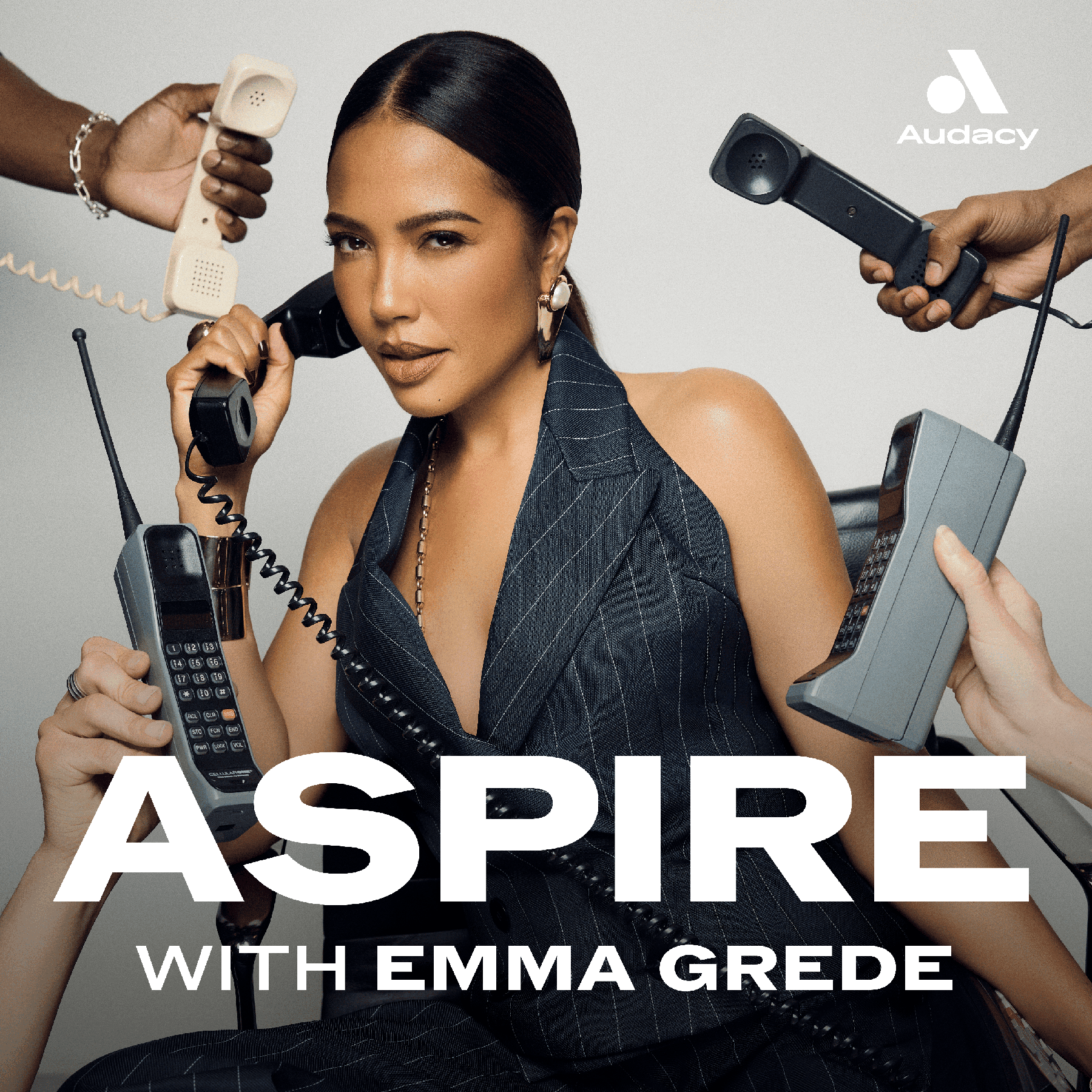
Emma Grede is a British entrepreneur, wife, and mother of four. Forbes named her one of America’s wealthiest self-made women at 40. She co-founded Good American and Skims (brands valued around $5B), has a podcast called Aspire with Emma Grede, and was the first Black female investor on Shark Tank (ABC). Oprah Winfrey hosts.
Key claims
Success starts with yourself—manage thinking and emotions, take responsibility, and forgive yourself after failure. “Work-life balance” is framed as a personal responsibility; she argues work-from-home culture harms connection and career growth. Ambitious women need discomfort, audacity, visibility/proximity, and power-taking. Systems may be unfair, but they shouldn’t determine your future. Profits must come before “impact.”
Notable examples
Grede’s childhood anger-management turning point after yelling and shoving a partially deaf woman on a train; her pivot from a prescribed life path via visualization and resilience; and Shark Tank investors’ example with twin sisters Taylor Capuano and Casey Sarai (Cake’s Body) growing from ~$10K to ~$100M after her $300K offer for 10%.
Written by AI. May contain mistakes. Listen to the episode to check what was said.
Chapters
Tap a time to open that second in VOThe Importance of Self-Responsibility
1:30 to 2:45
Emma discusses taking responsibility for one's life and emotions.
“your favorite audio platforms and all good bookshops.”
Women in Power and Ambition
3:11 to 5:15
Emma talks about the challenges women face in pursuing ambition and power.
“This book is dismantling the rules that we've all been sold around these things.”
Emma’s Journey and Influences
6:13 to 8:41
Emma shares her journey, influences, and the impact of Oprah on her life.
“And as I'm reading the book, I see some of my teachings.”
Learning from Mistakes and Self-Reflection
8:41 to 10:35
Emma recounts a personal story highlighting growth from mistakes.
“And that was the beginning of me understanding the level of power that I held within myself.”
Manifestation and Hard Work
10:35 to 12:23
Emma discusses the balance between manifestation and hard work.
“and I decided that that couldn't possibly be the title because it gives you the connotations that there's something to apologize for.”
Encoded for Entrepreneurship
12:23 to 14:03
Emma reflects on her natural inclination towards entrepreneurship.
“I knew that the sadness and the heaviness around me wasn't my destiny.”
Building Resilience Through Adversity
14:03 to 16:44
Learn how early life challenges shaped Emma Grede's entrepreneurial mindset.
“you know, because I've been in places where, you know, my first apartment, I didn't have a fridge, I didn't have a way to cook.”
Radical Ownership and Women's Empowerment
16:44 to 18:39
Discover Emma's perspective on ownership of personal and financial futures.
“We release new conversations every Tuesday.”
Rethinking Work-Life Balance
18:39 to 21:00
Explore Emma's controversial views on work-life balance and its implications.
“experience, that if you want money and you want power and you want a great career, my experience tells me that you can't hide any of that behind politeness.”
Navigating Parenting and Professional Life
21:00 to 23:04
Understand how Emma balances motherhood with her career demands.
“you cannot like have meaningful connection with people on a Zoom call.”
Show all 27 chapters
The Weight of Accountability
23:04 to 25:52
Learn how to manage accountability in business without succumbing to shame.
“But I also think that the question really ought to be, how have we made it so that the two things are unfathomable?”
Embracing Mistakes for Growth
25:52 to 28:00
Hear about the common mistakes Emma made early in her career and their lessons.
“Well, you borrow from the boys because here's the thing.”
The Journey of Leadership
28:00 to 29:59
Learn about the mistakes and leadership style Emma developed through experience.
“have like this social contract with them, that it's like, I'm going to ask for so much from you.”
Ambition with Intention
30:00 to 32:14
Discover the balance between ambition, purpose, and the role of ego in business.
“Is that a gift or is that a strategy or is it both?”
The Importance of Profit in Business
32:15 to 35:11
Understand why profitability is essential for social initiatives in business.
“You know, I'm going to be honest because I do think that I've done things in my career where it was just like, I just need to do this thing.”
Success Story: Cakes Body
35:31 to 41:05
Hear from twin sisters about their successful business journey and partnership with Emma.
“She's famous for being a serial entrepreneur.”
Proactive Mentorship in Business
41:06 to 42:01
Learn how proactive relationships with mentors can enhance business growth.
“And what I'll say about them, it's the relationship has formed because the way they interact with me.”
Scaling Your Small Business: When Is the Right Time?
42:01 to 43:39
Dana, a small business owner, seeks advice on when to scale her business successfully.
“They just needed a little bit of experience and some expertise to really like catapult the business.”
Defining Your Intentions: What Do You Really Want?
43:40 to 46:09
Emma and Dana discuss the importance of self-reflection and understanding one's true desires.
“way, because the truth is we live in a moment where we're so bombarded by these ideas of everything being big, like everything has to be a unicorn.”
The Importance of Rest and Self-Care
46:10 to 48:15
Emma shares her perspective on self-care and the necessity of restorative practices in her life.
“You are such a powerful force, as I was saying in the beginning.”
Meditation: A Key to Clarity and Focus
48:16 to 49:53
Emma discusses how meditation has transformed her clarity and decision-making.
“It's, I mean, in the most fundamental way, it's the biggest thing that I've done, maybe in my adult life, I think, is to take meditation seriously.”
Manifestation: Realizing Childhood Dreams
50:11 to 53:59
Emma recounts a personal story of manifestation and achieving dreams from childhood.
“an author of her first book, Start With Yourself, Emigre.”
Overcoming Doubt: Embracing Your Journey
54:00 to 56:00
Emma reflects on her unconventional educational path and self-confidence in the business world.
“That's the beginning of teaching you about vision.”
Overcoming Challenges and Finding Purpose
56:00 to 57:36
Emma discusses her journey of self-discovery and overcoming challenges.
“She was that brilliant, brilliant role model for that, but it wasn't what was around me.”
The Power of Dyslexia
57:36 to 59:25
Emma shares her experiences with dyslexia and how it became her superpower.
“But, you know, I think it's important to say that just because the experience of writing the book was really, really difficult for me.”
Empowering Women in Business
59:25 to 1:01:15
Discussion on the importance of women in power and business.
“But for me, that was a magical time because I would never have got my foot in the door otherwise.”
Defining a Well-Lived Life
1:01:15 to 1:02:31
Emma reflects on what constitutes a well-lived life at this stage.
“that figured out their superpowers and that went for it.”
Transcript
Automatic transcript. May contain errors.0:00I am so excited to share my debut book with you all, Start With Yourself, which is available now. You might have seen the headlines, you might have seen the social, but this book is exactly what I intended. A conversation that will make you think and it's a blueprint for anyone who wants success without the toxic positivity. Start With Yourself is about self-leadership because wherever I go, women ask me how I got to where I am. But what you really want to know is how you can get there. So I'm doing what I do best, sharing and never gatekeeping what's worked for me in the hope that you can borrow from a philosophy that has served me so well.
0:37The truth is I'm not an expert. I've just lived it. I've made the mistakes. I've had the failures and I've learned what actually works. It takes a lot. It takes the most. And this book is for anyone who's tired of feeling like a passenger in their own life. It's about taking responsibility for your thinking, managing your emotions and getting clear on your ideas and then knowing your next step. It's about picking yourself up after failure, being accountable, but also forgiving yourself, pushing for wins and never, ever apologizing for your ambition. It's also about challenging the rules that you've been told.
1:12There is no perfect time. Balance isn't the goal. Alignment is, and there's nothing wrong with you wanting more. I'm precisely sure that the reason I've been so successful is so I can share it with you. Start with yourself. My debut book is available now. Visit emagreed.com to purchase the book. Also available on Amazon, your favorite audio platforms and all good bookshops.
1:38Hi darlings, welcome back to Aspire. I'm so excited to bring you something that's a little different but very special. I'm sharing with you my dream come true, my conversation with the one and only Oprah Winfrey on the Oprah podcast. This honestly feels like a full circle moment for me, and it was really important to bring it to you right here on Aspire. It's one of the most honest conversations I've had about my debut book, Start With Yourself, uncovering the parts that don't always make it into the highlight reel. Seeing down with Oprah felt really grounding in a way I didn't expect. And if you know me, you know this moment was it for me.
2:13I think you'll get a lot from this. And if you enjoy it, search The Oprah Podcast wherever you listen and follow shows.
2:45I think you'll learn a lot from Emma Greed on this episode about achieving personal and professional success and how to take ownership of your life. But before we start, I want to ask if you can take a few seconds right now and search for The Oprah Podcast wherever you listen and hit follow. Then you won't lose the show after this episode ends. We have a lot of great episodes on my channel and we release new episodes every Tuesday. Now let's get started. And here's the thing I've worked. This book is dismantling the rules that we've all been sold around these things. I honestly believe that we need, desperately need, more women in positions of power right now.
3:24And so I look at this and I say, do you know what? If you are an ambitious woman, it is going to require some discomfort. If you want money, it's going to require some level of audacity. If you want a big, big career, you're going to need visibility and proximity. if, and it's not for everybody, but if you want a family, it's going to require some timing and it's probably not what we've been told. And if you want power, then you are going to need to take it because nobody is coming to give you power. And just like I said, we are desperate in this world for more women in positions of power right now.
3:59Hey there, everybody. Glad to be with you here on the Oprah podcast. My guest is not just an entrepreneur, not just a businesswoman. She is an inspiring force, a modern-day business mogul and visionary. And she's written a book called Start With Yourself. It's a new vision for work and life, and it should be your guide if you are starting a business, thinking about starting a business, already in a business, want to make a better business for yourself, and want to be a better person in that business. I highly recommend Start With Yourself, honey. Please welcome Emma Greed to the podcast. Hi, Emma.
4:38Oh, hi, Oprah. I am so happy to be here. I can't even tell you how happy I am. Forbes named Emma Greed one of America's wealthiest self-made women at just 40 years old, her wife and mother to four. She's worked with both Loewe and Kim Kardashian to co-found culture-defining global brands like Good American and Skims, now valued at$5 billion. She offers savvy business advice on her podcast, Aspire with Emma Greed. Put yourself in the position of your customers and just listen to your intuition. It will never serve you well. She's also the first black female investor on that ABC hit show, Shark Tank.
5:19And I've been toying in my head. I'm like, do I call him Miss Winfrey? You call me Oprah. Then thank you for that. You have to call me Oprah. Because I was reading in your book and I was so touched every time I saw my name where you would say, and I'd go home and I'd watch Oprah. I mean, really, thank you so much. Thank you so much. No, thank you. You have, and listen, I know that every time somebody meets you, they have this kind of explosive reaction to you. And so I'm like, what do you do? What do you say that she hasn't heard before? And I'm not trying to say anything you haven't heard before.
5:46For me, there is nobody else that I would rather sit and discuss this book with because you have been in my mind as my fantasy mentor since I was 10 years old. And it's the truth because I had no other example of a woman that was like you, that had that level of integrity and spoke like that and behaved in a way. And so I feel like I have tried my best to emulate some of the behaviors that I saw in you for the longest time. Yeah. And as I'm reading the book, I see some of my teachings. I see that. I say, oh, you're one of those students who paid attention. Oh, yes, I did. I really did. In the most, in the biggest and the smallest ways, you know, from thinking about gratitude to thinking about how you speak to people and what energy is that you give off.
6:39And so for me, it's really been in so many, so many ways. Yeah. You tell the story in the book about yelling at a deaf woman. Tell us that story. Oh, is that where we're starting? I didn't want to start there, but because you said about the energy, that is such a classic energy story. Okay, so let me tell you the truth of this is, and you will, I mean, my publisher from Shannon from Simon & Schuster will tell you this. I took that out of the book three times for one reason, because I said, if I ever get to meet Oprah, I know that she will pick up this story. Of course. And when I spoke to your producers, I was like, no, no.
7:13And I took it out and they said, you've got to put it back in, you've got to put it back in. it because it's so revealing, so truthful. And it is a story of you recognizing in your own self-awareness that I need to do better. So that's why I love the story. So here's the story. The story goes like many people. I got up every morning and went to work on the tube, on the train, and I'm at the turnstiles. And you know, it's like I grew up in a place where my learned default emotion was anger. Whatever was happening, whatever wouldn't go my way, I would turn to anger. and so on this particular morning I was frustrated because you know this woman was messing around in her bag and I was like in that mode of let me just get to work and I said excuse me excuse me excuse me and when I screamed excuse me she said I'm partially deaf and I shoved this woman and asked her well are you blind too and I moved her and I went down the escalators and I got on the train and I am so filled with shame as I even recount the story but it was in that moment that I thought, oh my goodness, you have to get a grip of yourself.
8:16You are never going to go where you want to be if this is the way that you behave. And so I immediately enrolled myself into like a community anger management program. And I stayed in that program for a long time. But I'd never been taught that you could get a grip of yourself. I'd never really understood that you could go inside yourself. That you don't have to behave that way. You don't have to immediately react just because something is happening. And that was the beginning of me understanding the level of power that I held within myself. Because I was like, I don't need to be like that. I don't like her.
8:53I don't want to be her. And I have a choice. Well, you know, lots of people I have seen, particularly people of wealth and means, yell at their staff, yell at other people, yell when somebody's in their way, walking through life expecting everybody to adhere to whatever is going on with them. but they seem to have no recognition of it. That's why I thought this was such an important story that in the moment you realized this isn't the person I want to be. So that means it's possible for anybody to do that. You're absolutely right. And I think the important thing to say is that it doesn't go away.
9:26And there's a part of me, Oprah, that actually has appreciated some of the aggression that lives inside me because I think it's part of, and this is going to sound crazy, but a little bit of part of what's made me successful. You know, I did the Hoffman process I don't know, four years ago. And you know enough about the Hoffman, but for anybody listening, you're retraining your learned patterns that you learned as a child. We did a whole podcast on it. And I listened to it. And that was after I went. So it was so nice to have that perspective. But I remember saying to them, like, don't take that all out of me because I need a little bit of that.
10:02But it's understanding that that doesn't have to be the default. And a big part of what I write about in this book is being a woman and having your emotions guide your decision-making is a really kind of like low vibrational place to be. That's right. And if you are going to, you know, live up to your higher self, as, you know, you have always said, then that can't be the way you make your decisions. Well, in Start With Yourself, which is just such a perfect title, when did you know that that was the title? I love that you say that. My working title was Without Apology. and I decided that that couldn't possibly be the title because it gives you the connotations that there's something to apologize for.
10:43And so to me, start with yourself was everything because it's about not blaming anything that's happening on the outside and knowing that everything that you do, all the success that you have and all the hardships that you have and the way that you choose to walk through the world, it all starts with yourself. So when I landed it, I was like, that's it. That's the one. And I like the way it looks. I love the way it looks. and I love the way you designed the book. Isn't it nice? It's very nice. Beautiful fabric. Beautiful. People say you can't judge a book by cover, but yeah, you can. Yes, you can.
11:13Yeah. A friend introduced me to this book and as soon as she dropped it off, I went, I love this book. Chic. Chic. Very chic. You can sit in your beautiful surrounding. Yes, that's right. And it goes with everything. Yeah, I don't want my face on there either. Excellent. Excellent. Excellent. I love when you say this in the book. If a fortune teller had taken a look at my destiny when I was growing up, She would have predicted I'd become a DJ's girlfriend or a footballer's side piece or marry a gangster. That seems to be the predetermined path for all the women in my life, women who put everyone ahead of their own dreams.
11:44So how did you manage to pivot around the life that you saw had been prescribed for you? How did that come about? You know, I was a real dreamer and I've always been in my head. and I would have what I now know of, you know, visualizations. I don't think I thought about it that way when I was a kid, but I'm somebody that could take themselves off into a dream. And then, you know, when I was a kid, I used to be obsessed with fashion magazines. But I would take myself into the magazine, like into the show, into the advertising campaign, and I would create collages and I would imagine my life if it weren't in Plasto, if it weren't where I grew up.
12:25And I just knew that I could do better. I knew that the sadness and the heaviness around me wasn't my destiny. I don't know what it was. You could feel that inside yourself. I knew it. I was like, I'm not supposed to be here. Yeah, that's why I appreciated your book so much, because I started feeling that around four years old in rural Mississippi. You just feel like this is not going to be my life, and I don't know how. So you're having a moment. You are having a moment. You're like a history-making turn as the first black female shark on ABC's Shark Tank. And your podcast, Aspire, is just really resonating with so many thousands of people.
13:05You're co-creator of these powerhouse fashion brands like Skims and Good American. Do you think that you manifested this moment through your own strategy or is something else happening? Like I've said many times, God can dream a bigger dream. the life force has dreamed a bigger dream for you than you did even for yourself. What is happening? It's such an interesting way to look at it. And I think about it as a culmination of all of those things. You know, my strong belief is that you can't manifest your way alone into anything. Manifestation has to meet really hard work. And I have been in practice to be the type of woman that I wanted to be since I was 10 years old, whether that was emulating you or it was just getting up and delivering those papers I wanted to be somebody that was going in a different direction to what I saw around me.
13:55And so I think it's a culmination of putting myself in really difficult situations, honestly, you know, because I've been in places where, you know, my first apartment, I didn't have a fridge, I didn't have a way to cook. And so I used to put, you know, the milk on the balcony. But I knew that if I didn't, you know, if I didn't live there, I wouldn't be able to get to college. And if I didn't get to this college, then I wouldn't be able to, you know, have the type of job and work experience that I want. So everything has led to something. And I think I've been planned and purposeful about all of my moves.
14:27I've always thought one step ahead. All the time. You know, we recently did Jim Collins on this show. Jim Collins, who did Good to Great, and now he has another book called What to Make of a Life. And in that book, he talks about that it's not necessarily what you're good at, but what you're encoded for. And so when I started to read your book, I thought you were encoded to become the woman that you are now. You were encoded for entrepreneurship. You were encoded with a business mind. What do you think that is? What do you make of your encoding? I totally agree with you because I think that, you know, I grew up, I'm the eldest of four girls and my mom, you know, raised us as a single mom.
15:07And for so many people that could have felt like hardship. For me, it felt like this is the baseline of what I can tolerate. Like at 10 years old, I could cook a meal for those kids and I could iron all their school shirts and make their packed lunches and just get everybody in my life. Because you were the oldest, you were responsible for taking care of the rest of the kids while your mom was working. Yeah, my mom was working. It's like my mom's the dad, I'm the mom, and we've got three kids together. That's the dynamic of my family. And love it or loathe it, but that's the way it is. But to me, I built like such resilience from a young age.
15:40And so when I think about where I come from, which is this place at East London where you had to be so truthful. You had to make sure that whatever you said you were going to do, there was this like moral baseline of the place that was an expectation of how you should behave. And that set me up to be the type of businesswoman that I am. And so I do think that I've been coded from a young age and all of these experiences. And I think the important thing is that... And don't you feel too, don't you feel too this, that nothing was wasted? Nothing was wasted. Even that time with being the older sister and taking care of the family, that all of that has now come into play now.
16:16One million percent. And I think the important part is that my mindset never saw it as something that was dragging me down. I was like, oh, I'm just going to stand on all of these things. Like, I'm a tough girl. I have a thick skin. How else can I use that thick skin? Hi, everybody. Thank you so much for listening. Just a quick reminder, if you're enjoying this conversation, you can hear many more like it on The Oprah Podcast. Simply search The Oprah Podcast wherever you listen and follow the show. We release new conversations every Tuesday. Up next, Emma Greed on her controversial take on work-life balance, why she says mom guilt is not a part of her story, and why she believes more women need to start talking openly and honestly about money.
17:01Stay with us. Welcome back to The Oprah Podcast. I'm here with powerhouse entrepreneur, wife, and mother to four, Emma Greed. Her new book, Start With Yourself, A New Vision for Work and Life, offers modern advice for working women, especially mothers. Let's get back to it. And in the introduction, you write, all women are exhausted. While it's very easy, and we see this all over our culture, to blame men in inequitable systems, that's not how I roll, you say. You say, nothing is fair, it's true, but I don't have time to wait for equity. I'd rather make it. I take full responsibility for my life and I create my own future regardless of what comes back.
17:42And I want to ask, how do you take radical ownership of our lives without gaslighting ourselves or dismissing very real barriers that we know exist? How do you hold both truths at the same time? Well, the important thing to know is that two things can be true at the same time. That the system may not be fair, but you did not let that determine the size of your future. One million percent. Because that is the truth that we all live in, right? We know that the system is not made for us. And if you ask me, I think about women as the greatest untapped power resource in the world. That's how I think about women.
18:21And when I wrote this book, I wanted to write something that was almost like, you know, like a thing for ambitious women to be able to hold in their hands and realize that power. I thought to myself that I could, based on my experience, that if you want money and you want power and you want a great career, my experience tells me that you can't hide any of that behind politeness. You can't hide that behind soft ambition. And I think that as women, we are kind of culturally programmed to avoid. To act like you don't want that. Yeah. And to avoid the behaviors that lead to creating wealth, that lead to power.
19:04And here's the thing, Oprah, this book is dismantling the rules that we've all been sold around these things. I honestly believe that, you know, we need, desperately need more women in positions of power right now. And so I look at this and I say, do you know what? If you are an ambitious woman, it is going to require some discomfort. If you want money, it's going to require some level of audacity. If you want a big, big career, you're going to need visibility and proximity. If, and it's not for everybody, but if you want a family, it's going to require some timing. And it's probably not what we've been told.
19:40And if you want power, then you are going to need to take it because nobody is coming to give you power. And just like I said, we are desperate in this world for more women in positions of power right now. I love it. You have all these girls that I put through school in South Africa. A lot of them came to the United States. And I remember one of my daughter girls, I call them, had graduated from USC and was fortunate enough to get a job right out of college working as an architect. And four months in, she calls me and says, complaining because there's no work-life balance. And I did not do any gentle parenting.
20:17I said, girl, you better get off this phone. And I know recently you made waves when you said in an interview that work-life balance is your problem. That's yours to figure out. It's your responsibility. And a lot of people didn't like that. But tell us your take on work-life balance. Well, here's the thing. Let's talk about why a lot of people didn't like it. They didn't like it because it kind of hit home in this way. And actually, I would go one step further. I actually think that work from home culture is killing life and it's career suicide. That's seriously how I feel about it. Really? Yeah, I really do.
20:54Because if you look at some of the kind of like broader cultural trends, marriage decline, the decline in birth rates, like the loneliness epidemic, you cannot like have meaningful connection with people on a Zoom call. You don't get seen and promoted from your living room. You can't be like, you know, a good flirt in a bad outfit on a Zoom because no one's getting dressed in Zoom. Do you know what I mean? But I'm serious about this. When you go out in the world, you meet people, you spark connections, you might see a, you know, a cute person that you vibe with. Like we need to be in person, not just for our professional lives, but for our personal lives.
21:31And so when I speak about work-life balance, it's because people have made it this default excuse that they should stay away from life. And I'm like, that is so sad. I met my husband at work, my best friends at work. I've had some of the best nights of my life after, you know, great days at work. And so I feel like we kind of made the office and work this enemy. And to me, when you're living a purposeful life and you're doing something great with your life, the two things intermingle. I'm not so stupid to think that everybody has a job that they love, but I just don't think that we should think about work as some kind of enemy.
22:05It just isn't. And you and your husband, Jens, are business partners. We are. And you have four children. So how did you move from not only working relationship to romantic relationship, but how do you navigate family and business? I mean, I just marvel, first of all, at any woman who is working outside the home, comes home, has to do all the mothering. I never had children, even though people were saying, and one of the reasons I didn't have children was because I knew I couldn't do both well. And people would say to me, well, you have this entire studio. You could build your own nursery. I thought, well, they'll just be in the nursery and I'll be over here.
22:45And Tara Montgomery, who produces this podcast and has been a producer for me for over 30 years, has five kids. I don't know how she does it. I don't know how you do it. How do you navigate family and business? Can you turn off your business mind when you get home and be fully present for your kids? So the answer is yes, I can. But I also think that the question really ought to be, how have we made it so that the two things are unfathomable? That it's unfathomable to think about somebody that can kill it at work and kill it as a mom. In my view, I think the idea of what it means to be a mother specifically, not a father, has gone nuts.
23:27Like this idea of performative parenting, that I need to make a lunch and all the, you know, sandwiches need to be in stars. And it, you know, needs to be on the Instagram. A smiley face. And I don't do any of that. So two ways I want to answer your question. Yeah, and you have no guilt about that. Zero. Zero. Because my kids don't need that from me. My kids need love and they need a certain amount of attention. But that doesn't require eight hours with them. It's probably like 20 minutes per kid per day, if I'm honest. I don't do every school drop off, but I'm there when my kids need me. If my kid's in an art show or, you know, running a race, I am there.
24:00But I don't partake in this idea that I'm supposed to usher my kids through life. And that you're supposed to be there for everything. No, I'm just not. Because here's the thing. My kids are learning what it is to live up to the expectations of your own life. They see me go out and chase my dreams. And I want them to do that for themselves. But I do think that we put ourselves in a position right now where the idea of what it means and what it takes to be a parent is so insurmountable that women are running themselves in circles. You don't need to do that. You don't need to do that. And how did you learn that?
24:35Or did you just always know it because of the way you were raised? I experimented on the first kid. No, the truth of it is that I wasn't raised like that. You know, I saw my mom go out and go to work every single day. And she left early and she came home late. And I think that me and my sisters turned out pretty good. Yeah. And I just wasn't raised with that expectation that she was supposed to be everything for me. I knew that I had to do some stuff for myself and that I'd have to rely on some lady down the road to help me with something else. There was never this expectation that she should be the be-all and end-all.
Read the full transcript
25:10And I think that we would do well in society right now if we stopped putting those type of expectations on women. So early on in your career, you're right. When I was an unseasoned CEO, the business was in financial straits. Rather than letting my direct report to know and sharing accountability with them, I internalized the pressure and then shocked everyone when we suddenly needed to cut 15 people from our 16-person team. Not only did I feel like I was going to die of shame, you entice all these people to give up what they have at other companies and join you on a journey, and then you fail them.
25:41So I know taking full responsibility sounds empowering, but it can also feel heavy too. How do you carry accountability without carrying shame when something doesn't work out? Well, you borrow from the boys because here's the thing. Business is business. Yeah. And sometimes it doesn't work out, but you can't take it personally. And those boys don't feel any shame about it at all. Not a sausage. Nothing. Not a sausage. Not a sausage. I love that. I love that expression. Not a sausage. But it's really true. And that isn't to say that we don't care deeply about people. When you have to make, you know, decisions that affect people's lives, you should carry that with some intentionality.
26:20but the point is that as women we take these things so personally and we hold them like i did something like you like it's your personal thing yeah yeah when actually it's like this situation didn't work out over here and we see so many men create businesses lose hundreds of millions of dollars for their investors thousands of people the next day yeah literally go out and raise hundreds of millions of dollars the next day and the woman is just like sent down and can never do anything again. It's like, what a disaster. Right? So I actually knew in my head that that wasn't the truth, that actually that was something that we do to ourselves.
26:56And this is what I want to say to women. I think that we have to make this separation of when we're being led by our emotions and what is true. And I know that I'm a good person. I know that I run my businesses well and responsibly. And when something doesn't work out, I go, okay, I'm going to take that learning. I'm going to understand what I'm going to, you know, what I did wrong and I'm going move on and do it differently next time i'm not sitting here going oh lord like how bad a person am i because i'm not so what would your most honest employees say about you as a leader they would say that i have incredibly high expectations that i don't suffer fools that i'm firm but fair nobody's ever surprised by what i have to say oprah ever i have it written across my face.
27:41I'm like, you know, but I think that I'm a very, very clear communicator and I bring people on a journey with me. Nobody's ever like, what's happening here? What are we doing? Because I'm consistent. You know, it's like, I always want the best. I always want more. I'm always going to ask you to go a hundred miles. But in return, you know, I believe that when you hire people, you have like this social contract with them, that it's like, I'm going to ask for so much from you. And in return, I'm going to reward you richly. And we're going to go on a journey together and you're going to get something from this experience.
28:11And when you leave, I'll be the best reference you ever have. But I have very, very, very high expectations on people. I think when you're starting with yourself and you don't know anything about business to begin with, you make a lot of mistakes. Yes, you do. What are the mistakes that you most regret from the beginning that can help someone else listening who's starting with themselves? How long do you have? Because I made every mistake, literally every mistake in this book. And I thought it was important to share those mistakes because I feel like right now we're in this like, you know, social generation where we only put out the best parts of our lives.
28:44That's why I love this book is that you let us see underneath what's happening. And I really do. I think I had a lot of delusions about myself and what type of leader I was. I thought that I should behave like the other people I'd seen in business. And I've realized that I am an emotional woman. I am extremely empathetic. and the best way to lead my companies was not what I had seen. It was actually making my own version and my own style of leadership. And so I really did that. Like I know if somebody breaks up with their partner or has, you know, something happen in their family, like they don't come into work in the same way.
29:23And I felt like I had to lead by example. As a mother, I am out the door every day at five, which means that my staff can be out the door at five if they so choose to be. And so I decided that early on in my career, I was trying to be something that I'm not. And I've kind of settled into being myself. And a lot of that comes with age. You know, as you get older, you get closer to yourself. And I have this sort of relationship with myself and this conversation that goes on in my head. And with a bit of more experience and confidence, I've learned just to just be me. And I'm all right with that.
29:58Well, you know, one of the things I say about you is that you're a person who's been able to take instinct and turn it into a global brand. Is that a gift or is that a strategy or is it both? It's both. And it really is because in the beginning, when I was leading by instinct, I think that a lot of people around me thought I was crazy. And for a little while, so did I. I really thought I'd overextended myself. And there was just this little voice in the back of my head that said, just keep going, keep going, keep going. And sometimes you've got to get past the criticism and past all the mistakes and do a bunch of not so good things to get to the place.
30:38But I'm not scared of the mistakes. And I think that that is the big difference. I almost, I look for them. I look for like where it's hard, where it's difficult, where am I scared? and then I push up against that because I know that's where all the good stuff is coming. Where did that Skims idea come from? That is one of the great ideas, let me tell you. I would love to tell you that it's mine. It absolutely was not. But then that's part of what I'm good at. When I see something good, you know, I jump on. I think it was Sheryl Sandberg that says, when you're offered a seat on a rocket ship, you don't ask which seat.
31:10And I just was like, I'm in. I was like, let's go. Because it was one of those things that when you saw Kim's vision, Kim Kardashian, you couldn't unsee it. And you knew that that was going to be a hit. And so for me, I just was like, yes, I understand this space. I know how to create this product and I'm going all in. Well, you know what's interesting to me that there is ambition and then there is ambition with intention, you know, obviously. I talk a lot about intention and there, I think the intention actually aligns the ambition and gives it a purpose. So you're known for creating and partnering these successful businesses.
31:48And I have found that that aligned ambition brings about an intentionality. And I want to know if you have found a difference between building from purpose and building from ego. That is a fantastic question. And the short answer is yes.
32:11Because I was so poor, so I tried it the other way. I needed the money. You know, I'm going to be honest because I do think that I've done things in my career where it was just like, I just need to do this thing. Yeah. Because I just need this money. There was no alignment. No, alignment, my backside. There was no alignment. Yeah, yeah. Not even a sausage. Not a sausage alignment. And let's be honest, right? Because there's two big, really big, important things to talk about here. Being able to work within the realm of your purpose is a privilege. Because for most people, that's not a choice. They're waking up, they're doing something that they don't really like to pay the bills.
32:48And so I don't want to sit here and smugly say, oh yeah, you know, I made this big decision. I was given the opportunity because I started work so early. I never went to college. I started in the workplace early. So I had a bit of a head start. I made a name for myself. I had a lot of luck. I'd like really doubled down on that luck. And so by the time I got to my early 30s, I had choice. And that choice allowed me to then say, do you know what? I'm going to choose the project and I'm going to choose something that aligns with how I see the world and the type of woman that I want to be. So that's the first thing.
33:20What I will say is I think it's a little bit of a slippery slope when we start to talk about women and purpose as it relates to business. And this is the reason. When we talk about these stats that women get 3 % of venture capital, right? And a measly amount given how ingenious and innovative and brilliant we are when it comes to running businesses. Sometimes we might have to take a little step back and understand in the spirit of start with yourself what part we have to play in that equation. Oftentimes what I see are women will pitch impact over profit. Now make no mistake, the point of business is to make money.
33:59Money, yes. And you have to make money before you start talking about how you're going to give money away. So when I get decks from female founders and I'm six pages in and no one's told me about the money, but you've told me how you're going to look after the community. I'm like, what is happening here? So we have to separate those things. I have always put social good at the center of my businesses once they were profitable. Because when you have a profitable company, you can hire people, pay them the best money. You can do community initiatives. You can give away to nonprofit, but you can't do any of that without a profit.
34:33And women don't want to talk about money. And when I have women, like even super successful women, on my podcast that come on, they've sold their companies for a billion dollars. They don't want to talk to me about money. And so I want to say we have to, part of this idea of what it means to start with yourself is to start with the money. It's to put the money at the center of the idea. Because that's why you're in business. You're in business. That's why you're in business. But we also need to say to ourselves, do you know what? You can do deeply critical, impactful work and care about the compensation.
35:05You can care about money and you can care about a lot of other things too. We don't need to separate the things. We just need to get comfortable with the idea that we need to make money. Right. We have to take a break. Up next, Emma Greed takes questions from our listeners who are business owners, including twin sisters whose deal with Emma on Shark Tank turned their boob solutions brand into a$100 million business. Find out how next. Welcome back to the Oprah podcast. I'm here with Emma Greed. She's famous for being a serial entrepreneur. We're on my front porch to talk about her new book, Start With Yourself, A New Vision for Work and Life.
35:49So you have done things just to make money. Absolutely. Absolutely. Just to underline double score. Yes. Just to make money. Yes. And I can't say that I won't ever do that again. I just have greater choice now. Greater choice now. I love that answer. You write about two women, Taylor and Casey. Twin sisters who were the founders of a company called Cakes Body, and they secured a deal with you on Shark Tank. During the pandemic, twin sisters Taylor Capuano and Casey Sarai took just$10 ,000 and turned their side gig. Washable, reusable inserts. into a must-have brand for women, Cake's Body, washable, reusable nipple covers that many women swear by.
36:33Now with partner Emma Greed... 300K for 10 % final offer. Okay, done! They've expanded into a$100 million full line of boob solutions, helping women feel more confident in their skin. Casey and Taylor! Hey, ladies. Hello. We're on our app. So good to see you. We're, like, so emotional watching you guys. There's so much charisma, inspiration. We're just so happy to be here. Yeah. What was it about Emma that caused you to accept that offer and be excited about it? Yeah. Well, you know what? When we went on Shark Tank, we thought we were about a year into our business. We had started it from really nothing.
37:18We were going viral on TikTok. We were doing about a million dollars in revenue a year. And we thought it'd be great exposure. We weren't really expecting to do a deal with the shark. And then we found out about a week before that Emma was going to be a guest, which was the universe answering our prayers. And going in together, too, like, you can't really talk about the deal. So we had to go in with the deal that we would accept from the sharks and then the deal that we would accept from Emma the shark. And it was very different because we knew how much value Emma could bring to the table. And I mean, there's a really long list of why we were so grateful to do the deal with Emma.
38:03But behind closed doors, she's like, what you see here times a thousand. And you just can't fake authenticity. I mean, I felt that reading her book. I felt like Emma is in my face, in my ear, in my head. Oh, my gosh. Yes. Yes. Well, one of our favorite stories is when we first closed our deal with Emma, we gave her a call and she called us right back and she was like, I'm so sorry. I was just with Michelle Obama and Melinda Gates, but I'm so excited to talk to you guys. And it just means a lot. Like the same energy she brings with you, Oprah, she gives to us and just everyone in her orbit. So we're very grateful.
38:40So what did you see in them? What was it you saw? You know, and it's so interesting because you do just catch a vibe. First of all, I loved the product and I knew immediately that there was a market for this product. But sometimes you invest in the people and that was one of those times because, you know, you're on TV so you get this millisecond to make a decision. And I just looked at these two and I was like, they will be successful whatever it is that they do. They'd taken their own money. They had corporate jobs. They'd saved a little bit of money. They took that money and they did and created an innovation That's very different from writing a business plan, crossing your fingers and hoping for the best.
39:14They made a product that didn't exist in the market and that shows a certain tenacity. So to me, I was investing in that tenacity, not Cake's body. It just so turns out that Cake's body's a winner. But that's really what it was. How has Cake's grown since teaming up with Emma? Oh my gosh, when we met Emma, we were doing about$5 million of business that year. We have grown with Emma to$100 million and really we said on the show and we say our mission is to do what Spanx did for butts but for boobs and really redefine this whole category of how women are dressing today and it was really Emma who worked with us to really establish like we have this product idea but how do we really make this like a movement that lasts in the culture and complements how women want to dress how women want to feel they don't want to be worried about what bra they're going to wear They just want to be able to walk out the door and go tackle whatever amazing things they have to do that day.
40:12So from five million to a hundred million. Pretty good, I would say. I think the thing when someone like Emma tells you this is going to be big, it gives you permission to think that for yourself. And I just think and you don't need, you know, someone to say that to you. but it almost allowed us to think bigger and dream bigger and think of this. This isn't just a product. This isn't just like a great product idea or a great single product that's going viral on social media. What if this becomes something much bigger? It's just like really changed the trajectory of where we were going, what we believed for ourselves.
40:52And it's just so fun. Like Emma's hilarious and fun and amazing to be around. Thank you, Casey and Taylor, and good luck with those cakes. Thank you. Wish you were there. Bye. Bye, guys. I mean, these two are incredible because I have a lot of business investments. And what I'll say about them, it's the relationship has formed because the way they interact with me. And I will say this so many times to different people I invest in. When you have a mentor or when you have somebody who's put money in your business, the way that you choose to work with them will say everything about the longevity of your relationship.
41:28And what they do is come to me with ideas and things to bet. They're never like, what should we do next? Like, which way should we go? They have a few scenarios and they say, here's the pros and cons and what in your experience have you seen? And that's the way that you work with a good mentor. You don't wait for them to, you know, spoon feed you information. You've got to be proactive. And so there's, you know, when they had$5 to$10 million in sales, they were so hungry and they were charting a path to 50. They weren't waiting for me to say, guys, this is a hundred million dollar business. They had that ambition for themselves.
42:03They just needed a little bit of experience and some expertise to really like catapult the business. Wow. Well, Dana is now joining us from Los Angeles. She's been in business for herself for the last eight years. Hi, Dana. Hi. Hi, hi, hi. You have questions for Dana? Questions for Emma? Yes. First, thank you so much for having me. So I am the owner of the The Dino Book Collection is a home luxury lifestyle brand launched in 2019, 2020 hit the ground running. It was a pandemic. I was one of like those pandemic brands. So everyone was home ordering my brand slippers, pajamas, candles, all those things.
42:38Right. You know, it was a very unique first year for me that same year. Beyonce featured me in her black parade as well as I was featured on Good Morning America. So like I said, a very unique first year. So then as time went on, you know, things like slowed down, but I was still being profitable. still everything was steady. But my question as a small business owner, when do you know when to scale, especially when you make your mark as a small business owner? Yeah, that's a question. You know, that's how people know me. And then I know when I do scale, it's going to be a bigger overhead. I don't know if I'll have as much say in everything.
43:15So that's just my fear. I know my brand can be so much bigger, but is that thing of kind of being comfortable and being grateful, like we're still doing great because my beginning was so strong. So it's kind of like, when do I know it's time to take that leap? Or does every small business need to take that leap? Well, I love that you asked the question and you frame it in that way, because the truth is we live in a moment where we're so bombarded by these ideas of everything being big, like everything has to be a unicorn. And I actually talk in my book a lot about the women that I'm surrounded with that just have these incredible small businesses that look after them and a couple of employees and do really great.
43:58But to go back to your question about the timing of it all, I would take a step back and ask yourself, what is it that you really want? How do you want to live? Isn't that the most important question ever? Ever. There's never a more important question. I was going to say the same thing. Do you want to be big? Right. Do you want to be bigger? Because you just said in your thing, we're actually doing pretty good. So is that that comfortability where you want to be and where you want to stay? And it's back to Oprah's question of me earlier, what is ego and what is your intention? Yes. And I think that you might well answer the question saying, you know what?
44:32I do want to be big. I do want to transition from where I am right now. And that is perfectly fine because we're in this golden age right now where you can take advantage of what's happening in AI and really look at your business and say, how do I make optimizations without having to take on this like crazy overhead? When you have a company like mine and you have hundreds and hundreds and hundreds of people, changing things and getting people to work in a new way is really hard. But you're just you. So you can actually start right at the beginning and decide that this is the way your business is going to grow.
45:05And there's a lot of optimizations that you can make across what you're doing, from logistics to infrastructure, from finance to accounting, inventory, that you can say, you know what, I don't need to hire somebody to do any of that. But it all has to start with yourself, excuse the pun, to take that step back first and decide what is it that I want, and then think of untraditional ways to light a fire under what you're doing. Absolutely. And you can ask AI for the way as well. It will tell you. Do you have an answer for that, Dana? Do you have an answer for what do you really want? I mean, I have found in life, no matter what the situation, that is the most important question.
45:46And when you sit with yourself and you have an answer that comes from the purity of yourself, what do I really want? And if you make the decision that you're going to make it bigger and grander, you also have to make that decision out of why you want it to be bigger. Is it to prove something to yourself? Is it to prove something to other people? Is it because you feel that, you know, going bigger is going to help more people? you know, whatever the answer is, but you've got some soul searching to do for yourself, I think. For sure. Yeah. That's a great place to start. That's a great place to start.
46:18Start with yourself. Thank you. Thanks, Dana. Good luck. So nice to meet you. You are such a powerful force, as I was saying in the beginning. And, you know, I worked so intensely for so many years. It's what Michelle Obama described in her book Becoming. She was saying the velocity was so high. When I was doing daily shows, two shows a day for 25 years, the velocity was so high. I couldn't even remember, you know, at the end of the week, all the people that I talked to. So I'm wondering, how do you restore yourself? What does restoration look like for you? And do you have to have it in order to keep going?
46:59Yeah, I really do. How important is it to get rest? It's a 10 important. I prioritize myself really highly, you know, and again, as a wife and a mother, like I am high up on my list of to-dos and I take it as part of the work, you know. And when I say that, it's not like self-care, you know, like a massage or a mani-pedi. It really is the slowing down and the quieting of my mind. I have a house in Malibu. And when I go to Malibu, that for me is like the kind of simmering down. I get like onto the PCH and I'm like driving by the ocean and I feel the temperature coming down. And I have this like visualization, like when I'm opposite the ocean of like all the things that I want and I need and I'm trying to do like coming into me.
47:55But I'm really serious about taking time for myself. And again, maybe sometimes like a little bit frowned upon for a mother of four, you know, that level of sort of selfishness. But I don't really apologize for it because I need that. I need to take time and a moment for myself to be good for everyone else. In order to be a better mother. Yeah. Yeah. I recently read that you started a meditation practice. I did. And how has that impacted you? It's, I mean, in the most fundamental way, it's the biggest thing that I've done, maybe in my adult life, I think, is to take meditation seriously. I've always tried, you know, I've downloaded a little app and, you know, I've done it for 10 days and then I've gone off.
48:37I learned transcendental meditation with a teacher. I may have been influenced. So I, surprise. So I got a teacher and she came to my house for five days on a run and, you know, gave me my mantra. and it just stuck. Now, I have to be really honest. I don't get to the 20 minutes twice a day. But I do usually do 15 to 20 minutes most mornings. I'd say five days a week. And it works for me because I always thought about like taking this time out of my day. And I think it puts time in my day. It leaves me with space and clarity. And it also reminds me. It makes everything smoother. Everything smoother.
49:15It makes everything smoother. And because, you know, still somewhere deep down in me, I have this, you know, angry 10-year-old, I can speak to her and I can say, here's a better way to deal with the day. Here's a better choice for you. And, you know, she's your friend and she's my friend too, Diane von Furstenberg. She has this lovely thing that she says, you know, the most important relationship you'll ever have. Is with yourself. Is the relationship you have with yourself. And I really believe that. So I try, like, all the time to get a little bit closer to myself and to understand, like, Why am I making certain decisions?
49:49Why am I feeling a certain way? Is that the truth? After a quick break, Emigre shares a personal story about how she manifested a dream she had as a little girl. I love this story and I love manifestations and why she believes her dyslexia has become a superpower. Stay with us. We're back with Business Mogul, an author of her first book, Start With Yourself, Emigre. If you know a friend who owns a business, or thinking of starting one, you're definitely going to want to send them the link to this episode. And while you're at it, hit subscribe to the Oprah podcast. Costs you nothing. I love this moment in the book where you, as a little girl, had drawn pictures, the Christmas tree and the mantle.
50:37And then one day you're sitting with your baby, your first child and you look around and the picture that you had drawn when you were how old? Seven, eight, nine, ten. Is the picture that you're living in. So describe that for us. To the T. So I come home, I had my first baby, Grey. I was about 31 years old and I'd bought my first property in East London, beautiful townhouse, very different from how I grew up. And it had these giant sash windows. It's December 20th because I gave birth on my mother's birthday of course i would and i get back home holding little gray and you know i shed my first tear and jen says isn't it amazing like we have this beautiful little baby and i said no what is amazing is that i drew this exact vision with the christmas tree and with the mantle and with the uh sash windows and i i can't tell you like i'm not a good drawer yeah i drew it exactly as it was and i didn't even know about like 1970s danish dash you know like sideboards That's not how I was raised, funnily enough.
51:40That was a Jens purchase. But I just couldn't believe it because it was exactly as I'd envisaged what it would be to have this insane, beautiful family Christmas. And there I was with the baby and the husband and the house and the tree and the window. And I just thought, I can't actually explain this. But it was one of those moments, and there's probably been a couple in my life where I was like, oh, life is actually magic. Like, it's completely magic. I make that happen. I love that moment so much because I had a moment like that. I had gone to a friend's house early on in my career and she was like the richest person I knew and she had these six trees in her yard.
52:18I went, oh my God, six trees. And one day I was, if I ever get some money and I can buy my own house, I'm gonna have six trees. And one day I was having coffee in the kitchen and I looked out and I saw the six trees in the kitchen. And when you walk outside, there were hundreds of trees beyond the six trees. So I realized I had somehow manifested that for myself. And in that moment where you have drawn the picture as a little girl, and now you're sitting in the picture looking at the mantle that you had drawn that you don't even know where that came from as a little girl, what did that teach you about dreams and manifestation and being able to bring on a future that you weren't even aware could come?
53:03It really, and I can see, I remember the feeling so clearly. I was like, you can do anything. And in that moment, because I had a little baby and my company was my baby at that point as well. And I remember thinking, this company won't survive without me there. If I have to take time to spend on this baby, that thing will disappear. And that was the moment everything came together and I was like, no, no, you can do all of this. You can have all of this stuff. you just have to work for it. That's when you realize if you could see it, you can achieve it. A hundred percent. I just knew it. I was like, I'm going to figure out the way to pull these two things together.
53:42And you know when you have a baby of a little Moses basket? And I was like, I'm just going to take the baby with me. I'm going to pick up that basket and that kid's coming to the office because I can't let the other baby go. But it was the fusion of like, this is going to work now because I've seen it, I've imagined it, and I'm just going to imagine the next stage of it. That's the beginning of teaching you about vision. Yes. Yeah. Yeah. One of the reasons why I think Start With Yourself is going to be such a compelling and impactful book for so many women is because you didn't take the ordinary path.
54:13I mean, dropping out of school at 15 years old. And I know I have other friends who didn't finish school or didn't go to college and lived with that. I'm not good enough. I'm not quite as good as the other people. I wonder if other people in the room are smarter than me. and you are always in these places where women are usually not seen and certainly not so boldly heard. What do you take with you into that space, knowing that you didn't come from the same kind of backgrounds, you didn't come from the same kind of education? How did you overcome that? So the truth is, there's always a tiny little piece of it that is there.
54:54But when I was a kid, my mom would always say to me, you know, Emma, you're not better than anyone, but nor is anyone better than you. And I really believed her. I was like, nobody's better than me. And so when I was a kid and, you know, I went to do these like fancy work placements of these like, you know, lady this and lord that, these companies in London, I never thought they were better than me. I thought they had a better education. I thought maybe they had, you know, cuter clothes or a nicer car, but I didn't believe that they were better than me. And that's just my default. And then when you get into the world, because I'm a person that was like in it, you know, I worked all the jobs.
55:30I had a paper route and then I worked in the deli and then in the shops. And I really like did all the jobs. Well, didn't that paper route teach you so much? Oh, my gosh. Oprah, the morning. The morning, the discipline. I never understood the morning. I used to see all these people and I'd be like, what are they doing? Where are they going? To work, Emma. Like they're getting up and they're going to their job on a construction site or in a cafe. and I was like, I just want to be one of those people that gets up every day and has a thing and does it and does it with consistency because that wasn't how I was raised.
56:01I had my mom. She was that brilliant, brilliant role model for that, but it wasn't what was around me. And so I just thought I'm going to choose better, but I never doubted myself. You know, I never had, I'm not a people pleaser. I'm not somebody that is looking for outside validation. You were encoded. You were encoded. I'll take it. You're encoded. I'm hoping so. Yes, absolutely. And the reason why you wanted to write the book, yeah, was what? I wanted to do it because I feel like I am surrounded by people every day. You know, they slide into my DMs or they come and see me at a conference. And women always imagine that I've found like the 25th hour in the day.
56:43And I'm like, no, I have not. And they're not asking like, how did I do it? They're like, how can I do it for myself? Yeah, yeah. And so I wanted to have a level of honesty. There's a lot of business books out there, a lot of great business books, but not really many that I've written by. Women. Women, 15-year-old school leavers with four kids. Yes, yes. And so I was like, there's another way, but it really requires some way of thinking. You know, I wrote the book backwards. I wrote about building a brand and starting a company. And then I was like, why can I do all of that stuff? Oh, because I've learned to control my emotions.
57:20And then I was like, yeah, but what do you have, Emma? It's like, oh, I have vision. Yeah. I had a story for my life. But it also started with that darn paper route. Right? Yeah. Right from the very beginning. From the very beginning. And so when I put the book together in that very dyslexic back to front way. Oh, that's right. We didn't mention your dyslexia. I have severe dyslexia. But, you know, I think it's important to say that just because the experience of writing the book was really, really difficult for me. But I did it because I knew that there would be a lot of people, especially women, that would say, oh, I felt like that.
57:52I've been there before. And I think that there is another way. And you actually consider your dyslexia a superpower. It is a superpower. You know, it really is a superpower because I don't see obstacles. I'm such a straightforward person. And because the problem is probably too hard for me to work out, I have to find a shortcut. And I do that all the time. I do that in business. I go like, there's an easier way. So your dyslexia takes the form of what? You see things backwards? You see things? I see, like, in every, like, I'm like the worst type of dyslexic. I see things inverse, absolutely. I can't read numbers.
58:27I can't, as soon as you put numbers on a spreadsheet, forget about it. Really? Says the CEO. Says the CEO. Yeah. I really, and what's interesting is I can see, once it's explained to me, I can see the patterns in the numbers. So if you, if, you know, and I hire fantastic CEOs to work alongside me, If they tell me what's happening, I can tell you what's going to happen. So I see the patterns in the numbers and how things link together, but I need it explained to me. I can't grasp it from just looking at the numbers. And so then there was that period of time in school where you didn't know it was dyslexia.
58:58There was no word for it. And so you just think that you're not smart as the other kids. I just thought I wasn't smart and I thought this place is not suited to me. I thought I was wasting my time at school. And I knew that when I was in these work placements, I was getting so much because I'm a superstar worker. I would turn up early. I would leave late. I would do whatever it took. And, you know, I'm a people person. I'm an in-person person. So I made myself indispensable. And it was a great time because that was back in the day when you could work for free, you know, and companies took advantage of free workers.
59:29But for me, that was a magical time because I would never have got my foot in the door otherwise. Yeah. Do you believe that every person is, even if they start with themselves, is cut out to become a business person or business woman? Is it for everybody? No. Yeah. I don't believe that. I think that, and I don't think anything should be for everybody because I think the beauty of the world is that we're all different and we all have a different role to play. and I can see people within my organization and what is meant for them. And not everybody needs to be an ambitious little monster. Not everybody needs to want to push things to the edges every day.
1:00:09But if you do, and if you're a woman, I want you next to me. And I want you to read this book because we're in a place and a space in time where there's a desperate need for more people. For women in power. Yeah, yeah, absolutely. To see women in power. We need it so badly. And I wake up thinking about it and I go to sleep thinking about it. And when I meet women who are starting to understand that they can have some power, I want to be the person that says, like, come with me. Come and see how this can be done and be a model for it. And I look at you. And the reason I've been so fascinated with you for the longest time is because you have this unbelievable commercial success.
1:00:52and yet everything that you do is wrapped in integrity. It's not like laid on the top. It's like in the thing, like it's made of integrity. And that is so unusual in this world and that's what I want to do. And so I think that we have to be models for people and I want to be that type of person. I want like a million little Emmas, like girls that came from the hood, that didn't have the education, that figured out their superpowers and that went for it. That's what I would like to do. Wow. Well, you are quite the force. I've never seen anybody like you. I really haven't. And so for a woman who appears to have it all, but not all at once, as you talk about in the book, and I've said so many times, how would you describe, Emma, a well-lived life?
1:01:38What do you think that is? Oh, that's a good question. Because at this time in my life, you know, and I think it would have changed throughout my life, right now it's like really understanding the power that I have. And it's really choosing carefully. Because you can do a lot of things, you know, and I have a lot of options. And everybody's coming at you from every, yeah, this is the time. I've seen it. I've seen the cycles. You're hot for a second until you're not, you know? Yeah, yeah, yeah. And so I think that for me, a well-lived life right now looks like choosing carefully. Like, where am I putting my energy?
1:02:19Who am I spending time with? What choices am I going to make? And how do I make the best of myself? You know, like, that's what I think now. That's a well-lived life. I think you're doing that. And I thank you so much for coming all the way here to be on my porch. Emma's new book is called Start With Yourself. I can't say enough about it. It's a new vision for work and life, but also a manual if you are starting a business and starting to look at how you can better yourself in the business. It's a good reminder that a well-lived life actually starts with you. And my thanks to you, Casey and Taylor, and Dana for Zooming in, and I'll see you all next time.
1:03:01Go well. You can subscribe to the Oprah Podcast on YouTube and follow us on Spotify, Apple Podcasts, or wherever you listen. I'll see you next week. Thanks, everybody.
From the publisher
This one is a little different.
For Emma, sitting down with Oprah Winfrey wasn’t just another interview — it was a full circle moment. A conversation years in the making with someone who helped shape how she thinks about success, ambition, and what’s possible.
In this special episode, Emma shares her conversation from The Oprah Podcast — one of the most honest conversations she’s had about her debut book Start With Yourself and the journey behind it.
Together, they go beyond the highlight reel and get into:
The mindset shift that changed Emma’s life
Radical self-accountability and what it really looks like in practice
The tension between ambition, motherhood, and guilt
Why building from purpose — not ego — changes everything
How to separate truth from emotion in business and decision-making
And the question that can redefine how you move through your life and career
Emma also opens up about the mistakes that shaped her, overcoming comparison, and why she believes success starts from within — not from external validation.
It’s a conversation that feels as grounding as it is powerful.
And if you know Emma, you know — this moment meant everything.
To learn more about listener data and our privacy practices visit: https://www.audacyinc.com/privacy-policy
Learn more about your ad choices. Visit https://podcastchoices.com/adchoices