Ask ChatGPT


 Aspire with Emma Grede
19 Nov 2026 · 56m · 27 chapters
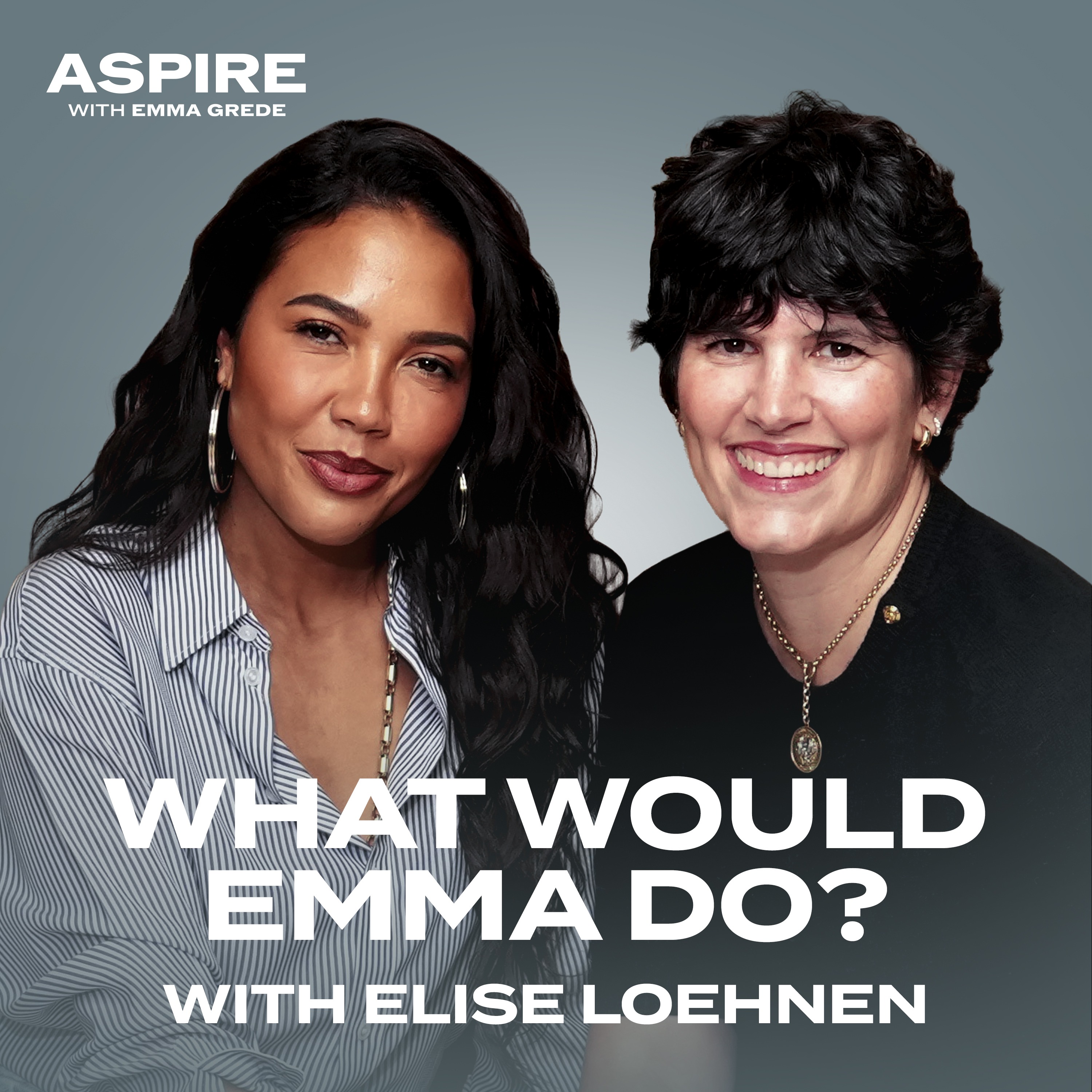
“What Would Emma Do?” is a conversation about how to build (or stay small) when your business depends on your personal talent, plus how women navigate money, power, feedback, and pay transparency.
Elise Loehnen (host; media executive; co-founder of Aspire; former Goop; NYT bestselling author; runs/hosts media projects) and Emma Grede (guest; media/brand executive; co-founder of Good American; built consumer/denim business; known for bootstrapping and for giving direct, useful feedback).
Nara Smith’s “trad wife” persona and TikTok/ASMR virality; Emma’s bootstrapped Good American growth; references to pay transparency laws (e.g., California) and the widening pay gap (82 cents on the dollar).
Written by AI. May contain mistakes.
Discussion about Elise's background and accomplishments, setting the stage for the conversation.
“bestselling author, podcast host, media executive.”
Emma outlines the episode's format and what listeners can expect from the conversation.
“They've built really big businesses and there's much to study and revere, but then there are the rest of us lot, right?”
Exploration of the challenges faced by solopreneurs and the complexity of scaling their businesses.
“People who have built a business around their singular talent or skill.”
Discussion on the importance of understanding one's unique talents and the necessity of outsourcing.
“So that's the first thing is like, how do you actually see yourself and your secret resource and what are you willing to let go of?”
Emma emphasizes the importance of taking risks in business and the cost of remaining small.
“is to say like, what's the worst that can happen?”
Discussion on the mindset required for expansion in business and the importance of curiosity.
“for me about like, I was super well off, comfortable.”
The balance between planning with intention and being open to possibilities in business.
“I know that if I keep doing good work and following something that makes me happy and feels good, then it will eventually kind of find its way.”
Emma discusses self-trust and staying true to personal goals amidst growth.
“handle on everything, it means that they are sacrificing things that they care about deeply.”
Learn how embracing optimism can influence success and decision-making.
“Which is, I don't know what's missing, why that isn't running your life, but.”
Explore how viewing others' success as inspiration can shift your mindset.
“I don't think you have a negativity bias, but I also feel like I rarely hear you and think you're being fucking delusional.”
Discuss how influencers capitalize on trends and create their personas.
“I'm going to watch them figure it out, not feel threatened by their success.”
Discover the importance of building a sustainable business beyond viral moments.
“Like I grew up in a very different media environment and there just wasn't that much commentary.”
Learn why it's essential to have clarity on business objectives and exits.
“You know, I think anyone like that who kind of finds themselves in this like moment, right?”
Examine the misconceptions around raising funds and the realities of entrepreneurship.
“Like that is an amazing, amazing, amazing company.”
Emma shares her heartfelt traditions and preparations for Christmas.
“I spend months thinking about it, planning for it, and collecting things along the way.”
Emma reflects on creating lasting holiday memories for her children.
“I want them to remember the decorations, the cooking, the excitement of Christmas morning and all those little traditions that we've created.”
Discussion on raising capital, bootstrapping, and competitive strategies.
“In my head, I knew exactly what I was doing because I knew eventually I could get there.”
Exploring the importance of feedback and personal growth in business.
“You have to be somebody that is open and willing to learn.”
Emma discusses the challenges women face in giving and receiving feedback.
“I mean, and I give you feedback and like, we all have those friends, right?”
A conversation about the widening gender pay gap and its implications.
“But I think so much of what happens amongst women is that it's covert.”
Discussion on pay transparency laws and the negotiation challenges women face.
“Because a lot of women are in service jobs.”
Learn how to approach discussions about your worth by depersonalizing the conversation.
“Like I get it's about you and your compensation and what you believe you're worth, but that actually isn't what you're doing in the room.”
Explore the limitations of pay transparency laws and the importance of honesty among women about compensation.
“I couldn't agree more, but let's be clear about what most of these laws capture.”
Discover strategies for effectively advocating for your worth during reviews and negotiations.
“So let's say you're a mid-career person.”
Understand the importance of learning opportunities compared to salary at different career stages.
“outsized idea of their contribution or they like see the revenue number and they don't really extrapolate down to what it costs to, yeah.”
Emma shares valuable lessons and experiences from her time at Lucky Magazine.
“And they said like, in good faith, we can't hire you.”
A fun rapid-fire word association game covering topics like loyalty and pricing.
“You're learning to be an excellent, excellent writer.”

Get the gist, explore an idea or ask about something said.
 Claude
On Aspire with Emma Grede, what are the key points of this episode?
Searching your listeningAutomatic transcript. May contain errors.
0:00Welcome to Aspire. Emma, welcome to Aspire. I knew you'd do that to me. I'm pushy. No, but I really insisted. I actually don't know how I got my way. I really do know how you got your way. You just did what you always do. Just keep going. You just wore me down and here you are. All right. I want to give the audience the overall premise because I think they're going to dig it. I'm sure they're like, who is this random lady? But it will make sense. No, they know you from your goop days. I'm sorry. I know you forget that there's this like whole part of your career, which is a phenomenal bestselling author, podcast host, media executive.
0:50But for those of you that don't know, Elise and I are friends and co-conspirators. You've written a New York Times bestseller and their most brilliant book on our best behavior. And she has her own podcast, Pulling the Thread, which is amazing. You've worked in media for forever, not least at Goop, but starting your career at Condé Nast in like the heights of when all of that was like the thing. And so I really feel like you are someone that I turn to pretty consistently when I want to talk about what's actually happening in the culture, in media and in business especially. And then you had your own ideas for what we were going to do.
1:23I was going to say, this is all lovely, but this is not about me. Nice try. So this is what we're going to try to do today. And I actually think that people might like it. It is called What Would Emma Do? And you are behind the mic and I'm going to ask you questions, which is my favorite thing to do. As you know, you get after almost every episode of Aspire, a voice note from me, a feedback because you love feedback. I do. And I can take your feedback. You have a lovely way of being that bitch. But really, I think I speak for listeners. We'll find out if that's true, because what I want to know is what you would do.
2:05Right. So it's wonderful to hear people's stories. It's fascinating, invariably. And then also I'm like, but if you were this person, what would you do? And how would you have created different optionality? I mean, the people who sit across from you are often singular in their talent. They've built really big businesses and there's much to study and revere, but then there are the rest of us lot, right? Who are somewhere on the scale, who want to build something maybe, or we're happy where we are. But what I want to do with you today is take you back through different scenarios, lob them at you, think with you, get you to say something wild.
2:44Wild. That won't be that difficult. Yeah. And also what's happening in the culture and what's happening with money and women and power. Because as you said to Oprah, the world would be a lot better off if more women had more money and power. And I could not agree with you more. I know you agree with me. I know you agree with me on that. And I just wanted to make sure that, you know, you accompany me on this YouTube journey of life. So I'm just happy to have you here on a screen, no Zoom. This is wild too, because as you know, I'm like, I don't watch the show. I listen to the show like an old person.
3:17which I love and appreciate. I love any of my audio listeners. Elise is always going to have your back. She's going to be optimizing for audio until the end of time. There's nothing better than being an anonymous voice in people's ears. Listen, I am one of those people too. I reckon I have a 70-30 habit. I'm 70 % audio, 30 % YouTube. Okay. Because it just is when I listen to podcasts. It's like when I'm doing other things. Yeah. I listen when I drive. Yeah. We love it. Okay. So I want to start sort of, you've had Rachel Zoe on recently, La Roche, Patrick Ta, Bobby Brown, Kelly Wurstler, solopreneurs, right?
3:56People who have built a business around their singular talent or skill. Just talking to a friend this morning who's in the same camp, not at the Kelly Wurstler level as an interior designer, but whether it's designers, makeup artists, therapists, doctors, body workers, right? There are a whole lot of us thinkers who have these big questions about scale, integrity, how much growth there's available when your business is reliant on you as a product and not necessarily as a creator, but as a person doing things physically with people. So we've heard from people who have built really big things on this show, but for the rest of us, what are the questions?
4:38Like, how do you coach people through those conversations about what to build, whether they should build, what their options are? Should everyone try to be as big as possible? I love this question. Because it's such a common one, right? I feel like so many people think about, like, what are the limits of my talent and how do I extend what I do? And what I think I see most commonly is that there is this reluctance to give up the thing, like the thing that people believe is their secret sauce. And so there's this inability to be able to actually outsource and resource and say, you know, like somebody else can do this part.
5:20It doesn't have to be me. And so what I see, first of all, are those that believe and are able to really, like really zone in on what is it that I do uniquely? And what about my service can I outsource? Those are the people that will be successful because they have an ability to kind of step away from themselves and say, there is a way that I can take this sort of like singularity of my talent and keep that. And yet like, you know, have other people in different parts of my business do other things. So that's the first thing is like, how do you actually see yourself and your secret resource and what are you willing to let go of?
5:56And I think that that is a very special type of person that can even do that. Because this is not about like an assistant and an assistant and an assistant. It's actually really about breaking down the parts of your business. And I mean, it's not usual that people are able to do that because there are some careers where you can absolutely become a giant brand and there are others that just don't lend themselves to that. And so I think that before anybody is really like rushing into what is it that, you know, I want to do, it's really about going like, what's the type of life that I want to live?
6:29Like, do I want to manage a team of 20 people? Do I want to grow this thing? Or am I really good where I am? And I think that's where people get stuck most, that they can't get to like the vision of what is the thing that I'm trying to actually create. No, I couldn't agree more. And one of the things that I push back on for people is even just like, think about the margin, right? And again, I like to play things small. I love watching you because you really push me. I think you're an expander for so many of us in terms of bucking against convention, bucking against what we see as possible, investing, you know, because I'm like, I like to really control everything to your first point.
7:09Like I'm not willing to relinquish control, but so many people that I talk to, I'm like, but to do that, how many people would you need to hire? What's happening to your margin? Like what are you, again, what are you trying to take home? Right? Totally. And that's what I find again, and this is, you and I have discussed this a lot. It's a specifically female trait. Like there is an element of risk in all of this. Like you don't know how something's going to work out if you're not the one doing it. You don't know if you take on this extra burden, whether or not it's going to be worth it. And I think that people that are ready to build a business are ready to take a few risks.
7:44They're ready to see something not work out and they're ready to deal with those consequences. And I think that the thing that I am able to do is to say like, what's the worst that can happen? And by the same token, like what's the cost of staying where I am? Like that to me would be more of a cost than the risk of like falling down and something not working out, embarrassing myself and having to fire a few people. Like I would never worry about that. Oh God. No, but I also think that that question, what is the cost of staying small or not doing what I feel called to do is that's pretty deep. It is pretty deep.
8:24Yeah. And I think that that is where so many people, they don't want to go there. Yeah. They don't go there. And so they end up by, you know, default, like keeping themselves small. Whereas I just think that, you know, the whole point of life is that we're supposed to be like expanding the idea of ourselves and what we think we're here to do. And I don't know, like I'm just not that bothered about what happens on the other side. Yeah. You know, like if it just doesn't work out. Well, I think it's beautiful reframe too, to think about deciding to build or get bigger by being called versus running from fear, scarcity.
9:06I have to take advantage of this moment. This is the only chance I'll have, which is I think where most of us get our fuel. Yeah. And I think you're right as opposed to seeing a bigger opportunity for yourself. And I do think that's the framing that I've always had, especially if I think about coming to America this second time was so much for me about like, I was super well off, comfortable. I had a nice company that was doing good. And yet it felt for me like it wasn't enough. And so the idea of kind of moving into this like more expansive opportunity felt really, really exciting to me, but it was never about like doing something from a place of trying to prove something to myself.
9:46It was just like, I think I'm in a context that is keeping me in a place that doesn't feel like that's what's meant for me. I felt like I had other options. And even watching you build this burgeoning media brand, which is kind of a wild thing to do, but like, but I think you do it with also curiosity, right? Like, I feel like you're like, I'm want to figure this out. And also I don't like, again, that's the whole thing. You can get stuck in this, you know, like idea of trying to get everything just so and just perfect. And I just never think of it like that because I'm like the only way to get better at something is to do it.
10:27And so I just like go. Do you know what I mean? I just step into the unknown. It's like, are you going to be the best interviewer? Is your lighting going to look nice? Do you understand how YouTube works? It's like, no, but you, everything is figureoutable. And so for me, it's just about like taking the next step, just moving into the thing. It's like, did I have a big grand plan of how I was going to build a media company? No, I'm not even sure I even think about it like that now. But I know the possibilities are there. I know that if I keep doing good work and following something that makes me happy and feels good, then it will eventually kind of find its way.
11:00And I think that we have to be a little less precious sometimes. Well, I think that that's a really interesting point though, because that balance, I think, between having a map and being intentional and directional, right? The optionality of building something and knowing it could be this, it could be this, it could be this. So like holding that loosely while simultaneously knowing you're going somewhere feels important. Like I feel like a lot of young founders are not even young, but they start building. They don't think about who could acquire this brand. They don't think about the prospect of selling their name or their likeness in 10 years.
11:41They don't think about necessarily trying to just make it a profitable cash cow to fund their lifestyle, right? Like, so you kind of have to be delusional and open. What's the balance? I really trust myself. Like I've really trust myself to hold myself kind of like, well, to put myself first. Like, obviously I'm the start with yourself, girl. I'm always going to, I'm going to put myself first. And so that means what I mean by that is that I'm not going to lose my way. I'm going to stay true to the things that are most important to me. And I think that's what happens to people. As things start to grow, as they start to lose the handle on everything, it means that they are sacrificing things that they care about deeply.
12:25And I think that that is the beginning of the end. Yeah. Do you think that your annual planning, like your birthday planning process keeps you on track? One million percent. Yeah. Because there's only so much you can do. And so every time I get something that comes in and it's like, hey do you want to do this do you want to do this like even when I feel like it's going to be the most fun I'm like no it doesn't work like it just will never work like I have all year made one deviation to my travel plans one what one and do you know why for Oprah yeah that's it like that's it it's the only one Oprah I'll come to Maui hi I'm coming where did you want me but that's the truth do you know what I mean it's just like I can't really be knocked off track.
13:12And I do think that that is, it's a pretty good skill to have enough trust in yourself to believe that you will send yourself in the right direction. Yeah. And experience, right? Yeah. Yeah. And just an ability to feel the room and the culture, which you are also quite adept at. Yeah. If you say so, Elise. Yeah, I will. I mean, we need, at some point, let's do a whole episode about fear because I still don't understand where yours is. This will be my favorite thing to do. I mean, still trying to find it. Have me back. I am very curious as someone who is just like run on anxiety and fear. Which is so funny because I don't know that I knew what anxiety was until I met my husband.
13:52Yeah. I really, I just, it's just not a. We all relate to Jens. Clearly. Yeah. Anyone who watched that episode was like, I feel just like him. I'm like, there's more of you now. Yeah. Which is, I don't know what's missing, why that isn't running your life, but. I don't know either. Maybe it would, yeah, maybe it would be interesting for a while. No, but it's, I think, a big testament to part of your success because you don't underinvest. And I think most of us do. Yeah, and there's a flip side to that, right? That I would veer on the side of being overly positive, overly optimistic about things.
14:28And sometimes you might miss things that are clear to other people, but that's just a risk that I'm willing to take because I actually think it's better to be like, I'm all in, I'm 100%. I'm going to put everything down. I'm going to try this thing. And if it fails, I'm going to dust myself off than being in this place where you're like overly cautious and you overthink everything and then you do nothing. You're paralyzed by that. And I don't know, like there is a part of me that's like definitely sometimes stupidly optimistic about how things will work out. But then I feel like I get it there eventually, you know?
15:01I don't find you that way. I don't find you Pollyanna-ish at all. I don't think you have a negativity bias, but I also feel like I rarely hear you and think you're being fucking delusional. Now, maybe I had that when I was younger. Maybe I was tempted. Hello, this is a spire. We love to swear. It's an English show. Filmed in LA with only Americans.
15:26No, but it's interesting that you say that because I do think that's a part of my personality that's really present all the time. but I'm again I'm quite protective of myself so I'm never going to put myself in a situation where I feel like I could truly like I could you know put it all on red that's not how I'm wired at all but I don't think that you can be overly cautious and think that you're going to build anything beyond yourself and I think that's why you're so fascinating to so many of us because I feel like Like you look out at the world and I write a lot about envy and wanting and how women can't really identify their wanting and et cetera.
16:06You don't really have that. I feel like you look out and you're like, I could do that. And if she can do that or he can do that, I can do that. No problem. I'm going to watch them figure it out, not feel threatened by their success. And I don't know how you manage that. Like when I think about you and like even what you come from, like, I don't know what your ACE score is. Do you know your ACE score? No, what's an ACE score? It's the adverse childhood events. No, no, but I don't know if you score. It was bad. No, but somehow, I don't know how you've therapized yourself. I mean, this is why you're walking enigma to so many of us, but I feel like you look out and you see opportunity.
16:52Yeah. Fair? Because that's kind of all there is. Yeah. Otherwise what? It's also like that question of optimism, right? I'm like, what is the point in anything else? Yeah. Right? Well, and I think - Who said it? Is that even better? Winston Churchill. I'm an optimist. I see no point in being anything else. Yeah. It's the truth because like, what else are you going to do? There are enough people and things and systems and circumstances that will reduce you. Why would you be one of those two? It's so true. Oh, what are you going to do? It just doesn't work. Well, and it's like you write and start with yourself too.
17:26Yes, there's endless inequity and we can look around at the world and despair, but I can't wait for equity and nor can you like go make it. It's like one of my favorite things. Yeah. So you've had a number of young founders on this show. People who have really understood the assignment. I think you could say marketed into the moment. You just had Nara Smith on. I think the conversation about whether she is or is not a trad wife is actually not that interesting and beside the point because she figured out a persona. She capitalized on ASMR. She made it an absurd fantasy and she's built, did she say she was doing$7.5 million?
18:06$7.5 million is what Forbes say she's making. I reckon that was probably last year and she'll do a hell of a lot more. She'll do a hell of a lot more. I mean, she certainly would if she was, if she was listening to me. I mean, there's so many ways that that girl can make money. She's beautiful. But I think it's interesting even that you mentioned the trad wife thing because to me, it's like she just capitalized on a moment. Yeah. Like, I feel like that would be a very me thing to do. I'm not one, but I can figure out a way to use this to my benefit. And so what does it matter? She's like clearly not a trad wife.
18:38Like, did she jump on that bandwagon and decide that that was a place that would make sense for her and a space to occupy? Like, who cares? Well, this is, I think, one of the reasons that I love you and find you so fascinating because so many of us are so terrified of any negative feedback or association. And you are sort of like, go get the money, honey. Yes. You can't be scared of that because the problem is, especially like how we live right now, there is always someone to say something. Like I grew up in a very different media environment and there just wasn't that much commentary. And so you think about a founder now who does one wrong campaign, one, you know, bad caption on an Instagram.
19:22And all of a sudden, like we're lighting them up. And it's just like, it's not real. Yeah. You know, it's not real. The outrage culture is not real. It's just something that you have to learn to toughen up. Yeah. Man, I mean, you have thick skin. We can all learn that from you and just manage through it and ignore it and move on. I mean, she's winning. But she's also, what's interesting to me is thinking of her as 24, she hasn't had that long to like cook her identity, figure out who she is. How do you translate a moment and you write about and start with yourself transitioning on the way up? But if you're Nara, how do you stay relevant without becoming totally absurd, right?
20:01Because I think that's one way is like doing more and more provocative things to keep attention, which isn't necessarily sustainable. no so so I'm going to challenge you on that like yes and no because the other side of this is like aren't we all living in the world of Mr Beast we're actually doing something more and more and more absurd is really paying and really working and he's the king of like what is now considered TV and YouTube land so like there's a part of me that goes is that necessarily the way she's going to go and should go probably not why do we need to like imagine what this girl should and shouldn't be doing.
20:35Yeah. You know, because I think that those are the constraints. It's like, meanwhile, we're all sitting there going, Mr. Beast, Mr. Beast, Mr. Beast. And Nara, we're like, oh my God, did she just make a Cheeto? Like, yeah, she just made a fucking Cheeto. Like, just leave her alone. Do you know what I mean? Yeah. A hundred percent. And I think that it speaks to, I mean, I have this, right? Like this scarcity, this anxiety where I'm like, but she's going to miss her moment. People are going to stop caring. What is she going to do? How is she going to support her family? I mean, this is how my mind works.
21:05Wow. Really? This is so crazy. You know, I think anyone like that who kind of finds themselves in this like moment, right? Because virality is a thing that visits like a lot of people and you can't, I think it's a mistake to think that going viral in a moment is something that you can build a business from. I think the truth is that when you build a persona and you build a world and you build an aesthetic and a language and you create like continuity, like that is the building blocks of a business today. It's not as we understand it in the sense of like, I'm creating a product and the product has packaging and now we're going to have distribution and we're going to figure out the finances.
21:46We're going to raise money and then we're going to go to market. That is the new way of creating a business, right? Like it lives in digital land and perhaps there's going to be a piece of it that goes out into publishing and a piece of it that translates in more traditional media. But the way of creating a viral business today is to take all of those pieces that are recognizable to people and then package them up in a way that visits you daily, which is essentially what social is. And so I think with that type of opportunity, it is your job to find the package. How do you figure out the container for it.
22:22And when I look at some of these influencers that are doing it in the best way, that that is exactly what they're doing, right? They're holding this like space that is so uniquely them in the digital media landscape. And then they're finding different ways to monetize that through the kind of traditional mechanics of building a brand. Yeah. But without the physicality. So if you're Nara, like what would Emma do? Like what would you do? What would I do? Oh, I mean, I would do so many of the things that she is doing right now. And I would try to find a lot more ways that I could interact with my community, because I think the creators that are doing the best work kind of have this mix of where they started, like in their traditional channels, and all of them belong to one space.
23:07Like she belongs to TikTok and MrBeast belongs to YouTube and whatever. But they find ways that they can meet their community in real life, whether that's like product creation. I wouldn't necessarily run out and raise money. I don't know that those businesses, that that necessarily makes sense for them. Because again, these are small enterprises. It's amazing to make 10 million bucks, but that's not a business to go and raise out on. That's an incredibly good living for you and a few people in a small company. So I think it's really so much more about what is the aptitude for what this thing is and not everybody is.
23:46Well, I think that people lose that. And I think that's such an important point, right? Like if you're Nara and you're banking$10 million and you have a 75 % margin, that's great. That's more than you're going to make as a salaried CEO at a venture funded company where maybe you have a lot of upside in 10 years if you manage to pull it off. It's really true. Right? It's really true. Yeah. And you should, like, that would be a great living, like doing something that you love and something that you feel passionate about and paying a couple of people a really great wage. Like that is an amazing, amazing, amazing company.
24:24I think that what happened is we just, we've glamorized what it means to be a founder or an entrepreneur and what it means to raise money. And I do think people get that all wrong, like from the outset. It's like, if you are going to go out and raise money, the question is like, not what does my company need to get to the next level? It's like, do I have a pathway to exit? Can I pay this money back? Yes. Well, this is important. Yeah. You know, it's like, and that is again, like nobody is plowing money into your venture to see it meet your wildest dreams. They are putting money into your thing so they can see a return on their investment.
25:04And you better have a path to profitability and an exit plan so that they can get their money back. And so again, I just think that somehow the rules got messed up and we all sit around having the wrong conversation sometimes. And I think that the truth is like, what is it? I don't know. 98 % of businesses don't transact. There is no exit. There is, you know, there is no big shiny payday. There is no IPO. And so the question then ought to be, what am I optimizing for? What is the life that I intend to build? And what type of business do I want to run? And so that isn't always about the biggest, shiniest thing.
25:43No. I mean, I relate so hard. After I left Goop, people were like, what do you want to build? We're going to give you money. And I was like, I don't want to build. I don't want to have a team. Right? I'm not. No, thank you. I just want to sit in my bedroom and write books and voice message you. Thank you. Thank you for that moment. But it was, it's an important, because it feels like for a lot of us, like that's a stage gate. It's like getting married, right? You're like, I'll go raise money. And then all of my problems will be solved. Meanwhile, it's like, no, you just have a new mommy and daddy.
26:18Yeah. You have a new set of problems. Yeah. And now you've got somebody to answer to. I think also we don't take into account you raise money. Hopefully you still maintain a significant percentage, but I have a lot of friends who own not that much. Very little of their companies. Yes. Right. Because it's a slippery slope because very rarely do people raise what they needed to. Right. Because again, when we're talking about millions of dollars, sometimes like you disassociate with actually what the money is. And most of the time, the people, like the first ways you do doesn't really fully encompass what you need to get to the level that you said the company would.
26:53So then it's like, you're on this like downward spiral of you raise again, and you dilute and you raise again and you bring in somebody that you're less like, you know, impressed by. And, you know, and down and down it goes until people own very little of what they started out with and lose the passion for the whole thing. Well, of course, that all makes sense. But I think we have to just think long and hard about what is it that we actually want.
27:21When I was a little girl, I used to draw the same Christmas scene over and over. There was a beautifully decorated tree, presents underneath it and a huge window. I even drew the piece of furniture beside the tree, although I didn't know what it was called. It's a credenza, if you're wondering. Now, years later, I bought my first baby home from the hospital in December. I was sitting there holding him when I looked up at our Christmas tree and started crying. My husband thought I was overwhelmed because we'd had a baby. But I was looking at the room and realizing that I had drawn that exact scene hundreds of times as a child.
27:55Even the furniture was there. I was sitting inside a life I'd been imagining for years. I think that tells you how much Christmas means to me. I absolutely love this time of year. I spend months thinking about it, planning for it, and collecting things along the way. Wherever I travel, I buy Christmas decorations, so when I bring everything out each year, I'm reminded of all the wonderful places that I've been, and I really go for it. I'm putting ribbons on everything, lighting up the whole house, hanging fresh garlands and making decorations out of fruit. I get out the Christmas stockings and advent calendars and I love making the presents look extra beautiful.
28:33I make Swedish glug, partly because it makes the whole house smell incredible. I set a Christmas table practically for every meal and every drink gets a Christmas napkin. We even have an annual cookie competition. Quite literally, nothing could make me happier. For me, so much of the joy is in the preparation. It's thinking about all the little things I can do to make the season feel special for my family. And I think the anticipation is part of what makes those memories so wonderful. You get to enjoy looking forward to something and then really relish doing it together. I also love the idea of discovering how people celebrate the holidays in different places.
29:12It's one of my favorite things about traveling. When you book a home on Airbnb, you have the opportunity to experience a neighborhood through the eyes of someone who actually lives there. You might discover a beautiful Christmas market, a street where the houses are covered in lights or a little bakery making something special for the holidays. Those are the places that give a city its character and they're often the things you remember most about a trip. And if you're traveling yourself this holiday season, there's an opportunity to share some of that local knowledge with someone else. You could list your space on Airbnb and put together a few recommendations for visitors.
29:47Think about the places you'd take a friend who was visiting for Christmas. Where would you want to tell them to go? What would you want them to experience? Maybe there's a neighborhood that's especially beautiful in December or a holiday market where they could pick up a decoration to bring home. I particularly love that idea because I know how meaningful those little things can become. Something you discover on a trip might end up being part of your family's Christmas for years. Enlisting your space on Airbnb while you're away could also help you earn extra money to put towards your own travels and family experiences.
30:20When I think about what I want for my children, it is so much about the memories we're making together. I want them to remember the decorations, the cooking, the excitement of Christmas morning and all those little traditions that we've created. I think back to that Christmas with my first baby and how much it meant to find myself in a moment I'd once only imagined. Those are the experiences I want to keep making room for, for my family and for the people we get to share them with.
30:53So when people ask you about raising, I think what I hear, you obviously see a tremendous amount of deal flow. I don't. But often they don't even know how they want to deploy the capital. They just want to raise money. Yeah, that's true. I think people know a lot of the time they don't really have a good, I think that people don't necessarily know how to deploy capital well and what's going to lead them to where it is that they actually need to be as opposed to maybe where they want to go. But when you are in a business like ours, when you're doing consumer, when you're doing beauty, like all of that, these are industries that you actually can bootstrap to a fairly decent level.
31:37Then it becomes a question of, are you going to be competitive with, you know, some of the bigger companies out there? But my point of view is that you have to bootstrap for as long as you can. Yeah. Always. There is no choice. Well, it still blows my mind. And again, like, as you would say, you were not fit to be the CEO of Good American. Definitely was not. watch the documentary you shall see I mean it's my favorite part of start with yourself because it's so funny in hindsight I know it was painful in the moment but what did you you raised almost nothing and had no very very little literally nothing but you know what was funny about that looking back is I was in fight mode like I was fighting against people that were just like oh maybe you should think about this differently.
32:29And I was like, absolutely not. In my head, I knew exactly what I was doing because I knew eventually I could get there. And sometimes that is the secret sauce that only a founder can bring. When you have the passion, when you have the will, that's not something that you can replicate in any business, but nor does it come with money. There were things that we had to figure out in that business that had nothing to do with deploying capital well or spending our way to get there. We had to find a customer that was completely underserviced and didn't understand that we existed. And by the same token, we had to really create our own category.
33:05There was no money that could have done that for us. You had to go blood, sweat, and tears. You had to go door to door, store to store, customer to customer. There was just no other way of that happening. And so it could only happen with somebody like me that was crazy enough to think it was possible. Yeah. That's it. Well, it's funny even listening to you and thinking about you and the way I know that there's sort of emigre disease and whatever it is. You as sort of this archetype of this founder. And I know that the goal is to make a million emigreeds, which I fully support that mission. Thank you.
33:41It's going to be a lot of work for you. Reining them all in. No, but there's something very singular about you. And just like even the way that you think. As a writer, people are always like, I want to write a book. I'm like, you don't want to write a book. Like you don't. No, you don't. But I think too, probably everyone's like, I want to have a business. And temperamentally, you kind of have to be a pretty specific person. I think so. Yeah. You really do. You have to be unemotional about so much. You have to be somebody that is open and willing to learn. I mean, in that same way that you say, I get your feedback and I listen to your long voice messages to me and I take it all in, but I don't internalize it, right?
34:25I'm like, that's super good feedback. I'm going to take these three things. I'm going to leave those others and I'm going to take it. Because again, it's like, I really trust myself. And that takes a certain type of, I don't know what the word is, like a certain type of person. Well, I think your ability to take feedback either from people or from the market, right? Yeah. From customers is reflecting back to you. I think also one of the reasons that you've been so successful, right? Like you are listening when customers are like, these jeans suck. Yeah, this doesn't work. But again, I never take it personally because I always think that that's about that thing.
35:05And now I'm going to take the bit that's useful and I'm going to work it and use it. Again, I just think that so much of, you know, so much feedback, so much of what's out there, Like it's never about you. Yeah, but we think it's about us. So why? I don't know. Because people are so like about themselves because we all live in our own little TV show of ourselves. You have an appetite for, I mean, and I give you feedback and like, we all have those friends, right? Like I'm always like, do you want coaching, consoling or cheerleading? Let me know. There are options. I didn't know. I didn't know there were options.
35:39Nobody told me. And so sometimes I ask for that feedback before I give advice. and other times I just know who I'm dealing with. Right. And it's like, but you always want, I mean, coaching is probably a stretch, but you have that attitude of like, I want to be better. I'm an athlete, like make me run faster. Yes. Yeah. Yeah. Because otherwise I'm like, what's the point? What are we doing this for? Yeah. Like I'm not doing it for comfort. I'm doing it because it's like, I have an idea. I have a mission. I really feel like I have to move forward all the time. Do you trust positive feedback or do you have a, like, are you like, if it's not a little cutting, it's not true?
36:20Depends what you're talking about. Depends which company or entity. No, that's a really good question because it really depends where it's coming from. Yeah. Right. And I think that that is often problematic with women, that the feedback isn't entirely straightforward. Yes. And that's on both ends of the spectrum, right? It's either overly positive and not really kind of like taking the full thing in because it's like, I don't want to hurt this person's feelings. I don't want them to feel bad about me. I don't want to come across as this. Or it's like, you know, negative and bitchy. And it's about something completely different than the thing that we're actually talking about.
36:59And I think that we owe each other like just a little bit better feedback. Well, I think what happens to so much amongst women, and I would love to see us change this behavior, which is that we get scared and we get scared to offend people. We don't know how to show our aggression. It's not modeled for us. Whereas I feel like you have a really healthy, I know you've talked a lot about managing your anger, but I actually think you have a good relationship with your anger that's healthy and is a good model for the rest of us because you express it You don't burn things down-ish. But I think so much of what happens amongst women is that it's covert.
37:38And then instead of just being an overt, I'm unhappy with this or I don't like this. It comes out sideways. Yeah, it comes out sideways. And then we can feel it because we're not idiots. Yeah, but the problem is it's like then we don't benefit from it. You know, and I only care about winning at the end of the day, right? It's like, I'm really not interested in that piece where like, I feel comfortable. You feel great. Like, yeah, like that's a different, that happens in other parts of my life, but that's not what I want in the business lane of my life. Like certain relationships, you're actually relying on truthfulness and transparency and honesty for you to get better for the thing to actually be what it is you need it to be.
38:23And I think what happens with women is that we get into this like kind of comparison zone. And actually, it's so problematic in so many other places, like even, and I know we're going to talk about, you know, wage disparity. And I think that is one of the main issues. And one of the problems that holds women back is that we are constantly comparing to each other. It's like, what's the fucking point? The guy's already won. We need to be in comparison with them. I know, Emma. Preach. Okay, let's talk about this, actually, because it's really depressing. It's really depressing. Okay, so this came out recently that the pay gap has widened.
38:59Which is wild, as if it wasn't bad enough already. And that's not even taking into consideration the wealth gap, which I think is something like 32 cents to the dollar. But okay, so women now earn 82 cents per dollar earned by men. It was 83. So that's$14 ,300 less per year. I mean, just to put that in context for a minute, $15 ,000 a year difference. It's crazy. Yes. More than a million over a 40-year career. It's complicated, right? Because a lot of women are in service jobs. Can I just, before you go on, do you think that most women are outraged as we say that? Do you think most people are sitting there going, yeah, it's only like this.
39:42And, you know, I guess it's only this over a lifetime. Do you think most of us are sitting there going, what the actual fuck? Yes, I do. Good. I hope so. I do. But I think it's paired with sort of feelings of helplessness because so many of these things are structural. Again, it's like if you take like a single white woman in a corporate structure, she's likely going to have parity with her male peers. There's a massive motherhood tax. Massive. Massive. A lot of women in service jobs are not compensated equitably. Nurses, teachers, et cetera. And a lot of those are not as well paying anyway. So it's a really complicated issue, but the headline is the same, right?
40:26What the fuck is the headline, I think? So there's now, I think in nine states, pay transparency laws, California. I'm sure you know all about it. I know all about it. Yeah. We are absolutely clear about the pay plans in every single role. Yeah, you have to. In every single role that we post. Yeah, you have to produce it, right? Or you have to display it. You have to disclose it. You have to say like, here is, this role is, you know, going to be paid between$180 ,000 and$210 ,000, depending on your experience, right? And then there's like a tiny bit of wiggle room. Tiny bit of wiggle room. And in a sense, like, I've thought about this a lot because over the course of my career, I've seen other people's compensation has been disclosed to me on accident, which it's happened to me twice.
41:14I feel like it must happen a lot. Oh, I think it happens all the time. Plus people chatting. What happened when it happened to you? Oh, I mean, I flipped a table. Oh, because it was so bad. Yours was so bad in comparison. Mine was so bad twice, which is really sad because I actually think I'm a good negotiator. But in there lies the problem, doesn't it? Because you think of yourself as a good negotiator and you probably are. a pretty sophisticated negotiator everywhere in your life, except for it comes to yourself. Yes. Right? But isn't that, again, because I think all women are absolutely excellent at making money.
41:50They're great billers. And then they get in a room and they have to talk about themselves and everything falls to the wayside. Yeah. Like I see it all the time. Yeah. I mean, I'm certainly, I love Maury, who's been on the show talking about negotiation, conversation but like the stuffing that we do into our emails I just think or maybe and so much of this to be fair is understanding that we're butting against a lot of bias and they're going to think that we're greedy but we sort of cut ourselves off before we even get there I know you don't have a lot of tolerance for this I have a very low tolerance yeah because I just again I think that the minute we start having these conversations again it all becomes so personal and my point of view is that it's kind of not really.
42:36Like I get it's about you and your compensation and what you believe you're worth, but that actually isn't what you're doing in the room. You're talking about your value to this organization. Like it's not about you, you know? And I think that what happens is we bring all this emotion into it. I give so much here. I, you know, I stay late. I do anything for the company. I'm like, so? Yeah. So like talk to me about what it is that you contribute to this organization. And I think if we could reframe how we come into those situations, we would totally change the way that we speak and the end result would be different.
43:12Just by depersonalizing it, stripping it. Yeah. Who cares if you stay late? I'm like, work quicker. Do you know what I mean? I totally get it. But if you came in and you said to me, like, here is the transformative work that I did that took us from here to here. Here's roughly what it kind of equates to on the bottom line. This is the impact I have on my team. Like give me the fact that stuff, you can't argue that stuff. Yeah. You know, like, again, I think, listen, there is no way that I'm going to sit here and say that the widening pay gap is the fault of women. It is not. That is not our fault.
43:45But there are parts of this where we could take control. And those of us that have the permission are in the right positions to be able to do it, owe it to all women, because this is stuff that is like learned behavior, right? We spoke about this in the book. It is passed down in the culture and in the fabric of the way we speak, what our mothers taught us, what our aunties say, what our friends say, and over and over again. And we just adopt language that wasn't even ours to begin with. And the minute someone's like, oh, that seems like a lot, or are you sure, right? Are you sure? We get talked down before we ever walk into the room.
44:23And, you know, in the process of negotiation, people can come back to you and say, I don't have the budget. Like what can we work out here? Yeah. Right? Yeah. I'm all for these transparency acts because I don't, I think it's wild that people's comps should be based on their ability to negotiate. And I don't think we should be let off the hook in terms of working through our anxiety and ambivalence about our value and standing for it. I couldn't agree more, but let's be clear about what most of these laws capture. I don't know what it is in every state, but in California, I think it's only captured for businesses that have a certain number of people in the company, right?
45:00So it's like, if you're like Frames, Skims, Good American, you have a lot of people in the organization, you have no choice. But I think if your business has under 20 people, you don't need to disclose. So that immediately means there's this whole kind of swath of the population who are still in no man's land. They still have no ability to really understand where they're benchmarking. And that's where we come back to this idea of like, well, what are we speaking about as women? Are we telling each other the truth? Because we do ourselves this massive disservice when we're not honest and truthful about all of it.
45:32I mean, it's funny. I remember having coffee with Sally Krawcheck, who started Elvest. We were chatting and she said, Elise, how much do you make? This is back when I had a corporate career. And you were like, oh! No, au contraire. Really? Did you tell her? I told her. And she was like, oh, she almost fell off her stool. She was like, you don't understand how many people I've asked that question to, and nobody will answer it. I think most people don't answer. Don't answer. Yeah. Yeah. Yeah. I always thought it was like, just, I mean, again, I don't know. I've always spoken very freely about money, but it is so frowned upon here.
46:08Yes. To talk about it. Well, amongst women, I think women, we have a lot of stories, right? Money is based, dirty, unspiritual, not for me, it's for other people. I have too much. I don't have enough. It's so loaded. I mean, that's why I'm a big fan of everything that you're doing here, trying to demystify it and also just get us a little bit loose because it is so triggering. So here's a question though. So within those bands, right? Then is everyone at that level in that band? So that's like a really like public company type mentality. And I think that what really happens in most companies is that there's a band and then there's like levers of optimization on salaries for experience.
46:56Because at the end of the day, like, here's the thing. If you are in a very kind of like specialist, I don't know, you know, if you're one of these YouTube wizards right now, you can charge whatever you want. It could be a salary band for all I care. Like, it doesn't matter. It's like my service, the requirements for my type of job are in such scarce resource. It just doesn't matter. Like, you know, it's like you can charge whatever you want. That is just a way for large companies to control their spending, right? Because there are just so many layers. And I'd be lying if I said we didn't have that in our companies.
47:29It's like, we definitely have salary bands. But I would say fairly frequently, somebody will come to me and say, there is this like special unicorn of a person and I need to pay them X, Y, and Z. And I'm like, well, tell me why. Show me why. Well, how often is it a man who makes it to your desk? It's always and almost only. Always, right? It's so funny because since I put the book out, what was that? April. things changed a little bit. Certainly my own organization. Were women like, show me the money? Absolutely. Oh my God. Yeah. I'm extremely cheerful about it. Ask everybody else here. That's emigree disease.
48:09That's the type of emigree disease that we want. That is the kind that we want. No, but it's so interesting because I do think again, women are so resourceful. We're so good at learning stuff. You don't really and usually need to tell us that many times. I just think that we've had to hit, I don't want to say rock bottom, but it's like, we need this type of news that is like so glaringly in our faces to understand enough is enough. Yeah. Like that's where we are right now. Okay. So let's say you're a mid-career person. You're like, I know I'm underpaid. Yeah. It's coming up for your review. What's your best advice?
48:46And like in the context of stripping out the personal, like, what do you, what's my script? So here's the script. The first thing is never, ever wait for your review.
48:59What are we talking about here? Are you going to fit into this? I don't know if you know this. I'm a good girl. Oh, really? Shake it off. No, you're not. Not anymore. Let's be honest about this. If a corporation, a company, a brand has something that they want to tell you, hopefully you're in a place where they're going to tell you right away. Nobody's waiting in any of my companies for me to give them feedback. I'm giving you in that moment. I'm not waiting to your assessment, feedback, loop, whatever. It's like, I'm going to tell you, like, you just did this thing that's not going to work. So I'm going to give it to you.
49:30Equally, you can give it to me back. So I think that the time is now. If you are underpaid, you waiting for this, like, moment of, you know, assessment time is actually costing you money. So the first thing that you need to do is calculate in your head what you should be being paid and the time it's going to take you to get that raise and write it down. And every day, literally just like get the money and throw it out the window. No sooner would you do that, then you should wait. So that's the first thing, like get it into your head. There is no time. You create your own timing. Everybody needs to do that.
50:02So with that, you've got to go in again, like separate yourself. This is not about you and how you feel and how you're undervalued and how hard you work and what you do for this company, come in with something concrete. Talk about what it is. And again, not everybody has a job where they can be so, you know, they're not commissions based or sales based, so they can't like really equate their value. But if you are in a business and you understand what it is that that is important to that business, what are the goals? What are the focus areas? Go in and talk about your contribution to the things that matter most in that business.
50:39So if you are, and by the way, if you're not in a company where it's absolutely crystal clear what everybody should be marching towards, like what is the North Star of this business? What is my department's contribution? Then you need to be rethinking where you are. So it's like you go in and you talk about what it is that you are doing that is driving towards that company's goals. And that should actually be enough. I don't think that you need to overthink it. I don't think that this needs to be like, you know, something that like visits you daily. And I think that is what happens. We get stuck in our own thoughts.
51:12We make up our own stories. More often than not, I will tell you what happens to me. People didn't say. I sometimes have people that quit and I say, why are you leaving? They're like, I just wanted to be paid more. I said, did you ask us? Yeah. Oh, well, you know, I just think that I, and I'm like, no, no, no, but seriously, like, did you make a request? No, but I had 75 ,000 conversations in my own head. I'm like, okay. Yeah. Bye. Like, do you know, like that, that is what happened. So it's like, you have to get out of your own way. You have to take it upon yourself to set a meeting, to go and talk about what it is that you're doing and take yourself seriously because otherwise nobody else is going to.
51:50Why would they? And then how do you take that contribution? Because I also feel like sometimes having managed people, some people might have an outsized idea of their contribution or they like see the revenue number and they don't really extrapolate down to what it costs to, yeah. Yeah. To actually run the business. Actually run the business. And again, I think that that's really important to know. And when I say like understand the goals of your company, it's also really good to know where your company's at because you can be in a situation which is like a hyper growth situation. Like this company is doing well and I deserve to be paid more because of my contribution.
52:25And I know that the money is there to be able to pay me. The other thing is that you might be working really, really hard in like a loss leading business, in which case you have to take responsibility for yourself. Sorry, is this too much? No, it's just so true. But isn't it true, right? It's like, they can't pay you because they don't have the money. It's just that simple. So you have to pick yourself up. This is too much for the girls in this room, I'm telling you. But this is true, right? So it's like you have to pick yourself up. But it's a really good lesson and a reminder to go, again, it's not necessarily about you.
53:04It might be about the container that you sit in. It might be about the climate in which the company operates that you sit in. And that's why I think it's not a personal thing. So when you're sitting there trying to figure out what is my value, how do I get paid, be willing to have the feedback. Because what happens in those situations, if I think somebody deserves more money, I'm giving it to them, hands down. There is really no conversation there. If I've been in a loss leading company, I'm like, this is not the company where you're going to get a pay rise. You're going to have to go elsewhere.
53:34Very, very, very rarely does somebody come to me and ask for something. And I have to say to them, you have a deluded point of view about what it is that you can contribute. But every now and again, it happens. And in that is something so important. And it's like, are you looking for the feedback? Because a lot of people can't really take the feedback. And so you might think that you're doing a great job, but there's a complete disconnect with your team, with your management, but that's useful too. That's information too. And with that, you can do something. So you're like, okay, I wanted this.
54:13They want this. I'm going to get closer and move towards that because I didn't understand what it was that I wasn't doing. In all of this, it's just information. and I think that we all need to think about it like that. All right, I have time to ask you one more question. Yes. We've obviously been talking about the comp question, but when young people, I sound so old, but when young people - When these young ones out here. But there's obviously, there's comp, which includes bonus, equity, salary. I tell people to like think about the value of the brand. I don't know if that's still relevant. And then I think there's a really important factor, which is how much are you going to learn?
54:48So how do you, do you prize those or do you think it's just the money, honey? I think it depends where you are in your life. Yeah. I think that there's like that magical time when you're a graduate, you're in your 20s and it's like the most important thing is you put yourself in an environment for learning and for growth. Yeah. Not just one. I don't want to just be learning and be used, right? I want to be able to grow. I want to be able to absorb all of this information and to be in a place that can actually like take what it is that I'm contributing and bring me along on a journey. Those two things are like really, really important because you have to get something for what you're giving if it isn't like the remuneration package, right?
55:34It's like you have to. So I think that that is super, super important. Later in your life, I think it does become more and more about the money. Yeah. We all want to enjoy our work. we all want to do things that we care about and we're deeply passionate about and work with people that we respect but I think that we want to get paid for it and we deserve to be paid for it and take our kids on vacation and educate them and yeah no I'm with you I'm thinking like in my early days at Condé Nast I was at Lucky Magazine which was this upstart and a magalog and I was like I can't be here I went to Yale like get me out of here and I remember interviewing for a job where the compensation was slightly better at Vanity Fair and I was going to be sitting on an editor's desk.
56:17And they said like, in good faith, we can't hire you. You're going to learn more where you are. And I really did. So... And I would really appreciate that. I did. I was grateful. And it ended... I stayed at Lucky for a long time. You did? Yeah. And learned a lot? I learned a lot. Until I just was like, there's nothing more for me to learn. And to be honest, you don't make any money in magazines. Not a sausage, man. Not a sausage. Not a sausage. No. Such a shame, isn't it? Yeah, it is. I know. But I learned a lot and it set me up for a great life. Yeah, it did. Yeah. Yeah, it did. Because you learned a lot of other things.
56:52You would have made a ton of contacts. You'd have got really disciplined and you were honing your craft. Yeah. You're learning to be an excellent, excellent writer. I want to come back and keep going because this is fun. But I'm going to tell you what I want to ask you about and you're going to do quick word association. Okay. Work from home. Never. It's bollocks. Bollocks. I really want to talk to you about loyalty because you are both the most loyal person I know. And you also just don't subscribe to the same stories that we have. Loyalty where it's deserved. Okay. How to price your services.
57:28I can talk about that all day long. That's one of my favorite subjects. I know. Are we really going to talk about that? Well, next time. Oh, God. Expressing appreciation. Are you good at it? Absolutely. Yeah. Aren't I, everybody? On that note. thanks for coming to aspire emma thank you for having me elise
57:52if you're loving this podcast be sure to click follow on your favorite listening platform while you're there give us a review and a five-star rating and share an episode you loved with a friend we'll be so grateful aspire with emma greed is presented by audycy i'm your host emma greed our executive producers are ashley mcshan derrick brown and me executive producers from Odyssey are Asha Saluja and Leah Reese-Dennis. Producer KK Sublime. Stephen Key is our senior producer. Sound design and engineering by Bill Shultz. Angela Peluso is our booker. Original music by Charles Black. Video production by Phil Sweetek and Carlos Delgado.
58:32Social media by Olivia Homan, Catherine Bale. Special thanks to Brittany Smith, Sydney Ford, my teams at The Lead Company and WME. Josephina Francis, Hilary Schuff, Eric Donnelly, Kate Hutchinson-Rose, Tim Meikle, Evan Cox, Kurt Courtney, Andrew Steele, Sean Cherry, and Lauren Vieira. If you have questions for me, you can DM me at aspirewithemagreed. Greed is spelled G-R-E-D-E. That's aspire, A-S-P-I-R-E with emagreed. Or you can submit a question to me on my website emagreed.me. you
After almost every guest episode of Aspire, the same question comes up: But what would Emma do? In this new format, Emma answers it. She talks about her mindset around fear and why staying where you are can cost more than trying something that might fail.
Emma is joined by Elise Loehnen, New York Times bestselling author of On Our Best Behavior and host of the podcast Pulling the Thread. Together, they run through different life and work scenarios, including the recent headlines on the widening pay gap. Emma shares how she’d ask for a raise and why most people wait far too long to do it. They also get into what Emma would actually do in Nara Smith’s shoes, and whether every business really needs to be big.
In this episode, you’ll learn: