Ask ChatGPT
 Aspire with Emma Grede
27 Oct 2026 · 1h 20m · 23 chapters
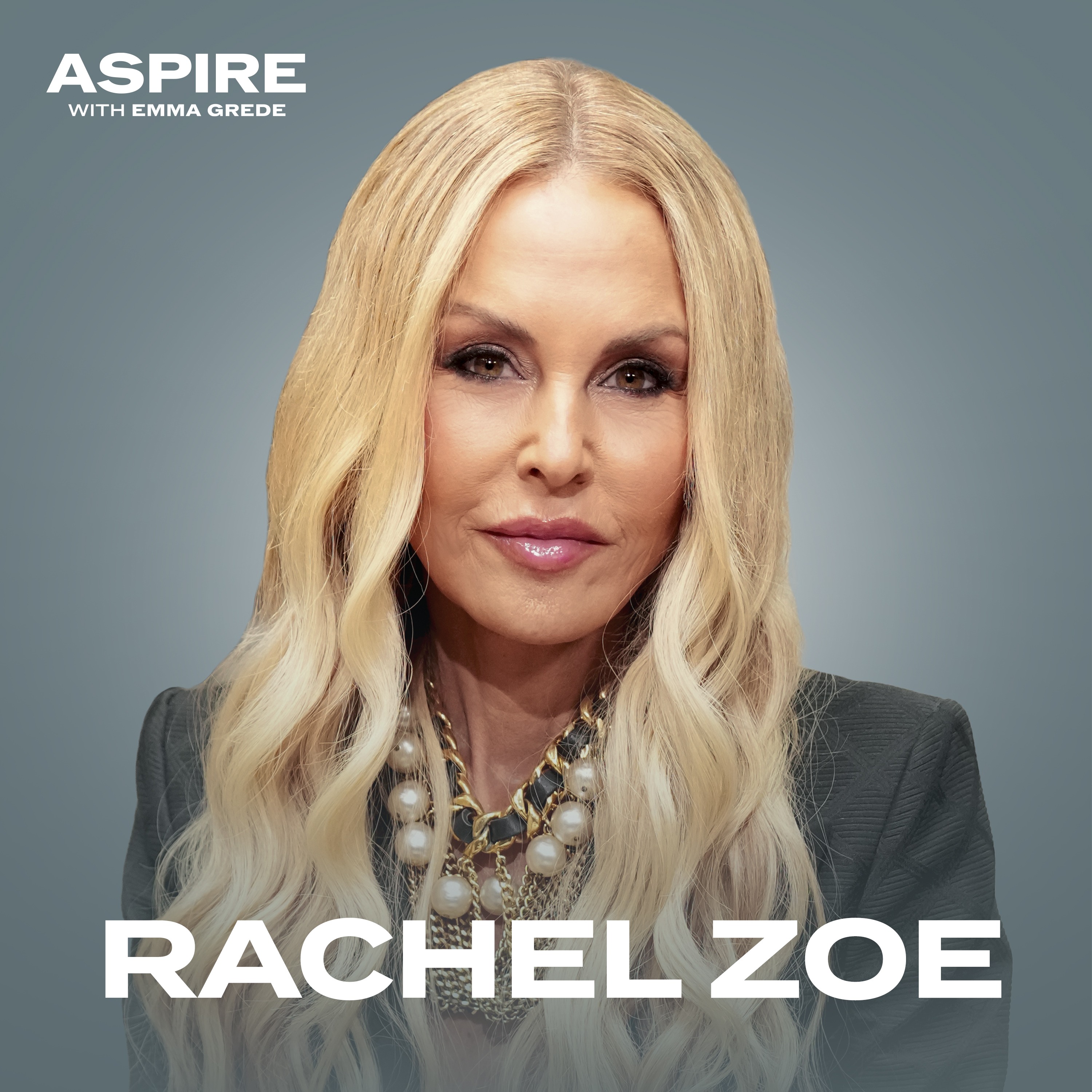
Rachel Zoe discusses her “most free” current chapter—being single, rebuilding her public identity at 55, and returning to TV—while tracing how she built her career from psychology studies to celebrity styling, media ventures, and multi-category entrepreneurship. She also reflects on lessons about authenticity, kindness, brand-building, scaling, and trusting teams, plus how she decides what to sell or stay involved in.
No co-host guest is described in the transcript. The host is Emma (referred to as “Rachel Zoe, welcome to Aspire”). The episode features Rachel Zoe as the sole guest.
Rachel Zoe is a celebrity stylist and entrepreneur known for launching a celebrity-stylist public persona, building the Rachel Zoe fashion/media ecosystem (including The Zoe Report), writing best-selling books, and investing via a venture fund. She studied psychology and sociology in college and worked in fashion early (YM Magazine; freelance styling).
She says her current season feels most authentic and self-directed; she built her career through relentless work and understanding clients’ psychology; she didn’t consciously “become famous,” and her TV return is partly to counter tabloids and humanize fashion. She emphasizes authenticity, results, and kindness, and admits naivete in trusting assistants. She says styling is hard to scale because it’s personal and time-intensive.
Styling Britney Spears (“Hit Me Baby One More Time” video); early breaks via Tommy Hilfiger; paparazzi-driven demand for her “picks/curations” converting “100X”; The Zoe Report growth (daily email to 2M subscribers, 14M monthly users) and sale to Bustle Digital Group in 2018; returning to Bravo’s The Real Housewives of Beverly Hills; tabloids alleging false claims; awards-season scheduling limits; her approach to selling (cash out while keeping creative involvement).
Written by AI. May contain mistakes.
Rachel discusses her newfound freedom and authenticity in life at 55.
“Jonathan Faust, Managing Attorney, 114 East, Sir Mac, Chicago.”
Rachel shares her early career experiences and how she became a stylist.
“I left there at 24, making$23 ,000 a year.”
Discussion on how Rachel transitioned from stylist to brand creator.
“And when I moved to LA and I started working with like Jen Garner and Cameron Diaz and Kate Hudson, and this was maybe like 2003.”
Explore Rachel Zoe's transition from behind-the-scenes stylist to fashion icon.
“still is, but like, it's so intimidating, you know?”
Discussion on the influence of her reality show and its cultural significance.
“And we want to tell you about Pivot, our twice weekly podcast.”
Rachel discusses her experiences with public perception and the challenges of being true to oneself in the fashion industry.
“reality inside look of my life and the fashion world.”
Rachel shares her journey of balancing motherhood with her demanding career in fashion.
“because all these things, the virality of things that would come flying out of my mouth.”
Rachel reflects on her struggles with trust and team dynamics in her styling business.
“I worked like crazy, but really mostly from my house, my team would come and I never didn't take him anywhere.”
The conversation shifts to the difficulties of scaling a personal touch business while maintaining high standards.
“But the thing is, I don't think I ever looked at styling as something I wanted to scale.”
Rachel discusses her past relationships in the industry and the lessons learned from regretful decisions.
“One boss that I had very early on said to me, I would never make it in fashion because I was too nice.”
Rachel explains how she navigates business decisions while maintaining brand authenticity.
“At some point, there were decisions and opportunities coming at you from every single angle.”
The discussion wraps up with Rachel reflecting on her evolving identity in the fashion world.
“about television and coming back now, it's because I have a lot to say, a lot to share.”
Rachel Zoe discusses her approach to business decisions, including selling and management.
“I want to work collaboratively with those partners to be like, I'm telling you, this won't work for you.”
Rachel reflects on her career journey, financial success, and personal fulfillment.
“But, and that's why those decisions are critical and have to really be looked at very closely and do your due diligence and all of that.”
Rachel discusses the complexities of working with a partner and the impact on their relationship.
“Use our link so they know that we sent you.”
Rachel shares her experiences with financial entanglements post-divorce and advice for women.
“type of version of that, don't know where to start, or they don't start because the untangling is just too seismic to even get their head around.”
Rachel discusses the unique challenges and benefits of being a single mother.
“And I think I've seen it over and over again.”
Rachel shares her journey of learning about finances and business management after her divorce.
“Well, and it goes back to what you said at the top, which was freedom is what you feel.”
Rachel reflects on her experiences with reality television and how they differ from her previous show.
“And that was like, you understand the structure of things.”
Rachel discusses the impact of fame on her personal life and how she manages her public persona.
“You know, my first show, I was an EP and I was obviously on it.”
Rachel shares her aspirations for the future and the balance of work and personal life.
“Like sometimes I'll come home and be like, I think I just said something I maybe didn't want to say.”
Rachel Zoe discusses her future aspirations and how she finds relaxation.
“And, you know, the compensation for that while amazing is just It's still definitely a cycle that I'm in, right?”
Rachel answers rapid fire questions about personal preferences and inspirations.
“She's so hot and she's such a brilliant actor.”

Get the gist, explore an idea or ask about something said.
 Claude
On Aspire with Emma Grede, what are the key points of this episode?
Searching your listeningAutomatic transcript. May contain errors.
0:09Rachel Zoe and I have known each other for most of my adult life. We came up together, which means I've had a front row seat to a career very few people in fashion have ever built. Rachel was the reason a generation of women knew what to wear. She invented what it means to be a celebrity stylist as a public role and then turned that role into a fashion line, a media company, a subscription brand, two best-selling books, and a venture fund. But the last year of Rachel's life has been the most honest chapter she has ever been through. She's separated from her husband of 26 years, who also ran her company alongside her.
0:43And she's come back into reality TV after more than a decade away. She's rebuilding what it means to be Rachel Zoe in public at 55 with nobody else steering. This is a conversation I could only have had with a friend. It's about what happens when the woman whose name is on everything finally gets to decide for herself what comes next. Here's Rachel Zoe.
1:08There are certain parts of your health where having real support makes all the difference. Not a one-size-fits-all plan, not trying to figure it out alone, but access to a licensed provider, a care team, and options that are built around you. That is the model behind weight loss by HERS. It gives you access to personalized care, including FDA-approved GLP-1 medications like Wegovy. If prescribed, Wegovy is available as a pill and as a pen, so there are options depending on what's right for you. To get started, you complete an online consultation with a licensed provider who determines whether a prescription is appropriate.
1:46And the care doesn't stop there. HERS includes nutrition and lifestyle guidance as part of the plan, along with 24-7 messaging with your care team. So support is there when you need it. Ready to reach your goals? Visit 4hers.com slash aspire to access personalized, affordable care for weight loss, hair, menopause, and so much more. Individual results may vary and stopping treatment may result in weight gain. Weight loss by HERS is not available in all 50 states. Wegove is the registered trademark of Novo Nordisk AS. To get started and learn more, including important safety information, Wagovi clinical study information and restrictions, visit ForHers.com.
2:28I'm attorney Kevin Rowe. A car wreck can turn your entire life upside down. And when that happens, make one call. That's all to Learn Rowe. Our local legal team is ready to go to work for you, working hard to get you the money you deserve. We'll handle the legal process so you can focus on what matters most, your recovery. From start to finish, we're here for you. Call Lerner and Roe today.
2:51Rachel Zoe: Lerner and Roe are the lawyers for you. Call 222-2222. Jonathan Faust, Managing Attorney, 114 East, Sir Mac, Chicago.
3:01Rachel Zoe, welcome to Aspire.
3:04Rachel Zoe: I'm so excited to be here. I am so, so, so excited to have you here today. You and I have known each other for the longest time. Most people know you as a stylist and as a designer. And as someone who's been on the TV for the longest time, but the scope of what you've built, especially in business is enormous. And now you're in this entirely new season of your life. So the question I want to ask you is, how would you describe this season of your life right now? I would absolutely say my most free. My most free. And I would say, without a doubt, I feel the most like my authentic self now than I have ever.
3:44And I think that if I thought I felt that way, you know, 15 years ago, I didn't.
3:50Rachel Zoe: I feel that way now. I feel completely in my own power, in my own skin. The decisions I make are mine. The people around me I have are by choice, my choice, and no one else's. And there's just so much freedom in that. And I feel like also just being a single mom and that part of my life, which is obviously the biggest in many ways, is it's a wild thing to realize you're not answering to anyone ever. No one. That's so much of what I want to talk to you about today because you have had a career with real longevity. But there's been a lot that has kind of come up and come down and in and out and along the way.
4:33So I want to really understand like a lot more about what it is that you've built. And I want to go back to understand what you've learned that you could only learn like building all of this. So I think so many people have no idea that you studied psychology and sociology in college, not fashion. No, it's true.
4:51Rachel Zoe: So how did you even end up in this world? I studied psychology because I've always been obsessed with people and their minds. I've always been so intrigued by people from all around the world and just meeting new people. And when I was in college, I grew up in a place similar to Brentwood or Beverly Hills. And I felt while I had a beautiful childhood, it was, you know, sheltered and bubbly. And so when I got into college and I started to, you know, widen the net, I really wanted to work. And I got a job outside of school as a hostess. And I wanted to meet people that were not in the bubble. And I realized from a very young age how much I loved working.
5:28Rachel Zoe: And if my parents had said, you don't have to go to college, you can work instead, I would have taken that card all day long. And psychology was the thing that really just pulled me in. I got straight A's. I was obsessed with it. Sociology, all of that, just getting into the minds of people and how they think. And I would argue to say that I've really used that every day of my life since. because so much of being a stylist and so much of being an entrepreneur is understanding the psychology of people. And I always have gone at anything I do through that lens of trying to understand what they're thinking.
6:07Rachel Zoe: What are they thinking? Why do they feel this way? Whether it's insecurities, whether it's body image, whether it's career issues, whether it's mental health, all of that. But I really did think I was going to be a child psychiatrist. I did. And then I learned quickly that you had to go to more school afterwards. And I was like, hell no. When I graduated, I was like, if I never see a textbook or take a test for the rest of my life, that'll be too soon. And I got a job through a friend of a friend as a fashion assistant at YM Magazine. And my first day on the job, I called my dad and I was like, I would do this for free for the rest of my life.
6:41Rachel Zoe: And I basically was. I was being paid$75 a day, three days a week. I mean,$20 ,000 a year. I left there at 24, making$23 ,000 a year. So you're doing it for the love. I would have done it losing money. I loved it so much that it felt like fuel for my soul, for my mind, for my body, just being creative and being with so many different kinds of people every single day of my life, being on set, going to shows, crashing fashion shows, like doing all these things that it was basically when I look back on it, I feel like so much of my career, especially in New York for the first 10 years was like one massive adrenaline rush.
7:20Rachel Zoe: Yeah. truthfully. Well, an adrenaline rush, but also like a masterclass. And I think that one of the things that you've done, I mean, first of all, you really introduced styling in such a broad way to all of us who, you know, if you didn't work in fashion, you may not have understood it. But before there was a Rachel Zoe brand, there were clients coming to you for what exactly? What couldn't they get from anyone else? I never intended to build a brand. I just worked. I just created like, as I went, I just wanted to be the best at anything that I did. And I always looked at it as client, right?
7:56Rachel Zoe: Like how am I making the client happy? So whether it was being hired by a record label or a studio, or it was a publicist, or it was an agent, or it was a direct client, right? Or it was a photographer. I never once looked at how much I was making or the time or what I was hired for, if that makes sense. It was, I kind of like just outworked everybody, but it wasn't in a competitive way. It was, I can't let them down. If I let them down and I lose this job, I'm never working again. That's how I went at my job as a freelance stylist. Every job was like the first and I treated it that way. When I look back on your career, and again, it's kind of difficult for people to even understand because of the times that we're in now, but you invented a job that didn't exist before.
8:43the kind of like celebrity stylist as a public figure. I wonder at what point you actually realized that people wanted access to the whole like Rachel Zoe world. When did that happen?
8:53Rachel Zoe: So what happened was when I was living in New York, I started working with Britney Spears was one of, well, let me backtrack. Tommy Hilfiger, which I've talked about, gave me my very first break as a freelancer. So good. I didn't know him. I knew his brother, Andy, and I had pulled from Andy because he did Tommy Hilfiger jeans. and I would pull from him for like different music videos or pop stars. I was styling for the magazine at the time. I went freelance at 25, did not have my first job. Just was like, I'm going to do this. I just want to understand like, what made you think you could go freelance?
9:26Rachel Zoe: Because that's a bold move at 25. It was. And there was an impetus for it. So what happened was, as I mentioned, I was making$23 ,000 a year at 24. I was working with actors and pop stars at the magazine and I was working with a lot of models on the side and I was doing all these fashion editorials where I would actually lose money, but it was like my favorite thing in the world. And what happened was I helped someone at the magazine did freelance work on the side. She was my boss and she couldn't do this job one day or she needed help on it. And it was Britney Spears hit me baby one more time.
9:56Rachel Zoe: I didn't even know it at the time. She just told me where to be. And I showed up and I ended up working on this video and I literally made more in that one video than I made in a year. So I was like, wait a minute. Okay, let me just rethink this, right? Because all the jobs that I had wanted in the fashion world were occupied. And there was only one at each magazine that I could have gone to and they don't move. Nobody left. So what happened was I ended up getting hired to do this video and I decided to go freelance. I had no job the next day. It was really like, I remember sitting on the floor of my apartment, taping expense reports, receipts and things like that.
10:32Rachel Zoe: I was 25, I was in tears, but I had to make a move. I told my parents, I don't want another dollar. Don't help me. Don't like, I'm on my own, right? And I remember Tommy calling me in, someone from his office called me in and he basically, he hired me to do this two week job. One, the first week in Austin, Texas with like the biggest sort of hottest actors of the time, girls and guys. And then the following week, recreate the White House in Griffith Park to do his new campaign with 20 of the biggest male and female supermodels. I had one part-time assistant and me. I left his office hysterically crying and was like, if I, pardon my French, but like, if I fuck this up, I'm never working again.
11:16Rachel Zoe: And through that lens was how I built my career. Because from that day forward, I swear to God, I didn't have a day off for like 15 years. And when I moved to LA and I started working with like Jen Garner and Cameron Diaz and Kate Hudson, and this was maybe like 2003. then I started working with Lindsay and Nicole and Nisha and everyone simultaneously. And what happened was with those girls, I really, it was like playing dress up. It was like, they would come to my studio and we would spend hours and hours and hours into like the wee hours. And we would just like talk like girl, like I was like a sister, you know, we were all so close.
11:56Rachel Zoe: But what happened is the press started to notice a lot of my clients out in the wild, whether it was going to the airport or going to Coffee Bean or walking on Robertson. And that was paparazzi culture at its peak. And they started to just get sort of curious about why they looked like this or what was happening. And that's when it kind of started the digging behind the scenes of who was styling. And how much of that were you aware of? And how much of that did you participate in? I was not aware of it for a while. And then what was happening was brands were starting to reach out to hire me to style different things for them or do curations or do Rachel's picks.
12:41Rachel Zoe: And then Rachel's picks, all these things that I was hired, I would get paid a ton of money to do like, not that much work. It was just sort of like, tell us what your favorites are. and I was making insane amounts of money to do that. And what they found was that my picks and my curations were converting like a hundred X. So that was what I was hired to do a lot. So then I would get hired way outside of styling, right? To do that. And all of these opportunities like books and then when my books like went to New York Times bestseller, I just remember of all the surreal things that have happened in my life, that was the most surreal.
13:17I can't even imagine because you must've been one of the first stylists
13:20Rachel Zoe: to even have a book like that. It was just wild. Like, I just was like, why does anyone care what I say? Like, you know me, I'm a well enough to know. I didn't come at it like, I'm here, listen to me. It wasn't that, it was that people, they wanted to know my opinion. They wanted this validation from me about what to wear, how to set their dining table, how to live their lives, like on every level. And that was when it really kind of, one of the many points of my life where it dawned on me, like how much I kind of owed and how much I wanted to help as many women as possible live their best lives, help them build their confidence, you know, really give them that power because the fashion world, especially at that time was terrifying to anybody, like even still is, but like, it's so intimidating, you know?
14:10Rachel Zoe: And I feel like I wanted to really just humanize and democratize that sort of fear around fashion and getting dressed because every woman I knew and know today gets up every day, like in their mind, what am I wearing? What am I wearing? I wonder if there's any part of you that had some trepidation sort of stepping into the limelight yourself because when you're, because you're supposed to be like supposed, and I say in inverted commons, a behind the scenes person, right? The hair and the makeup and the styling, certainly in those days just was like the work was seen, but they weren't heard. Did you kind of question yourself of stepping outside of that at that point?
14:47Rachel Zoe: It was a very, you know, I talk to stylists now like Maeve Riley and other stylists that I'm close with. And it was a very hard time for me. Very hard because I was really straddling between, I was working with Keira Knightley and and Cameron and Selma and all of these extraordinary like kind of film and movie stars. And then simultaneously working with these younger girls who were just like wanted to have fun in fashion. They were doing big things, but it was just a different relationship. It was a different time. Yeah. And a lot of the girls would just be like, you're coming out with us. You're coming to this event or you're coming da-da-da.
15:24Rachel Zoe: Or, you know, I would have Lindsay, like we'd go to Paris and we would do the Chanel show or whatever. And she'd be like, you're coming with me or whatever. And what was always hard for me was when I would go to something and it started to be this moment where photographers would be like, Rachel, get on the carpet, Rachel, get on the, you know, and I'd be like, no, I'm working. It was this thing of like this push pull and brands wanting me to come into the spotlight and being hired in part to do that. But then when I was with clients, I was so uncomfortable with it. And I only, you know, I remember like saying to certain photographers at like BFA or whatever.
16:02Rachel Zoe: And just being like, no guys, I'm not like, don't ask me like I'm working. So was there like a conscious decision? Was there a moment when you said, do you know what? Actually, Rachel Zoe is the thing. And I've got these opportunities and I do have a New York Times bestseller. Like I'm interested to understand that decision-making because I do think specifically, you know, for women, there are so many times when opportunities come up and for whatever reason, we play ourselves down, we make ourselves small. Or like, at what point did you go, basically, fuck it, I'm a star? My word's not yours. Do you know what's funny?
16:35Rachel Zoe: I still, it's funny because people say that to me and I still don't look at it that way. I'm still a little like this all the time. You are? All the time. Get out of it. Ask my team. It's a weird thing. And I think it's such a good question because, you know, I always say, you know, I think it was the New York Times this year where the title was Rachel Zoe accidentally became famous. And I really did accidentally because I intended to be a stylist, which to your point is behind the scenes. And that is where I'm most comfortable still. But what happened is I would say that there was never a conscious decision to do that.
17:10Rachel Zoe: But I think when I quit styling in probably 2000, let's see, Kais was like three, around 2015, where like I officially kind of was like, I'm taking a beat. I think that then was because I'm focusing on my multiple businesses. Yeah. And I think the question is always like, a lot of young people would be like, how did you build your brand? I want to do what you did. And I'm like, I can't actually tell you what I did. I built businesses and I built, you know, I tried to just always be the best at whatever it was that I was doing. And everything to me was based on gut in the moment. It was, how do I feel?
17:50Rachel Zoe: Does this feel right to do now? Well, you're the perfect example of that. And it's something that I speak about a lot because I'm always asked about personal brand. How did you build a personal brand? But I do think it's a really good opportunity to say, and you look at someone like you, you actually worked, you built a reputation, you built a client base, you then delivered excellent work and opportunities came to you. And out of that came a personal brand. And I never want, I always like to make the distinction. It's not like you're then not working on a personal brand because once you have something, you want to safeguard it, you want to build on it, but it isn't the first thing.
18:25It's something that comes and is born out of something else.
18:28Rachel Zoe: Do you agree? I agree 100%. And the thing is, I don't think there is this step one, step two, step three. I will say authenticity is the common thread to any successful brand. If you look at any brand that you admire, you would say that they have stayed authentic to exactly who they are and whatever that brand is and represents. Now, that can evolve over time, right? But I would say the mission behind my brand is exactly the same now as it was, but I've had more opportunity for expansion of that. No, that's very clear.
19:06So I was just in Portland for an event at this iconic city block-sized bookstore with color-coded rooms and over a million books. The place really feels like a city full of books and getting to do an event there made my trip to Portland feel so special. Then the team and I headed to Utah for another meeting and when I asked people for local recommendations, everyone we spoke to told us about this very popular soda shop. I finally tried one and I have to say I was more than pleasantly surprised. We also stopped by another local bookstore and signed copies of my book, Start With Yourself. And we got to browse there for a little while.
19:41Now, I love that feeling of a great bookstore where you can wander without a plan and then just suddenly lose yourself for an hour. I've been traveling so much for work lately. And whenever I'm in a new city, I try to make the most of it and find a few local pleasures along the way. If you have a busy travel schedule, I'm sure you also try to make the most of your time away. And that is what is so smart about Airbnb. You can list your space while you're away and bring in extra income to put towards to your next adventure. Someone visiting your city gets a much more local place to land while they find their own favorite spots.
20:14It's a practical way to make the most of the time that you're already away rather than letting your home just sit empty. Your home might be worth more than you think. Find out how much at airbnb.com slash host. Hi everyone, this is Cara Swisher.
20:28Rachel Zoe: And I'm Scott Galloway. And we want to tell you about Pivot, our twice weekly podcast. That's right, Cara, what a thrill. It's a chance for us to break down all the big things happening in tech, business, and politics. Yes, and I keep you in check so people can make it through each episode, whether it's digging into constant changes in the world of AI and social media or trying to keep up with whatever the fuck Elon is doing. We're here to give you our take on all of that. Every Tuesday and Friday morning, we drop a new episode about some of the major stories of the moment. And Scott is a prediction machine gazing into his crystal ball to tell you about where it's all heading.
21:01That's right. So if that sounds like a good time for you, especially Mr. That's Right, you can follow us on your favorite podcast app to get new episodes every week.
21:17I mean, I go back and think about the Rachel Zoe project, which was like, I used to love that show so much. It totally made you a household name and it put you, your work, your family and your team actually in this kind of like, you know, you were on national TV for five seasons. It's a long time. It's a lot of exposure, but suddenly you were part of popular culture. Your clients were out there. I wonder, did you ever feel yourself
21:41Rachel Zoe: becoming a caricature? It's a really good question because it wasn't until like comedians and like, I think SNL did like something and then Halloween was always the time. You know you made it when you have an SNL skit, right? That was wild. I think I was a Jeopardy question. And then I would have young people kind of like, I'm learning about you in my textbook. And I'm like, what do you mean you're learning about me in your textbook? They're like, no, you're actually my textbook at fashion school. Your syllabus at this point. And I'm like, what? Because that to me is the most ironic, right? Because I wasn't really a student.
22:17Rachel Zoe: I mean, I was when I tried. I got A's, but I just, I wanted to work. I wanted to dictate my life. And I think there are people that are students. and then I just wasn't. And I think it really, I don't know, Emma. It's just like, I just think this whole journey has been something where it's now when I look back at it that I realized what I could take from it to teach people. Because I really do think that the opportunity comes from the hard work. And then when you start to mean something to people, And I think that show had such a massive impact on so many people that were trying to find their way, whether it was, I've heard everything from people going through chemotherapy treatments, people going through mental illness or depression, people that were trying to find who they were in this world or trying to figure out what they wanted to do with their career.
23:14Rachel Zoe: they had lost their jobs. They were mothers that gave up everything to raise kids. Or they were like young people that were like in college or graduating and didn't know what they wanted to do. And people like law and so many stylists that have been so gracious. Carla Welsh and some of these stylists are just so like, if you didn't do this, we wouldn't know that we could do this. But I do want to go back because I think it's interesting because you were such a pioneer in that space. And again, because you're back on TV now in my favorite show, The Housewives of Beverly Hills. I'm so dead. Beyond excited.
23:49I wonder what the show taught you about the difference between
23:53Rachel Zoe: building a brand and actually protecting a life. One of the biggest lessons I learned from my father, who a serial entrepreneur, built two companies. He was always kind. He was always kind. And I think that there is this misconception, especially in fashion, that you have to be ruthless. You have to be relentless in your pursuit of success and what that means to people. And as you were talking, I was thinking about something that I hear so much. I was recently on a Zoom and there was like 10 people on it. And there was this woman who I'm now partnering with on one of my brand deals. And she said, I just want to tell you before we start talking that I was an intern when I met you.
24:30Rachel Zoe: And I was literally bringing you like your coffee or your whatever into a dressing room. She's like, and I just want you to know that you were so nice to me, that you treated me like I was Oprah. And I was like, I did. And she was like, yeah. And I just want you to know that I thought about that so much afterwards because you treated me like I was important. I was like, well, you are important. And I hear that a lot. And I think that that is so important for people to know as they build their careers and their businesses that you can do it with kindness. You can do it from a place of yes, wanting to win and wanting to be great, but also being so mindful about how you treat people.
25:09No doubt. But let's go back to the TV thing because it was a big, listen, you got a lot of press. You got a lot of positive affirmation, but it didn't come right. There was an underbelly to it. Now you step back on TV. So how are you thinking about that now at this stage of your life and your career when arguably you actually
25:26Rachel Zoe: you have more to lose? So the reason I did the show was very interesting. It was at a time when I'd launched the ZO report and that was a means also to help democratize fashion, to help humanize it, to help sort of as many people be able to touch trend in fashion as possible. And the ZO report, for those that don't know, was your sort of first 4am venture in the media space, right? Yes. It was a way, and my ex-husband, it really was his thought, to be honest, because he was in media and it was really to try and talk to as many women as possible because they all wanted my opinion and that was a louder way and a more easy way to reach as many women as possible and started as a newsletter and breaking down a really unrelatable trend into a more relatable, accessible way to work something.
26:12Which to me is part of your secret sauce, right? Because as we kind of track through the lessons and the things that only you can teach, you have an unbelievable way of knowing what you do, uniquely and making things understandable, digestible to a regular woman with a regular budget is your superpower. Like that's what you've been able to do time and time again in all of your ventures, right?
26:35Rachel Zoe: I never had any interest at all in being elitist. I never had any interest in being untouchable. I wanted my brand and my insight and advice to reach as many women as possible. I wanted, and when I started to launch product, I wanted everyone to have a piece of Rachel Zoe in their homes, in their closets. It didn't matter. It was always about relatability and accessibility always. And it was through that lens that I do everything in my brand. But with the show, the reason I did that was a couple of things. I was obsessed with Madonna Truth or Dare. I was also obsessed with Isaac Mizrahi Unzipped.
27:18Rachel Zoe: I was also obsessed with Elsa Clinch style, CNN style, because it was the only outlet I had to learn about fashion and designers when I was very young. I feel like everyone needs to be writing down, Googling and re-watching right now. If you don't know, you need to know. Literally, Elsa Clinch. I was talking to Derek Blasberg about her recently because she was the only way. It was 10.30 Saturday mornings that you could turn on and watch 30 minutes of her interviewing Karl Lagerfeld and John Galliano and Gianni Versace and whatever. And that to me, they were my heroes. So the show was for me to try and give an inside look into the minds of the masters.
27:56Rachel Zoe: That's what I wanted to do. It wasn't because I wanted to be famous. What ultimately happened is I got approached by producer to do this sort of like reality inside look of my life and the fashion world. And I was like, God, no, no, no, no, no. And after I sat on it, I was like, well, I wonder if it could be about like highlighting the designers and talking to, you know, my heroes and, you know, really just getting into their minds and helping people understand the design, the thinking, whatever. Well, the head of Bravo at the time was basically like, you know, no one cares about that. And I was like, well, I do.
28:29Rachel Zoe: No, we want to say something else. And so, but at the time I was also having a really hard time in the public and the tabloids were creating things about me that when I say not an ounce of truth to one thing that was being said, like everything from being a drug dealer, dealing diet pills, horse pills, like the craziest things you could ever fathom in your life. And at that point, my team was like, you know, Rachel, this could like give you the chance to like be who you actually are. And in my mind, it was like, I didn't really have anything to lose, right? Because it was sort of like, if I can highlight designers and I can highlight fashion and I can show the process by which like people create clothes and clothes end up on runways and clothes end up on red carpets and things like that, then that would be really like a teaching for people and make fashion less scary.
29:22Rachel Zoe: And I felt if people didn't like me after seeing me in reality, then that was okay. But at least they weren't believing these false claims and narratives about me. And it was like, okay, if you like me or don't like me, at least this is who I am. It's me. It's the real me. I realized I think I was a character, I think, after the show, because all these things, the virality of things that would come flying out of my mouth. And you know me, Emma, well enough to know, I don't think about what comes out of my mouth. No, you don't. I don't. And, you know, I really don't. I wish that I had more of a filter.
29:57Rachel Zoe: But like, you know, I stepped away because I had my second son. And it was at a time where I was living in Beverly Hills and I was living in the flats. and there were swarms of pops everywhere. I could not walk. There was pops that would be like, if I come home without a picture of your son, I'm going to lose my job. And they were chasing me down alleyways and I was literally running with strollers. And like, you know, it got to a point where I said, this is not okay to raise my children in. It's not safe. I don't like it. I'm not an actor. I'm not a singer. Why is this even happening? And there was a huge point of, I guess, inner sort of reflection as to what I was doing and what I wanted to do and who I wanted to be.
30:45Rachel Zoe: And I had a real identity crisis when I had Sky because I was so in love with him that I didn't put him down and I couldn't leave him and I couldn't figure out who Rachel Zoe was once I had him. And so I took a beat. I worked like crazy, but really mostly from my house, my team would come and I never didn't take him anywhere. I took both my kids everywhere and I merged work and them and I really never left them for like four years. There's another reason that I read that you had stepped away from styling and I think that you had said you just couldn't trust anyone, your assistants to kind of represent you with your client.
31:26That's correct. What specifically kept breaking down there?
31:29Rachel Zoe: I did have so many problems with assistants and weirdly only in my styling. There was a time where I had about a hundred employees when I had this report and I just couldn't figure out why I don't have a high rate of turnover. Like I've made my team's with me 13 years, 14 years, 11 years. Like my team, They're like family, like you. And for whatever reason, that part of the business, the styling, I just kept having these experiences with team where I just couldn't trust. Do you think there was a point when the highest standards that you had set, that you talk about, actually made it really difficult for you to scale?
32:16Rachel Zoe: I think that styling is such a personal touch business. It is not formulaic. And so what was happening was if I had five clients going through awards season, they all wanted me to be there. And you physically can't be. And I remember certain awards days where I'd go from this person from 9.30 to 10, and then the next one from 10 to 10.45, and then the next one from 10. And it just wasn't sustainable and it is really hard to scale that business. Yes, a hundred percent. But the thing is, I don't think I ever looked at styling as something I wanted to scale. It was such an emotional business for me, but I think I just kept getting, I mean, I had assistance still for me.
32:59Rachel Zoe: I had a, I mean, you name it, Emma, it's like without getting too into it, it was as bad as it could be like with people that worked with me. But Rach, you clearly had an eye for talent because so many of the people that you worked with went on to build massive careers. So what did they learn from you? I would hope work ethic. I would hope the passion for it because, you know, I found that there were many stylists when I was working that, you know, they would get hired to do like five looks for a client. And if I was hired for five looks, I did 45. I mean, we know this about you. It didn't matter.
33:34Rachel Zoe: And I think I would hope that that is the lens that they work through. And I think that if you're hired to do a commercial and they want a white t-shirt, you don't bring five, you bring 50, you know, and I would think that maybe. But also, I think just how you treat people and how you work with people, I think just, you know, the social aspect of it and the sort of, I don't know, just those honest relationships that you build that are handed to many people, you know. I get it. You know. I get it. Looking back, are there any part of those relationships that you actually understand differently now?
34:12The ones that didn't end well, I think I gave too much naively.
34:16Rachel Zoe: I think I opened too much naively. I think you have to think long and hard before you give someone keys to the kingdom. I think there was a definite naiveness about me, about people. One boss that I had very early on said to me, I would never make it in fashion because I was too nice. literally looked at me dead in the face and said, you're too nice to work in fashion. You won't make it far in this. And I remember going home and like crying my eyes out because I was like, I don't understand that. I don't believe that. You know, I just, I refuse to actually believe that. But I think that you can be nice and be a good person and be honest, but also have very strong opinions and give constructive criticisms.
35:01Rachel Zoe: And I think that like, I really think I didn't have a line between my personal and professional life. And that applied within my team. My team was my family, my assistants. I mean, we would like stay in hotel rooms together if we had to. We would like, you spend an exorbitant amount of time as a stylist with your assistant. I mean, there are late nights, there are brutal trips. There's a lot that you go through, but there is a trust that you have and a comfort that you have. And I didn't have the ability at that time because all I did was work that my team and my clients, those were my friends.
35:38Rachel Zoe: Do you regret some of those decisions? Yeah, I do. I really do. I think you have to draw a line. There has to be some line. And it's still hard to draw sometimes, but what I can tell you is I see red flags now. That's the lesson I take from it. You know, I take that lesson of if I didn't get hurt so many times, I definitely would not be as strong as I am. No. No doubt.
36:03I think when you're choosing something to take every day, you should be asking questions about what's actually in it, how it's made, and whether it makes sense for your routine. That's something I appreciate about ritual. They're very intentional about ingredient transparency, which matters to me when it comes to supplements. Their Symbiotic Plus combines prebiotics, probiotics and postbiotics in one daily capsule with clinically studied ingredients and a mint essence. It's vegan, made without GMOs or major allergens and tested for heavy metals and common allergens. That's the level of thoughtfulness that really matters.
36:38When something becomes part of your daily routine, you want to feel confident about the company behind it and the care that goes into making it. And there's something to be said for a straightforward daily routine, especially when you understand what you're putting into your body. Support a balanced gut microbiome with Rituals Symbiotic Plus. Get early access to Rituals Black Friday sale for 40 % off your first order when you visit ritual.com slash aspire. That's ritual.com slash aspire for 40 % off your first month. Something I believe about building anything that lasts, whether it's a business, a routine, or a goal, is that showing up has to be sustainable.
37:19If every day showing up feels like a battle, you just won't do it for very long. That's the problem Stars and Honey took on in the protein bar category. They looked at the protein bar category and asked the simple question, what if a bar could deliver on nutrition but still tastes like something that you would choose on flavor alone. Now, because that's always been the tension with protein bars, some give you the numbers you want, but the taste and the texture are really not there. Others taste good, but they may not be what you're actually looking for from a nutritional standpoint. Stars and Honey is trying to close that gap.
37:52Each bar has 15 grams of protein and only four grams of sugar, but the flavors are what make them feel different. Iced lemon cookie, mint chocolate chip, red velvet, peanut butter mousse. Now these are the flavors that sound more like dessert than something that you're forcing into your day. And that matters because most of us need snacks in very practical moments, between your meetings, in the car, at your desk, after a workout. You want something quick, but you still want it to feel like a good choice. The point is not that a protein bar has to feel purely functional. The point is that it should be able to do both.
38:28It should give you the protein, it should fit into your routine, and it should still taste good enough that you actually look forward to it. That is the part I like about Stars and Honey. They're not just treating taste like an afterthought. They're starting from the idea that nutrition is easier to stick with when the experience is enjoyable too. Because consistency does not usually come from forcing yourself to make the right choice. It comes from building better options into your life that you actually want to come back to. Stars and Honey Protein Bars are now available at starsandhoney.com or at Target stores nationwide.
39:03Order online now or pick up a box during your next Target shopping trip.
39:11I want to move on and talk to you about really how you've been able to understand what it is that you're worth because nobody builds like a business with so many different verticals as you have without really understanding what it is that they mean to consumers, that they mean to brands, that they mean in the broader kind of cultural context. At some point, there were decisions and opportunities coming at you from every single angle. And I'm interested to understand what and how you made decisions and how you looked at your brand and what could have been diluted. Because to me, again, it goes back to this idea of authenticity.
39:49Like it's so clear who you are, what you stand for, but when you're inundated with opportunities, and I'm sure you've made good decisions and bad, like what was the lens that you were putting everything through?
40:00Rachel Zoe: Did it feel like something I could organically sell or be a part of? Because if I can't, I won't do it. I can't because what I can't do is lie to people. I can't lie to myself. I can't, you know, the blessing and curse of the Rachel Zoe brand. And I think if you asked any representative I've ever had is there are so many boxes that I can check. And that is a good thing and a bad thing because I do think sometimes people want to own in on one thing, right? It's almost like, I think actors would say when they are a comedic actor, when they want to be serious, it's so hard for people to buy that, right?
40:38Rachel Zoe: And similar with what I do, taking me out of that stylist was very hard for a long time. And, you know, sometimes they'll still use intro me as like a celeb stylist, Rachel Zoe. I was like, well, we kind of moved past that a little. Like, how do you feel? Like, what do you feel is the right? I would say founder, creative director, you know, chief creative founder, entrepreneur, you know, I would say founder and entrepreneur. You know, I would. No? Yeah. When you have this many different businesses. That's how I would title myself, but people will always go to celebrity stylists first. And I'm like, wow, okay.
41:16Rachel Zoe: I was like, I feel like it's been like 10, 12 years. But I think to answer your question earlier about television and coming back now, it's because I have a lot to say, a lot to share. And to your point about my businesses, I think really it was through feedback. Really, it's from partners that told me I transformed their business or endorsing for them, converted so well. For me, it's really about, it's results driven, right? And I will ask anyone I do business with, how did that do? Are you happy? How is this working? If this isn't working, I think we should try it this way. And that applies to literally every single thing I do.
41:57Rachel Zoe: So like now I'm the chief color director at Essie or I'm the new style director for what goes around comes around. I want to work collaboratively with those partners to be like, I'm telling you, this won't work for you. If you have me do it this way, that's not going to work for you. That's not going to work for your customer. That doesn't resonate with mine. And I think that is through a lot of experience, you know, and I think confidence comes with experience. And, you know, I think you have such great confidence in yourself. You know so well who you are and the value you bring to the table.
42:27Rachel Zoe: I know what I know, but I can also tell you, I'm the first one to say very loudly what I don't know. And I will only scream at the top of my lungs if I know that I am right about something. and I will give you a very loud, strong opinion about that. You know, and I do know my value in certain things, but I also am hyper aware of where I can't bring value. I mean, it's interesting when you look at the Zoe report. And again, I think it's worth talking about this business a little bit because the scale of it was really epic. And it also was the business that you were able to exit, which I find fascinating.
43:01So you started as a daily email in 2009 when it felt like kind of everybody had these shopping newsletters, but it really had cut through. Originally, it was just like a recommendation from you. And then it scaled to 2 million email subscribers, 14 million monthly users. How did you know in 2018, that was the right time to sell?
43:23Rachel Zoe: You know, my approach to selling anything that I'm a part of is I feel like, you know, we're not big, not a big team. And I actually like, I really like that. That's very intentional. And I feel that when me and my team can get things to a certain place, right? I really think for me, one of the signs of being a good entrepreneur is knowing when you've done what you can do and when it's time to let something fly on its own in someone else's hands. And I did that recently with another part of my business, which we'll get into. But I think the Zoe Report, it was really just the best decision because, you know, we sold it to Bustle Digital Group, Brian Goldberg.
44:08Rachel Zoe: And, you know, he has Nylon and W, Bustle and all these other properties. And he really knew what to do with it. And, you know, he took my team and then my sister was heading up all the sales for us and then to them. And it was such a beautiful transition. And we stayed so close and I'm a big shareholder. And now I'm back in as editor at large. Oh, I love that. Yeah. And I'm really involved again. And it's been so fun. I think it's interesting because it included cash and stock. And I want to know how you think about taking money off the table, because as you quite rightly said, now you're a single mom.
44:42Like, what does that look like when you make a decision? And again, you've sold a couple of businesses. How do you process that? How do you know, okay, this is something I should stay involved in versus this is something that's going to fly without me. How do you decide whether to keep, you know, a little skin in the game versus like running with the cash. Yeah. Talk me through what that looks like as someone who's done it multiple times.
45:05Rachel Zoe: I really feel when someone is going to have an entire company and team dedicated to your brand, right. And have a whole team working full time. And you think about, I know for me, we're so small that it's a very small amount of people doing too much. Right. And you get to that point where you start to feel very fatigued by it. right? But you know that it's valuable and you know that you've built something great and you've built something with meaning that, that really resonates with people. So you know, it needs to live on and you don't want to say goodbye and you really still believe in it. And I know for me, especially with the Zorro report, I mean, I just really believe in it.
45:44Rachel Zoe: You know, I really still love it. Like I love hosting events. I love contributing. I love doing the shoots with them. I love picking the talent. Like I really do love to still have that voice that speaks to so many people. But taking cash out for me is paramount. My dad taught me as well that sometimes you have to really think about having all of something you're not sure how it's going to go, you know, or having less of something that's winning, right? And that you know is probably going to continue to win. And I just always come from that psychology of I would rather have less, still have skin in the game, but let them do it now.
46:24Rachel Zoe: It's their turn. I've done it. I'm ready to pass it. You know, it's like sending your child to college. Totally. I've done it zero to 18. I'm still going to be on it, but like not in the same way. Yeah. But I do think it's a valuable lesson just to understand like when has your contribution, it doesn't mean that it's stopped. It just means that it's gone as far as it can go in order to grow the thing. Correct. And placing something in somebody else's hands is really smart. And scary. And scary. And scary. But, and that's why those decisions are critical and have to really be looked at very closely and do your due diligence and all of that.
47:02Rachel Zoe: But like that particular deal was the best decision, honestly. And now just wanting to be back in it now and being such a part of it. I love it. I mean, it still bears my name, you know? Totally. That it is very exciting. What do you believe that you need to understand about a business that carries your name? Because again, you're in so many categories, fashion, home, accessories, beauty. I guess there's no way you can be an expert in everything. And so where do you say like, okay, I need to really understand this versus there's somebody else that's better to lead it and run it. So when I find a partner and, you know, most recently took a big investment from Gordon Brothers into the Rachel So License brand, and that's like IP based and that's product.
47:46Rachel Zoe: I know that I need to be involved creatively. I know that I have to stay very close to that to just make sure that it still is Rachel's own product, right? And they've been amazing. And they have a dedicated team working on my brand, working on different license extensions, finding new partners in key categories. And that's unbelievable. And I think where I really add value is as the creative officer, as the creative director. And I know that and marketing and PR and messaging and all of that. And I think that making those decisions for me, it's almost like you check your ego at the door and you just say, what is best for this?
48:24Rachel Zoe: How can this grow to everything it can and should be? And is that me? Do I have to have the ego around this? And I think that you really have to think about that. And I think we see now more and more, and I'm sure you have spoken to so many amazing founders that hand that CEO title to other people because they know they've done everything they can do. Listen, there's no shame in it. There is no shame in it. There's no shame in it. There's joy in it. There's a lot of joy in it because not everyone is cut out to be a CEO. I'm interested to understand where's the money come from in the Rachel Zoe business today?
48:58How are we eating, Rachel?
48:59Rachel Zoe: Okay, so it's a lot. It's actually two parts. So it's the Rachel Zoe of it. It's me, the person. It's the endorsements. It's the things that I am doing in television and media. Anything you see as me, the person, it's that. That's a huge revenue stream. That's like, you know, I have two really big things that are not in the reality space coming out. You will be the first to know. Oh. I cannot say it yet. TV things? There's things. Brand things? There's things. There's lots in the media. What kind of things? Not in the reality space. Let me tell you, I will never tire of seeing you on TV. Oh my God.
49:36If you're on, I'm tuning in. I will, I will. Because the stuff that you say, sometimes you say the things that I'm thinking and sometimes your face. And sometimes you say what I'm thinking. I do.
49:46Rachel Zoe: I mean, listen. At our off the record dinners, Emma, you'll say anything. We've sat at a lot of dinners, you and I, being like, what is happening here? And I'll still find my license extensions, you know? There's a lot that comes from that. So it's like, it's a mixture of that, like kind of product media business and then you as an individual, like the more traditional endorsement, endorsement, appearance, TV, that side of things. Exactly. Are we happy with the money that you're making at this stage in your career? I'm so happy. You are? I am, Emma, I am getting paid to do what I love. And I come to it every day with a gratitude that I can tell you I did not have in my 20s and 30s.
50:23Rachel Zoe: I was making so much money in my 20s that I couldn't even like, I mean, honestly, more than I should have been. And I know that doesn't make sense. And you would fight me on that point, because I mean that to say, as a stylist in the height of styling in my late twenties, into my early thirties, there was so much money being made and being paid to me by record labels, by studios, by everything that I would look at, you know, social workers and teachers and doctors that were making one-tenth of what I was making at 28 years old, you know? And I had a lot of guilt around that. And I know you're going to fight me on that, but I did.
51:04Rachel Zoe: I did. And I, and I think that's, but I will say what it taught me was I really flipped that to then take a look. I quit styling for, in 9-11, I quit styling because I just felt that what I was doing had no purpose. And I put so much purpose around it. And that is when it's spun out into making this intentional in changing women's lives and having a big impact on women in any stage of their life. So do you feel like fairly remunerated at this point? Because I think when you have a like super hot moment that's early in your career, and then you come back around for so many women, that doesn't always materialize.
51:48Like at this point in your career, are you making what you believe you should be?
51:52Rachel Zoe: Yes. And I will say that my life, it's only now in interviews like this. And when I do, you know, big interviews where I relive my career, because I'm not kidding. When I tell you, people will say to me, Rachel, you did this. Oh, well, you revolutionized this. Or you did the Backstreet Boys. Or you did Brittany. Or you did this. Or you made red carpet. Or whatever it was. It comes back to me in real time. it's almost like this 15, 20 year blur of my life and my career, because I never once stopped to say, Rachel, look at what's happening. Look at where you are. Look at you're on a private plane with so-and-so going to Monaco for the world music awards, or look at you're doing this with Marc Jacobs or you're, it, it never, I just went to the next thing I went to.
52:38Rachel Zoe: I knew that I lived for what I was doing. And I was, it was like this dopamine high that I lived for, you know, this, this really long period of time, but it's only now that I sit in reflection of that. And I don't watch my old show, but there are these moments where people will be watching it or they'll run clips of it. And I'm like, wow, like that did happen. That was real. It was not just this like flash of lightning in my life. And, you know, the fact that it impacted people the way it does is astounding to me, but also gives me such gratitude for it. And, you know, I think now that knowing all that and coming away from it and while working very hard for the last decade, I worked more privately.
53:24Rachel Zoe: And I think doing that to raise my kids and still build my brand and my businesses. Now my kids are in age where they're cheering for me. And before I went on television, I had a meeting with the boys. I would have never said yes. They were like, mom, we know what you gave up for us. We know. And Skylar was like, mom, you could style a Victoria's Secret fashion show. I would totally come. I'm like, right. If you did Victoria's Secret. Of course. Well, cause it was a 14 year old boy at the time, but, um, but he, but they're now I'll flip the switch of like, we know what you've done for us. We want you to do this for you now.
54:00Rachel Zoe: And they're like my biggest, my boys are like my, my hype boys. They are, they really are. And I think it's, there is a gratitude that I have now for not only what I've done, but I do regret not taking the time then to realize it. And I think watching you soar has been so fun for me to watch because I think you do, you do take moments to appreciate it. And I didn't, but I do now. And so I think that's why I say like, I feel so free. I feel so open. I love the work I'm doing. I'm having the best time doing it. And I will say by leaving my marriage, that somehow really impacted, I think what you don't realize when you're in a situation sometimes, you don't realize how much your light might be dimming.
54:53Rachel Zoe: And it wasn't intentional. He was not trying to do that. I don't mean it that way. I just think that there was so much that I think now I just feel so light and I feel so genuinely myself that decisions I make are such sort of good ones, but also just really gratifying ones. Yeah. I can understand that.
55:18I know it feels early to talk about holiday gifts, but this is actually the moment when it makes sense to start thinking about them. Once the season really gets going, there's always more happening than you'd expect. And getting ahead of the shopping is the move that gives you a chance to pick well, rather than reaching for whatever's left on the shelf in mid-December. Home gifts are a good place to start. The best ones are the quiet upgrades to the things they already use every day. They sit inside the daily routine and they get used constantly and they make the parts of life that you'd never think of as special feel a little more considered.
55:52Now that's the part that Macy's does so well. The holiday gift guide for the home has the pieces you'd actually want in your own kitchen or your living room. The Breville Barista Express is one of those. For someone who makes coffee at home every morning, upgrading that routine is the kind of gift that lands long after the holidays. The point of a good home gift is that it finds its way into someone's daily rhythm. Macy's makes it easy to find those pieces whether you're shopping for someone who loves to cook, loves to host or just loves being at home. Check out Macy's online gift guide for even more ideas.
56:29Housing is one of the biggest payments most people make every month. Whether you rent or own, for a long time it was just treated as a payment you made, not something that could become part of a rewards membership. That is what makes Built interesting. When you become a Built member, you can earn points on every housing payment, whether that's rent or mortgage. Then you can redeem those points towards things like flights, hotels, lift rides, Amazon.com purchases, future housing payments, and more. I also think the Neighbourhood Concierge in the Built app is worth paying attention to. It's connected to your home and more than 50 ,000 merchant partners, so you can ask it to do things like make a dinner reservation, book a fitness class, schedule a lift, or pay your rent.
57:12It is not just giving you information. It can actually take action in the app and apply your member benefits along the way. For anyone thinking about what AI looks like when it's actually useful in daily life, this is a good example. It's tied to where you live, what you do around your neighborhood, and the things that you're already paying for. Download the Bill app and join the membership for where you live at joinbilt.com slash Emma. That's J-O-I-N-B-I-L-T dot com slash Emma. Use our link so they know that we sent you.
57:49I wanted to talk about the other side of your business because obviously Roger, your ex-husband, was your business manager, was the president of your company.
57:56Rachel Zoe: He wasn't my manager, but he was my partner. He was your partner. So he was never your manager. Never, ever. Okay. So he was your business partner. I probably thought he was. I always thought he was your manager. I feel like he might have introduced himself to that, but we're not going to go there. All right. So, but he was the president of your company as well as your husband. And for the longest time. I was the CEO. Okay. Hey, Rachel Zoe. But for the longest time that worked, at what point did it stop working? Yeah. I mean, it is interesting because I, you know, and I've said this once before and then I was like, God, I should not have said that, but I do regret us being partners.
58:33Rachel Zoe: I do. I do regret it. I don't think maybe in the beginning, I think it was good. But I think the fact that I was with him from the age of 19, 20, you know, I think that, you know, we waited 18 years to have kids. So we were together very happily for a really, really long time before we had kids. And I think the fact that we were so intertwined already in every aspect of our life and the reason that he came in to work with me, truthfully, it wasn't so intentional. It was because exactly what we're talking about, where I went from being a stylist to my brand, my business, almost like forming around that.
59:14Rachel Zoe: And the opportunities just became too much. And because we were so close, there was no sort of disconnect between work and my life. Because all I did was work, right? So it was sort of like, okay, let's have a 10 o 'clock dinner after I shoot. And then we talk about work and we talk about work and we talk about work and every decision I would make, I would bounce off and do things. And so it became almost him coming in as sort of a help me manage the things that work. Yeah, like a consigliere. Exactly. Like I get it. I get it. But he had come from investment banking for some years and then into media.
59:49Rachel Zoe: And as I said earlier, launching the Zova Report really was his idea. And then it ultimately became, you know, this online fashion and beauty destination on digital. I think working together with your partner works when there is a clear divide in responsibility. And I think you would guess, obviously, that I would be the creative in anything as it relates to me, the person and whatever. And he would be the back end, you know, operational and finance. And I just think ultimately when you are married, you have children together and then you work together. I think it really can work. Like in your case, it can absolutely work.
1:00:36Rachel Zoe: And I know a few instances where it does work well, but I can't really tell you exactly, but it just started to get, there was no, And I remember, interestingly enough, it was Tom Ford, believe it or not, that I remember one night sitting with him and his former husband, Richard. And he said, how does that even work? Do you ever not talk about work? And I remember him asking me that and just being like, no, actually. We would wake up at two in the morning with an idea. And I think it just really became there was no disconnect. And it became about that. You mean the relationship just became about business?
1:01:18Rachel Zoe: The relationship became about business because he was always so obsessive about it. I was obsessive about it, but I was also momming so hard. And it was sort of like, you just don't know when to turn it on and off. And it's a very hard switch to navigate. And I think that it just started to go dark. When I think about it in hindsight, I would say there probably was a point where I should have just said, let's not do this anymore. Let's get a CEO. If you could go back and actually restructure the partnership that you had from the beginning, what would you set up differently? I would have probably had someone in between us.
1:01:52Rachel Zoe: Like I would definitely have to be CEO. I think he was president. And then I think at some point maybe became co-CEO. I think there should have been a divide in the businesses, which there was to some extent. But as I said, it just started to get real muddy. It just started to cross. The divide started to get undivided. And I think that's where it started to get murky. Rach, why do you think that happens? Because I feel like there'll be a lot of people that, of course, like your partner, like when you have someone who's right, listen, you're right or die, you trust them the most. They're there.
1:02:22They happen to have a different set of skills than you do. But at some point, regardless of the husband and wife partnership thing, there is a business being created, ideas that need to be protected, finances that need to be separated. Like just given the benefit of hindsight, would you really have imagined that be just a person in between you two? Or would there have been separation of the thing? Like did the thing belong to the two of you or did it belong to you?
1:02:48Rachel Zoe: I think there should have been a separation of things. I think there should have been. And I think that goes to your point that you speak about all the time, about prenups and things like that. My favorite subject. But by the way, like it's so interesting because when I think about it now, I think two years later, still untangling, still untangling. Everyone's like, oh, did you get married again? And I'm like, why? Like, here's the thing. If I fell so hard in love with someone and it meant so much to them to get married, sure. Okay. But do I need to get married? No. And I really think that for so many reasons, but I think to your point, if I had to go back, I probably would have, honestly, like I probably would have fired him.
1:03:37Rachel Zoe: Like, I know that sounds ridiculous, but I don't mean it in the way it sounds. What I mean is like, I think it would have been the best thing for both of us if I hired a CEO alongside me, right? That was not my husband. And if he wanted to be involved, okay. But I just think that he should have been doing what he really was meant to do, you know? And, you know, yeah, There's a lot of, there's so many things I do differently in a rewind of my life. But tell me about the, no, and I think that this is really useful, right? Because you have said that you're still financially intertwined with Roger and you've been public about not, we'll cheers to that.
1:04:23That's a, that's a, that's a moment at the Bel Air for sure. But you've also been very vocal about the fact that you didn't have a prenup. And so walk us through what the untangling even looks like, because I think a lot of women are in some type of version of that, don't know where to start, or they don't start because the untangling is just too seismic to even get their head around.
1:04:43Rachel Zoe: When I announced that we were separating, I cannot explain to you how much my heart shattered. And that is really the main reason that I decided to do the show was because I just, the amount, the outpouring of women of like, how did you do that? How did you feel comfortable to leave? I'm stuck in a situation I can't get out of. He has me financially trapped or all of these things. It went on and on and on. Or 99 % of women, as you know, probably have no idea, no idea what's in their bank account, where the money is, who's managing it, how it works in divorce. Please God tell me it's not 99%. I'm making that up.
1:05:26Rachel Zoe: Yes, it's a lot. I'm making that up, but in my mind, it feels that way. And I can tell you that I was definitely not like you. Like I definitely did not have, I had some, of course, of course, but absolutely not anywhere near the optics of visibility that I should have. And, you know, it's so interesting because again, if I could rewind, like I would do that so differently. And I think that in marriage, what I'm finding now is that people getting married now, friends of mine, they're like, oh, no, no. I have my money. He has his money. And then there's ours. That is so beautiful and brilliant because you don't know what's going to happen.
1:06:14Rachel Zoe: No one knows what's going to happen. No one knows. No one. and the reason that I didn't have a prenup is because we met when I was 19, 20 years, like 19 or 20, I can't remember, I think it's 19. Anyway, we were kids. He was waiting tables. I was in college. But Rach, as the money was pouring in, because I get it, I get it in the beginning, right? Didn't even think about it. You didn't think about it? Didn't even think about it. As you're like, you know, buying a house in Beverly Hills and doing the house up and the money's rolling in. We were dying next to each other. We were what everybody called the notebook couple.
1:06:52Rachel Zoe: We were like, there was not a world that we were not like dying holding hands, you know? And I mean, there is a world and that world is now. However, you know, I think in those moments and also I think because the businesses and our lives and literally everything was like this. It just didn't. And that's why I'm saying like in hindsight, but had I met later, had we met later in life? No, you'd have done it differently. But were there not moments where you thought balls were dropped and you were like, ah, like, I feel like I need to perhaps like rein this in at this point. I don't know. And there are certain parts of the business that were protected.
1:07:41Rachel Zoe: Me, the person. So Rach, what do you want every woman to understand about money, even when someone that she loves and trusts is the one managing it? So you must, you must, must take your rosy colored glasses off. And you must have absolute visibility as to the finances of two of you as a couple and your own individual. And I actually really believe that every woman should have her own person that represents her in, you know, like a business manager of their own. And that relationship should be between you and them. And that's it. It actually, because I think where it gets blurred is having one person - Everything shared.
1:08:29Rachel Zoe: Yes, that deals with literally everything. Because then even if God forbid something happens, that person is in the middle, right? So I would say in a do-over or in my advice to any woman getting into any relationship, whether you're married or not, you need to have your person solely dedicated to you and your finances, especially a woman in business. Are you going to end up with less because of the way you fail to structure things? I think that yes, in some ways, but thankfully the parts that are me only is the part that I have control over, if that makes sense and can really. So the answer is yes, in some ways, but no, in other ways.
1:09:19Rachel Zoe: I know that's ambiguous, but that's kind of like, yes, but it'll be okay. Thank the fucking Lord. Do you know what I mean? So like, like, yes. There's still gas in the tank yet, right? How about this? Like, yes, but we're good now. I think the reason I asked you that question isn't - And I understand why you're asking me. Right, like I asked you that question because I want people to understand - Right? Yes. You pay for those mistakes. I have paid for mistakes. You pay for those mistakes. And I want so many women to not make those mistakes. Because they're expensive as fuck. And they're not just expensive from a monetary point of view.
1:09:56I think that that disappointment lives somewhere within you. And I think I've seen it over and over again. And I take my own personal situation and my family situation. You never want to be, and listen, you are very far from high and dry because you're on the precipice of this incredible new part of your career. But by the same token, you are also responsible for your two children.
1:10:21Rachel Zoe: You are a single mom. I am a single mom. And, you know, I mean, you'll see it on the show, but it's like, ultimately, it is this extraordinary thing. I would say that being a single mom for me has been easier than not. I know that sounds wild. How so? Because every decision I make is mine and ours, me and the boys. And there's a tremendous, a tremendous responsibility that women have for their husbands. I can't speak for every woman, but I can tell you that so much of my emotional spend was on my ex-husband. And I don't mean that necessarily as bad as it sounds. It means that when you love someone or when you look after someone, when you care about someone, when you think about someone, when you everything someone who is your other half, if you think about that, right?
1:11:21Rachel Zoe: I know the way you look after Jens, right? And he's obviously very self-sufficient. But if you actually remove that part, there is this huge chunk that you're not, you don't have to be conscious of anymore. It's as little as, what do you want to do for dinner? Where are we traveling? And all that to like, oh my God, is he going to like that? Or like considering someone else's opinion and thoughts in everything you do when it comes to your children, when it comes to your businesses. The fact that I don't have to do that feels like this immense weight is off of me. So I would absolutely say with all confidence that being a single mom for me has been 10X easier than being a married one.
1:12:02Well, and it goes back to what you said at the top, which was freedom is what you feel. You feel free.
1:12:08Rachel Zoe: I do. Because you were burdened. Correct. And I think that when it comes to finances, I think there is a trap that women can get in because they don't know, because they don't want to know, because he was the finance person and there's a trust in that. How have you gone about re-educating yourself at this point in your life? Like, because again, it's kind of quite late to come back into all of it and you're in the thick of it. It is. You know, not like both with the kids, but also with the level of responsibility you've got on all of these businesses. So what do you, like, I'm just from a practical point of view, like what are you doing now?
1:12:44I'll tell you what's interesting.
1:12:46Rachel Zoe: So in selling certain businesses and having gone through every facet of this industry at this point, I've gone to business school. I am telling you, it's like the business school in some cases I never wanted. and then in some ways it's been amazing to learn it in real time. So I would say I've learned it and I would say that advice I always give to people, they're like, I want a career in fashion. What's your advice? I'm like, go to business school, get your MBA, like, you know, like seriously, because sitting in those rooms and at the tables, as you know, it's like having that knowledge and knowing what you're talking about is paramount.
1:13:20Rachel Zoe: Right. But I would say that my tactic, because as someone who is not good or strong in numbers at all, and I know that about myself, like really bad, I have an incredible business manager. I trust and work with. But you say you're not strong and good in business and numbers. You really have a clear idea of what you're worth because we've been in things before where we've been on the other side negotiating. I mean in the literal sense. Yeah, exactly. And that in the literal sense, but you have a really clear idea of what you're worth. Yes. And I remember when we were talking about one of the big transactions you were doing, Like when you came to me for advice, you had hard and fast lines that you knew you were not doing a deal unless it was at this point with this threshold and this on the back end.
1:14:03And that was like, you understand the structure of things.
1:14:06Rachel Zoe: I do. I understand business. I understand money. I understand the big picture and I understand the value and all of that. But you're never going to want me in there being the finance person. You are just not. So what I do now is I have a thousand eyes open to everything and everything that I do, every dollar I make, every person I hire, everything I do, I am so in it. And to your point, it's for me and the kids, right? So it's like, I'm working now as hard as I did in 2009, except now I have two teens. The thing that I really want to talk to you about most is this reinvention that you are in the midst of.
1:14:52Because to me, it's so amazing to have watched everything that you've done and then to see you on this like super high point right now. And you are on a high point. I was so worried when you said we were in a text chat. I think it was me, you and Catherine Powers. Do you remember? Yes, of course I remember. We were kind of deciding what we thought, you know, your line should be. which was amazing. And, and I just remember that moment. I was like, Oh my God, I can't believe she's going to go on that show. So much has changed since you did reality TV first time around culture has changed. What do you think are the, like the biggest differences and how are you navigating and doing things differently this time around?
1:15:34Rachel Zoe: Well, what's been great now is that I have my boys, right? So it's kind of nice to already be this like fully baked mom, You know, in my first show, I was in this spiral, right? About like being this crazy workaholic that got sick with vertigo for a year, right? And then being like, I don't have time to have a baby. And then now to have this like 15 year old and 12 year old who are not only like a peer on the show, but also just helping me kind of like move through life, like from carrying my bags to like checking on me if I'm having a hard day. And I think that's been super interesting. I think with reality television, the biggest difference in this show is I'm not an executive producer.
1:16:18Rachel Zoe: You know, my first show, I was an EP and I was obviously on it. And it was wild because every single piece of content that you saw in that was something that I created, meaning like access to fashion shows. And, you know, obviously we had a team of producers and whatever, but it was like giving that access to talk to Marc Jacobs or Oscar de la Renta or Kate Hudson or whoever it was. all of that. There was so much to protect. It was so intense. And this is sort of like a job, meaning I'm part of a cast of nine women, nine or 10, and it's work. It is work. And it is something that I have no control over.
1:17:00Rachel Zoe: I see it when you do for the most part. And sometimes I'll get a little clip just to do interviews and stuff, but I mean, it's kind of like close your eyes and jump, you know, and it's been a wild ride. And I remember you having a full blown panic attack and you were like, because you never watched the show. I didn't. I walked on to set the first day. Who's your favorite housewife? I'm so excited. I can't wait. And you were like, who, what? Because I was like explaining the beefs and what was happening. And I was like, what is wrong with you? You don't know. But then I'm going to have the follow-up call where you called me, you go, okay, I'm with my team.
1:17:37Rachel Zoe: We're all in the car. We're having a full blown panic attack. We need to tell you who you need to look out for, who you need to stay away from, who is going to be your friend. And I'm like, I was right. Or we think you should watch them. And I was like, and you know me. You were like, I don't have time. I went in blind as a bat. I signed my agreement on June 6th and started shooting on June 7th of 2025. And I walked in. I didn't. I was introduced to Erica. I was introduced to Dory. The whole thing was wild. It's still wild. It's still wild. But it's been a plus, right? Like to me, it's been net positive overall for brand Rachel?
1:18:12Yes. To make it sound in the way that I want everything to be.
1:18:15Rachel Zoe: Listen, I think there's probably some people, the answer is yes. Yes, 100%. Some people what? Finish that sentence. No, I think - Some of your friends who have looked down their noses at it? No, I think it's funny because it really is a cult following. And, you know, it is, it does blow me away how some of the women I respect the most in this world, you being one of them, of course, are fully addicted. to the show. And it is, I think it really does provide an escape, right? Like it does. It really does provide an escape. But I do kind of like wrestle with it sometimes because, you know, I'm not a fighter.
1:18:53Rachel Zoe: You know that about me, but I do have strong opinions. But I do think it's been amazing in that through my journey of going through divorce and I think feeling surrounded by women who have gone through, are going through, but even more importantly, speaking to so many women who are and the outpouring of women that have been like, you're like my therapy and my divorce right now, or, you know, just sort of making women feel less alone in their situations. Yeah. Have you been surprised at like the outside reaction? And by that, I mean, both your friends and the kind of fans. Shocking, shocking. Bravo Khan was like a masterclass in realizing the impact that these shows have on so many.
1:19:39Rachel Zoe: I mean, Bravo fans are the most diehard fans I've ever seen in my life. No, they're diehard. And I also think that that particular franchise has really nailed the kind of show to social interaction back to show that the social becomes part of it. And it's like, it's the whole smush. Can you cope with that? Can you cope with waking up every day being like a meme? it is pretty wild to now experience this in pop culture and social media because we obviously didn't have that during mine. I think Twitter was around in mine, but it was not anything to what is going on now and the virality of what happens now.
1:20:17Rachel Zoe: It's pretty wild, but I will say, having gone through it in such a big way before, I think now it's so secondary to me. I'm someone who for better or for worse is hyper unaware of the cameras. I just kind of roll in and just be, and then sometimes I'll turn around and there's like 10 cameras behind me and I'm like, oh God, oh God. What did I say? Like sometimes I'll come home and be like, I think I just said something I maybe didn't want to say. And my team will be like, you're fine. I'm like, no, not, not sure if that was fine. Are there pieces of your life that you're keeping very separate from the show.
1:20:58Rachel Zoe: Can you do that? Yes. I really keep my kids. They're on it, but like I keep their things because, you know, they're not four and two, you know, they are full blown people with full blown opinions and eyes and things that I might speak about to friends off camera. I have to remember that if I say that, not only are they hearing it, but their friends are hearing it and they're, you know, Sky's friends watch the show. So, it's like there is a lens that I have to consider. Really, I would say my only filter while being on that show is the voice. When you think about your future and what's in front of you, given everything you know, everything you learned, what does that look like?
1:21:42What's that conversation that happens? I think that in, as it pertains to business, I would say continuing to do more for me,
1:21:52Rachel Zoe: Rachel Zoe, the person that part of my business, because I'm getting to do things I never dreamed of, but things that I didn't think could or would ever be possible. And those opportunities are like pinch me moments, you know? So I think to be able to do those, and these are things that one of them anyway, which like, like my licensing business, but this is something else that could live on without me. I would be involved, but it doesn't involve my face. It doesn't involve my voice. And I think building things that are high impact that mean so much to people that can live on without me, because that's really, as an entrepreneur, you really just think about things outliving me or things that don't require my everyday presence and how to make money while you sleep, right?
1:22:42Rachel Zoe: When it's bigger than you, you know? And I think that goes back to your earlier questions about when knowing when to sell a business is like, when I know that it can and should live beyond me and it doesn't require me to make it work. But I would say that it requires me being, my future requires me being relentlessly happy because I know what it feels like. And now that I know, I'm staying here. What do you still aspire to do or to become? You know, I think now, you know, some might say I don't really have to work that much now. I still feel like I have to work that much just because I think to go back to what we were saying I think the one thing about being a single mom is sort of like it stops here right so it's like when is that enough I don't know but I also don't see a world where I'm not working because I love what I do but I think there's a difference in the pace and the intensity that you work when you do still need to work on some level, right?
1:23:45Rachel Zoe: Versus doing it as almost like a hobby, right? So I think what I would say is as I continue to grind now in the best ways, really, I don't really want to stop because I'm loving it. And, you know, the compensation for that while amazing is just It's still definitely a cycle that I'm in, right? But I would say in the future, if I had to say like five, 10 years from now, just continuing to touch a lot of things that I love, but more from a mentoring, consulting, friend kind of space, you know? But I don't know because I just don't see a world where I'm ever gonna be that woman that just is like, I don't know how to chill.
1:24:36Rachel Zoe: Emma. We know. I don't know how to do that. Well, you know, you just do it with the dancing in Europe. That's for me. That's the chill. That's the self-care for me. That's the chill. Is dancing in Saint-Tropez or Ibiza or Greece or wherever and just being with like my favorite people and laughing. Works for me. Like laughing till we can't breathe. Like to me, that's life and maybe a cute boy along with it. I mean, not, not, no. All right. Rapid fire. with Raffa Fiber right at the end. Who's the person you'd leave retirement for and style right now if they called? Margot Robbie. Really? She's so hot.
1:25:17Rachel Zoe: She's so hot and she's such a brilliant actor. Yeah. And she's so, she's so givesy. Sorry, I went straight to the hotness, but yeah. No, no, no. No, no, no, she's the full package. But I also think she would collaborate and have fun. All right. What is your most prized material possession? Oh God, I get not so much. You don't know? I have so many, am I? Oh! Like I just, I do. Like I... I just have too many. No meaning like I have so many favorite things. I do have a lot of favorite things. Come on, give me, just give me top. Give me, give me the tip of the top. I mean, maybe my first, my first watch that I bought myself because I had come off so many jobs and I had gone, worked straight for so many months and I walked right in to Rolex and bought my watch.
1:26:05Rachel Zoe: And it felt so good to just buy it for myself. No, it's the best thing. Last outfit you saw that just stopped you in your tracks? Definitely something Nicole Kidman wore, for sure. Something Nicole brought us where I just like froze. Complete this sentence. If I were building the Rachel Zoe brand today, I would... Build it myself. She's starting with herself. You heard it here first. That's a good one. There's a lot of things I would do. Yeah, I would do it myself. I'll take it. What is a book that changed your perspective? That's hard. It is a hard one, isn't it? Because it really, when I think about what made me do what I loved, it was looking at the pages of Vogue and Grace Coddington and trying to understand who did that.
1:26:56Rachel Zoe: and that pushed me towards wanting to create images as a stylist. So when I think about, it's not a book, but it was a tangible, it was magazines for me. It was, it was the pages of Vogue and Camilla Nickerson and Grace Coddington and these women that I didn't know who they were, but I just wanted to do what they did. It was exactly the same for me. Isn't that wild? Yeah, I was obsessed. All I did, I poured over magazines as a kid. I just, it was like escapism. It wasn't. It's like medicine for me. And that was like, you know, I just tear out the pictures. And, but I would always look at the little print and be like, who did that?
1:27:37Rachel Zoe: Who did that? Who did this? Amazing. You know? So yeah, I would say it's that. The page is a vogue. I love it. Great answer. Rachel Zerth, thank you so much. I love you so much. You're the best. I love you too. You're so good. If you're loving this podcast, be sure to click follow on your favorite listening platform. While you're there, give us a review and a five-star rating and share an episode you loved with a friend. We'll be so grateful. Aspire with Emma Greed is presented by Odyssey. I'm your host, Emma Greed. Our executive producers are Ashley McShan, Derek Brown, and me. Executive producers from Odyssey are Asha Saluja and Leah Reece-Dennis.
1:28:15Producer, KK Sublime. Stephen Key is our senior producer. Sound design and engineering by Bill Shultz. Angela Peluso is our booker. Original music by Charles Black. Video production by Phil Sweetek and Carlos Delgado. Social media by Olivia Homan, Catherine Bale. Special thanks to Brittany Smith, Sydney Ford, my teams at The Lead Company and WME. Josephina Francis, Hilary Schuff, Eric Donnelly, Kate Hutchinson-Rose, Tim Meikle, Evan Cox, Kurt Courtney, Andrew Steele, Sean Cherry, and Lauren Vieira. If you have questions for me, you can DM me at Aspire with Emma Greed. Greed is spelled G-R-E-D-E.
1:28:57That's Aspire, A-S-P-I-R-E, with Emma Greed. Or you can submit a question to me on my website, emmagreed.me.
1:29:11Rachel Zoe: RingCentral's AI Receptionist uses Voice AI to answer on the first ring, so you'll never miss a call again. In just a few minutes, you can personalize your own AI Receptionist to answer questions, route calls, schedule appointments, and even send texts in multiple languages. Plus, it's easy to scale. Create unlimited AI Receptionists across any phone system. It's all powered by one reliable platform for effortless AI communications. See for yourself at ringcentral.com. Ring Central, voice of your business.
Today, Emma Grede sits down with her longtime friend Rachel Zoe. Long before everyone had a personal brand, Rachel built one almost by accident. She was making $23,000 a year as a fashion assistant when a single Britney Spears music video (you might know the one) paid her more than her annual salary. At 25, she went freelance with nothing lined up. What followed changed how so many of us think about style and turned the person behind the clothes into someone we all wanted to know.
Now 55, Rachel says she’s in the freest chapter of her life. She and Emma talk about the guilt she carried over how much she earned in her twenties, and why she never slowed down long enough to enjoy any of it. Rachel also reveals why she sold The Zoe Report when she did, and what her sons told her before she said yes to reality TV again.
In this episode, you’ll hear: