Ask ChatGPT

 Aspire with Emma Grede
6 Oct 2026 · 1h 20m · 39 chapters
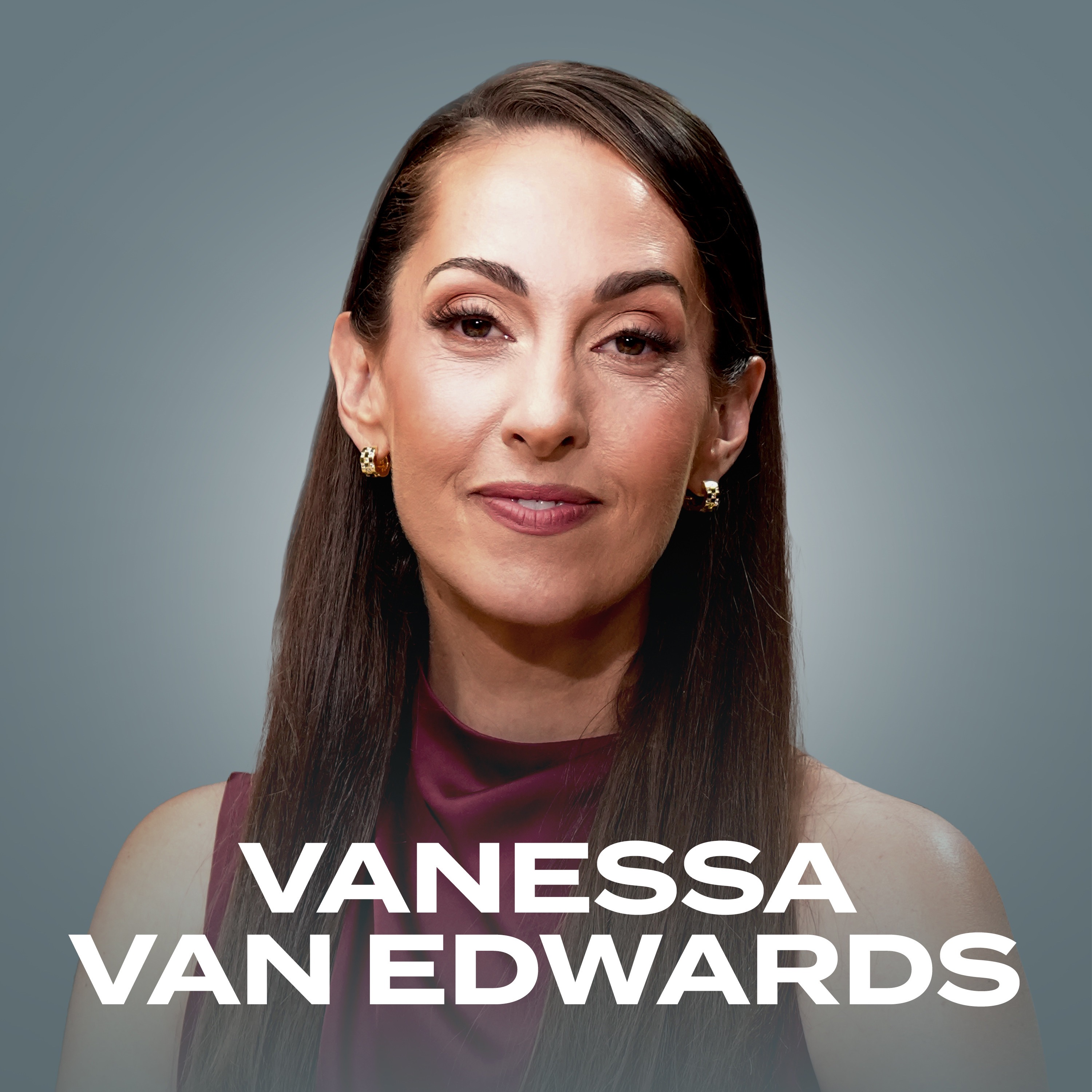
How to use conversation skills to build trust and opportunity, move beyond small talk, and communicate with authority in meetings and high-stakes encounters. Vanessa argues that smart people over-prepare ideas but underestimate “small talk” as social lubricant; poor conversation is “expensive” because it costs opportunities, deals, and relationships.
Vanessa Van Edwards is a human-behavior researcher who has studied conversation and social skills for nearly two decades. She’s the author of the book Conversation.
Conversation is a learnable skill made of micro-skills (listening, storytelling, reading the room, pivoting). Good conversation quickly creates rapport so people want to talk again. Aim to pass “level one” basic traits (where are you from, weather) and reach “level two” personal concerns (goals, worries, values) using emotion-specific questions and a signature question. Turn-taking often lands around 15–30 seconds; avoid “conversational confetti” and apologetic “I’m just…” self-introductions.
A story about missing a TV deal because she was prepared for the pitch but not for banter with studio executives. A VIP/Oprah anecdote: instead of over-complimenting, she used context cues (“what a joy to be here…”) and shared a relevant story. Meeting redirect phrases: acknowledge emotion, then transition to agenda/metrics with warmth + competence.
Written by AI. May contain mistakes.
Emma shares recent travel experiences and local discoveries.
“So I was just in Portland for an event at this iconic city block-sized bookstore with color-coded rooms and over a million books.”
Emma welcomes Vanessa and discusses the importance of conversations.
“Find out how much at airbnb.com slash host.”
Vanessa explains how poor conversation skills can lead to missed opportunities.
“And yet people right now our rapport feeling so disconnected from each other.”
Vanessa identifies signs of ineffective conversational skills and offers insights.
“People like to work with people who are good conversationalists.”
Vanessa discusses how conversation is a learnable skill for everyone.
“So if someone is listening right now and they are bad at the art of conversation, what are the signs that you would tell them to notice first?”
The importance of body language and active listening in enhancing conversations.
“When you're curious, you say it right away.”
Understanding the three levels of conversation to foster deeper connections.
“I'm going to send as many 10 minute voices as I can.”
Vanessa provides examples of good and bad conversation starters.
“It's why we have that boring small talk.”
Learn how to transition from scripted small talk to meaningful conversations.
“Okay, so a really bad way to do that would be you get into a call and you're trying, but you're like, so how's it going?”
Discover how to ask emotionally engaging questions to deepen connections.
“or like my daughter did great in soccer or whatever.”
Understand the value of sharing personal stories over factual exchanges.
“Everyone should have a signature question.”
Learn how to create compelling responses to common small talk questions.
“And don't you want to know what that is?”
Learn how to create compelling responses to common small talk questions.
“RingCentral's AI Receptionist uses Voice AI to answer on the first ring, so you'll never miss a call again.”
Explore how inadequate conversation skills can impact your career opportunities.
“Every Tuesday and Friday morning, we drop a new episode about some of the major stories of the moment.”
Explore the significance of human interactions and their impact on mental health.
“Like what is that doing to our ability to have interesting conversations and then interesting lives?”
Learn how important conversations can lead to career advancements and networking.
“Some of the tips in my book, they are not meant to make you feel comfortable, right?”
Understand the value of casual social interactions in professional settings.
“And all of those conversations that you had at a party, networking, waiting for the show to start, those were all going towards your investment.”
Discover strategies for effectively conversing with VIPs and celebrities.
“But if they were like, what's your greatest success for the week?”
Learn how to create shared contexts to ease conversation with influential people.
“You're my greatest hero ever waiting for.”
Get tips for steering unproductive meetings back on track without embarrassment.
“I mean, because I feel like so many people, they're good, they get into the meeting and they've done the small talk thing.”
Learn how to effectively signal warmth and competence in professional settings.
“In conversation, also even in your slides, right?”
Discover strategies to regain the attention of your audience during presentations.
“I don't walk into rooms I'm not grateful for.”
Understand how to have meaningful conversations with influential people.
“Warmth are stories, case studies, personal history, even success stories, warmth, gifts, funny gifts in your slides, a joke, passing something out, touching something.”
Learn how to effectively share your personal story to connect with others.
“It's all about the pitch, all about the numbers.”
Learn how to succinctly share struggles and the journey to overcoming them.
“And no more than 15 seconds in the struggle.”
Explore the relationship between effort and measurable outcomes in strength training.
“parenting is that my job is to give my kids what I call nutritious fertilizer.”
Understand how to handle disagreements charismatically and productively.
“I'm interested what happens when people disagree with you because it happens all the time and how you would handle that in like a conversationally like, you know, appropriate or positive way.”
Learn strategies for giving tough feedback without sugarcoating or confusion.
“You write about delivering hard feedback, which is, I think, one of the places that people struggle with so much.”
Explore how the way people frame their past affects their future actions.
“Right, so sugarcoating is only going to confuse them.”
Learn about the impact of personal narratives on agency and relationships.
“they're always telling redemption narratives.”
Discover how to change your narrative through conversation and self-authorship.
“How can you write your own story from now on, right?”
Understand how money narratives influence personal and relationship dynamics.
“Because even just voicing fears, like one of the questions, I believe this is question number eight, is how do you feel most misunderstood?”
Learn effective strategies for deepening relationships by discussing goals.
“just as you described with the couple that got divorced, you really need to know that about the people that are closest to you.”
Challenge yourself to avoid small talk and engage in deeper conversations.
“If you've been with someone for a long time, like what's the new thing we want to learn, read, watch, do?”
Explore the significance of high-stakes conversations using historical examples.
“You know, occasionally you'll get someone who's like, I don't like them.”
Learn how impactful conversations can change outcomes, even if brief.
“So they started with camaraderie and gratitude.”
Explore differing preferences for video calls and communication styles.
“A communication habit that you want people to stop doing right away.”
Discover how influential books can change perspectives and inspire writing.
“Is there a book that's changed your life?”
Emma shares insights on the enlightening content of her book.
“Well, let me tell you, anyone who goes out and gets a copy of your book will understand something in a whole new way.”

Get the gist, explore an idea or ask about something said.
 Claude
On Aspire with Emma Grede, what are the key points of this episode?
Searching your listeningAutomatic transcript. May contain errors.
0:09Today's episode is about the skill underneath almost every opportunity we get, conversation. Vanessa Van Edwards has spent nearly two decades studying human behavior and her new book is called Conversation. Her argument is that having the best idea just isn't enough. People need to trust you, remember you, and want to keep talking to you. This is a very practical episode. Vanessa breaks down how to move beyond small talk, develop a signature question, walk into a room with authority, and speak to someone more powerful than you. She also analyses the way I communicate in real time. Listen especially for what she says about the first five words of any meeting, and how the story you tell about yourself may be shaping what happens next.
0:53Let's get into it.
0:59So I was just in Portland for an event at this iconic city block-sized bookstore with color-coded rooms and over a million books. The place really feels like a city full of books. And getting to do an event there made my trip to Portland feel so special. Then the team and I headed to Utah for another meeting. And when I asked people for local recommendations, everyone we spoke to told us about this very popular soda shop. I finally tried one and I have to say I was more than pleasantly surprised. We also stopped by another local bookstore and signed copies of my book, Start With Yourself, and we got to browse there for a little while.
1:33Now, I love that feeling of a great bookstore where you can wander without a plan and then just suddenly lose yourself for an hour. I've been traveling so much for work lately, and whenever I'm in a new city, I try to make the most of it and find a few local pleasures along the way. If you have a busy travel schedule, I'm sure you also try to make the most of your time away, and that is what is so smart about Airbnb. You can list your space while you're away and bring in extra income to put towards your next adventure. Someone visiting your city gets a much more local place to land while they find their own favourite spots.
2:06It's a practical way to make the most of the time that you're already away rather than letting your home just sit empty. Your home might be worth more than you think. Find out how much at airbnb.com slash host.
2:23Vanessa Van Edwards, welcome to Aspire. Thank you for having me. I am really excited to have this conversation today. Now, your new book is called Conversations. No pressure. Yeah, no pressure. Better be good. I'm fully, fully ready to hear what you think about me. But reading it made me think about how many, like how much in my life has been decided through a conversation. And that was like so insane to me, whether it is like pitching for a deal or being in some kind of a negotiation, trying to figure out exactly what it is that I'm worth. But like so many big pivotal decisions come out of conversations that you need to have.
3:00And we talk all the time about the skills that you need to, you know, succeed. But all of that comes from like the underlying thing of having a conversation. And what struck me in your book is that you said, you know, and why I think the book feels so timely. You said, we are talking to each other all day. And yet people right now our rapport feeling so disconnected from each other. So why do you think that we're using our conversation skills so much less when we need them more than ever? I think this is actually the myth that smart people have. Like very smart, over-prepared folks. They're like, it's all about my ideas.
3:37It's about my knowledge. And that's very important. So we go to school, we prep, we have the perfect pitch deck. We have the perfect script. We think of all the answers, the data, the research. But we forget that before we get to the presentation, we have that horrible thing called small talk. Small talk conversation is often overlooked, but actually it is a social lubricant. If you can have that little bit of banter, that little bit of bonding small talk, even for two or three minutes before a Zoom call, it makes everything smoother. And the curse of smart people is they underestimate how important that small talk is.
4:10And so they don't realize, oh my gosh, why is this so awkward? And they get stopped before they even get to their idea. Yeah, you see that so much. It's funny. you say that bad conversation is expensive. What do you think it costs us the most? It costs us everything. It costs us opportunities. It costs us soulmates. It costs us business deals. It costs us investment. People like to work with people who are good conversationalists. You know why? It's easy. We have a lot of work to do, right? If we're going into a meeting or making a big decision, we have a lot of things going on. We have high cognitive load.
4:38If the conversation is also difficult and it's a little bit awkward and what was your kid's name and how are you? How's it going? How was the weekend? How's the weather? It's already hard to communicate with you. And so therefore people are going to want to talk to you less. They're going to be less bonded to you. They're going to want to call you less often. They're going to dread the meeting with you. I think that this is the key. The reason why I wrote this book is because I want, when people see your name on their calendar, they're like, oh yeah, that's going to be good. That's going to be easy.
5:07That's going to be fun. Oh yeah. Before they even get to the idea. And in that way, I think that if we don't have good conversation, it's costing us our success. It is almost impossible to hit your goals, especially professionally, socially, and romantically, if we cannot deeply connect with people quickly. And there is a difference between good conversation and bad conversation. Oh yeah. There is a big difference. So if someone is listening right now and they are bad at the art of conversation, what are the signs that you would tell them to notice first? Or what would they notice first? First of all, if this is you, this was me.
5:42I'm a recovering awkward person. I used to suck at conversation. Sometimes when I'm very, very awkward, I still do, but very rarely. First thing is we have to learn that conversation is a skill. I think I used to think that you were born with it or you weren't, right? You either had the art of the gab or you didn't. No, conversation is a social skill. Not only is it a social skill, it is a combination of micro social skills, meaning a really good conversationalist. And I spent the last 20 years studying master conversationalists? What is it that makes someone just easy to talk to? Eloquent, elegant, they're funny, but also they listen well.
6:16In that, a master conversationalist, they're excellent at listening, but they're also excellent at storytelling. They're also excellent at reading the room. They know when to pivot. They're very good at transition. There's all these micro skills. So what I would say is if you're bad at conversation, first of all, don't worry. We can help, we can do it right now. You're going to learn it. We're going to do it right now. Oh, we're going to do it. Right now, we can do it in an hour. We're going to do it. We're going to do it 75 minutes, 90 minutes. We can do it. You know you're having bad conversation if you feel socially exhausted.
6:41And again, this is what I see most of my students are highly ambitious, very smart, talented folks. And they are so tired, not always only from the work. They are tired from what comes before the work. They are exhausted by that small talk on the way to their office. They're exhausted by, does my team actually feel connected? They're like another networking event. I just can't. They're exhausted because they're in the green room or they're backstage at a conference. And they're like, I don't know how to connect with this person, but I know I should. I think that's the critical thing is, you know, you should, we just have to have a plan.
7:14We just have to learn it. You just need to have a plan. And I love that you say anyone can learn this stuff because I do think certainly, like I think about it in my own company. Certain people will be like, I'm so bad at that. I could never be at a conference. I never know how to initiate conversation. I never want to start the meeting. And when you say that it can be learned, I mean, it's so specific, the skills that you can learn. You've been listening to me for a few minutes and we had a little chat outside. What have you already noticed about the way that I communicate? So I listen to your interviews and you have a wonderfully natural and assertively curious style.
7:49When you're curious, you say it right away. And by the way, that is a sign of charismatic people. So if they have a question, they cannot wait to ask it. I get the sense that if you want to ask it, you're like, I got to ask it right now. Good conversationalists are additive. They are constantly adding by following up, by tell me more, by their own story, by nonverbal. So you're a nodder. So you'll nod with me. When someone does a slow triple nod, the other person speaks 67 % longer. Isn't that so good? I just think it's so, I mean, there's so much to glean from everything that you are teaching all the time.
8:21And I love the combination of conversation and the body language piece, because again, I think if that's not how you are naturally, it can be, you know, you make it into such a, it's such a hardship, right? And those things don't get easier. And that's why I really knew that I wanted to have you on the show. Because again, as somebody who used to be a certain way, you've actually taught yourself these skills. So what could I do in the next 60 minutes that would make this conversation better for you? What's your goal? I want to make sure that everybody listening gets the benefit of your experience and that they can take away at least to one thing that's going to make them a better conversation is for the pure purpose of progression in their life, right?
9:04Because again, this is not just about work, career, businesses, to your point, just having better conversations with your spouse, with the people that you love, with your kids. I think that we all have been in a situation, you know, I always say to my children, eye contact, right? I think my awkwardness, and I share this, you know, a lot of the communication device is given by extroverts and I am not an extrovert. And so extroverts can, can force themselves to be higher energy. They can force themselves to smile. Introverts and ambiverts, I'm an ambivert. I'm somewhere in between. We can't, we're not, we're not as good or we do it at great cost.
9:39Yes. Or we dial up and we pretend and we are depleting our internal energy. So if you have an introverted or ambiverted kid, so I have, I have, I have two ambiverts leaning, one leaning introvert. I have a little, little cat like I have three introverts and a humongous extrovert. Is it your youngest? My youngest, of course. Like she's nuts. Crazy child. I love birthright. Okay. Um, okay. So you're okay. So it's really important for you as a mom, because you've learned you have to do these skills to get ahead, right? You have to make eye contact. We want to make a handshake. I also will tell my kids when I'm stand, like you're wearing a cape, right?
10:14Cause otherwise you say set up straight. Yeah. Set up straight. But if you're like, what would you do if you're wearing a cape? They immediately put their shoulders down, their head up. So one, we're trying to give them goals. So you asked me, how can I make this conversation better? Which is lovely. And I'm like, what's your goal for the conversation? Because if your goal was to be for us to bond, we would have a totally different conversation, which would be lovely. Totally. We're here for you. We're on a podcast. We're here for you. Yes. Right. So it's like, okay, no, it's to be as helpful as possible.
10:37What I would say is whatever you are worrying about from a conversation perspective, ask it because likely someone at home is as well. And think of it as an introvert, like your most introverted kid, what would they be asking when they're entering the workforce? When they would be trying to make their big deal, when they're trying to meet their soulmate? You know, I dedicated my book to my daughters because I don't want them to ever have an awkward conversation. But I think that we're losing practice. I think - Oh, we are. All of us, not just littles. Like all of us. All of us. We are talking to technology more than we're talking to each other.
11:06You know, we're talking to AI more than we're talking to each other in some cases. We're leaving voice notes and audio notes instead of even like bothering to pick up the phone. And voice notes are not conversations. No, they are not. they are entirely one-sided. And I love it. I'm for both. I'm going to send as many 10 minute voices as I can. But it's not real conversation and it doesn't give you as much of that good chemistry, right? Like when you're in good conversation, like, yes, it will get you ahead, it will get you opportunity. But when you're in a joyful conversation, you're like, I feel heard, I feel seen, I feel chosen, I feel loved.
11:38You also feel that joy of like, I'm connected. So it's also the joy. It's that too. That's so important. I mean, you've been studying this for decades. How linked is charisma to being a good conversationalist? So charisma, I define charisma based on some really fascinating research out of Princeton, which is charisma is a blend, a perfect blend of warmth and competence. Very highly charismatic people, what they're doing in conversation is they're signaling first warmth. You can trust me, you can open up to me. I'm here for you without judgment, but also competence. I'm going to get it done. I'm going to listen well.
12:12You can rely on me. I'm effective. And so charisma is that blend is beautiful in conversation, but it's not essential. Meaning you can have a very fun conversation with your Uber driver and not worry about having warmth and competence. So actually, I think that we can, we can unlink them in the sense of good conversation is down to a blueprint. And I literally think of conversation in this map. Every good conversation has three levels and it's your choice if you want to do all three levels. The first level in all basic conversation is called general traits. That's like when we first meet, we're going, okay, where are you from?
12:47What did you do? Married, got any kids? Our brain has like a social hierarchy. We actually have to pass through that level first before we can get deeper. It's why we have that boring small talk. The problem is we tend to get trapped in that level. That's what happens to people. Right, so we're like, weather, how are those kids? How was this morning? You do, yeah. Okay, so my goal in most conversations is to get to level two, if I can. Level two is where things get more interesting, I think. It's where bonds connect, where bonds happen. So this is personal concerns. So personal concerns are motivations, core values, personality traits, goals.
13:22When you know this about a person, you know what drives them, you know what worries them. I think really productive work conversations are when you know what the other person's working on, you know their goals, you know what drives them. But you also know what hangs them up, you know what's worrying them, what's keeping them back. Give me an example of a level two question. Love it. Okay, so let's, can I do the bad and then the good? Yes, please. Okay, so here's the bad. Great. So like the bad is you hop on a team call and you really, you're like, okay, we have this few minutes of banter, this three minutes.
13:47I want to make it not a waste of time where I would have, wish I could check my email. Because the banter is important at the top of a conversation, right? It is really important. And I'm just going to go out on a limb and say, I think English people are better at it. Oh, I like it. Let's go. I mean, we banter. Like that's what we do. And witty, witty. I mean, I can't.
14:06and they're not always working. Well, I hope that we can catch up. I hope that we can catch up. It's a charm. It's true though. And also your banter is really good. Okay, so a really bad way to do that would be you get into a call and you're trying, but you're like, so how's it going? Oh, good. Busy, busy, busy. How about you? Yeah, I'm busy too. Okay, let's get started. Horrible, right? So what you did is you just went on SocialScript. You weren't sure what to do. So you asked a very socially scripted autopilot question. How's it going? What's going on? What's up? And the brain is like, I can't say anything deep.
14:43So I'm gonna say nothing at all. A good version of that would be, oh, what's your biggest win this week? Or tell me something good. So jumping to tell me something good. Tell me something good. Tell me something good, right? Tell me something good. How are you? Like, tell me something good. Yes. Or what's your biggest win, right? They're both very positive. They're both very positive. Now, this is important, I think, culturally on a team is you have to have enough psychological safety where if someone is good, they can tell you and they can brag about it. Like, what's your biggest win this week?
15:08Tell me something good. And someone's like, oh man, I just killed these numbers or like my daughter did great in soccer or whatever. But if something is not good, they can be like, oh, it's been a week. Let me tell you. Right? So it also takes - Because that you need in business, right? I never want to be in a meeting where all we're sharing is good news. And then you leave and I get like this disastrous email. I'm like, why don't you tell me? And by the way, this is the myth that we have as I think managers. Managers often think that conversation is counterproductive. No, good conversation opens up productivity.
15:37If someone has rapport, they're able to say, listen, I got to tell you, I got to tell you something. Last week's report and the client, it did not go as we thought. Conversation actually opens people up to be more honest. It actually creates more psychological safety. A team that is connected, that knows each other's level one and our basic goals, they're going to be more open with collaboration. They're going to share things more often, and they're also going to enjoy their work more. So you have to have psychological safety. You ask for good, but there's always permission that if it's bad, we share it.
16:05Right. So you've done the level one and that's a must because you're never going to get to level two without it. So you have the frivolous conversation, but you move straight into level two and you try to do it with a positive question. If you can, or I wouldn't even say positive, I would say emotion. Okay. So one thing I noticed when I was studying master or conversationalists is what they are very good at is eliciting precise emotions. So they wouldn't say something like, so, you know, you grew up around here. Oh, and what's your favorite coffee shop around here? Okay. Favorite is all right.
16:36But what's the coziest coffee shop around here? Specificity. Right. They're asking for a specific state and that is jumping from level one to level two. Asking someone, oh, you know, you grew up in LA. What's your like favorite family restaurant that you would always go with your family? That is a far better question than what's your favorite restaurant around here. So this is a hard ask, right? This is, we're putting more energy into conversation. This is not easy, but we're trying to elicit unique and specific emotions that you want associated with you. With you, that's the point. Right, so I love like exciting.
17:09I like winning. I'm very competitive, right? So I'm like, what's your win? What's your big goal? What's your side hustle, right? Like what's your personal passion? Those are my kinds of questions, but I believe, and this is level two, Everyone should have a signature question. A signature question is a topic that you like to discuss with emotions you like to feel in conversation. You want to create a signature set of questions around your interests that you can bring up in those first few minutes of small talk and then be known for it. I go back to this question about charisma because I think that people always think you've either got it or you don't.
17:42And what you're saying is if you learn to ask the right questions and you frame them in a way that actually is meaningful to you, Yes. You're going to be more charismatic in the exchange. Yes. Okay. Actually, there's two sides of this. Let's get advanced. So the first side is asking emotion, specifically emotional listening questions. That's great. And also asking for stories, not facts. Okay. So a mistake that people make in conversations are all about the facts. So how was the weekend? How many kids? Oh, how long have you lived here? Right? Like very fact-based. The brain is dead on that, right?
18:14There's nothing to grip. Asking for stories, that's better. And even better, it's also sharing. So asking is part one, but sharing is part two. And this is the hard part. You got to give something. This is the hard part is we also love really good stories. So sharing stories, not facts, when you are given a boring question, people are going to ask you, how's it going? They're going to ask you autopilot questions. You should be ready to break the script and give dopamine with your answer. And I know that this is really hard. And there's a very fine line, I think, between performing and being authentic.
18:49So these stories have to be real, right? They have to be authentic. You have to authentically like sharing them. But when someone asks you, how's it going? Not answering busy, but good, but instead giving them a story like, so ask me, how's it going? How's it going? Book launch. We're 12 days out and you'll never believe, but last week, I know you want to know. Then we're in. Then we're in. And don't you want to know what that is? A hundred percent. What is it? What happened last week? Right. So I just, it doesn't have to be long, right? And in fact, most answers should be between 15 and 30 seconds.
19:19Oh, I, this is one part in your book that I really was like, oh my goodness, I think I'm such a long talker. The 15, 20, I was like, I'm like a minute and a half. Me too, me too, girl. Me too, me too. Let's talk a little bit about that because you said like a good exchange really happens like between 15, 30 seconds, 15, 30 seconds. And I'm. Okay. So this is, I know, I know. Me too. Me too. So this is the candor corpus, the, one of the largest databases on conversation. So let's go the research and let's go to nuance. So the research says 15 to 30 seconds is about average for turn taking, right?
19:49So how's it going? Oh, I had book launch and it's going crazy. You never believe what happened last week. So-and-so and so-and-so and so-and-so they picked it for this. That could be 15, 30 seconds. 45 seconds is still okay. It's just getting the longer side. If you are going over 45 seconds, it's gotta be juicy. It's going to be juicy. See, I'm full of juice. That's what I am. That's what I'm saying. I have tea. And you know, what's not juicy? My hot take talking about how busy you are. It's the least juicy. It's the least juicy. And I hear it the most often with highly successful people. And by the way, I actually went to the research on this.
20:22Okay. The research says that talking about how busy you are makes people think you are less competent, which is very, very hard for successful people to swallow because we think talking about how busy we are actually makes it sound more successful, More important, no. When we hear about how stressful and busy someone is, we actually think they're less competent. So the one thing that's not juicy is giving someone your schedule. You don't have to be positive all the time. I call this conversational confetti. It's a silly way to think about this. If you're about to say something juicy, tell me first.
20:56So if something crazy happened to you last week, don't just dive into it. No, you're going to be like, this crazy thing happened. And then you're hooked. You're in. Now it has to be actually crazy. Yeah. You can't be like, the craziest thing happened, I got coffee. No, that's not crazy. So like, we also have to think meta a little bit in like preparing, like, wow, that was so weird. That was embarrassing. That was crazy. And then saying it and that conversational confetti, you're competing with the feed, right? Like, I hate to say it, but we are, we are directly competing against the, the, the, the contagion of social media.
21:27And so we also have to be very emotionally contagious.
21:36RingCentral's AI Receptionist uses Voice AI to answer on the first ring, so you'll never miss a call again. In just a few minutes, you can personalize your own AI Receptionist to answer questions, route calls, schedule appointments, and even send texts in multiple languages. Plus, it's easy to scale. Create unlimited AI Receptionists across any phone system. It's all powered by one reliable platform for effortless AI communications. See for yourself at ringcentral.com. RingCentral, voice of your business.
22:31Every Tuesday and Friday morning, we drop a new episode about some of the major stories of the moment. And Scott is a prediction machine gazing into his crystal ball to tell you about where it's all heading. That's right. So if that sounds like a good time for you, especially Mr. That's Right, you can follow us on your favorite podcast app to get new episodes every week. Boom.
22:57it's interesting because you did learn how bad conversation can actually cost you quite a lot in your career well you just talk about that because i know you lost out on a huge opportunity and i do think it's important for people to contextualize like how much being a good conversationalist can be so advantageous but equally if it's not something you work on it can cost you dearly. And it will cost you when you least expect it. Right. Even worse. So I had a video go viral. I started getting following on... Instagram wasn't around back then. So it was just YouTube and Facebook. I started getting viral and I got offered a television deal.
23:32And we were... I had an agent, a fancy agent. And we were talking to producers. We had this whole thing set up. We had a really, really cool show idea based on what I was doing. And they say, you know, the big execs at the studio, I will not mention the studio, want to meet you just to, you know, just to get a little, before we sign the deal. And I was really prepared for the pitch. Of course. Right. I was like, I had a slide deck with all the stuff for the show and my demographics and how we were going to hit. And like, this is a huge audience. I was ready for that. What I was not ready for was that banter before the meeting started.
24:04And so I get there and I was greeted by a sea of execs. Right. And they're like, Oh, we just want to get to know you. I was like, because I was ready for the pitch, but I wasn't ready to be known. And I did not know how to connect quickly. Quickly, I keep adding because, yeah, I can do it on a date. I could do it with a long dinner with friends, but quickly with investors. When it matters. When it really matters. And answering questions in an exciting, but interesting way that's actually real and authentic is very hard. And I was underprepared. So we start the small talk and I know it's going badly.
24:37Oh, that's the worst. I know it's going badly. They're like, you know, so tell us about you. By the way, everyone watching, please be prepared for three questions. You should know how to answer, what's your story? When someone asks you, what's your story? Tell me about you. Be ready. Because you're going to be asked that question when you are not ready for it. You're going to be asked that question by someone who is very quickly, they're trying to gauge who are you. Be ready for it. Second question, what do you do? It's a sneaker and we answer it apologetically. So many people, I hear them say, oh, I'm just a little.
25:09them. Or they answer it like a social script or they read the resume. More specifically, women answer it in a negative way, do you think? Or am I wrong? I think more specifically. In an apologetic way or in a way that they don't want to brag. And so they undersell. They undersell themselves. Right. And they give it away with vocal power. So I often will hear women ask what they do, not say what they do. So they go up at the end of their sentence. So instead of saying, They're asking. Some will say, what do you do? Oh, I'm just in marketing. Do you hear me ask? Oh, I heard it. Loud and clear. This is really important.
25:46It's really important. The way you say something matters just as much as what you say. A million percent. But go back to those three questions if you want everyone to know what's your story. So what's your story? Be ready for that answer. Be ready for a really tight 45 second answer to tell a story with a little bit of emotion. What do you do? Say it, don't ask it. And make sure you're giving them a hook. be easy to talk to. If you say I'm just in marketing, you just put the onus on them. Yeah. Now they're like, uh, what kind of marketing, right? Like give us a little, a little bit of story, why you love it, why you hate it, why it's embarrassing.
26:16What you're working on, like something that's going to bring you, you know, the next amazing project. Yeah. Answer what I'm trying to do. Right. It levels up to level two if you answer with a goal. Right. Right. And the third one is the catch all for what's up. And this is the ever changing answer. So I want you to be living a life that is so fun and so interesting and so fulfilling that that answer is always different and always authentic and always easy. But that means watching things that other people aren't watching. That means getting off your feet. That means learning new things. That means trying new things.
26:52That means reading books that maybe are super weird or super out there. Being interested and interesting. I think the only way to be interesting is to live an interesting life. facts. I mean, to me, it's so simple. And even as you say it, it's like, I'm like, yeah. And I say that because I say that, yes, I want you to be conversationally charismatic. Like I know that if you're living in an interesting life that you're going to be interesting, but also I want that for you too, right? If you're like, I need more to talk about in my life. If you're like, wow, I am dreading conversation. I find it really hard to come up with signature questions, but I don't have any signature questions.
27:25If we say, okay, how could I live a life that's interesting to talk about, there's my, really my secret goal there is to give you some more joy, is to give you some more meaning. Because I think that if you have meaning in your life of people or things that you're doing or goals that you have, it's going to come into your conversation and that's only going to benefit your conversation and yourself. How much of that is coming from how we're living right now at this moment in time, right? Because if you do a lot of your work from home and everyone knows what I'm going to say, so like, fine, my audience understands.
27:55But if you do a lot of your work from home or a lot of your work to a screen and you have your food delivered to your house and therefore like your human interactions are reasonably limited. Like what is that doing to our ability to have interesting conversations and then interesting lives? It's 80 % of the reason why we are feeling burnt out. We are feeling bored. We are feeling overwhelmed because the chemicals that we get from human to human connection cannot be replicated other places. No. We don't feel loved by technology. We need to feel loved. We don't feel understood by technology. AI can tell you, good job.
28:35I hear you. But AI is not going to give you the deep feeling of feeling understood by another person. It does not give you meaning. And so I think we have to fight this. And this is my big push is we are focused so much on our bodies and that's wonderful. Fitness and our health and our protocols and I love all of it, but we have to go to the social gym. We are also getting conversationally flabby. We are getting socially weak and we have to start thinking about conversation like reps. The first couple of times you do a pushup is really hard. It hurts and it sucks, but the more you do it, the stronger you get.
29:14Conversation is, it could be a little awkward, right? Some of the tips in my book, they are not meant to make you feel comfortable, right? Some of them are a little bit hard. They take a little bit, they take courage, but it's the same thing as going to the gym. I also want you to just speak to the success piece of this all, because at the top of this, and as I said to you, when I was reading your book, I was like, wow, like the biggest moments and the biggest leaps I've taken in my career have absolutely come out of like an important conversation. Pitching a business, asking for people to invest in you, being able to move your yourself up in the world comes from you advocating for yourself, having great conversations, negotiating on your own behalf.
29:53And you do that through talking. There's no other way. I have a question for you. So you, you have built this incredible empire. How many of your relationships with people happened outside the boardroom? Like, were you happy houring with them? Were you going to parties with them? Like, I wanted to ask you like, how much of it was like casually social? I would say quite a lot is casually social, but also that's my business, So in the fashion business, you'll be at a show. You'll be at an after show party. You'll go and see a presentation. Part of our work is being inspired. So you'll go to a gallery with someone.
30:28You'll go to a concert. Right? That's not different. It's outside of the boardroom. But it's not. But it's not. Interesting. Everyone's business is social. I love that you say that. All of our business is that. You don't have a unique business. And all of those conversations that you had at a party, networking, waiting for the show to start, those were all going towards your investment. The really successful people, they are making connections out of the office just as much as in the office. They're making conversations at lunch, picking up their food when they're walking in the building, in the elevator.
31:01Like, I also think, what is a good elevator conversation, right? We talk about an elevator pitch. No, that is long ago, right? Like that is like old school. No. What if you're in the elevator with someone you kind of see occasionally or your boss? What are you saying? Don't ask, how's it going? Right? If you ask, how's it going? They will not remember you. What do you ask? Well, this is what's your goal, right? What's your goal? So if you're in an elevator with your boss, you have to ask yourself, what's the goal? Is the goal to get to know them more? The goal is for them to know me more. Okay.
31:32Right? That's what you want. It's like, if somebody's in the elevator with me, they need me to remember who they are. Okay. Okay. I have a different perspective. Oh, go on. Tell me. Okay. Okay. I think that they're - This is so good. I think that there are two different kinds of VIPs. And I would consider you a VIP. I would consider any manager as a VIP. The title of this chapter is how to talk to your boss or a celebrity or a VIP, okay? There are two types. And I've known this because I've interacted with a lot of VIPs and celebrities. And you have two. Tell me if you agree with me. I think there are two types.
32:00One are the entertainers. Entertainers, they love to share, right? They want to tell you the story. They want to make you laugh. They love hearing other people laugh. They want to share something where you're like, oh, wow, no way, right? They're the sharers. they love getting really good questions and having very loud listeners. A loud listener is a loud laugher. They nod a lot. They're the ones who are going, oh, no way. Wow. Uh-huh. Right. Eyebrow raises, right? Like that they're loud listeners. The other type, I think this is actually most VIPs, bosses, and celebrities are appreciators. This is actually me.
32:33I would be so upset if in an elevator, you asked me a hard question. Really? I would be like, don't want to talk to her again. kind of not really kind of not really because you know why i am an appreciator interesting i just want to listen yeah fair i know it's weird because i'm on a podcast but like i just want to hear your stories so appreciators are the types of vips where they want to be entertained they want you to tell them you to tell what's the most interesting thing that happened to you this weekend what's the funny thing what's the thing you learned about our client you're not gonna believe this customer review you're not gonna believe like when my team is like oh my gosh so Last week, one of our students emailed in and she had this great success story.
33:11You just made my morning. But if they were like, what's your greatest success for the week? No. You don't want that. I don't want it because I want to listen. So I actually think it is different. And this is the nuance of conversation, right? Like there's a little bit of nuance here. What is your goal? Is your goal to bond and connect? Is your goal to learn about them? Is your goal to share about you? So I think you have to figure out. You really have to figure out. Which one are they? I'm thinking about this as like my single biggest mistake that I've ever made in conversation. It's a good one.
33:39Tell me. I am obsessed. Wait, wait, you said conversational confetti. Oh, I did? Wait, this is the single biggest mistake I've ever made in conversation? What is it? I can't leave. What is it? It was Oprah Winfrey. But you have to understand what Oprah is for me. Like the queen, the king, the moon, the sun, the stars. Like all of it. Two or so. So, and here's the thing. I invited the conversation. So I'm in a party. I'm at like some, you know, Diamond Fustenberg's Oscar party. Again, not too overlooked. A party is important conversation. Not too overlooked. Right, so I'm there and I'm feeling myself good.
34:13And Oprah walks past me because she doesn't know me and Gail kind of follows and I know Gail. I know Gail. Does Oprah smell good? Gail's a delight. She always smells good. So I say, Gail, you've got to introduce me to Oprah. But Oprah's up the road now, right? And so Gail goes, Oprah! And I'm like, no, no, no, no. I have sunglasses on. She gets to me in like 30 seconds And me, I, conversation confetti, I go blank. No, no. And I have sunglasses on and I don't take the sunglasses off. No, no. And I like kind of like maybe cry a little bit. No. And I like, just because, and she's holding my hand, stroking my hand, like poor girl.
34:55Poor girl. And it was my biggest choke. So Vanessa Van Edwards of excellence, what should I have done? What should people do when they meet the person of their dreams? Or indeed, if you're meeting a boss or somebody that, you know, you really admire and you want to make a great first impression, what should those people do? Okay. So one, it's okay. It's okay. I bet you she's used to it. It wasn't okay. But I bet you she's used to it. I made up for it. She was petting you, right? I made up for it since. She was probably giving you oxytocin. She's like, calm down, you silly cow. She's like, stop crying on me.
35:29Take your sunglasses off, you rude cow. Okay, so I think the first thing is the mistake people make is they compliment. And I, people are not like this. I love you. I don't, I don't like it. No, I love yous. No, I love yous. No, I love yous. You're my greatest hero ever waiting for. Oh my God, I love you so much. I've been watching you since I was a kid. My favorite thing you ever did was, okay. So don't do that. Don't do that. And I love an authentic compliment, but I think, especially for a VIP, it's hard to respond to that. It actually puts a lot of conversation weight on them, right? We're trying to be easy to talk to, okay?
36:03So one is I would actually wait on the compliment. And you have two choices. And I have one that I prefer, but I'm gonna give you two choices because it depends if they're an entertainer or appreciator. Like, I don't know Oprah. Do you know if Oprah's an entertainer or appreciator? Does she like to listen or does she like to talk? I think she probably is an entertainer. Okay, so for her - I think she can do both because she's Oprah. But I would like - She can do whatever she wants. She's a goddess. Like, that's her category, right? Okay, so then I would pick a context cue. So context cues are things that you can see in conversation.
36:32And research shows that when you can both see the same thing or smell the same thing or taste the same thing, it creates a shared reality and it actually lowers the psychological pressure. So if I am not sure what to say, and I don't want to like inauthentically compliment, I will create some kind of context cues that's highly specific. So I might say, oh my gosh, what's your favorite food here? Or how's the wine? Like a very just like, we're in this together. It's literally saying like, we're in this shared context. It takes on the pressure of like, Oprah, what's your greatest memory. Or people make the mistake of like, what's your one piece of career advice for me?
37:04Oh gosh, so much pressure. So like take on the pressure, pick a context cue. And then if you can share a story that's going to delight and entertain them. Right? Like, I think that like sharing something about you or about something you've seen or something you've learned or something you've heard. Everyone likes a good story. Everyone likes a good story. So do it, do it over. If I was, if I, if I actually did it over last night, you did it. Yeah, because I, because I saw her. I'm just going to show you the story. You were hanging out with Oprah? No, no, no. I just saw her. So I knew what happened because I could see her in front of me.
37:35So we're at the Lucas Museum opening and I could see her in front of me. So I was like, think, think, think, think, think. And then she disappears. Then she comes towards me. That's what I hear literally. But it's like, I've got time, time, time. And again, you know, she's a hand holder. I'm like, don't fuck it up again. Thank God you don't have sunglasses on. That's what I was thinking. Okay. But were you Are you preparing a conversation starter in your head? Of course, absolutely. What were they? I said, what a joy to be here. Can you believe what we're seeing? Because we're in this like museum space, you know?
38:05You did it in context queue. And I said, there is nowhere like this in LA. This, what a gift to the city. And she said, what a gift. Have you seen da-da-da-da? I said, no, but did you see the Frida Kahle? Da-da-da. You're in. And she said, I can't wait to see you in November. And I said, oh my God, bye, high five. And I walked off and I was like, yeah. That was it. You did it. You did a context queue. So that's why I know you're a natural conversationalist. That was a natural cue.
38:30Sweater weather is finally here. And I do think there's a reason people get so excited about it. It's one of the easiest moments in the year to get dressed because a great sweater does so much of the work for you. Now this season at Macy's, they have the staples that make a full wardrobe feel cozy, but still elevated. Kashmir is the place I would start. It's soft, lightweight, warm and timeless, which is why it rarely goes out of style. Macy's cashmere is designed in-house and thoughtfully made with two-ply yarn construction, so it's built to last and it comes at great value. If you want something with a little more personality, this is the great season for a statement sweater.
39:08Fair R is especially strong right now and it gives a simple outfit that classic full feeling without trying too hard. The styling is what makes it feel current. You can wear a great sweater with baggy denim and slouchy boots or make it feel a little more dressed up with a silk skirt or a trench. The point is to mix the softness of the knit with something that gives the look a bit more shape. Head to your nearest Macy's store or go to macy's.com to shop online. Housing is one of the biggest payments most people make every month. Whether you rent or own, for a long time it was just treated as a payment you made, not something that could become part of a rewards membership.
39:45That is what makes Built interesting. When you become a Built member, you can earn points on every housing payment, whether that's rent or mortgage. Then you can redeem those points towards things like flights, hotels, lift rides, Amazon.com purchases, future housing payments, and more. I also think the Neighbourhood Concierge in the Built app is worth paying attention to. It's connected to your home and more than 50 ,000 merchant partners. So you can ask it to do things like make a dinner reservation, book a fitness class, schedule a lift or pay your rent. It is not just giving you information.
40:19It can actually take action in the app and apply your member benefits along the way. For anyone thinking about what AI looks like when it's actually useful in daily life, this is a good example. It's tied to where you live, what you do around your neighborhood and the things that you're already paying for. Download the Bill app and join the membership for where you live at joinbilt.com slash Emma. That's J-O-I-N-B-I-L-T dot com slash Emma. Use our link so they know that we sent you.
40:53What do you do? I mean, because I feel like so many people, they're good, they get into the meeting and they've done the small talk thing. That kind of works out for them. So how do you redirect a meeting that's going nowhere without embarrassing the person that's actually leading. Okay. So I think it's really good to have phrases in your back pocket, like planning phrases. So first of all, there's a couple of things that can come up in meetings. One, you don't have time for small talk. So this is the first transition. Like people are in small talk. You want to skip small talk. You can actually say, I trust all is well with you.
41:22Trust all is good with you. So you can actually skip small talk with a positive statement. If you're in the meeting and you need a transition, what you want to do here is address the emotion and then give the next step. You have full permission to acknowledge the emotion, move it on. In fact, we see that as high competence. So remember how we talked at the very beginning about charisma is warmth and competence. Yes. This is where that comes in. Okay. You're in a meeting. You need to transition off something bad, off something good. You transition into metrics and productivity, warmth and competence, warmth, gratitude.
41:51Thank you. That was great. That was productive. That was relieving or whatever. And now competence. We have a plan. Let's go to this on the agenda. Let's go next. you want to pair that formula all the time. All the time. In conversation, also even in your slides, right? So I'm doing a lot of presenting. I'm doing a lot of pitching. That's most of my work. I will even have a warm slide and a competent slide. Warm transition, thank you for that. And then competent. So you can always be pairing warmth and competence together. So let's make this a little bit about work because if you walk into a meeting where nobody knows you, what are people deciding about you before you've even made a point, before you've opened your mouth?
42:26Yes. So they are deciding first warmth, Warmth actually comes first. Warmth signals are important in the first few seconds. So when we talk about impressions, really, we only have the first few seconds. Some people even say it's less than a second, meaning you have to very quickly signal openness. So there's a couple of nonverbal ways that we do this. So I like to be hands first. So on every Zoom call and every meeting, even when we just met, I was like, oh my gosh, so good to see you. And then we went in for, I think we hugged, right? So hands first. So the moment you walk into a room, the moment you hop on video, signal your palm.
42:57I love an open palm. It's kind of like the window to the soul. Second is you want to make eye contact, especially those first few seconds. It produces oxytocin. So oxytocin is the chemical of connection. There's a lot of things in our body, but for our social purposes. And then if you can do some kind of physical greeting, that's always good. A handshake, cheek kiss, high five, fist bump, hug, all good. And then your opening line, specifically your first five words. I want us to be purposeful with our first five words. So often we throw these away or we ask them. We throw them away. So happy to be here.
43:29Do I look happy to be here? So we either start on autopilot, which is off. So we'll say, hey, everyone, so happy to be here. But we don't look happy to be here. That immediately signals inauthenticity. So if you're not actually happy to be there, don't say it. I would rather you be radically honest than pretend that you're happy to be there. So if you're actually happy to be there, make it sound like you're happy to be there. Second, your first five words should be purposeful. It should not be apologizing. It should not be hedging. They should not be qualifying. And you have to state them, not ask them.
43:59We briefly talked about earlier asking, especially your name. If someone you walk into a meeting, you say, hi, my name is Vanessa. In our brain, when we hear an accidental question inflection used on a statement, it reminds us of liars. So liars accidentally use the question inflection because they're asking, do you believe me? So this is why we get that spidey sense around people who are like, what? It's because our brain hears the question inflection. So liars will often go, no, because they're actually asking, do you believe me? Like if I ask my daughter, did you take that cookie? And she goes, no.
44:34Yeah, she did, right? So we know this instinctively. So if you're asking your own name, you're asking the point of the meeting, you're asking your greeting. You've lost your authority. You've lost your competence, right? You're actually putting their brain into more of a suspicious place rather than an open place. So first signaling warmth, then signaling competence and making those first few words purposeful. I also think this cuts down awkwardness. Like if I'm about to walk into a meeting, usually I used to be thinking about like my inbox, my tasks, the pitch. No, no. Just think about your first five words.
45:08I like gratitude. Oh, thanks so much for making this work. Thanks so much for having me. I'm always grateful, right? I don't walk into rooms I'm not grateful for. So you're grateful to be there. Right? So like that's a bar for me is like, if I cannot be grateful for this meeting or meeting this person, I shouldn't be doing it. So I always know that gratitude is authentic. That doesn't always work for folks. So if you're grateful, right? If you want to be productive, that's also good. Excited for this productive meeting. Excited to get this done. Excited to know you, right? So I think you can pick the words that you want to showcase.
45:39I love that. First five words is really strong. First five words and first question. All right. First five words, first question. What happens? Because it does happen when you just lose the room. Like you and you're looking around and people are on their phone and they're not feeling the presentation. How do you bring everybody back in? So is this during a chit-chat session or during your presentation? Like during a presentation. Oh, well, you got to prepare for those. So you know you've lost people. You usually see it non-verbally first, right? So non-verbal disengagement looks a certain way.
46:13You know what this looks like. It's glassy eyes. Yes. It's peeking over at your computer. It's that lean back, sit back block. So lean back, sit back block is someone leaning back in their chair They're usually blocking their body. They often have a blocking behavior on their face. They're covering their mouth or their eyes. By the way, watch out for, when someone's covering their mouth or their eyes, it's either a blocking gesture in discomfort so that something you said they don't like. Like for example, we tend to eye block, like rubber eyes. I'm not gonna touch my eyes now because I have too much cute makeup on.
46:41But if you rub your eyes, it's usually a sign that you don't wanna see something. Like little kids, when you give them bad news, they cover their eyes. True. Right? So we have the same thing as humans. So if you see someone suddenly block or cover their eyes, they're either embarrassed or uncomfortable. Same thing with the mouth as we will typically cover our mouth when we're trying to hold something back. So watch out for those signals. And then you have a choice. I like to address it. So if that person is engaged with you, I will give them a lot more eye contact. So oxytocin is energizing, right?
47:12So if I'm suddenly making eye contact with you, you're like, oh, hello. Someone's paying attention to me. I will often get physically closer to them, like not in a weird way, but like if I'm presenting and I can sort of walk towards them, towards the, in the boardroom, I will get physically closer to them because we know it's called proxemics. When someone closes the space, our brain's like, oh, pay attention. They can reach out and touch me. They can reach out and high five me. So our brain like kind of leans into that. And then you probably need a vocal tone change. So vocal tone change, right now I'm in explanation tone, but what if, just what if I went into this tone.
47:46Now, I have to share something. It's really personal. I used to really struggle with over-talking. Now I'm in a storytelling tone change, right? Yeah. So you need to practice the different ways you deliver. Watch TED Talks, for example. There's a TED Talk tone. You ever notice this? Yeah, I've said it. Here's what it sounds like, ready? Today, we're going to talk about a big idea. I'm going to break it down into three different things that are going to change your life, right? Like we know that tone is high-competent, We're like, ah, we're in presentation mode. So what do you do? You suggest people practice at home?
48:20I suggest people break their presentations. This is really advanced. If you really want to be an excellent presenter, I suggest you break your presentation or your pitch into warmth and competence. And you should be bouncing between the two. And the really good Shark Tank pitches, I love watching Shark Tank. Love. The really good Shark Tank pitches, what they're doing is they're taking on an emotional journey. They usually start with something like this. Sharks, today, I'm going to, and they have competence. They're in that confident shark tone. And then you'll notice about 30 seconds in a minute and they'll go into warmth.
48:48My journey started when I was a child and you're like, oh, warmth. And then their story gets a little bit boring and they go, but then I launched my first product and we had 600 sales, competence. Then I brought my wife into the business, warmth. Then we got our first customer, warmth. Then we hit these sales numbers, competence. That is what they're doing. Really good TED Talks, really good Shark Tank pitches. We actually coded this. We analyzed 495 Shark Tank pitches. Jose Pena, my team member. help me analyze them. And we saw that they were actually dialing up and down emotion. They were doing it non-verbally and verbally.
49:19So this is nuanced, but can you bring in warmth? Warmth are stories, case studies, personal history, even success stories, warmth, gifts, funny gifts in your slides, a joke, passing something out, touching something. The shark tank pitches that had interaction, any kind of interaction did better because they're immediately warm, right? So like touching something or giving something. And then competence, data, research, numbers, budgets, charts, glasses. Glasses are actually seen as competent. You should have a balance. Wearing glasses. Wearing glasses. Yeah. We actually see people who wear glasses as higher incompetence, which is so silly.
49:55So we can plan for this, right? Really good presenters are. And it's not by accident. I think that if we can plan out warmth and competence, you're actually just being easier to listen to. That's all this is, is you want to make it so that someone's cognitive load is low. They can only take one mode for so long. And that's just that. Right. So say I'm sitting next to someone that can completely change the trajectory of my career. How can I have a conversation with that person without making it feel like overly transactional? So I like radical honesty. So sometimes in those situations, I like to call it out, right?
50:29Like if you're with someone who can change the trajectory of your career, I think you can say something like, you know, I've been so looking forward to this conversation. Thank you so much for sitting down with me. This could kind of change the trajectory of my life. So no pressure. Like, I think you can be played. So that's option one is like, be very radically honest with it. Be very playful. That works for me. Have you ever done that? I mean, in your pivotal moments, are you usually that honest? Or are you going for banter? I'm that honest every day. Pivotal moment or not. I just, that's just who I am.
50:58I think that that's the better way because usually someone knows it. Like if someone is sitting with you and they know they can change the trajectory of your career, let's just call it out. Yes. And the research backs us up too is radical transparency is also vulnerable. And we like vulnerability. It skips levels, right? If you go right into, like, let's say the bad. I like to do bad and then good. You sit down with, let's say an investor, right? Who would you like to, who does your ideal person like, what's the person who could change their trajectory? Is it an investor? Let's say it's an investor or it's somebody very senior in a company, you know, a powerful person.
51:32Because I think the power plays into so much of these conversations. And powerful people know they're powerful. Yes, they do. Typically. And if you were to sit down with them and be like, so how was your weekend? It's just, it's not very real. And also it kind of puts the pressure on them. I would rather be like, well, I've been looking forward to this my whole life. I'm, I'm, I'm grateful for this opportunity. It could change the structure my whole life. I really want to get to know you. My goal today is, and then skip to level two. Level two is goals. So if you skip to, you know, my goal today is to get to know you, or my goal today is to show you why this is the best investment you could possibly make.
52:07Or my goal today is to really connect with you. It's just for us to get to know each other. Share your goal right at the start because then you skip the level. You don't have to go through those horrible level one niceties. And it's important to make yourself more memorable. I think so. I think so. And this is where emotion comes in, right? If you are asking socially autopilot questions, you are less memorable. If you are preparing stories, but also emotion frames, you become more memorable. And this is also level three. So level three is where real memorability happens. Level three is the last one.
52:40We haven't talked about it yet. It's called self-narrative. This is the story you tell yourself about yourself. You know what really powerful people like? A story. Because all people like a story. So I think we make the mistake sometimes of sticking to business. But as I say, there's really no just sticking to business. We like people where we are part of their story. So sharing what is your hero's journey, that is going to hook a powerful person in because it's real, right? It's really your story. But also they want to be on the journey with you. They want to root for you. The mistake that I think really smart people make, and these are most of my students, is it's all numbers.
53:14And the worst Shark Tank pitches are these. It's all about the pitch, all about the numbers. There's no history. And usually the first question a shark asks is like, can you just tell me about you? Yeah. Or how did you get started? That's why they're asking those questions because they're like, give me warmth. Get me your story. So this is the real challenge. With that powerful person or in any conversation, can you bring up your career self-narrative? What is the story you're telling yourself about yourself? What is the story of your career? And how could this person play an essential role in it?
53:46Where are you in your journey? Are you in the climb? Are you at the top? Are you at the bottom? We understand psychologically as humans that everyone should be on a hero's journey. if you bring them into that story, they are much more likely to root for you. I get that. But how do you, I mean, maybe again, I might just be too English and too polite, but how would you get someone to trust you without like oversharing? Because there is that line, right? You're still in a professional conversation. You're like, yes. Oh, so horrible. Okay, here's the difference. Okay, here's the difference. I'm going to do the bad version.
54:15I'm going to do the good version. So tell me about your business. Oh, I'm going to tell me about your business. Well, I, you know, I'm so sorry. I'm so nervous. You know, I just never thought I could do it. And I really struggle with imposter syndrome. And so I started my business, really, despite all my imposter syndrome, that's too much. Yeah, you've lost me. Way too much, right? That's like way too much. Yeah. That's oversharing. However, let's try again. So ask me again. Okay, so Vanessa, tell me about your business. Okay, this is the business that I think is going to transform women's lives.
54:50So I teach people how to X. And what got me started, I actually started this way back in college. I had this horrible problem and I couldn't believe it. And I was able to overcome it with this little product that I created. What is it? What is it? I had this little product I created and I pushed it, I pushed it, I sold it at farmer's markets and then it started to go viral. And then once it went viral, I had all these women reaching out to me. And that's why I'm here with you is I'm at this critical part of this journey with this product where I know all we need is a little bit of investment to take it off.
55:18but if we do not get this investment, I know that it will slow our growth, right? So like, you see the difference? I'm talking about, there's a little bit of emotion there about how I started it with my personal, my pain point, but I'm also, you saw where I was in the journey and where your role is. Yes. So we're right before the pivot point and we like that. We like to see right before a pivot point. Because that is what happens so often. People give me a huge long story and yet they haven't told me how I can be helpful. I'm like, what are you talking to me for? No, you know, I get it. I've got your whole life story.
55:47You've done this thing. like, what do you need? Right. And so let's, let's break down the hero's journey, right? So here's the hero's journey. And I, I also hope that everyone's on a hero's journey, right? Like, I hope that this can be your story. Every hero's journey. When you're telling someone your story, what's the challenge? What was the pain point? The struggle. Start with that. And no more than 15 seconds in the struggle. That's a mistake that people make is they spend way too much time oversharing the struggle. So what was the challenge? What was the mistake? And the more relatable you can make that piece with universals.
56:14So like I was over, like for my story, I was overwhelmed. I was a social overthinker. When I shared that I used to mistake neutral faces as negative, hopefully people watch. Some people watching were like, oh, that's me. Yeah, totally. Okay. So then you skip to the hard work, the grit, the resilience, the discovery. What was the thing that made you overcome that in your business or yourself? 15 to 30 seconds. That's it, right? What unique grit, hard work, resilience is it? And then where are you before the tipping point? Or did you have your tipping point, right? There are some people who've had their success, what was the win?
56:45That's a hero's journey. That's a hero's journey.
56:52The thing about strength training is that effort alone is not always enough. You can show up, do the workout, check the box, and still not really know if you're getting stronger in a meaningful way. That is where having a real plan matters. The Ladder app gives you structured strength training programming created by certified coaches with workouts that build week after week. So instead of starting over every time you train, each session connects to the one before it. You know what you're working on, what weight you used last time, how many reps you did and how to keep progressing. The in-ear coaching is also a big part of it.
57:27It talks you through the workout with form cues, reminders and motivation so it feels like having a coach with you while you train. Now whether you're training at home or in the gym, LADA has plans for different starts. Pilates, bodybuilding, dumbbells, hybrid strength, glute focus programs, kettlebells, prenatal, postnatal, and so much more. Remove the guesswork with Ladder and get a real coach in your ear telling you exactly what to do for every workout. No thinking, everything planned for you. If you have an iPhone, head to ladder.fit slash aspire and take a quick quiz to find your perfect ladder plan.
58:03Use my link and get a free seven-day trial with no credit card and$10 off your first month if you join. One of the ways I think about parenting is that my job is to give my kids what I call nutritious fertilizer. Good food, real attention, a strong foundation, and the kind of love that lets them grow into themselves. And when it comes to the food part, I care, but I'm also practical. I have four kids, real mornings, real schedules, and real life happening around me. So I appreciate anything that makes the routine easier without making it feel like yet another project. That is one of the reasons I started giving my kids Ella Ola.
58:41It's a tasteless, colorless, multivitamin powder for toddlers and kids ages 2 to 11. Now what I like about it is that it fits into what they're already eating or drinking. It's one daily sachet that you can mix into milk or yogurt, juice, oatmeal, smoothies, even something like ketchup or syrup. And there's no taste and no trace. My kids genuinely do not notice it, which is the point. It's just part of their day. Each serving has 19 essential vitamins and minerals plus nutrients from 15 organic fruits and vegetables. It has zero sugar, no artificial dyes or sweeteners, and it's free of the top nine allergens.
59:19For me, it's a simple way to support my kids' daily nutrition, and I love that it was developed with pediatricians and pediatric dieticians. Ella Olla is offering my listeners 20 % off your first purchase. Just go to ellaola.com slash Emma. Discount applied automatically. No code needed. Try it risk-free with Ella Ola's 45-day money-back guarantee. Go to ellaola.com slash Emma for 20 % off your first purchase.
59:51I'm interested what happens when people disagree with you because it happens all the time and how you would handle that in like a conversationally like, you know, appropriate or positive way. And specifically before we move on from work, like, because again, that is something that happens every day. Yeah. Welcome disagreement. Disagreement is an opportunity. Bad conversations are even an opportunity. You know why? When you can get through a disagreement with someone, you feel even more understood. So do not feel that you can only have agreeing productive conversations to be charismatic. No, you can actually disagree very charismatically.
1:00:28So the first thing is I think calling it out, right? Ooh, let's fight about this, right? Let's get into it. It's back to that just being really truthful and authentic thing, right? Over and over and over again. You're like, just say what's happening. Okay, so the tendency in this agreement is to go one of two ways, to be defensive. It's not my fault, I didn't do it. Or to be offensive. It's your fault. I don't want you to do either. I want you to be very rigid with yourself. I'm not going to get defensive here. I'm not going to go attack them. I'm going to call this out. Ooh, we have a disagreement.
1:00:59Here we go. Okay, first, get logical. What you're trying to do when you disagree with someone is you want to keep them in logic. Don't let them go to the amygdala, right? You don't want to go to lizard brain because once someone is emotional, it's very hard to get through it. So you're going to go right back to logic, right? Go right back into solution mode. Okay, let's figure this out. So let me make sure I get this right. You stand here. your position is A, A, A, A. Does that sound right? Okay. So my position is here. B, B, B, B, B, B, B, B. That's right, right? Okay. We got to figure out a way to meet in the middle.
1:01:29Here's our shared goal. Here's where we got to go. Notice how I'm using like a very, very logical tone. Yeah. Right? I'm like, this is where you are. This is where I am. It's clipped because I want us to stay very logical. This is not about emotions. We got to figure out a solution. So it's your position. Do I have that right? My position. Do you understand that? Does that make sense? And then what are our shared goals? We have a client. We have a due date. We have a project. We have a budget. We have to get through it. Half of my work training companies is getting through those difficult conversations.
1:01:56Now I will say, you know what helps the disagreement? Rapport. Rapport. Yeah. So all that - You know me. I know you. Like let's - Right. Like we like each other. We're good. So that rapport, that small talk is going to also make that disagreement when it comes so much better. So that's why it's also so worth it. It's so worth it, especially at work. It's lubricant. It's lubricant. But it's so nice actually, even as we have this conversation, because so much of this goes full circle. It's like, if you're telling the truth, if you're being authentic, if you're saying what's actually happening, as opposed to this fantasy that's going on in your head, like you will be a better confession.
1:02:26Or like, let's not pretend we're not disagreeing. Like we can just get to there. I like you, you like me. Or even like, you know, the old subtitle of my book was how to be instantly likable. And I changed it because I was like, actually, there's some conversations where you don't like the person and they can still be productive. Yeah. Right. So like, maybe it's not you like them. Maybe it's like, you have a shared goal you got to get done. That's also okay. That's also fun. That's also fine. Totally fine. You write about delivering hard feedback, which is, I think, one of the places that people struggle with so much.
1:02:57It doesn't matter how much practice you get. It's never easy to give hard feedback. But tell me about a time that you had to do it and give me the versions. When have you done it well? When have you done it badly? How should we be delivering? Okay, so let's do the bad first. I love doing the bad first. Bad is beating around the bush and sugarcoating. I think that when we're trying, we have bad deliver type feedback. First of all, Vanessa, it's so amazing. Like, I just want people that are listening to this to go, that is bad. Because I just think that what happens, people go beating around the bush.
1:03:30I'm just going to save you from hearing this for a second longer. And then sugarcoating, I'm going to soften it. Nobody means for that to be bad, right? They think that that's delivering hard feedback in probably the best way to preserve the other person's feelings. But you go like, that's bad. That's bad. That's right. If someone's receiving bad news, it's very hard. It's very cognitive load. The quicker you can get to it, the better. So no small talk. No. Okay, that's when we cut the small talk. That's when we cut the small talk. And this is, I think, when you do permission feedback. This is how I do it.
1:03:58So when I've done it well, you know, I've done it badly when I get nervous and I beat around the bush. When I do it well, I say, I have some tough feedback. Do you want me to just give it to you? Or do you want me to do it slowly and softly? And you will tell you. Does anyone ever go slow and soft? I get both. I get both. I do get both. So I get folks who are like slow and soft. And then I'm like, great, let's do it. So let's back up. Last week, we had a little issue. Remember? Remember what happened? And then I'll do it slow and soft. And there are people who are like, just give it to me. And I'm like, yeah, you messed up last week.
1:04:30That was like a real problem. And here's how we have to fix it. Right? So I think like radical transparency. Don't worry about the small talk in that sense. Your small talk that you invested in, all that small talk are investments. Every time that you ask better questions, you share good stories, you have that awe with someone, that is an investment so that when you do have a disagreement, when you do have to deliver tough news, they remember. They remember this person's on my side. And that investment really pays off in those moments. Yeah, I can see that. And I just think, again, people really struggle with giving hard feedback because they just imagine that people don't want it.
1:05:05And I think that as somebody who has to give feedback all the time, nine times out of 10, And people are kind of, they might not find it in the moment, but they come back to you a week later and they're like, that was really helpful. I'm really glad you actually told me that. So I wish we were able to get over it and find the way to just do it more frequently. Because I also think it doesn't help to like wait for an assessment moment. Like keep, you know, it's like, give the feedback. Like, let's go. And people I think are most grateful. Me too. I've gotten bad feedback too. The worst thing you can do for someone when they have bad feedback is be confusing.
1:05:37Yes. Right, so sugarcoating is only going to confuse them. So it's an interesting one though to think about when the shoe's on the other foot, right? Because it's fine if you're giving feedback to somebody that, you know, wherever they are in the organization, you're their superior. Yeah. How do people do it the other way around? When you're talking to your boss, when you're talking to a leader, somebody that's got significantly more power than you, how do you talk to somebody without that imbalance, kind of diluting what it is that you want to say to them? I think it's the exact same. Is it really?
1:06:08Look, imagine that someone came to you with bad feedback and they said, listen. Happens all the time. Never happens. And they're like, hey, last week there was a problem. First of all, you don't want them to sugarcoat, right? You're like, just get to it. Busy people are busy, right? So get to it. And wouldn't you like it if someone was like, listen, something bad happened last week. I'm going to give you the nice version or I'm going to give you the hard version. It's the same. I think we should treat - You think it's exactly the same. I think it's exactly the same. I think we should treat - Powerful people are people.
1:06:35But how do you stop a power imbalance from controlling the conversation? Because even if that's fine for me, I think for the person having that, the conversation with me, it's tough for them. They're like, you know, I need to beat around the bush a bit. But I think beating around the bush is only going to just, it's only going to be a disservice to you. You're like, we should never beat around the bush. I don't think we should ever beat around the bush because it's going to cause confusion. And also for a busy person, they're like, just tell me what it is. Just tell me what it is. Especially a highly smart person, they want efficiency and communication, right?
1:07:03So the faster you get it out and you do it, They're like, all right, let's go. Let's fix it. And I will say the one hierarchy difference would be don't drop a monkey on their desk. Have you ever heard that metaphor? It's like sometimes I think if you're the boss, you get people bringing in their monkeys and leaving them on your desk. Like they just bring their problems to you and dump them on their desk. And then you have an office full of monkeys. No. Yeah. So the best, don't drop the monkey on their desk, which is come with the solution. So state the problem the same way. Do you want it soft?
1:07:29Do you want it hard? And then like, what is the next step? Don't expect them in the moment to troubleshoot. you had time. So think about what are the potential options for this? And that is a respectful thing to do for someone who is in a high position of power because they don't have a lot of time. Yeah. I think that is really, really sad. Also moves you both to resolution. I was going to say, it gets you closer to the point where you're like, okay, how are we on the other side of this? And then you can brainstorm. You're discussing you're not in this problem. Like you're discussing the way forward.
1:07:56The worst thing is like you drop a problem and then you're like silent. There was something that you said in the book. You said you believe the way that someone talks about their past can tell us something about what they'll do next. That's it. So what should we listen for? So I believe in frames, not facts. Meaning someone could frame the facts of their life any way they want. And I've heard people do this. I do in this research for this book, I was harvesting narrative. So I was asking people, what's the story of your life? What's the story of how you got to where you are today? What forces shaped who you are that made you who you are today?
1:08:27And the answers were, there were patterns and their answers. And what I noticed is there are two different kinds of frames people have, a contamination frame or a redemption frame. A contamination frame. So let's take the same facts, right? I was born to a single mom and my dad left us and I never finished school and I had a really hard time. And I was a mechanic because I had no other choices. And last year I had to buy the shop because I was going to be fired and I just struggle every day. That is a certain way of telling those facts versus, you know, I was born to a single mom. She's incredible.
1:09:02My dad left us, thank goodness, because I was better off with my mom. You know, I didn't end up finishing school. I actually got a really amazing job under a mechanic who taught me everything I know. Last year, I had the opportunity to buy the shop and it's a lot of pressure. It's a lot of work, but I'm my own boss now. Same facts, totally different frames. And so you hear this as people talk. So my goal for this is you'll have a big cornerstone conversation with someone in your life that is asking the really important question. I have nine power questions in the book to ask these nine questions.
1:09:31I love the nine power questions. So if you ask these nine questions, you're going to level up very quickly. Some of those questions are narrative at the end. Listen for their frames. Are they using superlatives? Oh, I always have the best luck. I never get what I want. Right? So always, nevers, black, white. Are they telling a redemption narrative? A redemption narrative, everything in their life was hard, but then it got better through their own grit and resilience and hard work, they got through it. Everything in their life will be redemptive. My team members, my friends who have redemption narratives, they're always telling redemption narratives.
1:10:03It doesn't matter what they're doing. It doesn't matter what the task is. That is their frame for life. My, I don't have any teammates who have a contamination narrative because it's really hard to work with. Yeah, right. Those are recent. And people who are in my family who have a contamination narrative, everything is a contamination. It doesn't matter. They have a feeling that life is happening to them. they don't have a lot of agency. They often have the feeling that their bad luck is stopping them, that no matter how hard they work, no matter how smart they are, they will never be able to overcome.
1:10:35And that repeats in their personal relationships and their work relationships with their money. You know, people have money narratives, specific narratives around money. We have to listen for those because people are telling us their stories. All the time. Do you think if you, because I get it, right? I'm a redemption person. It's like everybody who works around me is that type of person. But if you're sitting there listening now and you know that you have the contamination narrative, how do you even begin to change that? Because you just told us the same story in two different ways. So if you know that that is your way of describing things, that that is your narrative, then the chances are some pretty shitty things have happened to you because that's the story and then you just don't know any other way to tell it.
1:11:19So what do you do? How do you begin to get to that point where you can start to shift and turn it into a redemption narrative? This is the whole reason I wrote the book. The way we change our narrative is through conversation. The way that we change our story is through sharing our story and then having people we love and we care about say, hey, there's actually a different way to look at it. Or hey, let's rewrite your story. And this is the beautiful thing about narrative. Narrative are actually, it's not like Enneagram or personality types. Narratives are changeable, meaning you can decide to change your narrative.
1:11:50They're not coded within you. And Vanessa, can you do it for yourself? You can do it for yourself. You can do it through self-authorship. So the last chapter of the book is about self-authorship, meaning you have to believe you are the author of your own life. You have to believe that life doesn't just happen to you, that you are writing your narrative. Now there's things, of course, you can't control. All of us have things we can't control, but you have to believe that the pen is in your hands. So my question for you is, what can you do in your life? And again, this is going back full circle to living a more interesting life.
1:12:20That was the very first like little nudge. How can you write your own story from now on, right? How can you decide to do things that are going to change the story you tell yourself about yourself? The question, the fundamental question that I ask in self-narrative research is this, are you lucky? Do you think you're lucky? Oh, I think I'm so lucky. Me too. I think I'm so lucky. Ask this question of the people in your life. Are you lucky is a hint at what someone's self-narrative is. If you answer, no, I don't think I'm lucky, it's likely you're struggling with a contamination narrative. What do you have to do in your life to feel luckier?
1:12:57I believe that the more chances you take, the more chances you have to get lucky. In this way, even trying out some of these socially courageous conversations, you're going to feel lucky. What if you meet your person? What if you have a great conversation? I think it's lucky you found this podcast, right? It is so lucky that you happen to be listening to this right now on your drive, on your workout. You, this is lucky. And you're hearing this right now. This is the moment you get to be the author of your own life. It was lucky that you clicked on this today. You just happened to click on it. You happened to be listening to it.
1:13:28You get to start writing right now. Yeah, and I think for anybody, we all know people that have the contamination narrative. You should send this to your friends. because if I heard this, I would immediately recognize those traits in myself. I could name, like literally, as you're speaking, I'm like, this has to go to her and to her and to him and to her and to her. But it's like, you know that you've just done it for so long that it's become a pattern. It's a story that you tell yourself and you've just got to find a new narrative. And even as you speak it, it's like, yes, actually everybody will be able to find and identify a little nugget of luck somewhere.
1:14:04And that can be the beginning of your reframing. someone sent this to you finding that yeah just listening to the podcast how lucky i clicked on this today oh my gosh how so two things one send this to them and say i want to listen to this with you right like i want to listen to this with you oh let's do it together that's nice right let's do it together on a walk or on a drive it's cute little little date podcast i lift and listen to podcasts with my husband we lift this podcast so right so it's it's so good it's so good um so let's listen right or like like listen with your person but second be like hey can we do the nine power questions together, the act of going through the questions is going to help them rewrite.
1:14:40Because even just voicing fears, like one of the questions, I believe this is question number eight, is how do you feel most misunderstood? Just the act of asking and answering that question with someone you trust, and it can be someone who you're even level two person, you're going to begin to think about how do I I wish I was seen. That is self-authorship, right? Talking about how you wish to be understood, that's writing your own story. That is writing your own story. So something I love to talk about on this show all the time is money. I love it. I love it. I love it. But money conversations are really just about money, right?
1:15:17And people get really mixed up. They don't know how to speak about money. What can the way people speak about money actually reveal about them? Okay. So everyone has a money narrative. Yes, they do. Right? This is the story you tell yourself about your worth, about the money you make and success, right? I also believe people have career narratives are a little bit different. They can be tied, but they're a little different. This is a very personal story to me. So a couple that I knew, they were in like a little icebreaker dinner situation. And the icebreaker was very casual, sounded very casual, was if you won the lottery, what amount of money would you need to never have to work again?
1:15:53Kind of like a silly little conversationer. This is a money narrative question. That is my narrative question. And someone in the couple said 500 ,000. And someone in the couple said 30 million. And they got divorced. And that couple told me it was that conversation that was the beginning of the unravel. Wow. Because they had very different beliefs about money and what it could do for you. Neither of them were right or wrong, but they were totally incompatible. Yeah, that's a fundamental disconnect. So first, just bringing into your conversations those kinds of questions. What was your first money memory?
1:16:33Does money make you feel powerful, attractive, scared, free? Right, like even just asking those kinds of questions, you start to uncover things. Like for example, my origin story as an entrepreneur actually starts with money. And I was like, I knew I wanted to be a mom. And so I knew that I didn't want to have a job that was tied to my hours. I knew that I did not want to do, I still to this day don't do coaching or consulting. So I started the business because I knew that I wanted to create books. And so I think that like even asking someone, what was the first time you made money? How did it feel?
1:17:03How do you think about money? How does money drive you? If we talk about that, you're going to discover things about yourself even as you're talking. Yeah, and it's so important. No one can get away from the conversations around money. And it really actually is one of those things, just as you described with the couple that got divorced, you really need to know that about the people that are closest to you. Yes. It's not a conversation you want to be necessarily having in the workplace, though I wish more women did. Yeah. But those that are closest to you, you really need to understand and they need to understand you better through the lens of money.
1:17:34Yeah. It's helpful. It's helpful. It's also predictive. Entirely. Right? Entirely. If you hear what someone's money narrative was about their first job, it's going to tell you a lot about this current job. Yes. And how they save and how they don't save and how they spend. Yeah. All right. So as we draw to a close, I really want to ask you this question because I think for so many of us, we have somebody that we've known for the longest time, for years and years and years, but we don't actually know them. So if this is somebody that you've invested a lot of time in and somebody that you love, like where do you even start to get deeper with people?
1:18:09Like you talk about the levels, level one to level two to level three, but this is not somebody like you're meeting for the first time. It's like, you know this person, you just don't know him. No. Okay. So I would start with goals. So, Oh, I love that. I love it. I'm a goal girl, right? Like I have two goals. Like I host gold digger dinners. Like I love gold. So I would start with goals. And here's why is it's a good reset conversation. If you've known someone for a long time, you can't be like, what's your personal passion project? You're like, you can't do that. So I have this concept in the book of like being a dream builder.
1:18:41Um, being a dream builder is like your additive. You're, you're always kind of harvesting, right? So I would start here, which is I was listening to this podcast, right? You can use a context clue. I was listening to this podcast or like anytime around New Year's, I reinvigorate some of my old friendships. I'm like, hey, what's your big goal for 2027? You know, like, so birthdays, New Year's, start of the month, start of the week, start of the quarter. Excuse. Basically anytime. Right, basically anytime. So if it's the start of a month, just be like, hey, you want to do an October goal? I want to do a number of goals.
1:19:11I'm thinking about doing this goal set. You want to do goals with me? So I would actually start with goals because it's a way of, you're just like, it's a little sneaky way to flip on their growth mindset. So growth mindset is important for long-term relationships because I think we can get out of the habit of growing with our partners or growing with our friends. Yeah, and it's death to a relationship. It's death to a relationship because we're not learning if we're not growing. So if you're asking, hey, I want to do a goal reset with you. Do you want to do some goals with me? I was listening to Emma and Vanessa talk.
1:19:38You're saying, will you learn and grow with me? So then you start with goals. Yeah, and I'm taking an interest in the things that are important to you. What is your goal for the month? What is your goal for the month? What is your personal goal? What is your work goal? What is your health goal? What is your social goal? Right? So you're talking about goals. Then what do we need to learn? We're sneaking getting into the questions because question number five is about goals. Question number six is about learning. So what do we need to learn to get that goal? Now we're really talking about growth mindset.
1:20:02If you've been with someone for a long time, like what's the new thing we want to learn, read, watch, do? Is it a class? Are we trying something together? Then you're getting into a little bit of accountability and then maybe you can learn something together. So goals and learning, it's a great way to reinvigorate. I actually think it's a brilliant way to reinvigorate because especially if you think about, you know, let's say you're, uh, you have a relationship, you're in a couple, you've had your kids, like you're not doing that thing together. You're living in the same house. Like I, I remember my husband's father, he always used to say like, relationships have to give birth to something, meaning that you need to create together.
1:20:37And actually if you're aligning on your goals and you're like, we're going to learn this, you sing together, it's like you're creating something together. And actually the research board is that too. It's really amazing. A shared future comes from goals. So saying like, even if it's like, we're going to learn Italian, right? Creating a shared future where you're both speaking Italian is actually very, very bonding. So it also speaks to the science. That was very wise of them. He was a very wise man. So if someone listening changes one thing after listening to this episode, what should it be? No small talk.
1:21:08Small talk diet. Small talk diet. Meaning for the next 30 days, know what do you do, know how are you or any version of it, know where are you from. Small talk diet for 30 days. I want you to go on a small talk cleanse. Just see what happens if you stop defaulting to those questions. You're going to feel a little bit nervous. It's going to be a little bit hard. Remember, that's reps, right? The first time you do pushups, it's really hard. But just that 30 days, you're going to break the conversational bad habits. You're going to get conversationally strong. Do you think there's anything that can't be taught?
1:21:40I'm a pretty growth mindset person. anything that can't be taught. I don't think you can fake authenticity. You know, occasionally you'll get someone who's like, I don't like them. I don't think you can fake liking. I just don't think you can learn that. I don't think you can learn how to be inauthentically likable. You spent so many years doing this and learning it and getting so good at it. And I think that what you've spoken about so much today is like figuring out the questions that make people feel known. And I wonder if there's one question that you have that you wish people would ask more often.
1:22:17It's a really hard one, but it is my true wish, which is what would you do if you weren't afraid? I think most of us are afraid a lot. Like we're afraid of failure. We're afraid of rejection. We're afraid of not being liked. We're afraid in conversation. We're afraid in business. And if we could just peel back that layer, you know, what would you do if you weren't afraid right now? What would you do if you weren't afraid in your business? What would you do if you weren't afraid socially? I think that we would really get to some major truths. So tell me, what do you still aspire to do or to be?
1:22:51I aspire to make a global movement of conversationalists. And this is tricky, right? Like I don't say that lightly. I think we're opting out of conversation every day. Okay, we're moving to rapid fire, which I'm terrible at, but I feel like you're bad at it. Yeah, I can't ask things quickly, as we know, like minute 30. I was like, what is she going to ask me now? I'm going to try. All right. A famous conversation that you think everyone needs to listen to. Yes. There's a forgotten conversation history. It is the first conversation between Martin Luther King and Lyndon B. Johnson. When President Lyndon B.
1:23:26Johnson took office, he had to take over the civil rights agenda from Kennedy very quickly. And Martin Luther King had built up all this camaraderie with Kennedy. He had to restart it. And it's documented. They have the transcripts of this confrontation, the very first phone call between the two of them. It is mastery. It is master level. I have it printed word for word in my book. Very basic. If you don't want to read it, it's they skipped the small talk and they started immediately with gratitude. So both Lyndon B. Johnson and Martin Luther King, they both had very serious agendas they were working on and they had to find camaraderie.
1:24:00So they started with camaraderie and gratitude. They also talked about legacy. They were literally, in the very first two minutes. Level two. Level three. They were like, legacy. Yeah. Kennedy's legacy. And then, incredibly, this is a president, right? Lyndon B. Johnson's president. He actually said all of his worries. In the first minute of the conversation, he lists to Martin Luther King his worries about these bills. And immediately, that's a hero's journey, right? Lyndon B. Johnson said, I need help with this. I am worried about getting this done. and Martin Luther King is like, let's go. Not in those words, but he's like, I'm your ally, let's do it.
1:24:38That conversation is short, but high stakes. I think like we tend to think of conversations as casual and social and they're wonderful, but there are some very high stakes conversations and they don't have to be long. Like if you know what to hit, you can do them right. So if I could just replay that, broadcast it out, I would. Another reason to buy the book. Oh, thank you, thank you. Okay, text, voice note, or phone call? tell the truth Vanessa video call video call video call okay I'm a video caller I'm a spontaneous video caller really oh yeah I'm not picking up to you you know what no no no no I feel like you need to text ahead to FaceTime me I'm like so 44 years old what no it has to be a family member for me to pick this up I FaceTime my friends and I want to see them at their ugliest I love it I call people when I'm like sweaty in the sauna I'm like hello in my sauna hat Yeah, you know you're my good friend if I randomly video call you.
1:25:32Wow, deep. That's very deep. A communication habit that you want people to stop doing right away. Stop asking. Been busy? Stop asking that question and stop talking about how busy you are. There's no, both of those. There's no good way. That's it. I really enjoy that, by the way. That was really good. Well done. Is there a book that's changed your life? So many books have changed my life. I'm going to go back to the original, the first self-help book I ever read. So it was on my mom's dresser. And I was like, why is my mom reading the book? It was an old school book called Why Men Don't Listen and Why Women Can't Read Maps.
1:26:07It was by Barbara and Alan Pease. And it was, I didn't know self-help existed. Back then, you know, I was like, I was like in elementary school or something, like early high school. I thought it was only fiction books. I read this book and I understood my dad. Like I read this book and explained how men think versus how women think. I don't even know if it holds up. I haven't read it. But I was like, oh, I understand my dad. I understood my brother. Like it actually was the first time where I understood the people in my life. And I was like, I want to write books like this. That was the first time where I was like, this is what I want to write.
1:26:36That's amazing. I was like 12. Well, let me tell you, anyone who goes out and gets a copy of your book will understand something in a whole new way. It's as enlightening. Like honestly, congratulations to you because it's a really amazing book and there's so much to learn in there. You should be really proud of yourself. Thanks for having this conversation with me. I'm so happy to have done it. Thank you, my love. So good. Yeah.
1:27:02If you're loving this podcast, be sure to click follow on your favorite listening platform. While you're there, give us a review and a five-star rating and share an episode you loved with a friend. We'll be so grateful. A Spy with Emma Greed is presented by Odyssey. I'm your host, Emma Greed. Our executive producers are Ashley McShan, Derek Brown and me. Executive producers from Odyssey are Asha Saluja and Leah Reese Dennis. Producer, KK Sublime. Stephen Key is our senior producer. Sound design and engineering by Bill Shultz. Angela Peluso is our booker. Original music by Charles Black. Video production by Phil Sweetek and Carlos Delgado.
1:27:42Social media by Olivia Homan, Catherine Bale. Special thanks to Brittany Smith, Sydney Ford, my teams at The Lead Company and WME.
1:28:00If you have questions for me, you can DM me at aspirewithemagreed. Greed is spelled G-R-E-D-E. That's aspire, A-S-P-I-R-E with Emma Greed. Or you can submit a question to me on my website, emagreed.me.
1:28:21I'm attorney Kevin Rowe. A car wreck can turn your entire life upside down. And when that happens, make one call. That's all to Lerner and Rowe. Our local legal team is ready to go to work for you, working hard to get you the money you deserve. We'll handle the legal process so you can focus on what matters most, your recovery. From start to finish, we're here for you. Call Lerner and Rowe today. Lerner and Rowe are the lawyers for you. Call 222-2222. Jonathan Faust, Managing Attorney, 114 East Surmack, Chicago.
Vanessa Van Edwards has spent nearly twenty years studying what makes some people easy to talk to. Her argument is that conversation is a skill rather than a personality, and that most of us are simply out of practice.
She joins Emma to talk about how to prepare for the conversations that matter, what to say when you meet someone who could change your career, and how to handle feedback and disagreement without damaging the relationship. She also explains what happened early in her own career, when she lost a television deal during the small talk before the pitch and nobody ever told her that was why.
In this episode:
Vanessa Van Edwards's new book, Conversation: How to Connect with Anyone & Make Every Interaction Count, is out now.