Ask ChatGPT
 Aspire with Emma Grede
13 Oct 2026 · 1h 17m · 33 chapters
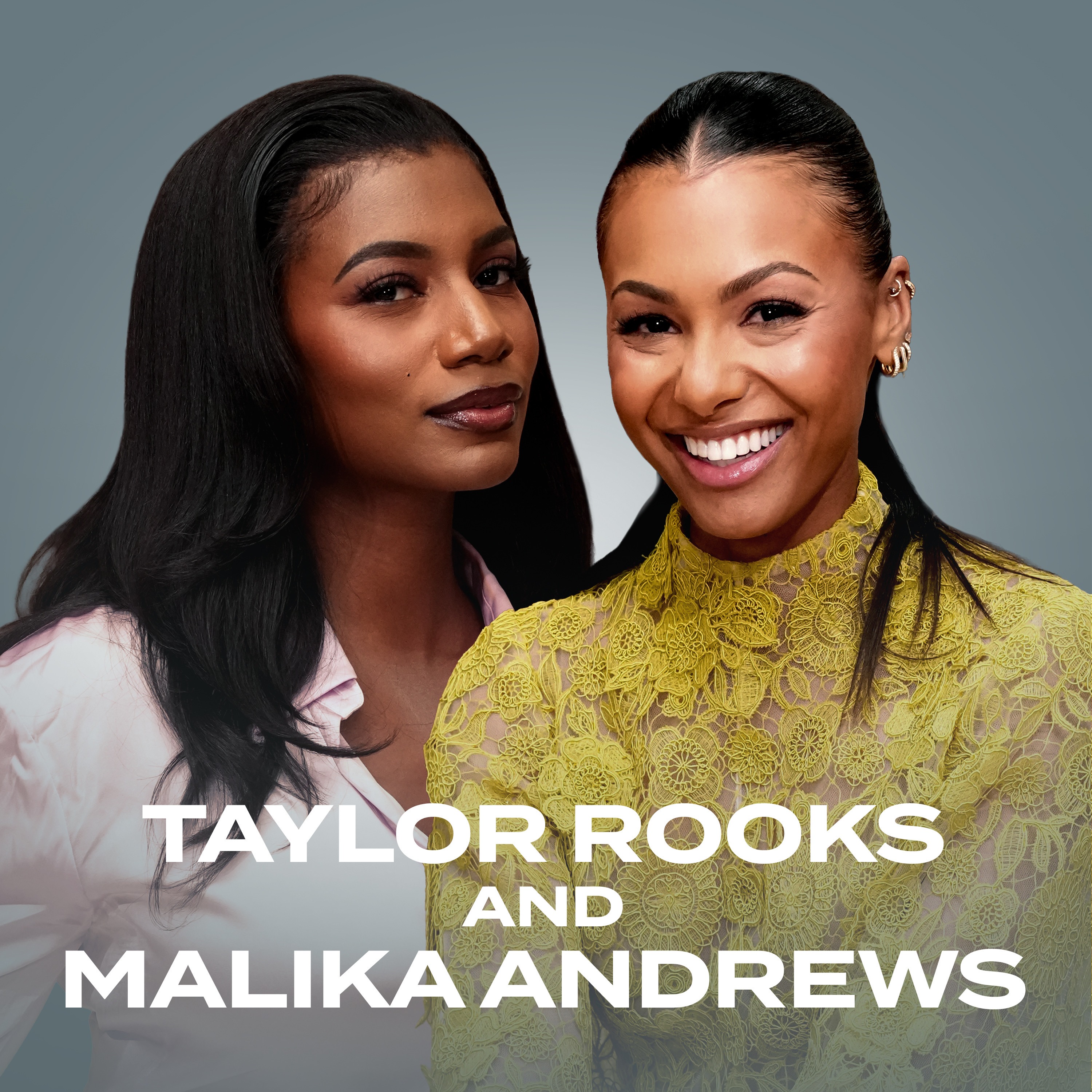
Malika Andrews and Taylor Rooks discuss how to build a career in elite sports media from the “sidelines” mindset—emphasizing preparation, self-worth, staying grounded under real-time scrutiny, negotiating value, and protecting personal identity in a male-dominated, high-visibility industry.
Written by AI. May contain mistakes.
Discussion on the careers of Malika Andrews and Taylor Rooks, their experiences, and the competitive nature of sports media.
“Honestly, I am so happy to have the pair of you here.”
Exploration of the mindset needed to succeed in sports media, including competition and contentment.
“And I also love that you even grab each other.”
Malika and Taylor discuss their learning experiences and how their careers evolved over time.
“about competition and contentment and how you actually feel given the roles you're in.”
Taylor Rooks shares insights on building trust with interviewees and personal growth through her experiences.
“So many things I admire about your path, but that's what sticks out.”
Learn how self-acceptance can enhance your ability to connect with others.
“And I think that when you really like yourself, you are genuinely curious about other people.”
Discover how preparation plays a crucial role in success across different workplaces.
“And now when it comes to definitely being on TV, but also when it comes interviewing.”
Explore the principles that guide success in careers driven by passion and intention.
“I wasn't somebody who had it all figured out.”
Understand the challenges and boundaries of sharing oneself in the public eye.
“And Scott is a prediction machine gazing into his crystal ball to tell you about where it's all heading.”
Learn how to maintain personal boundaries while being in the spotlight.
“I mean, it definitely is self-preservation in having a self, you know, like sometimes you can lose the self because you are looking to adapt it to everyone around you, you know?”
Discover the importance of curiosity and service in hosting sports content.
“I say this to myself all the time, but you really know this deeply.”
Explore the dynamics of being a woman in sports and the perceptions of dominance.
“I'm interested to ask you about, you know, because again, I do keep coming back to this idea of being in such a heavily male dominated space.”
Understand the ongoing challenges regarding pay equity in sports media.
“because I think that you can look at that in a number of different ways, because I still feel that it's very rare that you will turn on the TV and there's a panel of four women and one man.”
Learn how women's perspectives in sports are valuable rather than obstacles.
“I mean, it's why you do so much of the work that you do.”
Hear about the significance of advocating for oneself and seizing opportunities.
“And so, and they are partners that pay me holistically right now.”
Discover how focusing on skill-building can lead to better career opportunities.
“I love that because again, I feel like some of us, and again, we all have stories that we tell ourselves.”
Learn how to negotiate confidently by understanding your value.
“And once he said that to me, it felt like a permission, right?”
Explore how financial success influences career choices and partnerships.
“I want to talk to you about wealth a little bit because you are both extremely, first of all, you're really young, the two of you.”
Discuss the balance between personal branding and professional integrity.
“So having a good agent, a good manager, all of those things is, plays a big role too.”
Understand how to differentiate between useful feedback and noise.
“Just when I consider the personalities that I love so much, you feel like you know them.”
Learn about the importance of accuracy and honesty in media.
“Taylor, has there been a moment where the feedback or the criticism has really got to you?”
Learn how trust in journalism is established through accurate and honest storytelling.
“in a space where everybody thinks that they have the authority to have an opinion.”
Discover the athletes who have significantly impacted the careers of Malika and Taylor.
“Do you, I mean, and this is a question for both of you, but do you feel like there are specific athletes that actually have really helped or that you would credit for really helping you in your career?”
Understand the benefits of personalized healthcare options in weight loss and wellness.
“when everybody has a voice and everybody has social media, why do athletes still want to do these interviews?”
Explore how to handle personal opinions and emotions during interviews.
“The thing that slows people down during the day is not always the work itself.”
Learn how empathy and understanding are crucial in sports journalism.
“I want people to feel like they are okay.”
Explore the importance of knowing the personal stories behind athletes.
“And so I think that what you both do so beautifully is hold that space that we get to know somebody beyond just their performance in that moment, beyond the accolades of that particular season.”
Discover the value of being authentic in a competitive media landscape.
“about your industry, if you want me to put it a different way.”
Reflect on what true ambition means in building a lasting career.
“I have the audacity to, to dream, to be, to do, to prepare, to fail, to try again, to execute, to ask, to ask again.”
Learn about breaking boundaries and personal growth in one's career.
“Melika, what do you still aspire to be or to become?”
Get quick personal insights from the hosts about their daily lives and preferences.
“I just want to do whatever I can do every single day.”
Discover impactful books that have influenced the hosts' worldviews.
“I'm a convenience clothes experience girl too.”
Explore the concept of fragile ideas and their impact on human existence.
“It was so mind blowing when he talks about this whole idea of like, fragile ideas, like how human rights or money, these are just fragile things that since we all believe in them, that's why they exist.”
Emma Grede expresses gratitude and encourages audience interaction with the podcast.
“And I am so happy that we got to do this together.”

Get the gist, explore an idea or ask about something said.
 Claude
On Aspire with Emma Grede, what are the key points of this episode?
Searching your listeningAutomatic transcript. May contain errors.
0:09My guests today, Malika Andrews and Taylor Rooks, have two of the most visible jobs in sports media right now. Between them, they're speaking to millions of people every week and interviewing some of the most famous athletes in the world, and they've made whole careers and names for themselves while doing it. Malika is the face of ESPN's NBA coverage, hosting NBA Today and NBA Countdown. Taylor is the host of NBA On Prime and a major presence across Thursday Night Football. So I was really interested in what it takes to become that excellent and that trusted at that scale. How you prepare, how you understand your value, how you keep learning, and how competition can push you to raise your own standard.
0:51We also talk about the reality of working in an industry where every word, every question, and every mistake can be picked apart in real time, and how you protect both your credibility and your sense of self when that much opinion is coming at you every day. Here's my conversation with Malika Andrews and Taylor Rooks.
1:15A good snack has to do more than just get you from one meal to the next. It has to be easy, It has to fit into your day. And ideally, it should be something that you actually want to eat. That is what Stars and Honey gets right. They looked at the protein bar category, saw that everyone was settling and set a different standard. They make protein bars with 15 grams of protein and only 4 grams of sugar. But the thing that stands out is the flavor. They have iced lemon cookie, mint chocolate chip, red velvet, peanut butter mousse. They feel much more like something that you would choose for the taste, not just for the nutrition label.
1:48and that is what makes them easy to keep around. You're not talking yourself into it. You're just reaching for something that sounds good and still fits the way you want to eat. Stars and Honey protein bars are now available at starsandhoney.com or at Target stores nationwide. Order online now or pick up a box during your next Target shopping trip. Housing is one of the biggest payments most people make every month. Whether you rent or own, for a long time, it was just treated as a payment you made, not something that could become part of a rewards membership. That is what makes Built interesting.
2:21When you become a Built member, you can earn points on every housing payment, whether that's rent or mortgage. Then you can redeem those points towards things like flights, hotels, lift rides, Amazon.com purchases, future housing payments, and more. I also think the neighborhood concierge in the Built app is worth paying attention to. It's connected to your home and more than 50 ,000 merchant partners. So you can ask it to do things like make a dinner reservation, book a fitness class, schedule a lift or pay your rent. It is not just giving you information. It can actually take action in the app and apply your member benefits along the way.
2:58For anyone thinking about what AI looks like when it's actually useful in daily life, this is a good example. It's tied to where you live, what you do around your neighborhood and the things that you're already paying for. Download the Bill app and join the membership for where you live at joinbilt.com slash Emma. That's J-O-I-N-B-I-L-T dot com slash Emma. Use our link so they know that we sent you.
3:27Malika and Taylor, welcome to Aspire. Thank you. Thank you. So happy to be here. Honestly, I am so happy to have the pair of you here. I cannot tell you how much I've been looking forward to this specific episode because you ladies have built the most incredible careers for yourself. In the space that you're in, it's amazing to have two women at this level doing exactly what you do. But also, you know, what kills me is that people want to come and listen to exactly what you've got to say and they gravitate towards your shows for as much of the information that you're giving, but also just to see you too.
4:02And I think that we're all looking at you going, how did you build these careers? What is it all about? What does it take and what does it feel like to sit in your seats? And so I'm really excited to be able to have the two of you together today to really delve into what it takes to be in this highly competitive, male-dominated space where the two of you are shining like two beautiful lights that you are, but also just killing the game. And I also love that you even grab each other. We actually don't spend as much time together, I think as people might assume, because we, we sort of work on opposite days, the days that Amazon has or opposite the days that ESPN has.
4:39We don't actually get to see each other that much. So you guys both have jobs that I think millions of people find completely enviable and it does feel like you're living the dream to some extent, but I wonder if when you're in it, it actually feels that way. I would say it did not start feeling that way for me until pretty recently. Okay. When? When I started hosting MBA on prime, I had a conversation with Jared, who is one of my bosses. And we were just talking about how important it is to look around and realize that what I'm doing right now is a destination job. Like for so much of my career, it has been like, what is next?
5:16There is more to do. You are not doing enough. What's the next show, the next interview. And so you don't stop around when you're like on the mountain and look at the view. You're kind of like, well, there's another mountain over there. But now I see that like, this is the thing that I have worked for for so long and the thing that I feel like I deserve. So I wasn't really even considering the fact that I've lived the dream until pretty recently. I completely empathize with that feeling. And also I think that ambitious people, you're coded to go for the next and to look at what else there is. But at the same time, you have to remember that these are the things that at one point you could only imagine, right, that you are going to be able to do.
6:03And when you're looking at your mentors or people that you admire, and then all of a sudden people, you get these emails from students asking you the question, me? Like I'm the person that is looking, you're looking for the answers. And so I do think that that is a part of the journey, but that's never, I don't think that's what either of us set out with the thought of doing. And it's also fragile, right? It's something that requires daily care. And so I think that when you sit and say, well, this is the dream and I'm content with that, that can negate the care. It is this balance of understanding that you are where you earned, but acting out of this kind of survival mode that something can be taken away also feels like why I got to where I am.
6:50So it's hard for me to get out of the mindset that, okay, tomorrow this could all go to shit. Because I feel like considering that is why I stay on top of everything. And so you're having to balance exhaling and saying, okay, I did it with, okay, this thought that you maybe weren't going to do it is what got you to even the exhale. I mean, I want to talk to you guys a lot about competition and contentment and how you actually feel given the roles you're in. But what's so nice about you two is that you've been able to watch one another come up. And I wonder what you think the other person does exceptionally well, because it's sometimes so much easier to look at somebody else and go, she's really excellent.
7:30But what do you see in one another? First and foremost, Taylor's an incredibly kind person and not just nice. I mean, deeply, deeply kind. We're only a couple of years apart, but I knew who Taylor was sort of when I was coming out of college and I saw her as someone who I wanted to emulate in a lot of ways. She's a fantastic interviewer. When I was a reporter covering the Milwaukee Bucks and living in Milwaukee, there was another beat writer that I became friendly with and had a deep respect for. and he would sometimes write these stories that it was like, gosh, I wish I wrote that story. I wish I wrote that story, but I also have enough respect for you that I respect the job that you did here and man, you did it well.
8:20So we had a shorthand for these stories. We called them FU stories. Like we would just walk in at the end of a practice and be like, by the way, FU, you got that story and it was awesome. And so I told Taylor about this when she started at Amazon. I said, I think we're going to be swapping a lot of those FU stories now. And she always lets me know. I always tell her in the best way. When you interviewed Jason Tatum after his first interview, when he came back from his injury, that was an FU story. And so that's sort of our shorthand. Because to your point, ambitious people are competitive. But competition doesn't mean that you are going against each other.
8:55It just means that this is a ladder and we are going to continue to use each other as measuring sticks. And I love that. No, that is so kind. Thank you. I mean, I think Malika does so many things well. The first thing that sticks out to me though is it is clear every single time that I watch you on TV, how prepared you are. And there was a time, this is maybe three years ago, four years ago, but we were on the same flight to New York for the draft. Okay. And she was sitting maybe two rows ahead of me. And from takeoff to landing, she was in this binder. Highlighting on her computer, talking to, honestly, what I believe was your producer.
9:35or maybe next to you. And I mean, she worked the entire way. And I know that she was working on things that she probably already knew, but she just wanted to be sure that she knew them for this big moment of the draft. And whenever Malik is on a program, you know that you're going to be getting the right information because I know how deeply you care about the job. So your preparedness for sure sticks out to me. You're incredibly poised on air. You're never rattled. Even if there's an earthquake, you are there and ready. And I don't know if I have ever told you this, but I also think you are a resolute person.
10:09I think that so much of your career, when you think about kind of the middle of ESPN in many ways, you were kind of thrown into a fire and you had to figure out how you were going to do this thing and be this person. And I think sometimes we don't give ourselves enough credit for the things that we have been able to do and accomplish when our backs are somewhat against the wall. And you absolutely did that. And so I hope that when you consider just what you were thrown into in that moment in 2020, that you made it work and you excelled even more than maybe you thought that you were going to. So many things I admire about your path, but that's what sticks out.
10:47Oh, I love hearing this from you too. So Malika, let's just talk about it because you actually started as a writer before moving into TV. And now you do this beautiful bounce between live TV and one-to-one interviews. And I wonder what you actually had to learn at each stage of your career. I started as a newspaper reporter and that's all I ever wanted to be. I wanted to work for the New York Times. I started out of school as an intern for the New York Times and I loved it. That's what I wanted to do my entire career. And so when the New York Times told me, you know, working for the New York Times is like a Supreme Court justice seat.
11:23It's a seat for life and you're not ready. I was so crushed and they were right. I needed some time and some experience. But what I think is important to know about me, when I was growing up, I had a really difficult time making sense of the world and my place in it. And writing is the way that I did that. So when I was a teenager, my parents sent me away to a psychiatric unit and then to a wilderness program and then to a residential boarding school. And I never graduated high school. Similarly, I know to you, you had this story. And the way that I made sense of that was just writing about my story.
12:00And what I've found is that any story that is negative, you can also choose to look at it through a positive lens. But writing and the care and the time to go over those drafts and those edits is how I made sense of that. And I also think when I was in school, I looked around and I saw a market void. Newspapers were working to fill. All of my friends wanted to go into television. Rightfully so. It's awesome. And hard news, television, and the thought, right? And I'm sure you heard this. So you're going to have to start and market 168 to do that. Yeah. And what was happening at the same time was that newspapers were looking around.
12:38This was the height of the conversation after Colin Kaepernick. and this was ahead of George Floyd and all of these other things. And newsrooms are looking around and saying, oh, we have a perspective problem here. We don't have the complete story and we need to hire to have a complete story. And so it was a little bit serendipitous and met with looking around and saying, I believe that there is a real need here that led me to the newspaper piece of all of it. It's pretty amazing. When you think about the timing of your life and how that lined up. But isn't that what it always comes? All successful people, luck favors the prepared.
13:18And there's always an element of that. I think with any successful person, that sprinkle of luck is a piece of it. We were at SNY, I think, when I first sort of started the Michael Beasley interview. And kind of that's when I first started to see you in the zeitgeist. Taylor, it's so funny because I feel like so much of your reputation is based on these interviews that you've done that make people feel so unbelievably comfortable to tell us things that they might not otherwise. I want to understand a little bit about what building your career has taught you about yourself. It has certainly taught me that people trust me and that people want to talk to me.
13:58And this is going to sound weird, but I think it has really taught me that people like me, which really I think is about me liking myself. And I think that when you really like yourself, you are genuinely curious about other people. You want to talk to other people. You want to learn about other people. And I think when you're someone who doesn't like yourself, it's all over the place. And I know that because I have been a person who had points in my life to not like myself. When I was young, my story was more that I was not necessarily growing up in a place where we spoke about like like emotions.
14:31For most of my life, if you asked me, how do I feel? I had truly no idea what to say. The only emotions I knew were like happy or sad. And no one was really saying to me, hey, how do you feel? Everything was go, go, go, go, go. But what that sort of void and knowing how I felt, it made me very good at seeing how other people like felt and what they wanted to talk about and what they wanted to know about themselves. I even think that my skill for the interviewing or the warmth or the charisma, a lot of it is about the fact that I did not want to be talking about myself. So much of charm and charisma is your interest in other people.
15:07And mine came from, maybe we take it off of me, you know? And then just through time, that really became something that I got good at. I turned what I think were shortcomings into like a bit of a superpower. And now when it comes to definitely being on TV, but also when it comes interviewing. Our instinct is to make everybody think that we are the most interesting person. But when you make other people think that they are so interesting, they will tell you anything that you want to know. And people like to talk about themselves. And so I definitely pride myself on giving people a space to just be who they are.
15:46I wonder if when you think about your careers and you think about what you're both so good at and where you are now, if you've been able to boil it down to any like principles. So they're principles that you have when you think about exactly where you are today. Well, I do think that in live TV specifically, but I think for anybody in any workplace, preparation is such a big part of that. It also shows the curiosity before you even walk into the room. Why is it so unsurprising that she was sitting on the flight the whole time. You only have to know you for about 20 seconds. She was on it. She's the most prepared of life.
16:23But to Taylor's point about having to learn to like yourself, I think that that's been, it's, it's an ongoing process for me and that's been a part of it, right? Continuing to make a plan so that you can break the plan and that you can write it down and go back to it. I think that that is, is such a skill that has to be honed. I know you believe deeply in intention and what you put out in the world comes back to you. And I had to, I think, see that in action. I started at ESPN, right? Like not anywhere. I started at ESPN on national television when I was 22. I wasn't a fully formed person, right?
17:02I wasn't somebody who had it all figured out. I was someone who was learning and making mistakes and getting better and picking up the phone and saying, sorry, and how can I change? And what can I? because I think that that's what it requires. Your 20s, that's what they're for, right? They are for learning and growing into who you are and the principles that you want to be and have. And so for me, I think that is being prepared. It is being kind. And also when those other things creep in, it's, I oftentimes say to myself, okay, yes, and what else is true, right? That is the constant reframe of, all right, yes.
17:47And what else is true? Taylor, what do you think? What are the principles do you think that have made you so successful in this career? I tell myself all the time, you have to do this out of love and never for it. I think that when you do a job like this for love, your sense of self gets super rocked. And it is important to me to maintain my very strong sense of self. I always say, all you have to do is ask. I feel that way about when I'm sitting and interviewing, but also when there's something that I want. I believe all you have to do is ask for that thing. And that has guided me in business and TV and all the things.
18:21And to always be driven by the pull and not the push is my big thing. It is very easy to let your circumstances cause you to make your decisions, but it's something that is drawing you to. And every job that I have had, it has been a pull. Even if I have felt somewhat pushed out of my place, I feel like pulling is a much greater feeling for me.
19:08not need to buy a completely new wardrobe every season. The better way to think about trends is as a cheat sheet. They give you a few ideas for what to update and how to make the pieces you already own feel more current. That is where Macy's is really useful. They're not just showing you what's new, they're helping you decode the season, what is worth paying attention to, how to wear it and how to layer it into your own style. Now this fall, the first thing I would look at is color. Everything feels richer right now. Chocolate brown is having such a strong moment and it works because it feels softer than black but still just as polished.
19:42I also love the idea of lush greens with gray and stone. Those colors feel very full but not too expected. And then there's suede. A suede handbag, a jacket, a boot, even a small accessory can change the whole feeling of an outfit. It adds texture and depth without needing to be loud. The second trend I think is really easy to work into your wardrobe is dark indigo denim. Most people already wear denim constantly, so this is just one of the simplest updates. A darker, more saturated wash makes denim feel more dressed, more intentional, and a little sharper. You can wear it with a sweater and boots during the day or style it with a blouse and a jacket at night.
20:19Then there are all the retro-inspired patterns that are coming back. Heritage plaids, checks, stripes, classic blues and reds, that whole retro Americana feeling can be really fun for fall because it gives you that timeless layered look without feeling too precious. A plaid coat, a striped knit, a check trouser, those are pieces that bring personality into an outfit but still feel wearable. The key is not to wear every trend at once. Pick the one that feels closest to your style and just build from there. If you already love neutrals, start with chocolate brown or suede. If you live in denim, try a darker indigo wash.
20:55If your wardrobe feels a little too plain, bring in a plaid or a stripe. That is how trends become useful. They give you a direction, but they still leave you room to dress like yourself. And Macy's makes that easier because they have the four trends pulled together all in one place. You can find the color, the texture, the denim, the pattern, and then actually see how to put it together. Macy's has all the outfit and know-how and trend expertise to give you a full trend cheat sheet. Shop now at Macy's.com or in-store.
21:49Every Tuesday and Friday morning, we drop a new episode about some of the major stories of the moment. And Scott is a prediction machine gazing into his crystal ball to tell you about where it's all heading. That's right. So if that sounds like a good time for you, especially Mr. That's Right, you can follow us on your favorite podcast app to get new episodes every week. Boom.
22:15there's just so many people but specifically women out there that feel drawn to the types of careers that you have and there is so much preparedness that goes into it so will you just talk to me a little bit about what that looks like because it's more than you guys reading a set of pre-prepared notes that come from a producer for you like what's the work of the work Yeah, because I would also say about Malika's job specifically is, I don't know if people really understand how much you are on TV. And like when you are having to be on TV every single day, there is such a small margin for error.
22:52Like you have to be prepared. hours a day do you think you spend on TV or like a week do you think you spend on TV? Because I do think this is, it's the piece of the pie. This is how much you're, you are sharing yourself with the world. And we know that that right now is something that is constant. That's something that is sort of always the, that is the undercurrent and the vibrations. It's sort of, it's always happening for everybody now with, with social media. I mean, I would say it's hard for me. I obviously know what you mean, but it is hard for me to say that I feel like I share myself with the world because I don't know if I feel that way.
23:33I believe that I give the world important parts of myself, but I have always felt like my real life is what I can touch. Yep. and it is important to me to have that boundary largely because, I mean, whether it is athletes that we are around often, whether it is entertainers, whatever the case may be, I know what the world looks like when you give yourself too much, when you give the world too much of you. You have to have things that are for yourself. So I obviously understand the sentiment of what you mean, but that is something that actually keeps me very sane and grounded and peaceful in who I am.
24:11Now, when it comes to the work, of course I am pouring myself into it all the time during NBA season it's I mean what you're watching games every night so that's six hours um then you know you wake up in the morning on the treadmill you're listening to the podcast you're reading the articles I mean during the season it's pretty non-stop yeah so I don't know if there's like an hour I want to dig into that a little bit because actually even the way that you say that is that about self-preservation is that something that you have created in order to be able to do what you do, keeping a piece of you for you?
24:46Yes and no. I mean, it definitely is self-preservation in having a self, you know, like sometimes you can lose the self because you are looking to adapt it to everyone around you, you know? And I just like never want that to be me. The things that I hold close, I hold close because they are mine. I don't feel the need for people to comment on everything that I do. If someone has a comment about something I do that is incorrect, I also don't feel the need to correct them because there is real life and there's what you think. And I always live in my reality. And for the preservation aspect of it, like I soak in things from everybody I'm around.
25:30And I have a lot of very close friends in my life that are very famous people. And they are always talking about the fact that at some point the line just gets so blurred. And it's like, am I living for myself? Am I living for who people believe me to be? And I just don't want to do that. Like, I know that every decision that I make, it is because I wanted to make the decision. It is not for a look. It is not for a headline. It is not for anything. So that to me is just like what you have to do to stay even. Because like what we have signed up for, I think is something so specific, especially because right now, you know, we go in there and what we're doing is just trying to do our job.
26:12But people are very interested in us as individuals. Oh yeah, as people. Oh, listen, I have a whole section. As people, as brands, as your own specific entities. Do you know what I mean? And that blurs a whole different line. And also it's a huge part of what you do, right? I live a lot of my life just looking at the hours on television. I just live a lot of my life on TV and I do feel a sense and a duty and an obligation to let people know me to a degree. I want to feel known and I want to know our audience. And I love when people come up and want to chat about sports. It's something that I love so very much because sports is just a common thread of humanity.
26:54When people are looking for something to exhale, most times people just want to come up to you and ask how the Lakers are doing. Yeah. What is happening over here? Right. And I love, I love, love, love that piece. And that is how I feel. I know people deeply and they know me. The actual preparation and the work writing is the backbone in addition to the tenants of everything I do. And so I show up to help our wonderful team of producers write the show every single day. So I'm in the office by eight for a show that's at noon and it's sort of a constant hum. The preparation is baked into the lifestyle, I think at this point, right?
27:29The preparation, that the care, the hours is baked in, the time is baked in. But I show up and I help write the show and we have two meetings in the morning and then we go on the air live at noon. And inevitably, there's some news that happens five minutes in where we just go everything that we've worked on for the last four hours out the window. But having the preparation allows you to then be nimble. Knowing that you put in the work allows you to then be able to make a split second different decision because you have to have the confidence and knowledge. I say this to myself all the time, but you really know this deeply.
28:07You really know this well. And also what people want to hear is Amon Shumpert and Sinead Agumake and Richard Jefferson and Kendrick Perkins. These guys won NBA championships. My job is to have the curiosity to ask the questions that any basketball fan would want to ask an MBA champion. I fully and totally view hosting as a service job. I believe that I am a host kind of from the second I walk into a room, it's in service to the people who are watching, the people who I am on set with. It is something that is about them first and foremost. And so if you come in with that curiosity, I'm hosting people in my proverbial living room.
28:47And that's the preparation and the work. I'm interested to ask you about, you know, because again, I do keep coming back to this idea of being in such a heavily male dominated space. And obviously coming into this business, there's an awareness of that. I wonder something, Emma. I would love. No male dominated. Oh yeah. So I heard this from a producer one time. I heard this from a producer one time because we get asked all the time, what's it like to work in a male dom? I'm sure you get asked what's, you're the only, you know, in a boardroom. I don't feel like I'm so, because I think that for me, it's like earning, earning respect is very specific, right?
29:23And there are spaces that are male dominated and there are spaces that are designed for men. And you guys are in a space that is designed for men. I'm in a space when we talk about the boards and when we talk about, you know, uh, the, the kind of financial piece of what I do, it's, it's very male dominated, but it wasn't designed specifically for men. Yours is different. I heard this from a producer one time and I repeat it often. What if we thought about it as this is a space that's male populated, but women also dominate. And how do you feel about that sentence? I think that she is testament that that is true.
30:02Right. Do you feel like that, Tayla? Yeah. Yeah. I think it is dominated by those that are great at the job, you know? And I think that sometimes, especially with sports, because it just feels like the language is so important that when we call it male dominated, we're almost reinforcing this idea that we're a guest in the space, you know? And so I always want people to understand that being a woman in sports is not niche. Like we aren't women in sports. We are sports, you know, but of course it is a place that has lots of men and it is male heavy, but I don't know if the men are dominating the space as much as it is.
30:39There are more of them. But let's talk about that, because I think that you can look at that in a number of different ways, because I still feel that it's very rare that you will turn on the TV and there's a panel of four women and one man. And certainly when we start to talk about pay equity, and this, it doesn't matter if you are an athlete actually on the call or indeed if you are part of the media, but the pay disparity is big and fat and still there. So even if you look at it through those lenses, the domination exists. And I wonder how you think about earning your space, earning your place, negotiating your worth.
31:16There has to be a question that comes up, surely. Because I don't know the last time I read about a woman's giant media package in sports. And I read about the men's all the time. I think that that's true. I want to, before we kind of fully get into the pay disparity part is real and necessary to kind of continuously examine more closely and to challenge and go back to. But in terms of the number of women doing big and important jobs, we're still in the place where there's a lot of firsts and a lot of onlys for women in sports and in sports media. And the Doris Burks of the world who have sort of paved the way, right?
32:00For so very many of us. and I do see, I think it's important to call out the move of the needle because if there is not one, there cannot be two. If there's not two, there cannot be three and so on and so forth. And so I do think that we are starting to see that in many ways, but in terms of the pay piece of it, that's a very, very real and important conversation. I mean, it's why you do so much of the work that you do. Yeah. I mean, the pay of course is real. And this is my thing about being a woman in this space. I think, I'm not saying that you were doing this specifically, but sometimes we are asked about being women in sports as if it is like an obstacle or a hurdle.
32:45It's a superpower. And of course there are elements of it that have made some things maybe a little more difficult, but I am not going to be a man. And most importantly, a man is never going to be me. A man is never going to be a woman. And I view my perspective and my intelligence and my experience and my warmth and my curiosity as traits that have in turn made me very, very good at the job. And so I am never trying to be less of me or less of a woman. I am trying to show up as this thing and dominate as this thing. I love the show Mad Men. It's one of my favorite shows. Such a good show. In Mad Men, Bobby once looks at Peggy and she's like, you're never going to get that corner office until you start treating Dawn like an equal.
33:36And you're never going to be a man, be a woman because being a woman is a powerful business when it is done correctly. And what happens? So when you step into a negotiation, feeling the way that you feel, understanding your value, knowing what you bring. Is there any glimmer of disappointment as you walk into those negotiations, knowing what is happening around you, understanding the value that you bring? I'm trying to understand if the two things are commensurate. Yeah. I mean, I would say I have been very fortunate and very blessed to work at a place like Amazon where they give you the thing that they feel you have earned.
34:12I think Amazon is the greatest job that I have ever had. They allow you to be yourself. They want to be new and innovative and fun. And it just really fits me. Even when I think about my brand partnerships and those things, just, I know you talk about money a lot on this. So just to put into perspective, when you think about my broadcast contract and my marketing contract, I don't spend any of my Amazon. That is how good my marketing contracts are. And so, and they are partners that pay me holistically right now. They also give to my foundation. We figure out how these things can look long-term.
34:50So I always ask for what I want. And when you talk about the asking, for example, like back when I was at SNY, I got the offer from Bleacher Report and Turner to go over there and start my own podcast. And I had one more year left on my S &Y deal. So I'm like, I'm not, I'm going to miss this huge opportunity to go over to BR and TNT and have my own show and interview people because I have a year left on this deal. They're not going to let me out. But I went into Kurt Gowdy Jr.'s office and I was like, I have loved my time at S &Y. If you say that I have to stay here, I will be the hardest worker for the rest of this year.
35:31But I also feel like, I have earned a new position and I don't want to let it go. And he said, we will let you out of this contract. And that was such an important lesson to me that nothing is really concrete. You really can create your own destiny. I believe that. When did that happen? Sorry. When did that happen for you? When did you start to feel the impetus that you could ask or are you just wired that way? Oh, I mean, I was asking people to just come onto my show. You do not even understand how much I was firing off. Like, will you come on my show? Will you come on my show? But also I think what's important context for me about how I think about life, but also how I think about myself is interviewing happened for me, like as a workaround.
36:13I was in Chicago working at the Big Ten Network, loved the job, college sports grind, all the things, but I was a correspondent on the show. So on this 40 minute show, I maybe had like eight total minutes, which I was young. You have to do these things. I'm not discounting that. I love everyone at the Big Ten Network, but I wanted to do more, but they were not giving me more. So I asked if I could just start a podcast so that I could do more, but that ended up being my thing. And it only happened because I didn't feel like I was being seen fully. And so when I realized that I was right about myself, I just went with that.
36:53So I will always ask because it has really never steered me wrong. I love that because again, I feel like some of us, and again, we all have stories that we tell ourselves. And, you know, I think that self-worth is something that you're either, you're wired that way and you have it, or it's something that you're, you're in constant, you know, you have to learn and you have to practice. But asking is really difficult, even when you have very high self-worth because you're so concerned about what does everybody else think and what happens if I get a no. And it's a muscle that you train like anything else, this ability to go out and put yourself on the line and say, you know what?
37:32I have an idea of what it is that I want to do. And I have a vision for myself and therefore I'm just going to ask. But so seldomly do people do that for themselves. Like it's way more likely that you hear from someone that they're like, do you know what? I just thought I'd see out my contract and I'll go back and see if I can happen And so it, to me, it's like such an incredible thing just to listen to how you kind of have walked that walk and how it's worked out for you, because it's an enormous part of your success that you just dared to put yourself out there. Yeah. Yeah. And was okay with maybe being rejected.
38:06I think rejection of course is, is hard. And I'm sure every time you speak to a student and you say, worst thing you can hear is no. Well, and Emma started this, we started this conversation by being asked about dream jobs, right? And I often say a dream job is fantastic and a job that is in front of you and in hand is also incredibly important, right? And so, you know, like I do think sometimes, especially young people, when you're working towards these big dreams without necessarily looking at the steps that are kind of right in front of you and putting, and that doesn't mean that you have to ask permission for everyone.
38:44That doesn't mean that there is a blueprint, but I do think that when, when I'm here listening to you talk about asking for what you want without fear of rejection, that acceptance and that boldness is, is a piece of it. I've, you know, I, I started in newspapers. I was making pennies and I think, what do you hear about journalism, right? When, when, how many times when you were coming up, what was the adage about money and journalism? Yeah. You won't make much of it. You won't start off making much of it. off making, he might not, whatever. And I remember when I was leaving the New York Times and going to the Chicago Tribune, I was sitting with, at a Benihana with Tim Frank from the NBA.
39:27Yeah. And I remember looking at him and I said to him, will anything that I ever do in my life be considered impressive now that I've left the New York Times? This is the paper of record in world. Right. And he said to me, well, I don't know, impressive in whose eyes, because it should be yours. And it was like, okay, now I have to figure that out. And the, the jobs that were in front of me at that point, and I've been so lucky in my career were the job that I ended up taking wasn't necessarily the job that made me the most money. Right. I took the job because I thought it was going to build me the most skills.
40:05And that is, I recognize that comes from a place of privilege that not everyone can make that decision. And we're talking about a very, very small amount of money versus a smaller amount of money. But I took the job that I felt like would build me the skills to be able to have the bigger, more confident yes later. Because that's what the New York Times told me that I didn't have, it was the skills. So the business decision that I made was to go to another newspaper that I felt like was better training grounds for me than this more glitzy, bigger name place that I didn't see the foundation for the skills because the skills are also money.
40:42Building skills is also money for later. And so I took the job that was going to give me those skills. And a couple months later, ESPN called me. And I remember a mentor of mine, Woj, said to me, I felt a little bit guilty because I also had just, I'd gotten to the newspaper four months before the ESPN called me. And I thought, I'm going to be letting all of these people down. And I pushed so hard to get here. And I asked for this title so that they would give me$2 ,000 more. You had to be a senior writer to bump up$2 ,000. And what business did I have being a senior writer at 23 years old at the time?
41:22And I remember Woj called me and he said, Hey, I hear you're having this conversation. I told him, I'm not really sure. I have, I, and this is, this is, I think women think about this more than men. I made this promise. What are people going to think about me? I gave my word and my word and honesty and integrity is everything. And he said to me, well, you know, and ESPN's offer was much more than I was making. It was for me at the time, it felt like life changing, right? Yeah. And he said to me, this isn't charity work. It's still a job. And jobs mean getting paid. And I don't think that men think about that in the same way that women do.
42:01And once he said that to me, it felt like a permission, right? Right. And so now when I go into negotiations and it's not alone, right? Like I have a team, my team of wonderful, wonderful folks. They look different than I do. They're on the golf courses that I'm not on. I think that's important for women to know, to have a team that thinks the way that an entire boardroom would think, um, to be your blind spots and to be able to look at the places that you're in rooms that you're not in and say, Oh, but I'm in this room and I can speak well behind your back. But now when I go into negotiations, ESPN has been fantastic and the best partner.
42:38And I think women need to negotiate from a place of knowing deeply your value and then work to be a bargain. Oh, yeah. Absolutely. Yeah. And not feeling bad about it. Never feeling bad. Not apologizing.
42:58RingCentral's AI Receptionist uses Voice AI to answer on the first ring, so you'll never miss a call again. In just a few minutes, you can personalize your own AI Receptionist to answer questions, route calls, schedule appointments, and even send texts in multiple languages. Plus, it's easy to scale. Create unlimited AI Receptionists across any phone system. It's all powered by one reliable platform for effortless AI communications. See for yourself at ringcentral.com. Ring Central, voice of your business. I think a lot about what actually earns a place in your kitchen because most of us don't need more clutter.
43:34We need a few pieces that work hard, look good, and make it easier to cook what we actually want to eat. That is what our place does really well. Their pieces are beautiful, but they're also designed to be useful every day. The Always Pan is a really good example. It's a 10-in-1 pan, so it can replace several pieces of cookware without feeling like a compromise. I like that you can use it for the simple things you make all the time. Eggs, vegetables, delicate proteins, and it's easy to clean up after. It also has their Thermakind Ceramic non-stick coating, made without forever chemicals and third-party tested to meet global safety standards.
44:10The Wonder Oven Pro is another piece that makes a lot of sense if you want your kitchen to feel more efficient. It's an eight-in-one countertop appliance with steam infusion technology, so vegetables and proteins can stay tender inside while still getting crisp on the outside. What I appreciate is that nothing feels overly complicated. The functionality is there, the design is there, and the pieces are beautiful enough to leave on the counter. Upgrade your kitchen with Our Place today. Visit fromourplace.com slash aspire and use code Aspire for 10 % off site-wide. That's F-R-O-M-O-U-R-P-L-A-C-E.com slash A-S-P-I-R-E.
44:52And use code Aspire for 10 % off site-wide. With a 100-day trial, you can try it completely risk-free.
45:02I want to talk to you about wealth a little bit because you are both extremely, first of all, you're really young, the two of you. You're in your early thirties, but you've got these big careers and big jobs and huge visibility, but you're building wealth and you're at a point in your career where that is allowing you to make decisions. And I wonder how it's impacted the risks that you take, the things that you say yes or no to, the opportunities that you choose. What does that look like versus, you know, three or five years ago, even? I would definitely say thinking about it bigger and more long-term.
45:36I think when I first started, you're really happy to just get the brand deal. Like, well, someone wants to pay me to post. Now I'm like, what is the future that we could have together as partners? So I really do try to think about things as a partnership and less of a one-off. It's also been really important to me to have equity. One of my favorite partnerships is I partner with Rich Kleinman and Kevin Durant in boardroom. And so I get to, of course, do my interviews, but I also have a real like stake in that company. Rich is one of my oldest friends. Yes, I know. Yeah. Rich did the show. Yeah.
46:11Rich is the best. The best. Yeah. So really always trying to think about things like that is not something that I started doing until a few years ago. And then television business is all a team sport. So having a good agent, a good manager, all of those things is, plays a big role too. You mentioned brand partnerships and, you know, also I just think about you two as so, you're so highly visible, right? So highly visible and everybody has an opinion about what you're doing, what you're saying, who you are. But, you know, I think that in so much so you guys have become the personalities. How does that reckon with the careers that you've chosen as journalists And how are you thinking about that as something, as you build your overall careers and your brands?
46:58Do you think of yourself as a brand? Do you wake up in the morning and say, I'm a brand? I would say I think about my life as a business. I don't necessarily know if I would say I think of myself as a brand. Yeah. But being a public figure changes how you show up in your job, right? I agree. Yes, I agree. I think so. Yeah. Because I think there is always, It's what you think, what the people you know think, and then this, the other entity, right? Like, I think that that is always sort of something that exists. I do think if I've walked into a room or a conversation thinking of myself as a brand or thinking of myself as a brand before thinking about the work or thinking about who I am, then I've already taken a misstep.
47:42And so I think in an age where a lot of the words we use are, what is your brand? That is something that I think is talked about a lot. What that really means is, as Emma says, where's the money coming from? What's the money? But also I think when you walk into a room and you've already started to think of yourself as a brand versus thinking about the work, I think that that is where I don't feel alignment. It feels like you both feel like it would be a slippery slope. Yeah. I think of myself a little more as a personality or a broadcaster just because the nature of what I'm doing a lot of the time.
48:23And I am not blind to the fact that so much of the interest is also who you are. You know, so when I show up on TV, I want to be myself because when you are good at the job, when you're also good at being yourself, that's the engine for all the other stuff. So you can never let the main thing not be the main thing because it's the excelling at that that gets you the brand deals, that gets you in that other room, that gets you the equity and all that sort of stuff. But I definitely understand that I have to kind of lead with this outward tailor if I want to do more. Just when I consider the personalities that I love so much, you feel like you know them.
49:07Yeah. not in a way that is like intrusive to who they are, but you get them. Like you would feel like if you sat down with them at dinner, you would have some sort of connection because you've seen enough to understand. And I never want to feel far away from people. I definitely want to feel very accessible to those that look like me, to those that resonate with the things that I say. I never want to feel distant. So it is important to me to always be considering that yes, you are, you know, Taylor Rooks on TV, as sports personality, as sports broadcaster, but that is fed by who you are. Right.
49:43You only have a split second to, with viewers, with a fan to leave someone feeling like, I want to continue to invest my time because that's the currency that I'm asking people for. I'm asking people to spend their afternoons watching NBA today. And I'm asking you to spend your evenings watching NBA Countdown. and I'm asking you to spend your summers watching Wimbledon. You're really asking a lot of us. I'm asking a lot, right? And time is your most valuable currency. So I'm asking you to continue to show up. And so what I hope is to leave whatever brands I'm working with feeling is she puts in the work.
50:19Whatever people you meet feeling, that's what I was hoping for because you only have a minute, two minutes, an hour on television to leave people feeling good. And that's what I want to be in the business of in sports. And right now we're in a time in sports where that's not always the way people are leaving. No doubt. No doubt. It's really good. I wonder how, and this is a question for the two of you, how you stay grounded when other people are constantly projecting their ideas on you. How you look, how you've turned up, what you said, you know, commenting on things that might be private. Is that, I mean, I know it's something that you both deal with.
50:56I can honestly say it's never bothered me less at this point in my life, what people say about me. And at the same time, it's really important to have a group of people around you, a team, that will let you know the things that are important to hear. Because when I say that this doesn't bother me, that doesn't mean that there aren't sentiments in the world that will help me to be a better person and a better broadcaster. but I don't believe that anyone is meant to hear the level of feedback, just the sheer numbers of feedback that public figures do on any given day. I mean, but how do you separate that useful feedback from what is just noise?
51:37The person that has your phone number to call you, that is the accessibility line, right? And if you don't have my phone number, there's a reason. And it's not because your feedback isn't valid, but because the delivery might not be in a way that I can hear it. I have found that the comments that bother me the most when I do see them, and I have all the settings set so that I don't as much as possible. What I've found is the comments that bother me the most are sentiments I'm telling myself already. And I look around and say, oh no, they noticed. My story that I'm telling myself or what I'm working on as a person that moves through the world.
52:18When you realize that you have the power to work on that and change that, and that is actually what's eating at you. That is a powerful thing that then you can take and hold because no longer does the power belong with the person who is telling you something that they think that you've never heard before. The power lies in you working on the piece of yourself that you want to improve because we're all that kind of work in progress. Taylor, has there been a moment where the feedback or the criticism has really got to you? I mean, I don't want to say no, but I think that I'm just used to it. Even though it is wrong that this is how it is, I have always just understood this is a part of the show.
53:04Like this is a part of being in this space. I have been told about myself, things I had never heard. I have been projected onto since I was in college. When I was in college reporting on athletes at the University of Illinois, I had men who were 40 years old saying that these people only wanted to talk to me because they liked me or because I liked them. This has been something that has been happening for so long that it is not even really a thing that registers to me as much. I think that so many of the comments that we receive, the kind of person that has the thinking skills to believe that to be true is not the kind of person that I'm even going to waste a second thinking about.
53:58And so I think that I've always just had that perspective and really known that it is just kind of what happens. I also grew up around people that played sports. I have just known that this is it. And so it doesn't really bother me. And I mean, I have gone through it in terms of what people say about me. But I don't know, I think so much that if you are really thinking about that all the time, you're gonna live in this just well of unhappiness. But it is important to say how easy it is to become the projections that people put onto you. because when I very first started, I didn't have this thought about myself.
54:42I was 21 years old getting off air and going on Twitter at the time and saying, what did people say about me? Yeah, you would type in your name and you would say, did they like what I said on TV? Like, did they like this haircut? Did they like this interview question? But the feedback really that matters to me, obviously the people that I love and care about, my friends, but also my company. What do my bosses think about what I'm doing? What do the viewers in terms of our partners think about what I am doing? Because that is the one that actually impacts my life. So there are opinions that I care deeply about, but it's not the person that is commenting on YouTube or sending me a tweet.
55:28But yeah, I mean, in terms of different times that I have been wrapped up in some internet rumor. I mean, it's countless. We'd be here all day. I mean, we would literally be here all day. I mean, the internet is a funny thing because it's so prevalent in your life and your professional work, right? Like so much of like stories are created in that space and you will wake up and report on a story that is generated from something that happened on the internet. I wonder how you even think about like protecting your credibility in a space where everybody thinks that they have the authority to have an opinion.
56:04Trust is a daily deposit that is continuously earned by being accurate, by being honest, and by being fair. And I think of the standards that the New York Times taught. And I remember I was writing a story, this was back in 2017. And I wrote a story, I was covering a woman named Linda Haywood, who was looking for a presidential pardon for her uncle who had crossed state lines back in the day with a white woman and was prosecuted for it. And posthumously, she wanted to clear her uncle's, he was a black man, she was a white woman, and posthumously, she wanted to clear her uncle's name because that is not something out of Jim Crow that we recognize today or should have back then.
56:53And I remember going and doing this interview with her and she sat and she gave me a description of the lunch that she was brought to school that day. And I wrote the story and I printed in the New York Times and she called me and she was so upset with me. And I thought that I really did the story justice. There's a level of objectivity, but the care comes through in the way that it needed to. And she was so upset with me because she said, Malika, I know we didn't have a lot, but you wrote that my mom only sent me to lunch with two pieces of toasted bread and an egg. And actually, she also sent me, remember I told you, with turkey and vegetables and a water as well.
57:33And it didn't even register to me. Something I'd been taking copious notes, I must have misheard and I apologized profusely. And in the New York Times, you issue a correction when you make a mistake. And to this day, if you look up that story online, at the bottom, there's a correction that says, that an incomplete description of Ms. Hayward's lunch was provided in this initial story. And now there is the total lunch in the story. And I felt terrible and I was so apologetic, but I made a mistake and I owned it and I corrected it. And I think about that a lot as sort of ESPN has very high journalistic standards of a lot of different pieces of our journalistic branches and outside the lines and all of these things.
58:21But I think about that a lot in terms of trust. That is the way that you deposit trust. You have the phone lines open and an athlete or Miss Haywood or whoever it is, that daily deposit. And when something was incomplete, even when I didn't hear or see it, that's the courage. You make it good. Yeah. Nobody hands you trust. You have to create it every day. I think for me, a lot of the credibility comes from knowing that what I want is the real story. It's not that I am looking to make a headline. The headline comes from you telling me the truth. It is not that I want you to sit in the chair and I get you into some mess.
59:05If you get into some mess, it's because of something that you said, right? But the credibility comes from the fact that you always get the call for the interview, you know? And so the fact that I feel like I have established myself as somebody that people want to give the news to, that people want to talk to, that when Angel Reese is going to be traded, I get to break the news. Or when Nneka is going to retire, she calls me and I get to do the interview. Or when Draymond Green is going to do an all-star altcast for TNT that says he will only do it if I do it with him, which by the way, ended up being my first time ever doing an actual broadcast for TNT All-Star, that's credibility.
59:46Or Michael B. Jordan does his legacy classic and says only of Taylor hosts. And so I just have so many different athletes and figures that have had something that meant something to them and felt like I was the person to make it like mean something to everyone else. and that is like, it actually sometimes makes me emotional because to trust somebody with who you are, it's like a really big thing. It's a really big thing. Yeah. Do you, I mean, and this is a question for both of you, but do you feel like there are specific athletes that actually have really helped or that you would credit for really helping you in your career?
1:00:26Oh yeah. Yeah. So many. Yeah. Yeah. I mean, outside of the ones I just said, like Draymond, that was my first big broadcast for TNT, Michael B, not an athlete, but him saying that I should host that desk was the first time that I had ever hosted a desk. And now that is my main job. So it was doing that that even showed me that I was able to do it. I mean, Saquon Barkley, who is a really good friend of mine, but he has given me some of the biggest interviews at different moments of his career that has been really huge for me. I mentioned Angel, I mentioned Nneka, Jason Tatum and Jalen Brunson are two people that I have known since they were 15 years old.
1:01:05Crazy. And anytime I call them and say, you're returning, will you talk to me? Or you won a championship, will you talk to me? They always say yes. And it's when you are at the center of these stories and you are giving people this space, they always want to return. And like, that is a responsibility that I take very, very seriously, but I mean, so many men and women have been, nothing about my career was just me. Amen. There's literally not a thing for me. Aspect of it was just me. So yeah, I mean, I'm so thankful to everybody that has played the smallest role to the biggest role because they have all meant so much.
1:01:46I mean, Giannis Attentacumpo was the first NBA player that I covered. And it was the big interviews that he trusted me with. And then it was, you know, the first time that I really had a disagreement over coverage with an athlete was also Giannis. And then rebuilding that and him coming back. And that's what humanity is. Like that was a big, Giannis was huge in that. Victor Wembanyama, I did his first American televised interview and almost everyone he's done since, except for one with the one who's sitting right next to me, right? Caitlin Clark, right? She has been so trusting in a time that I think it has been very difficult for her to trust.
1:02:34And I really deeply appreciate that. And I get asked at times in this current media landscape, when everybody has a voice and everybody has social media, why do athletes still want to do these interviews? Yeah. And what I've come to hear from players, from Steph, from Victor, from Caitlin, from Serena Williams, which was such an awesome interview to be able to do, by the way, it was just sort of like, wow, I'm sitting with a living legend. is that it is so human to want to protect. Every person wants to protect themselves and to just know that they're okay and be okay. And oftentimes that means putting out the most curated version of okay to the world because that's the safest thing to do.
1:03:30But I also have come to know and understand that when a person needs to be pushed, it takes someone with trust sitting across from you to do it. Oftentimes it takes someone sitting across from you to challenge your ideals. And to have that trust, I think, is why players do have these conversations because they know that there is a real truth that people can't get to on their own.
1:03:59There are certain parts of your health where having real support makes all the difference. Not a one-size-fits-all plan, not trying to figure it out alone, but access to a licensed provider, a care team, and options that are built around you. That is the model behind weight loss by HERS. It gives you access to personalized care, including FDA-approved GLP-1 medications like Wegovy. If prescribed, Wegovy is available as a pill and as a pen, so there are options depending on what's right for you. To get started, you complete an online consultation with a licensed provider who determines whether a prescription is appropriate.
1:04:36And the care doesn't stop there. HERS includes nutrition and lifestyle guidance as part of the plan, along with 24-7 messaging with your care team. So support is there when you need it. Ready to reach your goals? Visit forhers.com slash aspire to access personalized, affordable care for weight loss, hair, menopause, and so much more. Individual results may vary and stopping treatment may result in weight gain. Weight loss by HERS is not available in all 50 states. Wegove is the registered trademark of Novo Nordisk AS. To get started and learn more, including important safety information, way go the clinical study information and restrictions, visit forhers.com.
1:05:18The thing that slows people down during the day is not always the work itself. It's the constant stopping and starting. You're in an email and then you need context from a doc. You're reading a long thread. Then you have to remember what was decided in a meeting. You're about to send something and suddenly you're checking whether the number, the name, or the claim is actually right. That is why Superhuman Go from the makers of Grammarly feels different from other AI tools. It works where you already work, so you don't have to open another tab, paste in context, or explain what you're looking at.
1:05:49It's right there when you need it on the side of your browser already up to speed. If you're reading a dense document or a long e-mouse read, you can ask Go to pull out the key points without losing your place. If you're getting ready for a meeting, it can help you make sense of what matters. And before you send something important, it can help catch details that just don't add up. The promise is that it does not make your day more complicated. It is your AI assistant, always on working inside the tools and the sites that you already use. Try Superhuman Go from the makers of Grammarly. Find out more at superhuman.com.
1:06:28I'm always really curious and interested what happens when you're covering a story or you're in the middle of a conversation where you hold like a deep opinion. You know, like I sit there and I listen to everything that's going on with the WNBA. And I wonder if you ever sit there and you're like, I have something else I really want to say here. Like what happens then? What happens when like the emotions bubble up and you disagree strongly, but you know, perhaps that's coming from a different place. Like, what do you do? I ask myself, am I being fair to this person if I bring this up or is this in the name of fairness to bring this up?
1:07:04Right. But what happens when there's something that you disagree with or something that you have a deeply held opinion about? Yeah, you for sure can say your opinion, but I also think there's a question to be asked that can help you understand your disagreement with the statement, if that makes sense. So if someone for some reason said women should not be paid X thing. Of course, I disagree with that. You can see what I am already coming out. What you would do then there is challenge the statement. Even sometimes if that is the, what do you mean by that? Why should women not be paid? So then you're having more of a back and forth.
1:07:42I say to myself, is this my opinion or is this an opinion that should be explored in our conversation? You know? And so then I look to explore it within the conversation and less of an emotional outburst. And then that's the fairness piece, right? Because if you're exploring a question from a place of curiosity, the why, why do you think that? And then someone explains further, oftentimes the point is made, filling in the information gap makes that point. Why don't you think that women should be paid? Well, I think that, and a person fills it in, right, with information that tells you a lot about who that person is, whether or not this opinion is something that's worth continuing to pull on that thread.
1:08:29If this is something that is something that can be helpful to the conversation, where should this be relegated to? That question and that curiosity, I think, always leads to a better and more informed place. Yeah. It's also why I will always tell like younger students, if they're asking me something, you have to ask follow-ups. Yeah. Like the gold of the interview is not in the first question that you ask. It's definitely not. It's when you heard what they said to you and then you asked something else. I'm like, you got to listen. You got to ask that follow-up. And I feel like I've heard you say a couple of times, Taylor, that you want people to feel something.
1:09:09You want to be able to emote those feelings. And I wonder why creating that type of connection is so important to you. Is it just about getting the great interview and having that moment or is there something else there too? No, I mean, a lot of it is truly my journey as a person. Understanding so deeply that who we are is because of who we've been and that we have all gone through things that are likely difficult for us to talk about. sometimes it's really hard for people to be honest about who they are because maybe you feel a level of shame about it. Maybe you don't fully understand it. Maybe you think that you are alone in it, but like, I just know so innately that everybody understands.
1:09:59And so I just want people to feel understood and I don't really want people to feel alone. I want people to feel like they are okay. A big part of course of my journey is therapy. I'm a big, big, big therapy advocate. And when I realized that how difficult it was for me to just say how I felt, it really did click to me that like, that is why I like doing this thing. I want people to feel like they can say how they feel. So of course it is a professional journey for me to do this, but it is really a personal one to make people feel seen because I know what it is like to not feel seen. And I know what it is like to make your life work just because of a will that you had.
1:10:43I think that's one of the things that's so great about covering athletes is a lot of that story of hard work. Sometimes it's also like a story of pain, you know, of course, sometimes it's a story of family. Sometimes it is a story of greatness. Sometimes it's a story of a dream, like all of it is a story. And with athletes, so much of who they are truly is distilled down into these like clips and that just isn't fair. And so they don't get to be seen. And everything that we ask them when they sit down is this self-fulfilling prophecy, because you're not asking them something new. You're just asking them something about that you just saw.
1:11:19And I think so many times in my life, I have been misunderstood. And so I just, I don't want that to happen. And I think that it happens so often in what we do. I think that they feel it. And I I just don't want to be the person that does that. And I also think too, there is a true power in just asking a question. And the more that society has evolved, I don't think everyone even has that soft skill of just asking a question. Well, we know they don't. People find it impossible to hold conversation, let alone like, you know, as you guys do so well, listening and then bouncing back off of that, just people holding conversation.
1:12:01It's like a lost art. And so I think that what you both do so beautifully is hold that space that we get to know somebody beyond just their performance in that moment, beyond the accolades of that particular season. And that's what makes your job so gratifying for you. But as a spectator, so amazing for us to watch because we get the layers. We start to understand more. You understand somebody's behavior. You understand why they do what they do. And it all becomes just so much more interesting to watch and to understand. Tayari Jones has this quote at the back of her book, An American Marriage, where she says that it's so good.
1:12:40But she has like almost a mini essay at the end of the book. And she says that too often we tell stories about problems and their people instead of people and their problems. And I think that's so much of like what we should be doing. We aren't starting with the bad thing. Like we have to start with the person and talk about their lives and the things that happen to them. because that is how you get the relatability of these common threads. But when you start with this thing that you know is going to grab people, a lot of the time it isn't even the actual thing you should be talking about. So I'm always trying to get to whatever the root is of what actually makes a person who they are.
1:13:18And I think that you do it so well. I wonder for everybody listening to this, like what you would want young women specifically to understand about your industry. Or I wonder what you think they might misunderstand about your industry, if you want me to put it a different way. Charles Barkley once said to me that if you go on TV, you can act like someone else and half of the world won't like you. You can go on TV and act like yourself and half the world won't like you, but the numbers are the same. That's a great thing. We all need a Charles in our life. It is a lot more, it is a lot more, I would say fulfilling and also peaceful life to go on there and be yourself because the numbers are the same.
1:14:08And that's probably what I would say to women, especially because there is just so much information that I think young women are seeing that they feel like they have to be someone else or something else. And a lot of the time, that thing that they're emulating is not actually what gets you what you want. And I think who you are has a lot higher probability of getting you what you want. No doubt. Malika, what actually matters to build a career that's going to last? Having the audacity, right? I have the audacity to, to dream, to be, to do, to prepare, to fail, to try again, to execute, to ask, to ask again.
1:14:50I think that so oftentimes this business can be distilled down to just the veneer that you see. And the people that I aspire to the most, right? Like the people that are, have the audacity every single time. Because this is a business that you're going to be told how tough it is over and over again. Tough businesses make tough people. And there are so many tough women that the world needs their voice. It's required. It's not just a nice additive or an aside or a diversity. It's required. And so I do think that deeply knowing that and also knowing that it's not done by yourself and there is a whole network of women.
1:15:47It's really easy to think the way that women are talked about, talked about, especially in this business, that there isn't room or that someone may want to see you not be a person to take up that space. In my experience, that hasn't been true. When you reach out and ask, there's a lot that you get. You have to let your dreams change. You know, when I was young and knew I wanted to be a sports journalist, I always said, I'm going to go work at ESPN. What I'm going to do is go work at ESPN because that's what you do. when you are in sports media. I've never worked at ESPN. I have never said, okay, I worked at the worldwide leader.
1:16:30I never got on any of those like lists, like 30 under 30. I've been nominated for two Emmys and lost both. One of them was Tamarika. So I think that you have to just understand that your validation comes from yourself and that just because your path doesn't look exactly like you think it was supposed to, it doesn't mean that it's not a great path. And you can legitimize yourself. It doesn't come from these external things because for a long time, I thought it did. And that's also something I would say to myself. Melika, what do you still aspire to be or to become? I think I am more ambitious than I have ever been.
1:17:15But that definition, I think of ambition has changed for me because it used to be, what is the next street corner to plant a flag on? What's the next thing to amass? What is the next sport to cover? What is the next? And I think it is a radical act for women in television to achieve longevity. It is so rare to see a woman sit in the same seat where the mundane becomes special in a way that so many of the greats have done. And so now I think a lot of my ambition lies in being a really great host, but a really great teammate and being a better person than I was yesterday because I am still on the journey of liking myself.
1:18:01And I think a lot of the interviews that I do and the questions that I ask are questions that I also am looking for the answer myself. And I think that there's a common humanity in trying to figure that out together. And that doesn't mean that I don't continue to want to go win and I don't have a list of athletes that I'm really looking forward to having a chance to talk to. But I think what ambition is has morphed from what else is there to what more can I be? And that's a question that I ask myself a lot. Good answer. Yeah, I love it. Good answer. I'm excited for this. I mean, I aspire to be one of the best.
1:18:41I want to be one of the best that has ever done this work. I really do try to approach every single day with that belief and that idea. And I would say going off of what Malika said, something that has guided me throughout my career is I just want to do what I'm capable of. I don't want to see a box. I only want to see space. I used to feel like being a journalist or a sports personality or whatever the case may be, looked like one thing. You can't go be in a music video because you do this thing. But I'm like, well, but I can be in a music video. They asked me. Or I can say, you know, I can't go, well, I can't go be in a movie.
1:19:20Like I do this thing. And it's like, well, no, you should go do all of the things that you are capable of doing. So I want to continue to grow and only see space and never see a box. And so I just want to be more of me. I just aspire to be all of the things that I'm supposed to be. And I don't want to limit myself because one thing that I have shown myself throughout my entire life is that whenever I say I'm going to do something, I do something much bigger. So I don't even want my dreams to be limits. I just want to do whatever I can do every single day. It's so easy to see why the pair of you are so successful.
1:19:59And it's so impressive to see the support and the camaraderie that exists between you and how real that is. And so I give you so much kudos and so much credit. It's real love. I'm going to take you to some rapid fire. Okay, here we go. All right. First thing you do in the morning and last thing you do at night. The first thing that I do in the morning is go make myself a cup of coffee. The last thing I do at night is kiss my husband. First thing I do in the morning is cuddle with my dog and my husband. It's the best part of the morning. Last thing I do at night, take a magnesium. Yes, it's two kinds.
1:20:44Okay, Taylor, first this time. If you had to give this chapter in your life a title, what do we think it would be? I was with somebody the other day who said, you've gotten to the point now where you get to tap into the resources to treat your life as grad school. So now I'm trying to treat my life as grad school, learning as much as I can. You have the connections to the people. Just ask to sit with it. Just because you're sitting asking us these things doesn't mean that you don't get to go back to that. So that would be - I love that. Yeah. I'd maybe say, look at the view. Take the things in, be proud of yourself, but also see from the view how big the world is.
1:21:21And there's so much more for you. I'd say, look at the view. What song do you have on repeat right now? My husband teasing me because I don't listen to music. I have the volume turned all the way up and he's like, oh, you were really cranking. And I was like, no, it was a podcast. I also listen to a lot of old music, but I mean, oh, I'm only old music. But honestly, ever since I watched Michael, I have been replaying a lot of Michael Jackson songs. So I would say anything, Michael. That's a very good one. Um, I am loving Olivia Dean. Anyone who wants to be the man they need, I just think she is.
1:21:58She's such a joyful human. Like you just watch her and you're like, yes, I love you. She's incredible. She's heaven. Okay. What is something you will never not spend money on? I spend money to make my life more convenient. and like whatever that looks like, I will spend money on it. Also, clothes, big on the clothes. Can't even lie about that. Food, experiences. We can hang out. Yeah, I'm like, I'll spend, girl. I'm a convenience clothes experience girl too. Ice paper, whatever makes life easier. That's the point. Anything that can gain me time. Yes, this is it. That's the convenience piece. That is a big one.
1:22:43Help me. Travel. Horses. Yes. That's expensive. She's so majestic riding her horse. When I see her on a horse, I'm like, my mom put me on a horse. But adults, having a hobby is such a beautiful, important thing. Yes, it is. Yes, it is. My husband just took up golf. And so I'm really feeling like I need a hobby. Yeah. You know, it's like, I don't know, time. You have time for a hobby. Golf's a time-consuming hobby. And I don't want to be bad at my hobby. Do you know what I mean? Like I don't have time to be bad. I was talking to have the look and no swing, you know? I'm working to have a zero. I was like, you're working to be a zero?
1:23:20Why? Like this is just crazy. No, no, no. That's some bullshit. All those athletes, like that's all they're on right now. Forget about it. Okay. Last question, ladies. What is a book that changed your life? Oh my gosh. So many. Every book I read. Listen, with the quotes that have been coming out in this interview, I know you're both reading. So give us a good one. The Meditations by Marcus Aurelius. I may have brought you both a copy. I will take that. I mean, I love a lot of Malcolm Gladwell books, but I would say Sapiens by Yuval Noah. Yeah, it was a big, good one. Because it just like changed how I thought about humanity, humans, the world, our past.
1:24:05It was so mind blowing when he talks about this whole idea of like, fragile ideas, like how human rights or money, these are just fragile things that since we all believe in them, that's why they exist. But like air or gravity, we could stop believing in both and they will remain. And they will still exist. But it also just really reminds you that you actually need people. We have to all have signed up to be into this thing together because if we sign out of it, everything that we know will change. And a lot of times for the worst. So I always try to be optimistic, even when the world can feel a little dystopian, because at minimum, we have all still agreed in some levels of the goodness of humanity.
1:24:51And so I think that, that really changed how I thought about things. And even when he was like money, it's the greatest story they ever told because you all just said, Hey, okay. This is, yeah, okay. We'll just live and die by this. So I would say Sabians. I would say Sabians. Thank you beyond. Thank you. Thank you. This was incredible. And I am so happy that we got to do this together. So thank you for the brilliant idea. I'm so welcome. Love you both. You guys were amazing.
1:25:27If you're loving this podcast, be sure to click follow on your favorite listening platform. While you're there, give us a review and a five-star rating and share an episode you loved with a friend. We'll be so grateful. Aspire with Emma Greed is presented by Odyssey. I'm your host, Emma Greed. Our executive producers are Ashley McShan, Derek Brown, and me. Executive producers from Odyssey are Asha Saluja and Leah Rees-Dennis. Producer, KK Sublime. Stephen Key is our senior producer. Sound design and engineering by Bill Shultz. Angela Peluso is our booker. Original music by Charles Black. Video production by Phil Sweetek and Carlos Delgado.
1:26:06Social media by Olivia Homan, Catherine Bale. Special thanks to Brittany Smith, Sydney Ford, my teams at The Lead Company and WME. Josephina Francis, Hilary Schuff, Eric Donnelly, Kate Hutchinson-Rose, Tim Mecole, Evan Cox, Kurt Courtney, Andrew Steele, Sean Cherry, and Lauren Vieira. If you have questions for me, you can DM me at Aspire with Emma Greed. Greed is spelled G-R-E-D-E. That's Aspire, A-S-P-I-R-E with Emma Greed. Or you can submit a question to me on my website, emmagreed.me.
1:26:45I'm attorney Kevin Rowe. A car wreck can turn your entire life upside down. And when that happens, make one call. That's all to Learn Rowe. our local legal team is ready to go to work for you, working hard to get you the money you deserve. We'll handle the legal process so you can focus on what matters most, your recovery. From start to finish, we're here for you. Call Lerner and Row today. Lerner and Row are the lawyers for you. Call 222-2222. Jonathan Faust, Managing Attorney, 114 East, Sir Max, Chicago.
Malika Andrews and Taylor Rooks have two of the most visible jobs in sports media. Malika is the face of ESPN's NBA coverage, hosting NBA Today and NBA Countdown. Taylor hosts NBA on Prime and is a major presence across Thursday Night Football. Between them they're speaking to millions of people every week — and interviewing some of the most famous athletes in the world.
They’ve also had a front-row seat to each other’s rise. And while they’re both incredibly ambitious and competitive, they’ve learned how to let someone else’s success push them without allowing it to diminish their own.
Emma sits down with both of them to understand what it actually takes to become that trusted at that scale — the preparation nobody sees, how you get an athlete to tell you the truth, and what it costs to do a job where every word, every question and every mistake gets picked apart in real time.
In this episode:
For more, subscribe to our weekly newsletter at emmagrede.com.