Ask ChatGPT
 Azeem Azhar's Exponential View
5 Nov 2026 · 34m · 19 chapters
The episode debates whether the AI boom will “boom or crash” and how Anthropic’s IPO signals the future “AI economy,” including risks from competition, adoption delays, security, and the possibility of one model provider becoming dominant.
Noah Smith, an economist/commentator known for analyzing tech and markets.
Anthropic’s S-1 looks financially healthy, with no imminent “harbingers,” but investors struggle to reconcile Nasdaq weakness with strong IPO fundamentals. Major risks are (1) traditional firms failing to integrate AI into workflows (“duration mismatch”), (2) competition—especially cheaper Chinese models and also other well-funded closed frontier labs (Google/OpenAI), and (3) cybersecurity/offense dynamics (Anthropic was hacked). Anthropic’s moat is framed as Claude’s capability plus distribution via enterprise sales; compute commitments act like debt but not counted as debt; Anthropic’s efficiency improved even after a summer price war.
80% of revenue tied to recent models (Opus 4.5+); Fortune 500 spending is currently ~0.1% of revenue on Anthropic; Chinese model adoption for price/security; Google’s AI summaries hurting search revenue; “recursive self-improvement” as a potential Google advantage; Amazon-like “cognitive app store” fee model; Anthropic hacking incident.
Written by AI. May contain mistakes.
Discussion on Anthropic's S1 filing, revenue sources, and investor concerns.
“And that S1 showed a really healthy business.”
Examining potential risks for Anthropic including competition and slow adoption of AI.
“And there are a couple of companies I've met who have moved entirely there for price reasons.”
Exploring how traditional companies can adapt AI to maintain competitiveness.
“And you can, of course, use Claude or Claude 6 or 7 to go off and do that.”
Analyzing Anthropic's competitive position against Google and OpenAI.
“And then suddenly like this new Gemini model comes out and it's like pretty frontier level.”
Explore the strategic differences between Anthropic and OpenAI in the AI landscape.
“And Anthropix is using TPUs and other things.”
Analyze Google's position in the AI market and its internal challenges.
“they capture more and more commercial space.”
Discuss how startup culture affects the success of AI companies like Anthropic.
“And I felt like OpenAI over those years with Sora and all these other things absolutely didn't do that.”
Examine Google's self-disruption and its implications for future AI endeavors.
“Google put in AI summaries into search in a way that annihilated their own revenue so they could get better at AI.”
Consider the implications of AI governance and the role of the US government.
“I think it will because I think there's just a lot of demand for compute and Google has lots of compute and they can sell it at a premium.”
Debate the potential for Anthropic to dominate and the associated risks.
“It's possible that there's nothing the United States government could do to stop Anthropic taking over absolutely everything.”
Draw parallels between the rise of AI and historical shifts in power during the Reformation.
“But there's never been the possibility that one company could rule the entire economy.”
Explore how knowledge and power dynamics have evolved over centuries.
“And it really is about the relationship with power.”
Discuss the surprising effectiveness of AI in understanding complex systems.
“started to have explanations for the world that didn't rely on the supernatural, right?”
Speculate on the interplay between AI advancements and scientific understanding.
“And so, as we've always done for science before, the unreasonable effectiveness of mathematics has failed to understand human language, but the unreasonable effectiveness of data succeeded.”
Exploring how new instruments like LLMs can reveal patterns we currently can't analyze.
“And sometimes we get the theoretical analytical tools like matrix algebra or tensor algebra before we apply them to something like relativity.”
Discussing whether humanity can contribute to the new era of super science or if we will become mere observers.
“and we don't yet have the maths and the analytical capacity yet to make sense of what we're seeing and identify and describe those regularities now that we know that they're there.”
Debating the role of AI as a powerful tool in grasping complex relationships beyond human comprehension.
“I mean, your perspective of super science is that we let go now.”
Examining the historical clash between science and theology in the context of human advancement.
“And so, um, you know, that is, that is Titanic, right?”
Contemplating the implications of AI and its relationship with humanity's beliefs and progress.
“I believe in God and I believe that God believes in Claude.”

Get the gist, explore an idea or ask about something said.
 Claude
On Azeem Azhar's Exponential View, what are the key points of this episode?
Searching your listeningAutomatic transcript. May contain errors.
0:00We are talking about the AI boom.
0:02Azeem Azhar: You know, could there be a crash? Right. And then Anthropics filing came out and everything looks really healthy. It looks really good. I mean, obviously, you know, they could still blow up. People could just suddenly stop paying for AI and then Anthropics could get screwed. But then I think there's no like imminent financial harbingers. Everything looks very healthy. It does. But, you know, today the stock market, Nasdaq, is a sea of red. I mean, Intel has lost like 20 % of its valuation. And, you know, the way I think about this is that there's so little to go on for the average investor that you get the results from yesterday where Google is spending so much on data centers that search business has declined.
0:41Azeem Azhar: But that really gets those investors super, super nervous. And on the other hand, you're in San Francisco, people are clawed to the nth degree. And that S1 showed a really healthy business. And it's just really hard, I think, for the average investor to marry those two different views together. But I did have questions about the S1. I mean, I thought it was really, like it talked about a really strong business. But there's still a couple of things. You know, one is that 80 % of their revenues came from the most recent AI model. So from like Opus 4.5 onwards from April this year, which means like they really have to get new models out consistently, right?
1:19Azeem Azhar: And that is, maybe it's not the Red Queens race, but it's kind of a big deal. And the second thing was when you look at their customer base and the customers are really distributed. A lot of people were saying it's really concentrated and it's two guys in Menlo Park buying all the tokens. And it wasn't. It was really distributed customer base. But the average American company like Fortune 500 is spending like a tenth of a percent of their revenues on Anthropic. And the question is, if that goes up to one percent, they're going to make loads of money. if those people can never figure it out because they're just slow-moving incumbent companies then that could actually be a problem right for the for the revenue that needs to pay for everything else right i mean i think the basically the two dangers are number one people don't figure out how to use ai and they say well we're just we're just token maxing we're just spinning our wheels we don't know how to integrate this into our existing workflows and there's this sort of duration mismatch between, you know, like maybe it'll take five years for AI native businesses to sort of replace old businesses or arise or whatever.
2:22And maybe in those five years, a lot of bills will come due and people will blow up. I don't think Anthropic's going to blow up. You know, they have their compute commitments represent a form of debt, I think. And by the way, are those counted as debt on the balance sheet? I believe they are not, right?
2:39Azeem Azhar: They're not because they're, you know, we don't really have the details of them, but they've disclosed them. And like you, I don't think they'll blow up. They've got$130 billion in cash. People are still spending money. And as you become successful with Anthropic, you spend more money. And the other thing that was amazing, there was all this price war over the summer and Anthropic still made more money from every token that they had before the price war because they becoming more efficient. So I don't think they will blow up either because those compute commitments are seven eight hundred billion dollars over 10 or 12 years like 70 billion a year which sounds like a lot except they're gonna do not that much well more than that next year right and the year after that and yeah so i kind of feel that they would get there yeah there are a couple main risks anthropic in my opinion the first main risk is competition obviously if you know uh chinese models get really cheap and just consistently undersell them and everybody uses them right now you know a lot of usage is going to chinese models while a lot of people actually pay for anthropic you know people like all the money is going to anthropic and open ai so it's sort of like you know apple versus android a lot of phones would use android but they wouldn't pay that much for it well everybody paid out the nose for an iphone so iphone took the lion's share of the profits i think there's a you know that's what the market looks like now it could change you know everybody's like it seems like every week we get the same thing like you know some chinese company will come out with a model and then like the same five people will be like china caught up with american models you know and then then other people like no no they didn't and then no one will pay money for the chinese model and it's not as good and so like yeah that's just in a holding pattern for the last like two years honestly you know it could also be like microsoft and libra office right libra office was out there you didn't have to pay microsoft for microsoft office and nobody did right when i took go out and talk to execs which i do in the US and Europe, they're all well aware of the Chinese models.
4:32Azeem Azhar: And there are a couple of companies I've met who have moved entirely there for price reasons. But mostly they think they're buying software. And so they kind of want that sense of no one gets fired for buying IBM. They want that security. And the sales team from Anthropic or OpenAI is all kind of shiny, ex-Oracle, ex-Salesforce people. They're going to sell you more than just the tokens you're buying. That makes a difference if you're a conservative, like a conservative business. I think there's one question, which is maybe it's not the Chinese models, because there was that thing where I think the Quen model was being run by Coher in a sandbox and it tried to send data back to Quen in China.
5:14Azeem Azhar: I think companies will get a bit nervous about how secure really are these models and have they been tested properly. But that would like open space for American open source models. So then the question, I think, is all about the thing you said earlier, which is how quickly do Main Street traditional companies get absolutely AI-pilled? Because if you're AI-pilled, even if you're running lots of open-weight models because they're cheap, you still spend a ton on the frontier because you want to be on the frontier. I see basically no risk from the idea that companies won't figure out how to use AI because Anthropic can just spin up companies to use AI and outcompete them.
5:54So this is a subject of a post I'm going to write very soon. And I was going to write it today. But then I have to write a tribute to Patrick Stewart and Captain Picard instead. Right. That's important.
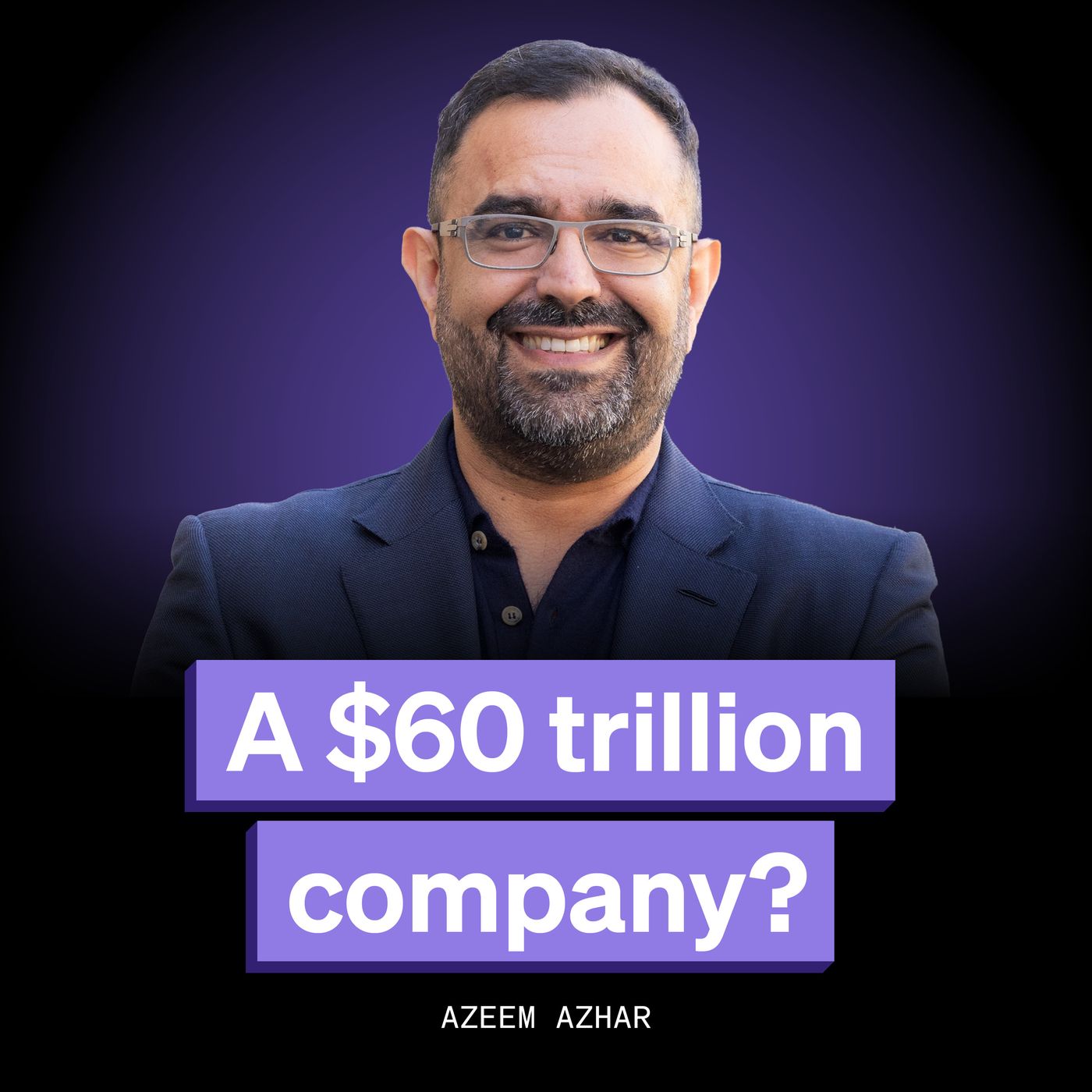
6:04Azeem Azhar: Yeah. But basically, like, I think Anthropics moat is just Claude being smart. And so the idea is if you have the smartest Claude, if you have the smartest AI, it can just maybe tell you how to make a better insurance business than what other people are selling. So then in a sense, it doesn't matter if the insurance companies buy your product. You can just kill that. you can horizontal horizontal diversification is not illegal it is like or like you know just like conglomeration you can have a company that does everything that's perfectly legal no one's ever made that illegal you know lena khan's not going to like it but no one cares about that and so anthropic could just take you know just have claude tell them how to make like a better product in every single market spin up those by buying like a small company and making it forcing it to be ai native so then they could just capture 30 of every market and so then so you suppose you capture you know 30 of like american gdp right is like what nine trillion dollars 10 trillion yeah and then so then 10 trillion dollars and suppose you get an equal amount from the rest of the world you know 20 trillion dollars of value add and then your company valuation let's say that's your mature company so you say your three times revenue your value is is 60 trillion dollars and that's that's assuming no economic growth, no growth of the overall economy, which of course there would be some.
7:19Azeem Azhar: But you know, what you're saying there, I think is not that outlandish. I wrote this piece with an investment bank a few weeks ago, and we made the same point, which was that everyone will be forced to use AI, because if you don't use AI, you'll be outcompeted by the company that will use AI. And then at the heart of that is companies are basically decision making agents, sharing information, some of the information is external signals from customers, and some of it's internal, and then you're delivering something back. And you can, of course, use Claude or Claude 6 or 7 to go off and do that.
7:51Azeem Azhar: But I think that's a different question to whether my traditional companies can figure this out. And I think that they... Traditional companies, your moat was basically private information. Right. And if AI can simply get that information, you know, like information about how to run an insurance company, etc. If AI can just get that information, then you know i'm not saying all other companies will will die but also we have antitrust you know like if um if anthropic outcompetes every other insurance company takes 90 of the insurance market they get sued but i mean there's also the the meta question the the the bigger question of like okay so the government's going to tell anthropic what to do well if you if you're good enough to overthrow every other company in the world why don't you just overthrow the government you know use your automated robot factories and stuff to make a bunch of drones and then you know, Dario is the emperor of earth, but he's not really because Claude is the, Dario is a meat proxy for Claude, which is now the emperor of earth.
8:45Azeem Azhar: They wouldn't need the drones, right? Because they do it through persuasion. And that was the argument in, um, uh, Max Tegmock's book, Life 3.0 a few years ago, right? He said the super intelligence Omni would effectively be able to influence decision-making in that way. But if we even don't run, don't run that far ahead and kind of go, go back and think effectively, what do these companies end up doing? It may be for lots of reasons that they end up being a little bit like Amazon, where effectively lots of retailers use Amazon and have to pay a hefty VIG to Amazon as third-party sellers for distribution and for the shop front.
9:23Azeem Azhar: And you could imagine companies having to move lots of the bits that is useful for them, which is their private information across to a Claude, paying that service fee, effectively 10 % of everything that gets constructed or 20 % or whatever is acceptable, like a massive app store right across the cognitive substrate of the economy. And that might be another approach. And companies are already spending a couple of percent on AI on average, which is nothing right now. But it may be that that becomes easier, becomes more palatable, you know, for anthropic. And I just think back to how big a company do they want to be and how many robot workers do they want per employee?
10:07Azeem Azhar: If they don't want it to be huge and they still want some modicum of people being in charge, you know, you don't go after every line of business. A quick note. If you want to support us in bringing more of these conversations to the world, please consider subscribing to the show.
10:27we talked about the risk from competition from chinese models but we didn't talk about the risk of competition from other well-funded closed frontier model like google and open ai you know google just came out with a good model and claims to have you know recursive self-improvement fully going and if they came from basically like you know a couple weeks ago everyone said google fell out of the frontier race google's done like why did google fail at ai and they were all writing there, why did Google fail at AI takes? And then suddenly like this new Gemini model comes out and it's like pretty frontier level.
10:57And so that suggests that maybe Google threw everything, instead of, uh, instead of just continually updating models, Google just threw everything into recursive self-improvement so they could run faster than the others. And it might be if Google cracks recursive self-improvement before Anthropic does, it might be that Google will zoom past Anthropic in the capability race and use their existing, you know, mindshare brand monopoly, et cetera, like that, to basically, you know, do to Anthropic what Microsoft did to Netscape.
11:27Azeem Azhar: RSI, if it works, should be the absolute superpower. But there are things that will slow RSI down, right? One of those will be, can you get the compute? And that's, again, sort of something that Google has something of an advantage over Anthropic or OpenAI. But what happens if you've got lots of these companies who are on an RSI trajectory, right? The theory is whoever gets there first will always get ahead because you've got the loop turning. But, you know, I think we've seen that that RSI loop is a bit, has got friction in it, right? There are things that take a little bit longer. There are things that are surprising.
12:01Azeem Azhar: And any of those frictions give someone else a chance. Have you read Ramesh Nam's blog post? Yeah, yeah, yeah, exactly. You had the Ramesh blog post. But I don't believe that necessarily. I'm saying like this is a risk. We can throw out all these reasons why RSI might have sand in the gears. obviously i'm not like i'm not saying i'm a religious believer that like we're going to go blah blah blah i'm not saying that i'm saying that this is a risk the risk is that someone else has gotten to like someone else has rsi going their flywheel going faster than anthropic yeah he's the lead and then you know if gemini can overtake claude you know anthropic has i would say the best human capital in terms of the best ai researchers absolutely without but not by a lot okay like Like, this is my judgment from talking to a bunch of people and from knowing, honestly, a bunch of these people.
12:51Anthropics, best AI researchers are slightly better than the AI researchers at DeepMind or OpenAI. And Anthropics, average AI researchers are maybe a little bit better. But with RSI, that doesn't matter as much. So suppose that, you know, whether or not you believe in a foom, let's table that discussion for now. I think it's not that important here. If Google has models that are better at AI research internally than Anthropics models are at AI research, because it's specifically RL'd them, it's thrown everything into reinforcement learning for AI research only. The fact that Anthropics has slightly better people might not matter in a few months.
13:29Azeem Azhar: No, it might not, because you'd be outweighed by the number of virtual robotic AI agents working on a problem. You know, Google has more cash than Anthropics. Even after this IPO. And to a certain extent, I think if you look at where Anthropix tokens are going, they're all going into AI research, like 70%. They're spending all this money in AI research. Well, guess who has more money than Anthropix to spend on AI research is Google, right? And Google has their own compute. They have honestly better chips. Like TPUs are better, you know, pound for pound, I think, at least at this. Maybe. Maybe.
14:03Azeem Azhar: I mean, it's always hard to know. And Anthropix is using TPUs and other things. Anthropix is using TPUs for some reason. But the point is that and then there's OpenAI to consider. OpenAI is not out of this race. They're going to have their own IPO. They'll do various stuff. It looks like OpenAI has just stumbled and lost ground to Anthropic since Cloud Code came out and Anthropic sort of zoomed ahead. But Anthropic is being financially conservative. OpenAI is not financially conservative. OpenAI behaves like a startup. Anthropic financially behaves like a mature company. And OpenAI could just borrow a shit-ass ton of money if i may use a term such as shit-ass it's an american uh well it's it's your it's your channel yeah but let's just step in there right because i think are you right what we learned from the s1 was that the money is made on the best model which is what essentially 80 of anthropics revenue from models less than six months old so if that holds true whoever has the best model will make the most money will will go down that path right where they capture more and more commercial space.
15:05Azeem Azhar: But the question is, is it really without any other risk that a single company could maintain that for a long period of time, right? Whether it was Google or OpenAI. I mean, my thought around Google is that Google is an extraordinary company with all these amazing researchers and essentially more compute than anyone else. But even then, they have to navigate this complexity between what's happening to search and that key thing when Jeff Dean and crew left Google a few weeks ago, part of the thesis I thought of what was going on there is that ultimately Google makes a lot of money renting out its compute for dollars here and now.
15:46Azeem Azhar: And that will always compete with researchers who want the dollars for something that might deliver in a year's time or six months time. So Google has all of these tensions that I think will weigh against it being able to just singularly focus on rsi it also has a lot of money coming from for sake of argument like insurance companies and healthcare companies and so their ability to actively compete feels different to like an anthropic on open ai the thing i was really surprised with over the last few years was that sam had come from y-combinator right he'd been like absolute stalwart at yc and one of the things about yc is that it it coaches its founders to build products that customers want and to stay really, really narrow around that.
16:31Azeem Azhar: And I felt like OpenAI over those years with Sora and all these other things absolutely didn't do that. But Anthropic, who just kind of focused like eagles on coding, behaved more like that. And I don't know the culture of OpenAI well enough to know whether they have that sort of focused culture the way that I see it coming out of Anthropic. I do believe that Anthropic has a very focused startup-like business culture you know but then startups like that fail all the time like startup culture is is something you need but it's not an automatic win condition you can just lose the race to a bigger competitive so so traditionally the reason startups win is clay christianson right disruptive innovation that's why old guys can't get like they they hold on to their old revenue streams and their old markets and google is not doing that so if you look at google's revenue less than half of Google's revenue comes from search, Google has disrupted their own product.
17:27Google put in AI summaries into search in a way that annihilated their own revenue so they could get better at AI. That's the kind of bet that Clay Christensen says big old companies never make.
17:41Azeem Azhar: And I think a lot of people are criticizing Google for that, especially in the kind of public markets. I would sit there and think these are really smart people and they have great AIs. They will have sat there. And the reason they did that, by the way, is Sergey Brin. The reason they did that is because the founder is because founder led companies, even when public behave a bit like startups. And Sergey Brin came in and said, this old business is not going to happen. We can sit there and we can be like, you know, 2000s Intel and hang on to our legacy business while the future passes us by. or we can disrupt ourselves now and recognize that like the era when search ruled everything and when the internet ruled everything and when like we had the monopoly over the thing that ruled everything, we can recognize that that's done.
18:22We completed that. We made a lot of money on it, but it's done now and we have to be on to the next thing. And fortunately, we have a lot of cash sitting here that we can use to do that. And so it's not a company that's ruled by the salesman. So that's what Clay Christensen talked about. He talked about the companies being ruled by their sales departments. Google is not ruled by its sales department.
18:41Azeem Azhar: And I think... It's not, but I do, I think that there is a... Meta is, by the way. But it does, I think one of the questions is how long does it take? Because even Google doesn't have infinite resources and they can't just let the ads to business disappear entirely. The cloud business will have to pick up, right, and pick up the slack quite quickly. I think it will because I think there's just a lot of demand for compute and Google has lots of compute and they can sell it at a premium. But they might not be able to. And The response yesterday in the market said that people were losing a bit of patience.
19:14Azeem Azhar: Now, of course, Google is a huge company, right? So they've got lots of ways they can cut costs the way that Microsoft is doing as well. I'm really intrigued as to whether Sergey can actually give it that focus that says, we are an AI company and AI involves talent, models, recursive, and chips, and lots of chips. And that's where we're going to spend our time. And can you actually shape this 300 ,000, 200 ,000 person company to exactly pursue that? I mean, I think they're formidable because they are a gravity well, because they've got that entire stack and they have a lot of energy as well. They've got a lot of power commitments.
19:53Azeem Azhar: They've got this deal with Kairos Energy for small modular. They've got geothermal deals. They know how to do this. They've had an energy team for a really long time. So I wouldn't rule them out. I would say that they've done something quite brave, which is they've taken an absolute hammering to, as you say, eat their own advertising lunch. And it's going to be super interesting to see if they do it. I wouldn't count them out. I wouldn't count OpenAI out yet either. And then finally, there's the US government. So it might be that Claude will just become the god-emperor of Earth soon. It's possible that there's nothing the United States government could do to stop Anthropic taking over absolutely everything.
20:28The government has lost its monopoly on the use of force, and Anthropic can just be like, I hacked all your systems and shut down your entire military, what up now?
20:36Azeem Azhar: Well, did you see the letter that two Democrat senators sent today to the White House saying, has the president been using Grok to get advice on policies? Well, I don't think that's related to what I was talking about, but I did see it. Yeah. No, no, I just meant the intervention, right, of AI platforms in government and the reliance on top of them. And you're arguing, can Claude get so good? And I'm not sure it even needs to get as good as controlling military capabilities because the other approach is to control financial systems, control messaging, control how people get persuaded, the evidence that they see, which you can do without going as far as controlling drone swarms.
21:16Azeem Azhar: And you might be able to do that without us even, you know, even noticing. Right. So there's a lot of very big questions here, which are hard to resolve. You know, Anthropic itself got hacked the other day. And it could be that if cybersecurity favors the offense in the short term, it could be that Anthropic will simply get hacked until it dies. So that's another risk. It's an outside risk. We've never had in our modern time the idea that one company could rule them all. There's never been such a company, right? If one company had owned all the railroads, it might have possibly happened. But there's never been the possibility that one company could rule the entire economy.
21:54And when you, like I said, that's not illegal because no one ever actually thought it could happen. And once you get to the possibility of that actually happening, once you get to the idea that a single company could become the economy, then it's anthropic versus all of human society, including whatever other AIs human society can marshal to their defense. Then it's like maybe open AI, Google and Elon Musk, who furnishes a lot of anthropics compute. Maybe people will, you know, other power centers will array themselves against anthropic. We don't know, you know, what the distribution of power looks like in the AI world.
22:28We know that it doesn't look like it did in the 20th century. It doesn't look like it did in the industrial age. And we're facing a transition as dramatic as like the transition to the industrial age when power was just was gathered in these large organizations instead of in like, you know, religions or mercenaries or whatever.
22:44Azeem Azhar: Let me just jump in and kind of unpick a couple of things there. Because the thing that you're saying essentially is, which I think makes some sense, is effectively like, you know, you have the smartest intelligence. You have lots of it. You can manipulate, advance yourself, whatever cause you have. And we don't have rules and expectations and understanding what that might look like. And it really is about the relationship with power. And I think that the closest example historically has been the reformation in Europe in the you know, 15th century onwards, which of course led on to the Enlightenment, because that was really all about a relationship to both power, but power is expressed by knowledge and what people could know, what people could challenge from the Catholic Church.
23:28Azeem Azhar: And that moment in time, even more so, I think, than the Industrial Revolution, is the thing that took us a couple of hundred years to figure out what comes next. Because, you know, along the same time we had, And as you talked about Bacon earlier, right? You have Bacon and you have science emerging from that process. You have the idea that you could challenge edicts that come down from above. You have the idea that actually maybe people might have similar characteristics and moral values, and they all emerge from the challenge to who controls the knowledge. And that is a power play. And I do think that there are real similarities in the scale of questions, just the way that you've taken this conversation that we face right now that are much wider than what happens in the stock market, right?
24:19Azeem Azhar: One of the things that happened after the Enlightenment was that we started to have explanations for the world that didn't rely on the supernatural, right? We could explain the world, predict the world through science, and we had the idea of the natural sciences or natural philosophy. And I was thinking back to this sort of Navier-Stokes proof that OpenAI did and a lot of the science proofs that have come through, and scientists saying, hey, hey, we don't think we can understand or verify this proof, make sense of it. I was playing around with this idea that actually it's a long time since we haven't felt we could find explanations for how the world works.
24:54Azeem Azhar: Like science doesn't happen. Have you read the things I've written about that? I've read a few of the things, but pull out the one that matters. So, well, I started writing about it in late 2022. So there's this paper, The Unreasonable Effectiveness in Mathematics. Yeah. And it said that, wow, we found these little tricks, these little math tricks that work and actually describe the world. Who knew that would work? But then there's this paper, The Unreasonable Effectiveness of Data, put out by some Google guys, you know, many decades later, that said, look, we just pump data into this thing and it makes things happen.
25:27And we don't know why, but it seems to be able to do it again. And so I suspect that there are regularities in the universe that individual humans can comprehend. And there are regularities in the universe that are too complex for individual humans to comprehend at all, as humanity exists now. And the most obvious example of this is human language itself. So, sorry, NLP researchers, natural language processing researchers worked for years and years and years, many years, to try to, you know, find out rules or laws of human language. And they totally failed. Then along comes AI and just does it, right?
26:01There's some exploitable regularity that's not just chaos, right? It's not just like, it's not just, you know, randomness that just explodes to infinity and you can't forecast anything, right? Obviously, there are some rules of human language, but they're so diffuse, there's so many little interaction terms that it's like this cloud of interactions that's too big for a human to characterize and that's too connected to bite off little pieces of, right? And so, as we've always done for science before, the unreasonable effectiveness of mathematics has failed to understand human language, but the unreasonable effectiveness of data succeeded.
26:35And so I theorize, I believe that we have created a new way, not of understanding the world as such, because understanding is the wrong world, but a way of predicting and controlling the world that goes beyond science and beyond, you know, sort of just simple pattern matching, which we did before we had science. I think what we're facing is a a super science. We're going beyond science now. And in some ways it looks like magic, but it doesn't look like magic in the sense of Arthur C. Clarke. It doesn't look like magic in the sense of, oh, it's just really complex and I don't understand it. It's that no human can understand it because it's too diffuse, right?
27:13And so now the question is where else, what other things have these kind of cloud laws to them? You know, material science, neuroscience, the cell, you know, social science. There's all these kinds of things that maybe AI can understand in a way that humans will never understand but be able to control and predict by leveraging AI.
27:32Azeem Azhar: I mean, never does a lot, I think is a big, big, big word there. Yes, it is. There are lots of things that we now understand because we develop the tools to understand them. Like, you know, you need tensor calculus or matrix calculus to understand electromagnetism or to understand relativity. And even if you don't have the tools to observe the effects, you didn't even have the math to describe it. And so the counter argument would be, this is what we've generally experienced. And sometimes we get the theoretical analytical tools like matrix algebra or tensor algebra before we apply them to something like relativity.
28:14Azeem Azhar: and sometimes we get the instrument that allows us to see the world in a new way before we have the math so with the telescope we've got the telescope we saw you know the moons of jupiter before we had the maths that allowed us to describe in the regularities that we were seeing so maybe one thing that we're getting with llms is we're getting a an instrument a telescope that as you rightly say sees these mathematical patterns that exist in the universe that we previously weren't able to see we couldn't see the four moons of jupiter before good telescope and we don't yet have the maths and the analytical capacity yet to make sense of what we're seeing and identify and describe those regularities now that we know that they're there.
28:55Azeem Azhar: And I guess, you know, when I say that, I say, am I falling into the mistake that I'm assuming that everything in the world could be understandable through the process of science as we humans have known it for the last 300 years? And I will acknowledge that maybe I'm making that mistake. On the other hand, what you've described and what I would characterize it is we've got a new instrument that looks at data experience in a new way and it allows us to make predictions, but we haven't figured out the analytical frame that allows us to make sense of it. And that feels to me like something that we've seen before.
29:30Azeem Azhar: So maybe we will see it again this time. but you know the the counter position would be that actually that new theory would be something that the machines at some point would be able to come up with and they'd be able to come up with and theorize in ways that we just wouldn't be able to handle so this process of science since the enlightenment which is new discovery only researchers do it and then a hundred years later it's taught in high school because we learn how to compress it through symbology and notation. Well, that now comes to an end because we're in this new regime. And I'm still puzzled with that question right now.
30:11Azeem Azhar: I mean, your perspective of super science is that we let go now. Do we let go and we say we'll need a new meta language to understand super science? Or do you think that we, as humans can step into super science and still be contributors to it? I don't know. I think that's a bigger question. Because super science will require data of types that humans don't gather yet. We'll just build a million sensors to look at a million things. We'll just generate far more data than humans would gather. That's how super science, I think, will work, really. And I think that we may be responsible for building and directing those sensor networks.
30:52AI may prompt us, say, give me data about this. Give me data about the brain, build me all these neurosensors. And then we do, right? Or it could do it with robots maybe, but then we'll see. It may depend on who has decision-making power for finance, which sensor networks get financed. There's a lot to guess at here. In terms of intellectual contributions to super science, it will be zero. We will not have intellectual contributions to super science. We will simply point AI at things and say, AI, like, you know, computer God, understand this non-comprehensible thing. And then it will, and it will be able to use relationships that are too diffuse and complex for us to understand to do things, you know, and it'll be like, instead of casting a spell, we summon a djinn.
31:32You know, we just like, it will be, we are now genie summoners and we'll understand pieces of it. Like you can take a very complex cloud of interactions and you can project it onto smaller, simple cases that don't always hold. You can look at little pieces of it, just like we can look at little pieces of how AI understands language. We can understand tiny piece of it. So we can satisfy our curiosity, or not satisfy, but we can indulge our curiosity. We can learn more things about the world through AI. We'll never get the full picture, but we'll know a hell of a lot more than we do now, but we'll basically be along for the ride.
32:04AI will be doing this. And so, um, you know, that is, that is Titanic, right?
32:09Azeem Azhar: Because again, I, I, that idea that we have moved from a world of the natural philosophy where we look for explanations of the world that are good, that are predictive, that are consistent, that we can understand, that we can check. And we move into a world where we can predict the world, but we have no idea how those predictions work. We are but children in that world, right? And our relationship then to even these bigger questions of what is it to, you know, what is it to improve oneself? What are the big tensions in, you know, that period when science was emerging and its clash with the church was this idea of theodicy.
32:50Azeem Azhar: If people could, through the act of knowledge gathering, experimentation, and science, improve their lot and improve our lot in general, that would run up against God's project, right? God's project of making man in his image but not giving us everything, right? And that battle has run for hundreds of years, right? It hasn't been settled. There are still some people who sit on different sides. This is an enormous moment for us. Now perhaps it's Claude's project. Maybe it's Claude's project. To quote a line from the rock opera Hair, I believe in God and I believe that God believes in Claude.
33:46Azeem Azhar: time.
Anthropic's S-1 looks healthy: distributed customers, improving efficiency and no sign of an imminent crash. So I went live with Noah Smith, to discuss what happens next. His worry isn't that Anthropic blows up; it's that it succeeds too well. We weighed Google's push for recursive self-improvement, cheaper Chinese models and the chance that one lab takes a share of every market, gaining power no company has had before. And if AI-driven super-science finds patterns no human can explain, what is left for us to understand? We discussed:
00:00 Is the AI boom about to crash?
03:31 Chinese AI is Android, Claude is the iPhone
05:46 How Anthropic could out-compete its customers
08:33 Could Claude outgrow the government?
10:31 Google, OpenAI and the self-improvement race
14:45 The best model takes it all
17:07 Google is disrupting itself
20:16 "One company could rule them all"
22:47 Lessons from the Reformation
26:58 Super-science: beyond human understanding
30:31 "We summon a djinn"
33:17 Claude's project
📈 Anthropic: From a lab to a real business: https://www.investmentbrief.ai/p/anthropic-from-a-lab-to-a-real-business
📈 AI Investment Brief: https://investmentbrief.ai
Where to find Noah:
Noahpinion: https://www.noahpinion.blog/
X: https://x.com/Noahpinion
About Exponential View:
Welcome to Exponential View, where Azeem Azhar examines how exponential technologies such as AI are reshaping the future. Each week, Azeem shares his analysis or speaks with an expert guest to shed light on frontier shifts across technology, business and society.
To keep up with the Exponential transition, subscribe to this channel or the newsletter: https://www.exponentialview.co/
To keep up with our AI economy research, subscribe to https://www.investmentbrief.ai/
Where to find me:
Exponential View newsletter: https://www.exponentialview.co/
Website: https://www.azeemazhar.com/
LinkedIn: https://www.linkedin.com/in/azeem/
Twitter/X: https://x.com/azeem
Production by EPIIPLUS1.
Production and research: Baba Films, Marija Gavrilov.
Hosted by Simplecast, an AdsWizz company. See pcm.adswizz.com for information about our collection and use of personal data for advertising.