Ask ChatGPT


 Barbell Medicine Podcast
3 Nov 2026 · 57m · 25 chapters
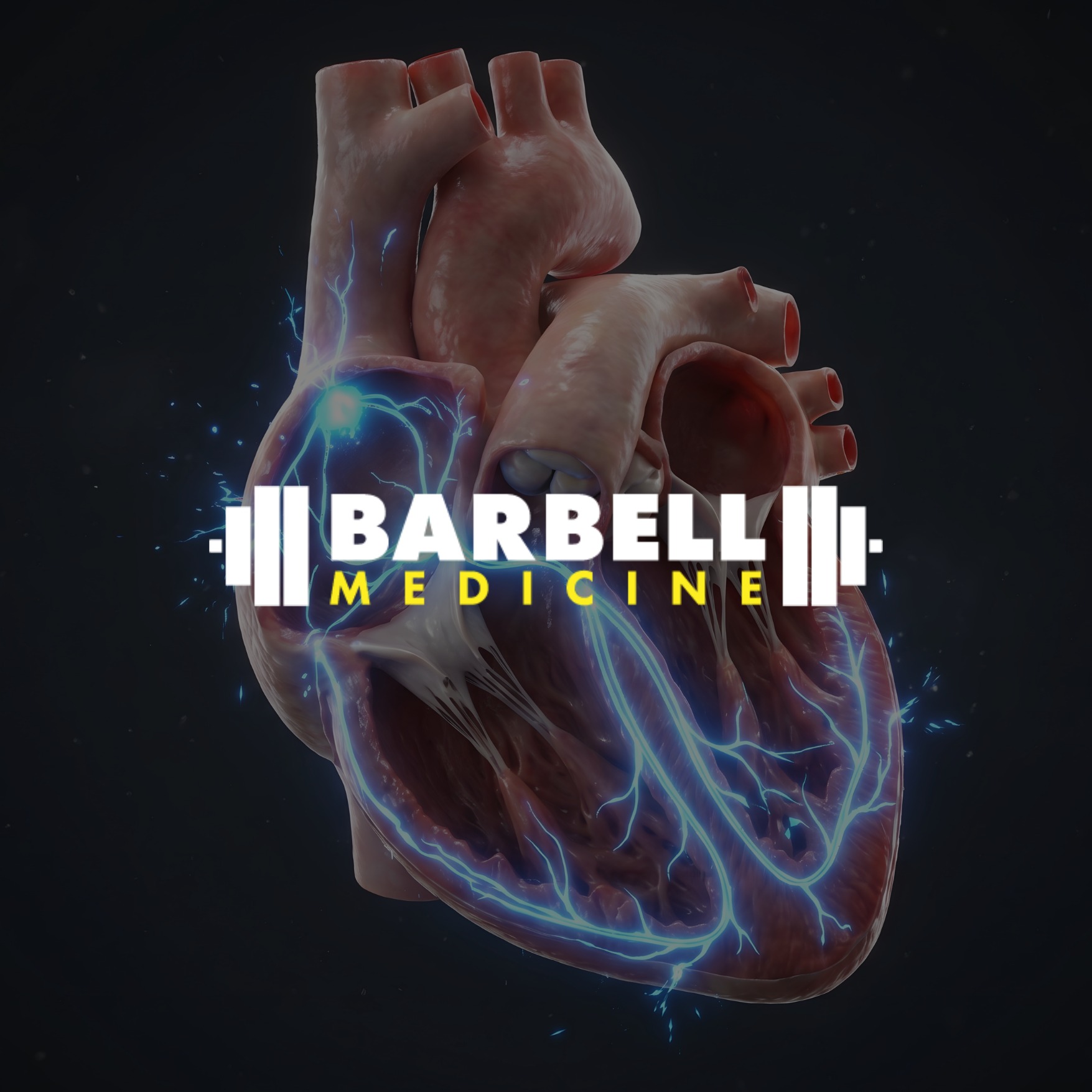
A “mystery case” of a 22-year-old college soccer player whose pre-participation ECG and imaging suggested hypertrophic cardiomyopathy (HCM), leading to a sports restriction; the episode debates whether the restriction was appropriate given later regression after detraining.
Dr. Jordan Feigenbaum (host, Barbell Medicine Podcast) and Dr. Austin Brockie (co-host; cardiology-focused sports medicine perspective; discusses screening logic and ECG interpretation).
The athlete’s ECG showed left-ventricular hypertrophy voltage criteria, T-wave inversions (leads II, III, aVF, I, V3–V6), and ST depression—prompting echo/MRI. Echo showed asymmetrical apical hypertrophy (max wall 16 mm) with normal function and no outflow obstruction at rest or provocation; cardiac MRI confirmed an “ace of spades” apical HCM pattern. Holter and treadmill stress test were reassuring (up to 16 METs, no arrhythmias). Genetic panel (10 HCM genes) was negative. Despite wall thickness later dropping to 10 mm after 4 months off soccer and ECG improving, the care team kept the HCM diagnosis because cavity size didn’t change and prior history suggested persistence.
Athlete’s heart vs HCM “gray zone” reference from Italian Olympic athletes; comparison to a pro hockey case with MRI scar that still led to ventricular tachycardia and defibrillator despite structural regression.
Written by AI. May contain mistakes.
Learn about a 22-year-old athlete's unusual medical case involving sports clearance.
“A 22-year-old college soccer player walks into a clinic to get a formed sign so he can play.”
The hosts outline the mystery case format and engage the audience.
“And with me, as always, is the second most handsome doctor in North America, Dr.”
Learn about the athlete's medical history and pre-participation physical.
“A 22 year old man comes into clinic for a pre-participation physical.”
Explore the potential cardiac issues that could affect young athletes.
“And what's on the list of things that would worry you that you really want to make sure he doesn't have?”
Understand the significance of the athlete's EKG results.
“So these are things like Wolf-Parkinson-White syndrome, among many others, that can increase the risk of dangerous, potentially lethal cardiac rhythm sorts of issues.”
Discuss the implications of the athlete's abnormal EKG readings.
“So his EKG meets voltage criteria for left ventricular hypertrophy.”
Learn about the outcomes of the athlete's echocardiogram and MRI.
“As you mentioned, the abnormalities are most seen in the inferior or the bottom, the leads that look at the bottom of the heart and the lateral or the left side of the heart.”
Explore the potential diagnosis of hypertrophic cardiomyopathy in the athlete.
“You mentioned that his exam is normal in the sense that no murmur was heard.”
Explore the assessment of a young athlete with potential hypertrophic cardiomyopathy.
“The ventricular wall thickness was confirmed on cardiac MRI as well, showing a maximum apical thickness of 14 millimeters, which cardiology mentioned looked like an ace of spades.”
Discussion of the athlete's restrictions and heart health.
“So whether or not that restriction was the right call is up for debate, and we're going to do that here in a few minutes.”
Exploration of athlete's heart and the challenges in diagnosis.
Discussion of research on heart thickness in athletes.
“There's a sort of, it's called a gray zone where you genuinely can't tell if somebody has athlete's heart or hypertrophic cardiomyopathy.”
Insights into the complexities of medical diagnosis and decision-making.
“I actually don't think this was a hard call, you know, to call it hypertrophic cardiomyopathy.”
Discussion of how ethnicity affects heart condition diagnostics in athletes.
“And that is a murky set of waters to be going in.”
Detailed case study illustrating the complexities of hypertrophic cardiomyopathy.
“He doesn't play the sports that typically cause this.”
Learn about hypertrophic cardiomyopathy and its implications for athletes.
“Plus genetic testing finds a mutation for the musculature of the heart.”
Explore how detraining impacts cardiac wall thickness and arrhythmias.
“There was also another study on detraining.”
Discover the nuances of monitoring cardiac health in athletes post-detraining.
“And maybe we, again, give them some clearance to participate in activity with a plan for ongoing monitoring.”
Examine the evolving guidelines on exercise for those with hypertrophic cardiomyopathy.
“Or maybe I feel I continue to feel strongly that you need an ICD depending on what symptoms you had or something like that.”
Discuss the controversy surrounding mandatory EKGs for amateur athletes.
“And I'm thinking if there was ever a low risk sort of presentation, this is probably it.”
Understand the implications of different screening methods for cardiovascular risks.
“But if it's a requirement that the person has to pay for out of pocket, I don't know that I feel great about that.”
Learn about the challenges and limitations of various cardiac screening methods.
“are limited in their sensitivity for this kind of thing.”
Explore the cost implications and decisions around cardiac screening effectiveness.
“targeted sort of case finding type scenario so one thing that i know of in this space is that some of these conditions.”
Discover why increasing CPR certification can significantly improve survival rates.
“or a life, uh, like an extra year of healthy living, you know, whatever life years.”
The hosts summarize the key points and suggest actionable steps for listeners.
“I feel pretty confident in saying that, particularly having an emergency action plan in place, CPR training, defibrillator access, plan for transport for sports and facilities that house sporting activities.”

Get the gist, explore an idea or ask about something said.
 Claude
On Barbell Medicine Podcast, what are the key points of this episode?
Searching your listeningAutomatic transcript. May contain errors.
0:04A 22-year-old college soccer player walks into a clinic to get a formed sign so he can play. He has no chest pain, no shortness of breath, he's never passed out during exercise, and he's got a normal physical exam. He walks out of that visit being told to quit his sport. In between is an EKG, an echocardiogram, a cardiac MRI, a Holter monitor, a treadmill stress test, and a genetic panel. Half of those came back completely normal. Telling a healthy 22-year-old to stop exercising is a weird medical intervention. So today, you get to decide, was this the right call? I'm Dr. Jordan Feigenbaum, and this is the Barbell Medicine Podcast.
0:58And with me, as always, is the second most handsome doctor in North America, Dr. Austin Brockie. What's going on, man? Hey, doing well. Excited for another case. I had, I think, at least two, one consult and one patient visit the other day who specifically mentioned that they especially enjoy listening to these mystery cases. So, you know, happy to oblige. That's a real medical mystery case. A brief aside. Has anybody ever referred to you in person as the second most handsome doctor in North America? Has this ever come up? I think so. from people who call out to you. Are you the second most handsome doctor in North America?
1:34Yes. Showing that they are true, you know, insiders who have spent too much time listening to this podcast. I, when people say they listen to our podcast, I'm like, are you sure there's nothing better that you have to do? Like, I want you to listen, but maybe when you have other time. All right. So we're doing another mystery case this time in a college soccer player. And we're going to work through the case in much the same way you do in real life, revealing the information little by little to see how you work. And we'll take a few breaks for you to recap and also gives our listeners a chance to play along at home in real time.
2:07My prediction, I think you're going to get this one, but I'm not sure because there's a point in the case where most people would probably change their answer. I want to see if you do too. The question is, are you ready? Ready as I'm going to be. All right. A 22 year old man comes into clinic for a pre-participation physical. He's not there because anything's wrong. He's there because he plays soccer and his college requires a sort of doctor's note to clear him for sport. He feels well. He has no symptoms, no chest pain, no shortness of breath at rest or with exertion, no palpitations, no lightheadedness.
2:41He's never passed out during sport or felt his heart do anything strange. He's been playing soccer at an amateur level for about 10 years and now he's playing in college. He trains three days a week for about 90 minutes per session. Plus he has a competitive match on the weekend. He denies any family history of heart disease that he knows of. He does not take any medications, and he says that he doesn't smoke or use illicit drugs. His vital signs and his physical exam are completely normal. So on paper, this looks to be a pretty straightforward appointment, right? You just sign the thing and get him out of the office.
3:11So Austin, when you have a healthy, in this case, 22-year-old athlete with a normal history, a normal exam, what are you actually screening for here? And what's on the list of things that would worry you that you really want to make sure he doesn't have? If you're playing along at home, maybe you can come up with a little short list of things that you'd want to check out to make sure this person is going to be fine on the field. Yeah, so just up front, this is actually not something that I do terribly often because these folks don't present to the hospital, nor am I routinely managing them through a telemedicine perspective.
3:41However, from the big picture view, we want to prevent avoidable morbidity and premature death. And the things that could potentially happen in this sort of context is any form of cardiovascular disease that would substantially increase the risk of something like sudden cardiac death or as a result of, for example, structural heart disease or dangerous cardiac arrhythmias or both like rhythm disturbances. And so there are a small subset of these types of conditions that we'd be most worried about in a young athlete. And so if there was a family history of premature mortality or sudden cardiac death or what was presumed to be sudden death, there can sometimes be these like tricky situations where it's like this family member, you know, they were an adult and they knew how to swim, but they just like kind of unexpectedly drowned or something like that.
4:30Those are kind of like suspicious sorts of histories that we hear where sometimes it's like, OK, well, they were probably had a cardiac event and they happened to be in water, couldn't recover. So you have to be really discerning and take like multi-generational family histories. This is how this kind of thing is at least taught in the course of medical training. And so the things that we're most worried about is, again, some form of significant structural heart disease like, for example, hypertrophic cardiomyopathy or some sort of inherited or acquired kind of cardiac electrical sort of issue that could predispose them to a rhythm disturbance.
5:03So these are things like Wolf-Parkinson-White syndrome, among many others, that can increase the risk of dangerous, potentially lethal cardiac rhythm sorts of issues. That would be the biggest sort of no-miss sort of thing. And that's what people are like when they do an auscultation or they're like listening to your heart for murmurs. Not a perfect test by any means to detect, you know, certain forms of structural heart disease, but it can be a clue if you do hear something as well as other sorts of testing as well. Yeah, I know you have a soft spot in your heart for screening and discussing screening recommendations because, you know, nobody wants a bad outcome, whether it be something like sudden cardiac arrest or other sort of avoidable issue.
5:43The problem is you can't screen for everything, right? And so we're going to get into that probably here a little later. But in keeping with that, his college actually requires an EKG to be performed prior to each season. So he gets one. So his EKG meets voltage criteria for left ventricular hypertrophy. Now, the EKG, as most people know, is recording an electrical signal that runs through the heart on every beat. It's picked up by electrodes on the chest and limbs in this case. A larger heart muscle tends to put out a bigger signal. So the tracing sometimes runs taller. There's a height cut off in millimeters and he's over it.
6:20Then his T waves are also abnormal. So after the heart contracts, the muscle has to reset and relax electrically before it can go again and do another beat. And that reset is generally the T wave. Normally points upwards, his points downwards. So a T wave inversion. An inverted T wave means that the region of the heart muscle is resetting differently than the muscle around it, which is what happens sometimes when the tissue has been changed by something. So scar, infiltration, disease of the muscle itself. So his T waves are inverted in leads 2, 3, AVF, and that all looks at the bottom of the heart, and also in lead 1 and V3 through V6, which covers the front and the left side of the heart.
7:01So in eight leads and two separate regions, he shows the same inverted T waves. Lastly, he has ST segment depression. And the ST segment is the space between the pointy spike that you are familiar with on the EKG tracing and the repolarization signal, which is the electrical signal firing through the ventricles, triggering the contraction of the heart, and then the T wave, which is again, the heart resetting. So that is normally supposed to be flat in the middle, but his is depressed. So Austin, walk me through your interpretation of his EKG. It'd be better if you could see this, obviously. But does this change your perspective on the patient?
7:35Do you have a new differential diagnosis? If you're playing at home and you happen to be familiar with the auditory recap of somebody's EKG, perhaps you can try to interpret this or maybe perhaps a simpler question for the listeners at home. Is this a normal EKG of an athlete or is it something else? Yeah. So as you're describing it, I'm almost like trying to trace one out in my mind to, you know, generate the image that would be in front of me. Cause yes, having looked at probably thousands of these at this point, it is much easier when I'm actually looking at the thing instead of the description.
8:04But I got a sense of it. This isn't too difficult to envision. But it is unusual to see this in a 22-year-old. And so, sometimes we can see the really increased voltages that amplified appearance of an electrical signal for sometimes no other reason other than the person is super, super thin, skinny, and the electrical leads that are put on the chest are right up next to the heart. In the same way that somebody with severe obesity or a big hyperinflated chest from, you know, lung disease and things like that, it might make the voltages look actually abnormally tiny. But that's probably not the case here.
8:37He's probably an average muscled sort of individual. And so seeing voltage criteria for RVL, which is an initial sort of abnormality that gets my attention. And then we see these other things that make it much more likely that this is a true pathologic sort of finding. It's not unusual for somebody to have T-wave inversions when they do have left ventricular hypertrophy as is suspected from the other aspects of the EKG. And the T waves and ST segments are kind of right next to one another. And so there can be some kind of shared abnormalities there. So the primary issue here is it seems that there is some increased amount of muscle mass in this individual's heart, leading to an increased electrical voltage of the main, what we call the QRS complexes.
9:20And as a result of whatever those structural changes are, it leads to some changes in the electrical system that then leads to abnormal resetting, and that's those T-wave inversions. As you mentioned, the abnormalities are most seen in the inferior or the bottom, the leads that look at the bottom of the heart and the lateral or the left side of the heart. And so in this situation, I am increasingly suspicious that there is some structural abnormality in this patient's heart, particularly left ventricular hypertrophy, but that is a broad kind of a little bit more of an umbrella term. You can have left ventricular hypertrophy that is kind of physiologic and adaptive.
9:56For example, if somebody has chronically high blood pressure, the heart has to pump against that chronic high blood pressure and it adapts by developing that kind of abnormal left ventricular hypertrophy. There are other forms of cardiac hypertrophy that can be physiologic and almost normal. We'll set aside the whole topic of like athlete's heart. We've talked about that in a different podcast and that's not necessarily where my mind is going and it shouldn't be where your mind goes, at least at first in a patient like this. You can have abnormalities with your aortic valve that can lead to cardiac hypertrophy.
10:30You can have diseases that basically infiltrate or deposit abnormal material into the walls of the heart, leading it to thicken, although that would also look different on this EKG. And then the last one, and this is the one that I'm most concerned about and is actually one that I've already mentioned, a purpose of pre-participation screenings, if we can catch it, is a diagnosis like hypertrophic cardiomyopathy, which I know is a fancy long term and it sounds suspiciously similar to left ventricular hypertrophy but they're not in fact the same thing so the hypertrophic cardiomyopathy is a genetic genetically mediated disease that leads to a particular phenotype although there are a variety of different phenotypes of HCM but certain of them can lead to obstruction of blood flow and so if there is an obstruction to blood flow then that's sort of the cascade that can lead to either rhythm disturbances or you know, loss of consciousness and potential sudden cardiac death.
11:22So that's something that is suspicious. You mentioned that his exam is normal in the sense that no murmur was heard. Murmurs can sometimes be heard in patients with obstruction, although they may not have obstruction at rest and there may require some what we call like provocation maneuvers to see if you can hear a murmur in a patient who you might worry might have hypertrophic cardiomyopathy. So sometimes, for example, you'll take these patients from sitting to have them squat down and then go from squatting back up to standing and see by altering the hemodynamics, altering the way the blood is flowing through the heart.
11:56Sometimes you can actually provoke a murmur that might be heard because of changes in the way the blood is flowing through the heart. But ultimately, this person, at least in the modern era, in any like a reasonably resourced health care setting is headed towards getting an echocardiogram because there are some like no miss diagnostic possibilities that need to be investigated here. Yeah, I wish we could poll our audience like they could like have voted, you know, you guys signing him off or you asking for a further workup just to see what the split was. I'd be curious because, yeah, you're right.
12:24His exam was normal, right? And you'd expect if something very serious was popping up, it would have shown up or he would have had some sort of history of some sort of symptoms. And so without that and this abnormal EKG, you're kind of like, hmm, what to make of this? Now, just for context, repolarization abnormalities, that's a fancy way of saying when the heart is relaxing, sort of resetting, shows up in about 3 % to 5 % of all athletes. You tend to see these in the ST segment, which this patient has, or the T-wave inversion, sometimes both. And when somebody took 155 athletes who presented with these T-wave inversions and worked all of them up, they found identifiable cardiac disease in almost half of them.
13:03So that's why, again, you shouldn't just automatically assume he's probably fine because there may be something else going on. So your wish is granted. They did get a transthoracic echocardiogram, which is an ultrasound of the heart. Put a probe on the chest wall and it shows the chambers moving in real time. So you can get a wall thickness for various chambers of the heart, chamber size of the four ventricles of the heart and how well the heart's actually working. So this echocardiogram showed a non-dilated left ventricle with asymmetrical apical hypertrophy. That's the tip at the bottom of the heart.
13:38It's called the apex. In this patient, his maximum left ventricular wall thickness was 16 millimeters, where normal tops out somewhere around 11 or 12. All functional parameters of his heart were normal, though. So his ejection fraction, the percentage of blood it pushes out with each beat is where it should be. and its diastolic function when the heart's relaxing is normal too. And there's no outflow obstruction either at rest or during provocation, just like you had mentioned. The ventricular wall thickness was confirmed on cardiac MRI as well, showing a maximum apical thickness of 14 millimeters, which cardiology mentioned looked like an ace of spades.
14:16Must have been a motorhead fan, if you guys are familiar. here. So Dr. Baraki, do does the echo cardiogram and or the MRI change your thinking? And what do you want to do next? If you're playing along at home, are you concerned about these findings where a seemingly asymptomatic athlete has a weird looking heart on these tests? Yes. So I remain concerned about this patient, although there are, I'll say there's some, certainly some abnormalities, some sources of concern, but also at least some near term sources of reassurance, we'll call it. So, I think our suspicions have been further supported.
14:54Our hypothesis has been further supported that this patient has not just ventricular hypertrophy, but potentially a pattern of hypertrophic cardiomyopathy in particular. And as I mentioned, there are a bunch of different phenotypes of hypertrophic cardiomyopathy in the sense that you can have this hypertrophy happen in different patterns and in different ways throughout the heart. So you can have asymmetric septal hypertrophy and septal, the septal hypertrophy refers to the tissue that's between the two ventricles, the right ventricle and the left ventricle. And that's a kind where when there's asymmetric septal hypertrophy, it can more directly impact blood flow as it goes out of the heart and increase the risk of outflow tract obstruction.
15:33And that obstruction is the thing that we get really worried about in terms of leading to things like loss of consciousness and sudden cardiac death and things like that especially. This patient's hypertrophy is not in the septum. It is further down or inferior or towards the lower tip of the heart in the apex. And so that is in a definitively different location. But we have confirmation now from both the echo and the MRI that this is the case. The fact that there is no evidence of obstruction either at rest or with provocation is, again, partially reassuring in the near term, at least for that kind of mechanical complication, that he's at immediate risk that we need to immediately put him on medicines to mitigate the potential impact of increases in heart rate and things like that as it relates to how much blood can fill his cardiac chambers.
16:24Because we want his cardiac chambers to get nice and full of blood to really avoid the risk that things collapse down too far and increase the risk of obstruction. So, we feel relatively reassured about that right now. This is not something at this point that would be routinely getting managed or further guidance in a primary care type setting or certainly in like a routine college, you know, pre-participation physical context. But this would already have been referred to cardiology for kind of more advanced conversations about whether this patient meets criteria for any form of medical management or whether there's anything else that would be required for them to manage this.
17:01In higher risk settings, there are medicines that are sometimes used, again, to control the heart rate. There are actually some very, I would say, relatively new agents that are direct, I think, direct cardiac myosin inhibitors that can be used for severe obstructive hypertrophic cardiomyopathy, although there's some controversy around their use and some downsides to their use. And then there are also some invasive procedures that are sometimes offered to actually cut out or kill off some of the abnormally hypertrophied muscle in the heart to really mitigate the risk of obstruction and things like that.
17:33So that's kind of where we're at at this point. I think that we have relatively high suspicion for this condition. He's definitely going to be in specialist territory at this point. I think that we don't have immediate concerns in the very, very near term, given that there's not any evidence of obstruction that we've been able to identify, but he is not cleared for participation at this point yet. Well, in bizarro world, you decided that you wanted to get some functional testing on this patient just to see, because look, somebody's got to sign something okay so first up he got a holter monitor this is basically a portable ekg that the person will wear for a series of time just to see if it can catch a rhythm abnormality that might not show up when they're in the office connected to the ekg for a brief period of time this was normal then he got a stress test on a treadmill so here the protocol is the treadmill speeds up and goes up in incline or grade every three minutes until you either can't go anymore or there's some sort of abnormality like an arrhythmia, chest pain, some sort of symptom there.
18:36He got up to 16 METs with no symptoms and no arrhythmias. Now, METs, you've heard us discuss this on a podcast before. This is just a multiple of the energy that your body burns or uses while it's sitting at rest, which we think is one MET. So 16 METs is 16 times that where anything above 10 on a stress test is usually pretty good. So 16 is definitively very fit, and he had no symptoms up to that point. Then they ran a genetic panel on 10 different genes that build the sort of contractile machinery inside the heart's muscle cells. All 10 came back negative. So that is the information that you have right now, Dr.
19:17Baraki. I want you to summarize the patient and give me your diagnosis. And if you're playing along at home, I want you to commit to either signing his pre-participation form so he can go play soccer or deny him participation in sport. And also you have to give the same. OK, sure. Yeah. So this is all really useful information. These are all essential parts of the kind of evaluation process. So he's had the echo. He's had the cardiac MRI. He had the Holter monitor looking for dangerous cardiac rhythm disturbances like non-sustained ventricular tachycardia or something like that that he might not necessarily have symptoms of but would be signs of a higher risk sort of phenotype.
19:57The maximal exercise testing, while during that time he would have his cardiac rhythm monitored, blood pressure monitored, sometimes he'll even do echocardiography during those sorts of efforts or immediately afterwards to assess to see what's happening with the function of the chambers and blood flow and things like that. Sounds like that was also reassuring. You mentioned that he's had direct genetic testing, at least for a handful of genes. There's many, many, many genes. There's, like, I think over 1 ,500 genes or something like that that have been associated with hypertrophic cardiomyopathy.
20:25You told me that they tested for 10, probably some of the most common ones, like beta-myosin, heavy chain genes, and things like that. I used to teach some of this at a medical school, so these are some of the step one pearls that I would give them along the way. And then the other things that I mentioned earlier would be worthy of review. Remember I had mentioned at the beginning of this conversation, you need like a multi-generational family history looking for any source of your sudden cardiac death that was known or just like suspicious deaths. Like, again, unexplained drownings or car accidents or something like that.
20:56And then potentially even extended family screening. So getting the first degree relatives, getting them to have an EKG, potentially an echo is sometimes also done in these sorts of situations. If all those things are done and I've had an expert radiologist with particular expertise in cardiac MRI review that MRI and basically sign off that there's no other high-risk features, then this may well be what is deemed a low-risk apical hypertrophic cardiomyopathy sort of phenotype. I think historically, we were all taught that if there's a diagnosis of HCM, then boom, aggressive activity restriction and things like that.
21:32And unsurprisingly, as with most of those sorts of very broad sweeping activity restrictions, that is overly conservative. And I think that in more recent years, there has been recognition that not all HCM is the same. Not all of it confers the same risk. There are downsides to severely exercise restricting people. So maybe we can do better if we have better ways of risk stratifying people, identifying who is the highest risk. And maybe we can modify that risk. Maybe we can't. But they maybe might need some of those restrictions. And who is much lower risk in whom, through what is colloquially known for us as a shared decision-making process, maybe there is some non-zero amount of risk, but it is so extremely low from everything that we can tell, that somebody is like, look, being able to be active and do these things and even potentially play a competitive sport at a high level is worth it to me to do this kind of thing.
22:21With a plan to continue to re-evaluate and monitor over time, because of course this can progress over the years. then maybe that's something that a person would be okay with and can continue to move forward with. So assuming that all of those things that I've described are met, you mentioned to me several that are negative. The cardiac MRI, the extended family history potentially plus minus on the extended family screening are okay. Again, this may well be a low-risk phenotype. And if the patient's like, yeah, good deal. I can put out 16 mets on the treadmill. I'm probably putting out less than that in a routine soccer match or something.
22:54I'm good to go. I understand and accept some degree of risk and I'm happy to come back in a year for repeat imaging and kind of go from there, then sure, we might be comfortable signing off on participation for this individual. Yeah. Well, you got the diagnosis, the same diagnosis that the authors are writing up. The diagnosis is apical hypertrophic cardiomyopathy. And they put it together, just as you mentioned, from the EKG pattern, the location and asymmetry of the hypertrophy and the cavity morphology on MRI imaging. the ace of spades appearance as it were, which apparently is like pathognomonic for this particular style of hypertrophic cardiomyopathy.
23:32And his doctors at the time advised him to avoid participation in sports. So what happened to the guy? In sports medicine, there's a test that's done when doctors can't tell athletes heart from cardiomyopathy. You take away the exercise and see what happens. The idea here is that the changes to the heart, the sort of physiological pathological hypertrophy is an adaptation to a stimulus, in this case, sports and training. When you remove that stimulus, and if those adaptations are due to sport, then the changes in the heart should also regress. In contrast, pathological hypertrophy, like hypertrophic cardiomyopathy, is a disease and generally doesn't regress when you take away exercise.
24:14Now, according to this case report, the patient avoided exercise and competing in soccer for four months before coming back to be re-evaluated again. On repeat EKG, his ST segment depression and the T wave inversions are clearly better. They're not normal yet, but still visibly improved based on EKG. He also had a repeat ultrasound of his heart where the maximum apical wall thickness had gone from 16 millimeters previously down to 10 millimeters, which is no longer diagnostic of hypertrophic cardiomyopathy. So Austin, the wall regressed by about six millimeters and his EKG improved in four months when he stopped training by the criterion we just described.
24:56That's athlete's heart. Do you want to change your answer here? And if you're listening at home, do you also change your answer? This is a tricky one. So four months really is like not that long of an amount of time. And seeing these kind of things change on an EKG is itself challenging. So EKGs involve applying wires and stickers to a patient's chest and running a six second tracing. And then you end up taking a look at what results. And there is some normal expected amount of variation from one to the other. Not so much in terms of the, ideally not the rhythm and the kind of overall shape morphology, but like voltages and things like that can sometimes fluctuate from one tracing to another for not huge reasons.
25:42I would, again, have to really see the pre and post to get a sense of, is this a clinically significant change on this EKG, or is this within the realm of what I might see, just getting two separate EKGs in time on a patient from one to the next? The other question. You mentioned that the wall thickness on echo went from 16 to 10 millimeters. Again, I think we always, anytime we see data, have to think about what is the expected amount to variation in this measurement. The other thing is that wall thickness, the timing of when in the cardiac cycle you're measuring it actually matters on an echo because as muscles contract, imagine you're measuring the thickness of your bicep muscle and you're measuring it at rest or you're measuring it at maximum concentric contraction.
26:23It's going to look thicker when it's contracted and not as thick when it's relaxed. And so you obviously, an echocardiographer who's doing the interpretation knows at what point they ought to be doing this, but of course, making sure that we're comparing apples to apples here is an important kind of aspect to make sure that our data is useful for this kind of interpretation. But if there is, in fact, I mean, that is what over like almost like a 30 % change or something like that in just a couple of months in terms of the wall thickness, that's kind of remarkable to me. So this is way outside any sort of decision or like diagnostic path that I've ever had experience with myself to like revoke what looked to be a pretty textbook case of apical hypertrophic cardiomyopathy.
27:04I'd be reluctant to revoke that diagnosis myself. Of course, I was prepared to kind of clear him for exercise in the first place, based on what you told me before. And this would be even more reassuring, I suppose. But I'm super interested to hear kind of what they ended up deciding or what happened next if they just called this some weird phenotype of athlete's heart as like a mimicker of apical HCM and blew it off even more. Yeah. Yeah. No, it gets it gets complicated. Now, his care team stuck with the hypertrophic cardiomyopathy diagnosis, mainly because although the wall got thinner, right?
27:35It went from 16 millimeters down to 10 millimeters. The heart's still not right. Typically, what you'll see here is a change for athlete's heart in both the cavity dimension and the wall thickness. And here is cavity dimension never really changed. It was just the thickness of the ventricle wall itself, again, from 16 millimeters down to 10. Now, for some lore, two years prior to this, somebody else had already done this whole workout. apparently he had had an abnormal ekg then had a the echocardiogram had the cardiac mri it was just in a different chart no one saw it um he stopped playing soccer for a while and again had the same sort of findings this was all done uh before he didn't think to tell anybody or it's just for the purposes of the case that we're withholding this is reported in the case it's like very modern medicine right you gotta love it yeah anyway the rest of the story isn't ideal the paper reports that he did stop playing soccer and you know the good stuff the good thing is he Didn't have any symptoms or signs afterwards, but the bad thing is he wasn't able to play soccer.
28:32So whether or not that restriction was the right call is up for debate, and we're going to do that here in a few minutes. But first, we need to discuss what is athlete's heart.
28:44This podcast is brought to you by Factor. The holidays are famous for the big meals, but it's the meals in between that determine whether your nutrition holds up or it becomes just another New Year's resolution. When the schedule gets packed, cooking is usually the first thing that goes along with portion control. Now, I've been using Factor during crunch periods for exactly this reason. We just published a book. We are releasing a new training algorithm on our app. So yeah, things have been crazy. Fortunately, Factor makes it easy to stay on track. All of their meals are chef-crafted, dietician-approved.
29:15They're ready in two minutes with no prep or no cleanup. And they have over 100 menu options rotating weekly, including heart-smart options with lean proteins and vegetables that actually taste good, And people who use Factor love it. 97 % of users agree that Factor Meals help them live a more nutritious life. So let's eat well this holiday season. Head to factormeals.com slash BBM50off and use code BBM50off to get 50 % off and one free breakfast item per box for one year while supplies last until December 31st, 2026. That's code BBM50off at factormeals.com. Again, that's BBM50off at factormeals.com.
29:53See the website for more details. This podcast is brought to you by Quince. I have a Quince suede cafe racer jacket that is quickly becoming one of my favorite items in my closet. I can wear it casually with a t-shirt and some black chucks, or I can pair it with an Oxford button down and some boots when I need to look a little more put together. It's 100 % suede and it looks like it should cost twice what it does. That's basically what Quince is in a nutshell. They work directly with ethical factories and cut out the middlemen. So you get premium materials at 50 to 80 % less than other brands.
30:25And they've got more than just clothing. They've also got leather bags, jewelry, bedding, which I have myself, and luggage. It's a really great gift option if you're shopping for people this season. Give the gift of quality this holiday season. Download the Quince app for app-exclusive offers or go to quince.com. That's Q-U-I-N-C-E dot com and get free shipping on your order and 365-day returns. Now available in Canada and the UK too. And when Quince asks where you heard about them, let them know it was from Barbell Medicine. That's the best way to support the show. This podcast is brought to you by Figs.
31:00If you work in healthcare, the holidays don't slow you down the way they do for everyone else. Volume picks up, the schedule stays full, what you wear through a 12-hour shift still matters, maybe more because you're trying to fit everything in before the holidays. Figs just launched their holiday collection. New styles, accessories, and colorways designed specifically for the people who spend most of their day on their feet. The scrubs are actually tailored, they're lightweight, antimicrobial, and built to survive the kind of repeated washing that destroys most fabrics. Beyond Scrubs, they've partnered with New Balance on supportive footwear, they make compression socks for long days, and they have outerwear for when the hospital AC is running at full blast, even if it's wintertime.
31:39If you're in healthcare or shopping for someone who is, Figs is offering 15 % off your first order. Head to wearfigs.com and use code FIGSRX at checkout. That's wearfigs.com, code FIGSRX. This podcast is brought to you by Cometeer. At home, I have a proper espresso setup, so I was skeptical of a capsule product. But when you're traveling and you can't bring your grinder and your machine, the options are usually bad hotel coffee or something from a chain. Cometeer has solved that for me. Cometeer sources coffee from the best roasters in the world, like intelligentsia and counterculture and it brews it to perfection.
32:17Then they're flash frozen at negative 321 degrees Fahrenheit with liquid nitrogen to lock in peak flavor and freshness. They ship it on dry ice in recyclable aluminum capsules right to your door. You just melt it and you've got hot coffee. If you don't melt it and you put it in water, you got iced coffee. You can even make espresso style drinks in seconds with no machine and no plastic brew path. There's only two ingredients, coffee and water. So no fillers, no preservatives. it's smooth and naturally sweet enough to drink black, like I do. The former president of Nespresso invested after one sip, and in a side-by-side taste test, Nespresso customers preferred it two to one.
32:52I was skeptical too, and here I am reading the ad. Get$20 off at cometeer.com slash BBM or use code BBM. How good are you at figuring out what to actually do with a complicated client or patient? You know that more reading generally gets you more knowledge, but translating what you know into a plan for a specific person in front of you is a separate skill. And the only way to get that experience is by working through real cases. Barbell Medicine Rounds is a 12-week course with six live sessions that I've capped at 20 people. In between each session, you'll do readings and assignments that I've crafted so you show up to each session prepared.
33:32And each session, I'll teach and then we'll work through submitted cases together. so you can watch how I think through things, you get to ask questions, and you get to apply it yourself before the next one. The first session starts in January and the topics are programming, pain and injury, nutrition, obesity and GLP-1s, heart health, aging, hormones, and much, much more. Again, it's limited to 20 spots, so sign up today. Head over to barbellmedicine.com slash rounds. It's barbellmedicine.com slash rounds. Hope to see you in January. athlete's heart is what you see in general when you train hard for a long time your heart changes the chambers of the heart get bigger because you're moving more blood with each beat and the wall thickens along with it just a little bit because you need more force to put that extra blood out so everything scales up together that's athlete's heart broadly speaking the problem is that hypertrophic cardiomyopathy also thickens the wall so you get an athlete with a thick heart and you have to figure out which one you're looking at is it athlete's heart or is it hypertrophic cardiomyopathy because the answer determines whether or not this person gets to keep playing in sport or they get an exercise restriction.
34:39There's a sort of, it's called a gray zone where you genuinely can't tell if somebody has athlete's heart or hypertrophic cardiomyopathy. And it's, you know, thought to be relatively wide. There's a study that they did back in the 80s in Italy with elite Italian athletes. A number of these athletes went to the Olympics across 25 different sports. The thickest wall in that group was 16 millimeters. There was a group that had left ventricular hypertrophy thickness of the wall that was 13 millimeters or above, which is where you start seeing this overlap with hypertrophic cardiomyopathy that showed up in 16 of these athletes.
35:17So just about just under 2%. Interestingly, 15 of those 16 athletes were rowers or canoeists and only one was a cyclist. The other 22 sports had no walls that were this thick. And all 16 also had an enlarged chamber, somewhere between 55 and 63 millimeters. So the conclusion was that if you have a wall thickness that's above 16 millimeters, even in a highly trained athlete, that is most likely to be pathological hypertrophy, in this case, hypertrophic cardiomyopathy. Again, athlete's heart, you'd see an increase in the chamber size and the wall thickness. my thought here based on that is that the gray zone isn't actually that wide uh and our guy also really wasn't in it he's at 16 millimeters which is at the top of this entire sort of athlete uh distribution and he plays amateur soccer uh for four and a half hours a week on average and soccer is one of the 22 sports where nobody was ever above 13 millimeters so and his thickening was at the apex and it's asymmetrical because his chamber also again never enlarged whereas Whereas every athlete in that study who had a wall thickness of 13 millimeter or more also had an enlarged chamber.
36:25So that's four things that are all pointing kind of the same direction. I actually don't think this was a hard call, you know, to call it hypertrophic cardiomyopathy. And I think the gray zone actually may be a little, you know, thinner than otherwise advertised. So the question to you is that's a study of Italian athletes, right? So one group. Do you think that reference range is actually useful? I'll first say I like the way you presented that in the sense of here is our athletes data here is a reference population, even though it may not be perfectly representative of this particular athlete.
36:59But if that's the best evidence or the best data set that we have to go on, how increasingly improbable it is that his is just a manifestation of kind of run of the mill athletes heart, given that he is not that much of an ultra trained endurance athlete and he does not fit the same morphological characteristics. And there are other aspects that continue to kind of cut the other way compared with what was observed in that reference population. So the reason I like that you presented it that way is that, again, it illustrates the probabilistic way that we think about diagnosis in medicine. This is not an easy case.
37:33This is not a straightforward slam dunk. Oh, we have an autosomal, you know, dominant gene mutation that is 100 percent, you know, penetrant and expressed in this genetic condition to where, oh, the simple test result. If it's abnormal, you have the diagnosis. I wish it was that simple here. It is clearly not. And so we're operating in this bigger picture gray zone of probabilities and trying to find like what characteristics are abnormal enough to make us concerned about some risk that we need to try to modify versus what abnormalities might be otherwise explainable and not as risky. And that is a murky set of waters to be going in.
38:09There are a lot of other conditions and other contexts in medicine where diagnostic cutoffs have been found to require revision over time for better diagnostic accuracy. Or even as things evolve in medicine as it relates to diagnostic testing or treatment or things like that, where we have shifted around where our cutoff is. I'm rarely missing an opportunity to talk about iron deficiency these days. And I just told you about this yesterday, where literally yesterday, new American society hematology guidelines just got published. And they're like, oh, yeah, we're revising up the bottom end of the normal range for ferritin, which is something that I've been talking about doing for a long time in practice.
38:52And so, you know, the question of is the wall thickness cutoff being described here appropriate, too conservative, too liberal? Straight up, don't know. This is not my not my bag, baby. You know, there's there's certainly experts who I'm sure have very strong opinions about this one way or the other. But that's something that I am. Yeah. Underqualified to speak on. And I'm quite open about that. Yeah. Well, I think what you're circling is that, look, OK, these are Italian athletes, predominantly white. And you're like, OK, if this is the best data set we have and we have a that's similar to the person who's in front of us, then maybe we feel a little more comfortable, you know, weighing in one way or the other.
39:28But if the athlete, the person who's in front of you was not represented in that population at all, then you're like, shoot, I don't really know how to use this data. So, for example, black athletes tend to have thicker ventricles than white athletes. In one study, a meaningful portion were above 12 millimeters where almost no white athletes were. And a few percent were above 15 millimeters, whereas none of the white athletes were. And it's not just black athletes as a whole. there's a sort of geographic spread about one in 10 African-American and Caribbean athletes will have this some West Africans but essentially nobody from Eastern or North Africa after adjusting for body size so it gets quite complicated and I think yeah we're kind of at the mercy of the limitations of the data here but I think it can be instructive right if you were really on the fence about this particular patient and you're like okay well we have these data sets He's at 16 millimeters.
40:25That's like the highest of high. He doesn't play the sports that typically cause this. And he's not a super ultra endurance athlete. You're like, okay, this does kind of smell like hypertrophic cardiomyopathy. So I think it's ultimately easier to parse when you have some reference data that it does apply to the individual in front of you. And it's less useful when it doesn't. The question becomes though, what do you do with this? detraining again is this sort of uh idea where you would try to it's like a almost like a trial of no exercise just to see like hey does this person's heart regress or does it stay the same because it's thought to tell you like is it athlete's heart or is this hypertrophic cardiomyopathy the logic when you take the training away the heart's adaptations should trend back towards normal because the reason it happened in the first place is now gone a cardiomyopathy being a disease shouldn't really care whether or not somebody's doing this.
41:19So you stop the sport, you wait a few months or longer and you re-image, re-evaluate. If things normalize, it smells more like athlete's heart. And if not, it kind of smells more like hypertrophic cardiomyopathy or some other sort of disease. However, it is possible for a trained athlete to have both athlete's heart layered on top of cardiomyopathy. And so you can see a regression and yet it's still abnormal. So in that case, you're really up a creek because you're like, what am I actually looking at? Now there's another instructive case here. So this is an 18 year old who got flagged at a pro hockey scouting event because his EKG was abnormal.
41:57He had no symptoms, no family history of anything. His left ventricle's apex measured 24 millimeters and he had scarring on MRI of his heart. Plus genetic testing finds a mutation for the musculature of the heart. That's pretty much a slam dunk for hypertrophic cardiomyopathy. Then he stops training. 14 months later, his apex is down to 10 millimeters down from 24 and his EKG looks much better, almost normal, but the scar on his MRI is still there. The regression was so unexpected that that case report said they reran his genetic panel to make sure it wasn't a false positive. That's funny. It was still positive.
42:34Of course. Two months after that, he gets presyncope feeling like he's going to pass out and palpitations while exercising they catch a ventricular tachycardia on a holter monitor and he ultimately gets a defibrillator implanted all this despite a regression of the majority of those original findings the scar the scar was his major risk factor there for that even independent of the structural regression the fact that he had scar he's always i mean anytime you have scar like that you're going to be at increased risk of ventricular arrhythmias and so you know regardless of what they said, even if they had said, weirdly, the genetic testing was, it's like, they're not faking the scar on the cardiac MRI.
43:10And so this guy's permanently high risk in that situation, especially if he's had an episode like this. Yeah. Yeah. There was also another study on detraining. They followed 40 elite athletes who had big hearts after they retired. Every single one of them, their wall thickness was in the hypertrophic cardiomyopathy range. They all came back down to normal. However, nine out of the 40 still had chambers that were larger than normal. So they were dilated, but a lot of that was just life because they were still training and they had gained weight, which ultimately increases the size of the heart.
43:43So my thought here is that D training really can only rule in sort of hypertrophic cardiomyopathy, but it can't rule it out. It was, seems like we're using it for both though. So effectively, if people D train and the wall thickness doesn't really change or there are other persistent abnormalities that tends to point towards hypertrophic cardiomyopathy. But if detraining does cause changes, I'm less sure what that means. And we see that with a lot of other medical testing. So the question to you is, how would you use this sort of detraining test, a trial of detraining? Like if the wall thickness comes down, does that change what you do?
44:20Yeah, I think that you've presented some interesting scenarios here because it's not just a matter of does the wall thickness come down it's how much over what time frame what does the ultimate phenotype look like were they high risk before do they have any persistent high risk features afterwards like was there scar at baseline in which case i don't really care i mean i'm glad to see if the thickness comes down with detraining but if they have scar and symptom symptomatic episodes or like you know hey i passed out yesterday you know suddenly then then, OK, but I'm still very concerned about your cardiovascular risk in this type of situation.
44:54On the other hand, if we have one of these very, what we'll call very low-risk phenotypes, which we are classifying the original case that you presented as a quite low-risk situation, and they detrain and it shrinks, then maybe we feel, OK, they're even lower risk. And maybe we, again, give them some clearance to participate in activity with a plan for ongoing monitoring. what exactly that looks like. Again, it's not something that would be done with a generalist. Maybe they get echoes every six months. Maybe they get echoes annually. They probably don't need it more frequently than that. Who's to say that they don't develop a more accelerated phenotype that does have, at some point, some evidence of obstruction or something like that?
45:34I don't know. That's what you would be monitoring for. Or do you see that it ends up just stabilizing at a particular level, commensurate with the dose of activity that they're doing at their steady state training load or something like that. I find that to be kind of plausible as well. Do you train up to a certain level? Your heart adapts to that level and then you just kind of stay there. And if you're low risk, then you can keep doing your thing. Because I would, I think both of us would prefer to allow people to be as liberal and active as is safe for them to be and only restrict them as is needed based on their level of risk and commensurate with their like preferences and things like that.
46:10And so that would be my view on this is if we saw meaningful, you know, imaging regression or something like that with D training, and it gave us even more reassurance in an already low risk phenotype, it's like, cool, now we feel even better about letting you go participate. But the regression in the person who was high risk at baseline, it's like, okay, now I feel a little bit better about you. Maybe I'm not as inclined to use some of the more aggressive interventions. Maybe I'm less inclined to recommend, you know, going to surgery for this kind of thing, but maybe it doesn't liberalize my recommendation for activity restriction.
46:42Or maybe I feel I continue to feel strongly that you need an ICD depending on what symptoms you had or something like that. Yeah. Well, it all comes back to like, what are you telling the patient to do? Because ultimately in this particular case, they're like, Hey, would you sign my form? I really would like to play soccer. And, you know, for the majority of the past 40 plus years, most of the guidelines recommended that for a person with hypertrophic cardiomyopathy of any flavor, they've got to quit their sport and avoid hard exercise. There's like, you know, taught to us in medical school, like hypertrophic cardiomyopathy, do not pass go, do not collect$200, chill out.
47:18A recent study called the Live HCM has challenged that notion. So in this study, they tracked 1 ,660 people with hypertrophic cardiomyopathy for three years. Many of them were exercising vigorously anyway. I wonder how that conversation went in the office where the doctor is like, you're still avoiding exercise, right? Yeah, totally. No, totally, bro. Totally. Some of them were even competing in sport. Over the three-year follow-up, the rate of death, cardiac arrest, and the need for defibrillator shocks was essentially identical between the ones who were exercising hard and the ones who weren't.
47:53And when you look at where the events actually happened, like heart attacks, for example, Most of them did not occur during sport. One guy had a cardiac arrest while sitting in a school assembly. Another one died while driving a car, which speaks to your sort of investigation going a little deeper for family history, like unexplained sort of findings. There was another study of 88 adult athletes with hypertrophic cardiomyopathy who were followed for seven years. Two thirds quit competing or cut back and a third kept competing and exercising hard. And you really couldn't tell them apart by the rates of cardiac arrest, the death rates, and so on.
48:31They were effectively identical. And in March of 2025, the American Heart Association and the American College of Cardiology published a statement that says that a diagnosis of hypertrophic cardiomyopathy should not be an absolute contraindication to sport or vigorous exercise. Instead, for hypertrophic cardiomyopathy, competitive sport is reasonable to consider with shared decision making. It was basically kicking the can to the clinician, right? Like before it was like, nah, we'll just tell you not to exercise and CYA. But this is more like, eh, you got to have a more nuanced conversation. So in the case of the patient that we covered in our mystery case, I think that would have led to a better outcome.
49:08He's got no symptoms, no scar on the MRI, no arrhythmias on a halter. He hit 16 mets on a treadmill, no family history that was found, no genetic markers. And I'm thinking if there was ever a low risk sort of presentation, this is probably it. So the absolute contraindication, the recommendation, they don't exercise, don't play soccer. Yeah, probably an overstep. Seems like you agree with me. Yes, I agree. I agree. Yes. But shared decision making is hard. And I, you know, I think that's maybe what's getting lost here because there are unknowns here. You don't really know the risk, right? We could, you know, hem and haw about the potential benefits of sport and exercise, which are more known.
49:48But the risks of even a low risk phenotype is hard to sort of calculate. I remember back in a seminar I was working, shoot, this must have been like eight or nine years. I don't know. Maybe even a decade ago. I remember this story. The guy has a thoracic aortic dissection, like a just no stable, you know, it's just there. And he's and he like reported that on his like, hey, do you have any medical findings? Like pre-participation kind of screening. And everyone's like, wait, what? And you're here. He's like, my doctor and I have an agreement that if I drop dead during exercise, I can't blame him.
50:21Wasn't he also a physician? He was a physician. I wasn't there for this exchange, but I recall you telling this story. I believe that the person themselves were a physician. I've not ever heard of something like that happening, just to be clear. But yeah, wild story. But it sounds like he was fully accepting of any and all risks in that situation, which would make me feel better if I was his doctor and he wants to do whatever the hell he wants. Yeah, I want it in writing, though. Now for a more controversial question. Let's see how spicy you get here, Dr. B. This patient was required to get a pre-participation clearance for a sport that included an EKG.
50:53Should that be mandatory? Most of the world does not do that for amateur sports. In the U.S., typically, it's recommended you get a patient history and a physical. So somebody asks you questions off a form and listens to your chest with the, you also take the chest. No EKG, typically, unless something turns up, like a murmur, for example. Pro sports are different. the NFL, the NBA, MLB, F1 all require an EKG periodically, sometimes also with a stress test. In other parts of the world, though, like Italy, it is mandatory. Italy has required an EKG by law for every competitive athlete since 1982.
51:31Now, based on what I found, it is pretty clear that EKG picks up what it's designed to do, particularly with modern expert interpretation. So if you look at tens of thousands of athletes, EKG catches somewhere north of nine out of ten of the conditions that you're looking for. But by comparison, a history catches about five and the physical exam catches about one in ten. Austin's disdain for the physical exam is shining through here. And in a study of NCAA athletes, the American Heart Association's 12-point questionnaire had a false positive rate of about a third, whereas the EKGs is under about 4%.
52:08In other words, the questionnaire generated 10 times more false alarms than the test everybody says is too expensive, the EKG. So the real question is, does it work, giving people EKGs prior to participation in sport? Italy reported an 89 % drop in sudden death in athletes after they started the screening program. This data comes from comparing the two years immediately before the law versus the two years directly after. Israel passed an even more aggressive law in 1997, where the athletes had to get a questionnaire, an exam, an EKG and a stress test. And if you look at the incident rates two years before this law was passed and versus two years after, they saw a similar drop, about 87 percent.
52:52Now, there's lots of conjecture over the math here. Like, were the rates of sudden athlete death higher in the years immediately preceding the law, leading to the law getting passed? And subsequently, you're finding this sort of big drop that otherwise wouldn't be there. If you look at like decade over decade data, we're not going to discuss that here. That's for another podcast. But ultimately what you're seeing here is you'd have to screen somewhere in the range of like 30 ,000 athletes to save one life, which was estimated to cost one and$1.5 million US. And that's before you pay to work up anybody with an abnormal EKG.
53:25So there's a real cost here. You should also know that only about 6 % of sports related sudden cardiac death happen to competitive athletes. whereas the majority of them happen in recreational athletes, typically in their 40s. Just because there's more of them. That's true. And generally speaking, the risk goes up as you get older. And in something like 40 % of younger sudden cardiac death incidences, the autopsy finds nothing structural at all. So there would be nothing for an EKG to see. I think where I come in on this is that I don't have a problem with people getting an EKG. I do have a problem with mandatory, though, in amateur sports.
54:03because like look, if the team provides it, if the school provides it, somebody else pays for it, cool. But if it's a requirement that the person has to pay for out of pocket, I don't know that I feel great about that. And I am tasked with this myself. So in motorsports, to get your full unrestricted competitive license, you have to have an EKG at certain age points. I believe for NASA, that's the group I run with, it's if you're over 55, you have to have one every couple of years. It's different for different organizations. In that case, you're like, well, look, you don't want somebody to have a problem while they're in the car on track with other people.
54:37So I kind of see that a little bit more. And it's since it's a recreational sport, I'm okay with people having to pay for it. But yeah, for like organized amateur sports, otherwise, I don't know. Austin, what do you think about mandatory screening for athletes in amateur sports? Yeah, I think it there's there's a few layers to this that are interesting to think through because it kind of depends on who's mandating it. Is it like from the governmental level overall of society or is it the sporting organization itself? I think that there's some differences there because of course, sporting organizations can set their rules to whatever they want them to be.
55:11That's kind of one element of this versus like at a national level or something like that. I'm curious how it's set up in Italy, for example. The other thing to your point is like who's paying for this kind of thing, not just for the test itself because testing begets more testing in general, particularly when it's positive or abnormal in any way. And that's where there is this debate to be had around the whole concept of screening and what types of methods are best to use for screening. Do you want something that's highly, highly sensitive? Of course, that's going to catch all your cases at the risk of a whole bunch of false positives.
55:48So you mentioned traditionally, and this is kind of where I was coming from at the beginning of the case is like a history and a physical exam and listening to the heart for murmurs. That's like level one of screening. Knowing that the physical exam and the history are limited in their sensitivity for this kind of thing. It depends on how good are the person's ears, how good is the stethoscope that they're listening in, what's the environment, what's the potential risk that they miss something there, and what's the possibility that this person does have something dangerous that is not presenting with an audible murmur.
56:21So as we mentioned, obstruction from hypertrophic cardiomyopathy may not actually lead to a murmur at rest. It might end to be provoked by activity. Or there are other cardiac issues that you could have that might predispose you that won't present with a murmur ever. For example, you could have Bergata syndrome. You could have Wolf-Parkinson-White syndrome. You could have arrhythmogenic cardiomyopathy. I could go on and on and on with things that don't present really anything meaningful on your physical exam, but they're way more likely to show up on an EKG. And so that's the next level of screening.
56:48If you wanted to go up to that, it costs a few bucks more, takes a bit of expertise to interpret, we'll catch more things, but there will be more false positives because people can have a lot of what we call nonspecific abnormalities on an EKG. And if you have somebody who is not confident in their assessment, they might say, ah, this is not textbook, absolute, perfectly normal. So I'm going to refer them to a cardiologist. That's time and money and resources that are getting tied up in that aspect of the system. Or they might say, I want to order an echocardiogram that might not be necessarily needed or might not have otherwise been ordered if it weren't for that kind of thing.
57:20You could envision a scenario where it's mandated that everyone needs a pre-participation echocardiogram. Way more expensive, way more time consuming, going to catch way more things. You know, you're going to see some trivial tricuspid regurgitation and it's going to say, recommend a repeat echo annually for the rest of this person's life starting from, you know, 22. That's a huge amount of time and cost and resources. And then the final boss would be, you know, just send everybody for a cardiac MRI and a heart cath or something like that before they pre-participation physical, then you're going to really start getting to territory of like, okay, we're actually causing more harm than good in a lot of situations from just procedural complications or something like that.
57:55So that's kind of like illustrating the spectrum of what happens when you get more and more and more sensitive. Yes, you will catch more and more and more abnormalities, but with bigger and bigger and bigger pools of people who did not ever need to be caught because they didn't have anything wrong yet you feel compelled to test them further to make yourself and them feel better and then maybe they end up committed to testing indefinitely beyond that or maybe they suffer a consequence or a complication of the testing procedure the last thing i would say is there are also different types of screening programs that can be deployed either very broadly or in a more targeted sort of case finding type scenario so one thing that i know of in this space is that some of these conditions.
58:36They are more prevalent in individuals of certain either national or ethnic backgrounds. Arrhythmogenic cardiomyopathy is one that's actually known to be a little bit more prevalent in Italy, for example. I wonder if that had something to do with their screening program, maybe in their country. They're like, why do we have higher rates of sudden cardiac death in our athletes? Oh, it turns out that epidemiologically, we have more ACM in our population. I think in Southeast Asia is where more Brugada syndrome is a little bit more prevalent. Maybe they're going to be a little bit more prone to do EKGs there because they have that sort of issue.
59:08That's a little bit more. You could make a case for it as like a targeted case finding thing, meaning that by screening a population that is known to be a little bit more enriched for the thing that you're looking for, if you get a positive test, it is more likely to be a true positive and less likely to be a false positive. And this is where like med students' eyes are going to glaze over because we're getting into biostatistics and are like two by two tables and all that kind of stuff. But again, given that diagnosis is a game of probabilities, that's kind of where we're having to think about what are the shortcomings of our testing?
59:38What's the accuracy of our testing? There's a difference in accuracy in diagnosis between me, just like taking history and listening to somebody's chest versus getting some of these other more advanced diagnostic methods. And as you pointed out very well, some of them, the costs can pile up pretty quickly. And so if it is a governmental mandated sort of thing, that is that can potentially add up to be a substantial cost. Or if you're asking or requiring the person to pay for it out of pocket, that can be a substantial cost. And it needs to be shown to be kind of like a cost effective thing, which is a thorny topic, because then you're like, what is cost effective?
1:00:14How much is my life worth if I have this condition to you? you know, so there is a movie, I forget what it was the exact, the exact topic, but it was about like, Oh, this is how much a life is worth or, uh, one of these dystopian stories or something or a life, uh, like an extra year of healthy living, you know, whatever life years. Yeah. Yeah. Yeah. So like when you read this, you're like, what is it quality adjusted life here? And it's hard to parse the whole thing is it comes down to money, you know, at the, at the end of the day. Uh, right. And I don't have a great answer for that. Me neither.
1:00:45What I do have a great answer for is what I actually think would move the needle. And I think it's actually much simpler than like, should people get an EKG or an echocardiogram or whatever? More people should be CPR certified. I feel pretty confident in saying that, particularly having an emergency action plan in place, CPR training, defibrillator access, plan for transport for sports and facilities that house sporting activities. In the U.S. high schools that had a defibrillator program, when somebody arrested, about two thirds of them survived and left the hospital. Okay. Meanwhile, across the studies of exercise related cardiac arrest, bystanders start CPR only 70 % of the time.
1:01:24And somebody grabs a defibrillator less than 30 % of the time. And it's like, okay, well, maybe if more people were trained in CPR, and if AEDs were more available, maybe that would really move the needle. And then nobody's talking about cost, really. because the cost of CPR certification, AED access pales in comparison to EKGs broadly rolled out, echocardiograms broadly rolled out, and you don't have to get thorny about like quality adjusted life years, which, yeah, it does make my eyes glaze over two by two tables aside. Are you on board with the more CPR training? I think that that's definitely the most effective thing that people can do if there is a witnessed out of hospital, you know, cardiac arrest is to provide high quality CPR.
1:02:07100%. Yeah, loves that. Love it. All right. Well, that is a wrap on this mystery case on a Barbell Medicine podcast. Before you guys go anywhere, please leave us a five-star rating and review. It really helps drive traffic to our podcast so we can bring in you all the latest nuance in health and fitness. For everyone here at Barbell Medicine, I'm Dr. Jordan Feigenbaum. That's Dr. Austin Baraki. We'll catch you next week and every week right here on the Barbell Medicine podcast.
A 22 year old soccer player with no symptoms walks into a clinic for a routine sports physical and walks out being told to quit his sport.
Dr. Baraki takes this mystery case blind and we hand him the pieces one at a time: the EKG, the echocardiogram, the cardiac MRI, the Holter monitor, the treadmill test and the genetic panel. Half of them come back completely normal. Play along and commit to an answer before the reveal, because there is a point in this case where most people would change theirs.
Then, the discussion about whether the restriction he was given was the right call, what the evidence on that says today compared with what it said for the previous 40 years, and why two doctors looking at the same numbers can reasonably land in different places.
And then screening. Should an EKG should be mandatory for amateur athletes? All this and more, on this episode of the Barbell Medicine Podcast.
Timestamps
Resources
Buy the book, Signal: https://www.barbellmedicine.com/shop/learning/signal/
New Barbell Medicine Hybrid 5K and 10K Run + Lift Programs
Barbell Medicine coaching and templates: https://www.barbellmedicine.com
Get early access, ad-free listening, and exclusive content here: https://barbellmedicine.supercast.com/
1. Marques JP, Freitas A, Abecasis J. Beware of regression of electrocardiographic abnormalities on detraining: it may not always mean "athlete's heart." Rev Port Cardiol (Engl Ed). 2021;40(10):801.e1-801.e6. doi:10.1016/j.repce.2021.10.012. PMID 34857120.
2. Pelliccia A, Maron BJ, Culasso F, et al. Clinical significance of abnormal electrocardiographic patterns in trained athletes. Circulation. 2000;102(3):278-284. doi:10.1161/01.cir.102.3.278. PMID 10899089.
3. Papadakis M, Carre F, Kervio G, et al. The prevalence, distribution, and clinical outcomes of electrocardiographic repolarization patterns in male athletes of African/Afro-Caribbean origin. Eur Heart J. 2011;32(18):2304-2313. doi:10.1093/eurheartj/ehr140. PMID 21613263.
4. Schnell F, Riding N, O'Hanlon R, et al. Recognition and significance of pathological T-wave inversions in athletes. Circulation. 2015;131(2):165-173. doi:10.1161/CIRCULATIONAHA.114.011038. PMID 25583053.
5. Olivotto I, Oreziak A, Barriales-Villa R, et al. Mavacamten for treatment of symptomatic obstructive hypertrophic cardiomyopathy (EXPLORER-HCM): a randomised, double-blind, placebo-controlled, phase 3 trial. Lancet. 2020;396(10253):759-769. doi:10.1016/S0140-6736(20)31792-X. PMID 32871100.
6. Maron MS, Masri A, Nassif ME, et al. Aficamten for symptomatic obstructive hypertrophic cardiomyopathy. N Engl J Med. 2024;390(20):1849-1861. doi:10.1056/NEJMoa2401424. PMID 38739079.
7. Myers J, Prakash M, Froelicher V, Do D, Partington S, Atwood JE. Exercise capacity and mortality among men referred for exercise testing. N Engl J Med. 2002;346(11):793-801. doi:10.1056/NEJMoa011858. PMID 11893790.
8. Ommen SR, Mital S, Burke MA, et al. 2020 AHA/ACC guideline for the diagnosis and treatment of patients with hypertrophic cardiomyopathy: a report of the American College of Cardiology/American Heart Association Joint Committee on Clinical Practice Guidelines. Circulation. 2020;142(25):e558-e631. doi:10.1161/CIR.0000000000000937. PMID 33215931.
9. Lopes LR, Ho CY, Elliott PM. Genetics of hypertrophic cardiomyopathy: established and emerging implications for clinical practice. Eur Heart J. 2024;45(30):2727-2734. doi:10.1093/eurheartj/ehae421. PMID 38984491.
10. Ingles J, Goldstein J, Thaxton C, et al. Evaluating the clinical validity of hypertrophic cardiomyopathy genes. Circ Genom Precis Med. 2019;12(2):e002460. doi:10.1161/CIRCGEN.119.002460. PMID 30681346.
11. Pelliccia A, Maron BJ, Spataro A, Proschan MA, Spirito P. The upper limit of physiologic cardiac hypertrophy in highly trained elite athletes. N Engl J Med. 1991;324(5):295-301. doi:10.1056/NEJM199101313240504. PMID 1824720.
12. Spirito P, Pelliccia A, Proschan MA, et al. Morphology of the "athlete's heart" assessed by echocardiography in 947 elite athletes representing 27 sports. Am J Cardiol. 1994;74(8):802-806. doi:10.1016/0002-9149(94)90439-1. PMID 7942554.
13. Powers JM, Lim MY, Achebe MO, et al. American Society of Hematology 2026 guidelines for diagnosis of iron deficiency. Blood Adv. Published online August 24, 2026. doi:10.1182/bloodadvances.2025015950. PMID 42747316.
14. Basavarajaiah S, Boraita A, Whyte G, et al. Ethnic differences in left ventricular remodeling in highly-trained athletes: relevance to differentiating physiologic left ventricular hypertrophy from hypertrophic cardiomyopathy. J Am Coll Cardiol. 2008;51(23):2256-2262. doi:10.1016/j.jacc.2007.12.061. PMID 18534273.
15. Riding NR, Sharma S, McClean G, Adamuz C, Watt V, Wilson MG. Impact of geographical origin upon the electrical and structural manifestations of the black athlete's heart. Eur Heart J. 2019;40(1):50-58. doi:10.1093/eurheartj/ehy521. PMID 30169663.
16. Kebed KY, Bos JM, Anavekar NS, Mulvagh SL, Ackerman MJ, Ommen SR. Hypertrophic cardiomyopathy, athlete's heart, or both: a case of hypertrophic cardiomyopathy regression. Circ Cardiovasc Imaging. 2015;8(7):e003312. doi:10.1161/CIRCIMAGING.115.003312. PMID 26162782.
17. Pelliccia A, Maron BJ, De Luca R, Di Paolo FM, Spataro A, Culasso F. Remodeling of left ventricular hypertrophy in elite athletes after long-term deconditioning. Circulation. 2002;105(8):944-949. doi:10.1161/hc0802.104534. PMID 11864923.
18. Ommen SR, Ho CY, Asif IM, et al. 2024 AHA/ACC/AMSSM/HRS/PACES/SCMR guideline for the management of hypertrophic cardiomyopathy: a report of the American Heart Association/American College of Cardiology Joint Committee on Clinical Practice Guidelines. Circulation. 2024;149(23):e1239-e1311. doi:10.1161/CIR.0000000000001250. PMID 38718139.
19. Lampert R, Ackerman MJ, Marino BS, et al. Vigorous exercise in patients with hypertrophic cardiomyopathy. JAMA Cardiol. 2023;8(6):595-605. doi:10.1001/jamacardio.2023.1042. PMID 37195701.
20. Pelliccia A, Caselli S, Pelliccia M, et al. Clinical outcomes in adult athletes with hypertrophic cardiomyopathy: a 7-year follow-up study. Br J Sports Med. 2020;54(16):1008-1012. doi:10.1136/bjsports-2019-100890. PMID 32532845.
21. Kim JH, Baggish AL, Levine BD, et al. Clinical considerations for competitive sports participation for athletes with cardiovascular abnormalities: a scientific statement from the American Heart Association and American College of Cardiology. Circulation. 2025;151(11):e716-e761. doi:10.1161/CIR.0000000000001297. PMID 39973614.
22. Corrado D, Basso C, Pavei A, Michieli P, Schiavon M, Thiene G. Trends in sudden cardiovascular death in young competitive athletes after implementation of a preparticipation screening program. JAMA. 2006;296(13):1593-1601. doi:10.1001/jama.296.13.1593. PMID 17018804.
23. Harmon KG, Zigman M, Drezner JA. The effectiveness of screening history, physical exam, and ECG to detect potentially lethal cardiac disorders in athletes: a systematic review/meta-analysis. J Electrocardiol. 2015;48(3):329-338. doi:10.1016/j.jelectrocard.2015.02.001. PMID 25701104.
24. Baggish AL, Hutter AM, Wang F, et al. Cardiovascular screening in college athletes with and without electrocardiography: a cross-sectional study. Ann Intern Med. 2010;152(5):269-275. doi:10.7326/0003-4819-152-5-201003020-00004. PMID 20194232.
25. Drezner JA, Owens DS, Prutkin JM, et al. Electrocardiographic screening in National Collegiate Athletic Association athletes. Am J Cardiol. 2016;118(5):754-759. doi:10.1016/j.amjcard.2016.06.004. PMID 27496294.
26. Williams EA, Pelto HF, Toresdahl BG, et al. Performance of the American Heart Association (AHA) 14-point evaluation versus electrocardiography for the cardiovascular screening of high school athletes: a prospective study. J Am Heart Assoc. 2019;8(14):e012235. doi:10.1161/JAHA.119.012235. PMID 31286819.
27. Steinvil A, Chundadze T, Zeltser D, et al. Mandatory electrocardiographic screening of athletes to reduce their risk for sudden death: proven fact or wishful thinking? J Am Coll Cardiol. 2011;57(11):1291-1296. doi:10.1016/j.jacc.2010.10.037. PMID 21392644.
28. Halkin A, Steinvil A, Rosso R, Adler A, Rozovski U, Viskin S. Preventing sudden death of athletes with electrocardiographic screening: what is the absolute benefit and how much will it cost? J Am Coll Cardiol. 2012;60(22):2271-2276. doi:10.1016/j.jacc.2012.09.003. PMID 23194938.
29. Marijon E, Tafflet M, Celermajer DS, et al. Sports-related sudden death in the general population. Circulation. 2011;124(6):672-681. doi:10.1161/CIRCULATIONAHA.110.008979. PMID 21788587.
30. Finocchiaro G, Papadakis M, Robertus JL, et al. Etiology of sudden death in sports: insights from a United Kingdom regional registry. J Am Coll Cardiol. 2016;67(18):2108-2115. doi:10.1016/j.jacc.2016.02.062. PMID 27151341.
31. Harmon KG, Drezner JA, Maleszewski JJ, et al. Pathogeneses of sudden cardiac death in National Collegiate Athletic Association athletes. Circ Arrhythm Electrophysiol. 2014;7(2):198-204. doi:10.1161/CIRCEP.113.001376. PMID 24585715.
32. Drezner JA, Rao AL, Heistand J, Bloomingdale MK, Harmon KG. Effectiveness of emergency response planning for sudden cardiac arrest in United States high schools with automated external defibrillators. Circulation. 2009;120(6):518-525. doi:10.1161/CIRCULATIONAHA.109.855890. PMID 19635968.
33. Grubic N, Hill B, Phelan D, Baggish A, Dorian P, Johri AM. Bystander interventions and survival after exercise-related sudden cardiac arrest: a systematic review. Br J Sports Med. 2022;56(7):410-416. doi:10.1136/bjsports-2021-104623. PMID 34853034.