
In short
Beyond Marketing - The Podcast
Episode Summary
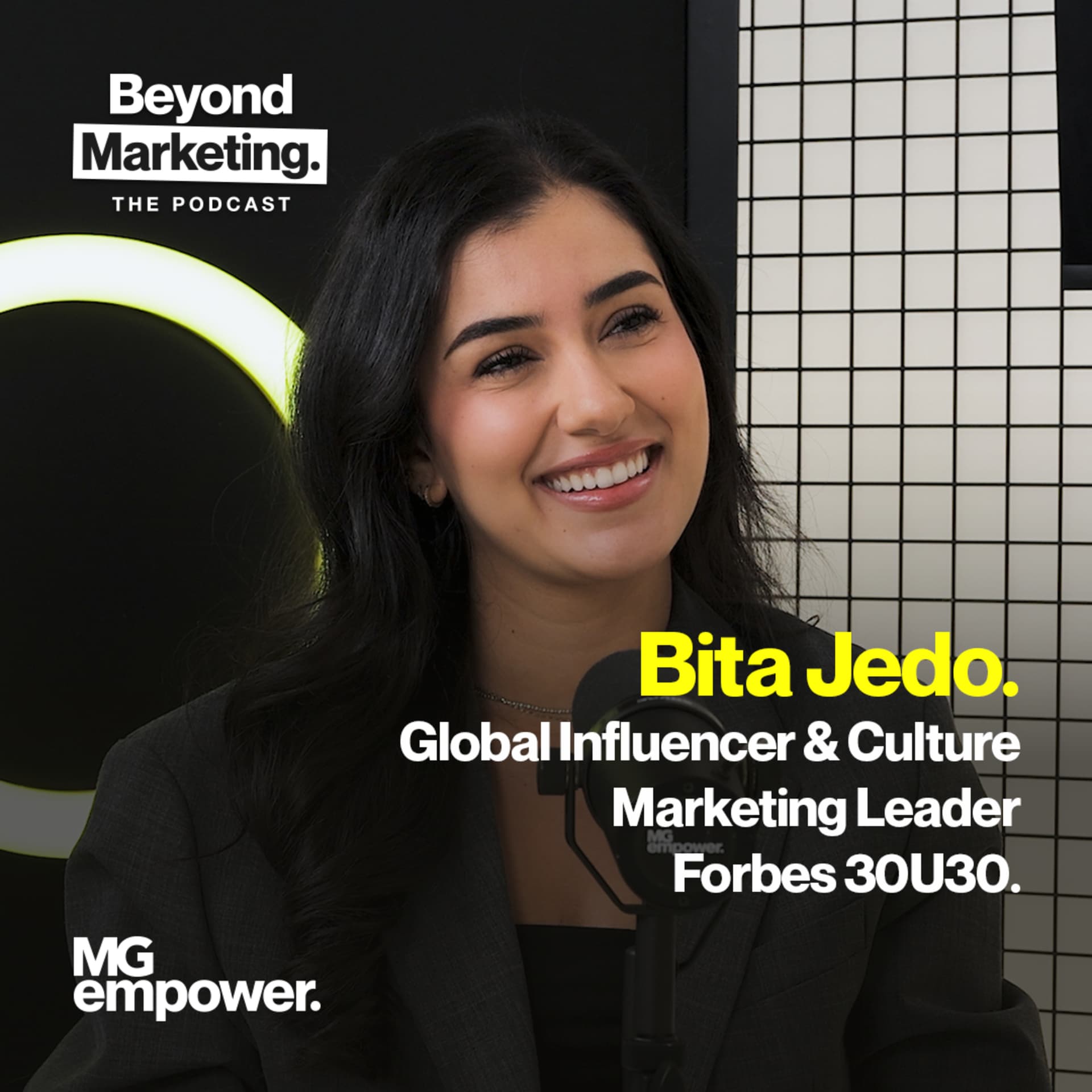
S5 Ep 6 | No Plan B: How Bita Jedo Built Her Way to Forbes 30 Under 30
Overview In this episode of *Beyond Marketing*, host Maira Genovese interviews Bita Jedo, a remarkable individual whose journey from humble beginnings to being featured in Forbes 30 Under 30 is both inspiring and enlightening. Bita discusses her upbringing, career challenges, and the importance of personal branding. This episode emphasizes resilience, identity, and the power of perseverance.
Key Themes
- Bita's Background and Early Life
- Immigrant Experience: Bita shares her story of growing up as an immigrant in the UK, facing challenges related to privilege and access to education.
- Family moved from overseas; experienced instability in living conditions.
- Attended a poorly performing school; faced a lack of inspiration and educational resources.
- Turning Point: Bita’s decision to attend a sixth form college, where she was surrounded by diverse peers and motivated to pursue her education seriously.
- Shift from a disengaged student to someone who actively sought academic success.
- Academic Journey
- University Experience: Attended the University of Leeds, majoring in Digital Media.
- Developed an interest in digital marketing and creative industries.
- Notable influence from a supportive college teacher and diverse student body.
- Work Experience: Balancing part-time jobs in hospitality to fund her education and gain life experience.
- Worked various jobs, including in coffee shops and retail, which helped develop her interpersonal skills and work ethic.
- Career Development
- Entry into Marketing: Bita’s journey into the marketing field began with a grad job at Dentsu, where she started in PR but quickly transitioned to influencer marketing during the pandemic.
- Emphasized the importance of taking risks and pursuing passion projects, even within the constraints of existing roles.
- TikTok and Content Creation: Her passion for TikTok led her to create content, initially for fun, which later transitioned into a professional asset as she leveraged her experience at TikTok.
- Discussed the balance between a full-time job and content creation, prioritizing her career while also cultivating her personal brand.
- Recognition and Imposter Syndrome
- Forbes 30 Under 30 Recognition: Bita detailed her application journey for the Forbes 30 Under 30 list, including rejections and the preparation that led to her eventual success.
- Highlighted the significance of being recognized in such a competitive category and the mixed feelings of pride and imposter syndrome that often accompany such achievements.
- Overcoming Imposter Syndrome: Bita shared her strategies for dealing with feelings of inadequacy and how she channels these feelings into motivation.
- Emphasized that persistence and self-belief are crucial for overcoming doubts and achieving goals.
- The Future of Creators
- Industry Insights: Bita discussed the evolving landscape of influencer marketing and the challenges brands face in scaling their influencer teams effectively.
- Highlighted the importance of authenticity and diverse voices in the creator economy, advocating for brands to seek out genuine influencers rather than just those with large followings.
- Advice for Creators: Encouraged aspiring creators to explore various platforms and develop unique content that resonates with their identities and experiences, rather than focusing solely on metrics like views.
Key Takeaways
- Resilience: Bita’s story exemplifies how resilience and a determined mindset can lead to success, regardless of one's background.
- Personal Branding: Building a personal brand is essential in today’s job market; it can significantly enhance career opportunities and connections.
- Continuous Growth: Emphasizing the importance of learning from failures and the necessity of evolving with the industry landscape.
- Collective Influence: The future of marketing lies in the collaboration between creators and brands, focusing on authentic relationships rather than transactional interactions.
Conclusion This episode of *Beyond Marketing* highlights Bita Jedo as a testament to the power of determination, authenticity, and the importance of personal storytelling in marketing. Her journey serves as an inspiration for listeners navigating their paths in creative and marketing fields.
---
Acknowledgments
- Thanks to Bita Jedo for sharing her inspiring journey.
- Host Maira Genovese for facilitating a meaningful conversation.
- Listeners are encouraged to follow Bita on TikTok (@BITA) and engage with her content.
---
Call to Action
- If you enjoyed this episode, please subscribe to *Beyond Marketing* on platforms like Amazon, YouTube, Spotify, and Apple.
- Stay tuned for more inspiring conversations that delve into the human stories behind marketing.
Written by AI. May contain mistakes. Listen to the episode to check what was said.
Transcript
Automatic transcript. May contain errors.0:28Welcome to Beyond Marketing, the podcast. She's not only been named one of AdAid's Emergent Voice for Cannes Lions, but also she made into Forbes Europe's 30 Under 30 list for media and marketing. So welcome to Beyond Marketing, the podcast, my lovely Vita. Thanks for having me. It's my first summer podcast. And I'm very honored. I'm so excited. Very excited. I didn't know it was your first podcast, and then I'm even more excited of having you here. They are debuting on our podcast. Thank you for having me. Yes. Bita, like we know each other for a few years, but we never met in person. I know.
1:07How crazy is that? I know. You're most stunning in person. Oh, thank you so much. And I love your story as we were talking earlier. So Beyond Marketing podcast is beyond marketing because I love people's stories. And then this is where, you know, I get inspired by people's stories because I believe that every success we achieve in life is based on our past stories and how we build our story to get to where we are. And you have one of the most, you know, incredible, inspiring story of growing up. And I would love you first to introduce yourself and then we can start talking about your story and then where you are and how have you been achieving so many keywords and, you know, like, yeah, very inspirational.
1:54So welcome. Thank you. Well, I'm Bita and I have worked in talent and PR for many years. I started my career in marketing agencies and then moved on to tech. So I worked at TikTok for a few years and then worked at Bumble for a few years. So still tech, but more on the consumer side. And yeah, I also love a side quest. So I am part of advisory boards and committees and I also make content. And I just love being very connected in this industry. I think this industry is very focused on relationship building, which is something that I love. So yeah. And can I ask you a question? How old are you? I'm 28.
2:39I just turned 28. This is my birthday. Guys, she's 28. And you're going to see how old was the achievement to date from Bita. And she's only 28. I want to see you when you're 32. Like if you have done that amount of things to date. I'm going to be retired. Yes. Like maybe you will be by 35. But Bita, tell me about stories. So I was reading about you. And then, of course, like your TikTok is a great channel where we can learn about not just about your career, but also about, you know, your personal life. And I am very like, I love the story about your library days and how you actually had to get to where you are today.
3:23You have to fight for it. You have to have your resilience, but also most and foremost has a vision of where you want it to be. So let's go back and talk a little bit more about your upbringing because I think this can be like such a powerful statement for everyone that's hearing us today as an inspiration to see like no matter where we came from we can that's not going to define where we're going and I think you're a great example of that absolutely thank you well um I me and my family came to the UK as immigrants so it was my parents my sister and we kind of bounced around different places in London and Salford and Salford's where I grew up in Manchester so I grew up in a council estate I went to not a very good school um it was a school where students would throw chairs at the teachers it was just not a not a great place to be so I never really grew up being well educated or um really inspired by by anything and because I wanted to get out of the town that I was in I went to a sixth form that was quite far away and only 10 or a dozen people from each school in the northwest went to that college and so it was such an interesting place to be because I was surrounded by so many different types of people and that was the first time where I ever put effort into my education and I actually started to think about what I want for my future and I just was introduced to a world that was so different to what I'd grown up in and that those were two very pivotal years for me and then I went off to Leeds for university um I went to University of Leeds and I did digital media there and that's in that university course is where I was introduced to digital marketing and agencies and the different jobs that you can have but throughout my kind of childhood and growing up the the first point where I started to think a bit differently and and think about what I want out of my life was at sixth form and you mentioned the library that's where I would go to library for hours every single day because I knew I needed good grades to get into a Russell group and I never really got in like A's and B's before and that's where I studied and studied for two years and I did media studies at uni and that's where I had a fantastic college teacher called Bev and I made most of my friends in that that class and that's where I learned about this industry and the different roles that you can have and we did a lot of work about films and entertainment and we had someone from uni of Leeds come to that college and speak about the course and so I just kind of blind faith went and decided I wanted to go to that uni and do that course with them and then at that uni is where they brought in a panel of people from marketing agencies and leads and I thought oh that's interesting I'll go and do work experience and so for me to even get to that uni actually I needed a lot of like bursary support from the university and student loans company and so that was actually a great benefit for me because it got me to a different city and it got me like away from my hometown and I got exposed to again a lot of different people from all over the UK and all over the world like they would come to at university and so again that was a really important experience for me to understand people's different like viewpoints and life experiences and understand my own I guess because you're you can finally understand where you come from and how that's different from everyone else um so that's how that's kind of how I got into this industry is from my university um and even at that point I didn't really know what I wanted to do but marketing sounded interesting and I thought why not like my uni is clearly pushing it and so I did work experience in Leeds for free for a few years at different agencies and I thought this is pretty good marketing just seemed fun and interesting kind of creative and so I went into doing that but my path has always been I don't like where I am I'm gonna change it as opposed to kind of sitting and complaining that oh my life is so hard like why don't I get the fun gadgets and why don't I have a cool laptop and why don't I have a good phone like it I spend a lot of time working part-time coffee shops and retail to just fund the next step be able to like buy nice clothes that I can wear a sixth form and be able to stay in a nice accommodation at uni and be surrounded by people that will way more privileged than me and so I think that's something I really want to get across is obviously there are going to be people that have a lot more privilege than you that's life but I've always believed in that you can change your situation slowly if you put in the work and if you just make like sit in that discomfort for a bit like it obviously wasn't fun working when I was at sixth form on the weekend and it wasn't fun like working for free at uni but but you knew where you're going yeah and I knew that I had to work harder than some other people around me um and I knew that I was already lucky in the sense that I got a lot of money from student loans and I got a lot of money from my university because I was so poor um and so I actually had more money than a lot of people around me because I was that poor so I used a lot of that to to fund as you said your So you never let your background dictate where you're going.
9:18So you never, as you said, so you never sit down and say, oh, my God, I don't have this. I don't have that. So that means I'm not going to be able to get there. So that's never your background, where you came from, was not you never ever, you know, let that come your way of the vision of the future that you wanted to have in your life. Now, I did it when I was a child, like when I was in high school and everything. like I definitely did back then but I didn't know any better like I wasn't surrounded by anyone that was that different to me like we all kind of came from the same area and so I just was being a kid and not really putting any effort in and I just didn't have very good time to be honest and then when I decided I wanted to get away from my town and go to a different college or sixth form that's when I realized oh people want to be this when they're older and people are trying to go to this university to study this and I it was just so it was actually kind of mind-blowing um but it was also really inspiring and I just I really had the best two years ever because I made all these friends that all had different life experiences and all came from different backgrounds and I used that to just kind of give me the fuel I needed um to go to a good university and get a good job you never let to like your like you say like you're working in pubs and then you know you have to work to you know to make the living when you're at uni is that never led you to to feel different or say oh like embarrassing with your friends because you have to do that no but I honestly I loved doing that kind of work so I've been working since I was 15 um the only embarrassing job I would say that I had was my first job which was at a fun fair in the Trafford Centre if anyone's from Manchester and that was horrible but that one was just like you needed something on your CV it's cash in hand it's whatever and then I worked at a coffee shop where it's a Costa in the Trafford Centre again for two years the whole way through sixth form and I had a really like I had a blast and it was really well paying for a 16 year old um so I was learning I can still know how to make latte art like I'm very good like on a coffee machine um so I had a ball and then at uni I would work free for free during term time and then summers and Christmases I would work at Pandora or like other jewelry stores or like retail even JD and Walkden which was a that one I didn't enjoy so much but I it got me in like with I'm in front of different people and I just love being surrounded by different world views and like some people I met weren't great and some people I met were really fun and some people I'm still friends with now I'm actually one of my best friends I met during one of my summer jobs at uni so I had a blast like I never really felt embarrassed I asked about embarrassed because I didn't like my story when I moved to London 20 years ago I didn't speak English so I had to work in pubs I had to work in shops I had to work in clubs good experience it's a very good experience sometimes people ask me like why are telling people that when you moved to London 20 years ago, you're working in pubs, you're not feeling embarrassed.
12:32Like, no, because I had a blast, like the same. It's just like, I know how to serve pints, I know how to do a coffee, I know how to serve a pint, I know how to do drinks. And to be honest, when I look back at the time, I feel so grateful because I've met wonderful people that helped me to navigate so many challenges of being an immigrant and moving from Brazil to UK. So it's lovely to hear that you had that experience and never let that experience to make you feel below or undervalued because I had kind of like the same. And I just like, guys, this is like for our story. I wouldn't be here if it was not for the working pub or in the clubs and etc.
13:15So I think that is the beauty of life, of not being, you know, not embarrassing, maybe is not the word, but not be ashamed. of where you come from and I think you're a great testimony of like the background is doesn't matter yeah don't you think as well that those jobs make you better at what you do now because you can speak to so many different types of people and like it's that rapport that you build and that relationship building and just people skills like people like it's so undervalued in corpora um but having charisma and have being a fun like bubbly person and like being fun to work with that all I learned all of that from hospitality and like how to balance off a team and teamwork and how to just when when times are tough or like when when the shop gets busy or when things are stressful how are you gonna work on like I learned a lot through those jobs and I had a great time No, no, 100%.
14:18And I think for leadership as well, it helps me a lot because, you know, like you're 28, I'm 45. When I was 25, 24 back in Brazil, the ways of working was very different in order for you to, you know, to get a promotion or to get a pay rise or, you know, to actually you have to work relentlessly hours. and then is going to have to wait two or three years in order to get a pay rise or a promotion. It was different times, my generation of 20s. And this new generation is very different. So they want everything really quickly. And after six months, this is another way. And not saying that is not deserved, but for leadership, sometimes when you go through a small little challenge in a corporation and a business, that small challenge, it's a big challenge.
15:12for them and because I've been through so much I can use that as a leadership skill to say this is not a big problem this is something that is easy fixable because we've been through so much you know we have to learn how to survive in so many different situations that I feel like those experiences helped me a lot for leadership too. Absolutely and actually when you were talking just then it reminded me of because I we were saying how great working hospitality and everything is I continued to do that until a couple years ago so I was doing it whilst I was working at Dentsu and other agencies and even TikTok I was working at um Sexy Fish the restaurant and I remember every single one of those jobs they hated that I worked part-time as well and they were like why are you doing this I'm like well first you don't pay me enough and also it's fun like it's so nice to get away from this like office fairly bland like environment to then go to something fun and like enjoy being around people and they could never understand and I I didn't like those kinds of leaders because they always thought in a box and they didn't think about the different life experiences that you can get and how it helps with like tackling challenges and like difficult people and so I kept doing that for a really long time um but that's that's a really good point that you made and like and then when we go like as you said like marketing for you was like something that's oh this is fun this is creative and then you start pursuing that and then of course the marketing led you to be more on the influencer side of marketing so your first job was at Dentsu which was related to influencer no it was PR only okay so that was my first grad job and I did that for a year and a half and it was a really good grad job to have because Dentsu is such a big there's a huge agency and so I was exposed to a lot of different teams and how they work and just how an agency and how marketing in general works and I had a great manager it was just us too so it was a really good first job but I wasn't that passionate about PR and it wasn't very well paying so I left that agency and I went to a different agency in Leeds doing PR again because I just thought let me go somewhere else and maybe I'll like it then and I still didn't enjoy PR it was kind of the writing of it all and um the journal journalist yes it's just layers of it it just wasn't for me um I'm not a big like writer or anything so I when I was at that agency COVID happened and then when I came they followed me and I came back from furlough and we had one influencer client it was something brand new that we we didn't have a team we didn't have a single person really doing it and I said can I take over this account I'm really interested in creators but I hadn't ever worked professionally in it before so that was also a really good way to get my foot in the door because it was kind of a risk-free way of doing it they're an existing client we did loads of other services for them so if I messed up on something small it wasn't going to matter and I really liked it um so then I said can I make this a thing can I bring in more of our existing clients to do influencer I feel like when you work in influencer half of it is as long as you use your phone and you're really immersed in the influencer world you kind of know how to do kind of already and then the rest of it's like the desk side so I just learned on the job um I had a great support system in a lot of the PR director so they let me run with it and that's how I realized that this is a mystery I want to be in that you will be interesting yeah kind of follow through and that is when you start thinking that because like then you went to TikTok and then when you went to TikTok is when you start creating your own TikTok because that's the this is another amazing transition of your career right as you're like going with those experiences of PR and then moving to influencer and then you moved to London for TikTok or you're already in London I was already in London so that's I stayed at that agency a long time because they let me switch to influencer and they let me move to London so it was great for me to just to just keep yeah yeah um but I for me I was applying to work at TikTok back when I lived in Leeds like I applied so many times for so many different jobs because I was obsessed with the app like to this day it's my favorite app I don't think any other app that gets invented in the history of my lifetime will ever be beaten by TikTok I think it's so incredible and I was just a big fan and I knew that if I got the job I would just do such great work because I know the app inside out and so I just kept applying and I kept getting rejected and I kept applying I did so many interviews and I got rejected and I just kept going because I was i will not stop until i work there be that i'm loving it because i can see that you're very driven and determined right so when you wanted something you just go for it no one stops you and then even like you're saying like you apply many times and you're reapplying reapplying how many times you apply they got rejected until you get a it was years of applying it was my journey with tiktok creations kind of linked to that because i started um making videos actually the day of the pandemic it wasn't when I started TikTok it was way before um in 2020 but it was purely for my own enjoyment and it was just that because I used to dance at the time so it was just dance videos which you will never see me doing can we put some dancing videos of you on our teaser on a bite it's not professional it's okay but we need to show the early bikinis guys make sure we find a video from bitter dancing please um but yeah i i was just doing that because i was obsessed with the dances and that's what was so big on tiktok at the time and i built up of accidental following of 35k just from the dance like i never spoke in a video i never showed my life dancing you're dancing we need to get this i turned out like 20 a week like i would just because i i was jobless like i was furloughed i was getting paid but i wasn't doing anything so there's nothing else to do but dance um I'm dying so I did that but then um when they brought me back after furlough I stopped because I just didn't have time and I left the account like that for a couple years and then when I moved to TikTok I started working there I worked a lot with creators and I had access to the back end and I'm like these kids are making so much money like I've left so much money on the table with my account and it was just like a really stupid thing for me to do so I started back up again I deleted most of my dance videos and I was like okay I need to be professional um and I'll start showing my life as a young working woman in tech so that was my whole thing I was like the tech girly and I just showed my day-to-day life I go workout classes and in the office and that's how I built that and that's when I started monetizing the account and started opening up a bit more but I already had so many years experience being a creator way back when I was when you're just having fun dancing yeah I'm gonna regret talking about the dancing we're gonna find a video of that but then and then like how do you like then it's like because it's incredible because then as you're building your account on TikTok as a creator you're actually you know growing with seeing your career paths in big corporations so how do you manage to do because we work together and you are exceptional like you're outstanding like it's just like yeah so there's a lot of compliments to give to you on the you know on the work side but also you're an amazing on creating content on tiktok as well and we can see it's something that you do it very naturally naturally so how do you manage to to do both um it's had a lot of challenge which i'll get into but i think um i've always prioritized my career and i will continue to do that i've had friends ask you know why don't um you just quit and and do content content it'd like life would be so much easier and it would be it would be easier I'd have more time I would eventually start to make more money than I do in my career but I've never seen that as something that I want for myself maybe in the future but I that's how I've always divided it and so I have my full-time job I do that nine to five and that's where my most of my energy goes in the week and And then on the weekend, if I want to, I'll film like one or two hours, like a sit down speaking.
24:27But a lot of my content and you'll see it when you scroll is a lot of vlogs because they're the easiest to do because it's just me just living my life. And then I'm just happened to be filming it. And I've been doing it for so many years now that editing and all of that just kind of comes quite easily and doesn't take up too much time. And so that's how I prioritize where my time goes. And then in periods where I might be more quiet at work or I might be in the process of like starting my new job soon, but I'm kind of in my fun employed era, that's when I'll put more effort into TikTok. But it's always been that my career comes first and that's where my energy goes.
25:10And I've always felt that being a creator has helped my career so much because I can empathize with them and I see their viewpoint as well as seeing the viewpoint from a brand perspective or from the platform perspective and so it's easier also for me to talk to creators because I have a lot of creative friends from being creative myself and so I kind of take their pain points and challenges and gripes that they have and I try and improve that at the brand and and TikTok is your channel so you don't use instagram youtube is napshot so your creator is within tiktok is your passion yeah i think it's also easier to control in that sense like again with instagram if i started combining my instagram has always been quite private and that's where i show more kind of like the intimate parts of my life and i feel like if i made that public and i brought everything over to like the content over to Instagram it would just feel like that public persona is now me whereas I kind of like having it separate because again it allows me to draw a line with my career um interesting and I've had a lot of difficulty being both like companies don't like it that's will be my next question that's my next question.
26:37And, but they don't like because they feel like it's a distraction or because it's exposure. As a company, if I have someone that is working within my company with creators, but it's creating content, so it's a compliment that is, that's good because you can use from your experience as exactly as you said to support the creators on navigating, creating content and getting better content for the company you're working and that's what i miss about agencies because they have a lot more trust in their employees um because i've worked in all the whole entire creative ecosystem as well as being a creator so the whole like 360 of it all and working agencies they you're closer they have more trust in you and they support you in those kinds of things it's just like it's it's personal brand nowadays is inevitable yeah so and then i think the way like again i'm going to talk about the position of energy power i push the team to create content to post on linkedin like be your own voice and just like showcase the amazing work you're doing even if you don't attack us you know it's just like because sometimes it's it's personal brand is so important because you never know if you're going to stay in that job forever.
27:58And at the end of the day, it's always going to be about your work, about your skills, about what you are doing that is driving the company that you're working for. And I think it's a personal brand. Having brand ambassadors for your company is great. And then if they don't want to tag, but they want to talk about the work they've been doing for the company, it's even it's even greater i i feel like it's so important for companies to embrace people to create their own content because at the end of the day it's about the person i love that and i again i i tell everyone i'm like this is your life it's your life it's about the person the company like it i'm i work at a company because i want to do a good job i don't work there because i want to become the CEO of it and I want to take it over and I want to become the company like I think it's important to have your personal brand and have a focus on that obviously I'll continue to like focus on my career and do a good job there but having all these little side quests they all make me better at my job and they all benefit the company and the TikTok thing I kind of get it especially back then like a few years ago and it was still kind of like scary waters and people weren't sure about it i think now because it's more established there's less fear but even um i've worked at companies where they don't even want you to speak publicly on panels and they don't want you to talk about the company on linkedin and it's just insane to me because you need advocates you know you need advocates it's like it's it's it's for me it's just like i see that as a personal brand is a such you know a crucial thing for anyone you can be an intern you can be a coordinator, you can be a marketing.
29:46It's just like just create your own personal brand, whether it's about your job, about your work, about yourself. Because at the end of the day, as we're speaking here, why I was so interested to talk to you, of course, is because your career is phenomenal, interesting, but I'm loving your personal story. At the end of the day, experiencing personal stories ought to drive interest even for companies, right? At the end of the day, like a personal brand can drive business for for the business because like if you're a creator and you're creating content you're coming from a place that you understand what you're talking about because you're doing it yourself you can drive business to the business because you're coming to a positioning of having these skills to work within that does that make sense absolutely I think people want to work with um people that they think they can trust and that they think that they can respect like that's really important so personal brand I think is something that everyone should focus on even if it's just 10 % of your energy posting on LinkedIn once a month or like once a quarter what do you think about LinkedIn I be honest I love I love it for like the profile and the you know like really making that your homepage because like I don't have a website I don't have a portfolio online I just don't think it's worth it for me but I love having that space where I compare everything that I've done and every little like side quests I do and just like really make that and like update that but it's the posting of the the content like posting on the post that really I struggle with because I don't like speaking corporate.
31:31When we've done something cool that's like really worth it, I'll post, but I don't post about everything because I just think, does anyone care? Like they, I think in the moments where it's like those big campaigns and it's like months of work, then that's fun. But even then I kind of post it and then close the app because I just don't want to deal with it for another few hours. It's just not some, like I don't spend my free time. It's not something that you dedicated into their channel. No, it's very purely professional. And like, because of your career experience of working so many different, you know, big agencies and big corporations, but also back in the days, as you said, that you're working in cafe.
32:09By the way, I started MG Empower at Cafe Costa. So we have another thing in Como because MG, I used to go like I wanted to create an agency. Then my son was just like three months old. I had a, you know, Cafe Costa like two blocks when I used to leave and I need some peace of mind. I used to go with him there sleeping. And then Empty Power, we started at Cafe Costa. I love that. Yeah, so we didn't work there too. So we have another point of engagement. And then let's talk about your recognition. So you're third under 30 last year? This year. This year. So tell me about it because this is huge, right?
32:49So how did you find out and how did you receive that news? Because it's huge. Yeah, it's, I mean, this year as a whole has been wild. So I originally, you have to apply for everything. So, excuse me, with Forbes, I applied for the 2024 one. And I found out quite last minute that the applications were open. So I did a very rushed application. And I was shortlisted, but I didn't get it. And they send you an email to me, you know. So I was like, oh, okay, cool. well, at least I know that I'm not insane and that I could potentially get this at some point and that my career is worth an award like that.
33:32And so that was actually really good for me to see that. And then learning the application process and like the amount of questions you get asked and everything you need to like prepare. I went into the, for the one this year, way more prepared and organized with it. And so it's just a big application form. I knew a few people that were on the list and so they kind of helped me out by nominating me and it's a process like you have to I spent weeks even just like crafting the paragraph that's like why do you deserve to be on the list and just even talking about yourself in that way is really uncomfortable um but I had to put myself in the shoes of the editor I like how why would I put this person here and so I spent a lot of time just crafting that and even the year building up to it that's when I started to really take the side quest more seriously and and how can I just build myself up beyond just my job to be someone that can be worthy of that kind of recognition so that also that was a big motivation for me to even do a lot of like the advisory roles and all that kind of stuff was to get on a list like that so I mean it's been a huge goal of mine for years now and it's a process like you get a second form sent to you which is like this private form that has totally different questions and they gave me like 24 hours to fill out the form it was questions it was it was more um like I can't think of the word but it was questions like what's the worst piece of advice you've ever heard and like who's who do you look up to them it was questions I hadn't prepared for and so I just rushed it and like filled it out and then I didn't hear anything for months and so you just kind of have to get on with your life just has to wait and see it yeah and then no one told me that I was gonna be on the list until it went live so so you saw that online so you haven't received the email first I got an email on as soon as it went live to say um welcome to Forbes the class of Forbes 30 to 30 and it was like I just woke up it was 7 30 I like shot out of bed I'm like no way and then I go online I look at the media marketing list and I'm there and it was just so surreal and it yeah it was crazy I didn't really tell anyone at work and then people found out by themselves and then I had like I put out my story all my friends like so that was like a really special day but I it was a Tuesday I had to clock in like I was I enjoyed it for an hour and then I had to just get on with my job as if nothing has happened It was the most unglamorous day.
36:12Like the day was fun, but it was just another day at work for me. And then I had the event in Paris. I think it was like a month later where it was all of the winners, like the people that were on the list. So there's about 100 people and we all travel to Paris from all over Europe. That's incredible. And it was the most incredible event I've ever been to. I mean, you can just imagine like the type of people in that room. and there's a lot of imposter syndrome. I mean, being on a list, but then also being at the event because it's mostly founders. And so I kind of have this bad habit of putting myself down and being like, oh no, I just work in marketing.
36:51But it was a really fun event and I've never spoken to such smart people. That's incredible. It was like a very inspiring moment. And the editor, Alex, is just like the most amazing person. I saw her in New York recently and she's just the best. And they really believe in what they do and they just love meeting young interesting people not just founders people that are actually doing cool things in every industry have you ever ever had imposter syndrome or you never had every day i'm having it right now i'm having it right now because it it doesn't it doesn't look like no i i have imposter syndrome all the time because even in the situation i'm like why does want to talk to me like why why am I here really like what have I done um and for the Forbes list it's just like why like I get it it's it's a strange one because it's like I understand why I made it on that list and I understand why Alex like chose me to be on it but I still can't really understand why I but do you think your impotence in the coming comes from your past probably yeah I I think it's an it's a healthy normal thing to have because it it means that you're like everything that I get like every cool room that I get to walk into and every award or whatever I am so grateful and so it never it's never lost on me and I think that that imposter syndrome helps in that way like I don't I don't feel it and get mad that I'm feeling imposter syndrome like it's as long as I'm projecting that I'm confident and that I'm as long as I'm being a fun person to be around and that people like being in that room with me and that people can relate to me and I think it's just about being a fun good person and do you overcome your imposter syndrome just by doing it yeah you just have to do it I there's a lot of people that they have imposter syndrome the day they'll do it but I can see that you have it but you do it you have to do it I think delusion is really important to have I think if you are very like grounded in reality person you'll you'll look a lot of your goals and dreams and think no that that's not real like I won't get that and I think having a level of delusion having a level of anxiety as well like having a little bit just helps you be very prepared and organized and like planning a few steps ahead and you want to kind of look at your life and like the immediate future kind of like a chessboard and like okay I want to do this because I want to do that and then I want to do that because I want to eventually get recognized for that or like I don't know if people want to move to America like I need to get x amount of press articles so that I can get the screen card for that like I think you have to look forward a few steps and so things like imposter syndrome I can feel it but I can look back and understand that I still need to go and do that thing because it's going to help me do that.
39:44To do that and to overcome that. I think if you look at things in a very short-sighted way, it's only going to make those feelings worse. And that's when imposter syndrome... But it's a mental intelligence that you have because not everyone that has that imposter syndrome and are able to actually push forward and then do it because it takes a lot of mental intelligence and mental, you know, capacity to, okay, I'm feeling this, but I'm going to do it. And even if I do it, and if it's not going to be as perfect as I would like, at least I will have tried. I'm going to learn. So next time I will be prepared.
40:25And it feels like you're the kind of person, which is amazing. Yeah. Cause no one knows what they're doing no one knows you have just to do it the more senior that i got like i think when i was younger i never thought i never had this mindset and then i started to be in rooms with elt and met other ceos of companies and up like even now like i'm part of all these things that i'm meeting very like accomplished people no one knows what they're doing no one has it figured out and if it fails like actually who cares who cares and then you can just just like i think like the failing is the most important thing to happen in your life, in your career, because it's by failing that you learn and then next time you do better.
41:08So I think people tend to think that failures are not a good thing. But actually, from my experience, every time there was a failure or there was a mistake, it's what helped me to be where I am today. Without that, I would probably won't be here talking to you right now there's this quote that i love and it um is don't call me lucky i've failed more times than you've tried this is the 100 and you that's where you learn everything it's like you know you have to i've gotten so many no's i've gotten so many rejections i've been ignored so many times for so many different things and you just can't let that be the reason that you just give up on everything yeah rejection is another thing this is so important to be rejected because like rejection for me it's not an answer of if I'm gonna be able to do or not rejection actually keep me moving I love no's because I don't accept no's so that's saying no okay we'll do again and then go and go and go so no for me is never like a final answer absolutely yeah future of creators where do you see it I it's a really tough question because I think we're at a point where it's no longer this like incredible honeymoon period of like brands shelling out millions and creators just like making their content and everyone's just like riding this wave.
42:36I think we've gotten to a point where finally execs understand influencer marketing has taken years. But they finally get it. And they want to scale, but they don't like influencer teams. influence teams are not big enough like you can hire all the agencies in the world but you need someone internally to like manage all this and check content and so and part of why we have ali let's make a thought for ali on this podcast ali we love you we love you ali um and i'm actually part of a global influencer council where we just had this discussion and it's it's a bunch of brand marketers that work and influence and we're all talking about our challenges because the industry as a whole like is a lot more established we have all these creators and all these different niches and more creators like making accounts every day and more brands investing and this is all great but it's building up to a point where what where are we going to go with this and so like i think there's a few things that need to be solved before we can start thinking about these like bright new ideas first is scale because you want to invest x amount more which is fantastic but you have to have the team and you have to have these cues and yeah it's just a lot of elements that needs to be taken in consideration and you need more like not everything can be checked through rounds of edits and that's another sticking point because you can have 200 influences great but are we really going to check every single piece of content yeah or can we get to a point where we can like with AI is there a solution there so I think with the future of creators I focus more on the creators as opposed to the brand marketer challenge and so I speak to a lot of creators and a lot of panels I do are for creators that's like where my passion is and so when I'm thinking about the future of creators I'm telling them to explore as many platforms as possible to see what's a good fit for them obviously everyone's on self-stack now and um just looking into how they can create that that content that speaks to them more and something that i did at um a company i work for was we were looking more at creators not necessarily based on size but we didn't want the biggest names because we have a separate like part and and objectives for that but we were looking at creators that are actual people of influence not necessarily just this is the number yeah and so they could they can have 5k followers but they're people that are editors or people that work in fashion or people that work in music that actually have an influence over that community and those people don't necessarily post that regularly they don't have the biggest followings they might not be the traditional influencer but that they're focused on and so like again you can't fix that with scale because there's only so many of them and so I think that's really important is like I'm telling creators to just lean into their like what makes them unique because that's actually what brands a lot of brands are starting to look for now and I think that's really important to like be different and be weird and and it's not about just churning out and like pumping out all this content and just like focus on views like focus on yourself and what do you want for yourself and then how's that's going to translate into content and the views and the things will will get that people will find you like you just have to to be yourself and i think it's like the creative economy not going anywhere i think it's just like it is going to is it's it's like it's it's predicted it to be a 253 you know billion it's just like it's a huge number sorry 54 billion markets in a lot of money basically a lot of a lot of billions uh so it's not going anywhere so i think it's more and more we'll see like brands understanding but this kill it's for me it's it's you got the right point so it's just like how to how to scale but how to use technology to support that scale because if ai is here i don't think ai will actually 100 replace the human work but ai will contribute and complement the human work and i think we need to understand like what from the technology can support agencies and brands to scale in a way that we're still going to have a minimum of control because you have to have the control of some of the content but it's going to be impossible to control a thousand pieces of content.
47:06Bita, I can stay here longer because I've been loving chatting with you. So thank you so much for the time for being here. And yes, what a pleasure to finally meet you in person after working so many years together. And hope everyone enjoyed this conversation with this amazing, you know, Bita inspiring story. And if you're not following her yet on TikTok, what's your account on TikTok? B-I-T-A. Yeah, so make sure you do because yes, he's an amazing, you know, creator, but also an amazing marketer. So thank you so much for being here. Thank you for having me. Yes, it's been a pleasure. Yes. And if you're not following us yet, please make sure you do on Amazon, YouTube, Spotify, and Apple.
47:51And I see you guys on our next episode. Thank you so much for being seen beyond marketing podcast. It's been an incredible journey so far. Our views is going so amazingly well at the moment because you're having such an amazing guest like Bita. So thank you so much for all the support. And we appreciate that so much. And see you guys on the next episode.
From the publisher
From rejection emails to standing on the Forbes 30 Under 30 stage, Bita Jedo’s journey is anything but typical. In this episode, she opens up with our host, Maira Genovese about growing up outside of privilege, breaking into the industry without connections, and the resilience it took to rise through the ranks of global agencies and tech platforms.
Now a creator in her own right, Bita shares what it means to build a career on your own terms, why imposter syndrome still shows up, and how personal brand can be a superpower, not a liability. This is an unfiltered conversation about grit, identity, and the power of not giving up.