
In short
Beyond Marketing - The Podcast: Episode Notes
Episode Title
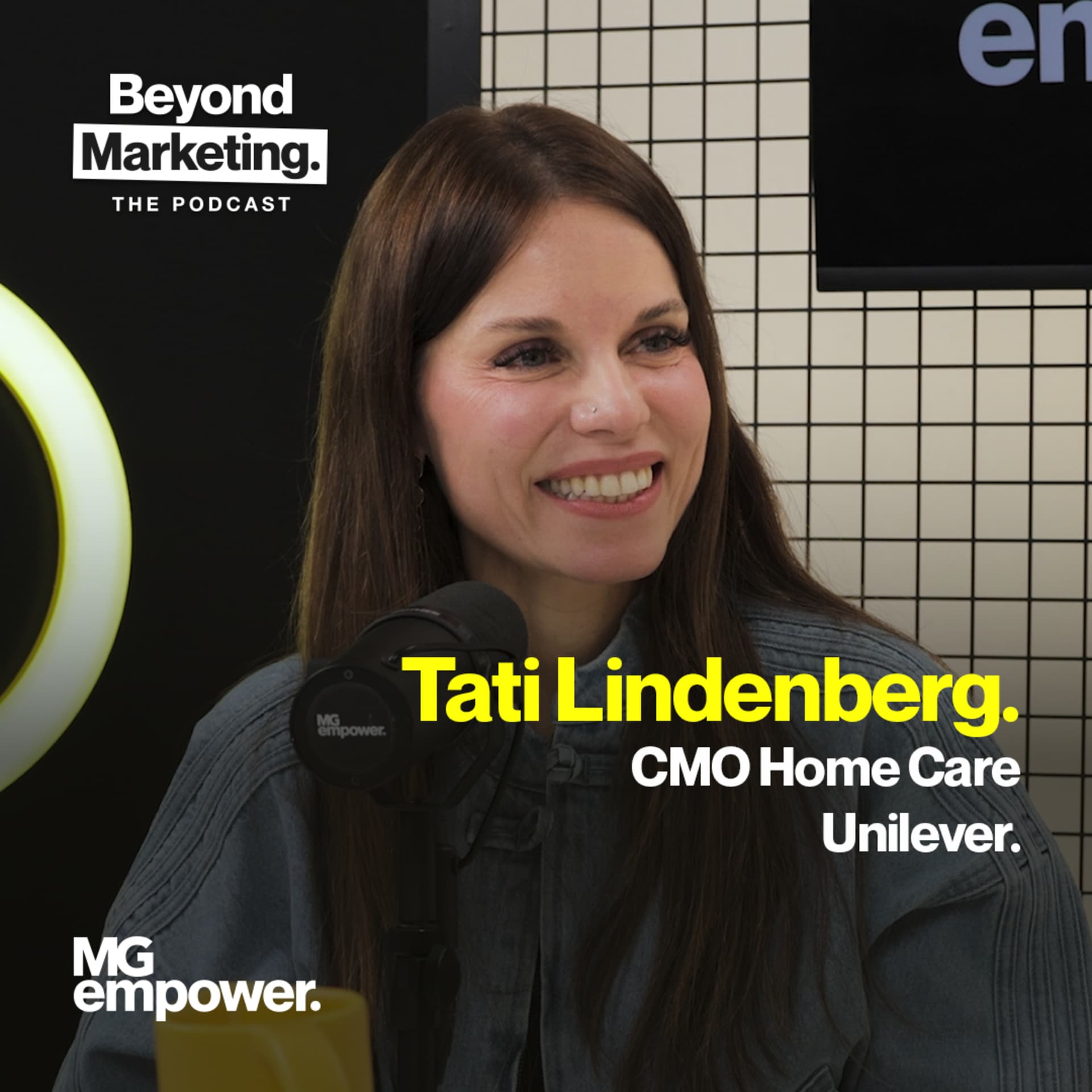
S5 Ep 7 | From Tocantins to Unilever CMO: Tati Lindenberg on How Dirt Is Good Is Driving Social Change
Host
- Maira Genovese - Founder and CEO of MG Empower
Guest
- Tati Lindenberg - Newly appointed CMO of Home Care at Unilever
Overview
In this episode, Tati Lindenberg shares her inspiring journey from a small town in Tocantins, Brazil, to her influential role at Unilever. The discussion delves into her transformative work on the brand campaign "Dirt Is Good," highlighting the interplay between marketing, culture, and social responsibility.
---
Key Themes and Discussions
- Introduction to Tati Lindenberg
- Tati has been with Unilever for 21 years.
- Emphasizes the importance of personal stories in marketing.
- Early Life and Inspirations
- Background: Tati's childhood in Gurupi, Tocantins, shaped her resilience and creativity.
- Family Influence: Tati grew up in a creative family which fostered her artistic perspective.
- Career Aspirations: Motivated to seek opportunities outside her hometown, she moved to São Paulo for university.
- Professional Journey
- Career Path:
- Started in consumer insights before specializing in laundry care.
- Joined Unilever with the ambition to work internationally.
- Leadership Style: Focuses on resilience, cultural intelligence, and understanding diverse perspectives.
- Resilience and Identity
- Coping with Difference: Tati discusses her experiences of feeling like an outsider both in Tocantins and São Paulo, which fueled her determination.
- Listening Skills: Emphasizes the importance of deep listening and patience in leadership.
- Cultural Intelligence and Global Marketing
- Cultural Nuances: Discusses adapting marketing strategies for different cultures, referencing specific examples from campaigns in Asia.
- Dirt Is Good Campaign: Launched in over 55 countries; emphasizes the importance of understanding local contexts.
- Dirt Is Good Campaign Highlights
- "Every Stain Should Be Part of the Game" Campaign:
- Tackles societal taboos, specifically around period stains in sports.
- Aimed at empowering girls and addressing fears around period leaks in sports.
- Social Listening: Utilizes data to shape campaigns that resonate on a personal and social level.
- The Impact of Motherhood
- Balancing Career and Family: Tati reflects on her transition to motherhood and how her upbringing influenced her belief in balancing work and family life.
- Support Systems: Highlighted the importance of workplace support and family during her motherhood journey.
- Future Aspirations and Legacy
- Next Steps: Tati expresses a desire to expand her impact across different brands within Unilever.
- Legacy Goal: Aims to showcase that brands can be socially responsible while achieving commercial success.
- Reflections on Society
- Observation on Modern Life: Discusses how technology has changed social interactions, particularly among children.
- Call for Action: Advocates for brands to address societal challenges and encourage more active, outdoor lifestyles for children.
---
Key Takeaways
- Marketing with Purpose: Tati emphasizes the need for brands to engage meaningfully with societal issues.
- Cultural Sensitivity: Understanding diverse cultures is crucial for successful marketing strategies.
- Empowerment through Storytelling: Personal experiences can be powerful tools for connecting with audiences.
- Advocacy for Active Lifestyles: Encourages a return to outdoor play and getting "dirty" as essential for childhood development.
---
Conclusion This episode of *Beyond Marketing* reveals how Tati Lindenberg embodies the principles of purpose-driven marketing through her work at Unilever. Her journey from a small town to a leading role in a global company showcases the power of resilience, cultural intelligence, and the importance of storytelling in shaping impactful marketing campaigns.
For more insights and updates, follow the podcast on [YouTube](#), [Spotify](#), [Apple Podcasts](#), and [Instagram](#).
Written by AI. May contain mistakes. Listen to the episode to check what was said.
Transcript
Automatic transcript. May contain errors.0:28Welcome to Beyond Marketing, the podcast. that's proving even detergent can become a catalyst for positive culture and social change. An adage leading women in advertising, Ken Lyons winner and proud Latina leader. Tati is redefining what purpose-led marketing looks like at scale, turning everyday products into movements that matters. Tati, welcome to Beyond Marketing, the podcast. Thank you. Thank you for having me. Thank you so much for being here. We've been trying for a long time, but as two busy ladies that is just doing so much, I'm very grateful that you're here today. Thank you. Tati, I'm just like, Beyond Marketing, the podcast is all about not just amazing, you know, marketing campaigns that our guests work behind, you know, the brand that they work with, but it's about as well the people behind the brands, the people stories.
1:25and I know you and I am like a huge fan and admire of your trajectory as a professional. You've been at Unilever for how long now? 21 years. 21 years. But what I wanted you to tell the audience, first and foremost, who is Tati Lineba and how your journey has started coming from Brazil and today is just like this massive power woman behind that is good as I said at the beginning of the introduction of the podcast winning awards you know creating campaigns that is just like completely out of the outside of the box but also everything that you do and everything that you touch there's a meaning and there's a purpose but tell us about your journey because I know to get to where you are, there was a long path.
2:18Yes, indeed. So I was born in Brazil, but I grew up in a very small town for Brazilians, Gurupi, Tocantins, so kind of middle of nowhere. So it was a place in which opportunities felt very limited. And for that very reason, it was a challenging place. And I have to always think about different ways in which I could do things differently and I could thrive despite the odds. So that gave me a lot of resilience, a lot of, I have to say, also resources to navigate complexity. At the same time, I was lucky enough to be born in a family of a lot of like artists. So my mom was a dancer, my brother is a music therapist, my closest cousin is a writer.
3:11So because of that, I was always surrounded by art. And I think the combination of trying to be resourceful and at the same time be in a very creative place gave me drive, drive and resilience to keep pushing and to dream that I could have a different life. Definitely, if I would have stayed in Gurupi, I would probably now be married to a farmer and I would have like a beautiful life, but very different to what I dreamed. So I remember when I was a teenager, I took the decision that I would move to Sao Paulo. My family is from Sao Paulo. So I moved them to Sao Paulo to go to university. And from that moment, I also decided that I would love to live outside of Brazil.
4:02So I studied marketing and communication at ESPME. It's an amazing university, by the way. Yes, it is. It is very close to my heart still. And after university, I worked in other companies like Ponga Sucar and Whirlpool. And finally, when I joined Unilever, I actually joined because I wanted to live outside of Brazil. And I realized I need to work in a multinational company to do so. In the interview, I've made that super clear. And I joined Unilever in 2004 and 2006, I was living in the Netherlands. So after two years. But when you started Unilever, you went straight to Dirty's Good? Was your first product?
4:46No. No, I was working on consumer insights. So it was not brand specific. So for between 2004 and 2009, I was working throughout only on consumer insights, but in home care. So from the very beginning, I've been working laundry. Laundry. I did have five years in personal care and beauty. but the majority of my career has been in laundry. You talk about resilience because there's a lot of people that they, you know, they asked me because I'm a very resilient person as well. And then people sometimes ask, well, how to be resilient? How to be resilient? So going back when you think about your life in Tocantins and then you said that, you know, you have the foundation where your home, your mom was at the inside.
5:35They didn't know about that. That's beautiful. and how did you build up that resilience and actually made that your kind of power to have the courage to say, I will go to Sao Paulo and figure that out? I think it's about trusting my perspective and my uniqueness. So when I was, funny enough, I was born in Sao Paulo and moved to Tocantins when I was three years. So throughout my childhood and the teenager years, I found it very difficult to fit in because I was just different from people who were born in Tocantins. I had a different perspective, different family background. And I realized quite early that what I had to do was to not be afraid of standing out.
6:33and that by standing out and being unique, I could eventually fit in. When I moved back to Sao Paulo, I thought, OK, now I'll find my group. But it was the opposite because then people in Sao Paulo looked at me and said, who is this girl from Tocan Cheese? So I always felt that I was a bit of an outsider. And that gave me the ability to say, instead of transforming that difference in something that I needed to hide, I basically realized that that could be my strength. And that is what was giving me the resilience to say, well, maybe I'm not the same, but the difference is what's going to make me unique.
7:14I think that's, in a way, the way that I built resilience. So you never kind of like care much about what other people are thinking about you. So it just was more... No, I did care, but I... But you didn't let this just stop you. That stopped me. Exactly. I did care. I would lie if I say I never really care. But at the same time, every time that I would feel like, well, why am I not fitting in? What am I missing? And when I realized that I have some uniqueness in terms of point of view or perspective, I decided that that would not stop me. And that over and over and over started building up this sort of like resilience.
7:58Is there something from your childhood, especially from Tonkin Chings, that you use nowadays? Oh, interesting question. I think this ability of going through despite the odds. Because when you grow up in a place that, as I've mentioned, the opportunities are limited, you needed to do the best with whatever is given to you. I always say that instead of complaining about life, I look at the deck of cards that life gives, and I was like, how can I play the best game with that? And that is something that I still do nowadays, even here in London and in Dirt is Good. Amazing. I love that. And people don't have the understanding, because we're both from South America and Brazil, but to be in the position that you are today it's quite phenomenal especially now that you're saying that you came from token teams moved to sao paulo and all in all your story even make it you even more someone like that we can admire it and then be inspired by because people don't understand what is to be an immigrant right what is to be an immigrant that you have your dreams and you your ambitions and you wanted to break through that but leave your country and trying to be someone in a different in a different place with a different language and different culture it it is not for everyone and then you have your staff from talking to some power to continue to continue to some power to some power to indonesia so how how was that transition of okay now i'm gonna break through outside my own country did you feel the same as you're feeling when you're starting your career, the difference, the challenges, but how do you overcome challenges when it's outside your uncomfortable zone?
9:58So let me start by saying I am very aware of the privileges I had as well, be it because of my skin color, the color of my eyes, my surname helped as well. So I'm very, very aware of that. But because I was always, for some reason, placed in places in which I don't feel exactly or the most comfortable, I started to realize that the only way out would be to listen deeply. So I think that gave me a lot of empathy as well. Not only the resilience to break through, but also empathy in terms of understanding how are people different or why is this culture different to mine? And when I moved first to the Netherlands, I remember that it was everything for me so different.
10:50Oh, it was Netherlands. For some reason, I understood Indonesia. No worries. But it was Netherlands, then India, then back to Sao Paulo, then London, a bit like all over the place. But throughout all of these different countries and different life opportunities, I realized that people are different and there is not a single truth in the world. But this obviously gave me this ability of like listen deeply and it shaped everything, shaped who I am, shaped my leadership style and shaped as well the way in which I lead or steer brands. because it's really about having the ability of understanding where I am, as I said, the privilege that I have, but at the same time looking at everything that is out there and respect those differences and trying to make the best out of it.
11:44Do you consider yourself a good listener? Oh, very good, yes. And how do you, because to be a good listener is not for everyone, right? So it's something that you have to practice then you have to have the consciousness that you have to let people speak without, you know, not interrupting, but with the ability of listening carefully before you're giving an opinion. Is there any secret to become like a good listener or you always being like this? No, just patience. No, but I remember that I had a line manager who is a mentor as well, Steve Miles, and he helped me even further in saying, always listen generously.
12:29It doesn't mean you're going to do something. Or you're going to agree. Yeah, it doesn't mean exactly that you're going to agree. It does not mean that you're going to do what people are asking you to do. But take the time to listen and take in. And what I realize, I'm not always patient, but what I realize over time is sometimes I listen to something, I get a bit like mad I was like I don't agree or I wouldn't do it like that and sometimes I need to take in as well so when I speak about be patient it's not only patient in the moment but also being patient with yourself in terms of sometimes people say things like at work that I'm like I don't know if I fully fully agree and I needed to be patient with myself sometimes it would take, I don't know, one or two days for me to completely take in and then do something about it or even choose to ignore.
13:28But I think it's really the ability of also being self-aware on when you are listening. Because sometimes you just get a bit or upset because there is something in there that potentially is the thing that you have to listen to. It's so true. It's so true. But as you say, it's the ability to listen generous. I love that. Because it's just have that patience and then have the self-awareness is, I think, something that I'm constantly trying to have more and more of the self-awareness. because sometimes you know, especially when you talk at work with your employees or with clients, you know the answer and you don't want to actually wait for the person to do the whole talking because you already know what the answer would be or the solution for that problem.
14:20But then you have to really have the self-awareness. Okay, I'm going to listen until the end. I know what the answer is going to be. I know what is the solution, but I need to give the chance to tell the people to say what they're thinking. Then Netherlands and then India, which is completely the opposite of Brazil, Netherlands. India is a beautiful country. I've been there once and I fall in love. What was your experience in India? Because that is a completely, it's like, it's a new world. I adored India. I lived in Mumbai. I love Mumbai. It's crazy. It's beautiful. But it's crazy beautiful. Yes.
15:07And I think what India has is this, actually, it attacks your senses. Because it is visually, like, striking. But at the same time, it's the smell, the visual. So the noises as well. I remember the noise. The noises. The noises. There was not a single moment that you would say, OK, now can you shut down? In a way, it's similar. OK, I'm going to say something that in a way it's similar to New York. It doesn't it it hits you. But I think in India, the power of these over sensorial experience is even higher. So I actually must say that I felt very tired in the first few months in India. and I couldn't understand why up until the point that I was like, okay, of course, there is a lot going on, a lot for you to take in and to absorb and to make up.
16:03But I really, really loved the work environment in India. Unilever in India is very strong. So it's called Industan Unilever. And whenever you are, even if you're in a restaurant and you're like, oh, I work at HOL as we call, and I remember people, oh my God. So it also helped a lot. But it's a country of contrasts like Brazil. So in that sense, I have to say that I felt more at home in India than I felt in the Netherlands. Interesting. And why? Because it's more closer to... I think Brazil in the sense of... Yeah, I think the contrast is closer to Brazil. And there is something very beautiful that if anyone would ever go to Gurupito, Kanchins, it's a very dry place.
16:53And it's a place that we don't have so many pavements or we didn't have back in the days that I lived there. So you actually see the dust, you know, coming from like the floor up. And that creates a beautiful landscape, which is basically dust. India has exactly the same. So I remember the first time that I arrived in India, I was like, oops, it's remarkably close to home. So I don't know, I just sensorially felt very close to home. And the way that society is built has the same sort of like challenges and contrasts as you see in Brazil. Of course, regardless of the differences in terms of religion and beliefs, but it's remarkably similar.
17:41It reminds Brazilians as well because they're very kind and they're very warm in India. Yes, they are. And they also have something that we call in Brazil, jeitinho brasileiro, which is this way that we always have... Only Brazilian knows. Yeah, true. But it's pretty much, for the ones who don't know, it's pretty much a way in which you use your creativity to manage situations. And there is a similar word in India called jugad, which is exactly the same. It's like jeitinho brasileiro. It's like jeitinho brasileiro, which is also how can you find a way to make things happen. So I felt home, basically.
18:23How long did you stay there? One year and a half. One year and a half. And then from Mumbai? I went back to Sao Paulo because there was an opportunity to work in Dirt is Good. It was my first time working in Dirt is Good. was your goal you was just like I wanted to get it to dirt is good or that was just happened no I wanted to and and that's why I wanted to stay in India for longer but when the opportunity of being dirt is good came I couldn't say no because I knew that was kind of like my karma and my something I have to do so I then agreed to move all the way back to Sao Paulo to work in Dirt is Good.
19:05I worked in DIG, as we call, like for nearly two and a half years. Then I had some other, I worked across other brands. And then finally I came back home, back to Dirt is Good in 2020. So I really felt that those initial two and a half years in Dirt is Good were fundamental to shape me as the marketer I am today. But somehow I felt I wanted to. And also Dirt is Good in Brazil is Omo, and it's an iconic brand. It's an iconic brand. So for me, it was like working one of the most iconic brands in the world. So I couldn't say no. And that's why, despite the fact that I was not planning to go back to Brazil, once I left to the Netherlands, I was sure that I would not come back.
19:51But the opportunity was like too good for me to decline. And then you stayed in Sao Paulo for more like two years? Actually, between Dirt is Good, then I also led Value Brands for Latin America. I stayed for four years, approximately. This is also when I had my son. So he was born in Sao Paulo. So I got pregnant, had my son, and then I moved to London in 2014. Stopping here to talk about motherhood, because you've been through all of this career paths to the time you had your son. And then as a mother, I know how this can change completely. It's changed everything, right? So it's changed the person that you are.
20:40It's changed your life's perspective. It's changed your dreams. But it's not for every woman that when they become a mother, that they continue to have the same drive and the same passion and the same objective to get what they wanted to be because there's still unfortunately this you know stigma that when we women when we become a mother that we potentially we cannot be as successful as you are today so what was this transition of becoming a mother but still have that you know dream and ambition to be that powerhouse that you have today? How did you balance that at the time and how you did not let that moment of motherhood to stop you to be where you are today?
21:35So a combination of factors. First of all, that is the point about seeing my mom when I was a child or when I was a teenager and I could remember, my mom had her own dance company, if I can name it like that. And she was always a workaholic. And I always saw, I used to see my mom like pushing for her career and being an incredible mom at the same time. So for me, I never grew up with the bias that, oh, if I want to be successful, I cannot be a mom. because the example that I had home was someone who was very successful and an incredible mom to me and my brother. So first of all, I had no bias.
22:23I never really stopped myself saying, or a limiting belief, I have to say, as in, oh, now that I'm pregnant, what's going to happen? In fact, fun fact, when I, well, two months, two months, yes, I got a promotion. I was working in Dirt is Good and then I was promoted to lead value brands. And I vividly remember that the promotion came in September of a given year. Now I can't calculate. By November, beginning of November, I found out I was pregnant. And I didn't even know how I would go to my line manager to say, I'm pregnant. I know you just promoted me two months ago, but I'm pregnant. And then, of course, as you asked me at the beginning, do I care about what people would think?
23:13Yes, I did. And I started thinking people will gossip. They will say that I was just waiting to get the promotion, to be pregnant, etc. But I think, well, eventually I told my line manager who himself has four kids and he just looked at me. He said, don't be silly. It's fine. But for me, it's a combination of potentially four things. One, I did not have the limiting belief that I have to stop my career or slow it down. And by the way, I think that I fully respect people who decided to slow down. It's absolutely fine. It's a choice. But I didn't have that as a limiting belief and I wanted to keep pushing.
23:54Then I have an incredible line manager who really acknowledged the fact that he understood for me it was a difficult transition being promoted. and at the same time find out that I was pregnant. But he was very supportive. Then I've been also working in an incredible company. Unilever really has, like across the different countries, an incredible also support system. In fact, in Brazil, Unilever has a nursery. So when Tom was six months old, I used to bring him to work with me. That's good. And I remember that I would come down every day 1 p.m. to breastfeed him up until he was one year. That was incredible.
24:37And then last but in no way least, the support system of my family. So having my mom around was incredible. And also my son's father was also like, he's an incredible father. So having this support system of making sure that you would like, when I have to travel, someone could support, could help. So I think the combination of those four things made it almost like natural. I think I just became even more resourceful after being a mom, professionally speaking. That's amazing. Yes, but I think it's a good example. And I think it's important for us, right, to be, you know, to voice that because it's not every woman that thinks that they can do it.
25:19Of course, as you said, there is some privilege that we need to take in consideration. but it's just like the fact that we are both mothers and we are both you know leading you know the career of our dreams it just is a good example that is nowadays is so important because it's not just about you wanted to continue but it's all the people's opinion and then the leader that you have it will make a difference in your career path and I think it's just the fact that we can be great examples of yes doesn't matter if you have one or if you have two or if you have three but if you still wanted to be a successful woman you can still be and then I think it's just listening that Unilever you know is a company that gives that support it's incredible because not every company that that does that and now do you think that because like listening to your story because there's a lot of things that I'm learning uh today which is incredible do you think that everything that you do for Dirt is Good.
26:20So Dirt is Good is like everything, every campaign that you do, it's very purpose-led. There is a lot of meaning behind. You do think very deep into the culture of every marketing that you're activation across all the brands that you're responsible of. Do you think that that experience of you living and moving in so many different countries and learning about so many different, you know, cultures and people and ways of living that help you to create all those amazing campaigns that you do? Do you think that life experience, it's adding value into everything that you're creating today? Definitely.
27:02So the Dirt is Good idea was created 20-something years ago. And when I have the pleasure of working Dirt is Good in the first time around before my son was born, But I was in a position that I was more learning about the brand, of course, but then going back and leading and looking after the brand for over like five and a half years now. What I've always have done is understand the cultural nuances. So the brand is present in more than 55 countries. In fact, we have 53 % of household penetrations in the world. So imagine that one in two households in the world would use it. dirt is good product.
27:46I know. When I think about it, I was like, oops, it's a lot. But what I've always appreciated is the fact that dirt is good is a beautiful idea. And it's an idea that helps us to land the top performance products because we can only say that dirt is good because we clean dirt and stains quite well. But at the same time, it's an idea that inspires people to do better and to get stuck in through the power and the joy of getting dirty. But I do appreciate that while the idea is a beautiful one, we needed to be very respectful with the cultural nuances of the different markets. So to give one example, when Dirt is Good was launched in China, India, and Southeast Asia in general, we quickly realized that Dirt is Good was more acceptable in the context of doing something good for others.
28:46So to be very specific, when Dirt is Good was launched in Brazil or here in Europe, you could show like a kid trying to paint something or trying to bake a cake, And you could show that that kid was self-developing through the power of getting dirty and through the power of getting stuck in and letting go. If we would try to do the same sort of campaigns and advertising in Asia, people would say, but no, that kid is just being like not educated. This kid is not doing anything. It's just doing a mess. But then when we would show the same kid that is this very famous advertising in Pakistan, we call Samosa Boy.
29:31And when we would then show the same sort of like kids, same age, but this specific story, for instance, of this boy who gets his kurta dirty out of like samosas because he puts a lot of a lot of samosas on his shirt to help like an old man to sell the samosas. People love it because he was getting dirty with purpose, with an intention of helping someone and helping society. And understanding this culture on once is like, well, in some countries, the very process of showing a child alone, getting dirty and learning is enough. In some other countries, you actually needed to immediately and clearly show the impact to others.
30:17And that meant that, well, in a way, helped us to create campaigns that are much more relevant in those countries. And in some cases, we even slightly adapted our tagline. So, for instance, in India, the entire tagline is, if dirt leads to something good, then dirt is good. I love that. So we needed to explain that clearly. Nowadays, we just use dirt is good, but we needed to do this entire path to make sure that we could, in a way, be more relevant to society by understanding these cultural nuances. and I love that and I love the fact that you give that example about the boy in Pakistan it's beautiful because it is so true it's just like the fact that he was getting there to help someone else is just show us that you know that is good exactly what the the brand name it is it is about and then last year was last year was this year there's just been so so much going on this year with the arsenal and the campaign uh that how many awards have you won already for the every stage should be part of the game i believe 10 10 and then we launched it in february february and then you had what like two months three months to create that well the the campaign it took a little longer so for everybody to know the campaign it's part of the game is it's a campaign that we in the process of leading Dirt is Good, I realized that it would be important to tackle each and every taboo related to different things.
32:02So when the when the Dirt is Good idea was born 20 plus years ago, the very idea of kids getting dirty was a taboo. Yeah. But of course, now it's quite the opposite. You need to ask kids to get dirty. We were going to talk about that because it's crazy. But there are still some stains or that that remain a taboo. And we realize that one of them is period blood. And period blood is even, well, is a taboo in general across the world. And it's incredibly difficult when you are playing sports. So since we have the partnership with Arsenal, both the men and women's team, We wanted to, like, in a way, amplify the story that we wanted to tell with Arsenal.
32:50So we created this campaign about tackling the double standard. I will stop you because I wanted to know, like, but how did you come with this idea? In which moment you have that? Before you tell us about the, you know, how then you execute that. But it needs, because I love to hear about people's process, creative process, and where the ideas are coming from. Because this campaign is so unique. It's just so incredible, thought through in terms of what is the meaning behind and why it's so important to talk about period and about, you know, blood. And in which moment that creation came into your mind.
33:32I wanted to know that. I always wanted to ask this question to you. So now this is the moment. No, sorry. I went all in. So basically, two things happen. And I think as with everything in my life, it was a mix of a societal issue and a personal one, in full disclosure. Yes. So what we do in Dirt is Good is a lot of social listening. And we understood that the most frequent stains in the world nowadays are actually the most, yeah, the three most frequent stains, sweat, pollution, and period. Interesting. Because half of the world will have like a period leak, as we call, and that will stain your knickers or your clothes.
34:19So we knew that those were like the three most frequent and in a way relevant stains. So we have different projects or different ways of like tackling those three stains. When we thought about period blood, I actually, as with everything in dirt is good, I wanted to make sure that we wouldn't just say, hey, we have incredible products and we can remove period blood. I knew that to be relevant and talkable, I needed to find a way that I could understand is this just a stain that people don't know how to clean or is this stain still a taboo? And if you compare, for instance, pollution to period blood, pollution that is no taboo, you just want to clean it.
Read the full transcript
35:02But period stains, I knew intrinsically that was a taboo. And I knew the point on being a bit personal is, as it probably happened to you, in Brazil, I remember that when I got my, I had my first period, I was 12. And that was the day that my mom called me and said, well, from now onwards, Tati, you are going to have to wash your underwear. And I was like, why? And she said, no, now you have a period. It's dirty. So immediately when I started reading the reports about, oh, period stains being the most frequent one in the world, it took me back to the moment that I understood that that was a taboo.
35:46And actually, I realized just two years ago that I was still, up until today, cleaning my underwear, like in the shower, to make sure that nobody would touch it. But the reality is, it's just another thing. It's just another thing. So I personally felt, okay, there is something in there. There is a taboo still there. And then I did more and more social listening. and since we've been contextualizing the dirt is good campaign within the world and the realm of sport I wanted to understand what was the taboo within sport and then we my team and I got this incredible data point saying that six in ten girls fear playing due to period leaks so they just fear that when they are playing and they have their period they will have a leak someone will make fun of them and then I was like okay that's it that is the the the nugget that we needed to then create the campaign so it was social listening and acknowledgement that there was a societal issue and at the same time some sort of memory yeah that's why I love to like ask questions about personal experience in childhood and back in the days because we always bring something from our especially childhood to what we do uh sometimes conscious sometimes unconscious and i love that you remind that moment when your mom said and then as you were talking i was like i think my mom did the same like i was just like when was it i was 11 and then exactly what he said my mom said now from now on you're gonna have to clean your underwear and i could not understand it why because it's just so new information, right?
37:31Just out of the sentence, like you were leaking blood. And then you go like, what is happening with my body? And why my mom is saying that now I have to take care of this and no one can help me. Not that she was not supporting and giving advice, yes, but it's for 11 years old. Can you imagine? You're 12. So it's just, yeah, it's interesting that you brought that into your creative process. and how do you sell those incredible ideas to a company like Unilever? Because I've always been very curious, like how did you manage to get? Because it's just so new. At the same time, it's so provocative. How do you sell that internally?
38:19are your leaders they buy into your creative ideas when they are so like innovative easily or it's something that yes just interesting to know like how this how do you get those signed off well they they do not always love it so sometimes they do sometimes not um the way in which i do is I strongly believe that brands perform better and I have a lot of like now proven data to say that it's not just a belief it's a fact brands perform better when they can have a purpose in culture they have some sort of impact on culture and society but at the same time they must perform commercially. So I never saw those two things as a paradox.
39:18So that's why even the it's part of the game campaign about period stains, it was not only about that is a taboo in society. That was also about it is one of the most frequent stains, people have it. And at the same time that I have the data point on six in 10 girls fear playing, I also have another data a point saying that 68 % of people do not know how to clean period stains. So what I always try to do when I have these ideas is to connect what is in it for society, for people to speak about the brand and to amplify and to make the brand more talkable. But at the same time, what is in it for the business.
40:02And that's why I, in a way, I created this mental process that is the society impact, the category impact or the business impact. And when I proved that there is a real business opportunity as in, look, if we tackle these type of stains, we are going to have more people are going to increase, for instance, penetration or frequency by X percent. That is when people listen to me. So I think it's really about adapting your narrative to the reality of the business. And I don't see things separately. In fact, what I love about Dirt is Good, and we've been, my team and I have been sharpening this over the last few years, is when every time you say Dirt is Good, first things first, it's a beautiful idea as you inspire people to get stuck in through the power of getting dirty.
40:55But then the more people listen to that idea and they appreciate it and like it, hopefully they will start getting more dirty. The more people get more dirty, they will be healthier because there are physical, mental, and physiological benefits in getting dirty. The more then they get dirty, the more dirty clothes they will have. So the more I sell. so that is what I call like the the virtual cycle of dirt is good which is good for society but it's good for the business so the more people get dirty the better they will be the better the society will be but at the same time the more laundry they will have and if they have more laundry hopefully they will come and buy the dirt is good products no it's amazing because it's not every brand and not every you know leader that think about society and sales at the same time and consumer nowadays they want this they wanted to understand like what's the what's the good message as as a brand that you're giving to society and what and what that message is actually make an impact in other people's life and i think that's one of the things that you do that you do brilliant and then you mentioned about but it's good back in the days was about getting you know getting children dirty and make this as a norm.
42:14But now the challenge is getting kids to be dirty because of social media, video games, and we both have kids. So we know how does it feel. Are you thinking about doing a campaign that can help children to go back and get in dirt? Yes, we are cooking a few things and you're right to say that it is happening with children, but you can see this across generations. Across generations, 100%. So the tension within the world now or the tension that leads there to be even more relevant is this idea that people are living a spotless yet soulless life or lives. So you see that a lot of people nowadays, as you said, we spend so much time with our phones.
43:08And sometimes you have like in a family, you have people in a living room, each of them with their phones in like in their hands. And they're not talking. They're not talking. They're not looking at each other. It's crazy. And you see that happening again in children. It's very easy to notice this habit. and indeed there are so many issues around that, be it the larger societal issues as I believe everybody watched adolescence and you could see how that can be detrimental to society at the same time there were like for the Brazilians the recent video from Felca and the entire discussion. I thought about you actually when I saw that, I was like I'm sure Tati has seen this.
43:57Yeah. So and it indeed talks a lot about the issues as well that you see on monetization on screens and videos and how people are now trying so hard to stay more and more like to be more famous in a way. But then as a consequence of that, you end up like slaving kids. And And so it is quite dramatic. We are very aware of that. And we've been now, actually, we have this campaign still. We believe that we're going to be able to bring it to life in January. But it's a campaign, again, with the Arsenal Women's Team. And it's really speaking about the importance of starting your life outside and not inside.
44:45so yes we are we are very aware and we hopefully are going to bring that conversation to life and you know like you mentioned about like i love what you said that is like it's not just the issue with the kids it's this is the whole society i was in in in seoul two months ago and traffic lights what they had to do because everyone was in the phone crossing the roads So you have the traffic light, but you're on your phone. So there was in Seoul, the number of people being involved in accidents because they were not looking if the traffic light was yellow, red or green because they were on the phone increased like 75%.
45:30Wow. Yes. So what they have to do to protect people of avoiding accidents or even death. So the traffic light now in Seoul is on the pavement, is on the street, because if you're looking to a phone, you're not going to miss if the light is green, yellow or red. And I was so amazed that they had to do that to protect society, because not even to cross the road, we're actually looking straight, we're looking to a phone. And I thought, is this going to be the future of the world that like countries will have to adapt how society is behaving? And now that you mentioned that it is the society. And I think brands like that is good.
46:17If you have the opportunity and if you can share that message to make society things different, I think that's the impact that brands can create and not just for kids, but overall, because it's an issue that it became beyond just for children. Of course, children, we have to be more careful, right? Because it's the social media and Snapchat and TikTok and Instagram and the list goes on and the video games. And then both of us that came from the countryside of Brazil, I had an amazing childhood where I was getting dirty all the time. And then I wish that today could be the memories that I had where, you know, getting dirty was like, it was a must.
47:01It was fun. And there is absolutely, and there is an important element as well about freedom and protection. At the core of Dirt is Good, back in the day, was this idea that you would protect your kids by keeping them inside your house. And it was basically about convincing parents that they needed to allow kids to be free and to go outside and to get dirty. Nowadays, there is this big question about where are your kids more protected? We all feel that, oh, maybe if my son, for instance, he's 13, Tom. When Tom is inside a house, I have this idea or this belief that he's potentially safe because he's inside the house.
47:52But yes, he has like his phone on his hands or his iPad. And I will give a very clear example. Like two weeks ago, Tom asked me, Mom, I want to start going to school cycling with my bike. At the beginning, I was like, no ways. It's very unsafe. You're not going to do it. I prefer you to leave this spotless existence, which is he's safe at home. he leaves the house, goes into the bus or the car, arrives in front of school. And then I realized, leading dirt is good. I was like, I have to walk to talk. Even my son, who is smart enough to tell me, mama, dirt is good, mama, let me go. So then now it has been two weeks since he started cycling to school.
48:43Yes, do I still track, check if he's fine, look at, oh, okay, he's at school, he's okay, yes but at the end I have to let him go and the reality is is he really of course he goes with a helmet and now the lights because it's getting darker etc I protect him as much as possible I always tell him that's how you should cycle etc but the reality is he needs to be free and he is not necessarily more in danger outside than inside and it it takes a while but it's something that we have to often challenging ourselves and if I can use the platform that I have with Dirt is Good to tell more people and to amplify that message which is at the very core of the brand we would definitely do it yes it's funny like because we're like the same with with with with Antonio but I think I was I'm thinking that we are more protective and we want to control more because the world that we're living today is very different to the world that we're living when we were the age so that's like sometimes I go like oh you're too protective and then sometimes I get annoyed that he has a phone and has a video game but then when he leaves the house I go like don't forget to get your phone and then he tells me it's like oh funny that when I am home you're I'm not allowed to take my phone.
50:10But at the moment I say that I'm leaving, you want me to get your phone. And then it's like, oh, it's a paradox because I want to control at home. But at the same time, I wanted him to have a phone when he's out because I wanted to control. Because it's a different world that we're living in. So I think, but it's just the letting go. It's very important because at the end of the day, I said like that's all about like that is good. It can be applied to so many things, right? Yeah. and Tati what is next for you when you see like because again what a powerhouse of women you are just so inspiring and to know more about where did you come from your career journey and now you're already thinking about another incredible campaign I'm sure it is going to be another campaign that is going to you know make all of us amazed because your ideas and I love the fact that you're bringing purpose-led to everything that you think and creative and the impact that you are creating in society as you said this campaign with its period is part of king part of the game is just amazed well received by press and and and all the words that you have received when you think future where do you see yourself after all this accomplishment No, I believe next year for sure it will be time for me to start working across other brands.
51:40I think I'm leaving my legacy now on Dirt is Good. So it will be six years in January. But at the same time, for me, the legacy is not only on Dirt is Good, but what I really, really want is for people and marketers all over the world to understand that there is a paradox between society and sales, as you said, but it's a paradox that you have to embrace and be smart enough to find a way to navigate both at the same time. So that's the legacy that I want to leave to people, this idea that you can create a brand that is in half of the households in the world, a brand that is loved by so many people, a brand that has a purpose in culture and a point of view, a perspective, but it's also a brand that has incredible innovations, that sells a lot, that we are always like achieving our targets in terms of like turnover, penetration, because I think that the world demands this now.
52:47So that is the legacy that I wanted to leave for Dirt is Good and beyond and then hopefully I will start working well or leaving this legacy and impacting more brands as I keep moving my career because I'm still far from stopping so what makes you excited
53:09wow I think trying to start working across other brands that potentially don't have what Dirt is Good has. I think I've been lucky and honored to lead a brand that so many incredible people have worked on the brand before, like Aline Santos, Ricardo Sapiro, many Brazilians. Yes, that's what I love. It's just like Brazilians is just running the world. But I was lucky enough to take in their legacy, including other people like Pierre Emmanuel, who was one of the creators of Dirt is Good. But what I really want now and what excites me is the idea of having new challenges. So now how can I do the same sort of like touch and the same sort of like, how can I have the same sort of impact on brands that don't have the dirt is good idea?
54:06And because in a way, as I said, I've been lucky of getting an incredible brand and legacy and amplifying it and making it bigger. Don't get me wrong, I'm not being apologetic or minimizing what I've done to this brand as well, which has been incredible. But I think it's time to start looking at how this can be done with brands that have a different geographical footprint, a different brand history. And that would really excite me moving forward. Can't wait to see it. What is next? If you have to tell to Tatiana that was living in Tocantins today, what do you would say to her? Don't give up, which she didn't.
54:56But even more importantly, don't think too much about what other people will think of you. you asked me and I love the question oh but did you did it bother you yes it did it always I was always very very concerned about what will people think what will people not think I remember for instance also my my parents divorced when I was 11 and it was the first divorced like family in town. And that was like, it's not that I personally wanted a divorce as well, if I may say, but what I realized is I spent too much time overthinking. And if I could tell Tati from Token Chains, it would be, take it easy, take it easy.
55:51I probably could have been in the same place I am now with slightly less stress with a little bit more peace and calm but maybe I needed to be here so anyways amazing Tati what like again I'm a big fan of yours and I love the fact that you are Brazilian because makes us even more proud because we just we know how it takes to overcome so many challenges and so many you know like I would say have you ever had in post-traumatic syndrome? Oh, yes. Okay. Thinking that you won't be able to do it? Oh, yes. Many, many times. And how did you overcome that? I used to say that I try not to overthink. Overthinking?
56:37Overthinking. Yes. It's just like, I'll just do it. Someone recently asked me, I needed to make this rather big presentation to our new CEO two days ago, someone asked me the day before, are you ready? I said, no, I'll never be ready, but I'll just go. I'll just go. Because if I wait to be ready, I will always doubt myself. So I was like, no, of course I was ready. But I try not to think too much. I was like, I'll just go. Just go and see what happens. So you're amazing. And again, like coming from all the way from Brazil, from Tocatins to Sao Paulo to be where you are. It's just such an inspiration.
57:19I hope everyone is listening to this podcast, you know, listen to that amazing stories from Tati that will inspire you, whatever you are, just make sure that you never give up your dreams because everything is possible when you have the courage to just forget the noise around you and just move forward with intention and with purpose. Then we get there because we're always going to We have a lot of challenge, but if you know that challenge, they are here to help us to achieve what we need to achieve. We wouldn't be afraid of challenge. Yeah. Thank you. Thank you so much for your time. It's been a wonderful conversation.
57:58And thank you so much for everyone that's listening to us today. If you're not following us yet, make sure you do follow us on YouTube, Spotify, Apple Podcasts, and Amazon. And now we have our own Instagram account, Beyond Marketing Podcast. Make sure you follow us there as well. Tati, again, thank you so much for being here. What a lovely conversation. I can't wait to see what is next for That Is Good and what is next for Tatiana. Thank you. Thank you very much. Thank you so much.
From the publisher
In this episode of Beyond Marketing, The Podcast, our host Maira Genovese, Founder and CEO of MG Empower, welcomes Tati Lindenberg, newly appointed CMO of Home Care at Unilever, and one of the most powerful voices in purpose-driven brand leadership today.
Tati reflects on her incredible journey from a small town in Tocantins, Brazil, to steering global narratives that reshape culture through marketing. We dive deep into her transformative work on Dirt Is Good, including the multi-award-winning “Every Stain Should Be Part of the Game” campaign, while also exploring the mindset, resilience, and cultural intelligence that define her leadership across Unilever’s broader Home Care portfolio.
From embracing the paradox between profit and purpose to raising the bar on what everyday products can stand for, this is a masterclass in marketing that moves people and society forward.