
In short
Podcast Notes: Beyond Marketing - The Podcast
Episode Title
S5 Ep 8 | Disrupting the Beer Industry with Cannes-Winning Creativity
Guest
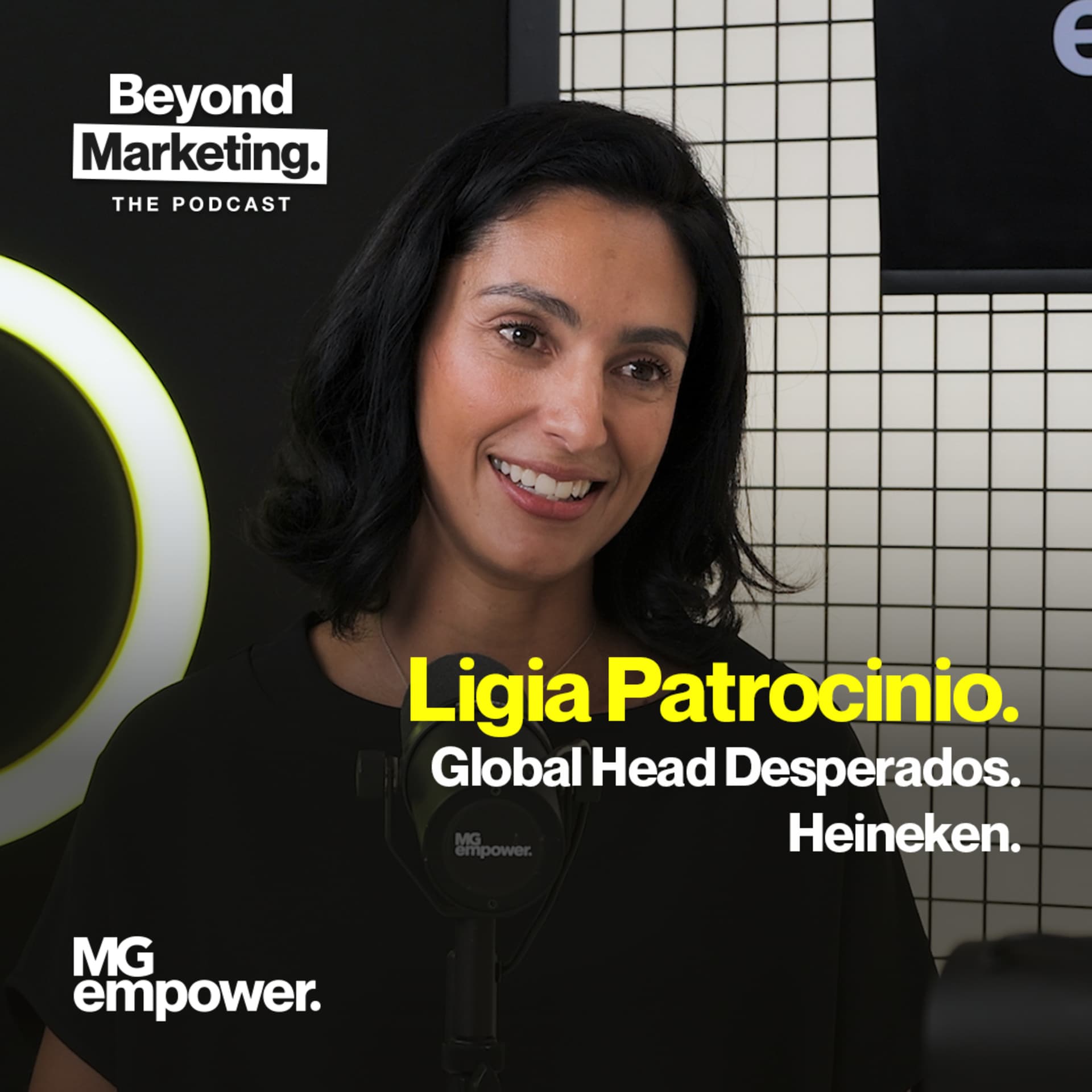
Ligia Patrocinio, Global Head of Desperados at Heineken
---
Episode Summary In this episode, host Maira Genovese interviews Ligia Patrocinio, the Global Head of Desperados at Heineken. They explore Ligia's journey from the Brazilian countryside to the global stage of marketing and how she leads Desperados through innovative, culturally resonant campaigns. Ligia shares insights on her creative processes, the importance of listening to consumers, and the necessity of embracing discomfort to foster growth and innovation in the beer industry.
---
Key Themes & Takeaways
- Personal Journey and Background
- Early Life: Ligia grew up in São José dos Campos, Brazil, and always had aspirations to explore and expand her horizons beyond her hometown.
- Career Path: With 14 years at Heineken and a decade at Unilever, Ligia’s career trajectory was not linear. Her father’s early struggles and resilience influenced her approach to challenges and determination.
- Leadership Style
- Empowerment: Ligia emphasizes the importance of empowering her team, creating an environment where ideas can be bounced around freely.
- Trust and Curiosity: She advocates for trust in her team members’ abilities and the continuous pursuit of knowledge and curiosity as fundamental leadership qualities.
- Authenticity: Being genuine and true to oneself is crucial in leadership. Ligia believes that authenticity fosters trust and relatability.
- Desperados Brand Repositioning
- Challenges: Desperados was struggling with disconnect from the younger consumer demographic, losing its appeal among Gen Z.
- Consumer Insights: Ligia highlighted the importance of understanding the current cultural landscape, particularly the need for control and moderation in today’s partying culture.
- Campaign Strategy: The "Wow Wow" campaign was designed to resonate with younger audiences by encouraging them to embrace fun and spontaneity, even in mundane settings.
- Creativity and Culture
- Cultural Relevance: Ligia discussed the need to connect with diverse audiences through local insights, stating that brands must adapt to various cultural contexts.
- Collaboration with Creators: She shared her approach to working with creators, allowing them the freedom to express their interpretations of the Desperados brand, thus enhancing authenticity and resonance.
- Listening and Learning
- Social Listening: Ligia stressed the importance of broad listening strategies—not just social media but also engaging deeply with consumer insights to inform branding and marketing.
- Adaptability: The conversation highlighted the necessity for brands to remain flexible and responsive to changing consumer needs and cultural trends.
---
Memorable Quotes
- "If you want to be part of culture, you need to get the music that people will be laughing and enjoying singing and dancing."
- "The beauty of marketing, to be honest, nowadays, it never ends and trends are shifting every day."
- "You need to allow yourself to be uncomfortable; that's where growth happens."
---
Conclusion Ligia Patrocinio's experience and insights provide a compelling look at how creative marketing in the beer industry can flourish through authenticity, cultural relevance, and a deep understanding of consumer desires. Her journey from a Brazilian countryside to a leadership role at Heineken serves as an inspiration, showcasing the potential for growth and innovation in the marketing world.
---
Follow the Podcast
- Platforms: YouTube, Spotify, Apple Podcasts, Amazon
- Instagram: [Beyond Marketing Podcast](https://www.instagram.com/beyondmarketingpodcast/)
- Hashtag: #Desperados
---
This summary highlights the key discussions and insights from the episode with Ligia Patrocinio, providing a resource for understanding current trends in marketing and leadership within the beer industry.
Written by AI. May contain mistakes. Listen to the episode to check what was said.
Transcript
Automatic transcript. May contain errors.0:28Welcome to Beyond Marketing, the podcast. by the ruse. Under head leadership, Desperados was just awarded as a Gold and Silver Alliance at Cannes 2025 for a music-driven campaign that's anything but ordinary. Welcome to Beyond the Marketing, the podcast, Ligia. Thank you so much for having me. Really excited to be here. Thank you so much for being here, for coming all the way from Amistadam. Me am Sida. to be here with us so exciting and i love the fact you're brazilian when andrea said oh by the way lisa's brazilian i was like andrea this is not by the way this is the most incredible part of the whole having lisa because i'm brazilian too and i love when i have the opportunity to you know to interview amazing you know people like you that are coming off the brazil because we just we know how it takes to be an immigrant, to leave our country, to start our life outside, you know, our, you know, our home country and our family and our friends and different languages.
1:33And the list goes on and on and on and on. Yeah. Tell me about you. Introduce yourself to our listener. Who is Ligia? Yeah. So I'm a girl from the countryside of Brazil. So I'm from a city called São José dos Campos. Nobody else outside Brazil can pronounce it. I'm in Ribeirão Preto, so I know it. So it's like 100 kilometers from São Paulo. So I was born and raised in the countryside. So pretty much traditional life, mid-class, very comfortable life. And this girl just wanted to, you know, grow wings and fly. So from the countryside, moved to São Paulo, a 20 million people city. And from São Paulo to the world.
2:15I always had this thing that it's too small. I want to see the world, right? So I'm 14 years with the Heineken company before I was on Unilever in Brazil, 10 years. So I'm a loyalist. A mother, a mother of a little boy, nine years old, a wife of my partner in crime, which is my husband. So talking a little bit about getting out of your country and everything. I think having someone on your side, a partner, a rock, because it really counts. And that's me. And I'm, yeah, I just try to live life every day in the best way. You know, I'm full of energy. I drive my team crazy. I drive my partners crazy.
3:00Because I've learned you are a Gemini. I'm a Gemini. I got you. Don't worry. I'm a Gemini. I literally love dancing and singing in the office when everything's quiet. we put some latin music we start vibing so it's really who i am and uh yeah and i think uh the brand uh as you said that's really bringing a little bit of the vibe and shaking things uh it's almost like how i feel as a person and a representation and that's why i love so much this brand and why i love so much this campaign amazing elisa but like tell like i love hearing people's stories and i love the fact that as you said so you're from the countryside from Brazil and they always had the dream of like you know getting you know outside of a comfort zone and go to Sao Paulo again I can have that in common with you because I'm from the countryside and it's it's even to go from countryside Sao Paulo is a big step for who comes from the countryside and just we know but then coming outside Brazil is just this is another like big step so in terms of a journey so tell me a little bit about like what driven you to actually go from the countryside to Sao Paulo was more like spread your wings for a career you always been an ambition person so we always knew what you wanted for yourself we always knew whether you wanted to be a marketeer so how did you end up to where you are today yeah it's a little bit funny I always know I wanted to be a marketeer but I didn't know what marketing was I thought when I was young I thought when I was young that the marketing was advertising so it's like I want to work with advertising and and do creative so I embarked into this marketing trajectory but with the advertising without knowing so I was really laser focused on my choice so I chose one university in Brazil which was ESPM which is still as far as I know one of the best universities in South America and I wanted that university and when I start university that's when when everything opened before my eyes in terms of like oh there is business there is consumer insights there is copywriting there is photography there's so much more right like the finance side the business side and I really fell in love and then I said okay creativity is not what I want it's not what I like and it's not what I think is my my huge strength but the business side on how growing brands how shaping brands this is really what I fell in love with and I've been doing for 25 years plus but the trajectory was never linear was never easy because I tell the story and it's like yeah she's there everything was easy it was not easy um I had a very important person in my life which was my father my dad would shape who I was who I am and who I'm gonna be I think for the rest of my life so long story short and I don't want to make this dramatic but I had a strong example at home so my dad he was for a period of time a homeless at a very young age and he had to figure out how to make money, how to eat, and how to work.
6:16And he cracked that. Long story short, he was able to go to university, raise four kids in a very, very comfortable way with high education, trips, and everything. And he retired himself as one of the leaders of Embraer. Wow. So I had this man in my life, which honestly, everything was like, nothing is impossible. So if you put your mind to it, if you want to do it and you will work hard, you can do it. So that actually came and bite him when I entered university because I'm the youngest. So I was really connected to my dad. And he, in a way, wanted to protect me. So when I told him, I'm going to São Paulo.
6:59He was like, no. He goes, no, you're not. And I was like, dad, I'm going. It's my dream. And he goes, no, no, no, I'm not paying. You're not going. and I remember calling my aunts, my mom, like, I need money, I need money, I need to go. And little by little, okay, so like, okay, you go, but you're not living in São Paulo, you're going to commute every day. So for two years, out of four years of university, two years, I commute every day. So waking up at 4 a.m., bus, metro, walking, and he always wanted me to come back to the city after the school, after the university, to class, to work on his shop.
7:39So I arrived in San Jose, and I had still to work on his shop, and then go home and do all the homework and everything from university, and rinse and repeat at 4 a.m., and there you go. And he was doing everything to try to break me. And when you are in the middle of the situation, you go like, why? Why are you making my life so hard? The reality is he was trying to protect me, and he wanted me next to him. close to him he didn't want to lose me because he saw that I could fly away but then I conclude university so he left me leaving Sao Paulo when I got an internship a paid internship so that's when things start he starts saying like okay this is kind of serious actually you can make some money with it it's a serious career it's not just like crazy people and that was when then I officially moved to Sao Paulo and start getting internships and working and getting a little bit of money but the most important moment for me was when I'll never forget on my thesis day so and diversity closed you have the thesis and it was this big auditorium of like 200 people and it was a Friday raining Friday in Sao Paulo you can imagine I call my dad I said like hey today's my thesis presentation I don't know if you want to come because he was always rejected he never wanted to know anything but would be important for me but like I know you're not coming but if you can But if you can.
9:01And he came. So it was 7 p.m. on a Friday, raining. You know what I mean in terms of traffic. And I'll never forget, he sat right in the middle of the auditorium looking at me, very serious, like not even a smile. And I presented. And it was, you know, like these moments that it's almost like everything disappears. And you're just presenting to him. You just can't see him. Yeah, I haven't got a bus. Yeah, me too. I haven't. And I presented and the judge, like the professors, they shoot loads of questions in the end and they give you the grade in front of everyone. So it's quite like amazing art, the walk of shame.
9:38So 200 people, but I only heard about my dad. Questions, questions, questions. And then they came and they said like 10. My grade was 10. Wow. And my dad, he just looked at me. He stood up and he left the auditorium and I was like, what's going on? and he came to me in the end and he hugged me crying and he apologized wow and it's so funny because in that moment everything clicked and and what for me was like why are you doing this um became so clear and you were right and i thanked him because him putting so many barriers making my life so hard and like i had to find ways to solve everything from influencing skills yes to networking well-being to be able to sleep but to to uh prioritization you know go out with my girlfriends or get arrested because you know so all the barriers he put actually i use to this day and i think it really built the backbone i have 100 um so yeah a little bit counterintuitive but i had such such a guy in my life and i'm i'll be forever forever thankful and then it's like amazing story and probably why you are today with your strengths with the courage to move countries and then you know having the courage and taking risks to be where you are and it's because of the experience because of him because of him 100 because i think he creates that situation for you but today you're a stronger person because of that exactly and he also left his house his own very early to work as well so it was so funny because he probably saw you were doing the same thing that he was doing.
11:18I know where she's going because I have done the thing and I don't want her to go. Yeah, exactly. But yeah, no, I'm extremely in peace and yeah, I thank him every day. And then Unilever was your internship or you had an internship before Unilever? I had before Parmalat, remember? Yes, you were there when there was just like the campaign from the music. Yeah, Yeah, but there was the music. Do you remember the music? I want you to sing, please. What was the music? O Elefante, a fan de Parmalat. This is the best campaign ever. So you're involved in that? I was there. I was not involved because I took care of everything that was not related to milk.
12:00I took care of the juices and everything. But I was in the company back in the days. That campaign is stick to me until today. Until today. I had all of them on my shelf. I loved them. There was Nizan, when I said to you, remember it was Nizan from... I don't remember. Yeah. I don't remember. I think it was Nizan. Yeah. I'll need to look up for that. But I don't remember. But it's such a memorable campaign. It's very memorable. I was in Parmalat as intern. And I had my resume, my CV. It was basically my name, my university, and the Parmalat internship. And I remember I sent Unilever just because I was like, they're never going to call me.
12:40And then they called me because one of the things I did while I was in university was the Empresa Junior, the junior company, which is a company inside. And that gives you a lot of learnings, right? Because you're already dealing with real clients and everything. So the request from this manager from Unilever was, I want someone from that university, ESPM, that was part of the junior company. And that was the only thing I had. That's okay. We have one. We have one. And then I entered Unilever as intern and I left as senior brand manager. So it was 10 years. Always in Sao Paulo. So Unilever was not your leap to international.
13:23No, always Sao Paulo. I worked a lot with people from Mexico, Argentina. And also my last project was with India. So I was working internationally, but leaving always Sao Paulo. And you always had the dream, the vision to leave Brazil? or does what do you mean never never I I thought like I was like I'm Brazilian I love my country I'll never leave I'm happy here I'm happy here um when I moved to to Heineken after two years only my phone rang and there was the proposal to come to Amsterdam uh my first reaction was like um why I don't know a little bit of excitement but a fear because yeah yes of course and then in the And I told my now husband, like, let's go.
14:10My country was only two years. I was like, if we don't like, then we come back. We come back. At least we have an experience and we see. How was to tell your parents about that? It was okay. They were a little bit shocked. I think it's a mix of being proud because they saw, they had lost me already when I was already a bird flying. there was this question of but are you going? with whom? how? how are you going to leave? and tons of questions but I think deep inside they were very proud but there is like I cannot imagine if I have my son calling me saying I'm leaving to another country I think I'm going to have a heart attack yes I'm going to have a heart attack for sure so I don't want to be in their shoes me too I'm sure it's going to happen but end of the day they saw I was happy and they saw there was I was going for an adventure you know for me was an adventure and um another story funny about my dad because uh it's almost like i never planned but my life almost guided me to that so english is something that you know in brazil we don't learn we don't learn at school unfortunately so you need to go to private schools and things like that but my dad he didn't speak english himself as well but he put me backwards like sitting on the coffee table at the living room he used to put me backwards to the tv and he put a movie with subtitles and i had to translate to him just by listening i love your daddy he was reading and he's like no wrong wrong he didn't say that come back come back and he was doing that over and over and over again which became kind of a joke and a way to play with him and be with him but when i think about these little things um because of course if I never went for English and everything, I would never be here.
15:58So these little things that he did, maybe even not knowing what he was doing. Yes, but yeah, that's incredible. But then you say like you never thought about like officially not. I never was never something that I carved. In reality, I had my CMO at Heineken Brazil. I was having these evaluation meetings with him. And he goes, you know, Ligian, at Heineken, we have kind of, you put your talent profile and you say if you're mobile or not. And mine was like, not mobile. I'm just going to stay here. And he goes like, Ligian, just put fully mobile. Like, who knows? It's never going to happen. It may take years.
16:37But like, it's good. It's good internally for people to start talking to you. Two months later, I got the call. And I was like. After changing that detail. After changing. And to this day, I still speak to him, talk to him. And I also thank him because I like that moment really changed my career. Thank you, your career. Wow. And then what was fear and uncertainty became an adventure. And one of my passions is culture, people, you know, different food, different landscapes. And then when you are into this and then it's just incredible. I asked about if you have had thoughts about living abroad, because especially when you work on, you know, international corporations like Unilever and Heineken, immediately I was taught is, oh, if I'm going to work there, I will have an opportunity to apply for a role in a different country.
17:31But it's amazing that you didn't plan. It just was one button that you changed that changed your life. Literally, a click changed my life. Because for me, Sao Paulo was already big. Then I was in that big machine, that big city, working in a big company. so I was like okay I made it um but I had no idea what was about to go. There was much more to come and how long have you been now in Netherlands? In the Netherlands if I count it all almost eight years because I lived six years then I moved out I lived in New York for five years okay and then I'm back. So your first move with Heineken was New York?
18:09No my first was Amsterdam Okay. And then New York. And now two years ago, I moved back to Amsterdam. Back to Amsterdam. Yeah. US, Europe? US, Europe. Europe. Full stop. Let's do it again. Okay. Move on. Move on. Move on. We had a great experience. It's just different, right? It's different. It's completely different. People absolutely adore US. People absolutely adore Europe. I personally prefer the more laid back, the balance of Europe, especially the Netherlands and Amsterdam. It's amazing. It's such an amazing country. So, yeah, I fell in love. And your son was born in America? In Amsterdam.
18:48In Amsterdam. Yeah. Okay. Incredible. And then let's talk about your role at Heineken. So, you started at Heineken, but not with Desperados. No, I started Heineken in Brazil. Yes. And I was head of innovation. Okay. So I was developing products for domestics and international brands. One of the brands that I introduced in Brazil in 2012 was Desperados. Okay. So as part of my innovation pipeline, I said like, okay, you keep taking care of the brand for six months until it takes off. If it takes off, then we give to another brand team. And then in the middle of the trajectory of launching it, I start interacting a lot with the global team.
19:26That back in the days, the Desperados global team was sitting in Paris. and then I went to a meeting in Paris and under the Eiffel Tower the head of the team it was me almost 15 years ago she invited me to to go to the Sprad she's like why don't you come and become the global head of innovation for the Sprad and I was like like that and yeah long story short you never be afraid of say like taking challenge is that your personality because i love a challenge and if i don't have challenge i feel bored yes something is off if everything is perfect if everything is i feel like but what's missing so you're always looking for the next challenge always looking for i love solving problems i love i love and my career was entirely like this i I always got positions or brands or situations that either I had to develop from scratch or I had to fix.
20:30To fix. And for me, it gives me such a pleasure, you know, when something's fixed. What was your biggest challenge in Desperados when you moved to Desperados? Desperados is an amazing brand. But I think over the past years, we lost a little bit the mojo of the brand. It became like more traditional advertising. And we started this connecting with our audience, with the young generation, more Gen Z. And consumers, they just don't know what the brand is or why should I buy? It's a premium brand, so the price is higher than a regular lager. So there was this disconnection. We had still big volumes come in, but from the older consumers that got to know Desperados 20 years ago, but the younger consumers, they were completely disconnected.
21:17So the big challenge was one, start from the brand positioning and unpeel everything and bring this brand to this day and age, really reflecting what the generation is doing. And then after that, create a campaign that was relevant for them, that was really anchored in a reel to insight, which I'm going to talk about it. And then results speak by itself. and then we're getting there. It's still the beginning of the trajectory, but we'll get there. It's interesting to talk about generations because it's changing so rapidly. And I think as a mother, and I'm a mother, I don't know if you potentially already can see some of the behavior of your nine years old that it will eventually dictate again marketing the way we, like sometimes my son is 11 and sometimes he says a little thing that was like, wow, this is coming.
22:11This will be the next generation that will be kind of shaping the way we promote, we create a marketing and divotizing. So we always have to be very attentive, not to the current generation, but the generation that is actually coming. So how do you balance that to kind of, okay, this is where it's going now, but as innovation, like as you talk a lot about innovation, you always have to look at what is coming. So how do you balance both present, future, and learning from past. And a little bit the past, yeah. You have to look at past learning. Yeah, it's always like you need to acquire new consumers and be relevant to new consumers, but do not alienate the older ones, the ones that are with your brand, right?
22:56So it's always a challenge. So there's always a way to do more traditional communication for the older generation, but with the younger, you really need to be with them. And I always say, for me, it's almost asking an excuse and a permission to consumers to be part, not excuse, but more a permission to be part of their lives because I don't believe brands should be entitled to really tell them how to dress, what to drink, how to, it's not about this, right? So we need to be humble enough and learn from them, especially then this generation, which is so outspoken. They speak up, like, don't tell me, who are you to tell me, right?
23:33So listening is very important. And then for me, listening is key also to set, to identify trends and to see what's going to happen in the future. And understand that it's so funny because, of course, in a corporate world, majority of people are not Gen Z's. It's more like millennials like me. Nothing wrong with that. But it's very interesting because I find sometimes that the source of information is just across the table when I'm talking to interns. And I love when I put something in front of them and I go like, oh, no, no, no, that makes no sense. Or sometimes I come to them, which is funny.
24:09we have our handle our instagram handle and we try to be relevant to them and a lot of moments the agency which is all young people gen z's they come to me with a trend and i cannot understand the trend but they can and then i go like but i don't understand it they go like what you don't understand and i was like that does not make sense uh but they go like no no trust us trust us like okay i trust you and then after that like in 13 000 views you know like i don't understand but I trust you if we are being responsible because at Heineken and I speak we are yeah really strong with like responsible marketing codes if it's following the the responsible code let it fly and that's also the beauty when when you trust the partners and you trust who is actually your audience right but and they bring the trends they bring what's going on.
25:02It's interesting that you're saying that I had done a recently an experience i was in in korea in seoul uh because one of our clients headquarters there and uh we were having a meeting like it was like five five people from their marketing team and then my team and then we kind of like over you know overdo the meeting and they're like oh we need to leave because there's other team that booked the meeting room so we need to to leave it's like oh okay and then someone oh it's the chick talk team i was like oh what do you mean TikTok team they're like no we have a team here that is dedicated to look at trends on TikTok to help us to create content for our brand on TikTok then in my head I imagine okay TikTok team probably is gonna be like three people four people at the moment we left the room I'm not talking there was like 25 young between like 17 to 21 maximum and they are hired they employed by then so it's 25 young people that are only working as they call tiktok team because they're currently checking the trends and creating content i i was amazed it's amazing it's amazing yeah we We do that, not inside Heineken, but we have agencies, the partners, and they do have the younger guys.
26:24But exactly what you said, it's just like understand that we are millennials, but we need the other people just across the table to help us. And that's the beauty of it, right? When you mix generation in order to create something that is going to resonate with your consumer. There's something that's happening almost every day in the office now, which is like, guys, I'm uncomfortable. I don't know if I like this. or fight. It's something, it's weird. And yesterday happened that one of the person that worked with me, she goes like, are you uncomfortable? And I said like, yes, very. She goes, that's good.
26:56So it's good. It's good. Like if you're uncomfortable, it's good. Because if you were enjoying and everything was perfect, it would not resonate with the audience. I'm like, okay, go. And I love that you said about listening because yes, listening is key nowadays, right? So listening to your community and listening what people are talking like the, you know, like social listening yes it's kind of like crucial for any brands when you say about listening do listening to co-create with the creators with the consumers so you take what you're listening to actually guide your next campaign or your next innovation that you're doing for brands how do you use the social listening to kind of guide you on what is next for desperados yeah listening for me it's even broader than really social listening because you have the social listening there are so many sources right of information but um so social listening is one but we do work with partners um really doing in-depth um understanding of our consumers okay because for me listening you can listen but then you can take your own spin as a brand and say like yeah let me tell you right um i think you really need to be intentional on on acting on what you're listening so um talking about a little bit about wow wow uh entering i was i was asking if you listen if that campaign was created based on listening it was in a way so we it was also part of the repositioning of the brand when i said like the brand was completely detached from the current audience we had to go back and understand okay what are the problems we can solve or even can we solve any problem as being a beer let's also be humble enough to say like we are not saving lives in a way we are beer we are here to bring people together and be have fun uh one of the disco the moment that we discovered that we had something was the the most basic output so we understood that uh different from my generation the gen z's they do party they love to have fun but it's different from our time our time right and the reason is the world is so crazy now there's so much going on they kind kind of don't control what's going on.
29:12So their lives is the only thing that they can control. So they do need some control in the madness. So they go out, but they don't get completely drunk. Something very different from our time. Social media. We used to go to nightclubs and do our stuff. Nobody would know. Now they are extremely afraid, rightly so, to get a picture snapped, to get some to be canceled, right? So there's a lot of uncertainties that we didn't face. And that's why for us it's so hard to understand. It's so hard to understand. But they all across the world, and we checked in all continents, they all say like, I do want to have fun and let go.
29:52But I'm afraid. That's why I need control. So if I drink a little bit, if I feel that I'm about to get the edge, I need to drink water or a mocktail to bring me back. Right? So they go high and they need to come back. They need to come back. And it's always the curve. And I love that because you don't need, it's not about the alcohol intake. It's about you really living the moment. So the insight we unlock by listening to this was you need to get out of your head and follow your heart. Because you know that when you follow your heart, you really have fun. And another aha moment for me is like, if you look at TikTok, they do have goofy posts.
30:38Like they DJ as pajamas with a unicorn head, right? And things like that. But they will never do this in a nightclub real life. It needs to be controlled. It needs to be controlled. It needs to be controlled. So that was the springboard for everything we did with Desperados and the Wow Wow campaign. Because we just want for you to get out of your head and follow your heart. That's why the campaign, it passes in a supermarket, which is a very traditional, you could say boring place. But everybody starts dancing and having fun and puts a smirk on everybody that watched that video. Because that's the idea.
31:13And then all the platforms of the brand is really about get any place that is mundane, that is boring, and throw the Latin vibe and go. So when I tell you like in the office, when it's too quiet, I put a music and I start dancing. change the energy immediately but that's it as simple as that so it's a very simple principle but it's resonating intrinsically with our audience because that's how they feel amazing I'd love to hear this and then you have the who did the music for the campaign I think that choice how did you come with that choice because then you have the idea you listen you got it but then you need to bring an artist that can pull this all together.
31:58Exactly. So we had the idea of, actually, we cracked the insight. Get out of your head, follow your heart. And then we said, okay, how do we bring this to life in a creative way? It was a little bit of serendipity, I would say, because Desperados has all Latinx DNA, right? It's beautiful Latin spirits, Desperados name, the sunny, like the flint bottle and everything. So we said, okay, we have Latinity in our DNA. And then that was exactly the moment where Latin culture is booming, right? In US it's already mainstream, you could say, and it's just scratching the surface in Europe. So it's like, and nobody's owning it, right?
32:44So it's like, that's the moment. If we bring who we are as a brand, reading through this trend now, this passion point for consumers, again authenticity and really connect with consumers like if we create and we start to dance like it's it's it's not like we don't have the right to do that bring um not just a regular talent because anybody but we bring someone that is behind the scene that is respected and really understands all attendees and that was over on the drums when they threw the name I was like, oh my God, because he is this powerhouse behind all these artists and he really understands music.
33:26And we wanted something in music because another important point is to identify the consumer passion points. And music is the number one. It was the number one. Okay. Because music connects people. Music touches your soul, right? So music is the moment that they really, really feel it. so we wanted music we wanted a name so Ovi came and we rang him and he was ready for him I'm ready uh and then become that then we have tons of stories with Ovi because um of course as a marketeer as a millennial what did I do in the beginning you go say like okay Ovi write a song about Desperados right here's our positioning and then and by the way it needs to be relevant in culture and then he goes what do you mean what do you mean i was like what do you mean you that's what i wanted yeah that's that's that's easy gonna do um and he goes no no no you need to trust me uh trust the process you need to trust me because um if you want to be part of culture you need to get the music that people will be laughing and enjoying singing and dancing it this is not about a brand it's not a jingle right uh the head of music yeah he was like you want us to create a jingle and i was like not sure i go like no no no no it has to be like you need you need to trust the proso it was also so much learning from my side on how to enter into this music uh industry was the first time that you're adding first time like like these developing on music with a massive producer um that was the first time and then when when we first heard wow wow i was like because the wow wow is about a dog right so the story of the music it's a guy that goes to south america with his dog enjoying meeting friends and family and enjoying uh life but it's about i just travel enjoy life i enjoy the moment which is what the brand believes but then there was the the chorus which was like wow wow wow wow wow and i was like why are you talking about a dog and again trust me um we need something catchy we need something that is funny um and then so like okay let's go um extremely uncomfortable because you never know what the reaction would be no and and again you go with your traditional mindset saying oh he has say Desperados 10 times.
35:54It's the branding, right? The ROI I need to measure. And when the music came out, and then, of course, we recorded the music video with Ovi and also Micro TDAH. So Micro TDAH is the singer, which is a Venezuelan up and growing artist supported by Ovi. We shot with them the music video. Where did they shoot the video? We shot in Lisbon. In Lisbon. And the first time I remember the first time I'm watching it because, yeah, you have a little bit of Gen Z style of dancing, dress code and Ovi and Mikro. You have a massive diversity in that video, which is amazing. Absolutely. And the first time I watched, it was like, I don't know.
36:41It's good. That was your first reaction. Yeah. Because again, uncomfortable. Because then you think that you've never done before. And then I start showing to some colleagues and they go like, oh, my God, it's amazing. Oh, my God. It's that big. Oh, my God. my god and then bring the interns and show and everybody was like you got us i was like okay okay okay yeah but it was very uncomfortable and that's one of the things i think drives us drives me and you need to allow yourself to be uncomfortable uncomfortable and curious that that's like after 25 years of my career you kind of get kind of yes so i know nothing and with this company I'm learning every day, right?
37:20And then we said, okay, how do we amplify? Because you have Ovi and Mikro, which are amazing and they're endorsing us on the Latin culture. Beyond that. Creators. Oh, because Ovi and Mikro, they were like the core, but then there is a full set and also we are a global brand. So I also want to have creators that are locally relevant, right? Because we work with different markets. Oh, we're working with different markets. And here comes the second challenge because usually you brief the creator. Here's the logo. Here's what you say. This is all you can say. Don't use this color. Use that color. And here was different.
37:58We handed the key of the brand, as we say, to creators. We gave them... For the video music or to promote? Okay. Afterwards. During the video, a lot of the casting that are in the video, they are creators. There is one guy specifically that he's opening the fridge. He is a super big artist in Poland, Reto, that loved so much the music that he called Ovi. And they did the Polish remix. Wow. Which is amazing. But after that. You have to amplify with creators. We have to amplify with creators. And they need to be locally relevant. Right. So what we did was really trying to give them the guardrail, but the basic guardrails.
Read the full transcript
38:39And let them to create. And let them go. And let them go. And we are now, I truly believe in long-term relationships with these creators as well. Because the way we select, we need to have creators that share the same value of the brand. Yeah, I know. Share it. And it's authentic. It's like it had to be authentic. Similar tone of voice. It had to be similar tone of voice and values and purpose. And now it's becoming this beautiful community. So every event I go or things, they're all there. And they go, wow. Have you worked with creators before? this campaign or there was this was the new thing as well?
39:16We did. I did. I think everybody is impossible not to but it was more on the influencers type of thing that you give them. You tell them what to do. Yeah more like detailed briefing. Exactly. Really handing the key and okay go. For creators to create. Yeah we give them the legal guardrails like we never do overconsumption. You can never have any image or anything appealing to kids everybody that shows in your video needs to be and not be and look 25 years old so we have this is very important for us and if you check that then just do whatever you go and put your tone of voice and express the sentiment of getting out of your head and following your heart and how is it going it's amazing well I just got two lines would you go back to the old format No, not in a million years.
40:14No, no. I can tell you, it's uncomfortable, as I said. It's long because when you do a traditional campaign, you bridge your agency, they bring the script, you shoot, you test, you go. And they'll amplify and they get the... That's it. Right? So you have like six months, everything is done. This is painful. It's very painful. And it's never ending because it's... Everybody has their hands on deck. it's not you dictating what the brand is it's just so many so many and you need to allow them to bring their creativity with you and and sometimes you're done and they go like hey there's this new thing this new trend and then okay okay let's go so it's never ending it's never and and uh can be exhausting but for me it's it's so beautiful to see not just from the recognition of the industry with the the lions we also got a yellow pencil which was that right So I was also so proud of Clio's.
41:08But consumers are now really seeing. So one of the metrics that we see at Honeycan is brand power. So if you're being relevant, meaningful, and salient with consumers, and this metric is now growing across the market, so it's really resonating. And then, of course, it reverts into sales. But is this because you're looking, as I said, like we go back to when we started the conversation, it's about listening, and then I was just listening on the social listening. So it's kind of like understand what your consumer is looking for in terms of brand position, values, and identification with you. And I think you guys identify that, create that campaign.
41:44And now we've got a formula that's working for now. And then what's going to be the innovation from now? And that's the thing. And that's why it's never ending because it's constantly a change and an evolution. I think that's the beauty of marketing, to be honest, nowadays. It never ends and trends are shifting every day. Every single day. Is there any specifically channel for Desperados, social channel? Yeah, we want to go really heavy now in social, social and digital, because that's where our audience is. Majority of the young consumers, young generation, they don't even have TVs in their house.
42:23So that's where we are moving. Of course, we are a global brand. Some markets still require TV heavy, right? If you go to more African markets, we need to have assets for everyone. But reality is we need to be where our consumers are and really ask them to do it. You said that it's a very important point, especially for global brands like this, the culture relevance, right? Because there's so many brands now when they enter into a market, they just enter the market without looking at what is the culture of this market and how can I make my brand relevant to that? And recently in Brazil, I don't know if you saw H &M just entering Brazil and they did that campaign, which for me, I think they ticked all the box because they really did their research about Brazil and they identified that Brazil is a very diverse country, that you have so many different colors.
43:23It's amazing what H &M managed to do it. And I think that's the beauty of brands trying to enter new markets, but making sure that you're going to be relevant to that consumer. A hundred percent. And as when you work in a global team, it's very easy for you to become a little bit pedant. Exactly. Like I'm global. You also need to be very humble and listen to the markets, to the teams, to the local teams, because they know the culture. Right. So loads of times we get into what I call very positive friction that we tell them they need to do something. They go like, that's not going to work. And then the conversation instead of, oh, but you have to do it.
44:01The conversation now is, OK, how can you make it work? What do you need to change to make it relevant? Right. So because even when I talk about Latin, Latin vibe, Latin culture, I was like, oh, how that's going to work in markets that are not super outgoing, that don't even know pretty much what Latin is, right? So you have to do a piece of education in the end. There's tons of education, but then how do you educate? For instance, using Poland, again, as an example, they were already using Reto, which is this amazing artist, which is more hip-hop and everything. And we brought him into the Latinx and we create this fusion with Ovi.
44:39So it's almost like him telling our audience, his audience, like guys it's actually cool and nice uh come with me um it's really taking us by the hand taking them and then it all is they give us the permission so that's why it's very important yeah and then you talk about like i love that you said like about like you have to be humble and you have to listen to what the markets are saying and then because to your position you're global sometimes we can have that i'm global so i know what i'm doing right yeah and then i love that you said that because it shows your style of leadership. Yeah. What is, if you have to describe your leadership style and what is important for you as a leader to lead by example, what do you say?
45:25Yeah, I always say, and it's on my LinkedIn, like that I lead through people. I really don't like doing things by myself. Not because I'm not capable of doing. It's just because I truly believe that the diversity of thought when again comes and challenges me and I get like, oh, here we go again. Especially Gemini's. Especially Gemini's. I didn't want to say that, but I am like this. But if I stop and I think twice, I go like, you know what, you're right. So I really, my leadership is really trying to create this environment when everybody's empowered to bring their thinking to the table and to bounce ideas.
46:05So with my team, if someone develops something, my first question, they'll probably be laughing when they hear that, is like, have you shared with A, B, and C? And in the beginning it was no. Now they're doing naturally. And the work gets so much better. Much better, yeah. So for me, there's two things. One is clarity, because they need to know where they want to go, where we want to go as a friend. If you know where you're going, how you're going to get there can be a little bit squiggly. But you know what you're doing. So I always try to give the strategical clarity and then empower them to get there on their own way.
46:41Right. And trust. You need to trust. Because that I think is one of the hardest learnings in leadership. When you trust and you let go and you empower, that's when magic happens. But it's hard, right? It's hard. And especially when you have to trust, knowing that it's important for you as a leader to trust. but it's important for the person that you're giving the trust because you know it is going to develop that person. When you say I trust you, but then you have to think that I'm trusting, but there is a risk that can be a mistake here. And I will have to help that person to navigate that mistake because I have done so many mistakes too.
47:23And I have people that help me to navigate my mistakes. So how to apply that is difficult, but I think as a leader, we needed to absolutely and it's like we provide the safety net and if they fall we are here to catch right and but it's just beautiful like I really love my team and my colleagues they are just flourishing and yeah that is it really works for a leader right to see when your team is flourishing your brand is flourishing it's just like you know you're doing something that is not just right for the company and the brand but also for the people for the people and listening not just consumers markets but listening your team the need where they want to go so you provide the right path right projects the right right guidance um and it's beautiful for me to see because now it's getting contagious because they they got into this groove and now they're doing themselves and then i hope when they are with their teams then they start going so yeah that that's me i really like people together like during the pandemic working by myself was the worst thing i i could ever imagine purpose purpose what's your purpose within what you're building not just at heineken but life-wise my purpose life-wise oh purpose is It's a very heavy word.
48:53It's a very loaded word. I mean, like, purpose can change over time, right? It's just like, sometimes people say that you have to have a purpose and then you have to just stick with that one for the rest of our life. Purpose changes. But I can see on your content that you talk a lot about purpose and about leadership. I love leadership. I love mentorship. I have so many mentees. I just love seeing people. Do you think everyone should have a mentor? 100%. If possible, even too. with different styles have you had mentors i have three now one official outside outside heineken outside honey let's say i have one official outside and i have inside heineken colleagues like more senior colleagues where i bounce sometimes ideas and and i want to see perspective but i have a very strong mentor and why do you think everyone should have a mentor because they kick your ass they do put up the mirror if it's a real oh my god and i always tell everybody because a lot of people come to me and say like how do you choose your mentor but like forget about asking your friend to be your mentor because they will never tell you the truth you need someone that's gonna put up the mirror and make you look at the beauty and the ugly and they're gonna make you stress like i have one that sometimes it tells me i'm gonna tell something that i know you're gonna hate it you're going to be crossed but i have to say that and i I go like, and I get really crossed.
50:16It's like, but I go like, okay, I'm going to try to change that. But then on a reflection, you know that if you don't have someone to tell that, then you're never going to evolve. You're going to continue to repeating the same mistake or errors. Not just errors, but it's good. It's hard sometimes. It's really hard. And I love when my mentor comes, like when I start whining, she goes like, you're whining. like why are you like oh my god yeah look right she's really tough with me but the reason also select her like we're very different because she she's a woman she never lost her femininity and everything and and she was head of sales and she never lost who she is um and she was managing hundreds of male you know and it was like wow this woman and she traveled the world with kids, with husbands, like, wow, I want to be like her when I grew up.
51:13So I DM her on LinkedIn, and right away she answered. And my first request was I wanted to kick my ass because I had mentors in the past that became so good friends, and then I was like, it's not working anymore. I call you on weekends to talk about the weather, but I need someone else to really kick my ass. And it's really helping. It's really helping to bring new, fresh perspectives. So I really recommend everybody to have mentors, mentors and therapists. Yes, the therapist is important. The therapist is important too. Leadership, you said that you love leadership and I can see that you're a great leader.
51:50If you wanted to give like one piece of advice, what is the like three, I don't want to say qualities, but like three advice of how to be a good leader? Do you think that exists? like do you think that the three pinpoints that you can say that helps you to be that great leader that you are right now well you need to be authentic so that sometimes i see in some leaders that they they want to fake and be who they are not so i am who i am um if i don't like you see immediately in my face um i try to be warm everything but the moment i need to be direct and sharp you also need to be so be authentic be true because i think we see through like we see through well i'm sure you have leaders in your life they go like oh my god i did and i do and some that just say like yeah i like it or not what he or she is saying it's honestly so authenticity never lose who you are to please people to like that for me it took me a while especially as a women feel good on my own skin and and be who i am because i'm loud everybody in the office knows i'm loud and it's like and at several moments i was like okay should i be more quiet and then people can't ask like what's wrong with you you're so quiet i was like oh no no no that's not me i'm loud um i am who i am i i love to dress casual i don't put me i am who i am and i and and and And you just, you know, as I was saying, offline, I curse.
53:28I love that. And you just be who you are. I think that's, for me, the first thing. Second, humble. Be humble. I have now people working in my team that know a certain specific point way more than I do. And that's fine. I don't have a hardware and a software to compute everything, right? It's impossible. And be comfortable with that. Some people will know more than you, but if you have the right ecosystem, the right team, that's when things will amaze. So I'm never afraid of not knowing and being humble enough to ask my team to sort that if I don't know. And curiosity. Never lose curiosity. When you think, if you start thinking like, I know it all, you're already behind.
54:10Then you're already done. You're already behind. Authenticity, curiosity, you know, just keep going. You're amazing. Thank you. I learned so much from you. And then I'm proud to see that this is a Brazilian incredible global, you know, marketeer, three amazing things. I'm having fun. Exactly. That's another thing. That's another thing. You have to have fun. So, which I think the life is too short. Yes. We need to have fun. Yes. And do great things along the way. That's it. Thank you so much for being here. Thank you for inviting me. What an amazing conversation. Inspirational woman. and I'm proud to see a Brazilian immigrant.
54:53And it's just like everything combined. I love your daddy story. Yes, I want to know more about it. But yes, it's incredible. So thank you so much for everyone that has been listening this episode. I'm sure you guys have enjoyed this conversation as much as I have. So if you're not following us yet, make sure you do on YouTube, Spotify, Apple Podcasts, Amazon. And now we have an Instagram account, Beyond Marketing Podcast. And hashtag? Desperados. Desperados. Ligia, thank you so much. That's incredible. Thank you so much. And yeah, we'll continue to follow you to see what's next for Desperados.
55:33100%. Amazing. Thank you. Thank you so much. Bye-bye, everyone.
From the publisher
In this episode of Beyond Marketing, The Podcast, our host Maira Genovese sits down with Ligia Patrocinio, Global Head of Desperados at Heineken, to unpack what it really takes to stand out in one of the world’s most competitive and creatively saturated categories.
From winning Cannes Gold and Silver Lions to building culturally resonant, creator-led campaigns, Ligia shares how bold thinking, real listening, and trusting the process are driving Desperados into the future.
She also reflects on her journey from the Brazilian countryside to the global stage, and how growing up with grit and heart shaped the fearless leader she is today: one who leads with purpose, embraces discomfort, and pushes her teams to break the mold.