
In short
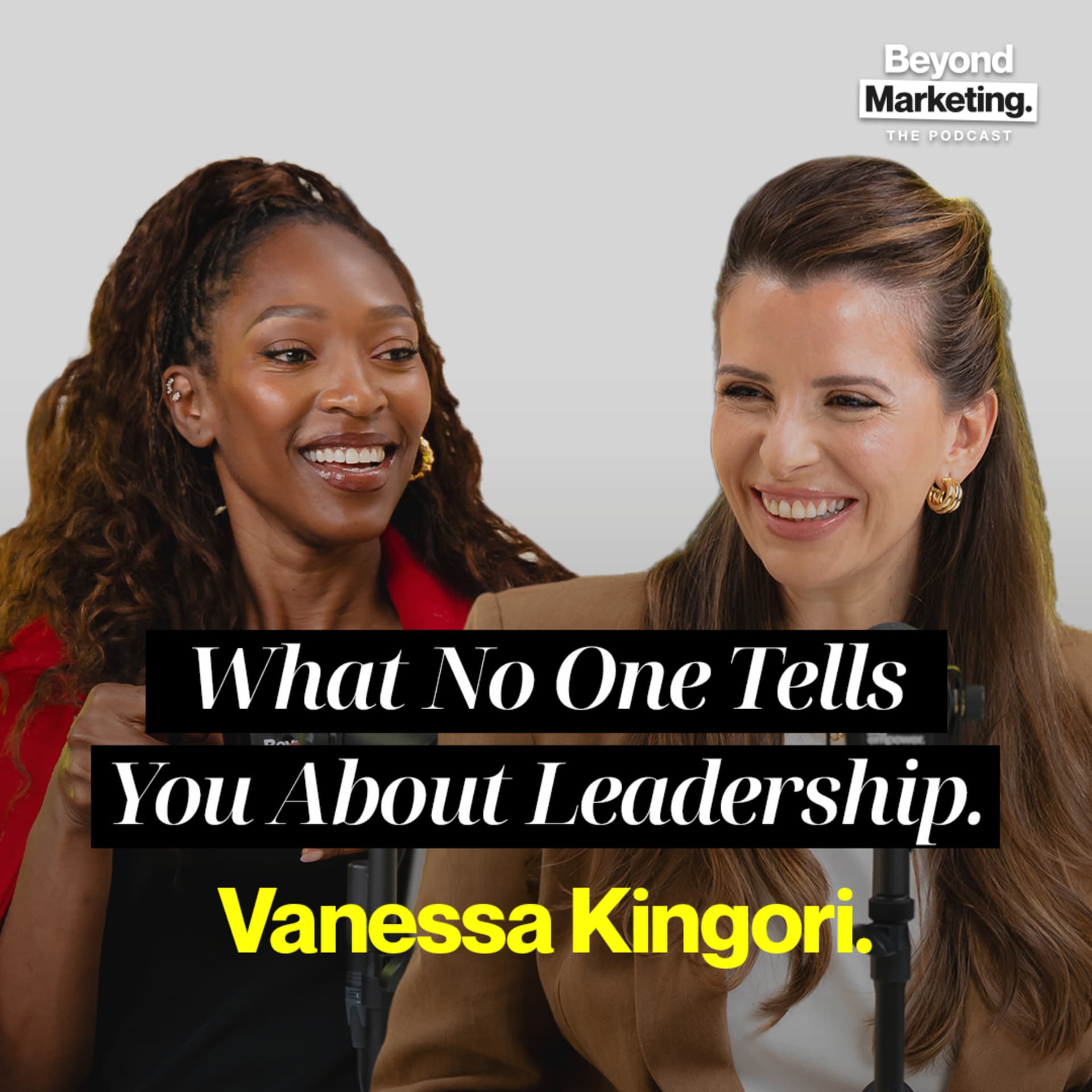
Leadership lessons from Vanessa Kingori’s career across fashion media and technology, emphasizing being a “human being,” adaptability, resilience as a leader, and building personal IP in the AI era.
Guest background
Vanessa Kingori is an ex-Google technology/media/telecoms leader and former executive at Condé Nast (including Chief Business Officer) and Hearst-era magazine leadership. She worked in fashion publishing (Esquire, GQ, British Vogue context) and founded a company in 2020 after planning a pivot around motherhood and learning tech.
Key claims
Leadership is “very lonely” and requires convening and cultural fluency, not hierarchy. Outsiders add value to teams. Women often underestimate their ability to adapt after major life changes. Personal IP (sharing values and life, not just CV) reduces myth-based bias. Build a safety net and fail “on your own terms.”
Notable examples
Creating GQ Style from a neglected fashion spin-off; pitching digital conversion and video strategy for Vogue (aiming for 1M YouTube followers); using relationships with Instagram/YouTube/Google to educate teams and reduce fear of tech.
Written by AI. May contain mistakes. Listen to the episode to check what was said.
Chapters
Tap a time to open that second in VOVanessa Kingori: A Journey of Leadership
0:45 to 3:28
Vanessa shares her unique perspective on leadership and personal growth.
“My career is one facet of the whole self.”
Cultural Influences Shaping Identity
3:28 to 8:08
Vanessa discusses her multicultural upbringing and its impact on her identity.
“So my mother was the only non-Kenyan in the area where I was born and so on, apart from some expats.”
Embracing Adaptability in Life and Career
8:08 to 9:22
The importance of adaptability in achieving success, particularly for women.
Fashion's Role in My Career Journey
9:22 to 14:00
Vanessa reflects on her early experiences in the fashion industry and its influence.
“And they are very educationally focused.”
Cultural Experiences Shaping Leadership
14:00 to 15:00
Explore how varied cultural experiences influence leadership perspectives.
“interesting to me, I guess, because of this cultural experience I had moving around and this macro experience of these different cultures and then how it boiled down.”
Early Career in Retail and Personalization
15:00 to 17:30
Learn about the importance of personalization in retail from early experiences.
“Actually, a lot of their staff were included in the bigger conversation, the buying decisions, how do we market, how do we connect with consumers who are busy and don't really need anything else, you know.”
Transition to Events and Networking
17:30 to 19:00
Understand the significance of events and networking in career growth.
“the power of ease, creating ease in busy people's lives.”
Entering the Media World
19:00 to 23:00
Discover the journey of transitioning into media and the challenges faced.
“And then I went there with Joanne and she said, oh, you're going to meet Vanessa.”
Overcoming Barriers in the Fashion Industry
23:00 to 26:00
Hear about the barriers faced in the fashion industry and how to overcome them.
“And people were actually very, very nice to me.”
Work Ethic and Cultural Legacy
26:00 to 28:00
Learn about the impact of work ethic and cultural legacy on personal success.
“She had to leave school to pick cotton on the same plantations that she was freed from.”
Show all 20 chapters
Building GQ Style from Scratch
28:00 to 36:32
Learn how Vanessa Kingori transformed GQ Style into a successful brand.
“And I saw everyone wants to be the publisher of Vogue or the publisher of GQ and the publisher of Vanity Fair.”
Navigating Leadership Challenges
36:32 to 42:01
Discover the challenges and loneliness of stepping into a leadership role.
“Because in a way it's like, I wouldn't say rejection, but it's in a rejection in a way, right?”
Transitioning from Media to Tech
42:05 to 45:50
Learn about the journey from the media industry to tech and the strategic planning involved.
“like okay i'm gonna go to tech and i'm gonna and go to google which you're talking about the giant of technology.”
Building Personal Brands and Vulnerability
45:50 to 50:00
Explore the significance of personal branding and the role of vulnerability in leadership.
“So by this point, I had multiple revenue streams already.”
Reframing Wealth Beyond Money
50:00 to 55:50
Discuss how personal values and upbringing define true wealth beyond financial success.
“You make that part of your personal IP, right?”
Future Endeavors After Google
55:50 to 56:00
Hear about Vanessa's plans after Google and her focus on culture and technology.
“Well, I am at the point of my five year plan, just a teeny bit late because I was at Google for slightly longer, but I've left Google now.”
Building a Legacy in Media and Tech
56:00 to 57:55
Learn about the journey of brand and business building in the media and tech intersection.
“I have an amazing relationship with them.”
The Role of Support and Doubt in Success
57:55 to 59:46
Understand the importance of both support and skepticism in personal growth.
“Say me no and I'm gonna prove you otherwise.”
Embracing Gratitude for All Experiences
59:46 to 1:01:11
Explore the significance of being grateful for both positive and negative experiences.
“No for me it's the same thing of saying I'm gonna do it.”
Inspiring Conversations and Personal Insights
1:01:11 to 1:02:28
Discover the power of inspiring conversations and personal journeys in leadership.
“And thank you so much for everyone that has been listening to this episode.”
Transcript
Automatic transcript. May contain errors.0:04Hi everyone, I'm Mara Genovese. I'm the CEO and founder of MG Empower, a global integrated marketing agency. Today, we are joined by a woman who has redefined what leadership looks like across media, culture, and now technology. Someone who has broken barriers, shaped iconic brands, and it's now helping steer the future of business and creativity in the AI era. From transforming British Vogue to leading Google's technology, media, and telecoms division, Vanessa Kingery's journey is a masterclass in vision, resilience, and bold reinvention. Vanessa, what a pleasure to have you here. It's so good to be here.
0:48we've been trying for a few months it's like the definition of busy women but i feel like so honored it's gonna be worth waiting for just you and i sharing i'm really looking forward to it yeah and so grateful to our friend michelle that has introduced us because we're here because of her we're so lucky to have intentional friends who really care about our networks and actually it's not luck I think it's the universe it's like when God wants to put people together he finds a way yeah but tell me I I'm just like I'm a big admiration of your work how you know position yourself everything that you have done and changing so many you know aspects of your career but also your personal life but let's start off like who is Vanessa Oh, wow.
1:42I'm a human being. I know it's a really strange thing to say right now, but I feel that it's worth saying out loud in the tech era where so much of what we are talking about is about productivity, is about efficiency, is about increased output, particularly at work. and I love my career but I also love life and living and so I think it's important to say that if I even look at the wellness industry I'm a wellness girly all of it is about maximizing your sleep so you can work harder and these supplements you can work harder let's live and I think particularly in the careers that we have where you're leading people or you're communicating with people through marketing and PR and so on.
2:39My career is one facet of the whole self. I never knew, actually, I wanted to have the career I have. I didn't know growing up what I wanted to do. I always knew I wanted to be a mother. And pretty early on, I knew that I would be a citizen of the world through virtue of my parents and my parentage. And so I am an explorer, a dreamer, an organizer, and someone who likes to fix things that may not be working in the best possible way. But I'm full of all of the human frailty and human desires as everybody else, you know. So I think it's important to say that. No, 100%. I love that. and then like because you talk about like i'm a human and then we're human being which we we i love that you said that the era that we're living today now yeah so it's ai and technology and even the robots now when you go to conference and you go see people like no guys bringing back the human yeah but do you think that your childhood had a lot of impact on the the way you're just describing being yourself yeah yeah yeah in a big way because um i had a very unusual i guess childhood i don't know that it isn't but for for the circle i'm in now i was born in kenya amazing to um a kenyan father who met my mother here in london my mother is from the caribbean so they moved to back to Kenya, pushing for Kenyan independence.
4:25So my mother was the only non-Kenyan in the area where I was born and so on, apart from some expats. And then I moved from Kenya very young to the Caribbean for a time. And I spent really my formative years there with my grandmother, who is a very very very wise woman worldly in her mind and who really set my work ethic and my vision for how to interact with people with strength and kindness and giving everyone a fair chance and then I moved to London at seven and this was you know I was moving from like Kenya Caribbean to like London. It was crazy in so many ways because I had never experienced so many things you know there were I remember moving and was like what do all these trees do what what do they what fruit do they bear and people like it's just a tree you know and I never experienced drizzle you know it was either sunny or raining or raining right so true um I'd never worn a coat before there's no so even before you get into like the culture it was in a sensory way so different but it was very very good for me because culturally the exposure that you get in London I think is unmatched around the world without even trying too hard you know you don't have to go looking for but I think having the three cultures was very defining for me because when you have experienced in your formative years, three very different cultures, you start to learn what are the common threads, I think, across culture, across humanity.
6:14And what are the stories we tell ourselves that are made up, you know, their structures within a culture. And so there are certain things that I was like, wow, okay, that's the same everywhere, you know. And there are other things that I learned were cultural constructs. I didn't have the language for that. But certainly the idea that, for example, people are organized and different based on, let's say, race, for me, was learned very early because I saw in Kenya, in St. Kitts and Nevis in the Caribbean, and then in London, that most people who were doing the things that they loved were either based on hard work, dedication or maybe connections right and nothing to do with these other attributes and so I think that was very um I think it was very grounding for me because what it taught me is that I can really achieve anything that I put my mind to as long as I surrounded myself with the right circle if I could and worked really hard and with intention and so I do think a lot of the myths that some people are held back by that I see I was fortunately dissolved of very early I also think I learned to adapt very quickly which in this stage of my career as I pivot a lot and I change from thing to thing like when you have to young assimilate and connect with people who are not the same as you very young it becomes less scary when you're older so your exposure is like a young age you're seven years old and going to school probably there was just like a big huge like shock in terms of a new world yeah different accents different faces the schooling system completely different yes um different practices so once you learn to adapt you know I think one of the things that's really important for people to know is if you have done a big adaption in any part of your life once you can do it again right and so I often think about women um and how much women question themselves and wait to be like 110 % ready to go into a career change but women are intrinsically adapting all of the time because of frankly their cycle um you know frankly um moving through different stages with their bodies with their lives we are always constantly evolving ourselves and adapting so actually you can extrapolate that out if you've been a mother you have gone through the biggest adaption life can never throw at you and then these women are saying oh I don't know if I can I'm like do you know what you just did like this is crazy of course you can do that thing it's really about the mindset yeah and then like we're like okay moving to London and then adaptability which I think is this like is such an important thing for us to talk about it because you know to adapt it to change is what is gonna make you successful in anything you wanted to achieve but if you don't have that mindset of adaptability they can get stuck with your mind 100 and then growing up in london career-wise because you have as you said has been very adapting on moving careers on you know changing your path how fashion came into your life because you have now someone that's very well known in the fashion industry but not just well known for the things like you're a fashionist well known because everything that you have done within the industry how fashion came to your life it's funny you know when I really think about it fashion was knocking at my door in a lot of different ways so um I was scouted as a model when I was um 14 or 15 and my parents were really not interested they were scared it was in the era where the models were always in the news misbeings, misbehaving.
10:36And they are very educationally focused. What's really interesting is that Kenya ranks very highly in the world and certainly in Africa in terms of educational standards. It's taken very, very seriously. And in St. Kitts, where my mother's from, it's also ranked one of the highest in the Caribbean. So I have two parents who are like, education get it yeah we work super hard to get you in this position where you can have this amazing education do that and then have your base and then you can do whatever yeah but in the end I managed to kind of convince them I could do both and I started modeling a little bit albeit I wasn't fully in and it is something you probably need to be fully in yeah but I it was really really fascinating for me because I fell in love with fashion, but not with modeling.
11:33And it was very, very useful for me as someone coming from so outside of the industry where I don't have those family connections or, you know, my family were very working class at this point. We were not shopping in these brands and so on. Modeling was very useful for me to understand what I loved and what I didn't like. So one of the reasons that I was not a great model in terms of, like I booked jobs, I worked with Vivian Westwood, who was so, she was so defining for me actually, because she was so radical and her fashion was not just about beautiful pieces, but always political. And coming from the Caribbean, fashion has always been a little bit political as well.
12:20it was a statement of who you are and who you're going to be of pride and so I really resonated with her and she booked me and so on but and although I booked lots of jobs I had too much to say in that time the model was really a blank canvas it was a blank canvas it wasn't the days now where everybody has a social platform everybody has another come to the studio do the feet walk and I was asking questions and why wouldn't we and what if we and they're looking at me like oh my gosh this precarious little teenager and so it was very good for me because I got exposed to some of the people actually I know now and I didn't know who they were but I was having really incredible conversations and I was witnessing this entire machine that you see a beautiful image at the end where you see a garment and you have no idea the sort of hundreds of people that go into making that moment with the garment and it opened up my eyes to the number of career paths that could be possible and so it was great my parents were complaining all along the way I think they triggered a little bit of defiance in me that I was like I'm gonna stick with it even though it's not for me but I met some incredible people and it got my mind turning and so that was the first one at a certain point I had to prioritize university was too much what did you do for university I did marketing and sociology which was super interesting because I didn't do it because of a career plan I did it because of my interest which I would advise communication marketing is the way exactly so I did that and um sociology was also super interesting to me, I guess, because of this cultural experience I had moving around and this macro experience of these different cultures and then how it boiled down.
14:16So the two things to me felt very hand in hand. It was very unusual at the time. But so that that was the first instance. And then when I was studying, of course, I come from a working class family, when a lot of my friends were off you know doing their sports and having those other I had to work but I wanted to work in a way that filled who I was so I didn't take a job local to the university I was coming into London and working in stores in fashion and so I got a job with matches fashion which was amazing we mismatched every single day Matt's come back I know it was it was like such a dream for me because it was I had a few different retail jobs I loved all of them but matches was really where I fell in love with the whole idea of convening people and marketing through heart and Tom and Ruth, who were the owners of matches, were so kind to me, even though I was basically a Saturday girl, you know, they saw, I think saw something and I was included.
15:27Actually, a lot of their staff were included in the bigger conversation, the buying decisions, how do we market, how do we connect with consumers who are busy and don't really need anything else, you know. And so they taught me that you need to know your your your customer and your consumer so i knew every coffee order which drinks every customer liked and then their preferences their children their wife their partner we would then i ended up doing a little bit of personal shopping with them where we would have to preempt based on their shop this was back in the day there was one there which ear was that one because they were not e-com yet no this was the noughties early noughties there was no e-com there was no practice of like data capture crm and so on but they had a database of their customers and they would and each store it was the responsibility to know them well so a lot of our time was making the space so that customers would just pop in if they were in there not because they were buying anything just to have a coffee yeah to chat hey guys I was just passing okay let's have a coffee and they did not mind if you sat with someone for two hours you didn't sell anything because they saw it as part of the experience and all of that was data capture because that customer would say, oh my gosh, I have three trips coming up and it's my daughter's birthday and, you know, my wife, we have an anniversary.
17:03And all of these things, we would then say, okay, well, listen, if you don't have time because you're on trips, we can send everything to the house and you can choose from there or I can pull some pieces from you. So for me, that was the early stages of learning how to market on a personalization level, right? We're talking about like years ago. You were very pioneering off on this. Super pioneering. And the power of personal connection, the power of ease, creating ease in busy people's lives. And this really stayed with me for a really, really long time. And then my career went in a different way.
17:44Once I graduated, I took some time. I continued to work with matches. I learned from them. And then I went into events, which is really pivotal now, which in ways I'm going to explain, but I really think the power of convening people elegantly around a purpose, whether it be a celebration or talking point is more important than ever in the AI era. And so these are all kind of happy accidents. Like someone at matches who was a very good customer said, oh my gosh someone is recruiting for um a um events director and I was like I've never done a director yeah but they said you would be amazing because it's all about connecting why don't you just meet them and then I met that person and I thought I don't want to embarrass my customer so I'm gonna be the best I can be and then I got this job and then I thought I didn't know I wanted to do this but every single opportunity that came whether by luck or actually through nurturing relationships I just was like I'm gonna give it my all you were never afraid never afraid and I wanted to be excellent so that that would connect me to something else because I didn't know which path to choose because you're so young I didn't know which password even there yeah and then uh through a long then i entered media through that and then the day i started in national press this incredible man so i went to an intern and he said to me not the day in the first two weeks he said wow one day you are going to be the publisher of uh it was in the first two weeks i'm an intern now in media starting brand new and i didn't even know what the job was and I was like okay Vogue I had Vogue yeah thank you and um again I guess fashion kind of found me because I was working in the national press and then someone saw me led me into the fashion section of that and that led on to jobs in magazines and and so on and so forth so all of it was quite organic with um you know the hard work meets opportunity like yeah a hundred hundred percent you're probably not gonna remember we met when you were at squire a long time ago because i was working at dax yes at bonefreet with joe smith with joe yes and i remember i started with joe as a pr and marketing assistant early age and then joe said oh we're gonna go to squire and we and Soho, Broadway Street.
20:35Yeah, oh my gosh. And then I went there with Joanne and she said, oh, you're going to meet Vanessa. She's from Esquire and then she kind of breathed me about you. But I was just like, just like, I remember clearly coming in to Esquire, the headquarters. The building there. And the building there. I love that job so much. I was like, I'm in heaven. I was working on menswear. For some reason, menswear was always, my grandfather father was so incredibly well dressed he was like so so I just loved everything about it and interestingly a lot of the contacts were women and it was this perfect mix for me of working in fashion but on the business side working in menswear but with women I loved that job so much yes I have good memories too and then British Vogue yes do you think british vogue was your like turning point in the sense of i got it not saying i've got it to the top but like do you think that british vogue really shaped your next move no i think gq was i think british vogue helped everybody understand what i did within the industry but gq was by far the role that shaped me because it was the most difficult because it was men's right yeah yeah but it was leadership so Esquire was like I'm in the team I'm part of the team I'm everybody's best friend of course it's fashion so there's a little bit of friction here and there but we were like a gang the creative director of Esquire is still a dear dear friend the editors it was just open and it was amazing amazing team amazing amazing team incredible energy there was no I was no threat to anybody because I was just like this little girl who came from press eager everybody brought me into the world GQ I was headhunted and I won this huge award at Hearst it was then Nat Mags yes and Hearst made me um gave me this global award at that time Condé Nast and Hearst were fierce competitors and Condé Nast was very closed you could not ever see a job advertised there it was posh totty was all the girls who had you know double barreled names landed gentry it was not even on my realm that it was possible to get a job there I didn't even think about it and I won this award and I think like the next day you got I got a call and um the then president said we want to talk to you about a job can you meet with the publisher of GQ and I was like wow this is amazing and um I said what is the job if you don't mind me asking and he said we don't know yet and so I had this incredible scenario where they hired me very quickly I think I had one one interview which wasn't an interview with a coffee where it was so surreal this publisher was selling Condé Nast to me I'm like I know what Condé Nast is you know and then before I knew it I was working there and it was nuts because this place that I thought would be the hardest place to enter that it was not even on my radar I suddenly was there with two conversations and I had the time of my life within the team I went there leading fashion the fashion business working very closely with the fashion team who were like nothing I ever experienced grand dames and big names and these super famous in our industry and it was like awe-inspiring for me but I think for some people it was like you're so different you're like who do you know and everybody there was like the niece of so-and-so the daughter of so-and-so everybody was one degree of separation and I didn't know anybody I didn't go to the same schools I did not ski and go to on those trips I didn't holiday in the same place I didn't ride horses so I was really like this you know very different very very different and rather than it being intimidating at that stage, I thought this is amazing because everybody's going to know who I am and be intrigued and I am going to treat.
25:11And people were actually very, very nice to me. They were just curious. And so I just lent into that and I lent into my experience being very young, going to these schools where everybody had different experiences and just decided to assume best intent i think once the key tough learning began was when i went from being in the team to the leader and how long did it take for that to happen very fast very fast because my work ethic is like you have to remember like i'm standing on the shoulders of my grandmother my great grandfather was a slave picking cotton. Wow. My grandmother left school at 14 with the intention of my daughter and my grandchildren will be educated to the highest extent.
26:06She taught herself. She had to leave school to pick cotton on the same plantations that she was freed from. And she read and she read and she read and she set this intention that every generation would have the world at their feet and would have these so i am in this space and i'm working thinking like two generations ago my grandmother would die to be in london she was reading dickens and shakespeare and she never ever came to london but she knew everything about it and she wanted for us to have these broad cultural experience and here i am in the center of culture of culture and so So I'm like, I'm living her dream.
26:52My mother then worked incredibly hard, left her homeland at 17, came to London and was very intentional about my sister and I being educated to the highest level in London so we could be in these spaces. And so now I am in a space which is top of the tree where people are like quite relaxed because they're like, well, we're number one. There's nowhere else to go. there's no bigger men's magazine and magazines were really big but my mindset was like it is like a one in a million chance that you're here no one else like you is here no one in your lineage has ever been given this opportunity and you have come from the number two title where everybody had to fight you had to meet with everybody like you know every single client dax and everyone you had to meet with them regularly i arrived at gq and i was like when did you last see dax and like i'm not sure i'm like oh so i applied my grandmother's work ethic my mother's work ethic and also the work ethic i had experienced when you are not number one in the market and so what happened is my bosses were like wow wow who is that what is going on i didn't know it was unusual and so very quickly I think in like 18 months or something like that they made me publisher of GQ Style a role it didn't exist before and this had really became to define my career they had a magazine that was being ignored it was a bi-monthly fashion spin-off of GQ it didn't have an editorial team I don't know how it was came to be by obligation, but no one was giving it love.
28:44And I saw everyone wants to be the publisher of Vogue or the publisher of GQ and the publisher of Vanity Fair. I felt like I have no chance because there's this whole line of people waiting for it. But no one cares about this thing. and it is way easier to prove yourself on something that has no proof of case to build something from nothing than to take something that is already winning and so I um pitched to my bosses they said we want to yeah they said you're doing incredible we want to step you up but it's very competitive. And so, you know, we see you as going for this role, very linear, work really hard and you're going to, and I thought there's five people going for that role.
29:34And I said, what about if I took GQ style? I did something similar at the Evening Standard. I created a fashion man. The editor wanted this and I helped to create it. And I said, I would love to do that and they said okay we agree to create that title hasn't existed before but there is no budget you have to work within the GQ budget which means you need to convince the publisher of GQ to share your share that budget or you need to create it through revenue I said okay no problem oh we do it I started my first business when I was eight so I know how to make revenue and I thought what's the harm you know what I mean let's try let's try and so I managed to charm everybody to like I can see get involved be excited like this is revenue from nowhere this is a chance to be super creative because it's not a really commercial entity super something that we can have more freedom and I'm very good at understanding creatives and so to the editors I would say that you know like within these big magazines that are so scrutinized you have to work within a certain line here do what you want do what you want yeah there's a freedom yeah and they really bought into that and so I was able to build a very credible significant business that within a year and a half was making more money than some of the other monthly magazines and from that then the bosses were like okay but with that also came a lot of frustration because once you create something that is successful it's human nature for it to seem easy it's like okay you know it's not yeah but once it's done it's obvious yes and so people were a little bit frustrated that like well how come she's jumping the queue and so on But I just, I had a lot of amazing supporters.
31:38I used my convening power, everything I learned in events and my, what I learned in just connecting with people, connecting with people, learning that very young is that you have to make the effort when you're the outsider to connect. And you also have to silence the noise and not make that the main event. The main event in your head. And then very quickly from that, I became the publisher of GQ. And that was really hard because that was the one that there was a whole line of people waiting. And then you got it. Again, our bosses, rightly or wrongly, did not interview anyone else for the job because they said, look, it's a contest.
32:26It's yours meant for you. and that was hard because and this is why I say I learned so much because a lot of the people who were rooting for me before were suddenly like is this too big like is it too fast um is it fair which is a fair question you know they wanted me to prove myself and I was challenged with a big change and I'm very good at change and I had to convince people then I was the youngest publisher I believe ever certainly working in the business the first female publisher of course it's GQ and the first person of color and I think the youngest was the thing that was the biggest How old were you?
33:14I must have been barely 30. And, you know, the person I was replacing was well into their 50s, but has an heir that was much older. You have to imagine this is back in the days where it was almost like Mad Men. Everybody was in gray suits. The person I was replacing went to Sandhurst. Very military. Wow. Very. Big change. Yeah. Hierarchical leader. In fact, one of the things I've realized is everyone I have replaced has been ex-military. It's interesting. Very interesting. Male, older, ex-military. At the point where there needs to be change, it is no longer, and also when you're young, hierarchy doesn't work.
33:59In this generation, even worse. Because I look super young, and I look younger than I was even. And even though I had a track record, it just was weird to go from this guy who was in cut suits and spoke with a booming voice and was like, had a plan to like, OK, let's figure it out. Let's all pitch to get people were like, what? You see your job to tell us, you know. And but equally, when I told them, they were like, oh, this feels weird. So at first I tried to replicate the way I'd seen it done. didn't work for me and then I said you know what if I'm gonna fail I'm gonna fail doing it my way I need to convene people I need to convince people not dictate to them and we were trying to go for a big digital conversion at that time GQ was and Condé and us were unique they were still making a lot of money in print selling print magazines publication was already going to digital.
35:01Everyone else was going to digital. And I'd come from national press where everything was going digital. I come from Esquire where these were things that were being considered. And because of the success, they were behind. So no one could feel the impetus to change. And I had to be it. And they were saying, we're winning awards all of the time. I just want a Mark Boxer Prize. Now you want me to do extra work writing long form editorial pieces and then writing snappy social media posts and digital. Why should I do this? I'm winning. And I realized that it's like you have to have people see what's in it for them.
35:44But it was hard. It was hard because for the first time I didn't have everyone cheering me on. I had people questioning, really doubting my friends going and it's sitting uncomfortably that suddenly I had been in the pub with them and then out of this and then suddenly I'm in the big office right and so I had to use a lot of what I learned in sociology actually about understanding how culture works yeah not just as a societal level each space you work in is a microculture and you have to identify the different tribes within it and work with them in a different way in order to bring them onto your way of thinking so gq is where i made so many mistakes i did so much learning but ultimately the fast success there is where i created templates for what to do and what not to do yeah i love that story and then like but how did you navigate that like when you say about like it was like a time that I was with the pub and then all of a sudden I was in the big office.
36:51It was abrupt. Because in a way it's like, I wouldn't say rejection, but it's in a rejection in a way, right? And then it's not everyone that is ready to feel rejected or to accept it of not being accepted. So how did you navigate in order to keep resilience, to keep going? because you have to have a lot of resilience of not letting that noise of what people think or not think about your position and create that mindset of like, I'm just going to focus, but it's tough. It is really tough. Leadership is very, very lonely. And it's something that people don't tell you before. I also had zero leadership training and it was like this, the boss that I was replacing I didn't know that they had been in long conversation for him to go and do another job so by the time I had finished negotiating he had been like two months late to start the job so on the day we announced it like I signed the contract the next day it was announced and he left that day no handover no handover at all he handed me a folder and that was it he said this is the office he made an announcement he said guys Vanessa is going to be great please trust her I'm going to my other role it was also in the company but international bye and it was like that I literally moved my things from one desk with the team to the big office in front of everyone and that was it you're on your own I love it and it was crazy because because there's a few things I learned.
38:44One is I think we are teaching people a lesson that is not valuable about fitting in and assimilating and the culture of that. I think it's very important to be comfortable being an outsider. I think there's nothing more valuable in an organization than having an outsider or a few within your teams. Totally. An outsider from all different perspectives. And you have to remember all of my life I've been an outsider, a very comfortable, happy outsider. When we moved from Kenya to St. Kitts, we were the African girls. We were not Caribbean. We had accents. We were very different. But I realized that it wasn't a problem.
39:32People celebrated it. They were curious. So instead of taking it as an insult, it was like, this is how everybody knows us. We're famous, you know, tiny village and a tiny island. There's these two African girls with, you know, all of these stories. When we moved from St. Kitts to London, no one had ever heard of St. Kitts. They were like, that doesn't, are you Jamaican? But you don't sound Jamaican because we had this crazy accent that was a little bit Kenyan, a little bit kittish-ing. Some kids you can't even find on a globe. It's so small. So I would say I'm from there and people would be looking and like, it doesn't exist.
40:09Are you sure? And so I was a super outsider. Then I went to school and because of the education, they were saying, oh, your sister and yourself need to be moved a year up. Like in every way. Also, I'm so tall. I'm an outsider. I was the only black person in my class. I'm an outsider but for me it was never a problem in my mindset because you have a very good mindset that was not letting you to make I don't even know if it was good but I think the cultures that I come from and maybe this will resonate is where it's not the British culture where you fit in and you're one no everyone's a peacock in Africa and in the Caribbean your aim is not to fit in your aim is if you go to church in in the caribbean it's like a fashion show going back to nobody you paint your house not the same color what color is no one else painted it so for me standing out only became a problem when i started to adopt english ways and so i had to go back to you're a happy outsider you've always been this way lean into that into that and don't let this to change you and then talk about fitting in yeah you have to fit in in the industry of technology when you went to google yeah because then is another extreme so you went to a very male dominant yeah what yeah technology it's uh it's still when you look at the percentage of women women and men it's like i'm getting worse is getting worse especially with ai now but you had the courage to say i'm doing it and then it was i don't even first i think yeah women being hired yeah by google if i'm not wrong i replaced another military man you replaced another military male led team it was like back being in gq how was it like okay i'm gonna go to tech and i'm gonna and go to google which you're talking about the giant of technology.
42:18I mean, to be honest, by this stage, I'm so intentional about what I'm doing. And to let you into a secret, I founded a company in 2020, the year after my son was born with a five-year plan. Wow. And I'm like, okay, in five to six years, I want to be working for myself and this is going to take time and I need to have a strategy and I need to lean into all the things I'm good at but I also need to plug the gaps of the things that I don't know and tech was one of them and at that time now the media industry is in a little bit of a frenzy around tech initially it felt to me like the early days of social media we navigated it I was a big part of helping the media industry adapt, accept, include.
43:16I worked so closely with all the tech companies then and I was bringing in YouTube and Google to do talks. You had to have the transition, right? Yeah, no, but I was, I realized a big part of my job at Condé Nast when I became chief business officer of all the brands was to bring technology in to make it less scary. so I started to develop the relationships the business needed but also I needed tech platform so I was flying to New York and meeting with Instagram Ava Chen making these relationships that didn't exist at Meta and saying to her who can you send can you train my team to really understand how to but at the same time I was learning of course because it was a new thing for you and Ava Chen was saying where is your account but you're the star I'm like no no I'm I'm behind the scenes.
44:05I'm not that she said, yeah, people want to know. This is what people want to know. So she encouraged me to start an account and she encouraged me to build my own following, no matter what, just like she had done. She was very instrumental. And then I was like, we need YouTube. Vogue doesn't have video. And so I started to know Google and bringing them in to educate the team on how do we create the best video? How do our videos perform? I made it my personal KPI to get Vogue to 1 million followers on YouTube so that we could build a video platform. And in doing that, of course, I became friends.
44:39You became friends and learning. They were asking me to come and speak at their key moments. And I was like, wow, this is another space like Condé Nast that feels excluding and exclusive. And here I am. But here I am. And I have and they are interested in me, but I'm interested in them. So there's an exchange there. so I set this intention that I need to fill that gap before I can go and do my own thing and they were approaching me and I was like this is amazing but I'm going to do my due diligence and I'm going to try to understand all of the tech companies and I'm going to pick the one that's most values aligned even though I know it's going to be super challenging I'm going to fall on the fact that it's okay to be an outsider you can learn on the job have learned that before We can do hard things.
45:29It's not forever. And also, it's risk. If it isn't for me... Yeah, and we cannot lose anything. I'm trying. My motto in life, I have a few mottos, is if you are going to fail, fail on your own terms. Exactly. And fail fast and fail, it's good for learning. It's okay. It's okay. So by this point, I had multiple revenue streams already. I had made sure that I had savings I was very very frugal in the Vogue era that's good to make sure that I had with this plan in mind because once you have a plan you can start to put the wheels in place so nothing everything seems like oh my god this crazy pivot but I was really building to it for a long time what if I fail okay you have other things I never have one revenue stream.
46:23I never look at my job as who I am. And I never look at my job as how I make money. My job for me is very important, but it is one revenue stream. I always make, and I learned that from my grandmother. My grandmother would never say you can't, I grew up on a farm and she would say, you can't rely on the crops to be successful. So what else do you have? So she would sew, she would make things. And this is ingrained with me. So I was doing speaker engagements. I had my consultancy and Condé Nast were kind of okay with that because everything I was learning on the boards in these gigs, I was bringing back, refreshing the company.
47:03So it was a calculated risk by the time I went to Google. They had been talking to me at this point for nearly three years. I knew they wanted me and I had this feeling of if it doesn't work, it's all data. No data. Yes. And then what an amazing experience. Yeah. It was hard. It was still hard. I would not tell anyone a lie in that that learning, especially with a little child at home and leading while learning, you have to be very vulnerable. And another advice I would give is that it is really, really important to lean into your vulnerability and not pretend. Everything is OK. So this is where being, I think, a woman and using some of my, what I would say more feminine leading traits of I don't mind being vulnerable.
47:57I don't need this to be a hierarchy. I know your previous boss was military. I've done this before. I've done it before. Wow. We're not going to work like that. That's very interesting. Now, you know things I don't know. I know things you don't know. Let's pull. I'm going to elevate you because I don't know that. So now you're going to become the expert at that. I'm going to be the expert of this. So I created a really collaborative team set where people felt valued because they, all of a sudden they were useful in a different way and I was platforming them. And that's really how I navigated that big pivot at Google, but also because I built myself a safety net.
48:37I was never born with a safety net. I was always around people who inherited a safety net through Condé Nast and I thought okay the thing that's allowing them to be audacious is a safety net I'm going to need to build one so that's what I did you talked once to me about personal IP and I think now talking about story what you have been doing is your because I never heard about personal IP until we had a phone call conversation and I love that if you can describe personal IP what do you say that's the definition of a personal IP I think that it is one of the most overlooked resources that we personally have in this digital age and it's transformative we always had it actually but now people are interested in who you are and what you're willing to share and in your journey and so if you look at my Instagram account it looks super fun Sometimes it looks glamorous.
49:36It looks like I'm always on holiday, but it's very intentional. I want for people to understand that I'm someone who works hard, works with empathy, and I work hard because I also have a life. And that's a key part of my personal IP. And it means that when people meet you, they're already brought in to a certain extent, not just on your CV, but in who you are. Who you are, yes. So you don't have to work as hard, educate it, but this is why I do this and I might need this. people already say well I know you have a kid so is that time going to work for you they're there already they care about your value system if they if they've engaged and also you can write your own narrative what I noticed in some of the roles that I was going for that were deeply competitive where women often opt out you know that this is um and not only women I think people who are not centered who maybe are like oh well English isn't my first language so oh, maybe I'm not going to be great at this level.
50:38Will I be good in the boardroom? Maybe people won't understand me. You make that part of your personal IP, right? And so for me, I realized when you are in these very competitive roles and when Edward and I were appointed to Vogue, there was initially a backlash because it was like, why these people there's been this whole line people don't know what we'd achieved they just wanted to judge without knowing the the why yeah and suddenly it was public because in GQ was industry and people like oh in the industry she's doing great oh my gosh you know and then suddenly it's like oh my gosh the Daily Mail is covering oh my god you know and I realized that um I'm six foot tall.
Read the full transcript
51:26I look like a diva. I had to, you know, and I had to share this other side of myself. And that's my personal IP is that I connect through empathy. I am strong. I am tough. But actually, I really lead with empathy. And most people handle when I'm tough because they know I care. But it's very hard to give that quickly if you're not sharing. So people think about LinkedIn I need to talk about my career and what I'm doing and da da da da or Instagram is for fun but actually these are really important personal marketing tools that are more valuable than your resume. 100 % yeah and it's important so important to build and I'm not saying I'm even always nailing it but I do think it has been really instrumental in not only dispelling myths about me but also in having people lean into the fact that I will lead differently and and they're already a little bit aware of that yeah I I love your story and I resonate a lot I'm from Brazil I've been here for 20-20 years and to be where I am today oh my god it's like is a is another another podcast it's so many hurdles and I always I love what you said about think about being the outsider Because if you let the noise come into your mind, it's just very difficult to find the courage and the strength and the resilience to face all of that and think that I can do it.
52:57Because the foundation of where we've been born and how we've been raised and the examples that you gave from your grandmother, I have the same examples from my grandfather. Those kind of like childhoods, sometimes we think that is not an impact on how we are growing and evolved. But actually, I think it's just like it's a big part of who we are today is how we've been raised and educated. Like I have a very specific view that I'm trying to educate a lot of people I work with in the world on around generational wealth. And so there's a big conversation in certain communities around how do you build generational wealth?
53:37How do you succeed if you don't have generational wealth financially? and I think it's very valid because so many people I know who are entrepreneurs they could fail fast because they had not that they didn't work hard not that they didn't but they had that family background and so yes generational wealth is important and certainly for my family I want to build it I'm very intentional about that however I feel wealthy even though I grew up on a farm with a grandmother who left school at 14 years old. I was wealthy because this woman gave me the human tools to be in any room and feel okay. This is a woman who picked cotton, but had everyone in her house from dignitaries and judges to in the Caribbean, the Rastafarians who live in a mud hut and she taught me that humans are humans you go for the attributes and you belong you belong and so this kind of wealth in the work ethic in the belonging in the believing in the parts of yourself that not focusing so much in what's wrong because we all have shortcomings but a lot of western culture teaches us to be very focused on why we are not right rather than why we can be additive and so I feel like for me that is a wealth like no other and so I was wealthy and I want to dispel this myth that like only financial wealth and financial wealth is important and don't get me wrong it gives a huge advantage but it's not everything it's not everything and I I would choose the wisdom, wealth I was given rather than money if I had to choose.
55:30So I think people can redefine this and reframe this for themselves. And it may not be that. It may be hardship. Some of the most successful people I know had horrible childhoods. Oh my God, yes. You know, I had a great childhood. But for them, that is their driving force. So I think it's really about reframing and being confident in what makes you you rather than what makes you not somebody else. And what is next for Vanessa? Well, I am at the point of my five year plan, just a teeny bit late because I was at Google for slightly longer, but I've left Google now. I have an amazing relationship with them.
56:12And now I'm unbelievably privileged to be working in a space that very few are or can, which is the intersection of culture and media and tech. and so I am brand building and business building with some of the most world's most incredible brands helping them pivot either at a human level at like exec team level or at a revenue stream diversification level and I'm consulting I really feel the future of consulting is very different where we have to I think it's important to have people who deeply understand industries rather than how the traditional business works. And so that's really meaningful for me because it's a dream realized.
57:03It's a dream that was, I was going to say five years in the making, but probably longer. And it is testament to me of the power of planning, the power of self-belief, the power of building relationships, because, you know, an industry I left years ago is now embracing me again so I'm now working with fashion working with media brands working with tech brands public speaking around the world on thought leadership and working on things I really really care about and building new platforms that are to come outside of that that are all the things that I felt were missing in the multiple industries I've worked it's your legacy right it's my legacy which is just like uh inspirational yeah it's really exciting but you know none of this is possible without all of the people who have cheered for me and there have been many many many i always like to say that in life we don't achieve anything if we don't have angels that come fast through your journey and because it just take one person to believe in you because sometimes you can be in a room of like 10 people nine of them they're not believing you but if you have one yeah that is our angel and i think it's so important for us to recognize that where we are and where we're going we always had an angel that look at us inside our eyes and say i believe in you and i'm gonna give a chance and that gratitude mindset is how we can get more angels yes to come past and i'm very lucky i mean you've seen even how we were convened is i have a core group of people who ride for me in a way that i'm very self-sufficient and it's actually hard sometimes to support me but they do it anyway but i would and i'm so grateful to that because you cannot infiltrate new spaces and do things that are hard where some days you come home and you think oh my god what am i doing what am i doing is this crazy and you have someone who's gonna say you got this but also the people who say think about it differently and i would build one further the angels are important but so are the devils oh yes the people who have said to me are you sure or you can't do this or is she the right person have also been instrumental because I'm driven by that.
59:41I'm very driven by that. Say me no and I'm gonna prove you otherwise. I'm like do you know the legacy, the lineage I come from? No for me it's the same thing of saying I'm gonna do it. The speculation, is she like this, is she dad, does she care about this, is it? I am like it's even though it's a small part of the voices that are positive are so much more important and so much bigger there is something good also about people who test you because they also make you question. Yes. And it's okay to say, hmm, do they have a point? Often they don't, but they make you go deeper. To think and to think, yes.
1:00:19To reflect and to think, it's super important. I don't dismiss. People say, ignore it. But I don't think you should ignore it. I think you should go, what is making them act like that? You should pay attention, yes. Is it them? Is there something? Is there a grain of truth? Because sometimes it can be something that you haven't recognized, but there is a point that you can evolve from what they're saying, but then prove them wrong, but not considering what they are. Not taking it hot personally. So I thank all of the people who also are the doubters. I thank you. It's so important. I always say that gratitude is not about being grateful for the good.
1:01:00You have to be grateful for everything. everything everything is what makes us us the good the bad the ugly and i'm super super super blessed to have so much good and i'm also blessed to have the ugly amazing that you were just like incredible we could stay here i know we're gonna continue like season two watch this space but thank you so much for being so vulnerable so open about your career your childhood you know your success your challenge I think everyone that's listening to us today will feel even more inspired by you thank you for being so inspiring being like waiting for this moment and I'm so grateful but you know for me it's like I love to speak with people who have also like walked the walk and everything that you've built and the community you've built it speaks so much to me so like we moved heaven and earth with two busy schedules to make this happen but for me it's so additive like every conversation makes me stronger think differently and also I love to talk I love to I'm actually a complete introvert but if you give me a mic and something I'm interested in.
1:02:18I will stand on stage. I'll sit for hours. So this is heaven for me. Thank you so much. Thank you so much for having me. And thank you so much for everyone that has been listening to this episode. So I think you will feel as inspired and as, you know, in love with Vanessa as I am. So it's such a great story, such a great inspiration for us that, you know, if you're feeling different, just doesn't mind. So the word, it can be fit to all of us. Doesn't matter where you come from, what is your language, what is your culture. Vanessa, thank you so much. Thank you, my darling. So much fun. If you're not following us yet, make sure you do Amazon, Spotify, YouTube and Apple Podcasts.
1:03:01And I see you guys on our next episode. Thank you so much and thank you so much.
From the publisher
In this episode Maira Genovese sits down with Vanessa Kingori, one of Europe’s most influential business leaders and former Managing Director of Technology, Media & Telecoms at #Google.
From her childhood across Kenya, St. Kitts and London, to becoming British Vogue’s first female Publishing Director and Condé Nast UK’s first Black Publisher, Vanessa’s career is a story of bold reinvention and breaking barriers.
Together, they explore the leadership lessons nobody teaches you: navigating career pivots, embracing change, building confidence as an outsider, and creating opportunities through relationships and self-belief. Vanessa shares her perspective on AI, the future of work, the growing importance of personal IP, and why uniquely human skills will matter more than ever.
A powerful conversation on leadership, adaptability, and succeeding on your own terms.