
In short
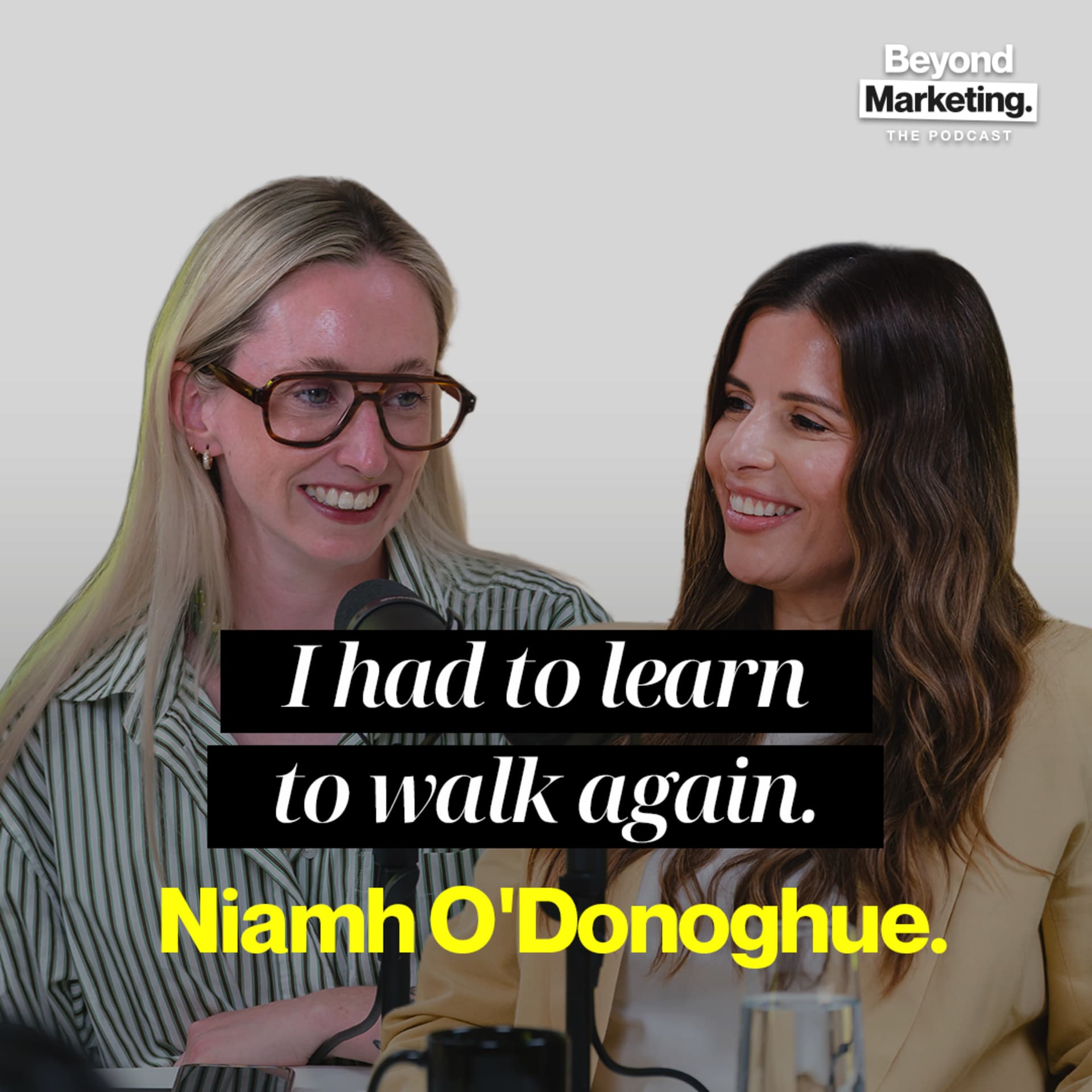
Niamh O’Duro-Hu (Head of Content, Strategy and Social Media at Stella McCartney) discusses how a life-changing disability led her to luxury fashion storytelling, and how to succeed in social media without “posting for posting’s sake.”
Guest background
Irish storyteller (shanaki) by identity; musician family; became a writer after a horrific disease at 13 that twisted her spine, requiring multiple operations and relearning to walk; wrote a letter to Kiss Magazine editor at 13 and received encouragement and a double-page spread; transitioned from journalism during print-to-digital shift; moved to London and worked at British Vogue, managing social for a global audience.
Key claims
Healing came through writing; success is the person you become, not accolades; social platforms must be chosen by audience and purpose; every post needs intent; content requires time, money, and skills; community/“edutainment” will outlast AI.
Notable examples
Taylor Swift cover posted with wrong date (went viral on Twitter); Jacquemus posts less but earns high engagement; Loewe’s trend-jumping on TikTok; Stella McCartney content strategy.
Written by AI. May contain mistakes. Listen to the episode to check what was said.
Chapters
Tap a time to open that second in VONiamh's Storytelling Roots
0:45 to 2:18
Niamh describes her identity as a storyteller and the origins of her passion for storytelling.
“Niamh is a shanaki and a shanaki is an old Irish word for a storyteller.”
The Impact of Illness on Creativity
2:18 to 4:48
Niamh shares her life-changing illness and how writing became her healing process.
“Like how, how this starting as something that you realize, wow, I love this and this is my passion.”
Turning Point: From Writing to Career
4:48 to 8:00
Niamh discusses her journey from writing letters as a child to pursuing a career in journalism.
“And then when you wrote that letter to the edictory, you wrote without an intention.”
Navigating the Fashion Industry
8:00 to 11:00
Niamh reflects on her experiences in the fashion industry and the shift from print to digital.
Lessons from Challenges
11:00 to 14:00
Discussion on the life lessons learned from personal challenges and their impact on perspective.
“It's not a life and death situation because when it's a death situation, there is nothing you can do because I could not go there and wake up my father because it's gone.”
Navigating the Luxury Industry
14:01 to 16:28
Learn how personal challenges influence a career in luxury fashion.
“I just felt like I'd hit a ceiling within Ireland and I always, because of maybe what I'd been through, I wanted more out of life.”
The Transition to Social Media Management
16:29 to 19:20
Discover the challenges and learning experiences in luxury fashion social media.
“And I remember walking around London with my work phone shaking at the time, like thinking, oh my God, if I do one thing wrong, so many people are going to see it.”
Creating Visually Compelling Content
19:21 to 22:58
Understand the importance of visual storytelling in social media marketing.
Adapting to Evolving Social Media Platforms
22:59 to 28:00
Explore how to effectively engage with diverse audiences across platforms.
“Just even in terms of being able to like, it's like you're talking in a creative language, right?”
The Challenge of Content Creation in Fashion
28:00 to 29:20
Explore the complexities brands face in content production for social media.
“Jacquemus posts far fewer than most yet they have the highest engagement rate on their social.”
Show all 14 chapters
Understanding Trends and Brand Engagement
29:20 to 32:30
Discuss the balance between jumping on trends and maintaining brand identity.
“But also brands, especially British brands, are making huge cuts with teams in that they want more content, but the teams are getting smaller and smaller.”
The Impact of Brand Strategy on Consumer Connection
32:30 to 35:30
Analyze how different brand strategies affect consumer relationships and exclusivity.
“Brands that are screaming and brands that are quiet.”
The Importance of Storytelling and Overcoming Challenges
35:30 to 38:20
Learn about the power of storytelling and sharing personal challenges to inspire others.
“and I think Miu Miu are doing that really well for their book club their cinema club I think Prada also did a cinema club.”
The Future of Community and Healing Through Connection
38:20 to 39:50
Discover how brands can foster community and connections that lead to healing.
“I'm too Irish to accept that as a compliment, but thank you.”
Transcript
Automatic transcript. May contain errors.0:04Welcome to Beyond Marketing, the podcast. I'm Maira Genovese, the founder and CEO of Mg Empower, a global integrated market agency. Today, I'm joined by someone whose career has taken her from journalism to helping shape the voice of two of fashion's most iconic luxury brand, such as Victoria Beckham. Today, as Head of Content, Strategy and Social Media at Stella McCartney, Niamh Oduro-Hu sits at the intersection of storytelling, culture and creativity while also using her platform to champion the next generation of marketeers and share her own journey navigating the industry as a woman. So welcome to the Beyond Marketing Podcast, guest Niamh so excited to have you I'm thrilled to be here second to being on social media my favorite thing is to talk about social media so this is brilliant and yeah so we are delightful to have you here it's actually a recommendation from a employee of MD Power that she saw you talking at Marangoni yeah and then she was just like Mara you need to invite me to come to your podcast because she's just incredible I feel honored to be here it's great that's very good But let's, before you dive in into your career, into your passion, if you have to describe yourself, how you would describe who is Niamh?
1:29Niamh is a shanaki and a shanaki is an old Irish word for a storyteller. And a shanaki wasn't just a proverb. It was a person that would go from village to village in Old Ireland when there was no TV, no radio. and that person would literally bring the news and the gossip to the town to the people and I think inherently Irish people are storytellers we love to communicate we love to talk and to to build those relationships and to really just have a real human experience so I would say I'm a storyteller I love that and then when your passion for being a storyteller started Do you remember memories of like when a childhood where you were engaged already of talking about like listening to stories and talking stories?
2:18Like how, how this starting as something that you realize, wow, I love this and this is my passion. So I wanted to be a vet or a doctor. Wow. I had no intentions of becoming a creative person, but you don't get to choose what's in your heart. and from a very young age I've always been creative I'm a musician I come from a family of musicians and dancers beautiful but I always wanted to be a high achiever I think it was the result of being the youngest born in the 90s the only girl so super ambitious and I put a lot of pressure on myself to succeed and be successful and to me success when I was younger was having this big powerful job to help people fundamentally I wanted to help people um and I was super sporty and in all the clubs and very outgoing as a child and then I had a quite a horrific life-changing um disease and through my healing process in that I couldn't play any sports I basically had to learn how to walk again four times and but throughout that process writing became a cathartic almost like healing process for me and I remember writing a letter to the editor of an of an old magazine that's no longer in publication in in Ireland it was called Kiss Magazine it was the height of glamour as a 13 year old and I wrote to the editor at the time her name is Vicky and I explained my story and what I was going through and how I was feeling.
4:00And she wrote back to me and I still have this ladder. And she said, wow, you have a natural act for telling a story and writing. And I said, well, she was like, maybe you could make a career out of this. You could be in the magazines one day. And I was like, what? This is a career? Oh my God, move over veterinary science or medicine. It's like, I want to be a writer now. But it wasn't as seamless as that, of course. But through my healing, it kind of opened up this whole new expression that I was able to develop. And I didn't really have a choice either because I was so confined to being at home and I wasn't able to do a lot of things that normal, quote unquote, young teenagers were able to do.
4:45So writing became your healing. Writing became my healing. Yeah, that's beautiful. And then when you wrote that letter to the edictory, you wrote without an intention. you just wrote it because you wanted to tell your story but not unintentional to see if there is an opportunity for you to be a writer so there was not like a plan behind it there wasn't an intention I just remember like this magazine being like the beacon this is very 90s Irish Catholicism coming out but every Sunday you'd go to mass I remember I grew up in very Catholic Ireland and after mass you would be bribed with your favorite magazine of choice which in hindsight is absolutely hilarious uh but I used to get this magazine every Sunday and I I used to love the physicality of magazines and then obviously as I developed taste I started to buy Vogue when I could afford it and had my pocket money but the physicality of that magazine it was just so special to me and of course I had like my dolls and my Barbies but like I loved flicking through the pages I felt like I was like instantly becoming this know-it-all insider even if I was talking about some cartoons versus something gossipy like it just felt like you were part of a world that at that time I wasn't nearly a part of you know and then you were expecting a response back when you wrote or was just no and then when you got that response that was like a life change and then they gave me a double page spread which still sits under my parents bed wow and then from there you just realize okay this is what I wanted to do it I think so when I was 13 I woke up one morning and my spine had twisted around the other side of my body in a very unusual growth spurt and I went through an incredibly life-altering series of operations that both saved my life and changed the course of my life.
6:42From the age of 13 to 22, I had multiple operations to strengthen and straighten my spine to give me a better quality of life. I had to learn how to walk again four times. There was so many complications and missed opportunities and it made me grow up so quickly. normal my new normal became pain medication and hospital visits whereas you know my peers were going out going on holidays and there was a lot of that that was missed and so I had to experience that in a different way and for me that was through reading and writing and tapping into these magazines to understand what was going on in the world and developing that sense of taste and that style and so while I was still like academically minded I still wanted to achieve and succeed but I missed so much school because I was always in hospital and so when it came to doing exams I didn't get the the necessary points that I needed from my exams and so journalism and and writing at the time it seemed like that was coming second place but now a decade on that was the route that I was supposed to take and it still wasn't very easy there was there was you know other complications and the industry was constantly changing yeah so while I was in university in Dublin the industry was at that point going through a huge pivotal change from print to digital so I leave university and I like to say I just toddled out of university and straight into my dream job of course that's not the case but I did get my dream job I went straight into a fashion magazine in print when you know my professors at the time were like oh good luck you'll never get a job in print this was in Dublin or already in London this was in Dublin and I was like you know what I'm gonna try I'm gonna try do this so I whilst I was in college I would freelance and try and build up a portfolio and you know you're working part-time to try and pay your your student debt and but it becomes this whole exciting journey you don't sleep you don't eat you're just partying and working the whole time but it did allow me to build up a portfolio to the point that when I was ready to leave university I had this this body of work to go hey I can I can do this let me into your world and you know I don't come from a traditional high fashion high luxury background I come from a very working class I'm very proud of the background I come from but the the world I'm in now is so far detached from that um and that that growth has been so eye-opening in so many different ways but just to go back for even just the university aspect um I guess there was an expectation that because print was pivoting just to digital that journalists would have to forego going into magazines and focus on something else so I went into my job and suddenly I was the person in the room that everyone turned to to look for advice for these new formats that were emerging what do we do on Facebook TikTok wasn't even around at the time what do we do on Snapchat what's a filter and suddenly they were like oh well how do we how do we translate that story how does how does that feature a four page spread suddenly become a carousel a carousel how how are people digesting that and of course now 10 years on everybody's doing that but nobody was doing it then so I do think it in part it was like part divine timing part skills part luck um i was able to very quickly become not just the journalist and the writer but this more of like a digital leader to be able to say okay well here's this platform let's do it this way let's try this on this platform and see what happens and it was fun i was i was young and i was given all these opportunities um i helped launch ireland's first luxury fashion podcast i've run my own podcasts and it's it's been a really great opportunity to just well I love just chatting anyway uh but it's um no it was it was great to just put everything out there and and you know receive receive it all back receive it all back I love the fact that you say that the writing became your healing and then how that writing became your career yeah it's just so powerful because as you said potentially it was always there to be your path but sometimes life give us some you know challenges but future they give you the answers and this is just so beautiful totally and like you can plan your life down to the last second but the reality is everything can change in a minute everything changes and what I'm realizing is that I used to think success looked like awards and being on your being on the Forbes 30 under 30 list and getting all the accolades but actually the success is the person you become through that journey 100 and through the challenge and how you overcome them yeah and I think I've probably faced more challenges in my young life than most will in a lifetime and that leaves a certain mark or a certain energy and I like to call it my bullshit-o-meter in that I'm really I'm able to identify is this a real world panic problem are we pressing nuclear or can we stop and pause and just assess the situation and say hey we can deal with this we can do it but it's not a life or death situation and I think when you're faced with those life or death situations in reality it just gives you a whole new perspective it's interesting that you said that because it's going to be in July actually next week 20 years that my father passed so I've been London for 21 years so when he passed I was already living here and then I could not see life as for me everything was a problem was just like is a life and death and then we need to make it happen or this is going to be a problem but when my father passed away and then it was just like out of the blue because he was not sick he was not facing the problem he just had a heart attack in the middle of the night and he was super young 53 years old today i'm 46 when he passed i was 26 so you don't understand how young it is because 53 is super young i'm 46 so but at the time you think oh 53 he lived a like a long life yeah but since then it it changed the perspective of life for me because now I see exactly what you're saying.
13:23It's not a life and death situation because when it's a death situation, there is nothing you can do because I could not go there and wake up my father because it's gone. Today's death is definitely nothing you can do, but the rest, you can do it. And sometimes it's hard to quantify making those decisions, especially in big high-powered jobs where there's lots of pressure. It's, you know, you have to perform and it's a big environment and it's sometimes challenging making the right call of what is a critical business decision and what's something that can press pause you know i'm just trying to bring that energy into my professional life as well as my personal life now to it's life is life is too short it's too short and you have to make the most of it and and then now like you've been into the luxury industry for a long time um and it's it's a whole new different world right so we're talking about life and death situations challenge well and how to well someone argue with me that address is a life or death situation and then like how to become like how to continue to be grounded and put the things in perspective i worked a lot in luxury brands as well it's a completely new universe right this is the parallel universe so how do you then go like all the challenges that you have faced one your university your disability all the operations that you have been through and then the writing came and then you became a this incredible journalist and then just moving to luxury fashion how do you navigate those paradox the the transition for me going going from print into luxury fashion happened nearly eight years ago now.
15:15I just felt like I'd hit a ceiling within Ireland and I always, because of maybe what I'd been through, I wanted more out of life. I had this like unquenchable thirst to be the best that I can be or to make up for lost time. And I wanted to travel. I wanted to have the means to travel. I wanted to do well in my career. And I knew I had to leave Ireland to do that, which unfortunately most of my peers and my friends have had to do the same because of financial instability, lack of housing, you know, governmental issues within Ireland. I hope to one day go home, but right now, career-wise, it's just not feasible for me.
15:53So I came over to London. Other than Paris, it felt like the mecca of where I needed to be to be in the hub of luxury fashion. And where else to start your career in the UK than the mecca itself in British Vogue? like it really when I got that job truly it felt like something out of a storybook you know and I was such a small fry in that office but I was so hungry to be there I just committed every second of my life to being in that office so I I did I'm it feels like I must have done about 50 interviews but in truth I probably did three and I flew over I kept flying over to London to do these interviews in secret only my parents knew about it at the time um and I remember getting the call from the team being like can you start next week and I was like oh my god I was like yes but also in my head I was like I was like how do I move myself over to London in a week and get a flat and she's everything else um and my boyfriend at the time well he's due to be my husband in seven weeks but uh exactly um but he I remember him just we carted about seven bags over to London and literally walked around every borough looking for somewhere for me to live and um the difference is I felt like I was I felt like I was coming over here equipped and ready to dive into the luxury industry having had you know my magazine and newspaper experience in Ireland I could not have been further from ready it was like a a rebirthing experience like you think you know a topic or an industry and i literally had to start from scratch um and it was the most ferocious and i say ferocious in the in the most complimentary way it was the most ferocious way to learn it was like baptism of fire um fast space environment if you made a mistake the entire world knew about it because I was responsible for social media, millions and millions of people at any one time.
18:01And I remember walking around London with my work phone shaking at the time, like thinking, oh my God, if I do one thing wrong, so many people are going to see it. I remember one time, oh God, this still haunts me, but we were posting a cover for Taylor Swift and the art team gave me the wrong cover. it had the wrong date on it like big big whoop like nobody's gonna die but somebody nearly did die which was me um and I posted it with the wrong date on it and I remember getting a call and I was just I wanted to I wanted to literally explode and just disappear I felt so hidey oh it's just awful and then like it all blew up on TikTok and people were or not TikTok sorry well TikTok wasn't even around it was all on Twitter and people were like uh oh at British Folk social media manager hate to be them and I was like oh my god which year was that that was probably 20 I'm gonna say 2019 it was pre-covid for sure um and you know there were funny moments we laugh about them now of course but it you you have to take it seriously because you're the key holder the gatekeeper for a global audience of millions and you have to take that so seriously and respectfully and also acknowledging the power that you have as a social media manager or an editor or a director that you have a world in your pocket you know and then you were responsible for the whole for everything for all the posting for the content every strategy everything yeah it was an amazing editorial team um we any team i've worked in to date has been super lean you know business terms for small is what yeah and everyone rolls up their sleeve you become part of like this integrated family so quickly because you trauma bond you literally grow through trauma um and that's how your friendships grow and um you know from doing overnight shifts to fashion weeks and everything in between you you grow these bonds and you all start to um recognize each other's um challenges and know when to step up and help each other and i think that's the real beauty of working in those teams you know because you're you're never it's not about you it's not a it's not a job of one or an i there's no you know because you need the creative you need the design you need that integration you know collaboration collaboration is just key and and like being like a journalist from a magazine writing and go to social which is a different type of journalism today how did you how did you overcome the chains and then they have you adapted quickly for like okay now is a new format as we're discussing before so now it was a two page on a magazine now i needed to how do i'm gonna translate this into a carousel or to a video did you learn as you as you go or well yes and no so i actually did my thesis in university on twitter on the power of it as a as a source for breaking news um so i was literally that girl that was like on the internet 24 7 I still am but it was pivotal to me being tapping it was almost like breaking the fourth wall for me because again I wasn't part of that fashion world I wasn't part of that breaking news world but social media became a way for literally breaking the fourth wall and of course citizen journalism became such a big thing we have bloggers who all the bloggers that started back then are now you know household names in the fashion industry Susie Bubble and the likes and they really like carved that path for citizen journalism and that i mean they're journalists in their own right um but that idea of that you could have a voice and build a platform from nothing and grow this audience um and whilst i was starting off in my career i i guess i recognized early on the need for this multi-platform approach and again this is before tiktok but youtube was still massive It's too massive.
22:03YouTube was the platform. YouTube is our OG girly. Like she's not going anywhere. No, no, she's not. And she has a big appetite and she needs to be fed. And it's a beast of a platform. But I think one of the things that set me apart early on was I bought myself a camera and I trained myself how to become a videographer. I trained in graphics. So now I could be that person to say, oh, we're going on a cover shoot. I'll shoot that and turn it into a digital cover or oh you want really gorgeous Instagram stories designed I'll do that for you so I became indispensable and you have to be that person in the room to be able to be self-autonomous because otherwise not and I also really believe in the power of giving those skills back because I didn't have somebody to tell me you need to be a videographer if you want to get ahead in this life I don't know what possessed me to do it but something just sparked in me and was like I should probably pick up a camera and that served me now 10 years later I tell you because not only when I'm going into a project can you come up with an idea you can also visualize it and you can conceptualize it to your team I can now confidently go to my director or you know Stella or whoever and say well here's a concept here's an idea here's what it could look like brought to life and of course it's huge huge collaboration with yeah with everybody in a team but even to be able to have conversations and we're we're visual creatures aren't we so to be able to go and say i have an idea let me just quickly pull something together it's not perfect but i think this could work as a storyboard and then i hand it over to the actual professionals to fix it up and to their but they can have something to visualize Is your creative behind?
23:51I think so. Just even in terms of being able to like, it's like you're talking in a creative language, right? And then it always comes in handy whenever you want to, you know, do your own projects and stuff like that. You're very resourceful, right? So you go for it. Yeah. You just learn. Life's too short. Life's too short. Because especially like this generation of social media, like we talk about Twitter from like 10 years ago, 1918. So today, Twitter is not what it used to be before. It's changed completely. But back in the day, Twitter was the platform for you to get the fresh news quickly and out there.
24:28So platforms has been evolving a lot. Then you have the Snapchat, then TikTok came, and then Instagram become real. And now it's the launch series. And then you have the stories and YouTube is still there. And then you have the threads. So how quickly you have to be creating, innovating with your storytelling to keep up with all the chains. And also you have to speak with different generations because you have your 10 years and you have your millennials and then they've gone. So how do you effectively learn all the chains and change quickly and pivot? So what's your approach to that? my approach to being chronically online is you need to recognize what platforms are benefiting you whether that's you personally or the brand that you're working for if you recognize early on that you're a young gen z brand then of course you're going to be on tiktok and of course you're going to be on instagram but those those platforms don't work for every body or every brand or business or product each platform has its own unique audience that needs to be nurtured you You have to think of them like children.
25:37They need to be fed, nurtured, loved, grown. I also don't believe in just churning out content for the sake of it. Every post needs a purpose. Every post is a story. Every post, you have to think of it like every post is a person, you know? And I struggle with this personally to keep up with the ferocious pace that is required of constantly churning to the point that you're actually spending more time working than you are living to create that content. You know, you have to have experiences in order to be able to create. I really admire my friends who are able to dip into an art gallery here and now like for their work or find inspiration and it's I feel like in the world we're in today there's so much expected of us in terms of time and really the brands who are succeeding the most are pressing pause on their social and I think they're giving more time in between each post to really assess well does our audience need this?
26:34is it over consumption is it too much is it too much noise I think we need to strip back the noise I think there's too much shouting on the internet right now it's so overpowering and then like I often get people saying oh you're so great for keeping up your own social but the truth is I'm exhausted by the end of the week that I don't even want to look at my phone you know and and you feel you then feel guilty for not being an online persona but you give so much of yourself to the world that you work in that it's hard to it's hard to it's hard to find the balance with both isn't it interesting what you said about the channels versus the brands because it's not every channel that every brand needs to be and then it goes the same for a personal brand right it's not every channel that will feature the purpose that you have but it's not every brand that understand that because with the velocity that everything's changed and also the consumer power it shifts it all the time right because you go like the gen z is now they are much more on tiktok as we know but now with the tiktok shop it become like a ridiculous revenue for so many brands because you have the gen z there and then you can have the tiktok shop that you can just click and buy and because what you have there is like we talk about like products that you can buy at shane or any other brand is on TikTok so it's not expensive so you have access and it's quick and then every brand feels they need to be on the TikTok shop but TikTok shop is not for every brand gosh no like you really need to assess like am I really speaking to the right audience here to be fair even the baby boomers are getting their getting themselves on TikTok now and um I'm definitely like a voyeur on TikTok right now of course I post but I don't give it as much love as I'd like to from a brand perspective yes it's important but I do think that there's an appetite to post and publish on every single platform all the time every day 365 days a year it's not necessary and if you just take a step back and look at the brands who are most successful from a fashion perspective Nymu, Jacquemus, Fendi, Gucci despite their sales because people aren't really buying at the minute they are the most engaged on social and especially Jacquemus needs to be studied in because they post the least amount of let's say the top 20 luxury fashion houses.
29:00Jacquemus posts far fewer than most yet they have the highest engagement rate on their social. When they post is fascinating. When they post they post so well. When they post it will go like oh that is great. That is so good. And it's aspirational like we want to replicate that and I think that level of content requires time. But also brands, especially British brands, are making huge cuts with teams in that they want more content, but the teams are getting smaller and smaller. The output is getting bigger. So something's going to give. And if you want great content, it's going to require time and money.
29:42If you want subpar content, you can get loads of it, but it's not going to get the reaction you want it to get. I love what you said, time and money, because it's not everyone that has the understanding. And also I would add one more thing, skills, because I don't believe on posts for the sake of posting, as you said. They have to be storytelling. They have to be like why you're posting this, what you're trying to achieve with that. Because I think with that, you know, mentality that we have to post no matter what, it's not going to give anything back in terms of like it depends on the brand. If they're looking to get the ROI versus like increasing the sales, click on the link.
30:24Because of course, post and content, they have different objectives for each brand. But it's interesting that time, money and skills, I think it's fundamental. If you have time, money and skills, it's like the perfect trifecta. It's like the recipe for success. I think so many fashion brands in particular are chasing that never ending kind of path to virality. and virality can't be replicated on demand and i think there's an expectation that oh something's trending let's trend and this idea of that you can just pivot to trending all the time those videos that you see from jacquemus burberry gucci i mean the hours and the rounds of feedback and the budgets that would have went into one tiktok video far surpasses what most would expect that to cost so there's a lack of understanding around as well how much content costs the reality of the cost of content and also the time required to make it i mean you can't just whack together a 3d video and it's in a day you know um so i think there's a slight misunderstanding that content is quick and cheap but if you want quick and cheap it's going to be dirty you know it's going to be dirty or probably it's not going to give you the object that you're looking you're looking for and I love what I said about trends because it would be one of my questions like what do you think about trends?
31:45Well on that like I do think I do think some brands can jump and capitalize on trends in a meaningful way to their brand such as Loewe I mean they just knock it out the park on TikTok in particular but like they're able to jump on a on an audio trend that's relevant for for them and they just make it work through Loewe's lens. like you know it's a funny cultural internet moment and you almost feel like the brand is speaking to you but it's still a luxury house you know it's almost like they've broken their fourth wall of what content should look and feel like and sound like and I think they're they've become the standard of how brands find success on TikTok but there's there's different success stories on different platforms and also just a note on team size so I subscribe to an amazing newsletter called Lincoln Bio by Rachel Carton and she analyzes the top uh social media teams around the world from every kind of every different world so like one week it could be uh it could be a fast food chain or straight after the Super Bowl she interviewed the social team there and really like micro analyzes the success and the challenges and the failures and the opportunities and it's it's really insightful but also like strips back all the faff and the fluff and she's like well this is why it worked and this is why it didn't but the big the big takeaway from most of those success stories is team size and trust i think when teams have trust instilled in them especially social teams when they're given the tools to just run with it oh my god they can fly we can fly we can fly and it's i think building that trust with brands is is a is a challenge um but when you get it when you hit that sweet spot i think that's when the brands get started getting success it is interesting because we have we talk about brands doing well in certain channels but then there's brands that are doing anything and they should do well which is the case of the role right well i mean the fact that you're not even allowed a mobile into their show i mean that's a level of exclusivity that we can only aspire to have but it's an interesting um strategy i wish i could say i understand their strategy or where they're coming from or where they're going but the thing is they have their clientele they have their clientele so they literally like if you see any interview from the founders and the creative directors that we don't need social they don't need it and i also think another one is phoebe filo oh yes she's like beautiful beautiful beautiful So it's just like it's interesting to see the paradox of brands that are just like we don't need this.
34:26Brands that are screaming and brands that are quiet. And quiet. And it's also quite scary. I'm like, oh, wait, is somebody going to come from my job or we're not going to need social media anymore? No, I think it depends on your brand strategy, right? Because you say I don't really understand what is the strategy. But we probably think, oh, because they already have their clientele and then they want to be very exclusive. and giving that formal, like it's just fear of missing out and you don't have access. And if you want to have access, I'm afraid you're going to have to come to our shop. That's the only way you can access the role is going to their shop.
34:58And you best believe I'll queue up at 5am. Exactly. So it's just, it's incredible. And then like when you look at the future of storytelling, creative, social, and of course AI, where do you see the future is going? where do I see the future going I would place my bet on what I'm calling edutainment where brands are reducing their physical output of content and striving for more real life community experiences and I think Miu Miu are doing that really well for their book club their cinema club I think Prada also did a cinema club. Rafa are like the OGs of building communities through sport. And I think as consumers, we strive for that connectivity, that realness.
35:54I don't think we're drawn to the materialisticness of it anymore. Of course, we all want a Prada bag and a row bag. But I think we all want human connection. I'm definitely not speaking for everybody. but certainly as a consumer I can say that I'm really intrigued by brands who are offering a true world building experience where I'm buying into something but I'm buying into that world you know and also creating connections that's fundamentally part of the human experience and and I think this is the only thing the AI is not gonna be able to take away they can't do that they can do that thank god so they I can do so many things as I go all right so there's one thing I'm sure you're not going to do it is to get out of the human connection.
36:39I can't sit down at me on a Friday and have a yap and a glass of wine. Yes, exactly. Wow. What are they like? I think you should talk more about, first of all, your experience. You're like such an inspirational to know about your disability and how you overcome that and become that successful storytelling and creative. I think you can inspire so many young girls. and also like not young girls, women. That is just so important, at least what I think is just like when you have stories like yours that we need to go out there and talk because out there there's so many people struggling and sometimes they don't know how to overcome because they don't see the light.
37:25And then when we have examples that we've been through challenge because we all have but it's not everyone that had the opportunity to overcome and I think when we have stories like yours is it's just such a powerful platform to everyone that's listening to us today oh thank you it's that's really kind um I am writing a book at the minute excite shameless plug um about my experiences of um kind of the the challenges that I've been through and working in this industry so um yeah hopefully that will help a whole new generation of boys and girls to fight for what they want in life and be able to be successful no matter what that looks like for them um and yeah i hope i can just continue to keep helping brands and telling stories and be an inspiration yourself.
38:24I'm too Irish to accept that as a compliment, but thank you. And what I think for me, like one of the most beautiful takeaway of this conversation is that healing can be found in the most expecting ways. Totally. Because sometimes we think healing is the medicine, is the doctor, is the hospital, and so many different ways. But when you let the, you know, the energy of the universe of God, whatever you believe, it's just healing can come from places that you never imagined. Totally. And I think there's a lot to be said for kindness in people as well. Like I've had so many people in my life open doors for me.
39:04And what I want most is to be able to open up those doors to other people. um you know I will regularly get messages from people moving over to London trying to get into the fashion industry and I'll take the time and have the coffee because other people did it to me and I can see the value in in having that connection with people now and being able to be a mentor to other people is that's really rewarding you know and I want to be able to give more time to that as well and um yeah wonderful thank you so much it's just like what an incredible conversation inspiration when you can expect to get your book out there because i'm anxious i'm trying i'm hoping i'm hoping by 2027 she'll be she'll be ready for the big bad world um it's been a long time coming so hopefully hopefully coming to a bookshop near you soon i'm sure it's gonna be a best seller for everyone that's listening to us today i hope you have I've enjoyed this incredible conversation where, I don't know you, but I've learned so much of the power of healing, the power of overcoming storytelling, the importance of being creative and moving fast with the industry.
40:16And now we're thinking that everything is possible when you have the drive to continue no matter what you're facing in life. So thank you so much. It's been a pleasure. and if you're not following us yet please make sure you do YouTube, Spotify, Apple Podcasts and Amazon and please follow us on Instagram, Beyond Marketing Podcast Thank you so much Thank you for having me Very grateful to have you Thank you Thank you
From the publisher
In this episode, Niamh O'Donoghue Head of Content Strategy and Social Media at Stella McCartney, sits down with Maira Genovese, Founder & CEO of MG Empower, to explore the extraordinary journey that took her from relearning how to walk after a life-changing spinal condition to leading the content strategy for one of the world leading fashion houses.
With a career spanning British Vogue and Victoria Beckham, Niamh has helped shape the storytelling of some of fashion's most influential brands. Together, Maira and Niamh discuss how writing became her path to healing, the lessons adversity taught her about success and leadership, the evolution of social media and luxury storytelling. Why the best brands, such as Jacquemus and Miu Miu, are choosing quality over quantity, and how AI is changing the future of content while making human creativity more valuable than ever.
A powerful conversation about resilience, purpose, storytelling and finding your voice in a world full of noise.