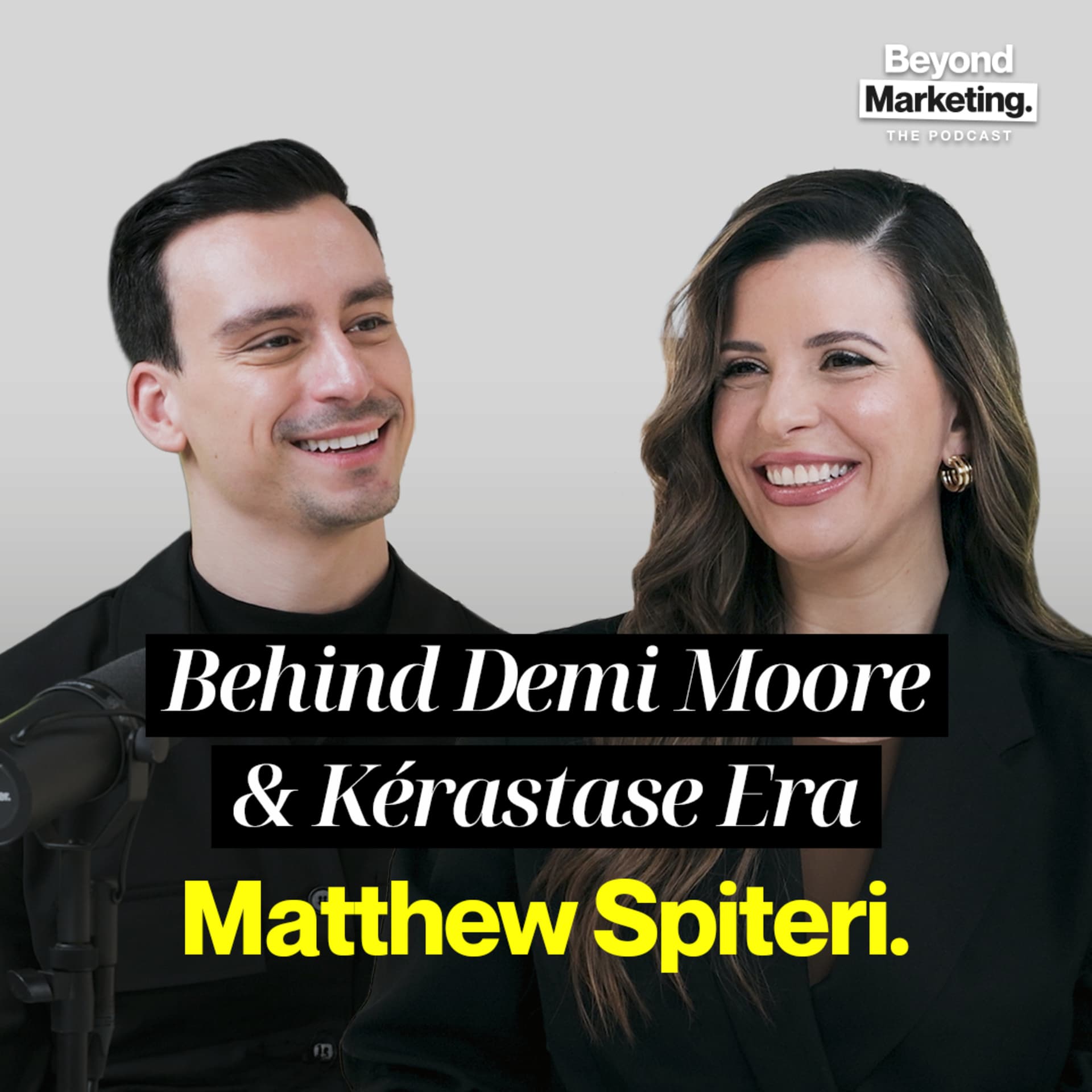

In short
Matthew Spiteri (Kerastase/L’Oréal) explains global brand advocacy and how Kerastase drives “always-on” conversation through 360 messaging, human connection (salon + events), content/influencers, and purpose-led programs. He also covers challenges of cultural consistency, Gen Z-to-boomer communication, ingredient/science education, and future hair-care trends (scalp-first, personalization, wellness/skinification).
Guest backgrounds
Matthew Spiteri is Head of Global Brand Communication and Advocacy at Kerastase (L’Oréal Group). He has lived/worked across Sydney, Malta, London, and Paris, shaping his approach to culture, consumers, and leadership.
Key claims
Advocacy = anyone talking about the brand (PR, campaigns, consumers, employees, hairstylists). Keep one consistent global message while adapting local execution. Events create authenticity and feed social. Content fatigue requires constant content. Purpose matters because people align with brands; Kerastase targets women’s confidence via PowerTalks.
Notable examples
Signing Demi Moore as global ambassador; viral TikTok momentum for “top five” hero products; PowerTalks flash mentoring with 16 NGOs and 90% reporting confidence change; New York launch of Gloss Absolute with 23 replicated market events; salon tech “Kérastase/Case Scan” showing scalp/thinning to recommend ranges; scalp-to-tip R&D and “skinification”/wellness trends.
Written by AI. May contain mistakes. Listen to the episode to check what was said.
Chapters
Tap a time to open that second in VOMatthew Spiteri's Global Journey
0:46 to 2:14
Matthew shares his career journey and global experiences
“and where the beauty and hair care industry is heading next.”
Understanding Brand Advocacy
2:15 to 4:11
Discussion on what brand advocacy means in a global context
“So I think we're not just looking at it from purely a social media point of view.”
Creating Effective Advocacy Strategies
4:12 to 6:28
How to develop advocacy strategies that resonate with consumers
“I think you always need to look at the consumer first.”
Balancing Global Consistency with Local Nuance
6:29 to 7:12
Importance of maintaining brand consistency while adapting to local cultures
“People experience things in different ways in those cultures.”
The Role of Human Connection and Social Media
7:13 to 8:21
Exploring the importance of human connection and social media in marketing
“But then we have, you know, social media, which is equally so important.”
Engaging Different Generations in Brand Communication
8:22 to 11:23
Strategies for communicating with different generational demographics
“But if you've got the opportunity to really bring people in on another level, it's going to make the brand feel much more authentic, more lived in, more purpose and involve people.”
Leveraging Content and Influencers
11:24 to 13:32
The necessity of constant content creation and influencer collaboration
Selecting the Right Global Ambassador
13:33 to 14:01
Criteria for choosing a global ambassador for brand representation
Choosing Global Ambassadors
14:01 to 16:33
Learn how brands select authentic global ambassadors that resonate across generations.
“People have talked about her hair for her whole career.”
Demi Moore as Kérastase Ambassador
16:34 to 16:51
Explore the significance of Demi Moore's role as a global ambassador for Kérastase.
Show all 21 chapters
Purpose-Driven Branding
16:52 to 19:30
Discover how purpose-led brands can create meaningful connections with consumers.
“so let's talk about leadership from purpose to action because it's not every brand that do the talk.”
PowerTalks Initiative
19:31 to 21:46
Learn about the PowerTalks initiative aimed at empowering women's confidence.
“And you know, it goes from different things with PowerTalks.”
Leadership in Diverse Markets
21:47 to 24:11
Understand the importance of adaptive leadership in navigating global markets.
Events and Human Connection
24:12 to 26:59
Examine how Kérastase leverages live events to foster human connection and brand loyalty.
“So last year we launched a new product called Gloss Absolute and we started the campaign in real life so the day that it went live was the day of an event in New York.”
Cultural Relevance in Marketing
27:00 to 28:05
Learn how cultural relevance drives marketing strategies in the beauty industry.
The Authenticity of Celebrity Collaborations
28:05 to 29:24
Explore the importance of authenticity in brand collaborations, particularly with celebrity stylists.
The Skinification of Hair Care
29:24 to 30:51
Learn about the booming hair care market and the concept of 'skinification' in beauty.
“And it's about what you're putting into the body as much as what's on the outside.”
Consumer Awareness and Ingredient Transparency
30:51 to 32:49
Understand how consumer awareness around ingredients is shaping the beauty industry.
Navigating Brand Messaging in a Competitive Market
32:49 to 34:25
Discuss the challenges brands face in maintaining clarity and authenticity in their messaging.
“I think what is like really authentic as well, picking your like lanes, like, you know, wear professional luxury hair care.”
The Importance of Indulgent Hair Care Experiences
34:25 to 35:59
Discover the significance of personalized and indulgent experiences in premium hair care.
Heritage vs. Modernity in Brand Evolution
35:59 to 37:18
Examine how brands can evolve while maintaining their heritage and core identity.
Transcript
Automatic transcript. May contain errors.0:04Welcome to Beyond Marketing, the podcast. I'm Maira Genovese, the founder and CEO of Mg Power, a global integrated market agency. Today, I'm joined by Matthew Spiteri, Head of Global Brand Communication and Advocacy at Kerastars, part of the L 'Oreal Group. Matthew has built a truly global career coming from Sydney, London and now Paris, shaping how some of the world's most iconic brands think about advocacy, culture and leadership. Today, we'll be diving into his journey, what a brand advocacy really means at global scale, how leadership and purpose translate into real impact, and where the beauty and hair care industry is heading next.
0:52welcome to beyond marketing the podcast my great to be here glad that you came all the way from paris it's not too far for you guys i would that's good so thank you so much so very fascinating about you know about your journey and your you know global career path tell us about you were born in sydney yeah from sydney to malta malta to london and now paris how that built into this amazing global leader that you are today yeah i think like i've had so many different experiences in different countries and i think that really shapes how you see people connections how consumers shop differently in these different areas and it all builds up into what we're talking about today as well like advocacy how people talk about subjects um so i've seen it in different areas and i think you know sydney couldn't be more different to london in some ways like the pace and the kind of, it's a different energy.
1:52And then now in Paris, again, very different to both cities. And I think, you know, you bring those into your experiences and it shapes how you do different strategies, how you talk to different people. Yeah, it's fascinating. I love it. Could see myself moving somewhere again as well. Where will we be next? I don't know. I don't know. I love Paris now, but I'm always open to try something new. That's exciting. And then as you mentioned about advocacy, can you tell us it's like because there's now I love your title because your title is head of global advocacy for Kyrgyz Starrs yeah and when Andrea was talking with me about you know the opportunity of having you on a podcast I got really like intrigued but also uh curious about the tide of being head global for democracy because you don't see that as often yeah what that translates into a role exactly i think advocacy is becoming a bit more broader the way i look at it and that we look at it in the company as well it's it's a term that encompasses a bit of everything it's whoever's speaking about your brand that's how i view it so whether that means kind of your more traditional influence in marketing whether that means traditional pr foreign communications, campaigns come into that as well.
3:12It's anyone talking about the brand. So I think we're not just looking at it from purely a social media point of view. Advocacy is spoken word. Advocacy is consumers talking about your brands. And they're the most powerful advocates as well. So advocacy now, like some people could see it just as thinking about influences, but it's really a lot more broad than that. You add employees into that equation as well? Yes, as well, yeah. Exactly. Anyone talking about the brand. That's exciting. And then what is that exactly like when you think about creating, because a strategy to get advocacy talks about your brand.
3:50So how do you see, how do you view the 360? Because as you said, consumers is important, influencers and employees. But when you have to put it all together, how strategically brands need to be in order to get all your advocacy talking about what you want to be told about your brand? It's many things. I think you always need to look at the consumer first. So before you start any strategy, you need to go to who is buying a product or who do you want to buy a product and really kind of working back from there. So when you look at that, then who inspires those people? So then you're thinking about ambassadors or influencers.
4:32Where do they go in Keras says it's hair. So like we're in the salon as well. So you've got hairstylists that are part of this ecosystem of advocates as well. So when you're coming up with a 360, it's all about consumer relevance, what they actually want or need. And then stepping back and you go through the kind of pyramid of all the different ways to touch them with different messages. I think what I'm learning is more and more important is your messaging being really strong and focused at one timing as well. so really going in these like big bursts of like talking about a specific subject where you kind of can reach someone in so many different ways from you know an event to paid media to influencers talking about it but going all at the same time so you've got this kind of messaging coming at you from everywhere and talk about messaging because like especially you with your you know like uh have you lived in so many different places so the culture relevance today it's so important and now with social media because your message can get across so many different countries and place simultaneously so for brands nowadays it's so important that the narrative and the message can resonate into multiple culture relevance yeah so how do you manage to do that because i think this is the biggest challenge for any brand it's just like how to keep your diversity but also a message that can resonate in so many different markets Exactly.
6:02It's not a formula. It's constantly evolving as well because the world changes in different cultures, evolve in different ways. I think from our perspective, it's having a really consistent message. That's how you build a strong brand. So no matter what market is, it's in, the message needs to be the same. Your brand values need to be the same. And this needs to be shown all the time and repeated, repeat messaging of this. and then once you've got that established that's when the local nuance can really partake and i think certain things are more adaptable for different cultures so like in real life experiences events having like a real cultural residency and like relevancy is super key to adapt it into those you know our events in real life look totally different um experience to what would be in china versus Brazil or Europe because people do events differently.
6:59People experience things in different ways in those cultures. So I think there's a real room to change your strategy and adapt it in different markets. But you need this global consistency. Your brand needs to look the same everywhere as well. And you talk a lot about real-life events, especially with a hair care brand. This is just so important. But then we have, you know, social media, which is equally so important. So how you guys see the importance of the human connection, which is key nowadays, but also keeping the presences on social and ensure that your community is having, you know, they are able to touch point both online and offline.
7:44Yeah, I think you need to be doing both. I think everyone craves human connection. That's the way humans. Especially nowadays with AI. Exactly, exactly. And I think events are such a great way of bringing people together. I think we've started to bring the consumer way more into these events. So it's not just the event for the lucky few, like some big names. Yeah. And like bringing them into the story and then how that translates on social. So, you know, you can tell if someone's at a place and they're enjoying it and they're putting it on their social media as well. It's like getting that connection through from the event into them, social media.
8:21I think purely digital activations can be done. But if you've got the opportunity to really bring people in on another level, it's going to make the brand feel much more authentic, more lived in, more purpose and involve people. And I think hairstylists as well. It's an in-person connection. It's part of our brands. Like it's about sitting in the salon chair and having that conversation with your stylist. and that's a real big part of it so do you take those conversations like as you said when you go to speak with hairstylists do you take you know their advising things that they would like to see it or change within the products and you you take this when your product development absolutely they're the ones using it and they can feel it and they feel the changes that it can make on your hair and they're like really invested in it they're passionate these hairstyles it's a vocation They're really interested in what they do.
9:19So, yeah, you always take the feedback back. And then in terms of like generations, consumer, right? Because you're in the moment in the world that you have, of course, our Gen Zs and we've got our millennials and you have the alpha coming. And then when it comes to social media platform, we have TikTok, Instagram, Snapchat and YouTube, just to mention a few. So a brand like Kerastase, of course, you know, like your consumers, they come from, you know, young generation to old generation because it's such an established hair care brand. So how do you take that when it comes to communication and the right message for the right generation?
9:56It's super interesting. So I think there was a really big focus in the past few years that every brand around the world was really on this really big Gen Z focus. Oh, my God. It's a little obsession. Everything needs to work for Gen Z. everything and I think some brands maybe even went a bit too focused on that for getting them their core demographic you know Kyrsas our demographic goes from Gen Z all the way up to boomers and we're a heritage brand but then what we have to do is adapt so how do you bring in the younger generations because I mean it's life cycle of a consumer you need the younger ones coming into the brand and we do that in a variety of ways it's not just through the campaigns and the messaging and channels it's also through product development uh making sure that there's products that's more suited to a younger audience um so whether that's maybe on carousel it's like something a bit more simple a bit more fun um great like packaging design things like this and then you've got other ranges that can be a bit more serious that um a customer that's really interested in doing a lot of research into it will know about so i think it's super important that you're always evolving the brand and bringing more people into it but not losing your core demographic as well and giving them things that they are excited about as well reaching them in the fun way you know with different ambassadors making sure they feel seen and reflected in the brand um having a brand purpose that relates to them as well so i think yeah it's a real it's a constant struggle to bring everyone together yes and what would be like the main challenge you would say to i think it's how you reach different people i think all the channels are evolving so quickly so quick i mean in my career when i started my career the tiktok wasn't meant like it wasn't a thing so i'm not a native on tiktok which is quite interesting when you're doing marketing channels for that so i think um i think that's the hardest part is like the channels and right now there's such a constant need for content we have content fatigue constantly and years ago a brand would put one campaign out for the year a 30 seconds and that's it and that's it that does not cut it anymore um so this constant need for content is really and and then i really love that point because yes content became but i feel like now it's it's it's like it's a non-negotiable part of any brand strategy but also influencers as well because it's a at the same times that brand need to be constantly creating content when you talk about advocacy and it comes to influence especially it's all about creating content because you want you want your content to live on your own platforms and have the real brand consistency and then for that to be able to take off into organic content so what we're seeing like i call it like brand love like when you get your brand to that point where people are automatically talking about it organically and then they can fuel your content and we see it like a few of our products went viral last year um based on a strategy of like our products like key pillars like our kind of heroes we call them like our top five products and then we started really like pushing those constantly and then they really took their own life in tiktok that's amazing millions and millions of views and people just now talking about them which is i think the dream of any brand to have that organic brand yes especially tiktok because tiktoking goes viral really quickly and having it sustained and then what do you do with that we then put in strategies to you know focus those products more on different campaigns uh working with e-retailers to bring that out a bit more and you can really then push it further and then when it comes to content you mentioned about ambassadors it's very challenging for a brand especially a brand like kerasas to really identify what is the right ambassador that goes back to your point that can actually speak across so many different generation different markets and different cultures what are the criteria for you to select a global ambassador so there's a few i think when you really step back from it it's authenticity yeah someone that really relates and feels like they encompass the brands as well but when you're choosing an ambassador you'll have different kpi it's different priorities are you looking for global reach are you looking to work with someone to build your brand awareness um or are you looking for someone that resonates with the brands where you can like see them in a campaign and you realize oh that's carousel um culturally as well is it are you looking for someone that can really resonate in a different area um or do you want someone that can try and do it all when brands are trying to do it all it's impossible it's impossible it's really hard to find someone that ticks every single box um especially when you're looking in a brand to have diversity and i don't mean just like different backgrounds of like um countries and markets that they're from but real like diversity and expression like we're a brand that's all about femininity and it's like there's very different ways to express femininity so bringing in those different elements as well so for us we just signed Demi Morris out yes I saw it that is just incredible incredible incredible and I think we just launched it last um month and their response the sentiment on it was like 100 % positive because it was authentic.
15:32People have talked about her hair for her whole career. There's very few women in the world that are known specifically for their hair. So that authenticity was just captured. And when it came out, it made sense. People were like, this just makes sense. And she talked through all the generations because we all love her since I was 15, 14. ghost came out yeah exactly and i think you know she's had a really great um resurgence if you will that gen z love her as well and that's super hard to find someone that resonates with boomers and gen z in a cool way and i mean she's the coolest yeah that is so exciting and then when you say like she's now the the global ambassador for the brand across all touch points because you're social ROL out of home exactly and we'll be seeing a lot more in the coming months that is very exciting but it's it's yeah it's really interesting because with our distribution we're in salon as well so you know these ambassadors are very everywhere you'll end up seeing their face when you walk down the street and for a salon it must be incredible to be able to have Demi Moura as a face of Kira Stars into their salons exactly it's a great it's a win-win for everyone in the end so let's talk about leadership from purpose to action because it's not every brand that do the talk.
17:01Yeah. Right? Because it's easier to say that you're a purpose-led brand and then actually execute what you say. But it looks like you guys are doing this amazingly well with the power talk. Talk to me more about what is this and what is the purpose and how this is actually impacting in a different way that is not just like the selling part of the brand. I think when you go back, when you're doing something with purpose, consumers don't just want to brand anymore. They need to align with the brands. You know, when you're shopping for anything, people are now thinking, what is this brand? What does it do in the world?
17:44Do I actually align with it? Is that interesting to me? So when we're looking at Karasas, you know, there's lots of studies out there. that if like 95 % of the world's brands disappeared, people wouldn't care. Like people aren't in love with the brand. And I want us to be one of those 5 % that is loved. And this means then going further beyond products. And PowerTalks is a great example of this because we identified our core demographic is women. And we wanted to see what are the challenges, the interests of women that relate specifically to the demographic that we like go out to so something close to them something personal amazing and we did studies a lot of it led into confidence and we identified with a lot of studies the confidence gap between men and women one out of two women rate themselves less confident than men and we see this as a really um big thing in young uh formative areas between the age of 16 and 25 that this gap can really like widen and so what we um have done is we've partnered with now 16 different non-government organizations around the world to partner with them to bring power talks and what this is is flash mentoring so different from normal mentoring which is like a program over months this is kind of one conversation can change your life in a moment where you're at that crossroads or you need some advice.
19:14It's partnering young women with experienced women, woman to woman, to have that one conversation that can inspire them, that can help them with their issues. And we've done surveys after this and 90 % show a change in confidence. That's incredible. Yeah, it's amazing. And you know, it goes from different things with PowerTalks. We do these very large scale events and I call them like the inspiring part. it's about bringing women into a room together you feel that emotion you feel the connection the energy um and people feel great after it and i think when you then look at carastas and the product we sell the campaigns we do it's all about this strong liberated femininity that comes out in the campaigns and the product and i think that relates really nicely to them what we do on the non-product side and the and the stock is globally or is more specifically in a few it's global it's now in 16 um ambitions to go further than 16 as well we've reached i think the latest is about 5 000 um mentorship sessions exactly so you've got tangible results which is because then this is another important thing because you guys can actually have the tangible result which is again is stalking the talk and making the action and showing the results exactly and you know we do these big events and it's kind of known now like people want to be invited to it they want to attend they want to see it on social um they're really interested in it and we bring different viewpoints to our consumer and yeah it's great and then you do that uh in the way that you also inspiring people that is inside the corporation right exactly because it's a way that is not just inspiring the external but i believe the internal as well we do a lot internally we actually are all trained on like the we call it also the the bias gap um so we all do training on that then we do a lot of internal mentoring as well within the group which is great which is amazing yeah and then like moving a little bit from you know the the impact and the leadership but still on the same subject about your leadership right because you've been navigating so many different markets when we come to different countries different languages and leadership how do you Matthew how do you lead with change and adapt your leadership according to the you know all the experience that you already have in all across different markets and countries I think the experience has really helped me being on different markets because I'm in a global role now and traditionally some of the global roles were people that had no actual market experience so there was sometimes a disconnect of what could actually work in reality and I think the experience that I bring in is this real practicality in my role because I've been on the flip side in London executing global campaigns and knowing how it works so in my leadership i really bring that in and i think it's bringing people along the ride with you so when my markets know that i've been in that situation i co-create strategies with them because we need their experience that feeds our strategy and it's not us and them it's really bringing it together and i think that's what i try and bring in um with like our different markets but also within my team as well like having those like bringing everyone together different viewpoints I think that's the the strengthener career-wise do you think leadership is what is the it's kind of I don't know I'm talking about myself but people just ask what is the the challenge that you see yourself as a as a business owner what is the challenge the most I always say that's leadership because leadership is such a responsibility of how you inspire and lead people and bringing people together exactly what you said yeah i think the challenge is always uh balancing all your different priorities i mean at the end of the day it is a business you are there to sell i love that is also the reality of like it's not something to be ashamed of that's what we're doing so it's really um inspiring people for that purpose making people passionate about it as well i think like if you don't have the passion for what you do it's really hard to it's really hard I always say that so it's like without passion is very even if you're very good in what you do but without the passion it's just to move the needle is quite of course yeah and it's as a leader you can't like if your team isn't passionate or motivated then it's going to be a really difficult job to get things done so I'm always looking at ways that you can bring those passion points in it like I'm so passionate about what I do I love I love events I love advocacy I love campaigns and i think you know bringing that excitement is a really great way to lead as well no 100 and then this events you mentioned aril experience with we saw 2025 so many brands doing so much more events in our experience because i think everyone is craving human connection and i think in the era of ai where there's a lot of talks about ai taking over this this and that but it's still people screaming for I want connection I want to be interacted I want to be going to an event in 2026 when you look at the numbers it's just like 42 percent will increase when it comes to our experience what that looks like for you guys at KiraStars.
24:52So last year we launched a new product called Gloss Absolute and we started the campaign in real life so the day that it went live was the day of an event in New York. And that's when our media went live. That's when it was revealed in salon. That's when the campaign went live on social. We did everything on this one point. But the event itself was the kickoff. It's the thing that got the most attention. And what we did, you know, many brands have done a pop up before. I'm not saying we reinvented the wheel there. But what we did do, I feel like we broke down the kind of barriers for the consumer in a different way we had our two brand ambassadors that were there in real life we had them on the street at the pop-up they were live getting people down to it then you went in then there were influencers then the next day consumers it was open to them so everyone got the same experience so the person walking down the street in new york had the same experience as emily radikowski so it really brought people together um the day of the actual consumer part i got a call at 5am from security being like people are already queuing oh my god and i was like oh my gosh people love us like it's great to see when people are really interested in the brand but that really kicked it off and then what we did we replicated the event in all our different markets we did about 23 events over the course of the next month wow that had the same look and feel the same beautiful universe of this course absolute but with the cultural relevancy so you're able to hit every consumer yeah with this as i was saying before with that consistency and the events by the time it got to release in let's say thailand people were waiting for the event to happen in their market yeah and which was great to see it really like kind of like brought it on and that's where real life experience you can't beat that because all our consumers let's say you get 2 000 through in the day those consumers are posting about it they're telling their friends about it they're the best advocate that you create the formal for the next market exactly excited about it and now people like when's the next one like what's happening next can you tell what's happening there there will be well i think in life experience is never going to be leaving our brand it's so important and there'll be many more and we're always looking now what's what hasn't been done what's something different for a consumer well like listening right social listening what the other consumers are actually asking for and how can we create an event and experience around yeah what they want and i think new experiences are key like is a key pop-ups maybe there's a bit of a pop-up fatigue as well like a lot of brands are doing them so it's now how do you do it a bit differently what do you guys participate on cultural relevance big events from markets for example i don't know are you guys into like big sport global events so we don't currently sponsoring any i think for me our strategy on cultural relevancy because it needs to be authentic to hair yeah so what we look at is like you know working with celebrity hairstylists for big events that's a really good way to get in the kind of in that cultural relevancy in that talk like let's say the oscars are coming up and you know we'll work with some of the biggest celebrity stylists and that gives like a bit more authenticity to the brand i think sometimes sponsorships are great in different areas but i think it really needs to align with the brand and when it doesn't it's quite easy yeah it doesn't feel authentic exactly so i think like i love to say like we play in our lane like it's an area that's very us we're very celebrity we're very hair we're very red carpet with that high glamour so it it's quite natural for us to go in there and then hair industry it's a huge industry right and now there's so much talk around k-beauty but now k-wellness how do you guys see this coming yeah i think you know that hair care market is booming it's one of the biggest growth sectors of beauty um people are starting to understand it more you know we call it like the skinification imagine 10 years ago no one knew what like hyaluronic acid was but now consumers know ingredients consumers really know their ingredients um but it wasn't really applied to hair as much so we started borrowing a lot of the cues from skin and how to infuse that into hair and a lot of brands do that as well um and i think you know there's a big shift people want stuff that works so you know we are one of the biggest in research and development the art of advanced science teams at l 'oreal are incredible always coming up with like what's next what works consumers want to know that consumers read through it now it's not just a pretty product no and not a good packaging that's gonna sell needs to work and then i love that you touched on wellness because there's this real shift now in beauty from the inside out um a lot of people are talking about longevity and it's not just a marketing buzzword it's it's a real concept yeah And, you know, people are looking at every part of their beauty and wellness.
30:05And it's about what you're putting into the body as much as what's on the outside. And I think this is a real change. It's a change in consumer behavior. It's happening right now. But you can see brands tapping into this a bit more. And there'll be a lot more in the next year's, like, that's focused on that for sure. And you guys are thinking about, like, different products? Yeah, exactly. I think you know it relates really well to Kerasas because um we start with the scalp yeah the scalp is the living organism it's where the follicle is so if you can do something that can go inside that's how you can actually really transform your hair so we've been playing in that area for a while from we call it like from the scalp to the tip of your fiber so it's really about going inside and what can make changes to the body make your hair look and feel amazing amazing and do you have like a timeline for that is it something that i think it's just going to continually be happening there'll be new ranges that different brands put out i'm sure um and also the language that people really talk about it with yeah because this is another thing because as you said like we now understand ingredients we're reading readings because we are much more conscious about what we are not just putting inside but they scheme before you would buy like a makeup or a skincare hair care you wouldn't even care about what is the ingredient we're just going to use but now we all know that whatever you put on a skin can go straight to our cells and then go inside your body so we're all much more aware as well what you put on external because we know that there's an impact on an internet exactly and i think you know um consumers are very savvy about like everything but then there's also what comes with that is a lot of misinformation as well about certain ingredients and i think as a brand it's our role to educate people as well so which is a really tricky thing it's not just about a pretty campaign that looks nice like you need to also be talking about the science that's also what brings great credibility to a brand as well when you're actually talking about how it's been developed what um what goes into it so it's this real balance especially with caris does it's this balance of beautiful premium sensuality this lovely feeling but also that really works really works and also you have to find a language that can resonate and people can understand exactly because it's not everyone that can read straight away and understand what i talk about it's just like being honest about what your ingredients are and then also in a way that can educate for people to understand what being understandable and like simplifying a message without losing the actual juice of it as well because yeah some scientific messages can't be just completely simplified they are a bit more in depth and then talk about scientific language there's so many brands are talking about science behind their product but not necessarily all the brands has a science behind the product exactly the thing it became like a language that people brand think that they have to have in order to ensure that consumers will find attractive because there's a science related into their product yeah for sure i think like when you look at consumer studies and you think like is a brand resonating and scientific is that a good thing or not but you have seen a shift there's many brands many brands science organic yeah crew free and then the list goes sustainable and then the list goes on like you really some brands can really like spread themselves very thin across all these different pillars and messaging.
33:47I think what is like really authentic as well, picking your like lanes, like, you know, wear professional luxury hair care. We don't stick out from like those messaging, you know, we're always talking about the hairstylist, we're talking about the science, and we're talking about the beautiful beauty of the product, and keeping it very focused in that. I think there's a real risk when you start talking about all different kind of buzzwords of consumers, because yeah you can appeal a bit but then what is your brand at the end of the day what makes it stand out from others um not everyone's gonna love every brand so you're not dedicated for every single person and you're not supposed to as well right and then when you look at you know the the industry we talk about the wellness but the hair industry what is your how do you matter to see this where this industry is going i think this connection part i think the hair stylist is super important at the salon is super important because again when you go about experience you know in the salon you can have a beautiful experience it's not just about hair care but it's about really taking sometimes the time out of your day to do that to sit in the chair to have a spa environment i think this is where we'll see a shift back into these kind of more indulgent experiences i think that's really interesting in premium hair care um and also personalization how can products feel adaptable for you um you know with carasus we've got this um tech technology called case scan which you can do in the salon and it basically you can show you your scalp it can determine your age it can show you is your hair thinning do you have this and then you can get your hair cells will come up with the exact range that's going to help that so i think people are very interested in bespoke and customized and i think that when you tie in experience and personalization i think that is a real way yeah matthew what an incredible conversation and then i love to know that you know you guys are just so ahead of the game when it comes to you know understanding where the industry is going but just not losing the heritage of the brand because i think this is another challenge right how to evolve how to keep up with new generation how to keep up with so many content that now we need to produce without losing who you are as a brand and i think you guys do this brilliant yeah it's and it's a struggle being culturally resonant as a heritage brand is a real like there's a back and forth and there's a balance and I think we do strike that well and people love heritage brands as well because it comes with all its history but then how do you translate that into new consumers and messages exactly and then like for Curacao is a brand that was born with single real it's not a brand that has been acquired or already there in the market so I think that's the whole story about the heritage as the brand it's just just so unique yeah and then to keep that heritage in there intact without evolve without losing that is exactly and reminding consumers as well you know hair care didn't exist before carostals it was purely clinical it was just hygiene so we brought care into hair that's literally the name of the brand and that meant like giving women a solution that was actually more fun more indulgent more beautiful to have in the shower um so yeah it's always great to remind be like we invented this so we need to stick to stick with that and then on the top of it doing this amazing job that you guys doing with the power talk is just bringing the confidence back in women which is not every brand that's thinking about you know how to use your you know brand strong heritage to actually do good yeah exactly and i think you guys doing an amazing job so thank you so much for being here for this incredible conversation and hope you have enjoyed.
37:48And then for everyone that's listening to us today, please make sure you follow us on YouTube, Spotify, Amazon and Apple. And now we have our own social media on Instagram, Beyond Marketing, the podcast where you can see all the guests that were coming up, all the teasers. So make sure you follow us. And then, Masu, once again, thank you so much for being here. Thank you.
38:13you
From the publisher
In this episode of Beyond Marketing, Maira Genovese sits down with Matthew Spiteri, Head of Global Brand Communications & Advocacy at Kérastase, L’Oréal, to explore his journey from Sydney, London and now Paris, and how those experiences have shaped his perspective on leadership, culture and brand building.
Together, they unpack what brand advocacy really means today, why most brands struggle to build genuine connection, and how global teams balance consistency with cultural relevance.
The conversation explores how brands choose the right ambassadors, including the thinking behind Kérastase’s recent partnership with Demi Moore, and what it takes to build relevance beyond reach. We dive into the growing role of IRL experiences and why purpose must move beyond messaging into action, including Kérastase’s work around closing the confidence gap. A sharp, human-led conversation on building brands people don’t just see, but believe in.