
In short
Brands and purpose in philanthropy—how to do it as governance, not marketing; why long-term, risk-taking partnerships matter; and how Gerando Falcões tackles poverty in Brazilian favelas using a multifaceted, data-driven model plus AI/tech education.
Guest
Tatiana Alonso, Brazilian-born international lawyer turned philanthropist; worked in corporate law across Brazil, New York/Chicago, and London; mother of three; CEO of Gerando Falcões International, fundraising globally to finance Gerando Falcões’ work in Brazil.
Key claims
Purpose must be a multi-year governance decision (3–5 years), with employee/board involvement and shared risk; philanthropy can’t be judged on quarterly metrics; poverty is multifaceted, so solutions must cover education, housing/territory, and social-emotional/mental/physical health together.
Notable examples
Gerando Falcões’ AI courses partnership with Microsoft (including free AI training via tech hubs); international messaging reframing “favela” as “human families” and addressing the widening city–favela gap amid AI/technology access.
Written by AI. May contain mistakes. Listen to the episode to check what was said.
Chapters
Tap a time to open that second in VOTatiana Alonso's Background
0:45 to 2:06
Tatiana shares her journey from law to philanthropy.
“We waited too long for this moment to happen, right?”
Motivation for Change
2:06 to 4:39
Tatiana discusses what inspired her shift to purpose-driven work.
“I did law school in Brazil and worked in a law firm for a long time there, 10 years.”
Balancing Motherhood and Work
4:39 to 6:11
Navigating motherhood alongside a professional career.
“Once I became a mother, I understood that success was not only delivering projects successfully, but was also doing them with a purpose and leaving a better world, a better space for our children.”
Challenges in a Male-Dominated Field
6:11 to 11:43
Tatiana talks about her experiences in a male-dominated corporate world.
“I know how you are an incredible mother, very present.”
Empowering Women Together
11:43 to 13:21
Discussing the importance of women supporting women in their careers.
“so you're more like about speaking up rather than take it home yes in that in that whole style environment, yes.”
Navigating Privilege and Responsibility
13:21 to 14:00
Tatiana reflects on managing privilege while being a responsible leader.
Privilege and Responsibility in Leadership
14:00 to 15:00
Explore how privilege shapes leadership responsibilities, especially for women in powerful roles.
“Because sometimes we tend to see people with more privilege taking advance from that to, you know, to do things the way they wanted to be.”
Introduction to Gerando Falcões
15:00 to 17:20
Learn about Gerando Falcões and its impactful work in Brazilian favelas.
“I think that, well, first of all, I don't come from a privileged background.”
Poverty as a Multifaceted Issue
17:20 to 19:20
Understand the multifaceted approach Gerando Falcões takes to tackle poverty in Brazil.
“Brazil is a huge country and Gerardo Falcões has the capability of being present in all of these places.”
The Global Perspective on Poverty
19:20 to 21:40
Discuss the global perception of poverty and the importance of addressing it universally.
“And that's what you're doing, but outside Brazil, right?”
Show all 16 chapters
The Role of Technology in Bridging Gaps
21:40 to 24:20
Discover how technology and AI can help reduce poverty and improve education in favelas.
“We are seeing now with AI and everything that is happening in the world, the gap between, we say, between the city and the favela, the streets and the favela, the gap is widening.”
Brand Philanthropy: Right and Wrong Approaches
24:20 to 27:10
Examine the common mistakes brands make in their philanthropic efforts and how to improve them.
“We are seeing that we are doing tech hubs around the favelas where we bring those courses to the youngsters in the favelas.”
Understanding Philanthropy in Branding
28:00 to 29:19
Explore how brands can effectively engage with philanthropy beyond mere sponsorship.
“They take risks together with the project, not all projects.”
Tatiana's Perspective on Success
29:20 to 30:42
Learn how Tatiana defines success in her life and career beyond traditional metrics.
“It's a corporate decision and a governance that elects to have that project that makes sense with the purpose of the brand.”
The Importance of Kindness and Generosity
30:43 to 33:00
Discover the role of kindness and generosity in building connections and community.
“success in the position that you are right now what makes you wake up in the morning and say I'm doing this because of this and that's my purpose in life as as as a woman as Tatiana like what is this for you?”
Advice for Balancing Career and Motherhood
33:01 to 34:40
Gain insights into maintaining balance between career ambitions and personal life.
“you enter the room with a closed door and everybody has something good to give at the end of the day.”
Transcript
Automatic transcript. May contain errors.0:04Welcome to Beyond Marketing, the podcast. I'm Mara Genovese. I'm the founder and CEO of MgEpower, a market-integrated agency. Today, we're joined by Tatiana Alonso, a distinguished international lawyer and philanthropist with a truly global career. She was born and raised in Brazil and built her professional journey across Sao Paulo, New York, and London. After a successful career in international law, she transitioned into purpose-driven leadership. And today, she serves as a CEO of Gerando Falcons International, leading global efforts to mobilize resources and partnerships for long-term social impact in Brazil.
0:44Tati, welcome to Beyond Marketing, the podcast. Oh, thank you very much for having me. We waited too long for this moment to happen, right? And you are here now and I'm so grateful and I am very excited for our listeners to get to know you and all the incredible things that you have done and that you're already doing. But to start with, who is Tatiana Alonso? Thank you. Thank you very much for having me. Tatiana Alonso is today a philanthropist that turned into a leader in the field of fundraising and does it with all her heart. And I love that. And know you personally, I know that this is so true.
1:30And it's incredible to know you for so many years and see your work and impact that you have been doing since you start moving your career from law to more social impact work. Tell us a little bit more about your career back in the days when you're in Brazil as a lawyer, and then how you have decided to change completely to focus your leadership and your skills into a more purpose-driven leadership. I started my career in university. I did law school in Brazil and worked in a law firm for a long time there, 10 years. Went to the States, to Chicago and New York, worked and studied there too. went back to Brazil and then changed a little bit what I was doing at the time.
2:25I did corporate law before, worked in football as well, and then came to London, also went to university here. I think that law for me at that time was a safe space and it gave me structure. It gave me credibility. It gave me a sense of the corporate world. but I always ask the question if what I was doing was enough or if it was changing things. I was always moved towards the philanthropy. All through my career, I worked some pro bono deals in the law firm and after that I volunteered to many NGOs around the world where I was. and that shift to philanthropy work was a seamless one after I was here in London for a long time.
3:22It seemed that I needed more purpose in my life. And that came from like any particular moment in your life that triggered you to go to that direction and experience that you had that you thought maybe that's the direction I wanted to go. Also, how this actually becomes something that you're like, wow, I'm going to go to that direction. I think there was not one thing. I think it was a conjunction of things. It was the time of my life. I think it was the moment I was living. The people that I was in contact with in London, I was helping several NGOs here, but nothing was related to Brazil. And after being here for 15 years at that time, I thought that I wanted to serve my country.
4:09I wanted to do something for Brazil. And at the same time, I had started to have contact with a lot of Brazilians that were in town and were doing work in projects in Brazil. And I think that inspired me to focus on Brazil and found one NGO here to work with different projects in Brazil. and then shifting after that to the project that I work with, Gerana Falcões International today. Also, the time of my life, I became a mother. I'm a mother of three. Once I became a mother, I understood that success was not only delivering projects successfully, but was also doing them with a purpose and leaving a better world, a better space for our children.
4:56And that moved me as well towards the philanthropy more than the corporate world. And how to transition from like law, becoming a mother and go to philanthropy. So how do you navigate these three phases of your life? I think that I was a lawyer and I didn't have kids at the time. So I dedicated 100 % of my time to that, to study, to excel in what I was doing, to put all my efforts towards the firm that I was working with. And after that, when you become a mother, you do have to split your time. I'm a mother of three in a different country. I stopped for a few years and focused on the kids. And then when I decided to go back to work, one of the options was to go back to law.
5:46and then those questions came back what I was doing was something meaningful was I doing it just for the pleasure of being successful and good and excelling in what I was doing or was I also leaving behind a legacy a better world for my children and those questions shifted my mentality towards doing a different kind of project and I love that and I know you I know how you are an incredible mother, very present. And nowadays, people don't understand, they underestimate the fact that for us as a woman to be a mother, but also to be successful or to work and then be sure that 100 % we're never going to be in everything.
6:34Because, you know, it depends on the moment of your life. We're going to give a little bit more there instead of there. So how do you navigate and balance motherhood and work? I can ask the same questions to you. How do you balance work and motherhood? I know. I think that for, I think, correct me if I'm wrong, if you feel the same way as me, sometimes we feel like heroes and sometimes we feel like failures. 100%. So there are days that you manage to balance the work time and the family time. and there are times that you feel like you're failing one and you're failing the other. But overall, I think that as our kids grow older, they start having their own lives, their own little lives.
7:22And when they see their mother working and excelling and doing something purposeful, they are proud and they understand and they help with the timings. I think that when they are very young and you have more than one child, etc., I think it's very difficult. And I struggled with that and I stopped working for a while. But as they grow, I think that the balance is possible with the help of family, with the help of staff and also with the help of the children. They understand as they grow, they understand the importance of their mother being also a person and not only their mother. And it's also, I think, it set the tone for them to understand that, you know, female and male, they both can work.
8:08Yes. And they both can be successful, not just one or another. Yes, I have boys and girls, and it's important for both of them to understand that mothers are also people. They are also professionals. They also have their own wishes, and they want to accomplish things, and they're capable. And not only take them for granted, sometimes they do. They do. indeed and then like again being a woman a mother and trying to succeed is not easy but especially it's more of a challenge when you navigate career paths we're seeing a male dominant environment and then I'm assuming law is a very male dominant environment and then you have a lot of involvement with football as well and then philanthropy what what do you see like how do you make your voice to be heard we're seeing such a male dominant as we discussed it before we started the podcast how do you make your voice to be heard and for you to be seen and for your leadership to be taking consideration for what you're bringing to the table.
9:22It's something that people will consider. So how do you navigate into that? I think when I started as a lawyer, that was over 20 years ago. So I did corporate law and it was very male. Yes, it was male dominant. There were very few women doing it. I started as a trainee, so I was in the bottom of the chain and it was difficult but I think that posture and knowledge are important in the corporate world and security in yourself in what you're doing. I think that people respect you, men respect you when they see that you have, that you know what you're talking about, that you understand what they are talking about and that you have things to aggregate.
10:21I think that the more you rise in your career and the more you pull other women to rise with you, it's very important. Women, supporting other women in this environment, it is extremely important. And I did get help from women that were older than me in the law firm etc and they were my role models and I think that they inspired me as well and I think that this environment of having a mentor helping you out is important. Then within the law from corporate law to doing football it was also a male dominant, completely male dominant. I was the only woman in the boardroom. That was very challenging.
11:08And in that environment, a hostile environment, I would say, you have to be tough. You have to say as it is and respond as you are asked and not take anything home with you. If you are insulted, you stop right there. If you are harassed you stop right there and that happened many times and you have to just put your limits this is this is where I go to and you don't pass this limit and people start respecting that they will call you tough they will call you names they will say that you are too manly that you are this that you are that doesn't matter do your job you put yourself there so you're more like about speaking up rather than take it home yes in that in that whole style environment, yes.
11:58I think that you have to adapt to the environment that you are in. And is that still happening nowadays? I think that it's different now. I think that women are raising in different places that they weren't before. I think that our voices are more heard. It's not ideal. It's not even 50-50. It's far from being there. But I think that we see more women as CEOs. We see more women as board members, we see more women in decision-making tables, etc. And I think it's changing. I love the fact that you said that like when women raise, they need to bring others with us. I heard that from a very good friend of mine that is very high up in one bank.
12:45And she said to me, my goal in life is not to succeed in the bank. I've already done that. My goal in life is to see how many women I can make succeed with me yeah and I love that and I think that this is what we all have to do no 100 because it's not just about you in the end it's just like it's getting your platform to actually how being that and how to use that platform to bring it more women with me and then that's how I think there's going to be a chance for us to change the you know the gender equality gap that we all talk about it the 50-50 is far from being but I think if we continue to that direction of using our voice but empower other women to actually empower their voices too i think is how we can see that we can make we can make a change i completely agree and you have a boy i have two boys and a girl and uh it's good for them to learn from early age because they will be the decision makers in the future remember every man was raised by a woman every man has a mother so so it's it's from us that has to change from us women we need to change how we raise our kids for the world to change for the world to change 100 and then do you think that coming from a privilege and shall i say power i'm not sure if you want to be like a label as a power but coming from a privilege and let's say power environment and a lot of responsibility as well comes with privilege and be around powerful environment, how do you take the three to not let you to get your privilege or your environment to move away from the responsibility that you have as a woman, as a CEO now from the international non-profit organization in Brazil?
14:38Because sometimes we tend to see people with more privilege taking advance from that to, you know, to do things the way they wanted to be. But knowing you, you're very, very different and far from being that person. But how did you learn to not let your upbringing or your privilege to dictate how you would behave or being a leader? I think that, well, first of all, I don't come from a privileged background. I work myself up. I don't come from a rich family or anything like that. My mom and my dad were middle class and I studied and I worked really hard to get where I was in a law firm. And yes, today is a different thing.
15:22But I think that that is the reason why I shifted towards philanthropy, because the privilege that I have now, it comes for me as a responsibility rather than a given thing. I see it as if I have this privilege, I not only have to share, but I also have to make other people in my circle understand that they have to share too. And that's the responsibility. What can I do to contribute in changing things that are not done properly today? And I chose Gerando Falcoins exactly for that because Gerando Falcoins, the projects that I see them doing in the slums of Brazil are long lasting, impactful, scalable.
16:07I see the results and I see the real impact for a lot of people. and thinking about the privilege that I have and how I can influence other people. Exactly, influencing other people to help as well and make this as impactful and as distributable as possible. And knowing you, you do that really, really well. Thank you. Tell us like more, because I have one that's listening today that knows about Gironde 4 coins. So talk us through like what is Gironde 4 coins and what Gerando Falcões is trying to change in Brazil and what are the work that you're doing outside Brazil to support the purpose of Gerando Falcões?
16:51Gerando Falcões is an NGO in Brazil that works in the favelas, in urban favelas, in urban slums, in communities, underprivileged communities in several cities in Brazil. They are present in every state and if every one of the 26 states of Brazil, it has educated over 2 ,000 social leaders. These leaders went back to their smaller NGOs in the slums and are present in 5 ,000 slums in Brazil. Brazil has around 13 ,000 slums. It's insane. It's insane. So they are everywhere in the country. Brazil is a huge country and Gerardo Falcões has the capability of being present in all of these places. And what I like about Jadana Falcoyens is that they see poverty as a multifaceted problem.
17:45They don't target one issue of poverty. So they don't look at poverty only through the eyes of housing or education or mental health or each one of them. They look at poverty as a multifaceted problem that you have to attack, that you have to care. So their projects focus on all of them. They focus on education. They focus on housing. They focus on the physical transformation of the territory that they are working with. They also focus on the social-emotional status of the families that live in that territory. With the mental health. with mental health, with physical health, and all these issues that influence the exit of poverty.
18:42Poverty is a very complex problem to solve. If you don't care for the person, there's no point of caring for the environment that the person lives. If you don't care for the environment, the person also cannot thrive. So you have to look at all of them together. And that's why I like to work with Gerardo Falcões. And also, this year is the 15th year. Gerardo Falcões has been working with the favelas for 15 years. We are celebrating in 2026. And in these 15 years, they are able to show they are data-driven. They have scaled through all these cities and states in Brazil. they are audited, show their accounts, and it's a trustworthy project that I'm very proud to be part of and that I can sell to other people, that I can use my influence to make other people join because I trust this project itself.
19:43And that's what you're doing, but outside Brazil, right? So So your positioning now is a CEO. And then how do you, because like for us Brazilians, it's kind of like it's easy for us to understand what is favela, what favela mean when we talk about poverty, as you were saying, but how to translate all of that into an international market without the action. Because again, because we are from Brazil, for us it's very easy, But your role now is more of a challenge in the sense that you have to explain what it is and then bringing those people together to get the chance for Gerando Falcões to change the situation from Brazil, but now with the support of a global landscape rather than just local.
20:32Yes. My position today is to fundraise internationally to finance the projects in Brazil. So I run the international NGO that funds for the Brazilian NGO. Internationally, when you talk about Brazil, people think of carnival and football. Bikinis. Yes, bikinis and beautiful people. But the reality in Brazil is different. Completely. And poverty is no different anywhere in the world. Poverty in Africa, poverty in Asia, poverty in South America. poverty is poverty and when we are talking about Gerando Falcões internationally we make sure that people understand that it doesn't matter where you're helping it matters the bodies the human people that you are helping if you're helping an NGO in Africa, it's amazing if you're doing it in Brazil it's the same because it's not about the favela, we talk about the humans exactly, we're talking about the families the children, the next generation What are we going to do if we don't tackle the poverty problem?
21:40We are seeing now with AI and everything that is happening in the world, the gap between, we say, between the city and the favela, the streets and the favela, the gap is widening. What are we doing to shorten this gap, to make it smaller, so we can bring these people out of poverty into a dignified life so they can participate in the world ahead? Instead, the world is moving so fast that if we don't tackle this problem, we will have millions and millions and millions of people completely out of what's happening in the world. And this is not good for anyone. It doesn't matter the country. and what I like about Brazil is that because we are in all these places we can scale and we can reach more people and help them getting out of poverty and joining this new wave of technology etc because when we talk about technology and AI we think that oh everyone is going to have access to AI but we just need to think that it's not everyone that has access to technology and then we can go even, you know, beyond that.
22:52It's not everyone that can afford to have a mobile phone. So it's just not make it like as a general thing that everyone needs to, you know, to think about AI and then, you know, do courses and focus on that because there's a lot of things that need to be changed, especially when it comes to people that are not yet there even with a mobile phone. So how does Gerando Falcões can help with the basic in order to create those spaces that this generation, this family can be part of the new wave of technology? You know, this is interesting. When we did our charity dinner in Miami, I interviewed the head of Microsoft in Miami because Gerando Falcões did a partnership with Microsoft to bring AI courses to the favelas for free for their residents.
23:41And it's an amazing project. And we were talking exactly about that. How can we teach AI if the people don't have education and everything else? Well, technology can help shorten this gap. You would need years of education to teach somebody some skills. And today, if you use the technology that we have and AI tools, you can teach them how to use that to in their own benefit to maybe replace some of the educational gap that they have and achieve professional skills, for example, that they will need in the future. We are seeing that we are doing tech hubs around the favelas where we bring those courses to the youngsters in the favelas.
24:32Well, first of all, you know as well as me that Brazil is a very technological country, even though education is not available to everybody and good education is definitely not reached by all of the residents. But in every favela, everybody has a mobile phone. If it's a good connection, not good connection, etc. It's a different thing. But everybody has a phone. Everybody is connected. The number of people that are in the internet is amazing. So instead of using that for social media, why not using that for educational reasons? And that's where we are going. So Gerando Falcões is investing a lot in AI and tools to better the way we manage ourselves internally, but also to better the processes, etc.
25:29inside Gerando Falcões. But we are also looking into how we can apply that to the residents in the favelas to make them raise out of poverty in a quicker way and more longstanding considering the future that is ahead. I love that and then I love the fact that Jordan Falkoins and you guys are very like ahead of the game on thinking technology and thinking AI and thinking education and workshop because it's not, again, you're the expert, but I don't think that is every nonprofit organization that is already, that everyone is in there already when we talk about technology. and then picking back in that you work with a lot of brands as you just mentioned about we collaborate with microsoft and now we're doing a great project with them there's a lot of brands and then coming from a place where is a market agency we work with a lot of you know brands different industry different categories so every brand nowadays think about creating you know a hub inside their corporation that they can create an impact or they can be part of a movement but brands more and more for what i'm seeing from the eyes of having a you know working on this on every day and marketing and guiding brands on how to create that purpose led inside corporation but it's all about not having the stamp but actually do the talk and be the doer and then get it right because consumer now they can feel when a brand is actually supporting you know for example general for coins if it's just like a one-off of the really interesting support a long term what do you think the brands are doing right and wrong when it comes to having that purpose you know philanthropy within their own business I think that brands sometimes make mistakes when they decide that they need to have an impact, but they use that as a marketing tool instead of a governance decision.
27:45When they have a governance decision, it's a different thing. They elect what the purpose is, what the project is, and they do a multi-year partnership with that project. It's a long lasting partnership. It's not one off. Yeah. They also involve their employees. The board is involved actively in that. They understand the project. They take risks together with the project, not all projects. And this is something that maybe people don't understand outside of philanthropy. The projects fail and we need to take some risks. And then you fail, you do it again, you fail, you do it again until you get it right.
28:26And brands need to understand that this happens in philanthropy, in projects. They also have local decisions and global decisions. Is your project long lasting? What's the impact? Are you a global brand or a local brand? All these things impact. But the most important is the brands need to understand that they have to walk alongside the project and not feel just as a sponsor. I give my money and they do the project. No, I want to understand. I want to be part of it. How can I help? Are my employees involved? Do they understand? Is the board supportive or not? And definitely a three to five year project.
29:09No philanthropist would do less than that because the results won't come in six months. Philanthropy doesn't work on a quarterly basis. You need a long lasting project to show impact, to show results. It's just embracing the cause, right? Yes. Rather than just... It's a corporate decision and a governance that elects to have that project that makes sense with the purpose of the brand. And how you, as the international representative of Gerando Falcons, are educating brands and corporations in that sense. so when I meet with the head of a new brand that will ask for sponsorship or support etc I don't like to do it over emails for example I like to have a call at least a video call or a present meeting with them to explain to show and I also invite them to come and see the project by themselves if they are in Brazil or if they are traveling to Brazil usually the brands that we talk are connected to Brazil somehow and I invite them to come and see in real life what the project is about, to talk with the people that are living this day-to-day, what changed in their lives when Gerando Falcões arrived in a favela, why is this important, what's the scale of it, what are the needs of Gerando Falcões and what are the needs of the brand in terms of collaboration and I think that this makes a huge difference for them to understand what the project is about.
30:41and what Tatiana what you as it's like putting aside the CEO of General Falcons how do you define success in the position that you are right now what makes you wake up in the morning and say I'm doing this because of this and that's my purpose in life as as as a woman as Tatiana like what is this for you? I think that success for me before was performance. If I performed well and I delivered well, I was successful. Now, at this time of my life, being a mother, etc., living all that I lived in different countries, I think that success today is the legacy that you leave behind for your children.
31:36I live my life thinking, am I doing the right thing? Am I using my skills the right way? Am I impacting who I can impact? Am I doing my part in the world? And that's what drives me. And do you think like when you see yourself in five, 10 years, where do you want to see yourself? I want to see myself expanding my influence in a positive way, bringing more people, helping more women, getting there as well. This is an important thing, seeing the world change and seeing how technology can help us doing that for the less privilege. kindness and generosity and again it's a kind of bias for me to say because i know you very well as a friend and i know how generous and kind you are with people that you know and people that you don't know what kindness and generosity means to you i think kindness and generosity means connection.
32:48I think when you are kind and generous to somebody, even if you don't know them, you open a door to that person also being kind and generous. It doesn't happen always, but most of the time it does happen. If you come to a place and you prejudge people, you enter the room with a closed door and everybody has something good to give at the end of the day. It's about opening that door for that goodness to come out. 100 % and if you could give one piece of advice for especially women that are trying to balance motherhood, career, success or being in a space of fear, of unknown, what that piece of advice that would be?
33:40study a lot work hard but don't lose yourself in that and do what makes your heart beat I love that and then to work but not losing yourself into the work is just like a very it's the difficulty that we all have the balance that we all try to reach yes it's so true Tati again you were truly inspiration for me and I know you as a friend I know as a partner and we've been you know working together and thank you so much for the time for being here it's so good for you know for using your voice to be in a space and podcast like that where you can we can all learn from you but you can use your voice to spread your knowledge to spread your experience and inspire other women that, you know, doesn't matter where you're coming from, if you're from privilege or not privilege, if you want something, it's all possible to achieve if you work hard, if you're kindest and if you're generous.
34:45And I think you take all the box. So thank you so much for being here today. Oh, that's lovely. Thank you. Edu Lira, the leader of Gerando Falcoense Brasil, learned something from his mother and he repeats that over and over again. It doesn't matter where you come from, it matters where you're going to. and that's something that we should all live by. Thank you very much for having me. You know, as a friend, as a partner, I admire you and everything that you have done in your life and it's a pleasure and a privilege to be here and I hope that this podcast helps other people too. I'm sure it will because this is the purpose of Beyond Marketing, the podcast.
35:25Wow, what an episode. So hope everyone that's here today listening to us has been, you know, inspired and motivated to, you know, from everything that Tad talked about philanthropy and the importance of just sometimes just look around and see how can you use your voice and your power and your privilege or no privilege to help others and understand that everything that we do can be something doesn't matter if it's small or big. So if you're not following us yet, please make sure you do on YouTube, Amazon, Spotify, and Apple. And now we have all our social media accounts for our Beyond Marketing podcast on Instagram and LinkedIn.
36:07Please make sure you follow us there to get all the news of new guests behind the scenes. And once again, thank you so much for all the support and for being with us. And I see you guys on our next episode. Thank you so much. Thank you very much.
From the publisher
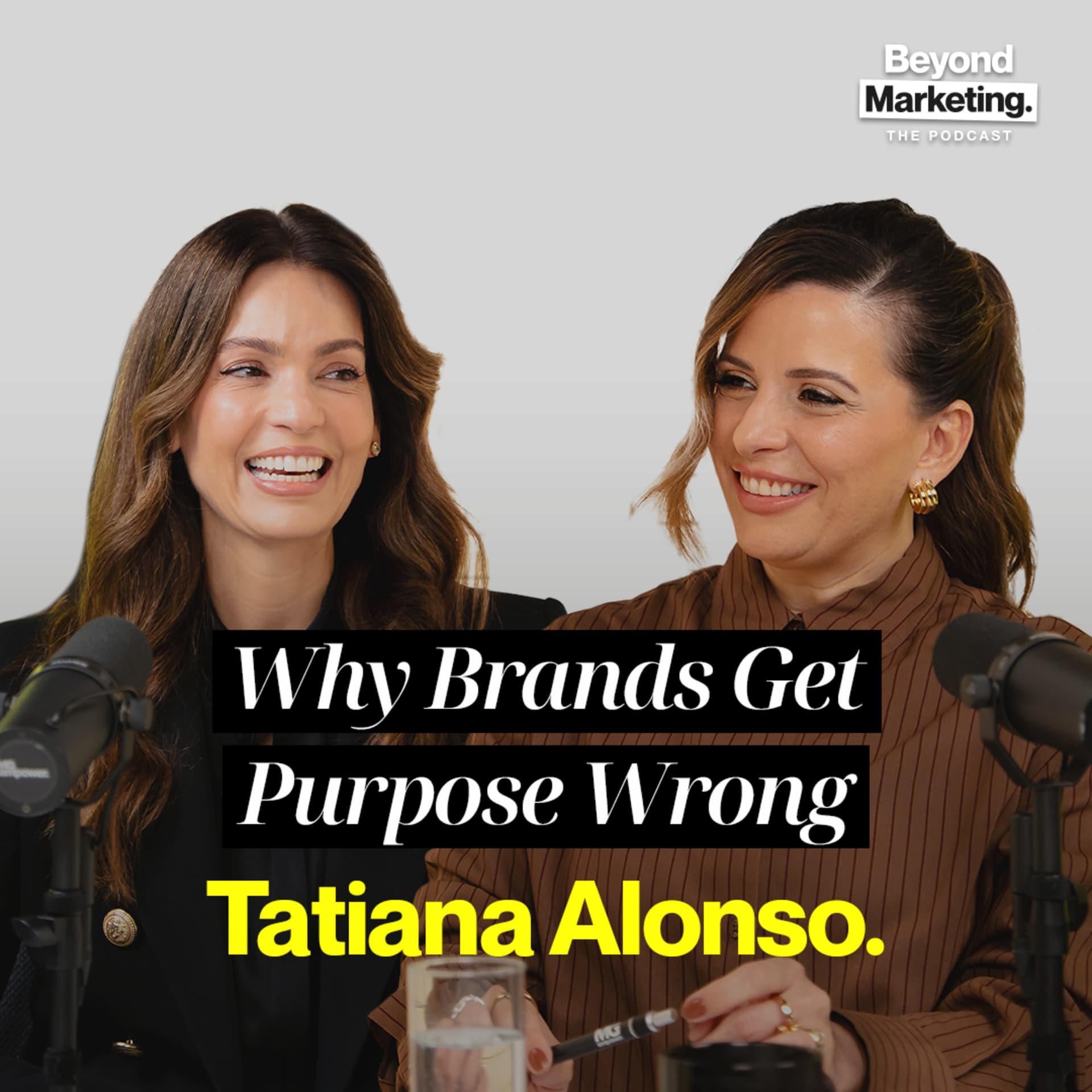
In this episode of Beyond Marketing, The Podcast, host Maira Genovese sits down with Tatiana Alonso, CEO of Gerando Falcões International, to explore why brand purpose often fails without action.
From a global legal career to leading impactful initiatives, Tatiana shares how purpose must move beyond intention into long-term commitment. They discuss why philanthropy isn’t a quarterly strategy, what real impact requires, and how brands can shift from visibility to accountability.
A sharp, honest conversation on leadership, responsibility, and redefining success, not as performance, but as legacy.