
In short
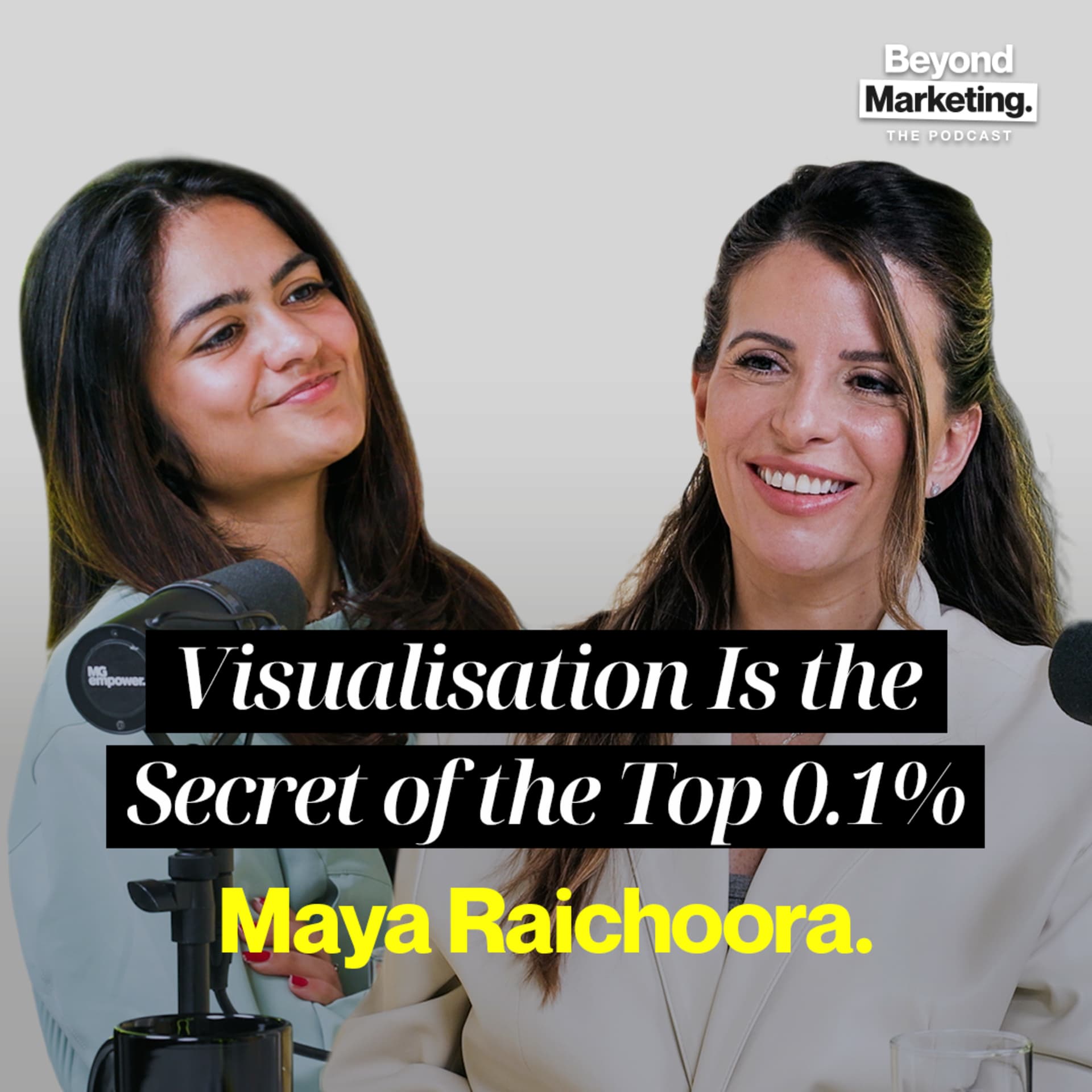
Maya Raichoora explains how “visualisation” works as a daily neurological mental-training skill (not just manifestation). She connects it to resilience, performance, stress management, sleep/neuroplasticity, and chronic/autoimmune recovery, and contrasts mental fitness vs mental health.
Guest backgrounds
Maya is the UK’s #1 mental fitness and visualization coach, author, keynote speaker, and Nike’s first mental fitness trainer. She was diagnosed at 15 with ulcerative colitis (inflammatory bowel disease), endured years of extreme symptoms (frequent bathroom trips, severe pain, heavy medication), and later overcame it without symptoms or medication through daily mental fitness practice.
Key claims
Visualization has five types; most people only use outcome visualization (about 10%). Mental fitness is proactive maintenance of mental health; mental illness/weakness is different. Neuroplasticity rewires during sleep, so visualization and relaxation matter. Stress accumulates like holding a glass of water longer and heavier.
Notable examples
A hospital moment where she visualized walking helped shift her thought pattern; she practiced daily for ~10 years. She describes a team culture change by celebrating small wins every three weeks. She leads a “character visualization” exercise (embody calm/confidence, relax jaw/shoulders, rehearse body language).
Written by AI. May contain mistakes. Listen to the episode to check what was said.
Chapters
Tap a time to open that second in VOMaya's Journey to Mental Fitness
0:45 to 4:00
Maya shares her personal journey and challenges with mental fitness.
“I saw you the first time that I was like oh my god I got obsessed, it was a TED talk at Cinco's Shortish two years ago, I know this is two years ago or a year ago.”
The Power of Visualization
4:00 to 8:00
Maya discusses how she discovered visualization and its impact on her recovery.
Overcoming Challenges and Trusting the Process
8:00 to 12:00
Maya explains the non-linear journey of mental fitness and the importance of persistence.
Surrendering to the Journey
12:00 to 14:01
Maya talks about the concept of surrendering to the healing process and finding purpose.
“And in that phase that you're going through that, you're already outspoken about that mental fitness or you're just doing yourself, but you're not telling the word yet?”
Maya's Journey with Health and Visualization
14:01 to 18:17
Discover Maya's personal struggles with health and her journey into mental fitness.
Understanding Visualization: More Than Just Manifestation
18:18 to 21:09
Learn about the different types of visualization and how they can enhance mental performance.
The Practical Applications of Visualization
21:10 to 22:56
Explore how visualization techniques can be applied to various aspects of life and performance.
The Connection Between Emotions and Physical Symptoms
22:57 to 26:38
Understand the link between mental patterns and chronic physical conditions.
“performance space when everyone's telling you what to do exactly but they don't do it themselves Exactly.”
Managing Stress: The Glass Analogy
26:39 to 28:00
Learn an impactful analogy about stress and the importance of letting go.
Daily Mental Training Practices
28:00 to 30:40
Learn about the importance of proactive and reactive mental training.
“Now, in the day, obviously life happens.”
Show all 19 chapters
The Impact of Morning Routines
30:40 to 33:20
Discover how morning habits affect your mindset and daily performance.
“So I'm assuming neuroscience, there's a time that your brain is just like waking up and then, you know, trying to, you know, get back to your normal self because you're awake.”
Neuroplasticity and Sleep
33:20 to 36:40
Understand the role of sleep in rewiring the brain for better performance.
Applying Mental Fitness in Sports
36:40 to 41:20
Explore how athletes can enhance performance through mindset mastery.
Mental Fitness in Business Culture
41:20 to 42:04
Learn how mental fitness can transform workplace culture and productivity.
Understanding Mental Fitness vs. Mental Health
42:04 to 44:25
Learn the differences and importance of mental fitness compared to mental health.
Maya's Insights on Mental Fitness
44:25 to 45:38
Discover Maya's thoughts on mental fitness and its significance in life.
Visualization Exercise for Mental Fitness
45:38 to 48:09
Engage in a practical visualization exercise to boost mental fitness.
“So this is one that I think people can do in the morning or maybe you are feeling a bit tired in the afternoon and you're like, oh, like I'm so bored, I don't wanna show up.”
The Connection Between Body and Mind
48:09 to 49:52
Explore the link between physical sensations and mental states during visualization.
“And let's take a nice deep breath, breathing in.”
Where to Learn More About Maya
49:52 to 50:51
Find out how to connect with Maya and learn from her expertise in mental fitness.
“where people can find you to know learn from you is your book your social media what else Where can we go to learn more from Maya?”
Transcript
Automatic transcript. May contain errors.0:04Welcome to Beyond Marketing, the podcast. I'm Mara Genovese, the founder and CEO of MGM Power, a global integrated marketing agency. Today, I'm so excited to be joined by Maya, UK's number one mental fitness and visualization coach, book author, keynote speaker, and Nike's first ever mental fitness trainer. Maya's journey is striking. She has built a global recognized approach to training the mind, one that has completely redefined how we think about performance, resilience and visualization. Maya, welcome to Beyond Market Podcast and I'm so excited that you're here today. Thank you, I'm so excited, it's a privilege.
0:48I saw you the first time that I was like oh my god I got obsessed, it was a TED talk at Cinco's Shortish two years ago, I know this is two years ago or a year ago. So you were there to talk and then you did an exercise. And then I was just like, how I did not know this person before. And then I started following you. And then since then, it's like it became my goal to have you on a podcast. And now you're here. So it's just incredible. Maya you're known as I described you as a mental fitness and visualization but who is actually Maya big question um well how do you want me to answer that I mean yeah it's funny like those titles are all very exciting and um you know shiny and fancy but I guess underneath it all I'm just someone who is deeply passionate and, well, some would say obsessed with how we can train the brain to think better, feel better and perform better.
2:07For me, my journey was very much through illness and I guess a lot of suffering to get me to where I am. But it gave me a lot of purpose and meaning in my life as well. so each day for me is how can I build that mission of making mental fitness as common as physical fitness because it's not at the moment which is a massive issue so yeah someone who just loves to have fun and yeah go for that challenge in life and and how was the story because I'm very intrigued about like how you started with the mental fitness and visualization when does this come into a place and then when you realize the power of the brain yeah it's a great question so um when I was younger I you know I was like any young girl trying to just find their way in the world and I was pretty high achieving like to me if I could achieve results I'd feel good about myself and I also was very competitive in terms of sport so I was playing at very high levels for badminton and then when I was 15 I was diagnosed with something called ulcerative colitis which is an inflammatory bowel disease but it's incurable and that was a really weird time in my life because I guess you'd never expect to be diagnosed with such a debilitating condition at a young age but the nature of the disease is that you are going to the toilet maybe like 30 40 times a day um I was on about 60 tablets every day I was wearing adult nappies to school anything like walking drinking eating things we all take for granted were just so difficult for me and of course you're experiencing insane physical pain every single day and this was going on for about five years of my life so going through the medical system and trying to work on it trying to make it better but just nothing was working and then I guess I got to a point where I lost any type of strength physically or mentally to just keep going I yeah I just couldn't do it I didn't have the strength to fight any longer and then I remember in the hospital this nurse she said to me you know if you weren't laying here where would you be and I thought it was a bit of a weird question because everyone had told me what my life was now going to look like and I believed it because actually these were the experts and I had no other version of you know a different life I could see and when she asked me that question I remember closing my eyes and I guess by accident I was doing what you know I now talk about which is visualization but I started just seeing myself walking in the hospital hallway so again something we take for granted but I hadn't walked in a long time and so for me I was like wait a second like could this be possible again uh could I walk again could I go home could I eat normal food again and um when I left hospital I basically got very curious about why did my brain have a different thought in that moment why was I able to think oh could I walk again rather than I'm gonna be sick my life exactly and so it's such a tiny moment but I had seen a change in my thought pattern and I liked it and so when I got home I basically read every book I listened to every podcast or lecture I got in touch with neuroscientists researchers athletes coaches um but the biggest thing I did was I practiced every day every day I would visualize and I would mentally rehearse who I wanted to be where I wanted to be how to get healthy it's now been about 10 years how old you were then so about so between like 13 and 18 I was in extreme extreme uh pain so about 18 is when I took it really seriously today I'm 28 so it's been about 10 years but I have practiced mental fitness every single day of my life and it has allowed me to be sat here having fully overcome the illness with no symptoms no medication but it's helped me become the strongest most confident bravest and of course healthiest version of myself that means I can perform the best I ever have in life and go for my craziest goals but doing it with so much peace in my heart strength in my mind and health in my body um for me that's a very rich life if I get to be healthy um so yeah wow and Maya when did you see that this was working right because you said that you have that thought at the hostel then you're going back home and then you start training practicing reading studying in in which moment you were like wow this is actually is working you know I wish I could tell you that I knew the exact moment and I think the best way to explain it is if we think about when we are trying to work on ourselves let's say at the gym there's no like one moment where you're like wow okay all my work suddenly now I have abs or there's never this one moment you get it and I think that's the same with mental fitness is that it wasn't a linear journey in any way the first year was grueling and you know I would do stuff and I'd say to my own teacher like this is such a waste of time nothing's working you know I'm still feeling really awful I'm still in a lot of pain and I guess it was little by little tiny tiny actions where I kept showing up and I kept practicing that it accumulates and when I saw a little bit of progress I would use that momentum sometimes I take a few steps back but ultimately there was no one moment I think I had to really trust that I was doing the right stuff but as I kept going I started to see more evidence so sometimes it would be in my symptoms it would be the way I reacted to something it would be the way I was more positive about my future and sometimes they were tiny but I would hold on to it and I would use that as fuel and evidence to keep going and so it was a slow but life-changing journey and I think with anything in life in any moment you can find something that's going to tell you it's not working or that it's all going wrong or there's something to complain about but at the same time there's always going to be something to show you that you can be grateful and it is working out and there is hope and I had to train myself to also notice the progress rather than just always saying that I'm not seeing anything I had to notice it so yeah and what makes you not like as you're saying like it was not a straight kind of like path of like this is working yeah what makes you never give up right because when you're still feeling the symptoms and then you're saying that you question your teacher what what what made you to not give up to keep going because we as a human sometimes when it's not working on our time we feel like or maybe the brain is playing with you say oh this is not gonna work and you have to kind of like play back with the brain saying i'm gonna carry on so was the you're kind of working with your brain to not let you to give up or to because that's an interesting like yeah you know kind of like how you managed to carry on even not seeing the results straight away you know I love I love that you asked me that because I don't think anyone ever has and I think the truth is I did give up I gave up so many times you know I do yeah absolutely I was like I don't want to do this anymore you know it isn't working and I think every time I gave up I had to find another reason to keep going and it meant I got stronger because I think it can be really hard when you're not seeing any progress it really can be especially with your health because there is a point you have to kind of face reality and every time I did choose to let's say give up or stop fighting it also taught me that sometimes when we do fight too much we actually create more resistance and I don't know you might have heard of you know like the book the surrender experiment and Michael Singer and even from a leadership perspective it's so interesting that we try and control every little bit of our lives especially timelines so the biggest thing I had to give up on was the timeline of when I was going to get better because for me I was so in a rush I was like okay but I need to feel better tomorrow and well I can't go to university if I don't get better and there was always these like timelines I was putting on but when I surrendered to the fact that well forget the timeline just focus on what you can control and that really helped me and I think I think technically surrendering can be seen as giving up but you're doing it from a place of strength you're kind of just letting it happen letting it go and even for my body for it to actually heal I kind of had to surrender a bit I had to let it go I had to give up on trying to control every aspect of it or to control the pain like I had to build a relationship where I wasn't scared of losing or not getting better I had to have that fearlessness which is I think why I did and keep going and I think the other part of that which I notice a lot as well is when you are pursuing any type of goal it is going to get tough yes and I think the thing that helps you overcome those harder moments is having a bigger purpose than you and having something that you can see a vision you can hold and a version of yourself that is possible and so that purpose piece is so important that you can align to and that you can give back to as well.
13:39And in that phase that you're going through that, you're already outspoken about that mental fitness or you're just doing yourself, but you're not telling the word yet? As in, was I telling people? Yes. So you're doing it, but you're not kind of like outspoken or like telling people that you're doing this exercise with your brain yeah no you kept it to yourself yeah I um I was so embarrassed as in like I think it's so interesting I um you know anything about meditation or training the brain was considered really weird and it just meant that you know being a 16 17 year old meditating was actually quite embarrassing you know people would be like oh that's a bit weird I remember telling my best friend and it was like oh I didn't really get it like that's not very cool but I do remember just going through it on my own but the reason I went through it alone is because I also didn't tell anyone I had the disease I didn't say to any of my friends or my family what I was going through partly because the disease there's a lot of shame to do with it um you know things like going to the toilet or stuff like that is just not it's not I don't know you don't really speak about it and um I just I hid that part of my life from everyone which was but your parents they knew it that you were doing this and then they were kind of like how do they feel about it of you trying to find the cure in a different way so they were supporting you that or you face challenge with your parents because like as you said this is such a new thing right so you're like young meditating trying to visualize you're getting cured but at the same time you have your doctors I would assume saying otherwise in terms of you have to take your tablets you have to take your medicine so how you combine the both and keep going yeah I mean it wasn't easy I am I think we were all just very scared and my parents are very action orientated they only want me to you know get better and so it was they did everything that they could possibly can yeah and I remember going to like India to researching in America trying these new medications that weren't even on the market yet and I have so much gratitude for my parents for trying so hard to use their own savings and stuff like that to try and help me and there was I remember a moment where um I basically came to the decision I wanted to come off all my medication so you came with that decision and that was very risky like I actually wouldn't recommend people doing that um but I remember reading this book and I think it's Aristotle who he said it was a quote from him and it was like before you heal from the disease you have to heal from the medication I guess and I don't know I've it like 10 times being like it's so true because the more medication I'm consuming I can't hear my body right now like I can't get the side effects as well exactly so I was trying to heal from the side effects more than the actual disease and I remember telling them being like okay I think I'm gonna come off it and my doctors were like absolutely not no like that's really dangerous because I was on immunosuppressants as well so I can't just come off that no um but I remember my mind just saying like I have nothing to lose like I'm already very unwell with them so why not just interestingly it meant that I had to be okay with getting worse before getting better just like anything I love that yeah but it was really scary really scary because I didn't know what was going to happen but that's where I really doubled down on the mental training and I worked so hard to build a very strong relationship with my body um but my parents at the end of the day they supported it they I was the one going through it you know and you have to support yeah and I am so grateful for that um but it was not easy you know because everyone has different opinions different decisions even the surgery like getting the surgery seemed like a really good thing but to me it's just not what I wanted my life to be and so that was a really big conversation we kept having as well and and like so we're going to talk about visualization because a lot of people nowadays they talk about visualization right so there is a you can change your life by visualizing this or doing your like your mood board with your pictures and then you keep looking at your pictures and then you're going to visualize that the life you wanted to have what's the difference of like the visualization that you talk about it versus the visualization that a lot of people talk about it yeah there are so many misconceptions yes about visualization exactly and I want to speak about them because we're not using it to our advantage so you're right most people will associate visualization with like manifestation yeah and i have a vision board or let me just visualize my goals and then it can happen the problem with that is that's like 10 of what visualization really is that is what we may call outcome visualization where you are thinking about a result or a goal that you want in advance and it's great for motivation for belief things like that when i teach visualization i'm doing it from the point of view of this is a neurological mental training tool that rewires your brain so you can think better feel better and perform better and there are actually five types so we've got outcome we've got process negative creative and explorative and the reason I encompass this as like mental fitness is because the best athletes the best entrepreneurs the best leaders the best visionaries they know how to use visualization but it's only really been a skill that I'd say the top 0.1 % have had access to in the right way and so that's what I really want to change I want to give people the ability to learn the skill and master it so it becomes a great tool for their mental fitness and I say this because I also believe in manifestation absolutely you know I believe that if you can think something then you can create it yeah but they are two different concepts visualization needs to be seen as a skill that is for mental training not just this like idea that oh cool if I visualize something it will come into my life without the training exactly um because the thing is some people will say to me oh yeah I created this vision board you know at the beginning of the year yes but it's like this is something to do daily this is something that we have to invest in just like our physical fitness and when you do that that's when you really take advantage of the skill and that's when you really see changes in your success your performance and your resilience um which is really exciting and that five you know five ways to practice is in your book right the visualization yeah and and it's funny right because um look there are hundreds of books in the world yeah that talk about visualization but they only talk about like one type of visualization and I remember speaking to one of the best sports psychologists that I'd followed for a long time and we were talking about the skill of visualization and he was like oh wait really I didn't know that I was like what and I guess what I realized and I learned is that from the 10 years of being so obsessed with that particular practice I I learned what most people don't know and so when it came to writing this book it was essentially a bible for if you want to master the skill of mental fitness and visualization it's everything you need to know it's all the research it's all the stories it's all the applications of the five techniques in a way that no one has ever done before which was really exciting and everything you learned by studying but a lot of things came from you right so by your practice so basically like what you have in the book it is based on research and it's done but there is a proving that that it's you right because you you you work through that five steps and then you cure yourself through that mental fitness and visualization so it's a great kind of like case study because it's your life you change your life by doing it yeah and I think um I kind of get a bit sick of the wellness or performance space when everyone's telling you what to do exactly but they don't do it themselves Exactly.
23:08That's the point I'm trying to get it because you did it. You've done. Yeah. And I still do it. And you still do it. Yes, exactly. I think it's that thing of the journey never ends with it. And like, you know, now I use visualization for public speaking or for my goals or for, you know, other things, but it's not health anymore. And the applications are endless. But you're right. I think there's no better way to learn or to get better at something than doing it. yeah you know we can write what we want you can read all about it you can listen all you want to but ultimately doing it is how you're going to get better at it and I love that every single day I have practiced like without fail even if it's for two minutes I will still do it um because I know now without it life just is not the same I'm curious to know why your doctors said to you when they saw that you're progressing without your medicine and doing this through your mental fitness and visualization?
24:06I guess they tried to tell me that it was not permanent and that it might just be a bit of a random remission. Yeah. And so just be ready for... And it's been how long now? Six and a half years. Six and a half years. Yeah. I've been recently diagnosed with and autoimmune um and the doctor said there's no cure so there's a way that we can stop but you but if you don't do this this and that it can potentially become something that is gonna deteriorate a lot on your body and where you're living and then I was just like okay leave with me and now I'm just trying to do like the opposite on the sense like I will find a way that I can stop this autoimmune to continue to develop.
25:00But it's funny, like when you challenge doctors about how this does no cure, like there must be a cure by, you know, things that you eat, exercise, and, you know, sleep. But for traditional doctors, they see it as one diagnosis and say, this is it. And you're going to have to go through that path in order for you to be able to live with that autoimmune but listen to your story it just gets me even more like excited about no I'm gonna I'm gonna get this done I think the most important thing I learned when it comes to autoimmune diseases or anything chronic yeah is that if you are experiencing symptoms or illness for more than three months which is then what we call chronic like 95 % of the time it is because of something emotional or mental that is going on and I really saw that in my own life like the inflammation in my body it was so much to do with the resentment I was holding from when I was younger or the insecurities I had and those mental patterns that we have they are directly correlated to the physical symptoms that our body expresses so whether it's back pain whether it's skin rashes they are all linked to what is going on in your mind and it feels like a bit of a secret language but once you learn it and you understand that it's so important so anything autoimmune or chronic I would seriously encourage anyone to think well what are some of those mental patterns that are keeping those symptoms alive because it's amazing when you realize how connected it is mine for sure is stress is like how to handle stress especially using this do you use aura as well the ring or as like I don't know how how accurate it is but it shows that my body's in constantly stressed yeah constantly you know what's really I'm holding a glass I'll tell you why I'm holding this so there's a really um important analogy which will change the way you look at stress so if you take a glass of water okay right it's obviously not that heavy and if I held this for like a minute cool I'll be fine if I held it for like an hour my arm would start to hurt a bit and I'd really feel it if I held this for a week my arm would be completely numb and it's interesting because the actual weight of the water or glass hasn't changed but the longer I hold it the heavier and more stressful it feels and this analogy is so important because it's the same in life actually holding something for a long time even if it's tiny will affect us so much more than let's say having a bit of intense stress and then putting the glass down and so the longer you hold something the heavier the heaviest yeah exactly so that's where this process of learning to let go is so important like put the glass down i love that yeah i love that and then like if you have to tell us like how to train your like because you're saying that you practice every day you practice every day is this specifically timing the day that you have to work if a brain is like morning afternoon night or does it matter yeah so I say see in two ways mental training is proactive and reactive so proactively I'll always do something in the morning and in the evening so in the morning I will do some journaling and I'll always do my visualization.
28:38Now, in the day, obviously life happens. You know, people might annoy you or you might get some bad news or maybe it's just a busy day. So in the day, actually, sometimes it's going to be a bit reactive, but it's how you reframe things. It's how you choose to show up. It's going to be your attitude as well. And then at night, I'll also do a bit more journaling, mainly gratitude, which just allows me to go to bed with a more peaceful mind um so there's no like one specific time I'd really be like you have to do it then but the morning is a great time because it sets up your day and the way to think about it is like you know if we wake up we brush our teeth we get ready we might go for a walk or go to the gym well what do you do with your mind so many of us it's just autopilot right we wake up check your emails you think the same you feel the same you perform the same and then we question well why is nothing changing in my life because you have to bring intention in the morning you have to be like you know who do I want to be today what does my day look like what am I going to visualize how am I going to perform it gives so much power over the day so that means like writing is a good way to train your brain yeah for sure okay and you can write in different ways so I have two journals my first journal is where I just write out all my thoughts my emotions anything that I'm holding on to okay but I actually burn that journal at the end of the year so I don't keep it burn it yeah I just burn it okay I don't need it it's just a release okay my second journal is where I write all my goals and where I write my gratitude and essentially like the stories I want to tell myself and so every day I will spend about 10 minutes just writing and writing the same stories things like you know I'm very grateful for my health or I'm very lucky to be here or um you know what I'm building etc and that I keep so I have about 26 of them at the moment wow um yeah and these are from also like 2020 but um I yeah I tend to have two journals that I will use for writing and then like because like nowadays and I can tell for myself like which I'm trying to change that slowly surely which is wake up in the morning and check your email as you said yeah How bad is that for the brain when the first thing you're, because you're sleeping and then you wake up.
31:00So I'm assuming neuroscience, there's a time that your brain is just like waking up and then, you know, trying to, you know, get back to your normal self because you're awake. but then straight away you start seeing news or emails and that doesn't even allow time for your brain to actually wake up in the way it should be how bad is that if that's the first thing you do in the morning yeah so the whole advice I guess of like you know don't pick your phone up in the morning the reason it is important is because when you're waking up your brain is the most suggestive yeah now what do I mean by that it's that think of it a bit like fresh snow that the first few footprints you make in that snow they kind of lay the foundation to how you're going to be thinking how you're going to be feeling for the rest of the day so if you wake up and like you know your brain's fully open and then suddenly you're watching the news or maybe there's like three emails that just feel quite stressful.
32:08Stress you out. Exactly. You're now going to start your day in that rush, in that urgency and thinking, oh no, like what's going to happen? The other part of it is, you know, if someone's checking social media, when would you ever wake up and allow like 100 people to enter your room? You never let that happen. But when we're on social media, we see a lot of people, what they're doing and conversation and thoughts. And so really coming back to this thing that in the morning your brain is the most suggestive so as long as you can start to control the first few thoughts or actions that you do that will just help you to be way more intentional and a really smart trick is if you have your phone on your bedside table put a book over it so before you reach out to get it actually you have to touch the book open and it will just encourage you to maybe read a page and I used to do this and so what I do is I start reading the page but because I like the page I keep reading and actually it means that now the footprints I've put into my brain are really good so when I look at my phone I'm less likely to start scrolling or just you know waste my energy now I actually want to be a bit more positive or efficient or intentional um so yeah the brain is the most suggestive in the morning and that's why the first few thoughts or actions or feelings that you create will determine the rest of your day even if it's just a few minutes doesn't have to be the whole hour with a morning routine just think what's the smallest thing I can do that's going to let me be more intentional in my day and the sleep what's the like the sleep pattern added into that exercise of the mental fitness it's very important in order to get it it to work yeah 100 and the reason is because everything about mental fitness is based on the power of neuroplasticity okay and that is the ability for our brains to change so some of those thoughts beliefs emotional patterns we have these can all change but neuroplasticity happens at night so the brain rewires when you are sleeping so if you struggle with sleep or maybe you're always in survival mode you're just not giving your brain the best condition to rewire and so it's fundamental that you have enough relaxation and enough sleep to let the patterns rewire and that's why for example when I'm working with athletes and they have let's say a big match or a game the next day will always do like a performance visualization before they go to bed where then when they're sleeping their brain continues to wire up on that performance yeah and talk about athletes you've been working a lot with athletes recently recently now since you start uh getting your out there with you know with the you know your thoughts on you know mental fitness and visualization and then you became Nike number one yes you know which is congratulations this is just so exciting so how do you apply that into athletes so you just give an example but like how athletes can benefit from that in the most you know powerful way for them yeah I mean
35:30any champion in their space whether it's sport whether it's business whether it's art the thing that differentiates the good from the great is do you have mastery over your mindset because at that point everyone's pretty talented they're all physically fit otherwise you wouldn't be where you are and so the thing that's really gonna differentiate them and make them that top 0.01 % is the mental game and any athlete will tell you the same thing so when it comes to working with athletes and this ranges from you know tennis to running to football to to darts you've got to understand who they are for sure understand how their brain is wired but ultimately it's about giving them the skill of visualizations they can apply it in their training but also in their match play and it's actually really common in elite sport but what I'm noticing is the younger athletes have no idea about it and we yeah I think it's a massive problem so I think to build this resilience to build that mental strength the younger you do it the better but I work in many different ways right so like there'll be some athletes who are very good in training but can't perform in a competition scenario because maybe the pressure is too much or maybe their mind starts to play tricks on them so in that situation we're working on how do you deal with pressure better how do you deal with those higher state moments much better then you'll have people who are maybe like top 10 but they want to be top you know five or top three exactly so we need to level up their performance create a better identity we want to actually build them into a champion so so much of that is identity work um and then you have a lot of athletes who because of the world we live in you know they then experience anxiety and maybe too many nerves or fears and so how do you help them come back to the person they really are and to remember the athlete and the champion that they also are because it's one thing getting to the top it's another thing staying it's a day in the top yeah yeah and so um that's one aspect i love about my work and then I also love the teams team dynamics in sport but also business is fascinating because individually there's such a role you have to adopt and how do I apply this like you talk about athletes but like in business it's like if you talk about leaders CO CMO C levels like there's a lot of pressure but not just in like for business it works across the whole business or just for the roles that is more stress level or we can apply this to the whole organization yeah I mean whole organization okay in business I think what I notice is there's a lot of things like imposter syndrome there's a lot of negative self-talk there's a lot of working but not resting and that's a really important balance to create um and then there's a lot of moments yeah like public speaking or presenting where pressure really starts to consume people so these skills are all transferable whether you have just joined the company whether you're the ceo um and being able to really be intentional with who you are going to be at work really helps you stand out and helps the team stand out as well and i was speaking to someone yesterday who's like building a culture of high performance but integrating well-being into it and I think it's really interesting because well-being in the working world is a little bit um general yes is what I'm gonna say it's true and we've got to think more innovatively around it we've got to be a bit more brave we've got to be a bit more empowering when it comes to what is the message we're sending of why you have to train the brain in order to be the best performer or the best worker you can be um we don't have that yet and do you think this can change culture as well oh 100 and i've seen it you know i've seen it in instances where um like i'll give you the a very small example that really changed the culture of a team so about three years ago i was working with you know they're a market leader in their space and we were working with this one product team and I had asked all of them this question in our workshop of can you write down three things that you are proud of and that you're going to celebrate that happened in the last few weeks and they all just kind of looked at me like what what do you eat and we got into this conversation of like well how do you celebrate your wins and they explained yeah but when we hit that milestone we get our targets and I was like that's all fine but that's kind of like the end of the year what about in between what about efforts what about tiny things that aren't even just about work what about the fact that you did a hard conversation and they realized that they didn't have this type of reward system where they were celebrating little wins and so for that next year every three weeks in they had like a stand like a stand up like a meeting every three weeks and they would always each person had to stand up and celebrate a whip and when I came in at the end of the year it was just amazing how the change yeah and and just the way that they treated each other they celebrated each other and it wasn't just for the outcome it was for the efforts and this really helped them build momentum because what it meant is they were so much more inclined to go for the goal even when it got harder so when you celebrate those little wins culturally individually as well you are creating more momentum to go for the bigger goal and you could really see it you could see it in the energy you could see it in the interactions and you could see it in the gratitude that they all felt and yeah I always remember that because it was such a big change that's amazing uh because like there's a this misconception of like mental health mental fitness right especially in a workspace I'm talking about my own business like we talk a lot about mental health or we need to be careful with the mental health of this person we needed to go slow because that person not going through you know a good phase of mental health we don't talk in business about mental fitness yeah and what's the differentiation of mental fitness and mental health and why both are equally important yes um so mental health and mental fitness are two different things so the way I would look at this is mental health is just like physical health if you've got a body you have physical health so in the same way if you've got a mind you have mental health and that can be good it can be bad it's pretty black and white if we think about what physical fitness is that is when you are maintaining physical health right so you're going to the gym maybe you're doing yoga dance running whatever it is in the same way mental fitness is the active and proactive maintenance of good mental health so this is where the question of what do you actually do to train the mind every day you know how to physically train the body but what do you do to train the mind and it's also worth mentioning mental illness is just like physical illness right that's where we need to go to maybe a doctor get professional help maybe medication whatever it is but then you also have mental weakness so just like you know you have physical weakness where maybe you're tired you're injured things like that mental weakness is human sometimes we don't feel as good sometimes we've just had a breakup so we're not as sharp but by using your mental fitness tools you can come up again you can get to wow mental strength and these labels matter because what I found is when you talk to people about mental fitness it feels more empowering yeah it's more action orientated you don't have to have something wrong with you to invest in your mental fitness whereas I think mental health has a little bit of a narrative that to talk about it you have to be ill yeah you have to be going through anxiety you have to be unwell but actually I think mental fitness is the coolest sexiest most important thing any of us can do if we want to think feel and perform the best we ever have Maya you were like you're just 28 yeah I mean it's age just a number is a number you know but I mean when I say you're just 28 it's just because I think you have so much to give so much to tell people and then it's like I'm glad that you're very young because I'm like as you said you're still practicing every day and learning every day so I think you what the work that you're doing and how you know how you're kind of putting your work out there through your book through your social media and then teaching all of us the importance of mental fitness is something that again it's not everyone that talks about or knows about it it's just uh it's just it's just like it's just fascinating can we try to do an exercise we can let's talk about like i can tell what i'm feeling now it's like if we can do something like i said about stress and being tired traveling a lot if you give an advice from your exercise for my mental fitness or for everyone that's listened to us now that is feeling the same stress overwhelming tired what the exercise will look like oh okay let's see um to be fair i think um i think if people are let's say new to mental fitness or visualization visualization i'd say one of the best exercises to do is a visualization for character and what i mean by that is we have the power to choose our attitude every day and it's one thing to say okay i choose to be calm it's another thing to be calm yeah to actually feel it in the body to see it and to know who that is.
46:04So this is one that I think people can do in the morning or maybe you are feeling a bit tired in the afternoon and you're like, oh, like I'm so bored, I don't wanna show up. It's a great way to reset. So if you wanna close your eyes. Okay, and just take a moment to think, right, who do I wanna be today? How do I wanna show up? It might be confident, it might be calm, it might be empathetic. You might be relaxed. And I want you now, in your mind, to create a mental image of that. So if you were this person today, how would you embody that? What would your body language be? So maybe shoulders are back, head is held high.
46:56and i want you to now mentally rehearse how you would show up in the world so how do you walk into a room how do you interact with people how do you perform but you're doing it with this calmness or this confidence or this resilience what does that really look like start to practice it in the mind and body Show your mind and body, this is how I want to walk, how I want to talk, how I want to act.
47:31Good. Now take a moment and just come into the body.
47:38And just ask yourself, what do you want it to feel like? What does confidence feel like? What does safety feel like? What does calmness feel like? And just soften the shoulders, unclench the jaw, lighten the eyes. Fill every single cell with that state of being.
48:08Good. And let's take a nice deep breath, breathing in. Exhale.
48:17And just commit. commit to that vision you see that state in your body and gently you can open the eyes
48:32it really works it feels light like I feel my body lighter now like it's like I just wanted to be like this yeah it's funny sometimes I do this and people usually fall asleep yeah I just wanted to be like this now yeah but the part that i think it's it's felt the most is when you asked me to look to feel my body yeah because i normally don't feel my body yeah and this is the this is the thing i love about visualization is that you really it's about engaging all the senses you know what you can see what you can hear what you can taste what you can feel um because our nervous system is so linked to our mental fitness there's no point you acting confident but your nervous system is like shaking it's shaking yeah that's like when you said feel your body my body was shaking yeah and I was just like wow why my body's yeah because we hold so much in the body it's like sponge and it's really important to even just relax the shoulders unclench the jaw like we're all quite tight in different areas because often we think we're under threat or something's gonna go wrong we're in that survival mode and so when you can really engage yeah what's happening in the body and you know what does calmness feel like yeah what does confidence feel like what does joy gratitude feel like um and you can see in two minutes it just resets it just resets yeah as I feel the body was just like wow Maya what can I say thank you so so much and then like where people can find you to know learn from you is your book your social media what else Where can we go to learn more from Maya?
50:09Yeah, good question. So yeah, book is great if you're a reader or you like to listen to the audio book, etc. I'm a very like in-person sort of girl. And a big part of this is how do we make mental fitness physical as well. So I do events in London where they're called Mental Fitness Live. So this is where 200 people come together and you all train your mind. But it's a bit like a house party. so be ready to you know, no candles no yoga mats, it's very intense but in an exciting way or yeah, Instagram LinkedIn, always very happy to answer questions or hear people's thoughts I think it's a conversation that needs to be debated 100 % thank you so much everyone that's listening today is just like wow, what a podcast we had today with Maya, so I hope you have first of all learned something new because there is a conversation we never had here on the podcast so I think it's just like a great you know episode for us to you know to learn how to you know training our mental fitness and visualization in a way that only I would say Maya can can do it and through her own experience and through her own issues and how she overcome that through mental fitness and visualization is just so inspiring so exciting so thank you so much for everyone that's listening us today so if you're not following us yet please make sure you do on amazon apple play spotify and youtube maya thank you again thank you what a pleasure thank you so much for taking the time and for sharing with us so many wisdom thank you so much
From the publisher
In this episode of Beyond Marketing, The Podcast, host Maira Genovese sits down with Maya Raichoora, UK's number one mental fitness and visualisation coach, book author, keynote speaker, and Nike's first-ever mental fitness trainer, to explore what it truly means to train the brain for peak performance.
From being diagnosed with a debilitating illness at 15 to fully overcoming it with no symptoms and no medication through the power of visualisation and mental fitness, Maya shares one of the most extraordinary stories of resilience, surrender, and self-mastery. They discuss the five visualisation types most people have never heard of, why the brain rewires while you sleep, and how celebrating small wins creates momentum for bigger goals.
A deeply powerful and practical conversation on mental strength, performance, and why mental fitness might just be the most important investment any of us can make.