In short
Big Boss Interview - Episode #11: Google CEO: AI Will Cause Societal Disruptions
Podcast Overview
- Hosts: Sean Farrington, Felicity Hannah, Will Bain
- Focus: Insights from high-profile executives and entrepreneurs about running major companies.
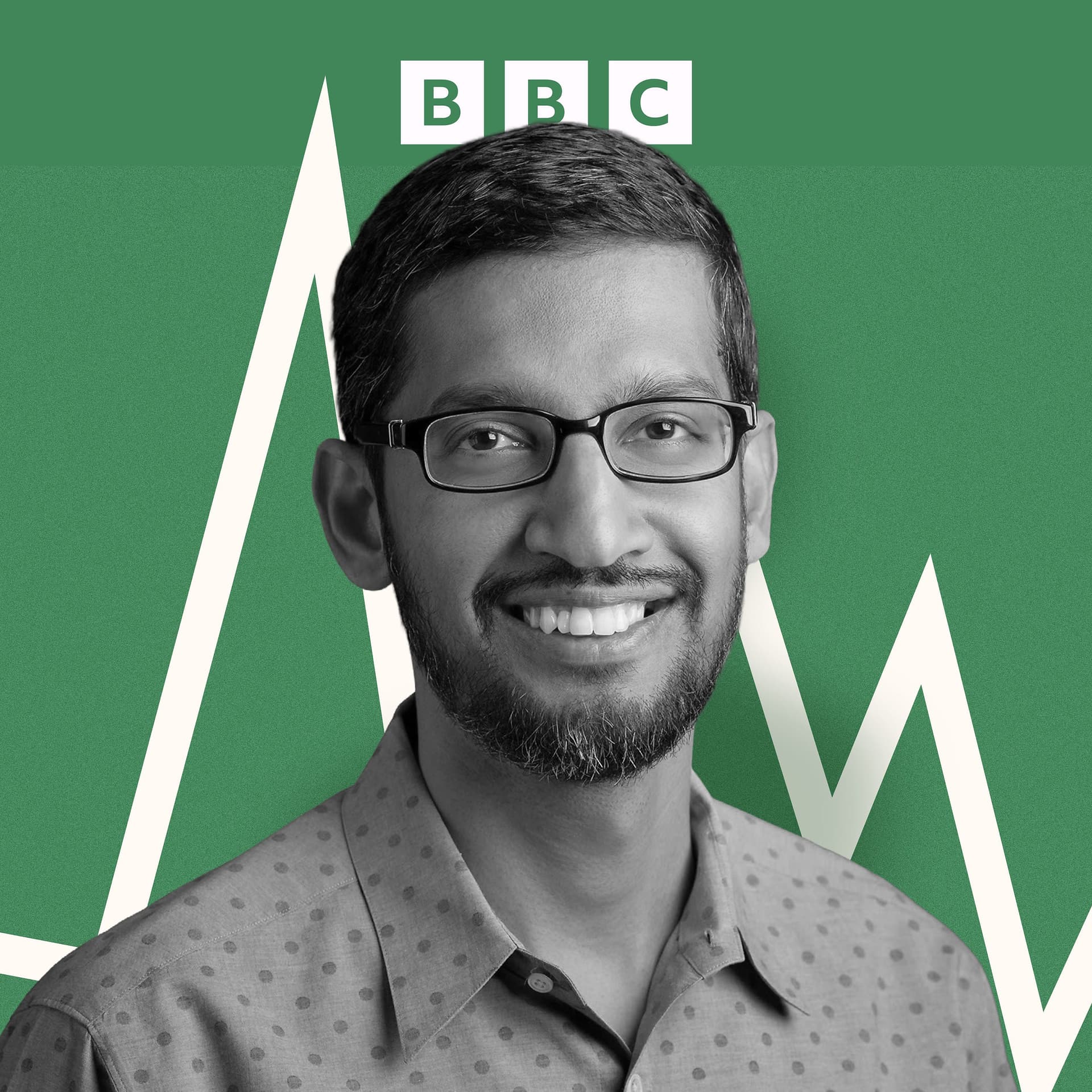
- Episode Context: A conversation with Sundar Pichai, CEO of Google and Alphabet, discussing the implications of AI growth and its societal impact.
Episode Summary In this episode, Sundar Pichai discusses the rapid growth of AI technology and its implications for society, emphasizing the challenges and responsibilities faced by tech companies like Google. He addresses potential overinvestment risks and the energy demands resulting from AI advancements.
Key Points Discussed
- AI Investment and Risks
- Google is investing over $90 billion annually in AI infrastructure.
- Concerns about an AI investment bubble affecting all companies, including Google.
- Potential societal disruptions due to AI advancements.
- Societal Impacts of AI
- Automation may change job landscapes, impacting various professions.
- Importance of responsible AI development to ensure equitable benefits.
- Growing demand for AI tools and their ability to assist in complex tasks.
- Energy Demands and Climate Concerns
- Rapid AI expansion is leading to unprecedented energy requirements.
- Google's commitment to renewable energy sources, including nuclear and geothermal.
- Setting a goal for 95% carbon-free operations in the UK by 2026.
- Technological Safeguards and Accuracy
- Ensuring AI systems are grounded in accuracy and real-world information.
- Acknowledgment of current AI models' propensity for errors and the need for reliability.
- Ongoing efforts to enhance the accuracy of AI outputs.
- Copyright and Content Creation
- Discussion on copyright frameworks, especially concerning content used in AI training.
- Importance of respecting creators' rights while fostering innovation.
Notable Quotes
- "AI is the most profound technology humanity is ever working on." - Sundar Pichai
- "We want to be bold and responsible at the same time." - Sundar Pichai on AI development strategies.
Episode Breakdown
- 00:20 - Introduction by Felicity and Faisal.
- 02:00 - Sundar Pichai joins the interview.
- 03:30 - Google's AI spending reaches $90 billion annually.
- 04:05 - Discussion on whether AI constitutes a bubble.
- 05:51 - Overview of Google's AI strategy.
- 07:03 - Potential of AI agents.
- 08:34 - Automation's impact on jobs and society.
- 11:07 - Pichai's advice for the next generation.
- 11:50 - Accuracy and reliability of AI outputs.
- 14:22 - Energy demands and environmental impacts of AI development.
- 16:48 - Google’s investments in the UK.
- 18:25 - Copyright issues related to AI.
- 22:26 - Immigration and talent in the tech sector.
- 23:12 - Open Source AI.
- 25:31 - Future of quantum computing and advanced technologies.
Conclusion Sundar Pichai's conversation emphasizes the transformative potential of AI and the intricate balance between innovation and responsibility. The episode highlights the pressing need for sustainable practices, accurate AI systems, and careful navigation of societal changes brought by technological advancements.
For further inquiries, listeners can reach out via email at [bigboss@bbc.co.uk](mailto:bigboss@bbc.co.uk).
Written by AI. May contain mistakes. Listen to the episode to check what was said.
Transcript
Automatic transcript. May contain errors.0:17Hello, welcome to Big Boss Interview. I'm Felicity Hanna and I'm joined today by the BBC Economics editor, Faisal Islam. Faisal, hello. What a pleasure to be on. Well, a very good pleasure to have you. Now, we've had some enormous bosses on this podcast since we launched. They don't really come much bigger than the boss you've been speaking to, Google CEO Sundar Pichai. And you actually went out to see him in San Francisco. I did. I was invited over to the Googleplex to have quite a lengthy conversation with Mr. Pichai, CEO of Google and officially it's Alphabet, the holding company. And clearly, the main issue was the extraordinary build out of artificial intelligence booming beyond all expectation, I think.
1:04And it is an extraordinary time to have this type of interview, not just the trillions of dollars of investment going in physically into data centres into power and energy needs to be the sort of horsepower behind those billions of queries and searches that are coming through. Obviously, there are very real questions about how sustainable all of this is. Sustainable financially, in terms of fears about a bubble, sustainable in terms of energy, sustainable in terms of the climate, politically and socially, in terms of jobs. And they gave us a lot of time to explore all of these issues. I've not really heard him talk in quite such depth across such an array of issues, and also show us so much of what's going on inside Google at DeepMind, at their quantum computer, and with Gemini, their new AI sort of consumer offering.
1:58Well, let's hear it then. This is Faisal Islam talking to the Google CEO, Sundar Pichai.
2:06Well, thank you for joining the BBC, Mr Pichai. And particularly at this time, in the stock market, in the investment charts, just being around this part of the world right now, there's obviously something really important happening the rest of the world needs to know. And it's great to be able to get your answers to these questions. How would you characterize what is happening in Silicon Valley right now? Well, it's an extraordinary moment even by Silicon Valley standards. Every decade or so, you have this inflection points. You have a new technology. It was a personal computer at one point, the internet coming in the late 90s.
2:47Then it was mobile. Then it's been cloud, what we call as cloud. And now it's clearly the era of AI. And that's the excitement you probably felt around campus as well as in this whole region. And can you just sense of the scale? Clearly, the metric that people go to is the market cap. These extraordinary numbers for you,$3.5 trillion, NVIDIA at$5 trillion, the sheer amount of investment going in. Give us a sense of scale. One way to think about the scale is what we are all investing in capital to build out the infrastructure that's needed for artificial intelligence. You know, maybe four years ago, Google was spending less than$30 billion per year.
3:34This year, that number is going to be over$90 billion. dollars. And if you collectively add what all the companies are doing, we have well over a trillion dollars of investment going in, building the infrastructure for this moment. And one way I think about it is in the next couple of years, we'll end up building what we probably built in the past 10 to 20 years. So hopefully - Just in a couple of years? That's right. So that gives you the scale at which this is ramping up. Now, you mentioned some of those phases of technological advancement that happened with much market excitement as well. And the obvious question is around the whole of this country, around the whole of the world right now, is it a bubble?
4:18There are two ways of thinking about the question. I look at the actual progress we are making in terms of the model capabilities. And the progress is palpably exciting. And people are using this. And we are deploying it in our products. Consumers are excited about using it. We are giving it to companies. They are using it to make their companies better. So you see real demand, and we are constrained in our ability to serve that demand. And given the potential of this technology, the excitement is very rational. It's also true when we go through these investment cycles, there are moments we overshoot collectively as an industry.
5:00We can look back at the internet right now. There was clearly a lot of excess investment, but none of us would question whether the internet was profound or did it drive a lot of impact. It's fundamentally changed how we work digitally as a society. I expect AI to be the same. So I think it's both rational and there are elements of irrationality through a moment like this. I mean, you just described your excitement about Google's kind of hardware, which is the key scarce resource. I guess, would your argument be, I guess it would be, that whatever happens, whatever appears to be a frothy, exotic deal from one of your competitors, Google will be immune from any bursting of the bubble because of your, you know, spectrum of investments across all technologies.
5:51No company is going to be immune, including us. If you overinvest, we'll have to work through that phase. But I think we are a better position. For many years, we have taken a deeply differentiated approach to how we've approached AI. One of the first things I did as CEO was to shift the company to what I called as an AI-first approach. And part of that was doing all the parts of what it takes to build great AI technology. So we call it a full stack approach. You can think of it as a soup to nuts approach, all the way from the underlying physical infrastructure to the research that you need to do to drive this technology forward to deploying it in products and platforms, be it search, be it in YouTube, be it in Android, and so on.
6:40And so we have taken the deep approach. So we are able to invest at scale and make it work across all these products and businesses. And I think that we are in a better position to take a long-term view and approach this moment. Okay. Well, let's take that and then let's try and sum up, if you like, the ultimate power of the tools you have built for people at home. How effective could it be? Could an AI agent do your job at some point? Look, I think where we are is right now you can interact with this AI, ask questions, go back and forth, and have these intelligent exchanges on many, many topics.
7:20I think the next step in the next 12 months, you will see the evolution being that they are able to do more complex tasks for you. So that's where it gets really interesting. You know, I have to go shop something. I have to buy a birthday gift for my spouse. And, you know, can I ask this chatbot to go do that, right? So I think that kind of what we call agentic experience, this is what we are all excited about. So down the line, that means there are moments it can help you make a decision, right? Like, you know, it could be, should I invest in this stock? Ask the question. Or my doctor is recommending a treatment, and how should I think about the pros and cons of that treatment?
8:04So those are all real, tangible use cases. You know, so I think, you know, there is still work to be done to unlock those capabilities. But that's the journey which has been so exciting to see. Okay, so still CEOs are safe in their jobs. I think what a CEO does is maybe one of the easier things to maybe for AI to do one day. But the whole point of the value and productivity kind of offer to companies that are buying all your goods and your services is to automate many human tasks, is it not? Let me put it this way, right? I think people today are juggling many things, right? And people are overloaded.
8:46We've always had, back in the history, you know, it could be a dishwasher coming to your home. I remember growing up, you know, when we got our first refrigerator in the home, how much it radically changed my mom's life, right? And so you can view it as it automating some, but, you know, it freed her up to do other things, right? So you are going to have, you know, let's take an example of a radiologist. The number of scans people are getting is growing year on year. and the number of images per scan is also rising pretty significantly. How do you help an audiologist cope up with this increased demand?
9:30Maybe an AI tool can help that way. So I think that's what you will see more or less. I get it. You want to focus on the win-wins. But many people, many aspirational middle classes across the West are thinking, hang on a minute, it's affecting lawyers' jobs, it's affecting creative industries, it's affecting accounting jobs, it's affecting journalism too. It's affecting the media in general. And they're surprised by it. And they're wondering, do you know? Do you know which jobs are going to be safer? Have you got an idea? Two things. One is, first of all, I think with any, you know, I said many years ago, AI is the most profound technology humanity is ever working on.
10:11And it has potential for extraordinary benefits. And we will have to work through societal disruptions. And you are highlighting, you know, it'll end up creating new opportunities. As an example, I think anybody, just like YouTube has done, anybody will be able to create content. You know, you could be a high school student and a few years down, maybe envision a feature-length movie and make it. Right? That's extraordinary. So it will create new opportunities. It will evolve and transition certain jobs. Right? And people will need to adapt. And then there will be areas where it will impact some jobs.
10:52So as a society, I think we need to be having those conversations. And part of it is how do you develop this technology responsibly and give society time to adapt as we absorb this technology? I think these are all very, very important and fair questions. Just very practically, parents don't know what to advise their kids anymore, just to ride out this airwave. Give us some tips. You know, based on what I see, I wouldn't change anything of how we've always thought. I think, you know, I think there's going to be a wide variety of disciplines which will end up mattering. I would encourage the next generation to embrace the technology, learn to use it in the context of what you do.
11:32And I think people who will learn to adopt and adapt to AI will do better. It doesn't matter whether you want to be a teacher or a doctor. All those professions will be around, but the people who will do well in each of those professions are people who learn how to use these tools. So all of the hopes, the hype, the valuations, the social benefit of this transformation you've just described, they're built on a central assumption that the technology functions, that it works. Let me propose one simple test. Of Gemini, which is your booming chat GPT kind of competitor, is it accurate always? Does it tell the truth?
12:10Look, we are working hard from a scientific standpoint to ground it in real-world information. And there are areas, part of what we have done with Gemini is we have brought the power of Google Search. So it uses Google Search as a tool to try and answer, to give answers more accurately. But there are moments these AI models fundamentally have a technology by which they're predicting what's next, and they are prone to errors. Yeah. You know some of the examples. There was an example of glue as a pizza ingredient, a sitting senator wrongly accused of assault. This is bad, isn't it? You know, today, I think, we take pride in the amount of work we put in to give as accurate information as possible.
12:58But the current state-of-the-art AI technology is prone to some errors. This is why people also use Google Search, and we have other products which are more grounded in providing accurate information. But the same tools are helpful if you want to creatively write something. So you have to learn to use these tools for what they're good at and not blindly trust everything they say. Okay, don't blindly trust. But let me suggest to you that you have a special responsibility because this whole type of model, transformer model, the T in chat GPT was invented here under you, and you know that it's a probability.
13:37And I just wonder if you accept the end result of all this fantastic investment is the information is less reliable. I think if you only construct systems stand alone, you know, and you only rely on that, that would be true, which is why I think we have to make the information ecosystem has to be much richer than just having AI technology being the sole product in it. Sure. Truth matters. Yeah, truth matters. Journalism matters. All of the surrounding things we have today matters. So if you're a student, you're talking to your teacher. If as a consumer, you're going to a doctor, you want to trust your doctor.
14:21All of that matters. You want to trust the little summaries that come at the top. Okay, listen. The scale of the AI build-out you've just described so vividly is creating another trade-off, not just for you, but for humanity on energy. I think this is an opportunity to be frank, Mr. Pichai, with the world. Is there a new calculus now? Is the build-out of AI more important than climate? Over time, I don't think, you know, this doesn't need to be a trade-off or a zero-sum game. I think one of the things I'm excited about, because the energy needs through this transformation is so immense. We, as well as others, we are investing to develop new sources of energy.
15:06We just finished signing the largest corporate purchase for nuclear fusion energy with Commonwealth fusion systems. We have many purchase agreements for energy from small modular nuclear reactors. We're using geothermal energy in our data centers. So the amount of dollars, R &D dollars, capital investments going in these new sources of energy, I think will actually accelerate. So you're right, AI is dramatically increasing demand for energy in a way that the current systems can't fully cope up. But that is driving extraordinary investments in solar, in battery technology, in nuclear technology, and other sources.
15:53So I think, you know, I am, as a technologist, I'm optimistic through this moment that we will have abundant sources of renewable energy in the future. I mean, by the end of the decade, I think more energy will be used by data centers than the whole of India, 50 % more than all of the EV fleet. You've sort of parked or dropped your 2030 sustainability net zero target? No, we still have it. We publish progress reports against it. You are right. Some of the progress, the rate at which we were hoping to make progress, will be impacted because we are seeing a much faster than expected growth in the underlying build-out.
16:32But we are meeting the moment by investing in all these new technologies. And so I think that's how we are trying to make it work. And so to bring it to the UK, where there is an ambition for net zero, still, by the government, but also to be an AI superpower. Are those two things coherent? They can be, because I think technology is an enabler here. We are proud of our investments in the UK. We have recently opened a state-of-the-art data center in Waltham Cross. And we've done a one-of-a-kind agreement with Shell to power it, but I think our UK operations will be at 95 % carbon-free in 2026. So that's extraordinary progress at a time when we are investing more.
17:14So I think it's possible, but I think for every government, including the UK, I think it's important to figure out how to scale up infrastructure, including energy infrastructure. I think you don't want to constrain an economy based on energy, and I think that'll have consequences. I mean, you've been a big investor in the UK, generally as a company, obviously famously buying DeepMind for half a billion, maybe worth a few hundred times that now. Would you consider higher levels of investment in the UK, perhaps training the state-of-the-art AI models in the UK if the conditions were right? We just recently, just a few weeks ago, announced a$5 billion investment in the UK, and that is across our capital investments, R &D and engineering.
18:01and as your Google DeepMind still, we have a substantial number of employees in the UK and we are developing state-of-the-art research work there and our goal is to be able to both serve our models, over time train our models, all that. So we are committed to investing in the UK in a pretty significant way. Another key fuel for the AI boom is obviously the content that it's trained on. and that the tech companies, including Google, have relied on fair use and have sort of scraped books, music, journalism, and are sort of selling back some of that expertise to the world. Do you accept that companies like Google will have to end up paying in some way for that?
18:50Throughout, first of all, to step back, I think it is so important as we go through this that we both help drive creativity and innovation, but we have to do that in a framework which respects creators' rights and as well as a love for transformative use to deliver benefits to society. I think we are committed to copyright frameworks in all the countries we operate in. Today, when we train, we give people an opportunity to opt out of the training and we honor copyright in terms of how our outputs are generated. And we are in the process of working with the industry to create newer frameworks as we move through it.
19:37And for example, in YouTube, we've always incorporated an approach to deliver value back to content rights holders. We will apply those same principles through this AI moment. And I think it's super important to do that. And so we're committed to getting it right. Yeah, in the US, it's basically been settled in the courts. In the UK, in Europe, there's a debate about whether legislation is necessary. You have famous pop stars like Sir Alton John saying it's thievery on the high scale. If someone wants to use my song, ask and have transparency on how it's used. Are you willing to do that? Look, I mean, today we allow anything we train, you know, people can choose whether their content is opted into their training or not.
20:22So we do give people those rights. I want to take you back to the beginning of this year, to that totemic kind of tech bro photo of Zuckerberg, Bezos, Musk, and yourself in the seats of honor at the president's inauguration. You have access, you're already powerful. You have access to what is now the world's most powerful technological tool. It's getting more and more powerful. And now not being maybe counterbalanced by political power, but some would say joined at the hip. Can you see why that makes many people uncomfortable? Look, I think, if I were to speak about the US, I think it is an extraordinary moment in terms of this AI technology.
21:02I think it has tremendous opportunities to deliver benefits to the economy. It matters from a national security standpoint. As one of the leading technology companies, which is pioneering and driving progress in AI, we are deeply committed to engaging constructively in the U.S. President Trump has been very clear in the importance of this technology and has articulated a clear AI action plan with multiple aspects to it to deliver benefits to the country. So we are deeply engaged as a company of our scale should, and not only in the U.S., but with other governments around the world, including in the U.K.
21:44Last time I was there, I met with the prime minister, and I think this is an important moment, and not just us, the leading companies which are building this technology. I think it's important we are engaging with the government in a way that this technology is going to translate to deliver benefits for society, including thinking through concerns around potential misuse of the technology. And so I think we are going to need deep industry-wide frameworks. As a company, we want to engage with the governments, with nonprofits. I think you have to bring in all stakeholders into this. On a specific issue, what will the impact be of the White House's crackdown on foreign worker visas on your company and the sector?
22:26How do you feel personally as someone who arrived on an H-1B visa? Look, I've definitely been on record. You know, part of the deep reason, if you go look at many of the fundamental breakthroughs, you know, Google has had a few Nobel Prizes in the last couple of weeks. You know, many of them are immigrants. If you look at the history of technology development, the contribution of immigrants to the sector has been nothing but phenomenal. But I do think the government understands it. I think there's a framework by which we all can still bring talented individuals. I think they're making changes to address some of the shortcomings in the current program.
23:08And I think we'll be able to continue investing. Now, Google had a reputation for caution and concern on AI safety and the risks to humanity, the existential risks that were talked about. Is that gone now or parked or downplayed? Is it full speed ahead, AGI and superintelligence? Look, there is some tension between when technology is developing fast, how fast do you develop it? and how do you put in the work to make sure you're building mitigations against potential harmful effects? You know, we encapsulated this tension. We call this we want to be bold and responsible at the same time. So we are moving fast through this moment.
23:52I think our consumers are demanding it. You know, people picking up a phone, they ask questions now. They ask much more complex questions and they expect us to use AI to be able to better answer that. So we have to meet that moment. But, for example, we are open sourcing technology which will allow you to detect whether an image is generated by AI, which we are investing in as well. So you will see as we have increased our investment in AI security over the past couple of years proportional to how much we are investing in AI development. Okay. But, like, you know, we can only take our cues. It's a very complicated area.
24:30We take our cues from the experts who talk about this, some of your colleagues in the industry. Obviously, the big Microsoft OpenAI deal has closed. I was struck looking at the history of that, the history of OpenAI, that Elon Musk suggested he helped found OpenAI, specifically because he feared Google owning DeepMind and what he called an AGI dictatorship. And what are we meant to think of that? I think, look, I think Elon is rightfully pointing out that, I mean, no one company should own a technology as powerful as AI. But I think if you look at the current state of the ecosystem, I think there are many, many companies.
25:09I would argue there are many companies, many frontier models. You have open source models coming in with China, right? Right. So if anything, I think, you know, so you're right, you never want, if there was only one company which was building AI technology and everyone else had to use it, I would be concerned about that too. But we are so far from that scenario right now. Okay. Well, I guess if it all goes wrong, your quantum computer will help us navigate to the multiverse or some other parallel universe. I mean, how's it going with this extraordinary and fairly difficult to understand technology?
25:45Oh, the progress is, I think we have the state of the art quantum computing efforts in the world. The progress is so exciting. I would say quantum is there where maybe AI was five years ago. So I think in five years from now, we'll be going through, you know, a very exciting phase in quantum. And we are investing with a view towards that. And, but, you know, as you know, nature, universe, all fundamentally is based on the principles of quantum mechanics. And building quantum systems, I think, will help us better simulate and understand nature and unlock many benefits for society. And my sort of final question is, the last time the BBC was here, a few years ago, you had already invented the core technology that would go on to become ChatGPT and Gemini.
26:36And at that time, no one had really heard of it outside of Google. And yet it's transformed the world quite clearly. Is there anything similar you've got buried away in the labs with the white coats now that we should know about? Look, I mean, we are working on a range all the way from, you know, our self-driving technologies making extraordinary progress. And it's already showing safety benefits. and, you know, I think scaling up that technology will avoid a lot of human fatalities, which I think has a lot of societal benefits. I genuinely think what we call in this umbrella is AI. You know, we didn't even talk about things like AlphaFold, which won the Nobel Prize, and which is helping.
27:20There are many, many biologists and chemists around the world using it to better discover new drugs. Is this right? You did hundreds of millions of years of PhD research in a few months? That's right. That's exactly right. It would take one PhD, their entire PhD, to do one protein. And we have done around 300 million proteins in a matter of a few months. And we made it openly available to everyone. And that's done from London. People may not appreciate that in the UK. It's done from Google DeepMind in London. And Demis Hassabis and John Jumper, who led the work, received the Nobel Prize in Chemistry last year for it.
27:52But I think in some ways we can take progress here for granted. We all used to talk about the Turing test. We've kind of gone past it, and no one talks about it. If I had told five years ago to people that if you go to San Francisco, there'll be many driverless cars driving around without anybody in the driver's seat, people wouldn't have believed it. It just happened. Hang on. Didn't they start honking at each other? Were they talking to each other? Were they communicating? I hope not. I don't quite think so. Are they alive? But maybe. Look, we are using AI to better understand how dolphins communicate, et cetera.
Read the full transcript
28:28And like, you know, so I do think, well, there'll be serendipitous moments like that. But it's exciting. And what is important is, as humans, we adapt to these technologies. The fact that, you know, I recently had my dad in a Waymo car. He is over 80 years old. The wonder, you know, I was in the back and he was in the front. Seeing him experience it, you know, helped me understand the progress we all take for granted. and I think there are going to be many such wonderful things in the future. Sundar Pichai, thank you very much for joining the BBC. Thanks, Faisal. Real pleasure. I appreciate it.
29:07Well, thank you very much to the Google CEO, Sundar Pichai, and of course, our economics editor, Faisal Islam. And thank you for listening to Big Boss Interview. If you haven't already, and you should have, you can subscribe by BBC Sounds. You can also get in touch with us by email. The address is bigboss at bbc.co.uk.
From the publisher
Sundar Pichai, chief executive of Google and Alphabet, acknowledges that no company is immune from the risks of an AI investment bubble, including Google itself, and warns that the rapid growth of artificial intelligence will lead to significant societal disruptions. Speaking to BBC Economics Editor Faisal Islam he explains that, despite the company’s scale and diversified approach, overinvestment in artificial intelligence could still require Google to navigate challenging phases, just as any other business would. This admission comes as Google’s annual AI infrastructure spending surpasses $90 billion, reflecting the extraordinary scale and pace of global investment in the sector.
The interview explores the implications of this rapid growth, with Pichai highlighting the unprecedented demand for energy and the need for new sources of power to support AI development. He outlines Google’s efforts to invest in renewables, nuclear, and geothermal energy, and describes the company’s commitment to achieving 95% carbon-free operations in the UK by 2026. Pichai notes that the speed of AI expansion is testing the limits of existing sustainability targets, but maintains that technological progress can support both economic and environmental objectives.
He also addresses the evolution of copyright frameworks, and the responsibilities of technology companies. He discusses the UK’s ambition to become an AI superpower, the importance of scaling energy infrastructure, and the need for responsible development to ensure that the benefits of AI are widely shared.
00:20 Felicity and Faisal set out interview 02:00 Sundar Pichai joins the interview 03:30 Google now spending 90 billion dollars annually on AI 04:05 Is AI a Bubble? 05:51 Google’s AI strategy 07:03 The power and potential of AI agents 08:34 Automation, jobs, and societal Impact 11:07 Advice for the next generation 11:50 AI accuracy, and truth 14:22 Energy demands & climate impact 16:48 Google’s UK investments 18:25 Copyright issues 22:26 Immigration, talent, and innovation 23:12 AI as Open Source 25:31 Quantum computing & future technologies