In short
Big Boss Interview - Episode #13: Vodafone CEO: International Cooperation Needed For Sea Cable Security
Podcast Overview Podcast Title: Big Boss Interview Hosts: Sean Farrington, Felicity Hannah, Will Bain Episode Number: 13 Episode Title: Vodafone CEO: International Cooperation Needed For Sea Cable Security Air Date: [Insert Date] Producer: Olie D'Albertanson Editor: Henry Jones
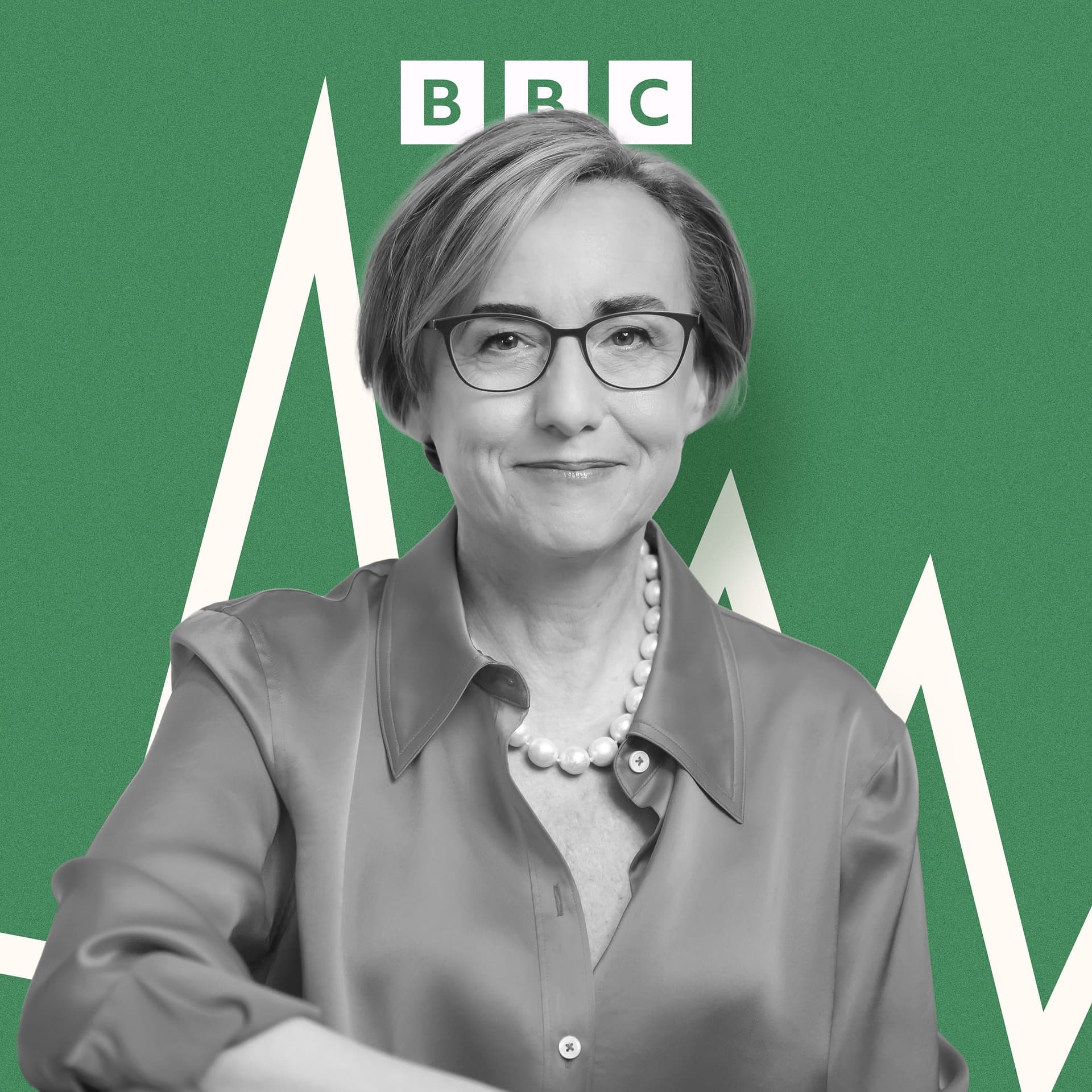
Episode Summary In this episode, Will Bain interviews Margherita Della Valle, the CEO of Vodafone, who discusses critical issues related to digital infrastructure, particularly focusing on submarine cable security and the company’s initiatives to enhance mobile connectivity in the UK. Della Valle also addresses the implications of artificial intelligence for telecom infrastructure, the recent merger with Three, and the challenges faced by women in executive roles.
Key Topics Discussed
- Submarine Cable Security
- Growing Risks: Della Valle highlights the increasing threats to Europe’s submarine cables, emphasizing the need for international cooperation to secure digital infrastructure.
- Russian Threats: The geopolitical landscape, particularly the risks posed by Russia to submarine cables, necessitates a cross-border collaboration for enhanced security.
- Merger with Three
- Impact of the Merger: Vodafone's merger with Three is discussed as a strategic move to create the largest mobile network in the UK, aimed at improving service quality and infrastructure investment.
- £11 Billion Investment: Vodafone plans to invest £11 billion to eliminate “not spots” (areas with poor mobile coverage) across the UK, enhancing connectivity for all.
- Satellite Technology
- Competing with Starlink: Vodafone is set to launch a satellite-based broadband service in 2026, designed to provide coverage to standard mobile phones, aiming to compete directly with Elon Musk's Starlink.
- Broadband Coverage: The satellite service will extend internet access to remote locations, including maritime areas.
- AI and Telecom Infrastructure
- Infrastructure Preparedness: Della Valle discusses the current state of UK mobile networks, stating that they are not yet adequately prepared to support the scale and speed required for widespread AI adoption.
- Investment for Future Needs: The company is focusing on improving mobile infrastructure to meet the demands of AI technologies.
- Female Leadership in Telecom
- Challenges for Women Executives: Della Valle reflects on the decline of female CEOs in the FTSE 100, highlighting the need for increased representation and support for women in leadership roles.
- Personal Commitment: She shares her initiative to mentor upcoming female leaders in finance, aiming to foster a more inclusive environment in top executive roles.
Key Takeaways
- Essential Nature of Telecom Services: The COVID-19 pandemic underscored the critical role that telecom services play in everyday life, making reliable connectivity a necessity.
- Investment and Competition: The merger and subsequent investment are positioned as necessary steps to enhance competition and improve service quality in the UK telecom sector.
- Diversity in Leadership: The lack of female representation in executive roles is recognized as a significant issue, with calls for action to improve gender balance in corporate leadership.
Episode Structure
- 00:00 - Introduction by Will Bain
- 02:04 - Interview begins with Margherita Della Valle, discussing her early career at Vodafone.
- 07:56 - Impact and implications of Vodafone's merger with Three.
- 09:29 - Plans to eliminate “not spots” in the UK.
- 11:12 - Details on satellite technology and competition with Starlink.
- 19:00 - Telecom infrastructure's readiness for AI demands.
- 26:00 - Discussion on the reduction of female CEOs in the FTSE 100.
- 34:00 - Need for international cooperation on telecom security and submarine cables.
Conclusion Della Valle's insights emphasize the dynamic nature of the telecommunications industry and the critical importance of investment and cooperation to address emerging challenges in digital security and infrastructure. The episode highlights Vodafone's proactive approach to enhancing connectivity and supporting diversity within corporate leadership.
For more insights and to contact the team, listeners are encouraged to email bigboss@bbc.co.uk.
Written by AI. May contain mistakes. Listen to the episode to check what was said.
Transcript
Automatic transcript. May contain errors.0:00This BBC podcast is supported by ads outside the UK.
0:30Find out more at polandyourplacetogrow.com.
0:49Hello, welcome to the latest episode of Big Boss Interview. Got another cracker lined up for you today. and it's Will Bain who's been talking to the boss of one of the world's biggest telecoms companies. Will, hello, who have you got for us? Someone who's been with their company for three decades, been the boss since 2023. This is Margarita Della Valle, who's the chief exec of Vodafone. So obviously we know of them and their mobile networks here in the UK, but they work across 15 countries in Africa and Europe. So an enormous company. count their customers in the hundreds of millions across those markets as well.
1:27And obviously, in those 30 years, it's another one of those sectors, isn't it, where the changes and the trends have just been extraordinary. So we chat about when she worked for Vodafone, when it was just a startup, they didn't even have SMSs. She talks about the company sending their first SMS as Vodafone to now trying to use satellite technology to compete with the likes of Elon Musk to get into providing better coverage for places where there's mobile phone not spots. We also talked a bit of corporate news as well. Of course, that big merger with three, making it the largest mobile network here in the UK.
2:02So what does that mean for customers? What does that mean for our bills? But also a bit of personal stuff as well. When you've been in a company that long, you've seen the ups and downs. There's been a period of downs at Vodafone and some difficult choices as Margarita Della Valle stepped up from being the chief financial officer to the top boss, the chief executive, including selling off Vodafone's Italian business, an area of the company where Margarita Della Valle started her career. So some extraordinary personal conversations that she had to have there that we chatted about in today's Big Boss interview.
2:34Let's have a listen, shall we? Here is Margarita Della Valle.
2:41margarita del valle chief executive of vodafone thanks so much for being with us on the big boss interview good morning three decades with the same company doesn't matter who you work for or how high you get in the company that is some period of time when you joined vodafone did you think this is the company i'm going to spend all of my career with actually when i joined And I really didn't understand what business I was joining because it was the early days of telecoms. I was between the first 30 employees of the startup we were setting up then. So a lot to try and understand what is this business about?
3:20Phones? I didn't have a phone. What will people use phones for? Very, very different time. Yeah. How quickly did that start to change? Oh, incredibly quickly. I've been very fortunate to join the telecom industry when it was really taking off so fast. And it has given me personally the opportunity also to do all kinds of jobs, from what you do in a startup where there is nobody around. I remember we were deciding where to put our antennas, what to cover in our country. And I actually did a lot of that with colored pencils on paper with the maps. Those were the days. And I worked in marketing. I worked in finance.
4:09I worked in operations. I worked close to the customers in a market. I worked in the HQ. I could see all parts of the business as I was growing up. And I now sometimes joke with my teams that my blood now runs Vodafone Red. And you're wearing the right colour today as well. That period then as well, the change, you must have been having to learn all the time because presumably telecoms was in those early days, A, super competitive, but B, changing so fast as well about what people wanted, what you could offer. Yes, we had no idea in those days that people would use the phones for, I mean, in the beginning we thought it's a security aspect.
4:50You want it with you to be reachable when you need it. And then look how far we have gone. So I still remember, actually, when we sent the first text messages. So it started with voice, then messaging, then data, video. And now we're talking about satellites. What has been a constant throughout is the pace at which our customers demand has grown. I mean, we are fortunate to be doing a job where demand constantly grows. At the moment, the usage of our customer is growing by 30 % a year, for example. And it's massive growth, massive demand. And is that growth, is it all data now? Has it flipped completely?
5:35Exactly. And what does that mean then? What does that change for you guys? Does it change something? I presume technically does it change your infrastructure and that kind of stuff, the speed with which you've got to keep up with that? Yes. Well, first and foremost, I don't think many people know that telecoms are the industry across all sectors in Europe that has the highest capital intensity. It's not energy. It's not mining. It's telecoms. And this is because we keep building. We are a massive infrastructure builder, new networks, faster networks, but also bigger networks as we have to serve all this demand.
6:19Yeah. And managing that, I suppose, against, obviously, you're in a super price sensitive business to something that's much more competitive than those other industries you kind of talked about, because there is a customer who is, you know, out there shopping with it, using it every single day in the way a customer for a mining company, for example, isn't isn't kind of thinking about that quite in the same way. It's not it's not a mass product either. Well, first and foremost, the vast majority of our customers, we have over 350 million customers across Europe and Africa, are consumers. They are not other businesses and they are consumers that use us as an essential service in their lives.
6:58It's a utility now, really. It is essential to everyday life. I think everyone has understood how critical our service is for the first time during the COVID crisis, because everyone understood how to get on with your daily life, you needed to be connected. You needed to be connected with your family, but also you needed to be connected with your work. And it was a massive exercise, for example, in those days to bring everybody home and allow everyone across Europe and Africa to actually work from home. It brought to life to everyone how having good telecom infrastructure, strong, fast, resilient connectivity is essential.
7:45And that feels like it's informed everything that you're doing, everything that's happened recently as well. And actually in the wider sector, too, the kind of consolidation we've seen that you just need to be bigger, that you need to have that financial firepower to be able to do that. Is that the primary thing that informed the decision to go ahead and look to make that merger with three? You are absolutely right. As a big infrastructure player, we need scale. to give you an example to build a fully fledged nationwide 5g network very high fixed cost and therefore it makes sense it works if you can fill that network with customers you actually do need scale to be able to invest and grow and with the merger we have done in the uk i think we have set really a new milestone for the industry, not just in the UK, but across Europe.
8:44It was really important to show how better it is for consumers, for the country, but also for competition to have three well-invested infrastructure networks, as opposed to, in the case of the UK, four with less investment into them. And now we have the chance in our home market to invest £11 billion to build the best network the UK has ever seen, and also a network that will propel really the UK at the forefront of Europe in telecom technology. The objective is, of course, to give coverage and sufficient capacity for data traffic to everyone across the whole of the UK. Now, as I think many of your listeners will know from direct experience, this has not been the case.
9:41The UK ranks number 22 out of 25 countries in Europe for the quality and the reach of its telecom infrastructure. and Europe itself by the way is by no means leading the world on it and I think you experience this every day particularly in those areas which we call not spots where actually you go completely out of coverage there are quite a few still in the UK and the key objective of the 11 billion infrastructure project that we have just launched is eliminating those not spots and bringing coverage to the whole of the population. Why has it taken so long then? What has held it up? Why has it been so slow?
10:26Insufficient investment because of lack of... Simple as that. Exactly. Simple as that. The good news, I think, is that this is really changing fast. The merger was completed less than six months ago. And we already had OpenSignal, which is an independent tester of networks that ranks networks and assess the situation telling us that our customers are already seeing more coverage and faster speed by the end of this year well fiscal year for us it's march 26 we will have eliminated not spots in the uk for an area equivalent to 10 times the size of london it seems crazy though doesn't it to people i'm sure someone listening in west wales or whatever, this morning to this thing, that in 2025, nearly 2026, you still can't really get on the internet on your phone near where your work is, you've got to go and find somewhere with some Wi Fi.
11:24That's bonkers, isn't it? To be honest with you, I couldn't agree more. And it doesn't need to be this way, which is why we now have the opportunity to invest, we will bring our mobile network to all the areas that need it. And on top of that, because generally this is something I'm really passionate about, we want as fast as possible to fill in any gap, also leveraging the power of satellites now that will give coverage also, for example, on the sea. It's really important. Our mission in Vodafone is to get everyone connected, wherever they are. We have been working with a satellite company to make this possible since 2019.
12:08And we are looking forward to launch the service in the UK next year. This is AST. Tell us a bit more about that. AST Space Mobile. Yes. A startup that, again, started servicing back in 2018, 2019, developed a technology that will allow us to give a full broadband connection on normal phones. That's the very special aspect of it. Today in the UK, if you want satellite connectivity, you need to buy some special equipment, you need a dish. What's really important for us is to allow people with the normal phone they have in their pockets when they end up out of coverage for whatever reasons, to have a backup.
12:51Will they have to pay for that? Would that affect their tariff or anything in any way? We have not yet decided all the commercial elements of our launch, But we see this for the people who just need to be covered wherever they are as something that will be really very convenient within your bundle. Because we know that in broadcasting, too, running satellites, very expensive things to do, even for very short periods of time, right? Indeed. But it all depends on the use you want to make. And at that point, you will have a multi-country scale. We have created a European company to give satellite connectivity to the whole of Europe.
13:27We operate ourselves nine markets in Europe. We are teaming up with the other telecoms operator across the continent to give them this service as well. So what was your sense for the date of no more knock spots in the UK? The merger itself from a terrestrial network perspective will bring coverage to 99.95 % of the UK population. And this is with the terrestrial network. The infill of satellites will build from next year. And that sounds very like, if people know Starlink, Elon Musk Starlink, sounds a bit like that project. Is it a direct competitor to that project? It's likely to be. Now, we are very proud of our technology, as I was saying, and as of today, it's the only technology that can give a full broadband experience, which is why, I mean, some may have seen me doing the world first video call through satellites.
14:21Nobody did this before us because we have the benefit of full broadband means you can navigate the Internet, etc. The other services which are present today on mobile are typically focused on messaging. But generally speaking, I think there will be a lot of innovation in this space, a lot of competition. And I think this is great because it's going to be great for customers. The other key element of the merger was all about price, wasn't it? That was where the regulator, the Competition and Markets Authority, was concerned initially why it had been held up, why it took so long, about basically how much people would pay for their phone contracts going forward as a result of this.
14:58In the final deal that went through, the CMA set some caps on certain types of fares, didn't they, for three years. What happens at the end of those three years to those fares, to those tariffs? I think you will have seen in the conclusion of the CMAs that they agreed with us that actually the merger is not just going to be good in terms of better quality infrastructure, but will also be good for competition. Their words, not mine. Well, they did initially say that they thought it was almost certain that prices would go up for a certain number of those consumers in the medium term. If you read the papers, of course, it took two years for the whole process to get through because everyone needed to get themselves comfortable.
15:39And of course, the starting point was we need to make sure that prices don't go up and they needed to assess that risk. Now, the conclusion was that this risk doesn't exist. And I'll try and explain it in a nutshell. Well, competition on prices in the mobile industry is not going to change as a result of the merger. This is because there are dozens of different brands competing for customers in the UK market today. Not just the network operators, but you have big brands like Tesco, like Sky. We are talking of dozens of brands on the retail side that are competing. And this competition will not change.
16:26What will change is that then these brands will have the choice of three well-invested networks to play with that they didn't have today. But presumably when that cap comes off, right, won't the costs that then go down to a sky, someone who uses your network, for example, that will change, won't it? No, it won't. And the reason why there is a cap or there are references on pricing for the first phase is to let us time to really build the network. It's obviously as its infrastructure investment, it takes a few years to put the full capacity on. But once that capacity is on the ground, again, we will be together with the other telecom network operators wanting to fill that capacity and compete.
17:16I get that in the long term, but getting there, right, it's such an enormous amount of spend, as you've said before. Surely for all of you guys, bills are going to go up before they come down again. I think what sometimes people don't understand is that as an infrastructure player, investing is what we want to do. If we have the scale, and you made the point very clearly in terms of how many customers will you have in different areas, you have a big investment. But if you get the scale to get the appropriate return on that investment, the more we invest, the more we grow. And this is now the situation of Vodafone, by the way, not just in the UK with the merger, but across all the markets in which we operate in Europe and Africa.
18:07We had to make massive changes to get there in the last couple of years. But now we have the scale we need in all the markets in which we operate. And I think this is already starting to be visible through our result. We will invest. We will also grow faster on the back of that investment. Where are we? Where's the UK? Because you've got such a good view, as you say, working. Perhaps Europe's the easiest comparison for us. But where are we then in that sort of rollout, in that it's kind of a competition now as well, isn't it, as to where we are and how quick our companies can access. And we'll come to that on the share of companies compared to just customers and people like me and you using our phones every day for our personal calls as well.
18:47Where is the UK in that sort of race, I suppose, for faster connectivity, better connectivity? As I mentioned earlier, the starting point for the UK is not an easy one because there has been underinvestment historically. But this is going to change fast and it's essential for the UK and for older countries to get this fast speed network coming through. Year after year, I mentioned that the measurements are already changing now. You will see the results year after year. it's essential for consumers but also for businesses because businesses need to access increasingly more i would say network heavy technologies everyone is now talking about ai for example and ai will need will need good networks yeah when people talk about ai they think really good right like i mean we're talking like these large language models a chat gpt a Gemini, whatever it is, they hit like thousands of pages, tens of thousands of internet pages in one go.
19:52Are our networks ready? If we all suddenly started using, all 60 million of us across the UK suddenly started using ChatGPT all the time for everything, would our networks hold up to it? I think we have made very good progress on the fixed side of networks and a lot of the communication you describe are essentially going through big pipes across data centres, Yes. Where we have more to do is our mobile infrastructure, because people will want to be able to access AI, exchange videos with AI, also in mobility every day. And for that, we need more progress. It's not ready yet. Not at the level that will be needed in the coming years.
20:33Especially with the kind of ambition that government or companies have got in that space in terms of it being rolled out too. I mean, the good news is that, as I was mentioning earlier, we are actually now putting the investment on the ground to make this possible. And it's really essential for the whole of the economy that our networks become the best. And it's a space you guys, you were talking to the Financial Times recently about exactly this, a space that you guys want to get into a bit more, isn't it? Not just the AI space, but also cloud computing and the back, the sort of piping for all of this as well.
21:07Why now, I suppose? All businesses across our markets need to digitize, need access to the cloud, need protection from cyber security perspective. And not all businesses across Europe are yet equipped with that. And they look at companies like ours to bring them those new services, particularly if you are our sweet spot is the small and medium businesses that don't have big IT teams. They look at us as their technology provider. And it's a big opportunity for us to help in this process of digitization. Just finish us out on the AI kind of area and the tech changes and all that back end in the cloud, because cybersecurity, obviously, the other kind of really key kind of thing in all of that, isn't it, at the moment, especially as more of our data goes into these cloud services.
22:03When you look, and I know it's not really been the telecoms industry yet, has it, when you look at the NHS or Heathrow Airport or M &S, you know, these are big companies with plenty of deep pockets for it. And you see a Jaguar Land Rover and you see the damage that it can do. Has it changed your thinking, I suppose, about where it sits as a priority for Vodafone and the type of money you commit to cybersecurity? it's not really changed because it's been a key priority for for a long time i mean we take our role very very seriously we are with our networks critical national infrastructure which means that cyber resilience has to be at the heart of everything we do it's obviously a big challenge as technology evolves and technology helps us defend, technology helps the attackers.
22:56And we need to keep investing and keep evolving. Because it's a financial race, isn't it? That's what I always think is interesting about it too, is that some of these are state-backed actors that are doing this at times, aren't they? They've got deep pockets too, the sort of the aggressors in this as well. How you sort of keep up with that? I mean, is there ever enough money? We have a superpower, I would say, if I may say so, in our team. We have a unique team in Europe. We have 900 cyber security experts all working together to defend our customers and our employees. And we are actually now leveraging the expertise we have built for our networks, also for our customers.
23:37We were talking about small businesses also needing to defend themselves now. And for the first time, Vodafone has opened in Europe what we call a cyber security operation center, where you have cybersecurity experts dedicated to defend small businesses from cyber. Sort of a Vodafone GCHQ almost. Just for small businesses. It's a never ending fight. So there is always more to do. No complacency whatsoever. It's top of our agendas all the time. Something that keeps you up at night. It's well, I need to say I'm very lucky. I kind of sleep well, but it certainly is something that we really need to work on every day.
24:24It's brought tough things as well, I imagine, too. Well known that you started your career, obviously, in the Italian bit of the business, that then you were the chief exec who got rid of and shut that down. Presumably that involved telling friends you were getting rid of their jobs. Indeed, telling people I'd been growing up with, but not that I was getting rid of their jobs, thankfully. It was an incredibly difficult decision, not just for Italy. We exited two markets. We doubled up in two markets in Europe, one of them being the UK, but we also chose to exit both Italy and Spain. And Italy and Spain had been part of the Vodafone family for over 20 years.
25:06So I will never forget, to be honest, the town halls I did when I had to explain that we were moving on in separate ways. Now, the thing that kept me going was the knowledge that it was actually not just the right decision for Vodafone, but it was also the right decision for them because they were becoming part of a different growth story. They were not exiting the industry. They were just joining a different growth story. and is that is Vodafone in the sort of right size now as a result do you think going forward do you think it will kind of stay in the number of markets it's in that you're in right now for the foreseeable future yes because in every market in which we operate 15 of them across Europe and Africa we have scale we have strong positions we have the ability to invest and And we see it in the momentum, the business as this year already, having completed this exercise.
26:11And as I said to my investor ahead of me, ahead of us, we now see a multi-year growth trajectory. So we are exactly where we wanted to be two and a half years ago. I want to get you on a couple of kind of trends and get us right back around to the start again about what comes next. You know, when you were talking about all that change earlier, what you think customers want, but just one final sort of leadership one, I guess. And this is more broad, really, than Vodafone itself. But I'm sure you've seen in the papers this week, Liv Garfield is leaving her role as the chief executive of Seven Trend.
26:42J.M.A. Warnsley, we've had on the Today programme a number of times, leaving her role at GlaxoSmithKline. We saw Deborah Crew at Diageo back in the summer as well choose to exit there. It does mean once again that the number of FTSE 100 female leaders is shrinking. I just wonder, does that bother you? Is it something you think about? Is it something you look at and think is odd as you kind of have been in this leadership position for the period you have? Throughout my career, and I've been very fortunate because I didn't experience obstacles myself, I have always been conscious of the fact that this needs to change and these numbers are not good enough.
27:27Because what is it, seven now, I think, for you, isn't it? Well, it will keep moving. But if you think about it, our customers are 50%. Yeah. And so all this is not good enough. But what shifts it then, do you think? Because I understand there's reports on there every year. I've been in the business economics unit more than a decade here. I must have done those reports every year. And every year they come out and say really broadly the same thing. The more needs to be done. I just wonder when the foot does go to the accelerator. I think genuinely beside the plus ones and minus ones in the FTSE 100 that the tide is moving in the right direction.
28:08And I'll give you a simple example for me from the 1st of December, I will have a woman CFO. So I will be one of really less than a handful, I think, of companies in the FTSE 100 where actually you have two women, CEO and CFO. I think over time we will continue to see more of this happening. I think it's really important that we lead by example. And for example, when I was a CFO, one of my missions had been to bring together all the women CFOs across the large companies in Europe to create a program for what I call the next generations of women in finance. We were identifying talent, mentoring talent ourselves to create the sense that, yes, it's happening.
Read the full transcript
28:56It's normal. It can be done. Has there started to be a pushback to that? Has the steam come out of schemes like that? Because everything seems to have got so politicised, everything around whether it's environmental goals or gender balance goals, all that kind of stuff has suddenly been started to be seen by some in investment as, I don't know, to the side. Or do you think enough people still see it as central and key and want to keep pushing it? I think we really need to stay, I would say, away from the politics on this subject. I think what matters is substance. Our customers are diverse, not just diverse in gender, diverse in culture, diverse in race, in so many different ways.
29:33And when you have a team that is in itself diverse, serving a diverse customer base, by definition, you get better at it. And it has nothing to do with what is fashionable. it's more what actually does matter what do those customers those diverse customers those tens of millions hundreds of millions of customers across do they have something in common i guess suppose across europe and africa so what do they want i'm looking at a number this is from a couple of years ago from you guys talking about how long we hang on to these four these handsets four and um and that we're changing them less now presumably that that's an interesting trend isn't it that throws down a challenge to you if you can't get someone to want to swap sign up to a new deal with Vodafone to get the newest phone anymore how do you kind of combat that?
30:22Actually it's not really a challenge for us as mobile network operators because we need people to have phones to use our network but the service we sell is the usage as opposed to the equipment. We then distribute the equipment. And our objective in distributing the equipment is to give our customers, again, the best choice for their needs. And you're absolutely right. We have seen year after year now, the cycle of replacement of NSAIDs lengthening, which can be also a good thing because people are now very much involved into recycling and reusing those handsets. So if you go into the Vodafone website in the UK, you find a model that allows you to, for example, buy a handset and paying it over 36 months, if that's your plan.
31:19You find options for trading in your old phone against a new phone. And there is a whole sort of circular economy that is developing, which I think in the end is a very good thing. Our job as distributors is to make sure that we give our customers the best choice of options along these lines. And how do you stand out? Because that seems to be more difficult than ever as well, right? Because it can't just be about price. People don't just pick just on price, do they? I remember, for example, when I was younger, you had, you'd see Vodafone adverts, David Beckham, you know, at the till buying his top up things or whatever, or you're on the front of a Man United kit and stuff like that.
31:59How do you stand out now? And as Vodafone kind of consciously stepped back from some of those very big marketing campaigns of what, 20 years ago? Actually, I would say two parts to this question. In terms of the campaign, you might have seen us in the last 12 months, really, getting back in because one of our greatest assets, I feel, across the world is our brand. And I want us to make more out of it. So very much into sports, because that's where a lot of our customers' passion lie. And you see us with working with the Champions League for football, working with all the nations, rugby teams in the UK.
32:44The type of game changes depending on the country and what people are passionate about. We're sponsoring Borussia Dortmund in Germany, for example. But we want to be where the heart of our customers and their passion lies. So that's in terms of visibility. Now, however, the question to how do you stand out, I think, has a more simple answer, which is, again, back to customer experience. Our customers will always want to choose the best network and the company that gives them the seamless, simple service that they expect. So the competitive race for me is on these dimensions. And round us out back in Europe again, then, because you're in a, I was going to say a funny space, that's probably the wrong word, an interesting space in the European European company.
33:34And yet, for a lot of our economy, right, we're sort of competing with Europe as well in a little bit as well in terms of our attractiveness as a place to invest and all those kind of things. We talked a lot about the merger that you've had here in the UK. Is that potentially an area where we can compete as a country by making regulation easier for people like yourselves to do deals like that, to try and then build up the investment that you've been chatting to us about through the interview? Today, the UK in this field of regulation for telecoms is leading by example. And we see the regulatory environment in the EU also set for a change.
34:21There is a lot of discussions happening there. And I think it will follow the example that the UK has opened up with our merger because there are obvious reasons to do so. Now, thinking about the UK and Europe, though, you used the word competition. I would also put on the table the word cooperation because we were talking earlier about how critical our infrastructure is, how critical the security and resilience of our infrastructure is. And to give you just a practical example, Vodafone is the largest player across the whole of Europe on submarine cables. We are one of the top 10 carrier of the world's internet traffic with our networks internationally.
35:10Well, it does make sense in areas like this to actually cooperate across borders within Europe for better security and resilience so that we can, let's say, piggyback on each other within Europe to ensure that our networks are always resilient and effective, even in a time of crisis. So one thing I'm very invested in is in talking to governments on both sides of the channels to ensure that there is a telecom security cooperation happening. And now more than ever, with the threat that we've seen from Russia to those cables and all that kind of stuff, it's about to come back exactly back to a point you were talking about a little bit with cybersecurity, but that it's not optional to work together anymore when you're trying to...
35:58I think when you're managing at scale an international service like ours, it's really important wherever possible in this day and age to actually join forces with your neighbours. Right. So when am I calling you in West Wales on a video call that we know is going to work? When's my date? When am I going to give you a ring? You're going to be sat in Pembrokeshire somewhere on a nice beach, when will I be able to call you? And we know it's going to get through and it's all going to be great. 2026, I can't pinpoint to a date because satellites reach the sky through rockets. And we are queuing up on the launches.
36:40But 2026, we have put the UK also again, really keen on our home market at the very top of the list. It will be the first country in Europe to get the service. I made sure the satellites were covering the whole of the country, including the northernmost Scottish islands to make sure we were really able to connect everyone everywhere. And we will certainly keep you in mind for our tests. Margarita de la Valle, Group Chief Executive of Vodafone. Thanks so much for your time today. Thank you.
37:13So that was Will Bain talking to Margarita de la Valle, Chief Executive of Vodafone. thank you for listening yourselves thank you for subscribing on BBC Sounds to Big Boss Interview if you haven't already, get it done and if you want to get in touch with us you can pop us an email bigboss at bbc.co.uk This advertisement feature is paid and presented by Poland's Ministry of Foreign Affairs. Looking for the perfect place to grow your business? For over 30 years Poland has been a launchpad for innovation at the heart of Europe powered by world class research and ambitious young talent. From bold startups to established powerhouses, Poland offers the momentum, resources and reliability you need to take your business further.
37:54Poland, where businesses don't just grow, they're built to last. Find out more at polandyourplacetogrow.com.
From the publisher
Vodafone’s chief executive, Margherita Della Valle, highlights the growing risks to Europe’s submarine cables, and calls for international cooperation to ensure the security and resilience of digital infrastructure. Addressing the recent threats posed by Russia, she calls for cross-border collaboration, and the implications for national and European security.
Discussing the impact of the merger with Three, Della Valle examines the UK’s persistent “not spots”—areas with little or no mobile coverage—and the company’s commitment to eliminating these gaps through an £11billion pound investment. Della Valle also notes that Vodafone is set to launch a rival to Elon Musk's Starlink in 2026, providing total broadband coverage to the UK via satellite to standard mobile phones. Launching this first in the UK, she says you will even be able to get the internet at sea and in the most remote parts of the UK.
The demands of artificial intelligence on telecoms infrastructure are also addressed, with Della Valle acknowledging that while progress has been made, the UK’s mobile networks are not yet fully prepared to support the scale and speed required for widespread AI adoption.
The interview also addresses the reduction in the number of female chief executives in the FTSE 100, and the ongoing challenges faced by women in senior roles, with
00:00 Sean Farrington and Will Bain introduce BBI 02:04 Start of Interview with Margherita & early days at Vodafone 07:56 Impact of the UK merger with Three 09:29 Eliminating Not Spots in the UK 11:12 Satellite Technology & competition to Elon Musk's Starlink 19:00 Infrastructure for mobile use of AI is not there yet. 26 - Female FTSE CEOs 34 - the need to work closer with Europe on sea-cable/telecoms security co-operation
Presenter: Will Bain Producer: Olie D'Albertanson Editor: Henry Jones