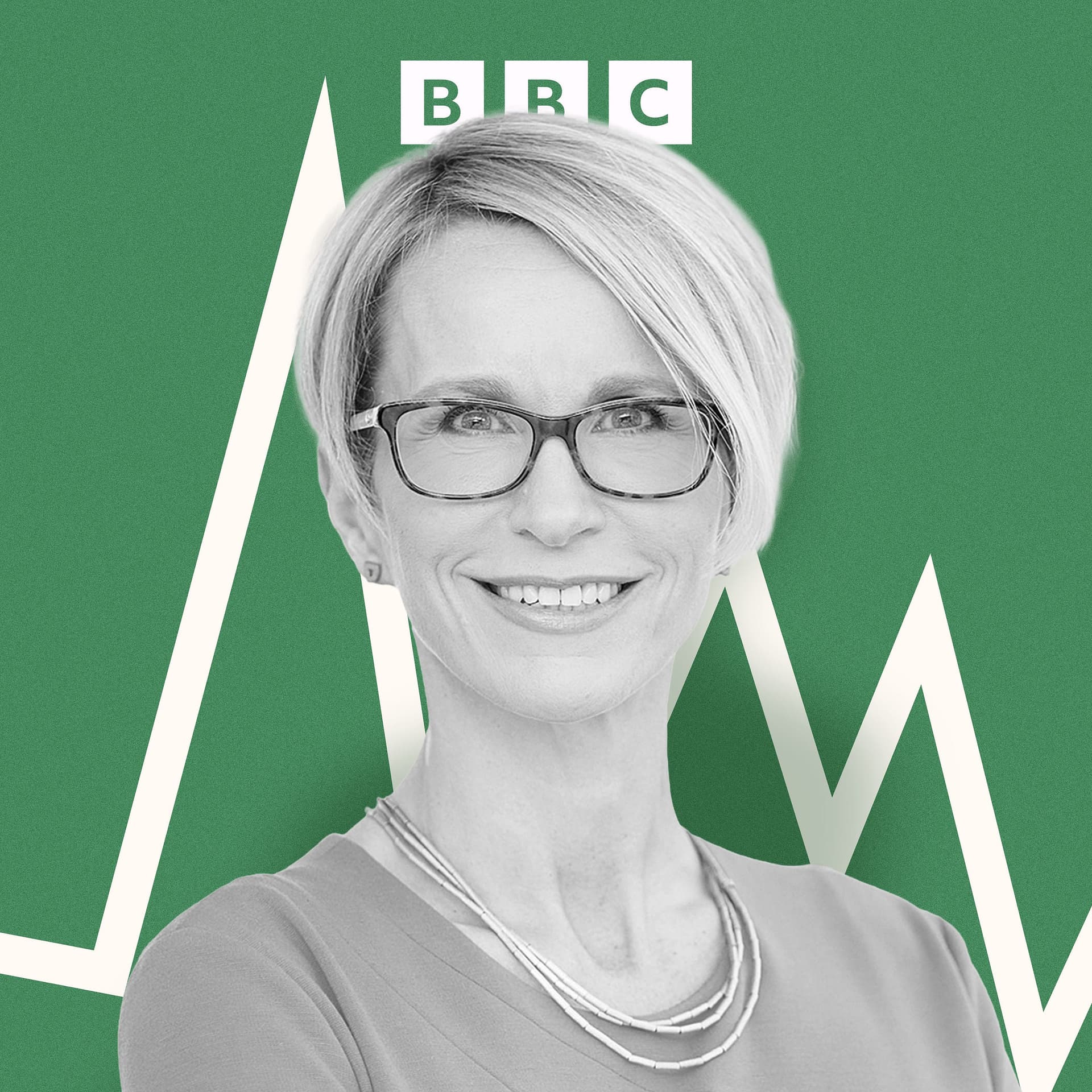
In short
Big Boss Interview: Episode #16 - GSK CEO: Why We Prioritise USA Over UK
Podcast Overview The Big Boss Interview podcast features high-profile chief executives and entrepreneurs sharing insights and experiences from their businesses. Hosted by Sean Farrington, Felicity Hannah, and Will Bain, the series dives into the challenges and opportunities faced by leaders in large organizations.
Episode Synopsis In this episode, Dame Emma Walmsley, CEO of GSK (GlaxoSmithKline), discusses the company's strategic focus on the U.S. market over the UK, highlighting significant investments planned for the coming years. She explains the rationale behind this shift, the recent developments in GSK's product pipeline, and the broader implications for the UK life sciences sector.
Key Discussion Points
GSK's Investment Strategy
- Prioritization of the U.S. Market:
- GSK plans to invest four times more in the U.S. than in the UK over the coming years.
- Factors influencing this decision include the scale of the U.S. market, competitive environment, and favorable government policies.
- Financial Outlook:
- GSK has seen revenue from its pharmaceutical business grow from $11 billion in 2016 to over $20 billion currently.
- The company aims to generate £40 billion in revenue by 2031, impacting approximately 2.5 billion lives globally.
Regulatory and Economic Context
- UK-U.S. Trade Agreement:
- The recent agreement is viewed as a positive step, but Dame Emma warns that the UK faces challenges in maintaining competitiveness in life sciences.
- Following the agreement, the UK is expected to pay 25% more for new drugs, raising concerns about NHS budget allocation.
Breakthrough Innovations
- Asthma Drug:
- GSK is nearing approval for a six-monthly asthma drug, projected to reduce severe asthma attacks by over 70%.
- Focus on High-Burden Diseases:
- While GSK acknowledges the obesity and weight-loss drug market, it is concentrating on diseases like liver disease and chronic obstructive pulmonary disease (COPD).
Leadership and Challenges
- Shareholder Activism:
- Walmsley's leadership faced scrutiny due to GSK's stock performance, leading to a shareholder revolt where she was forced to reapply for her position.
- Gender Representation and Leadership:
- Dame Emma highlights the progress in gender representation at GSK, with half of her direct reports being women.
Major Themes and Insights
Investment in Life Sciences
- The conversation emphasizes the strategic importance of the life sciences sector, with the UK needing to enhance its competitive edge to attract foreign investment.
- Dame Emma's perspective reflects a belief in the power of innovation to drive economic growth and improve public health outcomes.
Economic Implications
- The discussion touches upon the rising costs of medicines in the UK, raising ethical concerns over healthcare access and budget allocation in a system where drugs constitute only 9% of NHS spending.
Personal Insights
- Walmsley shares personal anecdotes contrasting healthcare experiences in the UK and the U.S., highlighting differences in healthcare systems and patient experiences.
Conclusion This episode of Big Boss Interview provides valuable insights into GSK's strategic direction under Dame Emma Walmsley’s leadership. It underscores the challenges faced by the UK life sciences sector amidst global competition while also spotlighting innovative developments that promise to enhance patient care and outcomes. The conversation reflects broader themes of investment, innovation, and the critical balance between healthcare costs and access.
For further engagement, listeners can reach out via email at bigboss@bbc.co.uk.
Written by AI. May contain mistakes. Listen to the episode to check what was said.
Transcript
Automatic transcript. May contain errors.0:12Hello and welcome to the very latest Big Boss interview. you, this time one of the biggest bosses here in the UK in the pharmaceutical industry as well. It's been a hot topic of late, whether it's weight loss, drugs, tariffs and plenty more investment in the UK. Simon Jack, our business editor, has been speaking too. Hello, Simon. Who is it this time? Hey, Sean. It's Dame Emma Wormsley, Chief Executive of GSK, formerly known as GlaxoSmithKline. She's just stepped out of the room here at their headquarters in London. And she's been explaining to me why GSK will be investing four times more in the US than the UK.
0:55Clearly, this farm has been a big front in the tariff wars, a recent deal done. She's also explained why it's good that the NHS will be paying more for drugs, partly as a result of that deal. and she's told us to look out for some big breakthroughs on asthma and liver disease going into the future and one other thing she went into some personal detail about the different experience she had of giving birth in the US versus the UK and she talked a bit about the different experience of that so plenty there from one of our most high profile chief executives so lots to tuck into. And outgoing as well Simon does that make much of a difference you've been in just you've just left that conversation minutes ago does it make a difference do you think when you chat to a boss knowing that just a few months down the line they might not be in that post i think what they're keen to do is sort of secure their legacy and have a little give their version of their time in charge and you know she seemed to have done a pretty good job for example she spun off the consumer products division which has you know sensorine toothpaste and stuff like that that now is a whole new FTSE 100 company, all of its own, and put much more money into research and development.
2:09But she's had her critics, a bit of a shareholder revolt along the way. Some activist investors basically made a reapply for her own job and said she hadn't done enough for them. And actually, if you look at the share returns for GlaxoSmithFly and GSK versus AstraZeneca, 7 % increase in share price since she joined in 2017, 177 % increase in share price at AstraZeneca, over the same period. A lot of question marks about that. But she thinks she's leaving the business in rude health and has some big thoughts about the health of the nation. Great. Well, looking forward to this one. Here is Dame Emma Wormsley, Chief Executive of GSK GlaxoSmithCline, talking to Simon Jack.
2:54Dame Emma Wormsley, you arrived in 2017. It's eight years ago. What was the job that needed doing when you arrived? What needed fixing? What did you see the job in hand? Well, I actually arrived from China in 2010, Simon, first of all, to GSK to join a very small division of the consumer business. I was running Europe, which is relevant in terms of what became part of the answer for GSK when I was named as CEO-designate, which was in September 2016. And I was appointed to this job with a very strong change agenda brief as an insider outsider to look at the structure of the group, including the big question about what to do with the business that I was running, the consumer business, which by then we'd built up quite materially.
3:43The strategy of the group, where did we want to allocate our capital, which therapy areas, which product areas did we want to be in, the geographic footprint of the group. It was actually right at the beginning. I said we were going to bet first on the US and really build up that business. I think in 2016, we had about$11 billion of revenue. We're now well over 20. That's purely in the pharma business. And of course, the culture and the capability and the talent bench of the company. So it really was a hard push towards change. And right at the heart of that was reprioritizing innovation and the pipeline once again.
4:23On the pharma side? On the farmer side. And what that meant, and we had a major pathway to doing that, was it was unlocking the balance sheet to be able to invest again. We've actually doubled the spend in R &D since I began. And we did that, of course, by delivering Europe's biggest demerger this century, which was Halion, the split out, which then allowed us to really start to develop this pipeline. And it's wonderful, and this is my last year in the job, to be heading towards a record five new approvals of new drugs. We've got 15 major scale assets in the pipeline. We've had a very strategic shift to more specialty medicines as well as adult vaccines.
5:04And we've just, at the beginning of this year, upgraded our long-term outlook for 2031 for the second time to deliver more than£40 billion of revenue. Now, what makes me even more excited than that is not just the pounds and dollars, but that 40 billion is going to translate to two and a half billion lives impacted by our company around the world. Because it's one of the things that makes GSK truly unique is the scale of what we do. You've talked about the structure. One of the biggest things, as you say, you did, it was spin off the consumer products group from which you came, creating Halion, a whole new FTSE 100 company.
5:42Talk us through that, because Unilever offered you£50 billion for that way back when. It's currently trading at£30-something billion. It was a massive mistake not to sell it to Unilever. Well, I'm not sure. If you saw the reaction at the time, it would have actually been done, is one key point, and maybe the most important one. Listen, we have absolutely no regrets about that whatsoever in terms of the unlock of the balance sheet investment. Just to be clear about that, means you could put some of the debt of the company into the consumer products division, leaving less debt in the pharma side, correct?
6:16We had a pretty Gordian knot, I have to say, in terms of our capacity to invest. And remember, pharma is one of the only industries in the world that rightly, by the way, has to reinvent itself every decade because of the IP model. i.e. we discover and develop new drugs, but after a decade, their patent protection is removed so that you can move to generic drugs. And that means you can go from a multi-billion asset to having very low revenue on that in a really, you know, in a year. So we have to be discovering and developing new drugs all of the time and vaccines, of course, and it costs billions.
6:57It takes a decade and most of it doesn't work. We also know that in our industry, it's one of the sectors where the most business development is required. And we've done more than 30 deals since 2021, which was really when we started charting the path towards more competitive growth for GSK. And that's partly because we were able to do this demerger and create the new capacity for us. You know, our first priority, and we had no set religion on how to unlock value from the consumer business. But I do think it's important that we can continue to build businesses for this country that can have global impact.
7:41So I'm very proud of that. You talk about build businesses for this country. You will know that the government considers, and not this one, but successive governments, thinks that life science is a superpower. And yet recently it's become almost embarrassing, the exodus we've seen of some investments from the UK. Merck walking off a billion pound project, AstraZeneca doing that. Lots of investments in the US. You yourself said you wanted to make the US your primary market. Is the UK really a life sciences superpower? Are we complacent about that? I'm not sure I would use the word complacent. I mean, first of all, I think the UK sits on a very proud and rightly so history of scientific world leadership and discovery.
8:30And we also are equipped with extraordinary possibilities and potential, whether it's the large cap companies, ours and others, whether it's the biotechnology sector, whether it's some of the best universities in the world, you know, well-renowned and recognised. I think alongside Oscars, we punch way above our weight in terms of the number of Nobel Prizes we win for our science and our technology. We also have the promise of the large data sets of the NHS, recognising the enormous operating pressure that the NHS is under. And by the way, this is one of the countries that big tech is betting on in terms of capability most in the world.
9:15So we're at this great moment when you have these advances in science and advances in technology that can combine to help us lead the way. Now, no one should be deluded that the UK is going to be a massive scale market, a domestic market, but it can be an exporter of innovation in life sciences. And, you know, for GSK, it's 2 % of our sales are here. More than 50 % are in the US, but we're very heavily invested and remain committed to being invested in terms of manufacturing and R &D, our listing. You all sat here today in our HQ, but that's why it was so good to see the deal announced just recently between the UK and the US governments to keep tariffs off the agenda and to make a commitment from the UK, and I was delighted to see that from the government, to recognise more the value of innovation in the commercial market here.
10:13And that's important if you want to continue to get FDI, because I am committed to this country and I'm a great patriot for that. But I do think we have to recognise and be realistic that for all investments, the UK is competing with many other countries in the world who see this industry as strategic. Now, I'd be optimistic about that. Well, because the Lord's Committee said we're at crisis point, investment is bleeding out. We have seen an exodus of investment. You can't ignore that, surely. I mean, you yourselves have just committed 30 billion over the next five years in the US. There's a strong pull to the US.
10:47Are you telling me that everything is right in the world of life sciences in the UK? Of course not, Simon. What I'm saying, and by the way, those statements were made prior to the recent announcement on a deal for the UK. So you think this deal will reverse that tie? I think it helps. I think it helps. And I wouldn't make a bigger statement than that. That's quite a low bar, isn't it? It helps. This is meant to be a breakthrough deal. You're saying it helps a bit? Well, no, I think it's definitely material progress. And it's important that we keep taking steps forward. This is a step forward. I think having the life sciences strategy clearly committed to is important.
11:28I think that the fact that we have sustained the tax incentives around the patent box is important. But where I absolutely agree with you is we need to recognize this is a competitive agenda. And if we want to be a country that is growing and we can all see the pressures on that, it is absolutely critical to keep building and investing in both the commercial market here and the capabilities here. You're investing four times more in the US than you are in the UK over the next few years. Comfortably. And I don't shy away. I just came back from the US yesterday. In fact, I'm extremely pleased with our commitment to invest more than$30 billion over the next five years.
12:11But once again, it's more than half of GSK's global turnover today. And it's still the leading market in the world in terms of the launches of new drugs and vaccines. It's still probably alongside China. And that's definitely something to watch the best market in the world to do business development. But it's not a zero-sum game. How much of your investment in the US was to appease the Trump administration? Because obviously it's been your biggest market for a while, but it seems something's changed in the air about life sciences investment. And there's a big pull to the US and some would say a push out of the UK.
12:50OK. Well, for us, we remain, you know, and I think you'll see I've been extremely consistent on that since I began this job. We remain very committed to this country, but we are also realistic and disciplined about where we allocate our capital. And we have choices. So you'll be investing more in the US than the UK. Simple fact. Well, yes, that's a simple fact that I've been very public and explicit about. in terms of how much has changed as i said earlier the reality is that um i think i committed literally in my first months to the fact that we wanted to prioritize the u.s in terms of where we launched our products first and where we allocated our investment so i wouldn't see this as a change in strategy for us for one second in fact i remember when we began i said there are three launches i really want to focus on doing well on one was shingrix or shingles vaccine there was Trilogy, which is now had, I think, 26 quarters of double digit growth, which is a respiratory medicine and then two drug regimens in HIV.
13:57And those are having been launched and prioritised first in the US. Those are our top three selling assets in the portfolio. Just up to Q3, we just announced. Donald Trump said he's fed up of US customers, patients paying more, much more for their drugs than elsewhere in the world, paying many multiples of what, for example, the NHS pays for drugs here. Are you in the middle? Other people have struck pricing deals. What are you going to do? Is there a deal on the table with Donald Trump? Well, I think like many others, we are both in constructive dialogue with the government. I will also say I'm never going to preempt where we're going to land on that ahead of time.
14:36But to be clear, when Donald Trump says we're not paying enough and they're paying too much, they want to pay less and wants UK patients, customers to pay more. And that was a big part of the deal that was just announced between the US and the UK. OK, so the UK is paying more. Yeah. But I think, I mean, just so that British listeners can be reassured, the UK, the share of the cost of health care in the UK that gets spent on drugs, often we sort of shorthand this burden to being a drug industry challenge. It's 9%, 9 % of the NHS of the NHS budget. That is meaningfully lower than many other countries in the world.
15:16Now, the US, by the way, is at about 14. So when you say many multiples, everything in the US healthcare system happens to be more expensive. Whether you're getting, I happen to have given birth in London, Paris, and twice in New York. I can tell you both the experience of childbirth and all the follow-up that happens afterwards are very, very different. And, you know, I can, every, I can do lots of stories. More expensive? Well, you know, my and I've been public public on this. My eldest child had open heart surgery at the age of two and seven, once in the UK, once in the US. Completely different cost profiles.
15:52He hopefully if he passes exam or go on to be an NHS emergency room doctor, he will be paid a fraction of what the doctors are paid in the US. The whole system is set up differently. None of that changes the fact, by the way. Well, just let me finish. None of that changes the fact that we agree that more countries, including this one. And that's why I'm supportive of the deal that was just done with the US. More countries should recognize the value of innovation because it's cost sparing, Simon. What is expensive is people being in hospital and sick. That's why I'm so excited. Let me give you one example.
16:34We're sat in the centre of London. There are hospitals all around us. There are 260 million people living with asthma around the world, more than 7 million in the UK. And what is expensive, quite aside from being terrifying as a patient or the parent of a patient, is people being hospitalised with an asthma attack. Now, hopefully, in literally a week or two, I hope by the end of the year, we will have the world's first six-monthly treatment for asthma approved twice a year. And our research shows that that medicine will reduce the kind of attacks that cause hospitalisation, the really properly scary ones, by over 70%.
17:17That will be hugely cost-sparing. OK, so basically more spending on medicine saves money because it keeps people out of hospital. But what about those treatments which are expensive and are actually for a few hundred, a few thousand people, often costing tens of thousands of pounds? People like the Nuffield Trust would say spending more money on those kind of drugs. What we want is a proper utilitarian outcome, which is the best outcomes for the most number of people. And this new deal with the NHS, where they're going to pay 25 % more for new drugs, a cap on the rebate that you give them, that you give back to the NHS, will mean that more money comes out of NHS budgets at a time when they're incredibly stretched.
18:01And that's two, three billion pounds. More money going to you would be better spent on existing medicines for more people. Well, you know, I think this is one of the most difficult questions in how you allocate a medicines budget across the portfolio. And I think when you're the parent of a child with a rare disease, you're going to care every time that if there's access somewhere else in the world, that somehow you can have access here. I think your point on scale has been an important one for GSK for a long time. We don't focus our business on rare diseases. We are a company that is seeking to reach two and a half billion by the end of the decade.
18:40In fact, we're crossing because of our global health work and our access work. We're crossing the two billion mark already because we vaccinate, you know, 40 percent of the world's children. That is a scale reach because we are a world leader in asthma, in COPD. I think it's 390 million people in the world fighting COPD, chronic obstructive pulmonary disease. That's the third leading cause of death. And we have some very exciting innovation coming through there. We're just about at the beginning of next year, hopefully, to see some results on what might be a functional cure for hepatitis B. That's 250 million people in the world.
19:19So I do think going after scale is key. But when you talk about the allocation of spend to medicines versus everywhere else in the NHS, I'm going to just repeat, it's 9 % of the total cost. By the way, I have 15 in France, Germany, but I have every empathy with those, whether it's people who are working for the NHS, who are trying to drive improvements both for patients and for doctors and for nurses and for all the people who, you know, get up in the morning to try and have a positive impact on people's health. It is hard. But just like when you run a business that you have to make choices and there are opportunities for efficiency.
20:01And that's where the promise of what's coming in technology, Simon, could just make such a big difference. And I want to get on to that. In terms of providing more access and more efficiency for people. I want to get on to what we can expect in the future. But just going back to the U.S. deal, this is a protection on tariffs for the next three years. Three years hence, who knows? Is that long enough protection to start making investments? and why is this a good deal for the UK? And is it done? Is that it? Are we finished with that? Well, we got enough. Again, I am supportive of this deal. I think it's really good that the UK has been on the front foot to add more support to the life sciences industry.
20:45You know, when people talk of tomorrow, the gods laugh. I think giving long term predictions is always dangerous. But In terms of GSK, I am very confident because what we did when we had the separation of Halion, we did a huge amount of work behind the scenes on the resilience of our manufacturing footprint. We have announced, though, in the last year or so, the breaking of ground of two new factories in the US. And we will be in a position where we're manufacturing 80 percent, 90 percent of our medicines. We have manufacture of parts of 80 % or 90 % of the products that we sell in the US. People are doing Donald Trump's bidding.
21:28The Lib Dems have called this deal with the US a shakedown, a Trump administration, a White House shakedown of the NHS. How would you respond to that? Well, I think I've already shared my views on it. I come at it from both an industry perspective. And I think we just need to have the facts on how the medicines budget is allocated here. And I think it's a step in the right direction, which is in the interests of British patients. You know, what we care about is access to medicines and access to innovation. But we also care that this is a competitive place to do life sciences business. And if you want more FDI, which is what you were advocating for the beginning of this, foreign direct investment, then you need to make some kind of competitive marketplace.
22:10But no one should come away thinking the UK is paying disproportionately more. I don't think that's the case at all. OK, just I want to get back to your experiences for childbirth, if you don't mind. You talked about a very different experience in the US and the UK. Can you just elaborate on that? And what did you what did you take from that? What what did you what were the insights you gained? Well, it won't surprise you, Simon. I'm not about to step through the birth of my four children. blow by blow but i'm just saying what did you take away from that experience the systems are different how and look to what extent it could be anything from the advice you're given from the parent the frequency with which you're expected to be a visitor how long you're in hospital what kind of follow-up advice anything from i mean it's a long time my youngest is 18 now i can barely remember that's the secret about childbirth you make you forget it so you do it again but the um the uh it was just very different so what you're saying is health care is better in the u.s but No, stop putting words into my mouth.
23:09It's very difficult not to come to the conclusion from what you said. No, I didn't say that. I just say the advice is different. The system, the incentive system, the operating model is completely different. Also, it's the payment model. It's via health insurance. Correct. Not free at the point of delivery. The point is you can't take list prices or the headlines in the media as the fully representative picture of what people are paying. And it's all health systems operate on a combination of price, access and outcomes. And getting the balance of all three of those, that it's affordable, that it's accessible and that it works, is really important.
23:54And have we got the balance right in the UK? I think there's still work to do. But fundamentally, the question is, how do we see investing in health as an investment in economic growth and well-being? As an investment, not just the cost. And that is the most important thing that I see progressive societies and payers and governments really starting to recognise now, is that you have to go to the socio-demographic root causes of ill health. You have to go to the food system. You know, that's why we're seeing some of these new breakthrough drugs having such a positive effect, because the comorbidities are so burdensome.
24:36How do we get people to grow up healthier? Let me move on to that, because a couple of big areas was the COVID vaccine. You weren't there at that table. And weight loss. Let's talk about the weight loss industry. It seems to be revolutionary. You're not at that table. Why not? And what do you think will be the upshot of what we're seeing now in the weight loss drug industry? Well, we're not at every table simultaneously, Simon, because every company has to make their choices. But I couldn't be prouder of the progress we've made in our pipeline, the scale of our impact and the scale of growth. Because, you know, when we've been delivering the consistent growth and upgrades in our outlooks.
25:15When I began, the revenue of GSK Biofarma was closer to 20 billion. We then put our outlook for 2031 to be more than 33 billion pounds. We've upgraded that outlook more than twice to being more than 40. And frankly, we're headed this year, we're well on our way to delivering that 33, six years ahead of time. And why does Both at places like Novo Nordisk, Lilly, for example. Of course. This is revolutionising the health industry. And as you say, it is eradicating all sorts of other complaints. It's a bit like AI. It's swallowing up the entire industry. And I just wonder whether you regret not being a part of that revolution.
25:58You know, I try not to spend my time regretting things. You have to play to where your strengths are. And I think these discoveries are fantastic. They are really good for healthcare systems. They're a great demonstration of the extraordinary things that this industry can do and the people in it can do, working for decades and through many things that don't work to try and have positive impact. There aren't many pharma companies that have the scale of reach that GSK does. And as I said earlier, we go after some very heavily burdensome diseases, whether that's in respiratory. We're back in oncology.
26:40I mean, one of the big bets that we took back and that's going very well for us now is our oncology pipeline with another major approval this year. and we are one of the world leaders in infectious diseases including not only prevention through vaccination but we just had a new approval for the first time in nearly 30 years for a brand new antibiotic you talked about the pandemic the silent pandemic is what's coming on antimicrobial resistance and you know i think we are going to make sure we're ready for that one have you been surprised by the applicability of the glp1 the kind of weight loss the gubbins of that to all sorts of different things.
27:18Has that surprised you? A bit like mRNA, for example, surprised people. I think, you know, the world of human biology is full of extraordinary unknowns, more unknowns than probably outer space. And I think the way that science, the underpinnings of science can link across human science can link across disease areas is a great thing for us to continue to pursue discoveries. That's, you know, a lot about, I think it's wonderful. It isn't relevant for everything, but it's definitely, I mean, we all know that addressing obesity can have multiple knock-on impacts. And by the way, one of the big areas we're working on is liver disease.
27:58That's 5%. And that, when you talk about steatotic liver disease, fatty liver, and also alcoholic liver disease, these are all areas of really significant scientific opportunity and healthcare systems burden. Breakthroughs coming? Yes, we think so. We've just gone into a phase three trial for liver disease at the end of this year that could have really material impact and could be a drug that works very well alongside GLIT1. Give us a quicker vision of the future. We're at this intersection. It feels like we're on the cusp of some big breakthroughs, immunotherapy, AI, whatever. What do you say we're on the cusp of?
28:33Why should we be excited about health? Well, you should be excited about it because it's one of the few things that every single person on the planet ends up caring about Simon. Okay. Okay. It's the biggest allocation of capital for any government. It matters to every company, every community, and every country. It is a question of national security, and it is a question of economic growth. It's a material question of employment. And it is, for good reason, the single biggest use case of AI. Now, I've sat on the board of Microsoft for six years. I've had a ringside seat to the opportunity that, frankly, all companies are seeing ahead.
Read the full transcript
29:19And I am an enormous optimist about the positive way that AI and generative AI and agentic AI and robotics can, frankly, help solve by far the biggest challenge in healthcare. By far the best way to bend the curve on demand for healthcare, which is to have innovation that keeps people healthier for longer and out of hospital. Why do I say that? And that's R &D, okay? If 90 % of the projects in our industry don't work, if they take a decade and cost billions, getting to a place where you just double that to, you know, instead of 10 percent working, 20 percent working will completely change the trajectory of innovation.
30:09And there are so many diseases that don't have solutions. You know, if you think between your cameraman, you and me, one of the three of us will personally be fighting cancer and all of our families will have faced into it. You have one of the three of us will definitely be dealing with neurodegeneration. We need more solutions to that. Infectious diseases, lest we forget, can bring the world to a standstill and are still, you know, in the top six leading causes of death. And there are so many scale illnesses that don't have solutions. So we should be really excited about that. And not just in the discovery part.
30:45What about the provision of health care? Two billion people in the world don't have access to the health care they need. literal access to it. Look at even the richest countries. This is not just a challenge in, you know, the developing world. In America today, there are so many people who are out away from the academic hospitals who don't have access. And that's why our new drug for multiple myeloma, which can be available to a patient for in a 30 minute infusion instead of a week long stay in an academic hospital, that's 70 % of multiple myeloma patients are living in a community. So you asked me why I was excited, Simon.
31:21There is so much work to do. With all your optimism, with all these breakthroughs, with all this development, why is it that the UK seems to be a sicker country now than it has been before? Well, first of all, I am a very proud patriot. So I will always bet on and back the UK. If you're talking specifically on population health, I think these are questions that we need to get back to some social demographic root causes on I think the poverty I think there is just no debate that you can get here we are in the middle of London and you can probably get 10 or 15 years different in lifespan you know prospects depending on which postcode you're in so there's no question that has a part of it I think there's no question that the food system is fundamentally something we need to look at harder.
32:16I think it's fantastic that we are looking for a smoke-free generation. And, you know, if we can bet on innovation, if we can invest in education, then we have every opportunity of making this a healthier nation, but also that has a direct link to the economic growth and therefore a wealthier nation. What were the biggest challenges? There was a point at which shareholders were in revolt. They pretty much forced you to reapply for your own job. What was that like? How did that feel? Well, you know, we are a public company, so we're always talking to our shareholders. And I think it's important to listen hard to any questions you get.
33:02And you cannot and should not do these jobs, Simon, if you don't, A, have the capability to have a thick skin and stand in front of those challenges, even when they're very public, and make sure that the organization is not distracted by that, but stays firmly focused on the purpose of the company, which is to discover and develop new medicines and vaccines. And the second thing you have to have is you quite aside from that responsibility, you know, that comes with the privilege of this job. You also have to have total conviction. And one very final question, I promise. Do you get bored of being asked the woman question?
33:39Is it one of the highest profile women CEOs in the country, in Europe? Does that do you find that question tiresome is important to you when people say, did you have to try harder to be a woman? Try harder to be a woman. No, sorry, try harder as a woman to reach success. Or does that question rather depress you and think it's irrelevant and condescending? I have tried all of my life and certainly through my career not to define my work by my gender. But of course it's important, Simon. Of course it's important. And I think we have responsibilities and we should be conscious of those responsibilities to role model if you like or show people what's possible.
34:26As I look back on what will be nine years of running GSK, there are many, many things that I'm proud of, although there's always a lot more work to do and I couldn't be more excited than to be handing the baton on. I'm proud of the progress we've made. I'm proud of the performance, the progress in prospects, the progress in pipeline but one of the things I'm definitely proudest of is the progress in people not least handing on to a brilliant successor but also that half of my direct reports are women and you know whatever statements we do or don't make about that publicly I think we've crossed the Rubicon inside GSK on that and I am sure when you look at the talent and the commitment and the creativity and the ambition and the courage.
35:24So many young professional women that I see, I think it's a great area where this country should aim to lead the way. OK, we look forward to seeing what you do next. Thank you, Dame Emma Wormsley. Many thanks for talking to BBC. Thank you, thank you.
35:43that was dame emma walmsley chief executive of glaxo smithkline gsk talking to our business editor simon jack thank you very much for listening to our latest episode of big boss interview subscribe on bbc sounds if you don't already if you want to get in touch with us it's bigboss at bbc.co.uk the best email address around the bbc and once again thank you very much
From the publisher
Dame Emma Walmsley, Chief Executive one of Britain's biggest pharmaceutical companies GSK (GlaxoSmithKline), says the company is prioritising the United States for product launches and investment, citing its scale, commercial opportunities and favourable business environment. She confirms GSK will invest four times more in the US than in the UK over the coming years, making America the company’s primary growth and innovation focus.
Explaining GSK’s investment strategy, Dame Emma Walmsley points to the US market’s scale and competitiveness, boosted by recent government policy. She welcomes a new UK-US agreement removing tariffs and recognising pharmaceutical innovation, but warns of challenges for Britain’s life sciences sector. Despite the UK’s strong scientific heritage, she notes it accounts for just 2% of GSK’s sales, compared with more than half in the US.
Dame Emma Walmsley stresses the UK must stay competitive to attract foreign investment, warning that other countries increasingly treat life sciences as a strategic industry. She confirms the UK will pay more for medicines under the new agreement, with NHS costs for new drugs expected to rise by 25%. While medicines make up only 9% of NHS spending—lower than in many countries—she acknowledges budget pressures and the need for careful prioritisation.
Dame Emma Walmsley also reveals GSK is close to winning approval for the world’s first six-monthly asthma drug, expected to cut the most severe attacks requiring hospitalisation by more than 70%. She calls the breakthrough a major advance for patients and healthcare systems, with the potential to deliver significant cost savings and improve quality of life for millions worldwide. She also comments on the surge in obesity and weight-loss treatments, noting GSK is not a major player but admires the scientific progress. Instead, the company is focusing on high-burden diseases such as liver disease and chronic obstructive pulmonary disease (COPD), with trials under way and hopes for further breakthroughs.
Finally, Dame Emma Walmsley reflects on a turbulent period when activist investors questioned her leadership and forced her to reapply for her own job, amid concerns over GSK’s share price performance versus rivals.
Presenter: Simon Jack Producer: Ollie Smith/ Olie D'Albertanson
00:00 Sean Farrington and BBC Business Editor Simon Jack intro pod 03:00 Dame Emma Walmsley joins the pod 03:53 Change agenda & US market focus and investment 07:18 New asthma drug approval on the horizon 08:19 GSK’s scale and global impact 12:03 GSK to invest four times more in the US than the UK 14:54 UK to pay more for drugs after UK-US deal 16:56 GSK new asthma drug breakthrough 19:48 GSK’s approach to obesity and weight loss drugs 28:23 Women in leadership at GSK 32:47 Shareholder revolt and leadership challenges