In short
Big Boss Interview: Episode #2 Summary
Episode Title
BAT's Asli Ertonguc: Vaping Industry Needs More Regulation
Podcast Overview
- Hosts: Sean Farrington, Felicity Hannah, Will Bain
- Description: The podcast features insights from high-profile executives and entrepreneurs about running large organizations and navigating the business landscape.
Episode Highlights
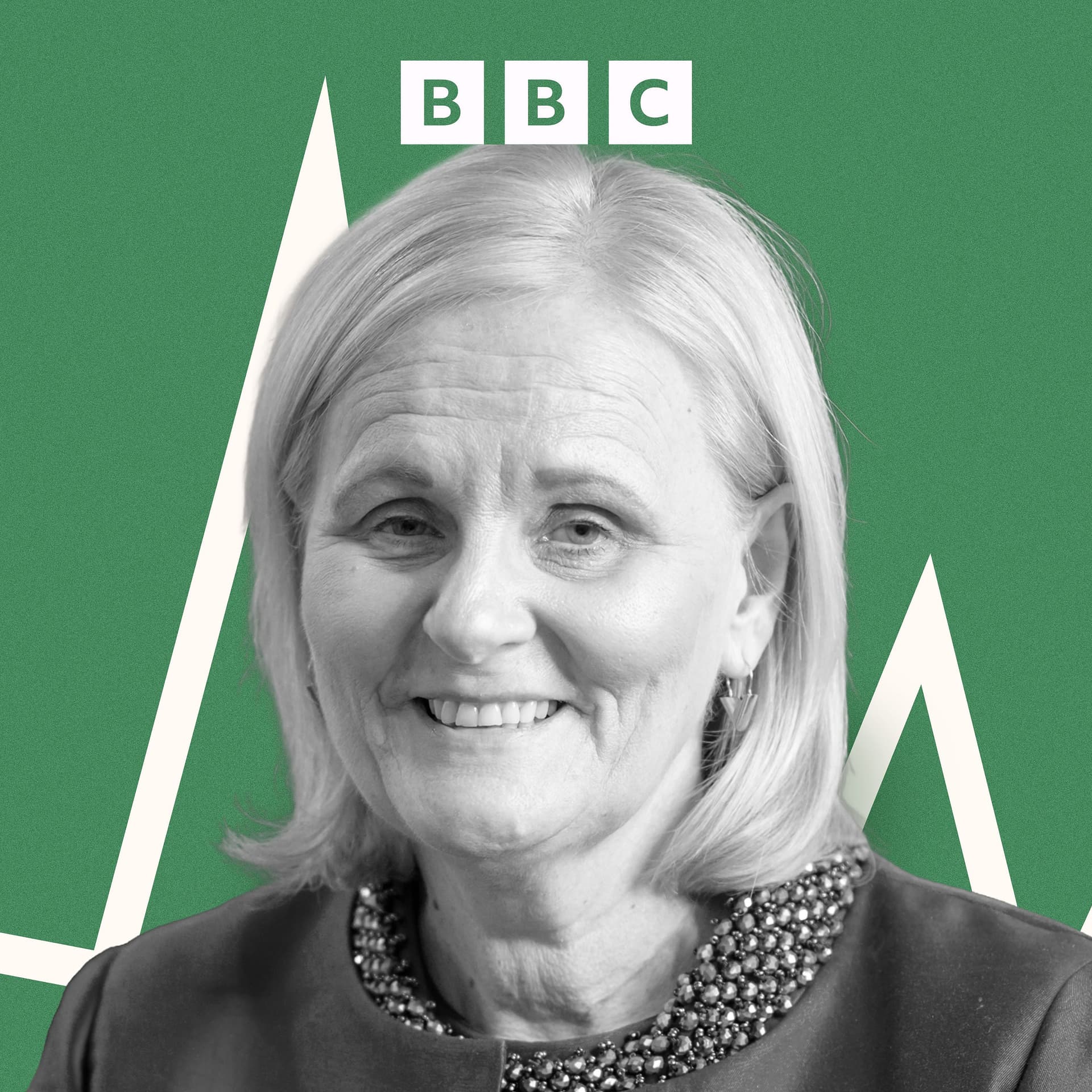
- Guest: Asli Ertonguc, UK and Ireland Managing Director of British American Tobacco (BAT)
- Main Argument: Ertonguc advocates for stricter regulations in the vaping industry, including licensing for sellers and mandatory ID checks, to improve public health outcomes.
Key Points Discussed
Introduction
- Hosts thank listeners for engaging with the podcast and recap feedback from the previous episode.
- Discussion on the tobacco and vaping sector, highlighting the shift from traditional tobacco products to vaping alternatives.
Vaping Landscape
- BAT has transitioned towards reduced-risk products, with vaping making up about 40% of revenues, nicotine pouches 30%, and traditional cigarettes the remaining percentage.
- Strong focus on evolving consumer preferences and the rapid change in the vaping market.
Regulation and Compliance
- Ertonguc emphasizes that disposable vapes, now banned, have harmed the credibility of vaping products.
- Advocates for retail licensing and strict enforcement to control the market and reduce youth access to vaping products.
- Concerns about the proposed Tobacco and Vaping Bill, specifically its practicality and enforcement challenges.
Consumer Behavior
- Observations on the stable number of smokers in the UK, with a transition towards vaping and nicotine pouches.
- Discussion on the need for premium quality products as alternatives to disposables, with a focus on environmental responsibility.
Marketing and Advertising
- Ertonguc speaks on the delicate balance of marketing vaping products, stressing the need for responsible advertising that targets adults.
- Calls for clearer regulations that differentiate vaping from traditional smoking in public perception.
Future of the Vaping and Tobacco Industry
- Ertonguc believes the path to a smoke-free future is achievable but requires proper regulation, education, and public awareness.
- Shares aspirations for BAT to be predominantly smoke-free by 2035.
Concluding Thoughts
- The episode wraps up with the hosts reflecting on the challenges faced by BAT and the complex nature of the vaping industry.
- Teaser for the next episode featuring Glenn Fogel, CEO of Booking.com, discussing changes in the travel industry.
Contact Information
- Listeners can contact the team via email at bigboss@bbc.co.uk.
---
Key Takeaways
- The vaping industry requires stronger regulations to protect public health and ensure product credibility.
- The transition to vaping products is seen as necessary for reducing smoking rates, despite challenges in consumer perceptions.
- The industry faces both moral and practical challenges as it navigates regulatory landscapes and consumer behaviors.
Written by AI. May contain mistakes. Listen to the episode to check what was said.
Transcript
Automatic transcript. May contain errors.0:00BBC Sounds. Music, radio, podcasts.
0:17Hello everyone, welcome to Big Boss Interview, a podcast brought to you from the BBC business team in Salford. I'm Felicity Hanna and each week Sean Farrington, Will Bain or myself will be speaking to people at the very top of the business world. Big thanks to all of you who have already given us your ears to our first episode. And we hope we've got more in store where that came from. And a lot of you got in touch, actually, after that first episode with AO's John Roberts, including this email is from someone who wants to stay anonymous. But they said, I totally agree with John Roberts' AO boss.
0:53We should stop the triple lock on pensions because we can't afford it. Most people are having a difficult time financially. And the email goes on. he's absolutely right that MPs should have the courage to push through the important decisions they believe in while they have a majority and ignore the bad press they receive as the powerful media will always concentrate on negative criticism. Thanks for sending that. Yeah and if you want to either get in touch you can do bigboss at bbc.co.uk is our email and if you miss John Roberts well remember that's the great thing about podcasts you can download it just search for Big Boss Interview either on BBC Sounds or wherever else you get your podcasts from.
1:29Well, that's the first time I've ever heard anyone say co.uk instead of co.uk. A lot of the leaders we'll be speaking to for this series would have helped navigate their organisations through challenging times or periods of upheaval. And John definitely touched on that. And again, Will, it's the case with your interview today. Yes, a very different company to Ayo, British American Tobacco, or BAT as it's referred to, has sold cigarettes for over 120 years. But as you can imagine, with the big changes in what we've learned about what cigarettes do to our health, both the impact on the company and the change of its business focus have been going on really for probably the past 20 years or so.
2:10Now making e-cigarettes and vaping, nicotine pouches, huge areas of growth for this company alongside what remains of its traditional tobacco business. And vaping is a really interesting one, isn't it? Some people see it as a great way to stop smoking. Other people look at kids using vapes and look at disposable trash. And it's a really controversial industry. Absolutely. And so much change around the law and the politics of this as well, Phyllis, going on at the backdrop at the moment. So that's exactly what we spoke to today's big boss about. Asli Otungac is the UK and Ireland Managing Director of BAT.
2:45And she's got a lot in her intray. The tobacco and vaping bill going through Parliament being just one of them. She tells me although disposable vapes are now banned, that they want retail licensing for vapes, including mandatory ID checks, saying that the vaping industry has lost credibility as a result of not having them. She also says she's concerned over the practicality and enforceability of the UK's proposed law banning cigarette sales to anyone born after 2009. So lots of law to make our way through today. Well, let's hear what she has to say then on episode two of Big Boss Interview. Why don't we start by breaking down the business as it is today?
3:29How important is old-fashioned tobacco, cigarette still, to British American tobacco in the British section of the business? Overall, as BAT, we're transforming. And we put our purpose to a better tomorrow, to switch smokers to better alternatives, and to reduce the health impact of our business. Because of that, we have been in a complete transformation from our product portfolio, from our technology, from our innovation science. Therefore, the importance of the new categories that are reduced risk alternatives are becoming more and more for our group, and especially in the UK. Already, more than 50 % of our revenues...
4:10I was going to say, can you break it down into rough percentages for us? Vapes versus cigarettes versus, I guess, nicotine pouches as well now. Still in the UK, cigarettes is quite a large proportion. There are still 6 million smokers in the UK. But for our business, we are already evolved in our revenues. The vapes is getting closer to 40 % of our revenues. The nicotine pouches are getting closer to another 30 % of our revenues. And the remaining is the cigarettes. So we are evolving very fast. When you say evolving very fast, how quickly has that changed? If I would say, it is less than five years.
4:48So the pace of change is very rapid because the smokers are changing very rapidly and we are adapting to their change and offering them alternatives. And yet that's more of a share, isn't it? It's not actually the number of your smokers or people buying your cigarettes is pretty static, right? The number of smokers are declining overall. Overall, a number of nicotine users are more or less stable because smokers are switching to alternatives in the UK. And we are focusing our portfolio towards these alternatives. Yeah, from a business perspective, what does that mean? Does it mean have you made less money?
5:26Do you make less money off those other products than you would off a traditional cigarette, a pack of cigarettes? Overall, of course, the taxation system is different. That makes a difference. So we do not actually, we're growing our business in the UK in a very fast changing environment. In the cigarette business, we are relatively a small player. But in the new categories, we are growing our share as well. So for instance, in vapour, we are more than our fair share in cigarettes. And in nicotine purchase, we are the leader in the UK market. I just wonder, we're seeing kind of such shifting trends, aren't we?
5:59And I guess, would you call it more kind of libertarianism? like all around the world. We're seeing oil and gas companies perhaps going back to drilling for more oil and gas. We're seeing ESG commitments from investment firms perhaps be sidelined a little bit. Perhaps people are thinking that the pace of some of these changes has gone too quickly for them at this point. And we see from your numbers in the US that actually the number of smokers is holding up, seems to be holding up amongst younger people. Why not just push back into cigarettes again? The consumers are, I mean, waiting for these alternatives because definitely smoking, we know it's harmful.
6:37And nicotine need for users is there. Our opinion is how we can offer less reduced risk alternatives for the users who wants to have nicotine. So that journey, as far as you're concerned, is still inevitable. I know that you had talked about that as a company, but it's inevitable that you won't sell any cigarettes at some point. At some point, yes. But it is also important these alternatives are available for smokers to make that switch. Well, tell us about the vape landscape then. You were obviously newer to it than some of the sort of vape-specific products that were in there. Your company is called Views, right?
7:13We have brand called Views. And in terms of sales here then, talk us through UK sales from Views products. We have been in the market more than 10 years now. We launched it first as a brand under the brand called Wipe. And now we then migrated to Views, a global brand. So we've been in this vaping business for more than 10 years. And since then, definitely our focus has always been closed rechargeable system, not the disposable one. I know there has been a change in the UK market. But our focus was always a rechargeable closed system where we can control what's inside the liquid, what's inside the pot.
7:57And we have started that journey and views made quite a big inroads when it comes to the consumer preference and became the biggest rechargeable product brand in the UK market and globally as well, both from in terms of value and as well as from the volume perspective. But of course, in the recent years, these disposable products also changed the entire vaping industry in the UK. One, it opened up more smokers to switch. That was the positive part. But equally, we can say the existence of disposable made the category lost some credibility. Because one, it's environmentally not very good because every time you buy a disposable, you throw it away.
8:44The second, the ingredients and the compliance to existing laws was not very, very visible. So that had a negative impact. And recently, as of June this year, these disposables are banned. Therefore, we are seeing the UK market will call back to the closed system, the rechargeable system, which we are very keen to increase the quality standards in this segment for smokers to switch. When you say damaged, what did it do? Even today, smokers think vaping is more harmful than smoking, although NHS clearly indicates that it is not. So the existence of the uncompliance of these products and some of the products already have even higher nicotine or liquid content versus the low made this category lose some credibility.
9:36and that's why it's so important having the regulation is one thing, the enforcement is another thing, but also raising the bar of quality standards. Right, so I know it's only been a couple of months since that ban came into force, but have you seen an impact already in terms of sales? We do see some, but at the same time, unfortunately, the replacement of these disposable products came exactly like copycat of the previous versions. So the consumers today, they are now in the transition. they're still using as a disposable. So usually for one pot, for one device of vapes, you would use in the past eight pots.
10:15Now it's almost one-to-one. So still we see that observation. And of course, there will be more education required, more for the retailers, for the consumers to make this transition smoother, to also provide the full transparency what's in these products. What's the incentive for you as a company to make one that lasts? Presumably, don't you want it to need to be replaced quite a lot? No, the device, we are making sure that we put every quality battery, all the design elements to last long. But do you win anything with consumers for that? But because the pots that they use with it is where they are making, replacing, I mean, every time they finish the pot.
11:02But we've seen, haven't we, as a sort of exactly to the point you were making as a response to the disposable ones being banned, that you're getting very cheap rechargeable ones coming on the market that don't last very long as well. Presumably that has as much damage as you were talking about. That's why it's a transition. That's why recently we also launched a very premium device, which is called Ultra by Views, which actually brings the technology, science and design together. And it is almost five, six times more expensive than the everyday products that you can find on the street. And we developed this product with a lot of features so that it helps also consumers.
11:43We are in the technology era. So finding your vape if you lose it or locking your vape if you don't want anyone else to use it. So high tech coming to vapes. And high tech is coming to vapes. And also the ingredients in the pots that we use is very high quality and tested by a thousand scientists. So everything that we put is also to raising the quality together with the premiumness of this category so that it is not disposed on a daily basis. Let's come to the ingredients in just a moment, but just one more on the sort of the physical structures of them themselves. Do the authorities, do the government and local authorities who kind of enforce it here, do they need to be stronger on the enforcement then of those cheaper products?
12:25We do believe, yes. When there is a regulation and the intended purpose for this disposable is to carve out youth access, which I think there are alternative ways to do that as well, and which we are quoting for, like retail licensing and mandatory ID checks, etc. But at the same time, when you put a regulation, if it's not enforced, there is no point about that. Today we see more and more encouraging news, but it's still not enough. Today, if you see, you can still find roughly 10 % of the retail environment still sells disposable, which is now illegal. We observe that. Yeah. And how do you tell people from a purely marketing perspective that a product is premium, you know, the premium product you're talking about before when if they walk down the street, maybe in their town where they live, they'll see a sort of battered looking vape shop with lots of stickers in the window and tons and tons of products in the in the background as well, where people sort of every day their experiences.
13:26Well, actually, this isn't a premium product at all. Why should I bother paying a load of money for it? There are two factors how we can make this visibility and availability of these products overall in the industry. One is the retail licensing that we're calling because it's important to know where these products are sold and also make it easier for enforcement to control. If you have a license, you can sell it. If you don't, you can. And there are other categories which already have it. So it's not a new thing that we are calling. The second part is also to make sure wherever they are sold legally, making it available and aware, making it visible to consumers with some sort of advertising.
14:09That sounds like marketing. But that's banned on cigarettes. Cigarettes is banned. You think it should be looser for… It should be because it is less reduced risk. But it's still bad for people. It is addictive, but it's not… But at the same time, we know... I mean, it's still pretty bad for people's health, isn't it? I wouldn't say that. I wouldn't call it in this way. Definitely, nicotine is addictive. And from all the scientific studies, I mean, according to very reputable FDA, nicotine is not the cause of cancer. But it is addictive. It's not risk-free. Therefore, anything that comes with this category should be associated with the risk they show.
14:52So just talk it through then. What would the marketing be allowed then? You can have it on the side of a bus, you can have it on the front of a football shirt. Where should it be allowed? It has to be an adult focus. Today, you can see advertising for any other adult products. So it should have an adult focus because these products are for adults. So they are not for anyone who is below the legal age. And the advertising should clearly mention that it is only for adults and shouldn't target the areas where the kids are predominantly there. That's an interesting issue, isn't it? The genie's kind of out the bottle a bit with that, isn't it?
15:29I know that you have said already that not having flavours, strawberry or bubblegum or whatever it might be, it's not been part of your BAT's strategy, but it's been part of the industry strategy. And as a result, there are plenty of young people who think they're absolutely aimed at them. There the regulation comes, it is very important. And that's what we are also calling. And we are in a crossroad with tobacco vapes bill is still being discussed. And the ingredients or the flavors has to have some restrictions. And we're calling for that. It should be tobacco, menthol and fruits. And fruits are important for smokers to switch because we also know most of the smokers, ex-smokers, they prefer fruits flavors to get away from smoking habit.
16:12But the cotton candy, desserts, soft drinks, they are clearly not for vaping or for any other nicotine category shouldn't be allowed. So there should be a restriction and adherence to that restriction. But presumably you end up with grey areas straight away, right? Is apricot aimed at kids or not? You know, where do you draw the line? It is all entire. It has to be looked at holistically. It's not only one part of the regulation can only solve this issue or the other. So again, I will repeat, pre-market testing, it's very important so you know what it is in there. So you have clear standards about what kind of products can be sold in the land.
16:53Then you have to put a licensing system where you can control where it is sold. You can introduce ID checks, mandatory ID checks for these products, which already exist as well. And then, of course, enforcement of these regulations. So everything can help to carve out the youth access for these categories. Yeah. Does it make you uneasy? I mean, we all see it, don't we? You know, kids outside a school gate or waiting for a bus or on a high street at a weekend outside the shops. When you see someone clearly underage vaping, does it make you personally feel uneasy? Definitely. Definitely. These products are not for anyone below legal age.
17:35there for adults and no kid should use them. We've clearly not done a good job on that though, have we? Because I guarantee almost everybody listening will have seen someone who is not over 16, over 18 smoking one of these things. We can get better. That's why everyone has a role to play. The regulation, the government, the industry. But I mean, is it about stepping that up, making the fines bigger? Definitely. I mean, today, when we look at the fines, they are not It's very discouraging. So it's only£100 to£200 for anyone who is breaking the law. This is not good enough. And we also asked the UK public what they would say.
18:15And they say it should be more than£1 ,000 for these fines to be more discouraging. For the user or for the shop or for the manufacturer, all of them? Definitely for the seller and for the user would be probably the least one out of it because somebody offered them without asking, without doing their duty. And definitely manufacturers should also put in a higher stake there. But everyone has a role to play to make it happen. Does it need more marketing? You know, like there is on cigarette packets perhaps, warning this as well, warning about the health risks from these kind of things. There are warnings on these packs.
18:53But I mean sort of bigger, more obvious, you know, it's all over a cigarette pack, isn't it now? But again, it has to be in line with the risk profile. These are today smokers. This is one of the most effective tools for smokers to switch to reduce risk products. If we position it exactly the same as cigarettes, which is unfortunately today, smokers do believe they are even more harmful than cigarettes. So it has to carry that notion. It has to have that differentiation, not to have exactly the same look and feel so that people will continue to think they're more harmful or the similar harm. You talked about smokers there as well.
19:33We've got this law coming in the UK. I'm just looking down the notes here to make sure I get it. The date's exactly right. First of January 2009. If you're born on or after that, you'll never you'll never be able to buy legally cigarettes. Is that a good move? Sensible piece of policy? when I look at that bill the practicality or the implementation will be the biggest challenge because of course as I said smoking is not a thing for youth it should not be any nicotine product shouldn't be used by anyone under legal age and yet you still see it a lot right films, TV shows it's kind of it's still has it's got that cool streak to it in the same way that it always has I think that has evolved That has evolved, I would say, again, looking at the current, more recent, but it has evolved.
20:24But the point is, this type of regulation, although the intent is to reduce the smoking rates, the implementation of that, how to police that, who's going to be legal after a certain age and who is not. It's only one year apart from each other. It will make it difficult for anyone to police, retailers to adhere. and also that will unfortunately could cause unintended consequences like parallel trade and illegal trade. So instead of this type of regulation, having the alternatives more available, I think is the best way to reduce the smoking rate. Right. So putting those restrictions to give people confidence about what's in these vapes, really regulate the vape sector and slowly kind of get rid of the tobacco sector.
21:11Regulate, raise the standards of the vape sector and also nicotine pouches, which are alternative for smokers, and making them available and visible to smokers and educate them about them is a better way for smoking rates to decline. Actually, it has been declining in the UK for the last decade. But unfortunately, due to the current situation, it's slowed down. So it is a crossroad for me how we can accelerate the smoking rate to reduce. But as you see it right now, you don't really think that piece of policy is going to work, going to do what it's kind of intended to do. Finding the right balance is more important, is very important.
21:52Today, there are in the tobacco vapes bill, we see some measures which we are welcoming, like introduction of legal age for nicotine pouches. Today, anyone can legally buy nicotine pouches in the shops. And we've been advocating to have a legal age introduction, 18, as it is in cigarettes and also in vapour. But at the same time, on the other side, the restriction of advertising is going off that balance because the smokers need to be aware of what's there so that they can see and to make that adult choice, an informed choice. But where's that balance between basically pushing a product through marketing and educating?
22:36When we talk about marketing, I mean, marketing just sounds like a negative thing, which I don't believe, because everything that we buy, we want to know what is what is about them, why we are buying them. But it's different, isn't it? If you use, as you guys do, you know, a very glamorous influencer at a very glamorous event, like a Formula One race or something like that next to a very glamorous sports car that by implication says something to the potential end user, doesn't it? and it's not necessarily, oh, be careful, this might be bad for your health. Of course, these brands, we are building global brands and we want them to stand for something and whether it's the premiumness, the quality, etc.
23:18So they're an association that we want to make sure and as any brand wants to be in line with the proposition, we're using these touch points. But we have a very strict marketing framework. But can that only be done by models? We're not using influencers. And whenever we have existence in social media, we have also clear guidance that their audience has to be more than 80 % adults. Pouches, you've mentioned them a couple of times. That has been an explosion, hasn't it? What do you put your finger on as to why? These pouches have been in the world quite some time, especially in Nordics. In the UK, it's still a relatively small part of the nicotine consumption.
24:07For us, it's very important because we are very active in nicotine pouches. For two reasons why it is becoming popular. One is this product has the least toxicant versus cigarettes. Is it? Because I was going to ask you that. Do we know that? We have a lot of studies, especially from Nordics, with peer studies. Because a lot of those studies point to the prevalence of mouth cancers and other things that are, you know, because you're directly putting this stuff on your guns. I'll give you an example. We're talking about the UK, but I'll give you Sweden is the birth of this product, the birthplace of this product.
24:39Snooze, people might know that. Snooze and now nicotine pouches, which there is a big transition. Sweden has the lowest cancer rate in Europe, both on oral cancer, on lung cancer and any smoking related disease. And of course, This is long studies and long time we're talking about. And the lowest smoking rates in Europe. And actually, it's almost becoming the smoke-free, achieving the smoke-free country status in the world, which is defined by WHO. So there is real-life evidence that nicotine pouches and formerly SNOOS is helping smokers to quit and has definitely... The truth is we don't quite know yet, do we?
25:26Don't we need to do more work on that? Definitely we need to do more work. But the work that we've been doing, we are talking about 10 years of studies, and we need to continue to do that. So there's no doubt about that. But we cannot ignore what we have been observing and what we are seeing as real life evidence in a country like Sweden. And what about the environmental side of it as well, because you see them just spat out on the street at the moment as well. In some products, you can put it in the can inside. There is a compartment that you can dispose your used pouches. But at the same time, there is two reasons I mentioned.
26:03One is the reduced risk profile of this product. The second is also the convenience for yourself and also for the others. It's a personal consumption. There is no smoke, no vape. But these are the two factors why this product is picking up popularity. But there also we need regulation, we're calling it, and we're glad to see the legal age is going to be introduced, but only after six months after the law. It can be done tomorrow. And it sounds like, again, your kind of overarching point about all of this is who enforces it and how it's enforced. First, what is the right regulation? And there we want to have the dialogue.
26:45The second is then how it is enforced, because having a regulation, no enforcement is not the point. And so that these products helps UK ambition to reach smoke-free status by 2030. I don't believe it is not achievable. I think there is still a way, but this is now the right moment to find the right balance. Going forward then, what does the future, because there's been lots of kind of ins and outs, again, sort of above your grade in the business too, hasn't it? Is that because there's a disagreement about the trajectory of where the company is going, how much and for how long cigarettes is a big bit of the business?
Read the full transcript
27:24Or are you all kind of on the same page as to where it's going now? We are on the same page. Every country has a different pace. And every country, unfortunately, has different regulation. I mean, the world, the consumers are in the need for reducers alternatives. But in some countries, this is not possible due to regulation. And it's all in the illegal market, unfortunately. So the direction is the same. The pace of the change differs. That's why I'm saying UK is well ahead of that curve. We have our ambitions to become 50 % smoke-free from the revenue perspective by 2035. UK is already 59 % as of today, as of last year.
28:05So we are already ahead of that curve. But the direction of travel is the same. And all the organization is mobilized towards that transformation. So when we talk in 2030, which I hope we both get to do in our current roles, what will the UK landscape look like? Will it be smoke-free here at the UK, do you think? I would love to see that as a country to reach the smoke-free status. Still, it is in the reach. But again, as I mentioned, it has to now it's the time to make the right efforts and regulation, education, awareness of these alternatives so that we can have a possibility to reach 2030.
28:45And for BAT UK, we are already predominantly a smoke-free business. and I do believe that journey will go even further. Asliya Tongic, the UK and Ireland MD for British American Tobacco, thanks so much for speaking to us today. Thank you. Thank you for having me.
29:04Lots in that, Will. Really interesting to hear how BAT are trying to pivot. Yeah, really interesting. Some of the challenges they're facing, obviously moral challenges, the normal kind of business challenges there as well and obviously trying to navigate all of those changes around the law and regulations. But interesting to hear, as always, isn't it, sometimes a boss saying actually more regulation would help our business stand out, calling for more clarity. We'll see where they get that, of course, in the coming months. A very changing business in a very changing time. Absolutely fascinating.
29:36And, Will, next week you've got another interview, this time a company that helps people have a bit of a break from it all. Yeah, Glenn Fogel, the boss of the biggest holiday firm or one of the biggest holiday booking firms in the world, Booking.com. And as you say, talk about changes in the industry for cigarette businesses to vapes and e-cigarettes. Well, imagine how much the travel industry has changed as well. No longer are we walking down our high street and through the door of our local travel agent to book. We are using apps just like Glenn Fogel's, and he's been there right through that journey.
30:07So we're going to talk a range of kind of the changes, the trends of how we're booking, what we're booking, but also some of those thornier issues as well that have come alongside making it really much easier for us to travel. things like the issue of over-tourism in a lot of places around Europe as well. So loads to get into with him. I'm looking forward to that one. Well, don't forget to subscribe to Big Boss Interview. And if you want to contact the team, then you can. We love it. Email us. The address is bigboss at bbc.co.uk.
From the publisher
If you want to sell vapes you should be forced to have a licence - that's according to Asli Ertonguc - the UK and Ireland Managing Director of British American Tobacco, or B.A.T as it's called.
They're one of the world's largest tobacco manufacturers and sell the likes of Lucky Strike cigarettes, or Dunhill, and Rothmans.
Asli says this approach will have a far bigger impact on reducing smoking than the Tobacco and Vaping Bill which is currently weaving its way through parliament.
The Bill aims to make it so that anyone born after 2009 cannot legally buy cigarettes.
00:00 Intro from Will and Felicity 03:24 Start of interview with Alsi Ertonguc 07:02 Disposable vapes 13:05 More regulation needed 19:35 Tobacco and Vaping Bill 29:00 Will and Felicity outro.