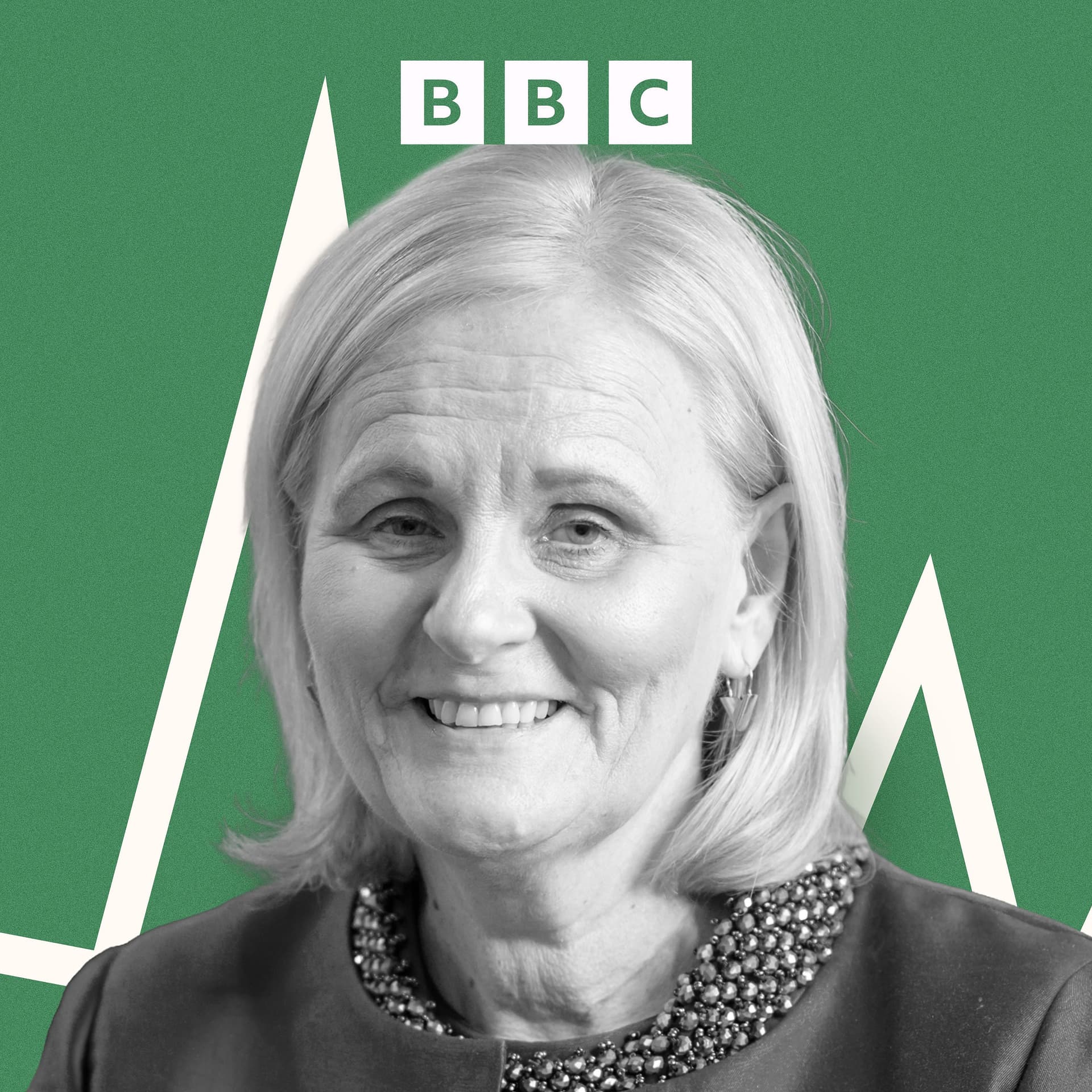
In short
Big Boss Interview: Episode #7 Summary
Episode Overview Guest: Jo Whitfield, Chair of the British Retail Consortium (BRC) Host: Sean Farrington Release Date: [Insert Date] Producer: Angus Tiffin Editor: Henry Jones
Jo Whitfield shares insights from her extensive career in retail, explores the evolving landscape of the industry, and discusses crucial topics such as safety for retail workers, the impact of technology and AI, and the need for greater protections for delivery drivers.
---
Key Discussion Points
- Jo Whitfield's Career Path
- Background: Jo has 25 years of experience in retail, having worked with major companies like Co-op, Asda, and Matalan.
- BRC Role: Jo became the first female chair of the BRC, highlighting the importance of diversity in the retail sector.
- Transformation and Challenges in Retail
- Evolving Landscape: The retail industry is rapidly changing due to the rise of online shopping, social media, and shifting customer habits.
- Customer Engagement: Retailers need to adapt to more informed consumers who utilize social media and online influencers for shopping.
- Financial Pressures on Retailers
- Business Rates and Taxes: Jo discusses the disproportionate burden of business rates on physical stores compared to online retailers, urging for a fairer tax system.
- Budget Implications: Upcoming budget discussions are critical for addressing these financial concerns.
- Ecosystem of Retailers
- Supermarkets vs. Independents: Both large supermarkets and independent retailers play vital roles in the retail ecosystem, attracting consumers to high streets.
- Influencers: Online influencers shape consumer behavior and shopping preferences.
- Diversity and Inclusion
- Jo emphasizes the need for increased diversity in retail leadership, not just in gender but also in ethnicity and background.
- Social Mobility: Jo aims to improve opportunities for individuals from disadvantaged backgrounds in the retail sector.
- Safety and Crime in Retail
- Retail Crime Statistics: Jo reports a rise in violence against retail workers, with an average of 2,000 incidents reported daily.
- Protection Measures: The industry is investing significantly in security to protect employees and enhance safety.
- Cybersecurity
- Growing Threat: Cybercrime poses a significant risk to retailers, with recent high-profile incidents highlighting vulnerabilities.
- Investment in Cybersecurity: Retailers are prioritizing cybersecurity to safeguard their operations.
---
Key Takeaways
- Adaptability of Retailers: The discussion emphasizes the ability of retailers to adapt to changing market conditions and customer needs.
- The Importance of Community: Physical stores are seen as crucial for local economies, serving as anchors for high streets and smaller businesses.
- Call for Action: Jo advocates for a fairer distribution of tax burdens and greater protective measures for workers, particularly in light of rising crime rates.
---
Conclusion Jo Whitfield's insights shed light on the complexities of the retail sector in an era of rapid change. Her emphasis on diversity, safety, and the need for a supportive regulatory environment highlights the challenges and opportunities that lie ahead for the industry.
For more insights and discussions, subscribe to *Big Boss Interview* on BBC Sounds or your favorite podcast platform. Contact the team at bigboss@bbc.co.uk for more information or feedback.
Written by AI. May contain mistakes. Listen to the episode to check what was said.
Transcript
Automatic transcript. May contain errors.0:17Hello, welcome to Big Boss Interview. I'm Fliss Hannah, but I'm here to talk to talk to the British Retail Consortium. Now, that's a big role in itself because it represents all retailers across the UK and in all those big conversations that industries want to have with government and amongst each other when big issues come up. Often, things like the British Retail Consortium will have a major role in that. But Jo Whitfield herself has held many, many very senior roles at the co-op. She was in charge of co-op food there for many years. She was chief executive of Matterland in recent years as well until last year held senior roles at Asda as well.
1:02So she's got a real insight on how retail has changed over the years, but also, clearly, what she thinks is needed right now for the sector, whether it's from big supermarkets to independent retailers on smaller high streets, what they need at the minute. So she must have had loads to say, especially with the budget screaming towards us. Well, definitely the budget screaming towards us, but we also got on to some of those longer-term issues as well. You know, what is the high street really about? the focus on big supermarkets, which will probably come up in the budget. Where does that sit within our retail offer?
1:35The growth of all these influencers online having shops themselves. That's really mixed things up into how we've been buying stuff as well. And then the day-to-day life in retail, whether it's the crime you might face, the safety issues that people work in in retail, drivers as well, delivery drivers as well, that came up and what some of these big retailers and small retailers particularly need to be thinking in the world of cybercrime after the M &S and car cyberattacks this year. Well, let's hear what she had to say. Just want to ask, to begin with, people will hear, Jo Whitfield, new chair of the British Retail Consortium, and might wonder, right, Jo, what have you done to get the job?
2:17Those in the retail world will be very familiar with the roles you've had. But for you, what's got you to this role? That's a great question. Well, 25 years experience in the industry, I guess um started out um really really wanting a career in business and and I ended up in retail by happy circumstances many of us do and I've just had the most amazing career so I've worked for some fabulous companies um seen lots of them go through quite transformational change um you know retail's such a dynamic industry it's fast moving it's inventive it's all about people and I think that's why so many of us are drawn to it as a place to work and for me I guess you know I was able through opportunities and people who believed in me to keep moving my career through and and finally having led a couple of businesses in recent years decided to shift into more of a portfolio career and that was when this opportunity came along and I have to say it's such a fantastic opportunity to represent this industry.
3:22You know, it's an industry I'm so proud of and grateful for in the 25 years I've been able to work in it. And I appreciate because you're representing a whole industry. You might not want to be sort of name dropping those companies that went along the way. But I'll say them, you know, the likes of Co-op, Asda, Matalan, you've been at the forefront of running these businesses over the years. What do you think have been the biggest changes you've had to navigate in those periods? There's been huge changes to navigate, you know, changes within the individual businesses themselves. So many of the businesses I've worked in have been through transformation and change.
4:01So particularly Matalan and Co-op, you know, not necessarily had the straightest path in terms of their performance. And so, you know, I've gone in along with others and needed to reinvent those businesses. And that's meant re-engaging colleagues around, you know, the opportunities that those businesses had, driving the sales line by focusing on customers, reinventing the product offering that we have, and often just putting customer and colleague back at the heart of those businesses. And that's what retail's about. But you're doing all of that in a very changeable landscape as well. So, you know, over this time, we've seen the retail industry pick up a cumulative cost burden over many years.
4:45We've seen customer demand and customer needs shift and transform greatly. And the regulatory burden that most businesses are now working within is very different to what it was 10 years ago. So as a CEO and all the CEOs that are running businesses today, the demands and pressures in that role have shifted and evolved greatly. What I would say, though, is all of those businesses are very adaptable. And retailers are very adaptable. And actually, all retailers want to see their businesses growing. And they want the opportunity to invest both for customers and for their people to ensure that businesses thrive, you know, not just survive.
5:26And I've been very lucky over my 25 years to be able to help businesses move from that survive to thrive by working with fabulous teams. And we'll get on to some of those cost changes and regulatory changes over that period. Interested when you said the demands and needs of customers have changed in that period as well. What's changed? Yeah, well, I mean, look, clearly online and the way that we engage with social media and starting to look to transact in those new channels has shifted and meant that as retailers, we now offer many different ways of shopping with us, not just the physical store, albeit that's still super important.
6:06And actually customers are shopping differently, so they're much savvier. You know, they've got much greater access to prices by being able to research widely across the internet. They're able to respond to trends. Influencers have had a great role in terms of how customers think about what they need. So actually tuning into all of that is really important. Over and above that, clearly there's been cost of living challenges. And, you know, for all retailers, we've seen customer confidence ebb and flow really depending on their own personal fortunes and whether, you know, their wages are keeping up with how costs are changing.
6:44So for us, there's this demand to always stay super connected to how the customer's feeling, to the choices and the priorities that they're having to really hone in on given their budget. And also thinking about trends and where things are going so that you're ready for what comes next. And given that move to social media in particular, the internet's been around a long time. It certainly has. Social media has not been around quite as long, but it's had a phenomenal impact on the way we all live in the last decade or so. And on retail, maybe even more in recent years, you know, all of those influencers can now be shops themselves.
7:24Absolutely. Yeah. Do you feel, is the burden shared, that cost burden, the regulatory burden shared in that new growing part of retail alongside those, you know, the traditional names that we will have seen for decades? Less so. So I think the cost burden still sits very heavily with physical retail. It's interesting, I think, when we look at the numbers, because, you know, retail's a fabulous contributor to the economy. I think we bring about 5 % of GDP in for the country as a whole, but we pay 21 % of the business rates of the country as a whole. So the burden still sits very heavily in certain parts of retail.
8:07And last year's budget alone brought another 7 billion of costs in for retailers to need to digest, find ways to navigate, to limit the amount of price pressure then that they needed to pass on to customers. And that's a constant battle because retailers operate in such a competitive market, you want to pass on as little as possible. But this cumulative cost burden has made it really difficult for retailers. And it's made it hard on a number of fronts. It's meant there's less ability to invest in your business. You know, more of your cash being taken up by these costs means that you're not able to invest in, you know, the new stores in the way that you'd like to refit some of the stores that you have to drive growth and to create more employment.
8:56less cash to invest in training in you know digital enhancements to your business as well so we really need to see this cost burden shift and be shared more widely and I mean the budget you know is a great opportunity I think to look at business rates very differently and I think we've been talking about business rates needing a reinvention since God was a boy you know it's just it's been something successive governments have talked about but never really done and what's There's some big changes on the way, though, where smaller, particularly those with smaller properties, will see lower business rates.
9:32And that's really welcome. And what's great is that this government is starting to think about it differently. But we need it to be much more far reaching, I would say, Sean. And whilst we welcome the discount for the smaller retailers, we need to make sure when the budget lands that that is a meaningful discount. But also, you know, we're concerned that the way that that will be funded is by a surtax on larger properties. And that is likely to capture around 4 ,000 large stores. Now, those large stores would generally account for about a third of the business rates bill. So they already, despite being a really small number of the total shops in the UK, pay a disproportionate amount of tax.
10:14And they employ about a million people. and they play a really important role in anchoring high streets and bringing traffic into those high street communities which is an ecosystem for smaller shops for restaurants for leisure so we really want to see the burden being shared in a very different way and we don't want to add to the challenges the government's got the chancellor's got a really tough job in balancing you know a really difficult set of books and our sense of this is actually you know that that cost could be spread across large commercial properties large office buildings where actually the rates are a much smaller proportion of their cost base and actually then would give retail some much needed oxygen to drive growth and we think we can drive growth very rapidly and are probably quite uniquely places in industry to do that because we want to be part of the solution So commercial properties, office properties.
11:13Office, warehouses, etc. Seeing higher taxes on those, so you'd see the burden shared that way. People can sort of picture, right, if a warehouse is paying a higher rate of business tax, then that's very closely linked to that internet world, the retail world. And it starts to rebalance. It starts to rebalance. What about away from the physical property and some form of tax on those that are doing retail purely online, whether or not it's linked to a property in the first place? Well, I think to be fair, you know, looking at how we drive growth as a country, and that's what we all need to do. There's definitely a balance of how you can equitably share some of the existing tax structure more equally.
12:02Introducing new taxes brings new frictions and potentially, you know, starts to put more pressure into price and inflation. And I think one of the things we'd say as we look at what could drive growth for us as an industry, we'd really like to see customer confidence improve. And we'd really like to see customers feeling that prices are not rising ahead of their ability to spend. So our sense would be let's get growth moving by reducing the cost burden on businesses, meaning, therefore, that prices can start to come under control because consumers can feel more confident spending. and that starts to generate more volume growth which we've we've not had for a number of years that is probably the fastest route to productivity improvement and actually turning the flywheel of growth for our industry and for the economy so for us it's more about how do we how do we free customers up and give customers confidence to spend and that's really about getting the top line moving as we refer to it but at some point if you want to spread the burden further do you not need to bring those people who are selling stuff and competing directly with whether it's your small independent or the big superstore do they not need to be brought into it somehow well i guess retail's an ecosystem and and what we'd see is generally um there's a very heavy tax burden already in retail overall so so actually our sense is the best way to stimulate growth is not necessarily to keep increasing the tax burden within the retail community because it is an ecosystem you know influencers online retailers often push traffic to physical shops so actually you don't want to encumber that what you do want to do is spread the burden more widely to free up the industry to really drive growth and drive it quickly.
14:01When we talk about those super stores very often linked to some of our biggest supermarkets many might see that they're the ones with the broadest shoulders at the moment. They employ hundreds of thousands of people across the country, you know, provide food for households across the country to be able to buy every single week. And we talk very regularly about the supply chains and the flow that's needed for that to happen. They make billions of pounds of profits as well. And in a moment where we know the Chancellor is saying, you know, there are tough decisions to be made, people might see that actually, why shouldn't it be those that are making those billions of pounds of profits?
14:43That's where the nudging is happening, if it means that those smaller businesses can have a lower tax burden. And I think, you know, the insight I can give on that is, you know, larger supermarket businesses, if we're talking about them specifically, you know, they typically operate on very thin profit margins. I mean, on average, two to three percent profit margins. So when you see the level of cumulative cost burden that flows in at key moments like last year, the ability of those businesses to outrun those cost pressures without passing a chunk of that onto the customer is quite limited. because actually at the same time as generating profit, they are reinvesting significant amounts in maintaining those supermarkets, in employing more and more people.
15:34And the businesses have got more opportunity to do that. They're great anchors, as I said earlier, for other businesses. And actually, you know, the position around some of those stores are, you know, as the cost pressures rise and as consumers have tightened their belts, what you see is more and more stores within those estates start to become more marginal in terms of a profit view so actually what we want to see is a situation where we can open more stores we can see a route to improve profitability so that we can keep employing people and and against the backdrop of of the cost challenges the industry lost around 100 000 jobs last year and that's the reverse of what we want you know we want an agenda for growth if we look at the large stores that would be affected by the surtax there's about 4 000 and you know speaking to members we would acknowledge that around about 400 of those would start to move into that more marginal position and would become at risk and that could potentially put another 100 000 jobs at risk and it starts to affect you know the role we can play in being a training ground for other industries because lots of people start off in retail and move on as part of their future careers.
16:49So we want to be a really effective tool within the government's armoury to drive growth and we do genuinely believe if we can get all elements of retail working together as this ecosystem requires, not leave big gaps in locations, not leave high streets without key anchors, then we can really start to move that growth agenda forwards. It's interesting how over the years, over the decades, the big superstore one way or another has had such a key part of the debate around what a high street should be, how it should be provided. It's come up a fair bit in our conversations we've had recently. We were speaking to John Roberts, the founder and chief executive of AO.com recently.
17:35And we can play a little bit of sort of what he had to say about how he viewed the retail environment. Big supermarkets talk about how unfairly they are disadvantaged in the tax environment and how the internet's killing the high street. I mean, don't make me laugh. Are you telling me that supermarkets didn't kill high street butchers, bakers, greengrocers, and then they've got some competition they don't quite like and all of a sudden the internet is killing the high street? Can you see the point John Roberts is making there? I think John's, you know, obviously a very seasoned retailer and has seen many changes just as the rest of us have.
18:12I think you've got to take a total view. And it is this point around we've all got to play our part in driving growth. And it's not about one particular element of the industry being disadvantaged relative to others. What we want to see is a level playing field for everyone because we all serve customers in different ways. There might be some of those independent shops on high streets thinking, do you know what, if there are 400 shops that are now massive superstores that are maybe not quite as viable, that might mean some of those people heading there might head to the local high street instead.
18:45Yeah. And look, independent retail has got a vital role to play because they offer very different nuanced customer experiences, you know, very bespoke, very individual, really well curated by the people that operate those businesses. And we want them to absolutely thrive. The element to ensure we get right is very often those large stores are what brings the traffic to those locations. So actually, it's not about large shops or small shops. It's about, you know, or, you know, shops and or internet. This is about stores, large and small and internet, all working together and providing the best experience to customers so that they can shop wherever, whenever they want, being able to purchase a wide range of things in the way they want to shop.
19:39And that's what the industry's got to be about, is providing the best customer experience across all elements. Just changing topic a little bit. When it was announced that you would become chair of the British Retail Consortium, you spoke about the body itself spoke about you being the first female chair of the British Retail Consortium. How did that happen? Well, you can answer my question. Was it a surprise to you? Is it something you were always aware of? I mean, not everybody talks about the British Retail Consortium as much as you or I might, you know, in their day-to-day lives. But in terms of representing the industry, and, you know, we speak to your chief executive, Helen Dickinson, who has been running the trade body day-to-day for some time.
20:24Yeah, doing a fabulous job. But to be chair, to be representative at all the meetings you'll go to, speaking with government, everything like that, was it a surprise to you that you were the first? I think surprised that it was the first woman and it's taken this long, yeah. because there's fabulous female leadership in retail. I'm delighted to be the first. I feel an honour and a responsibility to give it my absolute best, which I will. But yeah, I mean, it's such a vital organisation. And being a woman, I think, and having a female chair, I think is important because it does signal how important inclusivity is to retail.
21:04You know, it's an industry that's really, really got behind inclusivity over a number of years. And it's essential because we need to represent the customers we serve, right? You know, women are a very large proportion of the people who make the purchasing decisions in households. So having that perspective and represented, you know, at all levels within the retail businesses, I think, is something everyone's become very acutely aware of. But we do need to do more. We often hear that. How does that play out in meetings you'd be having? Even as you've been running some of our biggest retailers over the decades, how does that slight change in life experience play out into how businesses are run?
21:48Yeah, well, you've hit the nail on the head. It's a different set of experiences, I'd say, Sean. It's, you know, everyone has their own personal style. Everyone has their own set of eyes that they look through, in terms of understanding situations and how best to respond to it. And everyone's had their own different set of experiences. And I think as a female leader, I can bring all of my own experiences and perspectives into this role really powerfully. But it has to go beyond gender as well, I'd say. So being the first female leader is fantastic. And there's been big moves on many fronts in retail generally.
22:27But there's still a lot more to do. You know, if we look at, you know, ethnicity, if we look about disability, sexuality, great strides are being made. But the UK population is wonderfully diverse. And actually, if we're going to serve them well, we need talent that can represent the right voices, the right insights to ensure that we absolutely reinvent ourselves in the right way to stay relevant. So I guess that's how I see it show up, is just the own personal journey that you've been on and the things that have shaped you will be slightly different potentially. What's your view on the current jobs market within retail, career prospects within retail, for women in particular?
23:14It would be a sector where many women would start out their careers over the years. It's come up a few times in our programmes lately about the advancements of technology and AI and how entry-level jobs are being potentially hit harder than other jobs. And also, do you feel that, because it's been raised a few times, that jobs and sectors that women are working in predominantly are hit any harder at the moment by these advancements in technology? So an interesting take on it. I don't necessarily see it that way, actually, because a number of the roles, if we think about in retail, 57 % of the roles are held by women and around 50 % of the roles that we have in retail are part-time actually so we offer a lot of flexibility for people who are either students starting out in their careers or people who are juggling care responsibilities or looking to get back into the workplace and actually those customer facing roles and the roles in shops are to some degree I think require a human element and always will.
24:22I think where we see AI offering some of its greatest early opportunities in how we handle data and how we manipulate data at great speed. So I think there'll be elements of roles that will probably be affected first rather than it being a blanket impact. And actually there's great opportunity through using AI to move people into the work that's a bit more value added, a bit more meaningful, a bit more human interaction. and I think that's often where a lot of the joy of working in retail is. So I don't necessarily see AI as having this gender dimension because I think it's going to be about how we use it to make work simpler and more meaningful and actually enrich some of the roles that we have then within the sector to do a better job for customers.
25:10So if you work in retail, I mean if you're a customer going in you will have seen advanced changes in technology over the time. That would have been one way that the job has changed in recent years. Another way has been the safety aspect of the job. Oh, yes. Which I know is something that you've worked closely on for many years. Are retail workers any safer today than they were a year ago, do you think? Absolutely not. No, absolutely not. So we're in a horrendous situation where we're seeing, on average, 2 ,000 incidents of violence a day. that's 50 % up year on year so absolutely not in a safer environment theft we're seeing 55 ,000 incidents a day I mean it's staggering really and no one should come to work feeling fear and afraid of what might happen to them on a shift and you know retailers are leaning into this really really powerfully you know we're investing about 1.8 billion in security prevention measures to protect colleagues.
26:12And as you know, and the BBC have been a great supporter of this issue for many years, we were able to effectively lobby as an industry and the BRC and USDA as a union to see a standalone offence brought in for assaults on shop workers. But we still need more change. There's some great things happening. Do you see a benefit of that, the prospects changing because of a change like that? Potentially. And I think what's needed is, so it's great that the£200 low theft threshold is being removed by the new crime policing bill. That will mean then much more of these incidents become subject to police scrutiny.
26:55However, what we do need is the police to prioritise retail crime. We do need them to attend. We've got a duty to report. Now, at the moment, there's quite low confidence in retailers around whether the police will be able to attend an incident, which through human nature means people don't necessarily always report them because someone's not going to attend. But actually if we do prioritise resourcing into this space and do attend, there is a real opportunity now with the law change to tackle repeat offenders and the organised crime groups that very often are behind these events. But we also need one other important change.
27:32We need the law around offences to shop workers actually being extended to cover anyone in customer contacts at the moment. It wouldn't cover delivery drivers. And if you think about it, delivery drivers are subject often to abuse at the doorstep. Have you seen that? Does the data show that? Definitely it does. You know, we hear the reports back from our colleagues. So we do need that extension and then we do need the government and the police resources to come in to make sure it can be effective. And then we'll keep doing everything we can to keep ensuring we keep colleagues as safe as possible.
28:06Is that, from the stories you hear, the data you have, is that a different story? Somebody getting abuse when they've arrived at somebody's doorstep rather than somebody getting abuse in their place of work and somebody's coming into it? It has some different dimensions in that often, you know, when you go into someone's doorstep, it's not necessarily the individuals that are involved in organised crime that you're dealing with who've got a certain pattern of behaviour. but some of the antisocial behaviours that we do see play out in shops is what then people experience in doorstep delivery as well and you know these people who are trying to serve are you know coming to do a day's job you know they're trying to wear money for their families they've got an important role in bringing income into the house into the household and you know it's it's to me just incomprehensible why they should be expected to deal with you know a level of abuse that's now playing out you know in society.
29:07These are people who are doing what's right and doing what's best for their families they need to be treated with respect. Covered lots of major issues for the retail sector those running the companies those working at them those buying from them as well. how do you measure success you know you get the job as chair of the British Retail Consortium and you go to lots of meetings and have lots of conversations about things but for you do you in your mind is it one year three years a certain metric that you just even for yourself have in mind yeah I mean look you know you come into the role and I took over for the wonderful Andy Higginson at the start of October so I'm very much in that forming stage and I'm engaging with members over the next couple of months to understand what's most important for them that we focus on.
29:58I guess my view coming in is growth is the number one focus and that's about ensuring that we help the government understand the role we can play in unlocking growth, that we have good conversations, we improve understanding, we bring the ideas that we have as an industry to them so being that conduit and supporter of Helen and the team at BRC doing that great work. Crime's very much on my mind in terms of how we make meaningful change in those statistics. And again, you know, have the impact we need to with government in moving that on. The role of high street and remaining in communities is a crucial one.
30:36And this is where the business rates topic and how the ecosystem plays out is vital. So, you know, looking for success in that, Sean, I guess it's about how we can navigate the conversations with government in the right way to enable our industry rather than hold us back. And looking for, you know, are we able as retailers to invest in the things that means we stay in communities and can keep employing? And we've got a flexible labour model to enable us to do that. And then very, very importantly, the last one you will not be surprised to hear is inclusion. and for me personally seeing that step forward and seeing us continue to make great strides there's an especially important metric for me which is around social mobility and our ability to bring people in from disadvantaged backgrounds and enable them to have a lifelong career within retail and that you've spoken to lots of people who've had that you know Cinderella story that's not quite a Cinderella in retail because we're a real meritocracy where you start on the shop floor and you end up running the business so you know there's something for me as a northwest girl you know my welder's daughter first person in my family to go to uni that means social mobility is really important to me and and it's something that i'll be looking to try and advance you know the story about and work with others to try and increase those opportunities as well is that hard to measure it is difficult to measure but i guess What we do within the BRC is we've got fabulous groups that come together to share best practice on this.
32:08And we share data across the industry. So actually, I think we're able to see the performance improvements that individual businesses are making and the commitments that leaders are making. I mean, over, I think about 95 % now of retail businesses have got inclusion programs and plans. So that's an important part of the listening I want to do in the coming months is how do we go further and faster around topics like that. I realise when we talk about crime, as we have done, there's been a new sort of form of headline grabber when it comes to crime this year for retail and that's cyber crime. Yes.
Read the full transcript
32:44And people have seen it with some of the biggest names that they will use, Co-op and M &S. We've seen it in other big businesses as well. We've heard about it down the supply chain. are retailers doing enough do you think to be it's difficult to be ahead of it because it's you know it's a crime but to protect themselves as much as they could be i would say this has been an area of focus for retail for a number of years now it's been felt as a growing threat boards have talked about it investment monies have been prioritized into it So, you know, are we taking it seriously and building talented teams of people that can work on this as a topic?
33:26Absolutely. To your point, it's really hard to predict where the next threat's coming from. But there's substantial investment where investment funds are available to point in this direction. And most retailers would have cyber investment as one of the top investment priorities now. And it will have to remain thus. Do you think with your conversations you've had that retailers, even just after the Marks & Spencer and co-op experiences, have actually changed how they view it? Was that a wake-up call? I don't think it was a wake up call. I think what it's done is, is highlight, you know, just how impactful it can be.
34:03And I guess what it did was make really apparent that the risks that people have been focusing on and concerned about are the risks that absolutely can play out. and so I think people have doubled down with better information and knowledge as a result of it Sean I think but I think this is something that's going to be on our agendas forevermore and I think how the government again thinks about crime prevention and resources is another important hand-in-hand ingredient to us working hard to protect ourselves and build the right infrastructure and capabilities and processes that means it's harder for them to get in, but also, you know, backed up with people who are seeking these individuals out and removing them from the challenge.
34:55You think we'll see more cases like we have done this year? I think it's difficult at the moment to see the focus on retail diminishing by these groups. I think what we will have to do is stay ever vigilant on it and continue to invest very heavily in ensuring that we are always the most up-to-date and always the most forward-thinking we can be on the topic. Joe Whitfield, Chair of the British Retail Consortium. Thank you very much. Thank you very much.
35:29Well, thanks so much, Joe Whitfield and Sean Farrington. Remember, if you want to hear more of these chats, You can subscribe to Big Boss Interview on BBC Sounds or wherever you get your podcasts. And if you want to get in touch with us, we'd love to hear from you. The address is bigboss at bbc.co.uk. Couldn't be simpler. Thanks a lot.
From the publisher
Jo Whitfield, in her first chat since becoming Chair of the British Retail Consortium, tells Sean Farrington how she ended up at the organisation after a career spanning some of the High Street's biggest businesses. She shares why it’s such an important time for retail, and talks about how the sector’s changing—thanks to online shopping, social media, and shifting customer habits—and how retailers are adapting. Jo dives into the pressures businesses face, especially around business rates and taxes, and calls for a fairer system that doesn’t penalize physical stores. There’s also a look at how supermarkets, independents, and online influencers all play a role in today’s retail ecosystem. Jo reflects on being the BRC’s first female chair and why diversity in leadership—across gender, ethnicity, and background—matters for the future of retail. She also touches on tech, AI, and how retail offers flexibility and opportunity, especially for women, whilst on safety, she highlights rising retail crime, the risks to staff and delivery drivers, and what the industry and government are doing about it. Cybersecurity is another hot topic, with Jo stressing the need for constant vigilance and investment.
01:26 Jo Whitfield’s career and appointment as Chair of the British Retail Consortium 03:51 Transformation and challenges in the retail sector 07:40 Impact of business rates, taxation, and the upcoming budget on retailers 14:31 Role of large supermarkets, independent retailers, and online influencers 19:58 Inclusion and diversity in retail leadership 23:41 Women’s careers, technology, and AI in retail 25:23 Retail crime, safety for workers and delivery drivers 32:33 Threats of cyber crime and security in retail
(Picture: Getty)
Presenter: Sean Farrington Producer: Angus Tiffin Editor: Henry Jones