In short
UK jobs market and hiring trends amid political instability and Brexit-era fallout, with a focus on how AI is changing recruitment, graduate opportunities, and job applications.
Guest backgrounds
James Reid is chief executive of Reid Recruitment and has led the company since the late 1990s; he has 30 years’ experience and has seen downturns like 2008 and early COVID.
Key claims
Vacancy numbers have fallen (Reid.co.uk vacancies down for three years; UK vacancies from over 1 million to around 700,000). He argues the October 2024 “Halloween budget” employer national insurance rise (25 billion) “taxes jobs,” shrinking hiring and pushing firms toward automation/offshoring. He proposes “back humans, tax robots,” suggesting AI/robot services should be taxed (e.g., a VAT-like surcharge or robot coupon) and that big tech should pay more in the UK.
Notable examples
one applicant allegedly submitted 109,000 applications using AI while employers use AI to screen them, contributing to “ghosting.” He cites graduate vacancies dropping from about 180,000 to 50,000 on Reid’s site.
Guests
James Reid (CEO, Reid Recruitment). Hosts/interviewers: Sean Farrington (interviewer).
Written by AI. May contain mistakes. Listen to the episode to check what was said.
Chapters
Tap a time to open that second in VOOverview of the Jobs Market and AI Impact
0:30 to 3:14
Explore the current state of the jobs market and the effects of AI.
“Whole Foods Market, make your summer sizzle.”
Advice for the New Prime Minister on Job Policies
3:14 to 4:36
James Reid shares insights on what the new Prime Minister should prioritize regarding employment.
“Thank you so much for joining us on Big Boss Interview.”
Concerns Over Tax Policies Affecting Businesses
4:36 to 6:40
Discussion on the impact of national insurance taxes on businesses and job hiring.
“And we've seen the consequences of that since then, in the shriveling up, really, of opportunities for people, and the great reduction in the number of vacancies.”
Offshoring and Nearshoring Trends in Recruitment
6:40 to 8:04
Examine the trends of offshoring and nearshoring in the recruitment industry.
“So$25 billion is a big sum of money, but the damage it's done is certainly of that order too, because it's really stopped businesses from hiring.”
The Future of Jobs Amidst AI Advancements
8:04 to 12:09
Insights on how AI advancements are affecting job opportunities and recruitment.
“So particularly automation, but also offshoring jobs.”
Comparing Current Market Challenges to Past Crises
12:09 to 14:00
James Reid compares the current job market challenges to past crises like the financial crash.
“The difference here, though, that worries me particularly is both in 2008 and 2020, there was a sense in the country and in the world more widely that we need to sort this out and do something about it.”
The Rise of Robotics and AI
14:00 to 14:33
Discussion on the increasing use of robots and AI in various sectors.
“And it's the provision of those services is consuming huge amounts of energy and contributing significantly to climate change.”
Taxation and the Future Workforce
14:33 to 15:40
Exploration of the need for tax reforms to address automation's impact on employment.
“It is said I don't see any reason to disbelieve that.”
UK's Economic Standing and Technology
15:40 to 17:13
Discussion on the UK's position in the global tech landscape and reliance on US technology.
“So that's where the taxation should follow.”
Creating Opportunities for Entrepreneurs
17:13 to 18:24
Addressing the need for a supportive environment for entrepreneurs in the UK.
“You know, we couldn't operate without it.”
Show all 25 chapters
The Future of Work and Job Replacement
18:24 to 19:46
Concerns about AI replacing jobs and the implications for the workforce.
“So I think the important thing to think about is how do we create Britain as a place of opportunity for business and for people?”
Developing a Workforce Strategy
19:46 to 20:52
Advocating for a comprehensive workforce strategy to ensure job opportunities.
“You know, a world without work is a worrying one.”
Trends in Graduate Employment
20:52 to 24:54
Analysis of the declining job vacancies for graduates and its causes.
“and there are sectors that are just not going to need anything like the number of jobs they once did.”
Hiring Opportunities in Tough Times
24:54 to 27:07
Encouragement for businesses to seize hiring opportunities during economic downturns.
“So, you know, the traditional graduate job is not what it used to be, certainly.”
Guiding Young People Towards Future Careers
27:07 to 28:00
Advice for parents and young people on finding fulfilling career paths.
“So this is a good moment to be hiring bright, capable people.”
Economic Opportunities and Future Trends
28:00 to 29:00
Explore the importance of identifying future job opportunities and economic trends.
“I have a philosophy which is to play poo sticks.”
University vs Trade Skills Debate
29:00 to 30:40
Discuss the relevance of university education versus vocational training for young people.
“Well, there are some very simple things.”
Reality of Student Debt and Job Market
30:40 to 33:00
Examine the impact of student debt on graduates and the job market dynamics.
“Do you notice people being put off university by the scale of debt that they come out with?”
Oversupply of University Courses
33:00 to 33:40
Analyze the oversupply of university courses and its effects on employment.
“But the general landscape is that there are a lot of very disappointed graduates who feel in some ways they've been missold.”
Challenges in the Job Application Process
33:40 to 36:00
Delve into the difficulties applicants face in today's job application environment.
“And the idea that half our young people go to university feels, to me, very outdated.”
The Role of AI in Recruitment
36:00 to 37:50
Discuss how AI is reshaping the recruitment process and its effectiveness.
“But if it becomes systemic, which is what we might be seeing here, That's a more deep-seated problem, and it's not good.”
Future of Recruitment and Job Markets
37:50 to 41:20
Explore the future of recruitment amidst changing job market conditions and technology.
Tax Robots, Back Humans
41:20 to 42:08
Learn about the concept of taxing robots and how it relates to wealth generation.
“remain relevant and i would like to think super relevant in the services that we provide I just wanted to reflect on once more, James, where you talk about tax changes that are needed and the tax on robots.”
Glimmers of Hope in the Job Market
42:08 to 44:25
Explore the potential factors that could improve the jobs market.
“And if you look at the history of taxation, taxation follows wealth.”
Conclusion and Call for Reviews
44:25 to 45:05
Wrap-up conversation reflecting on the interview and urging listener engagement.
“So if you do have 10 seconds or so to give us a five-star review on whatever podcast platform you are listening on, we would be massively grateful.”
Transcript
Automatic transcript. May contain errors.0:00This BBC podcast is supported by ads outside the UK.
0:30Whole Foods Market, make your summer sizzle. As yet another British Prime Minister steps down, is the country still feeling the effects of Brexit 10 years on? I'm Tristan Redmond, one of the hosts of the Global Story podcast from the BBC. Keir Starmer has become the sixth leader to resign since the Brexit referendum. Ever since that vote in 2016, the country's been wracked with political instability. When will it end? For more, listen to The Global Story on bbc.com or wherever you get your podcasts.
1:16Hello and welcome to the Big Boss Interview Podcast, where we chat to some of the biggest names in business, shaping the way we live and work. And today, Sean Farrington has been chatting to a leader, Sean, who, well, in a sector that can't be much more under the microscope at the moment. What's going on with recruiting and hiring and the jobs market more broadly? I've been speaking to James Reid, the chief executive of Reid Recruitment. He's been around for decades. James himself has been in charge since the late 90s. And we were able to get really into the detail of what's been going on in the jobs market of late, whether that's been the impact on graduate opportunities, entry level jobs, something we've heard about from other bosses.
2:00He was able to tell us which sectors he's seeing this in, why it's happening, put it into a bit of context compared to previous crises and difficult times for jobs markets that he's seen in the past. But of course, we also got into what he thinks the impact of artificial intelligence will be on the jobs market and where. He had some big concerns to the extent that we spoke about his thoughts on taxing robots, as he puts it. The fact that so many services may be provided by artificial intelligence now. If you're going to tax humans, why aren't you taxing those services in a different way? That leads, of course, on to what extent should the big tech companies be taxed here in the UK?
2:42And it wasn't just the role of artificial intelligence on the wider jobs market. How about those applications and vacancies themselves? The fact that hundreds, thousands, sometimes tens of thousands of people can be applying for a single job, putting that many applications in themselves because they're using AI to do that, and those employers are using AI to read them all. Is anybody actually talking to each other anymore? quite interesting when we got on to what is actually the best way to try and apply for a job these days. So plenty to get into with James Reid. Here he is, the Chief Executive of Reid Recruitment.
3:20Thank you so much for joining us on Big Boss Interview. Hello, Sean. It's a real pleasure. Thank you for having me. And James, we will have talked many a time over the years about what's the latest in the jobs market, something that people watch very closely, particularly when big things happen to the economy through COVID or leaving the European Union or having energy prices spike, all of this. And now we talk and there's a prime minister that's resigned, a new one is on the way. And I just wonder if you got the chance, if you're a new prime minister, whoever that is going to be, and they go to you as boss of one of our biggest recruiters and say, look, just sum up, what is the big thing I need to have in my mind starting the new role as a prime minister when it comes to the jobs market what would you be saying to them well I'd really stress that this is a real moment of opportunity it's an opportunity to reset the government's relations with business and actually row back on what I feel strongly was some early mistakes that were made in in that first budget in October 2024, when 25 billion was put on employers' national insurance as a massive tax increase that was effectively a tax on jobs.
4:38And we've seen the consequences of that since then, in the shriveling up, really, of opportunities for people, and the great reduction in the number of vacancies. So I think it's a real opportunity for a new prime minister, a new chancellor to have another look at their sort of tax and economic policies to really get behind business, because many people in business felt, you know, that the language was encouraging, you know, in the general election of 2024, and the focus on growth was encouraging. But the actions were very different. So I think it's an opportunity to take some new actions that will help revive the economy and restore relations between government and business.
5:21Do you think there needs to be a new chancellor as well? Yes, absolutely. I think there should be a new chancellor because the incumbent made the decisions that caused the damage that I'm talking about. So I think, you know, a new prime minister will want, I mean, the chancellor is such a key person who should work alongside the prime minister. If the prime minister wants to set a new course, they will, of course, need a new chancellor. When you talk about a reset with business, wasn't there supposed to be a reset with business with the start of this Labour government? Yes, I mean, the language in the manifesto was very pro-business and pro-growth, but the actions that were taken in the budget, particularly in October, the Halloween budget, I call it, in October 2024, were against business and particularly small businesses.
6:11You know, I'm thinking of family businesses, farms, you know, the people who were hit with the changes to inheritance tax. I mean, that was a massive blow to them. And they're still sort of reeling from it. And it's an easy one to correct for an incoming prime minister or chancellor, because the amount of revenue raised from that change is pitiful. It's nothing. And so, you know, they could get behind business and take an action that would indicate real intent by just ripping that up and reinstating business property relief for farms and family businesses. And that was originally introduced by Labour Chancellor Dennis Healey in 1976 so it's not anti-Labour to do that at all and 57 % of the people in this country work in family businesses so if those family businesses are thinking well I don't want to grow my business because I'm going to get whacked for tax if one of the family dies that affects huge numbers of workers and it's not a good thing.
7:08What about national insurance contributions though if that was to be reversed in some way that that would be expensive wouldn't it because it that did as you laid out raise billions and billions of pounds well it has in the short run but the the impact of that tax is definitely expensive because in one go it made employers revisit their sort of intentions i know this because we had clients um cancelling orders the week after that budget saying we're not going to hire these people anymore because of this increase because it will materially affect our costs And this is a story that's repeated right across the country.
7:47So$25 billion is a big sum of money, but the damage it's done is certainly of that order too, because it's really stopped businesses from hiring. And it's worse, actually, because the timing was so unfortunate. It's encouraged businesses to look at alternatives, particularly automation at a time when AI is really advancing very fast. So particularly automation, but also offshoring jobs. And we've seen that too. So if this is not corrected, I think it will go down as a historic mistake, a historic mistake to tax jobs in that way. I mean, the policy seems to, if you were putting it in summary, amount to taxing jobs and increasing benefits.
8:31Well, I don't think that's a good economic strategy. And I don't think it's a moral strategy either. So we have an opportunity, or an incoming Prime Minister and Chancellor, has an opportunity to reverse and correct that and row back on that. And I really, really hope they do that, because it will send a very strong message to the business community that we're behind you and this is going to be different. So you mentioned, James, offshoring in that. Is that a trend that it's won over the years? We've heard increases in offshoring, and then, oh, actually, no, people are starting to reshore jobs again.
9:04Have you noticed another push towards offshoring? Offshoring, in my experience, sort of in my career, seems to go in waves. And certainly 15 years ago, it was a very popular strategy for a lot of businesses, especially when call centres were such a big thing. And then there was a real re-evaluation of that because I think companies thought that their service was suffering, that people wanted to deal with people who were perhaps closer to home and maybe understood their concerns more immediately. So they brought a lot of the offshore services back onshore. But following these sort of increases in costs of employing people, they've looked at it again.
9:45So, you know, I know for a fact that, you know, it's much cheaper to hire someone in Hungary than it is in Northamptonshire because we have offices in both places. so it's um it's become it's become topical again and it might be you know it used to be more distant offshoring you know companies would locate services in the philippines or in india um now it it can be a lot closer so nearshoring is also popular so it might be in other european countries um but there's certainly been an increase in that what's needed right now then Well, I think we need to change course on taxation around jobs. I think it's a big mistake to tax jobs, especially in an environment where AI and offshoring are becoming very viable options.
10:37You know, if someone can work from home, they can work the other side of the world. And also a computer can potentially do a lot of that work, too. So I think it's very important that we do all we can to promote employment and jobs and we don't penalise them. That would be a starting point. Are those the kind of things that would happen anyway? And you're just delaying the inevitable by changing the cost of labour in that way. If people are able to work from home and can do it anywhere, that will still be the same. if this technology is advancing at the pace it is, then those trends will still be the same.
11:19Well, it's sort of the fire might burn the house down, but I mean, it doesn't mean you throw fuel on it. I mean, the changes that we're seeing are really substantial. And buying ourselves a bit of time might be a good idea because the adjustments that will have to occur in society if jobs in huge numbers disappear are massive because it's not just employers' national insurance that won't be paid, it's employees' national insurance and income tax. So the impact of that could be massive. So I think it's really important that the new chancellor, new prime minister focus on the economy and on jobs particularly.
12:00So I would welcome that emphasis i think it's really important because ai is burning through through entry-level jobs and that means that more and more young people haven't got something to do all day how do you see that playing out in the recruitment sector well the recruitment sector is right in the front line of this i mean we see it in our job numbers so you know our vacancy numbers on read.co.uk have been in decline for three years and some people listening might be inclined to say well that's your business that's in trouble but I mean it's true of all the other job sites as well so and it's also true in the national statistics that the number of vacancies has declined substantially from well over a million to now around 700 ,000 so that's there are now fewer vacancies than there were before the pandemic and that should concern everyone given that run of decline how does this compare as a period being the boss of a recruitment company compared to others that you've worked through well certainly i would chalk it up as one of the toughest periods in my 30-year times chief executive um i'd chalk it up as tough like the financial crisis of 2008 and tough like the early days of the pandemic in 2020.
13:21The difference here, though, that worries me particularly is both in 2008 and 2020, there was a sense in the country and in the world more widely that we need to sort this out and do something about it. I don't see that at the moment. It's sort of like rabbits in a way looking into the headlights of these changes, not sure what to do. And my sort of mantra on this is i believe we should we should back humans and tax robots but that's that's going to take some designing sean and it's going to take some careful thought but taxing work and and workers feels very early 19th century to me so and the idea of taxing robots i mean how do you sort of go around about doing that what what you you'll have a bit more of an idea i'm not saying you have to lay out a full budget for us right now but people can you know imagine that there are big warehouses now that are will have you know many robots in them where they might not have had the same number of humans in them as in previous times and we may only be heading in a direction where yeah i don't mean just the sort of robots that run marathons i mean chatbots and AI.
14:33And it's the provision of those services is consuming huge amounts of energy and contributing significantly to climate change. It is said I don't see any reason to disbelieve that. and and yet we're taxing employers who hire young people to pick up beer glasses in gardens and not not robots um who that people are spending more and more money on tokens to use their services so it would take some designing i mean it might be that you know if you replace people in your business with robots there's a surcharge a tax or it might be that if you um If you use robots, whether that's, you know, in service sector or in manufacturing, then there's an extra tax on that rather like VAT.
15:21But it would need to be some form of coupon that was charged as tax on robots. And I think that is a policy that needs proper consideration because that's the future. That's where the wealth is going to be created. And it's already been created. When you see these companies being valued at over a trillion, these huge flotations, that's where the action is. So that's where the taxation should follow. It normally does. It might take too long. As somebody who sees sectors right across the UK and how they're growing, how they're recruiting, and at the same time you see those valuations of some of those tech companies into the trillions of dollars, looking to raise trillions of dollars to spend on ever more advancements.
16:11How does that make you feel? Somebody who's seen the British economy change and grow over the years as it has, and now you see what it's like at the moment and the dominance of those tech firms. Well, I don't like the fact that it feels to me that Britain's been left behind somewhat. I mean, I'm old enough to remember when the income per head in the UK wasn't that far behind the United States, and now it's way behind. and um you know i'm sort of i feel disappointed that my generation of business leaders and entrepreneurs hasn't done better really that we don't have more value being created in the uk they're not taxing robots in the us though are they no no they're getting behind them because they're manufacturing them sort of you know that's the it's their it's their great export and it's interesting you know running a business you know we we embrace technology and a lot of the technology we buy as a business is from the US, you know, from very well established US firms, and it's very potent, strong, useful technology.
17:12But we have become dependent on it. You know, we couldn't operate without it. And that's a change from the beginning of my career where we used to say, well, don't worry, if the computer crashes, you know, just pull out the trolley with all the files of candidates on it. So we've become very dependent on technology. And yet not enough Half of it is being created in the UK. And, you know, I think that whatever can be done to sort of stimulate investment and business in the UK to make it a destination for dynamic entrepreneurs. You know, I'm concerned that people have been leaving the UK. We want them to be coming here to set businesses up.
17:49So any changes that can be made to make this a sort of hub for new business development, for entrepreneurial action would be really positive too. And sometimes that might mean sort of making changes to certain taxes that certain people might say, well, you know, that's not fair. You know, if capital gains tax is reduced or inheritance tax is abolished, people say, well, that's favoring the super rich. Well, possibly in some instances, but it also creates an environment where business may thrive, where enterprise will be sort of flourishing. It's like sort of watering a garden. So I think the important thing to think about is how do we create Britain as a place of opportunity for business and for people?
18:34And if that place developed further and there were more tech entrepreneurs in the UK and there were more developments in the world of AI in the UK, would that necessarily bring jobs with it? when you see how these big tech companies are growing and the amount of people they're employing for the value that they are? Well, that's the great unknown. Because previous tech revolutions have generated employment and jobs fairly consistently in history, going right back to the Industrial Revolution. This tech is, in some important ways, different. And I think it may not do that, or certainly not on the scale of previous technological revolutions, because certainly at the moment, the emphasis seems to be on increasing productivity and saving costs and speeding things up.
19:29And that's ultimately in the replacement of people. So I'm worried about that. I mean, I'm worried that we might end up with AI at its zenith in a world where we all live forever and we have nothing to do. what are the consequences of that well i think pretty horrible sean but i'm a man who loves his job and and i see you know in my job day to day how people get such satisfaction and dignity from work and we've helped you know over the last 25 years hundreds of thousands of people progress from being long-term unemployed into work and i've seen the difference that has made to them as individuals.
20:11You know, a world without work is a worrying one. And, you know, we'll find other things to do. And I'm not sure that's good. I don't want to sound like an old Victorian here, you know, sort of idle hands. But, you know, it sounds sort of pretty catastrophic in some ways. I think we need a workforce strategy for the UK, where, you know, the country's most important asset is its people. It must be that. And so we should have a workforce strategy. I hope the incoming Prime Minister might think about this so that we ensure that everyone emerging from education has some sort of opportunity to contribute to society in some way or other.
20:51Do you see this in the numbers in some sectors already where almost the technology is advancing and there are sectors that are just not going to need anything like the number of jobs they once did. Well, we're certainly seeing it in sort of the accountancy finance sector. We've seen it in the call centres have virtually disappeared. I mean, that was a big business line for us. And certain customer service roles. But it's interesting because I think a lot of businesses have said, well, AI is going to do this for us. And they've tried it and they've realized that it actually doesn't do it all or it's not quite as good as it was cut out to be or it makes some stupid decisions.
21:36And they've sort of come back and said, well, actually, we need some people to work alongside this technology. And I think we're at a point where people have tried it. They've learned a few things and they're thinking, this is good. This could be helpful. But we still absolutely need people and we should be hiring some because we've seen that tick up in certain sectors. Do you think there needs to be some hard truths spoken about whether it's by British businesses, by the next prime minister to the nation about what the consequences of the AI revolution is going to be?
22:16well i think it's important that the new prime minister is super aware that these changes are happening very fast and and they have the potential to sort of pull the rug from under the government and business um in terms of how we have historically operated and how we've sort of made money really so these changes are really um accelerating i think the the important thing is to have a strategy for the workforce that that it continues to be positively deployed people have things to do and you know when we have a million young people not in education employment training in this situation where people are moving from school onto benefits I mean, that's not good.
23:08And I think there should be a system where those people have an opportunity to do something. There should be an opportunity for everyone leaving school, whether it's, we call it in Reid the three-lane superhighway, whether it's one lane would be going straight into work, another would be doing an apprenticeship, and the third would be going on to university and getting a job after that. but each of those lanes are really important and there's a lot that could be done environmentally in the country young people could participate in with a bit of organization um sort of national social service um so that there's something for everyone to do because when a young person is marginalized at that early stage in life and is neat i hate the expression um for a long period of time not in education employment or training yeah not in education employment training for a year or two that has a that does life long harm to them and that's not a we shouldn't be we shouldn't be accepting or tolerating that so it's important that we as a society as a community come up with better route ways for young people into becoming contributors just tell us a little bit james you lots of latest data out from your perspective at reed what's going on inside the graduate jobs market at the moment well we've seen this sort of steady well it's not i mean it's precipitous decline in in vacancies for graduates over the last four or five years um we had 180 000 graduate vacancies three four years ago on our website was down to 50 000 last year and the number's still going down.
24:56So, you know, the traditional graduate job is not what it used to be, certainly. And we all know young people who are struggling to get jobs. What's the driving force there? Because some of that precedes any national insurance changes made by the current government. Yeah, it does. I mean, automation in certain sectors, I mean, it's an unfortunate combination of several things. You've got automation in many sectors. You've also got a business cycle that has been on a declining trajectory for a while. Then that's been compounded with tax increases. So that combination has made it less attractive to hire graduates for a lot of people.
25:48I mean, it's a long-term commitment when they take graduates on. There's a sort of big aspect of training people up and preparing them for working in a business for a significant period of time. And I think companies may regret not taking on more young people now because in the future, they might find they've got a shortage of talent in their business. Well, I wonder. When things bounce back, they most need it. It's interesting you used that word regret because at some point, if these industries want to be growing in the decades to come, is it not just worthwhile them doing what is needed right now?
26:23Not waiting, you know, however many prime ministers and chancellors we've had in however many years. Could businesses between them not actually just get on top of the skills shortages and the issues that they have with younger people coming through the system? Yeah, I believe they could. I mean, business has huge amounts of agency. And I think smart businesses see moments like this as a good time to hire people because there are lots of brilliant people who are looking for work and available. So it's a good time to bring talent into the organisation. And people who have been hired when times are tough, in my experience, tend to stay longer and be very loyal colleagues because they know that the company has given them a chance.
27:07So this is a good moment to be hiring bright, capable people. And I think the sort of clever business leaders are taking that opportunity. If you're somebody who's thinking, a younger person, a parent of a younger person, thinking about what the next steps may be for that younger person, what are the sectors people should be thinking about right now Within these numbers of declining vacancies and declining graduate jobs, do you see areas that are growing strongly or even the embryos of areas that are growing strongly where you think that that's only going to get bigger and bigger in the years to come?
27:53I think it's very important that parents don't shoehorn their children into work that they don't like. I think it's very important that young people develop their own self-awareness and their own personal objectives, things that they want to do and pursue them because that's where personal energy and success will come from. I have a philosophy which is to play poo sticks. And this is the old game in Winnie the Pooh when they used to drop the sticks in the fast-flowing water and see when they ran across the other side of the bridge which stick came out first. And if you apply that into an economic environment and drop yourself into the fast-flowing currents and eddies of new and developing areas in the economy, you'll be carried forward faster and further than if you're in a stagnant pool, I suppose.
28:48So I think it's worth thinking carefully about where's the future headed? Where are the opportunities going to be in 5, 10, 15 years' time? What are people going to be doing then? And what's the answer to that right now? Well, there are some very simple things. I mean, we're still going to be eating and we're still going to be shopping one way or another. We're still going to be seeing our friends. So there are some very simple things. We're still going to be in need of good plumbing where we live. So there are lots of things that are for sure going to be needed in 5, 10, 15 years time. And then there are things that are emerging around these new technologies and new medicines.
29:28And there's all sorts of exciting things that are emerging that will be potentially very well established in 10 or 15 years time. And if someone starting out in their career moves into those spaces now, they will most likely be very successful if they're good at it. Do you think people need to think a little less about university and more going for a trade earlier on well there seems to be a i mean the data at the moment shows that the group of young people who are finding it hardest are the 21 to 25 year olds and a lot of those have been to university and have emerged with probably a degree that is not particularly relevant to a an employer i'm not saying people shouldn't study things that aren't relevant to employers but if they want to do that they should be very aware that that's not going to help them get a job um so the focus i think is on what do you as a young person enjoy doing you know i was talking to a young person the other days at university in their first year not particularly happy or enamored with it and really wants to be a chef and i said well why don't you go to a cookery school and start learning to be a chef or get a job in a in a good restaurant and that would be a much better route for that particular person with her preferences than spending two more years studying a subject at university that has no immediate bearing on what she would do afterwards so i think yeah i think universities need to think very carefully about what their sort of offering is and how much of it is vocational or employment focused and how they're going to ensure that their graduates progressed into a productive, happy, positive working life.
31:12Do you notice people being put off university by the scale of debt that they come out with? Well, that's certainly the case now. I know people who've gone on to do apprenticeships and who've been earning money and achieved sort of pay rises and promotions while their contemporaries were at university accumulating debt. And these people in their early 20s are now way ahead in terms of their working lives and the recent graduates. So, you know, that is something that needs real consideration. And, you know, we've been ridiculously snobby in this country about trades, and trades offer people really good jobs.
31:52The tradespeople we know and speak to love their jobs. And, you know, a lot of those trades are going to be the jobs of the future whether you know certain categories of society like it or not that's you know so that you know be silly to exclude or preclude your child from doing something with their hands or a trade of some form or other because you know previous generations have gone to university has there been too much of that from the parents of the united kingdom trying to have certain aspirations in their minds for their children about and what that means for a career well i think the the sort of traditional route in the in the uk has been for for people who have been able to afford it or or been able to encourage their children to do it for them to do sort of o levels gcse's a levels university degree and that route you know served those people pretty well for a very long period of time and at the moment it's not serving them nearly so well i I mean, there are some universities and some degrees that will continue to give you great opportunities.
33:02But the general landscape is that there are a lot of very disappointed graduates who feel in some ways they've been missold. And, you know, they're surprised by how their debt has accumulated and continues to. And the degree that they work so hard to get has no currency out there in the world. So, you know, I don't think we should be doing that to our young people. So what should happen there? Is that not as many courses at universities, not as many universities? Yeah, I think, well, if this was a business, I mean, there's oversupply. And for the world that we're headed into, there's oversupply.
Read the full transcript
33:41And the idea that half our young people go to university feels, to me, very outdated. So we would be better off pursuing the three-lane superhighway, maybe where a third go to university, A third do apprenticeships and a third go straight into work. Can I ask you about one aspect of applying for jobs and thinking about career moves is the application process itself. Something we've heard for quite a while now is how little feedback people are getting after having put the effort in to apply for a job. where people are being feeling like they're being effectively ghosted by the the company the employer they're getting in touch with there's no question sean that this is happening it's not good it doesn't reflect well on employers but i think a lot of it is related to automation if i tell you you know we we we saw an applicant on our website who made 109 000 applications you know people are able to use sort of ai to to do huge numbers of applications and there's no way i mean they could have been considered and to expect you know the employers to respond all to all of them with a person replying is just unrealistic so i think a lot of employers have got a lot of applications and especially now and it is a system that is is failing because Because, yeah, a lot of people are being ghosted.
35:13I mean, I've heard worse stories of people who've had interviews, two or three, and then not heard a word. And that's not good. See, that's very different to 109 ,000 applications. It is. That is when there's been a face-to-face contact somehow being made, and yet the employers aren't respecting the applicants. No. For me, it's bad manners. But the scale of it, it's not unsubstantial, is it? It doesn't reflect well on our society or where it's headed. So, you know, I think that showing respect for people in the workplace and people who are applying to join you absolutely should be a given. And, you know, we make mistakes.
35:59Sometimes we might forget to do something or fail to reply to someone. But if it becomes systemic, which is what we might be seeing here, That's a more deep-seated problem, and it's not good. Why is that, do you think? I mean, you are a recruiter. This will be one of the very specific areas that you will know employers are acting on. Well, it's interesting. We talk a lot about employer brands and destination employers. These are companies that people want to work in because they're known to be doing great work or having a great culture and being interesting and fun places to work where people are treated with respect.
36:40And those are the companies that are successful. So if I hear that these successful companies are doing this or there have been incidences of this, if there are clients, we'd absolutely make it clear to them that they should know, the leadership of those companies should know about it because they would be horrified. and that's really bad for that company's reputation do the recruitment companies have a direct role in this somehow the way it's got to the once upon a time we've talked before about you know where where your business has come from your father running the business it there would it would have been almost purely communication and conversation that is generated joining the dots between those looking for a job and those that have vacancies whereas now it can be so and feel anonymous on both sides and i mean if you're able to put in 109 000 applications is there something wrong with the recruitment system we have well there's certainly things that are wrong with it i mean at the moment there's very frequently a situation where you have sort of ai talking to ai and no person is any the wiser so it's not going to be an effective recruitment system for the future would you look to sort of try and pick up where that happens well i think i think that the ai has been used in ways initially that are not particularly effective in this space and i think that the ai can be used much more creatively to help connect people who will usefully meet each other and work together so i i think it's it's tended to lead to a sort of splurge of we we get so many um applications now that pretty much look the same because people have gone on you know the various chatbots and said you know help me with my cv and cover it sort of generates the same thing for everyone then you when you hear then well what the next step is you know you try to personalize it a bit more people just aren't seeing the the benefits of the investment in time of personalizing it because the companies are so overwhelmed with applications sure well i mean i used to sort of we used to sort of exclude cvs or applications i had spelling mistakes on now that you know they're positively sought after because you know the person's done it themselves so it's sort of um i think you know that some very old-fashioned things still work and you know if you write to someone and put it in a post box with a stamp on it and it lands on their desk they'll look at it but that's not what you do read recruiters you're you're not uh we apply online well no what i'm saying is is that's available to everyone you know we we i mean you can write to read as well if you if you write to your local office and and ask to be seen i would say they'll see you so you know it's an important point that it's about connecting with people in the end and the technology has automated things very effectively but also almost too effectively so that certain jobs get thousands of applications and you know that those aren't well handled when that happens given the just hearing you describe how you know the recruitment industry has changed do you ever have moments for a very long time where you sort of question its future?
40:12Well, our company is 66 years old this year. And we've been through a number of severe recessions, crises, moments that have been certainly felt at the time existential. And we feared for the future. This is different because it feels to me that everything is changing in a in a very significant way. And so I feel that will throw up very interesting opportunities as well. I don't want to give the impression this is all bad news. It is not. And there are very substantial opportunities arising to deliver services and products much more efficiently, much better for the benefit of customers, users, job applicants, if these things are well deployed.
41:01so my interest is in exploring and investing in the future so that our business continues and we innovate and develop you know i i don't plan to go anywhere i'd like to think that our business will be around 10 15 20 years time so if that's the case we need to make sure that we remain relevant and i would like to think super relevant in the services that we provide I just wanted to reflect on once more, James, where you talk about tax changes that are needed and the tax on robots. You know, just a little phrase that really clings to my mind a little bit. Fundamentally, does that mean the big tech companies need to be paying more tax in our system?
41:53In a word, yes. You know, my mantra is back humans, tax robots. We will all be and are so dependent on technology that, you know, the robots will be the things that are generating the wealth. And if you look at the history of taxation, taxation follows wealth. So, you know, that's just business logic in my mind. You know, that's where you follow the money. But, you know, I think if it's based on transactions, a small amount of transactions that occur here, you know, it won't have a huge material impact on the United States or its companies because these are local transactions to the UK. I mean, people complain that too much tax leaves the UK, you know, that a lot of these companies pay very small amounts of tax compared to local companies like ours.
42:43And I think a level playing field would be a very good thing. And finally, James, you talk about the positivity within all of this. I know that the overall trends haven't been heading in the right direction in the jobs market for a while now. But where do you see the glimmers of hope if momentum picked up and people maybe at some point in the future start to feel like the jobs market was getting strong again? Where is that going to be from? There are three, I would say, apparent glimmers of hope, Sean, right now. One is that we have a change in government or leadership. And I think the new leadership has an opportunity to correct some of the mistakes of the previous leadership, which I really hope it will take.
43:32we have it seems in prospect an end to the war in iran and a peace settlement i mean we felt you know before that war broke out that there was a stabilization in the jobs market and maybe some improvements so if that comes to an end and hostilities cease i think that will be a good thing for the economy and the jobs market and we have i think interestingly employers who've started to use AI, start to evaluate it and think, well, we only really can make it work fully with people. And we need people to deploy these technologies and to ensure that they're working as we want, correctly and efficiently and successfully.
44:13So I think where some businesses maybe thought they didn't need hardly anyone, they're now thinking, actually, we do need some people, and they're starting to hire again. So those are three chinks of light that I feel are very positive. Well James, good point to leave it on when we've got three bits of light there to look at James Reid, Chief Executive of Reid Recruitment thank you so much for your time Thank you Sean, join talking to you
44:40Our thanks to James Reid of Reid Recruitment and Sean Farrington there with our latest in the Big Boss interview podcast series Remember, I've been really kind since we've put out the regular plea but those reviews are creeping up that he'll make a massive difference in terms of people being able to find us. So if you do have 10 seconds or so to give us a five-star review on whatever podcast platform you are listening on, we would be massively grateful. And if you want to get in touch with us, the email is bigboss at bbc.co.uk. Thanks so much for listening.
45:23One of the hosts of the Global Story podcast from the BBC. Keir Starmer has become the sixth leader to resign since the Brexit referendum. Ever since that vote in 2016, the country's been wracked with political instability. When will it end? For more, listen to The Global Story on BBC.com or wherever you get your podcasts. How did a boycott Jimmy become a billionaire from posting videos? On Good Bad Billionaire, we're going to find out how the world's most popular YouTuber, Mr Beast, made his fortune. He's buried himself in a coffin for days. Counted to 100 ,000 on camera. And even recreated Squid Games, all in an attempt to go viral on the internet.
46:01But it all started when he gave a homeless man$10 ,000. So is he a philanthropist reshaping capitalism? Or is he just the king of the attention economy? Find out on Good Bad Billionaire from the BBC World Service. Listen now wherever you get your BBC podcasts.
From the publisher
Britain should stop taxing workers and start taxing robots, according to the chief executive of one of the country's biggest recruitment firms, who says the UK's tax system is pointing in entirely the wrong direction at the worst possible moment.
James Reed, CEO of Reed Recruitment, told the Big Boss Interview that the government is taxing employers who hire young people "to pick up beer glasses in gardens" whilst letting AI and automation — the technologies actively replacing those workers — go entirely untaxed. His mantra: "Back humans, tax robots." And he wants the next prime minister and chancellor to make it the centrepiece of a wholesale redesign of how Britain raises revenue.
Reed argues this is not a fringe idea but an inevitability. "Taxation follows wealth," he said. "When you see these companies being valued at over a trillion, that's where the action is. So that's where the taxation should follow." He envisions transaction-based levies on AI services and automation — "rather like VAT" — or surcharges on businesses that replace human workers with machines. He acknowledged it would "take some designing" but said the principle is simple: the robots are generating the wealth, so the robots should be taxed.
The urgency, he said, is driven by the collision of two forces. The first is the October 2024 budget, which Reed described as a "historic mistake." The £25 billion employers' National Insurance increase was, in his words, "a tax on jobs" that caused clients to cancel hiring within a week and has driven businesses towards automation and offshoring at precisely the moment AI makes both easier than ever.
The second force is AI itself. Reed warned it is "burning through entry-level jobs," destroying opportunities for young people at a pace the country is not prepared for. He said Britain is behaving like "rabbits looking into the headlights" of these changes, with no collective strategy for what happens when the jobs disappear — and with them, the income tax, employees' National Insurance and employers' National Insurance that fund public services.
Reed was unequivocal about the political response required. Asked whether there should be a new chancellor, he said: "Yes, absolutely. The incumbent made the decisions that caused the damage." He called the current period one of the toughest in his 30 years as chief executive, ranking alongside the financial crisis of 2008 and the early days of the pandemic — but worse in one respect. "In 2008 and 2020, there was a sense that we need to sort this out. I don't see that at the moment."
The consequences are already visible in the data. Vacancy numbers on reed.co.uk have been in decline for three years. National statistics show vacancies have fallen from over a million to around 700,000 — fewer than before the pandemic. But it is the graduate jobs market that tells the starkest story. Graduate vacancies on Reed's platform have collapsed from 180,000 to 50,000 in four years, and are still falling. The hardest-hit group is 21 to 25-year-olds, many of whom emerged from university with degrees that have, in Reed's words, "no currency out there in the world."
This led Reed to question the value of university itself. He said many graduates feel "mis-sold," that apprentices in their early twenties are now "way ahead" of their university-educated peers, and that the idea of half the country's young people attending university is "very outdated." Britain, he said, has been "ridiculously snobby about trades" — which he believes are the jobs of the future. He proposed a "three-lane superhighway" in which a third of school leavers go to university, a third do apprenticeships, and a third go straight into work with a short-term employer subsidy to help them get started.
Presenter: Sean Farrington Producer: Olie D'Albertanson Editor Henry Jones
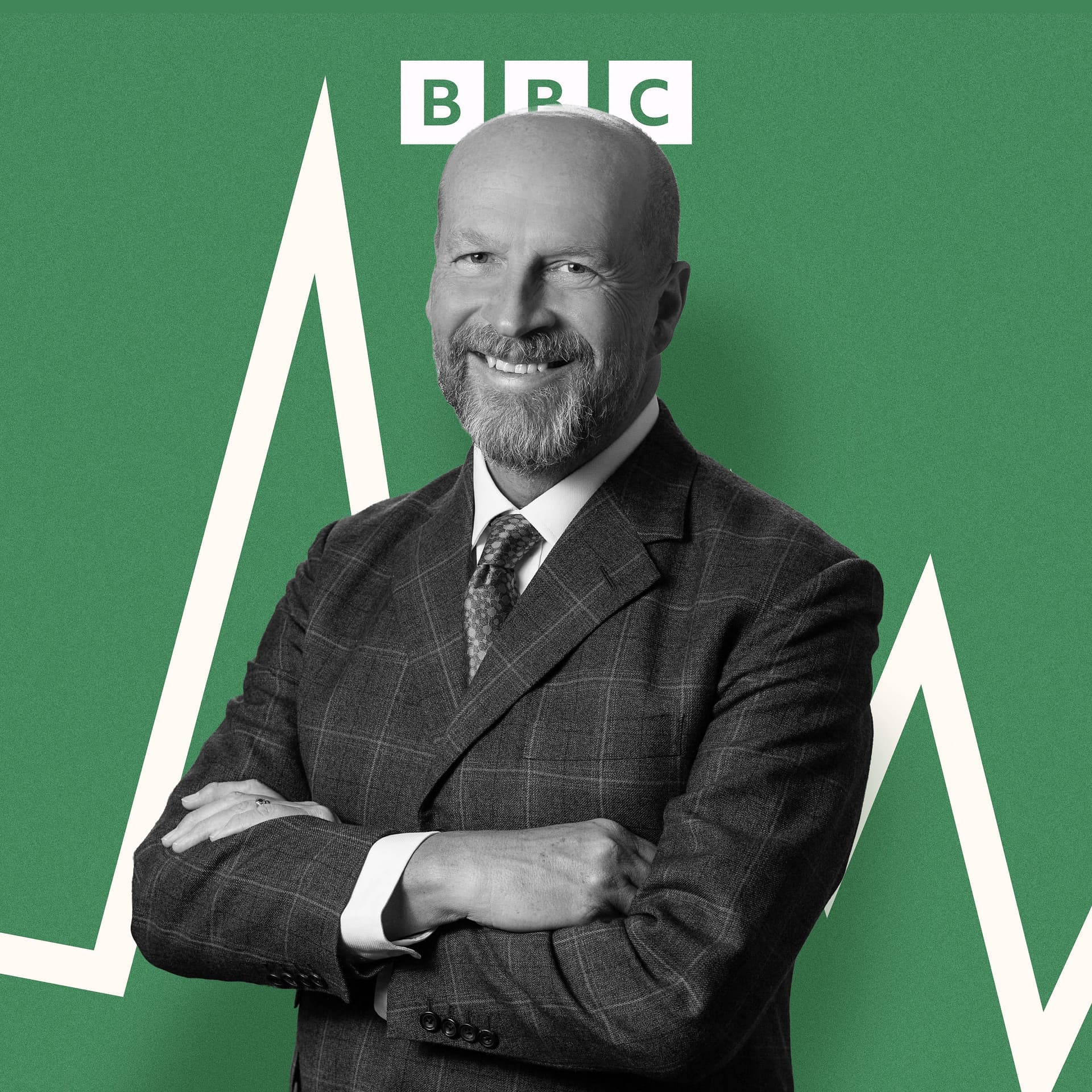
Image Courtesy of Reed Recruitment
03:05 A real moment of opportunity and good opportunity for a reset. 04:18 The need for a new Chancellor 10:25 The need to change course on taxation around jobs 12:05 AI is burning through entry-level jobs 13:09 One of the toughest periods since 2008 (the financial crisis) 13:47 Back humans, tax robots 23:03 Is University still worth it? 35:40 Applicants being ghosted by employers 41:00 Spelling mistakes on CVs now positively sought after 44:01 Big tech companies need to pay more tax: "back humans, tax robots" pt 2