Ask ChatGPT

 Big Take
27 Jun 2025 · 19m · 8 chapters
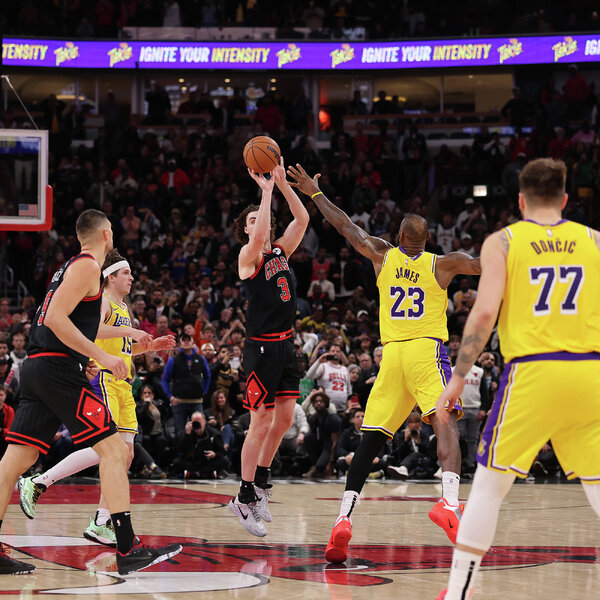
The record $10 billion sale of the Los Angeles Lakers from the Buss family to Mark Walter (Guggenheim Partners), and what it signals about modern sports ownership, valuation ceilings, and the growing role of private equity/sovereign wealth.
Randall Williams, Bloomberg reporter covering the business of sports; David Gura, host of The Big Take (moderator).
Jerry Buss built the Lakers’ “Showtime” brand through spending, culture, and star power; the Buss family later became “extremely frugal,” contributing to fewer titles since 2013. Mark Walter will take majority ownership; Jeannie Buss stays as governor for day-to-day oversight. Stadium ownership limits revenue, which may slow future valuations.
Lakers’ championships under Buss; comparisons to Warriors/Knicks; other franchise sales (Celtics ~$6B, Mavericks ~$3.5B, Suns ~$4B, Hornets ~$3B). Private equity examples include Arctos’ Bills stake and stadium-driven ticket changes.
Written by AI. May contain mistakes.
Explore Jerry Buss's impact on the Lakers and the evolution of the franchise.
“Some people treat ChatGPT like some kind of smart search engine, and some use it to get work done.”
Explore Jerry Buss's impact on the Lakers and the evolution of the franchise.
“The Los Angeles Lakers is one of the most iconic franchises in professional sports.”
Discussion on the Buss family's sale of the Lakers and its implications.
“The brand identity, the value, the city, the winning.”
Analysis of how Mark Walter's ownership may change the Lakers' trajectory.
“Today on the show, what this record-setting sale of the Los Angeles Lakers to a billionaire investor says about the business of sports today and what it could mean both for the future of pro sports and for fans.”
Examine the implications of rising franchise valuations in sports.
“And what that means is that she's going to have a day to day role in managing things.”
Explores how changing ownership structures in sports affect fan emotions and sentiments.
“Now, obviously, there's no failure when you're selling a team for however many billion dollars, but the sentimental value, the emotions that are in this, that's where you see the effect.”
Discussion on the recent sales of sports teams and their implications on community sentiment and ownership diversity.
“There's been a string of sales recently in professional sports.”
Discussion on the recent sales of sports teams and their implications on community sentiment and ownership diversity.
“But sometimes what matters most is being ready for what you never saw coming.”

Get the gist, explore an idea or ask about something said.
 Claude
On Big Take, what are the key points of this episode?
Searching your listeningAutomatic transcript. May contain errors.
0:00Some people treat ChatGPT like some kind of smart search engine, and some use it to get work done. ChatGPT Work is a new way of working in ChatGPT that can take action across your apps and files, stay with a project for hours if needed, and turn a goal into finished work. It's designed to help you move from a chaotic starting point to a reviewable first version. So all the source materials, briefs, and scattered information that you have to grind through to turn into something useful can just become something useful. Put ChatGPT to work on your most ambitious ideas and projects. Get started at ChatGPT.com by selecting Work Mode, available on Plus and Pro plans.
0:42If you listen to financial news, you know a lot of time to spend thinking about what's next. The next opportunity. The next investment. The next move. But sometimes what matters most is being ready for what you never saw coming. For more than 75 years, Cincinnati Insurance has worked with independent agents to help protect businesses, homes, valuables, and more. Because planning for the future isn't only about knowing what's next. It's about making sure you're ready for what you can't predict. Let Cincinnati Insurance make your bad day better. Find an independent agent at CINFIN.com. The world of business is constantly evolving, and Comcast Business keeps you totally in step with secure AI-backed networking in more than 100 countries.
1:28They're powering over 90 % of the Fortune 500 and millions of small businesses. That's a lot of muscle. And behind it all, thousands of experts answering your call at 2 a.m. like it's 2 p.m. One partner powering how business gets done for companies around the globe. When you add it all up, no one does business like Comcast Business. Bloomberg Audio Studios. Podcasts. Radio. News. Welcoming Dr. Buss to the Hall of Fame are three Laker legends, Magic Johnson, Kareem Abdul-Jabbar, and Pat Riley. Ladies and gentlemen, Dr. Jerry Buss. The Los Angeles Lakers is one of the most iconic franchises in professional sports.
2:15And that's thanks in large part to Jerry Buss, who bought the team in 1979. Here he is at his Hall of Fame induction ceremony some three decades later. After two years of endless negotiations, I purchased the Los Angeles Lakers. What a dream come true. It was a package deal that included the L.A. Kings, the Great Western Forum, and a 1 ,300-acre ranch. Buss paid the media mogul Jack Kent Cook$67 million, which would be about$300 million today. And at the time, he promised to give Angelenos a team worthy of Tinseltown. He was one of the more flamboyant sports owners out there who just took a lot of pride in running the team and having stars and being at the epicenter of Los Angeles.
3:05Randall Williams covers the business of sports for Bloomberg. And he says Jerry Buss transformed the Lakers. The game ends. The Lakers have won it again. Showtime is the slogan that became synonymous with the team's style on and off the court. Over three decades, Buss revolutionized professional sports. He hired an in-house band, created the Lakers girls, and he signed a series of superstars. He liked to win. And so with him loving to win as much as he did, he spared no expense to bring in the best of players. I mean, you think about all the Lakers stars over the years, whether that be Magic Johnson, Kareem, James Worthy, Kobe, Shaq, now LeBron and Luka.
3:50All of these people are embedded into the culture of Los Angeles. And Jerry Buss was someone who he wanted to be like, I brought this. Randall says Jerry Buss empowered his players and some legendary coaches, including Pat Riley and Phil Jackson, to do what the Lakers did best to win. The team had 11 championships and more than 30 playoff appearances in 46 years.
4:21How much is the franchise today a direct result of the way he approached the team? It's 100 percent. The brand identity, the value, the city, the winning. I mean, you could argue that they are the number one sports brand in America over the Yankees and the Cowboys. Now, there would be some very angry Yankees fans and Cowboys fans out there, of course. But the Lakers are top three, and I'd say they're not three. What accounts for that? I've got a six-year-old boy, and he was insistent that he get a brawny jersey, which I thought was so wild. Here we are in New York, but that's like in the zeitgeist.
4:54So how did that happen? How did this team get that kind of cultural currency? I think it's just stars and winning. Stars, winning, and a lot of culture. Like, you look at who's on the Lakers' sidelines. You listen to the way that NBA players, celebrities talk about wanting to be at Laker games. The Lakers have won a championship in just about every decade. And they haven't done it in a way that's quiet. It's like with the biggest stars. You think of the 80s, it was Magic, who at the time, he was considered a GOAT. And he still is to some degree. And then you have an international star in Luka.
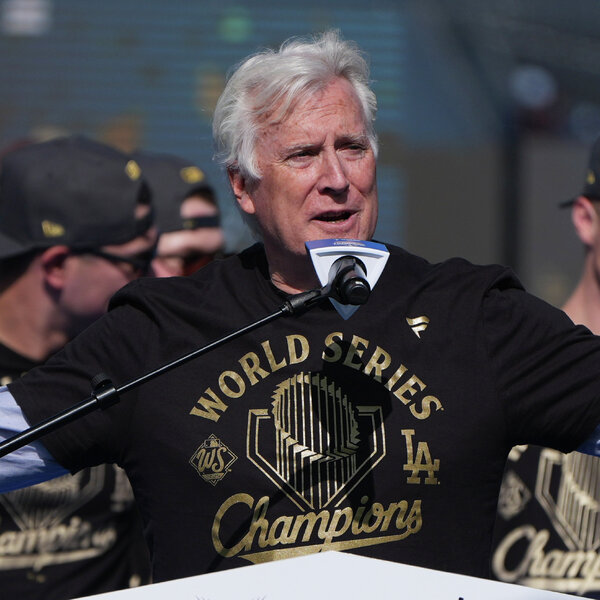
5:26And they just keep ushering in these stars. For almost half a century, it's also been a family business. majority owned by Jerry Buss until his death in 2013 and by his children after that. The Buss name was synonymous with the Laker brand until now. The Buss family has agreed to sell a controlling interest in the Los Angeles Lakers to the current owner of the L.A. Dodgers. Mark Walter, chief executive officer of Guggenheim Partners, will assume majority ownership. Late last week, Buss's six children decided to sell their stake in the Lakers to the CEO of an investment and advisory firm for a record$10 billion.
6:06$10 billion is a huge number, but they might have gotten more on the open market. This may be looked at in, let's say, a decade from now, that this was a deal. $10 billion was a deal, which is insane to think about.
6:20I'm David Gura, and this is The Big Take from Bloomberg News. Today on the show, what this record-setting sale of the Los Angeles Lakers to a billionaire investor says about the business of sports today and what it could mean both for the future of pro sports and for fans.
6:41When Jerry Buss died in 2013, ownership of the Los Angeles Lakers went to his six children. His daughter Jeannie, who'd been overseeing basketball operations, eventually became the team's president and controlling owner. In the years since, the team, which had dominated the NBA's Western Conference, has fallen behind other franchises. winning a single title with LeBron James in 2020. Bloomberg's Randall Williams says that's due in part to how much the Lakers owners have been willing to spend. The new version of the Buss family, from what I've been told, is that they are extremely frugal. They don't spend on the things that maybe the rest of the NBA does.
7:21And you see that in the way that these things are valued. If you look at Sportacos valuations or Forbes or CNBC, I'm pretty sure all of them have the Warriors and Knicks slightly ahead of the Lakers. And you could argue that's because over the last decade, the Lakers maybe have not invested into things the same way that the Warriors and the Knicks have. The Warriors have a new stadium. They had probably the most transformational basketball player ever in Steph Curry. They won four titles and six finals appearances. And so they were always at the center. For the Lakers, it took until LeBron James got back and then their title was in the bubble.
7:57So no parade. And so the way that they have carried this business is not the way that you are going to be as most profitable. Let's talk about the deal. And it's hard to get past that headline number. But at this point, what do we know about the terms, the terms of it? Jeannie Buss, who is Jerry Buss's daughter, is going to stay on as governor of the team. And what that means is that she's going to have a day to day role in managing things. So the governors of the team attend the board of governors meetings. They vote on various things. So Mark Walter is still going to be the owner of the team, but he's not going to be at all these meetings.
8:34Now, I'm sure he's going to be well informed and he's going to be spending his dollars wisely to bring in different free agents to, I'd say, diversify the business. We don't know exactly how the deal is structured just yet. We just know that they agreed to a$10 billion purchase. And at some point, Mark Walter will take over, but it's not going to be for the foreseeable future. Who is Mark Walter? I mean, he doesn't have the kind of lore or legend of Jerry Buzz, certainly. And he's now kind of fashioned himself as this kind of king of L.A. sports. Well, he's an extremely rich guy. Let's start there.
9:03He started Guggenheim Partners, which made all his money there and then eventually purchased the Dodgers. And for L.A. natives, this is a great sign because Mark Walter has spared no expense to spend on the Dodgers. To introduce the newest member of the Los Angeles Dodgers, Shohei Otani. Wearing the iconic Dodgers uniform for the first time after signing an unprecedented$700 million contract. Now you bring someone like him into the Lakers. And what this means, like this isn't going to affect salary cap. Like you're not going to be able to pay players more than anybody else. But you might be able to renovate a training facility.
9:41You might be able to invest more money into the crypto.com arena. You're just going to be able to spend more cash to make L.A. an even more desirable market than it already is. I mean, a lot of people come to L.A. because it's like, OK, it's the stars. It's the lore of the Lakers. And now you have an owner who is going to be like, yeah, I want to win. I still want to win. And I'm not going to stop spending money until I get back to the top. We know he's a billionaire. Is he going to pony up all this himself or is it still kind of unclear how this is going to be structured in that sense? How it's come out there in the release is that it's him.
10:15It's him. Now, in terms of where this money is coming from, like$10 billion is a lot of money. The Bloomberg Billionaire Index has him worth at$12.5 billion. I can't imagine that he liquidated all of his assets and then bought this thing. Some of it could be on the back end. Some of it could be on the front end. We're not exactly sure yet, but this will go to the Board of Governors. We may find out more a little bit then, but I don't think anybody's really concerned with this. So long as it gets approved, people are going to be like$10 billion and no one's going to want to pay any more than that.
10:47I'm reluctant to ask this because I feel like a few months ago, everyone was saying the same thing about the Celtics sale, which is, is this a signifier that we've reached peak valuation of a franchise like this? Does it feel like the peak to you? No. No. It doesn't feel like the peak to me, but it does slow things down just because of the fact that the Lakers don't own their stadium. And that's a huge, huge factor in this because of the fact that if you don't own your stadium, then you don't get the revenue from things that aren't related to basketball. So concerts, festivals, anything that you host in the arena, you're not going to see money from.
11:19With that in mind, if the Celtics went for six and the Lakers go for 10, then I do think that when the NBA eventually decides to expand, if the next team is sold, you're going to have a lot of billionaires and rich people out there who are going to look at the Lakers and like, I don't want to pay that much. You know, you look at the last, let's say, five sales. You had the$3 billion Charlotte Hornets when Michael Jordan sold them. You had the$3.5 billion sale of the Mavericks. You had the$4 billion sale of the Suns. Now that jumps to six with the sale of the Celtics. Now that jumps to 10. That's a huge jump.
11:50So anyone who's going to be selling, the Trailblazers are for sale right now. I would guesstimate that they go somewhere between 4-5 and 5-5. But if you're the NFL watching this and the Seahawks eventually have to be put up for sale, so do the Saints. Who knows what they go for? We've seen this trend of private equity firms and sovereign wealth funds getting involved in professional sports. How is that likely to change the terrain even more here going forward? You're going to see more private equity across sports, period. Whether people are happy with it or not, they are solution providers. Now, where fans could get concerned is if they ever take control stakes.
12:28Now, that's not happening right now. A lot of times they're writing checks and going away. These checks are for stadiums. These checks are for debt on a team. They're for state taxes. When you are passing the team down from one member to the next, those type of things. That's what private equity is looking to solve. The NBA has some of the most flexible rules out there where a team can have up to 30 percent owned by private equity. One single private equity firm can own 20. But obviously you could split that up in three. You could split it up in two. There's a bunch of different ways you could split it if someone wanted to do that.
13:01However, it would raise concerns within the NBA's Board of Governors as to why you need that much private equity dollars in a league that's profitable. I do think at some point in time, all of these floors will raise. These rules will become more loose in the NFL specifically. They allow 10 percent, but you're going to need more because these stadiums are continuing to get older and there's just not a lot of rich families out there. And as we see what's going on in Chicago right now with the Bears and Kansas City with the Royals and the Chiefs, there are some cities and states who are just like, I'm not paying a dime to build this stadium.
13:36And then you're stuck there threatening to move and negotiating. And that's very exhausting. Now, a lot of these families don't want to sell because it's very precious. A, it's a profitable business. And B, it's a prized possession that my parents or grandparents bought this however many some odd years ago, getting rid of that now. is heartbreaking in a sense. And there are some families who may look at it as like, either we failed or we're successful. Now, obviously, there's no failure when you're selling a team for however many billion dollars, but the sentimental value, the emotions that are in this, that's where you see the effect.
14:09And private equity dilutes that in some form because eventually they need to exit. And so for fans right now, it's not a concerning time. But in 20, 30 years, it could be. After the break, how new ownership structures, which can involve billions from private equity firms and sovereign wealth funds, are impacting fans.
15:12The world of business is constantly evolving. Every day, new challenges, new opportunities, new ways of working. Comcast Business keeps you totally in step with secure AI-backed networking built to power the way modern business gets things done today in more than 100 countries around the world. That's some serious muscle. And get this, Comcast Business powers over 90 % of the Fortune 500 and millions of small businesses. Behind it all, network engineers, cybersecurity specialists, support teams, thousands of experts answering your call at 2 a.m. Like it's 2 p.m. Always on, always ready. That's a lot of coffee.
15:58One partner powering how business gets done for companies of every size all around the globe. When you add it all up, no one does business like Comcast business. This is Robert Smith from Business History. If you're listening to this, there's a good chance you're a small business owner. And like every small business owner, you started with a dream to do what you love and watch it grow. What you probably didn't dream about? Keeping up with cyber threats. That's where MasterCard can help with access to tools that help identify cyber threats to better protect your business. Building your dream business?
16:30Priceless. For cybersecurity in a changing world, there's MasterCard. Learn more at MasterCard.com slash small business.
16:43There's been a string of sales recently in professional sports. And I said to Bloomberg's Randall Williams that they've seemed to signal the end of an era in many of the cities where those teams are based. Let me ask you a kind of cultural question. And that is, if you have the Lakers being sold by the buses, Grosbeck selling the Celtics, Glenn Taylor selling the Timberwolves, Mark Cuban selling the Mavericks. What's lost when that happens, when you have a longstanding steward of one of these teams giving that to somebody else? What does that change kind of mean for the team and the kind of position it has in these communities?
17:15I think it depends on who's buying and who's selling. Like Mark Cuban was very influential. Obviously, the Buss family was very influential. But sometimes like the owners who come in and own these different things or are buying these teams have a profound impact on the businesses that they have in large part because they are richer. Like, for example, Josh Harris has come in and completely changed the course of the commanders. In two years, he's built a stadium. They're going to be hosting the draft. Once the stadium is built, they'll probably host the Super Bowl in D.C. There are some owners who would come in and because the NFL and NBA's business are as profitable as they are, they would just sit back and be like, I own the team.
17:54I'm a nice guy. I'm going to go sit back and hide behind the curtain and allow everybody to do their jobs. but sometimes there are influential voices that are lost. When you look at someone like Michael Jordan selling the Hornets, Michael Jordan is arguably the most important sports figure of all time. And he represented an empowerment for athletes to be like, I made so much money that now I'm in the inner circle. Athletes in large part are on the outer circle of the billionaires club. And Michael Jordan getting in is like, okay, well, I can now own this. You see LeBron talking about, I want to own the Las Vegas expansion team.
18:32Dwayne Wade, I believe, bought into the Utah Jazz at a minority stake. But when Michael Jordan exits, and now you have no black owners, you have no player owners, it impacts, in some ways, the outlook of things. Now, I'm going to tell you right now, Michael Jordan didn't do the best job of running the Hornets by any means. But he provided a lot of sentimental value. He provided a lot of hope for players to be like, wow, Michael Jordan can do this? Maybe I can too. And when private equity gets involved, what does that mean for the fan experience? Is there a world in which getting a PE firm involved makes tickets less expensive, improves the experience overall?
19:09Well, it depends on how you look at improve. Let's talk about the Buffalo Bills, for example. The Buffalo Bills sold a 10 % stake to Arctos Partners, who is arguably the most well-experienced private equity firm out there in terms of sports. Arctos is going to be coming in and in all likelihood are going to be putting that money into the Buffalo Bills new stadium. When a new stadium gets built, gradually and naturally, those prices for tickets are going to go because it's a new stadium. They also have an incredible quarterback. They're going to be selling new luxury suites and all sorts of different ticket packages.
19:44So in some aspects, yes, it is going to provide a better experience. However, for fans who have been going to the Bills Stadium for however many years, if you're a season ticket holder and these ticket prices go up and now you're priced out, then you could argue that this hurt me because I can't afford this anymore. I'm sure that the NFL and NBA and MLB and all of its owners would just say, get your money up. I'm very curious what this sale says about the state of the business of sports today. I think sports is in a healthy spot. This is the biggest sale in a very long time. If the Lakers had gone for closer to the Celtics, I still think that it would show health, but the fact that they went for$4 billion more is incredible.
20:32I don't want to compare this to the Knicks or to the Cowboys. They would go for more than the Lakers, I would imagine, just because I believe that those sales would be run in a public forum. But for the average fan watching this, this is a good sign. Now, do I think that we are closer to the ceiling now than we were before? Absolutely. And obviously, all of these valuations are tied to media deals. Whatever the next media deal is going to be is inevitably going to raise valuations even more. But the NFL's last media deal was$100-plus billion. What is the next one going to be? And so from a big-picture aspect, I think sports are in a good spot for the next 15 to 20 years now.
21:11Who knows what this is going to look like in two decades? because the Lakers sell for$10 billion right now. What in the world are they going to go for in 15 or 20? And it may not be the Lakers. It could be a smaller team in any of these leagues that fetch a huge number. And then the question arises, like, who's going to buy this thing? And it goes back to your questions about when does private equity get involved and own teams outright. We're not in that phase right now. But if these things continue to rise and the valuations continue to rise, then inevitably you're going to see private equity own 50 % stakes.
21:44Those rules, the rules don't allow it right now, but I could see it at some point down the line.
21:52This is the big take from Bloomberg News. I'm David Gurra. The show is hosted by me, Sarah Holder, Juan Ha, and Saleha Mosin. Aaron Edwards, David Fox, Eleanor Harrison Dengate, Patty Hirsch, Rachel Lewis-Kriskie, Naomi Ng, Julia Press, Tracy Samuelson, Naomi Shavin, Alex Segura, Julia Weaver, Julian Weller, Yang Yang, and Taka Yasuzawa make the show. To get more from The Big Take and unlimited access to all of Bloomberg.com, subscribe today at Bloomberg.com slash podcast offer. Thanks for listening. We'll be back on Monday.
22:37The next investment. The next move. But sometimes what matters most is being ready for what you never saw coming. For more than 75 years, Cincinnati Insurance has worked with independent agents to help protect businesses, homes, valuables, and more. Because planning for the future isn't only about knowing what's next. It's about making sure you're ready for what you can't predict. Let Cincinnati Insurance make your bad day better. Find an independent agent at CINFIN.com. For big business, AI opened up a world of promise, but that world of promise turned into a world of pain. Cost spiraling, data trapped, security and governance risks multiplying, and ROI out of reach.
23:20That's why enterprises turned to Boomi to connect data, apps, and AI, helping them operate securely, efficiently, and at scale. Boomi turns a world of AI pain into a world of AI gain. As Boomi says, we got you. Head to boomi.com. That's B-O-O-M-I dot com. The world of business is constantly evolving, and Comcast Business keeps you totally in step with secure AI-backed networking in more than 100 countries. They're powering over 90 % of the Fortune 500 and millions of small businesses. That's a lot of muscle. And behind it all, thousands of experts answering your call at 2 a.m. like it's 2 p.m.
24:00One partner powering how business gets done for companies around the globe. When you add it all up, no one does business like Comcast Business.
Late last week, the Buss family, longtime owners of the Los Angeles Lakers, announced that they would sell the franchise for a record-breaking $10 billion valuation.
On today’s Big Take podcast, host David Gura and Bloomberg’s sports business reporter Randall Williams break down what we know about the deal so far and discuss why America’s wealthiest families seem to be getting out of the game.
Read more: Los Angeles Lakers Confirms Majority Stake Sale to Mark Walter
See omnystudio.com/listener for privacy information.