Ask ChatGPT
 Big Take
26 Jun 2025 · 17m · 11 chapters
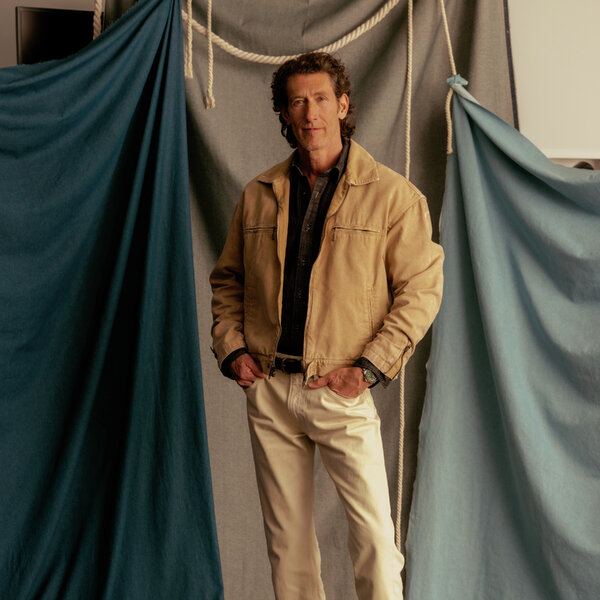
Gap’s turnaround and how Trump’s reciprocal tariffs disrupted its supply chain and threatened profits, just as the brand was regaining cultural relevance (“Gap-a-sance”).
Amanda Mull (Bloomberg reporter tracing Gap’s history) and Lily Meyer (Bloomberg specialty retail reporter). Richard Dixon (Gap CEO since Aug 2023; previously a Mattel executive; joined Gap board in 2022).
Gap’s comeback was gaining traction via celebrity campaigns, collaborations, and faster trend responsiveness (ordering textiles early but committing designs late). Tariffs—especially on Vietnam (over a quarter of goods) and China—created an estimated $250M–$300M gross incremental cost; mitigation could cut it in half, with up to $150M loss expected. Dixon met the president in D.C. to discuss impacts.
Parker Posey ads; Gap Studio with designer Zach Posen; mitigation plans to diversify sourcing (no country >25%, China <3%); stock fell 20% and ~$2B market cap lost after the tariff announcement.
Written by AI. May contain mistakes.
The story of Gap's rise and how it seeks to regain relevance.
“Some people treat ChatGPT like some kind of smart search engine, and some use it to get work done.”
The story of Gap's rise and how it seeks to regain relevance.
“At the start of 2025, it looked like Gap was in the middle of a renaissance.”
Exploring the challenges Gap faces and the strategies employed to adapt.
“and complicated GAAP's latest efforts to turn its business around.”
Richard Dixon's approach to revitalize the Gap brand.
“And then shut it down less than a decade later.”
Dixon confronts the challenges facing Gap and calls for honesty within the company.
“Dixon had joined Gap's board in 2022, while he was still an executive at the toy company Mattel, which makes Barbie dolls.”
Gap's strategies to innovate and stay relevant in a fast-changing market.
“The company just wasn't dealing with the truth.”
Learn how Gap is adapting to fast fashion trends and consumer demands.
“People are starting to say, like, wow, Gap's pretty cool.”
Explore how tariffs announced by Trump affected Gap's operations and strategy.
“How did Dixon try to build on the success?”
Understand how Gap's leadership is responding to unexpected tariff changes.
“Lily and Amanda were actually with Dixon in a conference room the day the news hit.”
Discuss the nostalgic connection people have with Gap and its brand history.
“The company's stock plunged more than 20 % in just a few hours.”
Discuss the nostalgic connection people have with Gap and its brand history.
“If you listen to financial news, you know a lot of time is spent thinking about what's next.”

Get the gist, explore an idea or ask about something said.
 Claude
On Big Take, what are the key points of this episode?
Searching your listeningAutomatic transcript. May contain errors.
0:00Some people treat ChatGPT like some kind of smart search engine, and some use it to get work done. ChatGPT Work is a new way of working in ChatGPT that can take action across your apps and files, stay with a project for hours if needed, and turn a goal into finished work. It's designed to help you move from a chaotic starting point to a reviewable first version. So all the source materials, briefs, and scattered information that you have to grind through to turn into something useful can just become something useful. Put ChatGPT to work on your most ambitious ideas and projects. Get started at ChatGPT.com by selecting Work Mode, available on Plus and Pro plans.
0:43Who says Americans don't build big things anymore? Through innovation, Venture Global is not only building some of the largest energy facilities in the world right here in the United States, but delivering American energy at a fraction of the cost and a fraction of the time. So while others are busy talking, we're busy building. That's Venture Global. That's unstoppable energy.
1:12This is Robert Smith from Business History. If you're listening to this, there's a good chance you're a small business owner. And like every small business owner, you started with a dream to do what you love and watch it grow. What you probably didn't dream about? Keeping up with cyber threats. That's where MasterCard can help with access to tools that help identify cyber threats to better protect your business. Building your dream business? Priceless. For cybersecurity in a changing world, there's MasterCard. Learn more at MasterCard.com slash small business. Bloomberg Audio Studios. Podcasts.
1:48Radio. News. At the start of 2025, it looked like Gap was in the middle of a renaissance. Or a Gap-a-sance. That's what New York Magazine's product review site, The Strategist, called it. The once-cool clothing company seemed like it might be in again. It dropped an ad campaign with the actress Parker Posey in the midst of her White Lotus press tour. It launched new product lines and brand collabs, which, judging by the response on social media, were landing well with younger shoppers. If I influence you to buy anything, let it be these Gap jeans. We've all been waiting. Let's try everything I got from the Gap Dome collab.
2:30This is like truly my Super Bowl.
2:32Amanda Mull: I just got the full inventory list for the Mad Happy X Gap collab. Let's go through this collection. 2025, it's going to be the year of Gap. After going through five CEOs in 20 years, the company's current CEO, Richard Dixon, was settling into the role. I sort of grew up with Gap as the iconic American style that we all knew and loved. And I have found myself really interested in turnaround stories. And he was feeling optimistic he could help write Gap's turnaround story. I think that there were strong signs that the Gap-a-sons was beginning. Bloomberg's Amanda Mull has been tracing Gap's ups and downs with her colleague, Bloomberg specialty retail reporter Lily Meyer.
3:14And with Gap, it's always kind of been this whack-a-mole problem because they have now these four brands and each brand has had a moment of being really successful and then a moment of really struggling. And then Trump's tariffs hit. And Gap found itself in the center of a new unprecedented challenge as a global brand navigating a trade war that promise to upend supply chains and transform consumer habits.
3:42I'm Sarah Holder, and this is The Big Take from Bloomberg News. Today on the show, we explore how new trends and new tariffs have rocked the retail industry and complicated GAAP's latest efforts to turn its business around.
4:03Amanda, give me the Gap origin story. When was this iconic brand born?
4:09Amanda Mull: It was the summer of love. But literally, it was 1969. Donald and Doris Fisher were living in San Francisco. They founded the store in like a single storefront to sell Levi's and records to the sort of like cool countercultural kids that were hanging out in the city at the time. It was a time of, like, real experimentation in retail. So they had the single storefront. It was a hit. They started making their own clothes. It was sort of a time where a lot of American specialty retailers were trying to figure out, like, what a store was going to be in the decades to come. And the Fishers and Gap were front and center.
4:51The Gap of the 70s was all about flared jeans and boldly patterned shirts. It didn't really become the Gap we know today until the 80s. That's when the company hired Mickey Drexler as CEO. He'd helped turn around Ann Taylor's business, and the Fishers were hoping that he could also help Gap.
5:12Amanda Mull: This was the early 80s. The American mall was growing at a rapid pace. There was all these new types of shopping centers opening around the country that needed stores. And there was like a real opportunity as like the country casualized and work casualized. Young people were looking for like the next way to dress. So what Drexler did sort of famously was strip out a lot of the experimentation that they were doing and be like, we're just going to make really great basics and we're going to make them cool. So they sort of like married the jeans and button down and T-shirt business to this idea of cultural relevance.
5:49Amanda Mull: They recruited a lot of celebrities and tastemakers and like sort of cultural figures like Spike Lee and Joan Didion. Joan Didion with Quintana Roo wearing the black turtlenecks. Yes, yes. And they hired like the best art and fashion photographers in the world, people who were shooting for Vogue, to shoot gap ads, to shoot just cool people in like straightforward clothes that a lot of people could imagine themselves wearing. And, you know, sold a lot of jeans in the 80s and 90s that way. Amanda says another stroke of 90s-era Mickey Drexler genius was launching a new brand under the Gap umbrella that offered shoppers a cheaper option, Old Navy.
6:27Amanda Mull: They saw that other companies were sort of on to them as far as like, oh, we can make jeans and t-shirts cool and we can undercut Gap on price. So Gap as a company basically said, well, you know, we might lose some customers to lower priced lines that offer similar clothing, but we can also open a lower priced line of similar clothing. And Gap might lose the sales as far as Gap brand, but Gap, the company, will retain the sales. They'll just go to Old Navy. Old Navy helped the company stay relevant, even as the Gap brand faced new headwinds in the early 2000s and 2010s. That's when customers started shifting away from Gap stores and towards online retailers and fast fashion brands like Zara and H &M that could produce basics for a fraction of the price.
7:11Amanda Mull: And then at the same time, Gap sort of meets that moment as a retailer with like a ton of debt, a lot of leases in malls that they don't necessarily want to be in anymore. Or they had the makings of trouble down the road, and suddenly they were down the road. Debt, bad real estate bets, these were real problems for Gap. Ones that Lily Meyer says the company tried to address through a series of corporate side quests. In 2006, it launched an online shoe and accessory company called Piper Lime, hoping it could compete with Zappos. And then shut it down less than a decade later. In 2008, it took over an athletic brand, Athleta, which the company still owns.
7:51In 2012, it acquired the trendy fashion brand Intermix, then sold it to a private equity firm in 2021. It kind of kept stuttering again and again, all the while their core business was still struggling as well. The core business of Gap, Inc.
8:10Amanda Mull: Gap. Gap, the brand, was getting smaller and smaller and smaller. It brings in like half the revenue of Peak Gap, which was 2003. 2003 was Gap's high revenue watermark. It made a record$7.3 billion. But by the 2020s, Peak Gap was squarely in the rearview mirror. And the company decided to bring on a fresh face to stage a comeback. Richard Dixon. Dixon had joined Gap's board in 2022, while he was still an executive at the toy company Mattel, which makes Barbie dolls. And in the lead-up to the Barbie movie premiere in 2023, with Barbie Mania in full swing, Dixon got his next opportunity. That August, he became Gap's CEO.
8:56Amanda and Lily sat down with Dixon earlier this year for several recorded interviews. He had noticed that the Gap brand website was really hard to shop on. It was really hard to find what you wanted. And so he took a group of his executives shopping, as he described it to us. We got together in the room and I was new and I said, look, you know what we're going to do? We're going to go shopping. And I pulled up the sites and we spent the next couple of hours like basically melting down the organization to deal with truth. Do we think that we're telling really great, compelling narratives around our story and merchandising and why we exist?
9:35He also held a town hall for Gap employees where he delivered some tough love. I acknowledge to the company that there's a positivity bias in this company. I sit in meetings and you're all telling me how great things are. But then you look at the business, you go to our stores, you go online, you hear the drumbeat in the outside world and they think very differently. So what's happening in here? The company just wasn't dealing with the truth. He suggested that clinging too hard to the past might be holding Gap back. We were living in a legacy. Well, remember when in the Khaki campaign? It's like, OK, well, what is it today?
10:10Gap faces the facts and Trump's tariffs after the break.
10:40In the past few years, the rise of the electric bike has dramatically changed the entire ecosystem. The rickshaws are still around, but pedaling is increasingly a thing of the past. More and more of them have electric motors easing life for drivers. The prevalence of these vehicles makes India's transition to EVs unlike that of most other places. The e-rickshaws, like the pedal variants before them, are mostly built in sheds, garages, and makeshift workshops rather than in big factories, driving a microeconomy of small tradespeople across Indian cities who sell wheels, rims, headlights, horns, speedometers, and seats.
11:18The government regards e-rickshaws as a way to reduce air pollution and cut reliance on imported oil, and will stop registering new gas-powered auto rickshaws from January. That's the Bloomberg Tech Minute brought to you by ChatGPT. Put ChatGPT to work on your most ambitious ideas and projects. Get started at ChatGPT.com today by selecting Work Mode, available on Plus and Pro Plans. The world of business is constantly evolving. Every day, new challenges, new opportunities, new ways of working. Comcast Business keeps you totally in step with secure AI-backed networking built to power the way modern business gets things done today in more than 100 countries around the world.
12:02That's some serious muscle. And get this, Comcast business powers over 90 % of the Fortune 500 and millions of small businesses. Behind it all, network engineers, cybersecurity specialists, support teams, thousands of experts answering your call at 2 a.m. like it's 2 p.m. Always on, always ready. That's a lot of coffee. One partner powering how business gets done for companies of every size all around the globe. When you add it all up, no one does business like Comcast Business. A business gift is never just a gift. It's a thank you, a milestone, a moment of appreciation. It's a message about how much someone matters and what your brand stands for.
12:47At 4imprint, you'll find thousands of customizable options, like premium apparel, branded drinkware, tech, totes, and more, each chosen not just for function, but for meaning. You can tailor every detail. Your logo, your message, your presentation, so your gift feels personal and on-brand. And with expert support, dependable service, and thousands without a setup fee, creating something thoughtful doesn't mean making it complicated. Every order is backed by 4imprint's 360-degree guarantee, so you can be 4imprint certain it'll arrive exactly as expected, on time, and with the care your brand deserves.
13:21Because when the moment matters, the right gift speaks volumes. And the right partner makes it easy. Explore gifting with purpose and certainty at 4imprint.com. 4imprint. 4certain.
13:38By the time CEO Richard Dixon took the reins of Gap in 2023, the company had been through many a turnaround effort. Not all of it had worked, but some of the seeds of change the company had planted were starting to sprout. There was a collaboration with Doen, an L.A. it girl brand, that really took off. Our brands are becoming more culturally relevant. People are starting to say, like, wow, Gap's pretty cool. The company also cut back on how many products it sold, and a play to be more focused on its core brand. And, Amanda and Lily said, Gap also figured out a way to better keep up with fast-moving trends.
14:15Amanda Mull: One thing that really is, like, difficult for legacy clothing brands when they're trying to compete with fast fashion is that the sort of turnaround time between design and product in store is just really long compared to what other brands can do. So they did something that seemed pretty smart, which is now they order textiles ahead of time and in like roughly the same timeline that they used to, but they don't like commit to designs with those textiles until like the last possible second. So you could get the exact right billowy shirt, the exact length of pant that people are looking for. Yeah, that sounds so smart.
14:51Just like buying the fabric and then being like, you tell me the shape. The TikTok will tell me the shape.
14:56Amanda Mull: Yes, yes. Yeah. You wait until you know what people actually want, which means that you don't have to discount as much. It means that you don't make as much product that like doesn't get sold or doesn't get used in some way. Okay, so Gap had some good stuff going on. How did Dixon try to build on the success? What were some of the things that are truly Dixon branded efforts? So probably one of the most notable ones is Dixon bringing on Zach Posen, who's this fashion designer. He was on Project Runway. He's had lines with other companies. And Posen has since done a lot of Gap looks for Runways.
15:30He's dressed celebrities like Anne Hathaway. And he's also created a new line called Gap Studio, which is a bit higher end and a little bit more avant-garde. That secret sauce Gap had in the 90s, essentially making basics cool by putting them on cool people, Dixon was bringing it back. This all created that Gapassance feeling we were talking about earlier, the sense that this time, this rebound might stick.
15:55Amanda Mull: There were a lot of pieces of circumstantial evidence that things were headed in the right direction. Like their young consumer numbers were up. They were seeing people coming back to the brand who had like not bought anything there in years and years. Sales in general were good. And then on April 2nd, Donald Trump announced his aggressive reciprocal tariffs on trading partners around the world. Lily and Amanda were actually with Dixon in a conference room the day the news hit. So we were in this interview and we talked in sort of like general terms about the tariffs. But like the room was sealed.
16:28Amanda Mull: None of us had our phones out. There was no TV playing. But like we all got outside and sort of looked at our phones and we're like, ah, OK. You know, things were like a lot worse than we all expected. There were steep tariffs planned for Vietnam, which supplied more than a quarter of the company's goods last fiscal year. and steeper tariffs on China, though the country accounted for less than 10 % of GAAP's assortment last year. Dixon, like many CEOs in his position, had to start thinking about how to adapt. We know that he got on the phone pretty quickly with his CFO and their head of supply and logistics.
17:05What if we increased production in the U.S.? Why not? What if we diversified our footprint even more? What if I went to the administration? Why not? After Liberation Day, Dixon ultimately did fly to D.C. to meet with the president himself. We are the single largest specialty apparel retail in the country. We employ over 70 ,000 people. The indirect consequence of those tariffs could impact our store openings or even have to close stores because they don't become profitable. explaining those different scenarios to the administration in the context of our support for their intent, but the indirect and or direct consequences to our business is a real dialogue.
17:53By May, many of the tariffs had been paused and GAP's leaders were developing a plan to deal with them. But any way they crunched the numbers, tariffs were going to impact their bottom line. The CFO delivered the news to investors on an earnings call on May 29th.
18:09Amanda Mull: We estimate a gross incremental cost of approximately$250 million to$300 million. $250 to$300 million. The CFO said the company's mitigation strategies could cut that number in half. But the company was still looking at a loss of up to$150 million this year. Lilly says the market reaction was intense. The company's stock plunged more than 20 % in just a few hours. That day, GAAP lost about$2 billion in market cap despite having really strong earnings and showing some strategies for mitigation like changing their sourcing and switching to some American grown cotton. Yeah, let's talk about some of those mitigation strategies.
18:54How well is GAAP positioned to adapt to these tariffs compared to some of its competitors in the retail space? I mean, I think one thing that really helps GAAP is how big the company is and how big their order sizes are. So it makes it a little bit easier for, you know, the company to entice factories in other countries. So one of their goals is they want no country to account for more than 25 percent of supply by the end of this year, which they're in the process of doing. They also plan for China to be less than 3 percent by the end of this year. After so many years dealing with factors within Gap's control, company culture, brand relevance, debt, Gap is now up against a new external challenge, a trade war.
19:39Amanda Mull: They are still so early in the turnaround. And like people want like hard and fast answers about like, is it going to work? Is it going to happen? And it's just like impossible to tell right now. They have like a lot of stuff left to do in order to like continue to stabilize the company. And Amanda says, for an iconic American brand that's managed to survive the rise of online shopping, the retail apocalypse, and the fast fashion revolution, the question of whether Gap can stick the landing matters to more than just its CEO. Because Gap, with its crisp white tees and blue jeans, has something going for it that some of its trendiest peers just can't compete with.
20:19Amanda Mull: History. Something that really stood out to me when trying to wrap my arms around what was happening with all of this is just how much other people, like just in general, like really want Gap to be good, really want to buy clothes at Gap, want to feel good about shopping there, want to feel like there is something there for them. Companies, especially in 2025, do not generally have this positive, nostalgic feeling from the general public. But basically everyone I talk to of a bunch of different ages, a bunch of different backgrounds, everybody was like, I loved shopping there. It was so cool when I was a kid or I really wanted my mom to take me there.
20:56Amanda Mull: It's sort of rare that you encounter that many people rooting for a company.
21:04This is The Big Take from Bloomberg News. I'm Sarah Holder. To get more from The Big Take and unlimited access to all of Bloomberg.com, subscribe today at Bloomberg.com slash podcast offer. If you liked this episode, make sure to follow and review The Big Take wherever you listen to podcasts. It helps people find the show. Thanks for listening. We'll be back tomorrow.
21:34If you listen to financial news, you know a lot of time is spent thinking about what's next. The next opportunity. The next investment. The next move. But sometimes what matters most is being ready for what you never saw coming. For more than 75 years, Cincinnati Insurance has worked with independent agents to help protect businesses, homes, valuables, and more. Because planning for the future isn't only about knowing what's next. It's about making sure you're ready for what you can't predict. Let Cincinnati insurance make your bad day better. Find an independent agent at CINFIN.com. For big business, AI opened up a world of promise, but that world of promise turned into a world of pain.
22:18Cost spiraling, data trapped, security and governance risks multiplying, and ROI out of reach. That's why enterprises turn to Boomi to connect data, apps, and AI, helping them operate securely, efficiently, and at scale. Boomi turns a world of AI pain into a world of AI gain. As Boomi says, we got you. Head to boomi.com. That's B-O-O-M-I dot com. The world of business is constantly evolving, and Comcast Business keeps you totally in step with secure AI-backed networking in more than 100 countries. They're powering over 90 % of the Fortune 500 and millions of small businesses. That's a lot of muscle.
22:59And behind it all, thousands of experts answering your call at 2 a.m. like it's 2 p.m. One partner powering how business gets done for companies around the globe. When you add it all up, no one does business like Comcast Business.
At the start of 2025, Gap was cool again. The legacy American brand had started to turn around sales and rebuild its image. It was in the middle of a splashy ad campaign with the actress Parker Posey. Influencers were posting its clothes online.
But then President Trump announced his “Liberation Day” tariffs.
On today’s Big Take podcast, Bloomberg reporters Amanda Mull and Lily Meier walk host Sarah Holder through Gap’s history, its recent re-invention and the challenges it faces now. Plus, we hear from Richard Dickson himself.
Read more: Inside Gap’s Last-Ditch, Tariff-Addled Turnaround Push
See omnystudio.com/listener for privacy information.