
 Ask ChatGPT


- Podcasts
- Big Technology Podcast
- Can AI Keep Going After The Democrats’ Big Win? — With Teddy Schleifer
Big Technology Podcast5 Nov 2026 · 35m · 15 chapters
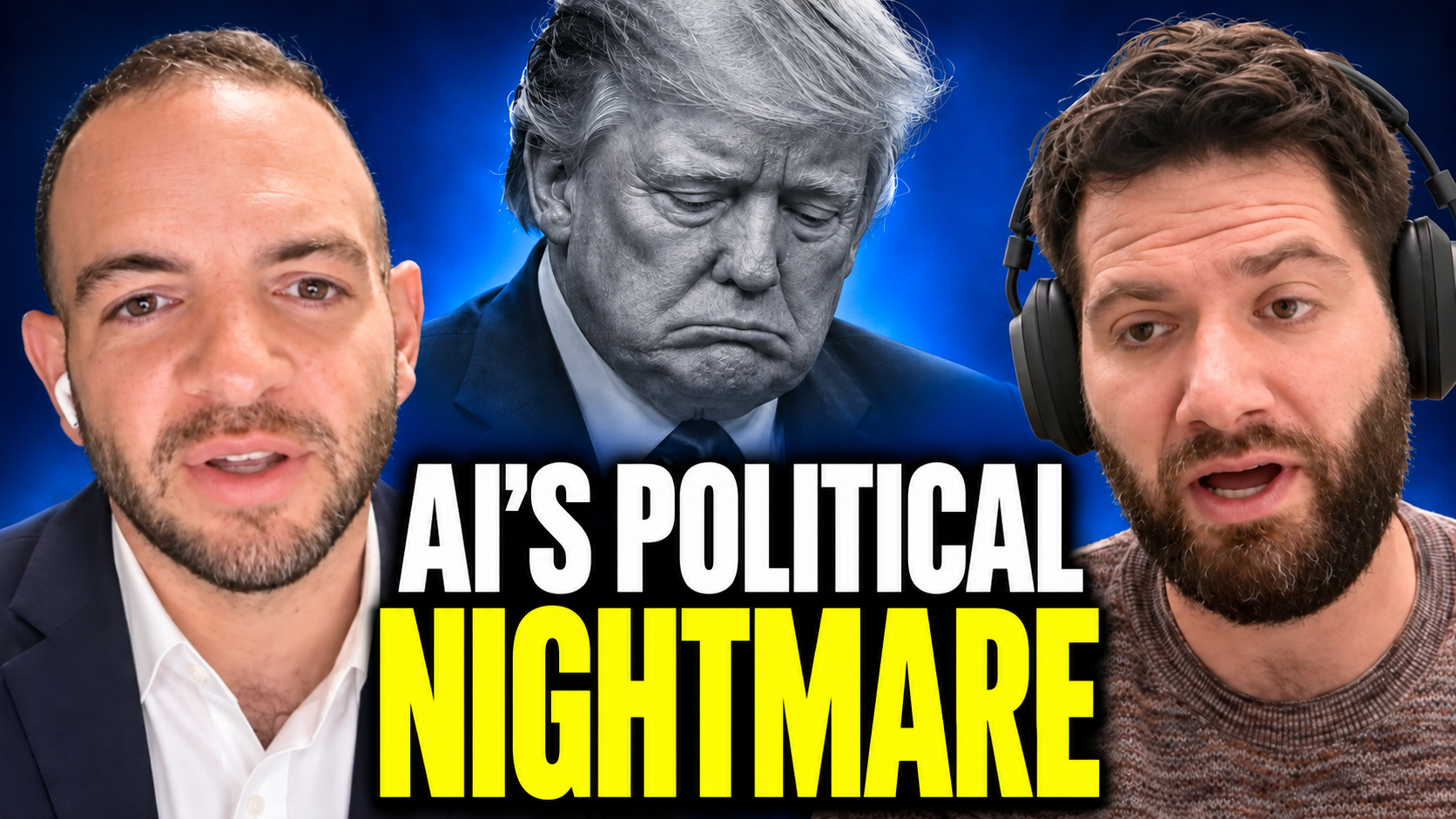
Can AI Keep Going After The Democrats’ Big Win? — With Teddy Schleifer
In short
After Democrats won majorities in both the US House and Senate, the episode asks whether a more hostile Democratic government will slow or reshape the AI buildout—especially the expansion of data centers needed for compute and model training.
Guest backgrounds
Teddy Schleifer is a New York Times reporter covering billionaires, tech money, and its influence on politics.
Key claims
The prior “pro-AI/pro-data-center” political environment may end; Democrats may pursue investigations and public hearings of AI executives. Public backlash is already visible: voters in 38 jurisdictions passed bans or restrictions on data centers, and the data center industry is starting to fund political efforts (including a super PAC). Markets may overreact, briefly boosting big tech stocks on expectations of reduced AI spending.
Notable examples
John Ossoff’s AI/data-center references; Texas politics shifting; Elon Musk’s ~$500M midterm spending and subsequent political setbacks; California’s “billionaire tax” campaign tied to Sergey Brin.
Written by AI. May contain mistakes.
Chapters
1:29
Emergency Episode Setup
Hosts discuss the implications of the Democrats' midterm win on AI policy.
“We had an episode scheduled for today, but after the big Democrat win in both the Senate and the House, we could see some major shifts in the AI build-out coming.”
2:16
Political Landscape Shift
Teddy analyzes the shift in political power and its impact on the AI industry.
“Headline at the top, Democrats will have huge majority in the House.”
3:00
Regulatory Backlash Concerns
Discussion on potential regulatory backlash against the tech industry.
“it's clearly going to be a new time for the tech industry.”
3:40
Voter Sentiment on Data Centers
Teddy discusses public sentiment against data centers based on election results.
“But I think we're going to look back on the last year and a half as a bygone era when this was so unencumbered that we didn't appreciate it in the moment.”
4:48
Political Action on AI
The potential for increased political action against data centers and AI.
“38 jurisdictions voted for bans or restrictions on data centers.”
6:40
Tech Industry's Reaction
Analysis of the tech industry's emotional response to the election results.
“I mean, that's why advocacy operations happen.”
7:53
Long-Term Implications for Tech
Discussion on the long-term implications of the Democratic majority for tech regulation.
“But clearly, like, I don't think we're appreciating just how good they had it.”
10:51
Cost of Living and AI IPOs
Exploring the interplay between economic conditions and AI regulations post-election.
“And these people are going to be in office for the next six years.”
14:00
Political Dynamics Surrounding AI Regulation
Explore the interplay between elections and political responses regarding AI regulation.
“Think about Elizabeth Warren's campaign.”
21:50
Market Reactions to Political Changes
Understand how political shifts impact technology stocks and investor sentiment.
“and I want to talk to you about the billionaire's tax.”
Show all 15 chapters
24:56
Elon Musk's Political Spending and Its Fallout
Delve into the implications of Musk's political spending and the outcomes of the recent elections.
“Intelligence connects your AI spending to code quality and engineering outcomes from individual sessions and pull requests to entire projects.”
28:00
Impact of Political Changes on Tech
Discusses how political shifts may benefit tech figures like Musk.
“And obviously, it's not just about Tesla and SpaceX.”
29:50
Billionaire Tax Opposition Victory
Analyzes the campaign against California's billionaire tax proposal and its implications.
“A win for the billionaire tax opponents.”
31:22
Future of AI Legislation
Explores the likelihood and challenges of passing AI legislation in the US.
“So I can only wait for California's new slogan to be California open for business.”
33:06
Closing Thoughts and Statistics
Wraps up the discussion with final thoughts and a relevant statistic about AI in elections.
“I mean, there's going to be a deal making.”

Ask about this episode
Get the gist, explore an idea or ask about something said.
 Claude
On Big Technology Podcast, what are the key points of this episode?
Searching your listeningTranscript
Automatic transcript. May contain errors.
0:00Big Technology Podcast Host: Now that the Democrats have swept the U.S. midterms, is the AI industry about to get stopped in its tracks by a hostile government? We'll talk about it with New York Times reporter Teddy Schleifer right after this. This episode is brought to you by Kribble. Quick question, is your IT budget growing 30 % a year? Because your data is. And now AI agents are piling on, running investigations around the clock, and running up three meters at once. Storage, queries, and tokens. Cribble, the AI platform for telemetry, was built for exactly this. Own all your data, query it wherever it lives, and let Cribble route every AI request to the right model at the right price.
0:39Big Technology Podcast Host: The best part? AI inference for workloads on Cribble is included. Models will change, agents will change, your data is the asset that lasts. Own it with Cribble. Visit Cribl.io. How do you price intelligence as a service? How do you charge for delivering end-to-end work, not just access? Those questions remain front and center for AI founders and operators, and getting to the right fit business model, whether that's selling usage credits, outcomes, seats, or a hybrid combination, requires constant iteration. Chargebee is the billing and monetization infrastructure that powers just that for ambitious, fast-scaling AI businesses.
1:18Big Technology Podcast Host: Visit chargebee.com slash Alex to learn more. That's C-H-A-R-G-E-B-E-E dot com slash Alex. Welcome to Big Technology Podcast, a show for cool-headed and nuanced conversation of the tech world and beyond. Stop the presses. We had an episode scheduled for today, but after the big Democrat win in both the Senate and the House, we could see some major shifts in the AI build-out coming. So we scrapped our traditional plan for Wednesday, and we're bringing in New York Times reporter Teddy Schleifer for an emergency episode about the implications, the potentially far-reaching implications of what this midterm win from the Democrats will potentially be extremely hostile to the AI agenda could mean for the AI build-out and the massive business that is expecting the build-out to continue to go as planned.
2:11Big Technology Podcast Host: Teddy, it's good to see you. Welcome to the show. Thanks for having me. So, I'm looking at the New York Times homepage right now. Headline at the top, Democrats will have huge majority in the House. The Senate right now has 54 Democrat seats to 44 Republican seats. And the House, where they're still counting as 230, so they're still counting in both, but the House has more outstanding, 237 Democrat seats to 147 Republicans. obviously this is going to have major implications on the ai build-out because a lot of these candidates were talking about data centers they're talking about ai safety in their victory speeches like john ossoff did the georgia senator when he won uh on tuesday so what are the implications for the ai build-out uh and what's your broader reaction to what happened off the bat yeah i mean it's clearly going to be a new time for the tech industry.
3:10I mean, this is not the 2025, 2026 bull run that the industry had politically. I mean, going forward, there is going to be obviously a Democratic majority in both chambers, which are going to be not as pro AI and not as pro data center as the Republican majorities that this industry has enjoyed for the last two years. And, you know, just how bad it is, I don't totally know yet. But I think we're going to look back on the last year and a half as a bygone era when this was so unencumbered that we didn't appreciate it in the moment.
3:53Big Technology Podcast Host: Now, for me, when I think about US politics, I always think, well, the bark is typically louder than the bite, and especially regarding their regulation of tech and the rules they've applied to tech, they haven't really done much, even though there've been like clear exces, like all these companies lost, all the big tech companies lost antitrust cases or had to settle them with the FTC and the DOJ. And yet nothing really stopped them. But I do wonder if this time is different, or at least if we're going to see an even greater backlash than we did previously. And one of the things that makes me think about this is a lot of the things that need to happen for the AI build out to continue are physical, right?
4:31Big Technology Podcast Host: The word is build out. They need compute. They need data centers to continue to expand and serve their models. And let me just read you a headline from the Washington Post, a nationwide backlash against data centers erupts at the polls. Voters in at least 38 jurisdictions across the country passed bans or restrictions on data centers on Tuesday, 38 jurisdictions reflecting the widespread public revulsions to the facilities and adding to the growing pushback on the ambitions of the artificial intelligence industry. I mean, enough said, right? 38 jurisdictions voted for bans or restrictions on data centers.
5:11Big Technology Podcast Host: So on top of this wave, where, by the way, they're probably going to be reading the tea leaves here, you have a massive amount of voters coming out and saying, we don't want data centers in our backyard. So what do you think the implications are there? Yeah, I mean, this is as close to a national referendum as you're going to get. I mean, this is obviously a brand new industry with where the politics are still being sorted out in real time. And clearly, a lot of Americans in 38 different places, at least feel the same way. I haven't reported a ton on these different or at all on these referendum or referenda.
5:45But clearly, 38 to zero is a pretty good average. I mean, we also saw for the first time this election, the data center industry do their own super PAC, which is kind of, I think, speaks to the ways in which the political winds are blowing here, which is that all of this political energy around AI, I think, is going to be channeled much more narrowly into the next battle around data center specifically, where why do you start a data center super PAC? it's because you face political challenges or policy headwinds. And the data center super PAC spent a bunch of money to try to help elect Darlene Graham in South Carolina.
6:26She did not win. And I think going forward, as a lot of these fights kind of take off, there's going to need to be money spent on behalf of the data center industry because clearly regular people are voting the other way. I mean, that's why advocacy operations happen. It's to basically convince people to do something that they wouldn't do otherwise. And right now, a lot of voters are registering their point of view, and the data center industry is only beginning to kind of play offense. So, you know, I think we're just getting started here. And I think next 2028, I think there's going to be a ton of spending politically on data centers.
7:12Big Technology Podcast Host: Now, you're the world's preeminent reporter on how tech money influences politics. And thank you. It's true. It's true. Okay, folks, for those listening, Teddy and I are friends in case you can't figure it out. But it's really true. No one does it like you, Teddy. And I just want to hear your perspective on what your sources are telling you about what the implications are going to be, if you can share. Because I would imagine they are likely like the people who are politically active in tech, spending money to get their agenda. They were very pleased in 2024. I imagine they're equally terrified now.
7:52Yeah, I mean, look, the comeuppance here for the tech industry, I think, is still TBD. But clearly, like, I don't think we're appreciating just how good they had it. You know, on AI in particular, I mean, this was an administration that was very pliant to the industry. The, you know, Trump is still going to be in the White House. It's not as if there's going to be like massive, you know, Democratic reforms that are going to be passed from both chambers and signed by President Trump. I think it's probably unlikely. But there's going to be guardrails now in a way that there wasn't, at least in terms of legislation.
8:35And there's going to be investigations, too. Right. I mean, you know, take Elon Musk, who, you know, is is suddenly going to be in the barrel in a way that he was not two days ago. So whiplash is coming. Right. I mean, you went from being, you know, a co-president or or for a while effectively kind of helping lead the U.S. government to suddenly being like testifying on the Hill. And there's going to be this whole whole effort by Democrats, I think, to atone for the last two years of what Democrats see as as an industry run amok. So I expect it to be pretty brutal. I think that the political calculus is changing rapidly for all these companies, too.
9:21Like, I think there's going to be there's been all there have been all these jokes I've seen on Twitter or about like these efforts by Democratic or tech companies to like reembrace their DEI policies and then, you know, reembrace kind of their Democratic bona fides. It's like it's a joke and it's funny because there's an element of truth to it. I think there's going to be, you know, tech companies that are hiring or promoting, you know, government relations heads who are tied to the Democratic Party and making sure that they know that they have a Democratic mega donor in leadership, stuff like that.
9:56But part of this is perception. And I think the companies wanted to fulfill a certain perception from 2025, 2026, and they'll fulfill a different perception in the next two years.
10:09Big Technology Podcast Host: Okay. And as much as you can say, is the vibe around the people that you speak with, like this is not going to be a big deal or, oh, goodness, we're in trouble. Like what is their basically emotional state today? I think it's the latter. I think it'll be a big deal for the tech industry and it'll be painful. And they realize that? I don't know. I don't know if they realize that yet. But I think they're beginning to realize that. Those things are – I think there's still – the election last time was very shocking in a way that people are not totally grappling with the results yet. Also, this is – I'm saying this is only two years.
10:47Like, you know, a lot of these U.S. senators were obviously just elected for six years. So, you know, there's going to be a lot of Democrats who ran for the Senate on a agenda, at least when they ran on like taking on the billionaire class, taking on the industry, taking on data centers. And these people are going to be in office for the next six years. So it is not as if these things will be easily reversed. So they have six years to grapple with it. But in a lot of ways that shows kind of the generational impact of this election is that there's all these accidental senators or accidental congressmen who are going to be here for at least some of them will be here for a while.
11:28And that's going to reshape kind of the political context of tech.
11:33Big Technology Podcast Host: mm-hmm um you know it is interesting because the tech leadership did embrace trump and the republican party um pretty intensely now there's nuance there right it's like of course like david sax and the all in podcast uh and jensen wang have been like very big um you know supporters well supporters of trump they've praised him so you know sax works in the administration But to Democrats, that's also, you know, and not everybody has been on that level. But I think what really matters is what it looks like to Democrats. And to Democrats, you know, they're going to look back at those pictures of all the tech CEOs at the inauguration.
12:16Big Technology Podcast Host: They're going to look at the vibe that they're getting from Silicon Valley. they're going to look at the polling numbers for AI, which are miserable, right, in the toilet. And I'm curious what you think, whether you think that will embolden them to, you know, take more aggressive action or make this one of their bigger issues. Yeah, I think that's true. I mean, tell me what you think is going to be, what's striking you with that question? Well, I think so. I mean, it's almost a perfect storm. Just think about this. The elections swayed on, depending on who you ask, swayed on a couple of things.
13:01Big Technology Podcast Host: I would say number one is cost of living. And maybe 1A is the war in Iran, which comes back to cost of living because of its impact on fuel prices and hence goods. Um, and you have, so you have a nation upset about cost of living and ready to like legitimately, um, vote out any party that they think is making it worse. On the other hand, you're on, in column B, you're going to see, um, these AI IPOs come out. And we talked about it on the show on Friday, how many multimillionaires the anthropic IPO is going to, is going to mint. How many multimillionaires the OpenAI IPO is going to mint. The fact that NVIDIA is a$5 trillion company, et cetera, et cetera, goes down the line.
13:51Big Technology Podcast Host: And so it's interesting because regulating tech has never been a winning political issue. Think about Elizabeth Warren's campaign. She went big into regulating tech. You know how she placed as a non-factor? That was one of her bigger issues. So the political calculation is not straightforward. But if you look around and you see what's going on in the country, somebody is going to make that a big issue. And if they start to get traction, you know, you could see a pile on effect. That's my perspective here. Yeah, I see that for sure. I mean, clearly there's going to be these elections are in addition to being meaningful for policy criteria.
14:39I mean, like these politicians read these election results and act in ways that are response to them, right? I mean, the 2028 campaign is shaped by the 2026 campaign and 2024 will shoot by 2022, et cetera. And if you're a Democratic politician right now, you're sort of observing what types of messages are getting through, what types of things are working. and Republicans as well, right? I mean, I think, you know, J.D. Vance put out a statement today that was laced with 2028 presidential campaign intrigue because it's like a response to what he sees the electorate is saying in 2026. And that's sort of politics, is responding to elections and responding to what the perceived narrative or mandate is that arises out of those.
15:30Big Technology Podcast Host: Senator Ed Markey, Democrat, responded to a post on X, live televised trials of big tech executives when, and he wrote, they are going to need to plant new forests for all the subpoenas we'll be printing. Yeah. Is that bluster or you think we could see a march of AI CEOs and big tech CEOs? Oh, sure. Sure. Down to Washington. Yeah, definitely. I don't think that's bluster. That's easy. I mean, you know, some Republicans will probably join them in that. Right. And so what do you think? Is it just like bully pulpit stuff where you sort of you talk down to Sam Altman from your high desk and it becomes viral on YouTube?
16:12Big Technology Podcast Host: Or is it? That's what everyone else has done to date. Right. I mean. Right. Yeah. Sure. I mean, run back the same aesthetic and logistics of all the social media trials, so to speak, before Congress in the Trump term and the Biden term. I think there's going to be a lot of scrutiny on all these AI company CEOs. Yeah. Do you think those are actually effective? Like I look back and it's interesting because I was in the room for the Mark Zuckerberg hearing, the famous one where he said, Senator, we run ads. And, you know, you almost expected it to be this excruciating moment for Zuckerberg, but he handled it well enough.
16:56Big Technology Podcast Host: It almost shifted the public sentiment on Facebook to a degree and nothing happened to the company. And, you know, the meme became, you know, Zuckerberg stands up to the bullies as opposed to Zuckerberg is the bad guy. So I am curious, like, if you think these things are effective and what you think the effect could be on AI companies. I don't I mean, they're effective in that they are like public spectacles. Right. And that's, you know, if you're a Democratic politician who wants to kind of keep the spectacle, you know, make it make it as spectacular as possible. you know these are easy targets right I mean Altman or Dario or you know Dennis or whomever I mean I think there's an element of of their spectacles because the public is kind of on your side so there's a flogging of them and clearly I don't I mean effective and what in kind of making you can successfully flog them if you do these things.
17:59What is that achieving, I guess, is kind of a question about what is it? Why are these people in Congress to begin with? Right. Yeah.
18:07Big Technology Podcast Host: I think it all boils down to data centers effectively. Will these companies have, well, will these companies, ultimately, they need public support to be able to build data centers. They need to build data centers to grow. I mean, we're living in the middle of a pretty big compute shortage. And there have been a few states that have been friendly for these companies to build their data centers in, Virginia, Texas. And Texas actually had a pretty interesting result where the, I would say mostly pro, although recently somewhat more lukewarm governor, Abbott has lost. And now there's a Democrat that's going to come in.
18:50Big Technology Podcast Host: And in fact, like I was speaking with somebody recently who's like who watches this very closely and i said how are you feeling about the midterms and this person said up until recently i was feeling fine until i saw the texas polling numbers and now could be a real issue so i'm curious to hear your perspective on on what happened there yeah i mean uh texas i think you know is like i saw some stat that it was like 30 of like data center development is in texas um um like you know this is this is a state that has embraced it and Abbott, you know, has embraced the issue and he's a powerful, I think, three-term governor now, ending third term.
19:29And, you know, that's an earthquake there, right? I mean, you know, Gina Hinojosa has like really tried to use that as a millstone around Abbott and has been pretty successful or, you know, she won based in part on that. And, you know, that's why there was so much kind of tech spending and one reason why there was so much tech spending to try to saved Greg Abbott. I mean, Elon Musk gave$5 million to the Abbott campaign in September. And clearly, I mean, obviously his companies are based in Texas and there was an effort by the Musk operation to make sure this did not happen. And now it's a sea change in Texas politics.
20:08I mean, I started, my first job was in Houston, Texas, covering the Wendy Davis campaign in 2014. And, you know, it took 12 years for that to finally pay off. And, you know, still sort of feels unbelievable, given the PTSD that I think lots of Texas Democrats and lots of Texas-based reporters have had about this ever actually happening. To see it actually happen, you know, it's cool to witness history.
20:35Big Technology Podcast Host: Darlene Graham, Lindsey Graham's sister, she was one that was supported in a major way by this data center industry super packet that you reported on. Yeah. I don't think she lost in particular because of her data center perspectives. I think she was asked in one debate, you know, a foreign policy question. She said, I don't really pay attention much to foreign policy or something along that line, but it does seem like she was one of the main candidates they were hoping to get elected and that's not going to happen for them either. Yeah. Yeah. I mean, there's always a lot of reasons why people lose or win.
21:11And I think one of the challenges about kind of super PACs and political spending in general is like people, you know, everyone who wins is a genius, everyone who loses is an idiot. And like the reality is, you know, this is a wave election. And I don't really know if any of these kind of campaign interventions like really worked. You know, we could talk about Musk if you want. But I mean, everybody who spends in these races is trying to shift public opinion. And public opinion here was pretty baked. And it didn't quite succeed. Right.
21:47Big Technology Podcast Host: OK, before we go to break, because I do want to talk to you about Musk. and I want to talk to you about the billionaire's tax. Interesting thing that's happening in the market today that I was somewhat surprised by, but it probably shouldn't have been. Bloomberg has the headline, big tech sores on bet Dems will save AI spenders from themselves. So clearly the market believes that the Democrats or whoever it will be, will be successful in their attempt to stop AI buildouts. This is the Bloomberg story. The shares of US technology giants led the market higher on Wednesday as investors bet that a Democrat-controlled Congress will slow the massive spending on artificial intelligence that's eating up free cash flow.
22:27Big Technology Podcast Host: Amazon jumped 8.3%, Microsoft 7%, Alphabet almost 6%, Meta 3.6%. I mean, this is crazy. Together with Apple, which has avoided heavy AI spending and leaped more than 6%, the five tech bemas are on pace to add nearly a trillion dollars in market value on wednesday um all stemming from this belief that that that the government is going to make them stop spending on data centers it's remarkable yeah i don't know what to say all right okay well i'll leave that as the last point um it's going to be very interesting uh to see what happens on that moving forward okay when we come back a word about elon musk a word about the billionaire's tax, and then we'll let Ted to get back to his reporting.
23:18Big Technology Podcast Host: So I'll be back right after this. When you're at work, you never know when you'll be interrupted. But with the Dell Pro, powered by Intel Core Ultra with V Pro, no matter what distracts you, your laptop won't. It's battery optimized for the way you work, with built-in intelligence that quiets distractions when you need to focus. Your laptop will help keep you locked in, even when it's bring your dog to work day. Built for those who stay in the flow. That's Dell Pro built for you. Dell.com slash Dell dash pro. You know those pieces in your closet that you find yourself wearing on repeat? The sweater that goes with everything, the perfect pair of pants, or the tee you somehow always reach for first.
24:01Big Technology Podcast Host: Those are the pieces that make getting dressed easy and that's what Quince does best. Quince focuses on high quality wardrobe staples made with premium materials like 100 % Mongolian cashmere, organic cotton, and merino wool. The styles are timeless, versatile, and designed to become the dependable pieces you reach for day after day. Personally, I'm loving my Mongolian cashmere crewneck sweater from Quince. It's actually, unbelievably, making me look forward to winter. Find your next fall favorites at Quince, download the Quince app for exclusive offers, or go to quince.com slash big tech. Get free shipping on your order and 365 day returns.
24:38Big Technology Podcast Host: Now available in Canada and the UK too. That's q-u-i-n-c-e dot com slash big tech. And when Quince asks you where you heard about them, let them know it was Big Technology Podcast. It's the best way to support the show. This episode is brought to you by Intelligence AI. Is your investment in AI coding tools helping your team ship better software? Intelligence connects your AI spending to code quality and engineering outcomes from individual sessions and pull requests to entire projects. You can see where AI saves time, where it creates rework, and how to improve. And its model router selects the right model for each task based on quality, speed, and cost.
25:15Big Technology Podcast Host: See how Intelligence AI helps enterprises optimize AI-powered delivery with connected visibility into cost, quality, and outcomes at intelligence.ai. And we're back here on Big Technology Podcast with Teddy Schleifer, reporter at the new york times covering billionaires and their impact on the world tech money and its effect on politics uh a lot going on on teddy's beat of course um teddy you joined the times in 2024 just as elon musk was spending a fortune getting close to trump being a major uh national political player you uh put your your sort of scorecard up on x uh last night owned by elon musk of course you wrote a very overly simplified report card for big money tonight.
25:58Big Technology Podcast Host: Elon Musk lost, Republican donors lost, crypto lost, billionaires tax, TBD. You also pointed out that Elon Musk had a post on X Tuesday morning, said, vote red today. And then that disappeared from his profile. What do you think the impact of this is going to be on Musk?
26:22Musk spent nearly$500 million. It's the most that anybody's ever spent on an election, um, uh, ever when they were not running on the midterms themselves. Yeah. Yeah. It's the most that everyone's ever spent on election ever when they were not the candidate themselves. Um, um, 500,$500 million in the midterms, um, probably more, but we'll see. Um, um, you know, uh, this is a dramatic failure for him. I mean, uh, even though I do think it is true that there's a lot of reasons why, you You know, Ken Paxton did not win Texas, for instance. Politics is a binary. It's about, you know, campaigns are a binary.
27:02It's about winning versus losing. And his people lost. You know, Republicans lost. So everybody affiliated with the Republican spending operation lost. And, you know, it just happens that Musk did more than anyone else.
27:22So it's a tough day to be the Musk team. I mean, I think they're ultimately going to have to assess what they want to do politically going forward. You know, Musk has basically been saying that he wants to play a big role in 2028. He wants to play, you know, that this is a multi-cycle effort. But the fact that he's like deleting tweets and, you know, making jokes about his political spending suggests to me that he knows this did not go well. And I think there's going to be significant pain for him politically going forward. I mean, you mentioned the Ed Markey tweet earlier, but like, you know, there's going to be investigations.
28:00And obviously, it's not just about Tesla and SpaceX. I mean, like Musk, you know, oversaw so much gutting of the federal government with Doge. And Musk could be investigated or probed for that work specifically. Which are the sort of things that probably would not have happened in a Republican-led Congress.
28:20Big Technology Podcast Host: I am anticipating the hearing where the Democrats called big balls to testify. Yeah. Sure. I mean, I think you're joking, but also, I mean, that's very plausible. Yeah. This was a guy who was involved in Doge. That was his nickname somehow. Yep. Elon wrote, guess my election interfering space lasers didn't work this time. So he's having a sense of humor about it. I mean, maybe, you know, could a silver lining for him be that because you won't be able to build data centers on Earth, his plan to build data centers in space actually becomes a good business? I think the silver lining for him is that there's actually a and this is true of I think this is going to sound like spin, but I think there's an element of truth to it that that Republicans are more likely to win in 2028 with kind of opposition from Democrats.
29:15That's, you know, if you're obviously the next two years will be painful for Republicans, including President Trump. But like if you want Republicans to win 2028, like some spin I've heard is that this will be good for for them to have a Democratic foil. Maybe Democrats will overreact, try to impeach, stuff like that. And that's potentially good news for for for Mr. Musk.
29:39Big Technology Podcast Host: OK, billionaires tax. Another big thing on the ballot. Yeah, I said I said that. tweet, but as of now, it's looking like a win. So talk a little bit about what's happening. A win for the billionaire tax opponents. Yeah. Okay. So talk about what was at stake there and what happened. Yeah. So the proposal was for a one-time 5 % tax on people in California who have over a billion dollars in net worth. There was a pretty unprecedented campaign against it where over$330 million was raised into a political nonprofit linked to Sergey Brin, the Google founder. This was Sergey's most significant political activity by far ever.
30:19And it looks like they killed it. You know, at the time we're recording this, you know, the New York Times has not made a call in that race yet, but you'd rather be the side that's opposing the tax than the side that's supporting it. And the Brin operation had a massive advantage in paid advertising. I mean, You know, the pro-tax side barely mounted any campaign for it. And this kind of galvanized the tech industry. And, you know, I did a story with my colleague Aaron Griffith about all the ways in which Sergey and Patrick Collison and John Doerr were like, you know, getting their buddies to chip in on this thing.
30:59And it became a victory story for the tech industry or appears so. So not only that, actually, there's also another tax proposition on the California ballot that would effectively ban this in the future. And that looks like it's going to pass. So there is going to be this kind of downside protection going forward, too. And, you know, for all the trouble of achieving your impact with money in politics, this is the this is the counter example where the billionaires look like they succeeded.
31:33Big Technology Podcast Host: the interesting thing i think a lot of uh folks were like if if the billionaire tax passes i'm going to move to texas and now texas is blue yeah yeah like well now and now the tax now the tax has um if the tax is uh um uh if the tax repeal right the tax loses people can move back right i mean like like I've been joking with some people today on this. So I can only wait for California's new slogan to be California open for business. Yeah. Come back. Escape. You know, there's a there's a blue state governor in Texas and a blue state governor in California. But at least California has banned wealth taxes, which I don't think Texas is done.
32:17That's correct.
32:18Big Technology Podcast Host: Very important. Any thoughts on actual legislation being passed? I mean, there's these bans that will probably happen locally. There was a story in Transformer, what the blue tsunami means for AI policy. The likelihood of strong frontier AI legislation passing next year shot up. Democrats have signaled repeatedly that AI is a top priority. Some siding it in victory speeches with such large majorities, the need for them to compromise is much lower. I'll just say personally, I don't see any coherent AI legislation outside of like we're banning something come out of the US government or the federal government at least.
32:58Yeah. Yeah. I mean, there's still going to be a Republican in the White House. Right. So like, you know, the way things pass just as a refresher, you need both houses of Congress to sign to pass something and then the president has to sign it. And that seems unlikely to happen. But who knows? I mean, there's going to be a deal making. there's going to be some desire for deal making somewhere maybe um um so i don't know if ai is in the venn diagram of of kind of what republicans democrats can agree on but um that's certainly i think yeah okay uh any any big picture thoughts about what happens from here none no i mean i mean i mean this is like a a massive massive news story obviously and i think there's going to be significant fallout in both parties.
33:46And, you know, this was a highly newsworthy in terms of the possible outcomes here. I mean, this is probably the newsiest possible outcome. So, you know, we're just getting started and figuring it out and coming to terms with the means. So I'm humble and humble and not knowing what happens next.
34:07Big Technology Podcast Host: All right, folks, I'll leave you all with one stat before we leave. Adam Kavakovic, who is a big tech-friendly policy guy, I don't know if he was trying to make the point that it wasn't a big deal, data centers weren't a big deal, or he was, just giving some context. He tweeted this poll, how important was AI in data centers to your vote with NBC Newslink? 23 % said crucial. 77 % said major factor, minor factor, non-factor. I think the point is that most people didn't see it as a crucial election issue, but 23 % saying crucial is still, that's a lot of people to say that data centers are crucial.
34:47Okay.
34:48Big Technology Podcast Host: We'll leave it at that. I know you've been working nonstop for like 48 hours and it's busy and I appreciate you spending the time with us to help us figure out what's going on. Thanks, Teddy. All good. You bet. Folks, if you want to follow Teddy's writing, obviously go to NYTimes.com. What's your Twitter handle, Teddy? At Teddy Schleifer. At Teddy Schleifer. Easy. Okay. Thank you, Teddy. Thanks, everybody, for listening and watching. We'll see you next time on Big Technology Podcast.
From the publisher
Teddy Schleifer is a New York Times reporter who covers billionaires and their influence on politics. Schleifer joins Big Technology Podcast to discuss what the Democrats’ midterm sweep means for the AI buildout. Tune in to hear why voters are turning against data centers and how much a Democratic Congress can do to slow their construction with Trump still in the White House. We also cover the prospect of tech CEOs facing subpoenas, what the election means for Elon Musk, and California’s proposed billionaire tax. Hit play for an emergency episode on what happens when Silicon Valley embraces a president and voters give the other party control of Congress.
Learn more about your ad choices. Visit megaphone.fm/adchoices
More from Big Technology Podcast
All episodes
We use cookies.They keep VO running smoothly and help us improve it. Privacy policy