Ask ChatGPT

 BiggerPockets Real Estate Podcast
9 Jun 2025 · 30m · 13 chapters

Nathan Nicholson’s path to financial freedom using repeatable, small rental houses in Louisville, KY—starting with cash-flowing $32k properties, scaling to 22 rentals, and targeting DSCR/“1%” thresholds while avoiding over-leverage.
Nathan Nicholson, Louisville, KY investor; growth leader at Success Mortgage Partners; prior mortgage roles at Supreme Lending, Lower.com, and Sierra Pacific. About 14–15 years buying real estate; started investing in early 30s.
Cash-flow first (initially free-and-clear). Reinvest rental income (“snowball”) rather than spending it. Buy the smallest practical footprint (1–3 bedroom, ~700–900 sq ft) to reduce repair costs per square foot. Be careful with leverage; pay down debt to build a “shell” of cash flow, then leverage later if needed. Use DSCR as the “1% rule” (generally require 1.2+).
First deal: foreclosure bought cash for $32,000; rent about $750/month; then bought four properties within 8 months. Second deal: $60,000 brick house rehabbed with a 203K loan. Current deal: 2-1, ~700 sq ft crawl house bought for $87,000; expects ~1.3 DSCR after ~$15k updates; rents projected ~$1,050–$1,125. Portfolio today: 22 properties; ~ $280k gross rents, ~$126k net after vacancy/repairs, true net ~$98k–$100k/year.
Written by AI. May contain mistakes.
Discover how Nathan realized the need to invest in real estate for financial stability.
“I'm Dave Meyer, head of real estate investing at BiggerPockets.”
Nathan shares why affordable properties can lead to significant cash flow.
“There is a ton of actionable advice in this conversation, especially for investors looking for houses at a price point around$100 ,000.”
Hear Nathan's decision to cash out his 401k and the risks he took to invest in real estate.
“And so at that point, I was in origination.”
Nathan recounts his first deal that set the tone for his investing journey.
“Did you have like a very specific buy box or something you wanted to pursue first?”
Learn how Nathan scaled his portfolio quickly by leveraging cash flow from properties.
“And I'm like, man, I really don't want to refinance out of this.”
Nathan discusses the advantages of investing in smaller residential properties.
“So in the long run, I actually make more money how I do it.”
Nathan provides insights into current property prices and rental rates in his market.
“Welcome back to the BiggerPockets podcast.”
Understanding current real estate prices and rental income potential.
“And if I raise it an extra 60 bucks, it'll be at a 1.42, which is very, very good.”
Discussing adjustments in investment strategies due to market changes.
“Well, I want to talk to you a little bit more about that because you've said a couple of things that I think are really important.”
Exploring the benefits of reducing leverage in real estate investing.
“So when the plates are empty and the sink is full, use Palmolive Ultra.”
Learn about using cash flow and debt management strategies in real estate.
“go get a construction loan, that might be 12 % and paying two points, or it could be higher.”
Understand the importance of being methodical in real estate investing.
“I think paying off debt is very smart because it creates that shell.”
Receive closing advice on leveraging and securing investments wisely.
“It's always a privilege and a pleasure to be on the top real estate podcast in the world, in my opinion.”

Get the gist, explore an idea or ask about something said.
 Claude
On BiggerPockets Real Estate Podcast, what are the key points of this episode?
Searching your listeningAutomatic transcript. May contain errors.
0:00This investor buys the same$80 ,000 house over and over again. He had only$30 ,000 in the bank in his early 30s despite a successful career. And at that point, retirement looked like a pipe dream. Then he discovered real estate investing and started slowly building a better financial future, one affordable property at a time. Now he owns 22 properties, cash flows almost$100 ,000 per year, and will have the option for a stable retirement well ahead of schedule. Let's find out exactly how he did it.
0:37Hey, everyone. I'm Dave Meyer, head of real estate investing at BiggerPockets. Today's guest on the podcast is investor Nathan Nicholson from Louisville, Kentucky. Nathan didn't buy his first investment property until he had a realization about needing to take control of his financial future in his early 30s. But he's since then built an incredibly impressive portfolio, all at very affordable price points. Today, we're going to hear how he was able to embark on a path to financial freedom with only a handful of properties in his first few years of investing, why he recommends being very careful with leverage even as a loan officer, and why, unlike a lot of investors, he always wants to buy the smallest possible house for his money.
1:20There is a ton of actionable advice in this conversation, especially for investors looking for houses at a price point around$100 ,000. So let's get into it. Nathan, welcome to the show. Thanks for being here. Yeah, thank you for having me. It's a pleasure. Tell us a little bit about yourself. How do you find yourself on this podcast? What do you do in the real estate industry? Well, in the real estate industry, currently I'm a growth leader at Success Mortgage Partners. I've had a long career there from Supreme Lending, Lower.com, and Sierra Pacific. I saw a lot of my friends in the mortgage industry buying real estate, and I just was wondering, how are they doing this?
1:58And that's kind of what projected me into buying real estate and looking into it a little bit more. What year were you starting? What was the timeframe for all this? Yeah. So, I mean, basically I've been buying real estate for right around 15 years, give or take, 14 years, roughly. And so at that point, I was in origination. Of course, the market was, you know, very, very interesting, to say the least, just like it kind of is now to this day. I mean, ironically. But anyway, with that being the case, obviously, I was looking at different ways to try to afford retirement, try to find ways to make more money down the road.
2:31And in all honesty with you, when I looked at my savings account, I think I had$32 ,000 in it. And when I looked at it and I'm going, I got to be 60 years old to have 60. Yeah, right. At the rate this is going. And looking at my friends telling me over and over again to buy real estate, at that point, it kind of signaled that I need to do something a little bit different. A lot of people would tell you never to cash out your 401k. But the reality is I was like, well, I have no money to work with. And I was kind of scared to take hard money, which a lot of people are in the very beginning. And so I looked at my 401k as an option.
3:04And I kind of went that route with cashing it out. And I had about 85 to 100 grand in there and just immediately was like, what can I do? How can I buy properties? So tell us about your first deal. You cashed out your 401k. Did you have like a very specific buy box or something you wanted to pursue first? I got with a property manager my mother knew, and he basically was trying to show me the ropes a little bit. And he said, just go out and buy a deal. It doesn't matter what it is. We'll figure it out. Well, of course, I found a foreclosure. And obviously this was in a state kind of situation where they were losing it, but it was in a state.
3:38It's kind of a weird scenario. I bought that house for$32 ,000 in Louisville, Kentucky at the time. And I thought it was very expensive and I thought it was really risky. And my property manager, that is still my property manager today after 14, 15 years. He said, this will be the best deal you ever buy in your entire existence. He's not wrong. Well, it's pretty great. You had 32 grand in your bank account, like you said, and you were able to buy this property for 32 grand. So this is around 2013, you know, like somewhere around there. But basically, yeah, it was$32 ,000 and I bought it cash. And so it was more for me looking at it from a mentality of playing with it, right?
4:18Like being a cat and a bowl of yarn is let me buy it cash. Let me make sure that I don't have any debts. Let me be safe. And so as I went into the house, I realized that$32 ,000 in my rent of like$750 a month or whatever, it was cash flowing really good. And I'm like, man, I really don't want to refinance out of this. So at that point, I decided just to keep that$32 ,000 in there. That was my first house was a free and clear house. And that's really what set the tone. But then after that, I dominoed into three other ones. So I bought four back to back to back to back out of my 401k. I mean, literally, I bought four within a period of eight months of each other just to domino.
4:54So that way the cash flow would carry it forward. So that way if someone didn't pay, I would be able to afford that. Wow. Well, I'm sure everyone listening is just salivating at the idea of buying a property. A cash flow of$750 ,000 for$32 ,000. Yeah. So then did you buy similar deals? I assume just trying to do the math of how much cash you had on hand buying for these deals. Yes. You bought some of them with leverage after that? That's correct. I had about$50 ,000 to$60 ,000 left out of my 401k. I fully pulled that out, all 100 % of it. Wow. I was looking around semi-project areas, stuff like that, just the outskirts that were getting better.
5:31And I really focused on small footprints. I really like, you know, 1-1, 2-1, 3-1s, 900 square feet, one story on crawl. And so I really focused there. But my second deal was a 203K renovation loan on Wheeler. And that was a house that was$60 ,000 brick. Very nice. It needed full rehab. So I used a 203K loan for that. and from there, refinanced out of that, obviously, at the end, and then just kept moving into the same similar footprint houses. All right, so you said you like a small footprint. That's kind of unusual. Yes. You know, the traditional wisdom is, you know, get yourself a big house, get a 4-2, get a 5-3.
6:06When I say that, I mean four bedroom, two bath, five bedroom, three bath. Why do you like a small footprint? Smaller footprints, to me, just cost less, right? You could buy them cheaper. Now, they may not rent for as much, but in all honesty, with the price of goods right now, as far as contract work, you know, painting, repairs. So if you do the math on a small footprint house, say it's a 700 square foot house, say the average, you know, renovation cost is going to be$30 to$40 a square foot. You know, you fully do that. I mean, you're what,$20 ,000 in on that house. Now think of it this way. If you buy a very large house and it's 1 ,500 square feet, it's got a second story and a basement instead of a crawl.
6:44I like crawls or slabs. But if you got three parts of this house that are all 1 ,200 square feet a piece, if you do the math on your square footage there, if a tenant destroys your house and it's$30 to$40 a square foot and you got two levels that you got to do minus the basement, right? You're looking at a major rehab cost there. So even if the rent is$300 more a month, I'm looking at this from a cycle of how cheap can I make it over a long period of time? My cash flow may not be as big, but my costs to repair are going to be much lower. So in the long run, I actually make more money how I do it.
7:18So there's two different ways to look at it, but that's why I do it. That makes a lot of sense. And if you have a more complex build structure, like you said, if there's a basement or something like that, it might go up from$30 to$40 per square foot up to$40 or$50 a square foot. So you're paying a higher rate and more per square foot as well. So that's an interesting approach. We do have to take a quick break, but we'll have more with Nathan right after this. This segment is brought to you by ReSimply, the all-in-one CRM built for real estate investors. Automate your marketing, skip trace for free, send direct mail, and connect with your leads all in one place.
7:54Head over to resimply.com slash biggerpocketsnow to start your free trial and get 50 % off your first month. Summer bookings sound great until someone slips by the pool, gets hurt on your dock, or damages your property during a long holiday weekend. A lot of short-term rental investors don't realize their standard policy may leave gaps when it comes to short-term rental activity. That's why investors use Steadily. They offer landlord insurance built for real estate investors, including short-term rentals. And if you're a BiggerPockets Pro member, you'll also get 5 % off your landlord insurance premiums.
8:30Visit biggerpockets.com slash landlord insurance to learn more. I just booked a backpacking trip through Olympic National Park. Two nights out on the trail, no cell service, nothing to do but eat trail mix and stare at mountains I'll never get tired of. That's the whole appeal. But while I'm off-grid, my place doesn't need to sit empty. I can list my space on Airbnb and make a little extra income while I'm away. And with Airbnb's co-host network, I can partner with a vetted local co-host to help take care of the details, from guest communications to on-site support, so I can fully unplug and enjoy my time out in the backcountry.
9:09If you've got upcoming travel plans, you can find a co-host at airbnb.com slash host. You know that thing where you discover a feature you wish your software had? And it turns out it already exists just on a different platform. Like, oh, you want rent payments processed in two days. RentReady does it. Oh, you want to block tenants from making partial payments mid-eviction. RentReady does that too. Oh, you want full accounting and tax-ready reports without paying for a second tier. RentReady does it. And oh, you want tenant screening that doesn't overcharge your applicants? RentReady also does this.
9:48Basically, if you've ever complained out loud about your property management software, RentReady probably already built the fix. It's$12 a month. You're welcome. Sign up right now for$50 off your first year of RentReady with promo code BPCASH. BiggerPockets Pro members get it completely free. Sign in through your pro account at rentready.com slash biggerpockets. That's rent, R-E-D-I dot com slash biggerpockets. Purchase new carpet from The Home Depot and get it installed for free right now. Shop the stylish choices and simple pricing of carpet from Home Decorators Collection, Traffic Master, or LifeProof with PetProof technology, and see for yourself why nobody beats our prices.
10:32Enjoy new carpet with free installation right now at The Home Depot. Offer valid October 15th through November 1st, 2026. Exclusions apply. For licenses, see homedepot.com slash license numbers.
10:48Welcome back to the BiggerPockets podcast. I'm here with investor Nathan Nicholson talking about how he's scaled up his successful rental property portfolio. So you bought those first couple of houses because you cashed out your 401k. How were you able to sort of keep on scaling after that? So, I mean, really just looking at my first house, I bought it free and clear. So I was saving that$700 plus a month. In a year, that's$7 ,000 to$9 ,000, right? And so as I bought the second, the third, and the fourth one, and that was all within the same year. I put all my 401k in it, went all in. I was netting about$350 a door at that point.
11:26So I was saving probably about$14 ,000 to$16 ,000 a year off of those houses. And so anyway, what I did is I would just snowball it. So work my W-2 job and take that$16 ,000 in income. And if I found a property that I could afford at that point, I might put 10 or 12 grand into it, buy it, keep the four back for reserve and then buy again. But really, my progress is really based on rules of 72, which in all reality is just the compounding approach here is that I've never used my real estate income for myself. I've always put it back into the business. And so, you know, one year I've got$15 ,000 while I could buy one property, right?
12:05When three years I'm buying a property every eight months and six years I'm buying a property every six months, right? And so now I'm at year 15-ish and I'm buying three to four properties a year on average. And if I had the opportunity to have better rates in this marketplace, I would actually be able to burr probably four or five, like right before the market kind of got worse. I burred five houses in the same year. It's brilliant. I love it. I absolutely support when possible to reinvest as much as you absolutely can, at least early in your career. And you don't have to. That's like one of the cool parts about real estate investing is like for a little while I actually stopped because I decided to go back to grad school and I used some of my, you know, some of my cash flow to just pay down my tuition so I didn't have to take out loans, you know, that kind of thing.
12:50But I do think when possible, the more you can reinvest early in your career makes a lot of sense. Because as Nathan just really articulately explained, that means, yeah, first, you're taking a couple of years. It took me four years between my first deal and my second deal. Then two years after that. Now I'm buying multiple deals a year. You know, it just really escalates if you could be patient and sort of have the discipline to keep constantly reinvesting. I just closed on a property this morning, funny enough. I was just at Wonders and Wonders in Louisville, Kentucky, closing on one on Longfield Avenue, which is a little 2-1, back to my point.
13:23You know, 2-1, 700 square foot crawl space. I mean, I speak it as it is. It's true. Practice what you preach. I like it. Yeah, so I bought it for, you know,$87 ,000. And, you know, I paid a little bit over. I mean, again, I would have loved to have had it at 82. But once I update it, I'm going to put about 15 into it. It'll be a 1.3 DSCR after the fact. So a lot of people use the 1 % rule. I really look at a DSCR number as my 1 % rule. If it's not 1.2 or higher, I will not buy it. So this property with the increase in rents, once I move the tenant out, will be at a rough 1.3. And if I raise it an extra 60 bucks, it'll be at a 1.42, which is very, very good.
14:06Tell me a little bit about this deal. So you're buying another 2.1. What are the prices now? You bought it for 32K, but what are they today? day. Yeah. So, I mean, you know, 32K in great moving condition back then compared to 87 ,000 and needing easily 13 to 15 ,000 minimum to get it rent ready. That's really the reality of the situation. You're buying two one houses specifically for my market. Louisville, Kentucky is right around. You see them listed at 120, but they're all dropping to 105. You're getting two ones in semi-decent condition for 90 to$110 ,000 around here. That's still pretty good.
14:41I mean, obviously triple what you paid. So it's a different era. But man, I think in most parts of the country, that would be a screaming deal right now. So what does that rent for? So yeah, that house at this moment. So a lot of houses are in the$1 ,200 range at a$2 ,100 for a small footprint like that. And usually those are a little bit more updated. But if you have it semi-updated, you could probably pull$1 ,050 to$1 ,125, give or take in that range. And if it's actually not really updated at all, you could probably rent it for$9.95 and get away with it pretty quickly. And I mean, these properties go very quickly because there's a rental shortage in Louisville, Kentucky right now.
15:17It's very hard to find properties to rent. And tell me a little bit just mentally how you've had to adjust to this new era. Because I do think we hear a lot of people who maybe started before the pandemic and are like, oh, my God, it used to be so easy to get these deals. The prices are crazy. And all of it's true. It is true. But I guess my point has always been that you shouldn't let historical performance change your opinion on what the best investment is today. It's like about what you spend with your money now. It kind of doesn't matter what deals we're doing in 2017. If real estate is still the best use of your money, then you should be buying real estate.
15:57And if it's not, then you should buy some other asset classes. So you should be evaluating things that way. But at least for me, it does take some adjustments. So I'm just curious how that's gone for you, starting in an era of super cheap housing, moving to an era of very expensive housing that we're in right now. How have you had to adjust your strategy, but also just your mentality about investing? So what I've done is I've really focused on over the last 10 years and how things have been changing is how do I get my debt service paid off, right? How do I become more free and clear? How do I get rid of my leverage?
16:33And how do I use that cash flow in order for me to create, instead of a debt snowball, more of an income snowball, which is what everyone talks about with their cash flow? And so really, my focus now is actually buying properties, finding a way to pay them off as quickly as possible through refinancing them and leveraging a little bit. But the other thing is, is that what I found recently for the marketplace is it's very hard to buy. Even today, like that deal I just told you, the$87 ,000 deal, that$87 ,000 deal, if you were using hard money trying to burr it, it would be very hard to cash flow.
17:05You'd probably be in a negative cash flow, in all honesty with you, or losing money. And so what I found and what I've been doing is I've been looking at properties that don't need as much all the time. but I've been having to put more money down, 10 % down, 20 % down on a purchase. If I'm buying a cash, I may leave 10. If I'm financing it right out the gate, I generally will go in at 20 % with lower terms, like a 20 year AM, stuff like that to pay it off quicker. And so that's kind of what I've been doing to get around it is, is putting more money into it. And I think a lot of people would agree with me.
17:34It's getting a little bit harder now to do that. But what I will say is that if your dollar cost averaging, especially now, I'm still buying, a lot of people are still buying. And there's a reason for that because the prices only keep going up and it's going to keep going up. And if you're not dollar cost averaging and you're finding ways to put money into the deals or you're finding ways to burr out of them properly, you're going to be stuck because three years from now, that$87 ,000 house is going to be$115 ,000 for the same house. You know, so you got to buy now. Yeah, absolutely. Well, I want to talk to you a little bit more about that because you've said a couple of things that I think are really important.
18:07One is you said that you're able to get some good deals right now, but long term things absolutely go up. So I want to turn our attention to like how to sort of navigate the situation right now to make sure you're not taking on too much risk, but you are enjoying the upside potential that could be coming over the next couple of years. We do, though, have to take one more quick break. So we'll be right back. I just booked a ski trip to Park City and I've already got the whole thing planned out. Five days, first tracks every morning before the crowd show up, my knees reminding me I'm not 25 anymore by the second run, and an embarrassing number of overpriced burritos at the lodge.
18:48I don't even care. This is the trip I look forward to all year. But here's the part I actually appreciate. The practical side of my brain kicking in is that my place doesn't have to just sit there empty the whole time I'm away. I can list my space on Airbnb and bring in a little extra income while I'm out getting humbled on a mountain. And with the co-host network, I'm not the one handling all of it. You can partner with a vetted local co-host who can create your listing, manage reservations, message guests, and even handle the styling. So I get to fully focus on my trip and my place is still working for me the whole time.
19:26Find a co-host at airbnb.com slash host. Investing in real estate has always been smart. But it hasn't always been simple. Now it's both, thanks to the Fundrise Flagship Fund. The Fundrise Flagship Fund launched more than five years ago with a mission of delivering low-fee access to blue-chip private market real estate. Today, the Fundrise Flagship Fund has grown to manage more than a billion dollars of real estate on behalf of hundreds of thousands of investors, making it one of the largest funds of its kind. For those who believe real estate has an important role to play in their portfolio strategy, the Fundrise flagship fund has positioned itself as both a simple and a smart option.
20:09Whether you're starting with$10 or$10 ,000, the Fundrise flagship fund makes adding real estate's unique potential for both passive income and consistent growth. Just visit fundrise.com slash pockets to make your first investment today. Carefully consider the investment objectives, risks, charges, and expenses of the Fundrise Flagship Fund before investing. This and other information can be found in the fund's prospectus at fundrise.com slash flagship. This is a paid advertisement. Purchase new carpet from The Home Depot and get it installed for free right now. Shop the stylish choices and simple pricing of carpet from Home Decorators Collection, Traffic Master, or LifeProof with PetProof Technology and see for yourself why nobody beats our prices.
20:56Enjoy new carpet with free installation right now at The Home Depot. Offer valid October 15th through November 1st, 2026. Exclusions apply. For licenses, see homedepot.com slash license numbers.
21:1120th Century Studios presents Whale Fall, the most incredible survival thriller of the year. I need a whale! Help me! Now playing in theaters to survive the unthinkable. Do the impossible. You're going to become so dangerous that the predators can't help but let you go. Austin Abrams. I'm going home. Josh Brogan. Survivor Survivor. Whale Fall. Rated PG-13. Maybe inappropriate for children under 13. Now playing only in theaters. This episode is brought to you by Palmolive. Family time isn't just the big moments. It's weeknight dinners. Sitting around the table. Everyone talking all at once. So when the plates are empty and the sink is full, use Palmolive Ultra.
21:52Palmolive's most powerful formula removes up to 99.9 % of grease, leaving your dishes sparkling clean. And the new convenient pump makes cleaning even easier, so you can spend less time tackling dishes and more time together. Shop now at palmolive.com.
22:13Welcome back to the BiggerPockets podcast. I'm here with investor Nathan Nicholson. Before the break, we were talking about how buying now makes a lot of sense because prices keep going up over time. Nathan, you also said, you know, these two ones are being posted for$1.15, but you're getting them for$1.05. Is that because market dynamics are changing or prices falling in Louisville? Like, what's going on there? The market is stagnating a little bit to a point where you're starting to see a little bit of pullback, which, funny enough, there was an article today about it talking about how the seller market is ending and the buyer market is here and it will be here for the next six to eight months.
22:50And so I do see that happening in Louisville. And how do you sort of square that with the idea that you said, you know, prices go up, we're seeing prices stagnate. You said six to eight months is you're just feeling confident because you believe prices will just get back on the normal appreciation train later this year or, you know, sometime in the near future. That's exactly right. I feel like right now it's just maxed out when rates start dropping, as we both know, So, I mean, the question mark is the economics in the market currently with tariffs and everything else. The minute the market changes, I think the rates will actually start coming down.
23:24And you're going to see a lot more opportunity. You're going to see a lot of investors jump back into the market very quickly. I would say that will probably occur within the next six to eight months, obviously, once they get all the world economic issues worked out. But rates drop. It will be a by-party for a lot of investors. And I think that dollar cost averaging is really the best way to kind of get through this at this point, especially for the Louisville market anyway. I'm kind of with you. And listen, you know, there's a lot of uncertainty in the economy right now. Our rate's going to drop in three months.
23:56I don't know, six months. I don't know, a year. The trend is probably down over time. And so, you know, even if there is a longer period of price declines and softness, I don't necessarily think that's a bad thing. if you just sort of buy deals that still work today, then all you're going to do is get upside if and when the market does turn around. As you said, the buyer markets now, and that's kind of what that article said. And Louisville, that's exactly right. If you go from a 120 house and I basically come in and say, I'll give you a hundred for it. And they go 105. I mean, they just dropped it a huge percentage, almost a million one shot to an investor, right?
24:31So you know what's happening. I mean, it's turning and all these houses that are sitting there to your point, you could get deals like that. That's where this$87 ,000 deal came from. I mean, they had it listed originally for sell by owner, a wholesaler that I knew scooped it up before I did. I mean, it's okay, Kevin, but it's all good. He got it and I bought it from him this morning. So it all worked out. I know him. He knows me. It all worked out. And the thing is, is that I got it at a good price that works, you know. Even a year ago, it was hard to negotiate. Properties were still flying off the board and no one knows how long this will last.
25:02And so it's hard to time the market precisely. But if you find good deals, that makes sense. And if you're buying for, you know, under what you think you could have bought for six months ago and you see the intrinsic value, you think it was going to go back up. Like, it's pretty good time. I agree fully. So catch us up to today, Nathan. How many properties do you have? Yeah, I mean, currently, as of today, with my closing, I'm at 22 properties. I've got 10 paid off for InClear at this point. And the cash flow, I think my rents are about$280 ,000 a year. and I'm netting with vacancy and repair about 126 ,000 and true net is about 98 ,000 to 100 ,000 a year, which by the way, I write it all off.
25:42So that's straight in my pocket. So awesome. Amazing. That's why they call this podcast Bigger Pockets, right? That's right. Yeah, exactly. So all that being said, Nathan, like what's next for you? It sounds like you kind of just do the same thing, bread and butter over and over. Is that the plan going forward? So I'm in that process of, do I buy three to four more houses this year or do I take the cash that I have and I leverage out that line of credit and I go buy a three or four million dollar property, right? So that's kind of what I'm looking at now or building duplexes. I'm in a mindset of maybe buying land and building spec homes just for cash because the margin on that's really, really good and or building at a duplex or quad and the margin on that's really good too.
26:25So I mean, I'm looking at a lot of these things, but it really depends on the land that I could buy at the time, right? Because it all matters with the deal. It's either you get the deal or you don't. And so whatever comes to me first, I'm kind of looking at those avenues. It's interesting. So you were saying doing development, but paying for it in cash and not paying a construction loan? Correct. That's exactly why I'm leveraging my lines right now. I'm actually, it's something that I've always wanted to do. I've done a lot of BRRRS. So I'm pretty versed there. I've got some really good contractors and I know some that are builders.
26:54And so in my mind, I know a lot of builders too, because I've been in the real estate and mortgage game for a long time. I know their margin sets. And so, yeah, the line of credit is a lot better there because obviously not taking out hard money at 13 % to 15 % right now and paying a point or two on that, I can maybe leverage a line at eight, eight and a quarter. That's really helpful over the long term, especially if you're building something out over six months, buying the land, owning it cash, building out all the sewer and so forth, and then building to spec on top of that. Having a line of credit to do that of your own money or having cash to do that is definitely very helpful, especially now.
27:30Yeah. And I want to sort of clarify for people when Nathan is saying cash, it doesn't mean he has that money in the bank because you have a line of credit. So he's borrowing against assets that he has. For example, if you had a$200 ,000 paid off property and say you can rent, you know, 75 LTV, you know, you could take out$150 ,000 and use that to finance development of a new property. And obviously not everyone could do that, but it's great because if you were to just go get a construction loan, that might be 12 % and paying two points, or it could be higher. I don't even know. But so just that level of, you know, doing a little bit of arbitrage here and figuring out that you can develop at a lower cost than someone else might be able to, because you have these paid off properties can be really beneficial.
28:21And I think it's interesting, Nathan, because you're a mortgage professional, but it seems like a lot of your strategy has been around low debt, trying to not over-leverage yourself and trying to pay off properties quickly. It seems a little counterintuitive because you hear a lot of people wanting to max leverage. So how did you arrive at that strategy? I've seen a lot of people lose everything they have is the best way to put it. But in all honesty with you, I know four people personally that have done strategies where they over leverage and they've been burned on it. And so my strategy really came from their experience and them telling me not to do it is the best way to put it.
28:59And so I started my career path out exactly on that as far as my investing pages is to not over leverage too much. But to your point now, I am looking to over leverage. But that's also because in the tortoise concept, right? I mean, the tortoise is slow. So but again, a lot of people don't realize the shell is what is there to protect you. Right. And so in bad times, if you got good cash flow, that's your shell. And if you pay off your properties, that's your retirement and that's your cash flow. And the bigger your cash flow is, the bigger your shell is. And so you could leverage out. And so being safe is very smart.
29:33So I try to buy these cheaper properties because if you put 20 percent down on an$87 ,000 house, you only owe 65 grand on it. That's half my net in a year. I could pay that house off in one single year and it gets me to that point a lot quicker. And so anyway, that's definitely a format that I still will continue to use. I think paying off debt is very smart because it creates that shell. It allows you to have a larger income snowball to be able to leverage if you need it in good or bad times to buy or to try to play defense. And so it's a really good strategy, I think. Awesome. Well, I think that's really wise advice.
30:07You know, I people listen to the show. I'm all for the tortoise approach. I think this is what real estate is all about. It is a get rich slowly kind of scheme. And it's not really that slow when people say that it's like 10 or 15 years, you're going to be doing great. And just trying to make wise, low risk, high upside decisions is just the name of the game. And there are times where you want to leverage like to be honest, in 2015, 2016, or even 2020, when rates were so low, it was a good time to leverage. Now, to my opinion, not as good time to leverage. So you need to just adapt. And there's no one size fits all thing where it's like you should always be putting the least amount down so you can buy more properties.
30:44I don't know if that makes that much sense these days. So Nathan, thank you for sharing some of those insights with us. Any last thoughts or advice for our audience here before we get out of here? It's really smart to be secure. You know, it's not a quick game. People think it is. It's not. First thing we will tell you as an investor that is experienced, and I'm at about 15, just like you is that it is not easy. It takes a long time. Yep. But if you're methodical with it and you're smart with it and you listen to BiggerPockets, you listen to these stories, you listen to other people's pros and cons that they've had, their experiences, take all of that information and try to figure out where you are economically as far as your family, your income, your savings, where you want to be, your wants, needs and aspirations and leverage an approach that works for you.
31:27And if you can do that and do it methodically, you will always win. just don't over leverage. Don't over leverage. Don't over leverage. I can always say it over and over and over again. Be smart. You can leverage, just don't over leverage. Well, that's a great way to get out of here, Nathan. Thank you so much for joining us today. It was a good time. Yes, definitely a pleasure. Thank you again for having me. It's always a privilege and a pleasure to be on the top real estate podcast in the world, in my opinion. So thank you so much for allowing me to do this. I appreciate it. Yeah, thank you. And thank you all so much for listening.
31:58Before we get out of here, I just want to remind everyone to make sure to follow the BiggerPockets Real Estate Podcast wherever you get your podcasts, or make sure to subscribe on YouTube as well. We have a lot of great content going up there. And if you think other investors could learn from your story and you want a chance to appear on the BiggerPockets Podcast like Nathan, make sure to go to biggerpockets.com slash guest and apply to be on the show. Thanks again so much for listening. We'll see you next time. Fall savings are happening now at The Home Depot. Save up to$500 on select appliances.
32:31Plus, enjoy free delivery when you spend$998 or more. From prepping to cooking to cleaning up, Frigidaire has you covered. The custom flex temp drawer switches from fridge to freezer. With more than 15 cooking modes, including stone-baked pizza mode, you can enjoy restaurant-quality pizza in as little as two minutes. Then clean up with the Frigidaire dishwasher, featuring the industry's fastest normal wash cycle. Shop fall savings now at The Home Depot. Offer valid through October 21st. US only. See store online for details. 20th Century Studios presents Whale Fall. The most incredible survival thrill of the year.
33:04I need the whale help me! Now playing in theaters to survive the unthinkable. Do the impossible. You're going to become so dangerous that the predators can't help but let you go. Austin Abrams. I'm going home. Josh Program. Survivor Survivor. Whale Fall. Rated PG-13. may be inappropriate for children under 13, now playing only in theaters.
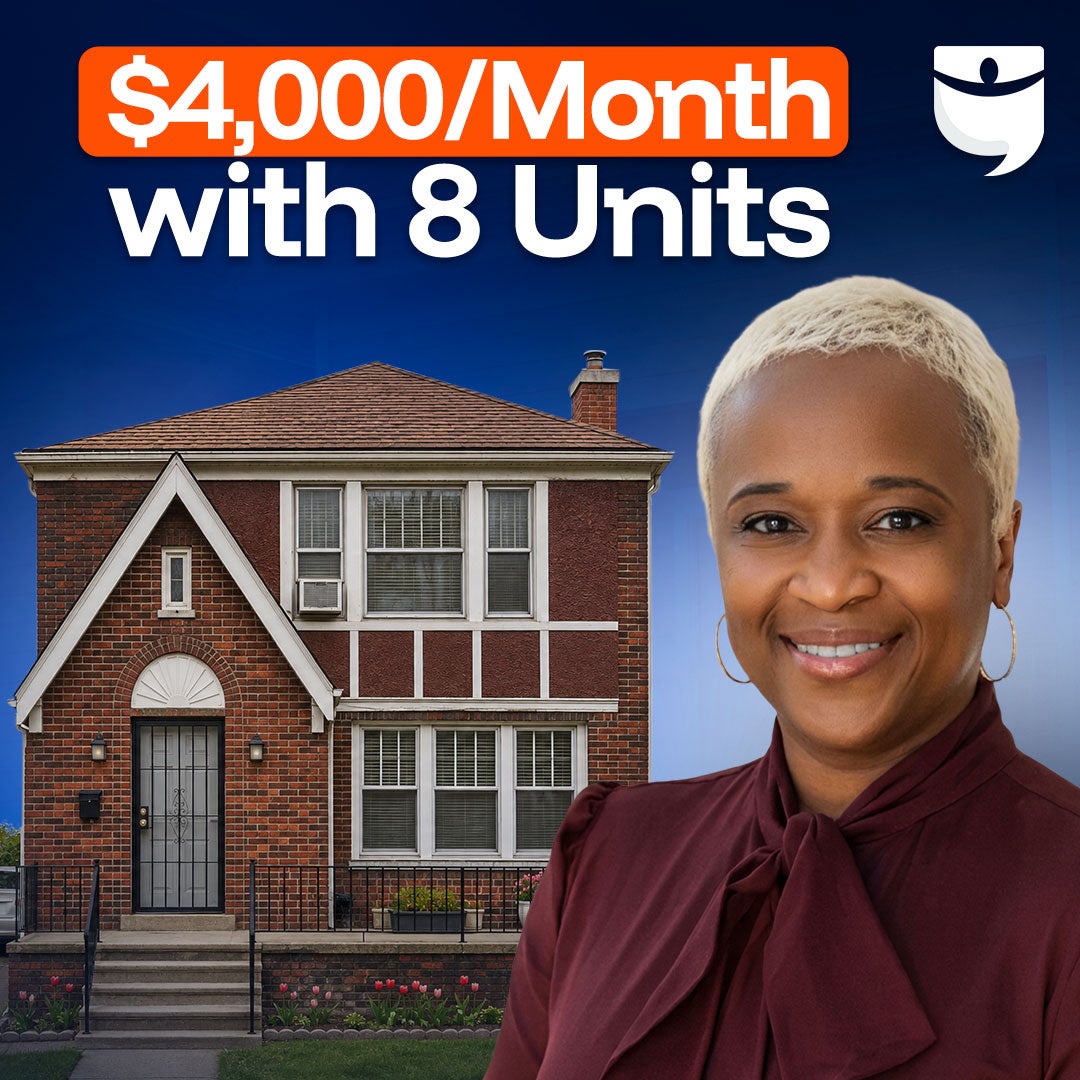
This investor is making $100,000 per year with small, affordable, repeatable rental properties. He started investing years ago but recently bought another home-run rental for just $87,000, which will continue to boost his passive income. His slow, steady “tortoise” approach is one that anyone (especially beginners) can use in 2025 to build wealth and massive passive income through rental property investing. How do you do it? He’s sharing his blueprint.
Nathan Nicholson woke up one day in his 30s to realize that his bank account had only $32,000 in it. While by no means is $32,000 a small sum, as a top producer in the mortgage business, he expected to have much more—something needed to change. After watching clients close (and make it rich) on rentals, he decided to give it a shot.
But instead of going for the biggest house his money could buy, he opted for a small, affordable property where less could go wrong. It was a good move and one worth repeating. Fast forward over a decade later, Nathan has 22 properties, 10 of which are paid off, with six-figure cash flow coming in every year. He scaled smart (and safely) using his “tortoise approach” to investing—an approach you can use, too!
In This Episode We Cover
Why buying small (less than 1,000 square feet!) rentals is a smart move for beginners
Taking the “tortoise approach” to wealth so you safely get to early retirement
Cashing out your 401(k) for rentals? Why Nathan says it’s worth it
One quick calculation (that beats the 1% rule) every investor should use
Why Nathan is buying even more as price cuts hit many major housing markets
And So Much More!
Check out more resources from this show on BiggerPockets.com and https://www.biggerpockets.com/blog/real-estate-1132
Interested in learning more about today’s sponsors or becoming a BiggerPockets partner yourself? Email [email protected].
Learn more about your ad choices. Visit megaphone.fm/adchoices