Ask ChatGPT

 BiggerPockets Real Estate Podcast
16 Nov 2026 · 35m · 15 chapters
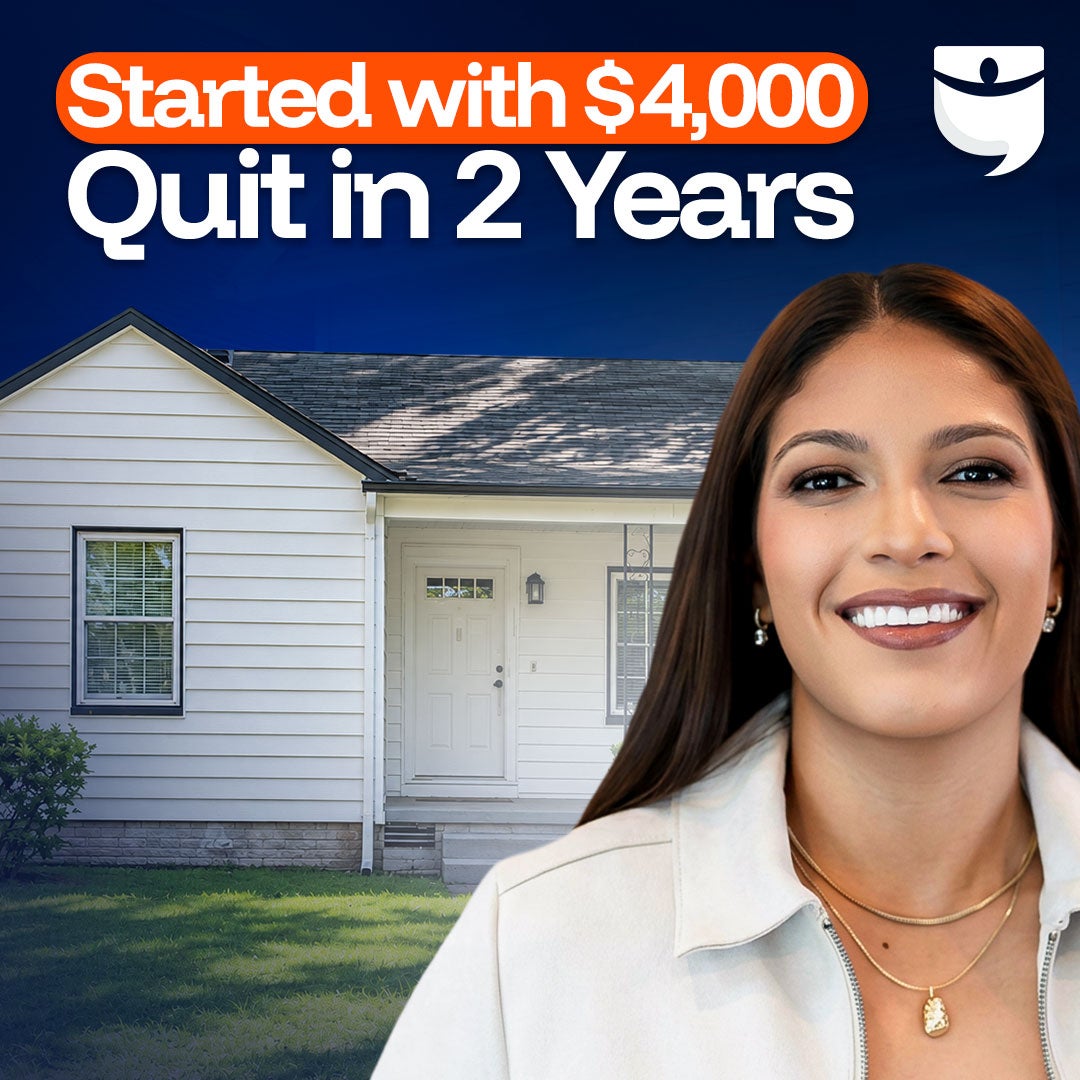
Cindy West’s path from a $4,000 starting bankroll to a North Carolina rental portfolio of about 80 units, quitting her DC attorney job in about 2 years (left with 37 units), using BRRRR-style buy/rehab/refinance, hard money, and private gap loans.
Cindy West grew up in Florida in a rough environment; her mom cleaned houses. She joined the Army at 17, failed the real estate agent exam, went to college and law school, became an attorney in DC, then left after realizing she hated the job.
She needed ~$10k–$12k/month cashflow, estimated 40 units to reach it. She scaled by buying under-$100k homes, negotiating seller closing costs, refinancing to return her $4k, and raising private money (11%–13% second-position loans, interest paid at refinance).
First deal: a $95k two-bed/one-bath in a Charlotte-area submarket; $15k rehab; rent $1,200/month; appraised $165k; pulled out her initial $4k. She later did deals simultaneously after lender increased financing to 100% and raised $10k–$15k from friends/family.
Written by AI. May contain mistakes.
Learn about Cindy West's journey from having $4,000 to 80 rental units in 4 years.
“It takes most investors several years or even decades to replace their income with rentals.”
Cindy shares her upbringing, early career challenges, and motivation to pursue real estate.
“I'm super interested to learn more about your story.”
Cindy discusses her financial goals and the reality of breaking into real estate.
“I've heard of the BRRRR strategy specifically, but obviously DC was super expensive.”
Cindy explains why she chose North Carolina to invest in real estate.
“Can you give us a little more background on how you came to that decision?”
Cindy shares her process for finding an investor-friendly agent to assist her.
“And it worked out exactly how I thought where I bought my first eight houses in North Carolina and then I moved out here and ultimately kind of scaled up my portfolio.”
The importance of mutual respect and accountability between investors and agents.
“We often see this relationship as I need an investor friendly agent and that agent is going to make money because of me.”
Cindy West shares her journey from lawyer to real estate investor, detailing her first property purchase and the challenges she overcame.
“I'm speaking with investor Cindy West, who has told us about her story of becoming a lawyer after not passing the real estate exam.”
Discussion on how Cindy scaled her investments and the financing strategies she employed to acquire more properties.
“I mean, you're all in for$115,$120-ish anyway.”
Cindy explains her approach to raising capital from her network and structuring loans for her investments.
“Before we pivot a little more, I want to talk to you about the concept here of you started to talk to your friends and family about borrowing some of these down payments.”
Cindy discusses her early challenges and strategies in real estate.
“You know, we've talked a lot about how did you pick the market that you weren't living in?”
Learn how Cindy managed renovations while investing out of state.
“So I would say at the very beginning, when you're brand new as an investor, there's very little efficiency in terms of like running a rehab team.”
Cindy shares her current portfolio size and future goals.
“because I'm very curious if you were able to achieve your goal.”
Cindy explains how she replaced her income and went full-time in real estate.
“probably going to feel a bit intimidating.”
Cindy discusses the hurdles faced after quitting her job.
“oftentimes things change after you quit your job.”
Cindy offers valuable advice for aspiring real estate investors.
“I know it sounds cool to say I'm going to buy 40 units, quit my job and live happily ever after, but it doesn't quite work like that.”

Get the gist, explore an idea or ask about something said.
 Claude
On BiggerPockets Real Estate Podcast, what are the key points of this episode?
Searching your listeningAutomatic transcript. May contain errors.
0:00Brandon Turner: It takes most investors several years or even decades to replace their income with rentals. Cindy West did not have that kind of time. She knew she wanted to ditch her 60-hour work weeks as soon as possible, and she needed about 40 rental units to do that. But there was a problem. She only had about$4 ,000 to invest, so she got creative. She started rounding up lenders, friends, relatives, anyone who could help her fund her deals. And it actually worked. Cindy completed one burr after another until she had built a portfolio that allowed her to quit her job and it only took her two years. Cindy was finally free and now she's got a rental property operation that will allow her to scale as big as she wants to go.
0:41Brandon Turner: In this episode, she shares everything you need to replicate her success from raising money to managing renovations remotely and everything in between.
0:54Brandon Turner: What's going on, everybody? I am Henry Washington, real estate investor and co-host of the Bigger Pockets podcast. And today we're bringing you an investor story with Cindy West out of North Carolina. Let's jump in. Cindy West, welcome to the Bigger Pockets podcast. Thank you. Glad to be here. I'm super interested to learn more about your story. So why don't you start at the beginning and tell us kind of about your background before real estate and then what got you into real estate in the first place. Absolutely. So I'm born and raised in Florida, kind of grew up in a rough environment. My mom was a single mom, cleaned houses for a living, and we really didn't have much.
1:32I moved about like 17 times before I was 18 years old. I ended up going to the army at 17 years old because I'm like, I got to get out of this environment that I'm in. Otherwise, I'm really not going to get ahead in life. And at that point, I read Rich Dad Poor Dad was really obviously inspired and motivated like a lot of people to get into real estate. Ultimately, I went the route of trying to become a real estate agent, right? Like a lot of people, you're like real estate, I'll be an agent. And I failed the exam. So I go to college instead. At that point in my life, go to college. Then I go to law school.
2:01I ended up becoming an attorney.
2:05Brandon Turner: Pause on this story. So you took the real estate test and didn't pass it. And then was like, I'll just go to law school and pass the bar like that. Like that's easier. here. It's crazy. I can't really make much sense out of how I just wasn't qualified to become an agent at all. And I was like, you know what? Let me just go to college. Let me just go to college and enforce the laws that agents have to abide by. No big deal. So I mean, I think it worked out pretty well, but then I become a lawyer, work for about a month. I'm living in DC at the time and I still have like the real estate bug in me.
2:40I've realized that I hate my job as a lawyer. It's not as sexy and admirable as they make it seem in law school.
2:46Brandon Turner: It's not like it is on suits. Not at all. Not at all. It was kind of late, late nights, a lot of work weekends. And I was like, geez, I got to figure something out for myself and kind of went back to what I've always listened to in real estate. And I was just like, I got to get out of this job in two years. I got to figure this out. And I was like, I think I can invest in real estate. I've listed bigger pockets. I've heard of the BRRRR strategy specifically, but obviously DC was super expensive. So I looked around and North Carolina was a market that had a really low price entry. And I was like, well, this is great.
3:20Let me just invest in North Carolina. And ultimately just started creating a team out here, had a really great agent that I was able to connect with. And he was the one sourcing my deals and I had a really good hard money lender and slowly just started kind of building out the team and being able to do it out of state was what made all of this journey really possible at that point.
3:39Brandon Turner: So you're a lawyer in DC, an expensive city. You have a goal. You're now like, all right, got to get out of this job. I'm giving myself two years to replace my salary. Are you open to sharing like how much you needed to come up with to do that? Yeah. So my goal was to make at least 10 to$12 ,000 off of cashflow. And that came about to being 40 units. And so I was like, okay, I got to buy 40 units in the next two years. I did the math. I quickly realized even if I bought really cheap properties that were$100 ,000, if I did 20 % down, I was going to need like$800 ,000. And so I was like, okay, I know what I need to get to where I'm trying to go.
4:17But now I've really confronted the reality that I don't have the money. Otherwise I'm going to have to, you know, stay on my door for another 10, 20 years until I get to that point. And so at that point I was like, okay, how can I break into real estate without$800 ,000. And I mean, just Googling and going back to everything I've learned, that's when I started thinking about the BRRRR strategy. But as far as really taking action, I think the biggest thing is really confronting what you need to do. Because I think a lot of times we have this thought in our mind of, I want to quit my job in X amount of years.
4:49But once you start putting that to paper and you realize what you need to do, whether it's money or whether it's time, then you're like, okay, it gets a little bit more serious at that point. You have to make a decision. What do I actually need to do to move the needle to accomplish my goal in that period of time?
5:02Brandon Turner: You picked North Carolina. Can you give us a little more background on how you came to that decision? Did you live there before? Do you know people there? Was it purely based off research? Yeah. So I landed on North Carolina for a couple of reasons. First, very popular state. A lot of people are moving to. So there's that economic growth there. The second thing that appealed to me was I actually liked Charlotte when I was looking into it. it was a place that I could see myself moving to because one thing I was very honest with myself about was if I really want to grow a portfolio to 40 units or if the end goal is 100 units, I truly believe that you should be in that market or relatively close to it.
5:40And so that was a factor for me when I started looking around DC. Okay, there's Ohio, there's your Indiana, you have North Carolina. I was pretty realistic with myself that I don't want to go to Ohio and spend a week in there or eventually move out there and build a team. And North Carolina was a market that hit all of those economic metrics that we all talk about. But it's actually a place I like to be. And it worked out exactly how I thought where I bought my first eight houses in North Carolina and then I moved out here and ultimately kind of scaled up my portfolio. But I always was really intentional about I want to be in a market that I actually would want to live in and not just invest in.
6:17Brandon Turner: Love it. I love the backstory. You realize doing lawyer stuff isn't what you wanted to do. You set a goal, you picked a market, and you started building a team. And you said you met an agent that was really pivotal to your success. Tell me about how you found this agent and how you determined that you were going to work together. What made you pick this agent? Because again, investing out of state, building a team is the hardest part. So what gave you the confidence that this was the person to help you? So what I did was I was like, okay, let me find an agent who actually represents investors.
6:50And I ended up going on Zillow, looking at all the sold properties in the market that I wanted to buy, looked at the last six months, looked at which agent was actually doing more than like three transactions. And quite frankly, it wasn't a lot of people and kind of narrowed it down on him and actually two other agents. So it was 2022 Christmas into January. So the other two realtors were on vacation and he was still working. And at that point, we ended up connecting. I said, Hey, look, starting next year, right? About two weeks later, I want to start buying these deals. And he was all for it.
7:21He was an investor with about a hundred units, really knew the market really well. And was like, you're out of state. I can help you buy. I have resources for you to do the rehab. And then I can also lease these units for you. You, of course, you're going to self-manage them, but I'll find a tenant. And I was like, okay, this guy's basically putting everything together for me. All I have to do is be serious when he brings me a property and actually make an offer and it'll work. And literally the first deal he brought to me was a week later. And I was like, oh man, I don't know if I'm ready yet, but I was like, I got to be ready now.
7:54And we just ended up working and we did really well together that first year.
7:59Brandon Turner: This is so much good information. We often see this relationship as I need an investor friendly agent and that agent is going to make money because of me. And so they work for me. But we often don't talk about like you got to hold up your end of the bargain. And if someone is answering the phone and wanting to help you and they're sending you leads, you're right. A lot of investors, either they get cold feet or they're not quite sure what they want to offer. And it comes off a lot of the times to the agent who is serious and is sending you leads and is trying to help you that this person isn't serious.
8:36Brandon Turner: They're just wasting my time. And then the communication starts to dwindle. And then us as the investors say, oh, these agents are they're no good. Right. And it's not always that. Sometimes it's that you're not holding up your end of the bargain. You asked for help. They sent you help. You have to make offers. And I love that. I love that you had to see it and you had to say, okay, I'm scared, but I'm going to do it anyway. And you analyze the deal and you make an offer. I love that. That is something we need to do a better job of talking about when we talk about building a team. You got to hold up your end of the bargain too.
9:09And even if you don't make an offer on the deal, I would still at least communicate with him, hey, this doesn't work out because of my numbers or my hard money lender said he wouldn't do it. at least communicating, because to your point, they're putting in the time to either call another agent, visit a property, take photos, or driving over, they're taking time away from their family. If you're just ghosting them and not giving them any feedback, they're going to stop sending you leads and they're going to stop visiting properties. And when you're out of state, that's somewhat of like your business partner.
9:38Obviously you don't share equity with them and their financial incentive is going to be their commission, but you need that person on your team to continue to source out deals for you. So you have to have that mutual level of respect.
9:49Brandon Turner: So many gems and we haven't even started talking about that first deal. And that's exactly what I wanna transition into now is to talk about that first deal. How many offers did you have to submit before you got it? But we're gonna dive into all those facts and numbers right after the break. Buying real estate has a funny way of making the future feel very real. You start thinking about mortgages, cashflow, tenants, and suddenly you realize, if something happened to me, Would the people I love be okay? That's why life insurance is one of those things that's easy to put off, but is super important to actually deal with.
10:23Ethos makes getting life insurance fast and easy, 100 % online. You can get a quote in seconds, apply in minutes, and potentially get same day coverage. There's no medical exam. You just answer a few simple health questions online. You can get up to$3 million in coverage, and some policies are as low as$30 a month. Ethos helps provide financial security and helps protect the people who depend on you. Take 10 minutes to get covered today with life insurance through Ethos. Get your free quote at ethos.com slash real estate. That's E-T-H-O-S dot com slash real estate. Application times may vary. Rates may vary.
11:02You know that thing where you discover a feature you wish your software had? And it turns out it already exists just on a different platform. Like, oh, you want rent payments processed in two days. RentReady does it. Oh, you want to block tenants from making partial payments mid-eviction. RentReady does that too. Oh, you want full accounting and tax-ready reports without paying for a second tier. RentReady does it. And oh, you want tenant screening that doesn't overcharge your applicants. RentReady also does this. Basically, if you've ever complained out loud about your property management software, RentReady probably already built the fix.
11:41It's$12 a month. You're welcome. Sign up right now for$50 off your first year of RentReady with promo code BPCASH. BiggerPockets Pro members get it completely free. Sign in through your pro account at rentready.com slash biggerpockets. That's rent, R-E-D-I dot com slash biggerpockets.
12:00Brandon Turner: If you own rental properties, you know the job does not stop at closing. There's tenant screening, rent collection, maintenance calls, and the paperwork that comes up with all of it. If you're managing more than one to two doors, that workload adds up fast. That's where Mind, BiggerPockets' preferred full-service property management partner, comes in. Mind is built specifically for real estate investors with experienced property management teams, local market expertise, and purpose-built technology. They support leasing, rent collection, maintenance coordination, and reporting. Whether you're managing one rental or scaling towards your 10th, Mind is built to grow with you.
12:38Brandon Turner: It frees up your time to focus on finding your next deal instead of fielding maintenance calls. And it's not just about time. If you're a BiggerPockets Pro member, Mind will save you$500 for every home you onboard, up to$10 ,000 in your first year. Check mind.co to save time, money, and frustration. That's M-Y-N-D dot C-O. Trying to get started in real estate investing or wholesaling? The hardest part is finding and talking to motivated sellers before everyone else does. That's why new investors are using PropStream. PropStream gives you access to over 160 million properties nationwide, plus simple AI tools that help you find better deals faster.
13:23Use pre-built lead lists like pre-foreclosures, vacant homes, and cash buyers, then let the PropStream Intelligence Assistant help you analyze properties and estimate opportunities in seconds. And now, with PropStream Connect, you can do more than just find leads. You can actually contact them. You get free skip tracing, including LLC and corporate contacts. You can launch dialer campaigns, use click-to-dial with AI prompts, automate follow-up marketing, and send postcards, all from one platform. No experience needed. You'll also get accurate comps, built-in calculators, and step-by-step training through PropStream Academy so you know exactly what to do next.
14:02Start your free 7-day trial and get 50 free leads at www.propstream.com. That's www.propstream.com.
14:17Brandon Turner: All right, we are back on the BiggerPockets podcast. I'm speaking with investor Cindy West, who has told us about her story of becoming a lawyer after not passing the real estate exam. So she was like, you know what, I'll pass the bar instead. Becomes a lawyer, starts working, realize lawyering isn't for her, makes a goal to replace her income in two years, picks a market in North Carolina, finds an agent to help her. That agent starts sending you leads. And how long did it take you before you got your first deal doing that? So I got my first deal, like I said, probably a week later after connecting with him.
14:52And it was on Zillow. So my first eight houses that I bought in North Carolina, they were all on the market. And it was a time in 2023 where the market was coming out of the low interest rates. Rates had spiked up. Properties were sitting on the market quite a bit. And as a real estate agent, he was just finding me deals on market. And I specifically told him, I said, look, I have to be under$100 ,000 price point because I only had about$4 ,000. So I was going to work with a hard money lender that's going to give me 95 % financing. And so I figured that if we can negotiate a seller to give me some closing costs, I could actually buy a house with what I had.
15:30And he focused on a specific sub market outside of Charlotte where there was tons of houses around 70 ,000 to about$90 ,000. And he sent me one. He was like, hey, I like the area a lot. I'm going to go see it. It was a two bed, one bath. Like I said, he sent it to me and he had already seen it, sent me photos. And I was like, okay, I mean, this kind of fits what I'm looking for. The seller was asking for$95 ,000. He ran the ARV. He ran comps for me. He was like, I think it's going to be worth at least$160 ,000 once it's renovated, Cindy. And I said, I'm good to go, but can you ask them to give me my closing costs?
16:05Because I need to pay my lender fees. Otherwise I'm not going to have the cash to close. And because the property had been sitting on the market for at that point, about three months, it was a slow market, not only for the interest rates, but in North Carolina around November, probably in most cold places, November to March, market slows down quite a bit. So we were willing to negotiate because the deal was on the market for that long and get them to actually give me the closing costs. So that was my very first house.
16:29Brandon Turner: Boom. All right. So you paid 90 ,000. You negotiated that the seller pay your closing costs. you used a hard money lender and they asked for 5 % down. So you had enough cash to go ahead and close the deal. So once you bought that deal, was this a house that you had to put a ton of work into? What did you end up doing? No, it was a pretty light rehab. So it was a$15 ,000 rehab that I had to do. It took about four weeks. I had my realtor connect me with the contractor. and from there we would have rehabbed the property within like four weeks it was done. Then I was moving along to get a tenant in place.
17:11Brandon Turner: Okay. And how long did it take you to find a tenant and what kind of rent did you get? It took me honestly about a week. So what I did and to your point earlier, when you actually like where you invest in, it's a little bit easy for you to actually feel more involved. And so I had told you my agent was willing to lease it out for me. What I decided to do instead was I was like, well, if I just go down there for a weekend, I can do somewhat of an open house where I'll just stand out there from 9 to about 2 p.m. on a Saturday, and I'll just tell people to come from Facebook. So I put an ad on Facebook Marketplace, and people ended up coming to the property.
17:47I was handing out, printed out applications. Mine was my first time being a landlord.
17:52Brandon Turner: I thought maybe this is a little bit sophisticated. This is a great idea. And had someone who just really loved the place, and to this day, they still live there. That's awesome. And what kind of rent were they paying or are they paying? So at the time, they were paying$1 ,200 a month. So really cash flow-wise, it was like$300 a month. So it wasn't a home run deal by any means, but it was definitely a proof of concept to me in that moment of, okay, I bought it. I rehabbed it. It's now rented. Now the next step, I just got to refinance it, and then I can actually repeat this process again. I mean, you're all in for$115,$120-ish anyway.
18:29Brandon Turner: and now you've got rent at$1 ,200, you're absolutely right. That's great proof of concept. That's a solid base hit deal, especially starting from scratch out of state. That's wonderful. Yeah, the numbers definitely worked because it was a lower price entry. And I think that's one of the biggest things where sometimes people want to do their first deal and they're going for a more expensive house. But what I found early on, and I still believe to this day, is those smaller houses, like those two bedrooms, one bath, like 800 square feet, 80,$90 ,000. The numbers work on the burr side. Okay. So continuing along this path, you were under the impression that this property should appraise for about 160 ,000 once the renovation was done.
19:10Brandon Turner: The next question is, were you able to burr out of this thing? Yeah, I was able to. It appraised at 165. Boom. Yeah. So it worked out pretty well. And that's when I was like, okay, the realtor's onto something. He's actually right with his numbers. Yeah. And this actually works. So how much cash did you pull out of that one? So I just pulled out what I had put into it. So I ended up pulling out after everything was said and done, basically what I had invested, which was the four grand. I got that back out. Oh, that's wonderful. That's 100 % burr. That's awesome. So now you've got your money back.
19:44Brandon Turner: And you already gave us a little spoiler because you said you bought eight of them on the market like this. So talk to us a little bit kind of about the timing. Like were you just burying all the way out and then buying another one? Or did you find a way to kind of do some simultaneously? I started doing them simultaneously because at the beginning I was working with a lender who was doing 95 % financing. And once I showed that lender that I could go through the whole process and I actually paid them back, they started doing 100 % financing. So that completely changed the game for me. and I started doing multiple houses at the same time.
20:17And at that point also, because I had proof of concept, I started raising private capital from friends and family around me. So I'd be like, hey, can I borrow like 10,$15 ,000 for my closing costs and holding costs? And because I had that proof of concept, like I had done at least one house successfully, people were not willing to also let me borrow money.
20:36Brandon Turner: This is so good. If you are working with small community banks, private money companies, hard money lending companies. Those three in particular can be flexible on interest rates and terms and loan structure because these are people who are going to typically hold those loans in their portfolio. They're not selling them to someone. So they don't have to fit in this perfect box in order to sell these loans. And what that means is you can start to negotiate some things. So a lot of the times investors get these quotes from lenders with their terms and investors, especially when they're brand new, just take it as gospel.
21:14Brandon Turner: And it's not gospel. Now, they may want to hold you to it because you don't have a proven track record yet. But I urge everybody, when you're talking to these lenders, especially for the lenders that you're talking to that you're like, hey, I like this lender. I think I want to work with this lender. Have that conversation on the front side. Say, can we adjust to where maybe you lend a little more of the percentage if I close a certain amount of deals with you and prove that it works? This is relationship banking, but we got to open our mouths because a lot of the times these banks ain't just going to volunteer to give you a lower interest rate or volunteer to have you put less skin in the game.
21:48Brandon Turner: But if you start to prove yourself, they absolutely want to do business with good investors who bring them good deals. And I'd be willing to bet once they saw like, okay, she's buying for under 100 ,000. It was worth 160 ,000. If she doesn't do well, at least we can control an asset that has a ton of equity in it. So they have more faith and comfortability in you. So having these conversations is huge. I'm curious, did you ask them to do that? Or did they say, hey, we can help you out a little more here? Because I've had it happen both ways. Yeah. So they told me, because at the time I did ask initials, like, can I get like 100 % financing on my first deal?
22:21And they were like, no, we won't do that. But if you do one deal with us and you come back, we'll go ahead and we'll start doing more deals together. And sure enough, that was the case. And kind of to your point, through different scenarios, I started seeing how it really was based off the relationship. Like for example, if I wanted to do a really heavy rehab deal, they would tell me like, Hey Cindy, we wouldn't fund this deal because you don't live in North Carolina. If you lived in North Carolina, because they're a lender specifically in North Carolina, I was buying deals here. They were like, if you lived here, we would be willing to fund those types of deals.
22:54So I started picking up, okay, they're going to give me a hundred percent financing. If I want to do certain types of deals that require more capital, they will give me the money, but now they also want me to live. in that state in order to do that.
23:06Brandon Turner: That's how you were like, okay, I might need to go ahead and go out there. And so luckily you picked a state where you actually might want to be. That's cool. Exactly. Okay. Before we pivot a little more, I want to talk to you about the concept here of you started to talk to your friends and family about borrowing some of these down payments. I'm curious how you approached people in your network with these conversations and how you pitched to them, because I know there's a lot of people who want to do what you did. Yeah, I think just keeping it somewhat informal probably helped a ton. So I would simply send a text message and say, hey, I have this real estate opportunity.
23:44Most people want to invest in real estate. And so I think it aligns with what they're interested in. One thing that I didn't really do when I was starting out was I never asked for a lot of money. So I would ask for$10 ,000,$15 ,000. So what I found was people were receptive to a$15 ,000 investment or a$20 ,000 investment or$9 ,000 was what I needed. And that allowed me to at least get that capital and kind of keep going. And kind of one trick that I do now when I text people, hey, are you willing to invest in a deal? Instead of asking them, are they willing to invest in a deal? Now I'll just present the opportunity and say, do you know anybody interested in an opportunity like this?
24:22So it kind of takes the pressure off of them to say, yes, I'm interested or no, I'm not. And instead it makes them say, okay, no, I don't know anybody or actually me, I'm interested in investing in this opportunity.
24:33Brandon Turner: That's a great way to frame that question. I love that tip. How were you structuring these gap loans? Were you paying them interest? How much interest? Were you paying them monthly? Were you paying them a flat fee? So the way that I do it is I always put them in second position. I always give them a deed of trust. So they always have a lien on the property. And what I promise them is typically anywhere from 11 % to 13 % interest. and I pay it to them at the refinance. So they're typically six-month loans and they'll receive the funds either at that six-month mark or before if I end up refinancing.
25:08But I don't do monthly payments because I already have a hard money loan. I already have a 12 % interest payment. I don't want to add to that when I'm already cash-strapped. So I just defer those payments to the end.
25:19Brandon Turner: Good stuff, man. This is exactly what I did. And it still works. People, everybody who's listening, I swear I bet you almost everyone want more money to do deals you've got money in your phone and Cindy just gave you a great blueprint for you to go and get some yeah now that the flat fee is uh is a game changer I wasn't doing that but that that sounds really cool to do the one thing I was doing was I would give them the annual return for six months when you actually do the math on ten thousand dollars you know ten percent interest it's only a thousand bucks people don't really get motivated by that.
25:52Brandon Turner: Cindy, this is an amazing story. You took meaningful action when you got started. And I love the way you've kind of thought through how you were going to take that action. I know that's going to be super helpful to a lot of people listening. I want to talk a little more about how you were getting all these renovations done and what that was like from afar, because I know that's a fear of a lot of investors. And then I'd also like to just talk to you about where your portfolio stands today. Did you pivot if you did anything different? But we're going to dive into those things right after this break.
26:20For my wife's birthday, I wanted to make her a new website for her landscape design business. So I researched a lot of different options. I tried out a couple, but honestly, it was really overwhelming. It was pretty time consuming and still the site wasn't coming out the way I wanted it to. Then I tried Hostinger and everything was super simple. I asked Hostinger's AI to build a clean site for her business and it had a working version up in minutes. No coding or designer needed. Plus, its AI agent helps with SEO, website copy, and email marketing after launch. You get domain, website, email, all in one account.
26:59And right now, you can get Black Friday and Cyber Monday pricing through December 14th. So snag Hostinger's services at their lowest prices before the sale ends. Create your website today for just$1.99. Go to hostinger.com slash real estate and use code real estate for an additional 10 % off Black Friday and Cyber Monday pricing. Investing in real estate has always been smart, but it hasn't always been simple. Now it's both thanks to the Fundrise Flagship Fund. The Fundrise Flagship Fund launched more than five years ago with a mission of delivering low-fee access to blue-chip private market real estate.
27:38Today, the Fundrise Flagship Fund has grown to manage more than a billion dollars of real estate on behalf of hundreds of thousands of investors, making it one of the largest funds of its kind. For those who believe real estate has an important role to play in their portfolio strategy, the Fundrise Flagship Fund has positioned itself as both a simple and a smart option. Whether you're starting with$10 or$10 ,000, the Fundrise Flagship Fund makes adding real estate's unique potential for both passive income and consistent growth? Just visit fundrise.com slash pockets to make your first investment today.
28:15Carefully consider the investment objectives, risks, charges, and expenses of the Fundrise flagship fund before investing. This and other information can be found in the fund's prospectus at fundrise.com slash flagship. This is a paid advertisement.
28:29Brandon Turner: There is a trip on my list I cannot stop thinking about. Osaka, Japan in early spring. The city is supposedly so obsessed with food that locals have a word for eating until you drop. I want to wander the cherry blossoms around Osaka Castle until my feet give out, which at my age is about 20 minutes. Then stroll the neon-lit canal in Dotonbori as the sun goes down, and end the night with Okanamiaki sizzling on the griddle at a tiny counter. Here's the part I keep running the numbers on. While I'm over there, my place back home would just sit empty. Instead, I could list my space on Airbnb and put a little extra cash toward the trip.
29:07Brandon Turner: With With the co-host network, I could hire a vetted local with hosting experience to create my listing, manage my reservations, message guests, handle on-site support, and even help me with the design and styling. I get takoyaki straight off the grill, my home stays cared for, and I bring in some extra income to put towards my next bucket list vacation. Find a co-host on airbnb.com slash host. This episode is brought to you by Indeed. You're ready to level up your business, but the pressure to find the right person to make that happen is intense. Indeed Sponsored Jobs can help carry the load.
29:43It boosts your job post to help it reach quality talent fast. Cut through the chaos with Indeed Sponsored Jobs. Get a$75 sponsored job credit at indeed.com slash podcast. Terms and conditions apply. Hiring now? Then this is a job for Indeed Sponsored Jobs.
30:03Brandon Turner: Good news for anyone who's bad at waiting. Black Friday deals at Lowe's are already on. Get up to three free select DeWalt, Craftsman, or Cobalt power tools with the purchase of a select battery kit. Three for free? You better believe it. Plus, select ladders are up to 50 % off. So go ahead, get in there early. Shop Black Friday deals in-store or online now at Lowe's. Valid through 1118. While supplies last. Free tools vary based on battery kit purchase and location.
30:35Brandon Turner: All right, we are back on the BiggerPockets podcast. I am speaking with investor Cindy West, who has grown a portfolio out in North Carolina. Started when you were in D.C. You're now located in the market that you started investing in. You know, we've talked a lot about how did you pick the market that you weren't living in? How did you start to build a team? Because these are the things that people either struggle with or are scared of. Another fear investors have about investing out of state is managing renovations. Managing renovations is not easy when you can walk up to your property every day and watch the process.
31:12Brandon Turner: So I know that's super intimidating to people. Plus, let's just call a spade a spade. You're a woman and contractors are typically a male-dominated industry, and that can be intimidating as well. So how did you slash do you manage these renovations and to ensure that things are getting done, not just to budget, but on time as well? Yeah. So I would say at the very beginning, when you're brand new as an investor, there's very little efficiency in terms of like running a rehab team. Right. Because we all hear the most efficient and cost effective thing for you to do, obviously, is to hire every single thing.
31:47Hire the painter, hire the floor guy, hire the landscaper. And that way you'll save a lot more money. But the reality is when you're starting out, in my experience, I was out of state. I was a woman. I didn't know anything about rehabs whatsoever. I was just listening to my agent who was like, yeah, it's a cosmetic rehab. And I'm like, okay, what does that mean? Exactly. So I had a really good contractor and I stuck with him. He did every single aspect of my rehab, a.k.a. he subbed everything out and would charge me more than what I should have paid. Nonetheless, the numbers did work. and I had some base hits my first year.
32:24But what I really focused on was, let me just learn. And I knew that once I started to scale, I could get more efficient. And ultimately what happened was when I moved to North Carolina, I was now on the ground. And now when I do my rehabs, I sub every single aspect of my rehab out. I order my own materials. There was a point where I was going to Home Depot, taking materials to the side and actually doing that part. but at the very beginning it was somewhat very hands-off because I didn't know how to order materials I didn't know what we would need what kind of floor and what millimeter for you know the floors and which vanities and things of that sort so I had to rely on somebody else to get the job done but once I was in the market and I had now you know experience of doing six seven houses I was like okay great now I think I can take this to the next level and take that aspect of rehabbing and actually make it way more cost effective.
33:19So my numbers can be way better than $300 a month. All right.
33:23Brandon Turner: I've got a couple of finishing questions here as we wrap up, because I'm very curious if you were able to achieve your goal. But first, what does your portfolio look like today? And what are you focusing on for the future? Yeah. So today I have a portfolio of about 80 units in my market. Yeah. Everything is like within a 15 mile radius for the most part. I live here now. I have a construction team in-house. I have property management in-house. So I want to continue to grow and now focus on being a lot more efficient and being vertically integrated. So the goal is to keep growing the portfolio where I'm at in the market.
34:00I love what I do and I really want to take it to another level now.
34:05Brandon Turner: That's super cool. So you said take it to another level. What's that mean? I would like to own 500 units. Whoa, that is a big change from 40. Yeah, yeah, absolutely is. I always had like big long-term goals. I think the initial was like 40 to kind of get me at my job. And I knew that once I was out of my job, I could maybe think a little bit bigger because probably the thought of owning 500 units while I was a lawyer working 60 hours a week was probably going to feel a bit intimidating. So I was like, okay, I can get to 40. And then once I quit my job, I can probably settle in a lot more into real estate and really think of what do I want to do now?
34:38Is it 100 units? Is it actually just kind of want a few units and maybe go live off the Amalfi Coast or something? And I was like, no, I kind of like the chaos that comes from this industry.
34:48Brandon Turner: Yeah, it is chaos, folks. That's what we say. It's all hard, but you get to pick the hard. I'm sure being a lawyer was chaos too. You just like this chaos better, right? And so choose your heart. Now, you've already kind of foreshadowed into the answer to the next question, which was, were you able to replace your income and go full-time into real estate? And how long did it actually take you? Yeah. So it took me exactly two years and a month. I left with 37 units. So I didn't hit 40 units, but I hit my financial metrics. And one thing that I do want to mention it, can we talk about, say, you just have to focus on doing your first deal.
35:27And then from there, you can pivot and figure out what's going to get you to your goal much faster. So after my first year I had done eight houses. I had approximately 12 months left to quit my job. And I was like, I don't think I can buy 32 more houses. It's not going to happen. And at that point, I pivoted into multifamily and decided to buy a 10 unit. I bought an 11 unit and just used the same strategy, but went a different route as far as asset class. And that allowed me not necessarily to hit the unit count, but it allowed me to hit the financial metric, which was always the goal, and to get me out of my job.
35:59Brandon Turner: That's so cool. So a little over two years, you were able to hit the goal of quitting your job. Before we get out of here, oftentimes things change after you quit your job. It can sometimes be a little more challenging to continue to grow and scale because you leave the steady income of the day job, you're living off the income of the business. Did you have any hiccups in the road when you did that? And if so, how did you kind of overcome those to continue to grow? Yeah, so I started doing a mix of flipping at the time just to get in a lot more of those hits of cash that sometimes you need to really scale a rental portfolio.
36:37The truth is, is what I learned with time was the more units I bought, the more monthly payments I had to hard money lenders.
36:45Brandon Turner: And that became more expensive than the cash flow is actually generating. And so that's when I was like, okay, let me run two real estate investing strategies at once so I can continue to funnel the rentals like I wanted to. And that's when I started flipping houses. Did about like 10 or 12 houses at the time to kind of allow me to keep sustaining and then stabilizing the rental side. And I don't flip anymore, but that was my strategy at the time as I was really transitioning as a newbie real estate investor full time in order to not rely on that cash flow. because it's hard to rely on that cash flow and at the same time scale and take on hard money loans and interest payments, it becomes very tough, essentially.
37:26Brandon Turner: Love this. This is the real conversation behind real estate investing. Investing in real estate takes money. Yes, you can buy a deal with very little of your own capital. We talked about how to do that. We talked about how you did that, but that doesn't mean you don't need money. You need money to make those payments every month. You need money if things break. And when you leave the day job, the income, the consistent income that's coming in, you still have to replace that. And I know you thought you were gonna replace it with cashflow, and I'd say you because I'm talking to every other investor out there.
37:57Brandon Turner: You think you replace that with cashflow, but you will quickly realize that you need to supplement that with something else as well, especially if you wanna continue to grow. So people listening, you can absolutely leave your day job with real estate investing, but a lot of real estate investors are going to have to pick up some other form of active income even after they leave their day job. Unless you're just buying properties 100 % all cash that are just going to cash flow a ton from day one, you're typically going to need to supplement if you leave your day job. So think about that. I know it sounds cool to say I'm going to buy 40 units, quit my job and live happily ever after, but it doesn't quite work like that.
38:40Brandon Turner: You still need active income. And if you're like Cindy or myself, we kind of like some of this chaos anyway. So we don't want to go sit on a beach and invest from afar. We kind of want to get our hands dirty and be in the day-to-day chaos. It's part of the fun. All right, Cindy, thank you so much for sharing the story and being so transparent about how you got there. It is an inspiring story. What advice would you have for that investor who's listening and he or she's got a little bit of money saved up. They live in that expensive market and they're considering jumping in, but they're unsure right now.
39:11Brandon Turner: What bits of knowledge can you give them? Yeah, I would say don't wait for the perfect time and don't wait for the perfect deal because neither of those are going to happen. People are looking at the market right now and they don't feel like it's great. It's not, that's the truth, but it's a really good time to invest if you have the right underwriting and you have the right strategy. And as far as the right market, just go with one that you feel comfortable with. You have to just take action. The faster you take action, the faster you'll be able to fail and the faster you'll be able to then get up and then continue to actually scale.
39:47But you just gotta make it from zero to one before getting from zero to 100.
39:51Brandon Turner: All right, thank you so much, Cindy, for coming on the BiggerPockets Podcast and sharing your story. I'm excited to see how you continue to grow and scale. I'd love to talk to you more in the future, maybe bring you back on for an update. And thank you everyone for listening to this episode of the BiggerPockets podcast. And as always, we'll see you on the next episode.
It takes most real estate investors several years or even decades to replace their income with rental properties. Cindy West didn’t have that kind of time. She knew what she wanted—to ditch the 60-hour workweeks as soon as possible—and she needed about 40 rental units to get there.
But there was one problem: she only had $4,000 to invest. So, she got creative. She started rounding up hard money lenders, friends, relatives—anyone who could help fund her deals.
And it worked. Cindy completed one BRRRR after another—eventually moving from single-family into multifamily—until she had built a real estate portfolio that allowed her to quit her job. And it only took her two years.
Cindy was finally free. And now, she has an operation that will allow her to scale as far as she wants to go. In this episode, she shares everything you need to replicate her success—from raising money to managing renovations remotely and everything in between.
In This Episode We Cover
How Cindy used rentals to fully replace her income in just two years
How to grow your real estate portfolio (faster) using other people’s money
Cindy’s journey from zero to 80 rental units (and counting)
Completing her first BRRRR deal with just $4,000 out of pocket
How to narrow down the right real estate market for you
The two biggest mistakes almost every new investor falls for
And So Much More!
Check out more resources from this show on BiggerPockets.com and https://www.biggerpockets.com/blog/real-estate-1357.
Interested in learning more about today’s sponsors or becoming a BiggerPockets partner yourself? Email [email protected].
Learn more about your ad choices. Visit megaphone.fm/adchoices