 BiggerPockets Real Estate Podcast
9 Nov 2026 · 35m

 Add vo to ChatGPT or Claude to ask about everything you hear
vo listened to this episode to put together the overview and transcript, so there may be the odd mistake.
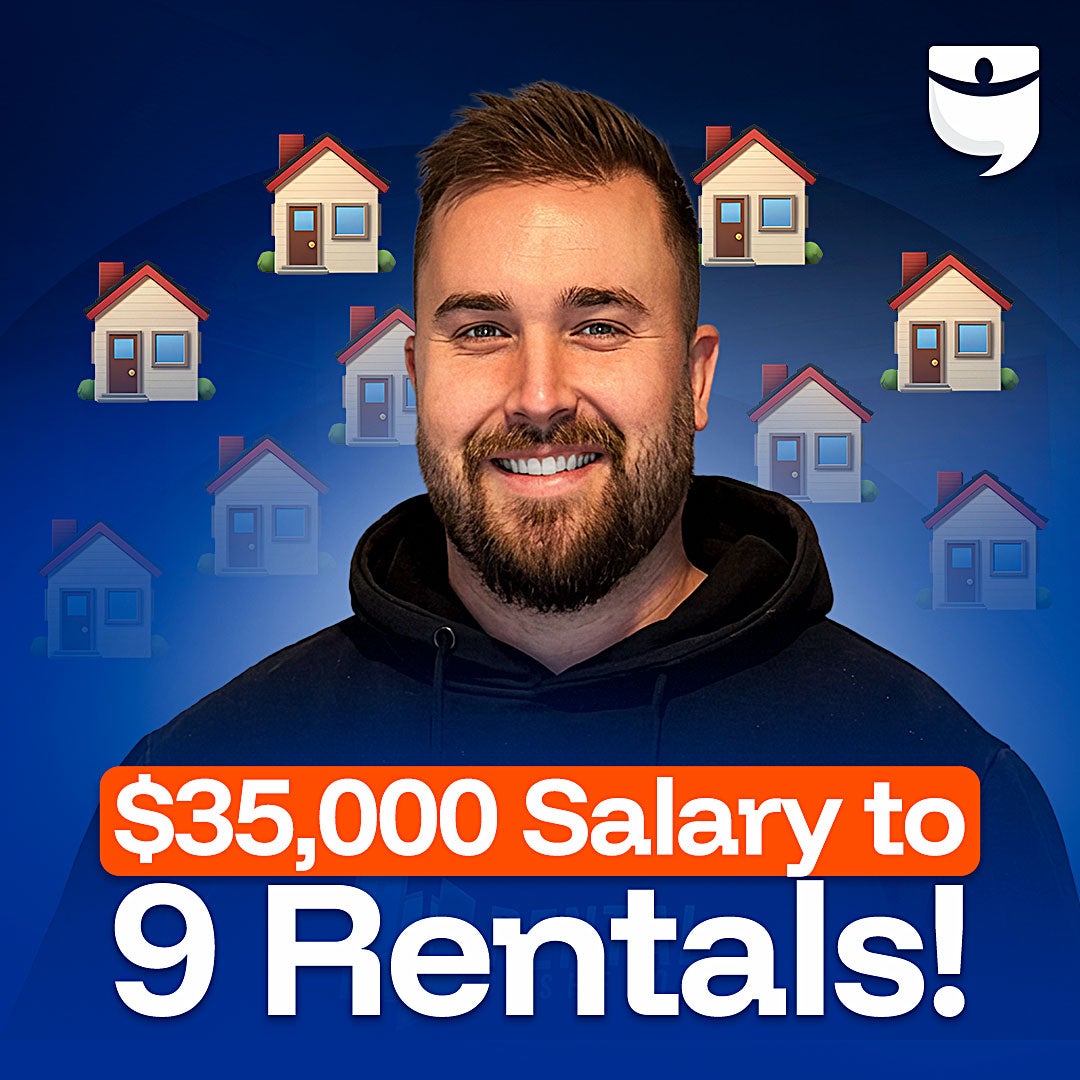
Matt Krueger’s path from low income to replacing his $65,000 salary using house hacking, then scaling into short-term rentals and quitting his W-2 job.
Matt is a Des Moines, Iowa real estate investor and dad of four. Before real estate he worked cellular retail sales at a Sprint store (about $35k/year in 2014). His in-laws inspired him after they built real estate wealth.
He started with about $2,500 down on a $90,000 “grandma house” in 2015, renovated himself, and rented it for $1,200/month vs ~$620 PITI. He repeated the live-in rental strategy four times in four years, then used cash flow and a HELOC to scale. By 2021–2022, short-term rentals produced enough cash flow to quit his job (he quit after buying his second STR). He says non-vacation “accommodation” markets with amenities stayed strong even through COVID.
Bought for $92k, renovated ~$5k, sold for $135k (~$30k profit). First Airbnb: $160k purchase, ~$25k renovations/furnishings, ~$57k bookings in year one. Second STR purchase led to job quitting. Portfolio now: 12 properties (3 STR, 5 SFR long-term, 1 fourplex long-term).
0:00Brandon Turner: Before real estate, Matt Krueger was making just$35 ,000 a year. He and his wife were barely getting by, and with a baby on the way, Matt needed to figure out how to get his income up fast. So he turned to the one thing his in-laws had been preaching for years, real estate. But there was one small problem. He had no money. So Matt pinched his pennies, scraped together the smallest down payment possible, and bought a cheap grandma house. He moved in, fixed it up, and rented it out a year later. Then he did it again, and again, and again. Matt was crushing it with this strategy, adding hundreds in cash flow with each rental property, but his family wanted to settle down.
0:43Brandon Turner: So he stopped moving and started putting all of his profits and equity to work. Just a few years later, Matt completely replaced his salary and quit his W-2 job. And today he's sharing the full playbook that made it all possible.
1:02Brandon Turner: What's going on, everybody? I am Henry Washington, podcast co-host and real estate investor out of Northwest Arkansas. And in today's episode, we have an investor story with Matt Kruger from Des Moines, Iowa. Let's jump in. Mr. Matt Kruger, welcome to the BiggerPockets podcast. Thank you. Great to be here. Excited to dive into your story a little more, but why don't you start off, just go a little before the beginning of real estate. What were you doing prior to real estate and how'd you get into this crazy game in the first place? Yeah. I grew up a conservative Christian family with a dad that worked in IT.
1:39We were taught young to be smart with our finances. I actually did. I was homeschooled and I did like financial piece with Dave Ramsey for a math class, all that stuff. So I ended up going to school to be a youth pastor, graduated with plans to do that, but then landed a job working in cellular retail sales instead at a Sprint store, bottom end sales rep, just to pay bills while I looked for something different. So I got married in 2014. When I met my wife, her parents were already both retired. My father-in-law had worked as a meat cutter at a grocery store. They had tried some other investment opportunities like ostriches.
2:21They had a couple hundred ostriches at one point in time, tried to do that, failed at that, got into debt, got into real estate. And they're in their 50s at the time, spending a month each year down in Tucson and just working on the property. So that's what really inspired me to want to do that too. So when we met, I was still working in a sales position, wasn't a manager quite yet. So I was making like 35 grand a year at that time back in 2014. And my wife and I got pregnant, expecting a kid right off the bat. And we both had the desire for her to be a stay at home mom. So that's when it kind of hit us.
2:55It's like, okay, we got to do something. I like the idea of real estate. You know, my in-laws were able to do no doc loans, all sorts of, you know, stuff to get into it where it was harder than for us to do it. And we didn't have any money either. And it's like, okay, how can we get into real estate? How can we buy a house? And how can we, you know, start investing and driving to work, listening to BiggerPockets podcast, hear about this idea of house hacking. But instead of, you know, buying like the traditional duplex or fourplex, living in one unit and renting out the others, it was this idea of purchasing a single family home and moving into that house with a smaller down payment, you know, instead of 20 % down, you could do 3 % down or something else.
3:34And then fixing up that house as you live in it and then move out and rent it out. So that was really how we first got started in real estate.
3:41Brandon Turner: Why real estate? Because I imagine you had exposure to a lot of different ways to get into business and make money. What about real estate pulled you in? You know, I think the main thing for me was seeing firsthand what it did for my in-laws, where they had 20 something properties and he was able to leave his job. I liked my job, but my focus was more on my family, how to spend more time with my kids. I've got four kids and wanted more time with them. So especially when we had a kid on the way, I'm like, okay, I need to figure out a way to just build supplemental income at that time. It wasn't even about financial freedom or leaving a job.
4:20It was about how can I make more than 35 grand a year? and this seemed like a good way to do that with little money up front. You know, we utilized a first-time homebuyer grant. I called 10 banks to get a$1 ,000 grant through the Iowa Wild Hockey Team. I actually went to their game and held up a check of a teleprompter to get that. Then he crashed. The mascot was at our closing. So that's how this worked out. That was cool. And, you know, the house was$90 ,000. This was, you know, just a beat-up grandma's home is what it was. And the guy had it listed for 90. I offered him 92 with him paying two grand of closing costs.
4:59So we only brought$2 ,500 to closing. And, you know, for me, it's like, okay, well, I could try to invest in stocks, which I know nothing about. I've got, you know, somewhat of a mentor here who's showing me what a good deal looks like and how to build sweat equity. So let's go that route. 2 ,500 bucks. I can figure out how to scrap that together and get started. So what year was this when you purchased it and in what market? It was 2015 and we bought it in Iowa.
5:23Brandon Turner: 2015 in Iowa. First house hack. You paid$92 ,000 for it. How much money did it cost you to fix it up? And were you doing the work yourself, like with your family? And if so, how was that being married in a renovation scene? Yeah. So it was difficult. So this house that we bought was the definition of, you know, grandma's home, orange shade carpet in the bedrooms, wood paneled walls throughout the whole house. It even had a carpet throughout the whole kitchen, but it was livable. It qualified for a conventional loan and it was still livable. It was just very outdated. So when we moved into this house, you know, it was, it was kind of one of those things where it's like, okay, let's, let's fix things up as we can afford to do it.
6:07But then also find the cheapest ways to do it as well. So like, you know, the wood paneled walls, we just painted them for the carpet. We We ended up getting a Kangabak carpet from Menards Midwest Hardware Store.
6:18Brandon Turner: I love Menards. Yeah, right, right. We installed it ourselves. We ripped out the whole old carpet ourselves. We didn't hire anything to be done at that house. So, you know, I utilized the help of my in-laws. My dad does like some hobby woodworking on stuff. And then honestly, just a lot of YouTubing and learning how to do this. I mean, I laid down LVP wasn't a thing. So laminate flooring to the kitchen. but like we bought our supplies from like the habitat for humanity restore. Oh, that's a great question. Cheap, cheap. I think in the course of the one year, we spent about$5 ,000 on renovating this thing ourselves.
6:52So we lived in there for one year to avoid mortgage fraud. Yeah. And then good call. And then moved, moved a few blocks away and bought another fixer upper and then rented that house out. So we rented that house out for about a year and a half before we sold it. What were you getting in rent out of it once you moved out? Yeah. So my escrowed mortgage payment, so PITI, was about$620 a month. And I rented it out for$1 ,200 a month right off the get-go.
7:19Brandon Turner: Booyah. Yeah. For me, I'm like, man, this is life-changing money. Almost$600 a month in cash flow. This is fantastic. That's super cool. So House Hack, kind of a live-in flip style, but you did a live-in rent, and then you ended up selling it a couple of years later. What were you able to sell it for? We sold that house for$135 ,000. We made about almost$30 ,000 after everything was said and done. Almost my whole salary. Now, you said your next deal was just a couple of blocks away. Were you trying to repeat that process, move in, fix it up, rent it out? Yeah. So we repeated the process four times in four years, buying these fixer uppers each time.
7:56Things that just needed new carpet, paint, countertops, tile. we were able to be cheap that way and put three to 5 % down on each house. So come up with low down payments and found some ways to do like even gift to equity on one of them from the seller.
8:11Brandon Turner: I have a couple more questions about this process because it's an inconvenient one. Let's call it that. So I kind of want to dive a little deeper into what this strategy did for you. But we'll talk about those things right after the break. Before we go to break, if you're someone who's bought a couple of deals and you're looking to scale up your portfolio into something bigger, I have a really exciting announcement for you. BiggerPockets is hosting its first ever conference focused just on scaling up. It's this December. It's coming up soon. This December 5th through 7th in Phoenix, Arizona. We're going to have a full day of programming with speakers like myself, James Daynard, Kathy Fecky, and Devon Canard talking about how to scale up and build a sustainable business.
8:55Tickets are on sale now, but there are only 100 tickets. So go to biggerpockets.com slash conferences now and get your ticket today. Do you ever notice how every passive investment somehow turns into a very active lifestyle, active spreadsheets, active phone calls, active stress? Here's a better question. What if you could buy brand new construction homes, 10 % below market value in the best markets across the country without making real estate your second job. That's exactly what Rent to Retirement does. They're a full-service, turnkey investment company handling everything for you. In some cases, investors get 50 % to 75 % of their down payment back at closing, plus interest rates as low as 3.75%.
9:36They've partnered with BiggerPockets for over a decade, helping thousands invest smarter. If you want to do the same, visit biggerpockets.com slash retirement to learn more.
9:46Brandon Turner: If you own rental properties, you know the job does not stop at closing. There's tenant screening, rent collection, maintenance calls, and the paperwork that comes up with all of it. If you're managing more than one to two doors, that workload adds up fast. That's where Mind, BiggerPockets' preferred full-service property management partner, comes in. Mind is built specifically for real estate investors with experienced property management teams, local market expertise, and purpose-built technology. They support leasing, rent collection, maintenance coordination, and reporting. Whether you're managing one rental or scaling towards your 10th, Mind is built to grow with you.
10:23Brandon Turner: It frees up your time to focus on finding your next deal instead of fielding maintenance calls. And it's not just about time. If you're a BiggerPockets Pro member, Mind will save you$500 for every home you onboard, up to$10 ,000 in your first year. Check mind.co to save time, money, and frustration. That's M-Y-N-D dot C-O. Buying real estate has a funny way of making the future feel very real. You start thinking about mortgages, cash flow, tenants, and suddenly you realize, if something happened to me, would the people I love be okay? That's why life insurance is one of those things that's easy to put off, but is super important to actually deal with.
11:05Ethos makes getting life insurance fast and easy, 100 % online. You can get a quote in seconds, apply in minutes, and potentially get same-day coverage. There's no medical exam. You just answer a few simple health questions online. You can get up to$3 million in coverage, and some policies are as low as$30 a month. Ethos helps provide financial security and helps protect the people who depend on you. Take 10 minutes to get covered today with life insurance through Ethos. Get your free quote at ethos.com slash realestate. That's E-T-H-O-S dot com slash real estate. Application times may vary. Rates may vary.
11:44Trying to get started in real estate investing or wholesaling, the hardest part is finding and talking to motivated sellers before everyone else does. That's why new investors are using PropStream. PropStream gives you access to over 160 million properties nationwide, plus simple AI tools that help you find better deals faster. Use pre-built lead lists like pre-foreclosures, vacant homes, and cash buyers. Then let the PropStream intelligence assistant help you analyze properties and estimate opportunities in seconds. And now with PropStream Connect, you can do more than just find leads. You can actually contact them.
12:22You get free skip tracing, including LLC and corporate contacts. You can launch dialer campaigns, use click-to-dial with AI prompts, automate follow-up marketing, and send postcards all from one platform. No experience needed. You'll also get accurate comps, built-in calculators, and step-by-step training through PropStream Academy so you know exactly what to do next. Start your free seven-day trial and get 50 free leads at www.propstream.com slash bp. That's www.propstream.com slash bp.
13:02Brandon Turner: all right we are back on the bigger pockets podcast i am speaking with investor matt krueger who was telling us about his journey to getting started matt went one of the classic house hacking methods but a little different you were buying properties renovating them then moving out and renting them out and using low down payment loans because you were living in the properties which is absolutely a form of house hacking one of the objections i hear to this strategy for getting started is, you know, I don't want to live in a construction zone or, you know, I don't want to put that stress on my family.
13:35Brandon Turner: How has it both positively impacted your family and your lifestyle and maybe some ways that it didn't have the best impact? So, you know, the process of doing it, there were definitely some challenging parts through it. I don't share a lot about like the emotional strain on your family doing it either, because with each move, we accumulated more stuff and more children. And well, that's not the house's fault, buddy. That's not the house's fault. But it was hard. Like it was really hard. Like this is not for the faint of heart. This is for somebody who, who really, really wants this. Because, you know, when we started seeing that cash flow, we're like, okay, we can keep doing this.
14:16And when we got into house number two, we're like, okay, this could be something that maybe I could leave my job from in the time or like maybe 20 years by the time of 45. And that was, but I didn't, you know, I didn't want to keep working a job until I was 60. And this, this became a financial freedom strategy. Our thought was do 10 houses in 10 years. But like the house that we're living in now, we didn't love the house, but we love the location and the land. We've got an acreage now. And we both, when we moved into it, we're like, we don't want to move anymore. Like we want to be done. So we stopped moving.
14:48And I would say that like, you have to find the right partner to do this with you. So, hey, man, brother. I mean, it's not easy. It's even harder to do it by yourself. But having a wife who is extremely motivated, she's the type of person who's like Mariah is my wife. She's reserved. You know, when I have an idea or land on something like she's got to really over annualize it where I'm just like, let's go, let's go, let's do it, do it. And then once we finally get into it, then she's the one that keeps us going and keeps us motivated. But man, I would get home from work and she's like got a baby strapped to her back, tiling a backsplash on her own, doing all this stuff.
15:21Like she's, if it wasn't for her, we would not have gotten to this point at all. So you find that right partner and that's what'll help you. But it also, I mean, I would also say it helps grow your relationship with your spouse, your partner. I mean, nothing will get you closer to your spouse than when you, being me, accidentally mixes up way too much mortar. and it's, you know, it's 1 a.m. And it's a weeknight and you're tiling a shower and your wife is just like, well, I guess we're just gonna have to keep going because you mixed up too much and we can't afford to let that go to waste. So, you know, you go through those challenges together and you build something together.
16:00Like we built the inside of houses together and it's something to be proud of. So it helped us in our relationship in that aspect, but it definitely had some challenges.
16:08Brandon Turner: That's super cool. And thank you for being vulnerable and sharing that. I hope people who are on the fence will consider this as a great way to enter the marketplace. And nothing's permanent. You can try it. And if you don't like it, don't do it again. Just figure out a different investment strategy. So you said you bought four of these things. What made you stop that strategy and pivot? So we stopped moving, but we had three rentals and we tucked that cash flow away and used that cash flow to renovate the house that we're still living in now. Our goal there was let's build equity onto this house and eventually utilize a home equity line of credit.
16:50And that's what we did. So in the course of two and a half years, we did not buy any new properties. We just fixed up the one that we had and used the cash flow from our rentals to do that. We had an appraisal done and we got approved for a P lock for$160 ,000. So yeah, built, built a lot of equity, bought this house for$180 ,000. And today it's worth about half a million. So that'll do, that'll do folks. I and hold that's, that's why you buy and hold us. It's a, it's a long-term game, but yeah, so we, we started using a heel lock to fund our deals from that point.
17:22Brandon Turner: I like that. You said that we took a couple of years while we saved money so that we could renovate so that we could have equity so that we could take out a HELOC. It's your plan doesn't have to be a 30, 60, 90 day plan. It can be a year. It can be two years. And it gave you, it sounds like a pretty sustainable plan because you ended up with a, with a decent chunk of change. Now you've got this line of credit. And so, so what'd you do with it? Yes. So we had, you know, a few, few long-term rentals. Um, we wanted to keep it long-term, but this is also about when, you know, Airbnb started becoming more popular.
17:54And, uh, I was watching people on social media start getting into short-term rentals and quitting their job with just two properties and driving Lambos and all of this stuff.
18:04Brandon Turner: What was this 2020, 2021? Yeah, it was like 2020. And in 2021, we actually bought two properties. I bought a long-term rental and I bought my first short-term rental. We bought this in Iowa, in Des Moines, because we'd always been hands-on. And I'm like, I want a property that I can renovate, that I can manage locally that's 30 minutes from home. And then if this works out and we can understand how to run this business, then we'll buy a property in a vacation market. But our first short-term rental in Des Moines ended up doing really, really well. I bought this house for$160 ,000. We renovated it ourselves, same method using Habitat for Humanity supplies.
18:42And we furnished it with cheap furniture and we got all of our decor from thrift stores. that property we spent about 25 000 in our furnishing and renovation so i had about 185 into it in the first year on that property it did 57 000 in bookings wow so then i bought another one and when i bought that next one i quit my job i called my boss in the parking lot of the closing office right after we had bought our second short-term rental because i needed i need a proof of income to qualify for the loan. And I quit. Now, in between those two, we had done a couple of other things. We flipped a condo down south.
19:22We bought a couple multi-unit properties, a fourplex and a duplex. So still kept kind of diversifying, but wanted to keep going with short-term rentals. And that's where the cash flow was really coming from. Where we're making $2 ,500,$3 ,500 a month in cash flow off of one property, I knew that we could have me leave my job a lot faster from that.
19:41Brandon Turner: That's a heck of a leap because you had one which was doing well, good proof of concept, I'm sure. You bought the second one and then quit before you even knew if it was going to do well or not. So you must have been pretty confident in the numbers. So I want to backtrack to that first one. You buy that first one, got a good deal on it. You furnished it pretty reasonably. It starts producing, but you sound like you were doing all the work. So you were managing the property, finding the tenants, managing the nightly rates, restocking and cleaning, right? And all of those are things that most Airbnb operators end up outsourcing.
20:18Brandon Turner: So were you considering that you were probably going to have to outsource that at some point and how much that was going to impact your income? Yes and no. You don't know what you don't know at the start. I mean, I sat on this for probably a year before we finally got into it. So we did a lot of research and tried to figure it out. It was the analysis paralysis this stage. But I think the best way to learn is sometimes, oftentimes just doing it and figuring it out as you go. I mean, we started pricing on our own at the beginning. And then I finally started using a dynamic pricing software. You started using Price Labs after a few months and realized I was way underpriced, which is why I was getting booked so much.
20:54I started using a property management software, Hospitable, after about six months, which allowed me to automate all of my guest messaging and assign cleaning tasks to us and stuff. So that way I knew like when we were cleaning instead of, you know, manually putting stuff on my calendar. So that that automated a lot of it. But I mean, honestly, like it was a learning curve for us for sure. But with just one property and having it be local, it was easy to figure out as we went with it. So it was fun. We enjoyed the challenge of it and learning something new together for sure.
21:26Brandon Turner: You said you went and bought another one. And right after you walked out of the closing of that one, you quit your job. So how'd that second one go? Yeah. So after we bought the first one, we were seeing it do really, really well. I can't say that it was right at that point that we're like, okay, well, I can leave my job, you know, in a year. That wasn't really the idea, but we did have some, some good luck in between these. We went down to South Potter Island for a couple of months during the winter, uh, cause Iowa winters hit hard. And in the same building that we were staying in, I made a relationship with the property manager.
21:57Then about a week before we left, he calls me and he's like, yeah, I've got an owner that wants to sell. So we go look at this thing. And it's and it's outdated. It's a it's a two bedroom, two bathroom condo. It needs, you know, paint and carpet and flooring and countertop, but it's small. And he wanted$210 ,000 for it. And I knew that other properties in the same building had sold for like$250 ,000,$260 ,000. So I'm like, okay, there's some immediate equity here. Didn't use a realtor, but just bought it directly through him. We wanted to have a short-term rental down there. We wanted to have a place that we call our own.
22:29We fixed this thing up, hired some of the work out. We spent$12 ,000 and had it completely renovated in three weeks while I'm working remote down there. And then I'm looking around at rental rates and using AirDNA to try and figure out what this thing could rent for. And I'm like, we might cut even, maybe make$5 ,000,$10 ,000 a year on this thing, but I don't think it's worth the effort of trying to manage something 19 hours away. Third floor walk up, no ocean view as well. So it wasn't like our dream property that we wanted to live in. Let's just throw it up for sale by owner on Zillow. See what happens.
23:01Within 24 hours, I had two offers for$5 ,000 over asking price cash offers. So we sold this thing for$325 ,000 in the course of five weeks.
23:12Brandon Turner: So that's pretty incredible. I had a check about a hundred grand. So yeah. If we could go back to those times, I would have done some things a whole lot different in my investing portfolio. People call it luck. I'm like, well, I had to do the work. I had to find the property. We put in the effort to get this thing in the first place, and I would have never assumed that we could have sold it for that much either. So it was timing, and it was work, but it was a little bit of luck involved. Yeah, for sure. I think there's absolutely luck involved when things work out in the market, but you also have to be positioned to take advantage of what the market gives you.
23:47Brandon Turner: For sure. And so if you're not in the game, you don't get to take advantage of this opportunity. If you hadn't taken the risk to buy something, like when you bought it, you didn't expect this to happen, right? You took the risk, you got in the game, and you were positioned to be able to sell because you renovated it quickly and took advantage of the upside that the market was giving you. Like that's what real estate investing is. It's being in the game. It's being positioned to take care of your assets. And then you can capitalize on those assets if and when the market gives you an opportunity to.
24:17Brandon Turner: That's not luck. That's investing. So good job. Yeah, 100%. Cool. So you transition now. You've got these short-term rentals. And you were obviously depending on that income because you left your day job. But the short-term rental game changed a lot between when you bought these properties and where the short-term rental market is now. So how were you able to stay afloat as things shifted? Yeah. So 2021, 2022, we opened this first Airbnb. We flipped this condo. I used that to buy some multifamily properties. And our goal was to get to a point where like my cash flow surpassed my salary. And that was a kind of our comfort spots for me to leave my job.
24:57So at that point, we were, you know, I think I was making like 65 grand a year. And our cash flow was averaging around 75 or so. And we're like, okay, we're buying this other short term rental. When we get into this, you know, we'll be in a good spot. So a year later, we bought a third short term rental, same market again. our focus has been on i'll call it an accommodation location not a vacation destination that's my coined term so in my opinion investing in non-vacation areas is easier i'll call it easier it's still difficult but it's easier because you're not dependent on people having extra money to travel for fun you have people coming for weddings and funerals and family reunions and friend get togethers and birthdays and holidays and work.
25:50Even I get a lot of people traveling through for work that book me. Our focus has been four or five bedroom properties. We're doing hot tubs, murals, game rooms, fire pits. So it becomes kind of a destination. So it's kind of like one of those vacation style properties, but in a non-vacation market. So we're elevated above some of our competition that's not putting in that extra. And it's helped us to become, you know, more successful in some of the top properties in our market because of that. Even through COVID, even through all of this, I did not see a downturn in bookings. In fact, I saw an increase.
26:23In 2022, 2023, our properties did one and a half times better than what they had done the previous year. We actually did this year versus last year. So far, we are trending at about 7 % more revenue year over year. So we're not slowing down. We're staying consistent because people are traveling for more than just vacations. They're here for all sorts of stuff.
26:46Brandon Turner: All right, well, thank you for sharing that because Airbnb is still a viable, in my opinion, investment strategy if you do it in the right place and you provide the right amenities and you can manage your costs. But it is absolutely still a way that you can invest in real estate if done properly. And regular real estate is having a very similar reckoning right now. Like you can't be a bad flipper anymore. You used to be a bad flipper and make money. It doesn't work like that anymore. You gotta be really good at your job. So understand what it is you're getting into and what it's truly gonna take and then apply those things and you can be successful.
27:23For my wife's birthday, I wanted to make her a new website for her landscape design business. So I researched a lot of different options. I tried out a couple, but honestly, it was really overwhelming. It was pretty time consuming and still the site wasn't coming out the way I wanted it to. Then I tried Hostinger and everything was super simple. I asked Hostinger's AI to build a clean site for her business and it had a working version up in minutes. No coding or designer needed. Plus, its AI agent helps with SEO, website copy, and email marketing after launch. You get domain, website, email, all in one account.
28:02And right now you can get Black Friday and Cyber Monday pricing through December 14th. So snag Hostinger's services at their lowest prices before the sale ends. Create your website today for just$1.99. Go to hostinger.com slash real estate and use code real estate for an additional 10 % off Black Friday and Cyber Monday pricing. Investing in real estate has always been smart, but it hasn't always been simple. Now it's both, thanks to the Fundrise Flagship Fund. The Fundrise Flagship Fund launched more than five years ago with a mission of delivering low-fee access to blue-chip private market real estate.
28:41Today, the Fundrise Flagship Fund has grown to manage more than a billion dollars of real estate on behalf of hundreds of thousands of investors, making it one of the largest funds of its kind. For those who believe real estate has an important role to play in their portfolio strategy, the Fundrise Flagship Fund has positioned itself as both a simple and a smart option. Whether you're starting with$10 or$10 ,000, the Fundrise Flagship Fund makes adding real estate's unique potential for both passive income and consistent growth. Just visit Fundrise.com slash pockets to make your first investment today.
29:18Carefully consider the investment objectives, risks, charges, and expenses of the Fundrise Flagship Fund before investing. This and other information can be found in the fund's prospectus at Fundrise.com slash flagship. This is a paid advertisement.
29:31Brandon Turner: Bigger Pockets Real Estate is brought to you by Mod. Mod prescribes a once or twice daily modafinil drink that can keep you energized, focused, and alert throughout the day. Here's the mechanism. Energy drinks with caffeine temporarily block udenosine, the chemical that makes you tired. It builds up, and when the caffeine wears off, it all crashes down on you at once. Modafinil works differently. It engages multiple pathways in your brain, dopamine, noaprenorphine, histamine, and orexin to achieve steady energy and alertness for 10 to 12 hours. Modafinil was invented in the 1970s, and since it's been used in the highest performers on the planet, soldiers, pilots, and astronauts aboard the space station use modafinil in high-stakes situations where full concentration and alertness are paramount.
30:18Brandon Turner: It's now available at mod.com to qualifying patients. Visit mod.com, that's M-O-D.com, for free consultation and get 10 % off your first order plus free shipping with promo code B-P-R-E. That's promo code B-P-R-E at mod.com. See their website for important safety information and we thank Mod for sponsoring the pod. There is a trip on my list I cannot stop thinking about. Osaka, Japan in early spring. The city is supposedly so obsessed with food that locals have a word for eating until you drop. I want to wander the cherry blossoms around Osaka Castle until my feet give out, which at my age is about 20 minutes.
30:58Brandon Turner: Then stroll the neon-lit canal in Dotonbori as the sun goes down, and end the night with Okanamiaki sizzling on the griddle at a tiny counter. Here's the part I keep running the numbers on. While I'm over there, my place back home would just sit empty. Instead, I could list my space on Airbnb and put a little extra cash toward the trip. With the co-host network, I could hire a vetted local with hosting experience to create my listing, manage my reservations, message guests, handle on-site support, and even help me with the design and styling. I get takoyaki straight off the grill, my home stays cared for, and I bring in some extra income to put towards my next bucket list vacation.
31:38Brandon Turner: Find a co-host on Airbnb.com slash host. This episode is brought to you by Indeed. You're ready to level up your business, but the pressure to find the right person to make that happen is intense. Indeed Sponsored Jobs can help carry the load. It boosts your job post to help it reach quality talent fast. Cut through the chaos with Indeed Sponsored Jobs. Get a$75 sponsored job credit at indeed.com slash podcast. Terms and conditions apply. Hiring now? Then this is a job for Indeed Sponsored Jobs.
32:15Brandon Turner: Welcome back to the BiggerPockets podcast. I am here with investor Matt Kruger and we are talking through his investment journey. Now, one of the things that you have, Matt, that I share is a presence on social media. When did you start building your social media following and did you did you start it with the plan on building it or did it just kind of happen? My intention was starting social media was to help teach people how to do what we're doing. And that's still what it is. Like ultimately that's still why I make content to teach the little guy that's working the dead end sales job at a sprint store that he can build financial freedom through real estate and, and escape the rat race, get out of it, get out of the job, have financial freedom with his family to wake up and enjoy the day with his kids, go to a pumpkin patch and hop on a bigger pockets podcast, which, you know, I would have never thought I'd be in a place like this, you know, going from listening to hoping, you know, that I'm teaching somebody, um, through this conversation too.
33:13But for me, I listened to people like, and I named them every time, but like Zoe Begrove, Michael Elefante, these people who had a couple of short term rentals, and it changed their life. And I knew that like, I wanted to be able to do that for other people. So I'm like, okay, well, in order to do that, I'm gonna have to start making some content, because that's how I found out about these people was through absorbing their content. So it was about maybe four or five months before I actually left my job, but I started filming. And I ended up leaving my job a lot faster than what I thought I would.
33:42And that's when I started being more intentional about content was about the time that I left my job in October of 2022. I think that's really what got me popular was just people seeing just this normal everyday dude from Iowa actually building a real estate portfolio and doing it without saving up 20 % down and being able to do it with a lower down payment and stuff too. So creative ways to do it as a dad working a lower income job.
34:07Brandon Turner: Being in this privileged position to be able to meet content creators and talk to them on a deeper level, the thing that I see in all of the most successful ones is this true desire to be of service. So if you're wanting to do this, I think you should absolutely do it if your heart's in the right place. If you just think you're going to make money, it's hard. So just understand what it's going to take going into it. Can you talk a little bit about like how your platform and content has helped your business specifically? For me, content was never really about actually helping my business. And I know like this is a weird concept for a lot of people, but like I don't talk about my properties.
34:47Like I go into my properties and I show people like tips and tricks, but it's not. I never use it as a way to like get people to book my properties. It was just more about education and showing people how to run a successful, you know, short term rental business. or, you know, I've got a turnover. This is what I'm doing, you know, stuff like that. And then social media has turned into a form of monetization for me. I don't sell courses or mentorships, masterminds, anything like that. But I've started working with the brands and companies that I'm using. So like I make content with hospitable and proper insurance and turno.
35:19And now I make more through social media than I do through real estate, which is crazy to me. But, you know, you can definitely monetize it. But ultimately, my goal with social media is helping people, whether that be, you know, speaking at conferences, which I've had the privilege to do a couple of times. Being on a podcast like this, I was on, I think I've got a couple signs back here, like Bigger Pockets with Tony and Ashley a couple years ago. I got a business insider feature. Like that didn't happen because I decided to just do my own thing in silence. It's because I started to talk on social media about what we were doing and people, you know, noticed that.
35:54And that's how I got a voice for myself. So I think as humans as well, like we are called to do more than just build for ourselves. Like we're called to also help people and inspire people. And, and, uh, in social media right now is the way to do that. Like we're on the social media run where you can make more money on social media than a lot of like major industries. I mean, making more than doctors and surgeons and all that stuff is, is, is, is wild. And I wouldn't say it's easy, but it's, it's easier than going to school for eight years, you know? So you can do that, you know, and and and meet new people and have relationships where you didn't think you'd be able to before, all while still being able to help people do what you do.
36:37So it's it's it's pretty cool. I love it, man. You're going to get me preaching, Matt, because you said something I'm very passionate about.
36:45Brandon Turner: Here's one thing that I've learned in life in general. I think that everything that we are put on this planet to do is in the benefit of other people. I think that what we are called to do is not for us. I think that what we are provided with is not for us. I think we're called to be stewards of it and we're called to take care of other people. And I love that that's something that you see and that you recognize and that you put into your business. And so if you're listening to this and you want to get started in real estate or you want to get started in social media, if your focus is on ensuring that you are doing the best you can for other people, you will have more success because it isn't for you.
37:29Brandon Turner: I invest in real estate and yes, it can be financially beneficial, but I am under no illusion that the wealth I create is for me. It is for me to be a good steward of so that I can take care of other people. and my capacity to give grows with the more income that I earn. And so I love that. I love that because that to me says, these are the kinds of people you need to pay attention to. So if you want to be on social media, keep other people in the forefront of your mind. And if you're looking for that person on social media that can help teach you something, there's a million people out here teaching you how to do a million different things.
38:02Brandon Turner: Look beyond what they're saying and see if you resonate with that person as a human being in goals, in morals, in how they present themselves and how they carry themselves, because those are the things that you'll be able to spot a phony pretty quick. And it'll help keep you out of trouble. And it will help you be more profitable when we focus on other people. But that's my two cents. I'll get off my I get off my pew right now. I love it. I love it. That's great. All right. Before we get out of here, just give us a quick update. Where's your portfolio stand today? and do you have any goals for the future that are different than what you've done so far?
38:40So right now I've got 12 properties. That number's fluctuated over the years, but we've got narrowed it down to 12. I've got a mixture of three single-family short-term rentals, five single-family long-term rentals, and then a fourplex, which is also long-term. So 12 rental units in total. My goal is always to maintain more equity than debt, but I'm not opposed to the idea. If the numbers make sense, I just don't wanna over-leverage myself. But as far as the future goes, I'm interested in some other business ventures, too. Like I've thought about doing self-storage. That might be the next one.
39:14Maybe do like a commercial deal or something. Maybe a storefront of some kind, like a commercial property and lease it out. Get a Starbucks in there or something. You know, I don't know. Maybe that's too high. I'm kind of focused on the self-storage game right now. It seems like it could be very passive if you set up the right systems. And I'm always interested in learning something new. So, um, so maybe that might buy some more long-term, uh, the short term, I'm thinking I'm kind of going to be capped at three or four. Um, I just don't, I don't want to over leverage on short-term, just keep, keep diversifying, keep growing.
39:46So that's our goal. So, and be a dad, spend time with my kids. That's, that's my goal. That's regardless of real estate, whatever I do, be a dad, be a husband, be here, travel with my family. So, yep.
39:57Brandon Turner: That's awesome. Thank you so much, man. Thank you for sharing your story. Thank you for sharing the good and the bad, the ups and the downs. Thank you for being vulnerable with us. We appreciate it. Yeah. Thanks, Henry. All right. Thank you, everybody, for listening to this episode of the BiggerPockets podcast. I've enjoyed this conversation with Matt Kruger. Matt, can you tell everyone where they can find you? Yes, I am on all social platforms. RentalCashFlow is my username simply because it was available when I started making content. So Rental.CashFlow, TikTok, Instagram, Facebook, YouTube, you can find me there.
40:30Brandon Turner: Awesome. So go check out Matt and his content on socials. Thank you so much for listening to this episode of the bigger pockets podcast. We will see you on the next one.
Before real estate, Matt Krueger was making just $35,000 a year. He and his wife were barely getting by, and with a baby on the way, Matt needed to figure out how to get his income up. Fast.
He turned to the one thing his in-laws had been preaching for years: real estate investing. There was just one tiny problem…He had no money!
So, Matt pinched pennies, scraped together the smallest down payment possible, and bought a cheap “grandma” house. He moved in, fixed it up, and a year later, rented it out. Then, he did it again. And again…and again.
Matt was crushing it with this investing strategy, adding hundreds in cash flow with each rental property. But his family wanted to settle down, so he stopped moving and started putting all of his profits and equity to work. Just a few years later, Matt completely replaced his salary and quit his W-2 job. And today, he’s sharing the full playbook that made it all possible.
In This Episode We Cover
How Matt went from making $35,000/year to quitting his job with rentals
How to build your real estate portfolio without a big bank account
Investing in “accommodation locations” versus “vacation destinations”
Tips and tricks for growing a successful social media brand
Practical ways to use your real estate business to benefit other people
And So Much More!
Learn more about your ad choices. Visit megaphone.fm/adchoices
Scan the code with your iPhone camera
Listen in the app.