 BiggerPockets Real Estate Podcast
19 Oct 2026 · 35m


 Add vo to ChatGPT or Claude to ask about everything you hear
vo listened to this episode to put together the overview and transcript, so there may be the odd mistake.
Lucas Teague’s “boring but proven” path to financial freedom using small, disciplined real estate moves—starting with ultra-cheap live-in flips, then targeting long-term rentals with a 15% cash-on-cash goal, and later deleveraging to pay off debt. He ends with his current simple portfolio (3 rentals + a paid-off primary residence on 66 acres) and how he uses AI to analyze micro-markets.
Lucas Teague (Indiana), early 30s; has invested ~14 years; works at Eli Lilly (pharma) and is also a real estate agent. Started investing after making about $11.95/hour.
Low offers + persistence; live-in renovations can generate large spreads and avoid capital gains if lived in 2 years; buy deals that meet a specific return target (not volume); when rates/returns stall, pay down leverage instead of forcing new purchases.
2013 HUD foreclosure bought for $8,000, renovated with ~$2,600, sold in 2014 for ~$60,000. 2014 triplex bought for ~$45,000, renovated ~$5,500, rents ~$2,100/month, sold in 2015. 2019 long-term rental bought ~$110k to target ~15% cash-on-cash; later bought another in 2020 (~$120k). 2022 bought 66 acres ($378) and built a dream home; used USDA NRCS funding (~$1,000/acre over 3 years) to eradicate invasive species.
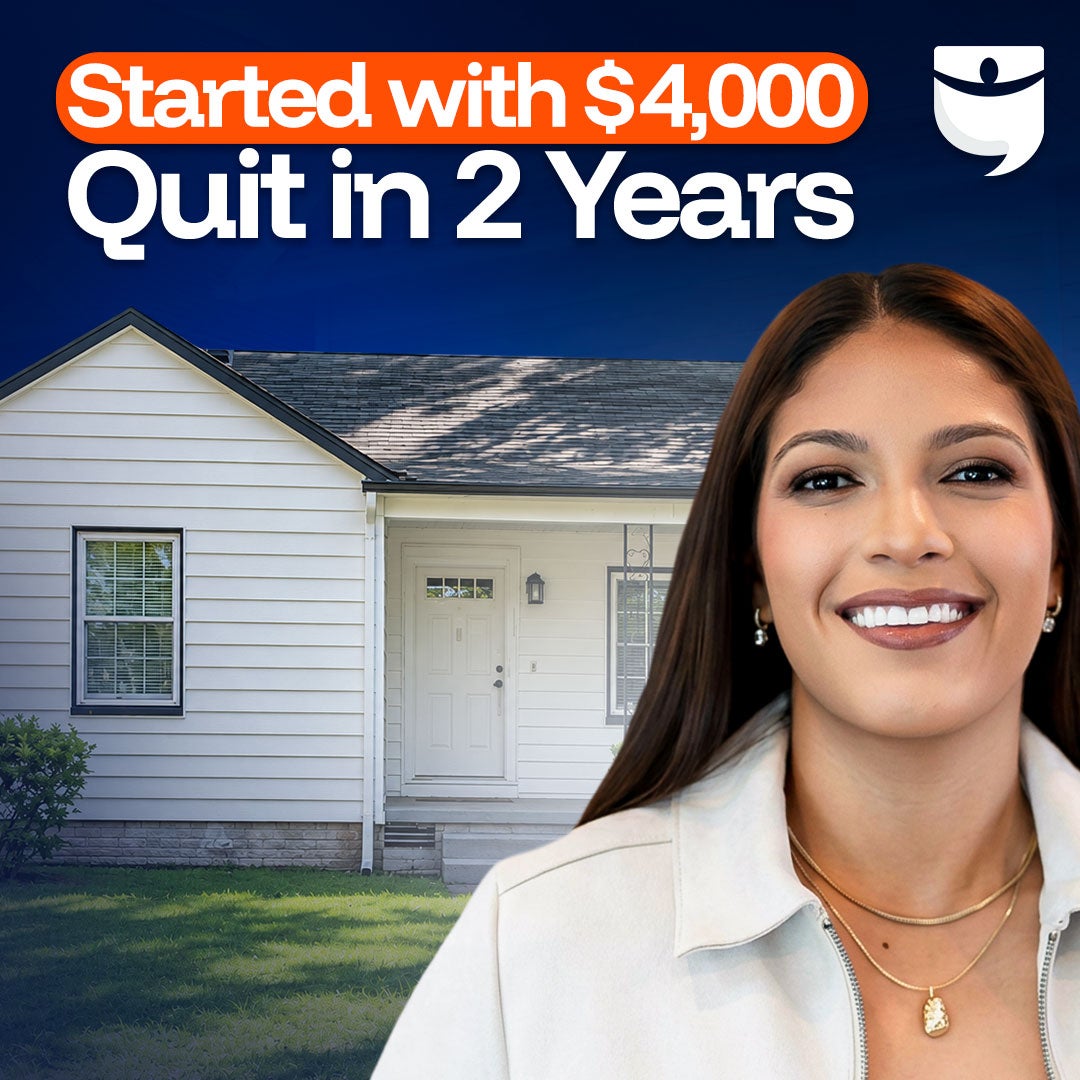
0:00Financial freedom with just three rental properties? It almost sounds too easy, but it's reality for today's guest, who went from making roughly$11 an hour to having more than enough cash flow to live on. With a little hard work and discipline, Lucas Teague saved$10 ,000 to buy his very first rental property. He made several offers and heard several no's, but he only needed that one yes. And that first yes changed everything. Lucas repeated this process, buy a cheap property, live in it, fix it up, and make tens of thousands of dollars. But instead of racing to build some massive portfolio, Lucas settled on just three rentals and started paying them off.
0:43Now, he's almost completely debt-free, living in his dream home, and he earns enough rental income to cover his family's expenses, and then some. Lucas has all that he needs. Now he's focused on a new objective, giving back. In this episode, he's sharing his unconventional but proven path to financial freedom so you can do the same.
1:09What's going on, everybody? I am Henry Washington, co-host of the BiggerPockets podcast. And today we have an investor story with Lucas Teague from Indiana. So let's bring him on. Lucas Teague, welcome to the BiggerPockets podcast, my friend. Yeah, thanks, Henry. I've been watching the show for probably 10 years now, and it's an honor to be here. Why don't you give us a little bit of background? What got you into real estate in the first place? And when did you get started? I'm in my early 30s now. I've been investing in real estate for about 14 years. And really, I think it boils down to financial freedom.
1:40As a kid, I had a parent who lost their job after working for a place for about 30 years. And just all of a sudden, they came home one day and didn't have a job. And I was probably 15 or 16. And after that, I made the decision, I've got to prevent that if at all possible. So how did that turn into like real estate being the source for that extra income? Yeah. So I've always had the mathematical lens. And so, you know, I looked at, hey, can I buy a business? And this is at 18 years old. So it's zero capital at the time. Well, with no money, it's a little bit difficult to buy a business. So then I turned to, okay, what if I invest in some stocks?
2:14Well, once I get to like$2 million in stocks, maybe I can make$60 ,000 to$80 ,000 a year, but it's going to take me about 100 years to get to$2 million at the money I was making at 18. So I moved on to the next thing, which was real estate. And in my area at the time, there were houses selling for$20 ,000 or$30 ,000, and you could rent those out for$300 ,000 or$400 ,000 a month. And I'm crunching the numbers and like, man, I could do something within a decade probably or five to 10 years and get the tax benefits and all of the other benefits that come with real estate investing. And it seemed like a no brainer.
2:47So what year was this when you've had this epiphany? Yeah, this was probably 2012. So I graduated high school in May of 2012. And I worked in the pharmaceutical industry at the time. And I still do today. I work for Eli Lilly, the largest pharmaceutical company in the world. So I do that. And then I'm also a real estate agent. But at the time, I made about$11.95 an hour. And so my first year was essentially just saving up$10 ,000 for that either down payment or that first house that I purchased later in 2013. Okay. Well, that's some good bit of background. You bought that first property in 2013.
3:20What'd that deal look like? Yeah. So this was a HUD foreclosure and it was listed on HUD.gov on an auction website for about$50 ,000. And my poor realtor friend, we spent probably a month, we'd submit our offer on the auction website. We'd wait a week, it would get declined. And so it was listed at$50 ,000. We started at$6 ,000, then$7 ,000, then$8 ,000. And after about a month of doing that, the bank or whoever owned the house on the auction website, they finally accepted the offer of$8 ,000. So at the time, I had about$10 ,000 in cash, and I went for it. So I figured, hey, for$8 ,000, what could go wrong?
3:58That's an uncomfortable offer. They're asking$50 ,000. You're offering a couple grand to start out, what helped you just start making uncomfortable offers? Because that's a big hill to climb for a lot of investors. I try to look at it with a non-emotional lens. In this instance, it was a bank that owned the property. I'm probably not going to hurt anybody's feelings if I submit a low offer. Even if it's a person who owns the property, really, you shouldn't hurt their feelings if you're offering something low. We deal with this, especially now being a real estate agent. An offer is better than no offer at all.
4:30They can say no and then move along, and that's better than not hearing anything. If you're listening to this and you're like, I don't know what to do to get my next deal, go open the MLS and find a bunch of houses that are for sale that are in your buy box. Who cares what they're listed for? And make an offer that makes sense to you. Worst case scenario is they say no. Best case scenario is they say, I don't want that offer, but let's talk about it. That's why an offer is better than no offer, no matter what it is, because you're basically saying, hey, I'm willing to have a conversation about this.
5:02So you did that first deal in 2013. You bought a house for$8 ,000. That sounds to me like you didn't buy much house. So tell us about it. What'd you do with it? Do you still have it? How did it work out? No. So I sold that after about a year of owning it. I put about$2 ,600 into that house, did all of the work myself, watching YouTube videos. And the bones of the house were good. It was really cosmetic. It needed paint. It needed some flooring, some kitchen stuff. And so I worked on that for about a year and sold that in early 2014 for about$60 ,000. So I had about a$50 ,000 profit on that place.
5:41What goes through your mind after that? Because I think a lot of investors get to this point where it's like, all right, I did a deal, but what do I do now? Well, I think I said earlier at the time I made$1 ,195 an hour, which I thought was a ton of money and I was hourly. And within a year, I had just made 50 ,000. And if I worked on that full time for a year, that's$25 an hour, which was double what I was making from my W-2 job at the time. And my mind was completely blown that you could do this and make... It was essentially part-time, a few hours a week I worked on that property for a year.
6:14And I could make double what I made at my W-2 job. So thankfully, I had a good experience on the first property. And yeah, I think that I got the bug after that. And I kept looking and quickly transacted again shortly after that. So what did the next one look like? How'd you find that one? The next one was probably 30 minutes northwest of where I live. And it was a triplex that was for sale for about$45 ,000. I had enough work experience at the time to actually apply for financing and get financing on this place. Unfortunately, this is where I learned a lot of lessons. The house was about 150 years old.
6:49It had two vacant units in it. It had one unit where somebody was living there, but they weren't paying any rent in there. So I had to go through an eviction and get those folks out of that apartment. And essentially, I just moved into each one of the apartments. I'd live there for three to four months. I would renovate everything. I'd move into the next unit that's available, get that previous unit rented out, and did that for about a year as well and sold that in 2015. Okay. So you paid about$45 ,000. And how much money do you think you spent fixing up the entire property? I would say between$5 ,000 and$6 ,000.
7:25Structurally, the house was in good shape. It was more of a cosmetic rehab, flooring, paint, that kind of stuff. So probably$5 ,500, I would say. Okay. And what were you renting the units out for? Previously, they were rented for probably$400 before I had to do the eviction. Once I remodeled everything, I moved those up to about$700. So once it was completely turned over, the property brought in about$2 ,100 a month. $2 ,100 a month on a note of where you're only paying$45 ,000. That's a crap ton of cash flow. That's amazing. But then you said you sold it. So why sell instead of keep the cash flow?
8:00I was still 19 or 20 at the time, and it was not in the best location. So the area had some extracurricular activities kind of going on in the area and not the type of tenants that I wanted to have long-term. And so it was quite a bit of headache and stuff. But I was doing the math. And so I listed the property for$100 ,000. I got a full price offer on it. And so at the time, having the capital at 19 or 20 years old meant a lot more to me than making the$2 ,100 a month. I know people are listening to this and going, this was so long ago. The numbers don't work like that anymore. Now, you can't pay the same price points you were paying then.
8:42But there are deals that you can still get at a discount and you can still rent and get current cashflow. And what I want people to focus on is not necessarily what the dollars were for the purchase price, but look at the spreads and understand the concepts of what Lucas was doing. Like this stuff still works. You can absolutely still go buy a single family home, live in it while you renovate it, and then sell it for a profit when you're done and not have to pay capital gains taxes because you lived in the property, especially if you lived there for two years. If you lived there less than two years, you're gonna pay some capital gains, right?
9:18You can absolutely go and find yourself a triplex and live in a unit, renovate it while you're living in it, move to the next one, renovate it while you're living in it, rent it out, and then sell it when you're done or keep it as a rental when you're done. Those strategies worked then, they still work now. The dollar signs are bigger now, yes, but also the purchase prices are bigger, but so are the rents and so are the sale prices, right? So like these strategies still work. And the way you use to find these deals still works. There are bank owned properties again, guys, like that died off for a while, but a lot of them are back.
9:55People are getting foreclosed on and banks are sitting on some properties. You can absolutely go bid on foreclosures. There are opportunities on the market. If you're willing to make offers that make sense to you, you'll have to make a lot of them. But like conceptually, what Lucas did is very much still possible in today's environment. Is it going to be a little more challenging? Yes. Will it be more expensive? Yes. But it can also be more profitable if you do it properly. So thank you so much for sharing some of those lessons and being transparent with it. I want to learn more about what you continue to do after that second deal, because now you've done a live in flip as a single.
10:35You've done a live in flip technically as a triplex. You've gotten a taste of that. I'm curious, did you continue down the same path or did you transition to something different? But we'll get into that right after the break.
10:46Lucas Teague: Before we go to break, if you're someone who's bought a couple of deals and you're looking to scale up your portfolio into something bigger, I have a really exciting announcement for you. BiggerPockets is hosting its first ever conference focused just on scaling up. It's this December. It's coming up soon, this December 5th through 7th in Phoenix, Arizona. We're going to have a full day of programming with speakers like myself, James Daynard, Kathy Fecky, and Devon Kennard talking about how to scale up and build a sustainable business. Tickets are on sale now, but there are only 100 tickets. So go to biggerpockets.com slash conferences now and get your ticket today.
11:24Lucas Teague: Most investors only think about insurance when something goes wrong. A tenant injury, storm damage, loss of rent. Then suddenly, the cheapest policy doesn't feel like the best one anymore. That's why a lot of BiggerPockets investors use steadily for landlord insurance designed specifically for rental properties. Whether you own one property or a growing portfolio, they make it simple to get covered properly. And BiggerPockets Pro members get an extra 5 % off their landlord insurance premiums. Visit biggerpockets.com slash landlord insurance to get a quote today. I just booked a backpacking trip through Olympic National Park.
12:03Lucas Teague: Two nights out on the trail, no cell service, nothing to do but eat trail mix and stare at mountains I'll never get tired of. That's the whole appeal. But while I'm off-grid, my place doesn't need to sit empty. I can list my space on Airbnb and make a little extra income while I'm away. And with Airbnb's co-host network, I could partner with a vetted local co-host to help take care of the details, from guest communications to onsite support so I can fully unplug and enjoy my time out in the back country. If you've got upcoming travel plans, you can find a co-host at airbnb.com slash host. You know that thing where you discover a feature you wish your software had?
12:44Lucas Teague: And it turns out it already exists just on a different platform. Like, oh, you want rent payments processed in two days. Rent ready does it. Oh, you want to block tenants from making partial payments mid-eviction. RentReady does that too. Oh, you want full accounting and tax-ready reports without paying for a second tier? RentReady does it. And oh, you want tenant screening that doesn't overcharge your applicants? RentReady also does this. Basically, if you've ever complained out loud about your property management software, RentReady probably already built the fix. It's$12 a month. You're welcome.
13:21Lucas Teague: Sign up right now for$50 off your first year of RentReady with promo code BPCASH. BiggerPockets Pro members get it completely free. Sign in through your pro account at rentready.com slash biggerpockets. That's rent, R-E-D-I dot com slash biggerpockets. Purchase new carpet from the Home Depot and get it installed for free right now. Shop the stylish choices and simple pricing of carpet from Home Decorators Collection, traffic master or life proof with pet proof technology and see for yourself why nobody beats our prices enjoy new carpet with free installation right now at the home depot offer valid october 15th through november 1st 2026 exclusions apply for licenses see homedepot.com slash license numbers welcome back to the bigger pockets podcast i am here with investor, Lucas Teague, and he has been sharing his real estate investment journey.
14:19He started back in 2013, bought a single family, lived in it, renovated it, sold it, moved on to a triplex. And the concepts for the way he did this are absolutely still possible today. So I'm curious, Lucas, what did you transition to after that? Did you stay the course on what you were doing, living flips, or is there some other strategy you tried? Now, to some extent, yes. I took a two-pronged approach at this point. So I needed a place to live. Obviously, I had sold the place that I was living. So I bought a primary residence for myself and same pattern as the first two. The house had good bones.
14:55It was a cosmetic flip where I didn't want my family to come over for Christmas, but it was very livable. And so I did that on nights and weekends as I was working my W-2 job. And at the same time, I started looking for, I wanted to be in the long-term rental business, which is what I'm in today. So in my area, I'm shooting for a 15 % cash on cash return. So I'm starting to look for these properties and maybe that's once a year, maybe that's one property every three years. And so probably around 2017, 2018, I began to buy these 15 % cash on cash return, long-term rentals and simultaneously working on the house that I was living in, you know, shooting for that two year turnaround time.
15:35That way I could avoid capital gains taxes and, you know, do both simultaneously. What I like about your strategy is what makes it possible is you said you had a goal of 15 % cash on cash return. That was the goal. So that was the thing that was important. Not volume of deals, but deals that meet your very specific criteria. and whether that meant one deal a year or one deal every three years, that wasn't what was important. What was important was that the deal met your criteria. That discipline is exactly what makes investors successful in a down market like we're in now. And what makes that kind of strategy possible is because you had a day job, right?
16:21You had active income from going to work every day. And so I know a lot of people are listening to this podcast because they want to retire from their day job. There's absolutely a path to do that. It takes longer now than it used to, but yes, you can do that. But there's also still a path that builds wealth. If you have a job you like or a job that you enjoy, you don't have to focus on quitting your job. But the benefit of not having to quit your job allows you to have the discipline to have a strategy like this, to be able to say, hey, I want 15 % cash on cash return. And maybe that sounds wild, but the deals are out there.
16:55And if I got to buy one deal every three years to get it, then that's what I'll do because I have a job that's bringing in the income. So you were looking for this 15 % cash on cash return type deals. How long did it take you to find one? Really not long. Um, so I, again, I'm a mathematical focus person. And so I found ways to export the entire MLS into an Excel spreadsheet, use Excel to, to calculate cash on cash return for thousands of properties simultaneously. That's still something today that I do as a real estate agent, just make, uh, analyzing properties so much faster. And so maybe it took me a year and, you know, it was, the first one was a house listed at one 50.
17:32I offered one 10 thinking we would negotiate and they, Hey, they accepted one 10. We still have that property today and it's way under rented. It's$13.50 a month, but still off $110 ,000. It's well above the 1 % rule. That's super cool too. So you basically made a spreadsheet that told you what price to offer for all these properties in order for it to hit your number. And did you just go down the list, pick your favorites and start making offers? Yeah. I would just sort the column by, hey, what's the highest cash on cash return that's on the market currently? And of course, some are going to come up 20%, 25 % cash on cash return.
18:05you look at the pictures and it needs a complete gut. And so, but it gives you a list to look at where you're not looking at thousands of properties, you're looking at five or 10. And, you know, spending your time focusing on the ones that are most likely to work for you. You know, this strategy is so much easier now with AI, like literally anyone can do this. Now, you can scrape the MLS or have your agent send you a bunch of listings. And then you can just have AI put it into a spreadsheet, use some basic rental knowledge on what you think the rents would be and calculate cash on cash return for all the deals that are on the market and have it literally tell you this is the price you would need to pay for this to work.
18:40And you could just start submitting offers. You can do this today. Yeah. So speaking of AI, I've built a tool as well that will analyze the micro environment of your specific town and neighborhood. And so I live in a city with 5 ,000 people and you can even specifically target neighborhoods and everything like that now with AI. Okay. Tell me what that means though for normal people talk. What does the tool do? That means now you can analyze news articles, anything that would affect the market value in your specific town. And then maybe there's specific news where something, a new business is going to go in close to a specific neighborhood.
19:14And so, you know, over the next five years, it's going to increase 15 % or 20 % in that neighborhood. Now you can find those 15 % cash on cash returns in that neighborhood and get the appreciation simultaneously. That's really cool. Let's put a pin in it because I want to get back to the story, but that's super cool. And of course you did something like that because why wouldn't you? All right. So you did that first 15 % cash on cash return deal. What year was that? It was 2019. That wasn't that long ago. And so did you just ramp up continuing to do that or how did you go from there to where you're at today?
19:44So I attempted to, this was in rates where, you know, under 3%. So I found another one in 2020. I bought that property for 120 ,000. It rents out for 1525 per month per day. And so I continued to look through 2021 until about 2026 earlier this year. And just honestly could not find anything that was worth my time to look at. So I asked myself, what else can I do if I'm building up this cash pile to buy these 15 % cash on cash returns, but there's none out there? What can I do to hit financial freedom faster? So I can pay down debt and deleverage myself. And so for the past four years, I would have a cash pile enough to purchase a house.
20:25But if that started to grow and grow, I would use the additional to pay down leverage. I love this conversation. If you are a real estate investor, buying a new property isn't the only way to help yourself achieve financial freedom. You have a couple of options, and I love that you explored this option. You can look inwardly at your portfolio and say, yes, I have this property. It cash flows great leveraged if I pay it off? So if I take this$50 ,000 and I pay off my loan on this asset, what kind of cash on cash return do I get now? What kind of return do I get? And is it better than going and buying a new one, right?
21:03Because if you've got cash flow of, let's call it$300 a month, and you can pay that asset off, and now you've got unleveraged cash flow of$1 ,200 a month, that's a substantial increase. And is that return higher than if you just go buy another leveraged house and add it to your portfolio? Like that's the math you get to do. Another option is maybe you can pivot a strategy, take a long term and make it a short term if it makes sense, right? So I guess the point I'm trying to make is you don't have to go buy another property. Consider your current portfolio. Can you pay for something, either paying down the asset, remodeling a kitchen, addition adding a bedroom right can you add money to your current asset to increase the rents and will that produce a higher cash on cash return than buying a new asset or just paying something down because paying something down not only gives you more cash flow but it gives you less stress so that's i think that's my favorite part about it so then what do you do if they are you just going to focus on paying off deals now or is there something else you're working on no so probably three years ago um my my poor wife was so patient with me for the past like 10 years you know moving her into a different place, having half the house under construction.
22:13And so, you know, I told her, hey, like at some point we're going to have to buy the house that we want to live in for, you know, a longer period of time. And this is your seasoning as you go through your investor life cycle, right? In the beginning, you're looking for anything that you can do. You're willing to, you know, live right next to tenants. And once you've done that five or six times, you've got to have, you'd be making some progress within yourself and within your family as well. So we found 66 acres out in the country where we live here. And we decided, hey, we were going to clear a small section and build our dream house on there.
22:43So it took me about a year to clear about four acres, get all my permits and stuff. And that's where I'm here now. Oh, wow. So you found like wooded acreage. Exactly. What did 66 acres cost? 378. 378. How long ago did you start that purchase? So that was in 2022 is when I purchased that property. And throughout 2022, I cleared the, it was about four acres of smaller trees that I had to clear for the house. And yeah, and continue to save up to have enough for a down payment to actually build the house that we wanted to live in for the rest of our life. I've got tons of questions because I'm doing something very similar.
23:20And I'm going to ask you some of those questions right after this break.
23:23Lucas Teague: I just booked a ski trip to Park City and I've already got the whole thing planned out. Five days, first tracks every morning before the crowd show up. my knees reminding me I'm not 25 anymore by the second run, and an embarrassing number of overpriced burritos at the lodge. I don't even care. This is the trip I look forward to all year. But here's the part I actually appreciate. The practical side of my brain kicking in is that my place doesn't have to just sit there empty the whole time I'm away. I can list my space on Airbnb and bring in a little extra income while I'm out getting humbled on a mountain.
24:01Lucas Teague: And with the co-host network, I'm not the one handling all of it. You can partner with a vetted local co-host who can create your listing, manage reservations, message guests, and even handle the styling. So I get to fully focus on my trip and my place is still working for me the whole time. Find a co-host at airbnb.com slash host. Investing in real estate has always been smart, but it hasn't always been simple. Now it's both thanks to the Fundrise flagship fund. The Fundrise Flagship Fund launched more than five years ago with a mission of delivering low-fee access to blue-chip private market real estate.
24:38Lucas Teague: Today, the Fundrise Flagship Fund has grown to manage more than a billion dollars of real estate on behalf of hundreds of thousands of investors, making it one of the largest funds of its kind. For those who believe real estate has an important role to play in their portfolio strategy, the Fundrise flagship fund has positioned itself as both a simple and a smart option. Whether you're starting with$10 or$10 ,000, the Fundrise flagship fund makes adding real estate's unique potential for both passive income and consistent growth. Just visit fundrise.com slash pockets to make your first investment today.
25:15Lucas Teague: Carefully consider the investment objectives, risks, charges, and expenses of the Fundrise Flagship Fund before investing. This and other information can be found in the fund's prospectus at fundrise.com slash flagship. This is a paid advertisement. Purchase new carpet from the Home Depot and get it installed for free right now. Shop the stylish choices and simple pricing of carpet from Home Decorators Collection, Traffic Master, or LifeProof with PetProof Technology. and see for yourself why nobody beats our prices. Enjoy new carpet with free installation right now at The Home Depot. Offer valid October 15th through November 1st, 2026.
25:55Exclusions apply. For licenses, see homedepot.com slash license numbers. This episode is brought to you by Google Chrome. You think you know a browser, but Gemini and Chrome, that's new. It can help you with practically anything on the web, like restoring a vintage motorcycle from a 50-page restoration block, or finally break down that long article you've had open for weeks. Gemini and Chrome is here for it. Ready to make anything online make sense? There's no place like Chrome. Check responses set up required, compatibility and availability varies 18+. This episode is brought to you by Palmolive.
26:29Family time isn't just the big moments. It's weeknight dinners. Sitting around the table, everyone talking all at once. So when the plates are empty and the sink is full, use Palmolive Ultra. Palmolive's most powerful formula removes up to 99.9 % of grease, leaving your dishes sparkling clean. And the new convenient pump makes cleaning even easier, so you can spend less time tackling dishes and more time together. Shop now at palmolive.com.
26:59All right, we're back on the BiggerPockets podcast. I am with investor Lucas Teague, and he has been sharing his investor journey starting at a young age back in 2013. And now he has told us he purchased 66 acres, cleared out about four to five acres, and has built a home on that land. I have lots of questions because this is kind of a popular concept right now. I just bought 20 acres. I'm going to build a house on it. I'm excited about it. So how did you purchase this land? Because there's several ways to do this. I know some people buy the land and get a loan for the land and building the house all as one.
27:40But you had to buy land, clear land, there's site work, there's utility work. Like, what did you have to research? And then how long did the process take between like, finding the property and then being able to start a build? So it probably took us two or three years to actually find the property. And the reason we signed up for this one was it was right next to where my parents lived at the time. And, you know, my father was sick at the time and didn't have much time left. And so I wanted to be close to family when that time were to come. And so my parents own 68 acres to the north. And this property came up just to the south of that at 66 acres.
28:17And, yeah, so, I mean, it came up for sale. I did a little bit of research. which thankfully it's not overly difficult to get permits in our area. It's not easy, but it's, you know, probably, we're probably right there in the, in the middle, you know, so there's some utility work that you've got to do. There's some elevation profile. There's, you know, floodplains. You've got to look at mistake that I made. There's no internet access out where I live. There's no fiber. So I'm, I'm calling in from Starlink here, which saved me. So there's a little bit of homework that you need to do before you purchase something like that.
28:45And did you use like one loan for all of it, or did you have to do this all separately? No, so I stayed pretty conservative. I put probably 50 % down payments on the land. I did a specific land loan on a 15-year fixed at 3.7%, and that was back in 2022. And then I waited about another year. I got a construction loan to build the primary residence, which we finished construction of that in June of 2023. And since then, I've spent three years of just paying that property off. So now I'm essentially, we're debt free with our primary residence and our land. And so our monthly basis of what we need to make is fairly low.
29:22That's really cool because there's a lot of different ways to, A, purchase land and to B, build on that land. Not only are there combined loans like I talked about. So for those that are listening, you can get one loan that will allow you to purchase the land and build the house. Now you have to have done a lot of research on the front side because you need to know who your builder are. You got to have your plans, right? But a bank can loan you everything to do this. Or you can go the route like I went and like Lucas went, which is to go buy the land first. And then a lot of banks will let you leverage the land once you own it as your down payment.
29:56So you don't have to put money down for the construction loan. So talk to the banks and find out what products to have that can help you do something like this. I also hear that there's all kinds of grants and programs to help people take raw land and develop something on that land. It just depends on what it is that you want to develop on what programs that are available to you. Did you look into anything like that? I did. And that's something that I've hardly ever heard discussed anywhere on any real estate podcast. So if you own raw land in most of the United States, we have an issue where invasive species like bush honeysuckle, lespedeza, autumn olive, Those invasive species seeds are coming in from, it could be China or Russia or Australia, things that are not native here to the United States.
30:44So our government has funding where they create a pool of funds to give to landowners to eradicate those invasive species on the property, which was something I have never heard anywhere. And so, you know, I'm doing some research. Hey, I've got these 66 acres. You know, do I want to timber this? No, not really. I don't want them destroying the forest. Well, what else can I do? And so I stumbled across this. It's a United States Department of Agriculture and then the subdivision Natural Resource Conservation Service. And they will essentially come out and look at your land, see the level of invasive species that you have on the property, and then assign a budget for your property to get those invasive species removed.
31:25And that is it's a one time grant that you'll get usually over three to five years, depending on how invasive the species are at your property. And in my specific case, they gave us about$1 ,000 an acre over the course of three years, so about$66 ,000. And yeah, and we just finished that contract about three months ago or so. And yeah, super, super easy. So they just gave you$1 ,000 an acre. Now, you had to go do the work to eradicate the invasive species of plant. What does it cost you to do that versus what they're giving you? In my specific situation, the levels were so high where I subcontracted it out to a group of folks.
32:03They would come out here, do the work for me. And so we basically split the money 50-50. I paid them and then I kept the rest as well. That's so cool. I am absolutely researching this the second we got off this podcast. That's really cool. So how did you even stumble across that? Just researching. I mean, I, you know, I have this 66 acres and I wanted it to produce some cash flow, just like a rental property would. And really, you know, am I going to raise farm animals? Probably not. You know, that's not my skill set. I could do a timber harvest. You know, can I let somebody else use the land maybe for hunting?
32:35And I wasn't really comfortable with any of those things. So I just kept researching. Hey, you can use AI now to have got 66 acres. What are what kind of ideas do you have for me to make make money from this where it's not too disruptive to my my lifestyle? And there, I mean, sure enough, there it was. And honestly, it's a great program. Like, you know, three years later, our forest is so much healthier. We have 99 % native species out here. The birds, the turkeys, all of the deer, the wildlife are happier because there's more calorically dense food out there. And so it's really a good program.
33:05Well, Lucas, this has been really fun. What a cool story of how to use real estate to supplement your lifestyle, right? Like not everybody needs to start investing and retire in a few years, but you can still build a pretty cool life and a pretty cool lifestyle using real estate and keeping your job. And I love that you've kind of talked us through how you did that. So before we get out of here, a couple of things. Can you tell us a little bit about like where you stand today as an investor? What's your portfolio look like? So today we have three rental properties and we've got our primary residence on the 66 acres, which is paid off.
33:42And so complexity started to enter my life at some point and I decided to simplify. And so we have a very simple portfolio that covers all of our family's basic needs. I still continue to work my W-2 job for different reasons than what I did 12 years ago. But now I've shifted into a different phase of it's not as much about me and my family. It's about what I can give back to my community, what I can give back to other families. So I've been able to donate very large sums of money to local charities and families and things like that. I'm giving a house away to a family member that needs it as well.
34:17And so I'm moving into an all new chapter of life here. I love that. I love that more than anything. I'm just truly a believer in that. Like we are, we are chosen to be stewards of wealth. And when I hear stories all the time of people who amassed wealth and lost it, I always see people who were selfish with it, but people who have philanthropic ambitions or who are using it in good ways always seem to continue to find more. And I don't think that that's a coincidence. So that's really cool that you're doing that. And it's really cool that you're able to do that all through buying a couple of properties back in 2013.
34:53That's really, really fun. All right. So earlier in the show, you were talking about this tool you built with AI to help you analyze neighborhoods. Can you give us a little more detail on that? So we're now in the generation of AI, and it is such a powerful tool. Hey, 10 years ago, prices were significantly lower than what they are now, but there was not tools like this that existed and made it so easy for the average person. And you don't even have to be an expert. You can type into ChatGPT or Claude or Grok or whichever app that you're using, and you can ask any series of questions and will make your life so much easier.
35:27But one specific thing that I do for my real estate clients and from an investing lens is, you know, in my specific market, there's maybe 100 ,000 people. And, you know, there's businesses going in. There's new neighborhoods going in. There's so much stuff that's going on just in my micro economic circle. and something you can use AI for, you can have it analyze all of the local news that's going on in your specific area, have it overlay those news articles with a specific map of your area, and then chart out what's the next five years going to look like? What's the next 10 years going to look like?
36:01If a new business goes in that hires 5 ,000 people, what that's going to do to the property values? There's some news that happens to neighborhoods where the prices are probably going to go down 10%. Maybe a new neighborhood's going in and prices are going to raise based off that new neighborhood or shrink. If a business is going in, there's going to be more jobs most likely. And so probably property values in that area are going to increase. And you can use AI to analyze that massive data set, overlay it with the map of your area. And now you can even target specific neighborhoods that have a higher probability of having more appreciation than what the normal house would in your town.
36:39That's pretty cool. How long have you been using this tool? Probably a year now. And I just purchased my first property almost using exclusively AI. I trended the neighborhood. I found a specific area that's probably going to appreciate 20 % in value over the next five years. Then I overlaid that with my 15 % cash on cash return AI tool. And sure enough, hey, a property came up. I went and looked at it, pretty good shape. So yeah, we're already seeing results in roughly six months. Have you seen results that match the research? Probably not on the appreciation side yet. I would say on the cash on cash return side, yes, but I'd say too soon to tell on the appreciation aspect.
37:18It is rare to find great cash flow and great appreciation and you're using technology to help you be more strategic to where you have a higher probability of getting both, which is super smart. Thank you for sharing that. All right, Lucas, thank you so much for joining us on the Bigger Pockets podcast. Is there a place where people can find out more about you or find you? Yeah, you can find me on biggerpockets.com or you can find me on Facebook, Lucas T. Awesome. And thank you, everyone, for listening to this episode of the Bigger Pockets podcast. This was super cool. I've got some homework I'm going to go do based on what I learned from Lucas.
37:52Hopefully you do, too. As always, we'll see everybody on the next episode. Purchase new carpet from The Home Depot and get it installed for free right now. Shop the stylish choices and simple pricing of carpet from Home Decorators Collection, Traffic Master, or LifeProof with PetProof Technology, and see for yourself why nobody beats our prices. Enjoy new carpet with free installation right now at The Home Depot. Offer valid October 15th through November 1st, 2026. Exclusions apply. For licenses, see homedepot.com slash license numbers. Mr. Monopoly here. Miss me? Monopoly is back at McDonald's with millions of prizes.
38:34A 2027 cheap charity. A Carnival Cruise vacation. Gift cards from DoorDash and Best Buy. He'll then play in the McDonald's app. Get your bag. No purchase necessary. 50 U.S. and D.C. age 18 plus. See play at mcd.com for rules and play at mcd.com slash A-M-O-E for info and playing without purchase by mail by November 2nd. Chance card game ends November 8th. Game ends November 22nd, 2026. See rules for prize details. Monopoly is a registered trademark of Hasbro.
Financial freedom with three rental properties? It almost sounds too easy, but it’s reality for today’s guest, who went from making roughly $11 an hour to having more than enough cash flow to live on.
With a little hard work and discipline, Lucas Teague saved $10,000 to buy his very first rental property. He made several offers and heard plenty of “nos.” But he only needed one “yes.” And that first yes changed everything.
Lucas repeated the process: buy a “cheap” property, live in it, fix it up, and make tens of thousands of dollars. But instead of racing to build a massive real estate portfolio, Lucas settled on three rentals and started paying them off.
Now he’s almost completely debt-free and earns enough rental income to cover his family’s expenses and then some. Lucas has all that he needs. Now, he’s focused on a new objective: giving back. In this episode, he’s sharing an unconventional but proven path to financial freedom so YOU can do the same.
In This Episode We Cover
How Lucas achieved financial freedom with just three rentals
The advantages of holding onto your W-2 job while you invest
Good reasons to sell an investment property (even if it cash flows!)
Why you shouldn’t be afraid to make “lowball” offers
The AI tool Lucas uses to identify up-and-coming neighborhoods
And So Much More!
Check out more resources from this show on BiggerPockets.com and https://www.biggerpockets.com/blog/real-estate-1345.
Interested in learning more about today’s sponsors or becoming a BiggerPockets partner yourself? Email advertise@biggerpockets.com.
Learn more about your ad choices. Visit megaphone.fm/adchoices
Scan the code with your iPhone camera
Listen in the app.