
 Ask ChatGPT

 Biotech 2050 Podcast
24 Sep 2026 · 46m · 19 chapters
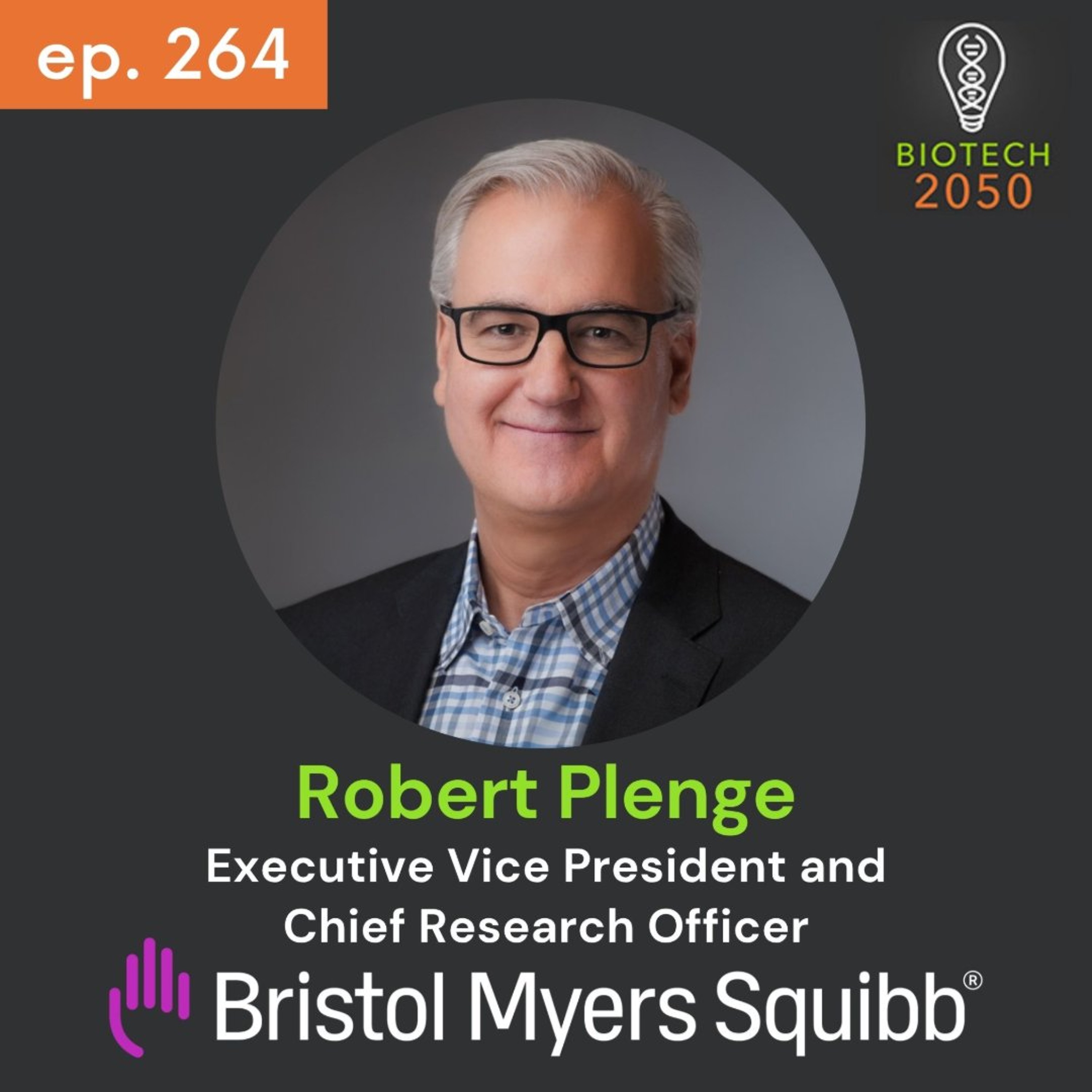
Robert Plenge (BMS EVP & Chief Research Officer) discusses how drug discovery fails, why “causal human biology” matters, and how to avoid “molex trap”/target herding by rewarding innovation. He also covers immune reset for autoimmune disease, AI’s role in predictive molecule invention and mechanistic clinical modeling, and BMS’s strategy for target diversity and blended innovation across academia/biotech/pharma.
Robert Plenge, EVP & Chief Research Officer at Bristol Myers Squibb. Background: MD-PhD (Case Western), internal medicine residency at UCSF, rheumatology fellowship at Brigham and Women’s/Harvard and postdoc with David Altshuler at Whitehead/Broad; academic work in population genetics, functional immunology, and embedded genomics; industry roles at Merck (genetics/genomics; translational medicine), Celgene (immunology/inflammation), then BMS via Celgene acquisition; leads research across modalities and IND-to-clinic translational/wet lab/clinical pharmacology.
Lupus patients need “functional cures,” not lifelong immunosuppression; genetics/pharmacology evidence increases success likelihood 2–3x; human pharmacology is strongest causal evidence; target herding may delay innovation for a decade; BMS tracks first-in-class/best-in-class target diversity (aiming ~50%+). Example: ibertamide (Selmet) targeted protein degradation (cereblon; IKZF1/3) approved using minimal residual disease (MRD) in multiple myeloma. AI example: AI-enabled targeted protein degradation for sickle cell (fetal hemoglobin via neoantigen transcription factor degradation).
Written by AI. May contain mistakes.
Robert Plenge shares his educational and professional journey in life sciences and drug discovery.
“I'll go back to high school, but then I'm going to go pretty quickly.”
Robert discusses insights gained from his clinical practice and its impact on drug development.
“So most people in your seat came up through development or commercial.”
Robert discusses the importance of mentorship in his career and offers advice for finding mentors.
“You mentioned the importance of mentors in your professional journey.”
Robert discusses the importance of transparency about failures in one's career.
“Wonderful advice also for folks that are listening.”
Robert explains the high failure rates of drugs in clinical trials and the reasons behind them.
“And of the ones that actually make it, only one in three is truly novel.”
The discussion shifts to causal human biology and its impact on drug discovery success rates.
“And I think that story has sort of proven out.”
Robert highlights the issue of target herding in drug development and its implications for innovation.
“And there is a lot of benefit to that because not all medicines that start in humans and ultimately get approved have the right pharmacologic profile.”
He discusses the potential benefits of developing follow-on medicines to improve existing treatments.
“And so we still obviously are seeing companies focus on the same targets.”
Robert shares BMS's strategy regarding target diversity and the focus on innovation.
“So there is value also in combining things onto single molecules.”
Robert provides details on ibertamide, a recently approved drug, and its development history.
“And Robert, talk to us a little bit about Zembexis, which was what proved very recently.”
Explore the fascinating science behind ibertamide and its impact on multiple myeloma treatment.
“I mean, most medicines have as their history, they've been in a variety of different companies at a variety of different times.”
Learn about the three-step approach to resetting the immune system in patients.
“in community settings, or maybe other modalities aren't necessarily available.”
Understand the necessity of incentivizing innovation in drug development processes.
“These medicines really can have the possibility of changing patients' lives.”
Delve into the applications and challenges of AI in enhancing drug R&D productivity.
“You've publicly been quite clear eyed about AI and its potential, but also flagged the risk of overinvesting.”
Discover how the blended innovation model is reshaping the biopharma landscape.
“I just think it's going to take a lot longer for that to really mature to a point where it's as actionable as people want.”
Learn about the importance of partnerships in drug discovery, especially in AI and academia.
“It's also a healthier way to allocate resources.”
Discover a vital piece of career advice about holding onto your motivation while being flexible.
“Given the breadth and depth of your career, what's one piece of advice you wish you could provide your younger self knowing all that you now know?”
Understand the concept of the 'jagged line' in careers through Robert's insights and blog.
“Robert, for those listening, Robert has a wonderful blog called PlenGen.”
Hear about influential books that have shaped Robert's thinking in science and creativity.
“So this is very timely in terms of you asking me this question as well, because he was in college and it was one of those coffee chats that I mentioned earlier.”

Get the gist, explore an idea or ask about something said.
 Claude
On Biotech 2050 Podcast, what are the key points of this episode?
Searching your listeningAutomatic transcript. May contain errors.
0:03Robert Plenge: Hello and welcome to the Biotech 2050 podcast. Biotech 2050 is a think tank chronicling the disruptions changing the biotech industry over the next several decades. I'm Rahul Chaturvedi, co-founder of this podcast and today's host. I'm also the founder and CEO of Chlora, a software platform that enables biotechs to build a resilient fractional workforce. You can check us out at Chlora.com. I'm very excited to welcome Robert Plenge, Executive Vice President and Chief Research Officer at Bristol Myers Squibb. Thanks so much for joining us today, Robert. Looking forward to the conversation. Yeah, thanks for having me.
0:36Robert Plenge: Robert, to kick us off and to set the stage here, I'd love if you could talk us through how you got interested in the life sciences broadly, and the path of your journey and how you got to where you are today.
0:47Rahul Chaturvedi: All right. I'll go back to high school, but then I'm going to go pretty quickly. So I promise not to like spend, you know, 10 or 15 minutes on high school, but played basketball in high school, wasn't very good, always getting hurt. So I got interested in medicine and primarily sports medicine. So when I went to college, I was pre-med thinking I'd become an orthopedic surgeon and then went to medical school pre-med thinking again, I'd be an orthopedic surgeon. I decided to take a year off in medical school to really go more deeply into research. And I picked a genetics lab. And over the course of the next 12 months, I totally changed direction.
1:22Rahul Chaturvedi: I sort of fell in love with human genetics. This was in the mid-1990s pre-human genome project. And I just kind of got blown away by understanding genetic variation in our genomes, how that could actually relate to a variety of cellular traits, phenotypic traits, disease traits. And I just then wanted to understand human genetics and how it could actually apply to human health. So after I did a year, I decided to extend that to do a full PhD. And after I did my PhD, I knew that was going to be sort of the North Star for me over the next multiple years. And that's indeed been the case. So I went back and finished up medical school, applied for an internal medicine residency, because I did really like and I did really want to continue to have that patient focus.
2:09Rahul Chaturvedi: So I Finished up my MD-PhD at Case Western, went to do my internal medicine residency at UCSF. But almost from day one, I started to apply for postdoctoral research fellowships. Wanted to do, again, sort of population-scale genetics, so decided to take a postdoctoral position across the continent and moved to Boston to do a postdoc with David Altshuler at what was at the time the Whitehead Center for Genome Research, but it became the Broad Institute. I wanted to continue to do that clinical work, so also decided to do a clinical rheumatology fellowship. And so that then became sort of the bulk of my academic career, which was postdoc in population genetics, clinical medicine, and rheumatology.
2:51Rahul Chaturvedi: And I did that at Brigham and Women's Hospital with appointments at Harvard Medical School and the Broad Institute. And I kind of say I was sort of happily doing academic medicine at that point in time. I had a lab that was focused on genetics discovery, genotyping, sequencing, primarily in autoimmune diseases because it fit with my clinical interest. I was really trying to understand the functional consequences of the various genes and pathways that we were discovering, so doing functional immunology, and then trying to integrate this information into electronic health records. And so I'm doing what I call embedded genomics at the time and trying to mine clinical data using what were some pretty crude large language model NLP tools at the time.
3:32Rahul Chaturvedi: That suddenly has changed a lot in the last 15 years and was enjoying that sort of three pillars to my academic career. But everything began to converge on drug discovery and development. And so I had a mentor who was at the Broad. His name is Ed Skolnick. And I would ask him for advice on things. And he said, look, at some point, if you want to do drug discovery and development, you got to go to industry. It's like that's really where drug discovery and development happens. So I always talk as if it was a simple transition from academics to industry, but it was not a simple transition for me.
4:04Rahul Chaturvedi: It probably took me about a year or so of thinking through, is this the right move or not? That coincided with an opportunity becoming available at Merck. And so I did move in 2013 from academics to industry. So I joined Merck's research labs to lead their genetics and genomics group. And after a couple of years, I took on additional responsibility to lead translational medicine, and that included early clinical development and the translational biomarkers. I loved what I was doing at Merck, but I began to miss the relationship to immunology and genetics driving drug discovery. So an opportunity became available at Celgene.
4:41Rahul Chaturvedi: So I moved from Merck to Celgene to lead their immunology and inflammation group. I should also say, because mentors have been really important to me throughout, that Rupert Bessie had recruited me from academics to Merck. When he left to Celgene, I followed him after a couple of years, so moved to Celgene, large part because of Rupert, but also because of the work that Celgene was doing. And then after a couple of years, BMS acquired Celgene, so moved to BMS by way of the acquisition. And over the last seven years now, I've had a couple of different roles, most recently to lead the research organization.
5:14Rahul Chaturvedi: So that's now across all therapeutic areas, across all modalities, delivering INDs into the clinic, and then all the translational and wet lab work, clinical pharmacology to support clinical development. So we started kind of with injuries, orthopedic surgery, got really excited about genetics. And that's been a North Star for me because we think a lot about genetics and drug discovery. And then we can talk about how those principles have broadened over time.
5:39Robert Plenge: Great, Robert. So most people in your seat came up through development or commercial. You came up as a practicing rheumatologist who ran a genetics lab, you were seeing patients at Brigham while running studies at the Broad, as you mentioned. What did the clinic teach you about drug discovery that at that time the lab couldn't teach you?
5:58Rahul Chaturvedi: I'll tell a story about kind of a composite patient because that's going to come back. We probably will talk about immune reset at some point in time. But what would happen for many patients in my rheumatology clinic is imagine a young woman, childbearing age who has had this diagnostic odyssey. She has a series of symptoms that can't fully be explained. She ultimately gets referred to a rheumatologist who makes a diagnosis of lupus. And in that instance, there's a sense of relief because a patient has been on this diagnostic odyssey, and now they know what their diagnosis is, and they also know that there are treatments available.
6:34Rahul Chaturvedi: So there's a sense of relief when the diagnosis is made and a treatment is started. And then at some point, inevitably, with a patient like this, they would then turn to me and say, I'm feeling better. When do I come off of these medicines? I'm on strong immunosuppressive medicines. You're telling me I can't necessarily start a family and get pregnant. So when do I come off of them? And the answer almost always was never. And so despite having wonderful advancements in developing medicines to help treat these patients, there was just a big gap in what patients needed and what the current set of treatment options could be made available.
7:11Rahul Chaturvedi: In the case of patients with lupus but a variety of other autoimmune disease, it was starting them on strong immunosuppressive medicines but really not having the opportunity for functional cures. So I use that as an example because that actually has also been something I've been very fortunate at CellGene and now BMS to be involved in what I think will be a real revolution in terms of resetting immune memory. But the lesson to your question, the lesson really was great medicines, still a big medical need. Here's what's possible. And it's not just making the current medicines better, but thinking about and kind of peering around corners to understand really what patients need to have transformational medicines that are going to just change the course of a disease and really change the course of many people's lives.
7:58Robert Plenge: Great, Robert. Thanks for going back in time there. A couple of follow-up questions now. Now, you went from Celgene, which is obviously quite a large organization, to then leading research at BMS. If I can ask you to reflect on your own journey, what are some of the lessons that you learned during that transition or things that you hadn't really thought about that came to the forefront as you reflected on your time transitioning from Celgene to BMS?
8:23Rahul Chaturvedi: Yeah. For the transition from Celgene to BMS, it was very natural because BMS really wanted to create a new company. It wasn't just acquiring one and then fitting it into the other. They really took, I think, a very open perspective to say, we want to be the best biopharma company and we want to take the best of, in this case, both worlds, Celgene and BMS. And I think that they did really an outstanding job of making that transition. When I went to BMS and took on more responsibility, I began to learn more and more about other aspects of the business, which has been, I think, a real joy in industry is learning more broadly, not just about detailed science, genetics, drug discovery from an immunology perspective, but to understand the complexities and the science around clinical medicine and clinical development, to understand the complexities and the science around regulatory and operations, to understand the commercial landscape, and just to understand how all of it really fits together.
9:23Rahul Chaturvedi: So one of the most enjoyable parts as I took on more responsibility at BMS was to learn other parts of the business. And that is included not just within BMS, but other parts of the entire ecosystem where you see how everything really fits together, how complex it is, but also how important it is.
9:42Rahul Chaturvedi: If you're an HR or hiring manager in biotech, you know all too well that the pool of experts seeking full-time employment is shrinking. Filling key full-time positions can be a long, drawn-out ordeal.
9:55Robert Plenge: It can slow the pace of execution and growth. Throw away the old hiring playbook. Now you can build a biotech dream team in a fraction of that time. Find out how. Visit Chlora.com. Chlora, talent optimized.
10:14Robert Plenge: You mentioned the importance of mentors in your professional journey. For those younger folks that are listening, how did you go about selecting those mentors or did they end up selecting you in some way? And then what advice would you have for folks that are seeking mentorship early on in their career?
10:32Rahul Chaturvedi: One of my favorite mentors was my high school English teacher, Jack Labonte, because he taught me just how to think and be creative. So he's one of my earliest mentors. My PhD mentor, Hunt Willard, I didn't really know him. I selected his lab because it was just a really good scientifically Deep Lab. And I got really lucky because he was just, and is, a wonderful person, thinks deeply about science, challenges individuals, but also I think he really cared about every single person in his lab. I've been fortunate because Hunt and then David Altshuler and Rupert, and I've had other mentors as well, they've all been scientifically excellent.
11:10Rahul Chaturvedi: They've cared about people. They've cared about the organization. And they really wanted to help me and others on their teams be successful within the context of the organization, but also for their own individual careers. So in some cases, I got a little bit lucky because other people referred me to those individuals. But those characteristics, I think, really show up. So I think the things that people should look for are people who have depth in a particular area that you're excited about. So for me, it was genetics and also drug discovery and development. people who you can trust and who are good people who are going to try to help support you, but also challenge you.
11:50Rahul Chaturvedi: Just because they're your mentor doesn't mean they can't push you and push you hard. All three of those individuals did that. They're also going to kind of help you kind of navigate kind of the complexities of an organization and the complexities of kind of your own career. And again, all three of those individuals have really done a wonderful job, and I've been very fortunate to know them. And I've stayed in touch with them through the years, and they continue to give me advice in a variety of different areas.
12:14Robert Plenge: I'm sure, Robert, now you serve as a mentor for many folks. What is it that you're looking for when you're deciding to invest additional time in someone that is looking to you as a mentor?
12:25Rahul Chaturvedi: So a few different things. One, I want them to also be deep in an area. I want them to be good people. I want to make sure that I'm spending time with someone who wants to spend time with me, but also just they want to do the right thing, right thing for the world. I know that sounds a little bit grandiose, but it's true. Like you want them to be good people. So I like that a lot. I love people who are curious, who are going to approach problems and explore problems. And they're going to think about it from a number of different perspectives so that they're often, you know, curious and creative.
12:56Rahul Chaturvedi: And then I also want people who I think are going to, you know, give back. So if I invest time in them, they're going to do the same thing. And I think that cascade of events is just really healthy and a healthy environment. And I try to do it as much as I can. I have three daughters who are beginning to enter the professional world. And so I really enjoy spending time with people who are just entering their early professional careers because that's a difficult time. And I think many people at that particular age, I know that's from my own daughters, I think it's all kind of worked out. And I think it's a clear path to a successful career.
13:32Rahul Chaturvedi: And it's not at all. I like to try to tell people about what I call the jagged line of career development. Like there are all sorts of twists and turns along the way. And I want people to hear, especially earlier in their careers, to know that you don't have to have it all worked out. There are going to be lots of changes along the way. Be comfortable with uncertainty, but be curious and help you navigate it. So the more that I can have those conversations with people, even at the various earliest stages of their career, I think having some sort of honesty and career reflections, I think is very important.
14:03Robert Plenge: Wonderful advice also for folks that are listening. You've done something that almost no executive, as far as I'm aware, has done, which is published, let's say, a failure CV, if you will, where you talk about the mouse that never went, germline, the nature genetics paper, your departure from Merck, et cetera, et cetera.
14:20Rahul Chaturvedi: There's a long list of things that I would not necessarily go through, but thank you very much. Thank you very much.
14:27Robert Plenge: So why did you decide to put that in public? What does it buy you? And also, perhaps, what does it cost you to do so?
14:34Rahul Chaturvedi: I go back to my kids. I want my kids to get honest advice, not the advice that people give them only in retrospect. And so much of what we do when you ask folks for advice, it's what I call the personal narrative. We'll tell a story that makes ourselves look really good, that is almost entirely useless for someone at an earlier stage of their career who's trying to navigate these uncertainties. And so I think just to be kind of honest with the challenges that one actually faces, because I remember looking up and looking to see all these amazing, successful careers. I'm like, how am I ever going to do that?
15:12Rahul Chaturvedi: Look where they went to school. Look at the jobs that they had. Look at all of these accomplishments. Like it just sort of became, you know, overwhelming. And I just remember thinking, like, am I going to be able to do that earlier in my career? And it just seemed like maybe it wasn't possible. So I think to try to break it down and to sort of humanize, like, look, there are a lot of – because people talk about failure. But like there's failure and then there's like that was hard. That was a really hard moment. So it's more just to be able to make sure that people understand there's going to be a lot of twists and turns.
15:44Rahul Chaturvedi: There's going to be this jagged line. That should be expected and that's okay. So just be prepared for it. And make sure also anytime somebody is telling their personal narrative, including me today, just be aware of it. Be prepared to sort of call things out and say, I don't know if that's truly the way things actually happened. Okay.
16:00Robert Plenge: Now I'd like to switch gears a bit and get your macro perspective on a handful of things. Okay. So just to start off, let's, you know, for the average listener right now who doesn't live in this space at the same depth that you do, something we've talked about previously is that nine out of 10 drugs that entered the clinic end up failing. And of the ones that actually make it, only one in three is truly novel. Talk to us about why you think that is and what actually goes wrong along the way.
16:26Rahul Chaturvedi: I think there's now a lot of very good evidence to support why things fail. And largely, it comes back to this concept, and we can talk more about causal human biology. So the drug is good. The drug works exactly as it was predicted in preclinical models from a pharmacology perspective, but it doesn't do what we thought that it would do in terms of human physiology. It doesn't have the effect on a disease state or a physiologic state. So it binds, it inhibits, but it doesn't have the physiologic effect. And when you look at why drugs fail, most things fail because they just don't work. They don't show any evidence of efficacy.
17:03Rahul Chaturvedi: And if you ask why that is, lots of different reasons, but I think it does sort of boil down to this concept of we don't fully understand human biology and specifically causal human biology. So not correlative human biology, not causal mouse biology or animal model biology, but causal human biology. What had me transition from academics to industry in 2012, 2013 was understanding human genetics and how it could actually inform on causal human biology. This was now sort of 10 years or so into the GWAS and complex trait genetics revolution and began to understand genetics can point you to targets and molecular mechanisms and patient populations and inform on this causal relationship.
17:48Rahul Chaturvedi: And then there began to be, I think, data on things that I had published when I was in academics, but also others have published since that time, that if you had that human genetic support, things are two to threefold more likely to be successful medicine. So that success rate isn't 1 in 10. Maybe it's 2 in 10 or maybe it's 3 in 10. And I think that story has sort of proven out. But getting at causal human biology is really hard. Genetics is one area. In cancer, it's somatic cell mutations. Longitudinal profiling, so you can follow patients and people over time and you can see something emerges.
18:22Rahul Chaturvedi: A consequence of that trait then has an influence on downstream events. So that, I think, is another example, longitudinal profiling of causal human biology. So the principles that I thought a lot about in terms of human genetics, those can be applied in a number of other settings as well. But that's the primary reason why it's 1 out of 10 and not 3, 4, 5 out of 10. And the more that we can actually understand causal human biology and then to make a medicine match to that molecular mechanism of action, I think we'll begin to chip away at this failure rate problem.
18:55Robert Plenge: And now roughly a quarter of the entire global pipeline is aimed at 38 targets. And we've talked a little bit about novel targets, novel target pairing. And novel targets entering the pipeline fell from about 100 a year to now roughly 30 or so. What did we get wrong as an industry here as it relates to this point?
19:17Rahul Chaturvedi: Yeah, so I'll make two points here. One, I want to go back to the causal human biology definition, and then the other will be this kind of concept of molex trap, because I think some people can say, it's not a big deal that we're all going after the same targets. And I think this concept of molex trap, it actually is, and we need to actually pay attention to it. So let me just hit the causal human biology piece first. Like, what is the best evidence of causal human biology? It's human pharmacology. So if you have a drug that has taken into humans, it binds, It engages its target. It has its physiologic effect.
19:48Rahul Chaturvedi: That is, by definition, the ultimate causal human biology. The challenge is, the problem is, there's not nearly as much novelty there is because at that point, there's already a drug that's in the clinic. And so you could follow that path to start a new drug discovery program, but it's not introducing any new novelty. So if you look back over the last 10 years or so, this has become a pattern which we've used human pharmacology as a source of causal human biology. And we've tried to make better engineering of existing molecules and potentially combining them in different ways. And there is a lot of benefit to that because not all medicines that start in humans and ultimately get approved have the right pharmacologic profile.
20:28Rahul Chaturvedi: And you start to put two molecules or two targets onto two binders to two different targets on one molecule, and new physiology begins to emerge. So there is value, certainly, in using human pharmacology as the definition of causal human biology. But the biggest challenge is we begin to converge on a more narrow set of ideas, and we're not really introducing new transformative ideas into the clinic. So when I've had this conversation before about target hurting, target crowding, when I've raised this, some folks have actually said, well, you know, it's not that big of a deal. It'll work itself out.
21:04Rahul Chaturvedi: Market forces will prevail. And at the end of the day, there may be 10 or 15, 20, 30 programs against a given set of targets, but only two or three will ultimately emerge and make it into the marketplace. While that is a true statement, the timeline for those market forces to really act, it's often a decade. And so the number of resources then that are being spent in research and in early development to begin to go after this small set of targets, those are resources that aren't being spent elsewhere. And so when I began to think through this problem of target herding, I came across this concept of mollusk trap.
21:42Rahul Chaturvedi: And basically, it's rationally behaving individuals start to behave irrationally when confronted with a singular problem. And I think target hurting is that kind of singular problem. And in the short term, it may not be a big deal. But in the long term, you're beginning to really collapse, in this case, innovation. And I think that that could be really detrimental to the overall R &D pipelines of our industry. But most importantly, it's going to be ultimately detrimental to patients because we're going to bring more fast followers or follow-on medicines as opposed to entirely new ones. You need entirely new medicines to have functional cures for autoimmunities, to really change the course of patients with cancer, to change nerve degeneration in a way that just isn't possible today.
22:25Rahul Chaturvedi: So it's not just a target herd and it'll work itself out, market forces will prevail. I think if we don't track it and keep track of it and make sure that we're investing in innovation, I think we're going to find ourselves in this molex trap.
22:37Robert Plenge: And so we still obviously are seeing companies focus on the same targets. Walk us through the defense for that approach, as in why is the fourth or fifth entrant on a validated target a reasonable decision for a portfolio committee, as an example?
22:54Rahul Chaturvedi: I do actually, now I may seem like I'm going to contradict myself. I actually do think it's a reasonable decision because often molecules that go into the clinic, as you begin to learn about them for the first time, they have liability. They're not completely engaging the target. Maybe the pharmacology profile is inconvenient because you have to give it a couple of times a day. Maybe there's safety liabilities, et cetera, et cetera. So, there are a lot of reasons to observe in the clinic that something is working but suboptimal and to make follow-on molecules, I think, really is incredibly valuable.
23:25Rahul Chaturvedi: So, that's one example. Look, GLPs are probably one of the best category here. The first approval was in 2005. And it was then almost 20 years of continued pharmaceutical innovation to have the medicines that now have the profound effects on physiology and biology that are really changing health for a large number of individuals. So that's 20 years of basically improving on a molecule that wasn't very good initially. So there is value in following on causal human biology as defined by pharmacology. I also think a second area is what I mentioned very briefly, which is when you begin to put two binders on a single molecule, you're starting to introduce biology that you can't get from binders that are on different molecules.
24:13Rahul Chaturvedi: So if two binders are on the same molecule, they're going to one place, say, in the tumor and the tumor microenvironment, and you're beginning to do engagement in a way that isn't possible with molecules that are on separate molecules, if that makes sense. I think some very clear examples of this are with T-cell engagers, where you're bringing a T-cell with one part of the binder close to a cell type that you want to kill. You're bringing those together, and that's not possible on two separate molecules. That's very unique pharmacology and also very unique biology. We're observing that also with putting PD-L1 and VEGF onto a single molecule.
24:53Rahul Chaturvedi: You're beginning to concentrate those two effects inside of the tumor microenvironment. And there's really, I think, a big benefit to patients when you're doing that. So there is value also in combining things onto single molecules.
25:06Robert Plenge: Okay. Now, as we're starting to talk about BMS and some of your strategy here, you've said that BMS treats target diversity as a track portfolio metric, as in first in class, generally 50 % or higher that you're tracking. What was that number when you took the job initially? And what did you have to kill to get here?
25:24Rahul Chaturvedi: Yeah, I mean, it wasn't far off of that. I don't think I would like to come in and say, oh, it was broken before I came in, now everything's fixed. And that wasn't at all the case. I think we had a portfolio of things that were really quite novel. When you look at our phase three pipeline today, that's beginning to read out. We've got a factor 11 inhibitor. We've got an LPA1 antagonist and pulmonary fibrosis. We've got this whole class of cell mods, which are the next generation targeted protein degradation. We've got a novel cell therapy program. We've got a novel muscarinic M1, M4 agonist in the setting of Alzheimer's disease psychosis.
26:00Rahul Chaturvedi: So there are a lot of things in our pipeline that are very novel, and those are programs that were started a decade or so ago. So I don't think my shift or pivot really had a massive influence. It was just continuing to reinforce that this is really important. I will also say that the definition of first-in-class and best-in-class always seems very clear, but it's actually quite murky. And so it's almost like rather than considering a binary first-in-class or best-in-class, it's much more of a gradient because we have, I mentioned some of the targeted protein degradation molecules. You know, if you have a targeted protein degradation molecule that goes after a target and there's an inhibitor to that target, that might be first in class for a degrader, but maybe it's just best in class for the target.
26:44Rahul Chaturvedi: So there's a balance on these things as well. So that's why I really like to start with the unmet medical need to make sure that if we are going to go after a target that may be, quote unquote, best in class, not first in class, it really needs to be addressing that liability that we talked about earlier and really addressing a medical need. At the same time, we need to make sure that we've got novel mechanisms that are going after entirely novel things because otherwise we're going to find ourselves in that mollix trap. So to your original question, I don't think I had a radical shift in what we were actually doing.
27:16Rahul Chaturvedi: I've continued to reinforce the importance of innovation, the importance of novelty on the biological target side, on the modality side, and making sure we have a nice mix of things that are going to move through our clinical development portfolio. you.
27:31Robert Plenge: And Robert, talk to us a little bit about Zembexis, which was what proved very recently. And you were obviously involved in that back in the Celgene days, and then carrying that forward at BMS. What's your perspective, particularly as it relates to acquisitions and partnerships and such, of the role that the initial company plays in R &D, and then where BMS tends to strive in these sort of partnerships?
27:58Rahul Chaturvedi: There's no single solution. So that's probably the first and most important message. I mean, most medicines have as their history, they've been in a variety of different companies at a variety of different times. I think that's the norm rather than the exception. So in the case of ibertamide, the recently approved medicine, it's what we call a Selmot, which is a next generation targeted protein degradation molecule. It's a single molecule that does a few different things. And I actually, I find this like spectacular in terms of like chemical biology. It will bind to an E3 ligase called cereblon, and then it recruits these neo-substrates.
28:37Rahul Chaturvedi: So things that aren't naturally recruited, so they're called molecular glues. So a small molecule that binds to cereblon, it binds to two other targets, IKZF1 and 3. It recruits them to the proteasome, so the natural kind of garbage disposal machinery inside of a cell, and it degrades those targets. It gets rid of those targets. It doesn't just inhibit them. It degrades them inside of a cell. And in the case of this particular molecule, it does it in a way that can kill multiple myeloma cells and actually can help boost the immune system. So it's having this pleiotropic effect on the number of targets all within a single small molecule.
29:18Rahul Chaturvedi: So from a chemical biology perspective, it's totally fascinating science. And then clinically, we're trying to position and have positioned it in multiple myeloma. So this offers a therapy that may not be available to patients, especially in community settings. It's an oral small molecule pill that you can take once a day. And in this particular approval, it was one of the first, if not the first, FDA-approved medicine based upon this surrogate endpoint of minimal residual disease, so MRD. And so you can see this decrease in the burden of cells as measured by MRD. And because of literally decades of research and tracking patients with multiple myeloma, we know that's a very good predictor of long-term overall survival.
30:05So the
30:06Rahul Chaturvedi: FDA approved it on MRD as an endpoint, knowing that, again, thanks to a decade or more of translational and clinical research, that is a very good predictor ultimately of overall survival. And so that allows us to get this medicine to patients faster than if we had to wait for overall survival as the final primary readout. I think it's an amazing example of our regulatory authorities trying to move fast and get medicines to patients quickly, especially in settings like in community settings, or maybe other modalities aren't necessarily available.
30:37Robert Plenge: And Robert, we had talked a little bit about immune reset at the start of this podcast. Talk to us a little bit about what that means to you and how you're focusing on this reset in which patient populations.
30:49Rahul Chaturvedi: Let's just go back to that patient that I talked about in the beginning. They come in, diagnostic odyssey, they establish the diagnosis. And the first thing that you want to do with that patient is basically get their inflammation under control. So we've referred to this as step one of a sequential immunotherapy strategy. You get a patient's immune system and their inflammation under control. until very recently, that's been the only option. And so you have to stay on those medicines largely for the rest of your life. But what you want to do then is the next step too, which is to reset immune memory.
31:21Rahul Chaturvedi: So whatever those pathogenic cells are, the cells that are driving auto reactivity inside of a patient, you want to try to selectively deplete those so that the other immune cells remain intact. So the other B cells and the T cells and monocytes and macrophages and neutrophils, those all remain intact. You're just getting rid of those pathogenic autoreactive cells. And if you could do that, then you have the potential to induce this functional cure. So that's step two. And then once you do that, then step three is really to prevent the autoreactive cells from coming back. So where we are today is we have approved medicines in step one.
32:00Rahul Chaturvedi: We've got very promising investigational data, investigational clinical trial data for step two, and that we really don't know yet what we will need for step three. I mean, I anticipate that we'll probably need something for step three, but we just don't know because at least the B-cell based, CD19 B-cell based immune reset medicines that are investigational today that are working their way through clinical development, they do have fairly durable responses, but we just don't know because we haven't followed enough patients for long enough to know if the autoreactive cells will come back. So we know we have, we need step one.
32:37Rahul Chaturvedi: We're making progress on step two, and it's a bit unknown whether we'll need step three, but I suspect that we will. These medicines really can have the possibility of changing patients' lives. Yeah.
32:48Robert Plenge: Very exciting progress, Robert, at BMS, both through assets that you've developed as well as licensed in or acquired. I wanted to now, with that context, go back to Mollux trap for a second. So if BMS escapes that trap, but you are the lone defector, you may sacrifice short-term returns without changing the system. And I know you've mentioned that's obviously a strategic risk. What would it take for this to become a more coordinated move rather than just BMS thinking this way from a strategic perspective?
33:23Rahul Chaturvedi: We just need to, as a society, reward innovation. If we don't reward innovation, then everyone's going to try to pick the fastest path from a therapeutic hypothesis to making and testing that molecule to ultimately getting it approved for patients. But if innovation is rewarded, then I think we'll continue to take risks. And I think that's an important part of trying to escape molex trap. Great.
33:51Robert Plenge: Now I wanted to talk a little bit about the hot topic seemingly that's all over the place, which is AI. You've publicly been quite clear eyed about AI and its potential, but also flagged the risk of overinvesting. I'd love if you could talk to us from your vantage point about where AI is particularly useful right now and its potential impact on R &D productivity.
34:15Rahul Chaturvedi: Let me just go back about 20 years, 15 years when I was still an academic. So we began to use neural networks, some of these large language models and NLP to try to extract data from electronic medical records. Another great mentor I didn't mention earlier is Zach Gahani, who I was working with on this particular project, a great group of people in addition to Zach. I remember doing this and thinking, wow, we got all these great tools, artificial intelligence. That sounds really cool. and then when we actually ran the computational models and compared to like linear regression, like AI wasn't much better.
34:49Rahul Chaturvedi: So you could basically extract. There was a very manual process to extract information. The tools just weren't particularly good. So I carry that bias with me for about kind of 10 years. And then probably about five or six years ago, as the tools began to get better, I said, oh, this is really interesting, but we still have this problem of truth. And this is true for biology in particular, that you can't really extract information unless you have some definition of truth that exists within biology. I think genetics can do that. We talked about other forms of causal human biology. And so I got more interested in how AI could be applied to molecule invention, because at least there you've got a rapid cycle that's verifiable that can tell you if you are making improvements, because you can make a better quality molecule, you can see that in terms of the properties of the molecule.
35:40Rahul Chaturvedi: So our very first investment was really around this idea of predictive molecule invention, especially in kind of the lead optimization space. And, you know, as I continue to look ahead, I think that's going to be one of the most important applications in the coming years is to make higher quality molecules better and faster. Large molecules and small molecules, in some cases, it's not just making them better and faster, but making molecules that wouldn't have been possible without AI. In fact, we have one program that I think wouldn't be in patients today in terms of clinical studies that wouldn't have happened without AI.
36:15Rahul Chaturvedi: And that's another one of these targeted protein degradation molecular glue molecules. And it's one that degrades these neoantigens that happen to be transcription factors that help repress fetal hemoglobin. And by basically degrading those targets, you can turn on fetal hemoglobin in patients with sickle cell. And he meant it offers the potential for functional cures in patients with sickle cell. It's a very early program. It's just now in clinical development. We don't know if it has all the properties. But that's a great example of not just making a molecule better and faster, but making a molecule that never would have been possible before.
36:49Rahul Chaturvedi: So I think area number one is making molecules better and faster. We are there today, and we need to continue to tie that with lab automation. I'm going to go one step earlier, and then I'm going to go one step later. The one step earlier gets back to causal human biology. Theoretical question, maybe we can come back to this, is like what percent of causal human biology is actually known? And there are three tiers of this question. One is it's known and everyone would agree that causal human biology is known. The second tier is causal human biology is known. It's just hidden. It's latent somewhere in data sets.
37:24Rahul Chaturvedi: But if you can use computational tools like AI, you can begin to extract that hidden, latent causal human biology. And there's a third tier, which is just not known today. So you could do all the AI that you want, and you're never going to be able to extract it. I think that the majority of causal human biology is within that third layer, that it's going to require direct experimentation and a lot of very novel discovery work. But I think that's an interesting debate, whether we have it today or at some point in the future, how much causal human biology is known. So it's a great application of AI.
37:57Rahul Chaturvedi: I just think it's going to take a lot longer for that to really mature to a point where it's as actionable as people want. So now I want to go one step ahead or at least two steps ahead in using AI to model clinical data and early clinical data in particular because we've had very good mechanistic quantitative models in the past. But what we can now do, especially as a program goes from research into early development, is we can begin to take these mechanistic models, apply them in the context of a clinical study with robust translational data, and we can begin to see is the model trending favorable or unfavorable to predict whether a program is more likely or less likely to work.
38:38Rahul Chaturvedi: And if you have an agent that can use harnesses to call on all these apps that can actually do those type of mechanistic models, those agents can also begin to scan the external environment to understand the competitive landscape. So it's not just trending favorable or unfavorable for that one molecule, but trending favorable or unfavorable for the entire landscape. And you can begin to see how that application of AI is also going to be very powerful in the very near future. So we invest in predictive molecule invention today. We maintain close to the cause of human biology, but appreciate that that's going to take, I think, a bit more time.
39:15Rahul Chaturvedi: So you don't want to underinvest, but you also don't want to overinvest there. And I think the third category as we move towards the clinic is investing in those mechanistic models that can help you understand, are you on the right track to a successful clinical proof of concept? And what does the competitive landscape look like? And is this molecule going to continue to sort of have a strategic and competitive advantage?
39:36Robert Plenge: Now, I want to talk about one other topic before we wrap up here, which is this notion of blended innovation that you've talked about. So you've written that, from your perspective, this relay race model of academia, hence the biotech, hence the pharma is somewhat dead. And the right picture is a forest with shared root systems. Break that down for me in terms of, you know, where does blended innovation now fail? And where are incentives not necessarily aligned in the blended innovation model?
40:04Rahul Chaturvedi: And so just quickly on the history of it, we had a program that was originated from a company. It was at Celgene. Celgene partnered with this company. We took it into early development for lytic lesions and multiple myeloma. Turns out no effect on lytic lesions and multiple myeloma, but we saw this increase in red blood cell production that wasn't entirely predicted from the preclinical model. So Celgene, together with this other company, went back, modified the molecule, made it better, more specific for basically improving red blood cell production and took it back into new indications. And then CellGene was responsible for the clinical development.
40:42Rahul Chaturvedi: Then it moved to BMS. BMS was responsible for finishing up the clinical development, going through the registrational trials, and then commercializing the medicine. So it's an example of a medicine that started in one company, went into clinical development, went back, then it got acquired by another one. BMS ultimately was the one who finished clinical development and got it approved in his expanding indication. So you just see how dynamic this whole process is. That is far more the norm, I think, in terms of origin stories for medicine. So as we talk about often internal versus external, I started to get frustrated with that definition because it doesn't tell the full journey, the full story of the journey of a medicine.
41:22Rahul Chaturvedi: So that's when I began to say it's really more of a blended model because there are programs that are originated in BMS labs that have been developed all the way through. And we've got a couple, you know, like our program, the factor 11 inhibitor and the LPA medicine that really originated from BMS labs and are now in late stage development today. But almost everything else kind of falls into this blended model. And I think as soon as you accept the blended model, you stop talking about internal versus external and about how do you put together all the right partnerships to be able to advance the best possible medicines for patients.
41:58Rahul Chaturvedi: So I just think it's a healthier way to think about medicines. It's also a healthier way to allocate resources. So we then say, all right, there are going to be certain academic collaborations that are going to be really important for us because we need to understand biomarkers and neurodegeneration. That's not something that we're necessarily going to do. The academic community is very well set up for that. There are other partnerships that you know, certain companies have really great generative AI models to make new molecules. And we've got a really good group internally, but there are a lot of great groups doing that externally as well.
42:29Rahul Chaturvedi: So we want to partner, you know, with those groups and apply those generative AI or next generation AI approaches to our molecule invention engine. There's no way we're going to be able to do that on our own. And you can go through example after example about how all the pieces actually fit together.
42:45Robert Plenge: Wonderful. Well, Robert, this has been a really rich conversation. We've covered lots of topics. Two questions to wrap us up here. Given the breadth and depth of your career, what's one piece of advice you wish you could provide your younger self knowing all that you now know?
43:00Rahul Chaturvedi: Hold your why tightly and your how loosely. And by that, I mean, understand what motivates you, what gets you scientifically engaged and interested, what's important to you. Like, what are your principles? That's your why. You don't want to give that up. You want to hold that very tightly. But then the how piece of this could be done in academics, could be industry, could be at one company, could be another, could be in venture capital. You could actually do that in a variety of settings. You don't want to hold that too tightly because then you can get fixed into one setting. But if you hold your why tightly and then your how loosely, I think that advice will help you navigate kind of this jagged line career.
43:43Robert Plenge: Robert, for those listening, Robert has a wonderful blog called PlenGen. And there's a particular blog post, I think that's called The Jagged Line.
43:50Rahul Chaturvedi: Yeah.
43:51Robert Plenge: Why the best careers never run straight. So if anyone's interested in this particular topic, go check out that blog. And then last question, Robert, what's a book that's had a meaningful impact on you, either professionally or personally?
44:03Rahul Chaturvedi: Yeah. So someone just asked me this question. So this is very timely in terms of you asking me this question as well, because he was in college and it was one of those coffee chats that I mentioned earlier. So when I was in graduate school, I loved The Eighth Day of Creation. It just sort of opened up my mind to what is possible in terms of discoveries in molecular biology. So that's still a great book. The other one may be a little bit more unexpected, which is Creativity Incorporated. It's about the history of Pixar. And it's one of the better examples of trying to maintain innovation while advancing programs through a big organization that ultimately have kind of a commercial landing spot.
44:43Rahul Chaturvedi: And it has to do with movies. But I think most of the lessons in Creativity Incorporated also apply to what we do in drug discovery and development. So Creativity Incorporated by Ed Catmull.
44:54Robert Plenge: Great. Well, Robert, thanks so much again for joining us today. Congratulations on all the wonderful progress at BMS and getting patients with unmet needs, much needed new therapeutics.
45:04Rahul Chaturvedi: All right, Rahul, thank you so much for having me.
45:10Robert Plenge: Thank you for listening to this episode of Biotech 2050. This episode is hosted by me, Rahul Chaturvedi, and Alok Thayi. If you enjoyed this episode of Biotech 2050, please subscribe to our podcast and leave us a review. Also follow us on Twitter and Instagram at biotech2050pod. Again, that's biotech2050pod. Until next time.
45:40Thank you.
Synopsis:
The drug discovery industry faces a persistent challenge: 9 out of 10 drugs entering the clinic fail, underscoring the need for a better path from biological insight to transformative medicine.
Host Rahul Chaturvedi speaks with Robert Plenge, Executive Vice President and Chief Research Officer at Bristol Myers Squibb, about how causal human biology, genetics, novel targets, and emerging technologies are reshaping drug discovery.
Robert traces his unconventional journey from aspiring orthopedic surgeon to physician-scientist, human geneticist, and R&D leader, sharing how treating patients with autoimmune disease exposed the gap between controlling symptoms and creating medicines capable of fundamentally changing the course of disease. He explains why understanding causal human biology is critical to improving clinical success rates—and why an industry-wide concentration on the same validated targets risks limiting true innovation.
The conversation explores BMS's approach to target diversity and first-in-class innovation, the promise of immune reset and functional cures in autoimmune disease, and how targeted protein degradation is creating new possibilities for patients. Robert also offers a measured view of AI in R&D—from designing higher-quality molecules faster to modeling early clinical data—while emphasizing that technology still depends on understanding the underlying biology.
Robert and Rahul also examine the rise of “blended innovation,” where academia, biotech, pharma, and technology partners increasingly work through interconnected ecosystems rather than a traditional linear handoff. Beyond science, Robert shares candid lessons on mentorship, failure, uncertainty, and navigating the “jagged line” of a career—ending with a memorable principle: hold your why tightly and your how loosely.
Tune in for a wide-ranging conversation on what it will take to move beyond incremental drug development and build the next generation of medicines.
Biography:
Robert Plenge, MD, PhD is Executive Vice President and Chief Research Officer at Bristol Myers Squibb, where he leads scientific activities across nine research sites around the world, all focused on transforming patients’ lives through science.
Prior to his current role, Robert served as head of Discovery & Translational Sciences at BMS, a role that spanned all therapeutic areas at the company. Robert joined BMS as part of the Celgene acquisition in November 2019. At Celgene, he served as vice president, Immunology & Inflammation portfolio, Research & Early Development. Prior to joining Celgene, Robert was vice president and Head of Translational Medicine at Merck.
Robert received his MD and PhD from Case Western Reserve University and holds a BS from the University of California, San Diego. He completed his internal medicine residency as a molecular medicine fellow at the University of California, San Francisco. He served as rheumatology fellow at Brigham & Women’s Hospital and postdoctoral research fellow at the Broad Institute of MIT and Harvard. He was an assistant professor of medicine at Harvard Medical School and an associate member of the Broad Institute while practicing clinical rheumatology and running a research laboratory at Brigham & Women’s Hospital.
Robert is an author of more than 125 manuscripts published in peer-reviewed journals, and frequently posts updates to his personal blog, Plenge Gen, commenting on critical discovery moments with a focus on the resulting patient impact. He is a recipient of several academic and corporate awards and currently serves on the Board of Directors for BioMarin, Alltrna and the PhRMA Foundation.