
In short
Simplicity and evidence-based investing; how fees, taxes, and diversification drive outcomes; why financial ads often promote high-fee products; and how to align investing with a “good life” using psychology research. It also covers stock/bond allocation for retirees, glide paths, and the role of all-in-one funds.
Guest backgrounds
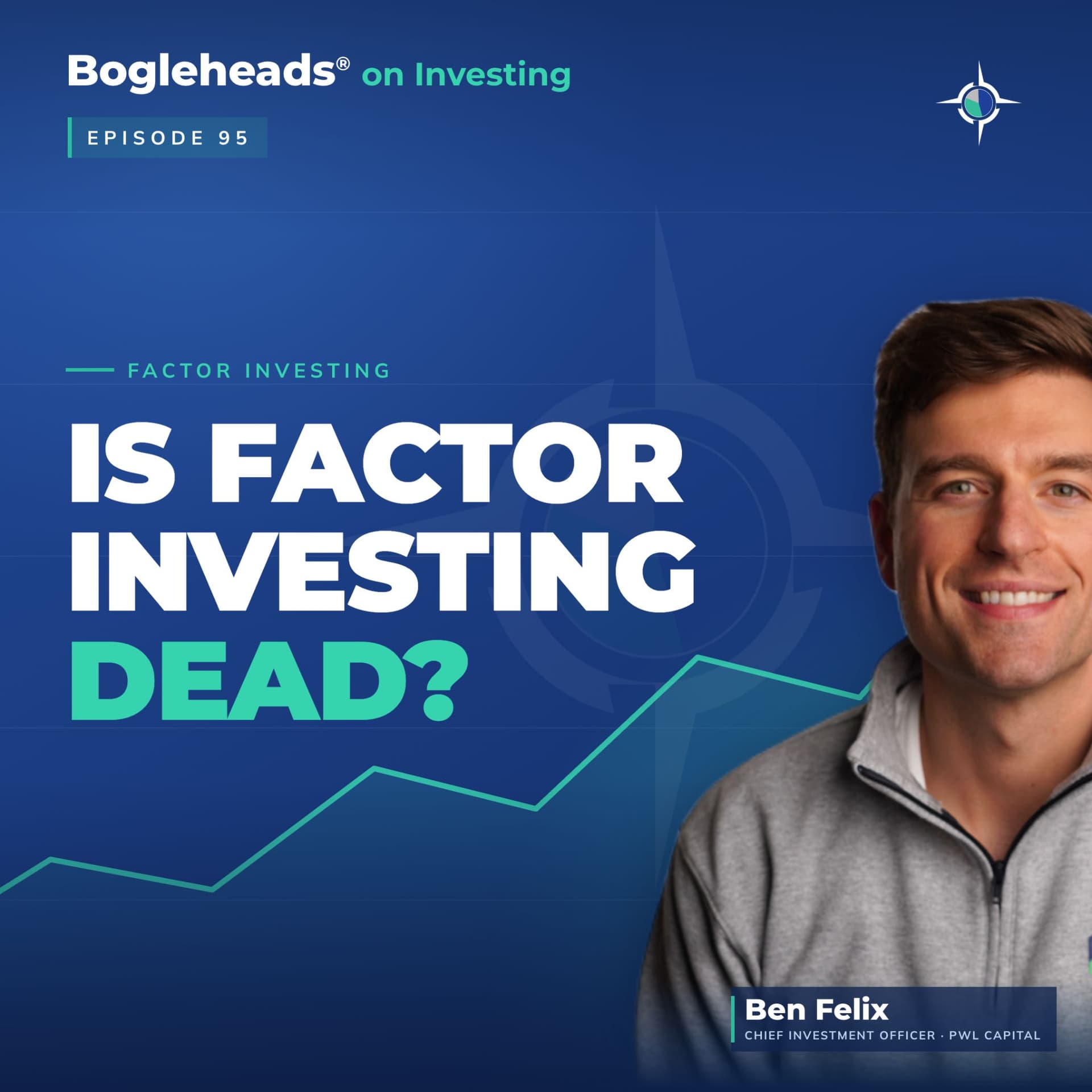
Ben Felix is Chief Investment Officer at PWL Capital, co-host of Rational Reminder, a CFP professional, and a CFA charterholder.
Key claims
Core investing basics (fees/costs/taxes/diversification) matter worldwide; beating markets is consistently hard; simplicity can outweigh marginal optimization; tax strategies like tax-loss harvesting/asset location are often over-marketed (Canada-specific skepticism); advertising usually signals conflicts of interest and high margins for sellers.
Notable examples
Private equity ads implying outperformance; buried disclosures of kickbacks; Canadian brokers selling US options order flow (payment for order flow) linked to wider spreads; “buffer ETF” discussion as “ETF slop.” For retirement, he contrasts Scott Cederberg’s 100% equity lifetime result (block bootstrap, time-series preserved) with Monte Carlo and historical approaches favoring more moderate mixes; PWL often uses ~70% stocks. He supports Canadian all-in-one asset allocation single funds (tax efficiency, auto-rebalancing, low investor “gap”).
Written by AI. May contain mistakes. Listen to the episode to check what was said.
Chapters
Tap a time to open that second in VOOverview of Discussion Topics
1:02 to 2:15
The conversation will cover investing success drivers, advertising, and strategies.
“Ben is Chief Investment Officer at PWL Capital, co-host of the Rational Reminder podcast, a CFP professional, and a CFA charter holder.”
Investing Basics Worldwide
2:15 to 3:16
Key investment principles like fees, costs, and diversification apply globally.
“We've got a great question here from Kempi Grumble from Boglehead's Reddit.”
The Importance of Simplicity in Investing
3:16 to 4:39
Simplicity is crucial in investing strategies, varying by individual preference.
“How important is simplicity in that framework?”
Tax Optimization in Investing
4:39 to 6:15
Tax strategies can vary significantly and require careful consideration.
“And again, for me personally, I place a ton of weight on simplicity.”
Evaluating Complexity in DIY Strategies
6:15 to 8:09
DIY investors must balance complexity and optimization in their strategies.
“So correct me if I'm wrong, PWL, you're managing money for clients.”
Insights on Financial Advertising
8:09 to 12:20
Financial ads often promote high-margin products that may not benefit investors.
“So recently you put out a video on your YouTube channel about financial advertising.”
Debate on Private Equity Performance
12:20 to 14:00
The unclear performance of private equity complicates investment decisions.
“I had a rep from a big fun company on the show and I wanted to talk about their very very boring, very simple, low cost investing products.”
Navigating Uncertainties in Asset Allocation
14:00 to 15:06
Explore the challenges of making informed asset allocation decisions.
“it's really hard to form expectations about the future.”
Using Money to Enhance Life
15:06 to 18:00
Learn about the intersection of financial planning and quality of life.
“Let's talk about using your money to have a good life.”
Insights from Positive Psychology
18:00 to 24:28
Delve into a five-factor model of human flourishing and its implications.
“Other big takeaways from that paper, more money is not the key to happiness, at least above a certain point.”
Show all 27 chapters
The Impact of Regret on Decisions
24:28 to 28:05
Examine how regrets influence life choices and financial decisions.
“Such interesting content, certainly the divergence of most of us BocaLeds.”
The Importance of Goal Setting in Investing
28:05 to 29:51
Learn how structured goal-setting can lead to more meaningful investment objectives.
“It's like, If you ask someone what their goals are, they'll give you some goals and the goals they give you might be relevant.”
100% Stock Portfolio Debate
29:52 to 33:36
Explore the contrasting views on stock allocations for retirees and the Cedarburg paper's findings.
“And we'll link to that in the show notes as well as Ben's other content for folks who want to check that out.”
Understanding Different Investment Methodologies
33:37 to 35:45
Discuss various methodologies for assessing stock-bond mixes and their implications.
“Or is Bill Bengen's historical, I'm assuming, US analysis right?”
Volatility vs. Inflation Risk in Long-Term Investing
35:46 to 37:52
Analyze how volatility and inflation risk influence long-term investment strategies.
“It's surprising that in both the backward looking and the forward looking of the Monte Carlo, both come to the conclusion that with more volatility, the safe spending rate goes down.”
Glide Paths and Retirement Strategies
37:53 to 42:00
Examine optimal glide paths for asset allocation as one approaches retirement.
“All right, let's talk more about asset allocation.”
Understanding Portfolio Risk and Allocation Strategies
42:00 to 43:14
Learn about the trade-offs between risk and returns in different portfolio allocations.
“And the author does note that the 100 % equity portfolio in his analysis does have a higher standard deviation of outcomes.”
The Benefits of All-in-One Funds in Canada
43:14 to 46:38
Explore the advantages of using all-in-one funds for simplified investing in Canada.
“And shout out to Callie Wish from YouTube for asking the question about GlidePass.”
Exploring Target Date Funds and Their Limitations
46:38 to 47:51
Understand the characteristics and potential drawbacks of target date funds.
“have a much different retirement system and those products are just generally less available less common to see in Canada.”
The Nuances of Factor Investing
47:51 to 53:29
Delve into the complex world of factor investing and the impact of recent research.
“And I got out to 1973 Ford Mercury on Boglehead Reddit, Hazel Kutt from Boglehead Reddit, Yozu2 from Boglehead Reddit, Glewin from the forums, Tinman from YouTube.”
Building Conviction in Investment Strategies
53:29 to 56:00
Learn how to develop conviction in long-term investment strategies despite market fluctuations.
“I don't make any money from people investing in them.”
Navigating Market Fluctuations
56:00 to 57:28
Learn how to handle market performance anxiety and remain invested.
“we overweight Canada and our portfolios relative to the market cap weights.”
Portfolio Construction and Factor Investing
57:28 to 59:26
Understanding how to incorporate factor tilts into a diversified portfolio.
“There have been long periods in the US market and in other markets where the equity risk premium has been zero.”
Engagement with the Bogleheads Community
59:26 to 1:01:14
Discuss the importance of community involvement in investing discussions.
“And if their portfolio is performing very differently, people just don't like that.”
The Importance of Simplicity in Investing
1:01:14 to 1:03:48
Explore the benefits of simple investment strategies and insurance needs.
“For me personally, I can tell you that I place a lot of weight on simplicity.”
Critical Perspective on Tax Planning
1:03:48 to 1:06:30
Cautionary insights on tax strategies and their implications.
“It's not just about better investment performance.”
Podcast Conclusion and Acknowledgments
1:06:30 to 1:07:39
Wrap-up of key insights and credits for the podcast production.
“Lastly, this podcast is for informational and entertainment purposes only and should not be construed as investment, tax, or legal advice.”
Transcript
Automatic transcript. May contain errors.0:00A quick reminder before the episode, registration is open for the 2026 Bogle Ads Conference. We have some phenomenal speakers on the lineup this year. Go to boglecenter.net slash 2026 conference to register. Coming up on the 95th Bogle Ads on Investing podcast.
0:19Ben Felix:I had really been noticing ads, a lot of ads that were marketing stuff that I knew were not great products for the end users. Whereas like, okay, I see an ad for private equity that's not promising, but suggesting very strongly that you're going to outperform public equity with private equity. That's an interesting claim. Let's screen cap this and put it in a folder. What I kind of found was that, to nobody's surprise probably, is that all of the products that are getting advertised are products that will generate the highest fees for the people selling them. Few people have done more to bridge the gap between academic finance and practical investing advice than the guest for today's episode, Ben Felix.
1:02Ben is Chief Investment Officer at PWL Capital, co-host of the Rational Reminder podcast, a CFP professional, and a CFA charter holder. We start our conversation by talking about the fundamental drivers of investing success. We then get into misleading financial product advertising. We talk about how money can help us live a good life. And then we get pretty geeky at the end of our conversation, where we talk about a 100 % stock portfolio for retirees. And then lastly, we dig into factor investing. Hi, everyone. I'm John Luskin, board member for the John C. Bogle Center for Financial Literacy and host for this episode.
1:43Stick around to the end of the episode where I'll give you my comments and reactions to the interview. And if you're listening on an audio-only version, be sure to check us out on YouTube, where we've added a few visuals throughout the episode to help clarify some of the concepts we discuss. Lastly, our data shows that fewer than half of our viewers are subscribed. So, please help us advance the mission of the John C. Bogle Center for Financial Literacy, building a world of well-informed and capable investors by subscribing, liking, and commenting on this episode. And now, on to the episode. Ben, let's kick it off.
2:18We've got a great question here from Kempi Grumble from Boglehead's Reddit. He asks about, what are some investing basics that's true worldwide?
2:27Ben Felix:Yeah, I mean, no matter where you are, fees, and this is going to be music to the ears of Boglehead's, fees, costs, taxes, and diversification matters everywhere. Those things matter everywhere. Beating the market is hard to do consistently everywhere. You might argue that some countries are maybe easier to beat the market. I've heard stories about various countries, but when you look at the SPIVA data, for example, around the world, it's pretty consistent. I'll do a direct John Bogle quote here, just buy the haystack. I think that's true everywhere. No matter where you are, asset allocation is one of the biggest drivers of long-term expected outcomes.
3:05Ben Felix:Getting that right, you're mixed between stocks, bonds, and whatever other assets you want to hold in your portfolio. that's one of the most important decisions for any investor to make regardless of where they are in the world. Yeah, naturally, I absolutely agree. How important is simplicity in that framework? Because I think about there are investments that they can be low fee and they can be diversified, but it takes a lot of work to get there. Like if you're going to invest in a bunch of private companies yourself, that's something MedFaber does, for example, or maybe you're doing real estate investing and you're investing on a lot of properties yourself.
3:36How important is simplicity when considering the framework of low cost and diversification?
3:42Ben Felix:It depends on the person. It depends on the investor. For me personally, I can tell you that I place a lot of weight on simplicity. My public market investments are all in a single fund. My overall investments include, I think, just two other assets, my house and shares in the company that I work for. So I think simplicity is really important. Different people have different opinions on that. But if I look at PWL's clients, there's also an interesting dispersion in preferences for simplicity there where we've, and I know we'll talk about taxes and stuff later, but we've made really economically obvious recommendations to certain clients to implement some planning strategy or whatever and been able to show, listen, this is going to benefit you and your family.
4:28Ben Felix:And they've just been like, yeah, no, it's too complicated. I don't want to have to deal with all that stuff. So, you know, people have different preferences for simplicity. And I think you have to respect that when you're designing a strategy. And again, for me personally, I place a ton of weight on simplicity. Me too. All right. We touched on taxes. How much does optimizing for taxes matter when it comes to the success of an investor? I'm in Canada. My clients are in Canada. I don't have expertise in the U.S. So just I want listener to keep that in mind as I'm talking because some of this stuff is Canada specific.
5:01Ben Felix:I'm skeptical of strategies like tax loss harvesting and asset location for most investors most of the time. So those are strategies that get thrown around as everybody should be doing this or you're making a mistake if you're not. I'm skeptical. If you're in the US where, and again, I don't have expertise there, but if those strategies might make sense for people because of the different tax treatment, I think you have to be really careful about running the numbers for your specific circumstances as opposed to just kind of taking the sales pitch about those types of strategies at face value and considering the costs of implementation.
5:37Ben Felix:Now, I think that there are other things that can make a really meaningful difference to someone's overall expected outcomes. And that's stuff like contributing to and withdrawing from the right types of accounts at the right times. And again, those account types are going to be different in Canada and the US, but the concepts are the same. And we have pre-tax accounts and post-tax accounts and taxable accounts and all that kind of stuff. Proper estate planning to avoid unnecessary taxes on death is another example, where again, that's going to mean different things in Canada and the US and probably in different states and provinces as well.
6:09Ben Felix:But the concept still applies. So all that to say taxes can matter, but I think they're often used as a tool to sell strategies that in my opinion have maybe questionable actual value for people. Yeah, I'm inclined to agree. So correct me if I'm wrong, PWL, you're managing money for clients. You're not working with do-it-yourselfers. Is that right? Yeah, we don't do any fee-only planning. It's all asset management-based service. Now, a lot of listeners on the show are do-it-yourselfers. What should do-it-yourselfers be considering when they're evaluating, maybe putting in place a complicated tax strategy or other investing complexity?
6:49Ben Felix:Keeping in mind that I have a bias toward simplicity. I think that there is often a trade-off between complexity and optimization. I mean, you kind of mentioned this earlier that you could build the lowest cost portfolio possible and you're going to save some basis points, but if it ends up being really complicated to implement, well, there are other implicit costs involved with that. I think that particularly DIY folks need to be very careful not to make their situation too complex. I mentioned earlier that will sometimes propose more complex strategies to clients. In that case, in those circumstances where a firm like PWL, who has people who are experts in their field doing this stuff for clients every day, if they're doing the implementation, I think it's a lot different.
7:33Ben Felix:And they're also a little bit separated from the actual situation when they're doing it professionally. So complexities can become a little bit more manageable in that environment. But even then, like I mentioned the story before, where we've recommended more complex strategies to some folks who have, even though we're going to be doing most of the hard stuff, they've looked at it and just been like, no, I don't have to think about all that stuff in my life. So, but if it's a DIY person who's really completely doing it themselves, I think that that point becomes even stronger where simplicity just has so much value.
8:08I agree. So recently you put out a video on your YouTube channel about financial advertising. What are some important takeaways that do-it-yourselfers should be aware of?
8:19Ben Felix:Oh man. So I spent a lot of time thinking about finance and investing as, as people can imagine and, and, and reading about it online and like all normal people, I scroll Reddit a lot. That was kind of a joke, but, uh, um, I, I, I had really been noticing ads, a lot of ads that were marketing stuff that I knew with, you know, just with the research that I've done and just being in this field professionally that I knew were not great products for the end users. And so I started just kind of collecting in a folder a bunch of these examples where it's like, okay, I see an ad for private equity that's not promising, but suggesting very strongly that you're going to outperform public equity with private equity.
9:06Ben Felix:That's an interesting claim. Let's screen cap this and put it in a folder. And I see ads on US options trading specifically, which it matters in Canada for reasons that I can explain in a sec. So I screen kept that like, oh, that's okay. And so I just kept collecting these ads. And what I kind of found was that to nobody's surprise probably is that all of the products that are getting advertised are products that will generate the highest fees for the people selling them. Which like, of course that's true. If I'm a business and I'm selling a really low margin product and a really high margin product, I'm going to put my advertising dollars behind the high margin product.
9:45Ben Felix:That's what businesses do and that's fine. And so I just kind of compiled this list of all of these examples, private equity being one where in the example that I used, the firm promoting it, I had to do a lot of digging, but I was able to find in a disclosure buried in a PDF that they're taking what is effectively a kickback from the private equity fund that they're recommending to clients, which was not obvious to me. And I feel like I should be pretty good at uncovering that kind of stuff. I actually had to ask Claude to find it. I was like, can you find any conflicts of interest? And it was able to find a PDF from the firm anyway.
10:23Ben Felix:But my own human digging, I was not able to find it. So I can only imagine a client of that firm wouldn't be able to find it. But there it was. And the Financial Times reported on that being a pretty systemic issue where a lot these private funds are paying big sort of kickbacks to wealth firms and brokers and stuff like that anyway so that was one example the us options one man this one is crazy so in canada you can't take payment for order flow as a brokerage payment for order flow is like if you're a brokerage you can you can bundle up your orders and you can sell them to be executed and then you receive payment for for selling that block of trades which like as a practice you know is it good is it bad that's a question that people have been asking for a while now there's lots of research on it suggesting that for stocks, it's probably not so bad.
11:10Ben Felix:For options specifically, it seems like it results in wider spreads and probably makes investors worse off overall. In stocks, it looks like it actually probably makes investors better off overall, because one of the things Payment for Order Flow has been able to do is eliminate trading commissions. When people ask, why are my trades free now? Because they're selling your order flow. So anyway, in stocks, that seems fine. In options, it seems like there's a big implied cost there. It's also much more profitable for brokers to sell options order flow. So anyway, the ads that I was seeing were for specifically trading US options through a Canadian broker.
11:45Ben Felix:I was able to infer and I found on their website a disclosure that they are selling the order flow. So I was like, okay, they're advertising trading US options, which they're probably selling the order flow for, and they're probably getting big margins from doing that. And there's other stuff. I mean, there's like thematic ETFs I talked about, covered call ETFs. The basic lesson is, and this is not going to be news to Bogleheads, the people listening to this podcast. The basic lesson is that if someone is advertising a financial product to you, it's probably a high margin product for the company advertising it, which implies that it's probably not a very good product for you to invest in.
12:22Yeah. Fun fact. I had a rep from a big fun company on the show and I wanted to talk about their very very boring, very simple, low cost investing products. And they counter offered, Hey, can we talk about our buffered ETFs instead? Yeah.
12:38Ben Felix:I didn't talk about buffered ETFs in that video, but I did talk about them in a recent video or earlier this year called the rise of ETF slop. I characterized buffer ETFs as ETF slop. That's a good YouTube thumbnail. I feel like. Yeah. Think about your comment about advertising performance of PE funds, right? I mean, they can put whatever they want on that little bar chart. But then, you know, as you point out in the video, they sort of make up those numbers. They're calculated a certain way over a certain time period compared to certain indexes, public indexes. The one I showed in the video is it could have been worse.
13:14Ben Felix:Like they were not using an IRR. They were using a time-weighted index of private market funds. IRRs can be worse. They can be, I think, manipulated or presented in a way that's more misleading. The index and the comparison that I was referring to is still NAV based, net asset value based, which is like the funds saying this is how much our underlying holdings are worth as opposed to a market tested valuation, which is common in private equity because the underlying assets are not sold frequently. In private equity, it's just, I've talked about this on my podcast too. It's like, it's a point of debate whether private equity has actually outperformed public equity.
13:53Ben Felix:And the very fact that that is a point of debate to me is really challenging as an investor, because if we don't actually know how this asset class has performed, it's really hard to form expectations about the future. And it's really hard to make asset allocation decisions. I think I formed that thought independently, but when Eugene Fama was on the Rational Reminder podcast years ago, he basically said the same thing. He talked about how the market portfolio is a good starting point for any investor. When I asked him, okay, well, if the market portfolio makes sense, shouldn't we include private equity?
14:22Ben Felix:And this comment was a version of what I just said. We don't know what the expected return of private equity is. So I find it really hard to say it should be included in any portfolio. And I think that's what we see with a lot of the research coming out. It's like, I can get two published papers, literally one saying private equity has not outperformed public equity and one saying it's outperformed by 4 % a year. It's like, what? I don't know. So I don't know how you make sensible decisions about investing in that asset class. Yeah, certainly. If you have an unclear answer on the performance, then you have guaranteed fees and guaranteed illiquidity.
14:58I struggle to argue that it makes sense to have stuff like private equity in a portfolio.
15:03Ben Felix:Yeah, I agree. All right. Let's talk about using your money to have a good life. We've got a couple of questions from the BullGuts community on this topic. Luke Swanson and hi, my name is Steve from the BullGuts forums. you've put a paper out finding and funding a good life and then you also talk about this on your show as well tell us what are some takeaways from that paper from what you've shared in your own shows i did a recent video on my youtube channel where i kind of did an overview of this paper and added some more up-to-date research so if people want to check that out i would actually suggest watching the video instead of reading the paper but the paper still i think it's still all right that paper is interesting so that was like and i don't mean to to diverge from the question a little bit here.
15:46Ben Felix:But so years ago we had someone come in, Brian Portnoy, who's been a guest on my podcast, great guy, consider him a friend. He, he basically has a consulting practice for financial advisors where he, he helps you connect with clients on a more personal, emotional kind of level. And when he first brought this to PWL, I was super skeptical. This is not what we should be talking to clients about. Eventually I started to get it. and then I started writing my thoughts down that turned into this paper which I think really helped me formalize I guess in my own head how this is why this is relevant to the practice of financial advice and how we can be using it to give better advice to our clients and so I wrote the paper put it up on the PWL website and I don't know if it's still true today but for years it was the most downloaded resource on the PWL website and we published a lot of stuff but it was the most download a resource.
16:39Ben Felix:So I was kind of validating and interesting that this mattered to people, but it turns out that it really does. And we see this with our client interactions now too. So the main takeaways of the paper, a big one is that similar to investing, where we have a five factor model, a Fama and French five factor model for asset pricing in positive psychology, which is like the field basically of what leads people to be happy. It's a simplification, but close enough. There's also a five-factor model, which I love because I like five-factor models. So the factors in this model of human flourishing are positive emotion, engagement, relationships, meaning, and accomplishment.
17:17Ben Felix:There's a sixth factor added later. Maybe it's momentum and asset pricing, I don't know, but it's vitality, which is basically like sleeping well and eating well. So that's one big takeaway. And I talk about that a lot in the paper. I've talked about it a lot since. I think it's a super simple framework to just like, and I do it all the time. I just check in with myself, where am I at on these factors? Like, do I enjoy what I'm doing right now? You know, I'm talking to you, we're having a good time. I like that. Engagement, same thing. Like that's like doing challenging tasks that match your skill level.
17:47Ben Felix:I think like this for me, it falls into that category as well. Relationships, which is just having strong, positive relationships with your family and friends. Am I seeing my friends enough? Am I spending enough time with my kids? Meaning is being part of something greater than yourself. and again just using myself as an example I do find doing stuff like this and my YouTube channel and our podcast where I get tons of feedback from people literally telling me that I've changed their life that's like to me I get a lot out of that and then accomplishment is the last one which is basically achieving hard things like setting challenging goals and achieving them over time I just think that as a framework is super powerful and there is evidence suggesting that those factors do contribute to lives that people evaluate as good.
18:33Ben Felix:Other big takeaways from that paper, more money is not the key to happiness, at least above a certain point. The most up-to-date research on this does suggest that happiness does increase with rising log income. That log term is important there, but the relationship is still pretty weak. And log income, if listeners are not aware, means that the relationship is based on the doubling of your income. So if we see like a small incremental change with rising log income, that's not like your income went up 5%. It means your income doubled and you got a little tiny bit happier. Little tiny, I'll put that in context.
19:07Ben Felix:The correlation between average happiness and log income is 0.09 in the experience sampling data this paper is based on. So it's a really low correlation. It's positive and statistically significant, but low. Another example from that paper is that the difference between the medians of happiness at household incomes of$15 ,000 and$250 ,000, we probably have to adjust those for inflation, but whatever you see, it's like a huge gap in household incomes. The difference in happiness is only about five points on a 100 point scale. So it's like, yes, there's a bit of a relationship between money and happiness, but it's not very strong.
19:48Ben Felix:So I do think that that general concept that getting a whole bunch more money, yeah, it might improve things a little bit, you might be a little bit happier. If your income 10Xs, that'll lead to increased happiness, but it's a lot weaker than I think people often think or expect it to be. Another big takeaway is that people are bad at predicting what will make them happy in the future. It's a concept called weak affective forecasting. And related to that, but also related to some other things, people are really bad at setting the right financial goals. And that's a really interesting one because why do we invest?
20:23Ben Felix:To achieve some future goal. And likewise for me professionally and for the folks that work at PWL professionally, what's our job? Well, it's to help people achieve their goals. But if we ask someone what their goals are, they're not going to do a good job of articulating what their goals are. That's something that's changed at PWL over the last probably five or so years is that we've become very aware that people are not good at articulating their goals. And so we've developed a whole bunch of tools and processes to help people elicit goals that are meaningful to them. Another, this one, this one's super important.
20:57Ben Felix:Social comparison is a big drain on happiness and also on financial resources. There is evidence that people will sort of spend up to the people around them, kind of always chasing spending up to the next bracket, which can be very financially damaging. Oh man, yeah, time versus money. People who focus on time over money rather than money over time tend to be happier, have greater social connection, have a better relationship with their spouse and are more likely to choose work that they enjoy. So that's literally like, would you rather have a little bit more time in exchange for a little bit less money or do a little bit more money?
21:40Ben Felix:And what the evidence suggests is that that preference for time over money has a lot of positive attributes or correlations. I talked about how people can't really predict what will make them happy in the future. One of the best ways to deal with that is instead of imagining some big future goal that you want to save up for or that you want to achieve, making more frequent but smaller experiential purchases rather than a few large material ones. I don't know, instead of buying a mansion, you know, taking your friends out to dinner more frequently, stuff like that. And I think that's particularly true when those experiences contribute to positive emotion.
22:16Ben Felix:So it could be like simple stuff, like savoring a coffee. I like to do that sometimes. There's a nice cafe near where I live. Sometimes I'll, I don't know, take the kids to school and then go just sit down and have a coffee and chill for a minute. You could spend on stuff that results in engagement. That could be like spending on a hobby. You can spend on relationships. I already mentioned the example of taking a friend out to dinner. You can spend on your community that relates to meaning and you could spend on accomplishment, which is, I don't know, maybe paying for a course that you want to complete or something like that.
Read the full transcript
22:47Ben Felix:And then there's a whole section of the paper on regret, which is like the first part of the paper focuses on like what leads to a good life. What are the positive actions that you can expect to lead to a life that you will be happy with it, that you'll feel good about. And then there's this other angle, which is regret. It's like looking at what do people regret? When you ask people, what past decisions are you not happy about today? I think that gives a really interesting lens into sort of what not to do as opposed to what to do. And there are a couple of interesting pieces of research on that.
23:19Ben Felix:There's Dan Pink, who's an author, did a whole book on regret. And as part of that, he did a survey of folks in the US. He found that the most common regrets involved family, romantic partners, education, career, finances, and health. Oh, and another big one that comes up in this research is that most people regret their inactions more than their actions. So then that's Dan Pink's research. Then there's an academic paper on regret. And the authors in that one find in a representative US sample this time that the most common regrets involve romance. And then it's family, education, career, finances, and parenting.
23:57Ben Felix:And again, as I mentioned, regrets about action tend to dissipate. You do something, you regret it, that tends to go away, but regrets about inaction don't tend to go away. They actually tend to get stronger over time. So that's like, if we tie it back to financial decision-making, it's like playing it safe today on decisions like, I don't know, starting a business or declining a job opportunity or something like that that leads to a missed opportunity. It might feel like not a big deal today. Like you didn't take the risk, you didn't take the job, whatever. But then over time, those regrets tend to get stronger.
24:32That's fascinating. Such interesting content, certainly the divergence of most of us BocaLeds. Think about, we've got a couple of questions from the BocaLeds community. We got one from 816 Feet from the forum and from Energy Base from Reddit. They're asking about what sort of things you've changed your mind about over the course of learning about personal finance and investing.
24:53Ben Felix:I've answered this question before talking about Scott Cederberg's research, which I know we have some other questions about, but I don't really know if that changed my mind because I was making content about the relative risks of stocks and bonds for long-term investors. Scott Sederberg's research plus his co-authors basically showed that 100 % equity portfolios make sense over the full life cycle from accumulation up through retirement. And I think that paper made a lot of people think, even if they disagreed with the result, it was very interesting analysis. Maybe it shifted my conviction a little bit, but I made a video years before that paper had even come out in draft, like initial draft form about basically the same topic.
25:36Ben Felix:I didn't have the empirical rigor that Scott and his co-authors did, but I don't know if I've actually really changed my mind on that. So it's an easy one to say as an answer because I think it did change a lot of people's minds. But anyway, something that I've actually changed my mind about is, we touched on it earlier, is the idea that people know what they want to achieve with their investments. I do think there's an assumption among both investors and professionals that people have goals that they want to achieve and that the job of investing is just to achieve those goals. But we've done research at PWL and we've applied that research to conversations with real clients.
26:19Ben Felix:And it's become increasingly obvious to us that people often need a lot of help thinking through what it is they actually want to achieve in their life, basically. What are you investing for is a really complicated question that's not easy to answer. And it can have material effects on things like asset allocation, savings rate, even what is your retirement goal? Do you want to retire early or later? Or are you going to find some other work after you finish your whatever high paying job that you may have right now? all that kind of stuff. And so what we see at PWL is that people really do need a combination of prompts about kind of life design, if we can call it that, but just kind of stuff that some of the stuff that we've been talking about combined with financial planning modeling to see what compromises they may need to make later in life to avoid compromises today.
27:11Ben Felix:But just like they need that combination of prompts about life design, about what do you want to achieve, combined with the ability to model those trade-offs in real time, which is how we approach financial planning. We did some research on this ourselves where we asked a bunch of people what their goals were. And then we added a few prompts. That research was list your goals, double the list. And then we provided the PERMA model that I talked about earlier, the five factor model of human flourishing, we provided those factors as categories that goals might fit into and asked people if that elicited further goals.
27:54Ben Felix:And then we collected all that data. So the three steps and we did some analysis, we turned those goals into a single master list of goals, which is again, something that the research suggests is really helpful to people. It's like, If you ask someone what their goals are, they'll give you some goals and the goals they give you might be relevant. If you then present them with a master list of goals, which is like a list of collected from a whole bunch of other people who have done some kind of goals exercise, people will often find as many goals that are critically important to them on that master list as they were able to identify initially themselves.
28:29Ben Felix:So it's like this stuff really matters. So we turn that into a master list of goals that people can use as part of this goal setting process and that we now use as part of a goal setting process. Morningstar actually took our data and they did some really cool analysis, the Morningstar's behavioral research team, confirming that the process that we had taken people through did result in more meaningful goals. They called them deeper goals. And so now we always take people through that type of process because we've realized how important it was. It's not even the answer that I would expect to give, but when I read this question, I was thinking through like, what have I really changed my mind about?
29:04Ben Felix:I think this is one of the biggest ones where it's so easy to just think people know what they want and we have to figure out how to make the investments, help them achieve that. But I don't think that's right. I think people often don't know what they want and going through a structured process to make sure that they're working toward the right goals is super important. And so that has changed how PWL operates with clients. We have a structured goal setting process. We actually have a free app on our website. If people go to research-tools.pwlcapital.com, common. There's a goal setting app there and you can go to that app and it takes you through the structured process that I just mentioned.
29:43Ben Felix:So I know people are using that a lot and getting a lot of value from it. That's the biggest thing for sure to have your mind about maybe an unconventional answer to that question. No, it's a great answer. And we'll link to that in the show notes as well as Ben's other content for folks who want to check that out. So let's talk more about this paper, this 100 % stock portfolio for the lifetime of an investor. And that's going we're on counter to other research that's out there. We had Bill Bengen on the podcast recently, and he showed that a moderate portfolio is going to be most ideal for retirees.
30:13We had Christine Benz on previously. Her own research shows the same thing. If you're retiring or spending down your assets, you want to have a moderate stock bond mix. And Bengen's research looks at past performance. Christine Benz's research uses a Monte Carlo simulation. And they both came to the same conclusion. You want that moderate portfolio. How does that differ from the methodology in the Cedarburg paper?
30:34Ben Felix:That's really the crux of the question, right? And you can find different optimal portfolios. You can find different optimal glide paths leading up to and into retirement, depending on what data set you're using. So the way that Scott and his coauthors did their research is using something called a block bootstrap methodology. So they took data for 39 countries going back into, I think 1890 was the earliest, but not all the data starts in 1890, but they basically get this big, think about like a big bucket of returns from all these different countries. And the way block bootstrap sampling works is that they reach into that bucket.
31:13Ben Felix:So say we're in stocks right now, we're simulating stock returns. They reach into the bucket of stock returns and they pull out on average a 10-year block of returns, but it's on average. So some blocks might be whatever, 12 years, some might be eight years. they're varying around that average block length. So you pull out one block and maybe it's like a block of returns from Italy. So okay, we pull out a block of Italy returns, we stick it there. That's our domestic stock return. And then the international stock return, they're going to reach into the bucket of international stock returns. They're going to pull out the same block as we got for Italy, except it's going to be for the same period world, excluding Italy, measured in Italian dollars.
31:55Ben Felix:Okay. There's our international stock return. And then they're going to take Italian bonds for that block. I think they've got bills in there too. And then they're going to reach in again and they're going to take the next block and it's whatever going to be some other country. And they're going to string all those blocks together until they have one run of lifetime returns for a hypothetical person. And they do that a million times in their paper. So they get all these potential lifetime returns from international stocks, domestic stocks, bonds, and bills. And then they test various asset allocations over the life cycle.
32:28Ben Felix:The way that they set it up probably highlights that nominal bonds can be a lot riskier than maybe like a Monte Carlo would show. It also preserves what are called time series characteristics of returns. So stuff like mean reversion in stocks, which means after bad stock returns, stock returns tend to get a little bit better. After really good returns, they tend to get a little bit worse. And mean aversion in bonds, bonds actually have the opposite trait. When bond returns have been bad, usually due to inflation or during periods of high inflation, bond returns tend to continue to be bad. And they don't have that bounce back that stocks have.
33:09Ben Felix:So you add all this up. You take the distributions of returns that they have in their sample. you preserve the time series characteristics of returns, and their analysis leads to some pretty unconventional conclusions, probably largely driven by the fact that they have a very large sample of countries' historical records to draw from, and the fact that they're preserving the time series characteristics of returns. But I mean, is that right? Or is Christine Ben's Monte Carlo right? Or is Bill Bengen's historical, I'm assuming, US analysis right? None of them are right. They're just different tests on different distributions of returns, and they give you different pieces of information.
33:49It begs the question, what should we be leaning on in designing our portfolio going forward? Which methodology for assessing the right stock bond mix makes the most sense to pick?
34:01Ben Felix:They all contain information. I mean, would I base my forward-looking investment decisions purely on historical simulations going back to 1890? Probably not. I think stock returns over that period leading up to now, basically, have been incredibly high. I mean, in the US market in particular, we have had just unbelievably high stock returns that have continued to be unbelievably high despite valuations being as high as they are. Do I think that can continue for the next 50 or 60 or whatever number of years? I'd be amazed if they did. And the difference between stock and bond returns in Scott's sample was also quite large.
34:40Ben Felix:Should we expect that to continue? I don't know. Things have changed. The world changes. So it's tough. It's still informative. I love that paper. It was one of my favorite papers ever. We don't use that when we do financial planning for clients. We use something probably closer to what Christine does in her analysis where we're doing Monte Carlo simulations. We're using our expected returns for stocks and bonds. And so in practice, we're not recommending 100 % stock portfolios to everyone, which is something that I think some people think that I am doing because I like that paper and I've talked about it a bunch, but I think the average client at PWL is probably closer to 70 % in stocks.
35:19Ben Felix:We also have a relatively young client base relative to most of our industry. Anyway, there's no way to know. It's basically asking, how can we predict the future? We can't. I think that different methodologies and different tools can give us different pieces of information, but ultimately we're building portfolios for an uncertain, unknown future. And we've just kind of got to do the best we can with the tools we have available. Yeah. It's surprising that in both the backward looking and the forward looking of the Monte Carlo, both come to the conclusion that with more volatility, the safe spending rate goes down.
35:58And it's interesting how that doesn't necessarily show up in the 100 % stock takeaway from the Cedarburg paper.
36:03Ben Felix:Yeah, that may be related to the specific data sample that they have and the fact that preserving the time series characteristics of returns where you're getting, yes, more volatility with stocks, but you're also much more protected from inflation, whereas bonds in many cases in their analysis are getting just decimated. That's one of the interesting trade-offs that they highlight in that paper is that yes, stocks are more volatile than bonds, but in terms of purchasing power, like ability to fund your consumption in the future, at least in their analysis and their sample, bonds have been incredibly risky.
36:41Ben Felix:Now, they don't have tips in their paper. Scott's historical analysis did not have them because they didn't exist throughout their sample period. And many of the countries in the sample did not and continued not to have them. When he was on our podcast, we did ask about that and he played with the numbers a little bit with some simulated tips returns. And he did find that the optimal stock allocation went below 100 % if tips are involved as a fixed income instrument. So that again suggests to me that it's really the real risk of nominal bonds is really what's driving that high allocation to stocks, more so than stocks being the perfect investment for a long-term investor.
37:21Yes. It's interesting that the inflation risk is greater than the volatility risk of stocks for portfolio drawdown in that research. Yeah.
37:31Ben Felix:Well, I think that's one of the counterintuitive and interesting things they found in that paper is really just that volatility isn't necessarily the best measure of risk for long-term investors. And I think that it's got other interesting implications too, like should long-term investors really be worrying about the Sharpe ratio of their portfolio? Maybe not. And thanks for those in the Bogleds community who brought up the Cedarbrook paper. All right, let's talk more about asset allocation. We got some more questions here from the community. And one topic that came up is, all right, so we've figured out what sort of glide path or maybe just static stock bond mix is going to apply for that retiree spending.
38:12What about on the way towards retirement? Is there an optimal way to wind down your stock bond mix to maybe that moderate portfolio suggested by Benz or Bingen as you approach retirement? How quickly or slowly should you do that wind down?
38:27Ben Felix:Similar to my previous comments, I don't think that it's possible to determine what the optimal glide path is other than within a specific simulation or set of data. As we just talked about in the Scott Cederberg data sample, they found the optimal glide path is basically 100 % equities. Although there is a little bit of nuance there. They did find that at retirement, I think it was around a 30 % allocation to bills was optimal, which then decreased over the next seven years to zero. They were 100 % equities. Then at retirement, you call it 30 % in bills, and then that's decreasing over the next, whatever it is, five or seven years or something like that, which is interesting.
39:10Ben Felix:The way that they did their baseline model and then where that finding came from is they were modeling a 4 % rule spending. They're spending 4 % of the initial portfolio in retirement and then increasing that for inflation thereafter. In that setup, they do find that optimal allocation to bills at retirement. They also test though, a flexible spending strategy where instead of spending 4 % of the initial value, then adjusting for inflation, you're spending, I think it was 4 % of the portfolio value each year. So if the portfolio drops by 20%, your spending is dropping by 20 % in the following year.
39:43Ben Felix:And they found in the variable spending case, that optimal allocation to bills goes away and you're just 100 % stocks for the whole time. So in their specific simulation, In their million bootstrap simulations, that was the optimal glide path, but it also highlights how the glide path can vary depending on your spending policy. If you want to have fixed inflation adjusted spending, your optimal glide path might be different from if you want to have variable spending, if you're willing to make adjustments to your spending over time. There is one paper in, I can't remember which journal it's in, but it's a published paper in a practitioner journal.
40:23Ben Felix:it's a 2016 paper that does look at various retirement glide paths. It's called the retirement glide path, an international perspective. And they look at using the Dimson Marsh Staunton data. They look at 19 countries and the world market over the period from 1900 to 2009. And they're just, they're testing a whole bunch of different glide path strategies. They're again, using the 4 % rule, just like I described for Scott Sederberg's paper. and it's a 30-year retirement period, withdrawal period in this case. They tested declining equity strategies. That's where the allocation to stocks decreases over time.
40:59Ben Felix:Rising equity glide path where the allocation to stocks, maybe it's self-explanatory, increases over time. And also static allocations where the chosen allocation is just constant, which is closer, I guess, to what we were just talking about with Scott's paper. They find in this setup that the static strategies actually tend to offer the lowest or near lowest failure rates and the highest or near highest expected bequest, like how much money do you have left over when you die. They also offer good upside potential and overall the best downside protection. So I thought that was pretty interesting.
41:35Ben Felix:This is 2016. This is way before Scott Cederberg's paper. The author of this paper points out that the portfolio that fully invests in stocks actually has the lowest failure rate. It performs reasonably well when there are big tail risks in a period and it provides much higher upside potential than the other strategies. And so it's again, this is an earlier paper that's kind of pointing to that same question of is volatility really the right measure of risk if we're talking about funding, long-term consumption. And the author does note that the 100 % equity portfolio in his analysis does have a higher standard deviation of outcomes.
42:13Ben Felix:So we could say, okay, so it is a little bit riskier, but the higher standard deviation actually indicates uncertainty about how much better off, not how much worse off a retiree will be after 30 years, because it shifts the whole distribution to just a better place. So even though there's more variability in outcomes, the worst ones are still pretty good in the overall distribution of the various strategies that were tested. That's one paper using a specific data set and testing those couple of different strategies and they find that the static allocation, so I think it was like a 60, 40 portfolio or the 100 % equity portfolio.
42:48Ben Felix:And they find those static allocations actually perform better than the glide path strategies. But I mean, somebody can go use US data, maybe they use US bonds and US stocks and they'll find one conclusion that somebody else can use US stocks and US bills and find a different conclusion. Find any of this stuff is just as sensitive as trying to say, should you have 64 % or 68 % in stocks? It's like, I don't know, man. We can't answer those questions. We can just do our best. Absolutely. And shout out to Callie Wish from YouTube for asking the question about GlidePass. So going back to earlier in our conversation, we talked about the importance of simplicity when investing.
43:30I'm curious, what are your thoughts on using all-in-one funds to invest, whether it's a static stock bond mix or something like a target date fund. I know you've had a guest on previously on your show talked about some of the downsides of higher fee target date funds, but I'm curious to hear what your take is on using all-in-one funds for investing.
43:49Ben Felix:I'm glad you picked up on that nuance because some people got mad at us about that episode for saying target date funds are bad, but that guest was saying high fee target date funds are bad. All-in-one funds, I'm a big fan. So Canada's market is different from the US market for lots of reasons. It's harder for people to build ETF portfolios out of their own components. We just don't have the same tools available to us. And so there's been a lot of product innovation in Canada for that reason. Asset allocation ETFs or whatever you want to call them, like all-in-one single ETFs have become very, very popular here.
44:22Ben Felix:We're a wealth management firm. We do have portfolio management tools available to us. We primarily use, and people may be surprised to hear this, we primarily use single funds for most of our clients. Now, part of that is simplicity. We used to worry a little bit about like, are clients going to care about having a single line item in their portfolio that makes it seem like we're not doing enough, but that has not been an issue at all. I think probably because we're doing a lot of other stuff around the portfolio and we like to tell clients that we think investing has been solved. So maybe they're not surprised to see a single solution if it is a solved problem.
44:54Ben Felix:We don't literally think that, but it's like close enough. Now I should say part of that is because for reasons that are probably too nerdy to explain to a US audience, too Canadian nerdy, these funds have been very tax efficient and they would not have been as tax efficient if we had used the individual components to construct the same allocations. Anyway, so all that to say, we do use these funds from Dimensional Fund Advisors. They're just single funds. They've been great. They're simple to implement, their fees are marginally higher than building the portfolio with the underlying components yourself.
45:28Ben Felix:And they're automatically rebalanced. I think they're great products. If you look at the data in Morningstar's Mind the Gap research that they publish every year, it's measuring the gap between the returns that an average investor in the fund earns versus the returns of the fund itself. And that gap can be attributed to lots of different things, but it's usually attributed to investor misbehavior. And one of the lowest gaps of any investment product is in asset allocation funds. I would guess that's because people don't tinker, like they don't have to tinker because they put their money into the thing and it goes and it does this rebalancing.
46:01Ben Felix:You don't have to think about, oh, should I buy US? Oh, but it's done, you know, Trump, whatever, whatever. But the asset allocation funds, you just stick it in there and it does its thing and that's it. So I think it is interesting that those return gaps are smaller. And as I said, the marginal fees, the additional fees you pay to own these things instead of the underlying. Yeah, you could save a few basis points, but like we talked about at the beginning of this conversation, you could save a few basis points, but if it results in a whole bunch of extra work or mental overhead for you, it's probably not worth it.
46:28Ben Felix:Big fan of those products. I think they've been an incredible innovation and I hope they continue to see adoption. Target date funds, you always asked about those. Those are not as big of a deal in Canada. We just have a much different retirement system and those products are just generally less available less common to see in Canada. But if I were to give comments on target date funds, I think they probably are too generic on their asset allocation glide path over time. Maybe those allocations make sense for whoever the average investor is, I don't know. But kind of like we talked about earlier with static allocations, maybe being better than glide paths over time, maybe not having super heavy bond allocations, particularly to nominal bonds in retirement.
47:13Ben Felix:It's another interesting thing is a lot of the target date funds allocate to nominal bonds, not tips. Dimensional fund advisors is one of the few that was a little more aggressive on tips, but they've not attracted assets partially because tips happen to have performed poorly and people chase performance, which is just the reality. I think target date funds are fine. They're better than people sitting in cash, but I would personally prefer a static allocation fund. I'm biased, but I certainly agree that tinkering is what I often see with do-it-yourselfers. Yeah, it's just so easy. It's so hard not to tinker.
47:47Absolutely. And this will be our last topic for the interview about factor investing. And I got out to 1973 Ford Mercury on Boglehead Reddit, Hazel Kutt from Boglehead Reddit, Yozu2 from Boglehead Reddit, Glewin from the forums, Tinman from YouTube. What would you like to talk about when it comes to factor investing, Ben?
48:06Ben Felix:There are a bunch of great questions. So one of the questions was, might we simply be wrong about factor investing? Absolutely. We may also be wrong about equity investing. These are just things that we can't know. But it's a good question. How confident are you that no one factors survive post-publication? I mean, confident enough to have moderate factor tilts in my portfolio, but not confident enough to lever up a long, short factor portfolio, which I don't really think anybody should be doing. And then, so this is the one that I really want to talk about because it comes up a lot, particularly on Boglehead's forum, but also on the Bogleheads subreddit, which is Andrew Chen's research.
48:45Ben Felix:So Andrew Chen is a financial economist, fantastic researcher. He's got publications in all the top journals. And he's got one paper in particular that suggests that post 2005, where there's some kind of structural break for reasons maybe related to just access to information and the advancements of technology. But I don't know. I don't think Andrew takes position on what the actual structural break is. But anyway, post 2005, his paper basically suggests that after transaction costs, factor premiums have gone away in the US sample. We had Andrew on our podcast. We had a great discussion. I thoroughly enjoyed it.
49:24Ben Felix:But this is a paper that always gets tossed up. Whenever someone in the Bogleheads ecosystem says, what do you guys think about factor tilts or whatever? Inevitable. The link to that podcast episode with Andrew will get thrown up and say, well, even Ben Felix's podcast says you shouldn't do factor investing anymore. And I'm always like, oh man, okay. I want to talk about it for that reason. Cause it always, it always, always comes up. So the question from the person who sent this in was basically, would I still recommend factor investing given Andrew's research? I think his research is awesome.
49:59Ben Felix:We had him on our podcast because it was a really, really interesting perspective. And there's, there's definitely a button. I've chatted to Andrew about this too. I don't know if he fully agrees with me, but we've at least talked about it. The factor premiums targeted by firms like Dimensional and Aventus who are like the, I don't know, I consider Dimensional and Aventus to be like extensions of Boglehead investing. Maybe Bogleheads will cringe at me saying that, I have no idea, but they're kind of cut from the same cloth. Bogle and David Booth who started Dimensional were friends and did some business together back in the day when they were both starting their companies.
50:36Ben Felix:They're both super ingrained with the academic community. Anyway, so it's like they kind of stemmed from the same beginnings. Just Dimensional took the implications of academic research a little bit further than Bogle did with Vanguard, which is fine. I think they were both successful building businesses. Anyway, Dimensional and Avantis, the premiums that they target through the sample period that Andrew Chen's research measured were still positive. So Andrew's data looks at the US market, which as we all know has been dominated by large cap growth stocks basically, and anything that is not that has not done well.
51:12Ben Felix:But outside the US over the same sample period, the factor premiums have been positive. And there is, when I chatted with Andrew about this, he actually sent me a published paper in the journal of financial economics, confirming that to be true. So that was interesting. And then the other thing is if we look outside of Andrew's sample, so he's got his US sample, I can't remember when it ends, but I have looked at the numbers for it. If you look outside the sample, at least the factors that dimensional and Vantus type firms are targeting have actually performed well again. So it's like in this specific sample analyzing the paper in the US market, factor premiums look like they're gone.
51:49Ben Felix:Andrew has a good case for why they're gone. But if we look outside of that sample, the story changes. So earlier in the sample, factor premiums are positive. Outside the sample in the time series, factor premiums are positive, at least the ones that dimensional adventists look at. And outside of the US market over the same period, they are positive. So that all suggests to me, it's like, Andrew makes a really compelling case, but it's probably not like a death blow to factor investing when there's so many out of sample tests that suggest there's still something there. When Andrew was on Rational Reminder, one of the things that we talked about, and this is based on other people's research, not his own, but he brought it up, that when you combine factors, which is what firms like Dimensional and Avantis are doing, they're not just buying small cap stocks or whatever, they're buying small cap value stocks with high profitability.
52:38And when you do that, it looks
52:41Ben Felix:like net of cost, there are still some premiums available. And then the other one is costs. So Andrew's paper and a lot of research in this area models costs a certain way. I think, and I think that Dimensional and Avantis would probably agree, although they're conflicted to agree, they would probably say that their trading costs are lower, a bit lower than what's being modeled in the papers, which could again, revive that after costs premium. So I love that research. That was one of the most memorable podcast episodes that we've done. I love testing my own beliefs, but I think that's now used as sort of a tool to tell people they should not invest that way.
53:17Ben Felix:And I don't think that's the right way to interpret what Andrew's findings are. If you just look at the data, it does not suggest that factor investing is dead. Keep in mind, I often get accused of selling these products. I don't sell Dimensional and Avantis funds. I don't make any money from people investing in them. You can buy them as ETFs. You don't have to buy them through my firm. I seek truth and try to learn things and talk about them, but I have no incentive to tell you these things. Naturally, at PWL, folks are getting factor funds in their portfolio. for do-it-yourselfers who are listening to the show, how should they assess whether a factor approach is right for them?
53:54Ben Felix:The biggest risk is, I don't think it's added downside risk. I mean, unless you're going like really hardcore into like a hundred percent small cap value portfolio, that could be a wild ride. But if you're doing moderate factor tilts, if the market's down 30%, you're not gonna be down 50%. Like that wouldn't be reasonable because a lot of these funds look very similar to the market with some just very moderate tilts towards smaller, lower price, higher profitability stocks and away from the largest, highest priced, lowest profitability stocks. So you're not like way, way different from the market.
54:24Ben Felix:But even though what I just said is true, you could very easily have a 10 or 15 year period, which Dimensional, Avantis is too new to have done this yet. Dimensional has existed through a very long period, particularly in the US market where their factor tilted funds have underperformed the US market, like the S &P 500 or VTI or whatever. and that can really suck, especially if you don't have conviction, if you don't believe that this is a good way to be a long-term investor, that can be really painful. And I think there's a big risk that people end up abandoning the strategy if they did not have enough conviction in it to begin with.
55:02Ben Felix:Now, how do you build that conviction? I mean, I don't know. You spend thousands of hours reading Bogleheads in the RastralMider community. And then maybe all the time you spend doing that actually eats into the benefits because you've now wasted so much of your life reading about factor investing that any basis points you get in the future are going to be negated, unless you love it. I think a lot of people love nerding out about this stuff, then it's harder to say it was a cost. I think people have to build conviction. They have to understand what the research says. They have to understand Andrew Chen's research and whether they believe that to be the truth going forward, as I think Andrew does.
55:35Ben Felix:You have to make a decision and you have to make a decision that you're comfortable sticking with for the next 50 years, even if it ends up underperforming over the next 10 or 15. I mean, it's a hard thing to do. So we explain all this to clients. We explain why we invest that way, why we think it makes sense in the longterm. And we've been doing it even over a period. It's turned around recently, particularly in Canada, like the factory tilts in Canada, we overweight Canada and our portfolios relative to the market cap weights. and Canadian small cap value has just been like wild for the last couple of years.
56:11Ben Felix:And it's one of those cases where it's like, you have to stay in your seat. Otherwise you're going to miss the game. The action shows up. And so we've lived through that, but we've also lived through years of underperformance relative to a market cap weighted portfolio, but we've coached our clients through it. We've explained why we don't think the world has changed and it's been fine. and our clients have come out well on the other side of it. But as a DIY person, maybe that's harder. I mean, especially when you ask about it in Bogleheads. You know, I invested in this dimensional fund five years ago and it's underperforming.
56:45Ben Felix:Should I get out of it? Bogleheads are going to tell you, yeah, you idiot. You should have never invested in it to begin with. So it's hard to say who is it right for. We asked Eduardo Rapeto, the CIO of Avantis, the founder of Avantis, when he was on our podcast a few years ago now, we asked him who should be a 100 % small cap value investor. So kind of a more extreme version of this question. And he kind of laughed and he was just like, that's a very special person. So it's some version of that answer. You have to really ask yourself if you believe in it and if you can stick with it in the long run and accept that, maybe it doesn't work out.
57:24Ben Felix:But I think people investing in the equity market have to have the same conversation. There have been long periods in the US market and in other markets where the equity risk premium has been zero. People are somewhat familiar with the last decade in US stocks from sort of 1999 or 2000 to 2009, 2010, depending on how you measure it. That sucked, but there've been longer periods going back like 1968, stock returns were positive. I think it goes to like 1984 or something. Stock returns were positive nominally, but barely above the risk free rate and below inflation. And over that period, small cap value stocks did well.
58:00Ben Felix:And so it's like, yeah, we can worry about factors underperforming, but I think we probably don't worry enough about equities underperforming because we haven't seen that in a while now. Kind of have a generation of folks who grew up with just whatever, 12 % a year equity returns from the US market or whatever it's been. And it's hard to imagine that turning around, but it's So that's possible. And historically, that's when factor tilts have paid off. With respect to, all right, I've decided I want to do factor tilts. It's right for me. 100 % probably isn't clients on at PWL. How do you allocate their portfolios?
58:35What percent of the equity slice is tilted towards factors?
58:39Ben Felix:We use 100 % dimensional funds so that the tilts are built into the products. I built a model portfolio years ago that was designed to sort of approximate what our dimensional portfolios look like. But that was a combination of market cap weighted plus small cap value, which is probably not how I'd actually suggest implementing it. It's probably roughly equivalent to, I don't know, 25 % in small cap value, but I wouldn't actually use small cap value. So I'm going to be a higher proportion in a different total market tilted fund, but it's a moderate tilt. We're not telling people to go super aggressive into factor tilts because, I mean, And people do care about tracking error.
59:18Ben Felix:They don't want to be very, very different from the market. It's kind of like the social comparison thing. People just, they can't help it. They know what the market does because their friend talked about it or they see it on TV. And if their portfolio is performing very differently, people just don't like that. So we have moderate tilts that we expect to deliver slightly higher returns in the long run. We're not trying to knock it out of the park without a ton of tracking error because we know people care about that. Just to clarify in the 25 % small cap value, that was 25 % of the US equity allocation and the international equity allocation was in small cap value and 75 % was in total market.
1:00:01Ben Felix:So it was a moderate factor tilt. And in that model, Canada didn't actually have a factor tilt because the products weren't available at the time. Avantis has actually launched products in Canada very recently. So that old model portfolio that I made, in my opinion, has been replaced now by an asset allocation ETF launched in Canada. Ben, anything else you'd like to share with the Bogleheads community before I let you go? I hope people like the conversation. Show up in the Bogleheads forum every now and then, usually when people are talking about my videos. It's an interesting place. It's a good place to have a fun discussion.
1:00:32Ben Felix:Hopefully, if people haven't checked out my YouTube channel, which is just my name, Ben Felix, my podcast, Rational Reminder. I don't mean to poach Bogleheads users, but we do have a pretty good discussion forum attached to our podcast called the Rational Reminder Community. It's at community.rationalreminder.ca where people are very nerdy about financial topics and have good discussions. So I spend a lot of time, probably more than I should, reading the posts in that forum. There's definitely major cross-pollination between Bogleheads and the Rational Reminder Community. I know there are lots of people who post on both forums, but yeah, it's a nice place to have a thoughtful discussion about stuff.
1:01:11This was such a treat to be able to interview Ben. Let's talk about some of the takeaways from the interview.
1:01:16Ben Felix:For me personally, I can tell you that I place a lot of weight on simplicity. My public market investments are all in a single fund. I can't say enough how much I love to hear this. For anyone who's familiar with me and my work, they know I'm a huge fan of simple investing. Using all-in-one funds are a great way to invest. And if you want to nerd out a little bit more on that subject, check out my presentation at last year's Booklets conference on all in one funds. I'll link to that in the show notes. But I want you to think about just how smart Ben is. This guy pours over the research on investing in personal finance.
1:01:58He knows so much on the subject. and for everything that he knows, as intelligent as he is, he has the wisdom to invest in just one single fund. Now, let me tell you about a terrible story that I hate to share about the importance of investing simply. I had a one-year follow-up engagement with someone recently that I worked with one year ago initially, and during that initial engagement, I told them, hey, you're in your peak earning years. You need an individual disability insurance policy. You're making close to seven figures a year with your income, that is worth protecting. That's worth ensuring you need the right insurance product to do that.
1:02:36So now we met one year later. And the reason why we're meeting is because he was forced into early retirement because of a health condition. Did he buy that individual long-term disability insurance policy to protect that future income, that income that he's no longer going to be able to earn because of that medical condition? No. But what did he do instead? He added all sorts of non-index products to his investment portfolio. In the meantime, he had a managed futures fund. He had an ETF that combined different strategies. It was a lot of unnecessary complexity. It was a lot of investment tinkering.
1:03:17Now, as we touched on in this interview, investing tinkering in and of itself is not great because you're going to dilute your investment returns. That's what the data shows. But what's worse is that it served as a distraction. He was doing stuff to his investment portfolio he simply didn't need to do. And with that same amount of time, he could have gone out, he could have purchased that individual disability insurance policy, protecting that future income that he now is not going to be able to earn because of the onset of this disability in the midst of his working career. So that's another reason why I like these all-in-one funds.
1:03:51It's not just about better investment performance. It's not just about tinkering, but it's about letting you use your limited time, your limited energy to do those things that really matters, that really makes a difference. And for most folks, that means making sure you have the right insurance coverage doing your estate planning.
1:04:08Ben Felix:And then on tax loss harvesting, I think you have to be really careful about running the numbers for your specific circumstances, as opposed to just kind of taking the sales pitch about those types of strategies at face value and considering the costs of implementation. It's no surprise that once again, I'm agreeing here with Ben. Now, taxes are a pain point for practically everyone and probably their grandmother too. But to repeat Ben's point here is that we've got to be careful about the sales pitch. Yes, maybe you'll save taxes, but those costs are guaranteed. So we need to be really careful about what we sign up for.
1:04:49And a previous episode of the Boglets on Investing podcast, I interviewed Sean Mullaney and Cody Garrett. We worked to debunk some of the myths about tax planning. And then also Rick Ferry interviewed Phil DeMuth in a previous episode that does the same thing, talking about how, yes, there are some tax planning strategies out there, but that doesn't necessarily mean that you're guaranteed to have lower costs over your lifetime. I'll link to those in the show notes for folks to check out.
1:05:18Ben Felix:Might we simply be wrong about factor investing? Absolutely. You have to really ask yourself if you believe in it and if you can stick with it in the long run and accept that, hey, like maybe it doesn't work out. As fans of factor investing know, it's the prospect of higher returns at the expense of greater risk. But I think it's that second point that gets often overlooked when it comes to deciding whether to invest in factor funds or not. Yes, you might earn a higher return, but you might earn a lower return too. And I think that's the part that folks should be more focused on when deciding if a factor investing approach is right for them.
1:05:59Consider you're going to hold this part of your portfolio that could underperform your entire life. Generally, I argue that if you're not really excited about that prospect, if you're not comfortable with the possibility that part or perhaps even all of your portfolio could underperform the low cost alternative, then perhaps factor investing is not right for you. And because factor investing is such a popular topic, we've done a lot of episodes and have had conference sessions on this already. So I'll link to those in the show notes for folks who want to check out more thanks for joining us for the bogle ads on investing podcast for more things bogle heads be sure to check out videos from the 2025 conference all of which are now available on youtube also you'll find countless shorts from both the conference and this podcast if you're still looking for more visit bogelcenter.net where you'll find a treasure trove of personal finance resources designed specifically for do-it-yourself investors all available for free this podcast is made possible by the john c bogle center for financial literacy a 501c3 non-profit organization dedicated to building a world of well-informed capable and empowered investors to support our work visit boglecenter.net donate to make a tax-deductible donation and thank you to the many people who make this show possible michael for help with transcriptions ross our video editor and Glenn, whose work helps produce the many shorts you'll find on our YouTube channel and across social media.
1:07:27Lastly, this podcast is for informational and entertainment purposes only and should not be construed as investment, tax, or legal advice. Super. Ben, this is fantastic. I love everything you do. Again, I just love how you take all the research and bring it up as points in all your content. And man, the guests you have are phenomenal. Keep up the great work.
1:07:54Ben Felix:Thanks, man. Appreciate it. We need to get you to the Boogalows Conference one of these years. Yeah, I'd be down to do it for sure. Awesome. I don't know what the lineup looks like this year. I'm not part of that committee, but if not this year, then we'll certainly have you in a future year. Yeah, man. You're great to have your name among the list of speakers. That'll be amazing. Super down to do it. I think it'd be a lot of fun. Yeah, it's the only conference where you don't get an honorarium. that's okay i'm i'm i'm used to it i usually pay my own way to go to stuff anyway then you'll fit right in yeah no i'm uh very down i think it'd be awesome fantastic right yeah we'll definitely keep you up on that i'll let the uh conference organizers um know hey i'm on record we're still recording so it's uh you can give me yeah that's right i need to i need to stop recording so we can do the upload thanks for reminding me
From the publisher
Ben Felix on Simplicity, Private Equity, Factor Investing, and Living a Good Life
In this episode of the Bogleheads® on Investing Podcast, host Jon Luskin, CFP®, sits down with Ben Felix, CFA, CFP®, Chief Investment Officer at PWL Capital and co-host of the Rational Reminder podcast.
Their conversation covers what drives long-term investing success, why simplicity beats complexity, and how investors can avoid distractions from expensive and unnecessary strategies. They also discuss:
* Why low costs, diversification, and asset allocation matter most * The hidden incentives behind heavily advertised financial products, including private equity * When tax planning is mostly a sales pitch * Why all-in-one funds help investors earn better returns * Using money to build a happier, more meaningful life * Whether 100% stock portfolios make sense in retirement * Whether factor investing still works
Jon closes the episode by sharing his own takeaways, including why simplicity frees people to focus on what matters most.
• • •
Jon Luskin, CFP®, a long-time Boglehead and financial planner, hosts this episode of the podcast. The Bogleheads® are a group of like-minded individual investors who follow the general investment and business beliefs of John C. Bogle, founder and former CEO of the Vanguard Group. It is a conflict-free community where individual investors reach out and provide education, assistance, and relevant information to other investors of all experience levels at no cost. The organization supports a free forum at Bogleheads.org, and the wiki site is Bogleheads® wiki.
Since 2000, the Bogleheads® have held national conferences in major cities across the country. In addition, local Chapters and foreign Chapters meet regularly, and new Chapters form periodically. All Bogleheads activities are coordinated by volunteers who contribute their time and talent.
This podcast is supported by the John C. Bogle Center for Financial Literacy, a non-profit organization approved by the IRS as a 501(c)(3) public charity on February 6, 2012. Your tax-deductible donation to the Bogle Center is appreciated.
Show Notes:
Using Your Money to Be Happier: https://www.youtube.com/watch?v=S9InNdQhFwc
PWL Planning Tools: https://research-tools.pwlcapital.com/
Bill Bengen on Bogleheads on Investing: https://boglecenter.net/bill-bengen-spend-more-money-in-retirement/
Bogleheads® Live with Christine Benz: Episode 37: https://boglecenter.net/bogleheads-live-with-christine-benz-episode-37/
Rational Reminder: Episode 316 - Andrew Chen: "Is everything I was taught about cross-sectional asset pricing wrong?!": https://rationalreminder.ca/podcast/316