
In short
Breaking Beauty Podcast Episode Summary
Episode Title
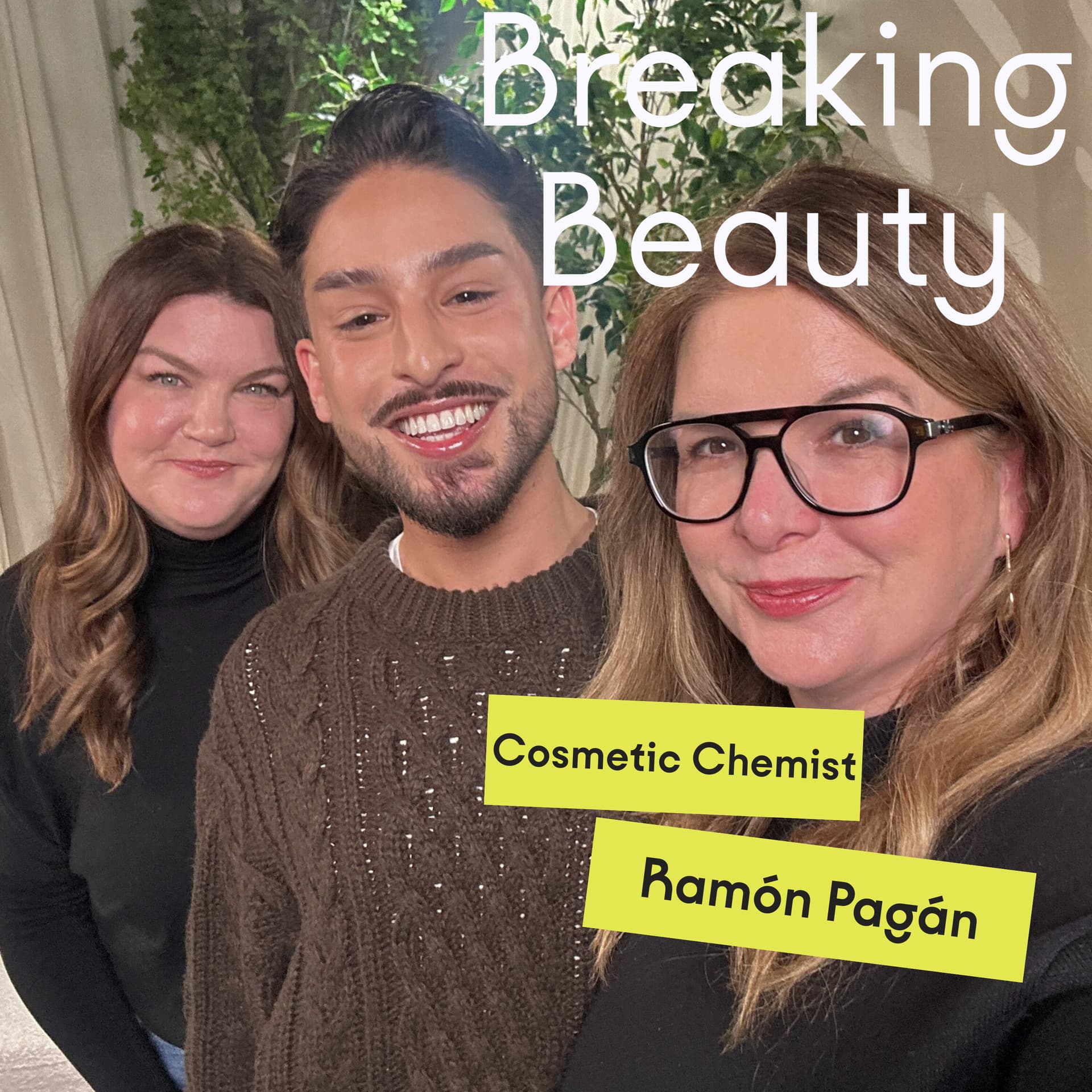
How-to Think (And Shop!) Like a Cosmetic Chemist with Glow by Ramón
Episode Overview In this episode, hosts Jill Dunn and Carlene Higgins welcome Ramón Pagán, a NYC-based cosmetic chemist and product developer known for his engaging social media presence, where he demystifies skincare ingredients and formulations. The episode emphasizes understanding product formulations and making informed purchasing decisions by thinking like a cosmetic chemist.
Key Segments
Introduction
- Hosts introduce themselves and share excitement about upcoming live events in Brooklyn and Toronto.
- Discussion of Ramón Pagán, his popularity on social media, and his expertise in cosmetic chemistry.
Game
The Traitors – Skincare Edition
- A fun rapid-fire game where Carlene evaluates various skincare habits as either "faithful" or "traitorous" to skin health.
- Highlights include:
- Skin Cycling: Considered faithful.
- Daily Exfoliation: Considered traitorous.
- Ceramides and Glycerin: Considered faithful.
- Skin Barrier Recovery Time: Clarified as potentially misleading; recovery can happen sooner than six months.
Interview with Ramón Pagán
- Expensive Ingredients: Discussion on what makes an ingredient "expensive" in skincare, focusing on formulation costs versus marketing and packaging.
- Sunscreen Ingredients: Ramón discusses the importance of recent findings on avobenzone and the necessity of reliable sunscreen formulations.
- Active vs. Non-active Ingredients: Explanation of the difference between active ingredients that provide direct benefits to the skin (like vitamins and acids) versus functional ingredients that maintain the product's structure.
Key Takeaways
- Ingredient Sourcing: Discusses how ingredients are sourced and the impact on pricing, mentioning that a lot of ingredient innovation comes from other industries (e.g., food science, material science).
- Consumer Awareness: Emphasizes the importance of understanding marketing claims and knowing that not all high-priced products offer superior benefits.
- Product Formulation Insight: Ramón shares the distinctions between cosmetic chemists and product formulators, highlighting the need for a rigorous understanding of chemistry for effective product development.
Ramón's Favorites
- Products Ramón frequently empties include various sunscreens and moisturizers, with a few specific recommendations for effective yet affordable items.
Save or Splurge Segment
- Cleanser: Save
- Serum: Splurge (depends on the formulation)
- Eye Cream: Save
- Sunscreen: Always save
- Moisturizer: Save (suggests that effectiveness is subjective)
Closing Remarks
- Hosts encourage listeners to follow Ramón on social media and check out their blog for product links and additional content.
- Reminder about the podcast’s accessibility on various platforms and a call for audience engagement through social media and voicemails.
Episode Highlights
- Engaging Format: The blend of educational content with interactive segments makes the episode enjoyable and informative.
- Expert Insights: Ramón provides a unique perspective on cosmetic chemistry that is relatable to consumers, helping to break down complex topics into digestible information.
Related Episodes for Further Listening
- Finding Trustworthy Sunscreens with Dr. Michelle Wong
- Understanding Cosmetic Regulations with Ron Robinson
- Spring Skincare Transition with Dr. Dendy Engelman
Hosts
- [Carlene Higgins](https://www.instagram.com/carlenehiggins/?hl=en)
- [Jill Dunn](https://www.instagram.com/jilldunnbeauty/)
---
This markdown summary provides a structured overview of the podcast episode, focusing on the key discussions and takeaways, making it easy to understand the episode's content and themes.
Written by AI. May contain mistakes. Listen to the episode to check what was said.
Chapters
Tap a time to open that second in VOLive Events Announcement
0:46 to 2:32
Hosts announce upcoming live events in Toronto and Brooklyn.
“because there's a lot going on around here.”
Introducing Today's Guest: Ramón Pagan
2:33 to 3:54
Introduction of guest Ramón Pagan, a cosmetic chemist with a large following.
“about having chemists on the show because chemistry wasn't my best class in school.”
Game: Faithful or Traitorous Skincare Habits
3:55 to 10:01
Hosts play a game discussing various skincare habits and their effects.
“If you're ready, you can put me on the hot seat.”
Conversation with Ramón: Cosmetic Chemistry Insights
10:18 to 14:00
An in-depth discussion with Ramón about his journey and insights into cosmetic chemistry.
“Hi, I'm Kori Kareem, hosting creator of The Intersect, a new show that breaks down the rise and roll of AI in our lives.”
Alcohol-Free Setting Sprays Explained
14:00 to 15:00
Learn about the prevalence of alcohol in setting sprays and the implications for skincare.
“One of the questions I already have for you, because you mentioned setting spray, is Say Beauty just came out with their setting spray and it's alcohol free.”
Setting Spray Ingredients and Myths
15:00 to 16:20
Discuss popular setting sprays, their ingredients, and common misconceptions.
“But so many really popular ones don't feature any alcohol at all.”
Innovation Sources in Cosmetic Chemistry
16:20 to 17:40
Explore how new cosmetic ingredients often stem from other industries like food and medicine.
“That's one of my favorites, alcohol-free.”
Understanding Bioproducts in Cosmetics
17:40 to 19:00
Learn about cellulose and lignin as byproducts in cosmetic formulations.
“leaning into natural things, upcycling our byproducts of other industries.”
Effects of Medical Ingredients in Cosmetics
19:00 to 21:00
Discuss the effects and viability of medical ingredients like exosomes in topical applications.
“So what do you make of this when you bottle it?”
Reading Ingredient Lists Like a Pro
21:00 to 23:00
Discover tips for identifying key elements on skincare ingredient lists.
“materials, there's still other potential benefits with a topical application as well.”
Show all 26 chapters
Value and Pricing of Cosmetic Products
23:00 to 24:20
Understand the factors that contribute to the pricing of cosmetic products.
“Like what makes a formulation worth a certain price point?”
Active vs. Functional Ingredients
24:20 to 27:40
Learn the differences between active ingredients and functional ingredients in cosmetics.
“They want to do custom packaging or like very unique packaging.”
Understanding Cosmetic Ingredients
28:00 to 29:00
Learn the difference between functional and inactive ingredients in cosmetics.
“And that's a very clear like this is helping to brighten.”
Ingredient Pricing and Sourcing
29:00 to 30:20
Discover how ingredient sourcing impacts pricing in cosmetic formulations.
“And this specific argument was one I had to have about.”
Choosing Ingredients for Formulations
30:20 to 31:30
Explore the considerations when selecting ingredients for cosmetic products.
“And when it comes to like ingredients that are more expensive than they need to be, it gets really interesting because you start factoring in like delivery systems or other things.”
Underrated and Overrated Ingredients
31:30 to 32:40
Find out which ingredients are often overlooked or overhyped in the industry.
“And I'll try my best to like fulfill your vision.”
Understanding Ingredient Percentages
32:40 to 34:00
Learn about the significance of ingredient percentages in cosmetic labels.
“And I'm like, that's such a great multifaceted ingredient.”
The Future of Sunscreen Ingredients
34:00 to 35:50
Discuss the upcoming sunscreen filters and their potential impact on formulations.
“Just make sure the product does what it needs to do.”
SPF Testing Challenges and Developments
35:50 to 37:30
Examine the challenges faced in SPF testing and recent developments in the industry.
“And so when you start compromising those things, or when you're trying to make compromise to make both those things happen, that's where certain things can fall through.”
The Safety of Avobenzone in Formulations
37:30 to 40:10
Understand the safety reassessments of avobenzone and its role in sunscreens.
“send it to europe it's a lot cheaper over there is that probably what will happen spain does a lot of SPF testing.”
Eureka Moments in Cosmetic Chemistry
40:10 to 41:20
Hear about personal breakthroughs and innovations in cosmetic formulation.
“Yeah, but it's not making headlines, as Jill's saying, except for here on Breaking Beauty Podcast, everyone.”
Challenges in Creating Mineral Sunscreens
42:00 to 43:45
Discover the complexities of formulating tinted mineral sunscreens and their limitations.
The Reality of Being a Cosmetic Chemist
43:45 to 45:24
Learn about the career challenges and financial realities faced by cosmetic chemists.
“And that's actually one of the big things.”
Engaging the Next Generation in Chemistry
45:24 to 47:10
Understand the importance of outreach and making cosmetic chemistry appealing to youth.
“And I like that you make your content fun.”
Addressing Online Friction in the Beauty Community
47:10 to 48:29
Explore the conflicts that arise between cosmetic chemists and beauty professionals online.
“You even included how many times you emptied it and like why you loved each product.”
Rapid Fire: Save or Splurge?
48:29 to 50:31
Participate in a fun segment discussing when to save or splurge on beauty products.
“A lot of things are not as expensive as they should be or as they are.”
Transcript
Automatic transcript. May contain errors.0:00The following podcast is a dear media production.
0:08Welcome to Breaking Beauty, the podcast all about the breakthrough people, products, and moments in beauty. We're your hosts, Jill Dunn and Carlene Higgins.
0:21Welcome back to Breaking Beauty podcast, everyone. Of course, this is the show all about the breakthrough people, products, and moments in beauty. I'm Jill Dunn, one of your co-hosts, sitting here alongside my pod wife for life, Carlene Higgins. Heyo. So, Carlene, of course, we're a two long time magazine beauty editors, turn beauty podcasters, and we're in your feeds each and every Wednesday. And before we get into today's episode, we just have to do a little PSA because there's a lot going on around here. Yes, we are doing a couple of live events. Yes. And that's so exciting. It's been a minute.
0:53We're doing not just one. We're doing two. Yes, basically back to back. Yeah. One will take place in Toronto, our hometown, and one of them's in Brooklyn. Yeah, of course. It wouldn't be a live podcast event if we didn't have our audience join us. The one in Brooklyn is on March 2nd. We can reveal that. And the one in Toronto is on March 5th. Stay tuned to our Instagram so you can find out details on how to RSVP. There's going to be swag bags, great conversations and being together. It's just the best. Yes. Love that. And we talk to the best people in the beauty industry. We are so lucky going into our ninth year.
1:29we speak to a lot of amazing founders, dermatologists, estheticians, and cosmetic chemists. That is our epic guest today. It is Ramon Pagan, and he has nearly 350 ,000 followers across social media, Carleen. So that's TikTok, Instagram, YouTube. And his audience really knows him best as Glow by Ramon because he's taking you behind the scenes. Yes. Opening up that lab coat and letting us know what goes into a formulation, whether it be skincare, makeup. And he's just a huge, passionate beauty buff himself. Yes, absolutely. And the skin was glowing. Yeah. And I have to say now that I'm a beauty founder as well, Cassap Beauty, that's Beauty 15 for your code, guys.
2:13I have an extra special interest in chemistry. I feel like because in the process of developing skincare, I just have more pointed questions. So I love speaking to chemists and I love that everybody's going to get a taste of how to think like and how to shop like a cosmetic chemist in today's episode. And I'm pretty picky about having chemists on the show because chemistry wasn't my best class in school. I'm going to be honest. So sometimes I like I can get a little distracted or a little like I'm not all the way tuned in. But the way that he is able to communicate about chemistry, I'm interested.
2:49I'm listening. Yeah, it's for the people. That's right. But before we get into our chat, we have a fun little game. Yes, this portion of the episode is brought to you in partnership with our friends at Sephora. And fun fact, and this is completely coincidental, everybody, our guest today used to work on the floor at Sephora. Yeah, I know. It's amazing. I feel like that's just a whole other level of experience right there. When I walk into a Sephora, I love, I don't know if you do this, chill, but like I drill them. I like test them. But I just find they know so much because there are so many brands under one roof, not to sound like an ad, but it's like they have to know a little bit about all the brands.
3:30So I'm always just like, what's the best this? What's the best that? What's selling out over here? I love our little chats and how helpful they are. They're very knowledgeable, the beauty advisors, because they are getting training. And I can imagine if you are a cosmetic chemist or have an interest in that as a young person working at Sephora is kind of like your dream job. And, you know, no matter what your skin type, they have you covered. So now on to the game. Yes. And Carlene, I'm putting you not really on the hot seat today, but kind of the lukewarm seat. If you're ready, you can put me on the hot seat.
3:59I'm ready. And, you know, I'm obsessed with reality TV and specifically right now. My obsession is the show Traitors. Have you seen it? I have not, but I know I've seen little clips on social. Okay. It's a reality competition show that's on TV. It's kind of like a game of Clue. Yes, I love Clue. You're trying to figure out in the group of 20 plus people, who's a faithful, who's faithful to the group and who is a traitor, who's trying to deceive, who's the mole, who's trying to, you know, wreck the game and deceive everybody from the inside out. And they want to take home the prize money. So that's the premise.
4:33Okay. I'm going to get my poker face on. Yeah. And it always takes place in some grand setting, like a Scottish castle or like a Quebec Manor or something. They have them all over the world. And so in this little game I created, you have to respond, Carleen, with whether the habit I'm describing is traitress to your skin or faithful to your skin. So does that make sense? Yeah. Okay. Let's go. Okay. All right. So skin cycling, your retinols is a smart strategy to tackle fine lines and wrinkles. Carleen, is this habit faithful to your skin or traitress? Okay. I'm going to say faithful. all the way.
5:11I do this myself. I love cycling. I just keep it really simple. So I do one night of actives, one night rest, one night actives, one night rest. And I don't see any flaws with that. I think you're exactly right because we know with retinol, it's all about the consistency. Yes. So you need to get on the routine that you can tolerate. And at Sephora, they have so many retinols and retinol alternatives, brands like Tatcha, of course. Caudalie, of course. Shawnee Darden. I love that one. Oh, yeah. They have In Beauty Project and also Innisfree as well. So they've got you covered with the skin cycling with the retinols.
5:47Highly recommend. All right. What's next, Jill? Hit me. Okay. So exfoliating every day is always a good idea for your skin texture. Carleen, is this a habit that's faithful to your skin or traitorous? Okay. Well, I'm a sensitive skin girly. I'm going to say that up front, but I think a lot of people have sensitized skin as well. So I'm going to go with Traderus. Ding, ding, ding, ding. You got that right. I think this can hurt your barrier. Exfoliating every day can hurt your barrier. Okay. So it really depends on your skin type. You know, for those that are oilier skin, maybe you can tolerate it every day.
6:22But even that, you got to listen to your skin. So if your skin's like myself, I'm oily skin, I can tolerate like the Dermalogica Daily Microfolian every day. Right. And I can tolerate the Sophie Pavet Mandelic Acid Serum every day. Right. But maybe something like the Paula's Choice BHA exfoliating liquid, I wouldn't do that every day. Yeah, totally. And even the Dermalogica, I know they have a milky microfoliant. Milkfoliant, I think. Milkfoliant, and that's ideal for more sensitive skin. So yeah, it depends on the product, depends on your skin. And I know a lot of people love the brand Edom as well.
6:56And I wanted to shout them out because they're BIPOC founded and I know we want to support a lot of diverse brands. So I love that. Yeah. All right. On to the next statement. Ceramides and glycerin. Are these ingredients faithful or traitorous to your skin's hydration, Carlene? Ceramides and what was the other one? Glycerin. Oh, I mean, they are faithful. True. Did I make this too easy, you guys? Yes. Maybe I made it too easy for you. Yes. This is like a lifelong. These are lifelong ingredients. You think about your skin barrier as the walls of the castle. Yes. And the ceramides fill in those gaps between the stones.
7:32Yeah. The mortar. The mortar, if you will. And the glycerin, I mean, yes, that's just the best humectin ever. It really is. And they're preventing that trans-sempel dermal water loss. I know that the road glazing milk has ceramides in there. It's so good. Use it all the time. The summer Fridays, they have their new Cloud Dew Gel Cream Moisturizer, which I like as an oily skin person. That has glycerin. Of course, how many times have we talked about that Astura Attoberia 365 Cream? That's an easy hit. That's K-Beauty. So good. a chock full of ceramides. And Carlene, I know you're a huge fan of Dew Skin.
8:06Yes. What's the one you like from them? I like the Instant Angel. That's the one. I love to travel with that. I travel with that and my road glazing milk. Yes. And just the combination, that one-two punch. The layering is perfect. And yeah, that one you mentioned, the Dew Skin, it's like brimming with glycerin and ceramides. So that's amazing. Final question, Carlene. So far, you're doing very well, I'm going to say. It takes at least six months to fix your skin's barrier. Carlene, is this statement faithful to your skin, aka true, or is it traitorous, aka false? Okay. I am not a dermatologist, but I am going to guess that it is traitorous.
8:44Exactly. I think it's a lie because I know that your skin cells turn over every 30 days. So I feel like you should be able to repair your barrier in that amount of time as well. Yeah. I don't know the exact timeline, but definitely with the right barrier care, you don't have to wait six months. Got it. So a couple of favorites are the Tower 28. They have their SOS Barrier Redness Recovery Moisturizer, which is really good for soothing. Dr. Jart, they have the Ceramide in line. Both you and I have talked about that so many times. I use that all the time. I always just say that's the one with the yellow, the yellow cap.
9:17And then Experiment is a skincare line developed by Chemist. And they have their cult fave super saturated serum. And that's all about barrier protection as well. Okay. Need to try. Okay. Well, Carleen, the game is over. you are still in my castle. You have not been banished from my vanity. Oh, good. And in a world of skincare traders, everybody, trust only the experts. And of course, Sephora is the trusted destination for all things skincare. And thank you to Sephora for partnering with us. And they're going to remain faithful to your skin goals, Carlene. And if you want to know more about the products we shared from top brands like Summer Fridays, Rode, Laneige, Caudalie, you can shop skincare at Sephora.
9:55And now onto our conversation with cosmetic chemist Ramon, which you can also watch on our YouTube channel.
10:18Hi, I'm Kori Kareem, hosting creator of The Intersect, a new show that breaks down the rise and roll of AI in our lives. In each episode, I talk to bold thinkers, builders, and leaders about how this technology is shaping our everyday experiences from work and well-being to communication and decision-making. And after 25 years as a journalist and media executive, I'm here to help you make sense of this moment. If you're curious about what AI is, what it means for you, or how to start using it, tune in every Thursday, wherever you get your podcasts.
10:55So exciting that you are here. You are glowing, by the way. Thank you. It's sweat from running through the city. The MTA was not my best friend today. No, I need to know the lip product you're wearing because I noticed it immediately. So what's really funny is it's just software by experiment, but anywhere I go, I always get stopped and asked what's on your lips. Like I've had waitresses stop mid-order taking to be like, what lip product are you wearing? Okay, there's so many facets to what you do, like we mentioned. So how did you get into beauty? For a lot of the skincare people in the industry, I feel like a lot of us get into it because we have our own skin concerns or skin problems.
11:30It was really bad acne, really bad acne. You would never know. Thankfully, I'm very grateful that I was able to keep really good skin texture. And I mean, I am wearing makeup right now and I get breakouts still every other month. But it really comes down to, okay, what's potentially causing this? oh what ingredients are good for this oh what do these ingredients do how do they work and it was like this snowball effect into wanting to then make products and before the skincare concern part is actually just makeup i'd use makeup to cover it up but that's such a superficial solution so it was that which then became a deep dive and here we are like 10 years later wow and for people who don't know what's the difference between a product formulator and a cosmetic chemist There has to be like a technical definition.
12:13But for me, a product formulator is you have the capabilities of being in a lab, but I just give you a formula and I'm like, just make a cosmetic chemist. And I've actually talked to a few other chemists about this because there's a debate as to what really qualifies you as a cosmetic chemist. Because a lot of us have had really different paths to get into the industry. and I think for a cosmetic chemist it's a really good foundational chemistry understanding so that if you need to troubleshoot in the lab you're able to do so a lot more quickly and a lot more easily so it's like oh why is my emulsion separating let me like look at the emulsifier try to understand both phases and how do I make this a lot more compatible how to make the formula more efficient people say like oh you need a proper chemistry background one of the best cosmetic chemist I knew.
12:57I did my interning in Germany. There, you don't have to have degrees. You can just apprentice your way into the industry. So he'd been doing it for 25 years, had no degree, but I'd be like, ugh, I'm trying to make this setting spray, but the shimmer keeps settling down. He's like, oh, use this at this percent. It'll disperse everything evenly without affecting the viscosity. He just had this knowledge. So I think it's, in my head, less a qualification thing and more just an ability to understand the intricacies to troubleshoot. So would you say a product formulator is maybe somebody more where you could like give them the recipe?
13:28And they can do the exact, they can execute on a recipe really well. Which is correct. But I mean, you can give anyone who's not a baker a recipe and hopefully they like figure it out. And there is maybe a little bit more intricacy of like, you can understand the general concept of things. Like I understand if I'm using this much butter and oil for a lotion, I just need this much emulsifier. It should be good. It'd be fine. Yeah. Yeah. But especially trying to be a little more innovative. I think that's where like the chemistry thing really comes in. Correct. I feel like we're going to go off course so many times.
13:59We're going to have so many meanderings in this conversation and I'm going to love every minute of it. One of the questions I already have for you, because you mentioned setting spray, is Say Beauty just came out with their setting spray and it's alcohol free. And they were like, OK, this is like the way they positioned it is it's going to be like one of the first clean, quote unquote. quote. I know. I see the little smile coming. Setting sprays. Aren't they like, do they all contain alcohol? I was surprised to hear that. I was like, is that really a new thing that there are alcohol-free setting sprays?
14:33No. And a lot of setting sprays don't feature alcohol. In my head, it's very rare to see one with alcohol. Some of the heavy duty, like fixative ones, like Make It Forever and don't quote me, but I think one size, they feature it. And alcohol is just useful for solubilizing things, but also it's a volatile it evaporates off. Yeah. So that sometimes it's utilized to include more robust film formers or a higher concentration, but it flashes off so it really allows things to set. Okay. But so many really popular ones don't feature any alcohol at all. Okay. I'm going to think I'm using a Korean one today, but like Fenty setting spray.
15:07I don't know about the Urban Decay All Nighter. Okay. Well, that's good to know. So we don't need to be afraid that there's alcohol that is going to dry out our skin with setting sprays. No. And I'm, I mean, that's the last step of your makeup routine. You probably have like 15 layers on underneath that. And I'm very pro alcohol in a lot of products. I have oily skin, so it just makes things a little bit more lightweight. It can make things feel more cooling on the skin. But again, it flashes off so quick. The concern to me is minimal if like non-existent at all. Okay. Even with skincare or what?
15:39Yeah, correct. Yeah. Yeah. Okay. That's, well, that's kind of new to hear because normally what we hear is you do not want any alcohol in your skincare. Unless you're really sensitive to it. And that's my mantra for most things. Unless it's going to be a problem specifically for you, it's not bad. Yeah, it's safe. Correct. Yeah. And that's why it's been used for so long. I know like from, I know like Polish Choice, that's like one of their big things is we don't do any alcohol. Paula, she was really anti-ethanol in products from, again, she's a skin professional. That's her journey. Yeah, it's interesting.
16:08Say, I like some of their products, but they are very positioned in that clean beauty sector of things. So of course you want to tell a specific story to sell your brand. But no, like a lot of other setting sprays, like Milani Make It Last, the matte one. That's one of my favorites, alcohol-free. Yeah. Okay. And probably a lot less expensive. In your work as a cosmetic chemist, where does new tech or new ingredients come from? Because I've read before that many ingredients are kind of inspired by breakthroughs in medicine or pharma or biotech, and then they almost like can't use them or they're thinking they may not have an application that they initially intended.
16:45And then they thought, well, who can we sell this to? Let's sell it to the beauty industry. So I'm just wondering if that is accurate or where do new ingredients come from? One of my favorite things about being in the cosmetic industry, and again, my background is academic. So I came into this from a cosmetic science degree standpoint, bachelor's and master's, is so many concepts, so many practices, so much ingredient innovation is actually borrowed from other industries. Going back to setting sprays, the primary film formers are borrowed from, I believe, like painstreet. So many of the analytical testing methods and practices are from the food industry, material science industry.
17:18Some things do come from medicine or biotech. So we pull from a lot of different industries, food science as well. But we have these trade shows for ingredients. One of the big ones is called In Cosmetics, and that's based in Europe. In New York, we do Supplier's Day. And that's where the ingredient suppliers will come and be like, here's what's new. A lot of the innovation I'm seeing, again, the practices are borrowed from other industries, but I see a lot of people leaning into natural things, upcycling our byproducts of other industries. For example, cellulose is becoming a really popular byproduct and that's borrowed from the paper industry.
17:52So it's like we have all this stuff. Are we just going to get rid of it or? Will we refine it and use it? We can do so many things with that. And so what does cellulose do on the skin or in makeup? Cellulose is a component of like natural materials. And based off how you refine or work it, I guess, you can get different materials. My master's was done on a compound called lignin. And lignin is also a byproduct of like leaves. And lignin has a lot of natural benefits. but cosmetically it also is like a very newly, like people are trying to figure out what we can do with it in cosmetics. So that's one example.
18:32Yes. Another one is, oh, we get rosehip oil from this thing. Well, we have all this byproduct after getting the oil. Oh, this company called Ashton was like, oh, we can like get like bioretinol from it basically. So things like that. Interesting. That's what I'm seeing a lot of. Yeah. I mean, even if you go back to something as simple as Vaseline and like or don't like it, whatever, but it is a byproduct of the oil industry that has been refined and they're like, it's great for skin barrier. And like every dermatologist will still tell you that. And some people like to formulate with it, some don't.
19:00I do. And again, Vaseline, super safe. Petrolatum. We're big petrolatum stands here.
19:11I have a question. So when you see these ingredients like that are coming from the medical industry, like exosomes, or we're seeing a lot of like upcycled bovine proteins and the company that we interviewed and they were getting growth factors from blood banks. So what do you make of this when you bottle it? Are we actually getting any kind of major effect or is it a little bit of a stretch? I feel like people see, oh, if you inject it and get this material dermally into the skin, you have all these benefits. topically, you most likely are not going to see a lot of the same benefits. Exosomes is like a really great area.
20:01My thinking process for a lot of things is I don't care. Therefore, I'm not going to put energy into that. Exosomes is just not a focus of mine. So I don't know a lot about it necessarily. If I was to direct people to like other friends of mine. But like I've seen a lot of controversy on exosomes and the viability of them, especially post-manufacturing. Are you ensuring that the viability? Yeah. Are they still there? Are they still able to do what they're going to do? Growth factors is an interesting one. I feel like there's more data on that. And we're seeing like, okay, they could potentially do something, especially considering more novel like delivery systems.
20:29But basically my whole thought process is in a finalized product that you as a consumer are getting, is that ingredient still viable? And is it able to get to where it needs to get to do what it needs to do? And a lot of times that's not always the case. But for example, PDRN injected has the benefit for like collagen and all that. Topically, it could still have benefits around like soothing the skin. So like inflammation. aging. So you're getting the anti-aging from a different direction, maybe. But yeah, it's like a lot of buzzwords and a lot of miracles people are trying to sound. But also as biological materials, there's still other potential benefits with a topical application as well.
21:04You still have like amino acids and proteins. They're just maybe not as like sexy to talk about. Like exosomes are like more sexy to talk about right now, right? So they get a lot of the headlines. And even with that, are they bovine sourced or are they plant sourced? And the plant source, as more ethical as that is, it's like the data for that is just not there the same way it is for animal sourced. Yeah, interesting. Let's talk more specifically about ingredients and what your trick is to reading an inky list like a pro. Like I noticed in your content, like you are shopping, you're out there shopping for skincare, you're looking, you're being a consumer as well as making all this cool stuff.
21:40What do you look for? What are the red flags and green flags like on an inky list or a label? What's so funny is I am, I am fundamentally a consumer. You're so correct about that. I love seeing what's new, what's out there. I was at a Sephora in Dallas. I spent two hours walking around to the point where I think all the employees were like, what is this kid doing? Like security is following me. I'm like, I'm shopping. It's okay. And I'm always sold on a sensory moment. And I'm always looking at how does this make me, how does it make me feel? How does it feel to apply it? How does it feel on the skin?
Read the full transcript
22:09Does it smell good? And then beyond that, I start looking at the benefits and what they're trying to sell you on. And at the end of the day, a moisturizer is going to moisturize. no matter how you put it, it's going to increase hydration. Like no one is revolutionizing a moisturizer. So some of those claims do get outlandish. And then that's when I start looking at the price point. And I'm like,$120 for this? Yeah. For no reason. Yeah. I'm not going to name a name, but I had a friend send me a brand. And it was like this Derm brand that just launched at$230 trying to sell you this miracle. But all the claims were literally, this is a moisturizer.
22:43And also like as much as some people want to be like, oh, it's like a patented ingredient. It's not hard to patent things. I'm so sorry. Yeah. So that's what I always look at is what are the claims people are trying to make? Yeah. And then what price are they trying to sell it at? But what sells me is just, does this feel good? I do want to touch on something you said, which is about, which is what we get asked all the time. Like what makes a formulation worth a certain price point? We get asked a lot about the difference between drugstore, medical grade, luxury. And like, is the higher price point ever justified?
23:14It really depends. to me, coming from this side of things, formulas are really not expensive to make. If you're, I'm trying to think of how to word this, like fundamentally, like if you're looking at how much a product costs to dismanufacture, we're not looking at more than a dollar, two dollars, maybe higher price point if manufacturing is like really intricate or a specific active is just really expensive. So what you're really buying then is like the markup, the marketing cost, the packaging cost, the, again, the miracle, the story they're trying to sell to you. So products aren't expensive.
23:42And that's why certain price points I can't justify a lot of times. But then where it really hits home for me is then what are they doing behind just selling and marketing the product? And that's where the clinicals come in. Clinical trials are really expensive. And so I have a lot of indie friends who they've launched brands and I'm like, this product is so expensive. And in my opinion, I'm like, sometimes they're doing a little bit too much with the formulations. I'm like, this could have been simpler. But it's really they spend$100 ,000,$200 ,000 on rounds of clinicals to verify claims. And therefore you have to recoup that cost.
24:14So that's where, to me, the price point actually can make a difference. That's a good point. Yeah. So it's not about the raw material, but it's still going into the product development. Yeah. Packaging is also a big one. They want to do custom packaging or like very unique packaging. And that's where things Pat McGrath was a good example of that. Yeah. She did that lipstick where the bullet comes straight up and down. It doesn't twist. And that was a custom component for her. Yeah. That's also like the box for my product is also handmade. But anyway, that's another story. So we've talked about pricing.
24:49Now, what about what makes an active ingredient active versus a regular ingredient? This is a question, like, oh, that's a really good one, where even on our end, it's like, how do you really justify this? Because functional ingredients are the ingredients that just make the product the product. We sometimes work off of something called like a chassis or like a base formulation. So like here's a very basic emulsion. And the idea is you have like the water, usually something to thicken up the water. We're talking like a regular like lotion, for example. And then it's like, are the humectants part of that chassis?
25:19But in humectants, they kind of have an impact on formulation, like propylene glycol. I think it's really good for stabilizing in freeze-thaw stability. So like basically it makes sure that if your product has to go through really cold conditions, it's going to still maintain stability. But propylene glycol is also humectant. So there is like a really weird gray area. You also have the primary components of the oil phase, the emulsifiers, and that's it. So then things beyond that that have a biological impact on the skin is where you start getting into like the active claim. So like humectants, as simple as they are, they are actives.
25:53They are. OK. Treatment ingredients like anything for brightening or texture, all that. Those are actives. Okay. Yeah. It's also tricky because it's like, that's an active ingredient, but technically like Health Canada or probably the FDA wouldn't like that term because then it wouldn't be a cosmetic, right? right? I think the big thing is just drug claims. There's obviously things that are cosmetic ingredients and things that are drug ingredients. And like glycerin is an ingredient that is a cosmetic ingredient. At a certain percentage, you can then start claiming it's a skin protectant. Same thing with Vaseline or petrolatum.
26:33So it's kind of like A, concentration, B, how you're trying to sell the product as well. This is where like the wording comes into play, like treats acne targets blemishes salicylic acid two percent can do both but that wording is what makes it the drug versus the cosmetic yeah which is the drug language acne if it's having a specific like uh impact on a skin condition a disease so like acne uh-huh reduces pigmentation that is the drug claim improves the appearance of dark spots yeah there's a very clear definition of a cosmetic does this uh-huh and if you're selling as a cosmetic you have to be really diligent about the wording so i work with a lot of brands sephora has the most clear you cannot say this say this instead and it literally has to be like the look of the appearance yeah right is hyaluronic acid an active ingredient i mean technically yeah it's hydrating so any humectant any what about an occlusive like lanolin or something uh correct but then it's like especially for me in my opinion is lanolin active i think it's a skin protective no yeah but also it's lanolin's a really unique ingredient in that the structure of the actual like compound that it is also confers humectant benefits, but it also like a functional ingredient.
27:40It low key, if I remember correctly, I haven't used it in this capacity, but like in my training. Someone mentioned it can also to some degree work as an emulsifier. Okay. So that's where some oil phase ingredients, they function to stabilize an emulsion. They help to create or increase viscosity in a formulation that's functional. They're also great at like moisturizing and occluding. That's where it's like a, is that an active or not? Yeah, that is a real great area. Yeah, I've always wondered that because I'm just like, what are things that are just like not necessarily stabilizing the formula, but just doing very basic things versus like, to me, a vitamin C is inactive because you see what it's doing on your face.
28:16And that's a very clear like this is helping to brighten. It's helped acne. It's helping with texture. That is inactive in the most clear way. Yeah, it's functional. Yeah, I guess on your skin versus just the formula, maintaining the formula. Yeah, so I was going to listen to this and be like, this kid is crazy. What are you talking about? No, but that's the thing about science is like, it's never like 100%. It's like, it could be this, it could be that. It's always evolving and changing. And that's why. Well, I don't think scientists would probably. It's usually science is science, right? It's just our interpretation of it.
28:48They say that the definition of science is that you're basically always open to it changing and evolving and that it's never black and white. We're always arguing with each other. That's where it is. 100%. So like, well, it could be this is because I had a big project where it was develop a project or develop a product. And this specific argument was one I had to have about. But it's doing this for the formulation. They're like, yeah, but it also does this for the skin. So therefore, that's an active. And I'm like, got it. OK, we touched a nerve there.
29:23I'd like to know from you which ingredients are expensive, like genuinely expensive, and if they're worth it or not, and which ones are inexpensive, but some brands charge a lot for them. Do you know where I'm going with this? I am. This gets really complicated, I think. Part Part of it comes down to how is the ingredient made or sourced. Okay. And that factors in a lot of the costs. Like if it's coming from like a bioengineering company, we have a company that we use called RAN, R-A-H-N, RAN, RAN. They do a lot of like bioengineering. Actives are very expensive, but they also do a lot of like clinical and testing to like show like this is really cool, really fun.
30:02Look at all the benefits. And they are Swiss. Okay. So just that in itself makes it expensive. Yeah. And then now, oh, this is why a lot of brand pricing had to go up this year is the import. A lot of things are not made here in the U.S. or from European or Asian companies. So that factors into the pricing. And when it comes to like ingredients that are more expensive than they need to be, it gets really interesting because you start factoring in like delivery systems or other things. Not just the sourcing itself, but more so like complexes. Like it's the big thing. You asked the question earlier, like, are you good inky?
30:35What do you see? You can't look at an ingredient and be like, oh, is that ingredient? because actually a lot of times it's part of a larger ingredient complex. Yeah, you'll often hear that like peptide complex or what have you. And it can mean a lot of different things. Yeah, even with emulsifiers, you'd be like, I know that's an emulsifier, but I actually don't know if that company just bought that emulsifier as is or it's part of a larger like, just throw this into your thing and it'll perfectly emulsify because there's five emulsifiers in this ingredient complex. So that's when the pricing for things can go up some more.
31:00Yeah. So sometimes it's just like scarcity, yield if it's a natural plant extract, how that extract is... Sourced. Sourced. Yeah. A lot of those factors come into play. So it's never like a clear answer. Right. Okay. Is there any ingredient that you won't formulate with? Why or why not? No. A, I work for brands and therefore I am just like the receiver. I am the one that makes it happen because you as a brand are coming to me. So I'm just going to do whatever it is that you like. And I'll try my best to like fulfill your vision. But also B, like there's just, I do this because I like it. And therefore...
31:37It's always fun to play with like any variety of ingredient, categories of formulation and see there's nothing that's like inherently like bad or just like I'm over that I won't formulate with it. Yeah. What's the most underrated ingredient in your opinion that maybe needs to be more beloved out there? Lanolin. Yeah, there's a lot. I feel like it's a lot of the simple ones people overlook. Glycerin's getting a moment now. thankfully glycerin's just a really amazing product by itself as a kind of supporting character in a lot of formulations like fun facts glycerin's used a lot in sunscreens and just that increase in hydration helps to even out the like topical topography of the skin which helps to get a more even film thus increasing spf for example so like glycerin superstar okay yeah what about the like an overrated ingredient that you think's used a lot and you're like i don't know why this is a big deal.
32:29Hyaluronic acid always comes to mind just because I think there's a lot more, a lot other ingredients that do better or that just tell a better story, in my opinion. So it's like hyaluronic acid hydrates, but I'm like polyglutamic acid is right there. Ectoin is getting a moment, thankfully. And I'm like, that's such a great multifaceted ingredient. What does that one do again? Ectoin. It's like, it does a lot of things. It's like a skin protector slash humectant slash antioxidant, I believe. You don't need a lot, like a half percent. Gives you like really, really good results. A lot of data supports it even at that lower percentage.
33:01What do you make of percentages being on the label? Like I remember a few years ago, this would be like a question we got a lot in our DMs, like what percent is the hyaluronic acid in the formula? Like it was like the ordinary effect. What do you make of percentages on a label? I mean, that's not your job to like know basically people just because again, sometimes things come back to the complex, like, okay, realistically in a product, it might only have a really small percentage of that specific active. That's because it's part of a bigger complex where it is featured at that higher number and that higher number ensures actual penetration or efficacy or whatever.
33:35So even though the active itself is at a lower number, you're still getting a good benefit from that. Also, sometimes I always call it like the higher, faster, louder effect. Like people just want like high octane and that can sometimes be a negative thing like irritation and that irritation leads to other issues down the line. So I always tell people like, just don't worry about that. Do you see the benefits you want from the product or like they're not disclosing the percentage, but look at the clinicals that actually show efficacy. Worry about that. Just make sure the product does what it needs to do.
34:03You're getting the effect that you want from it. Don't worry about the numbers. Are there any other ingredients that you're excited about right now? Honestly, I've been like in a really sunscreen specific space. Yeah. That's just like my main category. So right now it's just getting BEMT here in the U.S. hopefully this year. That's the trade name is Tinosorb S, or it's going to be sold as Parcel Shield here. It's a broad spectrum filter that's been used overseas for like 20, 30 years, and we're just not getting it in the US. So hopefully it's going to make, well, I say hopefully like I've not worked with it.
34:35Hopefully it's going to make formulas more elegant. It's also going to be GRACE certified, which by the FDA standards, that's generally recognized as safe and effective, which the only two filters that are currently GRACE are titanium and zinc mineral filters. So with that, hopefully that means the clean beauty people are going to be fine with us using Tinosorb S in mineral formulations, which that just means reduced white cast. Yeah. Oh, okay. More elegant. For sure. Kind of going back to the, obviously there was all this drama in the sunscreen space because, you know, the formulations were not living up to what it said on the label.
35:14and so maybe you can speak to that as well because I know that there's also like a 2.0 of the drama of like who's responsible that's I funnily enough I seem of this but I'm just like that's not my circus not my monkeys right now I know other creators like Lab Muffin Hannah English they've done a lot of content specifically breaking this down and trying to really objectively give details on the situation formulating mineral sunscreens is not easy I'll start there. And also on this end of things, you want to get a good SPF value. You also really want the consumer to have an enjoyable experience.
35:52And so when you start compromising those things, or when you're trying to make compromise to make both those things happen, that's where certain things can fall through. But fundamentally, we've seen this kind of issue happen a few times now. There was a big American company, AMA. They had a big scandal like, what, 10, 15 years ago? Korean sunscreens had a big scandal about five years ago. And the Korean solution was they started doing two third-party testing rounds in different markets. So one Korea, one Europe, or one Europe, one somewhere else. So they're like, it's not us doing it. It's not even the manufacturer.
36:25We're going to two different third-party companies. And look, we're getting these values. Aside from that, now we're seeing it with choice. Yeah. And it does seem unfortunate. I would say as like a brand founder, I don't have a sunscreen. But if you were to go get it tested and you can't reliably do that, and like, how are you going to audit that company to say, OK, well, did you actually do your job right? Like, if you're paying them, it just seems like they should do what you paid them to do contractually. And I wonder, again, just getting to the U.S. now and coming from like, to me, I'm just like, just send the testing overseas then.
37:05we have a lot of things have a lot of innovation has happened recently where again if you're developing a sunscreen you have a really reliable in vitro method now just to kind of get you a pre-testing uh value okay i can at least confirm it'll hopefully be about out of 50 yeah so that takes a little bit of the risk of sunscreen developments out of your hands so that when you go through in vivo testing you're a lot more sure confident yeah i'm like can you just like send it to europe it's a lot cheaper over there is that probably what will happen spain does a lot of SPF testing. So that's like a lot of the Korean brands I do around in Korea and around in Spain.
37:39Yeah. Okay. Interesting. The one thing is just the way we do SPF here as an OTC versus a cosmetic in other markets that really affects a lot of the cost and a lot of the regulations and even just, again, getting new filters approved. Yeah. Yeah. Yeah. Okay. So you're excited about that one. Can we ask you really quickly about Avobenzone? Because I saw that you You shared a recent article that said that proved that evobenzone now has, quote, negligible absorption, no toxicity or hormonal concerns. So what does that mean for sunscreen formulations going forward? Because you seem to be excited about this.
38:15Well, it's more so we all know this. We as in like the internal people. Chemical sunscreens are some of the most scrutinized. But in that regard, those are some of the most constantly reassessed for safety. And I just went to a big sunscreen conference in Orlando this summer where this is one of the presentations. Like, here are the top six most popular chemical sunscreens. Here, we've done reassessments. Here is the final verdict on these. Avobenzone was one of the six. And all of them, all of them, this is avobenzone. This is octocrylene, homosale, octosale. All of them were shown to have negligible absorption, no toxicity, like all proven safe.
38:50It's interesting that avobenzone was the one that was giving the spotlight right now. But avobenzone is just such a unique filter. It's internationally used because it is one of the best UVA1 absorbers. So for me, it's just like if we just have the receipts and the insurance for people that these ingredients are safe and they're for such a special reason. And therefore, we encourage you to use them. I just, I love seeing that. I love people like knowing the products that they use are not going to cause harm. And people, they don't know the test happens behind the scenes. So this is like the answer to a few years ago, the FDA had issued a warning that further testing needed to happen with chemical sunscreens because according to them, it was being absorbed into the bloodstream.
39:32But they had said what they don't know is whether that whether it has any meaningful impact that could be harmful to you. Is that correct? Basically, fundamentally, it's like what that was, hey, we just need more documentation, more receipts. Just assure people, because yet to your point, like there are concerns and there's some indication that this is happening. But it goes back to they were on the grace list and then they were taken off for that reason. And just to get back on the list is going to cost tens of millions of dollars and all this time. I think this year something got put through that could potentially allow them to consider non-animal testing data for safety and toxicology.
40:11but yeah basically it's just this is a step in that direction yeah so it's kind of like helping to close the loop on on that question that was out there correct that's not going to say that avobenz is going to be gray certified now but it's kind of like hey look it's safe it is it's more like evidence that yeah what's that taylor swift quote though this it's like when something blows up it's like every headline negative right like avobenz on watch out but it's like this news snore no one's talking about it it's like when the truth is revealed it's really quiet was how taylor puts it and that is true it really is because the only people sharing it were cosmetic chemists you know and again it's just the yeah because of the role able benzone plays and just a lot of unnecessary like fear behind it's like this is good news and that it reassures you like it's all good finally you can trust us we've known this like we yeah been the wants to tell you, but.
41:06Yeah, but it's not making headlines, as Jill's saying, except for here on Breaking Beauty Podcast, everyone. We got you, Bill. What was the latest eureka moment or what was one eureka moment that you had in the lab that you can share? Was there ever a time where you were like, maybe you had a hypothesis and you're like, what if I did this and this? And it was like, wow. I'm thinking. Do you ever blow yourself away? Well, sometimes you make something you're like oh wow I did that yeah yeah for me I can't think of like the latest one but like I remember when I was first so my big thing like you mentioned earlier was the inclusivity thing and I've always focused on color formulation and sunscreen formulation for deeper skin and now we're a lot more like oh okay this is a thing but back then it was still kind of new and that was utilization of blue pigments to really create more warmth and more realistic skin tone undertones in the deeper range but unfortunately the main pigments to do so ultramarine blue you can't use in otc drugs which means in mineral sunscreens tinted mineral sunscreens you cannot use that blue pigment that's why you only see those limited limited universal shades and mineral well also just because every time you do anytime you launch a sunscreen if there's multiple shades each shade has to have its own testing done so that's one thing we could do a whole episode talking about this basically also once you try to start making deeper shades of mineral sunscreens a you already have x percentage of mineral filters that you need for the spf you need so much black to counteract that and then that it does create more of a grayness because the white the black and then all the other iron oxides blue does a lot to actually bring it back but you're just going against so much white yeah that then you have to actually in a full formula what in the lighter shades but you'd only need this much iron oxides to make a pigment in a deeper shade you need to use a lot more just because you are using so much of the other shades and of course you only have 100 to work with literally so then you're starting to like reduce all the other ingredients yeah and you can't because it's a drug you have to have the certain levels right correct yeah so you just like for somebody with uh who's like a six on the fitzpatrick you would just recommend a chemical sunscreen that's going to be the most like yeah straightforward no white cast also some people have sensitivities and therefore you have to it's a very being a content creator is very hard like the whole bean soup thing or it's like this looks great for me what about for me yeah everyone it's very difficult indeed what would you say is one of the biggest challenges in your industry as a cosmetic chemist that you think people aren't talking about enough as an insider in terms of challenge i can't think of one off the top of my head frustrations a lot of us have though is just like it's hard to be innovative I guess and for example again a lot of us don't have brands very few of like what there's like a few brands now but really again we're the conduit between someone who wants to make something and that product getting to the consumer and in my opinion just like a lot of people who have no business starting brands or making products or doing it and it's kind of like a also it's funny because chemists don't get paid very well.
44:20And that's actually one of the big things. I have students come up to me like, oh, I want to like become a cosmetic chemist. I'm like, do you enjoy being broke? Because unless you're getting high up in seniority and or working in specific sectors of this industry, I know people who worked in labs and they're like, the pay was bad. So now I'm just the person that goes and sells ingredients because that actually makes money. Right. Yeah. That's something that people don't talk about either. That's why it's like, there's so few of us that do content now, but a lot of us chose or realized this was a good route.
44:46So now content's our main job and we consult or formulate on the side unless we have our own brands. Right. Would you say most of your time is spent making content now? Yeah. Yeah. But thankfully, like I get to record in the lab and like I use that for content. For me, a big part of my platform. So going back to besides just being in the lab, one of the other things and I think what's more unique for my content compared to the other chemists is it actually was more of like an activism thing slash an outreach. I really wanted to like inspire kids to pursue this and make it really transparent and visible of a career for them so that they could be like, oh, this is interesting.
45:17I like this concept. Let me look into this more because we need young people. We need young people. We need fresh faces. We need more diversity in the industry. Yeah. And I like that you make your content fun. That's the goal. It seems fun what you do and that's why I really like watching it. It's not dry at all. Everyone needs to go follow you. There are the people that do the very dry, very like, this is science. I'm like, I mean, that's great for you. Yeah, yeah, that's fine for you. It's more approachable. Can I ask you something that's a bit of a hot topic? We talked earlier about how scientists, they like to get into it with each other sometimes.
45:49What do you make of the friction you'll see online between cosmetic chemists or between a brand founder and cosmetic chemist and an esthetician? You see it sometimes in the comment section going. Correct. All I'm going to say on this is that until you have been in a lab making a product, working with an MPD brief, you have seen a product go from ideation to market. I think that limits your ability to talk in certain situations or opine on certain things. it is one thing to know something theoretically per se but in the actual practicality and the actual like physicality of doing it it's very different i always use an analogy of like i don't know why on facebook i got into like this weird sector of like a lot of my like recommended posts were like flight simulator videos oh and the comments being like why did he do this technique for the landing and blah blah blah and i'm like but have you ever flown a plane yeah like those are very different worlds okay i mean it feels like that a lot of times people talking about things they don't know enough about.
46:49And they're like, well, did the research and the textbooks say this? And I'm like, yeah, but like actually like executing that in like a lab setting and making a product for consumers. It's a very different ballpark. I need to ask you about a video that I that you uploaded recently, and it was all of your most emptied skincare products in 2025. It was the most thorough empties tea video I've ever seen. You even included how many times you emptied it and like why you loved each product. And there was like 10 products on the list and yeah I was like wow this must have taken days on end for you to film and record what is your most emptied product of all time it's surprisingly like therabreath therabreath mouthwash the like light blue one okay but skincare sorry therabreath it's the beauty of joseph and aqua fresh the relief sun that for me it's like I always relate to things yeah I just throw one product on my face have it do 17 things and also I know it's gonna work under makeup that's the one yeah so i think and i think the number is actually higher i just couldn't think of a specific the pink one or the green one that's the blue one or blue one blue one okay um yeah that is it's the korean one that's right because they reformulated the north american one right yeah i don't love it as much i actually for a sephora sunscreen that the cheapest sunscreen they have and it's water resistant that's a really cute one but no the one i emptied the most of was the korean aqua fresh yeah i think i emptied six tubes of it is what i said in the video but i more in real life.
48:13Wow. Incredible. Incredible. All right. So really quickly, we're going to do a rapid fire fun game with you. Save or splurge cosmetic chemist edition. Okay. Cleanser. Save or splurge? Save. Okay. Serum. Save or splurge? Depends, but usually splurge. Okay. Eye cream. Save or splurge? Wait, which one? We need to know what you splurge are. Oh, yeah. Sorry. I forgot to ask the follow-up. A lot of things are not as expensive as they should be or as they are. Again, this comes back to like peptides are expensive. If the delivery system is there and the efficacy is proven, that's where I'm like. So I did a whole video talking about like peptides I actually like endorse, support.
48:51And it's like Medicaid was on there. Educated Mess was on there. But then you also have like the Ordinary's Growth Factor Serum. Very affordable. But yeah, like exfoliating, retinoids, those, they don't have to be so expensive. Yeah. That's where I'm like, don't. Yeah. We love the Medicaid one. So good. Eye cream saver splurge. Save. What's your favorite? this is a really loaded question because i i don't use eye creams like that so like for example uh haru haru has like a really cheap really affordable gel one it's such a gorgeous texture we'll try and find it and link to that and also like the keels avocado one oh yeah classic yeah body cream save or splurge save i have a handful naturium's uh retinol one vaseline radian x that entire line is stunning have you tried the cycler ones no i've talked a lot about that brand we can talk off after off camera.
49:36I haven't tried them yet. It's an interesting concept to me. The smells are great. It's nice. I'm obsessed with one of their body lotions right now. Yeah. I think from, if you're interested in like the experiential, how you feel instantaneously, I think you will really like that line. Okay. Yeah. Sunscreen, save or splurge? Always save. Yeah. Never splurge. Sunscreen should not be that expensive. Yeah. And we kind of covered this, but acne treatment, save or splurge? Save. Yeah. Basically a lot of things are based off like very clinically effective ingredients. You don't have to spend a lot. You don't have to spend a lot.
50:09Like Thayer's, they have these little acne pads,$10. Amazing. Okay. What about moisturizer? I choose to say save that moisturizers and lip balms are some of the most subjective products when it comes to what people like and what they want. I've done like entire like market research and consumer surveys. That's where it gets really specific and particular. So it's what you like, what you want. I say save. Yeah. Well, thank you so much for your time today. And everybody check out this episode on YouTube, which is Breaking Beauty Podcast. And follow Glow by Ramon on YouTube, TikTok, Instagram. Thank you.
50:45Thanks for listening. You can find details on every product mentioned in today's episode, along with our exclusive promo codes on our blog at BreakingBeautyPodcast.com. While you're there, be sure to sign up for our newsletter. Every episode will be delivered directly to your inbox so you won't miss a single thing. And get social with us. Let us know what you think of the episode. You can follow us on Instagram at Breaking Beauty Podcast. And did you know we also have a private Facebook group? Just search Breaking Beauty Podcast chat room. You can even leave us a voicemail at any time with questions or feedback at 1-844-227-0302.
51:20And don't forget to subscribe to us wherever you get your podcast fix. Spotify, Stitcher, Google Podcasts, and Apple Podcasts, where you can show us some love by writing a review. See you next Wednesday.
51:48Please note that this episode may contain paid endorsements and advertisements for products and services. Individuals on the show may have a direct or indirect financial interest in products or services referred to in this episode.
From the publisher
@GlowByRamon is in the house! This week, we’re getting nerdy with NYC-based cosmetic chemist, product developer and aesthetician, Ramón Pagán. Nearly 350,000 social media fans tune in to Ramón’s all-revealing videos, whether he’s pulling back the curtain on mystery ingredients, sharing the secrets to viral skincare formulations or personally whipping up something to achieve glass skin. Today, Ramón delivers his beauty cheat sheet to think (and shop!) just like a cosmetic chemist.
But first, tune in for a rapid fire round of The Traitors – *skincare edition* – in partnership with our friends at Sephora, where Carlene is on the hot seat to prove which skincare habits are trustworthy, or traitorous lol.
In our conversation with Ramón, you’ll learn about:
- What makes an ingredient “expensive”? Are any $300 creams worth the coin?
- Behind the sunscreen headlines: Why Ramón believes that the recent avobenzone data needs to get more news.
- “Alcohol-free”: Does your makeup or skincare actually need to be alcohol-free to be safe and/or effective?
- What makes an ingredient “active” or not?: The real difference between glycerin and vitamin C.
- What Ramon makes of the “friction” online between cosmetic chemists, creators, founders and more. Is there a “right” side?
- Stay tuned to the end for a “Save or Splurge” cosmetic chemist edition – Ramon shares the products you *actually* need to invest in vs save on.
- The exact products that Ramón has emptied - time and time again.
🚨BIG NEWS: Breaking Beauty Podcast is going LIVE this March! We’re heading to Brooklyn on March 2 and Toronto on March 5th for live podcast events, hosted by Jill and Carlene. Keep an eye on our Instagram for the full scoop on how to get tickets before they’re gone! Gift bags, gab sessions and much more. We can’t wait to see you.
A Message from today’s show sponsor:
Sephora has quality skincare for every skin type, and knowledgeable Beauty Advisors who you can trust for recommendations. You’ll find top brands like Summer Fridays, Rhode, Laneige and Caudalie. Shop Skincare at Sephora!
Get social with us and let us know what you think of the episode! Find us on Instagram, Tiktok,X, Threads. Join our private Facebook group. Or give us a call and leave us a voicemail at 1-844-227-0302. Sign up for our Substack here. Subscribe to our YouTube Channel to watch our episodes!
For any products or links mentioned in this episode, check out our website: https://breakingbeautypodcast.com/episode-recaps/
Related episodes like this:
- How-To Find a Sunscreen You Can Really Trust With Dr. Michelle Wong, AKA Lab Muffin Beauty Science
- What The Latest Cosmetic Regulations Mean, Nanoparticles in Sunscreen and RIP Beauty Innovation (?!) With Cosmetic Chemist Ron Robinson
- How-To Transition To Your Spring Skincare Routine Like a Dermatologist featuring Dr. Dendy Engelman
*Disclaimer: Unless otherwise stated, all products reviewed are gratis media samples submitted for editorial consideration.*
Hosts: Carlene Higgins and Jill Dunn
Theme song, used with permission: Cherry Bomb by Saya
Produced by Dear Media Studio
See Privacy Policy at https://art19.com/privacy and California Privacy Notice at https://art19.com/privacy#do-not-sell-my-info.


