
 Breaking Beauty Podcast
16 Nov 2026 · 49m

 Add vo to ChatGPT or Claude to ask about everything you hear
vo listened to this episode to put together the overview and transcript, so there may be the odd mistake.
Skin longevity and “prescription stacking” for anti-aging, including sun/sleep basics, the five biological aging pathways (inflammation, oxidative stress, protein degradation, DNA damage, cellular repair), and how to combine classic actives (tretinoin, vitamin C) with newer options like topical estriol and rapamycin. Also covers OTC vs prescription differences, skin barrier protection, and how to safely start/adjust routines without irritation.
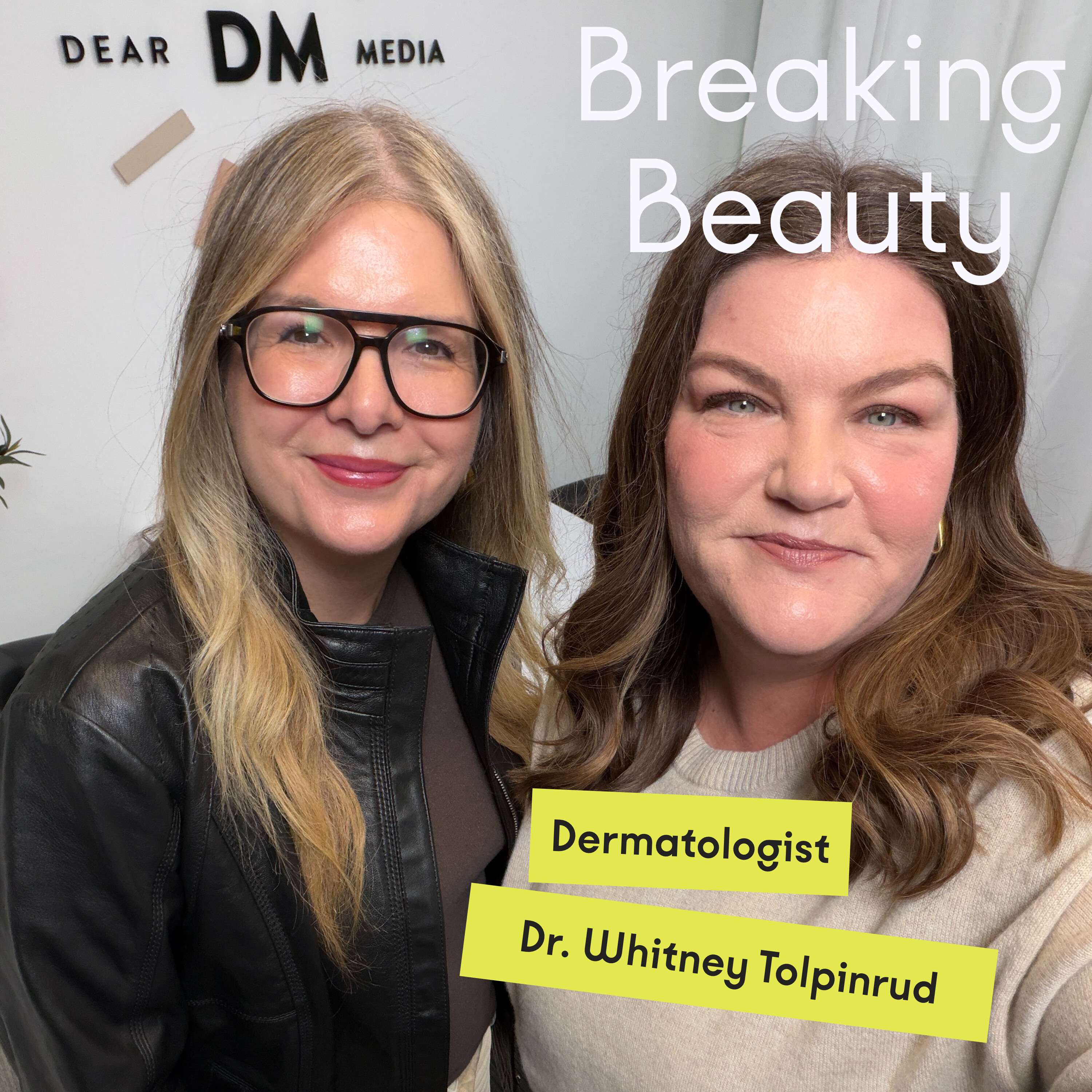
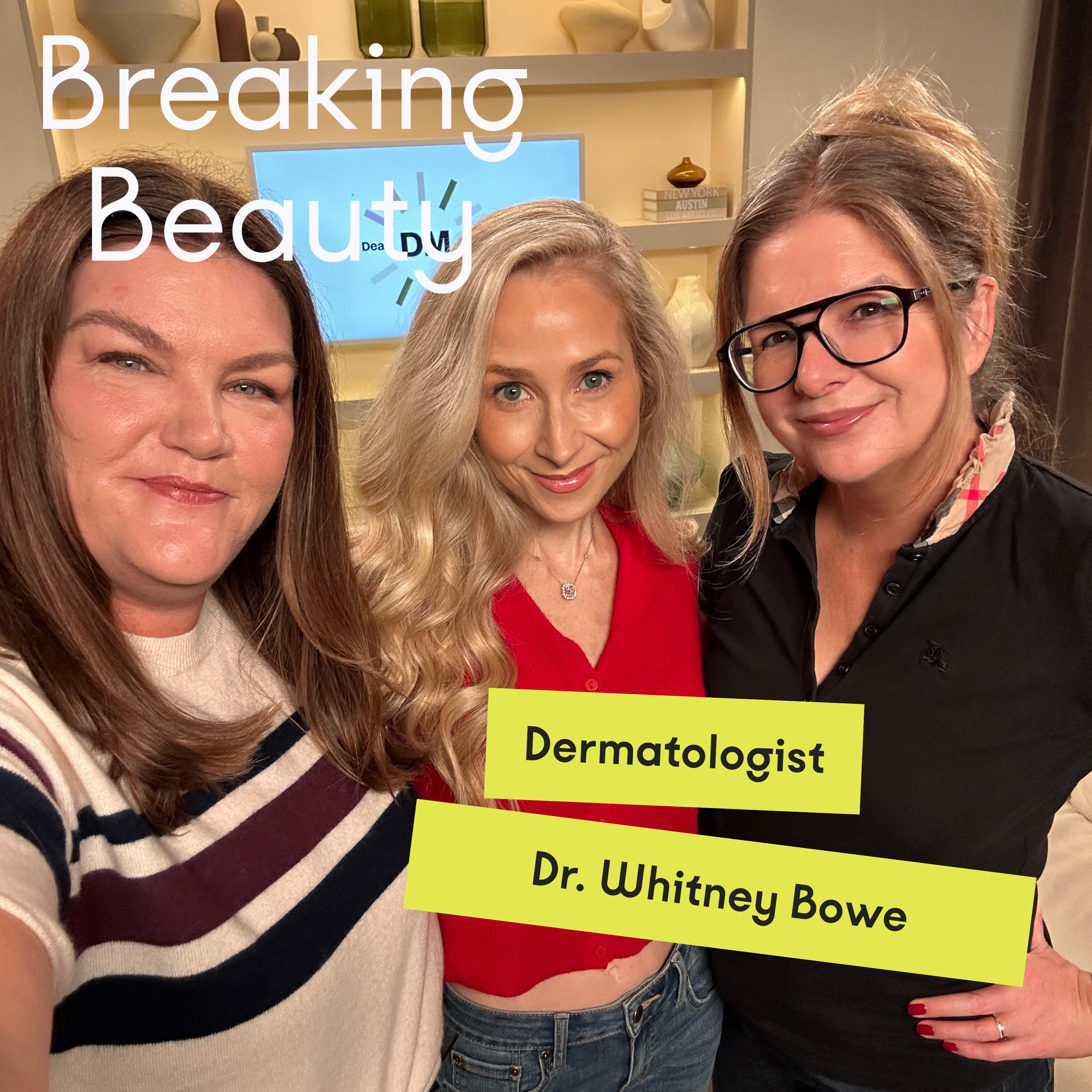
Dr. Whitney Tolpinrud is a board-certified dermatologist, chief dermatologist at Agency (personalized prescription skincare; sister brand to Curology). Yale and Columbia alum; featured in Vogue, Glamour, Allure for debunking skincare myths.
UV avoidance is the biggest “free” anti-aging step; sleep supports skin repair via circadian rhythms; barrier damage accelerates flammaging; stacking targets multiple molecular pathways; topical rapamycin is an mTOR inhibitor that may reduce aging markers (e.g., P16) and increase collagen 7 (small studies).
tretinoin + topical estriol; hyaluronic acid + peptides + resveratrol; rapamycin 0.2% gel (FDA-approved for tuberous sclerosis-associated angiofibromas). Estriol is suggested for perimenopause/menopause; routine basics: cleanse, treat, moisturize, protect.
0:00The following podcast is a Dear Media production.
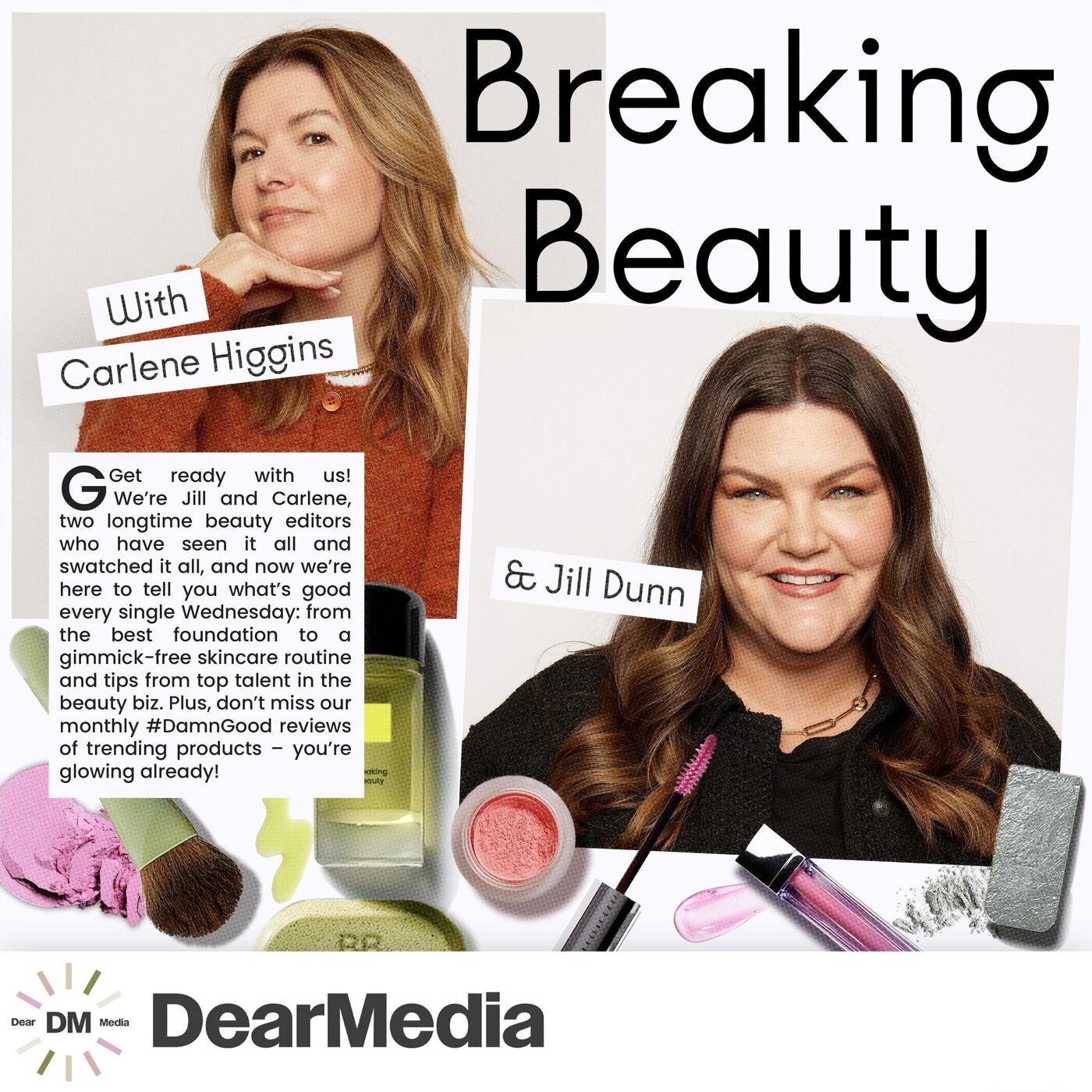
0:08Welcome to Breaking Beauty, the podcast all about the breakthrough people, products, and moments in beauty. We're your hosts, Jill Dunn and Carlene Higgins.
0:21Welcome back to Breaking Beauty podcast, everyone. I'm your co-host, Carlene Higgins. I'm here with my darling co-host, Jill Dunn. And we are two beauty editors turned beauty podcasters in your feed every single Wednesday with the breakthrough people, products, and moments in beauty. And this week, we're doubling up. We're in your feed with a bonus episode on this fine Monday. Yeah, surprise. I love popping in for a little surprise bonus episode. Hey, Carlene. And hey, everyone. And we're always appreciative of our longtime listeners. And we always welcome the new faces, too. So many people have discovered us on YouTube recently.
0:58So in case you missed it, we are on video, everyone. So please subscribe, comment, like, share. And we're Breaking Beauty Podcast on YouTube. And we have so many amazing guests in our back catalog. Yeah, absolutely. More than 450 episodes at this point. Everyone from makeup artist extraordinaire, Lisa Eldridge to dermatologists like Dr. Shereen Idris. And we're fortunate to have learned from the best in the biz. And today in an uninterrupted bonus episode brought to you in partnership with Agency Skin Care, we're welcoming back Dr. Whitney Tolpenrood.
1:31Dr. Whitney Tolpinrud: Hi, how are you two? Nice to see you again. You too. And Dr. Tolpenrood is a board certified dermatologist and the chief dermatologist at Agency, which is the personalized prescription skincare brand that combines advanced treatments with ongoing care from licensed medical providers. And fun fact, Agency is a sister brand to a brand that many of you may know already, Curology. That's right. And alum of both Yale and Columbia, Dr. Tulpenrud's dermatology expertise has been featured in Vogue, Glamour, and Allure, where she's often tapped to debunk skincare myths. And for the record, she completely changed the game for me, Carleen, when we had her on last when we were talking about pores.
2:13And like when you start talking about a singular topic like that, you're like, could we talk for an hour about pores? Yeah, we could. And you changed the game, Dr. Tulpenrud. So we're going to link to that in our show notes. Yes, we're excited to have her back this week where she's going to share her best tips for aging well. No gatekeeping around here from prescription skincare stacking to the next retinol. And is it ever too late to slow down skin aging? Okay. So with all of that, welcome back, Dr. Tolpenrood. And perfect timing that you're joining us because I just read that the AAD designates November as National Healthy Skin Month.
2:47So to kick us off, for aging skin, what is the single best piece of advice for the healthiest skin that doesn't cost a dime? Hmm. Great question, because skincare really doesn't have to be expensive, to be very frank. So I think if you're wanting to spend zero dollars, the best thing you could do for yourself is to avoid the direct sun exposure to especially the face and the backs of the hands. So be sun smart every single day. Seek the shade. Avoid those peak hours, 10 until 2. Wear a hat you may have already around the house. UV rays is one of the single biggest drivers of visible aging in the skin.
3:31So I think it's really essential to not forget about that. And I would say also protect your sleep, do your best to get a good night's sleep, go to bed early, minimize those disturbances that you may experience through the evening, because we could talk about this later, but the skin actually does a lot of its repair work at night when we're sleeping. Our skin, like our bodies, have circadian rhythms. So interesting. Yeah. 2026 is really the year of skin longevity. This is the buzzword that's been kicking around at every trade show. We've been talking about it on the mic a lot. So I'm curious as a professional, what do you understand about the cellular mechanics of skin aging today that weren't really on your radar when you were a dermatologist in residency, like what exciting things do you and your nerdiest derms get excited about these days?
4:25You know, I've been out for about 13 years now. So the education is different now than it was back then, certainly. And longevity, skin longevity really was not in our vocabulary during training. And now, like you're saying, it's the buzzword. It's what everybody's talking about. And skin longevity, I mean, there's so many different ways to discuss what longevity means, but to us, it really means targeting those biological processes that determine how we age. So how can we think about intervening on those processes to really help make a meaningful difference in the longevity of our cells, so our skin cells?
5:06So how can we impact early on in those biological processes to help maximize how well those cells function and make those cells function in the correct way that they're supposed to be functioning for a longer period of time. So it really is about that biological core and understanding what's happening at a molecular level. And then matching the skincare with those biological processes is really how we think about skin longevity and tackling it. What's really interesting is there are, again, there are so many different ways to define this, but we think about the five biological pathways with skin longevity.
5:48So there's inflammation, which we can talk about later, the oxidative stress, protein degradation, DNA damage, and cellular repair. So all those big buckets seem to be the big drivers of skin. And if we can intervene at an earlier stage, we can potentially help maximize skin longevity. I love that. That's helpful. Is modern science replacing these classic ingredients that we've talked about for decades as beauty editors, like vitamin C, we know it's so proven and retinol, like these are the tried and true. So, you know, is this kind of eliminating or making those redundant or is it just advancing them or making them smarter?
6:33Like what's your take on that? Yeah, I think that the classics are classics for a reason. So there's decades of research behind all of those ingredients, the retinoids, the vitamin Cs. And so I don't see these new longevity ingredients replacing them. I actually see them as adding to the benefits of the classics. And so that's kind of how we've talked a little bit about prescription stacking here at Agency. And we really like that idea because you take the core classics, the tried and trues, the ingredients that have decades and decades of research behind them. And then you add ingredients that allow users to go for more improvement to kind of maximize how many of those biological processes you're intervening in earlier.
7:23So I don't see us replacing them. I see us adding to them, to be honest. And I can give you a couple of examples. So for example, having a tretinoin and then adding potentially a topical estriol to it. So that's a new ingredient used for skin aging from a longevity perspective. Hyaluronic acid, which is kind of a staple, been around for a long time. and then adding peptides to those, using an antioxidant like resveratrol, and then adding a topical ingredient, rapamycin, which we'll talk about later. So those are some examples of how I see adding to the classics. Interesting. So is this a genuine shift in dermatology, or is this mostly a shift in marketing?
8:10Dr. Whitney Tolpinrud: I think it's probably a little bit of both, to be honest. I do think that, you know, everybody's skin is different at different stages in life. And so thinking about what's happening at that biological core and intervening in a more personalized way can really help to intervene as early as possible and prevent us trying to chase what has happened as a result of the continuation of those biological processes. And so I think that the marketing language is catching up with kind of how we think from a scientific perspective, a dermatological perspective about treating dermatological conditions. So I do think it's a little bit of both.
8:55But we do, I think, have a shift in now that we know more about what's happening at a biological level, molecular level. As we think about the ingredients we are selecting for our patients, we're thinking about what mechanisms are we intervening in? and how is that going to affect the downstream results? And to be honest, it can be helpful to treat the visible signs of aging, of course, but ideally you would be doing both, treating what you've already got and then also preventing further kind of degradation in the skin that tends to happen over time.
9:41Welcome to SheMD, the show where we finally talk about women's bodies the way somebody should have talked to us a long time ago, with real expertise, zero shame, and nobody telling you that it's all in your head. Every week, we take the questions you've been too nervous to even Google and hand you the knowledge and the tools to become your own health advocate. I'm Dr. Thais Ali Abadi and you can call me Dr. A. I'm a board certified OBGYN and I'm the one breaking down the real science. What's actually happening inside your body, what to ask for, and the symptoms no one should ever brush off. And I'm Mary Alice Haney.
10:20I'm not the doctor, I'm you. I'm the one in the room asking the questions we're all secretly wondering about because every single woman deserves to understand her own body. And come tell us what you think on social at SheMD Podcast and make sure you're following and subscribed wherever you're listening. You can also find our video episodes on YouTube. Don't forget to hit that subscribe button now if you want to know more about women's health.
10:55so over-the-counter formulas have gotten so good i definitely have seen that have seen such an improvement just in the innovation and delivery systems like encapsulated retinoids are much more stable now peptide serums are more sophisticated so where's the ceiling like where does somebody actually need a prescription to help out with their skin challenges or when is something off the shelf enough? Yeah, I love this question so much because if you take a step back and think about what you're comparing, you're comparing the OTC versus prescription and what is an OTC drug, right? Well, OTC drugs are regulated by the FDA and they're sold without a prescription because they are considered safe for self-use at those set strengths.
11:46So they don't need a clinician monitoring and guiding those treatments. However, on the flip side, prescription drugs do of course need clinical trials to show that they're safe and effective, but a licensed medical provider has to prescribe them. So in general, this means that they're typically stronger and they're more biologically active. So a medical provider has to determine that this ingredient is right for you and potentially adjust the dose. So I think that the benefit of a prescription, of course, is that it also comes along with a real person who has to prescribe it and can help guide treatment decisions.
12:27And so I think in general, OTC is a great place for people to start. So maybe you're dipping your toes in or you're trying to get used to skincare in general. You want to get your skin acclimated to the different actives. I think it's a great place to start. But flipping to prescription can be helpful for people if they've stalled, if they're not seeing more improvement, potentially their, for example, melasma isn't responding to an over-the-counter or cosmetic treatment, then they can jump to a prescription, which in general tends to be more efficacious. Perhaps, I don't know, hormonal changes are happening in the skin.
13:05And so a topical S3L formula may be beneficial, but of course S3L is not available over the counter. So you can really target more specific skin concerns and the phases of life that we're experiencing with those prescription actives where OTCs in general tend to be more of a, you know, off the shelf selection. So I think both have their place, to be very honest. And usually what happens is we develop routines around OTC products in addition to prescription. I mean, sunscreen is OTC too, right? And it's very, very essential as part of a great skincare routine. When you say OTC, are you using that term interchangeably as in like anything that's on the shelf?
13:50Or do you mean something that's classified and regulated as a drug but doesn't require a prescription like a sunscreen? So OTC stands for over-the-counter drugs, and they are officially regulated by the FDA. Salicylic acid, for example, for acne is one example. Peptide serum or hyaluronic acid serum is a cosmetic product. So over-the-counter is very different than a cost custom compound with those ingredients. You can do clinical testing on them. And we have done some clinical studies on our curology formulations and stay tuned in the future for agency here. Okay. But the benefit really is that we're using tried and true approved prescription ingredients that we can legally compound with.
14:40And we are able to customize those prescriptions and take multiple active ingredients and put them, and they're all prescriptions, and put them into one single formula to make it very convenient for each patient. I mean, the reality is everybody's skin is different, right? We're all in different stages. We all have different skincare concerns. We all have different DNA, just like our fingerprints are different on our skin. What we're experiencing on our face and the back of the hands and all the places that we're concerned about from an anti-aging perspective. It's just different. So we're really able to custom compound those formulations in addition to help hiding that whole skincare routine.
15:23We're not only able to add those ingredients, but we're able to tailor the ingredient combination. So we're able to go really, really, really low on the tretinoin and then go really, really, really, really high. These are strengths that you just can't get at a traditional brick and mortar. Yeah. Yeah. It's amazing. I mean, I feel like it's kind of the dream to have somebody custom create your skincare based on what's happening with your skin is really something. I want to dive into one of the ingredients that you mentioned. Rapamycin is being hailed as the next tretinoin for cellular longevity.
16:01So what is the evidence behind topical rapamycin right now? And how does it work? Because that's big. I mean, people worship at the altar of tretinoin. It's so true. And they should continue to worship at the altar of tretinoin. So tretinoin is tried and true. But early studies for topical rapamycin are very encouraging. So I'm really excited about this ingredient. We do have a formulation with our cell repair Air formulation does have topical rapa in it. So it's an amazing ingredient. It's something called an mTOR inhibitor. And what mTOR is, is it's a protein inside of a cell that becomes overactive with age.
16:48And it fuels the inflammation and those signs of aging. So rapamycin calms that protein, which then reduces inflammation and can help the skin cells repair themselves more easily. and we all have heard the term inflammation. It's that low-level inflammation that builds over time as we age and this sort of inflammatory response really inhibits the skin's natural repair process and it drives those fine lines, uneven skin tone, even reduced elasticity and then that loss of that firmness or that bounce back. So this ingredient is thought to help with that self-cleansing system of helping healthy cells clear out the damaged components as we age.
17:37So again, more research is needed, but small studies have shown that there is a reduced level of what's called P16. So that's a marker of aging cells is reduced with the use of topical rapa. And then collagen 7 concentration has been seen to increase. Again, these are small studies, but I do love this ingredient because it is already on the market right now. It's FDA approved for a condition called their angiofibromas in tuberous sclerosis. So it's a topical 0.2 % gel and it's available on the market. Again, it's FDA approved. It's at 0.2%. So we know that the safety is there and there is emerging information coming out about the efficacy.
18:27But I'm really excited about these early studies and more studies are currently being done. Larger ones showing hopefully that this is going to be the next competitor of tretinoin. But we'll see. Our patients are just loving it right now. That's cool. Because what I was reading about it and you can explain it much better than I can, but it's like tretinoin is like kickstarting all your cells. It's like, get going, like let's work them. Whereas like what you're talking about, it's like, it's calming everything down. So, but it's like making your cells younger, basically. Yeah, it's thought to slow the aging cellular processes down.
19:06And you're right about the tretinoin. It's kind of kick-starting them. It's causing them to cycle faster, to shed faster. And then it's directly stimulating the collagen to increase in the cells. So they have two very different molecular pathways. And that's why we love prescription stacking, where you're, for very strategic purposes, putting both of those together or at least following them one after the other in a routine to be able to hit as many of those biological pathways as you can to help maximize your results. There you go. You don't have to choose between them. You could do both. Yeah, exactly.
19:47And the trick is, you know, you can put all those on your skin, but you've got to do it in a way that minimizes the irritation. And that's where I find And having a medical team at your fingertips can really help with that. Yeah, that's absolutely. Absolutely. Because I think that's one of the most common questions that you see in Reddit forums and everything is people going, can I use this with this? Can I not use this with this? So there's so much guidance that is just so helpful to have somebody guide that for you. Now, on the topic of inflammation, would you say that that is more the result of internal inflammation?
20:26like let's say from diet, or do you think it's more from external exposure, like pollution, or user error, like people using too many acids? What do you think?
20:38Dr. Whitney Tolpinrud: I think it's all of the above. So it's intrinsic and extrinsic. Those are intrinsic and extrinsic factors, tongue twister, that can all lead to inflammation. And that's why this is such an an important molecular pathway to help intervene with because you can just get it from so many different avenues. It's a really tough beast to tackle. To just dive into it a little bit more, what happens is the cells get a little bit damaged and then you have an inflammatory response. So the cells send out all these molecular molecules to sound the alarm like, oh, we're damaged. We need help. And then it's this cascade of more and more of those inflammatory markers that then activate more enzymes that cleave the collagen and elastin.
21:27And then it just becomes this cycle of continuous inflammation and then breakdown of collagen. So it is really important to intervene and try to minimize the external, extrinsic factors like UV, you know, over exfoliating, pollution, all of those things can can lead to that. Yeah. We talked at the beginning about it being National Healthy Skin Month. When I think of healthy skin, I think the skin that has the healthiest barrier possible. So how does chronic barrier damage actually accelerate aging at that cellular level? And, you know, how do we prevent our longevity routines from doing more harm than good?
22:10Yeah, I think it's helpful to think of, everyone talks about the skin barrier, but I do think it's helpful to define what it is. So it is the outermost layer of the skin, the stratum corneum, and it works like a thin waterproof seal. So it keeps water in and keeps irritants and allergens and even microbes like bacteria and fungi and viruses out. And so when you have damage to that top layer, then water evaporates, irritants can come in, allergens can come in, microbes can come in. And then what can happen is you have this low level inflammation, right? The inflammation can happen. So, and then as we discussed before, what can happen is with that and flammaging, then you can have the breakdown of collagen and elastin, which can lead over time to wrinkles and fine lines and all of those things that we're trying to prevent.
23:07So we do think having an intact skin barrier is really important, number one, for those reasons, but also it can help you really maximize the other actives that you're putting on your skin. If your skin's already inflamed, you're not really going to be able to use the prescriptions as even the OTC or cosmetics as they're supposed to be used. So it's really important to take care of that skin barrier. What other emerging ingredients have you excited? I think we touched upon estriol before. I do think this is a really exciting new ingredient. Estriol is one of the, it's the weakest of the three main estrogens in the body.
23:49And what's so interesting is we're learning more and more about this, of course, as we talked about as time passes. I actually didn't learn about estrogen receptors too much in residency. So I do think this is a new, they're probably having a different education nowadays.
24:04Dr. Whitney Tolpinrud: But we don't know exactly what estrogen receptors are doing in the skin. But we have an idea that evidence has shown or pointed to the fact that when you stimulate those estrogen receptors, more collagen and elastin will be deposited. And so there is, and hydration, I forgot about hydration. So we do know that topical estrogen does have a role with the collagen, elastin and hydration. I'm just really excited to see more studies in the dermatology world looking at collagen firmness, hydration. So that one, I think, is an emerging longevity, new ingredient. Peptides. I mean, how can we have a conversation about aging and not mention peptides?
24:51I know this one is also really, really hot. We have the Skin Smoothing Booster with seven peptides. And I'm particularly excited about copper peptides. This one has a lot of data behind it. So yeah, I think peptides, estriol, really exciting. I'm sure that, you know, there are going to be far more in the next five. Let's have a conversation in one year. I'm sure we're going to have it. It's true. I mean, AI is also assisting with drug development and finding what molecules could intervene at the molecular level. And I just think that what's happening from a research perspective is just going to be exponential here in the next few years.
25:34Yeah. And with Estriol, is that something that like when would that be appropriate for somebody if they're filling out the survey and they're getting their prescription? Is that for somebody who's like in perimenopause or is that something that would start much earlier? Like what is your recommendation or what's been the cases or case so far? Yeah. So estriol can be helpful in the body when your estrogen levels start to decline, right? If you've already got enough estrogen in the body, then it's not going to be helpful to put it on your skin. So in general, perimenopause, I think that's a great time to consider it.
26:12Again, under the guidance of a clinician, you want to make sure there are no contraindications, et cetera, et cetera. But I do think perimenopause is a great time to consider it. And also in menopause, We do know that the collagen levels rapidly decline in the first five years of menopause, perimenopause. So the earlier, the better to try to intervene, I would say. And I do think people in perimenopause, women, do notice changes in the skin pretty rapidly. So if you're starting to notice those changes, I think it's a great conversation to start to open up with your dermatology provider. Okay. Now, I'm sure there's some listeners out there who might be thinking like they have an estrogen estriol gel at home, which I have, and I put it on my large body, my limbs or my stomach.
27:01And they might be thinking, hmm, could I just use a little bit of this on my face? What would your response be? Yeah, so because this one's a prescription, I do recommend that you speak to your either in-person clinician or your telemedicine provider because they can help guide you. It depends on what formulation it is, where else you're putting it, what are you on systemically, all of those factors. Although data studies show that topical estrel in particular has a minimal systemic absorption, you're assuming a small application area. And so smearing it all over the body, you know, on the hands, you know, it's not recommended to do that.
27:49So I do think that it does need more personal advice. So I would encourage someone who has some extra cream left over to run it by their provider. Mine's a gel as well. I'm pretty sure it probably has like an alcohol base. I don't know that I would want to put that on my face. I'm sure you probably do something to mitigate that, make it more elegant.
28:11Dr. Whitney Tolpinrud: Yes. Ours is more of a cream base, so it's a little more hydrating. There you go. Okay. Well, I'm excited to talk about stacking prescriptions, skincare actives. We touched on this a little bit. So for someone that's new to prescription skincare, how do you safely start stacking? without destroying the skin barrier? And what's your favorite stack, as it were? Yes. So I love the concept of stacking. I mean, that's really what we do at agency when we each prescription has multiple ingredients, active ingredients in them. And so you're essentially stacking them in one formula. And when you think about it, again, each active ingredient has a different mechanism of action.
28:59So when you stack them, you are targeting those molecular mechanisms at different angles, and that can help to maximize your efficacy. So that's the why behind it. It can be, of course, challenging if you're putting on, you know, 30 actives and you have never done that before in your life. I can handle a lot. I always joke, I'm always willing to try anything because I've used so many different skincare products over the years and my skin's pretty hardy now. But I think everyone's skin is different and everyone has a different tolerance level. And we have the ability, of course, to personalize our products and just do one, for example, what we call a baby tretinoin, where it's very, very low amount.
29:43And then we add hydrating ingredients to the product, a little niacinamide to it to help calm and soothe. And then we have the ability to add, you know, in addition to the night renew, we can do day defender in the morning with vitamin C up to 25 % and three other actives. We can add the eye formula. We can add the dark spot formula. So we can keep adding and adding and adding. But I think it really depends on what your experience has been, how sensitive your skin is, what you're currently on. And that's, again, where the benefit of having a licensed dermatology provider walk you through it can really help.
30:23But I do think the stacking helps to maximize efficacy and it can help to minimize, the providers can help you minimize the irritation. Is there any stacking SOS moments that you've had in your own clinic where people come in and they make their own stacks, don't they? I'm sure they do.
30:40Dr. Whitney Tolpinrud: Yes, yes. I have had lots of stories over the years like, why didn't you stop? I had to keep going. Oh, I thought the more is the better. I thought this was normal. Yeah. No, I mean, those are few and far between. Again, at agency, our patients have access to our team 24-7. And so we find, you know, as long as there's an open communication, we're able to help and intervene before there are any problems. No SOS moments. Okay, good. Got it. Now, is it ever too late to kind of reverse or slow down the aging process? Because I have two friends in my life in their late 40s, and they don't use moisturizer.
31:22They just don't. Did they miss a window? Or what is an age where, you know, that happens?
31:29Dr. Whitney Tolpinrud: Absolutely not. I think anyone, it's like investing, right? The time to start, the best time to start was yesterday, but the The second best time is today. Right. So no, you can always go for more improvement. And there are always things you can do to help maximize your skin health and make improvements where you want to. So I would say absolutely not. The best time to start is now. And, you know, we're all we are all living busy lives. We're human. We have so much going on. I get it. But I would encourage anyone who is interested in starting or at least wants to learn a little bit about it. Don't be shy.
32:08Ask questions. Our team is there to help walk you through it. And even if you decide it's not for you, that's totally fine. I think education is really important. And be careful about AI because it's almost information overload. And it can be a little scary if you don't have the clinical medicine nuances, knowledge. So don't scare yourself in researching. Yeah. And, you know, we talked about peptides. You said that you're excited about copper peptides in particular. They are everywhere in the clinical world. We hear a lot about injectable peptides. I know that agency recently launched a topical skin smoothing booster.
32:47So what is this all about? Is it any parallels to the clinical world? The Skin Smoothing Booster at Agency is this beautiful blue color. It's got a blue hue to it. And the reason is it has 0.5 % pure copper peptides. And so that gives it its distinct blue hue. And what we did is we added six other peptides to the formulation that have evidence behind improvements in skin. And so we've got the concentrated seven peptides that, again, allow you to go for more improvement. Now, I wouldn't say that the peptide serum would be your core routine. You guys know how I feel about tretinoin. So I would say a good solid routine would center around that.
33:34And then the peptides allow you to go for more improvement, again, hitting different molecular mechanisms. So the way peptides work are they are tiny little strands of amino acids that string together and they're signaling molecules. and they each have different signaling molecules. Personally, I like topical better than injectable because when you're injecting products into your skin that can tell the body and cellular processes to have a particular end product, and I'm really looking for the end product on the face, then I really want to concentrate those peptides to the face and the skin. And so that's why I like that local effect of applying directly to the skin as opposed to the injectables.
34:17And of course, the peptides that I'm talking about now, they're not FDA approved as injectables. Right. So the booster I'm really excited about, again, it gives you just the different levels of molecular mechanisms. You're going to hit seven more. And then as added bonus, it's in a hyaluronic acid serum. So you're getting the hydration as well as the peptides. And that's what we love to do at Agency. And see, it's very well thought out and strategic on how we think about putting all of the ingredients together. And they're all multitasking. So you can simplify your routine. So let's pretend that I'm an agency client.
34:58Tell me about the skin concierge concept. I'm so curious. Like, do I, is there an annual membership? Is it, does it run through my insurance? Do I, you know, how often would you and I see each other for consultations to tweak my formulas? Like, what does that look like? I mean, it sounds like a dream to have a personal skincare concierge, honestly. Well, the benefit of agency is really our team, our medical team is available 24-7 for our patients. So they can reach out any time and ask any question. If I'm having a reaction, I can text or go on a chat. Absolutely. You can directly message your provider and you don't even have to have a reaction.
35:45You could just say, hey, what does a booster mean? Or I've got this hyaluronic acid serum. Do you think I can fold it into my routine? So what it means is when you sign up, like all telemedicine companies that practice the way that we do, you answer a questionnaire, which is our medical record. And then you take photographs, which that's our physical exam. And so we're able to make an assessment. And then once the patient is matched with a licensed dermatology provider, then the medical team will custom compound a prescription for that patient based on what their skincare goals are, their history is, what they're using, what their concerns are.
36:30So we come up with a skincare routine. So it's not just the formula. It's like the whole package. Right. And again, maybe you've got your own sunscreen that you love, or maybe you've got your own peptide serum. Fantastic. We'll build a routine around that because we are clinicians first and foremost, and we're going to care for you as a patient first and foremost. And so then every, in general, about every two months, we can change a prescription. And we certainly don't have to. It's based on check-ins. If you're doing really well and you don't want to go for more improvement, then we're happy to stay put.
37:04But if you're doing well and gosh, let's push it, then we'll go ahead and increase whatever active ingredient we're dealing with. Because you're probably starting to get toward the end of your serum product by a two months point, right? Every product is meant to last for two months. And so at about six weeks, we check in and say, okay, how are we doing? But certainly if you're not doing well at two weeks or you're like, hey, I'm used to this. I have no problem. I really want to go up. Great. We'll go ahead and adjust then. So there's no, in general, you know, we go every two months, but it really is concierge.
37:43We're available to answer any question and I encourage you to test it out and try it. Ask any question you have about anti-aging or any other skin concerns. Maybe you've got a red spot or, you know, you've got some dryness or something that you're curious about. We're certainly able to answer. And if we can't, we'll send you in the right direction to to find the help that you need. Interesting. That kind of brings us to our next question, which is about adapting to a formula. You know, does your skin ever get used to a formula? You might tolerate something well, but does that mean it plateaus at a certain point?
38:21How do you know when it's time to adjust or go up? So we ask very specific questions. Are you experiencing any dryness or redness or itching? Those can be signs that we either need to change ingredients or adjust percentages. But if you are in general doing really, really well, then we can go ahead and increase. So we actually have a lot of patients on formulas that contain 0.14 % tretinoin. And again, at a traditional brick and mortar, you can get 0.1%. And so this is a lot higher that we have the ability to prescribe. And so once you get to 0.14, there's nothing higher topically through us where you can go.
39:01So then what we do is, okay, you're maxed out there. What else can we do? What else can we add? Maybe the cell repair, we want to add the rapamycin. Maybe we need to boost up the morning vitamin C serum. Maybe you're at a 10 % L-asphorbic acid. Let's move up to the 15 % or go all the way up to 25%, which is higher than is generally available from a cosmetic perspective. or maybe we need to go and add some exfoliants. Maybe we don't offer those in-house, but here's some products that we can recommend to help you go for more improvement. So again, that's the concierge piece of it. It's really personalized.
39:38And of course, we have our own skincare products, but we want to personalize the entire package for you. And that may mean other products outside of agencies. What a great source for like crowdsourcing future product development too and ingredients that people are asking you for. Wow.
39:59Dr. Whitney Tolpinrud: Yes, we do that all the time. And that's honestly where Estriol, like we had so many patients asking about Estriol and we said, okay, okay, we'll look into this. And it was the right decision. Because it is off-label use to put it on the face, right? It is off-label. But you're still allowed to do it, which always confuses me. Because as a dermatologist, you can prescribe it, even though it's off-label. It's still legit. It's still a safe. Yes, absolutely. So it's very important for patients to understand risks and benefits, and we're very clear about all of that in our messaging. Again, we're clinicians first and foremost, and so we do counsel patients on side effects of every single one of our ingredients.
40:42And we do have people who say, oh, yikes, I'm not interested in the side effect profile of
40:46Dr. Whitney Tolpinrud: rapamycin, for example, but we are very thorough in the, in the list of possible side effects based on the research. But in, in, as I mentioned before, we only, we only custom compound with those ingredients that are legally approved for us to compound with. And they, they all have safety data behind them and, and, and evidence behind them. So clinical evidence. And so yes, Yes, all clinicians are able to prescribe off-label. So for example, I mentioned topical rapamycin. I think it's Hyftor is FDA approved for a very rare condition called tuberous sclerosis. But you can use that ingredient or that formulation for other purposes if you want to, because you have the ability to prescribe as a clinician.
41:38And that's where, again, that hand-holding is really helpful. because put the complexity on the providers and not on the patients is the way I say it. Yeah. Smart. Now, everyone is tracking their sleep now. I'm obsessed with my Oura ring. I give them so many free plugs around here. It's like, I need one for every finger at this point. I need one. Yeah, Carleen needs one. And there's those bed and mattresses that track your sleep. These are huge. It's a huge industry now. And sleep, you mentioned it off the top that it is so underrated when it comes to your skin health. So if someone is only sleeping like five or six hours a night or what have you, can any nighttime topical skincare products sort of make up that deficit, so to speak?
42:26What does the data show? I mean, sleep is, it's so interesting that we're now talking about longevity and again, these Oura rings. I do think that there is so much data in the general medical literature talking about the importance of sleep, not just for the skin, but for your body in general, your mind, your cardiovascular system, your overall longevity. So sleep is really essential for your body. So really nothing can take the place of that. And the idea, the thought process is that the brain during sleep is like self-cleansing itself. So it's really essential to prioritize sleep. Now, from a skin perspective, I did mention early on how there is the circadian rhythm, of course, in the body, but also in the skin.
43:16So in the morning, it's so interesting, right? In the morning, it's really important to protect and to prevent from environmental damage. And then in the evening, studies have shown that hydration starts to decline in the skin and cell turnover starts to peak. And then cell growth and repair also happens. So I mentioned, you know, for the brain, the self-cleansing and all of that happening in the evening. And there's evidence pointing to the skin doing the same thing. So in the morning, protect antioxidants, sunscreen. Make sure you're using the good moisturizer for the skin barrier. And in the evening, it's really important to put on those ingredients like the tretinoin that are helping with cell turnover.
43:59and then cell repair formula for that cellular growth and repair. And again, the hydration is really important. So good, thicker moisturizer in the evening. I really love to tell patients to use, if you want to use more of a lighter gel in the morning, that's okay. But I really encourage the richer hydration in the evening.
44:19Dr. Whitney Tolpinrud: So absolutely, honestly, try to maximize your sleep for your total body health and also your skin. Yeah. And the night renew, is that the hero for agency at nighttime? So I would say the hero, yes, is absolutely night renew. So tretinoin, again, tried and true, classic. You really, as long as there's no contraindications and you can handle it, it's my opinion that that should be the center of a great skincare routine. And then you build upon that in the evening. Okay. So to sum it all up, I'm building my longevity-focused routine. what would be the four key steps? So cleansing, treating, moisturizing, and protecting.
45:04Dr. Whitney Tolpinrud: Okay. Okay. Those never go out of style. No, they don't. Classic. Non-negotiables. How is AI changing skincare and these prescription recommendations? You mentioned a lot of the process is manual that you all are looking at the photos and all of these things, but Where does AI help skin care advice and where does a dermatologist still really need to step in there and be the voice of reason and the expert? Yeah, well, prescribing is a medical decision and legally it requires a clinical judgment by a human. So the prescription world, medical world is still hopefully forever run by a human. But where it helps, so again, access to information, especially from a patient side, right?
45:50We find our patients are so well-informed. And I love that because that helps them make more informed decisions and ask more targeted questions. I have really seen a difference in the past few years, especially as patients are using AI and they're sending us articles and we're able to help educate because that's part of what we do is education. For the clinician world, I find it very helpful for finding academic articles and surfacing them. Yeah, I love that. I use that to myself because they can tell you the information, but then you don't know if it's accurate. So I'm always like, send me a link to the primary source.
46:26Exactly. You know, so yeah, I totally get that. We are so lucky to have you back on the show. Thank you so much for your time today. schooling us in our longevity skincare routine. So this holiday season treats skin aging at the biological core with agency's four-piece skincare essentials set, including the patent pending skin smoothing booster. And that's a$335 value kit for only$215, everybody. Start the car. Start that car. It's available now only at agencyskin.com. And once again, check it out at agencyskin.com. And we'll link to this offer in our show notes below for this limited time offer.
47:09Thank you again, Dr. Tolpenrud. It's been great to catch up with you. Oh, so nice to see you both. Thank you again for having me. It's been so fun. Thanks for listening. You can find details on every product mentioned in today's episode, along with our exclusive promo codes on our blog at breakingbeautypodcast.com. While you're there, be sure to sign up for our newsletter. Every episode will be delivered directly to your inbox so you won't miss a single thing. And get social with us. Let us know what you think of the episode. You can follow us on Instagram at Breaking Beauty Podcast. And did you know we also have a private Facebook group?
47:43Just search Breaking Beauty Podcast chat room. You can even leave us a voicemail at any time with questions or feedback at 1-844-227-0302. And don't forget to subscribe to us wherever you get your podcast fix. Spotify, Stitcher, Google Podcasts, and Apple Podcasts, where you can show us some love by writing a review. See you next Wednesday.
48:21Dr. Whitney Tolpinrud: Please note that this episode may contain paid endorsements and advertisements for products and services. individuals on the show may have a direct or indirect financial interest in products or services referred to in this episode.
In this special bonus episode, brought to you in partnership with Agency, we welcome back board-certified dermatologist Dr. Whitney Tolpinrud. She’s Chief Dermatologist at Agency and—just in time for National Healthy Skin month—she’s here to explain the science of skin aging, the new prescription ingredients building on tretinoin and vitamin C, and how to stack prescription skincare without damaging your skin barrier.
In this episode you’ll discover:
Shop everything mentioned in this episode here:
🎙️ For more conversations like this, check out these episodes:
PROMO CODES: When you support our sponsors, you support the creation of Breaking Beauty Podcast!
Agency Skincare
This holiday season, treat skin aging at the biological core with Agency's Skincare Essentials Set, featuring four everyday steps: cleanse, layer, hydrate, protect. The set includes the patent-pending Skin Smoothing Booster, a seven-peptide serum with a high dose of pure copper peptide. That’s a $335 value for only $215. Available now, only at agencyskin.com.
Disclaimer: Unless otherwise stated, all products reviewed are gratis media samples submitted for editorial consideration.
💄 JOIN THE BREAKING BEAUTY COMMUNITY 💄
🎙️ MEET THE HOSTS
Produced by Dear Media
See Privacy Policy at https://art19.com/privacy and California Privacy Notice at https://art19.com/privacy#do-not-sell-my-info.
Scan the code with your iPhone camera
Listen in the app.