Ask ChatGPT
 Breaking Beauty Podcast
21 Oct 2026 · 53m · 19 chapters
How to build a “science-backed” skincare routine by evaluating evidence quality (ingredient studies vs final-formulation clinical trials), separating skincare “staples” from “extra credit,” and choosing actives based on tolerance and goals (peptides, vitamin C, retinoids, sunscreen, dark spots, skin cycling).
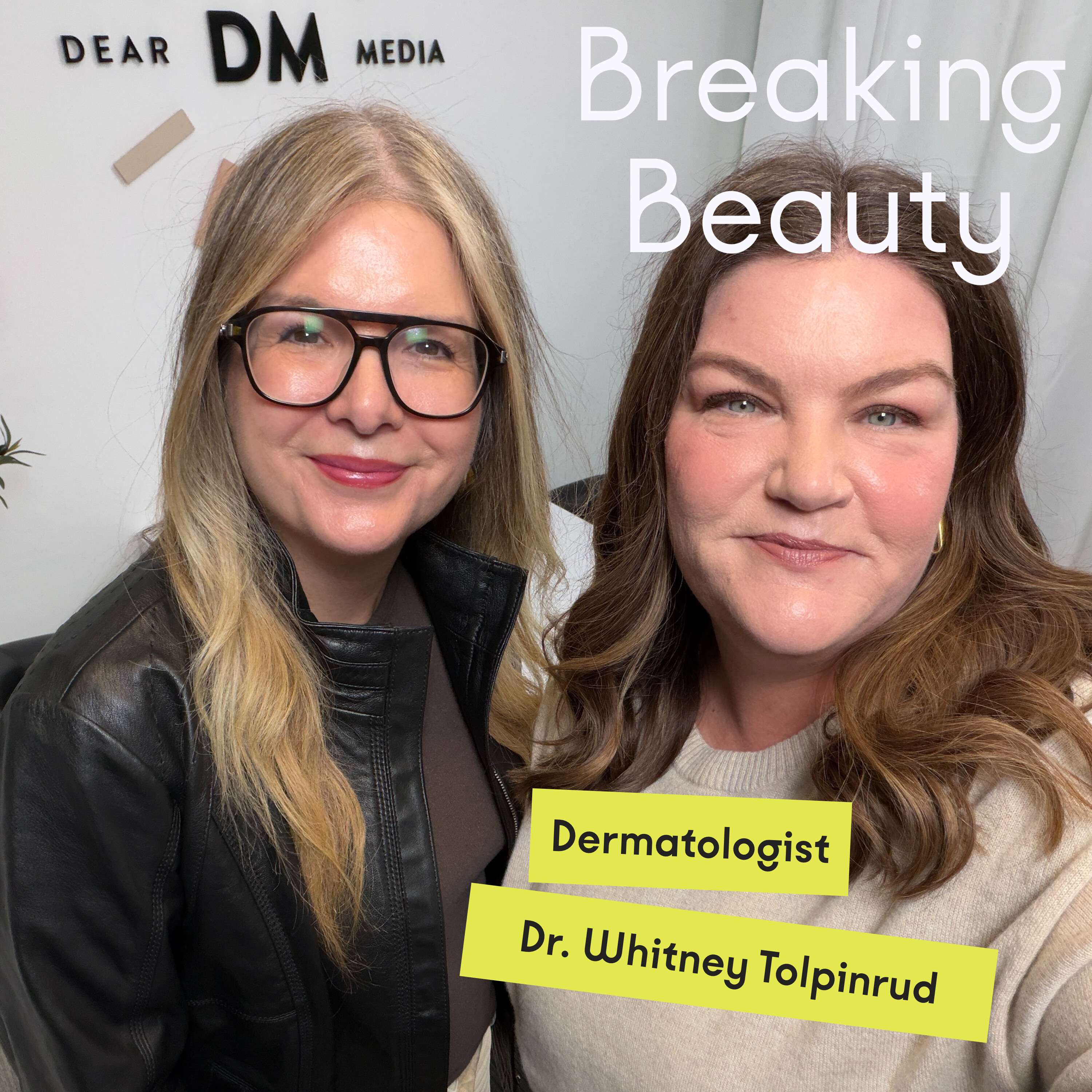
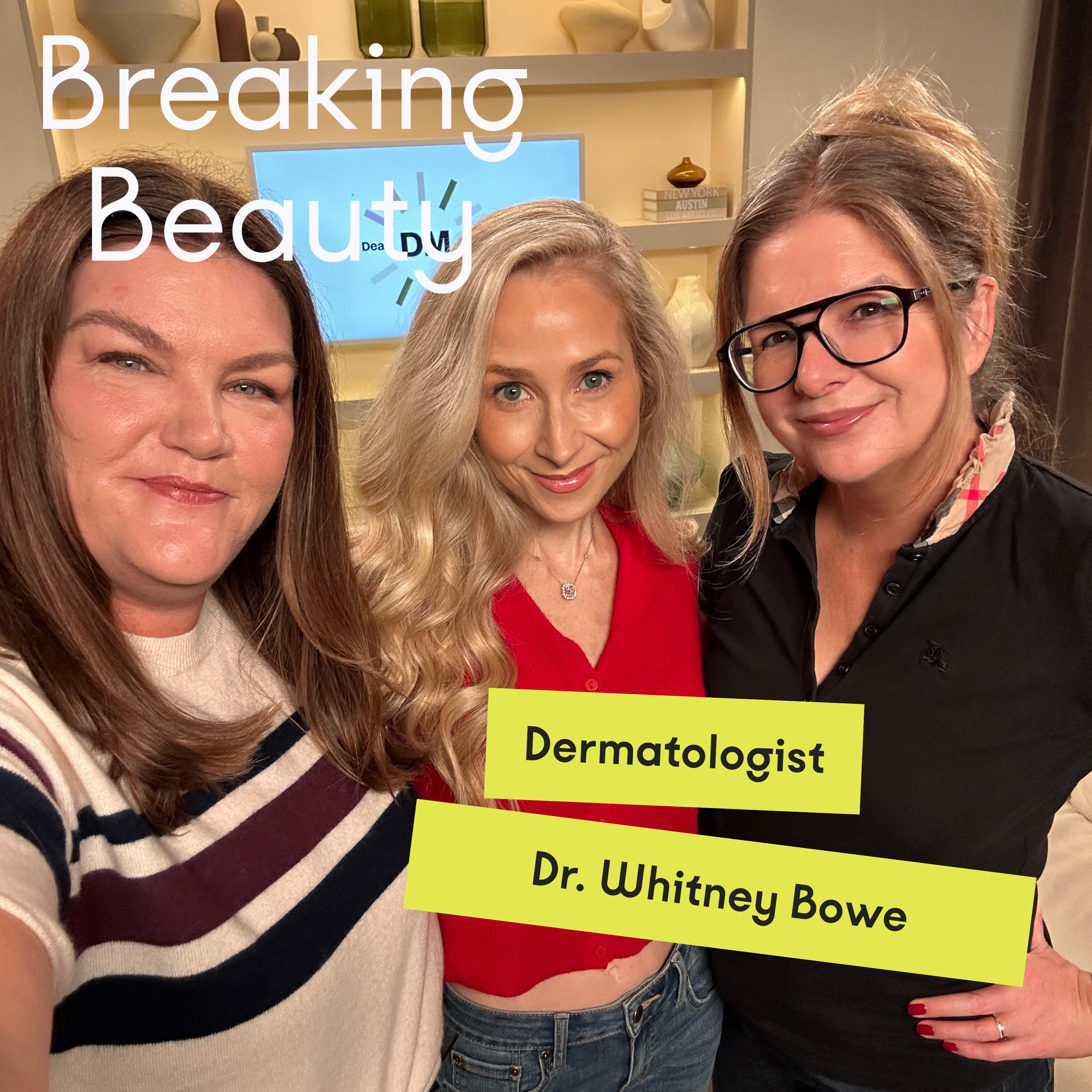
Dr. Whitney Bowe, New York board-certified dermatologist and research scientist; founder/CEO of Dr. Whitney Bowe Beauty (“proof over promises”); research background includes 40+ publications and a large social media community (~1M followers).
“Clinically proven” can be misleading if it’s only ingredient-supplier data; look for objective, instrument-measured, peer-reviewed studies. Staples: stable vitamin C, barrier-repair moisturizer, SPF 30+ broad spectrum, and a retinoid (cycled as needed). Extra credit: targeted add-ons like peptides for perimenopause/elasticity, and eye creams only when treating specific concerns.
peptides as fibroblast-signaling (signaling peptides vs wrinkle-relaxing like argyroline); THD ascorbate as a more stable vitamin C for sensitive skin; PDRN masks give immediate hydration but limited evidence for long-term collagen effects; caffeine eye products can show immediate under-eye puffiness changes; dark spots best addressed with retinoid + exfoliating acids + vitamin C + sunscreen (tinted/iron oxides), with tranexamic acid/niacinamide as optional add-ons.
Written by AI. May contain mistakes.
Discussion about Dr. Bowe's background and her expertise in skincare.
“If you missed our first episode with Dr.”
Dr. Bowe discusses how to interpret skincare product labels and claims.
“So jumping right in, what can our listeners look for on a label?”
Explanation of the levels of data that support skincare product claims.
“You know, you got your avocado toast with those two eggs and you eat that recipe for breakfast every morning.”
Dr. Bowe elaborates on the importance of rigorous clinical testing for skincare products.
“So when I'm looking at individual products, like what am I going to recommend?”
Discussion on essential skincare staples versus extra credit products.
“Like, what do I actually want to, you know, invest my money on?”
Dr. Bowe explains the role of peptides in skincare and their benefits.
“It's a different kind of parenting podcast where we share tips.”
Learn how peptides signal skin repair and their various benefits.
“they serve as sort of like signals to tell your fibroblasts, which are the cells that make collagen, elastin, hyaluronic acid.”
Explore the effectiveness and necessity of eye creams in skincare.
“I want to ask you about eye creams because you mentioned earlier that it is beneficial for some people, but others just may not need it.”
Explore the significance of eye creams in skincare routines, particularly for aging concerns.
“And yeah, if you're just looking to moisturize, you know, if you just have a little bit of like dryness around the eyes, looking for a little extra hydration, honestly, I don't think it's worth investing in an eye cream.”
Learn about the innovative use of bioengineered exosomes in eye cream formulations.
“I was not a believer in exosomes until bioengineering.”
Discover the scientifically backed ingredients effective for treating eye area concerns.
“lid, which is really hard to do in an eye cream.”
Discuss the advantages of biotech-derived ingredients compared to natural alternatives in skincare.
“is it going to have antioxidant benefits is it going to have other benefits potentially honestly Honestly, the bioengineered exosome technology changed my opinion about the entire exosome category.”
Understand the importance of sunscreen application and the balance between moisturizer and SPF.
“I want to ask you about sunscreen because that's another one that is a beauty editor and derm staple.”
Learn how to effectively cycle through skincare products in your nighttime routine.
“And let's talk a little bit about nighttime routines because it is a little different.”
Learn about incorporating retinoids into your skincare routine effectively.
“So having that first night and then night two is my retinoid night, whether you're using a retinal ester, you're using retinol, retinal with an AL, tretinoin, use the one that you can tolerate.”
Discover gentler alternatives to retinoids for those with sensitive skin.
“Honestly, like that's an amazing product.”
Find out the best ingredients to repair damaged skin barriers.
“So let's say that somebody overdoes it and their skin barrier is in a state of disrepair.”
Explore effective treatments for dark spots and how to differentiate them.
“And I know we're leaving a huge topic told toward the end, but dark spots, obviously, I'm sure you have people in your office who are upset about their dark spots every day or, you know, hyperpigmentation.”
Evaluate the effectiveness of trendy skincare ingredients.
“call like liver spots is sort of, you know, the classic word for them.”

Get the gist, explore an idea or ask about something said.
 Claude
On Breaking Beauty Podcast, what are the key points of this episode?
Searching your listeningAutomatic transcript. May contain errors.
0:00The following podcast is a Dear Media production.
0:08Welcome to Breaking Beauty, the podcast all about the breakthrough people, products and moments in beauty. We're your hosts, Jill Dunn and Carlene Higgins.
0:21Welcome back to Breaking Beauty podcast. I'm your co-host, Carlene Higgins, and I'm here with my friend and my fellow co-host, Jill Dunn. Hey, everyone. We, of course, are two longtime magazine beauty editors turned beauty podcasters. We've been in the podcast game for nine years now. We have a whole back catalog of over 450 episodes with amazing guests. We are always chatting about the breakthrough people, products and moments in beauty. And today we're welcoming Dr. Whitney Bowe. If you missed our first episode with Dr. Bowe, she schooled us on skin cycling. This is a trend that she really helped to popularize on TikTok.
0:58And we will link to that episode in our show notes. So happy to be back. So Dr. Bo is a leading New York board certified dermatologist and research scientist who has built a community of over 1 million followers on social media. She's also the founder and CEO of Dr. Whitney Bo Beauty, offering proof over promises. There's a TM after that with 100 % clinically proven, fragrance-free and sustainably made skincare. So that makes Dr. Bo the perfect guest today because we're going to get really nerdy. We are going to talk about the most scientifically proven products to help you build your best skincare routine ever.
1:38We know there's so much fluff out there. We're going to get Dr. Bo to give us the facts. And that's what we're here to do today. So stay tuned till the end as well, because there's going to be a couple of hot topics in the mix and maybe a surprise about what she's got coming. So welcome again, Dr. Bo. So excited for the conversation today. Yay. So jumping right in, what can our listeners look for on a label? Because I feel like we have hit the peak, I think, of how many beauty products are out there and brands that are launching a go-go. I mean, I ran into you at the American Academy of Dermatology conference earlier this year.
2:13And the big takeaway there was, you know, where is the data? We need to see those facts and results. So that's what it's all about. We're having you help us build the perfect routine. So where do we start? How do we decode this as consumers? And this is something that is so complicated, even for a dermatologist. So the first thing, here's what you need to think of. So in that pyramid of evidence, at the base of the pyramid, so the low-hanging fruit, the easy thing that almost every quote-unquote science-backed skincare brand does is they'll rely on something called ingredient supplier data. So they'll look at an ingredient and they'll make claims based on the ingredient.
2:49But you guys know, OK, imagine you take two eggs and you use those two eggs. You scramble them up. You put them on a slice of Dave's Killer bread with avocado, with a little drizzle of olive oil. You know, you got your avocado toast with those two eggs and you eat that recipe for breakfast every morning. Now, if you take those same two eggs and you add flour and sugar and butter and cream and you make a cake and you have a slice of that cake every morning with breakfast, yes, you still have those two eggs. They're in both of those recipes, but eating a slice of cake every morning for breakfast for 365 days versus having that avocado toast, the recipes are very different.
3:34And the same thing holds true with skincare. just because a product has an ingredient in it and just because that ingredient has studies behind it does not mean that the product that you're holding in your hand is actually having that same effect on your skin, right? The final formulation needs to be tested and tested rigorously. That product that you're actually pumping onto your hands, applying on your skin, that mix of ingredients, the stability, how that ingredient works with the other ingredients in that blend. So we're thinking about that pyramid. At the base is just the ingredient supplier data.
4:11The next level up is you're actually taking that final formulation. You're putting it to the test in what we call consumer perception studies. Those are subjective studies. Basically, it's a survey. You know, you're handing the product out to a bunch of people. They're using the product. And then at the end of the study, you say, do you think it improved your fine lines and wrinkles? You'll get claims like 99 % of users saw an improvement in fine lines and wrinkles. 98 % of people saw an improvement in the texture. And look, that's valuable information. It's from the point of view of the person using the product, right?
4:45But it's subjective. And I'm a research scientist. You know, I went to Yale for undergrad. I got a full tuition merit-based scholarship to Penn. I did a dual track where I did the traditional medical school curriculum. I also did a specific track in clinical research epidemiology. I've published over 40 scientific publications. Giving out a survey is not going to be published in a top term journal. So when I'm looking at studies and I'm looking at clinical evidence, I want to see measurements. I want to see instruments. I want to see a tuameter, a colorimeter, a cutometer, a corniometer, next generation sequencing technology.
5:20I want to see something that shows that there's a measurable change in the skin. Right. That's when you get to that level, one rung up in the pyramid of objective studies. Objective means that there's some kind of a measurement, some kind of quantification, whether it's an expert grader, an instrument showing statistically significant improvements in the skin. And at the very peak of that pyramid, that's when you get published. That's when you go to PubMed. And as dermatologists, researchers, that's where we look. If the product has been
5:51Dr. Whitney Bowe: tested so rigorously and the protocol passes, you know, certain standards, the results pass certain standards, then it gets peer reviewed and then it potentially gets published. So that's really the pyramid of evidence. So when I'm looking at individual products, like what am I going to recommend? And when I'm training other dermatologists and estheticians about what they want to recommend, like I'll show them how to look at the data and how to sort of figure out like, is this data, you know, really compelling? Or is this just like, hey, you know, it's clinically proven to do X, Y, and Z, and you follow that little asterisk down to the fine print, and you're like, okay, there's a study done in a Petri dish on that one ingredient.
6:33Like, I don't know if I'm going to translate that into anything that's meaningful for my skin. Yeah, that's the tricky part, because I was going to say, can you look for clinically proven, which we see a lot in this era of science wins and in the jargon that's constantly being thrown around, we see clinically proven. But I guess to your point, it could be on like a little piece of skin that's been, you know, created in a lab versus like on someone's body. You can DM the brand. You can email customer service. You can say like, hey, were the clinical studies done on an ingredient? Were they done on the final formulation?
7:09Yeah, nobody's doing that. Were they done by third party testing facilities? Even looking at the before and afters, Like you can tell a difference in the before and afters, like social media before and afters. It's all about the lighting. The prevalence of the AI ones right now are really grinding my gears. Through the roof. It's insane. Through the roof. I'm seeing AI testimonials from people who supposedly use the product who aren't even real people giving testimonials. I'm thinking to myself, like, how is this even ethical? Yeah. So it is crazy. Yeah. Yeah. So it is very hard. Like as a lay person looking at a label, reading a label, it is actually very hard, which is why oftentimes, you know, you have to sort of go with the experts and what they recommend, why people listen to these podcasts.
7:46Like, what do I actually want to, you know, invest my money on? And once you have those products and you know which ones actually like sort of pass the test,
7:54Dr. Whitney Bowe: then I like to break it down into what I call staples versus extra credit skincare. So skincare staples are things like, you know, I have a patient coming in, she's over 35. What are my staples? What are the essentials that I think should be part of that person's skincare routine? So things like a stable vitamin C serum, a moisturizer that's clinically proven to repair the skin barrier, a sunscreen that's SPF 30 or above in broad spectrum, a retinoid, right? And just because it's a staple doesn't mean you have to use it every day. You could cycle in a staple, like maybe you can't use a retinoid every night, but it's going to be somewhere in that person's regimen, that should be a staple in that person's routine.
8:38But then there's extra credit skincare. So extra credit skincare is really skincare that's designed for a targeted purpose. It's how
8:46Dr. Whitney Bowe: you customize the routine to meet that specific patient or that specific person's concerns and goals. So for example, if I'm seeing a patient in my office and she's going through perimenopause, which I'm in the thick of, you know, or she just started on a GLP. You know, she may say to me, I'm losing elasticity in my skin. The quality of my skin is changing. What can I do about that? And I would recommend a peptide serum. Now, a peptide serum isn't a staple. Does everyone need to invest in a peptide serum? No, I wouldn't consider that a skincare staple. But look, for my patient who's going through perimenopause, you know, or my patient who's seeing loss of elasticity in her skin, like that extra credit peptide firming serum is going to be worth every single penny.
9:30Yeah. But the same thing for an eye cream, like an eye cream isn't a staple. Not everybody needs an eye cream. If you're just looking, if you just dry eyes, you just want to moisturize the eyes, use a moisturizer. Yeah. Right. But if you're seeing specific eye related concerns like dark circles, if you're seeing puffiness. Yeah. You're bugaboo, as Jill would call it. Yeah. Right. You're bugaboo. But I have to say, it's interesting that you say that because in the 20, 25 years that we've been doing this back from back in our magazine days if you really boil it down it's still the same three slash four must-haves that it was from day one that we were writing about which is retinol retinoid vitamin C a good moisturizer and sunscreen and all of the rest of it as you said is like a bonus a nice to have not necessarily I need to have extra credit it's nice to have and
10:23Dr. Whitney Bowe: it's great to customize, but it's not an essential. It's not a staple. Yeah. And not the data back. That's the other, not necessarily. I mean, this is what we're going to get into. We're going to roll into what is actually most data back. But those ingredients we know have the longest history of data. And that's why they've endured. Yeah. Right. Because there's trends. There's always going to be a trend. But is that trend going to become a staple? Most of the time it doesn't. It doesn't deserve to become a staple. And some of our staples evolve. Like we know that the technology for vitamin C has evolved.
10:58Dr. Whitney Bowe: We know that the technology for retinoids have evolved. With sunscreen technology keeps evolving. And this is wonderful. We're great that these categories are evolving. But that category itself, that product itself is going to have a place in your skincare routine. That is a staple. Yeah.
11:21So Nutrafol is one of our show partners this week. Sometimes upgrading your routine doesn't mean changing every single thing. It's just about finding one thing you can do a little bit better. And if hair health is something that you've been meaning to pay more attention to, now is a great time to make it part of your routine. And that's where Nutrafol comes in. Nutrafol is the number one dermatologist recommended hair growth supplement brand, and it's the number one hair growth supplement brand personally used by dermatologists. Many of them have told us so on this very show. And now Nutrafol Women's Formula has been upgraded to its most advanced version yet.
11:56It's 100 % vegan, biotin-free, and comes in a smaller capsule size to make your daily routine easier. And I notice when I'm on my Nutrafol journey, when I take the Women's Formula, just overall, my hair looks and feels thicker. My ponytail feels fuller. There's shedding, which I really appreciate. And it's just so easy to incorporate into your everyday routine. So whether you're starting a hair health journey or you've been taking Nutrafol for years, this update means you can now get their most advanced support yet. Now Nutrafol is offering our listeners$15 off your first month subscription and free shipping when you visit Nutrafol.com and enter promo code BREAKING.
12:39That's Nutrafol.com spelled N-U-T-R-A-F-O-L.com and use our promo code BREAKING for$15 off. Once again, Nutrafol.com, use our promo code BREAKING for$15 off and be sure to use our code to support the show. We'll link to this offer in our show notes and on our website. Now back to the show.
13:04Hi, I'm Natasha Leggero. And I'm Sabrina Jalise. And this is Good Enough. It's a different kind of parenting podcast where we share tips. We talk to our coolest parent friends. Only the coolest. And we roast trends. What do we do? In general, we… Talk shit. We talk major shit. Yeah. Watch out, Dr. Becky. Yeah, watch out. Wait, but we want her as a guest. Oh. So watch out for our invite, girl. New episodes every Wednesday. And don't forget to subscribe!
13:49so you mentioned peptides let's get a little refresher 30 seconds what is a peptide first of
13:55Dr. Whitney Bowe: all so peptides are little strings of amino acids and what they are are they're they're basically they serve as sort of like signals to tell your fibroblasts, which are the cells that make collagen, elastin, hyaluronic acid. They basically tell those fibroblasts that there's been some kind of a wound. So like in the office, when I'm doing a CO2 laser, I'm doing a fractional resurfacing laser, I'm doing a microneedling treatment. I'm actually creating a wound. I'm deliberately wounding the skin. So I'm creating little fragments of those of collagen, of little little peptides, right? And those little fragments are saying to your skin like, hey, there's been a wound.
14:34You need to go into wound repair mode. You need to pump out more collagen to replace what we just lost. But at home, you can actually recreate those signals without the trauma, without doing the microneedling, without doing the laser resurfacing, by tricking, by coaching your fibroblasts into thinking that there's been a wound. So there are certain peptides called matrikynes or signaling peptides.
15:03Dr. Whitney Bowe: So there's a bunch of different types of peptides. One type of peptides are these peptides that basically coach your fibroblasts into pumping out more collagen without the inflammation, without the wounding. And that's what's so beautiful about peptides in general is that they're not very irritating. So for my patients who are kind of like, oh, you know, it's tricky to tolerate the retinoid or kind of like the idea of glycolic acid, but my skin isn't tolerating it exactly. Like, you know, the peptides, they work beautifully. You can use them twice a day in the most sensitive skin patient. I use them post procedure.
15:33I've tested them post procedure. You know, you can use them after like real resurfacing. You're literally traumatizing the skin barrier. You can throw on peptides and the skin is like, oh, I love you. Hello. Yeah. So it helps to repair. It hydrates. It's a beautiful product. So those are one type of peptides. And then you have your, basically your neuropeptides, your wrinkle relaxing peptides, which is a totally different category of peptides. So those are things like argyroline. And you might have heard of like Botox in a bottle. I hate the term Botox in a bottle because it implies that that product is going to work as effectively as going to the office and getting injected with Botox.
16:13Dr. Whitney Bowe: And let's just be honest, like so far, our skincare technologies - Yeah, I'll believe it when I see it. Yeah, it's not Botox in a bottle. But, but Argyralene and certain wrinkle relaxing peptides actually do have some pretty solid evidence. Now, again, I've done a deep dive with this through my lens as a research scientist and a dermatologist, and they tend to work the best in areas of very thin skin. So right around the eyes. But I wouldn't invest my money on a wrinkle relaxing peptide like Argyralene as like a full face, neck, chest kind of a serum. Like the technology is just not there yet.
16:51Dr. Whitney Bowe: If you think about like how it, you know, how it works, right, it's got to get to that neuromuscular junction where the nerve tells the muscle to contract, like the chances of penetrating through the stratum corneum, the epidermis, the dermis to the neuromuscular junction is very slim. The best chance of it doing that is going to be around the eye area. And we don't even know if that's the exact mechanism that they work by, you know, but they do seem to work well around the eye area. So it is a nice complement to say like an eye cream. Yeah. Copper peptides, they've been proven for a really long time, but then there's so many brands out there that have their own proprietary peptides.
17:27So how do you really discern which peptide is going to be right for your skin?
17:33Dr. Whitney Bowe: Interestingly, the copper peptide data that's like in the published literature is not super impressive compared to some of the other peptides that specifically have that delivery technology. So for example, like, you know, palmitoyl tripeptide 1, palmitoyl tetrapeptide 7. They have that palmitoyl is like a little, it's linked to the peptide deliberately to enhance delivery because you want that peptide to go through that lipid bilayer of the stratum corneum. We don't have that evidence necessarily with the copper peptides. Now, that's not to say that certain copper peptides out there, especially the newer formulations aren't working, but really it all comes down to that final formulation.
18:16Dr. Whitney Bowe: Like, you know, whenever a new product comes out that's got a special peptide, and I always say, like, show me the data behind this peptide blend in this final formulation. Like, I want to see the clinical studies. Yeah, absolutely. Let's talk about vitamin C because we know that that is a tried and true ingredient that has a lot of data behind it. I don't have it in my skincare routine because I have rosacea and I'm very sensitive to vitamin C. So I'm curious from your perspective, what would be the next best thing that does have the best data behind it? First of all, I love that you admitted to that.
18:52I think a lot of people, they think retinoids irritation. People don't think vitamin C irritation. Some people are just sensitive to vitamin C. And if you get a clinically proven, well-studied vitamin C formulation, there is going to be a subset of the population that's going to have trouble tolerating it. Sometimes they're going to have to ease in slowly. Sometimes they're not going to be able to use it twice a day. They're going to have to use it only once a day without as many pumps. Sometimes they can't use it as close to the eyes. And there's going to be some people who just can't tolerate the vitamin C.
19:26And I think that's it's one of those ingredients that always tell people you have to patch test. You got to put a little bit right in front of your earlobe, wait 24 hours, see how you do with it, then gradually ease it into your routine. Because people just don't think when they get irritated, they don't think it's the vitamin C, right? But it can be. For a long time. And the issue that I had that I was getting really upset about is that people were starting to lace it and everything like cleansers, you know? And I was like, I don't know what is irritating my skin. I haven't been using any active.
19:58Same thing with niacinamide. It's like suddenly disappearing in every step of your skin. And if you were sensitive to it, you were like, what do I do?
20:04Dr. Whitney Bowe: It's literally everywhere. So, okay. So let's talk about vitamin C. So first of all, there's allosorbic acid, which is like, you know, that's been the gold standard forever, but it's a diva. It is inherently unstable, very challenging to formulate with. If you're formulating it in a way that it's actually going to work, you know, then it has to be formulated at a pH of 3.5 or less, which for somebody who has sensitive skin, rosacea, you know, they are going to feel a little bit of a tingling, even a stinging sensation. It's a pH issue. It might be the pH. It can be a little more challenging to layer with specifically because of that, right?
20:40So then you have to think about like, oh, can I layer it on my retinoid nights? Can I layer it on my exfoliating nights? Like, you know, can I even use it with these other products? For some patients, they can. Some patients are like, oh, yeah, I have no trouble. Great. You do you. But my patients who have really sensitive skin, sometimes they have trouble specifically with that ingredient.
20:57Dr. Whitney Bowe: And so it can become very tricky. It also oxidizes easily. So that's the type of product, the L-asorbic acid ones, where you may see it go from yellow to sort of a burnt sienna. And then it may be a little bit more irritating. So it's just become a challenging ingredient to work with. So an easier ingredient to work with that works a little bit better for more sensitive skin is THD asorbate, tetrahexyl desolate asorbate, which again is a mouthful, but it is a more stable derivative of vitamin C. So in my patients with sensitive skin, I do say it's worth a shot. It's worth trying it because you just said like what's comparable to vitamin C.
21:39Dr. Whitney Bowe: There's not a ton of ingredients out there that are going to be like equal to vitamin C in terms of efficacy. In terms of an antioxidant, and so vitamin C does a lot of things. It acts as an antioxidant. It actually inhibits the melanin production pathway. So we can help with brightening dark spots. It's a cofactor in collagen synthesis. So there are ingredients that will help with one of those things. So for example, like the antioxidant pathway, like I happen to love topical astaxanthin. So I don't know if you guys are familiar with that as an ingredient. It's why pink flamingos are pink. Oh, okay.
22:12I didn't put, I didn't realize that. They eat like red algae and shrimp. And then they actually, their feathers will turn that beautiful pink hue.
22:21Dr. Whitney Bowe: And that's because the astaxanthin, when you buy a piece of salmon and it's got that beautiful pink color to the flesh, that's astaxanthin. So it's actually a very powerful antioxidant. So if you're looking for the antioxidant protective benefits of vitamin C and you can't tolerate vitamin C, astaxanthin. If you can tolerate vitamin C, I actually love those two together. So astaxanthin and vitamin C, especially THD asorbate together are a real power couple. Those are a really nice, powerful pair for brightening dark spots and also neutralizing free radicals, protecting the skin throughout the day.
22:53Yeah. And we've talked about a lot of ingredients. And I'm so curious, how long do you tell your patients to hang in there with an ingredient or a combo of ingredients to get the results that you're, you know, hoping for? Absolutely. It depends on the ingredients. So for example, like caffeine for under eye puffiness, you'll see a benefit right away. Okay.
23:15Dr. Whitney Bowe: Because it has that vasoconstricting capacity. So like you actually, and actually even the vasoconstricting, I happen to have like purple circles underneath my eyes because my skin is basically translucent and you can see my veins showing through. So when I put on a little bit of an eye cream with caffeine and it vasoconstricts, like I'll have an immediate brightening effect. Right. But that's not like a long-term benefit. Peptides, for example, retinoids, you're going to see benefits that are going to keep improving over three months. Like, so when I do my clinical studies, I'm usually doing them for three full months to see the full benefit.
23:48So it does depend on the ingredient. Like, so let's just talk about PDRN because it is definitely a hyped up ingredient right now. So PDRN, polydeoxyribonucleotides, for those who are listening, you might've heard of salmon sperm facials in Korea. That's where you're injecting the PDRN into the skin. So PDRN, it's a large molecule, right? So when we're using it topically in skincare in the form of like a mask, a serum, the chance of that mega molecule penetrating into the skin and actually having those wound repair benefits that everyone says that they have are slim to none, quite honestly. But are they hydrating the skin immediately?
24:29Like if you put it on the surface of the skin, is it going to give you that sort of immediate HA benefit? It actually will. So for that one, Within minutes, you will, oh, well, look, I've got glass skin. Like, no, you don't have glass skin.
24:41Dr. Whitney Bowe: People are seeing and they're like, I love PDRN. It's hydrating. It's immediately hydrating. Is it having a long term benefit on your skin in the way? Maybe there will be some studies. Maybe there will be some new delivery mechanisms that are going to come out that are going to, you know, have me change my stance on them very possibly. Given the data right now, that's an ingredient that you will see an immediate benefit from. but is it going to give you those long-term benefits that somebody my age, you know, I'm almost 50. Like my patients are looking for more than just like, Ooh, I have glassy skin right now.
25:12Like, you know, they're not looking for like that selfie. My daughter's 14. Give her a product like that. She's going to love it. It's great. You know, she can take a snap, send it to her friends. But like, you know, for my demo, my demo is like, look, you know, I want to, I want to firm, I want to tighten. I want to, I want to actually pump out some more collagen and that's just not going to cut it. Yeah. Okay.
25:38This episode is brought to you in part by Conair. Here for hair, Conair. All right. It's holiday gifting season. I'm going to give you a hot tip. It's the Infinity Pro by Conair LED infrared hot airbrush. And this is a improvement, an innovation, if you will, on the thermal brushes that have just completely popped off on TikTok. And I know what you're wondering, you're saying, Carleen, how is this different than a regular curling iron? Well, what I find is that when I'm using a thermal brush, so this is like a curling iron with a brush built in, and it usually has like a broader rod to it. It really gives me like big, big volume at the root.
26:20It gives a softer look and big body and you are using it on dry hair. This is not the wet to dry versions that I've sworn off due to extreme heat damage. This is really like a softer, I would use this the next day after I've washed my hair. And what I love about the Con Air one is that red light factor. It's helping to reduce frizz and boost shine at the same time. It's also giving you less breakage by up to 57 % based on independent lab testing. Overall, you're just using less heat. The max temperature is 208.2 degrees Fahrenheit. That's helping to prevent that extreme heat damage. Here for hair Conair and check it out.
27:09They have their best deals of the season right now on Amazon. Don't miss their best deals of the season on trending Conair hair tools on Amazon.
27:27I want to ask you about eye creams because you mentioned earlier that it is beneficial for some people, but others just may not need it. So maybe you could just explain that a little bit more. We've definitely had derms on the show who are like, you don't need an eye cream.
27:42Dr. Whitney Bowe: You know, and I've been super skeptical of eye creams for so many years, just because I have tested so many. And like many of my patients, I've just been disappointed time and time again. And that's because the category really does have a credibility problem. A lot of eye creams are basically glorified moisturizers, just put in like a smaller jar at a higher price tag. Twice the price. Yeah, exactly. And yeah, if you're just looking to moisturize, you know, if you just have a little bit of like dryness around the eyes, looking for a little extra hydration, honestly, I don't think it's worth investing in an eye cream.
28:11Dr. Whitney Bowe: But now that I'm the age that I am, and I started to really see changes in my own skin and my patients. It's actually one of the number one concerns that they raise to me is the eye area. It's really one of the first areas on the entire face that really shows signs of aging, you know, because we don't have as many, you know, oil glands. Think about the tension. We're blinking so many times. We're squinting. We're blinking. We're smiling throughout the day. You know, so you will notice in some people, they get, you know, dark circles underneath the eyes. They get puffiness underneath the eyes. They get creepy texture.
28:44Dr. Whitney Bowe: That's the thing. Some people's skin is thinner than others. Like my husband's is so thin there. It's like cigarette paper. It really is. There's a throwback, but yeah. Right. And you need to, right. Now I'm dating myself, but some of you guys listening can relate. But yeah. And then even like saggy upper lids is a very, very common complaint that I see in my office. And not everyone's ready, you know, to go and get an upper left. You know, they're not quite ready to go. And are there some procedures that can help? Absolutely. But having an eye cream that's clinically proven to actually address those specific concerns, and there are ingredients that when they're formulated the right way, they really can address all of those issues when it comes to the eyes.
29:26So after all these years, I actually did. I was like, look, guys, I said to my team at Dr. Renewable Beauty, I'm like, if we're going to do something about an eye cream, I'm going to do it right. We're going to actually have the science behind it. So we actually used some cutting edge technology, including a bioengineered exosome technology. It's one ingredient we haven't spoken about yet today, but exosomes. I was not a believer in exosomes until bioengineering. This is new as well.
29:52Dr. Whitney Bowe: So this one literally just launched. It's called Exoplex. And we worked on this formula for it's a beautiful, luxurious formulation, non-comedogenic, not going to give you milia, which is also an issue for a lot of people when it comes to eye creams. It's a little too rich. It's actually not too thick. It looks more like a lotion. It's a very nice weight. It's very nourishing and hydrating without being occlusive, without feeling like it's too heavy. And we deliberately designed to layer underneath your concealer, your makeup, so things like that. So what does it address? Because dark circles under the eyes is one thing some people have issue with.
30:28Some people it's the wrinkling from the tissue, paper skin. So we designed this one
30:32Dr. Whitney Bowe: to really do all of those things, to address the entire eye area. So it's clinically proven to help firm out and smooth the creepy texture, the crow's feet, the fine lines, the wrinkles, the sagging upper lid. We actually did a randomized double-blind placebo-controlled trial. We actually did four studies on 170 subjects, and one of them was that double-blind RCT, which is very challenging to do, but we wanted to really show like this is better than just a moisturizer. And we were able to show that it actually helps to visibly firm and lift the upper lid, which is really hard to do in an eye cream.
31:11Dr. Whitney Bowe: But it is an area that a lot of my patients really struggle with because that upper lid, when that upper lid starts to become, you know, sagging, it just makes you look so tired. You know, so this one does help with the entire eye area, It brightens the entire eye area. We did four different instruments testing, you know, the discoloration, the darkening, the creepy texture, the firming, the elasticity. I mean, we really measured all of those changes. So this is one that I can stand behind. What is the data-backed ingredient that helps with dark circles? We have a number of different peptides in here, including our 4-collagen complex, but certain peptides can help with brightening.
31:49Dr. Whitney Bowe: We also have tetrahexyl desolosorbate, which is that stable form of vitamin C. But we specifically tested it for safety around the eye area, not to irritate even the most sensitive skin. And we even tested it post-procedure. So not only is it OK for very sensitive skin, we tested it literally post-CO2 laser. Like, is it going to brighten right away, you know, the way a concealer would? No, you know, but that's any good skincare that's, you know, claiming to make those kind of changes. It's going to take time. Like our clinical studies, they're three months using it twice a day for three months.
32:17So you got to stick with it if you really want to see those results. No, you went there and you put exosomes in there.
32:23Dr. Whitney Bowe: I did. So why and why was that important for you to do it? So I actually worked in a biotech lab for four years at Yale. So I'm very familiar with like biotechnology and how it works. And at first when exosomes came out, I was like, OK, this is this is really promising. But the human derived, the plant derived, I was like, there are so many issues with these. Like, I just I can't I can't recommend it yet. And then when I found the bioengineer, this is a patent pending bioengineer technology, and it actually mimics the effects of a human youthful fibroblast. Because when it comes to exosomes, what matters is the source.
33:01Dr. Whitney Bowe: Like, you know, if you take like bone marrow derived exosomes and you put it on the skin, it's not having that same conversation as like a fibroblast, right, which is actually meant to create a cellular environment in your skin that's going to create, you know, healthy fine lines, wrinkles, texture, firming. So I really wanted that like that source, that type. I wanted it to mimic exactly that youthful human fibroblast in terms of the cellular signaling and also in terms of stability. That's a big issue when it comes, especially like the human drive. Like I'm sure you guys have seen that, you know, a lot of there's a lot of people out there saying for good reason, like you kind of have to put these in a fridge, you know, if they're going to be stable, like they're not stable at room temperature.
33:39Dr. Whitney Bowe: And that is a major issue with human derived exosomes that are not biotech. But biotech has solved for a lot of stability issues, a lot of the penetration, the absorption issues, just the the the the batch by batch consistency. It's solved for a lot of that. I feel like when it comes to human derived, like you don't know, first of all, where is it coming from? You know, it's not only, you know, the source of the cell. Is it coming from bone marrow? Is it coming from adipose? Is it coming from skin? Like, where is it coming from? But if it's human-drived, like what environment did it come from?
34:16Dr. Whitney Bowe: How old is that person? How healthy is that person? And even the contamination risks, like it's the few brands that are doing human-derived exosomes well, it ends up costing a fortune. When you actually calculate using those products twice a day, it's the same thing as getting a Fraxel laser once a month. and you know i'm the first person to say that no no no cream in this bottle is going to give you the same results as coming to me and doing a fraxel laser once a month so like it's hard to justify that price tag and when it comes to plant-derived exosomes like and we're not plants so there's very limited evidence suggesting that a plant-derived exosome can actually activate meaningful pathways in human skin you know they do something i'm not saying it doesn't do anything is it going to have antioxidant benefits is it going to have other benefits potentially honestly Honestly, the bioengineered exosome technology changed my opinion about the entire exosome category.
35:11Dr. Whitney Bowe: It really did. So in terms of the data, we have... Bioengineered technology for exosomes is, in my opinion, the creme de la creme. Right. So that's at the top. Underneath that would be the human-derived, if a lot of those variables are being controlled for. Right. And that really depends on the brand. And that ends up being the brands that are doing it the right way are incredibly expensive. and then sort of underneath that, I would say, would be the plant derived right now based on the evidence. What else is exciting you in the biotech space with ingredients? Because that is, I didn't realize you studied it so extensively.
35:47Dr. Whitney Bowe: It's fascinating and it's definitely going to be more actually like planet friendly. It's much more sustainable. People think like natural is better for the environment. It's not necessarily, you know, sometimes when you source things naturally, it can actually put a major strain, you know, on our ecosystems. And biotech is definitely, in my opinion, it's going to be the future in terms of efficacy, stability, consistency, batch to batch, sustainably sourced, you know, and reproducible and stable, making sure it's actually stable at room temperature. That's a huge thing. It is exciting.
36:25Osea is one of our show partners this week. I love a body care ritual that just is so luxurious that you want to do it, that it's something you look forward to. And that's the feeling and the vibe that I get whenever I use the Osea products. Yes, they do have skincare as well, but it's really the body care that I fell in love with. One of my favorite products is frankly like liquid gold. It's the Unduria Algae Body Oil. It's a staple for me in the wintertime. It's actually a seaweed infused body oil and it's clinically shown to improve skin elasticity and deeply moisturized. I love how it makes your skin so silky soft, but you can get dressed right away afterwards.
37:04It's fast absorbing. It doesn't have a greasy feel. I love the scent, but it's also available in fragrance-free. And another product that I just tried is the Body Butter from Osea. It is unbelievably gorgeous, such a delight to put on. And they even have a new limited edition vanilla scent that I think would be a beautiful gift. Something that I'm going to add to my wishlist for the holidays. And Osea, they use an artisanal process that infuses vitamins, minerals, and antioxidants into their formulas. So everything is bottled at peak potency. You get that silky smooth skin and a full body glow.
37:44So if you'd like to check out Osea, we have a very special promo code. Go to oseamalibu.com and get 10 % off your first order with code BEAUTY. that's spelled O-S-E-A Malibu.com and use code BEAUTY to save. We'll link to this offer in our show notes and on our website. Now back to the show.
38:10I want to ask you about sunscreen because that's another one that is a beauty editor and derm staple. Handshake emoji. Yes. Are you a fan of daily moisturizers with SPF or do you believe that you always should have separate steps, moisturizer and a separate SPF?
38:28Dr. Whitney Bowe: That's a great question. I think it depends on the product. I'm actually okay with a daily moisturizer with SPF because people use it very generously. It's about how you use it. So if you're actually using the two to three finger length rule, if you're using two to three finger lengths to cover their face and neck, then I'm okay with it being a moisturizer sunscreen combination. The problem with combinations is when you don't use enough. So for example, makeup with SPF, if you put two or three fingerlings of your foundation and then you put that on your face and neck, you're going to look like a caked up mess.
39:03Like nobody's going to apply it that way. So I don't want people to rely on their SPF in their makeup, not because that product isn't tested to have that SPF, but because by the time you use it the way you use it,
39:16Dr. Whitney Bowe: You're not using it in the same generous application that's required to get the SPF on the label. So that's I am OK with the moisturizer SPF because people do tend to be pretty generous with their moisturizer SPF. Yeah. I am a big fan of layering SPF, too. Yeah, me too. I'm more I'm rather err on the side of like use your moisturizer, use your eye personally, layer an invisible chemical sunscreen. So I'll use something like Beauty of Joshan. I don't know if you guys are familiar with that one. Yeah, I love it. But that one, I have very dry skin. And for me, that one like hydrates, it moisturizes, it goes on beautifully.
39:52Dr. Whitney Bowe: It's mostly chemical. Maybe there's one ingredient that kind of doubles as a chemical and mineral filter. And then on top of that, I may even put on a tinted mineral sunscreen, you know, so then I'm getting like extra layers or I'll put on a makeup with an SPF, but I'm not relying on those extra layers. I'm kind of like relying on that first foundational step. So I love different products that have SPF in them, but you kind of have to know that with certain products, whether it's the powder or the mist, I wouldn't count on that as your primary step when it comes to your SPF coverage for the day.
40:27Okay. And let's talk a little bit about nighttime routines because it is a little different. Yeah. And I feel like this is where a lot of your skin cycling really comes into play. Yeah. So as a dermatologist, what does the minimum effective routine for nighttime actually look like?
40:43Dr. Whitney Bowe: So first of all, not everyone needs to cycle. So if you're somebody who's like, hey, Dr. Bo, I can use an exfoliating product followed by a retinoid. You know, every single night of the weekend, my skin is glowing and my texture is amazing and I have no skin concerns and I'm tolerating it beautifully. Like, that's awesome. Most of my patients, including myself, can't tolerate that. And we actually do better when you cycle through your actives and potentially build in recovery nights to make sure that your skin barrier is healthy. Like everyone wants glass skin. That's such a buzzword. What is glass skin?
41:14Dr. Whitney Bowe: A glass skin is when your skin barrier is actually thriving. That's true glass skin. It's you need to protect your skin barrier. So cycling is a way to get in those potentially irritating ingredients, but also make sure that you're not damaging your skin barrier and leading to chronic inflammation, right? So for me, like my classic evening skin cycling routine, I'll do my exfoliation night on one night. And then I use a triple acid blend. So I use, I love a blend of alpha, beta, polyhydroxy acids in one formulation. I specifically like to look for something that has glycolic acid at 8 % or higher in a leave-on product, not a wash-off product.
41:53Dr. Whitney Bowe: Because if you look at the literature, 8 % glycolic acid in a leave-on product actually stimulates collagen over time and helps with firmness. So that's important to me. So having that first night and then night two is my retinoid night, whether you're using a retinal ester, you're using retinol, retinal with an AL, tretinoin, use the one that you can tolerate. And then I do my recovery nights. But on all of those nights, I'm using a gentle cleanser. And if I'm wearing heavy makeup or multiple sunscreens, I'll double cleanse. And then I put on my P46, my peptide plus my HA serum. That's literally every morning, every night, the very first step after I cleanse on my recovery night.
42:30Dr. Whitney Bowe: So I'm cleansing. I'm putting on my P46 peptide plus AHA serum. I'm putting on my eye cream. I'm putting on my vitamin C serum. I'm putting on my moisturizer. Then on my active nights, I'm choosing between my leave on exfoliating product or my leave on retinoid. And I always put on my peptide serum beforehand. And then I always put on my moisturizer afterwards. I'm using my eye cream on every night. And it's always coming right after my peptide serum because I want those ingredients to go right on my skin. And they also protect my eye area from those actives. I want to ask you about, there are so many people who just cannot tolerate a prescription retinoid.
43:07And even retinol with an A can be too strong. What would you favor if you followed the data? Would it be an even gentler form of retinol, like a retinol ester or bacuchiol? because I feel like Bakuchiol has been kind of marketed as like a gentler, more natural version. Yeah, I would go with the retinolester. Yeah, me too, obviously.
43:31Dr. Whitney Bowe: There's no question. It's not beauty.com. Use code beauty15. That's right. Honestly, like that's an amazing product. And I think that that's a really great compromise. Sort of the next level down would be something like azelaic acid, but it's not even going to come close. Like if you can get a retinoid in your routine, I'd rather you get... a more gentle form of retinoid and even just use it a few nights a week. If you like, that to me is like just non-negotiable. Like that, again, is why I'm calling it a staple. Like it's in my routine, it's a staple. You're pregnant, it's not a staple. But if you're, you know, if you're not pregnant, that to me is really like that's, stop, invest in that, invest in a really good sunscreen.
44:13Dr. Whitney Bowe: Yeah. And you're golden. And you're golden. I completely agree. And yes, I know right now, like it's trending on social media, like tretinoin, azelaic acid, the perfect duo. Guess what? Like I have some of my patients, they try to do tretinoin every night, azelaic acid every morning. They're going to end up with rosacea flares, irritation, dry skin, barrier disruption. Like a lot of my patients can't tolerate that. Yeah. You know, so just because something's going viral, just because it's got else on social media doesn't mean it's going to work for you. Yeah. Although I did get prescribed finacea, which is azelaic acid for my rosacea.
44:52I like azelaic acid in prescription form.
44:55Dr. Whitney Bowe: I haven't found one over the counter that I'm like, wow, this is a great formulation and it really works. If you're going to do the azelaic acid route now, guys, I would just ask your prescription. 15 % azelaic acid gel. So let's say that somebody overdoes it and their skin barrier is in a state of disrepair. What are the most data-backed ingredients to look for to repair it again? So obviously things like ceramides, squalene, prebiotics, rebalancing the microbiome can be really helpful. Sika is another great one, you know, in terms of sort of repairing the skin barrier. Some people love to use like a diaper cream is trending.
45:34I was just going to say zinc is trending. Zinc is good. I wouldn't use a diaper cream. So the diaper creams have like fragrance in them. They have, you know, petroleum jelly. they've got a lot of stuff that you wouldn't necessarily want to use on your skin. But zinc is a nice, calming, soothing ingredient. So, you know, there are like the La Roche-Posay,
45:52Dr. Whitney Bowe: you know, the Ciccaplast balm is a really nice one. If your skin barrier is sort of like screaming and miserable, that's a really nice one as well. Yeah. And I know we're leaving a huge topic told toward the end, but dark spots, obviously, I'm sure you have people in your office who are upset about their dark spots every day or, you know, hyperpigmentation. Yeah. So what is the most data backed ingredient to help with that in your own routine at home? Guys, we're actually back to our staples. So people always jump to these fancy ingredients when it comes to dark spot correctors. If you're not already on a retinoid, ideally some kind of exfoliating acid, like if you've got, you know, glycolic acid, polyhydroxy acids, even salicylic acid is actually excellent for hyperpigmentation and melasma patients.
46:37Dr. Whitney Bowe: I do salicylic acid chemical peels in the office for my patients who have melasma. And then also using a vitamin C serum, using a sunscreen, ideally something that has a tint or iron oxides in it. That's your staples for dark spots. Nothing's going to erase your dark spots overnight. No, even as lake acid, you won't completely erase your dark spots no matter what TikTok tells you. Then as a next step up, if you want to use like a dark spot correcting serum, like something with topical tranexamic acid, niacinamide, green tea, like that's a really nice, again, extra credit skincare step. But I wouldn't jump to that before I'm using the skincare staples, right?
47:23So it's really a matter of like making sure that you're doing all the right things.
47:27Dr. Whitney Bowe: And you've got to be, you know, realistic in terms of expectations. Dark spots take a while to lift, especially like PIH. Like if you have acne and you have a dark mark left over. Melasma. That's going to take a really long time. You know, sometimes I am using oral tranexamic acid in the office. Sometimes I am using chemical peels in the office. Sometimes I'm using microneedling to break up the pigment a little bit. Do I run to a laser first line for dark spots? No. For sunspots like lentigines, yes. fractional laser resurfacing, like with a Fraxel 1927 for sunspots. True sunspots, not melasma, but sunspots is amazing.
48:05Dr. Whitney Bowe: How would you differentiate? So melasma looks like paint splattered on the face. So it's often like if you have like a mustache, that's a dead giveaway that you're prone to melasma. If you have one of those, like it almost looks like a map of pigment in the middle of the forehead. You know, oftentimes people who have melasma have an overlap with rosacea, like on their cheeks, it'll be like a little bit brown, but a little bit red too. And you're kind of like, oh, what am I dealing with? Is this like blood vessels? Is this melasma? So that's melasma versus sunspots, true like sunspots or what we call like liver spots is sort of, you know, the classic word for them.
48:39But they're like freckles
48:40Dr. Whitney Bowe: that don't go away, right? So freckles get lighter when you go into winter. Your sunspots don't really get lighter. They kind of just stay there during the winter and they're usually a sign of photo damage and skin damage. Yeah. And those are great with lasers. So jump to lasers for those. Those are amazing. Yeah. We're going to do a fun lightning round of trendy ingredients and you're going to answer whether these ingredients are science backed or hype. Okay. Okay. PDRN, is it science backed or hype? More hype than science backed, but I'm ready for somebody to change my mind in the future if the study comes out.
49:16Dr. Whitney Bowe: Okay. Argyralene. So science-backed if it's used around the eye area. Hype if you use it anywhere else. Hypochlorous acid. Actually, science-backed. I like it for hand sanitizer. I like it for body odor. I like it for after a workout, active skin repair. Shout out to that brand. I think they're really, really well formulated. Okay. Okay. What What about volufeline? Volufeline? Volufeline. Volufeline. What? Volufeline right now, definitely more hype than science. So this is an ingredient that is being touted as filler in a bottle. Topical filler. And people say that it can increase the size and number of your fat cells, your adipocytes, and basically act like filler, right?
50:04Dr. Whitney Bowe: So it's kind of capitalizing on that fat transfer trend that we're seeing in plastic surgery. 100%. The science is not there yet to back up those claims. Okay. Okay. Yeah. Okay. We know this one. Everyone should know this one by now. Bemotrizanol. Bemotrizanol. Love. I am obsessed with this new ingredient specifically because, first of all, we needed a new FDA-approved sunscreen ingredient desperately after 20-plus years of not having a new one approved. But this one specifically is a chemical sunscreen ingredient that has tremendous safety data behind it. And I'm really hoping that it sort of stops some of the fear-mongering around chemical sunscreens.
50:45Okay.
50:46Dr. Whitney Bowe: Niacinamide, is this science-backed or hype? Science-backed, if you don't go overboard, 2 % to 5 % is plenty. Okay. What about NAD Plus? NAD Plus, there are NAD Plus supporting ingredients that I think are really, really promising. I think it depends on the exact formulation and the science behind it and if it's activating some of those pathways. I think it's new on the horizon, but very promising. Okay. And ectoan? Ectoan, I think, is science-backed for barrier repair. Do I think it's doing anything, you know, sort of for like wrinkles and dark spots? Unlikely, but for barrier repair, I think it's science-backed, yeah.
51:28Dr. Whitney Bowe: And finally, Vaseline. Vaseline is just tried and true, especially for really dry, chapped lips. There's nothing better than Vaseline. Yeah. Yeah. So I'm a fan. Thank you so much for joining us. Thank you for having me. And everybody check out, where can we find you on social media? So my website is drwhitneybowbeauty.com. And then my social media is drwhitneybow is my founder channel on Instagram, TikTok, YouTube. And then drwhitneybowbeauty if you want to hear more about my products. and then sometimes on TV as well. Let's not forget. Oftentimes on TV. I'll see you there. Yes. Thank you so much.
52:05Thank you so much. Thank you guys. Thanks for listening. You can find details on every product mentioned in today's episode, along with our exclusive promo codes on our blog at breakingbeautypodcast.com. While you're there, be sure to sign up for our newsletter. Every episode will be delivered directly to your inbox so you won't miss a single thing. And get social with us. let us know what you think of the episode. You can follow us on Instagram at Breaking Beauty Podcast. And did you know we also have a private Facebook group? Just search Breaking Beauty Podcast chat room. You can even leave us a voicemail at any time with questions or feedback at 1-844-227-0302.
52:44And don't forget to subscribe to us wherever you get your podcast fix. Spotify, Stitcher, Google Podcasts, and Apple Podcasts, where you can show us some love by writing a review. See you next Wednesday.
53:12Please note that this episode may contain paid endorsements and advertisements for products and services. Individuals on the show may have a direct or indirect financial interest in products or services referred to in this episode.
Peptide hype, PDRN efficacy and eye creams that promise an upper lid lift—we’re putting today’s biggest skincare claims to the test!
Board-certified dermatologist and research scientist Dr. Whitney Bowe (@drwhitneybowe) returns to help us separate clinical proof from marketing hype. Creator of the viral “skin cycling trend and author of more than 40 scientific papers, Dr. Bowe gives us the ultimate insider’s guide to building a routine rooted in real science.
Please note this episode is for educational purposes only and is not medical advice. Consult a dermatologist for personal skincare advice.
In this episode, you’ll hear expert insights from our guest on:
Shop everything mentioned in this video here: https://shopmy.us/collections/8362410
💄 JOIN THE BREAKING BEAUTY COMMUNITY 💄
🎙️ MEET THE HOSTS
🎙️ For more related conversations like this, check out these episodes:
PROMO CODES: When you support our sponsors, you support the creation of Breaking Beauty Podcast!
Osea Malibu
Osea Malibu is beloved for its luxe and clean skincare that’s powered by the sea. Try their award-winning Undaria Algae Body Oil - it absorbs like a dream or the silky and nourishing Undaria Algae Body Butter. Go to OSEAMalibu.com and get 10% off your first order with code BEAUTY.
Nutrafol
Nutrafol is the #1 dermatologist-recommended hair growth supplement brand AND it’s the #1 hair growth supplement brand personally used by dermatologists. Now, Nutrafol is offering our listeners $15 off your first month’s subscription and free shipping when you visit Nutrafol.com and enter promo code BREAKING.
Conair
Conair is here for hair — all hair, all people, all styles. Here for Hair, Conair. Don’t miss their best deals of the season on trending Conair hair tools on Amazon.ca this October.
*Disclaimer: Unless otherwise stated, all products reviewed are gratis media samples submitted for editorial consideration.*
Hosts: Carlene Higgins and Jill Dunn
Theme song, used with permission: Cherry Bomb by Saya
Produced by Dear Media Studio
See Privacy Policy at https://art19.com/privacy and California Privacy Notice at https://art19.com/privacy#do-not-sell-my-info.