
In short
Breaking Beauty Podcast Episode Notes
Episode Title
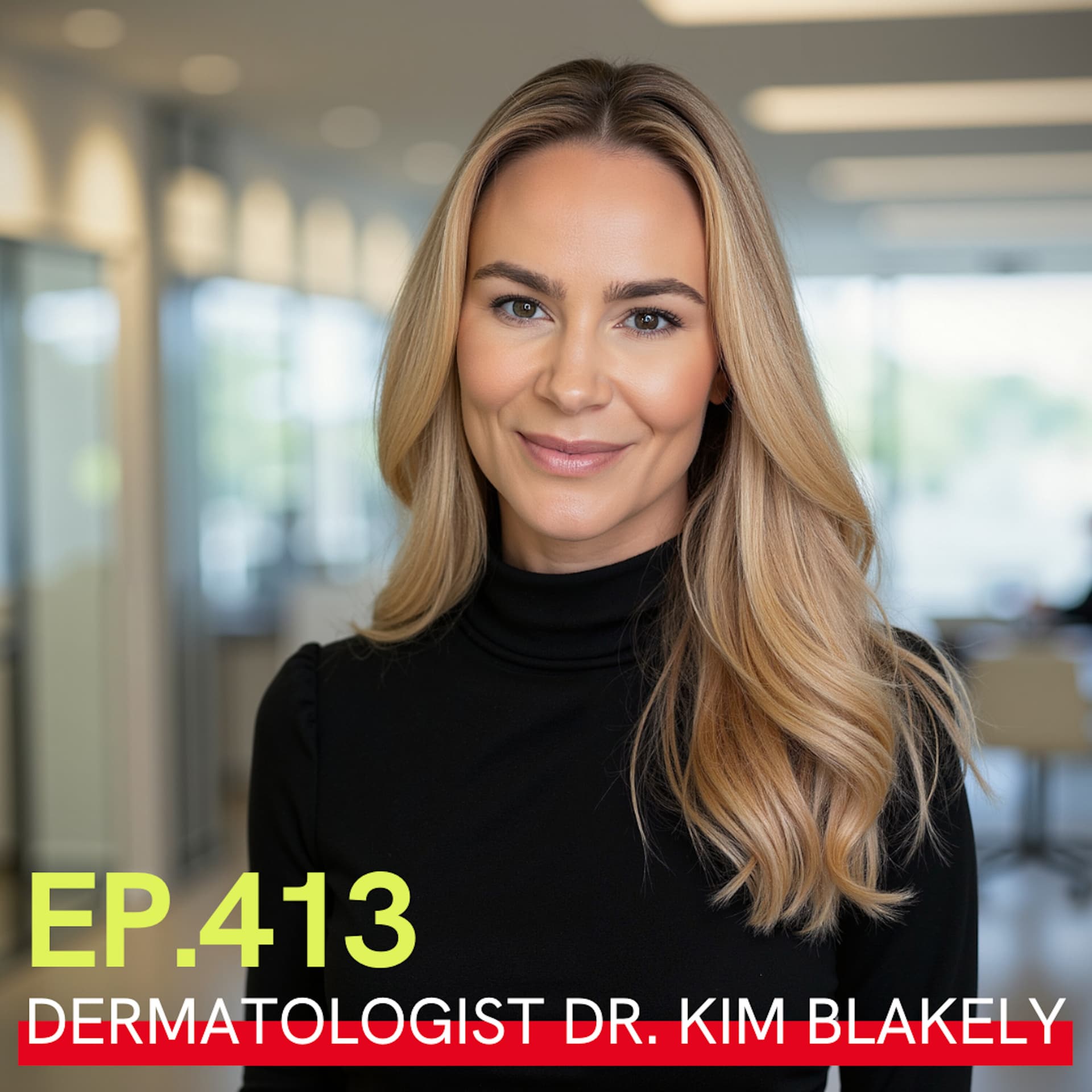
How-to Transition Your Skincare Routine to Fall and Winter, According to a Dermatologist: “Short Contact” Therapy, Layering Hacks and Barrier-Boosting Secrets
Hosts
- Jill Dunn
- Carlene Higgins
Guest
- Dr. Kim Blakely: Founder of Elevate Medical and Cosmetic Dermatology, board-certified dermatologist with expertise in medical and cosmetic dermatology.
Overview This episode focuses on transitioning skincare routines for the fall and winter months. Dr. Blakely shares expert advice on maintaining skin health during colder weather, addressing common issues such as compromised skin barriers, and effective use of skincare ingredients.
---
Key Takeaways
- Importance of a Healthy Skin Barrier
- Weakening Factors: Cold, dry weather can compromise the skin barrier, leading to irritation and dryness.
- Signs of Compromise: Look for tightness, redness, stinging, or flaking as indicators of a damaged skin barrier.
- Skincare Ingredients for Barrier Repair
- Recommended Ingredients:
- Ceramides: Essential for restoring skin barrier integrity.
- Niacinamide: Known for its anti-inflammatory properties and barrier support.
- Azelaic Acid: Useful for rosacea-prone skin, providing mild exfoliation and reducing redness.
- Oat: Soothes and calms the skin while providing hydration.
---
- Moisturization Techniques
- Layering for Hydration:
- Use hyaluronic acid as a humectant to draw moisture into the skin.
- Allow time between layers for optimal absorption.
- Moisturizer Types: Transition from lighter lotions to heavier creams as the weather changes.
- Exfoliation Adjustments
- Exfoliation Strategy:
- Reduce frequency of strong exfoliants in colder months to avoid disrupting the skin barrier.
- Consider gentle exfoliants based on individual skin types.
---
- “Short Contact” Therapy for Actives
- Method: For retinoids and other active ingredients, apply for a short duration and then wash off to minimize irritation. Gradually increase contact time as tolerated.
---
- Importance of Sunscreen Year-Round
- Myths: Despite reduced sun exposure in winter, sunscreen is crucial for preventing cumulative UV damage.
- Application: Use a dedicated sunscreen rather than relying on moisturizers with SPF, as the proper amount for effective protection is usually not reached with these products.
---
- Additional Advice for Balancing Actives and Moisture
- Patience is Key: Skincare results require consistency and time.
- One Product at a Time: Introduce new products slowly to monitor skin reactions.
- Product Elimination Diet: If experiencing irritation, revert to a simple routine and reintroduce products gradually.
---
Featured Product
- Aveeno Calm + Restore Line: Highlighted for its calming effects and barrier repair capabilities. The line includes colloidal oat, recognized for its soothing properties.
---
Related Episodes
- Busting Skincare Myths with Dr. Shereene Idriss
- Science-Backed Ingredients for Healthy Skin
- Derm Terms Decoded with Dr. Samantha Ellis
---
Closing Remarks
- Listeners are encouraged to engage with the podcast through social media and voicemails for questions or feedback.
---
Disclaimer: The episode may contain paid endorsements for products and services mentioned.
For more details or product links, visit
[Breaking Beauty Podcast](https://breakingbeautypodcast.com/episode-recaps/)
Written by AI. May contain mistakes. Listen to the episode to check what was said.
Transcript
Automatic transcript. May contain errors.0:00The following podcast is a Dear Media Production.
0:07Welcome to Breaking Beauty, the podcast all about the breakthrough people, products, and moments in beauty. We're your hosts, Jill Dunn and Carlene Higgins.
0:20Hello and welcome to Breaking Beauty podcast, everyone. The show all about the breakthrough people, products, and moments in beauty hosted by yours truly, Carlene Higgins, and my best pod mate, Jill Dunn. Hello, Jill. Hey, friend. And of course, we are two longtime beauty editors turned beauty podcasters. We're here each and every single Wednesday. And this week, we're chatting all about transitioning our fall and winter skincare routines. Like it or not, winter is coming. And so we are here to share all of the secrets. Yes. And our guest this week is Dr. Kim Blakely, founder of Elevate Medical and Cosmetic Dermatology here in Canada.
0:59She's a board-certified dermatologist with expertise in both medical and cosmetic dermatology. And this uninterrupted conversation is brought to you in partnership with our friends at Aveeno. Dr. Blakely, she's earned a PhD in molecular genetics from University of Toronto. She's a fellow of the Royal College of Physicians and Surgeons in Canada, a member of the Canadian Dermatology Association, and serves on the executive committee for the dermatology section of the Ontario Medical Association. Yes, all of that. In today's conversation, we're asking Dr. Blakely all about how to transition to a fall skincare routine like a dermatologist.
1:38So ways to level up your skin barrier health, her short contact method for potent actives like retinol, and the switch-ups she personally makes to her skincare routine to adjust to drier conditions, everything from cleansers to exfoliation, and even why we need SPF in the colder months. So welcome to the show, Dr. Blakely. Thank you so much for having me. I'm very excited to be here today. What's the number one thing you personally do to switch up your skincare routine heading into cooler weather? I think as I am transitioning from the warmer months to the cooler months, I'm thinking about how to maintain a good moisture barrier for my skin.
2:18So I'm thinking about maybe upping the amount of hyaluronic acid that I'm applying to my skin and maybe switching from a lighter moisturizer to maybe a bit of a heavier moisturizer, just to make sure that my skin barrier stays intact. And as we're moving into the lower humidity, cooler temperatures, I'm not going to be sort of riddled with that eczema and that sort of dry skin that I tend to be prone to. So, you know, people are probably thinking, okay, that's easy. I can transition out of my lighter lotion to a heavier cream. What about cleanser? Do you make any swaps when it comes to washing your face?
2:57I would say that if somebody is using a lot of acnes in their cleanser, if they are more acne prone or oily and they're using something that's a little bit harsher during the summer months, they may want to tone that back as they transition into fall and winter, specifically around that acne piece. I do often tell patients that anything that's harsh, yes, the actives can help with the acne, but if you are disrupting your skin barrier and worsening inflammation, you will ultimately flare your skin's condition. So for that patient population, if they are using a lot of actives in their cleanser, I would maybe suggest that they take a step back to something a little bit more gentle as we transition.
3:39Okay. And what about skin exfoliation in the fall and winter? What tweaks do you personally make? Because I feel as though this is the piece where people are like, I'm not going to exfoliate that much in the winter. And then all of a sudden you're so flaky, you're so dry, your makeup is clinging to every part of your face. So what do you like to do? It's true. I do personally find that I dial down on some of my exfoliants as I am heading into fall. Again, I'm eczema prone. I get that dry skin and I really want to take care of my skin barrier as we're going through that transition. But I don't think that that's necessarily true for everybody.
4:19So I think really listen to your skin. And if you're getting dry and flaky, that's a sign that you need to change some things up. If you're getting red and irritated and you're feeling sensitive, that's a sign that something's not working. Right. What's your favorite exfoliating ingredient? For myself, personally, I like a combination, like a weak combination of multiple AHAs and BHAs, just everything being really gentle and just kind of working synergistically together. For my patients who are acne prone, I'm definitely kind of leaning towards salicylic acid. We know that that penetrates deeper into the pores, can actually unclog the pores and kind of work on that comedone.
4:57Yeah, azelaic acid is fantastic in a lot of situations, especially for my rosacea probe patients, patients who are red and irritated. So I think that depending on your skin type, there's a lot of good light exfoliators that are available on the market that we can tap into. Is azelaide acid actually an exfoliant then? It is going to cause a light exfoliation on the skin when you're using it. It is definitely not to the level of some of the other acids that we have available to us, but it can definitely cause some irritation in that if you're using it too and definitely can cause a light exfoliation for our patients as well.
5:37I was prescribed azelaic acid for my rosacea prone skin. So I started using it every day in the morning and at night. So obviously I have a lot of redness, I can get stinging, that sort of thing. And then I was reading other people online and reddits and stuff, and they were saying how azelaic acid can be irritating. And I thought that was so strange because it was prescribed for my super sensitive skin. Patients with rosacea often have very sensitive skin. And in fact, a lot of different products, whether it's an active or even just a gentle moisturizer, if your skin barrier is disrupted, you can get irritation from that.
6:14So I tread very lightly with my rosacea patients and I will typically never introduce a cream twice a day right off the bat. I'm always suggesting very light introduction of products, building up your tolerance to it, acclimating your skin barrier to it. And just like that, that sign of like that irritation, that burning, probably a worsening of your redness, that is a sign that your skin is not reacting well to the product. And it's to take a step back. It doesn't mean that you can't use the product. It doesn't mean that you need to toss it in the garbage and try something else. It just means that your skin needs time.
6:50And it's effective for reducing inflammation in the skin. And it's one of the few topicals that we have available to us that will actually provide a notable reduction in redness in a long lasting, meaningful way. Because we have some other products on the market that we can use temporarily to reduce redness. Those sort of vasoconstrictor products that oftentimes we're getting that really bad rebound vasodilation after use. So I stay away from those types of products. But with azelaic acid, we can actually see that gradual improvement in redness over time. So I like it for that purpose. But agree, some people will get irritated to it.
7:27And it just means you need to slowly introduce the product. Okay. So similar to retinol, like a couple days a week. And if you're tolerating it, just start building, building. Okay. Interesting. Correct. Okay. And Dr. Blakely, what about your personal moisturization skincare routine? What are you doing in the daytime for your steps coming into fall and winter? Oftentimes within a brand, you're going to find different consistencies of moisturizer. You may find a gel cream and then there's a partnering sort of cream that's a little bit thicker. So you can often just move within the same brand from one product to the next that maybe provides a little bit more hydration.
8:05Alternatively, if you really like the moisturizer you're using, then you don't necessarily need to switch the moisturizer. You could always add in something pre-moisturizer, something that's a humectant, meaning it's actually going to pull moisture into the skin. so I do like putting on if I'm feeling extra dry I pat a little bit of water onto my skin and then I will put on an HA serum hyaluronic acid being that humectant it is going to grab onto that water pull it deep in the skin and if you follow that with your moisturizer even if it's the same one you always use it is going to grab the moisture from that moisturizer and allow it to go deeper into the skin I think that if you're feeling like there is products sitting on your skin afterwards, it's not absorbing well.
8:47I think you're either using too much of it, or you need to give it more time to absorb. I am a proponent of waiting a bit of time in between each layer of my skincare routine. If I have the time, which isn't always possible, like I said, I've got a six-year-old and a three-year-old at home. Half the time, I'm like running out the door with my hair wet. But I do think giving your skin some time to sort of absorb and take in each layer of your skincare routine can be beneficial. And I don't think everybody needs the six or seven step routine that I'm currently doing. I haven't always done that. A routine can be a lot simpler than that and still give you a lot of benefit.
9:26Okay, so just giving a couple minutes between steps and going off and doing something and coming back is what you're saying. Absolutely. And I came across one of your videos that talked about short contact therapy when it comes to either prescription topical products like we talked about azelaic acid or retinol comes to mind for a lot of people. So we've heard about short contact when it comes to cleansers that you just wash on and off with active ingredients. What is your method of short contact therapy when it comes to treatments or creams? The short contact video came about because it is not uncommon that I have a patient in clinic where we're either trying to address acne or hyperpigmentation or one of a whole gamut of skin concerns that can be partially addressed with use of a retinoid.
10:20And I'll say, well, have you tried this either over-the-counter retinol or prescription-strength retinoid? And they say, oh, I can't tolerate it. And with the exception, I think, of a few very sensitive patients. I think most people can tolerate that active, but it's a matter of, again, acclimating your skin and getting used to it. So we often tell patients when they're incorporating a retinoid to just start every other night or even every third night. And I will have patients who still complain about irritation in those cases. And that's when I start to do the short contact. So I say, wash your face at nighttime, dry really well, put a pea-sized amount and watch an episode of Netflix.
11:01You can start at half an hour. You can start at one hour and then you wash it off. You put your moisturizer on and that's it. And then a couple of days later, if you're not getting red or irritated or feeling tight, then maybe you wear it for two hours that night and you just slowly build up your tolerance to it. And then hopefully over time, you're ultimately using it every third night and then every second night. And I've yet to have a patient who's failed that routine for introduction of a topical retinoid. Yeah. Okay, so we're talking about something like Differin or what would be the most common ones you've seen success with this method?
11:37I use it across the board. I would say right now that the prescription strength retinoid that I prescribe the most would be topical to Xeratine. Very well tolerated. The current formulation comes in a really nice vehicle, so quite moisturizing. and then different as well as another big one for me. And that's actually available now in a triple therapy along with benzoyl peroxide and clindamycin. So for people who have really active acne, that's one of my go-tos as well. Okay, and some people are using the flash contact with that as well. Absolutely. Okay, great. Yeah, so with a component like benzoyl peroxide, which has to stay in contact with the skin for at least about a minute or two to really get the benefit.
12:21So that's probably when you were referring to the use of cleansers, needing to sit on the skin. As long as you're getting some amount of contact, you could even start as low as five minutes with some of those products in a leave-on formulation and then wash it off. If you're getting irritation, you're still going to get more benefit than not using the product at all. And I think a lot of people for a long time had been saying in the industry how those cleansers, like why waste your money on a cleanser that contains active ingredients in it? It's been in more recent years that people are starting to understand this flash contact idea where it actually does make sense for some people.
12:58It's not always a case of the stronger, the better, the longer, the better. Right. So it's it's all about how do you maintain a consistency? It's only if your face can tolerate it. So I love this idea. So around here at Breaking Beauty, we're always talking about sunscreen 365 days a year. although I did notice in Carlene some of her vacation photos she had tan lines everyone okay she was in Italy and I saw the accidental tan you know the accidental tan I always being called out right here religiously but if I accidentally get a tan that's God's will that is not mine you gotta live the Romans wanted the Romans wanted it exactly but seriously we're you know, transitioning into fall and winter.
13:48And I still think there is some resistance to wearing SPF when it's dark at four o 'clock. So why do you like to wear it year round? Why, what, what's the best case that you tell your patients why they should be doing it? I was not always a sunscreen worshiper like I am right now. I grew up in the time when our past time at lunch in high school was heading to the local tanning salon. I've indulged myself. I, I think for me, as I've gotten older and as I ultimately pursued this career and recognizing the importance of SPF in my routine, number one is I can't go back in time. I cannot undo the sun damage that I've done before, but I can absolutely prevent the slow chronic accumulation of additional damage to my skin that does come from those micro exposures.
14:37Even though I'm not going to the beach every day and lying in the sun. Every time you are outdoors, you are getting hit with UV rays. UVA is pretty consistent throughout the day. UVB obviously peaks sort of around the noon time, but that cumulative exposure to UV is going to damage your skin over time. And if you already have some damage from your childhood or your youth, you're just kind of compounding on top for that and why would you do that? Number two is I turned 40 this year and those wrinkles creep up and yes, I wear my sunscreen to prevent skin cancer and precancerous lesions. I'm also doing it from an anti-aging perspective.
15:19You have to wear your sunscreen. It is the most, you can use every active in the book and if you are not wearing sunscreen every single day, you're basically throwing your money down the garbage. And then as well, like I mentioned, I suffer from melasma and that pigmentation. It is really, once you kind of get that pigmentation on your skin, whether it's melasma or post-inflammatory hyperpigmentation, any exposure to UV and in fact, visible lights and blue lights as well is going to worsen that pigmentation. So you have to be wearing a sunscreen every single day. And in fact, if you're worried about pigmentation, then we really are talking about those tinted sunscreens, those ones that contain iron oxide to help with that pigmentation.
16:03So those are my three reasons. And yes, I always say summer or winter, rain or shine, you have to wear your sunscreen every single day. It really is the most important component of your routine.
16:31Have you ever looked at a successful woman and thought, wow, she's so lucky? Well, spoiler alert, luck doesn't just happen. We have the power to create it. I'm your host, Les, and She's So Lucky is the podcast where we pull back the curtain on what it really takes to create your own luck. Every week, I sit down with badass women, entrepreneurs, creatives, wellness experts who have built their success on their own terms. We talk wins, failures, and the lessons they actually learned along the way. No fluff, no BS, just real stories to inspire you to take up space and go after what's yours. So if you're ready to tap into your own magic, join me for She's So Lucky.
17:13New episodes drop every week.
17:25I have a question for you when it comes to moisturizers with SPF versus applying a moisturizer and then an SPF. I feel like this is a hot debate because brands like Aveeno, like from the jump, like way back when I was a baby beauty editor, I would always have other editors come to me and be like, I need a moisturizer with SPF, a daily moisturizer with SPF. And I feel like in recent years, that concept has kind of gone away. And now it's more about a separate SPF, people wearing it over their moisturizer. And I just wonder, like, is there really a reason to do one over the other? Because for somebody who's lazy slash busy like me, It's like, I just want the all-in-one.
18:11Or somebody who's got very oily skin, do they want to do that double layer? So I'm putting the question to you. What say you? So my rule of thumb is that you need a separate moisturizer and a separate sunscreen. And if that moisturizer has a bit of SPF in it, then great. But you still need to put a dedicated sunscreen on top. And the reason for that is, if I were to ask you how much moisturizer you put on your skin, you're probably going to respond with like a nickel or quarter sized amount is what you're using to cover your face from a moisturizer perspective. But we know that when it comes to SPF, the way that we test SPF, it equates to two finger lengths of sunscreen.
18:55So you basically take your sunscreen and you squirt it out on your fingers from your palmar crease all the way to the tip of your index finger and your middle finger. And that's the amount of sunscreen that you need to cover your head and neck. Nobody is putting that much moisturizer on their face. So if your moisturizer is an SPF 30 and you're putting a nickel or quarter-sized amount on, you're maybe getting a third, maximum a half of the SPF protection that you're supposed to be getting from that product. It's just simply not enough product to provide the SPF that's written on the bottle. So in theory, could you just put two finger lengths of the moisturizer with SPF or not?
19:35Yeah. If you put on that amount, because really it's measured in micrograms per centimeter square, it's the amount of product you're putting on relative to the body surface area. So if you have a moisturizer that has an SPF 30 and you are putting on the right amount of it, then you are going to achieve the SPF that's written on the bottle. But that's when we start to come into, just like you said, you're going to be putting on way too much moisturizer. You're They're going to pill. You're not meant to use that much moisturizer. It's not comfortable generally to use that much moisturizer. So I am often saying moisturizer first and then a dedicated sunscreen after.
20:16And Dr. Blakely, I know that you're online a lot as many dermatologists are these days. There's just been more headlines than ever in the last year about SPF. And there's been indie brands on the market that, you know, were called out globally for not living up to what SPF number was on the label. And at first it was kind of like, oh, we'll do more testing. But then subsequently they pulled them from the market altogether and they're using third party manufacturers. And so what are your thoughts on this? Because my feeling as a beauty editor is that it kind of just shakes consumer confidence in wearing it.
20:52So what are your thoughts if you have any? I, it's a challenge. And I think that this applies to a lot of aspects in skincare. We don't always know exactly where our products are coming from. I think that there are ways to at least have an increased level of confidence that what you're getting is actually what's written on the bottle. So I'm often telling my patients, there's a ton of different sunscreens in the drugstore. We are always looking for ones that are broad spectrum. So UVA and UVB, and most of the ones that you're going to find in the drugstore sort of readily available over the counter do fit that criteria in Canada.
21:29I do think it's scary when people start to go a bit rogue with their sunscreen and start to either make their at-home sunscreens or purchase some of these unregulated products. Not just because it's very unlikely that you're getting the UV protection from it, but what other chemicals and ingredients are they putting in these products that are unregulated? There's a reason why we have Canada Health And in the States, they have the Food and Drug Administration or Association, like the FDA, in order to regulate the products that we apply to our skin and that we ingest. And I think that when you start to go a bit rogue, it gets a bit scary.
22:07Yeah. I mean, Carlene can attest that I'm always over here sticking up for big SPF, as it were. Like I always say, go for the names that have been on the shelf for years and years and years and years and years because they are going to be testing them ad nauseum, honestly. They have those controls, right? And so I agree with you that some more of those legacy brands are where I personally feel more comfortable. And we have anecdotal evidence. We've all been using them for years. We know that they work and they're safe. We've been using them on our skin for years. So I have a lot more confidence in that.
22:45I have more confidence putting them on my kid's skin. So that's right. Now, as we mentioned, it's kind of a delicate balance, I think, going into the cooler months when it comes to like skin barrier and how to treat, you know, when you are trying to address other issues with active ingredients as well. Maybe we could just start, though, by talking about what are some of the biggest culprits that are messing up your skin barrier, whether it's like ingredients or external factors. So there's a lot of different things that can disrupt the skin barrier. I guess, first of all, when we're talking about the skin barrier, we are talking about the most upper level of our skin.
23:24So our strat corneum. And the way that I visualize this, and you have probably heard this analogy before, but I call it bricks and mortar. So the bricks are your corneocytes. Those are the skin cells. And then the mortar in between is basically a lipid solution that's in between that kind of helps to keep those cells stuck together, but also keeps them hydrated in that. And when our barrier gets disrupted, you can imagine that that bricks and mortar starts to fall apart. It's easier for us to lose water through the skin. And then it's also easier for allergens and irritants to penetrate and cause additional irritation to the skin.
24:03so when we think about the things that are kind of assaulting our skin barrier you're absolutely correct so this wave right now of using tons of different actives in our skincare routine that can absolutely disrupt the skin barrier lots of harsh exfoliation etc which can kind of strip the lipids and disrupt it and then there's also external environmental things as well we've mentioned, the exposure, that's a big one, can damage our cells and disrupt the skin barrier. So I think there's a lot of different things that we're doing on a daily basis that can kind of, I'd say, insult our skin barrier or cause us some issues that we need to actively work against.
24:46And how do you know when it's damaged? Like what would you see on a dry skin person versus an oily skin person, for example? So the symptoms that I talk about with a disrupted skin barrier, like coming back to my point at the beginning, you just have to listen to your skin. So that whole idea that, oh, it's burning, it's working. No, that's terrible. If it's burning, it means it's doing something to your skin that you don't want it to do, or you're not ready for that active. So I'll often tell patients, if you're feeling sort of that tight feeling in the face, if you're visibly looking red, if you are feeling that burning or tingling sensation on your skin, those are all signs that your barrier is irritated.
Read the full transcript
25:28And then if we think about a different population, you mentioned the oily patients. So patients who have acne, they're in this mindset that if they use all these actives and they dry out that oil, they are going to make their acne better. And in fact, they're often being too harsh that they are disrupting their skin barrier, they are worsening their inflammation, and they're actually getting more acne because of that. So seeing acne breakouts and those sorts of things can also be an indication that the skin barrier is disrupted. So it can be different depending on the person. But yeah, that dry, flaky, tight, irritated red skin, that really is sort of the hallmark of irritation and a disrupted skin barrier.
26:10Let's talk about some of the fixes for a damaged skin barrier. What is your view on moisturizers versus these occlusives like a petroleum jelly that somebody might put on at night? Are you a fan of slugging? What can you tell us? Petrolatum jelly is an occlusive product. It is going to create a bit of a barrier on the skin and it's going to prevent that loss of moisture from the skin or what we call trans epidermal water loss. But it is not pulling water into the skin. It is not hydrating the skin. It's just simply preventing the locks of your own moisture. So you often do need in the cases of a disrupted skin barrier to use emollients, which helps you fill those gaps in between your bricks or your cells as they're falling apart.
26:58So adding back moisture to the skin or humectants, which are helping to pull water into the skin. Once that's on the skin, locking it in with an occlusive can be very effective. I love the idea of slugging. I think that if you have a compromised skin barrier, by patients who are very atopic, I am often recommending that they lock in either their medical prescription-grade creams or their over-the-counter creams with a layer of petrolatum jelly in order to help lock in that moisture. I don't think it's necessary for everybody, especially if you are acne-prone or on that spectrum, because that may then just worsen the acne itself.
27:38I feel like this could apply to lips as well because you know how you hear some people saying that lip balms they swear it's making their lips drier. That is a hundred percent true. So is it should we be looking for an emollient or an occlusive or doing that combo you talked about? I am not a fan of lip balms in general. I find that they often have fragrance, different types of waxes within them, colors, but lots of different potential sensitizers that can cause irritant or allergic contact or metitis. So outside of that, I typically will just say nice petrolatum jelly, the best thing for the lips.
28:18That is what I typically recommend. And the other thing to make sure of avoiding lip licking, being conscientious, like if you're getting really bad lip dermatitis, you're a metal water bottle. There's all kinds of different things that come in contact with your lips on a daily basis that can perpetuate a really bad lip dermatitis. So I often say cut out all the, I'll stick away from name brands, but all of those sort of lip chaps and things like that, which might actually be making things worse. And just use petrolatum jelly. Okay. But Dr. Blakely, we're in our lip oil, lip shaping era. I can't quit it.
28:54No, I'm joking. And in your pro opinion, what are the best ingredients to support skin barrier health? There are a number of different things that you can use to really support your skin barrier, help to rebuild it, help to protect your skin from insults. So we had chatted earlier about ways to bring hydration into the skin. So humectants, so that is your hyaluronic acid, glycerin, those are sort of products that can help to pull moisture into the skin. There are ceramides, that is sort of a natural lipid that we see in the skin. So adding back in ceramides to our skincare routine can help with that.
29:32And then there's other really great actives like oat, so coital oat, which we can use to help support our skin barrier. And that actually works through a number of different mechanisms to calm the skin and help to protect the stratum corneum and rehydrate it. So I think that there are a lot of different ways to achieve that and a number of excellent products available on the market that could help with restoration of the skin barrier. Amazing. Well, I think we got to give a hat tip to today's sponsor, Vino. A lot of derms do recommend the Vino Common Restore line, particularly the oat gel moisturizer.
30:08so maybe you could explain to us what gives this particular moisturizer some kind of like street cred and also the fact that it's a gel moisturizer but it does give that barrier support I think again going back to those people who have acne and combination skin and how they can cope with protecting their barrier through the winter months without throwing having to resort to petroleum jelly. For sure. I love that. The street cred. It's absolutely true when it comes to a brand like Aveeno. It is a household name. That is one of the things that I love about Aveeno. When I talk to patients and I say, oh, pick up a tub of Aveeno, they know what that is because it's tried, tested and true.
30:52The reason that we like Aveeno and one of the main reasons why Aveeno is so effective in the context of your xerotic or dry skin and in the context of atopic dermatitis or enzema is because of this colloidal oat. So it's one of the main ingredients that Aveeno has across a number of their moisturizers. And it's special because oats, unlike a lot of different grains out there, are really lipid rich. So when you take the extract from the oats and you're using it in your skincare products, you are supplying lipids, you're supplying antioxidants to the skin. It helps with barrier repair. It calms down inflammation.
31:32And Aveeno has done it in a way where you have this lightweight, fragrance-free moisturizer that you can essentially use for anybody in your household. It's safe for children. It's safe for adults. So it's just an easy go-to that we all recognize and we've all used and we all trust as part of our skincare routine. Yeah. I love this moisturizer specifically the gel one because it's also fragrance free and the price point is incredible for, you know, I know, I know a lot of people are looking for budget options now, but like I recommend it so often as well. And it's true. It's lightweight and that's nice because when we were kind of transitioning from the summer into the fall into the winter, how are we changing our routines?
32:21Not everybody is going to tolerate that really thick, more occlusive moisturizer. And this one doesn't feel like that. It's a gel cream. It's nice. It's light. But you feel the hydration the second it touches your skin. It really does work to pull moisture into the skin, lock it in and just soothe your skin barrier. And it's nice because you feel that action immediately, but can actually last up to 48 hours. So you're feeling that sort of long lasting effect from the product, which is great. Yeah. What makes prebiotics in a skincare formula good for barrier protection? Prebiotics, it's big. We're talking about microbiome and so many aspects of medicine right now.
33:03And we know that the skin microbiome is incredibly important to skin health. I think we're just at the earliest stages of understanding the full connection between the microbiome and our skin health. But when we are providing those prebiotics back to the skin, we are supporting the skin's microbiome. We're supporting the healthy bacteria that we need to colonize our skin. Number one, because it's sort of this synergistic relationship with our skin. And number two, if you have good bacteria on your skin, you are preventing the overgrowth of the bad bacteria. And we do know that in just the general population, but especially in our atopic dermatitis patients, they often have an overgrowth of unhealthy bacteria on their skin.
33:50So Staph aureus will often take over and that just perpetuates the inflammation and the disruption of the skin barrier. So I agree. Aveeno's kind of come out with a great formulation here that includes those prebiotics, includes other antioxidants and anti-inflammatory molecules that really just helps to calm the skin, soothe the skin and can help with restoration of the skin barrier. Yeah, I also like that it has the word calm in the title of the moisturizer. I need a lot of zen in my life right now. I mean, I always say my skin looks angry, like if it's really red. So this is the perfect antidote.
34:25I need the antidote, which is calming. Yeah. There you go. Have you had a chance to try it yet? Oh yeah, no, I love this line. I love this line. But what's your personal favorite from the line? I'm curious. So one of the moisturizers that I absolutely love is the Aveeno Calm and Restore. And in fact, this entire line is incredible. It instantly soothes your dry skin and it restores the skin's natural moisture barrier in just two hours. Definitely for me, the Hero product is the Daily Moisturizer, the gel cream. I love it. I think it's fantastic. It's lightweight, but hydrating. I tend personally to stick more towards a foaming cleanser.
35:06I do run on the oily side, but this cleanser is soap-free. So if you are that person who has a compromised skin barrier, if you're feeling irritation at all, it's an excellent option for a cleanser to try. That's not gonna strip the oils out of your skin, be very, very gentle and restorative. and then again the serum as well which you can pair with the moisturizer to really help to replenish the skin barrier. And do you have any last pieces of advice for people who are using active ingredients but trying to balance their moisture barrier any like hacks or any tips that they can take away today?
35:44I think my biggest one is that we live in a society right now where people expect immediate results. And that is not going to happen in the context of skincare. So number one, you need to be patient. So when you are introducing a new product, you are not going to notice massive changes over a few nights or even a few weeks in most cases. Consistency is key. So you have to introduce that product, stick with it. And provided you're not having a negative reaction to the product, you have to be patient to wait for it to work. Number two, I never introduce multiple products at once. You introduce one product at a time, give it a chance to work, make sure you're tolerating it okay, and make sure you're choosing products that actually have actives that are geared towards the skin issue that you're concerned about.
36:35Just because you see a TikTok video that talks about beef tallow or some other new trend does not mean that it's necessarily going to fix your skin issues. So I do think talking with somebody, whether that be a dermatologist or that, about your skin issues to know what actives are probably going to be effective for you could be really beneficial. And then I'm a big proponent. I used to work with Dr. Sandy Scott-Nickey and she has her product elimination diet and I am a massive proponent of this. So if you are getting skin irritation, if you are having issues with your skincare routine, cut everything out, go back to basics, gentle cleanser, moisturizer, sunscreen, allow your skin barrier to repair itself, and then very slowly start to reintroduce your products.
37:20That means one product every two weeks, give your skin a chance to adjust to it, make sure you're not irritated from it, and then slowly reincorporate your routine so that you can build back up into a routine that you're happy with, but isn't causing irritation. Well, thank you so much for joining us today, Dr. Blakely and of course, everybody slide into our DMs. If you have further questions about your skin barrier health, maybe we can get Dr. Blakely back on the mic another time. Friendly reminder that this fall, you can save a weather weary skin with the Aveeno Calm and Restore line that soothes skin barrier for your healthiest skin yet.
37:58So you can check it out now at drugstores. And once again, thank you so much for joining us, Dr. Blakely. Thank you guys so much for having me. It's been an absolute pleasure to be with you today. Thank you so much.
38:37Just search Breaking Beauty Podcast chat room. You can even leave us a voicemail at any time with questions or feedback at 1-844-227-0302. And don't forget to subscribe to us wherever you get your podcast fix. Spotify, Stitcher, Google Podcasts, and Apple Podcasts, where you can show us some love by writing a review. See you next Wednesday.
39:15Please note that this episode may contain paid endorsements and advertisements for products and services. Individuals on the show may have a direct or indirect financial interest in products or services referred to in this episode.
From the publisher
This week’s uninterrupted conversation is brought to you in partnership with our friends at Aveeno. This week, we’re sitting down with top dermatologist Dr. Kim Blakely, who’s here to explain her tried-and-true methods for getting your healthiest skin for the fall and winter months. Dr. Blakely explains what’s really happening when your barrier is compromised, which everyday habits make the cracks in your skin even worse, and how to build a dermatologist-approved winter skincare routine that *actually* keeps your complexion calm and resilient.
You’ll learn:
- Why your skin barrier weakens during cold, dry weather – and how to recognize the early warning signs.
- Ceramides, niacinamide, azelaic acid and oat – the ingredients that this dermatologist relies on most for barrier repair and long-lasting moisture.
- The *right way* to apply moisturizer and what to layer next for maximum hydration and locked-in results.
- How long you should wait in between skincare steps – and why timing is key to your skin barrier routine.
- Dr. Blakely’s “short contact therapy” hacks for using retinol and other actives all season long – while keeping a fragile barrier in tact.
Aveeno is our exclusive show sponsor
This fall, save weather-weary skin with the Aveeno Calm + Restore line that soothes and strengthens skin barrier for your healthiest skin yet. Check it out now at drugstores!
For any products or links mentioned in this episode, check out our website: https://breakingbeautypodcast.com/episode-recaps/
Related episodes like this:
- Busting Skincare Myths, Live With Dermatologist Dr. Shereene Idriss!
- A Derm Explains: The Science-Backed Ingredients That Will Help You Achieve Healthy-Looking Skin
- Derm Terms Decoded: “Peau D’Orange,” “Microdosing” Accutane and “Demodex”?! Dermatologist Dr. Samantha Ellis
*Disclaimer: Unless otherwise stated, all products reviewed are gratis media samples submitted for editorial consideration.*
Hosts: Carlene Higgins and Jill Dunn
Theme song, used with permission: Cherry Bomb by Saya
Produced by Dear Media Studio
Get social with us and let us know what you think of the episode! Find us on Instagram, Tiktok,X, Threads. Join our private Facebook group. Or give us a call and leave us a voicemail at 1-844-227-0302. Sign up for our Substack here
See Privacy Policy at https://art19.com/privacy and California Privacy Notice at https://art19.com/privacy#do-not-sell-my-info.


