
In short
Breaking Beauty Podcast - Episode Summary
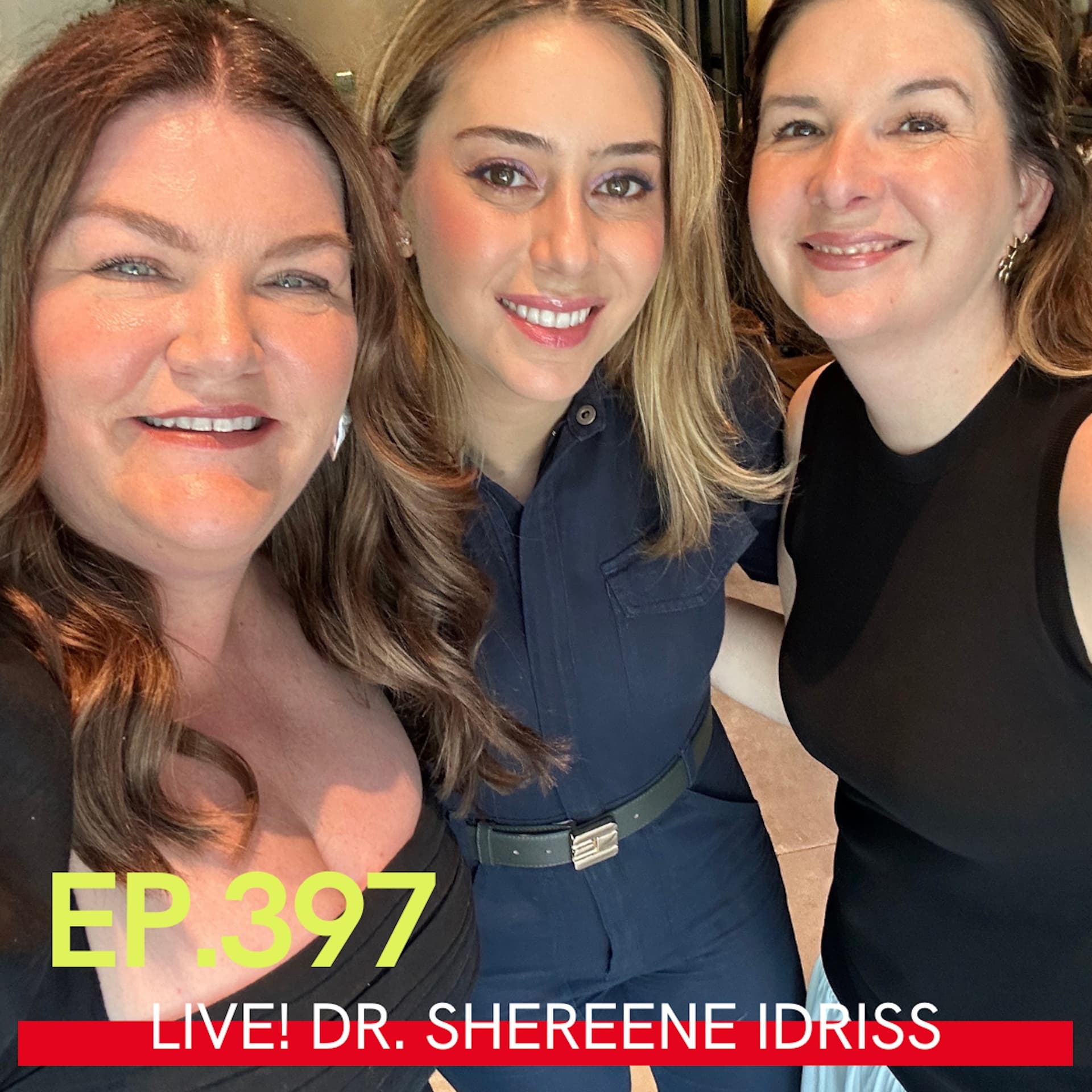
Podcast Title: Breaking Beauty Podcast Hosts: Jill Dunn and Carlene Higgins Episode Title: Live With Dermatologist Dr. Shereene Idriss! Busting Skincare Myths, The “Cheap” Aging Hack We Need to Know Now, and the Scoop on Her First-Ever Sunscreen Episode Release Date: Not specified in the transcript
Episode Overview In this episode, Jill and Carlene host Dr. Shereene Idriss, a well-known cosmetic dermatologist with a significant social media following. The discussion revolves around debunking skincare myths, sharing insights on new skincare products, and providing practical advice for skincare enthusiasts.
Key Topics Discussed
- Dr. Shereene Idriss' Background
- Board-certified dermatologist based in Manhattan.
- Known for her engaging and educational content on skincare via social media (4 million followers on Instagram, TikTok, and YouTube).
- New Skincare Innovations
- Purple-Tinted Sunscreen:
- Dr. Idriss’ latest product that generated a 10,000 person waitlist in just 36 hours.
- Designed to reduce the appearance of brown spots while providing SPF 50 protection.
- Vitamin D as an Anti-Aging Hack:
- Recent Harvard study suggests vitamin D may help preserve telomeres, potentially signaling a low-cost method for anti-aging.
- NAD+ Skincare:
- Discussion on NAD’s role in cellular health and the skepticism surrounding its efficacy in topical products.
- Skincare Myths and Trends
- Caveman Skincare Trend:
- Dr. Idriss critiques the trend of not washing one's face, emphasizing the importance of hygiene.
- Mineral vs. Chemical Sunscreens:
- Discussion on the misconceptions about sunscreen types. Dr. Idriss clarifies that chemical sunscreens are not inherently toxic and highlights the advantages of both types.
- "Medical Grade" Skincare Labeling:
- Explains that terms like "non-toxic" and "natural" are often misleading and lack regulatory definitions.
- Skincare Ingredients to Watch
- Underrated Ingredients:
- Panthenol, azelaic acid, and diglucosyl gallic acid are highlighted as beneficial for skin health and often overlooked.
- Skincare Scams:
- Criticism of trends and products lacking scientific support and their implications for consumer health.
- Product Launch and Details
- Disco Block Sunscreen:
- Launching on June 30th, with a focus on protecting the skin while addressing existing damage.
- Price point: $38, designed for inclusivity across skin types.
Key Takeaways
- Education Over Fear: Dr. Idriss encourages an informed approach to skincare, avoiding trends that promote harmful practices.
- Importance of Routine: Consistency in skincare is compared to maintaining fitness; results require dedication and the right practices.
- Skepticism of Marketing Claims: Consumers should critically evaluate skincare claims and seek informed opinions when choosing products.
Conclusion Listeners are encouraged to embrace a balanced skincare routine, stay informed about trends and ingredients, and be skeptical of marketing claims. The episode wraps up with Dr. Idriss sharing her enthusiasm for her upcoming sunscreen release, highlighting the product's dual functionality.
---
For further details on products mentioned in the episode, listeners can visit the Breaking Beauty Podcast website and subscribe for more updates.
Written by AI. May contain mistakes. Listen to the episode to check what was said.
Transcript
Automatic transcript. May contain errors.0:00The following podcast is a Dear Media Production.
0:07Welcome to Breaking Beauty, the podcast all about the breakthrough people, products, and moments in beauty. We're your hosts, Jill Dunn and Carlene Higgins.
0:20Happy first day of summer, everyone. I'm Jill Dunn. I'm one of the co-hosts because after eight years of doing this, people still get myself and Carlene confused. That's true. So this is Carlene. I'm Carlene. I have my voices way down here. That's how you can recognize. That's how you can voice recognize me. This is true. This is true. Well, we want to thank all of you for joining us today because we know it's a Friday. It's a work day. And so maybe I had to skip out of work, but we really appreciate you being here. And we also need to thank, where are they? Our friends at the One Hotel for hosting us in this beautiful space.
0:57It's very, it's much like an oasis in here. Like I kind of want this to be a spa. It kind of feels spa-esque, spa adjacent. So we really appreciate them hosting us. And we always appreciate when we go to one hotels in other cities too. Yeah. I feel like it's always a bit of an oasis. It's like quiet and you can always get the good, natural, healthy food. So we appreciate that. And even though it's always quiet and serene, we're going to make some noise today because we have Dr. Idris in the house. Thank you so much. Yes, everybody knows Dr. Idris, but just in case, Dr. Shereen Idris is a Manhattan-based, board-certified cosmetic dermatologist, and her practice in Bryant Park has a one-and-a-half-year wait list, so get on it now.
1:44Dr. Idris has captured over 4 million followers across TikTok, Instagram and YouTube with her skin nerdiness, proud nerdiness, educating the world with her real talk takes on skincare scams, giving practical advice and her real talk about the industry, which we love around here at Breaking Beauty Podcast. So welcome, Dr. Idris. Thank you guys so much. And honestly, thank you for coming on a Friday where it's finally sunny and beautiful and you're choosing to sit indoors with us. So super grateful. and you have a connection to Toronto is that right yeah so my husband is Canadian and he grew up in Toronto so we we definitely come a lot back and forth and by the way for any of you who do not know Dr.
2:30Idris's skincare line is officially now available in Canada yes at Sephora right all the Sephoras across Canada and I also just wanted to do a little background Carlene and I of course you may know by now but some people I don't know if you listen to our podcast but we are Breaking Beauty Podcast. We are two longtime magazine beauty editors turned beauty podcasters, and we're in your feeds every single Wednesday. So we've talked to everyone from Gailie Bieber to Makeup by Mario. Who else? Oh my gosh. Tracee Ellis Ross, Dr. Pimple Popper. It's been eight years, guys. They're being humble. They're one of the best beauty podcasts on the hearing.
3:07Very kind. And Dr. Idris, you're actually joining us for the third time today. So this is limited. We haven't had a lot of people on the show three times. So that's how amazing you are. So she's top two. She's like VIP now with the Breaking Beauty fam. Yeah. So let's get started. In today's episode, we're going to deliver some skincare truth bombs. We're going to myth bust some TikTok trends. Like, should we be indulging in the caveman theory? Plus, we're going to have Dr. Idris do what she does best. She's going to tell us how to level up our own skincare routines. We all want that. And we're going to get an exclusive sneak peek on the newest product that's coming from Dr.
3:48Idris. Pretty much nobody knows about this except for the media. It's truly top secret. Keep it under your hat until June 30th. It's so exciting. So here we go.
4:15Have you ever heard the saying, tell me what you eat and I will tell you who you are? I'm Katie Lee Beagle and I'm food obsessed. Tune into my podcast, All on the Table, and get to know celebrities, bold-faced names, and industry insiders in an all new way as they share the ingredients that make their recipe for life. I want to know it all, from the favorite childhood birthday cake to the breakfast they eat every day, an engagement meal in Paris, or a guilty pleasure fast food indulgence. You can tell a lot about a person by what's in their fridge. And hey, everybody's got to eat. Make sure to tune in every Thursday and follow so we can devour every last morsel together.
4:55We're putting it all on the table.
5:01Today's episode is brought to you in part by Mara. You guys know that I'm lazy slash busy, And I will admit that sometimes when I'm not wearing makeup, I will skip washing my face. But I'm really trying to get a handle on that and turn things around because I do wear sunscreen every day. And that has to be washed off or it's more likely to give you acne. It's given me little white heads or postules if I don't wash it off. So I want to tell you about Mara's best selling award winning algae enzyme cleansing oil. It's really the only way to wash your face this summer. And let me tell you why. It's a cleansing oil that removes every trace of the day.
5:39So we're talking long wear makeup, if you're a long wear makeup wearer, also sunscreen in just one step. But it's a multitasker, which is perfect for lazy slash busy people like me. It's powered by fruit enzymes like pineapple and pumpkin to gently exfoliate your skin at the same time. It is gentle. You can use it in the eye area, but it's also like tough on makeup and grime, which is great. And because it's an oil, I find that it leaves my skin feeling super hydrated after. So it's clean, but it's not like dry or stripped afterwards because it is a cleansing oil. Now I use it on damp skin. Apparently it's so multi-use.
6:17You can use it on dry skin as well. Those exfoliating like pumpkin enzymes are going to work as a light peel. I haven't tried that, but I mean, that sounds fun. Lazy slash busy people listen up. You need to check out Mara's facial oil. So it's the perfect time to pick up the Mara cleansing oil and anything else you might need. Head into your local Sephora to shop Mara or head to Sephora.com and don't forget to wash your face.
6:49Now it's officially the first day of summer, Dr. Idris, as we're recording this. So what skincare rule do you wish that people knew that people would abide by that doesn't have to do with SPF? We're throwing you a curveball. Obviously, I was going to say sunscreen. I think it's very interesting. A lot of people just follow a skincare routine blindly in terms of steps like cleanser, toner, serum, moisturizer, eye cream, sunscreen. And they don't really think about necessarily their problem, their skin type, but also their environment. Because in summer, it's very different than in the middle of winter when the air is extremely dry and you need to keep layering everything over and over again.
7:29In summer in Toronto, it's humid. So you do not need as much for the morning, especially maybe you can repair at night. The ACs are blasting. Yes, the air can get a little bit dry, but throughout the day, you really do not need to be layering a hydrating toner and a hydrating serum and a hydrating moisturizer under a height. You really do not need it unless you are extremely dry as a human being. And most people are kind of in that middle zone. So you can really get away with minimizing your skincare routine in the summer and not having to layer as many hydrating products over and over again. Yeah.
7:59I tend to just do a hydrating toner and go straight to sunscreen. But that's just me. You know? You probably want something more lightweight. Yeah. Yeah. I will go more for the serum underneath the sunscreen than the moisturizer under the sunscreen. Yeah. Okay. Agree. Okay. So recently on your Instagram, Dr. Idris, you were talking about the concept of a skincare gem for your best skin ever. So what does this involve? I hope it doesn't involve weightlifting. No. It doesn't involve weightlifting. It doesn't involve facial yoga. It does not involve any of that. But what I was trying to get across is when you're talking about discoloration, hyperpigmentation, melasma, brown spots, I am a firm believer, even before I had a skincare brand, that that's the one thing that you guys can really make a difference with when it comes to over-the-counter skincare.
8:43A thousand percent. You're never going to replenish volume with a cream. It's just not going to happen. You're never going to retexturize your skin completely with a serum. You're going to need some in-office help, but you can really make a difference with your skin tone. And that comes from sun damage, brown spots, et cetera. Now, what I meant by that particular statement that the skincare is your gym, it's almost like thinking, I have brown spots, I'm going to get laser, I'm going to be fine. Like I'm going to go get liposuction and go eat two Big Macs and I'm going to be fine. No, you're not.
9:12You got to go to the gym if you got liposuction, if you want to maintain those results. And if you're going to get a laser treatment, you got to go to the gym and the gym is in your bathroom on your vanity. And that's what I meant by skincare is your gym routine. Right. It's about being consistent long term with those ingredients that are constantly going to help your skin be in the best shape that it can be over time. OK. OK. Now, this is a direct quote I'm taking from a video that you posted recently. Harvard may have just discovered the cheapest anti-aging pill and it won't cost you a million bucks.
9:42I mean, you have my attention. So share with the class. I posted this a few weeks ago, but Harvard conducted one of a kind, very large scale, double blind, randomized control trial where they had over, I believe, a thousand people that they followed for four years. And they gave them each 2000 international units of vitamin D every single day. And they measured it over the course of time. They looked at their skin and they looked at their cells. And what they found was that the telomeres on your chromosome, and I'll explain to you what that means, did not shorten as much after four years. And telomeres are the end caps of your chromosomes.
10:19And as you get older, they shorten because of, you know, biodegeneration and life and aging and inflammation. They tend to get shorter, but they were actually not as short as where they would have thought they would have been. And that indicated that you had gained maybe three years in terms of cellular rejuvenation, et cetera, in your skin cells. And so in your cells overall, rather. And so it's a very interesting study because it's such a cheap fix. And here we are spending hundreds and thousands of dollars on supplements. Like collagen is, I mean, there is still huge question marks around it.
10:54There has never been such a landmark trial with collagen. So I can't stand by collagen with firm belief. Like a lot of people online tend to push down your throats quite literally. And so from my perspective, if you have a really healthy diet and you're getting all of that from your diet, great. but you want to be spending half your paycheck on a powder that makes your coffee a little bit slimy in my perspective. And I've tried it and I've really tried it. And I've tried it for six months. Not that an N of one makes any difference, but I did not notice a difference except that my bank account went down.
11:22And so this is a very easy way to help yourselves every single day. And quite frankly, you guys live in Canada. You're not getting nearly enough UV light, etc. So it's a great supplement to add to your routine because you're probably most vitamin D deficient. right so adding long telomeres to my vision board yes yes i'm putting that on my vanity remember to take your vitamin d everyone but one caveat dr idris that i have to say when i read the study and then i saw your video i was like this is like the open door for the hoovermans of the world to say see we don't need sunscreen we need vitamin d you need to be outside you need to be getting the vitamin d from the sun so what say you to that because it's like they're going to take it run with it right like that subset of people who are like anal sunning.
12:08Remember this? Oh yeah. Oh my God. It's like perennium tannin. Yeah. No. Okay. So yes, there is truth to that. We make vitamin D from the sun. That's how our bodies make it. Right. And of course there is going to be some truth to that as well. But vitamin D and the sun don't necessarily go hand in hand. The sun also causes degeneration and breakdown of your collagen. It's going to quite literally fry your cells. It's going to cause your telomeres to shorten. And so are you going to be playing that game of gaining and losing and gaining and losing? And the other fact of the matter is none of you are using nearly enough sunscreen to protect your bodies fully a thousand percent from the sun.
12:48It's just not happening. So and that's not a bad thing. That's not a bad thing because in my world, I'm a very much a moderate human being. Something is better than nothing. And you're going to get vitamin D production anyway. way. So I don't believe in anything that is fear-based, like just go outside in the sun and don't spend the money on the vitamin D supplement, but hey, buy my collagen powder. And so I think you really have to have a critical mindset and really think through this because the world is not black and white and it's shades of nuance and you got to pick your poison at the end of the day and figure out how you want to proceed.
13:21Yeah. Also, you can probably ask like a nutritionist or a health food shop on how to increase absorption for vitamin D, because that's something I've been learning about too, so that it actually counts. Now, I wanted to ask you, speaking of SPF, there's been a lot of SPF controversy recently in the headlines over the past few weeks. And I noticed that you did a video as well. So tell us what is the latest misinformation around mineral and chemical sunscreens that you'd like to clear up here and now? I mean, where do we start? I know. How long do we have? Well, I feel like mineral sunscreens, to be honest, have been, first of all, a bazillion of them have come out this year.
14:02Everybody wanted to come out with a mineral sunscreen. And they also seem to be making the most headlines right now. So maybe we start there. Yeah. I mean, first of all, mineral sunscreens are not better and chemical sunscreens are not toxic. Okay. And had chemical sunscreens hired me as their publicist years ago, I would have never called them chemical sunscreens. I would have called them what they are, organic sunscreens, because they utilize organic filters. And had they been called organic sunscreens, I bet you none of this BS would have been happening on the social waves as they are happening today.
14:32So that is something that I think you guys really have to understand. Mineral sunscreens are usually made up of zinc and titanium. Those are white powders. Regardless of how many white cast-free claims a brand makes, it is never going to be white cast-free. And my personal litmus test, even though I am pale as a ghost, if my teeth looks slightly yellower, there's a white cast. And I've seen it with every single mineral tinted sunscreen. My teeth get a little bit yellower and I'm like, no. So that really has been my own personal litmus test or like the white of my eyeballs because I do not, you know, hopefully as long as I'm not jaundiced.
15:06But yeah, there's going to be a white cast. And so you kind of have to understand that that is just not rooted in reality. Now, chemical sunscreens, the unfortunate part is, yes, we need better legislation. We need better filters. We need newer filters. We need newer options, right? But we have certain chemical sunscreens that have been on the market that work quite well and they are more elegant. They are more stable in formulation. They will last longer and better. You can layer them underneath your makeup. And the best part is you will literally, no pun intended, not cast out any segment of the population.
15:39And nobody will be scared of sunscreens because it will blend seamlessly with their skin tones. And so chemical sunscreens have a lot of advantages to them as well. And the biggest myth is it's a neuroendocrine disruptor. Right. But that was studied on tiny little animals in the lab. And they were given an amount bigger than the size of this room for a tiny little being. What do you think is going to happen if I put that much benign, whatever, water in that animal, it would become hyponitrimic and die. And so the reality is the dose at the end of the day is what makes the poison. That was not reproduced in human beings.
16:12There was some concern about it coming into your blood, but there has never been a correlation with any long-term systemic disease in that sense. And although the FDA is not the holy grail, there's a lot of skepticism. There's truly also sometimes wonders. Even Europe has not banned them. So people tend to look towards Europe as a better sort of benchmark. They have not banned those filters. They're still available at some of the levels that a lot of the brands are using here in the US and even in Canada. And so you guys really do have to take, again, a bird's eye view at things, understanding what happens.
16:43Because as a brand founder now, I can understand why brands are leading into mineral sunscreens. I can understand why brands want to go into the clean movement, because it costs a lot of money to fight misinformation. And when people get conditioned in a certain way, you're going against the stream to explain the reality of things. And that can be extremely costly financially, emotionally, through many different aspects of life. And so it's, people are like, I don't want to, I don't want to die on that hill. So I'm just going to kind of go with the wave. And the problem with that is it perpetuates that misinformation and it perpetuates those habits and that conditioning.
17:23And we end up in a dark black hole of nothingness with no innovation. Yeah. Well, yeah, it does stagnate innovation. And that's what we need. Like we need better and better. We need brands to be pushing each other. That's when great innovation happens. Honestly, we need the L 'Oreales of the world. to spend the money. Like they're also lazy. No offense. I'm not on their payroll. But they are. They could have been the ones who pushed forward newer filters, but they didn't want to do it because they don't want the smaller brands to benefit. And guess what? They already have the market share. So why are they going to invest millions of dollars in newer filters to pass legislation?
17:54But the reality is those multi-billion dollar conglomerates need to pave the way for smaller brands to at least make a difference as well. Like I can only make a difference by speaking, but I'm still very small and 99.999 % of people don't know me and can't listen to me because they don't know to even listen. Right. So it's really an uphill battle. Yeah. And something else that's been making headlines, I'm sure many of you have seen it as well, is just like some sunscreens are being tested by like a Consumer Reports or Choice in Australia, which I guess is similar to Consumer Reports. And then in these tests, the sunscreen isn't matching up to the SPF number on the label.
18:31Can you speak to that? Yeah, for sure. I think, so Choice is a very respected group in Australia. They're not people who like you look at and go, oh my God, what agenda do they have? So I'm not looking towards choices like through a skeptical lens. And I think what they've done is really brought to the table this issue when it comes to sunscreen. And I think it's very good that it's being raised now because brands should be a little bit more transparent about how they're testing for their sunscreen. And when you're testing for sunscreen, it is a science, but it's also an art. And that art, unfortunately, is not always reproducible because there are so many variables that can happen.
19:06How much was placed? What color was the room? How far was the UV light actually pushed on the skin? Because you're actually burning people to see, you know, the redness. What skin tone was it tested on? Does that person burn fast, burn slow? What's their normal average rate of burning? And so you have all of these different variables that you have to take into account. So there's always going to be a discrepancy of around 20 to 25 points, let's say. If you have an SPF 50 and you're testing an SPF 20 to 25, that's within the acceptable quote unquote range. Oh, interesting. If you're like an SPF of two and you're labeled SPF 50, that's not necessarily acceptable and something must be happening and you must understand what's going on.
19:40Right. But there is going to be some level of variability. And it's funny because we had our sunscreen in production for a few years. I'd been tested a few years ago in 23. I had been waiting to launch it for multiple reasons. Rebranding, Sephora, lawsuits, money, whatever. And so I was just waiting on it because I needed to find the right time. And we had done a small panel retest before launching because I wanted to make sure. then the whole choice thing happened. I said, nope, we're going to do another 10 panel again. And the president of my company is like, are you insane? We can't afford it.
20:08I'm like, well, it's my name and I'm a physician and I want to make sure. So we have the two sets of data that confirm it's an SPF 50. But again, you can still get that variability and I want to make sure that as a brand, you're putting the best product out there that you could stand by. Yeah. And it's very expensive to run these tasks, especially if you're a self-funded company. Yeah. Which I am. Yeah. I have zero investors I have been practicing for over 12 years now, 13 years, and everything that I have made, literally, and my husband has put some of his savings into it. But it's a self-funded venture.
20:43So ultimately, what's the takeaway here today? It's like, we're still trusting sunscreens. We're still using them, even though we're seeing all of these headlines. Again, something is better than nothing. And the reality is, you would have read a million complaints about people burning with this SPF 50 if it really wasn't giving you some level of protection. So from my perspective, when it comes to sunscreen, yes, you want that, you know, two milligrams per centimeter square, a quarter teaspoon, whatever it is, but no one's really adhering to that like a hundred percent and something is going to be better than nothing.
21:15Yeah. And so I think the takeaway is sun smart behavior patterns, try and incorporate it into your routine, you understanding that you're doing a good enough job, just getting the minimum in and the rest will hopefully follow.
21:36Vegamore is one of our show partners this week. I think the biggest thing when you are struggling with hair thinning or hair shedding, you just want to do something about it. You want to take action. And that's why I'm excited to introduce you to Vegamore because Vegamore is the leader in plant-powered science-backed solutions for thinning hair. And their Grow Hair Serum was recently named the number one prestige hair serum. And that was based on unit sales in the U.S. in 2024. And the hair serum is clinically proven to reduce shedding, leaving you with visibly fuller, healthier hair. And what sets Vegamore apart is the fact that their formulas are vegan and cruelty-free.
Read the full transcript
22:14And the Grow Hair Serum is packed with peptides, plant stem cells, and plant-based phytoactives to deliver those results in as little as three months. And the best part, it's clinically tested with 93 % of users experiencing less shedding and 90 % seeing an improvement with overall appearance of their hair. And I think it's really easy to incorporate Vegamore Grow Hair Serum into your routine because you just add a few drops to your scalp, massage it in. And this can be done on wet hair, on dry hair. You don't rinse it out. And consistency is key because if you do that every day, you are going to see the results with less shedding and your hair is just going to feel a lot healthier.
22:57And, you know, the results always come with consistency. So if you're tired of dealing with shedding and thinning, you can take back control of your hair with Vegamore. For a limited time, go to vegamore.com slash beauty and use code BEAUTY to get 20 % off your first order. That's V-E-G-A-M-O-U-R.com slash BEAUTY. Use code BEAUTY to save 20 % on your first order. That's V-E-G-A-M-O-U-R.com slash BEAUTY with code BEAUTY. We'll link to this offer in our show notes and on our website. Now back to the show.
23:37Dr. Idris, I'll never forget when I interviewed you last time, which was 2023, I asked you what quote unquote medical grade means on a skincare label. And you said, and I quote, it means Jack Chateau.
23:53You caught me on a good day. I'm trying to clean up my, that's probably the biggest complaint people have about me. I'm not for everyone. And I do have a sailor mouth, unfortunately, for better or for worse. But I'm trying to clean up that game. Nah, I love it. That's what sets you apart. But what else do you think in 2025 means jack shit on a label? There's still several that are trending. I'll start with the two that you maybe would probably expect. And then I'll give you a third one, which might be a curveball. But obviously, non-toxic. Like what? You're selling me toxicity in a bottle? Like, what are you selling me if it's not non-toxic?
24:26Do you know what I mean? And I just think, especially recently, there was this sunscreen brand that said, our non-toxic sunscreen. It's like, what does that mean? Are you, I will not even give it the bandwidth on airtime. They don't need advertisement, but I just thought that's such bullshit, you know? So I think people have to realize that it's enough, you know, like if people are trying to promote fear and they're not giving you the fear, you should probably run away from that person who's promoting, not giving you the fear. Number two, I think natural, you know, even though we're in a very beautiful natural space, I love it.
24:59But like natural ingredients, like, I don't know, asbestos can be natural. Yeah. That's, you know, poison ivy is always the one they use. That's something that people have talked about for years. And again, natural does not mean better. And yeah, lab synthesized is great for a reason why you can reproduce results that can give consistency. You know what you're buying, you know what you're getting, and you know that it's going to deliver you something that has been proven time and time again. Now, the third one, which I think is maybe a curveball as a dermatologist, actually there's two as a germ, but I'll just give one and then we'll talk about the other one maybe later, is hypoallergenic.
25:34Okay, explain. I think it's, listen, as a brand founder, I understand why brands use these terms because people are conditioned. It's almost like anti-aging and you only have so much time or space on a card and to explain what you're trying to set as a message. But hypoallergenic means nothing because you can be allergic to blue dye. You can be allergic to fragrance. I could be allergic to, I don't know, some sort of preservative. And the reality is the hypoallergenic statement doesn't address any of these things. And yet it has blue dye, it has a fragrance and it has something. So maybe I'm going to react to it.
26:08So we all have our own allergies. We all have our own sensitivities. And those are my worst reviews that I hate reading. I reacted. I'm like, great. You didn't like chicken. That's not going to be something that's going to help other people. Like I try to approach everything I do by giving you information that's going to help you. And I think as consumers, you also have to talk through that lens. Like how can this product help other people with the conditions that I have? I'm allergic to fragrance. I reacted to this product because there's fragrance in it. Do you know what I mean? And so with hypoallergenic claims, there's really no meaning to that because there's no standardized definition of what that actually means.
26:45But what the brand is trying to convey is that it's maybe better for like sensitive skin. But again, sensitive skin can mean many things. And so I think it's like an umbrella term that is used for marketing and overused, but I can understand why it's used, but I don't really believe it. Okay. Now let's talk about TikTok trends a little bit. I know, I know you guys are skin savvy, so you're not out there following all the TikTok trends, but the, the trend of the moment seems to be this caveman skincare trend where people are not washing their face, not using skincare. The idea being that they're going to reset their skin.
27:21What do you have to say about that? Are you guys, how active is the audience on TikTok? I'm just curious, show of hands. Show of hands. Yeah. So have you guys, okay, show of hands who have heard of this caveman trend. Okay. Oh, I'm sorry. Maybe almost half. Against your will. Yeah. So again, I believe in moderation, not elimination. Okay. I can't stand by a trend that is promoting unhygienic values. I just can't. Like we don't live in caves. We don't sleep on the floor. We live in, you know what I'm like, what is this? So I cannot possibly stand by those trends. I think, then I try to dig a little further.
28:00Could there be some kind of truth to this? Maybe the truth is you could pare back what you're doing and are we over-consuming and over-using? Sure. Yes. But do we have to go from hero to zero all at once? No. And I think that is, it's one of those things that I think people just do for shock clickbait. But that person I actually think probably has a medical condition of hyperkeratosis that needs to be addressed underneath the surface of her skin. And she ended up looking the way she did because she has something else going on. But I just would not promote like you not, you know, being more hygienic in life and, you know, having a healthy routine.
28:32Somebody did this in the Daily Mail like a few years ago and they didn't wash their face for 28 days. And it's like, they weren't, it wasn't a good result. I don't think that's like, they were not happy because they had a skin tone like that was more like ours, like more like rosacea. Right. Leaning. And it was like way more red and way more like irritated. So I'm 41 now. Yeah. Like I could get away without washing my face at 26, go to sleep. I went out fine. I woke up. My makeup's all over the place, but I still look fresh after I wash it. Right. At 41, it's different. Like if I forget to wash my face, which is very rare, but it still occasionally happens.
29:11Right. I wake up looking like a hot mess. And it takes forever to get back to some sort of baseline. And as you get older and wiser, hopefully, like you realize that that breakdown in the day living on your face can really cause damage even overnight. Like it's something that I've seen, I've lived and you hear other patients, especially that's like, that's my litmus test is when patients kind of like agree with me or not. It's interesting. Like it really does happen. You have your own little focus group. Yeah. Every day. And when it comes to buzzy ingredients, like growth factors, exosomes, I mean, I feel like those are huge, especially post-treatment, like in office.
29:46To borrow a TikTok verbiage, are we buying into this propaganda or not? I think... When it comes to everyday skincare, I should say. That's an important distinction. I think the in-office procedures is very different than what's being put in a bottle on a shelf. And I think when you're talking about over-the-counter skincare, you do have to be educated consumers because marketing can take you for a ride. Now, growth factors and exosomes, growth factors have been around for much longer than exosomes. And so they have a track record of being true and helping with your cellular regeneration, helping with your overall cell turnover and helping to kind of give you a better, you know, more useful looking skin in the long run.
30:27That being said, growth factors are very big. So on their own, do they make that much of a difference? Maybe not, but after a treatment, they're excellent. After microneedling, Fraxel, et cetera, they can really make a difference. But the reason I don't completely throw them out the window for most people who have never gotten microneedling is because a lot of people can't tolerate retinols. And they're looking for a way to help themselves in terms of rejuvenating their skin. But growth factors and exosomes are not created equal. There is human derived, there is bioengineered, and then there's plant-based.
30:59Anything plant-based for both, you're just getting antioxidants. It's not bad. Is it worth the price tag? That's a question you have to ask yourself. But it's not bad. antioxidant production is great. So I'm not poo-pooing it. But again, is the marketing misleading you to think that you're getting growth factors when it's from a plant and you're not an apple? Okay. So that's number one. Bioengineered and human derived is interesting. Bioengineered is probably what has the less sort of gray zone over the counter and you can get away with stuff, but they're expensive. They're usually 180 bucks, 200 bucks.
31:29Great. Human derived anything brings up ethics and legalities. Anybody putting a human derived product in an over the counter skincare care. Makes me wonder, are they just trying to make a quick buck? How ethical are they? Because that has not gone through the regulations and the checkpoints that it needs to go through. Because last I checked, you cannot sell human-derived byproducts on over-the-counter skincare, unless I'm wrong and I'm happy to be corrected. But there is a really ethical question that comes to mind here. And there are certain exosome brands that are human-derived on the market that have supposedly good studies backing them.
32:03And yes, I'm intrigued, but it makes me question the ethics of that brand. And because of that, I don't talk about them. So when I don't talk about something or about a brand and you guys keep asking me about it, I'm just, there's a reason. It's not to bash anyone because I don't believe in that, but I just want to wait and see what happens because there's a lot of people overstepping lines. There's also a question from my understanding that of how, how stable they are in the bottle for how long. Exactly. Exactly. But that's again, ethics, not just legality, but like, what are you selling? How does it justify one ounce costing$300?
32:38Is it already dead by the time it comes to your vanity? Yeah. And then you see the$20 versions as well. And you're like, and so that's confusing again to the consumer. Yeah. And then they're not giving you what you think they're giving you. Yeah. Yeah. And all the vegans are just scratching their head. Should I be using human derived growth factors? I did use human derived exosomes and I highly recommend. Sorry. I love people, but after treatment, I love people, but I also, you know, why not? I believe in it, but I think you have to, we live in a system that unfortunately has good and bad. I think some of the claims that we have to abide by make no sense for the consumer and confuses consumers.
33:19But at the end of the day, if you want to make sure that companies are really living up to a standard, the ones who are crossing those lines just completely with a disregard to sort of the rules that have been put into place, makes you wonder what else are they going to try to sell you? And are they going to take you for a ride? I do think exosomes, there is some benefit to them. I do think the science is there, but I think we can't put, you know, the, what is it? The carriage before the horse. Yes. Exactly. For the horse. Yes, exactly. Yeah. Another fuzzy ingredient. I don't know if you guys have been hearing about this, but in the wellness space, certainly NADD seems to be huge.
33:54And now we're starting to see it in skincare. I literally just got a press release in my inbox about this whole NAD skincare line. So maybe you could explain what that is and what you think the merits would be, like people are putting transdermal patches on, but then in skincare, how that might apply. So NAD, for those of you who don't know, is also NAD that people talk about. And in the wellness space, talking about oral NAD supplements, infusions, etc. NAD is a coenzyme. So you need it in your body and your cells to help with cellular energy production so that your cells stay alive and vibrant and, you know, it helps to repair DNA damage.
34:33So that's really what NAD does. The precursor to NAD is niacinamide. So niacinamide has two steps to get converted into NAD +, which is the oxidized form. In transdermal patches, NAD +, is a very large molecule. So if you're just putting, for example, which is not the case, scotch tape NAD +, and sticking it on your body, it's not going to necessarily get absorbed. And so you need a very sophisticated technology through liposomes, maybe even microneedles, and I don't even know what else, to get that absorption through your skin into your body. Now, most of the transdermal NAD or NAD patches on the market don't have that technology.
35:08So again, what are we buying? In skincare, it's also highly unstable. So not to mention big. So what are we doing when we're applying it in skincare? Are we kind of tossing a coin, hoping that maybe we get some cellular regeneration and energy production? Yeah, maybe. But should we just put our money in something that's been tried and true because everything great was once new, but not everything new is great? Niacinamide has been around. Niacinamide has been a track record proven to help with barrier function, ceramide production, et cetera. And so if I had to pick between the two, like vitamin D or collagen, vitamin D.
35:43Niacinamide or NAD in my skincare, I'd probably go for the niacinamide unless I don't tolerate niacinamide. then maybe, you know, toss that coin and try the NAD. But I don't have that much conviction yet. Yeah. Good to know. Good to know. I feel like the other buzzy one, I'm just throwing this in here, is the hydrochlorous acid. You know, we've seen a lot of these sprays. Hypochlorous? Hypochlorous acid. Hypochlorous acid. I don't know what I just said. There's whole skincare brands launching that are just that ingredient. So it's the one that smells like your pool. Yeah. Exactly. But I kind of feel like that's been dying out.
36:16No? Well, that was almost like two years ago. whole brands that are just that. It's like, they're like, oh, we have an opportunity to make a whole brand around just this hero ingredient. Like that's the other thing. I don't believe in that. Like there are very few brands and there are brands that are aspirational. Like I love Augustinus Butter and I think the, I've met him. He's extremely smart and knowledgeable and what he's created with his technology is incredible. But to just take an ingredient and make it your whole storyline for your whole skincare brand, like here's this ingredient as a serum and as a mist and as a toner.
36:46Like it doesn't make any sense. Like when you think of my own mind. I know, but no, I don't get it. I know, I love August. I love August. I absolutely love it. I hear what you're saying. And I think there are some brands that are worth that merit and that is a proprietary thing that he has created. Yes. So more power to you. Yes. But to take something like hypochlorous acid, which is so available across the board. Yeah. And to act like it's the next best thing since sliced bread that has zero proprietary anything to it and then to make it the hero across everything. It's a different story. Yes.
37:16So that's what I was trying to say. So I wasn't, at all talking bad. I love Augustine's butter. So don't misunderstand. No, but I understand what you're saying. I think that there are brands and we're talking about marketing now and marketing kind of scams, if you will, but that they see the excitement that people have or the efficacy in one product, one ingredient. And then it's just like, let's blow it up and do a whole lot. And I also, that's also one of my pet peeves, like vitamin C, for example, it's like I am very sensitive to vitamin C. So I want to know when I'm using it in a serum. I don't want it to be hidden in a cleanser and I didn't realize it was there.
37:59And now I've like destroyed my face and I don't need it in my sunscreen. And I don't, you know what I mean? Like when it's carried on and on, and especially if you're expected to use the whole range, it feels like a bit much. But that's what I'm saying. That's exactly what I'm saying. Yeah. I think you don't necessarily need a hypochlorous acid in seven steps of your routine every day. Exactly. So it's a very specific use, right? It's a specific use. And it's kind of bleachy, no? I mean, it's different than actual bleach, but it does have that similar scent profile to it. Yeah, yeah. Okay, well, there you have it.
38:39Quince is supporting our show this week. It's officially summer, everyone. And I'm having that familiar urge to refresh my closet, but I don't want to waste money on pieces that only just wear once or one season. And really Quince changes all of that because their clothes are timeless, they're lightweight, and they're far more elevated than anything else at this price point. It finally feels like my wardrobe matches my standards. So they have essentials like 100 % European linen shorts. I'm on their website right now looking at them. Those start at just$30. They also have the perfect linen dresses.
39:16Once again, 100 % European linen dresses that are buttoned down. They just look easy breezy like you would wear them every day with flat sandals. They look so timeless and effortless. They have Lux swimwear. They have Italian leather platform sandals. And what's in my cart right now is the Italian leather hand-woven tote. It's$149. I swear it looks designer. That would cost a lot more. So they really have those essential timeless pieces on lock for a great price. And everything with Quince is half the cost of similar brands. And they're able to do that because they work directly with top artisans and they cut at the middleman.
39:55So Quince gives you luxury without the markup. And they only work with factories that use safe, ethical and responsible manufacturing practices and premium fabrics and finishes. So give your summer closet an upgrade with Quince. Go to quince.com slash breaking beauty for free shipping on your order and 365 day returns. That's q-u-i-n-c-e.com slash breaking beauty to get free shipping and 365 day returns. Once again, quince.com slash breaking beauty will link to this offer in our show notes and on our website. Now back to the show.
40:35conversely what's the most underrated skincare ingredient right now there's a few there's a few like i think panthenol is one that has been underrated it's pro vitamin b5 it helps to produce ceramides it also helps with you know your whole skin barrier i think azelaic acid is very misunderstood yeah even amongst germs dermatologists don't know exactly how it works and we prescribe it, but we know it helps with inflammation and pigmentation. And I think the two in combination works really well for people who break out, but that's why, shameless plug, I did put it in the pimple patch for a reason because I wanted something calming and soothing versus irritating like sal acid under occlusion.
41:09But I think a dark horse is probably diglucosil gallic acid. It's - Say what again? It's an ingredient that was actually, so if you think of Drunk Elephant, their bronze glowy drops, it's in that product. Say it again. Diglucosil gallic acid. Diglucosil something acid. It's a tyrosinase inhibitor, a precursor, and it minimizes hyperpigmentation discoloration, but it also has anti-inflammatory benefits. So when you think of inflammation, it causes redness and that redness becomes brown and lingers on your skin. And this ingredient can have like a double pronged approach. That's why I personally used it in my hyper serum for that reason.
41:48Okay. And I think it's one of those really underrated products that can really help the skin long-term. Okay. Okay. And what about spicule skincare? This is one of those Korean beauty trends that we've seen in office, but also in products you can buy, maybe on Amazon or whatnot. What do you make of this? Maybe you could explain what it is for people. And are you a fan? So spicules, I don't know if you guys have heard of the Riedel Shots, that Korean brand that went viral with the spicules. They're microscopic microneedles from marine sponges. Okay. And they are really elegantly formulated in these products to help with, to a certain extent, a physical exfoliation of your skin without being as abrasive with a traditional scrub, like with walnut pieces or apricot seeds or whatever people use.
42:38And I think there is some benefit to them because it's a nice innovation for a physical scrub in that sense, even though it's not technically a scrub. But the reality is if you have rosacea, if you are somebody who has an inflamed skin barrier, if you are very prone to irritations, I would probably advise that you do not go in that direction because it can irritate people and it can inflame your skin. And it's not as benign as it, you know, they make it seem through their own communication. I've tried it. It's spicy. Yeah. Oh, it is spicy. You definitely feel it. I had a facial done before and I do have rosacea.
43:16And I can tell you what's very unique about it, or at least the formula that I used, is it starts out, it just looks like a cream, like a regular cream, and they put it on your face. Then they start massaging it in, and it feels like thousands of tiny pieces of crushed glass being pressed into your skin. And so genuinely, I'm like, I'm a rosacea and this really feels like crushed glass. So genuinely, I had this question because I feel like if it feels like crushed glass, is it scratching my skin? It was very red after, which I was told was normal. And, you know, that's a good thing. It's bringing the, you know, all the blood circulation and all of that.
44:02And I think it looked pretty good after, but I wouldn't do it again. It's just, you know, my gut, my gut says, don't do that to my face. That's what it says. Common sense does have to come in at some point. Now, of course, we mentioned at the beginning that you have your own practice in Manhattan called Idris Dermatology. And so what are your, some of your favorite treatments of the moment? Like what's got the phone ringing off the hook at your practice where people want to come in and get it done? I'm not going to be the first person who jumps on a trend, but I do think there has been a shift in the sense of social playing into fear and scaring people from fillers and Botox and all of that.
44:41And yes, to a certain extent, it's right because people have gone overboard and there are some very unethical people who just want to inject. And there are some very pushy patients who just want a lot. And it's like, who's wrong here? You know, like to put the blame on the pharmaceutical companies who's just selling everything to anyone who can inject. So there's the blame to be placed on many different components here, right? So we've all seen the people who look nuts. But that being said, there has been a shift towards like, what are more bioregenerative things that we could do for ourselves that's not necessarily fillers?
45:08And I think PRP and PRF have kind of like taken... What's the difference between the two? So platelet-rich plasma versus platelet-rich fibrin. The plasma one is spun faster. So you have much more liquid. It's better for larger body surface areas. You release the growth factors faster. It's, you know, something that if you're losing hair, it's great for a scalp treatment. PRF is spun slower. And so growth factors are really slower. It has more of a volumizing effect in the now. That doesn't mean that volumizing effect is going to stay, but it's a nice added bonus. But it's still inflammatory. Like I bruised with PRF.
45:39I was hoping not to bruise, but I bruised as I did with PRP with PRF. But it's a very nice way. And I say it's almost like a fertilizer of sorts that's going to strengthen your tissue. It's never going to replace your volume, but it's going to firm things up from within. So like, think of it as like the natural spanks for your face and as to a certain extent. But I think that has definitely, you know, there has been an uptick in that domain as a treatment on its own, but also, and I love to use it as an adjunct to microneedling or Fraxel or whenever you're inducing trauma to add it so your skin can heal better.
46:10Yeah. And so everybody knows, is this like the vampire facial where you're getting, so you're using your own blood and they're spinning it. That was like PRP, like when that whole thing came up like in 2018, I think, or whatever. It was more PRP. PRF is more of a thicker material, like a gel. It looks a little thicker, it feels a little thicker. And so there is more consistency to it than just PRP, which is truly liquidy. Yeah. Okay. But you are taking your patient's blood and that's the magic, right? That is the magic. Yeah. Okay. Okay. So that's good. Where are we at with threads? Do we trust that.
46:45I mean, you do it. So for me, I don't love them and I don't hate them. I think if you're somebody who never wants to get a facelift in your life and that's your prerogative, but you're somebody who is sagging, will I use it maybe once every few years or once a year to help give you better definition or proportion? Yes, but I'll use it with something else. It will never replace the whole picture because no one treatment can replace the whole picture. And I think that's the biggest misunderstanding when it comes to cosmetics, beauty, skincare, or procedures, is people are looking for that magic silver bullet that doesn't exist.
47:21And no one wants to hear that they need to do a little bit of everything to maintain. And honestly, that's the goal. It's like, how do you do a little bit of everything over time where you don't get overwhelmed emotionally, time-wise, or financially? And when you look back, you find yourself looking at yourself, looking more rested, slightly better if you're really lucky in five to 10 years. And so that's really the goal. And then once you want a facelift, we should not shame that either. There's only so much of what I could do that can minimize the SAG. So if you need a facelift, I usually tell patients, I will tell you if you want it when I think you need it.
47:56And so I always have like a green or a red on a person's chart to know if it's a discussion point. And I'll tell them, I think now's the time. And then you come back in six to 10 months and then let's come up with a plan on how do we maintain you? Because the reality is, You're like a car that just left a parking lot. Once you bought it, you're getting devalued the second you leave the OR. You're aging. So you're going to have to maintain it. And people are shocked by that. Yeah, it's just a lot. They're very expensive too, right? They're expensive. And you have to figure out what's your budget.
48:24Find someone who wants to work within your budget and do the little things that are going to give you the biggest bang for your buck that you can afford if that's going to make you feel better and you're doing it in a body positive way. Yeah, right. So we're going to switch gears a bit about your brand. Dr. Idris, because everybody's taking home these gorgeous gift bags. Oh, yeah. We're so excited about that. So what's been the biggest surprise to you since becoming a brand founder in terms of coming up with rock solid formulas, which you have done? Do you find it's easier or harder to formulate skincare that truly delivers?
48:58Than maybe you thought before you got into all of this. I mean, a thousand percent. It's harder. Yeah, it's harder. It's harder when you care. It's very easy if you don't care, like to the point where you just throw an ingredient that's trending in every product and you put it out into the ether. And it's much harder when you care. And I think the idea of like in concept and theory and in reality are two very different things. And it's not as streamlined as people believe it is. And there are so many things that can go wrong along the way. And you have to be very patient for the long-term gain.
49:26That's something that has been very surprising. I think seeing it from the brand lens with like the claims, for example, like dermatologist tested means nothing. Who tested it? What did they test? How did they test it? What did they find? You know? And so I can understand why brands use certain language, because you need to get that story out and explain things. That has been a very big eye opener. Like you cannot say helps pigmentation because it helps with the look of discoloration. It helps with the look of discoloration, but like that's confusing to the skincare dummy. What's discoloration?
49:55Brown, red, both. Like I get it. And you want to be able to like gear you in the right way. But as a brand, you're not allowed to say it, which I also respect because you need those guardrails because other people are going to just cross them. So it's a very much like a bipolar relationship in terms of whiplash, but it has been very eyeopening and people are very litigious and you have to have a good lawyer. I think that's probably, I think that's probably the most important thing I found is like just hire someone you can't afford from the get-go. Yeah. Wow. Okay. Good advice. For what it's worth, I still call you a pillow talk term anyway.
50:29I do too. I do too. I do too. And I have never signed anything. And this could be a pillow talk. We're having a pillow talk session right now. Absolutely. I actually secretly wanted to theme today's event where we're all wearing pajamas, like daytime pajama wear. Next time. We'll do it in New York. Yes. Our flagship. Yes. You're all welcome to come there. Or we could all get rooms upstairs at the Warren Hotel when it's not wedding season. Let's bring our pajama snacks and do this. Put on face masks. It's all of it. Well, very exciting. You have a mystery product. launching June 30th. It's already amassed a 10 ,000 person wait list in 36 hours.
51:06Can you give us any hints? We love a scoop. Let's hear it. So my work in practice, my work in practice is very subtle, but I'm not the most subtle human. So I've been very obvious as to what we're launching, but I'm very excited that is finally here after three years in formulation, but we are launching our first sunscreen. And it has been very much. Thank you guys. It's very much a labor of love because it takes a lot to create an over-the-counter drug when you are not a drug company. It takes a lot of funding, resources, cries, tears, blood, sweat, the whole thing. But we've gone over 50 different formulations.
51:42And from my perspective, when you think of every, before I talk to you guys about the sunscreen itself and give you guys the name, every product that I create has a double benefit. The problem with sunscreen is that people, it's like diabetes. You don't want to tell someone you have diabetes. They don't believe it. They don't feel it and they don't want to fix it. No one wants to wear sunscreen because they think they look fine. Why should I protect myself against something I'm not going to even like see until 10 or 15 years from now? So everything I do helps with something else in the now. So the sunscreen is not just a sunscreen.
52:11It also helps to reverse the look of brown spots through an ingredient called Hexyl Resorcinol. And therefore, it is a continuation of the major fade line. That's the one you guys are all going home with today. So I have three products within the major fade line that help with discoloration, the look of brown spots, et cetera. And the sunscreen helps to continue that story to protect from the brown spot that you have. So they're fixing the past damage while protecting you from future damage. And it is an SPF 50. It has been tested now one and a half times. We're having our 10 panel retested to triple check before launch.
52:46And that's hopefully coming out by, I think today. I have not checked my phone, but it's very, very exciting. It is a whipped sunscreen. and I wanted to make sure that I created a chemical sunscreen because I was sick of the conversation casting out a whole segment of the world population, leaving them with a white cast. And I did not want to think my teeth were getting yellower. So it is a chemical sunscreen and it comes with a needle head nose. So you can measure two full fingers when you are applying it to your face. But don't be stingy. It's about using a good generous amount. And I've also talked about how do you measure two full fingers on my social media?
53:21It's usually the length of your fingers, but also half the width is too generous that will get you to about a quarter teaspoon for your face. And I use a third for my neck when I'm out and about. And if you cannot squeeze, if you have arthritis, you can actually pop the needle head nose off. So it's an easier squeeze if somebody cannot necessarily push it or get that squeeze of the sunscreen out. But very excited for you guys to see it and play with it and show you guys the texture. It's lavender in tone. Yeah. Tell me about that. It helps to, that took like seven iterations to get right. but to help to brighten the appearance of the skin when you use it.
53:54So it gives you that instant gratification. Sort of like color correction? A little bit. A little bit. If you were really color correcting, it'd probably have to be more yellow orange. I didn't want to go into that. So I wanted more of a brightening undertone, but we went over 50 iterations. It's been three years in the making. I didn't want to start with it because it was too much of an investment. Let me play with it. Let me play with it. There you go. Should I pass it around? Yeah. So you guys can share this. No, I do. Don't put two full fingers so everyone can try it, but you guys can see it.
54:21But it's really hard to make a sunscreen when you really care about it. And so it's very exciting. It's very, very exciting. It's really exciting. And the time is perfect. Oh, and it's the best part. The best part. I didn't even tell you what it's called. Oh, yeah. It's called Disco Block because it is for discoloration. But it also gives you a little illuminating effect. And we're going to launch the whole Studio 50 theme. Of fabulousness, 70s, parties, glitter. Big hair. So it is an SPF 50, which is amazing. It's launching in the U.S. first because this is a big thing with Health Canada is that it is, sunscreens are considered a drug.
55:03So it will be launching June 30th in the U.S. And then in Canada, it will need to go through all of the tests and everything from Health Canada. What's the price in the U.S.? It's$38. $38. I thought$38 was a pretty good price too. So my whole, it's funny, like I've always thought my hypothesis with starting my brand is if I create products at accessible price points and I really stand by the formulations by delivering efficacy, people will come back to buy it because brands usually have such a high margin. And I don't have such a high margin because I'm really, really believing and I'm really pushing forward with this hypothesis.
55:38But again, you put something out that's good, people will want it back and back and back again. Absolutely. And so I wanted it to be accessible, but still understand that it is not just a sunscreen. it's also helping with the damage that you already have within the whole major fade. Yeah. Okay. Love that. Cause you want to be wearing it every day. It's the A to B. It's the A to B damage that you get versus being on the beach. That's what we got to wrap our heads around, you know? Thank you, Dr. Idris. I do think that we have to leave it there, unfortunately, cause Dr. Idris has to head out. And I want to leave a couple of minutes for people to take pics with you and whatnot.
56:10Thank you. Say hello. And we really appreciate all of you joining us. This episode is going to be on our YouTube and on in our feed on July 2nd. And then we just really appreciate you spending time with us. I'm so grateful. Thank you so much. Thank you so much. So thank you guys. Happy summer. And thank you, One Hotel. Thank you. Thank you. Thank you. Thank you so much.
56:35Thanks for listening. You can find details on every product mentioned in today's episode, along with our exclusive promo codes on our blog at breakingbeautypodcast.com. While you're there, be sure to sign up for our newsletter. Every episode will be delivered directly to your inbox so you won't miss a single thing. And get social with us. Let us know what you think of the episode. You can follow us on Instagram at Breaking Beauty Podcast. And did you know we also have a private Facebook group? Just search Breaking Beauty Podcast chat room. You can even leave us a voicemail at any time with questions or feedback at 1-844-227-0302.
57:10And don't forget to subscribe to us wherever you get your podcasts fixed. Spotify, Stitcher, Google Podcasts, and Apple Podcasts, where you can show us some love by writing a review. See you next Wednesday.
57:38Please note that this episode may contain paid endorsements and advertisements for products and services. Individuals on the show may have a direct or indirect financial interest in products or services referred to in this episode.
From the publisher
In this LIVE podcast recording, Dr. Shereene Idriss is back to bust more skincare myths on everything from sunscreen misinformation to which ingredients are most legit - in her books. The Manhattan-based, board-certified cosmetic dermatologist has captured over 4 million followers with her skin “NERD”-iness, educating the world with her real-talk takes on skincare scams, sharing practical advice for the most challenging skin conditions and real talk about the wild and wonderful world of cosmetics.
A special thank you to 1 Hotel Toronto for hosting our live podcast!
Listen in to learn:
- Everything to know about Dr. Idriss’ latest skincare innovation, a purple-tinted sunscreen, that amassed a 10,000 person waitlist in 36 hours
- Is mineral sunscreen “better” than chemical sunscreen? The internet’s favourite derm weighs in
- Move over collagen supplements – the Harvard-backed reason that Dr. Idriss believes that good ol’ vitamin D may be the low-cost key to longevity
- The most underrated skincare ingredient according to Dr. Idriss, and what it has to offer for problematic skin
- Could NAD+ skincare be the next buzzy ingredient to watch? Dr. Idriss’ red hot take
- TikTok takedown! Dr. Idriss’ thoughts on the viral “Caveman Skincare trend ”
- Spicule skincare – saviour or scam?
Get social with us and let us know what you think of the episode! Find us on Instagram, Tiktok,X, Threads. Join our private Facebook group. Or give us a call and leave us a voicemail at 1-844-227-0302. Sign up for our Substack here
For any products or links mentioned in this episode, check out our website: https://breakingbeautypodcast.com/episode-recaps/
Related episodes like this:
- Dr. Shereene Idriss AKA Pillow Talk Derm Serving The Real Tea on Skincare Scams
- Watch on YouTube: Dermatologist Dr. Shereene Idriss (#PillowtalkDerm) on Botox News, Skin Purging, Best SPF & More
- Is This $265 Face Cream Really The Goat? An Augustinus Bader Explainer
PROMO CODES: When you support our sponsors, you support the creation of Breaking Beauty Podcast!
Vegamour
Tired of dealing with shedding and thinning? Take back control of your hair with Vegamour. For a limited time go to VEGAMOUR.com/BEAUTY, code BEAUTY to get 20% off your first order.
Quince
Give your summer closet an upgrade with Quince. Go to quince.com/breakingbeauty for free shipping on your order and 365-day returns.
Mara
Try the Mara Chia + Moringa® Algae Enzyme Cleansing Oil! Head Into your local Sephora to shop MARA, or head to Sephora.com – and don't forget to wash your face!
*Disclaimer: Unless otherwise stated, all products reviewed are gratis media samples submitted for editorial consideration.*
Hosts: Carlene Higgins and Jill Dunn
Theme song, used with permission: Cherry Bomb by Saya
Produced by Dear Media Studio
See Privacy Policy at https://art19.com/privacy and California Privacy Notice at https://art19.com/privacy#do-not-sell-my-info.


