 Ask ChatGPT


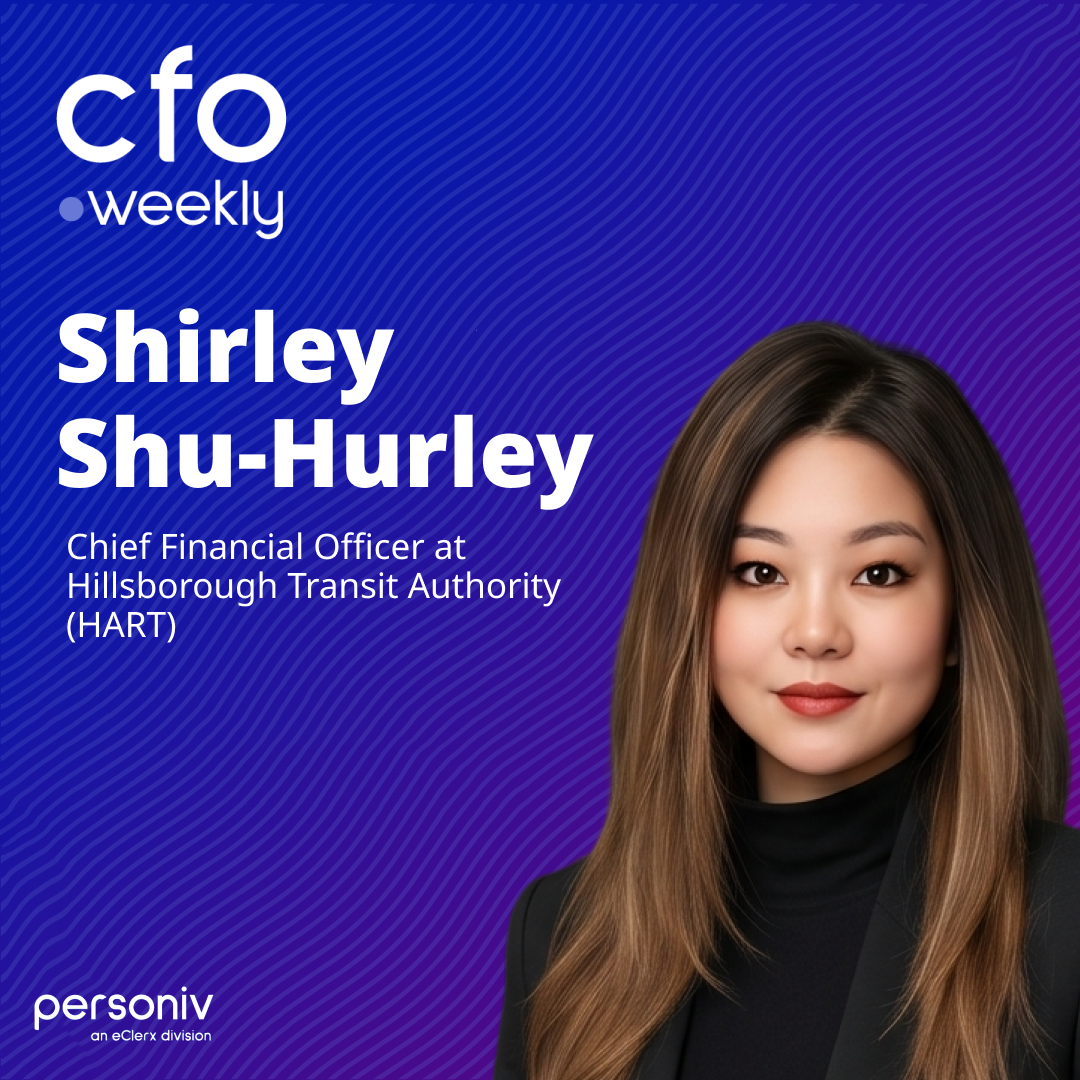
Shirley Hsu Hurley, CFO of Hillsborough Transit Authority, explains how finance leaders can act as “decision architects” by building financial and decision architecture (ERP, chart of accounts, processes) that clarifies ownership, constraints, trade-offs, and follow-ups—bridging strategy and execution. She argues AI can handle much analytical/spreadsheet work, while human judgment and “human agency” remain irreplaceable for navigating constraints and irreversible choices. She also covers governance that enables safe experimentation, AI literacy building, and system-thinking to avoid siloed decision-making.
Shirley Hsu Hurley, CPA/CFA/MBA; 20 years across energy (oil & gas), UK MBA (Durham, entrepreneurship), fractional CFO/strategy consulting, donor/charity finance (Global Donor Advice Fund Foundation), and now public finance as CFO at Hillsborough Transit Authority (Tampa Bay area), started 6 months prior.
restate the question to match the real decision; classify constraints (hard/policy/preference); use one-way-door logic; “action produces information”; develop AI literacy via X/YouTube and internal task groups; fix “decision-authority-accountability” mismatch to prevent operational chaos.
Written by AI. May contain mistakes.
Explore how AI is revolutionizing analytical work in finance.
“I feel like a lot of wrong analytical work largely can be done by AI nowadays, especially spreadsheet.”
Gain insights into Shirley's diverse career path and leadership philosophy.
“partnering with executive teams and boards to build scalable financial infrastructure, strengthen decision-making, and create long-term value.”
Understand how to approach complex organizational challenges as a CFO.
“So to start, can you kind of walk us through that career journey and how your experiences across finance, operations, and transformation have shaped your leadership philosophy?”
Learn how to evaluate an organization's capacity to execute strategy.
“And you mentioned having done an MBA in an entrepreneurial program.”
Explore the nuanced understanding of capacity beyond mere numbers.
“Consider my recent role in CFO at heart.”
Discover the unique challenges faced in nonprofit finance roles.
“Sometimes constraints will promote innovation.”
Understand what a strong financial foundation looks like for growth.
“There are most flexible dollars you can use for certain things.”
Learn about the CFO's role in designing effective decision-making structures.
“philosophy, I'm thinking of CFO role, is more like a decision architecture.”
Understand the importance of action and making informed decisions.
“Or another very important part is if it's reversible or not.”
Explore how good governance can enhance decision-making processes.
“How do you take that first step and kind of like jumping off a cliff?”
Learn how finance leaders can enhance their team's understanding of AI.
“steps, then you don't know enough what are the risks you are mitigating.”
Explore the role of CFOs as system thinkers and strategic advisors.
“And so for the CFOs can be a system thinker and that would be the better partner and advisor as opposed to working in institutional silos.”
Discover strategies for engaging teams during periods of change.
“and under this thinking of the system, the first thing you look at probably is the event.”
Understand the interplay between AI analytics and human judgment in finance.
“And it just becomes, what's the next shiny thing is?”
Examine how the CFO's role is changing and the skills needed for the future.
“I think the most important capability we need to continue building up.”

Get the gist, explore an idea or ask about something said.
 Claude
On CFO Weekly, what are the key points of this episode?
Searching your listeningAutomatic transcript. May contain errors.
0:01I feel like a lot of wrong analytical work largely can be done by AI nowadays, especially spreadsheet. And their financial models are so mature and you can even embed it in. You just act as a thought partner or a sounding board, back and forth to challenge their assumptions.
0:25Megan Weis: Welcome back to CFO Weekly, where we're talking with financial leaders about how to build efficiency in their teams, create time for strategy, and ultimately get results. This podcast is brought to you by Personev, the trusted leader in finance and accounting outsourcing for over 30 years. See how Personev's customized solutions can help you streamline your operations with teams that start as small as one. Visit the website at persanev.com to learn more. I'm your host, Megan Weiss. Let's jump right in. Welcome back to CFO Weekly. Today, I'm joined by Shirley Hsu Hurley, Chief Financial Officer at Hillsborough Transit Authority.
1:06Megan Weis: Shirley is a finance leader with two decades of experience helping organizations navigate complexity, transformation, and growth. With credentials as a CPA, CFA, and MBA, she has built her career at the intersection of finance, operations, governance, and strategy, partnering with executive teams and boards to build scalable financial infrastructure, strengthen decision-making, and create long-term value. In this episode, we'll explore how today's finance leaders are shaping strategy, strengthening governance, and building the organizational capacity businesses need to grow and adapt in an increasingly complex world.
1:44Megan Weis: Welcome to the show today, Shirley, and thank you so much for taking the time to be here. Thank you, Megan. I'm glad to be here. Thanks for having me. Yeah, looking forward to this conversation. You've had a really interesting career. So to start, can you kind of walk us through that career journey and how your experiences across finance, operations, and transformation have shaped your leadership philosophy? Sure. I started my career as a financial analyst in the energy sector and primarily oil and gas. And that was the first chapter of my career. I worked in a similar role for 10 years. And then I moved to the U.K., got my MBA from Durham University Business School.
2:27The concentration path was entrepreneurship. and then moved to the U.S. and starting a consulting business, more like a fractional CFO plus strategy in the mid-market company. And then later on, I got into a role in the finance for Global Donor Advice Fund Foundation. So it's like a marketplace for donors and charities. The meanwhile, and operating in multiple jurisdictions in the delivered benefit of tax benefit for giving meanwhile, developing giving strategy and managing charitable assets. So I grew into the head and the leader of the financial function. And basically, one first startup was very, very small company.
3:15And then we built a financial infrastructure together and it broke into larger footprint globally. And my most recent role, I just started here six months ago, is Hart, Hillsborough Transit Authority. Here we're serving Hillsborough County. And this is my first time in public finance as a CFO here.
3:39Megan Weis: And where exactly is Hillsborough? Tampa Bay area. Okay. And you mentioned having done an MBA in an entrepreneurial program. So when you left work to do that, did you think you'd be starting your own business or why the entrepreneurial focus? I think I'm most interested in solving problems and creating value. Even through my last role, we have plenty of spin-off opportunities. We call them entrepreneurship. So we have created the solutions, even SaaS companies or marketing arms in different jurisdictions. it's all become a spin-off, almost like a portfolio of companies. So that actually served my last role very well.
4:23Megan Weis: And throughout your career, you've worked in complex, imperfect environments across many different organizations. So when you step into a new finance leadership role, what's the first thing that you look at to understand the organization's true capacity to be able to execute on its strategy? Yeah, very good question. Consider my recent role in CFO at heart. Actually, my first leadership meeting, in the meeting, I asked every C-suite colleagues one question. It's based on first principle thinking. For us to be successful or for us to succeed, what is one thing has to be true? I listened around the room.
5:03Most people align in talking about the culture, all the people there. So that gave me the first understanding from the high level and what it looked like for us to be able to execute a strategy in place. And then I talked to my teams and learned more about those information as well. I think capacity is a very interesting concept here. And one of the critiques I hear people here say that people often say, oh, we don't have the capacity. I become a complacent. A lot of times they may resist change. And it somehow has a negative light on that. But on the other hand, we all know a lot of times constraints is not inherently a bad thing.
5:49Sometimes constraints will promote innovation. And so when we look at capacity, we probably don't really only look at the number of people working here. And also the competency capability and process procedures and all the system in places, see if they are able to unleash the capacity we truly have here.
6:10Megan Weis: That's really interesting. And I feel like capacity is often used as an excuse when, like you said, many times it's just an opportunity for innovation. Correct. And I'm curious to know, like stepping into a nonprofit, what has been the most challenging or surprising thing about working in a nonprofit? So from nonprofit, I think the drive may be a little bit different because a lot of times if you put KPIs in places, you can't solely look at a bottom line. So that's a completely different picture. And another thing is when I started to work for public sector, it's also non-profit driven. Meanwhile, we're also facing the constraints as a budgetary and compliance constraints as well.
6:59Now, normally, if you work in private sector or a for-profit company,$1 is$1, and you can use whatever the best yield you can get from that. Basically, your job is to invest in your time and your dollar, sensible, and get the best return. However, a lot of times when we work in the public sector of financing, one dollar doesn't equal one dollar. There are most flexible dollars you can use for certain things. And the certain grants you get from different governments or your funding partners, there is a string attached. say, well, we're only funding you for this program or this project. You only use this money for this kind of things.
7:41So you will face a lot of constraints and not a lot of flexibility there. And then you have to work out within those constraints, what's the best choice or decision going forward.
7:54Megan Weis: And you've described your work as building financial architecture from the ground up. So what does a strong financial foundation look like in an organization that's preparing for growth? So from financial architecture, what I probably mean is even from the ERP system you're using, the process procedure and the system you're using, how you set up your charter account, and those are a part of financial architecture. And then my recent thinking of my management philosophy, I'm thinking of CFO role, is more like a decision architecture. What I mean by that is A decision architecture does not make every decision, but designs the structure that allows the right person to make the sound call.
8:38And that means converting some ambiguous request into a clear, defined decision, a desired organizational outcome, a real constraint, those real constraints and the viable alternatives and quantified financial and operational consequences, a recommended path or defined ownership triggers and follow-ups. So that's my thinking. And from this finance role, you have basically the scorekeeper and the controller, the analyst, and the business partner is the one concept we hear from most of the time participants in operational conversations. Now, what I would have elevated to a level higher than that, I call it a decision architect.
9:25It is design the choices and the trade-offs and the authority and the feedback mechanism needed to act.
9:33Megan Weis: And strategy often looks great on paper, but struggles when it's being executed. So how can finance leaders help bridge the gap between strategic ambition and operational reality? That's also another great question. I think the first thing we probably need to do is articulate that decision. Most requests are framed too narrowly or framed as wrong question entirely. So the first move is to restate the question at the level where it can actually be answered, which usually whittens it from a transaction into a structure. The quality of the answer depends heavily on the quality of the question. And the second part, I would say, recognize the desired outcome.
10:19Start with what an organization is really trying to accomplish rather than what it has been asked before. So naming the outcome changes the options, the words evaluating, and it moves the finance from processing a request to helping the operation needs. And also the third one, I would say, classify the constraints. We can separate the constraints in different categories. For example, sometimes it's a hard constraint. It's a law of contractual obligation. Those are hard constraints. And there are policy constraints. or internal rules or leadership has authority to change. And the last one is a preference.
10:58The existing practice or convenience or risk appetite and those assumptions that current arranges, it was right, but for a reason, but it could be reexamined. And then later on, we can construct viable choices and then we have to illuminate the trade-offs. A lot of times we cannot carry through the strategy because it's a hidden, embedded trade-offs instead of highlighted ones, including financial, operational, or compliance, or risk, or people. Or another very important part is if it's reversible or not. And there's a concept called a one-way door, two-way doors people talk about. And a lot of times you have to act on it and then let the result, the outcome as a data, and then you reevaluate your action instead of just sit here and let's think about this.
11:55Let's talk about this. Let's think about this. Let's talk about this. I often share this with my team. I say, I said that I am highly action biased person. I do believe action produces information. And I think that's one part of, instead of analysts evaluating, you sometimes just need to take that step and let that data tell you, and you can self-correct, of course.
12:20Megan Weis: How do you take that first step and kind of like jumping off a cliff? So how do you know when it's time to jump? So often we will evaluate the decision, it is reversible or not, and the magnitude and the scale of the impact. Now, if it is considered low risk, for example, an internal memo to draft that staff and to have that conversation, to bring the right people into the conversation, then let's just pull the trigger to do it. Now, if something is considered irreversible, then we would have treated with greater caution. And governance is sometimes viewed as slowing an organization down. So in your experience, how does good governance actually enable better and faster decision making?
13:08Again, another great question. We recently have discussed about the AI policy within our organization. And when we're trying to understand the current usage and trying to encourage the employee to use the tool, we often just facing sometimes people thinking, well, what about this data transparency? What about other security issues? Now, and then it can be hard sometimes when you overweight the risk, but undervalue the potential opportunity cost, your costing and potential upside you're not able to capture. And again, if it is an immature company and over-indexing the risks without understanding it, within the guardrails, try it a little bit as baby steps, then you don't know enough what are the risks you are mitigating.
14:12I often say the knowledge you have is a full quadrant. You don't know what you know and you don't know what you don't know. Now, if you never develop that AI literacy and you are just standing from afar to talking about the risk, then we probably do not have enough literacy to articulate what a risk and do not have enough knowledge to even mitigate those risks.
14:37Megan Weis: Just curious, how are you and your team developing literacy when it comes to AI? What resources are you using? I had a similar experience from my last role, and I was the champion of that. And basically what I started is just on X and on YouTube. I started to almost at that time, I feel like I was an AI news junkie. And I just couldn't stop following all those. It was the newest development. And what we started is to encourage AI usage instead of hiding it. A lot of times people may be ashamed of saying, hey, does AI produce the work? You don't really have to shy away from that. Actually, it's very encouraged.
15:18It's most recent tool used. And it becomes a cool thing to share with your peers. Hey, guess what? I can do this. And another way to do it is almost like a small task groups. And with people working in different departments, different roles, and they come up with initiatives to say, guess what? AI can do this for me. And then during town hall or other internal meetings, you just start to share these tips and tricks and techniques. And then we started encouraging the usage from on the individual level instead of organizational level, investment overhaul. I think that's a better way to adopt AI.
15:56Megan Weis: And you've partnered closely with CEOs and boards throughout your career. What distinguishes finance leaders who can become trusted strategic advisors from those who just remain primarily financial operators? I call it system thinkers. Sometimes a system is a set of interdependent parts of sharing a company's purpose. Now, it's system dynamics. Social economic systems are dynamic and tightly coupled, governed by feedbacks, nonlinear. and characterized by delays and incomplete information. A lot of times we need to make interconnectors visible and overcome the institutional silos, understand the nonlinear behavior and address the wider consequence of the interventions.
16:48And so for the CFOs can be a system thinker and that would be the better partner and advisor as opposed to working in institutional silos. And question along those lines.
17:02Megan Weis: So how do you develop relationships throughout the organization so that you're not kind of working in those silos? You're being collaborative with other departments? Actually, CFO is positioned very advantageously in those roles because basically nearly all the decisions eventually pass or touch on through resources, risk, performance, accountability. And the CFO naturally can see the connections that remain hidden inside those individual departments. And people sometimes joke for CFO is the CFO knows. So it's a department of saying no to most people, almost like a gatekeeper. And instead of behaving like a gatekeeper, from our end, we should act more like a partner and a decision architect.
17:57I often say we will find a way to say yes in a responsible way instead of saying no. Let me understand your business objectives first. And so I know what you want to achieve. And let's evaluate it together. and maybe we're not able to do the way you presented us, but we can figure out another way to achieve this. So I often say find a way to say yes in a responsible way. I think that through that you build a credibility and a trust.
18:27Megan Weis: And we've talked about capacity, but organizational capacity isn't just about financial resources. So how is it that you evaluate whether an organization has the people, systems and operating discipline to successfully executed strategy? I think that's also aligned with the system thinker in that area, because a lot of times people pursue the local maximal instead of global maximal because they work in those operational silos, institutional silos. And when we evaluate an organization, their current capacity with people and system, and And probably those are also very dynamic questions because people change and come and go.
19:10And different people, maybe they're right people just on the wrong seat. Maybe there are wrong people on the bus altogether. And in this day and age, we upgrade our system quite regularly and frequently. Even an ERP system, we can just maybe every five years, we probably have to revaluate. even the tremendous cost of conversion migration. But if necessary and if technology catch up, we probably would do that as well. So all of these things are very dynamic and they are not set in stone. We could sometimes when through a decision-making and under this thinking of the system, the first thing you look at probably is the event.
19:56And underneath the event, you can look at the pattern. And if it's an isolated event, it probably doesn't really worth your attention, right? But there is a pattern of what is something goes wrong. And it's this opportunity for one to look into another step deeper in this, see if there's a structural issue. If there is a structural issue, then that is the chance for us to make some changes. And underlying another layer of under the structure, that's a thinking model. Maybe it's a decision thinking. A lot of times in technology, people say terrain is not territory. Since the map is not a territory.
20:37And a lot of people use their thinking model just looking at the dashboards. If you don't look deep enough in a granular level, and it's just a map, it's not truly translated into reality. So a lot of information lost. I think the most important thing is when you identify a thinking model issue or a structural issue, That is a chance for you to work on to solve something. For example, my personal, probably the start issue is one of the structural issues is sometimes a lot of organizations have this, I call it, decision and authority and accountability, a symmetry of decision making. What I mean by that is somebody who has a very strong view and have higher authority may be coming in and make a decision.
21:23But this one, the decision maker, themselves are not exposed to operational consequences. Then they have no way to self-correct in the decision making. And this is a recipe to create operational chaos. What we'll try to do is in every decision making, we'll call who is making the decision. Who is the decision maker? And we would say, we would point out the person who actually carried the exposure, the consequence most likely, and that this person is most likely to self-course correcting.
22:01Megan Weis: And when you're going through a transformation, obviously it's a lot of change. How do you get people excited about the change rather than resistant? I think sometimes people get heart-heartened because they may have heard about this so many times. A lot of leaders come and go, and there is a highlight effect. And they say, hey, let's do something. And then later on, nobody talked about that probably a couple months later. And it just becomes, what's the next shiny thing is? So that's one way you can dishearten people. Another thing is, it's become developed an organizational immune system. and people just very comfortable with the current process and procedure out of familiarity.
22:41So those are the ways people could not have the buy-in and the changes. On the opposite side of this is sometimes a new leader comes in and brings the new hope. People truly crave new leadership if they have been lacking for so long. And once you build the trust and credibility and I also feel like I don't really talk Stay only on 5 ,000 miles high level. Sometimes I'd like to work closer to the ground and to have this level of conversation with you. And we can challenge each other's thinking. Why you think the way you think and what blind spots each other have. And for all my direct reports, I encourage them to act as partners.
23:29And if something, I don't know what I'm talking about, I do want them to tell me that so that I do know. I often say I have very strong opinions, but I don't merit my opinions and I don't attach my ego to it. And I'm often very welcome to basically a lot of disagreement. I say it's implied to not disagree with me in a meeting because it basically wasted my time. And that could be an email I sent to you. We didn't need this discussion at all.
24:00Megan Weis: And AI and advanced analytics are giving finance teams more information than they've ever had before. So how do you see technology changing strategic decision making? And where do you think that leadership judgment is going to remain irreplaceable? Yeah, I feel like a lot of wrong analytical work largely can be done by AI nowadays, especially spreadsheet. and their financial models are so mature and you can even embed it in like the AI build a model and they teach you their own assumptions and you can challenge on assumptions and have multiple roundup interaction. So on the analytical level, they can do a lot of work.
24:43You just act as a thought partner or a sounding board back and forth to challenge their assumptions. At this level, what a judgment really, basically what judgment is irreplaceable it's the human agency we hear about this so much an agency is you can act or you can just act without permission now it's not like and i'm not saying any employee go rogue type of act without permission it is that you run into a wall then you can run over a wall above a wall underneath a wall through a wall and don't treat bottlenecks as absolutely the stop point and you surface constraints and like work through the constraints.
25:28So the human agency and you move about the judgment curve, that is more than workplaces. I think the most important capability we need to continue building up.
25:41Megan Weis: And when you're looking at a process for automation or applying AI, how do you know when that process is ready for it and you're not just speeding up a bad process. So, and basically if a reoccurring, a similar process, a manual process is probably a good candidate for automation. And a lot of things takes dynamic reactive and it could be a good process for potential candidate for AI agent in the future. Now, we can't just go in there, demand automation or AI agent work upfront. because if one person doesn't know how to do it manually correctly, it probably can't do it very well in automation or AI agent.
26:28We see a lot of demo say, hey, we can do this. But those demo are not production-ready level of AI agent build or automation solutions because there are edge cases, people still in the loop. And if you don't build all those constraints and trade-offs in, And it's just a very good look like and looking at ads at demo level. They are never production-ready solutions.
26:55Megan Weis: And last question, but looking ahead, how do you see the role of CFO evolving in the next two to three years? And what new skills or mindsets are going to be critical for the CFO of tomorrow? Yeah, I think I read an ACCA report a while back. It says the CFO involvement would be involved to the chief value officer. And that's an interesting concept. I think besides that, the deliberate value part, another thing I see CFOs are definitely not like what people think before as a number-quenching person. It is storyteller as well. And when you interact with a board in a presentation or even the public, then what those number means, what kind of stories it paint is a very important skill for CFO.
27:46I think even on the strategic level, I think CFO should understand on the operational level as well is whether which industry you are in. And I see that would add most value.
28:01Megan Weis: Shirley, thank you so much for being my guest today. This has been a wonderful and enlightening conversation. Thank you so much. To all of our listeners, please tune in next week. And until then, take care. Thank you for listening to this episode of CFO Weekly. We hope you picked up some useful insights and strategies to help move your business forward. If you enjoyed the conversation, be sure to subscribe on your favorite podcast platform so you never miss an episode. And if you found it valuable, we'd love for you to leave a review and share it with your network. It helps us bring even more great content to finance leaders like you.
28:38Megan Weis: For more episodes, resources, and to see how Persona can support your accounting and finance needs, visit persona.com. See you next week.
In this episode of CFO Weekly, Shirley Shu-Hurley, Chief Financial Officer at Hillsborough Transit Authority (HART), joins Megan Weis to explore how today's finance leaders are shaping strategy, strengthening governance, and building the organizational capacity businesses need to grow and adapt in an increasingly complex world. Drawing on two decades of experience across the energy sector, entrepreneurship, and global nonprofit finance, Shirley shares her framework for becoming a decision architect rather than a financial operator.