 Ask ChatGPT


Why top CFOs should think like CEOs—simplifying financial information, translating numbers into decisions, and aligning finance with marketing/operations to identify the true business constraint (often marketing) rather than optimizing everything at once.
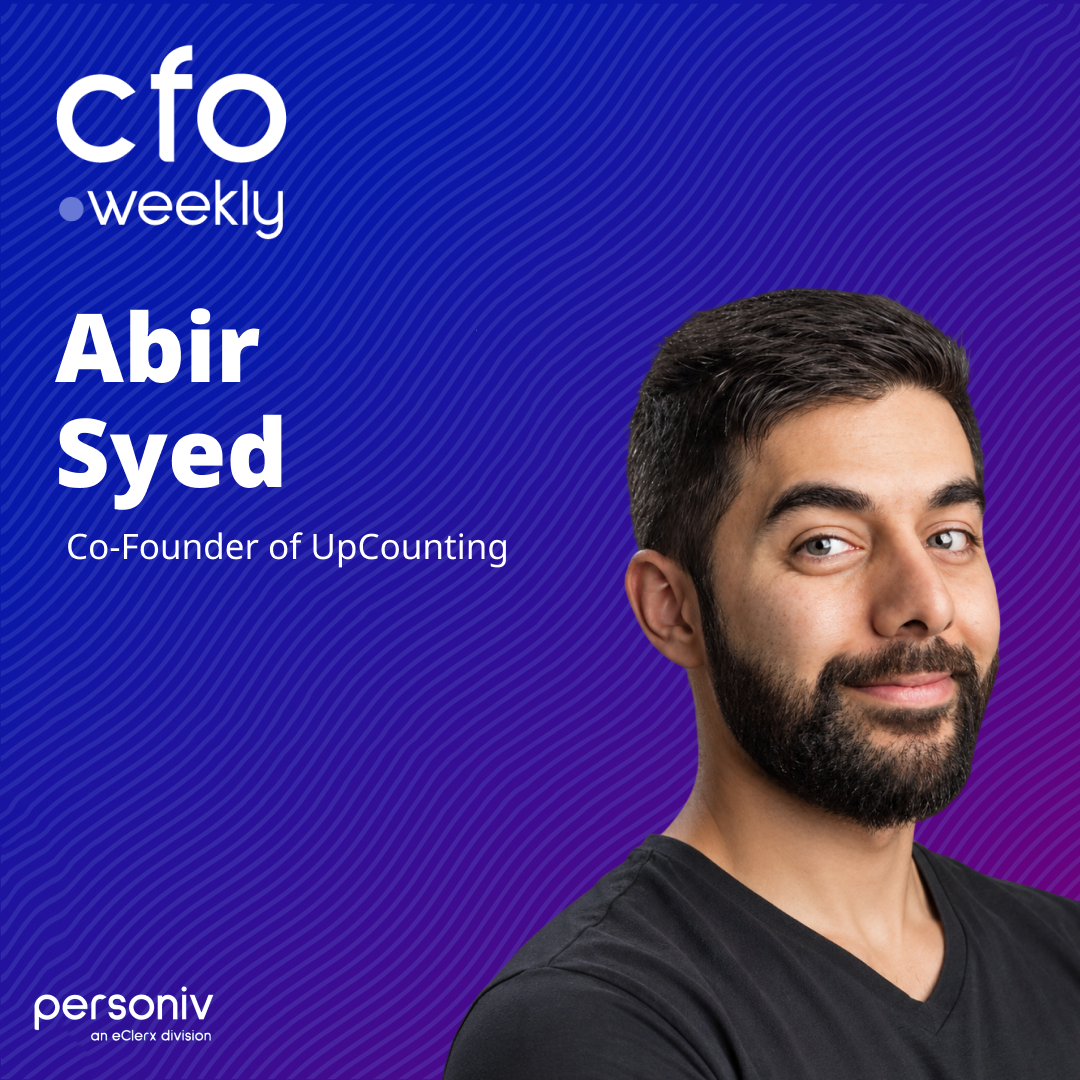
Abir Syed, CPA; co-founder of UpCounting (turns e-commerce financial data into decisions). Previously led finance at startups (raised $60M, built budgeting/forecasting, implemented DRPs) and served as a fractional CFO; also learned e-commerce operations directly (Shopify, customer support, 3PL/manufacturing) and ran ads after firing underperforming agencies.
Founders often lack clarity, not data; finance must bridge the gap between profit/cash and marketing metrics. CFOs should become decision/resource-allocation leaders as AI automates reporting. Unit economics are frequently neglected.
A raised-$15–20M brand couldn’t scale because ad quality/infrastructure was poor; fixing marketing iteration was the constraint. Greens Gummies allegedly wasn’t profitable early but invested to acquire profitable cohorts, later optimizing for EBITDA.
Written by AI. May contain mistakes.
Abir Syed shares his background in finance and e-commerce.
“A CPA by training, Abir has built his career at the intersection of finance and marketing, helping direct-to-consumer brands balance profitable growth with smart investment.”
Discussion on how finance leaders can empower founders with better decision-making.
“So thinking back to the beginning of your career, was there maybe a founder or a specific situation that completely changed the way you thought about finance?”
Exploring the misunderstandings between finance and marketing teams.
“I can bridge the gap for if they themselves can't.”
Understanding the clarity issues founders face in their businesses.
“And most finance leaders optimize for efficiency while marketers are optimizing for growth.”
How financial priorities shift as companies grow beyond different revenue milestones.
“So mostly it's just a question of they're just not sure what's going on or what they need to do next.”
Discussing how to manage data effectively without falling into analysis paralysis.
“And we live in a day and age where data is basically infinite.”
Learn how prioritizing marketing can unlock business growth.
“to keep progressing from a growth perspective, then most of the attention that you spend with respect to the data, should be focused on that constraint, assuming there are no other major red flags in the other areas.”
Understand the trade-offs between profitability and business growth.
“But profit in and of itself is not the point.”
Discover why focusing on unit economics is crucial for founders.
“So what financial metrics or business signals do you think that founders should pay far more attention to than they normally do?”
Explore how finance leaders need to adapt and evolve into strategic decision-makers.
“And no conversation would be complete these days without mentioning AI.”
Learn when founders should seek help and the value of strong finance teams.
“for them to be useful is that they have to really be driving decision-making and strategy.”

Get the gist, explore an idea or ask about something said.
 Claude
On CFO Weekly, what are the key points of this episode?
Searching your listeningAutomatic transcript. May contain errors.
0:01And so at that point, I feel like a good CFO should be as close to being a CEO as possible.
0:08Megan Weis: Welcome back to CFO Weekly, where we're talking with financial leaders about how to build efficiency in their teams, create time for strategy, and ultimately get results. This podcast is brought to you by Personev, the trusted leader in finance and accounting outsourcing for over 30 years. See how Persona's customized solutions can help you streamline your operations with teams that start as small as one. Visit the website at persona.com to learn more. I'm your host, Megan Weiss. Let's jump right in. Welcome back to CFO Weekly. Today, I'm joined by Abir Syed, co-founder of UpCounting, a firm that helps e-commerce founders turn financial data into better business decisions.
0:52Megan Weis: A CPA by training, Abir has built his career at the intersection of finance and marketing, helping direct-to-consumer brands balance profitable growth with smart investment. Alongside building up counting, he has served as a finance leader and fractional CFO, helping companies secure funding and scale through stronger financial decision-making. In this episode, we'll explore how finance leaders can help founders make better decisions, why the best CFOs simplify rather than complicate financial information, and how translating numbers into action can become a competitive advantage for growing businesses.
1:28Megan Weis: Abir, thanks for carving out the time today to share your knowledge with me and certainly looking forward to this conversation. Absolutely. It was my pleasure. Thank you so much for having me. So thinking back to the beginning of your career, was there maybe a founder or a specific situation that completely changed the way you thought about finance? Not as reporting, but as a tool for better decision-making. and what did that experience teach you that still influences you today? Absolutely. So I'd say it probably falls into maybe two different experiences. So one of them was when I was leading finance at a startup.
2:03I was working with a team of very ambitious individuals who had raised a lot of money and who were very promising in terms of like what they were trying to accomplish, but they were certainly not, I guess, seasoned entrepreneurs, if you will. And there was a lot of instances where I had recently come from the big force. side of things, I was used to dealing with accounting departments and CFOs and whatnot. It clearly looked at me pretty rapidly that it wasn't enough for me to be able to just kind of put together financial data and then just expect them to know how to use it. And I fortunately was the type of person that was just very curious.
2:36And so I was able to kind of very rapidly basically bridge the gap between their understanding of finance and my understanding of operations and strategy and what the financial data is ultimately meant to inform. And so that was one big chunk of it where I realized for them to get value out of what I am doing, I have to make sure that it goes beyond just me producing a limited scope of putting data together, but just making sure that the usage of it is also something that I can bridge the gap for if they themselves can't. And the same thing just became far more apparent when I started the CFO firm and I started working with a lot of brands because I realized it was a very consistent thing amongst founders that they oftentimes have an intellectual appreciation of the importance of finance.
3:16I suppose because they probably realize it would be dumb to say that accounting and finance isn't important. So they all say it is. But intuitively, it seems like most of them don't oftentimes know what to do with the data. And so they'll be like, yeah, accounting and finance is important. But then they don't really do anything when you give them the data. And I suppose it's just a question of they weren't fortunate enough to have the training to know how to use it properly. And so that's informed a lot of the decisions we made internally with respect to how we build out our reports, how we actually build out our offer, and what we can do to make sure that we're bridging that gap as much as possible.
3:44Megan Weis: And before we go any further, just kind of talk us through your career. How did you come to understand operations and marketing from a CPA kind of a background? Sure. So I'm fortunate enough that I have a very unusual mix of skills. So I had the big four side. That was fun. Well, not really. But whatever, I did the big four audit stuff as a manager there. And then I led finance at a startup. On paper, definitely not qualified for it, but I was just good at solving problems. So help them raise$60 million, implement the DRPs, build the whole finance function, budgeting, all that stuff, forecasting.
4:17But I think there was a point which I started to get a little bit frustrated with my inability to actively or directly drive results. Because fundamentally, finance is a support function. And so basically, you're enabling other people to do their work more effectively. And I suppose at the beginning, maybe naive to the point that I believed a lot of the growth projections that they had when I was building out the models. But when I realized it wasn't quite that way, I would get frustrated because I'd say I can build the greatest forecast that's ever been seen by a human. But I ultimately cannot make revenue happen.
4:47I can't actually drive that growth. And so at a certain point, we acquired an e-commerce brand. And I was getting a little bit bored with the finance side because I had engineered it well enough that it was kind of on autopilot. And I was getting a little bit frustrated with kind of just not being able to make stuff happen. And the people who had been hired for the e-commerce brand didn't quite meet the bar necessary. So I just told the CEO, I'm like, look, I don't know anything about e-commerce, but I'm sure I can do a better job than these people. I'm getting kind of bored. So do you want me to take over?
5:12And he trusted me enough to just say, yeah. So I ended up spending all of my evenings and weekends learning everything I could about how an e-commerce brand runs. Because I ultimately was the foremost expert on e-commerce at the company at that point, even despite the fact that I didn't know anything. But I kind of fell in love with it. I just really enjoyed being able to get my hands into just the operations of things, building things. So I was editing the code on Shopify, sending the emails. I was answering customer support tickets, managing the agencies, working with the manufacturer, working with the 3PL.
5:38So really got very deep into it, had a lot of fun with it, was able to kind of drive results. And it gave me a very thorough understanding of kind of ultimately what happens in a business from an operator perspective, rather than just kind of like the finance lens on things, which is what I had historically had. And then even beyond that, I think the one other piece that really add a lot of value was that at the time I was working with a bunch of marketing agencies for the e-com brand, and I wasn't thrilled with the results that they were driving. So I ended up firing them and learning how to run ads myself.
6:04And so that was, I think, then a very substantial step into kind of understanding how to drive growth and grow revenue. And so being able to acquire that really weird blend of skills, I find is one of the things that put me in a position now that as a finance person, when I do talk to operators, I can see things very much from their lens and see things outside of strictly the finance scope. And it allows for just, I guess, much more thorough advice, if you will.
6:27Megan Weis: And most finance leaders optimize for efficiency while marketers are optimizing for growth. And you've obviously built your career at the intersection of those two worlds. So where do you think that each side consistently misunderstands the other? And how do you bridge that gap? That's a great question, because I think it's one of those things where for a long time, I was struggling to figure out how I could make it clearer to both individuals or both parties that there really shouldn't exist that much of a gap. But I think the reason it exists is that the marketing side oftentimes only has a very narrow perspective on what it is they're able to do, what metrics they have available.
7:05So a lot of them will be looking at just kind of blended ROAS or return on ad spender. They'll be looking at platform metrics as to what that's driving. But they don't necessarily have a thorough enough understanding insofar as what target is actually optimal for the business from a profitability, from a lifetime growth perspective, and from a cash flow perspective either. And on the flip side, the finance function oftentimes doesn't necessarily have a thorough enough understanding of why different channels and strategies are run the way that they're run, how to know which channels are driving value from an attribution or from an incrementality perspective, and recognizing that there's a difference between things that are maybe short-term grabbing bottom of funnel revenue versus things that can help the brand grow long-term.
7:42So they're not necessarily in a position where they understand how that growth strategy works. And then I think maybe to some degree, there's maybe this cultural animosity that develops where the marketers just think the finance people don't get them, but they're the important ones. And the finance people think that they're the ones grounded in reality and the marketers are all just, their heads up in the clouds. And so there's an aspect of almost thinking that they're such on fundamental opposite ends of the spectrum that they just can't, like the other person's just wrong. And there's just that gap can't be bridged.
8:08But over time, what I tried to really come to was a way to not only educate the marketing people, because I speak more to the marketers than I do to the finance people other than my team specifically. So I'll talk to the marketers and really try to educate them on specifically what the metrics are from a finance perspective and how to incorporate those into their decision making. Because at the end of the day, we're all working towards the same goal on the marketing side, the finance side, the leadership side. And so the gap shouldn't be as big as it is. And I think one of the most helpful ways I was able to get framed was when it was put into the context of setting your target so that you're able to generate what I call peak cohort profit.
8:44So essentially, how do you make sure that the cohort of customers that you're acquiring can generate the maximum amount of lifetime contribution margin as long as it's tempered from a cash flow perspective? And I think that kind of gives that shared language to the two departments so they can understand one another rather than just operating at this distance where they just don't understand what the other party is doing and feel like they have friction for no reason.
9:05Megan Weis: And when a founder comes to you looking for help, what's usually the real problem they're trying to solve versus the one they think they have? I feel cheesy saying this, like every website will just say stuff like this, but I think fundamentally it really is a clarity question. I think what I've realized from talking to a lot of founders and doing a lot of consults when I just kind of dig into the data, the answer is obvious to me what they need to do is that a lot of them just lack clarity such that they feel confident if they need to have an answer as to how their business is doing right now and what the next steps should be.
9:36I think maybe early on when I would talk to a brand and I would ask them what they wanted, they would come in and they're like, oh, we need a forecast or we need some ERP or we need whatever. And I would just basically ask them what they wanted and be willing to deliver it. But as time went on, I kind of moved away from that entirely. And from my vantage point, it's almost like a doctor. They come in, they just tell you what the symptoms are, and I'll tell them what they actually need. So a lot of times people will come in and they're like, oh, I need a cash flow forecast. But for example, they raise money.
9:59They're sending out a ton of cash. That's actually not their constraint. The issue is that they just don't have cash reconciliation. So they don't know where the cash is going. So it's about understanding specifically what their challenges are and what exists within our finance toolbox that will actually address it. But like I said, the main thing in most cases is that they just do not have clarity to understand where I am, what is happening to my cash versus my profit, and what do I need to do to fix things and move forward. And so once the data is a lot more granular, properly accounted for, which is oftentimes not done, and then also put into metrics that are clearly related to how they make decisions and how the operations run, it's explained to them well, and then they have that roadmap laid out for them to tell them like, for you to be able to get to the next phase, the number one thing you need to focus on is this.
10:43You don't have a problem over there, you don't have a problem over there. I know there's a lot of different distractions, a lot of things to focus on, but if you can solve this, this is the thing that will take you that one step-wise function forward. So mostly it's just a question of they're just not sure what's going on or what they need to do next.
10:57Megan Weis: And you've worked with businesses at different stages of growth. How do the financial decisions that founders struggle with change as companies scale? A lot of times it's just a question of focusing on the correct constraint, I'd say. So let's take a brand that's doing less than$5 million a year, or say they're doing$2 to$3 million a year. At that point, they may come in and they'll lament about something about profitability or cash flow or whatever it is. Those will all be things that are problems and plenty of things that are suboptimal, so to speak. But at that stage, oftentimes we can spend a lot of time solving all that.
11:28But at the end of the day, that's not going to get you to your goal. The main thing is that you do not know how to grow marketing. That's fundamentally it. You just do not have the mechanism to know how do I make my marketing efficient now? Once I get to an optimal level where I'm spending in a way where I'm generating the most profit that I can, what do I need to do to be able to earn the right to spend more? And until you figured that out, like until you understood your avatar, built out the proper framing for your product and actually have a strategy for creative to be able to scale the ad account, all this other stuff is like, yeah, you can optimize it, but that's not what's going to move the needle.
11:58So at those smaller phases, it's really about making sure that they understand that marketing is their number one constraint. It's the thing that they should be focusing on. And I think that's maybe a lot of times people are not used to hearing that from an accountant or finance person, because at least the ones that I know, they'll, well, marketing is important, but everything else is also super important. And in some cases for certain stages, no, marketing is the only thing they should be focusing on. Because once they crack that in a position where it's like, okay, they have the mechanism to kind of keep on moving spend forward profitably, then you start optimizing all the other stuff.
12:28Otherwise, it's just a distraction. You have this number one problem to solve. I'd say once you get past, like, let's call it five to 10 million a year, at least in the e-com world, that's when you start now worrying about things that are a bit more focused from a cash flow perspective and just making sure that they have the right rhythms to be able to sustain that continued growth. And then once you're maybe like, call it 20 mil plus or something like that, then you start thinking more about the structural, I guess, professionalization of the organization. So you might be thinking, okay, now do we look at ERPs?
12:54Do we look at proper strategies for different channels? What do we look at from a funding perspective? So that's how it'll shift over time, very broadly speaking. But in the early days, for most brands, if you can't crack marketing, then the game's just not worth playing.
13:08Megan Weis: And we live in a day and age where data is basically infinite. and founders have access to dashboards and reports, but decision-making never seems to get any easier. What is at the root of that? First of all, with data, like how do you avoid analysis paralysis or trying to boil the ocean? How do you decide what you should actually be focusing on as far as data? It's a good question. I guess for a long time, I was comfortable enough with data that like I could build out a dashboard of 30, 40 metrics and I would just be able to intuitively look at the things that matter and that didn't. But being able to boil that down into framework that was followable by a founder who's not necessarily as comfortable took me a long time to do.
13:51And I wouldn't say that I've cracked it, but I've made a lot of progress on that. But it really comes down to just thinking in terms of, broadly speaking, constraints. So if you know what the major constraint is for the business, solving that is what will allow you to keep progressing from a growth perspective, then most of the attention that you spend with respect to the data, should be focused on that constraint, assuming there are no other major red flags in the other areas. So that's why going back to the previous answer, for example, if a brand is just stuck at two mil a year and they can't go past it, then that's where they should be putting the majority of their attention.
14:26I was talking to a brand earlier this week. They had raised 15 to 20 million dollars, spent a lot of it, and they had an incredible product, incredible LTV, patents, just a very unique setup. I'm talking to the founder and her major concern is that like, oh, I feel like we need to be able to scale and grow, but we're close. We're getting there. And the main issue that you have right now is that your ads are frankly horrible. Going through your ad library, they're just really bad. They look like the ads I would have seen 10 years ago. And when we kind of dug into it and I asked, what's the actual marketing infrastructure you have?
14:55Who's doing things? It was just some weird ragtag combination of some in-house people and her spending a bunch of time a week on the ads, despite the fact that she didn't have a marketing background. And so that was one of those things where I had to be as politely as possible to tell it like, this is the thing that is holding you back. You're not going to be able to iterate your way to the 20, 30 million dollars a year that your brand deserves to be based on the quality of your product. Fundamentally, it just comes down to kissing a few frogs and going out and talking to the agencies and figuring out which one's actually going to be able to scale you there.
15:22So they had cash burn issues. Yes, they had profitability issues or fixed expenses were too high. Yes, they had weird personnel things. And I'm very confident when I glance at the numbers that they had inventory costing mistakes as well. But all of those things were just not the fundamental thing that fixing those is what was going to allow the brand to get from two mil to 20 mil. It was really just, you need to go down the route of kissing some frogs, figure out the agency that's actually going to work, and then invest on the marketing side. Because it's increasing your contribution margin to be able to cover the fixed expenses gets you on the treadmill towards success.
15:53And then we can worry about all these other things. But if you're worrying about how to specifically granularize your personnel costs into different departments, and then to optimize here and there, that's not going to solve your problem. That's your constraint. It's marketing.
16:04Megan Weis: And maybe you just answered this a little bit, but growth and profitability are often odds with each other. So how do you help founders decide when it's worth sacrificing one for the other? Yeah, I guess I did allude to that to some degree. I would say that it's not really a question of sacrificing. Maybe this is controversial, but a lot of times I'll tell founders, like, I don't actually care about profit. What does it matter? The profit in and of itself doesn't matter, really. You're either trying to grow the business so that you can exit it, or you want to live a really lavish lifestyle. And so cash flow matters, or you just want a low stress business.
16:40And so yeah, then in that case, usually will end up being profitable, really, you just don't want to take a lot of risks with your assumptions and your scenarios. But profit in and of itself is not the point. And so from that perspective, it really comes down to understanding what you're actually trying to achieve with the business, and then figuring out what configuration of targets, investment in the scaling and cash flow funding risk, etc, would allow you to be most likely to achieve that with a reasonably tolerable amount of risk relative to the founder themselves. But in most cases, if the answer is that spending more generates more cohort profit, then I don't really care if that makes you less profitable today, because the long term growth is still going to be enabled by it.
17:19If you take an example of greens gummies brand that kind of sold for, I think,$1.2 billion in less than three years. I'm pretty sure they were not profitable for the first two years. But that didn't matter. Because from the math, what they were investing on the growth side allowed them to acquire profitable cohorts. They had the funding to be able to handle that level of an investment from a cash flow perspective. And that allowed them to get to a place where then they can optimize for EBITDA so that they can get the right multiple to sell. But if they were focused on, but I need to be profitable now, well, they would not be a story we talk about.
17:51Megan Weis: And you've helped brands secure funding and scale. So what financial metrics or business signals do you think that founders should pay far more attention to than they normally do? I think probably the one that gets neglected a lot, weirdly, is unit economics. I think many founders tend to focus so much on top line that they will not realize that the amount that they're spending includes acquiring a lot of customers at lifetime unprofitability. And I think that's because they're looking to grow. And sometimes if they're working with investors, they feel like the investors pressure them to grow.
18:25And so they will overspend such that the revenue will hit the emotional triggers that are necessary for investors to feel good and for them to feel good, even if that means that they're acquiring a lifetime unprofitable customers. And fundamentally, that's just not a good way to run the business. And even if that means that you have to have a more sober chat with the investors or whatever the case might be, then do that. But I say the unit economics is something that oftentimes gets neglected more than one would expect because intuitively it feels like it should be the most obvious thing to look at, but I just constantly see it being ignored because top-line revenue seems to be the thing that everybody focuses the most on, unfortunately.
18:59Megan Weis: Yeah, growth at any cost. And no conversation would be complete these days without mentioning AI. So as AI makes financial reporting faster and more accessible, what do you see the role of a finance leader evolving from producing numbers? Or how do you see the role of a finance leader evolving from producing numbers to really influencing decisions? It's a very interesting thing to think about because where AI is going and where it can go, it really comes down to a question of what degree we're talking about. Like maybe the next couple of years, there might be a shift that is still within the scope of our imagination today.
19:39But by 10 years from now, it might be in a situation where just if AI is robust enough and is well connected enough, there's just really nothing for us to do.
19:48Megan Weis: Yeah, I know. It's like crazy to think about what could be in like five to 10 years. No, it's weirdly scary to the point that it's like not even worth thinking about. It's just there's nothing we can do about it, at least as myself as a random individual. To answer the question a little more concretely, in my opinion, I would say they fundamentally almost need to become CEOs in a sense. because the way I think about it is that finance is just a very particular and very robust lens on the business. But ultimately, other than what you delegate out, because, okay, a CEO is just, they don't want to learn GAP.
20:20They don't want to learn how to like set up the processes for controllers. Some stuff they just want to learn. So they just essentially delegate that to a CFO. But if you think about the core responsibility of a CEO and like what they're really meant to do, it's just resource allocation. It's just decision-making resource allocation. Like that is the corest of responsibilities, in my opinion, for a CEO. And a CFO's job is to track resources, mostly. So just pay attention to where the resources are, get more resources from lenders or investors where necessary, tell the person how the resources are doing.
20:49So essentially, a really, really good CEO would have all the skills of a CFO. But the reason that they don't is A, it's boring and difficult, and B, because it's easier to just kind of delegate to another individual to just handle all that. But I think that a CEO who doesn't understand the lens of finance and know what to do with is going to be a very limited individual. And at the same time, if they don't, and then the CFO is there and they have all of the resource information, but don't understand enough from the lens of an operator, from a strategist, from having the vision on where the business can go and what the long-term value of certain investments are and how to make those trade-offs from a risk and opportunity perspective, then that also limits what the CFO can do as an individual as well.
21:29So I think that as a lot of the mundane elements of what would maybe fall under the purview of a CFO, become more automated over time. And so like they don't need to worry that much, let's just simplify. They don't have to worry about accounting and controllership and processes and controls and FP &A because all that stuff is just automated. Then fundamentally what's left is that for them to be useful is that they have to really be driving decision-making and strategy. And then really that just kind of steps into the realm of being a CEO. And so at that point, I feel like a good CFO should be as close to being a CEO as possible.
22:03Megan Weis: And as we wrap up this conversation, what's one bit of advice you'd like to leave listeners with? When should founders look for help? When will they know they need help? And where should they go? I think founders should understand that the importance of having a robust finance function means that you have a very clear understanding of how your business is doing and what the path forward is. So a lot of times I'll come across founders who have this mentality. I kind of alluded to this a little bit earlier, but they'll acknowledge that finance is important, but it's something they'll worry about later.
22:36But it's kind of like if you're, I don't know, drowning in the ocean or you're swimming in the ocean, you need to get to shore and you're wearing like a really heavy thing around your neck and you're like, oh yeah, this thing's really heavy and it's making it very difficult to swim, but I'll get to shore, then I'll take it off. It's like, well, just take it off and then get to shore a lot more easily. If you have a strong finance function, everything becomes easier because you have good clarity in how things are performing, what your numbers look like, what your resources are, and what the path forward is.
23:00And so I think a lot of people maybe have not had the opportunity to experience that because they've never worked with good finance partners. And because of that, they will oftentimes neglect it because it's more often, if I talk to a seven or eight figure business, they'll be the ones who just kind of pay lip service to the importance of finance, but just don't invest in it. But anybody who's like at the high eight or nine figures, like they invest because they get it. That's how they got there. So those ones will understand why it's so important. And when it comes to the finance function, I think that ultimately the most important thing that any finance individual can do is step outside the lens of purely the accounting in the finance side of things and just try to think more like an operator because ultimately that's the way that you're able to make sure that your function adds value if your understanding would look like if it was used properly.
23:41And that usually requires maybe you bridging that gap a bit between you and the user of your information by thinking more like an operator.
23:47Megan Weis: Abir, thank you so much for your time today and for sharing your experience and knowledge. It's my pleasure. Thank you so much for having me. And to all of our listeners, please tune in next week and until then, take care. you've been listening to CFO weekly presented by Persona. Please subscribe wherever you get your podcasts to hear all of our episodes. Want to learn more? Check out persona.com. Thanks for listening.
In this episode of CFO Weekly, Abir Syed, Co-Founder of UpCounting, joins Megan Weis to explore why the best finance leaders move beyond producing numbers to actively shaping business decisions, drawing from his path from Big Four auditor to hands-on ecommerce operator and fractional CFO for high-growth direct-to-consumer brands.