Ask ChatGPT
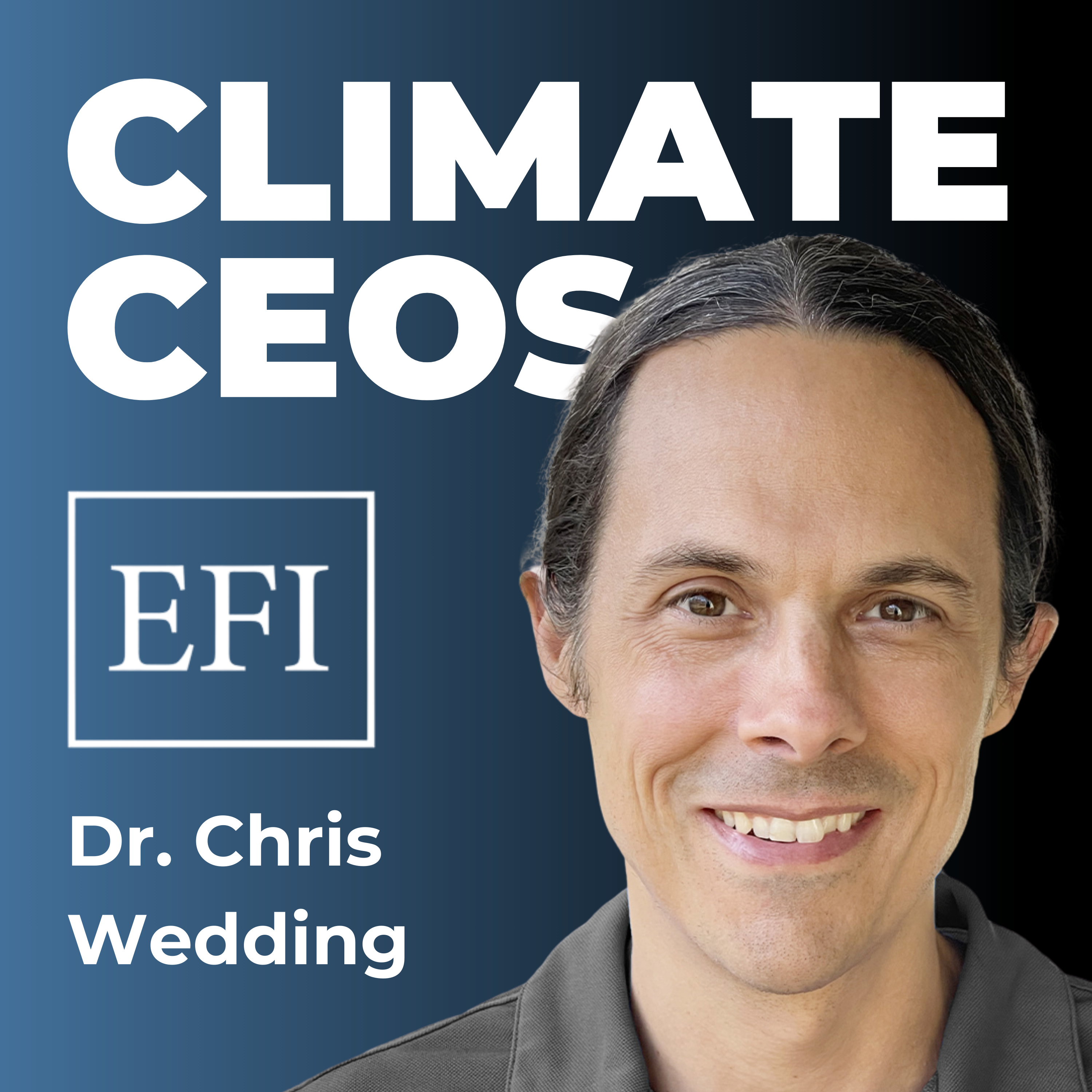
 Climate CEOs
3 Nov 2026 · 50m · 27 chapters
Liam is an “AI operating system” for the physical world that lets domain experts ask questions over massive energy, mining, climate, and subsurface datasets using AI agents plus prebuilt “workspaces” and tools. It emphasizes human-in-the-loop workflows, connecting agents to existing data where it lives (avoiding 12–18 months of data migration), and producing deterministic, expert-informed outputs rather than purely probabilistic LLM answers.
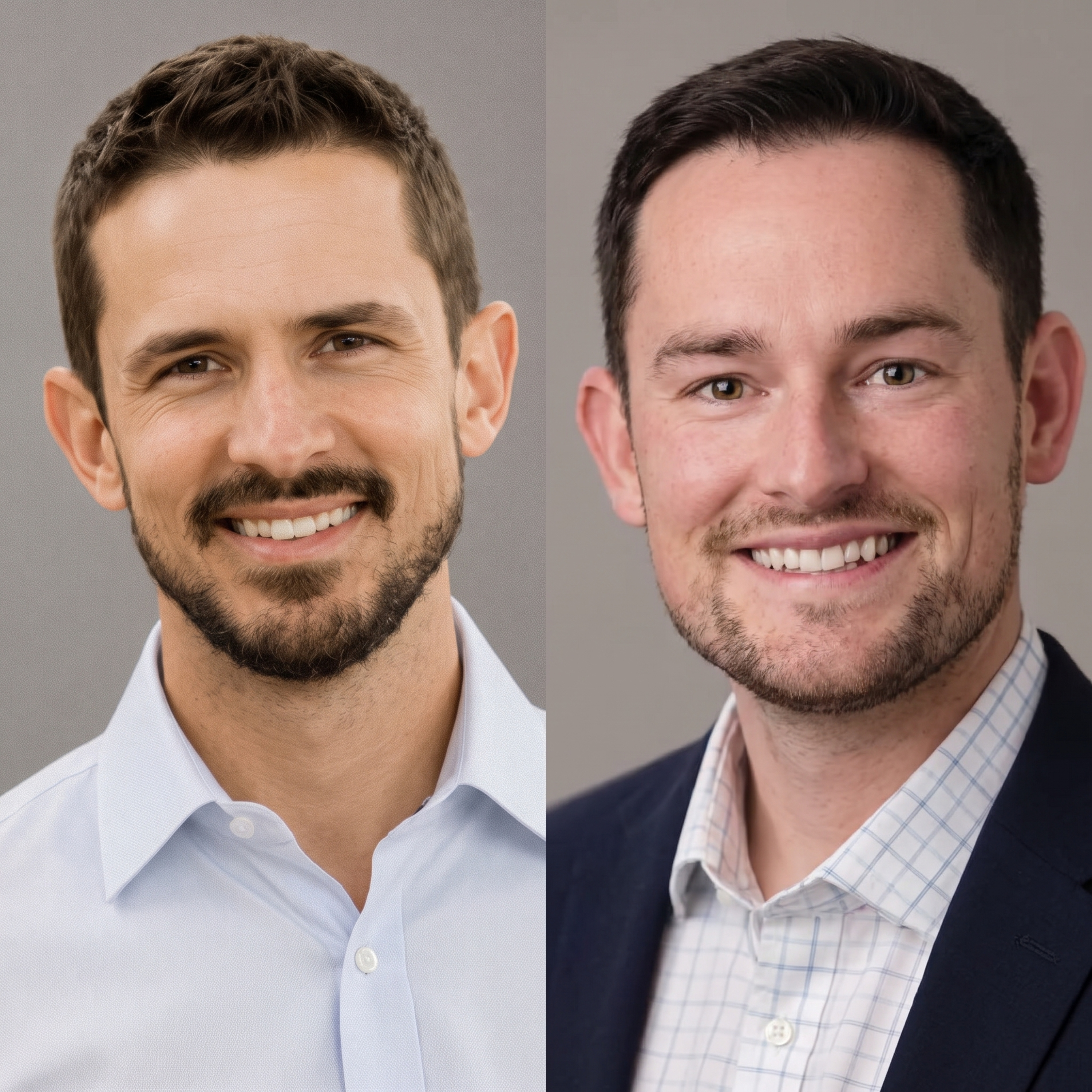
Ryan Thill (co-founder; background in environmental science/technology; previously at Workday, Procore, Box; describes himself as the subsurface geophysicist/“astrophysicist” domain expert). Jason Knutson (co-founder; serial entrepreneur; former mental health clinician/therapist; previously built a healthcare-oriented data/software company acquired by a firm with massive web-traffic data; later used LLMs like GPT-4).
domain expertise is the “moat”; move intelligence not data; workspaces bake in assumptions from satellite processing (e.g., L0–L1–L2) for reliable answers; tools can be built via experts, users, or by converting GitHub/papers into reusable tools.
vegetation greenness change over Dallas-Fort Worth using 10 years of satellite data; NOAA/NOAA-like weather-climate workspaces; geothermal exploration and carbon sequestration site risk (e.g., avoiding nearby unplugged wells); ERCOT grid intelligence workbench; flood risk and agriculture blending (NOAA + soil/crop/yield + tractor data).
Written by AI. May contain mistakes.
Learn how Liam integrates human expertise with AI workflows.
Discover how Liam analyzes climate data efficiently without extensive coding.
“What if AI could analyze terabytes of satellite climate grid and subsurface data just by asking a question?”
Introduction to Ryan Thill and Jason Knutson, co-founders of Liam.
“All right, Josh and Ryan, welcome to the podcast.”
Explaining what a cloud operating system means and its importance.
“I will do my best not to go off on my private equity tangent, but I just I didn't know what private equity meant either.”
Discussion on Liam's unique approach compared to frontier models in AI.
“So why will they not do what you're describing doing that makes Liam unique?”
Co-founders share their background and the story behind starting Liam.
“How did you choose to start this business And by the way, Joey at SGF, our mutual friend and connection, was in my classroom over the weekend at UNC in a climate tech startups course and said nice things about you.”
Learn how the idea of applying LLMs to environmental problems originated.
“I was actually on an escalator, but they, you know, they were doing this work and they wanted to use LLMs to learn from, from big data.”
Explore examples of LLM applications in climate and subsurface analysis.
“So let's bring it from your old solution.”
Understand how the platform connects to various climate data sources.
“And so a lot of interesting use cases and work that we see across those domains.”
Learn how the platform eliminates the need for extensive data migration.
“by bringing in multiple places to pull in other sources.”
Discover how to determine the sufficiency of data in climate workspaces.
“Yeah, let the agents do the integration at inference time.”
Examine the collaboration with experts to develop effective tools.
“look, we have this many blank, blank, blank bytes.”
Learn how research tools can be integrated into the platform for wider use.
“Or you can actually let people come in and use your Liam workspace that you've built.”
Discover how Liam transforms research outputs into reusable tools for analysis.
“And so if you one of the things we identified early on, we're doing research in astrophysics was a lot of amazing research gets done and machine learning models are built and tools are built.”
Learn how Liam prioritizes markets and aligns technology with sustainability.
“15-year-old firm with a gazillion dollars yet.”
Understand the drive behind the company’s mission to protect our planet.
“if I had a button to push real quick, if I had a button to push Ryan, I'd push like the applause, you know, button right there.”
Explore how Liam identifies pain points and aligns solutions with industry needs.
“No, I mean, I agree with everything Ryan said.”
Get insights on Liam's five-year vision and its goals for innovation.
“Let me ask one more business question and then we're going to switch to the Josh and Ryan portion of the podcast.”
Discover Liam's ambition to create a world model integrating various data types.
“oh god yeah we gotta get the exit done quick don't we Josh anything you'd add there?”
Engage with the hosts as they shift from business discussions to personal advice.
“So you have to build all this stuff around it.”
Listen to valuable entrepreneurial advice on failing fast and embracing challenges.
“We'll do somewhat rapid fire since we have kind of, you know, a twofer here with both you guys on.”
Learn how to face fears and pursue ambitious dreams in the tech space.
“Because the faster we do it, the more quickly we learn and we find the right answer.”
Discover how meditation and perspective help entrepreneurs navigate challenges.
“And if you do it five times, then all of a sudden you'll be the person who knows it really deeply.”
Explore how mindfulness and observation can enhance decision-making in entrepreneurship.
“And this is where my mind made that decision.”
Learn about the significance of physical movement and breaks for productivity.
“I think when you're an entrepreneur, you sit at your desk all the time and sometimes you get sucked into your work and it's like 8 a.m.”
Discover book recommendations that provide insights into personal growth and AI.
“And I think that book does a great job of walking through from the very basics all the way through the different type of models.”
Reflect on the impact of mentors in shaping leadership and personal development.
“You're furthering the audience's definition of you as a total nerd in astrophysics and deep learning.”

Get the gist, explore an idea or ask about something said.
 Claude
On Climate CEOs, what are the key points of this episode?
Searching your listeningAutomatic transcript. May contain errors.
0:00Josh Knutson: I think a big part of why we built Liam is it's all about human in the loop and actually a collaboration between the AI agents in this workspace and the domain expert where they can impart their knowledge into these workflows and into the system and these organizations of a workflow that we call workspaces where traditionally if you were, let's say, a climate scientist, you may really know the satellite that you worked on well or sea ice and how it evolves over time. but you weren't necessarily a software engineer or a data engineer. And so Liam abstracts really that complexity so that the domain experts' expertise gets baked into these workflows that is not general knowledge that would be available on the internet.
0:40Josh Knutson: Three, two, one, zero, zero, and liftoff.
0:48Ryan Thill: Welcome to Climate CEOs, the twice-weekly ad-free podcast for entrepreneurs, investors and executives in energy, infrastructure, and climate. I'm Chris Wedding, CEO, coach, investor, founder, and professor. For more, subscribe to our free two-minute newsletter for five things I learn each week. Find Climate CEOs on Substack or at entrepreneursforimpact.com. All right, let's get started.
1:19Ryan Thill: Welcome to Climate CEOs. All right. What if AI could analyze terabytes of satellite climate grid and subsurface data just by asking a question? Now, your question may be, what is a terabyte? I know it's a bunch of data. It's equal to something like 250 ,000 high quality photos, which is more or less what my wife has taken of our kids when they were young. But I digress. Liam is building an AI operating system for the physical world, helping scientists, engineers, and businesses extract insights from massive data sets without spending months building massive data infrastructure. Our guest, we've got two for one today, both co-founders of Liam.
2:09Ryan Thill: Ryan Thill is an entrepreneur with background in environmental science and technology, prior work at Workday, Procore and Box. Jason Knutson is co-founder as well, serial entrepreneur and a former mental health clinician, and both bring prior startup exits to the foundation of Liam. What is the company? Liam's technology enables users to analyze satellite imagery, weather patterns, electric grid, seismic data, and subsurface resources without extensive coding or data migration. Applications include geothermal exploration, carbon sequestration, mining, flood risk, and grid intelligence. Lots of things you'll learn in this podcast.
2:55Ryan Thill: Here are a few. Number one, domain expertise is the AI moat. Frontier models will improve, but proprietary knowledge and specialized workflows remain the most valuable. Number two, move the intelligence, not the data. Connect AI to existing data sets instead of spending 12 to 18 months migrating them. Number three, make experts more powerful. Let scientists and engineers build AI workflows without becoming software developers. Number four, turn research into product, convert scientific code and published research into reusable AI tools, and a whole bunch more. All right, folks, let's hop in.
3:44Ryan Thill: All right, Josh and Ryan, welcome to the podcast. Glad to be here. Thanks for having us. This time we're pressing record on our fun last conversation. So I'm going to start with, it's not really a joke, but it is a sincere question. When folks go to your website, they're going to see beautiful phrases like, I'm reading, the cloud operating system for your agents, some version of this. And the joke is that when I first got into private equity, I didn't know what private equity meant. I knew what private and equity meant, but not together. I was a PhD environmental management student. So tell us what that means exactly and how is it relevant to our listeners here, energy, climate, industrial tech, etc.
4:28Josh Knutson: Yeah, I'll jump in on this one because I spent a lot of time designing and building said cloud operating system. I will do my best not to go off on my private equity tangent, but I just I didn't know what private equity meant either. And then my last company was bought by a private equity company. And when I say I don't know what private equity meant, I didn't know what it actually, I mean, whoa, but when you get in there, I'm like, wow, this is a fascinating world of spreadsheet engineering. It's amazing stuff. Anyway, I digress, and I will not digress too far. But yeah, so what is this cloud operating system?
5:07Josh Knutson: What does it mean? You know, fundamentally, I think like a way to think about this is, you know, and a lot of people are doing this. There's a lot of systems like this nowadays. And I think there's even a term for it now, which didn't exist when we started as like a harness. You're basically giving language models and you're giving them tools that they can use, essentially. And you're giving them those tools in a cloud environment. And why that's important, in particular, and maybe I should say like, when you give an LLM a tool, that is, in my mind, what makes it become an agent, right? It can actually sort of take actions and leverage tools.
5:46Josh Knutson: And so you basically make a language model and agent. And the reason that it needs to be in a cloud for this world is when you are trying to leverage an agent to analyze, you know, let's say like some satellite data, right? Most of your questions, like I asked a question the other day, just sort of like a fun example. I was looking at the vegetation greenness change. I'm sitting in Dallas-Fort Worth. I was looking at the vegetation greenness change over DFW for the last 10 years. Did it get greener? Did it get browner? What's going on here? That question is a very simple sort of question, but that requires terabytes and terabytes of satellite data to analyze.
6:29Josh Knutson: So if I'm going to ask an agent to do that, it needs a cloud operating system or a cloud tooling system that allows that agent to say, oh, I'm going to need to spin up lots of compute horizontally to be able to produce that answer to somebody quickly, to analyze that data for them effectively. And so for us, when you're trying to do the kind of work that we want to get agents to do, which is work with very large, not cloud-optimized, heterogeneous data sets, you need that agent to be able to have access to cloud resources, not just your local computer's resources, in order to do that job well.
7:08Josh Knutson: So, yeah, that's the general gist. I probably said a bunch of words that individually, you know what they mean, but maybe all collectively you don't. So feel free to double click on that question.
7:17Ryan Thill: Maybe another question, which is less on energy, climate more on AI, a question that many entrepreneurs in our space, outside of our space are asking if they're, let's say, software or creating something around AI functionality is, okay, but in a year or two or three or during my whole period as an investor, will the frontier models begin to do what I think I'm innovative in doing right now? So why will they not do what you're describing doing that makes Liam unique?
7:52Josh Knutson: Yeah, I think they will. Ryan's breathing. Go ahead. Yeah, obviously they will continue to grow in their capability. I think a big part of why we built Liam is it's all about human in the loop and actually a collaboration between the AI agents in this workspace and the domain expert, where they can impart their knowledge into these workflows and into the system and these organizations of a workflow that we call workspaces, where, you know, traditionally, if you were, let's say, a climate scientist, you may really know the satellite that you worked on well or sea ice and how it evolves over time, but you weren't necessarily a software engineer, a data engineer.
8:28Josh Knutson: And so Liam abstracts really that complexity so that the domain experts expertise gets baked into these workflows that is not general knowledge that would be available on the internet. And so, you know, the frontier models, obviously, like the pre-training has happened on the entire corpus of the internet. And now they're doing a lot of reinforcement learning to kind of hit the long tail of use cases. But, you know, the deep domain expertise that we find in the physical world, that's something that still resides in people's brains. And so Liam is built to essentially be a tool that empowers those experts, takes away any technical complexity that would stand between them and getting answers from data, and allows them to build these workflows that, as Josh was mentioning, is comprised of connections to data sources, tools that bake in that expertise.
9:13Josh Knutson: Hey, if you're using this satellite, you need to understand that we made these assumptions when we were going from L0 to L1 to L2 level of processing, whatever it may be, so that you can actually get reliable answers. And then, of course, Liam being a harness in that operating system, these workflows then become deterministic, whereas an LLM is going to continue to be probabilistic in the way that it generates answers. And so, you know, the result is, you know, workflows and answers from data that are, that have the experts knowledge baked in and they're reliable on an ongoing basis. Okay.
9:45Ryan Thill: Let's, as much as I want to go into probabilistic versus deterministic functionality right now, let's go back a little bit for our listeners. I believe between the two of you all, you have more exits than I can keep counting. How did you choose to start this business And by the way, Joey at SGF, our mutual friend and connection, was in my classroom over the weekend at UNC in a climate tech startups course and said nice things about you. So I know part of the story, but how did you all go from sell some companies? We like SGF. They like us. Let's start this particular company.
10:26Josh Knutson: Yeah, I'll jump in on that one. I also will resist another temptation to go back to that why Anthropik won't. We should come back to that question because I think there's a related to some of the recent stuff that's going on. Maybe they will come after what we're trying to do. And maybe the reason they won't succeed is because the people out there will make a decision to use a different system so that they don't feed all their data and everything that they do and all of their domain expertise to Anthropic, which don't get me wrong. I think they've done some great stuff. But also maybe that's why.
11:02Josh Knutson: Maybe the people will keep them from coming. Anyway, we can go back and double click on that one if we want to again later. But back to like why we started this company. So in a previous life, I was a mental health clinician. I was a therapist. So I have like a clinical master's degree. And that's what I did. It's been a decade now.
11:22Ryan Thill: That's exactly what the audience was expecting you to say, John. I was in mental health before this.
11:28Josh Knutson: Yeah, it's an often shocking thing. when I bring that one up pretty much anywhere and where I'm working now. But there's a similar thread in that, like that was a world, that was a career path that I took that was about, you know, helping humans and helping make the world a better place. Then I sort of personally, you know, figured out that I was actually an entrepreneur through a variety of experiences. And then I started my first company. The SJF actually co-led the seed round at that company. So that's how SJF and I got connected. SJF does healthcare investing in addition to our client and clean tech invest.
12:08Josh Knutson: And the company I started was a software company that was much more healthcare oriented. So that's it. When I was going through that company, I kind of fell in love with the engineering of it all. And it was a data company. We did a lot of work with data. And so I then sort of fell in love with this, how do you learn from data and make data informed decisions? And sort of fell in love with the software of it all. and then when my company was acquired, the company that bought mine, they did a billion records of web traffic every day. So they had just a ridiculous amount of data. It was right when GPT-4 had dropped and so we started using language models to extract intelligence from very, very large data sets at that company when mine was acquired.
12:49Josh Knutson: And so that's how I sort of like this trajectory of like going from being a mental health person to like understanding software, to understanding data, to like clanging very large data pools, to using LLMs to play and that. But through it all, it was always about like, hey, I still want to make an impact and like make the world a better place. I have two daughters. I want to see that world be a better place for them. And so I was doing that. And then Ryan called me and he said, hey, I've met these astrophysicists. Ryan and I know each other 15 years, went to undergrad together. And we just are weird nerds that like, for some reason, you know, just love to watch astrophysics documentaries and like discuss them together.
13:28Josh Knutson: and like i just took like i don't know five biology i was in like advanced biology courses in college as an elective and people are like what are you doing in this class you know but we just have like and ryan's my guy that i talked to about all this weird stuff so that's what we've
13:45Ryan Thill: been doing for 15 years and by the way i think your your intro there of ryan says so i meet this astrophysicist it's like the setup for some sort of weird nerd joke that we can reserve for later perhaps, but anyway, keep going. That's right. That's right.
13:58Josh Knutson: So Ryan calls me and he's met the astrophysicists at a bar. Not really in a bar. I was actually on an escalator, but they, you know, they were doing this work and they wanted to use LLMs to learn from, from big data. And basically Ryan and I looked at each other and said, well, okay, if you're having this problem over here, you know, you're using LLMs on big data and like web traffic. These people are thinking about in astrophysics. It probably applies broadly. So then we kind of zoomed out. And what we recognize is Like in particular in the world of people who are trying to save or improve a planet and make it a better planet for the future generation.
14:35Josh Knutson: There is a large cluster of the same problem. Big data, lots of intelligence baked inside of that data, challenging to get that intelligence out. And so that's where we said that was where everything kind of came together. It was like, OK, I know this problem space and I'm building a product that's similar. It's sort of like working in that similar space. and this is a way to do it in a way that you know web traffic was was fine but like make the planet a planet for my girls to live on sustainably felt like a more fun fun place to go play in this playground so anyway that's for me how the whole thing dovetailed and then i called sgf and i was like hey you guys want to run it back and they're like yeah let's do it um and and here we are it's
15:15Ryan Thill: a little more complicated than that but no that's great that's great yeah i think those origin stories are important. Okay. So let's bring it from your old solution. Even if the audience or maybe the host doesn't fully understand it yet, that it applies to many sectors, but if folks go to your website and they click on industries, you know, at least two of those are going to resonate with, with our many listeners. And those are energy. And I think Was it subsurface? Maybe there's more there too as well. But describe, I don't know, two or three sample use cases in some version of energy infrastructure, industrial tech, etc.
15:58Josh Knutson: Yeah, Brian, you want to jump in on use cases? I know you do. I build the platform and technology. Ryan is the in-house domain experts. He's the astrophysicist, the subsurface geophysicist. He learns the deep stuff. Yeah, cool. So I'll give you a couple of them. I'll give you, let's do like a climate use case and then we'll do a subsurface use case. So, you know, the common theme being large, complex data from the physical world. You can't dump a terabyte of data, as Josh was mentioning, into just any LLM and ask it a question, right? And so what that means in climate is like, if you want to get an answer from NOAA data and it involves, you know, a satellite and you're looking over a long period of time and you're trying to identify a climate trend, whether it's, you know, say you're a business and you're looking to build on a location, you're saying, hey, wait a minute, what is the 100-year flood risk here?
16:46Josh Knutson: Or, you know, even more advanced questions. So if you need to process that amount of data, that's like a common use case that you'll see coming off NOAA data. We have pre-built workspaces. So NOAA data is one of the core data sets or core groups of data sets that people work with in Liam where we have pre-built connectors to all of that data. It's really massive data. And we have some expert-built tools in there. So it actually comes out of the box and you can just get in and chat. And so oftentimes what you'll see is people will take that foundation of Liam being pre-connected to that, you know, to NOAA data, and then they will bring in their own data and blend the two for answers.
17:21Josh Knutson: And so that's where you start to get into, you know, you think about agriculture, for example. Yes, weather data, obviously very important, but also they have, you know, soil reports and crop yields and they're getting data off the John Deere tractor and all that. And so you want to blend the data together in one place so that you can just come in and ask a question and get an answer. And so that's an example there. And then in the subsurface, it's very similar, right? Like if you're trying to characterize the subsurface, you're probably looking at seg Y files, which are like 3D seismic volumes, last files, well logs.
17:56Josh Knutson: And a lot of the information you're looking for lives at the intersection of multiple data types. It's really large data and it's really high value if you get the answer right. And so I would say about a third to half of the work that we do is in the subsurface and, yeah, really tailored for that use case. And, you know, the way that people use it, you know, we've seen it for geothermal exploration, carbon sequestration, and just understanding, you know, the broader subsurface environment. Where are all the wells that have been drilled, you know, around a site that you're looking to sequester carbon?
18:26Josh Knutson: And it doesn't make sense to inject a bunch of high-pressure carbon if there's an unplugged hole half a mile away and it just blows out the other end. And so a lot of interesting use cases and work that we see across those domains.
18:39Ryan Thill: So on the NOAA example, I think some listeners will be thinking to themselves, wait, NOAA data is still available? It hasn't been removed from the internet just yet? Yes, that was a political comment. What are you going for? For publicly available data sources in these pre-bit workspaces, are you linking to whatever? This is not tech speak. Are you linking to the website? Are you downloading en masse monstrous amounts of data? You're putting them in a cloud somewhere so they are safe, preserved, constantly growing, and not depending on whether some organization, person, business, government keeps it or changes it or something else.
19:23Josh Knutson: Yeah. One could certainly move and download the data. For the weather and climate data that we're connected up to, we have an array of sources. Actually, shout out, there's a company out there called Source Cooperative. They're a nonprofit, I don't know if you've heard of these guys, but they pull in weather and climate data and aggregate it, you know, a bunch of publishers that publish data up there. So there's a lot of different places that they get the data from, in addition to NOAA. So in the weather and climate workspace, if you come into Liam, if you go to liamapp.liam.ai and you sign up, one of the first things you're going to get prompted to do is decide if you want to start from a pre-built workspace or you want to build your own.
20:03Josh Knutson: And if you start with the pre-built one, you can choose the weather and climate one. And that one is connected both to an array of NOAA's data sources, which are all from Nod. This is like the NOAA's open data dissemination project. So they're all in S3, as well as a bunch of the source cooperative public datasets that have been published as well. So that is, no, we are not going to download, move all that data. We're going to connect to it where it lives. And we are going to depend, in some sense, that that data lives. But we have hedged a little bit by bringing in multiple places to pull in other sources.
20:42Josh Knutson: It's actually an important piece, though. So like you can bring in data, but if you're talking about bringing, I saw a stat yesterday that if you're going to download a petabyte of data on a standard internet connection, it would take five years, right? And so like we don't want to move that much data. What we do is connect to it, create an index over it. And so if you have data in, let's say, seven different sources, we create an index over all of it so that to Liam, it looks like you've done a giant data migration project and put everything in one place so that when our agents go to pull on that data, it's all right there.
21:15Josh Knutson: And then we can pull the data down at inference time. And so it saves you from having to do a data migration project. And I think a lot of the companies we talk to are trying to make decisions on that. Like, all right, let's commit to this. It's going to be 12 to 18 months. Like we're going to hire a couple engineers and we're going to get all of our data in one place. And I think one of the core value props of Liam is you don't have to do that. Just deploy Liam. Connect Liam to where all the data currently lives. and then within a matter of days, be chatting with that data and getting answers from it instead of a big migration.
21:43Josh Knutson: And so we actually see - Yeah, let the agents do the integration at inference time. You don't need to pre-do it anymore. It's part of the fun of what these things can do, how you can get there, get to those answers much more quickly than you used to.
21:59Ryan Thill: Yeah, I can imagine an investor would have a problem with your business model saying, we almost have the data. We just need four and a half more years to get the data to build our product.
22:11Josh Knutson: Let's churn it right now. We promise.
22:13Ryan Thill: Yeah, we're in progress. We're in progress, baby. So let's stick with the weather and climate. What did you call it? Platform? Workspace. Workspace. You know, weather and climate is a big, almost boundary list, but not quite. How do you think about when you've captured enough data around weather and climate such that the workspace people use covers what they want to answer, whether it's the depth or the breadth of information that you're after. At some point, you're like, look, we have this many blank, blank, blank bytes. This is an 80-20 rule, asymptotic kind of diminishing returns, et cetera, et cetera.
22:50Ryan Thill: How do you describe this to users? Does that make sense?
22:54Josh Knutson: Yeah, it does. I mean, I think this is the... So just to be clear about what a workspace means, you've got this cloud operating system, and like it's basically a platform that sits underneath the whole thing. And then on top of it, you can build or leverage what we call workspaces. But in some sense, it's like a cloud context container, right? And like by context, I don't just mean like, you know, a knowledge base full of like PDS. And that context also includes like connections, you know, and it includes like data that's been loaded into that system and all sorts of stuff. But, you know, you basically can constrain your, what you want the agent to do based on this workspace.
23:32Josh Knutson: Sure. And you can build these, though, at any level of abstraction, right? I mean, to your point, it could be an entire domain. Or you could build a workspace that's like one very specific little workflow. Absolutely, that's true. Right? And so it's really up to the users of our system that are kind of like, there's two patterns of using the system. There's a build pattern and a sort of like consume pattern or like extract intelligence pattern. If you're a builder, you can build whatever you want at any level of abstraction. For us, the way that we think about doing this is that the way you sort of segment it and the way you get it to work at a really broad domain level, like that weather and climate workspace, it is connected to dozens of petabytes of data.
24:14Josh Knutson: but it also has dozens of tools which are purpose-built code snippets or python scripts from actually what they are fundamentally that have been built and written by us and alongside climate scientists that we've been working with for the last year so you come into this very broad oh it's a weather and climate workspace and you ask some question right again maybe it's that like vegetation greenness change or like, hey, I have this parcel of land that I'm trying to analyze what's been going on with this very small parcel of land for the last, you know, five years or something. And I want to look at this satellite data or, you know, to Ryan's point, I want to look at like flood risk for this new site.
24:57Right.
24:57Josh Knutson: You come in and ask that question. The workspace can do 5 ,000 things, but you ask that question and the tools that are baked in, the agent says, ah, okay, I have the vegetation greenness change tool done. And the LLM doesn't have to go write its own code. It just says, run that and send it over to run against that data. Like this is, they want to look at 10 years. They want to look at Sentinel-2, run, right? So again, it's similar like at inference time, right? You sort of let the agent help you constrain what you wanted to do.
25:30Ryan Thill: Well, I guess where I'm going is you mentioned building tools on top of the data in the workspaces, which will be broad or narrow and such. and that you're building these tools alongside climate scientists. Flash forward two years from now, how do more tools get built? Not just like, is there a world where users build tools that are available to others? Or is that more like a proprietary, just at the customer level? How do you build more tools so this is all easier to extract intel from?
26:03Josh Knutson: Yeah, I mean, there's twofold. I mean, this is part of our entire business strategy is like we have been working alongside domain experts that, you know, are like consultants for us, advisors for us, people that work for us. And they come in and we work with them to build these workspaces so that when you as a user come in that you don't have to build, you know, like, for example, we've been working with a company that does consulting and advising on the Texas grid like ERCOT. And so we sat alongside them for a couple of weeks and we built a ERCOT grid intelligence workbench. And now I, as a user, can come in and I've got dozens of tools.
26:40Josh Knutson: I'm connected up to the grid. I've got all sorts of like analysis that I can do. I mean, it's a full-blown product. It's done. And so it's not a platform that I can mold. It's a product. I can come in and use it and I can just extract intelligence. So, part of like our strategy as a business is to work with those domain experts to help us build those tools and functionally those products, you know, on top of the platform so that people can come in and leverage those products without having to build their own tools. That said, we also have people that have been using this that are now building their own products on top of it, right?
27:17Josh Knutson: So they actually say, hey, I know how to do, I have a very core workflow that I understand really well. I know these tools. Can I leverage Liam as a marketplace where I can build a workspace that's a full end-to-end product? I build the tools in, and then I can let other people come in and consume and use what I've built, which is a sort of early pattern we've seen emerging from some of those people that have been using it now for a while, right? And there's a command line interface and an API. So you can actually build your own front end over the top of a Liam workspace if you want. Or you can actually let people come in and use your Liam workspace that you've built.
27:52Josh Knutson: So yeah, we see that sort of like crowdsourcing, building those kind of things over time. Yeah. Yeah. One other interesting way that people get tools in the system is, you know, the Liam agent can operate Liam. And so if you one of the things we identified early on, we're doing research in astrophysics was a lot of amazing research gets done and machine learning models are built and tools are built. And then they go into a GitHub repo and someone writes a paper and then the paper is published. But then, like, I don't know, six people read the paper. It basically just dies. And if you actually want to go work with that code, you need to know the researcher and sit down with them and understand it.
28:28Josh Knutson: And so one thing that Liam enables is, you know, if you shared a paper with me, Chris, and within it, there were three different tools that they'd built. And there's these GitHub repos. All I have to do is tell the Liam agent, hey, there's the GitHub repo. And it will go take that repo and build it into reusable tools within the platform. And so going back to the concept of like the domain expert or the subject matter expert, whoever really knows the data and is trying to do this analysis, they don't even have to know how to open up GitHub. Or they don't have to know what a CLI is. they could just tell the Liam agent, Hey, someone built this tool and I want to use it, go do it.
29:02Josh Knutson: And Liam will do it.
29:03Ryan Thill: Yeah. I like that. Okay. So how about a question that's not just about, you know, energy and climate, but you know, what, what I hear is that your old platform has use cases in many sectors within energy and climate and beyond, you know, you're not a 15-year-old firm with a gazillion dollars yet. But I don't like, you know, how do you prioritize, right? You can't do everything. How do you, you know, beachheads and all the rest, how do you, how do you focus on the right first markets? Hopefully just in our space, but who knows, maybe, maybe not. Yeah.
29:41Josh Knutson: For me, I think it was kind of like the intersection of what is the best fit for what we have built in our research and that kind of core, like, hey, it's large data, It's complex data. It requires deep expertise to work with the data. And the answers coming out the other end, if you do it correctly, are high value decisions. I think that's part of it. And then the other side of it is that just like impact side to our business and the desire, you know, desire to actually make the world a better place. And, you know, I started my career as an environmental scientist and I've always cared about sustainability in the planet.
30:13Josh Knutson: And so for me, it's a very natural area to want to apply a new piece of technology is like, how do we, you know, protect the earth we live on? I would say like, you know, we started doing astrophysics research and that was another passion, as Josh mentioned, but probably not a business. But when you study astronomy and look at outer space, you start to realize how special Earth is and how we don't really have any other good options, you know, other than here. And so, like, it's really important that we protect it. And so, for me, I think it's the intersection of those two things that make the vertical kind of like adjacent verticals that we're going after the ones to target.
30:45Ryan Thill: if I had a button to push real quick, if I had a button to push Ryan, I'd push like the applause, you know, button right there. That was a, that was a good one. I think a lot of us would agree with what you just said. Josh, you were going to jump in.
30:58Josh Knutson: No, I mean, I agree with everything Ryan said. I think, you know, the only, only thing I was going to add is, you know, we did kind of a systematic analysis to make sure, because I think for the two of us, like this was just the one that we cared about the most. And so this is a, you know, and you're building a business, right? So you have to make sure that like you're, if there's other opportunity out there, you got to pay attention and go look and make sure you're not just like, yeah, but I want to do this. So we did a pretty systematic analysis of like, what are the pain points that this thing solves?
31:30Josh Knutson: And we kind of identify like four or five core pain points. And then we went out and we looked at like, what are the industries where these pain points are the most salient? And well, it's very serendipitous. We were, thank God, because it was like energy, climate, natural resources, like that was where it was. And so it was exactly what Ryan was saying, just sort of very aligned with like, these are big data problems that people are operating around here. And this thing that we've built just luckily for us because it aligns with what we wanted to do, it really sort of systematically as we analyzed it aligns pretty well.
32:04Ryan Thill: Perfect. Okay. Let me ask one more business question and then we're going to switch to the Josh and Ryan portion of the podcast. So for, you know, look, customers, investors, talent, thinking about, oh, this is pretty cool. Maybe I should learn more. Flash forward, whatever, five years. What does Liam look like? How do you describe Liam in five years versus right now?
32:29Josh Knutson: Yeah, I mean, for me, I would say like, you know, right now we have a platform that makes it really easy to come in and work with your data and have the tools and it's an agent harness and all that. And ultimately, like the models that we're using, you know, we're using frontier models to help do the ultimate processing. And where we actually started our research was in training our own models. And we learned a lot about, you know, techniques that we could apply to work with physical world data, also the limitations, you know, what we would need in terms of data and how to do that. And so for me, I think about, you know, a five year vision is we're not just a platform where you come work with data, but actually we're building frontier models ourselves, but models that are purpose built for the physical world in these type of data types.
33:09Josh Knutson: Where not only does it give you an enhanced capability to work with, say, satellite or climate data, but also the ability to identify patterns across data sets and modalities that currently we do not have the capacity to do so that we can unlock innovation that hopefully makes the world a better place. And so for me, the five-year vision, you know, at that point, we're training our own models. And, you know, five years in the AI world is about 5 ,000 years in typical human history. And so, like, who knows exactly what that looks like? But for me, I would say that's the longer-term vision.
33:43Ryan Thill: And based on headlines from, we're recording this on, what is, the 17th of September. Based on headlines last week, that also goes five years until we're all toast, not because of AI. hurry and exit before yeah
33:58Josh Knutson: oh god yeah we gotta get the exit done quick don't we Josh anything you'd add there? yeah I mean we the original premise of this company it always has been in this where we're at it the world language model for us like people are building world models people are building language models we see the intersection of those two things we want to see a model that can take a sensor stream as input and answer in sensor stream right and can literally project like run a projection um but can also take language as input and give you that an answer in natural language um so multimodal in a much deeper sense than the current existing multimodal models and and we spent uh you know nearly a year the first year of this company not doing anything commercial at all, just researching how to do that.
34:54Josh Knutson: And so we, we learned a lot about the architecture for how to do that. And we also learned that we needed, you know, something like a hundred million dollars at least. And so he's, all right, you know, our last names are not Setskiver or Altman. So we're going to probably need to build a business and the interim if we're going to erase that kind of to do it. So yeah, that, that is the, the ultimate vision. Um, right now, right. Like I said in the beginning, like you have to build an operating, you have to put all this tooling around that you sort of like the model's not very good at doing what you're at, what we're trying to get it to do.
35:31Josh Knutson: So you have to build all this stuff around it. Um, and we see a world where you don't have to build all that stuff around it, or the model is just good at doing it. And when you get that, then what you get to do is you get to do some like unsupervised, like put lots of data inside and see what patterns emerge that we haven't thought to find before. And I think that's the big thing that we want to do over the next five years.
35:55Ryan Thill: Cool. Okay. We are going to switch over from business to person. And it is mid-September in North Carolina, and it's time for me to close my windows and actually turn on the AC because I'm burning up. Hold on. Oh, man. Lord have mercy. fresh air is great until until it's you're sweating on a podcast
36:18Josh Knutson: I thought you were going to close up because it's ragweed season
36:21Ryan Thill: no no no luckily not not a problem right now
36:27Josh Knutson: to have the privilege of opening your windows by the way both of you you don't understand what a privilege that is still 101 outside where I'm sitting so no open windows going on every year Wow.
36:40Ryan Thill: Okay. We'll do somewhat rapid fire since we have kind of, you know, a twofer here with both you guys on. We got four questions. First one, give us some advice that you'd give your younger self. Maybe one or two quick ideas from each of you. What do you got?
36:59Josh Knutson: Mine is fail fast. Fail fast. That's been my adage for a long time in this entrepreneurial space. Just like, don't be afraid to fail. because you will repeatedly on like almost everything. And then you will find the one that doesn't fail, right? So you just have to, you got to do it fast though. You know, don't wallow and be sad about your failure. Just keep cooking, right? The obstacle is the way is the other. Like there's a, it's a good book. It is. The book, it actually just, the book is okay. It just repeats the point a lot of times. The title kind of says it all. But the challenges are the opportunities.
37:39Josh Knutson: And I think in this entrepreneurship space, that was a really hard thing for me early on because I was used to like, you know, going through like college and grad school programs. And, you know, you get the like gold star and you get the grade. There's this feedback mechanism and you're succeeding all the time. You don't fail very much as you're going through that trajectory. And you get a job and then you're getting paid and you're doing, you know, but entrepreneurship is just over. I think we talked about it right before we got on. It's just getting punched in the face. So you just have to recognize that that is actually the way that you find the right answer.
38:12Josh Knutson: And my old co-founder and I always said that to each other and to the company. He's like, hey, we're going to fail a lot of times. Let's just do it quick. Because the faster we do it, the more quickly we learn and we find the right answer. And so anyway, that's one of my favorites. The challenges are the opportunities. And so run headfirst into those challenges as quickly as you can and be prepared for them.
38:37Ryan Thill: Yeah, I'll add on to that that I'm growing our EFI community with a corporate membership and not selling to corporates, party with corporates really ever, but know there's value here. I think as I do discovery, right, I think I'm on like version 41 of what the right kind of value proposition is here. Another one is one of our EFI CEOs, Robin, at Transect. She reminded me that I think she has maybe a coin or whatnot of a bison as a reminder that they run into the storm, not away from the storm. It's like, ah, one more reason. They're badasses. Anyway, Ryan, what do you got?
39:21Josh Knutson: Yeah, I would just say to my younger self or to someone starting their career, don't be afraid to go for it. You know, when I was young and I was just getting into the tech world, it was very intimidating to me. I went to Workday. It was this company that was just crushing it. And the senior executives had these amazing resumes. And it was like, I had this dream that one day I was going to build a technology company, but oh my gosh, I'm not even ready. There's no way. And it's, I got to work my way up the ladder. And then once you actually build a business, you realize it's a lot of just general problem solving.
39:50Josh Knutson: And you just face a new problem and have to learn and figure it out very quickly and solve it. And so essentially, it's like, don't be intimidated by it. Just go for it. And to Josh's point, like when you go try things, you're going to fail at things, but that's how you learn. And if you do it five times, then all of a sudden you'll be the person who knows it really deeply. And so ultimately it's just like, don't be intimidated by those bigger visions or bigger dreams. Just go for it. And as long as you have food to eat and a roof over your head, you know, it's more fun to try and to go for it in life.
40:20Ryan Thill: yeah i'll add that um most people who we think have shit figured out don't have it figured out so guess what if we don't have it figured out we're just like them just go just go figure it out let's go to the next one give us uh give us a a weird or less obvious habit or routine that keeps you healthy seen and focused building in this case building your next venture liam
40:42Josh Knutson: it's not that weird i was like a meditation is like okay i don't know yeah that was not that crazy. It's just, if you're going to go through that fail fast and then like get swept up and I, well, not, you have to not get swept up. There's a, I know if you're, you know, those people, listeners out there, like if you're a meditator, like an Eastern philosophy person, this will, you'll digest this easily. If you're not, maybe you could use a different word, but you do need to sit and get a little space sometimes. You know, you got to recognize, you get very caught up in a lot of this and it's easy to get stuck in here when you're, because a lot of this is thinking, it's problem solving.
41:29Josh Knutson: And like problem solving as an entrepreneur, that's all it is. It's just lots and lots and lots of problem solving. The problem solving part of your brain is the thinking part of your brain And the thinking part of your brain can hijack your entire self and make you lose sight of the fact that you are more than just that little thinking problem solving part of you. And if you don't, if you're unable to get a little perspective from that as an entrepreneur, it's hard to actually benefit from the failures as much. Because you need to see, you need to be able to step back and watch those failures happening and watch, oh, okay, this is my emotional reaction to that failure.
42:05Josh Knutson: And this is where my mind made that decision. And that's how I got to this point. And okay, I need to zoom back out and take a pause, you know. So I just think it's a, you know, I was a therapist in my previous life. And, you know, I think those skills like of being a clinician and, you know, having to learn that kind of stuff is translated really, really beautifully to entrepreneurship. And I think that kind of contemplative practice of stepping back and taking a breath is a massive advantage in this space.
42:36Ryan Thill: Well, clearly, per our prior call, we both agree strongly on what you just described. Give folks, like, just clearly what your practice is, and then we're going to go to Ryan next, and that'll give us four minutes for the rest of our podcast. But real quick, Josh, what's the practice?
42:51Josh Knutson: Yeah, I mean, I'll, again, say out of the sort of, like, a proper nouns of it. But it is literally a sit and observe. And I think it's fundamentally, people talk about meditation and maybe less and less people are getting stuck in this trap. I think it's becoming more common knowledge that meditation is not get my brain to be quiet. But I think a lot of people still think it's get my brain to be quiet. That's not it at all. It's just the capacity to see your brain doing its thing, right? Your thoughts arise in the same way that the wind arises and that the sound of the train going down the tracks arises, right?
43:32Josh Knutson: Like you don't have a lot of control over it sometimes. And it is very simply just that recognition, you know? Just being able to sit back and be like, oh yeah, like that problem solving thing that I'm stuck on and like, I'm not doing that. Like I'm not actively doing that. It's just a thing that is happening, right? And that gives you a perspective to then make a decision about, do I like that? I don't think so. I think my brain is stuck trying to solve this problem over here. That's not the right one. We shouldn't even be solving that one. We already failed on that one. Let it go, man, you know, and move on, right?
44:05Josh Knutson: So that's it. Fundamentally for me, it's a recognition that thoughts are the same as the wind or the same as the sound and being able to see them in that way, I think is the core practice that I'm leveraging against entrepreneurship. There are other things that I, you know, do instead of meditation that are for different reasons, but, you know, seeing thoughts and problem solving, yeah.
44:25Ryan Thill: I know that's a three-day answer we just gave you one minute for, but Ryan, give us one of your habits.
44:34Josh Knutson: Yeah, I'll give you a quick one. Josh went mental, so I'll go physical. I think when you're an entrepreneur, you sit at your desk all the time and sometimes you get sucked into your work and it's like 8 a.m. you start and then all of a sudden it's 11 at night and you haven't left your desk. and so for me one thing that I've tried to do over the past couple months is just like after I eat or when I have a little break in the day even like a five or ten minute walk where I just get out of my desk and change the pattern for my body of like go from like sitting all the time to just like stretch it out a little bit and have a little more mobility has been a game changer and I think you know healthy body healthy mind easier to focus when it's not all the compounding problems of
45:08Ryan Thill: being a desk sitter yeah so yeah you're you're doing the Spanish paseo x times per day sounds like that's great no okay uh let's see let's do real quick uh one book recommendation each and then we're gonna give a shout out to somebody who made you all who you are partially made you who you are uh give me give me a book give us a book josh what you got uh i am currently
45:31Josh Knutson: i found this in my attic and i'm rereading it uh it is for it's written for a therapist audience but it has so many beautiful metaphors it is called if you meet the buddha in the road kill him
45:44Ryan Thill: hmm yes like wait i thought buddhism was like all about pacifists yeah yeah not really that
45:52Josh Knutson: yes uh it's phenomenal phenomenal one about just uh owning your your own life and your own journey and and yeah taking ownership over your life is pretty good perfect shocking title just as intended ryan how about you uh so i'm looking over at my bookshelf i'm gonna go with understanding deep learning i think a lot of people when they think ai they just think llm and chat gpt but there's so much more under the AI umbrella in different types of machine learning. And I think that book does a great job of walking through from the very basics all the way through the different type of models. And ultimately, we talk about tools and calling things within the AI operating system.
46:28Josh Knutson: And for a lot of this complex physical world data, there's a certain signal you want to extract from that data. And there's different machine learning methods that are ideal for different use cases. And so I think that's a really effective book at taking someone who maybe doesn't know a ton and getting them to a pretty well-rounded understanding of the ecosystem of models.
46:46Ryan Thill: Love it. You're furthering the audience's definition of you as a total nerd in astrophysics and deep learning. All right, last, last piece. Give a shout out to one person who's helped make you who you are as a human, therefore as a leader. Josh, what do you got? Her name is Dr. Berger Greenstein.
47:06Josh Knutson: She was my graduate school professor in Boston. she called me in after my first semester in school to her office i thought i was getting called in for her to tell me how amazing i was and how what a great student i was and she sat me down and she said you are a condescending asshole and if you don't figure that out you're not going to be successful amazing and uh i it changed the entire trajectory of my life it really did i had never like been slapped in the face with that i I was like, I was very good at school and just sort of like thought like I was being cool by like telling everyone how smart I was.
47:44Josh Knutson: And then to like recognize like, whoa, that is not a good way to be a leader and to like build a good career and a good life in professional circles. I mean, it punched me in the face and has never, I have been a dramatically humbler human being ever since that conversation. Talk about tough love, baby.
48:07Ryan Thill: dear audience who do you know who's a condescending asshole that you love and want to share
48:13Josh Knutson: want to share this with that was 10 years ago okay i i or 12 years ago all right i've changed since then i don't feel any of that i don't feel any of that ryan what how about you cool uh i'm actually gonna go with josh so to my earlier answer of don't be afraid to go for entrepreneurship I must say I was completely shocked when my friend, really good friend, super smart, went from being a therapist to just fearlessly starting a software company, getting VC funding, doing the whole ride, exiting. And, you know, I had been at Workday and Procore and Box and we had IPO'd at these companies and we were crushing it.
48:50Josh Knutson: But I still, you know, doubted myself. And I was like, I don't know if I can do it. And there he was. He just went and did it. And so I would say he was both an inspiration on that front and also someone that when I was making that leap myself, provided a lot of like guidance and mentorship when I was trying to get my first one off the ground. And so, yeah, I'm going to go with Josh for my answer.
49:08Ryan Thill: That is so freaking adorable. And what I'm hearing, right? What I'm hearing, Ryan, is, I mean, like, if Josh can do this, I mean, surely I can.
49:22Josh Knutson: It was that.
49:23Ryan Thill: The bar is that low. Holy cow. Earthcasts are fun.
49:26Josh Knutson: As hard as I thought, man. Wow.
49:29Ryan Thill: All right. We're going to call it here. Hey, rooting for your all success at Liam and looking forward to our next chat. Awesome. Thanks, Chris. Thanks, Chris.
49:42Ryan Thill: If you like this, please give us five stars or leave a review on Apple or Spotify. These 10-second actions tell the magic algorithms and me that we're on the right track. And if you're a series CEO in energy infrastructure or climate, check out our EFI CEO Peer Groups, a confidential, invite-only brain trust of CEOs and investors helping you grow your business. That's all, y 'all. Later.
What if AI could analyze terabytes of satellite, climate, grid, and subsurface data with a single question?
Lium is building an AI operating system for the physical world that helps scientists, engineers, and businesses extract insights from massive datasets without spending months building data infrastructure.
https://www.lium.ai
Guest bios:
Ryan Thill is co-founder of Lium, an entrepreneur with a background in environmental science and technology. He previously worked at Workday, Procore, and Box, and brings experience in enterprise software, AI, and business development.
Josh Knutson is co-founder of Lium and a serial entrepreneur and a former mental health clinician turned technology founder who has worked across healthcare, data engineering, and AI, combining technical expertise with a passion for environmental impact.
Both have built and sold companies.
Company summary:
Lium is developing a cloud-based operating system that connects AI agents to massive, complex datasets across climate, energy, natural resources, and other physical-world industries. Its technology enables users to analyze satellite imagery, weather patterns, electric grids, seismic data, and subsurface resources without extensive coding or data migration. Applications include geothermal exploration, carbon sequestration, flood risk, and grid intelligence.
Seven things you’ll learn in this episode:
–
Extra stuff
Join our private CEO peer group in energy, infrastructure, industrial tech, and climate tech:
→ entrepreneursforimpact.com
Join 40,000+ and read our two-minute Climate CEOs newsletter:
→ entrepreneursforimpact.substack.com/
My 100 rules for living the good life (that I keep breaking)
→ https://entrepreneursforimpact.substack.com/p/100-rules-i-try-to-live-by-and-often
Listen to similar Climate CEOs podcast episodes:
→ The $8B Utility Blind Spot: From Helicopters to AI | Overstory
https://podcasts.apple.com/us/podcast/the-%248b-utility-blind-spot-from-helicopters-to-ai-overstory/id1561411048?i=1000761375819
→ Climate AI: TIME’s Best Invention + First Prediction Engine for Earth | Bellwether
https://podcasts.apple.com/us/podcast/climate-ai-times-best-invention-first-prediction-engine/id1561411048?i=1000694819077
→ AI for Energy Regulation: VC-Backed + Tech for Open Data | HData
https://podcasts.apple.com/us/podcast/ai-for-energy-regulation-vc-backed-tech-for-open-data/id1561411048?i=1000675533997
Help our guests and leave a rating or review on Apple or Spotify.
→ Thanks in advance!
Join 97,000+ and take my course, Renewable Energy & Green Building Entrepreneurship:
→ coursera.org/learn/renewable-energy-entrepreneurship