Ask ChatGPT
 Climate CEOs
20 Nov 2026 · 39m · 19 chapters
Odyssey Energy’s financing platform for distributed clean energy in emerging markets—why distributed solar is scaling and how financing bottlenecks are solved.
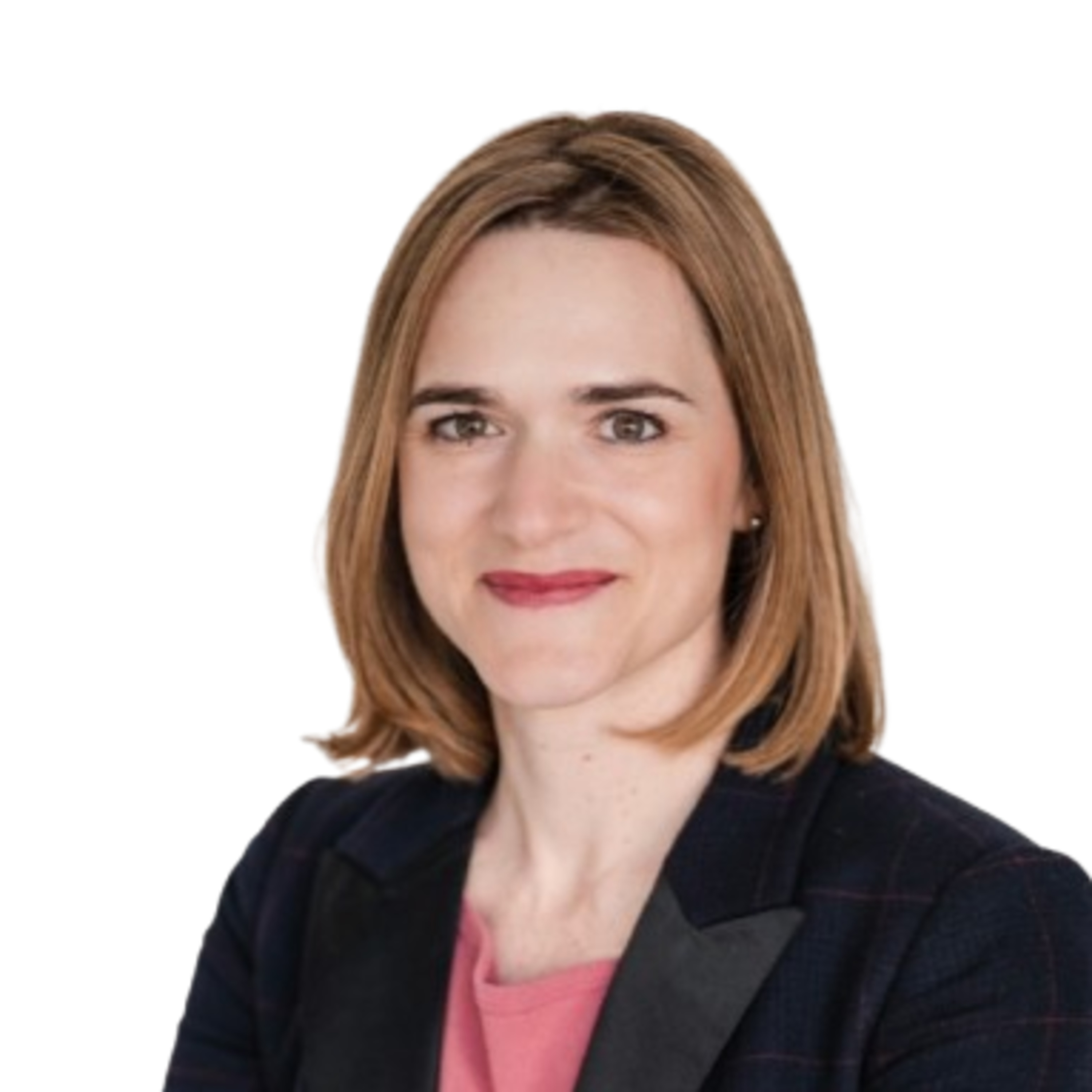
Emily McAteer, co-founder and CEO of Odyssey Energy Solutions. Former founder of SunEdison’s microgrid development business (Frontier Power) building microgrids in India and East Africa; Fulbright scholar studying distributed solar in India; long experience tackling financial/operational barriers. Co-founder mentioned: Piyush Mather (ex-CEO of Simpa Networks).
Nigeria already had more backup diesel generator capacity than grid-connected power plants (IFC estimate), so distributed energy filled a reliability gap before solar/storage costs fell. Rising diesel prices and cheaper solar/storage accelerated adoption. Odyssey has supported 1.4 GW of distributed energy (~$3B) across 50 countries, connecting ~6,000 companies to finance ~4 million mostly solar systems.
World Bank results-based financing in Nigeria (DARS/RE A programs) using Odyssey for tracking approvals, installation, and monitoring; embedded credit via framework agreements to help small EPC/installers unlock working capital; expansion from C&I solar into e-mobility (solar-powered productive equipment and two-/three-wheeler supply chains).
Written by AI. May contain mistakes.
Explore the dominance of diesel generators in Nigeria's energy landscape and the role of distributed energy.
“In Nigeria, the IFC estimates that there are more backup diesel generators capacity than power plants connected to the grid.”
Learn about Odyssey Energy's significant contributions to financing energy systems across emerging markets.
“Today, 4 million energy systems financed by one startup.”
Introduction to Emily McAteer, co-founder of Odyssey Energy, and her background in distributed energy.
“Previously, she founded SunEdison's microgrid development business, Frontier Power, building projects in India and East Africa.”
Discover how Odyssey provides financial infrastructure for distributed clean energy projects.
“All right, a few things you'll learn in this podcast.”
Emily discusses the operational challenges and successes of Odyssey in the clean energy sector.
“So, you know, in a way, we've been meant to record this podcast for, I don't know, three years when you joined our CEO lunch event in your backyard in Boulder.”
Emily shares the journey of founding Odyssey and the driving factors behind its creation.
“I've been at this pretty much my entire career and have very much seen the sector evolve over time.”
Discover how the energy infrastructure paradigm is changing in emerging markets.
“That's the short pitch, and I'm happy to get into the details of any of that.”
Emily explains the challenges of financing clean energy projects in emerging markets.
“It was like, you know, 3 ,000 microgrids at a time and get that financed.”
Learn about the productive uses of solar energy and their impact on local economies.
“So maybe just to stress one point for maybe current, but certainly future entrepreneurs is, man, look for places where folks cuss.”
Learn about the financing issues small companies face in the energy sector.
“I think we're at something like 4 million systems have been financed on Odyssey through these programs.”
Explore how e-mobility is expanding Odyssey's business model.
“Reminds me a little bit of the Amicus Solar Co-operative in the U.S.”
Discover how Odyssey's credit solutions could apply to various sectors.
“is that this challenge that we identified for CNI solar installers is much more widespread and crosses industries.”
Understand the unique market dynamics in emerging distributed energy sectors.
“Before pressing record, you said, look, I want to make sure the audience knows this is a super unique time in, let's say, distributed energy in emerging markets.”
Learn about Odyssey's diverse investor base and capital raising strategies.
“So I'm going to share a comment that I shared with my Duke University class.”
Learn about the various funding sources that support Odyssey Energy and the challenges ahead.
“So we are funded by, on the equity side, we're funded by US VCs primarily.”
Discover advice on enjoying the entrepreneurial journey and the nature of goal-setting.
“Okay, we're going to switch, Emily, from the Odyssey portion of the podcast to the Emily portion of the podcast.”
Hear about balancing work and family life while maintaining mental clarity and focus.
“you and I were talking about this a little bit before we started recording, is so important to getting the most out of an entrepreneurship journey.”
Explore the impact of reading fiction on emotional intelligence and perspective.
“of habits or routines that keep you healthy, sane, and focused building Odyssey.”
Learn the value of co-founders in shaping leadership styles and company culture.
“Honestly, this might be an obvious one, but I have like the world's best co-founder, Piyush.”

Get the gist, explore an idea or ask about something said.
 Claude
On Climate CEOs, what are the key points of this episode?
Searching your listeningAutomatic transcript. May contain errors.
0:00In Nigeria, the IFC estimates that there are more backup diesel generators capacity than power plants connected to the grid. So it's not like actually solar and storage necessarily caused this transition. Distributed energy was already filling the gap and becoming the energy infrastructure that these economies needed to have reliable infrastructure. Then the cost of solar and storage came down so much that those diesel generators made a lot more sense if it was solar on your roof rather than running a diesel generator, especially recently with the increase in diesel prices. And so we were sort of seeing how much the market was shifting and saying, OK, if the market's going to change so dramatically, so quickly, we've got to sort of provide the solutions and technology that's going to help it meet this opportunity.
0:45Emily McAteer: Three, two, one, zero, zero, and liftoff. Welcome to Climate CEOs, the twice-weekly ad-free podcast for entrepreneurs, investors, and executives in energy, infrastructure, and climate. I'm Chris Wedding, CEO, coach, investor, founder, and professor. For more, subscribe to our free two-minute newsletter for five things I learn each week. Find Climate CEOs on Substack or at entrepreneursforimpact.com. All right, let's get started.
1:24Welcome to the Climate CEO's podcast. Today, 4 million energy systems financed by one startup. All right, what if the biggest barrier to clean energy in emerging markets isn't technology, but financing instead? Odyssey has helped support 1.4 gigawatts of distributed energy projects worth roughly$3 billion across 50 countries, connecting 6 ,000 companies and enabling financing for approximately, again, 4 million energy systems. If those were a lot of numbers and you felt, man, that was pretty impressive, let me just say them again, because those things are true. 1.4 gigawatts of distributed energy projects worth roughly$3 billion in 50 countries, connecting 6 ,000 companies to finance about 4 million mostly solar energy projects.
2:19Our guest is Emily McAteer, co-founder and CEO of Odyssey Energy Solutions and a longtime entrepreneur in distributed energy and emerging markets. Previously, she founded SunEdison's microgrid development business, Frontier Power, building projects in India and East Africa. She's a former Fulbright scholar who studied distributed solar in India and has spent years tackling the financial and operational barriers to clean energy development. So how does Odyssey do this? They provide AI-powered financial infrastructure for these distributed clean energy projects in emerging markets by connecting equipment manufacturers, developers, installers, and financial institutions to streamline procurement, credit underwriting, project financing, and monitoring.
3:07They help scale commercial and industrial solar, microgrids, e-mobility, and other distributed infrastructure across Africa, India, and Latin America. Holy cow. All right, a few things you'll learn in this podcast. Number one, beyond this particular company, find broken markets. The best startups solve structural problems that entire industries struggle with. Next, bundle complimentary solutions. Combine bulk equipment purchasing with embedded credit to unlock projects that otherwise could stall. Number three, finance the missing middle. No, not that missing metal. In this case, small developers who have customers and projects but lack the working capital to deliver them.
3:54Follow changing economics, rising diesel prices, cheaper solar and government incentives are accelerating clean energy adoption. And then build once, expand strategically. Credit underwriting tools developed for solar can also serve e-mobility and other infrastructure sectors. All right, let's hop in.
4:22Emily, welcome to the podcast. Thank you. Thanks for having me. So, you know, in a way, we've been meant to record this podcast for, I don't know, three years when you joined our CEO lunch event in your backyard in Boulder. So happy to be learning more about the businesses. As I mentioned before pressing record, as I prep for our podcast today, seeing the points you will put on the board for Team Humanity and your investors, holy cow, they're big numbers. So I'm going to just say some of these numbers here, and then we'll just kind of get into some steps that made them possible in the last few years.
5:02One is 1.4 gigawatts, I believe, of all or mostly solar financed in emerging markets. $3 billion equivalent, it sounds like, for that 1.4 gigawatts in 50 different countries. And somehow, maybe this is the most mind-blowing of all, just from a cat-herding perspective, 6 ,000 different providers, right? You know, OEMs, financiers, developers, et cetera. So pick any one of those, Enelie. What made some of these impressive numbers possible for you guys? Okay, so I'd say a couple of things. First of all, it's been a long journey. I've been at this pretty much my entire career and have very much seen the sector evolve over time.
5:47I would say we've seen a massive, massive uptick just in the past couple of years for the distributed energy sector and emerging markets. Everything has sort of clicked and come together. And the arguments that we are having that distributed energy was the future in these markets are no longer arguments. They're just reality. And so I'd say a lot of these numbers are just coming from the fact that so much distributed energy solar is being built in Africa, in India, in Latin America, that we're able to capture some of that through the various products that we offer. You make it sound so easy. Not easy.
6:19While also admitting it's not like a year-long process to get here. All right, so give us the pitch. What exactly does Odyssey do? Yeah, so Odyssey is the financial infrastructure to accelerate the clean energy transition in emerging markets. We provide a suite of products, but primarily it's an AI-driven digital technology platform coupled with procurement and credit solutions to scale distributed climate infrastructure. And when I say distributed climate infrastructure, our sort of bread and butter is commercial industrial solar in these markets. but we're moving into new sectors like e-mobility that are adjacent to that, productive uses, etc.
6:55Today, we have about, as you mentioned, 6 ,000 companies on our platform, and they use our platform to streamline the transactions that need to happen for equipment manufacturers, for installers and EPCs, and financial institutions to come together to make a project happen. That's the short pitch, and I'm happy to get into the details of any of that. You see me scribbling notes here. We have more to go. So what allowed you or other team members, et cetera, to have the boots on the ground in these places to really understand the pain points? So my co-founder, Piyush Mather, and I both come from being on the ground in the sector and sort of living the pain points firsthand.
7:36So I, prior to Odyssey, I founded SunEdison's microgrid development business. We are called SunEdison Frontier Power. We were building microgrids in India and East Africa at the time. and I was very much experiencing all of the transactional inefficiencies that were going into trying to finance a new type of energy infrastructure, right? Like the old paradigm was energy infrastructure was big projects and big checks going into those projects. In emerging markets, the trend has very much moved toward distributed energy because the grid is weak. There isn't enough supply on the grid. Energy demand continues to grow and that gap is being filled with distributed sources.
8:12So we were trying to build really big portfolios, It was like, you know, 3 ,000 microgrids at a time and get that financed. And the way that we are engaging with financiers and financial institutions was just not working. And so I started to think about, hey, how can we build a platform that standardizes this, that sort of centralizes a lot of the activities that we're trying to do as one company across all of the companies in the sector? And then my co-founder, Pius, was sort of at the same time. We didn't know each other then, but at the same time living that exact same reality. So he was CEO of a distributed solar company called Simpa Networks in India and was similarly thinking about, OK, you know, Simpa is going through a lot of challenging financing to get these projects deployed.
8:54How can he sort of like streamline that for all of the other companies that are experiencing the same challenges? So then we came together and started kind of thinking through what the Odyssey platform could do. And I don't know, I guess the rest is just history. Became co-founders and launched Odyssey. Got it. So maybe just to stress one point for maybe current, but certainly future entrepreneurs is, man, look for places where folks cuss. Look for places where folks are super frustrated and maybe there's a giant business to be built because you're helping so many people with such big pain points.
9:27Yeah, I mean, I think it's more than just frustration, too. It was like a changing reality, right? Like, as I mentioned, the whole paradigm for energy infrastructure was changing. And when I first got started in this market, most of the conversations were like, well, does distributed energy really make sense? Do microgrids really make sense? Isn't the grid eventually going to just sort of cover all of these areas and we'll build big power plants that'll connect to the grid? And that's the way that these economies are going to meet energy demand. And over time, it just became clear that that wasn't the trajectory, right?
9:59The trajectory was distributed. And my favorite stat that kind of underscores this is in Nigeria, the IFC estimates that there are more backup diesel generators capacity than power plants connected to the grid. So it's not like actually solar and storage necessarily caused this transition. Distributed energy was already filling the gap and becoming the energy infrastructure that these economies needed to have reliable infrastructure. Then the cost of solar and storage came down so much that those diesel generators made a lot more sense if it was solar on your roof rather than running a diesel generator, especially recently with the increase in diesel prices.
10:36And so we were sort of seeing how much the market was shifting and saying, okay, if the market's gonna change so dramatically, so quickly, we've got to sort of provide the solutions and technology that's gonna help it meet this opportunity. Okay, I'm gonna go back to a number of four or five things that you mentioned that kind of defined your platform and maybe just elaborate a bit on each. So you're focused on C &I users for the microgrids, not residential. Maybe just say why that's the case. Yeah, I mean, we do a little bit of residential, but our focus area, yeah, is commercial industrial projects, let's say sort of sub-5 megawatts.
11:17And primarily just because that's how our product is structured And I can explain a little bit more about how our procurement platform works, but it works a little bit better if you're procuring for slightly larger projects with an end customer that's ready to either purchase or is financed to put the project in on site. Yeah, I can imagine reasons like that and many more that you focus on CNI versus residential, right? Transaction costs and herding cats and creditworthiness or ability to pay or another word you mentioned was productive uses. I think that's the phrase. Maybe just elaborate on what that means or if I got the wording wrong, just correct me.
11:57Yeah, so productive uses is a term in our industry to kind of describe the equipment that uses solar power. And often the word productive use is tied to sort of an income generating piece of equipment. So you think like solar water pumps for irrigation or solar powered refrigerators that allow businesses to sell produce or cold drinks, that kind of thing. Great, exactly. The focus is procurement and credit. So maybe just describe how you arrived at those two pieces of getting distributed solar to C &I Science. Yeah, yeah. Well, maybe I'll back up for a second. So Odyssey started as a technology platform for third-party financial institutions to help them deploy capital into the sector.
12:40Because the challenge that we were seeing is, you know, you've got a billion-dollar fund. That's going to go into thousands, if not millions, of systems. How do you track every single system from planning all the way through to operations to know what happened with your money? And our first client ever was the World Bank who had just launched or just announced, I think it was at the time a$350 million facility in Nigeria for distributed energy that is now has evolved into the billion dollar dares program that we run today. But they were very much sort of facing this challenge and saw Odyssey as an opportunity it is to help them.
13:17And so today, what that looks like is if you are availing of a World Bank subsidy administered by the Rural Electrification Agency of Nigeria for any distributed energy project in Nigeria, I mean, in Nigeria, you log your project on the Odyssey platform and you go through sort of every stage of getting your approvals, building your project, plugging in the system so that it's being monitored by the platform so that the financial institutions have full visibility into where their money went. And a lot of this money is called results-based financing, which means that it's only deployed once they see that that system has been installed and is operating and is providing power.
13:58So you can imagine the challenge of trying to do that for millions of systems. I think we're at something like 4 million systems have been financed on Odyssey through these programs. So we built this platform and we started to bring on all of the major financial institutions that were having this problem and were looking to really scale their deployment of capital into the sector. Over time, what we saw was that there was an increasing amount of post-construction capital available, right? So as the market matured, there were these results-based financing programs that kick in once you've installed a system.
14:31There's PPA financing that typically kicks in once the system's been installed. And we were seeing projects get stuck earlier in the workflow because the small and the medium-sized companies that are installing these projects didn't have the working capital they need to go buy the equipment, install the project, and then unlock that payment. And sort of banks weren't meeting their need because these are small companies. So banks were looking at their balance sheet. They were able to give them a small credit line, if anything, but certainly not enough to meet the massive demand they had sort of on the other side, right?
15:05They had a deep order book, lots of projects that they could deploy, but they were limited in terms of the working capital they had to go deploy those projects. So that led us to start to think about the role that we could play upstream a little bit. The other challenge we were seeing is that because these are all small companies, they're getting suboptimal pricing and terms from suppliers, right? It's hard for a small company in Nigeria to really negotiate with an equipment manufacturer in China that's selling at much higher volumes. And so we started to think about how can we solve those two problems in one transaction.
15:38And so what that looks like today is we negotiate framework agreements with equipment manufacturers. We aggregate lots of the small buyers so that we become a bigger buyer and can sort of get best pricing and best terms from these suppliers. And when you, being an installer EPC, purchase your equipment from Odyssey, we will embed credit directly in that transaction. So you give us a small deposit down and then you don't need to pay for that equipment until you unlock the payment that you have waiting for you once you've commissioned the project. And so we're aligning the payment terms with the cash flows of the project, which is a huge unlock for these companies that then can do more projects at once because they have the working capital to do so.
16:18Wow. You got the phone part there. No, no, I'm just shaking my head like, you know, pulled buying, right? So more predictable supply, cheaper kind of unit costs for those, probably better vetted for kind of quality products going into the field. All that is huge by itself. Reminds me a little bit of the Amicus Solar Co-operative in the U.S. Yeah. But then the other one, it's like, okay, so there are all these results-based financing mechanisms that kick in when systems are energized, powered on. But you've got to get there. And that's really hard for smaller businesses. But you solve that one, too.
17:07I'm just drawn to the entrepreneur beauty of those two things that work so well together. And super interesting, right? So you're like, oh, yeah, our first customer was World Bank. like just ball or move there. I mean, but clearly a result of you and your co-founder not starting from scratch, right? But running, leading two big enterprises doing this stuff before. So the power of our prior roles. And then 4 million systems, holy cow, that's a bunch. And again, I think it speaks to the pain for financiers trying to understand, hey, how's this thing performing relative to Proforma, et cetera. that's a bunch of whatever Excel spreadsheets, quote unquote, to track.
17:53But to be in one spot seems super, super intuitive. Let me go to two of the things you mentioned describing Odyssey. One, you mentioned kind of other uses of the solar power, let's say. And you mentioned e-mobility as one path. Explain how e-mobility, that growing market, is expanding and or changing Odyssey's business, if at all. I would say expanding rather than changing. What we've discovered over the past year or so is that this challenge that we identified for CNI solar installers is much more widespread and crosses industries. So sort of organically, because these sectors are very adjacent to one another, we've learned that the small companies that are supplying the technology at three-wheeler, two-wheelers in the e-mobility space have the same working capital challenges, the same constraints on being able to procure the equipment they need, assemble the bikes or, you know, whatever the sort of end product is and then sell on sale to customers that are reputable and, you know, have issued POs.
18:53And so it didn't take a ton of adaptation of our existing product to be able to offer the same thing to an adjacent sector. Okay. You know, if I think about some other, you know, off-grid solar companies, they start off with the whatever, or solar lanterns, let's say, then the small solar home systems. And then they're like, holy cow, we have basically like, you know, fake or not fake strong word. We've invented credit scores, shadow credit scores, the good version of shadow, of course. We've created shadow credit scores. What else could we help, you know, finance for folks? Oh, you know, school tuition and appliances and all the rest, which can be, I think, much bigger businesses than the original, you know, off-grid solar solution, which is super exciting and innovative.
19:37so odyssey you guys do microgrids right and you're saying amazing right four million systems and now that also translates the architecture to e-mobility is there a model without breaking the the kind of you know core reason you exist to continue right expanding to say well we can finance whatever you know solar irrigation pumps and refrigerators and and fill in the blank for appliances or who knows what else that's horizontal, but maybe even bigger than what you're currently doing? Is that possibility? Yeah. I mean, I think that the way you describe sort of the building a foundation in the way you do credit scoring, for example, can allow you to expand.
20:22We're very much experiencing that. So we built an AI credit underwriting platform. And the things that we really care about, because we are owning both the procurement and the credit side of this, the two things that are most important for our credit underwriting is, is this project going to happen, right? What's the track record of the EPC? And if they assemble the bike, install the CNI solar system, sell the water pumps, whatever their business is, if they do that, how strong is the receivable that's waiting on the other end? That would then be our source of repayment. And so you can imagine like that framework is pretty extendable to a number of industries that have those dynamics of small to medium-sized companies with a large order book, but limited sort of traditional working capital financing to allow them to unlock that order book.
21:10Got it. Okay. So maybe coming to a theater near us, wait and see perhaps. Before pressing record, you said, look, I want to make sure the audience knows this is a super unique time in, let's say, distributed energy in emerging markets. We've covered a little bit of that, but maybe just, you know, hit that with more bullets. Emily, what else makes this such a unique time? Yeah. So, you know, I've been working in the sector a long time. I first started working at distributed energy in emerging markets in my early 20s. I got a Fulbright to go study distributed solar in India, and I've been on that track since.
21:51So I've seen the sector evolve significantly over time. And it truly feels like even in the past six to 12 months, there is a real inflection point. And it's a few things all converging. So the first thing is obviously diesel prices. The Hormuz crisis has pushed up diesel prices globally, but more so in emerging markets. And also what's unique about emerging markets is diesel isn't just for transportation, right? It's running the economy. Think of all of those diesel generators I just described earlier. So suddenly, like the unit economics of distributed solar in emerging markets were already strong, but now it's like a no-brainer.
22:34I mean, we're seeing paybacks of less than 12 months for CNI solar customers. So strengthening of unit economics and sort of increasing cost of the alternative. And then the second thing that if you aren't working in emerging markets can be underestimated is policy. India, for example, is all in on renewables and solar. The Indian government set a goal of 500 gigawatts of solar by 2030. It's already 60 % of the way there, and they've already increased that target for 2035. This is critical infrastructure that these economies need to grow and develop. And so the governments are very much behind the private sector building these projects.
23:18If you take, I mentioned results-based financing, for example, this is something that's happening all over Africa. So there's the Mission 300 initiative that was launched by the World Bank to support massive financing expansion of distributed energy across Africa. And what we're seeing is that many countries are sort of copying that format that was really successful in Nigeria with the Nigerian Electrification Project and now the DARS program that offers results-based incentives for any system that's been installed. That's launching all over Africa. There's a new program for East Africa, for South Africa.
23:51There's one in DRC. There's one in Mozambique. There's one launching for regional West Africa. So massive sort of government support to make these projects happen. Okay, so you have policy, you have sort of unit economics. And then the third thing that's really interesting and a little bit more nuanced is changing supply chains. So in China, you know, there's an oversupply of PV. There's tariffs on Chinese PV coming into the US, which means that markets like Africa and Latin America are increasingly more important for Chinese manufacturers. and you have increasing domestic manufacturing in India.
24:32So in 2021, the Indian government passed a regulation that said PVs need to be assembled in India. Sorry, panels need to be assembled in India. Just in June, a new law came into effect, although it was delayed until December of this year, that moved that domestic content requirement upstream to cells. So starting in December, cells need to be manufactured in India as well. And, you know, the expectation is that it'll continue to move upstream even to wafers. So you see India, you know, passing regulation to really boost domestic manufacturing that'll first go to meeting domestic demands, because as I mentioned, the solar industry is growing so fast in India.
25:14But over time, the expectation is that India will be competitive to China globally as well. And you'll see, you know, projects in Africa weighing Indian suppliers equally to Chinese suppliers and making decisions around the batteries and the PV that they're purchasing from these regions. So yeah, I could probably come up with a bunch of other interesting developments, but I'd say like supply chain policy and unit economics are all sort of coming together to make distributed energy even more of a no-brainer and even more critical path to infrastructure development in these markets than it ever was before.
25:48So I'm going to share a comment that I shared with my Duke University class. Maybe it was two weeks ago. So the CFO of NextEra spoke to this class of MBA students. And I was learning such cool things. I looked at the class and I was like, class, you think I brought Mike here for you? I brought him here so I could learn cool stuff. You know, that's how I feel right now. I'm learning. I'm learning so much. This is really cool, Emily. Let me ask you two questions on kind of the financing side. So whenever it was that Doge did its thing and U.S. AID happened to find a new fate, there were ripple effects, I believe, in your world.
26:31How bad were they? Are those effects gone because of the other macro drivers you just referenced? I don't know. Where do those ripples sit today? You know, it's a good question. There were certainly negative effects of losing USAID money. The USAID had a pretty robust power program that was, I'd say, doing some of the really interesting work around distributed energy for health facilities, for example. And a lot of that sort of work has come to a stop. That said, the good news is the development finance institutions are still very active. World Bank's commitments haven't changed. And as I mentioned with M300, I've only increased.
27:12And these sectors are becoming more and more commercial. And so I think like it could have been worse. Certainly not the way that I would go about fixing aid. Like USA was doing a lot of great things in the sector, but I don't think that that's going to make a major difference in sort of slowing the momentum of the sector in these markets. Got it. Okay. How about the process of raising capital for a business like, honestly, I think many listeners think, huh, are these like impact investors? Are these more outside the U.S., inside? Is this about finance or access or energy or climate? or what's the makeup of your investor set and how has that changed over time?
27:55I mean, we're an interesting company because we have a diverse investor set. So we are funded by, on the equity side, we're funded by US VCs primarily. Although in our most recent round that we just announced, we did bring in the venture arm of FMO, which is a development finance institution and Almada Ventures, which is a North African-based venture fund. But for the most part, we're funded by mainstream US VCs or maybe the climate, you know, a climate focused fund like broad scale, or we were funded by the Union Square Ventures Climate Fund. But then on the debt side, we have a different set of investors.
28:31So we've raised debt from a number of development finance institutions, including BII, which is British International Investment, and BioInvest, which is the DFI of Belgium. Because those are the, today, those are the investors or those are the debt providers that understand these markets, have a mandate to invest in these markets and can do so at big ticket sizes. Now, that definitely needs to change if we're going to see the levels of capital flowing that we need. So just at Climate Week, I was on a panel with someone from the climate infrastructure team of BlackRock. And she was saying that they look for a minimum ticket size of a billion dollars.
29:10And I was thinking, what's it going to take to get distributed energy companies, distributed energy portfolios attracting the lights of BlackRock at a billion-dollar ticket size, because that's what we're going to need to really meet the opportunity here and get the number of systems deployed that these economies need to have reliable infrastructure, reliable energy infrastructure. When hopefully there are listeners to this podcast that think, you know, I could probably work with Emily at$500 million for now and then grow to a billion dollars. I'll take half a billion. Yeah, exactly. Exactly. Okay, we're going to switch, Emily, from the Odyssey portion of the podcast to the Emily portion of the podcast.
29:50Obviously, I would encourage folks, whether they're customers or talent or DFIs or fill in the blank, to go check out your all's website and learn way more about your all's growth and really future potential. Okay, on the Emily side, what are a couple of pieces of advice you'd give your younger self building a career of impact? Well, I would give my younger self this advice, but I also do give it to entrepreneurs that are just starting out on their journey. And it sounds cheesy, but it is so important, which is just to enjoy the journey. There's no endpoint to company building. There's always another milestone.
30:27There's always another thing that you're trying to achieve. and if you just focus on this end point that doesn't exist, you'll be miserable, right? Because there's always going to be something elusive out of your reach. And so enjoying the journey and sort of celebrating the wins along the way, you and I were talking about this a little bit before we started recording, is so important to getting the most out of an entrepreneurship journey. Yeah, I think the other thing that makes me think about is this notion of the the arrival fallacy, right? That when we reach some goal, personal or professional, it isn't like we're super content.
31:08It's like, okay, well, you know, now what? And this is, you know, it's either a flaw or it's, it's inherent to, to why humans have, you know, whatever conquered all territories in the world. But yeah, it's a real thing. There is no real arrival. Yeah. I mean, right now all the time. Yeah. We, as I said, we talked about goalposts moving. And often that's kind of used in a negative sense, but it's also positive, right? Like the goalposts of Odyssey have moved because we've already achieved things that I didn't even know we would achieve. And so as soon as we get to that goalpost, like, sure, we're going to go on to the next thing, right?
31:42Sure. We're going to get the 1.4 gigawatts of project supported, but like now we got to do three and five, you know? And so that's, that's sort of a natural part of ambitious, ambitious people that, you know, start companies like Odyssey and sort of any startup. And so there will, yeah, there's, there is no arrival. There's no arrival point. You've got to kind of enjoy the process of moving those goalposts. And how wonderful that whether it's for Odyssey or for the thousands of listeners and similar kind of do good for the world and make profit type companies, when those goalposts move, it's not to, you know, whatever, buy the yacht or whatnot.
32:21It's to, it's to, yeah, make more profit for teams and for investors, but also, right, strongly correlated is some sort of, you know, climate or positive social impact as well. Okay. Next one is, talk to us about a couple of habits or routines that keep you healthy, sane, and focused building Odyssey. Well, I have three kids and I've had all three of them in the process of building Odyssey, which obviously at times does not feel healthy or sane or calm in any way. But I actually do think that, you know, spending time with them and making sure that I always carve out time for them is, it's grounding, it forces my mind off of Odyssey for periods of time onto them.
33:05And it also just sort of always reminds me of the big picture of, you know, what I'm trying to do for their future. Our kids are now older, high school and college, but I recall when they were younger and my wife and I trying to often unsuccessfully remind each other, we got to, we got to savor the chaos because when this home is quiet, we're also probably crying out little babies because our kids are out of the house. Yeah. And it, it also reminds me, we had one of my local Buddhist teachers, Reverend Wong Gong come to our EFI CEO session and said, look, you can also be mindful that you're running to the airport late for your flight, right?
33:45Versus being unaware, right? Not mindful that you're running through the airport late for your flight. So anyway, amazing. My kids are three, five, and seven. So we are very much in the savoring the chaos phase of one. Four babies then, I think, Emily, your company and the three. Okay, let's go to the next one. Information diet. What are a couple of books? Not ideally, but maybe even non-solar books, which I believe you're a fan of. What you got? Well, yeah, and maybe this actually relates to the previous question too. I obviously consume a lot of news and information around our work, but in my free time, I read a lot of novels.
34:25And, you know, I think like, obviously they're entertaining stories, but they also held me to sort of gain perspective on the human condition. I'm in the middle of a very short novel right now called A Psalm for the Wild, built. And if I ever read a climate or a future, like sort of future story, it's usually pretty negative. And this one paints like, what could the world look like if sort of all of these futuristic things happen, but it's like more positive, like energy is perfectly optimized. There's a lot of spirituality in it. So, yeah, I'm enjoying that. But I haven't finished it, so I can't endorse it yet.
35:03That's okay. I'll experiment with you. And that is my reading list as well. Well, I think, you know, one, as a person who reads way too much nonfiction, it's refreshing to be reminded that there is also fiction in the world. And I think, you know, two nice things about fiction are so I'm told, right? I think one is you do much better to boost your EQ when you read more fiction to kind of get inside of multiple people's brains and hearts. and the other, and one of our EFI CEOs who runs WorldTree, Doug Wilmar, he's always like, now look, the research says if you read more fiction, you maintain kind of mental clarity longer as we age.
35:47It's like working your muscles of imagination to picture all these scenes. So anyway, you're on the right track, Emily. Good reminder for me to read more fiction. Okay, last one is name a person or two that's had a big impact on who you are as a person, therefore who you are as a leader at Odyssey. Honestly, this might be an obvious one, but I have like the world's best co-founder, Piyush. I learn so much from him every single day. We joke that we are basically just one person because we're between 11 and a half and 12 and a half hours of time zone difference depending on the time of year. And so, you know, we'll connect early in the morning and then hand off the baton and then hand it back off at the end of the day.
36:32And so like one of us is awake and working on Odyssey 24-7 and we're extremely complimentary. We work really well together, but I also learned so much from him. And I think I have become a much better leader leading alongside him. Well, I love the answer. and you're the, let's see, I've recorded interviews with Ryan and Josh at a company called Liam, which I haven't published yet, but that was one of their responses as well. And I was like, oh, let's hold hand. That's very touching. But seriously, it is. Given the amount of time we spend with our co-founders, you better hope, right? They're inspiring us to be better people, not just leaders as well.
37:18Yeah, it's definitely something I make sure I don't take for granted. Emily, I have learned a ton. I'm super excited by all the progress you all have made. And it sounds like, although we're not at just the beginning for Odyssey, I think maybe we are just the beginning for your all's ability to impact more countries, more sectors with your infrastructure. Yeah, I mean, we always say here, we've come so far, but we are barely started. I love that. And I laugh. There's a Zen teacher, or was a Zen teacher, Suzuki Roshi, who founded the San Francisco Zen Center. He would say, you all are perfect just the way you are.
37:56And you could use a little improvement. It's like, wait, how do I feel about that? Anyway, super excited for your success at Odyssey. Thanks, Chris. If you like this, please give us five stars or leave a review on Apple or Spotify. These 10-second actions tell the magic algorithms and me that we're on the right track. And if you're a series CEO in energy infrastructure or climate, check out our EFI CEO Peer Groups, a confidential, invite-only brain trust of CEOs and investors helping you grow your business. That's all, y 'all. Later. Thank you.
What if the biggest barrier to clean energy in emerging markets isn't technology, but financing?
Odyssey has helped support 1.4 GW of distributed energy projects worth roughly $3 billion across 50 countries, connecting 6,000 companies and enabling financing for approximately 4 million energy systems.
Guest bio:
Emily McAteer is co-founder of Odyssey Energy Solutions and a longtime entrepreneur in distributed energy and emerging markets. Previously, she founded SunEdison's microgrid development business, Frontier Power, building projects in India and East Africa. A former Fulbright scholar who studied distributed solar in India, she has spent her career tackling the financial and operational barriers to clean energy deployment.
Company summary:
Odyssey Energy Solutions provides AI-powered financial infrastructure for distributed clean energy in emerging markets. Its platform connects equipment manufacturers, developers, installers, and financial institutions to streamline procurement, credit underwriting, project financing, and monitoring. With 6,000 companies on its platform, Odyssey is helping scale commercial and industrial solar, microgrids, e-mobility, and other distributed infrastructure across Africa, India, and Latin America.
Seven things you'll learn in this episode:
Find broken markets. The best startups solve structural problems that entire industries struggle with.
Bundle complementary solutions. Combine bulk equipment purchasing with embedded credit to unlock projects that otherwise stall.
Finance the missing middle. Small developers often have customers and projects but lack the working capital to deliver them.
Follow changing economics. Rising diesel prices, cheaper solar, and government incentives are accelerating distributed energy adoption.
Build once, expand strategically. Credit underwriting tools developed for solar can also serve e-mobility and other infrastructure sectors.
Aggregate to attract capital. Small projects need standardized data and larger portfolios to unlock institutional investment.
Enjoy the journey. Ambitious founders keep moving the goalposts, so celebrate progress instead of waiting for an imaginary finish line.
--
Extra stuff
Join our private CEO peer group in energy, infrastructure, industrial tech, and climate tech:→ entrepreneursforimpact.com
Join 40,000+ and read our two-minute Climate CEOs newsletter:→ entrepreneursforimpact.substack.com/
Listen to similar Climate CEOs podcast episodes:
→ The $2B Investor View: Debt Should Be Your Second Round | Aligned Climate Capital
https://podcasts.apple.com/us/podcast/the-%242b-investor-view-debt-should-be-your-second/id1561411048?i=1000767339504
→ Climate Finance at Mega Scale: Jigar Shah's $107B Portfolio
https://podcasts.apple.com/us/podcast/climate-finance-at-mega-scale-jigar-shahs-%24107b-portfolio/id1561411048?i=1000706342038
→ The Climate Investments Unlocking the Next 100 Projects
https://podcasts.apple.com/us/podcast/the-climate-investments-unlocking-the-next-100-projects/id1561411048?i=1000792745961
Help our guests and leave a rating or review on Apple or Spotify.→ Thanks in advance!
Join 97,000+ and take my course, Renewable Energy & Green Building Entrepreneurship:→ coursera.org/learn/renewable-energy-entrepreneurship