Ask ChatGPT

 Climate CEOs
23 Oct 2026 · 46m · 25 chapters
Atana Elements discusses using AI plus oil-and-gas subsurface methods to find and de-risk overlooked lithium (and later other critical mineral) deposits, especially by digitizing unstructured geological data and mapping it into geospatial databases.
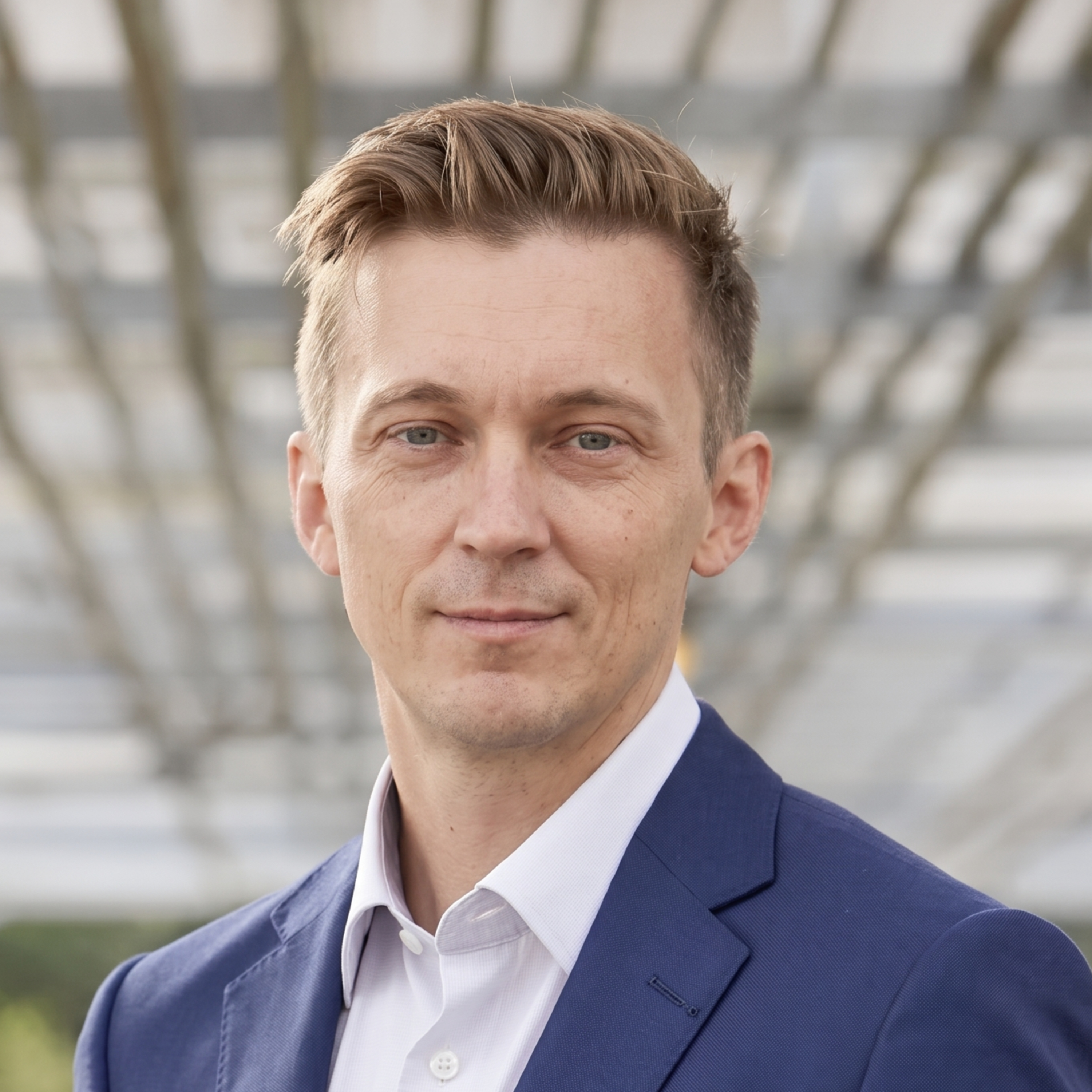
Tom Wilson, co-founder and CEO of Atana Elements. Background includes scaling Lilac Solutions through Series C; experience spanning oil and gas, geology, critical minerals, technology, and project development.
AI can consolidate disparate, poorly scanned or non-digitized subsurface and environmental datasets into structured, geospatial information, speeding analysis from years to faster workflows. Atana’s moat is proprietary data plus domain expertise. The company is first-mover in Poland lithium licensing and uses “adjacent industry” oil-and-gas discipline.
digitizing Soviet-era oil well reports with handwritten/russian tables; a 1966 PhD in northern Germany noting high-grade lithium; Poland’s Zechstein/Rotliegend salt formations; tungsten re-emerging as demand shifts (e.g., steel/gas turbines).
Written by AI. May contain mistakes.
Learn how AI can consolidate disparate geological data to identify mineral deposits.
“And you can say, OK, well, let's pull all this information using our scraping technology.”
Discover Atana's key milestones and strategic focus on lithium extraction.
“Well, as listeners will already hear, one of the most fun parts about today's podcast will be the stark contrast between your English accent and my Southern drawl.”
Tom discusses the bottlenecks in the mining industry and technological advancements.
“And, you know, I think there's a number of things in there that we're proud of.”
Learn how Atana uses geology expertise alongside data science for mineral exploration.
“Let's take the the kind of oil and gas background meets advances in data science availability or ability to get kind of non digitized intel into a digitized format for these kind of, you know, leapfrogs of sorts.”
Explore how Atana collects and digitizes geological data for analysis.
“And that's what we, it was the basis of what we built here is get a great geologist and let's start finding really big databases of subsurface information.”
Tom explains how mineral systems are identified and the methodology behind it.
“So where is this data is a typical question.”
Delve into the geological history that informs Atana's lithium exploration strategies.
“And just a point on the advancements in data science.”
Discover how the geology of Northern Europe reveals potential lithium resources.
“volcanoes that were the source of all the lithium.”
Learn about the significance of historical data in finding lithium deposits.
“And how unique are you all in saying, oh, we understand Poland's geology 200 million years ago, therefore we're going to dig deeper here.”
Gain insight into how geological systems influence the prediction of mineral resources.
“You mentioned earlier something which spawns this question.”
Explore how various minerals can indicate the presence of lithium deposits.
“But also more interesting, yeah, we're now seeing, oh, wait a minute, we weren't really looking for that molecule.”
Understand why geological context is crucial for identifying mineral deposits.
“A final bit I would say is, yeah, okay, we're matching.”
Learn about the challenges and strategies in accessing geological data.
“they listen you know one is um volcanoes and dinosaurs you know in poland that's a fun kind of contrast to present-day Poland.”
Discover how collaboration with local librarians can unlock access to vital data.
“But you need someone to actually go in there and discerningly look through the reports and say, this is the real stuff.”
Explore the importance of unique geological data in the context of AI.
“Yeah, we can make our black box and everything else is pretty proud of what we've done and its ability to predict where these new minerals are.”
Understand Lilac's approach to acquiring rights for lithium resource extraction.
“And when we started the podcast, I referenced one of the stats from your website of controlling 1.5 million acres.”
Learn how technology influences the value of lithium resources and extraction processes.
“We know that this tech is very transformational.”
Learn about the processes involved in identifying and validating lithium deposits.
“So during our time at Lilac, our focus was let's go out there and identify these places using a lot of the tools that I've already mentioned.”
Explore the venture investment landscape in resource development and the associated risks.
“So pretty, quite a bit of evolution and growth.”
Discover key lessons in decision making and the importance of diverse opinions.
“But the arbitrage is gigantic if you find the right resource and get it validated.”
Gain insights into personal habits and advice for maintaining balance and growth.
“give yourself two or three pieces of advice, your younger self, as it were.”
Learn about influential books that provide practical strategies for negotiation and efficiency.
“Maybe that pushes you and maybe by association, you do a little bit more in your work as well.”
Discover how literature influences efficiency and strategic thinking in business.
“And yeah, I try and tailor the business books with a lot of nonfiction as well.”
Learn about the importance of mentorship and key figures influencing leadership.
“out a person or two that's had a big a big impact on who you are as a person therefore as a leader at Matano?”
Hear final thoughts on the conversation and encouragement for future success.
“So yeah, shout out to Jane Woodward at Map and Woven Earth and various other things that she's set up over the years.”

Get the gist, explore an idea or ask about something said.
 Claude
On Climate CEOs, what are the key points of this episode?
Searching your listeningAutomatic transcript. May contain errors.
0:00Tom Wilson: I think what we're doing now is saying, well, OK, we've got all these tools out there that can start looking for information on the subsurface, the rocks that were drilled, the outcropping carbonates that have come in adjacent areas. And you can say, OK, well, let's pull all this information using our scraping technology. Let's supplement that with information from oil and gas, from water resources, from environmental studies. Stuff that historically would have taken an analyst years and years, and you'd never actually be able to digest all this information, particularly when a lot of it is poorly scanned reports, or frankly, not even scanned reports.
0:38Tom Wilson: If you're able to take these very disparate, very unstructured sets of data and allow AI to consolidate that into structured, geospatially located information, you have a real advantage in the market. Three, two, one, zero, zero, zero.
0:59Welcome to Climate CEOs, the twice weekly ad-free podcast for entrepreneurs, investors and executives in energy, infrastructure and climate. I'm Chris Wedding, CEO, coach, investor, founder and professor. For more, subscribe to our free two-minute newsletter for five things I learn each week. Find Climate CEOs on Substack or at entrepreneurs for impact.com. All right, let's get started.
1:30My guest today is Tom Wilson, co-founder and CEO of Atana Elements. Atana uses AI data science and subsurface expertise to discover and de-risk overlooked critical mineral deposits. The company has secured 1.5 million acres of mineral rights and is initially focused on lithium with plans to expand into other critical minerals. Previous to Atana, Tom helped to scale direct lithium extraction company Lilac Solutions through its Series C. His background spans oil and gas, geology, critical minerals, technology, and project development. Seven things you'll learn in this podcast, or at least a few as a teaser.
2:15Number one, borrow from adjacent industries. in this case, proven oil and gas tools can transform mining. Number two, proprietary data can be the real AI moat. Models improve quickly. Unique data sets are harder to replicate. You'll learn which dark library basements they're exploring to uncover such proprietary data. Number three, look for stranded assets. New technology can make overlooked resources once impossible, uneconomic, now suddenly to be valuable. All right, lots more inside. Let's get started.
2:56Tom Wilson: Tom Wilson, welcome to the podcast. Thank you. Thanks for having me. Well, as listeners will already hear, one of the most fun parts about today's podcast will be the stark contrast between your English accent and my Southern drawl. So maybe folks can translate between the two anyway. Yeah, that's right. I'm going to brag for you just for a second. And you can kind of pick up on any of these stats from your press releases or your website, but they stand out, especially for a seed stage company. I mean, a large, you know, whatever,$27 million seed round. Of course, you're not really a seed stage company, which you will elaborate on here in a second.
3:41All right. So we've got 1.5 million acres secured with some sort of mineral reserves. That's at least 100 million tons of lithium carbonate equivalent. You've got one particular story project, a 5X ROI in three years for a top 10 global lithium brine asset. And another project, 22 months from discovery to validation, which I'm pretty sure is lightning quick in the mining world. So our listeners ears are tuned. Tom, what do you want to pick up on and then kind of translate that to exactly how Atana achieves those goals, those milestones?
4:22Tom Wilson: Yeah. And, you know, I think there's a number of things in there that we're proud of. And, you know, our real focus here is there is a world that is growing. Electrification is really increasing the demand for a lot of these critical minerals. And our focus is lithium at the moment and expanding to some of these other minerals. But as growth in demand is being realized across the globe, the ability to supply those resources, those ores, those minerals is really becoming a bit of a bottleneck. And it's becoming a bottleneck because the mining industry is actually one of the more dated industries out there.
5:02Tom Wilson: They tend to be a little bit slower to apply technology, slower to adjust, slower to adapt to these big shifts in demand. And frankly, it's not just single mineral increasing in demand 10, 20 percent. These are 2, 3, 4x the increase that has ever been experienced for a lot of these minerals. And where we've come at to really address this problem, and we'll talk a little bit about our kind of special source and what we're doing, but a lot of it stems from the fact that there are some really great technologies that have been in place in the oil and gas industry, and that's my background, that are tried and tested, really important to oil and gas development, but haven't really been employed in these hard rock or these mining industries today.
5:47Tom Wilson: You layered that piece of advanced oil and gas discipline, advanced oil and gas technology and all the research that's gone into that over the last 50 years. And you pair that with all the advancements in data science that we're seeing. And I'm sure a lot of your listeners here don't need to be told about those. But you bring in a really strong data science team and you can really disrupt this legacy, quite slow moving industry. And I feel that is where we're getting real traction with both the kind of investors that have come in, but also the projects that we're identifying and the resources that we're maturing is this application of adjacent industry technology to a market that is growing really rapidly and happy to do elaborate on a number of those pieces in there as you see fit.
6:32Tom Wilson: Yeah. Let's take the the kind of oil and gas background meets advances in data science availability or ability to get kind of non digitized intel into a digitized format for these kind of, you know, leapfrogs of sorts. Describe exactly what makes a ton of different in its approach. Yeah. And to step back a bit, I think having the best and brightest geologists in your team is always going to be not a bad start for a group that's out there trying to find new resources. And fortunately, a lot of these minerals that we're looking for have not had a lot of focus. So the best and brightest geologists have come out of university.
7:14Tom Wilson: They've not gone into lithium. They've gone into oil and gas. They've gone into gold. They've gone into silver, all the kind of glamorous stuff that we've seen over the last 100 years. So our first step is to say, well, OK, let's start pulling some of those really great geologists, those generative geologists who have come up with the ideas, the exploration prospects and say, let's start thinking about these systems that hold these critical minerals. Now, I've always said if you had two great geology teams and you give one all the data in the world and the other one has to scrap around with what they've got, you can tell which one's going to really make progress here.
7:49Tom Wilson: And that's what we, it was the basis of what we built here is get a great geologist and let's start finding really big databases of subsurface information. And it's not just, oh, okay, I'm a gold miner, I'm going to find the gold mining reports. I think that's kind of very one dimensional. I think what we're doing now is saying, well, OK, we've got all these tools out there that can start looking for information on the subsurface, the rocks that were drilled, the outcropping carbonates that have come in adjacent areas. And you can say, OK, well, let's pull all this information using our scraping technology.
8:27Tom Wilson: Let's supplement that with information from oil and gas, from water resources, from environmental studies. Stuff that historically would have taken an analyst years and years, and you'd never actually be able to digest all this information, particularly when a lot of it is poorly scanned reports, or frankly, not even scanned reports. If you're able to take these very disparate, very unstructured sets of data and allow AI to consolidate that into structured geospatially located information, you have a real advantage in the market because no one else has this overview. And I'll point to two points here.
9:03Tom Wilson: So where is this data is a typical question. I was like, oh, why don't we just go to a website? These websites, I would say, are pretty poorly hosted. And I go to places like Chile and the website's been down for a year because someone hasn't paid the fees or someone's just crashed it. So you have to actually know who to speak to and where to turn up and go and ask for that information to begin with. And maybe you even need to turn up in person with a thumb drive and say, OK, I like that. Second part is hard copy reports. So for our resources in Poland, we've had our researchers in the library there, libraries across the region scanning information.
9:41Tom Wilson: So this is public data, but they're sat on shelves, end of world reports, sat on shelves in these geological repositories. And they have not been accessed and certainly not been digitized. So you need to, our researchers have been there two, three, four years scanning that information into a PDF that we can start pulling into our workflows. And the final bit is actually you need your job is just to say, well, if I'm going to understand this system, I need to go and collect some rocks. I need to go and collect some samples and knock on doors. And frankly, that's not a data scientist that's going to tell you where to go and get that.
10:15Tom Wilson: You need domain knowledge to point you to where to get this information. I'd say across all three of those data sources, you need your domain knowledge to point you. And just a point on the advancements in data science. we started 24, 23, 24, and we were pulling, call it a 600-page end-of-well report. Think an oil and gas well was drilled in the 60s. They drilled down, they analyzed all the rot going down. They were looking for oil. They didn't find oil, but what they did assess was the rot they were running through. And in our case, lithium is dissolved in brine, so there's water held within those rocks.
10:52Tom Wilson: Those oil and gas groups, the Soviet era national oil companies recorded all the information, but that's hidden in these tables, often handwritten and often in Russian. And I would say two, three years ago, I could put that into optical character recognition. I would say it was 80 % accurate. In most cases, we're getting wrong numbers and it wasn't really understanding the table and it was very manual. I would say only in the last year or so are we getting accurate at pulling of the tables, pulling of the information into our structured databases that haven't required manual manipulation or manual QC.
11:31Tom Wilson: And that is a real kind of like facilitator of information coming into these domain knowledge, these geologists who are saying, okay, good. Now I've got all my structured data. I can start plotting that. I can understand the systems, et cetera, et cetera. So the understanding of the domain tells you where to get the data. at a very high level, the AI and various tools here allow you to pull that data into tables and geospatial systems that allow you to understand that data. And if you understand it, you can then start predicting. So why Poland? And how many other Polans are there? I suppose. Good question.
12:09Tom Wilson: And maybe I'll just step back a little bit and say, you know, where Atana was incubated is within a company called Lilac Solutions. Lilac Solutions is a direct lithium extraction technology company. So just to really go back, lithium comes from either a hard rock supply, typically out of West Australia, or subsurface water, subsurface brines. And most of that is Argentina, Chile, Bolivia. So that's where the big brines have come from, the big lithium deposits have come from. They historically were produced via evaporation ponds. Evaporation ponds are not, you know, when you see the poster child of why electric cars are bad, there's a big picture of evaporation ponds saying, okay, this is not good for the environment.
12:54Tom Wilson: It's not good optically. It has various issues with water, et cetera, et cetera. Lilac Solutions technology is a chemical process that allows you to extract lithium from a brine source without big evaporation ponds. So our focus was understanding the deposits that sit in Argentina, Chile, and Bolivia, which is modern day geology. So in a way, you're using that as your sandpit saying, okay, what is driving there being lithium brine deposits in Argentina, in Chile, and Bolivia? If you understand the geology that's driving those 160 odd salars or high altitude salt deserts in Argentina and Chile, you can say, well, okay, I understand the systems here.
13:38Tom Wilson: Where was that same system in 50 million years ago or 100 million years ago? What are the characteristics that were important for there to be a deposit, a high-grade deposit here? And that's the thesis behind the geology team is they understood that and then said, well, wait a minute, 200 million years ago, Northern Europe was an arid desert. The Alps were volcanoes that were the source of all the lithium. There was big salt deserts sat in northern Europe and there were various concentration events that meant that there were big deposits. So you have this thesis built out of known areas, Argentina, Chile and Bolivia, and you're saying, okay, now let's talk about the geology that existed when the world was older than that.
14:21Tom Wilson: Where was that? If you understand that, you can start searching for data in those places to validate this thesis. And as we went out there, we said, well, actually, oil and gas has been drilling in these regions for a long time. They intersected big salt formations, the Zekstein Stort, the Rott-Legan Sands. This looks very familiar to what we've been seeing forever. Let's go and collect data. And as we started collecting data, we found some smoking guns. Like a 1966 PhD, a guy was collecting water samples in northern Germany. And within his PhD, He's written, oh, really high-grade lithium in this particular area.
15:00Tom Wilson: This PhD, hidden forever. And we're like, okay, now this is really interesting. This is almost the smoking gun to say, look, there is high concentration resource in this part of the world. And that, in turn, meant that we would start really focusing on these areas and understanding the systems that existed. And how unique are you all in saying, oh, we understand Poland's geology 200 million years ago, therefore we're going to dig deeper here. Are you all early in that? Are you probably not unique in that, but how differentiated is, how ahead of the line are you in being a Poland? Yeah, I mean, we were the first group to be awarded lithium licenses in the region.
15:44Tom Wilson: But what is interesting, yeah, so we feel pretty good about that. And we've got some good recognition on that side of things. But as far as mining in these areas or oil and gas, there's a long history of oil and gas production. So drilling industries and everything else, there's a long history of copper. One of the biggest and best copper deposits in the world spans across Germany and Poland. So there's this service infrastructure and there's this understanding of the inherent geology. It's just the lens of that geology has not been focused on the lithium deposits. And why would it have been for the last 100 years?
16:19Tom Wilson: Because we haven't needed it. It's been more focused on these, you know, more incumbent industries, let's call it. So having that lens of new minerals and what the new mineral means is what has meant that we're the first mover here. And I would say in a number of other basins around the world as well. Okay. Super, super interesting. You mentioned earlier something which spawns this question. Sometimes you're uncovering data which literally shows, oh, well, they were drilling for oil, but they found some lithium carbonate. They weren't paying attention to it, but now we are, so we're going to go here.
16:54Are there other instances where your newly structured data could say, you know, when we see one kind of rock mineral, we are likely with this kind of R squared, you know, to see lithium carbonate. Therefore, let's go look for the former rock and let's not even look for lithium carbonate because this is like an if this, then that, you know, setup. Is that part of what your data science leads to or not so much?
17:22Tom Wilson: Yeah, and you know, probably two points there. The first is when we're pulling data into our systems, we're not specific to lithium. We're just saying, can we get all water data? What else is dissolved in there? We want the full spectrum. And in a lot of cases, lithium wasn't actually recorded, but all the other minerals were. And we have our own kind of algorithms around, okay, if you have this combination of other minerals, that means that you can infer what the lithium concept is. concentration is. So to some extent, having the really big databases that have all the composition in brine, you know, magnesium, calcium, you name it, whatever, allows us to, with our global models, match and predict where lithium exists, particularly when there hasn't been any analysis of that.
18:10Tom Wilson: But also more interesting, yeah, we're now seeing, oh, wait a minute, we weren't really looking for that molecule. And frankly, that molecule wasn't really that interesting a long time ago, but it now is really interesting. And maybe an example of that is two, one, two, three years ago, people didn't really care about tungsten. And tungsten is now becoming more and more prominent as we see steel manufacturing requiring more of these specific minerals. And suddenly tungsten becomes the most critical mineral out there. And I think I saw you know, you know, Musk has suddenly built his big or paid for a whole new, um, generator company for the gas turbines.
18:50Tom Wilson: And tungsten is a big part of what's required if you need high grade steel for turbines. And so anyway, I say that because there are minerals that we're seeing like tungsten that suddenly are being recorded in a lot of the data. And we're like, okay, let's get back and look at our big databases. And where was the dissolved minerals like tungsten in certain areas. A final bit I would say is, yeah, okay, we're matching. When I think about what is a Tarnagrea, okay, yeah, we're pulling all these big geochemistry, so the chemistry of the brine or the chemistry of the rock into our databases. But what we're really doing there is trying to understand the systems, and that system is not just the brine.
19:29Tom Wilson: It is the geological setting. What is the host rock? What is the faulting? What is the burial history? All these geological play elements that go into the, let's call it the big equation of why there is a resource here and why there is not a resource over here. And you have to pull that information in so that you can say, okay, AI and supported by domain knowledge experts, what is actually driving the deposit to be in high concentration here and not here? So we're capturing the geochemistry, but also the geological setting and the geological features to give us the kind of signatures of where we can find new resources.
20:10Tom Wilson: And what I'm excited about that is, to date, what we tend to do is hypothesize and then look for data to validate that hypothesis. I think there's a scenario where we could take this even further and say, well, actually, no one's ever drilled these basins. Are we going to start taking risks? and maybe it's not that risky because we've got all these this equation that says actually if you have all these parts you should have a high grade resource so yep yeah i totally get it you know you've given us two really really fun uh visuals uh for those folks creating imagery as they as they listen you know one is um volcanoes and dinosaurs you know in poland that's a fun kind of contrast to present-day Poland.
20:51Tom Wilson: Yeah. The other one you talked about sometimes getting access to this data requires showing up in person with a thumb drive, which I'm picturing like some like, you know, nighttime settings, maybe some like dark. There's no brown picket bags. James Bond, you know. Yeah. What I, to comment on that, we're not doing anything underhand and what we're doing here is not suggested. So, for example, there's some other Eastern European countries who are like, Like, we've got all these repositories. We heard what you were doing in Poland. I'm the one librarian managing all this information on top of a website.
21:28Tom Wilson: I'm, you know, I've spent my whole career dealing with X, Y, and Z. I know where the computer is and I know how to get onto it. You're welcome to the data because this is the state data. But the website crashed a year ago. I'm too busy organizing my libraries. I'm not, this isn't a priority for me to make sure that it's available for everyone. And that's not their remit. So I get particularly excited sometimes when people are like, oh, yeah, it crashed a while ago. I think IT have a ticket on it or something like that. I'm like, okay, don't worry about that. We'll just come and help you with this.
22:02Tom Wilson: And the other bit I get quite excited about is when people are like, oh, we have this library. No one's opened the door on that in 25 years, but it's got all the geological reports for the last 100 years. So if you're interested in going along and looking at this data, yeah, you're welcome to come along and we're like, great. I mean, people ask me, is this publicly available data? It's like, yeah, anyone can go along and look at this. There's no barrier to that. But you need someone to actually go in there and discerningly look through the reports and say, this is the real stuff. And what you'll find is that the librarians, the kind of data hosts within the government, suddenly they're like, wow, someone's excited in all this information that I'm very proud of.
22:45Tom Wilson: Please come in and work with us. And we'd love to see how we can mature this or get some use out of this information for the benefit of the country. All right. So this is the main call to action in our podcast. If you happen to be a librarian in a basement in Eastern Europe, just kidding. If you're sitting on unique resources no one else cares about and you spend a lifetime, maybe Tom and his team cares a lot about them. The other one I would say is geologists. geologists love their history and everything else and what i've seen a few times is these geologists that have been out in the field they've they know a basin you know intimately and they're like oh i've got all these boxes of stuff in my house and you know no one wants it but i'd love someone to have it that that actually can make use out of it and i'd love to talk about it and we found on a few cases people like oh yeah do you want do you want all these uh reports that uh we think is somewhere in the system but we don't know where but i have them and i can guide you on it so So I think that's the real, when people talk about AI and data and what is your moat, like if you think about it, the real moat is that data in the first place because AI is moving so quickly that I don't think your process is really the differentiator.
23:58Tom Wilson: Yeah, we can make our black box and everything else is pretty proud of what we've done and its ability to predict where these new minerals are. but if you don't have the data to train it on to begin with then it's not going to be as good as as the team that has all the data so for sure when i think about moat it is the underlying data and the domain noise to understand it is it's a big part of it yep great i want to ask two questions and maybe they're related maybe they're not but um you mentioned earlier uh lilac a company that you're at in an executive role. And when we started the podcast, I referenced one of the stats from your website of controlling 1.5 million acres.
24:44So maybe just for the audience, remind them perhaps the kind of stage of growth, et cetera, that you kind of helped lead Lilac to, and maybe how that relates to the literal ownership of land where these resources are not just a data science play.
25:04Tom Wilson: Yeah. Yeah. I think there's, it's about tangibly, you know, where the real value is in these resources is owning the mineral rights or owning the, the exclusive right to that, to produce that mineral in that area. And that's when we talk about a million and a half acres, we have the exploration license as the only group that can explore for that mineral in that particular area. And that is specific to, you know, a certain part of the country or whatever. So during our time at Lilac, that was the process is where can we apply Lilac's direct lithium extraction technology to enhance a resource that isn't worse than a thing before, i.e.
25:45Tom Wilson: it can be developed with an evaporation pond or there's too much contamination in that brine. Why don't we go out and secure those mineral rights now so that we can then apply Lilac's direct lithium extraction to it for the benefit of the whole organization. So you're almost vertically integrating not just the tech, but the resource to apply the tech in a very unique way. So that was the genesis of the team was like, let's go out there. We know that this tech is very transformational. Like people weren't producing lithium from Argentina, sorry, from the US or Canada historically. But now they need to because of demand.
26:22Tom Wilson: if we can identify these resources that can be developed with direct lithium extraction, let's go out and secure those early and realize the big arbitrage. And as a segue, my background is upstream oil and gas. And I come from, I appreciate this is the climate CEOs, but I come from the fracking world, which is obviously isn't really the most popular of places. But what fracking did was say that, yes, we knew that we know there's oil and gas in North Dakota, in the Permian, in Hainesville, in all these places, in these rocks that are very tight. But there isn't really an economic technology to extract this resource.
27:02Tom Wilson: Suddenly, extended drilling comes along, hydraulic fracturing. Suddenly, that technology application to these resources made the land that was transacting for$25 an acre worth$25 ,000 an acre. So the people that realized the real value inflection were the ones that held the resource, not necessarily the fracking company that came along and applied the service technology. So it's a technology-enabled resource play. And that's what got me excited when I turned up at Lilac. I was like, okay, wait, this is a technology that's opening up all these resources or has the potential to open up all these resources and to take worthless or valueless acreage in the US, in Northern Europe, and in other parts of South America and make it valuable.
27:52Tom Wilson: So what we should really do is own that acreage to begin with and then apply the technology and realize that big value inflection. So during our time at Lilac, our focus was let's go out there and identify these places using a lot of the tools that I've already mentioned. And what we would do would be hypothesize, this is the area that's good, validate with the data. Once we've got that confidence, I would go to the exec team at Lilac and say, I want to spend this amount to secure acreage, either buying from a private seller or working with the regulators or the state or country regulators to acquire those licenses.
28:32Tom Wilson: At that point, we have a view on, okay, under the ground, we think the resource is this big. It is X million tons. What we then have to do is drill wells to validate the size of that resource. And it's not us validating. We need third-party qualified professionals working under national or global regulatory frameworks. So without boring everyone here, But like we drilled the wells, we had the regulators, the auditors, the QPs as they're called, throughout that process of drilling wells saying, okay, good. You drilled the well, you hit this rock, you've required this mineral at this grade, and I'm going to award you a resource that has this scale compartmentalized by measured, indicated, and inferred.
29:23Tom Wilson: So they're validating that what you think you had, you actually do have. And that's the process for us is taking it all the way through to where we've got a de-risk resource that someone else has said, yeah, tick, that's in the ground. And why that's valuable from our point of view and from the market point of view is they can then say, okay, well, I know typically a resource trades at this dollar per ton in the ground, like if it's validated in this way. that company over there has got 10 million tons they're worth x that company was bought for this amount they have 10 million tons yeah so it's it's a way to validate it and you that's where we're realizing that big up like value inflection is taking a project from unexplored to validated subsurface okay two follow-up questions one is just clarifying you were with and helping lilac through maybe, was it a series C?
30:23Is that right? Yeah, C to series C. C to series C, guys. So pretty, quite a bit of evolution and growth. And, you know, on what you just described, I mean, it sounds a little bit like, I don't know, developers of solar or storage projects. You know, they find some land that's rural and look, maybe there's a certain value of the agricultural land, but they can say, you know, Hey, landowner, let's, let's option it or lease it for X. And, uh, we're gonna, we're gonna get, you know, permitting and, and environmental and construction and, and interconnection improved and an off taker and so forth. And now this land's worth a whole lot more.
31:03And we're going to sell it to somebody who then will build it and own it for whatever X, X number of years. You all are, are you, you all are playing that developer role sounds like and you're selling it at the point where you and then this third party has validated the resource therefore it's worth in your example 25 versus 25 thousand dollars breaker and someone else then extracts monetizes the resource is that is that right exactly it's
31:29Tom Wilson: the development mindset but we're not the the group that take it through to production and there's yes i can because that group typically needs a billion dollars of capital and they need they have a far cheaper cost of capital than us as a venture-backed group. 100%. But because the capital is cheaper for them because the project is de-risked, you're taking that upfront risk profile to take it through. So they don't need a 10x return on investment. They're quite happy to have an IRR of 10%, 20 % or whatever it is, and we're looking for multiples. And we feel that that earlier entry into these projects is where you're getting that bigger return.
32:11Tom Wilson: And obviously, you're taking bigger risk. That is super interesting. And this is one of the reasons I enjoyed this podcast is getting to learn and see models kind of cross sectors. It's unique, I think, for a venture investor to be in some sort of kind of almost, you know, project development role. But the arbitrage is gigantic if you find the right resource and get it validated. Exactly. And I think this is quite an interesting, I've seen this, having done series ABC, whatever with Lilac, I've seen the landscape evolve a little bit and certainly the interest in critical minerals and the interest in different business models changing over the last six years.
32:51Tom Wilson: I think lots of groups are still getting their head around this isn't like a tech service play which is what they typically invest in in the venture world. This is very much a kind of very spiky workflow, like a very spiky revenue flow. So you're going, okay, we're going to put a lot of money in and with the idea being that we get a big return every one, two years. And that is not always what these groups have been focused on. And arguably, I think when you step back a bit, this is almost exactly what you do is you take some bets on 10 items and one of them comes in and it's very valuable. That's kind of what we're doing is we're picking up acreage in different places.
33:34Tom Wilson: Okay, for geological reasons, some of these might not work. But when one of them does come in, we don't need one or two big projects to come in and we're that multi-billion dollar project. So, although the service model is, or the inherent model is unusual to them, the actual thesis behind it, I think should be kind of not too far off what they're used to. They're like, wait, you're like us, right? Yeah. You've got a portfolio of risky bets and some kind of deliver the fund, if you will. Exactly. Yeah. And you see big companies, you know, I think probably one of the more famous ones in this space is Cobalt.
34:09Tom Wilson: They're worth three plus billion or whatever it is. And yeah, they've got one big asset and it's one great asset in Zambia. And that's a lot of the value ascribed to that company is on finding that one big asset. And I'm sure the investors in Cobalt are all pretty happy about how that's gone. Yeah. Amazing. Okay, I've got a million more questions, but we don't have a million hours for the podcast. Let us switch, Tom, from the business to the person part of the podcast. Got four questions for you. give yourself two or three pieces of advice, your younger self, as it were. Yeah, I think certainly when I came out of business school, or during my time in business school, when I was asking a lot of people opinions, I would over index on one or two of these people.
34:55Tom Wilson: And what I definitely in Silicon Valley and, you know, Bay Area and everything else, everyone has good opinion. Everyone has, sorry, everyone has opinions. And they're very strong, very you know forced opinions and i think they kind of have to be if you're in in a lot of the spaces here you have to show that you have some a lot of those i would say a well off base but so what you need to i needed to make sure i was doing was really canvassing a number of different people from a number of different perspectives and taking the the thesis of all right i know that person was very forceful i'm not really sure that really resonates with me so we're going to need to trial this a lot more than I ever would do.
35:33Tom Wilson: And coming from the UK, people are perhaps not as direct as they are in the US. So it was understanding that directness inferred confidence. Yeah, the directness didn't actually mean validation of what they were saying. It was just that that's how the US approach works. I think, you know, I've tended to lean in this more and more, but a good decision is better than a great decision that takes you a year to make. So let's just make the decision and move fast with it. And I've applied that a lot with hiring and that sort of thing. It's like, okay, we could go around. I could wait six months, 12 months for the perfect candidate.
36:16Tom Wilson: But actually, I think if you start having a good feel for someone originally, let's work with them and make a decision quickly. So it comes to the decisiveness of making decisions. And that probably feeds through to the fact that we were able to go and identify that resource in Argentina and push it forward faster than anyone else in the industry ever has. And maybe, yeah, maybe one final bit. And I say probably going to my, someone once told me when I was, I'm into my running a bit. And I once had this coach or he was like, okay, whatever you do a run, just do 10 % more. So I'd always go for a run and then I'd get back home.
36:54Tom Wilson: Okay, I'm just going to go around the block again. And then without thinking about it, I kind of took that through into into all my all my work. And next thing you know, whenever I'd finish the project, I was like, OK, I might just do like a little bit more on it. And I think that kind of propagated out into everything I would I've been doing recently. All right, just do it. You know, the goal was this, but it'd be really good if we could just do a little bit more than that. And the easiest time to do that is when you're already in a in a flow, I would say. And yeah. So a few things. you took the uh the one percent improvement idea and said cool let's improve upon that let's make it 10 percent uh more than you you thought you could do i mean it's aspirational but it's always like let's do a little bit more like uh we've been working on this for a bit longer but you've been doing a bit of research on this but maybe just do a little bit more while you're while you're in this in this flow it's a little bit like uh this is a nerdy comment it's a little bit like if you a creatine for everything you did in life, not just for your workouts, you know, just a little, just a little more on every little rep you got.
37:58Tom Wilson: Yeah. Maybe that pushes you and maybe by association, you do a little bit more in your work as well. And that's just like self-perpetuating. Let's see. All right. Number two, give us a habit or two that keeps you healthy, sane, and focused building a ton. You know, I think it's, it's too easy to lose contact with. We've got a team that's spread over a couple of continents here and it's too easy as you're in your ceo role your exec role to be continually outwardly focused and uh and also to discount everyone's view within the team and i i tend to make a particular effort to check in with almost everyone in the team and i certainly something i aspire to rely but when we we got above 100 to 300 people that was probably not really feasible but i i do make a particular effort to touch base with people, not just on what they're doing, but on their thoughts on the industry.
38:51Tom Wilson: And it's amazing how much, yeah, you've got a whole team here that's focused on one industry all the time. They're obviously going to have some views and opinions and ideas and everything else. And that often in a fast moving world where you're tied up on everything, you don't always get a chance for, well, people maybe are nervous to bring this up when they know there's a more pressing time sensitive piece so i think making sure that you touch base with uh the team on not just their everyday work but also on their views on the industry and how the company's going and really understanding that is a big big part of what we do and then um you know maybe personally i think it's too easy to drop out your your exercise and everything else and i often find the moment i do that, then stuff gets worse.
39:39Tom Wilson: And actually running or cycling or whatever it is, is where I do a lot of your digestion and thinking about, okay, not getting distracted here. So thinking about exercise and these other pieces as a drain on your time is perhaps the wrong focus and making sure that's prioritized for the benefit of everyone. Yeah, I think sometimes my best ideas for business don't happen in the office they happen i'm off on a whatever a hike or a three-day silent retreat or whatnot uh that uh oh you got space for these things to to to show themselves right just if we're if we're if we're quiet enough we we hear the genius and if we're not quite enough well we can't we can't hear it sometimes yeah yeah yeah put your phone down and don't just look for the top of the email as your priority i think there's certainly the senior roles where You're trying to think about where's this company going to be in a year, two years, five years time.
40:33Tom Wilson: You need to give yourself some space for it. Well, on your first point, I think not losing touch, you know, between kind of exec team and the rest of the team, partly for their morale and validation. But guess what? You learned a ton of important things about the sector and about the company as well. Let's go to the next one, which is on information diet. Talk to us about two or three books that you found really useful on your path, Tom. Yes. Only one I refer to a fair amount is Never Split the Difference. And this is a book about the kind of negotiation and various strategies. And I just found it had a number of tangible approach.
41:19Tom Wilson: You know, often you read some books. That was really interesting. but I'm not quite sure how I'm going to apply some of these approaches or some of these theses in life. And I just found that was more so than others gave me a kind of toolkit that I can actually employ. And I would say not just in work, but across the board when you're trying to negotiate with a plumber or something like that. You're like, okay, good. Let's understand what they're going and what should my counteroffer be and et cetera, et cetera. I found that, you know, a really kind of tangible one recently. Where else? I think the kind of whole atomic habits and that type of thing is perhaps these are just a few that I've been thrown my way.
42:01Tom Wilson: I think those are important ones and reflect a lot on a few of the things that we've already said of how do we make ourselves very efficient in what we're doing and screening out the noise and focusing on what's important. So a couple of things there. And yeah, I try and tailor the business books with a lot of nonfiction as well. So interesting to hear what people have done in the future or the past. And I would say the one that actually was really interesting on industry specific is The World for Sale, which is a New York Times bestseller around the commodity traders. It reads a bit like a thriller.
42:40Tom Wilson: Oh, wow. There's a number of things. that the early commodity traders were doing when they were opening up markets that were actually quite applicable to what we're doing. And it's a fun read as well. Yeah, I'll be passing that along to the critical mineral CEOs in our peer group. I think that sounds really relevant. You know, on the Atomic Habits piece, yeah, I've read it, really, really useful. But, you know, when I learned why he called the book Atomic Habits, I was like, oh my God, what a great double meaning, right? atomic as it like very small things make a difference and the other is explosive right on a scale you can't you can't imagine it's a little bit back to your 10 improvement each time you know idea as well yeah yeah no definitely it's uh he thought about it you know when he when he came up with that title yeah it's true it's true all right let's go to the last one name uh shout out a person or two that's had a big a big impact on who you are as a person therefore as a leader at Matano?
43:43Tom Wilson: Yeah, you know, when I went to business school, I have some cynicism on business school, but about what you actually learn and people talk about network. But I think one of the big things that I wanted to get out of business school was two or three mentors that that I felt were going to help me going forward and really understand what we're doing and kind of guide me not just in personal levels, but on sorry, not just on the business level, but personally and was fortunate to come out of that with some really great kind of advisors now and I've been throughout the Lilac and Atana journey and certainly someone like Jane Woodward who is a former oil and gas investor or I suppose currently with a current royalty company and one of the biggest wind developers globally but also runs the Stanford Understanding Energy courses so I would say almost every startup in the clean tech space has come out of Stanford as at some point cross passed with Jane.
44:37Tom Wilson: And I found her particularly insightful as someone that actually understands mineral ownership, project development. She's a geologist at heart, tends to have challenged me throughout this journey. And often when we're about to make a big commitment, I'm like, Jane, can I just come and sit with you and just talk you through if we're doing something crazy here? How would you think about it? And who are the other people that you think I should speak to if this isn't your space. So yeah, shout out to Jane Woodward at Map and Woven Earth and various other things that she's set up over the years. Amazing, amazing.
45:13Tom, I learned a bunch. Super fascinating what you guys are up to and rooting for your all success.
45:19Tom Wilson: Thanks, Chris. Appreciate you taking the time to speak to me. And welcome to Stay In Touch.
45:26If you like this, please give us five stars or leave a review on Apple or Spotify. these 10 second actions tell the magic algorithms and me that we're on the right track and if you're a series ceo and energy infrastructure or climate check out our efi ceo peer groups a confidential invite-only brain trust of ceos and investors helping you grow your business that's all y 'all later
46:01Thank you.
What if AI could find billion-dollar critical mineral deposits hiding in forgotten geological data?
Atana combines oil-and-gas geology, proprietary datasets, and AI to discover and de-risk lithium and other critical mineral resources faster.
Company bio:
Atana uses AI, data science, and subsurface expertise to discover and de-risk overlooked critical mineral deposits. The company has secured 1.5 million acres of mineral rights and is initially focused on lithium, with plans to expand into other critical minerals.
Guest bio:
Tom Wilson is CEO of Atana and previously helped scale direct lithium extraction company Lilac Solutions through its Series C. His background spans oil and gas, geology, critical minerals, technology, and project development.
Seven things you’ll learn in this episode:
--
More stuff:
Join our private CEO peer group in energy, infrastructure, industrial tech, and climate tech:
→ entrepreneursforimpact.com
Join 40,000+ and read our free Climate CEOs newsletter:
→ entrepreneursforimpact.substack.com
My 100 rules for living the good life (that I keep breaking)
→ https://entrepreneursforimpact.substack.com/p/100-rules-i-try-to-live-by-and-often
Listen to similar Climate CEOs podcast episodes:
→ Critical Minerals: $20M for AI-Driven Mining in Nickel, Lithium & Silver Discoveries | Earth AI https://podcasts.apple.com/us/podcast/critical-minerals-%2420m-for-ai-driven-mining-in-nickel/id1561411048?i=1000703979931
→ Lithium Extraction: 40% Lower Costs with Electrochemistry | Lithios: https://podcasts.apple.com/us/podcast/a-new-way-to-extract-lithium-from-americas-hardest/id1561411048?i=1000754012245
→ Sustainable Mining: Microbes Extract Copper & Lithium | Endolith: https://podcasts.apple.com/us/podcast/sustainable-mining-microbes-extract-copper-lithium/id1561411048?i=1000711847281
Help our podcast guests and leave a rating or review on Apple or Spotify.
→ Thanks in advance!
Join 97,000+ and take my (possibly free) course, Renewable Energy & Green Building Entrepreneurship:
→ coursera.org/learn/renewable-energy-entrepreneurship