
In short
CMO Confidential - Episode Summary: David Aaker | Why is Brand Value Still Not a Generally Accepted Principle?
Podcast Overview
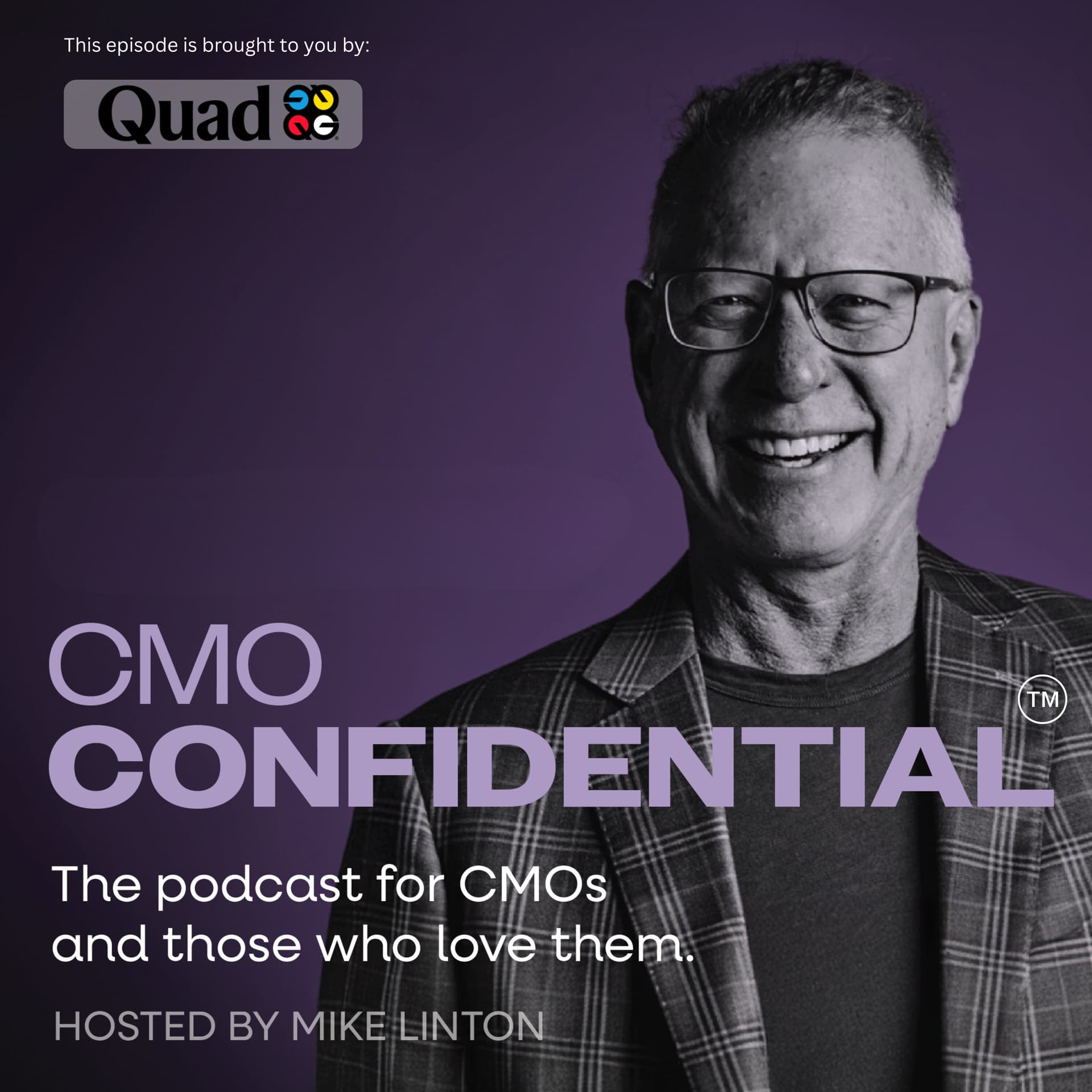
- Title: CMO Confidential
- Host: Mike Linton
- Guest: David Aaker, Vice Chair of Prophet and author of numerous marketing books
- Episode Focus: Discussion on brand equity, its history, current challenges, and the importance of long-term brand value.
Key Themes and Concepts
- Brand Equity: A Historical Perspective
- Origins: Emerged in the 1990s, coinciding with the BCG matrix which emphasized market share.
- Shift in Focus: Brand equity highlighted the importance of brand loyalty over short-term sales tactics.
- Impact of Short-termism: Aaker notes a resurgence of short-term marketing focused on immediate sales metrics, threatening brand value.
- Current Challenges in Branding
- Hostile Communication Environment: Marketers face skepticism and information overload from consumers.
- Short-termism's Resurgence: Performance marketing dominates, often at the expense of longer-term brand building.
- Poor Brand Management: Many companies fail to build brands effectively, treating them as isolated entities rather than as assets tied to organizational strategy.
- B2B vs. B2C Branding
- Differences:
- B2B branding relies heavily on organizational values and relationships.
- B2C branding emphasizes brand personality and self-expressive benefits.
- Importance of Relationships: In B2B, the organizational relationship is often more critical than the product itself.
- Case Studies of Successful Branding
- Dove’s Real Beauty Campaign: Demonstrated the effectiveness of aligning brand strategy with social values, leading to significant sales growth.
- Uniqlo: Pioneered innovation in fabric (e.g., HeatTech), showcasing the power of branded differentiators.
- Communication Strategies for Marketers
- Breaking Through Clutter: In an environment filled with noise, creativity and emotional storytelling are essential.
- The Role of AI: AI can democratize creativity, making effective branding more accessible to smaller companies.
Key Takeaways
- Brand as an Asset: Marketers have a duty to position brands as valuable long-term assets rather than just short-term promotional tools.
- Storytelling and Social Programs: Effective branding merges storytelling with social responsibility, enhancing visibility and engagement.
- Adapting to AI: Future marketers should embrace AI technologies to enhance branding strategies and operations.
Episode Structure
- Introduction (00:00)
- Discussion on Brand Value (01:15)
- History of Brand Equity (03:45)
- Short-Termism and Brand Erosion (06:10)
- Justifying Brand as an Asset (08:35)
- Brand Visibility and Value Dimensions (11:20)
- Challenges in B2B and B2C Branding (15:10)
- Branding in a Hostile Environment (20:00)
- Examples of Successful Brands (24:30)
- Super Bowl Ads and Branding (26:10)
- Advice for Marketers in the Age of AI (29:20)
- Closing Remarks (30:15)
Final Thoughts David Aaker's insights challenge marketers to rethink their strategies, advocating for a shift from short-term performance metrics to a focus on long-term brand equity and value. His emphasis on storytelling, social engagement, and adapting to the evolving landscape of marketing—especially with the advent of AI—provides a roadmap for future branding initiatives.
--- For more insights and episodes, listen to CMO Confidential on platforms like [Spotify](#), [Apple](#), and [YouTube](#).
Written by AI. May contain mistakes. Listen to the episode to check what was said.
Transcript
Automatic transcript. May contain errors.0:00The CMO Confidential Podcast is a proud member of the I Hear Everything Podcast Network. Looking to launch or scale your podcast? I Hear Everything delivers podcast production, growth, and monetization solutions that transform your words into profit. Ready to give your brand a voice? Then visit IHearEverything.com. Welcome to CMO Confidential, the podcast that takes you inside the drama, decisions, and choices that go with being the head of marketing. Hosted by five-time CMO Mike Linton. Welcome marketers, advertisers, and those who love them to Chief Marketing Officer Confidential. CMO Confidential is a program that takes you inside the decisions, the drama, and the politics that go with being the head of marketing at any company in what is one of the most scrutinized jobs in the executive suite.
0:56I'm Mike Linton, the former Chief Marketing Officer of Best Buy, eBay, Farmers Insurance, and Ancestry.com, here today with my guest, David Acker. Today's topic, why is brand value still not a generally accepted principle? David is a professor emeritus at the Haas School of Business at the University of California, Berkeley. He's also the vice chair of Profit, a brand consulting agency, and he's written over 14 books on marketing and branding. He recently released a book titled Auker on Branding, the playbook to building strong brands. This book was widely praised by marketers all over the world that lays out the concepts of brand assets and brand value.
1:41We thought it made sense to discuss this book and talk about why the debate about the value of brands is still going after decades of this discussion. Welcome to the show, David. Well, thank you for having me. And yes, brand equity came into the world in around 1990. It was at just the right time because the strategy of the day was the BCG matrix, the gross share matrix, which said that if you any way you buy market share, you're going to get profitable, which was a fallacy based on cross-sectional data. But nevertheless, it held sway. I mean, half the people had gone on record as saying they were obeying that model.
2:28And so that and other things like scanner data and the old Procter & Gamble brand management model encouraged people and taught people to respond to short-term problems and with short -term solutions. And they destroyed brands, and they didn't generate growth, and they lost profits. And that model you're talking about, David, that was you had the cash cow and the stars and the thing you were starving and, you know, and then you were just moving up money. And that was really more of a growth model than it was a branding model, right? Yes, but it said the way you grow and the way you thrive is to increase market share.
3:09Then you go down the experience curve and you get economies of scale and on and on. And so the basic idea of cows and stars was created by Peter Drucker 10 years before that. And it's a perfectly sound model. But what's not sound is the idea that market share drives. And so in 1990, people were ripe for having brand equity enter the scene. And they said, this isn't working. And so let's look at something else. and they said brand is an asset makes sense. And then I wrote that first book that defined brand equity. And what I did was say brand equity includes brand loyalty. And when you do that and you say, it's not just a communication thing.
3:57It's everything that touches a customer. It's product development. It's a customer journey and so on. Then everything changes. Then you get a seat at the C-suite and you're not a middle manager anymore and you bring to the C-suite customer insight and segmentation and so on. And that just got planted in the 90s and it grew and grew and got stronger and stronger until almost everybody has a marketing person at the C-suite now. And you think, well, that battle's over. Well, it turns out that it's not over. It's not even close to over. Yeah. And well, I think there's been a revival of short termism and it's come under it's really well branded.
4:50It comes under the label brand marketing or performance marketing. Now, who could be against, you know, building demand or who could be against high performance? And so it's saying that, well, you've got brand marketing and you've got demand marketing. And, you know, we can't let demand marketing take a backseat because that's driving our business next week, next month. And we need leads. We need sales. And so there's this pressure has come to the fore. And so I wrote a whole chapter in this second edition of my Ocaron Branding book justifying why brand as an asset makes sense. and i went back to this early book i did on brand equity where i outlined uh 14 or 15 ways that brands provide value yeah and what like for example just take visibility if your brand is visible it means that there's some level there's some reason i've heard about it and it's probably because it it does its job it's been successful people have used it and so i i'm the push comes to shove i'm going to buy it or at least i'm not going to avoid not buy it i'm not going to uh not buy it and uh and because i had never heard of it and so there's big question marks so just visibility uh means a lot and there's 14 other dimensions but one of you have to ask yourself the following question what is your business strategy or organizational strategy And then you asked the follow-up question, how critical is brands and what is the brand's role?
6:34And that's how you justify, that's the best way to justify branding. There's other ways too I can talk about, but that's really the best way. Yeah, so the brand has a job to do, and it's not just the advertising of the brand. It's what the brand does with the customer, and there's a lot of measures like lifetime value and everything else where you can actually start imputing a lot of stuff here. But to your point, a lot of the performance marketing is a wash in instant data, and a lot of the things that the brand does, the data build on that is a longer time. And I will say Google and Meta and everybody else have said, oh, my gosh, we can give you data in an hour or a day.
7:18And they've taken a lot of money that way. How do you think through communicating the value of the brand in a world where I have instant data on performance marketing and slower data on branding? Well, let me go back to my history story in the 80s. So if you look at, that's when scanner data came in. I don't know if you're old enough to remember that, Mike. Sadly, I am. I was at Procter & Gamble then. Yeah, and remember scanner data? Remember the test cities in Iowa? You can go into a test city and measure advertising scientifically because you could do experiments. You take an advertising budget, cut it in half and double it and show it to different people and see what happened.
8:06You can change the message and see what happened. And they ran these things over sometimes one to two, three years. So they got a lot of results. And what they concluded, the bottom line was the only thing that moves the Dino is price promotions. So they all went into price promotions. They destroyed brands. It took them years to – that was one of the things that prompted brand equity to come in. Let me tell you one more thing. And that is this market share stuff. They were doing analytics where they had a whole bunch of cross-sectional data. A guy named Bob Bizzell wrote a whole book on it using cross-sectional data that he proved that if you increase the market share one point, ROI will go up a half a point.
8:53Yeah. Absolutely. It was perfect evidence that everybody believed that. And I, with a friend, did some study that showed that if you correctly analyze it, use time series data instead of cross-sectional data, that the effect disappears. That if you increase market share, you do not increase ROI at all. And so the point is that the statistics were done wrong. And if you have data that, as you say, gives you instant and really good knowledge of short-term sales, that's going to drive your models. Because your models are going to involve as a dependent variable short-term sales. They just are. Right.
9:42And so you're going to have the same kind of, you know, we're going to have the same kind of statistical issues we had back then. And now, of course, we're more sophisticated, but the user is not more sophisticated. The user just wants to know, you know, what's the value of the brand now? What's the value of this promotion? What's the value of this advertising? And the statisticians are going to sit there. Yeah, but you should worry about now. They're off and running. And so I think there's a great danger that the big data and analytics are going to lead us down the wrong path. Look, I agree with this.
10:20And I also think, and I'd love your take on this, one of the things that almost everybody recognizes the value of a brand like an Apple or Nike or, you know, all these brands that are a lot of the Procter brands like Tide and surely Coca-Cola and Pepsi. But then we hear from a lot of listeners why their CFOs and CEOs and boards acknowledge all these cool brands. They're wearing an Apple watch and they drove their BMW to work and they're wearing a, you know, branded suit or shirt or dress. They still don't believe in marketing or branding for their company. even though you have all this data that show the brand over time is powerful.
11:10Why is that the case? Why are people not adopting this science? Well, as I say, there's a lot of ways you can demonstrate the value of the brand. The best is with case studies. In the scientific community, there's an experiment that's very appreciated and respected it's called the before after study yeah and so if you if you take for example take dove and go back to 2004 when just before they instituted the real beauty program and you can look at dove sales and profits and and so forth and image back then and then you institute the real beauty program and then you look at the sales and so forth after and and you see in this case You've controlled for the same management, the same company, the same products, the same distribution, same customers, and what happened.
12:10And so a lot of things that escape you in a normal statistical analysis are not there. And what you find is that Dove took a business that was$2.6 billion and grew it to$6.5 billion over the next 20 years. And it was all, all on the backs of the Real Beauty program. And it's just very clear because the alternative explanations are not as convincing. So that's one thing you can do. You do a before-after thing. And I'll say one more thing, Mike. One of the reasons is that brand building is not respected as much as it should be is because it's not that good. And we can get into this, too, in another conversation.
13:06How do you communicate in today's hostile environment? But the reality is there aren't very many real beauty programs that are generating visibility, image lift, and engagement for brands. I want to go back to this, but first I want to say, is there a difference in brands when you go in the B2B world and you're selling like middleware or software or something versus the B2C world? Because the B2C world, you know, you got a lot of actually a bunch of people that believe in brands, particularly in pure consumer goods. How about in the B2B world where it's all about sales and leads in a lot of companies?
13:47Are brands performed the same way in the B2B space? No, there's quite a difference. One of the – in my second book, I talked about how you manage brands. And my point was there's no preconceived set of dimensions for a brand. Right. That you check off a box. You develop the dimensions that are appropriate for you. And there's quite a difference between B2B to B2C. I mean, as a generality, of course, all brands are different. But in the B2C space, it's probably brand personality is more important to the relationship than it is in a B2B setting. And the other thing is in a B2B setting, what is much more important is the organization that's behind the brand.
14:46So organizational values have some role to play in B2C, but nothing like they do in B2B. Because in B2B, you are not buying so much a product or service as you are. You're buying a relationship with an organization that you need to make sure they deliver on that product or service. And that they're unpleasant to deal with. They're not annoying. They're not so complicated or complex or cumbersome that it's a pain in the ass. You want somebody that's easy to deal with, like somebody that's fun and positive to deal with, but you want somebody that will deliver on their own. Well, the other thing about B2B is, you know, unlike consumer goods where I have a giant market, a lot of times in B2B, if I'm selling like middleware, I don't have that many buyers.
15:36And so if I don't do what you just said, which is my whole company is designed to help you get the benefit I'm selling, I don't win. I lose the buyer. I want to go back to your comment about people are doing branding poorly now or they're doing brand management poorly. Tell me what you mean by that and what you're seeing. Well, if I look at the future of branding, I see several challenges. And one of the most difficult challenges is the fact that we've got a hostile communication environment. We have a we have a skeptical audiences and these audiences are control of the media as they never have been before.
16:23And we have all this media clutter coming and going. We have and we have enormous information overload. and so uh um what you have out there is a customer that's looking at at the media and saying you know this isn't relevant to me i'm not even going to look at it or i mean i don't care about i'm too busy um or they're going to say it's even worse this is annoying i don't want to spending my time on this why are they annoying me with this stuff i get it out of here and uh and then even if they somehow get over that barrier, they're going to be skeptical. They're going to say, yeah, but. And so it's necessary to communicate far differently than we've ever communicated before.
17:22And I think a lot of people don't realize that. And I think it's worse in the B2B space, especially high tech space, because you've got these people in the C-suite that really believe that people are rational. They really believe they're going to actually rationally look at the decision and objectively look at the evidence and that they really will benefit and welcome you telling me the specs of your product. And it's never been true, but it sure as hell not true now. No, and I also think that is where the B2B people are saying, my logic is your logic as a buyer. And in many instances, and we know it from all marketplaces, the consumer logic is not based on your ROI or your thinking.
18:11It's based on how they value all this stuff. Even if you buy a car and you can access all this computerized knowledge about all the dimensions of the car, right? Or if you're buying an airplane, you're comparing Boeing to airbus and you got all this data you know at the end of the day you're gonna say you know the pluses minus confusing too much at the process i go by my instinct yeah i mean you're gonna say you know bullies gonna deliver or uh uh and uh or or you know you know toyota you know I'm not going to make too big a mistake behind a Toyota. And it's going to come to the brand. They're instinctively feeling about how they trust that brand and how much they would like to have a relationship.
19:04One thing I would say about the B2C world that I didn't mention is that self-expressive benefits are often more relevant in the B2C world than they are in a B2B. and of course in the B2B there's the old saying you never could get fired by buying IBM but in the B2C world you really do represent yourself and your lifestyle to others and to yourself from what you buy and use and so self-expressive benefits can play a bigger role. Give us some examples of brands that are doing that well now if you see any. Well I really like the Dove real beauty uh yeah and i i also wrote a book uh called uh pursuit of of purpose driven branding a future of purpose and branding which i argued that um that you know you you need to have social programs that help the business because and and because um then they'll thrive in the long run because they'll be a partner and not a charity case.
20:14And they provide to the business things you can't get any other way. You can't get energy and visibility and image lift any other way. I mean, especially if you're a bar soap. And if you put up a social program, that can really work magic. And people, I mean, that's another thing that people have to learn coming forward. More generally they have to learn how to communicate. I want to make sure we're being really clear because when you when you are talking about the real beauty program, one of the things you're saying is the social cause is inherently connected to the brand. It's not like we're talking about something that is far away from the brand or, as you said, a charitable case.
21:01you're talking about a pillar of the brand benefit. Is that right? Am I getting that right? I think that you have to, what's right is that you have to be committed to the social issue. You have to be committed to it. You have to be a thought leader. You have to be knowledgeable. You have to be making a difference as a partner. You have to be actively involved. It doesn't mean that if you're a soap, you are restricted to the Life Boys Help a Child Reach Five as a hand washing program. And that's, of course, connected to a bar soap. But Real Beauty is not that connected to a bar soap. I mean, it has the audience for a soap or the prime segment for a soap is women and they care about Real Beauty.
21:57but it's not that. And I'll give you another example. Thrivent, the financial service company, adopted about 17 years ago Habitat for Humanity. And they have their 2 million customers by zip code organized in the brand communities, and they do social good, and half their social good goes to Habitat for Humanity. And if you ask any of their members, what is it about Thrive at You Respect? And they say, well, they do this Habitat for Handman. They really believe it. They really are into it. And they've done it for a long time. And they're committed. And that has nothing to do with financial services.
22:40Got it. Hey, let me flip this a little bit and say, in the marketplace you just described, and I like the concept of hostile environment, what are the biggest mistakes today's marketers are making? Well, I think the biggest branding mistake that I see is a lack of appreciation that a brand is not built in isolation. And there's other brands, it's a brand team approach. And And for that reason, and for the reason that we started the conversation, that short-termism was coming in, I developed this five Bs as a reminder to people that branding is more than awareness and image. It's an asset you have to build.
23:31It's brand loyalties in there. And I include it as a fifth B brand portfolio because I think the lowest hanging fruit is to use companion brands more extensively, more visibly, and more actively. So if you're a brand, it's just not your brand. You're not a lonesome hole in the desert. You've got co-brands. You've got endorser brands. You've got sub-brands. And they can help you be stronger in certain markets. And then most of all, you've got what I call silver bullet brands. And they are what I call branded differentiators, branded energizers, and branded source of credibility. I go into a company, and I work with some nonprofits now.
24:17I say, what is your secret sauce? Why are you better than anybody else? What are you proud of? And they can give me a three-minute articulated, beautiful description of what that secret sauce is. And then I ask, why isn't it branded? I mean, you got to brand these things. If you don't brand it, it doesn't activate as a corporate culture dimension, and it's not communicated very well. And can you give us an example of, you just ran down a list of different ways of brands where you had companion brands and supporter brands and silver bullet brands. Give us an example, you know, under the brands do not stand alone thing of where some of these are at play.
25:03Well, one of my favorite examples is Uniqlo, the Japanese retailer. And they're just simply a remarkable company. And one of the things they branded is their innovation in fabric. And they really went this huge growth thing with a disruptive innovation. They learned how to make these, what do you call them, these jackets that are foam. They learned to make them cheap. And they could sell them really good stuff. And their business exploded around in 1980, 98 or 99. And so then they decided, well, we're going to actually do this more broadly. We're going to become the retailer that pioneers and innovates fabrics.
25:59And they invested a lot of money. They got a partner in a fabric company. And four years later, they came out with Heat Tech, a fabric that keeps heat inside the underwear, a shirt, a jacket. Yeah, inside the clothes. Yeah, and then they later came out with Erism, a fabric that retains coolness in the summertime. And so they now have 50 different garments that have heat tech in them, and they got 30 or so that got Erism in them, and that's a branded differentiator. It's something that all these other retailers are trying to get something like that. And, you know, my favorite example was Heavenly Bed that came out.
26:51And so anyway, if you brand something like that, you have not only a short-term advantage, not only you can create a new subcategory and be the only relevant player, as all disruptive innovations are potentially capable of doing, but you can own that forever. So I want to flip this over a little bit because we've talked about branding and the unique law example is excellent, where you have disruptive innovation over time that is continuing to build the brand. And then you have the Super Bowl, where people are pouring millions of dollars into the ad and the media buy and blowing stuff up or having massive celebrities.
27:36how do you think about all the Super Bowl ads and what goes on there in your vision of branding? Well, if you stop and think about it, if you have information overload, if you have media clutter, if you have audience skepticism, how do you break through? Well, you have to distract from counter-arguing. You have to be something that is so entertaining, so informative, so emotional, so interesting that you will listen to it or you will read it. You can't just say, let me tell you about my brand. It's got four bullet points. You're going to be really impressed. Yeah, here's my PowerPoint. You just can't do that anymore.
28:28And so therefore, you know if you go to the super bowl do you have ads that are very good and then you've got the companion problem and you know we've the the street is littered with lads over the last half century that were very well attended nobody could remember what the brand was was uh um what brand was being advertised and never mind what their point of the ad was So you've got that challenge, but you really have to, you have to be entertaining, you have to be interesting, you have to be emotional, just because you have to distract from counter-iron, and you have to gain attention. And so therefore, the Super Bowl is a vehicle or a place where conventional quote-unquote ads still are important.
29:23And so it's really important to go in that direction. And then you've got to find a way to tell a story while doing that. A lot of people are doing borrowed interest in the Super Bowl ads where you have not just one celebrity, but sometimes two or three. Is that working now or not in your mind? I have no idea. I don't know. Got it. What do you think? I think there's too much borrowed interest. If you don't have an inherent brand story, I'm not sure. Look, it's one thing to have a celebrity really tied to the brand and making it work. you know shortly we did that with jk simmons at farmers but um but i think if you are borrowing celebrities all the time for this i'm not sure it actually works because i'll say this in fact i i'm trying to write a paper for the political people about this if you're in this situation you know information overload skeptical audience and so on that um and you do get through and you do have a message maybe it was entertaining but it had a message you really need a tagline or you really need a symbol because if if you don't have that you're not it's not going to be remembered it's not going to affect anything so the the role of a tagline and symbol become more and more important than than ever and and so uh because you got it at the end of the ad you got to you You don't want to hope that they figure it out.
30:59You want to point at this ad? Here is the point of the ad. And then over time, you'll remember the point. Oh, yeah, I don't have to remember this. I can just retrieve it from memory. And the symbol is the same thing. Now, in the case, if there's a celebrity that can become a symbol, in that case, it might be helpful. But in absence of that, I don't think, or if the celebrity can help make the ad more entertaining or so forth, then maybe it has a role. But I don't think as far as trying to borrow the celebrities association makes much sense. Hey, I want to, before we get to our traditional last question, you know, AI is changing the world.
31:56There's maybe less jobs in a lot of starting marketing and agency roles. what is your advice to up-and-coming marketers as to how to actually have a good career in the age of AI going forward and how do you even teach them in college how to be ready for all of this? Well there are courses at AI in fact my daughter taught a course at Stanford and still does on the softer side of AI. So you can, there's AI courses. I think we used to tell people that if you're young people and you want a job in a branding or marketing department, learn social media because the people running that are petrified of its impact and they don't understand it at all.
32:50And I think the same thing is sort of true with AI now. If you can learn to be an expert in AI, there's going to be a place for you because companies, marketing groups are trying to adapt to AI. And it's a moving target and they're struggling. And so that's a foot in the door. I think that what's going to happen in the branding sense is that we can do this professional branding job that took so much money and took so much time, we can do it faster and cheaper. What that's going to mean is that the number of companies that can afford to do quality branding are going to expand greatly. So a small startup or a modest company here and there can now do professional branding because it's going to get cheaper than before.
33:51Yeah, because I can now be, if I can just think of the idea, AI can make it creative for me. Well, I don't think that's true, at least not now. I don't know if it'll ever be true, but you can staff with somebody that can do that, or you can hire a firm that now can do it for you that was heretofore unaffordable. Yeah, one of our guests called it the democratization of creativity. And he was making the same point you're making, which is smaller and medium-sized companies will be able to do what big companies have had to spend a ton of money on going forward. And I don't think they necessarily have to learn to do it themselves.
34:42That's a big, huge. Exactly. They can still hire people to do it or they can staff up to do it. But the people they staff up with or the companies they hire can have an option for them. That's, you know, 25 percent of what they they had to charge before. Exactly. And I think I think that will be super interesting. which brings us to our traditional last question. There's two parts. You can take one or both, but you have to take at least one part. Funniest story you can tell on the air and or practical advice to our listeners we haven't discussed yet. Wow.
Read the full transcript
35:32gosh I can't I I I'm a very humorous guy I I I think yeah um but I I usually have to to react in order to I'm not good at remembering remembering stories let's go with the second back when i was lecturing at uh uh then i would have some stories i would reuse a lot um but advice i i think it it uh it it comes down to marketing people really have a challenge and a duty to elevate brands to an asset and to convince people that you you need to build assets and and And in doing so, you need to consider these things we've talked about, the self-expressive benefits like organizational values and so forth.
36:27And they need to learn to use stories. They need to learn to use social programs. They need to use branded differentiators and other branded partners.
36:42and they do, of course, need to, with everybody else, learn to apply AI to elevate their branding. I think that's a great way to end the show. You have a duty, marketers, to build your brand into an asset. And thank you, David, for joining us. And thanks to everyone for listening to CMO Confidential. If you're enjoying the show, hit the like button and subscribe. Look for all of our shows on Spotify, Apple, and YouTube, which include Marketing, the Battle Between Believers and Non-Believers, Parts 1 and 2. Is the CMO position the hardest job in business? The top five mistakes CEOs and boards make when hiring CMOs and the case for and against CMOs.
37:31Hey, all you marketers, stay safe out there. This is Mike Linton signing off for CMO Confidential.
37:44Thank you.
From the publisher
A CMO Confidential Interview with David Aaker, Vice Chair of Prophet, author of numerous marketing books including Aaker on Branding 2nd Edition, formerly a Haas School of Business Professor. David discusses the history of brand equity starting with the BCG model from the 90's and why that model and scanner data drove a short-term sales focus at the expense of brand equity. After years of progress, he believes we are now experiencing "A revival of short-termism." Key topics include: the differences between B2B and B2C brand building; the need for marketers to appreciate that brands aren't built in isolation; and how to break through in a hostile communications environment. Tune in to hear why he believes "There are easy ways for companies to build better brands," and case studies from Dove and Uniqlo.
Brand value has been discussed for decades—so why isn’t it a universally accepted business principle? In this episode of CMO Confidential, host Mike Linton sits down with branding legend David Aaker, Vice Chair at Prophet, author of 18 books, and widely regarded as the “Father of Modern Branding,” to unpack why the fight for brand equity is far from over.
From the origins of brand equity in the 1990s to today’s hostile marketing environment, Aaker shares insights on:
• Why brand should be treated as a long-term asset, not a short-term tactic
• How short-termism and performance marketing are eroding brand value
• The difference between B2B and B2C brand management (and why organizational values matter more in B2B)
• Examples of brands that have nailed disruptive innovation and purpose-driven branding (Dove, Uniqlo, Habitat for Humanity)
• Why most companies are managing brands poorly in today’s cluttered, skeptical media environment
• How AI could democratize creativity and make professional branding accessible to more companies
Packed with history, frameworks, and practical examples, this conversation will change the way you think about brand value, brand portfolios, and how to make your brand truly indispensable.
00:00 – Introduction to CMO Confidential & Guest David Aaker
01:15 – Why Brand Value Still Isn’t a Universally Accepted Principle
03:45 – The Birth of Brand Equity in the 1990s
06:10 – Short-Termism, Performance Marketing, and the Brand Erosion Problem
08:35 – How to Justify Brand as an Asset (Case Studies & Examples)
11:20 – The Visibility Advantage and 14 Dimensions of Brand Value
13:05 – Why CFOs and Boards Believe in Other Brands, but Not Their Own
15:10 – B2B vs B2C Branding: Key Differences and What Matters Most
17:45 – Why Many Companies Are Managing Brands Poorly Today
20:00 – Branding in a Hostile Communication Environment
22:05 – The Power of Brand Portfolios, Companion Brands, and “Silver Bullet” Brands
24:30 – Examples: Uniqlo, HeatTech, and the Westin Heavenly Bed
26:10 – Super Bowl Advertising: Breaking Through Clutter and Skepticism
28:00 – AI, the Democratization of Creativity, and the Future of Branding
29:20 – Final Advice: Your Duty as a Marketer to Build the Brand as an Asset
30:15 – Closing Remarks & Subscribe
Here’s your list fully hashtagged and comma-separated:
#cmoconfidential, #DavidAaker, #brandvalue, #brandequity, #brandstrategy, #marketingstrategy, #brandingadvice, #B2Bbranding, #B2Cbranding, #brandmanagement, #shorttermism, #performancemarketing, #purposedrivenbranding, #DoveRealBeauty, #UniqloHeatTech, #HabitatforHumanity, #marketingleadership, #brandportfolio, #brandeddifferentiators, #brandedenergizers, #brandedsourceofcredibility, #hostilemediaenvironment, #disruptiveinnovation, #AIinbranding, #democratizationofcreativity, #CMOpodcast, #marketingpodcast
See Privacy Policy at https://art19.com/privacy and California Privacy Notice at https://art19.com/privacy#do-not-sell-my-info.