
In short
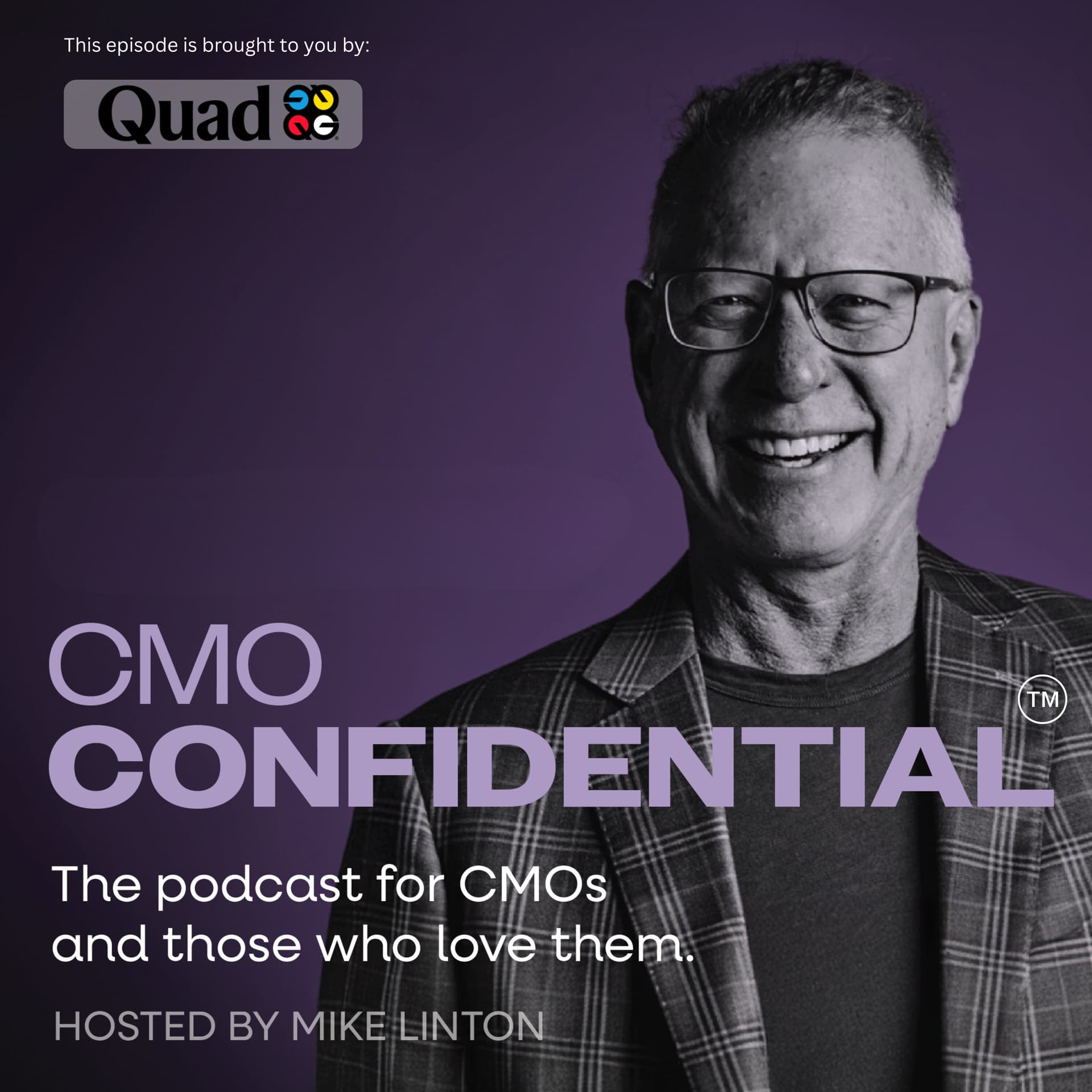
CMO Confidential: Eugene Soltes | Managing the Gray Area - The Fine Line Between Puffery & Lying | Part 2
Podcast Overview Title: CMO Confidential Host: Mike Linton Guest: Dr. Eugene Soltes, Harvard Business School Professor Episode Theme: Exploring ethical dilemmas in marketing and corporate culture, particularly around self-deception and risk assessment in decision-making.
---
Episode Summary In this second part of the interview with Dr. Eugene Soltes, the discussion continues on the ethical gray areas that many companies navigate, especially in high-pressure environments. Soltes sheds light on the psychological aspects that lead individuals and organizations to justify questionable business decisions, emphasizing the role of culture in guiding behavior.
---
Key Topics Discussed
- The Nature of Self-Deception
- Self-Deception: Many professionals convince themselves that their morally ambiguous actions are justifiable.
- Cultural Influence: Company culture often encourages this mindset, leading employees to overlook ethical breaches.
- Legal Sign-Offs are Not Enough
- Responsibility in Decision-Making: Relying on a legal sign-off is inadequate; individuals must take ownership of their decisions.
- The "Explain-to-Your-Spouse" Test: A practical approach to evaluate the ethicality of decisions.
- Risk Assessment in Leadership
- Ethical vs. Strategic Risk: Distinguishing between acceptable business risks and integrity risks.
- Consequences of Poor Choices: The importance of understanding the ramifications of decisions in a corporate setting.
- The Fraud Triangle
- Components of Misconduct: Opportunity, pressure, and rationalization create a fertile ground for ethical violations.
- Cultural Pressures: Leaders must establish a culture that allows for questioning and dissent to mitigate these risks.
- The Role of Psychological Safety
- Encouraging Open Dialogue: Fostering an environment where employees feel safe to voice concerns about unethical behaviors.
- Legislating Safety: Caution against mandating psychological safety, as genuine openness cannot be legislated.
- Real-World Analogies
- Free Solo Climbing: Soltes shares insights from climbing with Alex Honnold, illustrating the importance of understanding risk and preparing for it thoroughly.
---
Key Takeaways
- Humility in Leadership: Great leaders exhibit humility, acknowledging that their instincts may lead them astray.
- Diverse Perspectives: Leaders should seek various viewpoints to avoid groupthink and ensure comprehensive risk assessment.
- Cultural Integrity: A company's culture should promote ethical decision-making rather than merely achieving short-term goals.
- Innovative vs. Ethical Risk: Companies often face the challenge of balancing innovation and ethical practices; understanding this balance is crucial.
---
Conclusion Dr. Eugene Soltes emphasizes that while ambition and innovation are essential for corporate success, they must not come at the cost of ethical integrity. Leaders must create a supportive culture that encourages honest discussions about risks, enabling better decision-making in complex situations.
---
Additional Notes
- Sponsor: Publicis Sapient – AI marketing platforms for personalization.
- Next Episode Teasers: Includes discussions on various case studies and marketing challenges facing brands today.
---
Listen to CMO Confidential on platforms like Spotify, Apple, and YouTube for more insights into marketing leadership and ethical decision-making.
Written by AI. May contain mistakes. Listen to the episode to check what was said.
Transcript
Automatic transcript. May contain errors.0:00The CMO Confidential Podcast is a proud member of the I Hear Everything Podcast Network. Looking to launch or scale your podcast? I Hear Everything delivers podcast production, growth, and monetization solutions that transform your words into profit. Ready to give your brand a voice? Then visit IHearEverything.com. Welcome to CMO Confidential, the podcast that takes you inside the drama, decisions, and choices that go with being the head of marketing. Hosted by five-time CMO Mike Linton. Marketers have been working on personalization since the dawn of the internet, and actually even earlier than that.
0:43Now with AI, you can deliver ads made for each of your customers. Publicis Sapient is committed to faster, better personalization, and is proud to introduce Slingshot and Bodhi AI. Now, these AI platforms are designed to customize every key touchpoint and reduce creative timelines from weeks to days. With Publicis Sapient, marketing isn't just fast, it's personal. Smarter marketing, happier teams, wow-worthy customer moments. Upgrade your marketing at publicissapient.com.
1:30Welcome back to part two of our episode with Harvard Business School Professor Eugene Soltys. We rejoin Mike and Eugene as they discuss the ways in which many business people can deceive themselves into thinking their actions don't cross moral and ethical boundaries. You don't want to look into people's conversations. So I always think the arms dealer logic, I'm just in the business. I've thought about that a lot because I genuinely don't think why they're so good at their job. They're not lying to someone else when they say that because I think they truly have convinced themselves that is actually what they do.
2:07It's the best way of deceiving someone if you don't have to deceive yourself. Yeah, so don't be a CMO at an arms transportation company. Okay, look, a lot of times when companies are on these strategies, these risky strategies, whether it's regulatory risk or at the edge of puffery, or like you said, in social media, the marketer can be the front end. That can be the face of the media. How do you accept or resist being the face of something you are nervous about? Say I'm the CMO of the transportation company that is moving around Abrams tanks and, you know, Kalashnikovs or something. How do I manage that?
2:58And how do I think about it as the face of it? Yeah, I think it's important. So, I mean, first, I mean, the one thing I will say, we spent a lot of time talking about in all my classes, particularly with our executive programs, It's talking about humility. I will say first is understanding like our failability and bring great people to bring different points of view into it. I mean, that's like the basis. But second is realizing, I think, especially for people in marketing, the idea that you have someone else that is signed off on it and says, this is okay, that is not sufficient. I will say that never works out.
3:33I can say this. My whole book is filled with people who got someone to sign line. You'll always find someone somewhere to sign a line that says it's, quote, OK. That never ends well. That never ends well. The idea is you need to feel that you can own that decision. and I don't like to go, it's almost cliche to say the newspaper test, because I think there's a lot of things in corporations, even good people at good companies, because of just the nature and perceptions, it's hard to fully pass the newspaper test, but it's one, I like to think of the different version, the one that I take, which is, could I explain this to my wife test, which means I need like the smart newspaper test.
4:11So someone that's thoughtful, that is actually going to actually push back? Could I give a plausible explanation to my spouse about what I was doing was honorable, made sense, and what I do all day? I think that's actually a reasonable test that most people should be able to pass. And you can work at a defense company, and defense companies play an important role, but you'll explain what you do at a defense company very different than if you were the CMO at my arms trafficker and explaining who you work for and why you do that. And that distinction is incredibly important, even though you're both in the business of, you know, transport, transportation.
4:50Yeah. So I'm going to be aware if I get a, if I get a job back for the Soltis transportation company, I know what's going on. I looked at, but that's a good point. Also know what's going on. I will say, I mean, if there was one thing that I was frustrated when I was in my, my book, when I was having conversations is really, really freaking smart people that play like what I call like the ignorance card. Like I didn't know, I didn't ask. It wasn't my responsibility to ask. Like, come on. I will say if a student in my class was to say that someone from HBS was to graduate and they got in trouble down the road and they said, it wasn't my responsibility to ask, but like you quickly could have.
5:36I think that's just simply putting your head in your sand. I think any leader has a much greater sense of responsibility to understand what they're doing. And that's not just to protect the company. That's just to protect oneself too. So if I'm sitting in this thing and I disagree with the puffery they're making me do, even if I have a signature and the lawyer is saying, yeah, we feel we're covered. And I disagree with that. You would recommend And that's where you make the stand versus go forward. Yeah, I mean, because when it all goes south, whose job is on the line and who's going to be citing a pile of documents?
6:11I can guarantee it's not going to be that lawyer or even, as we see in auditing, like an assurance or accounting company. It's going to be the CMO who put his or her name stamp and had to own that decision to go forward with that proposal. Um, everyone, everyone will take a lot of, we'll try to take that credit away when things go well, but when it goes south, they're going to be very quick to point. So I will say, make sure that you can actually hold that decision. That doesn't mean to avoid the risks. I will say, I mean, people that do ambitious and innovative things need to take risks, but, but I will say there's a fine line of being risk that you can actually feel that you can own and risk that you think you can just, I will say, shove off to others because you have a signature.
7:00I can't ignore it. So let's talk about risk, risk tolerance and corporate culture. How do companies think about risk? And how do you write yourself in the story? You talk a lot too about how corporate cultures can push you right to the fringe of gray. Yeah, I mean, very few frauds, I will say, very few happen what I call, simply what I call a technical violation, like someone inadvertently. I will say the only time I can think of an example, Apple once had a sanctions violation, and it's because they actually forgot a period in their database, and so it didn't catch it. I actually say Apple did everything well to have the database, they forgot a period, and I will say it's like a minor slap on the wrist.
7:51Most violations occur because of a culture issue. Like people feel pressure to move fast. They're feeling pressure to potentially compromise their own views or opinions. They don't feel comfortable speaking up and asking those hard questions, like pointing out to other people in the room about why we're doing this. What is the advantage of doing this? What are the risks of doing this? And they also don't see a proper way called tone from the top or other leaders in the room that really want to hold that line. It's culture in the end. So I think leaders, the CMO of the company and other executives sitting in the room, their job is to set the culture about what we want to do.
8:31And that doesn't mean you don't take risks. Risks and failure is all part of the innovation process. But understanding what kind of risks that we take, are we taking integrity risks or are we taking business strategic risks? That's a distinction. Well, you also said there's a million ways you can pay a bribe and get away with it. And a lot of that is culture-based on whether you will pay it or not. I mean, I do have a hobby of collecting different ways that people try to pay bribes. Even I know now FCPA is technically not being enforced, but setting that aside, I mean, one of my, I'm going to call it favorite because it's creative, ways that people were starting to pay bribes, particularly in Southeast Asia, was through art.
9:27They would give a minister an inexpensive$100 piece of art from an up-and-coming artist. And then casually note that suppose an auction house was to have a big auction at the end of the year in some obscure part of the country. Maybe someone bought it for like$50 ,000. And then the company would repurchase an arm's-lake transaction for$50K, thereby transferring$49 ,000. I will say, short of someone writing a pretty absurd email describing this scheme, that's a hard one to be caught and isn't obviously to connect the quid pro quo. Support for today's show comes from Publicis Sapient. Visit them at www.publicisapient.com.
10:10At Publicis Sapient, we're not just talking about AI. We're delivering real results. Today. With Sapient AI, we speed up software development and save clients thousands of hours. We revolutionize how travelers discover their perfect getaway. And even turn a simple fridge scan into a personalized meal plan. Making AI work for you? It's what we do. Now, back to our episode with Professor Eugene Soltes.
11:10everyone gives you a pat on the back and said, man, that was brilliant. And your bonus is 2x because of that. Next time you run to one of these, what I call walls, what are you going to do? You're going to find a weird way of circumventing it. So I describe this as to show me where it says I can't culture. I love this. Show me where it says I can't. Tell us about it. Yeah. Well, this is something, I mean, I will say this is what I think a lot of, I mean, I have two amazing kids, but I will say this is how a lot of kids when they're, you know, six, seven, I will say you, you tell them, you know, you, you can't do X.
11:43Um, you know, you, you can't, you can't jump in the, in the muddy puddle outside because we're going out and, and two minutes later you go out and what are they doing? They're going back and forth on their bike at high speed, making massive puddles. And you're like, I told you you couldn't jump in. And they're like, well, you said I couldn't jump, but you didn't say I couldn't take my bike into it. And you're like, come on, like, come on. You know that I will say, if you incentivize people to kind of think that mentality. I said you couldn't jump, but if you find another way of getting into the puddle without jumping and I incentivize you, you're going to find other ways like my seven-year-old can do.
12:18And there are a lot of cultures in corporations that create that environment. Those are hard, I will say, those are ones that are ones where the policies drive decision-making, but not a way of driving people towards making, I would call the high integrity, safe decisions. but driving people to be really clever. That might be great if you work at a hedge fund. That's how you find great, clever arbitrage. That's not a great, sustainable way to be in an operational company, though. And so how do I use, a lot of these are right on the edge where you'd want your, well, not the puddle one, where you'd want your general counsel saying, hey, Eugene, I said don't jump in the puddle.
13:01By that I meant don't splash like dirty water everywhere. where you could, it's a concept statement. How do you use the general counsel in this space correctly and manage the whole risk discussion? Yeah, I will say good companies are with the compliance, compliance, legal, they know how to be, I mean, no one likes to go to compliance or legal. I mean, I know that's the case. They're viewed as the people that say no. Great companies though, find people that can actually figure out how to empower the business in a constructive way, not to figure out how to circumvent things, but how to be constructive and actually help find appropriate solutions to the gaps they have.
13:45But I will say, I mean, what do I get calls? I mean, probably once every six to eight weeks, I get a call from a former participant or student, and they're like, hey, something just popped up. So let me know what you think of this. Now, I will say, think of calling me as one of your faculty at HBS. I mean, everything I see is kind of interesting regulatory reputational issues. I will say you kind of know you're already in kind of the gray zone. If I'm calling you, I have a problem. Yeah, I have a problem. Not that you're not great, but I mean, if I haven't called anybody in my company or a peer or something, I know what I'm looking for, someone to let me do it.
14:22Yeah, they want me to say, whoa, your company and your GCR is telling you they're just being way too conservative. This is totally fine. I don't think I've actually ever said this is like sitting in like the lovely gray zone. I mean, maybe sometimes it's only in like yellow. But I think people are sometimes so desperate. And as you point out, they get feel pressure. I mean, look at our economic environment we're operating. There's a lot of volatility, a lot of uncertainty. Companies are in a hard position potentially with tariffs. They're feeling forced. They need to get things done. And this is something there's a well-known model called the fraud triangle, which explains when misconduct happens.
15:00It's when there's opportunity, rationalization and pressure increase. People see more pressure right now with the economic environment. They see it easier to rationalize because people are telling them to get done. And the opportunity, you could say, seems easier because we're in a lower regulatory enforcement environment. That's prime for people to just try to justify going ahead with some of these decisions. And that's where people get in trouble. So it's finding a set of smart, both colleagues. But I will say, sometimes it's not the people within the company. I know there's going to be a lot of there will be legal people listening when I say this next line, because of proprietary reasons why you can't go to a close friend who's a confidant or one spouse and describe what's going on.
15:47But I will say people in practice use those people as great sounding boards, those really close confidence. Sometimes it's a spouse. Sometimes it's that lifelong friend. And those people help preserve them and provide that extra check to get out of that slippery slope. And if that's what it needs because the company is not doing it, sometimes that is important. And you say some people run towards this edge of risk, too, because it makes careers, right? A huge amount of value. I mean, I will say huge value, huge values created. And sometimes starting out where we started a regulatory arbitrage, if Uber was not as edgy as it was, I believe it was in both France and South Korea where executives at Uber were actually criminally indicted for actions there.
16:33I mean, they were breaking law. And I will say you had to kind of break some things to get to get. They wouldn't be the extraordinary company that, frankly, we all value and appreciate today. The question is, this is understanding one's risk tolerance. Are you how much would you willing to be that to be you that would face those consequences? Would that would you be willing to be one of your employees? I will say there are certain companies and cultures where that's, I think, par for the course and others that would not be the case. But that's where there's a lot of innovation and value. That's not the only way, but I will say a lot of the AI companies, let's go back to that.
17:10A lot of the AI companies, I mean, I think it would be reasonable to say that any of the really prominent AI companies that have built models have had to scrape information that only a few years ago, we would say would have been out of bounds had you not been. And so they've all taken a very particular view. Worst case scenario, they probably evaluated that risk. And they said the worst case is we're going to be sued or we're going to have to shut down the model. I'm not going to go to jail. But could there be some other place in the world that's probably in the U.S.? Could there be some other market somewhere in Europe or somewhere in Asia or somewhere in South America where a regulator thinks differently and pile people show up at your office and arrest you?
17:52It could happen. It could happen. Let's talk a little more about risk because I know you climbed with the free solo climber, Alex Honnold, to learn more about what you call open-eyed risk. Let's talk about open-eyed risk because we've talked about people that are running to the risk edge and then hear your story about your free solo climb. I mean, I realized throughout this course, this conversation, if talking to people that engage in fraud and arms dealers was not going into enough risk, I tried to go one more notch. I mean, my interest, and I'm sure everyone here is seeing free solo, but if they haven't, that's the first thing you should do after finishing this episode.
18:39It's extraordinary. I mean, Alex Honnold's one of the world's greatest climbers. Free solo, which means without a rope, climbs a couple thousand feet, this extraordinary mountain called El Cap. After watching Free Solo, I was just so in awe of his achievements. But I also thought, this guy's truly extraordinary taking on the risk. What is he thinking? How does he imagine the risk he takes on? And I actually thought, you know, 3 ,000 feet, if you make a slip, which if you watch the movie, you can see, it wouldn't be that hard to do. There's going to be a fair number of seconds. Like, what would he be thinking as he's falling?
19:19Would this seem like just a ridiculous risk he took on? Or is that a risk that he could anticipate ahead of time and had comfort with? So I reached out to, I think, one of his agents. And one day it was kind of from Alex sent me an email. Whoa, Harvard professor trying to reach talk about risk. Why don't you come climb with me for a day and learn for learn? I joke. I mean, I go to like a climbing gym. Like, you know, I wasn't actually going to go climbing. I think I went 10 feet with him before. That was my risk and of my risk there. Eugene, you can still get hurt falling 10 feet. Yeah. Oh, I actually that was already very risky for me.
19:59But luckily, Alex was kind of to say, why don't you meet me back at the car? and he climbed 2 ,000 feet on a new route that he hasn't climbed before. But what was so extraordinary about him, and I spent the whole day talking to him, at the time it was his girlfriend, now his wife, about risk, and he truly understands the risk he takes on. I mean, he went clear-eyed that he did everything he possibly could to try to mitigate the risk. I mean, I truly believe he didn't think he was taking on a restless risk by the practice he took. He won full confidence. But if he was falling, I believe he would have actually been thinking during that time.
20:38I knew what I was taking on. It's very unfortunate because that's not what I wanted to happen with that climb. But at the same time, this was the consequence of me accepting that risk and going forward. And I was rather, I'm happy that I, and he gives this amazing analogy. I didn't want to be like a suburbanite that bought a fancy new SUV and only kept in the garage. Like I wanted to take out for a drive and get a little bit dinged up. That's what it was supposed to do. And at least I took my car out for a ride. I've thought a lot about that because I think it's really inspiring to see someone who so deeply understood the risks he was taking on.
21:17And while that's not the right level of risk for me, and I suspect most people, I will say having that confidence and having that insight into what one is doing is, I will say, pretty rare. It's one of the people I've most deeply admired for both taking on risk and understanding it as well. And the object to the lesson here I'm taking away is the objectivity of looking at the risk as clearly as possible and realizing it might occur badly for you is a lesson for everybody. Yeah. And I will say that's what oftentimes I think going back to the corporate setting, I will say what Alex has done, he took those risks and it's kind of like he takes and looks at every angle, up and down, under different conditions, under different lights.
22:03And he feels that he understands everything. He's done everything possible to understand that risk. And now he feels he can take it on. A lot of corporate decisions, I feel, you know, we look at it one way and everyone says, well, we also look at it like this. Let's go ahead. You haven't really teased around. You haven't looked at it under different conditions, different lights. If you turn around, maybe look at it a little bit later at night, is that going to look the same? and so maybe we could all be a little bit more like Alex and at least fully understand the risk that we're taking on not by necessarily even spending more time but bringing in more perspectives to understand if that's the right risk for both ourselves and the companies we work for and the risk of groupthink that emerges from that like in when if you look back on a lot of the financial crisis where everyone was just rushing to the trough um you know and that group thing.
22:55Any tips on how to prevent that? No one asks questions. When things are going well, no one asks the hard questions. It's very easy to get rah-rah. I think the question is, how do you actually motivate people to actually bring in different views and opinions and really challenge them? Part of that goes to the culture of candor or psychological safety within an organization to challenge people. I recently read actually on the notion of that candor and psychological safety. Apparently, Rhode Island tried to pass a law mandating organizations to have psychological safety. I thought that was really intriguing because it's the opposite of what kind of what we teach or what would work.
23:37You can't just tell people like, now you're comfortable speaking up. Tell me, now criticize me. I think we can all probably find organizations or have heard of organizations that act like that. They don't work so well. And those look like more of a loyalty test than an opportunity to actually share candor. I'm going to pass a law saying no bugs are allowed in my house and everyone has to be nice to me. I think that's great. Hey, so we're towards the end of the show and we have our traditional last question, which is a two-parter. You have to take at least one or you can take both, but you have to take at least one.
24:18practical advice for our audience we haven't discussed yet and or funniest story you can share on the air you can pick one or both so knock yourself out oh funny if funny uh i will say funny is um i i will say i i don't know if it's funny i will say most humbling moment moment while working on my book um i i actually was meeting with and i went through a number of legal processes to make sure this was okay. I was meeting someone that actually, after he was indicted for a white collar crime, he actually fled to Europe where they don't actually extradite back to the US outside the EU. And so I knew I was only gonna get to speak with this person.
25:05So I actually, I literally flew out to Europe to literally sit down. I went to a very formal restaurant because I learned no one gets up in the middle of a nice meal. So if you make like a three hour meal that you know has like 15 courses, you know you get a couple hours to kind of really try to dig down. I'm a little bit sarcastic. It's just my style. Maybe it's just my humor. It's supposed to be nice, but it's just I'm playful in that regard. Obviously, this guy was wanted and had a$100 ,000 reward for his capture. And so we sat down at this meal, and I mentioned, if you come back to the U.S.
25:40with me after, we could split the$100 ,000 50-50. Let me just say, I learned very quickly. I'm saying I met it, I guess, in jest. Let's just say if you're a wanted fugitive, that is not a very funny joke. It's pretty funny right now, though. Very awkward silence for the next couple minutes. We managed to recover and move on. And I will say, so I learned some things from this project as well. But I think I'll go to your first question then. And I think I echoed this a second. I will say it's humility. There's not one person I will say that I would say that's in my book that I would say was particularly humble.
26:29I will say, if anything, I think our corporate structure that we've created, particularly when you rise with an organization, when you have a C in front of your title, you're supposed to be confident. It's what people expected with you. It's what your people that work for you or reports of subordinates look toward, looking for confidence. But how do you have internal humility that sometimes your instincts might be off? Actually, your intuitions might be troubling in a way that leads you off to the wrong course. How do you check that? And I will say the greatest leaders, the people that generally are sustainable over long periods of time, figure out how to continue to cultivate that humility and figure out how to get that through other people, other pieces of information to both sustain themselves and their decisions over time.
27:13Well, I think that is a great way to end the show. A good push on humility, and the greater you get, probably the harder it is. So thank you, Eugene, and thanks to everyone for listening to CMO Confidential. If you're enjoying the show, hit the like button and subscribe. Look for all of our shows on Spotify, Apple, and YouTube, which include the rise and fall of Peloton as seen through the lens of customer lifetime value. The Budweiser case, how not to manage a socio-political issue. The Warby Parker case, I can see clearly now with my CLTV glasses on. And the Insomnia Cookies case, the ghost model used at Northwestern.
27:56Hey, all you marketers, stay safe out there. This is Mike Linton signing off for CMO Confidential. Marketers have been working on personalization since the dawn of the internet, and actually even earlier than that. Now with AI, you can deliver ads made for each of your customers. Publicis Sapient is committed to faster, better personalization, and is proud to introduce Slingshot and Bodhi AI. Now, these AI platforms are designed to customize every key touchpoint and reduce creative timelines from weeks to days. With Publicis Sapient, marketing isn't just fast, it's personal. Smarter marketing, happier teams, wow-worthy customer moments.
Read the full transcript
28:46Upgrade your marketing at publicissapient.com.
From the publisher
A CMO Confidential Interview with Dr. Eugene Soltes, Harvard Business School Professor and author of "Why They Do It - Inside the Mind of the White Collar Criminal". Eugene discusses how most crimes start out as small, often unnoticed decisions made by strategic people, how nearly everyone has a chance to step over the line, why many companies (Air BnB, Uber, AI) take regulatory risk, and how culture drives poor individual choices. Key topics include: when puffery gets murky; why it's dangerous to "convince yourself;" why it doesn't matter "who signed off;" and the "fraud triangle." Listen in to hear why humility and counterpoints are critical, what he learned about risk assessment from the Free Solo climber, the "difference between being an arms dealer and a transportation company," and how there are "a million ways to pay a bribe."
In Part 2 of our conversation with Harvard Business School professor and author of Why They Do It, Dr. Eugene Soltes, we dive even deeper into the ethical gray zones that surround today’s most ambitious companies. From social media firms that hide behind “just connecting people” to leaders who convince themselves their actions are justified, Eugene explains how culture, rationalization, and groupthink drive even the smartest executives into trouble.
You’ll learn why having a sign-off from Legal is never enough, why the “show me where it says I can’t” culture is so corrosive, and why CMOs must understand the difference between business risk and integrity risk. We also hear Eugene’s story of climbing (briefly) with Free Solo legend Alex Honnold and how that shaped his thinking around open-eyed risk—a model every marketing leader should understand.
Topics include:
• Why CMOs can’t hide behind Legal
• The “arms dealer” mindset in corporate marketing
• Risk culture vs. innovation culture
• How companies accidentally incentivize bad behavior
• Psychological safety vs. performative candor
• The million ways bribes get disguised
• The importance of personal humility—even in the C-Suite
📌 Sponsored by @PublicisSapient – AI marketing platforms for personalization
00:00 – Intro
01:00 – Welcome Back: Convincing Yourself It’s Okay
Mike and Eugene dive into self-deception and ethical gray zones in corporate decisions.
02:10 – Don’t Count on the Sign-Off
Why “someone else signed off” isn’t a defense, and the importance of owning your decisions.
03:30 – The Explain-to-Your-Spouse Test
Eugene’s replacement for the outdated “newspaper test” of ethical clarity.
04:45 – Know What You’re Signing Up For
Ignorance as a leadership failure and why it’s never an excuse.
06:00 – Taking Ethical Stands as a Marketer
What to do when legal says it’s okay but your gut says otherwise.
07:15 – Integrity vs. Strategic Risk
A key distinction for marketers: smart business risk vs. ethical risk.
08:20 – “A Million Ways to Pay a Bribe”
Creative examples of corruption and why culture enables them.
10:15 – The “Show Me Where It Says I Can’t” Culture
How policy loopholes can foster ethical erosion.
12:00 – The Role of Legal and Compliance
How to use counsel the right way—not just for CYA.
14:00 – The Fraud Triangle + Rationalization Risk
How pressure, opportunity, and rationalization lead to ethical drift.
15:45 – Everyone Has the Chance to Be the Bad Apple
The universal risk of stepping over the line—and why culture matters.
16:30 – Regulatory Arbitrage: Uber, AI, and the Gray Zone
Why innovation often requires pushing boundaries—and accepting consequences.
18:00 – Free Solo Climbing and Open-Eyed Risk
What Eugene learned about risk from Alex Honnold and what CMOs can take from it.
20:30 – Evaluating Risk from Multiple Angles
Why great leaders view risk with humility and diversity of perspective.
22:00 – Groupthink and the Myth of Momentum
The danger of unchecked optimism and lack of internal dissent.
23:30 – The Limits of Mandated Psychological Safety
Why culture change can’t be legislated—and how real safety is built.
24:30 – Final Question: Funny Story or Practical Advice
Eugene’s “most awkward moment” and his parting advice on cultivating humility.
27:00 – Wrap-Up and Upcoming Episodes
Mike closes out with highlights from other case-based episodes.
Eugene Soltes, Harvard Business School, white collar crime, CMO Confidential, Mike Linton, ethical marketing, corporate risk, compliance and marketing, groupthink, fraud triangle, Free Solo risk, Alex Honnold business, regulatory arbitrage, arms dealer logic, psychological safety, puffery vs fraud, legal sign-off, integrity in marketing, Publicis Sapient, personalized marketing AI, marketing leadership, executive ethics, culture of compliance, corporate governance, CMOs and risk
See Privacy Policy at https://art19.com/privacy and California Privacy Notice at https://art19.com/privacy#do-not-sell-my-info.