
In short
CMO Confidential: Episode Summary
Podcast Title
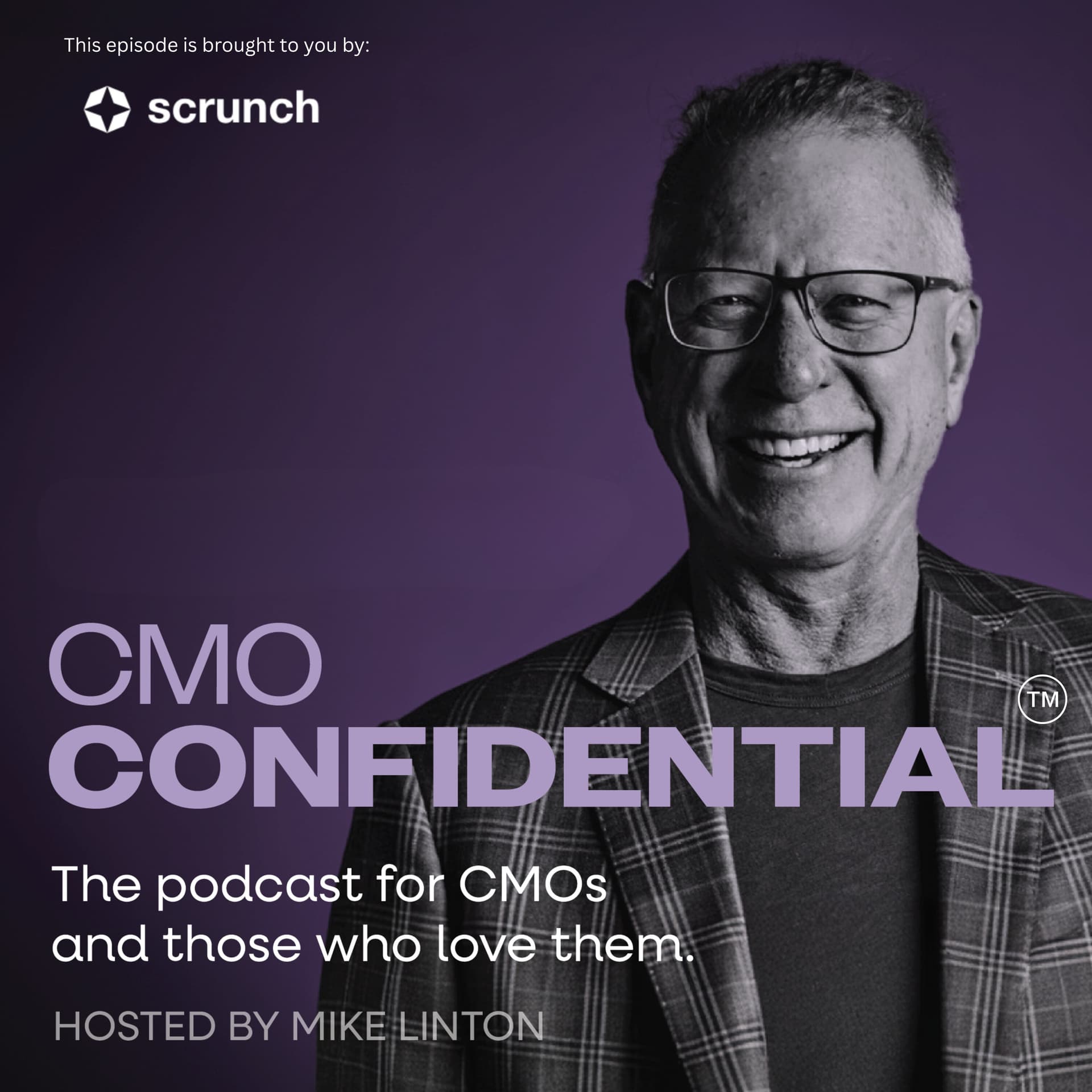
CMO Confidential
Podcast Description
CMO Confidential explores the challenges and intricacies of being a Chief Marketing Officer (CMO), sharing insights on managing large budgets, teams, and the journey ideas take to reach the market. The show is hosted by Mike Linton, a seasoned marketing professional with experience at various major companies.
Episode Title
Nic Chidiac | Razorfish | Your Customers Aren’t as Loyal as You Think They Are - The Fragile Nature of Loyalty
Episode Description
In this episode, Mike Linton interviews Nic Chidiac, Chief Strategy Officer of Razorfish, discussing the misconception of customer loyalty. Chidiac presents research showing that brands often overestimate loyalty, leading to significant financial losses. The conversation covers the ease of trying new products, the impact of influencers, and practical metrics marketers should utilize.
---
Key Themes and Concepts
The Fragility of Loyalty
- Research Findings: A significant gap exists between marketers’ beliefs and consumer behavior:
- 65% of marketers believe customers repeat purchases due to emotional connections.
- Only 15-17% of consumers agree with this sentiment.
- Implications: This discrepancy indicates potential losses for companies that overestimate customer loyalty.
Misconceptions About Repeat Purchases
- Mistaking Purchases for Loyalty: Many marketers confuse repeat purchases with true loyalty, often ignoring the underlying reasons for consumer behavior.
- Lack of Understanding: Marketers fail to consider the total share of wallet and the motivations behind repeat purchases.
Essential Metrics for Measuring Loyalty
- Three Key Metrics:
- Understanding the true reasons behind repeat purchases.
- Measuring customers' propensity to switch brands.
- Evaluating renewal efforts versus switching efforts to gauge customer friction points.
The Impact of Competition
- Increased Speed: Today's market has a higher velocity of competitors and options, making it easier for consumers to switch brands.
- Influencers and Trust: Micro-influencers have shifted the landscape of brand trust, allowing consumers to feel more comfortable trying new products.
Strategies for Marketers
- Defend Loyalty: Marketers need to treat existing customers as if they must be re-earned constantly.
- Identify Vulnerabilities: Companies should regularly assess how likely customers are to switch brands.
- Remove Friction: Brands need to minimize barriers that make it difficult for customers to remain loyal.
The Loyalty Deficit Framework
- Concept: The loyalty deficit measures the perceived value consumers assign to their relationship with a brand versus what they receive in return.
- Calculated by comparing the effort consumers feel they exert to remain with a brand against the benefits they receive.
- Industry Insights: Categories like banks, mobile providers, and streaming services often show significant loyalty deficits.
The Role of AI
- AI Predictions: Utilizing AI can help understand customer behavior, model switching propensity, and anticipate loyalty challenges.
- Market Tilt: The marketplace is increasingly favoring consumers due to better information and personalization.
Neglected Consumer Segments
- Baby Boomers: This demographic is often overlooked despite their significant purchasing power and loyalty potential.
---
Conclusion and Key Takeaways
- Marketers must acknowledge the fragility of customer loyalty and adapt their strategies accordingly.
- Understanding consumer motivations and using data effectively can help brands foster genuine loyalty.
- The rise of AI and quicker market dynamics necessitates a proactive approach to customer engagement.
Episode Structure
- 00:00 - Introduction
- 00:47 - About Razorfish & Nic's Background
- 01:30 - The Loyalty Research: Key Findings
- 02:21 - The 65% vs. 15% Marketer-Consumer Gap
- 03:16 - Are Marketers Confusing Repeat Purchases with Loyalty?
- ... (Chapters continue as outlined in the transcript)
Tags CMO Confidential, Brand Loyalty, Customer Retention, Razorfish, Marketing Strategy, Loyalty Research, AI in Marketing, Marketing Metrics, Consumer Behavior.
---
By understanding these insights, marketers can effectively address the evolving consumer landscape and better position their brands for long-term success.
Written by AI. May contain mistakes. Listen to the episode to check what was said.
Chapters
Tap a time to open that second in VOThe Fragile Nature of Customer Loyalty
2:25 to 3:55
Discussion on the fragility of customer loyalty based on Razorfish research.
“Previously, he held a number of positions at Leo Burnett, including the Head of Planning and Strategy.”
Understanding Repeat Purchases vs. Loyalty
3:55 to 5:35
Exploration of the disconnect between marketers' perceptions and consumer behavior on loyalty.
“And 65 % of marketers said because they have some type of an emotional relationship to the brand.”
Measuring Real Loyalty: Metrics and Methods
5:35 to 7:45
Insights on flawed loyalty metrics and how marketers can improve their understanding.
“And then there's just a I think there's just a general myopic view of repeat buyers.”
Switching Efforts and Consumer Friction
7:45 to 9:10
Examination of factors that influence consumers' decisions to switch brands.
“So how do I, if I'm sitting there in this seat thinking, and also I probably told my company, a lot of this repeat purchase is me or it's us.”
Examples of Loyalty and Switching in Industries
9:10 to 11:20
Industry-specific examples illustrating loyalty misconceptions and consumer behavior.
“which is number one, really and truly, why are repeat buyers buying repeatedly?”
Marketplace Shifts and Consumer Trust
11:20 to 14:00
Discussion on how consumer trust and willingness to try new products have evolved.
“to look around and next thing you know he found someone else while he was in the process of refinancing.”
The Shift in Consumer Behavior
14:00 to 14:27
Learn how consumer willingness to try new products has evolved due to increased information and reduced risk.
“bought from a brand they'd never heard of before, 80 % of which are satisfied with that product.”
Influencers and Trust in Brands
14:27 to 15:03
Explore how influencers have transformed the landscape of brand endorsements and trust.
“And, you know, there was a lot of risk in buying that product.”
Competition Velocity in the Market
15:03 to 16:10
Understand the rapid emergence of competitors and the impact on market dynamics.
“And I think the other example, Mike, the other kind a case in point is how influencers have kind of democratized celebrity endorsement, right?”
Emerging Competitors and Market Growth
17:16 to 19:16
Learn about the rapid growth of new brands and their strategies for success.
“Now back to our discussion with Nick Chidiak.”
Show all 18 chapters
Vulnerability as a Market Leader
19:16 to 22:54
Examine how market leaders can assess and address their vulnerabilities in a competitive landscape.
“And so I think that's an important consideration is like, competitors are moving at a much faster rate.”
Creating Moments of Loyalty
22:54 to 24:51
Discover how brands can foster loyalty by addressing consumer vulnerabilities during crucial moments.
“Chewy do, yeah, what Chewy do as a pet company, what they do really, really well is they lean in when your pet passes, they make that moment really core and crucial to their experience.”
Understanding Loyalty Deficit
24:51 to 26:53
Learn about the concept of loyalty deficit and how to measure it in brand relationships.
“So, and beneath this, I think you guys have a concept of a loyalty deficit.”
Leveraging AI for Loyalty Programs
26:53 to 28:00
Explore how AI can enhance loyalty programs by addressing customer friction points.
“Because I'm getting streaming for not that much money, but I have a loyalty deficit because why I think you're holding me hostage?”
Understanding AI's Role in Consumer Behavior
28:00 to 29:20
Learn how AI is transforming customer loyalty and marketing strategies.
“So, I mean, the short answer, Mike, is everywhere.”
The Power Shift Towards Consumers
29:20 to 31:31
Explore how consumer empowerment is changing the marketplace dynamics.
“So short answer is literally everywhere, Mike.”
Neglected Baby Boomers: A Marketing Opportunity
31:31 to 33:38
Discover why baby boomers are an overlooked but valuable consumer segment.
“And in specific instances, almost a third of people said the number one source I trust the most is my AI agent over my friends and over review sites.”
A Humorous Insight into Adaptation
33:38 to 35:03
Hear a funny story about adapting to a new market while learning on the job.
“And this is a sizable segment, by the way, who are living longer.”
Transcript
Automatic transcript. May contain errors.0:00The CMO Confidential Podcast is a proud member of the I Hear Everything Podcast Network. Looking to launch or scale your podcast? I Hear Everything delivers podcast production, growth, and monetization solutions that transform your words into profit. Ready to give your brand a voice? Then visit IHearEverything.com. Welcome to CMO Confidential, the podcast that takes you inside the drama, decisions, and choices that go with being the head of marketing. Hosted by five-time CMO Mike Linton. When is the last time you researched something on a website? If you're like most people, AI did that work for you.
0:42And that raises a question. If AI is doing the work, what is your website really for? This behavioral shift means AI bots are becoming your most important new visitors. A challenge our sponsor, Scrunch, is taking head on. Scrunch is the customer experience platform that helps you understand how AI agents experience your site, when and why they show up, and what's blocking them from being retrieved, trusted, or recommended. Scrunch shows you the content and citation gaps and technical blockers and helps you fix them so your brand shows up when consumers start with AI because your most important site visitor might not be a human.
1:28For our listeners, Scrunch is providing a free website audit that uncovers how AI sees your site and how you're showing up in AI versus the competition. Run your site through it at scrunch.com slash CMO. Welcome marketers, advertisers, and those who love them to Chief Marketing Officer Confidential. CMO Confidential is a program that takes you inside the drama, the decisions, and the politics that go with being the head of marketing at any company in what is one of the most scrutinized jobs in the executive suite. I'm Mike Linton, the former chief marketing officer of Best Buy, eBay, Farmers Insurance, and Ancestry.com here today with my guest, Nicholas Chidiak.
2:15Today's topic, your customers aren't as loyal as you think. The Fragile Nature of Loyalty. Now, Nick is the Chief Strategy Officer of Razorfish. Previously, he held a number of positions at Leo Burnett, including the Head of Planning and Strategy. Razorfish focuses on global digital marketing and transformation and customer experience and is one of the digital agency OGs. Nick is joining us today to discuss recent Razorfish research on loyalty. I can't believe I got through those three R's. Welcome, Nick. Mike, thank you. Thank you for having me. It really, really is a pleasure. I'm a huge, huge fan of your podcast.
2:59I'm even a bigger fan of your podcast. Once you told me that the setting needs to be us having a cup of coffee and having a very casual discussion. As a Lebanese Greek, coffee is a big part of our culture. That got me even more excited. So thank you. And thank you for that kind introduction. Well, thanks for coming here. Let's go right to the main topic. Your research indicates that loyalty is really a lot more fragile than, you know, I say in here, most people, but I'm thinking most marketers think. Tell us what you really learned. Give us this research writ large. So, Mike, the thesis is exactly as you said, is that loyalty is significantly more fragile than marketers think.
3:44And there are two kind of key beacon metrics that set up the study. One, when marketers were asked, thinking of people who buy your products consistently over and over and over again, so repeat buyers, why are they doing so? And 65 % of marketers said because they have some type of an emotional relationship to the brand. They love the company. And then when we asked exactly the same question to consumers who are repeat buyers, the answer was something within the 15 to 17%. So that's almost a four to five times difference. And is this marketer saying like I'm Comcast or somebody, they love me, they just love me and they're touching me because they just keep paying me or are marketers thinking about this the wrong way?
4:39That is a massive gap. Tell us what's in that gap. Where's the big difference between consumers and the companies? So I think a couple of places, Mike. I think marketers are often mistaking repeat purchases for loyalty. So I think that's one important disconnect. I think the other disconnect is there's just an assumed, and maybe because we as marketers have attribution bias where we like to sift and sort through information and stories in a way that correlates with the way we want to see our jobs or our job success. But there's also an assumed element of emotion that sits there where people are like, OK, marketers are basically saying the reason why someone is buying a product for me is because they have an affinity towards my brand.
5:40And then there's just a I think there's just a general myopic view of repeat buyers. There's we aren't able to see the entirety of who they are. We aren't able to see in most cases total share of wallet. you're able to see that someone bought, let's say, five times, but you can't see that they bought five out of a total of, let's say, 15 or 20 times. And there's no real sense of why behind repeat purchases. We don't really know that in most cases, marketers. So when we were talking about this earlier, you said many marketers are delusional. And I'd love to take apart that line. And then we can go into how, as a marketer or a company, can I get a good beat on all this stuff?
6:29So, I mean, I don't know if I would say, I know I did say delusional. Our PR team said better or not. We can walk it back a little bit if you want. Yeah, we can walk it back. So I think there are a couple of things, Mike. I think marketers that sit within the 65 % and the 15 % chasm have kind of a couple of qualities. They tend to sit at the helm of larger brands because we know repeat purchase tends to sit in larger brands for obvious reasons, right? They're bigger brands. They have more share and that share has higher penetration, higher frequency. Yeah. Two, they tend to have assumed that emotion is the dominant reason why someone is repeat buying.
7:10And by assumed, I mean, there's no real substantive evidence that basically says the reason why someone's buying 15 times is because they have some type of a loyalty beyond reason. And so am I right? If I'm sitting here and I'm sitting in the marketing seat and I could be an energy company or an insurance company or an airline and you just you I keep getting you, you are purchasing me. I'm just making the leap that you are emotionally connected versus you are you are really I'm the only game in town or I have the best times or I'm more convenient. Is that is that what you're saying? In more cases than not.
7:51Yes. So how do I, if I'm sitting there in this seat thinking, and also I probably told my company, a lot of this repeat purchase is me or it's us. It's all the cool stuff we're doing in marketing. How do I tear this apart? Like, how do I get to the real reason you're buying me? So I think the first thing you need to understand is the current metrics that are being used to define loyalty in many cases are flawed or incomplete. So repeat purchase has been one of the dominant ways. And so what it does is it tells you how many people are buying. It doesn't tell you where else they're buying and it will tell you why people are buying.
8:38So that's one. NPS is helpful, but often flawed, Mike. So NPS is another lever that people are using to assume some type of an emotional relationship towards why people repeat buying. But often it's not done properly, like you give someone a free ice cream and then they fill out a survey for you. It does not help you understand switching propensity, which I think is important. And it neglects that. And then we're rarely measuring propensity to switch. we're not looking at three important questions, which is number one, really and truly, why are repeat buyers buying repeatedly? Like truly, what is the reason why?
9:20Number two, can we measure switching motivation and how vulnerable we are to switching? Like how likely are you to trade a brand if someone else emerged, if there was an offer there? And then three, we're not looking at renewal efforts versus switching efforts. How does that friction take place? How easy is it for you to renew with a brand versus to switch over? For me, those are three things marketers should be looking at that they're often not looking at, like dissecting repeat buyers, measuring switching vulnerability, and propensity to switch. And then the third one is renewal efforts versus switching efforts, like how easy is it to move versus stay?
10:04Can you go into a couple of categories on that as examples? Like, look, I have a lot of experience with insurance and some other stuff. And insurance switching is kind of a pain in the butt. It takes a while. You don't want to do it. There's lots of things people do to kind of keep you. Is that an example? Or can you give us some industry examples where the loyalty might be just misguided on a whole industry front? so i'll give you a really simple example around um around switching switching efforts when it comes down to the automotive space like in most cases when you're when you're when you're buying a new car or leasing a new car with the existing manufacturer you often have to sit and you have to reapply for financing right i mean that's a really simple example and that added layer of friction creates propensity to sit and to shop around and and all right well i have to do this is going to take me another two or three days and so all of a sudden you know you're you're you start looking at other options i mean i know a friend just recently who literally was going to renew with an existing with existing um auto manufacturer and and you know he had to refinance and he started to look around and next thing you know he found someone else while he was in the process of refinancing.
11:29So that's an example of switching barriers and making things significantly easier for someone to stay within your portfolio. And let's talk about propensity to switch. Is that related to this or how do I use that as an example? Or just give me a good example so people can lock onto propensity to switch and how to measure. Propensity to switch is a really simple question is provided people have certain options around categories, would they switch? Right. I mean, that's the propensity to switch. Like how likely, like a simple question is like, how likely are you to switch if a competitor offered you A, B, or C, depending on what category you're in?
12:14And it's a lot of this, I need to have research, like lost customer research and a panel on the industry to look at this or like, what do you do? Because part of this is you're saying, you also said, hey, there's a marketplace shift in how consumers buy and are influenced to buy. Let's talk about how - Yeah, and that's a huge point, Mike. I think that's a huge point. So I think there's a couple of things that are making brands today, specifically sizeable brands more volatile at least have higher risk risk than than historic than historically was the case number one like trying a product today is nowhere and trying a new product today from a brand you've never heard of is nowhere near as risky as it used to be yeah right and so let that let that like sink in historically what used to happen is you had these big brands that were that signaled quality, right?
13:17And so you used a big brand and stayed with a big brand because you knew there were enough lemons out there for you to want to stick with a big brand. Like, and Mike, when was the, so then based on that and based on all the algorithms and reviews, like you can't, like loyalty, sorry, lemons have pretty much been whittled out now. Like when was the last time you bought a product that was crap, right? And so people have a higher propensity to try new products. Like we're seeing, for example, one in three people trust their AI agents more than they do their friends. We're seeing one in three people on social bought from a brand they'd never heard of before, 80 % of which are satisfied with that product.
14:06So we're seeing people be willing to try new products in a way that they didn't before. And if I read between the lines there, what I hear you saying, correct me if I'm wrong, is it used to be I might get a crappy product because there wasn't full information on it. And, you know, there was a lot of risk in buying that product. Now, because there's a lot more data on it, or in the case of like Amazon, I can return it for almost any reason. and now I have social media to vet anything I'm, I have nervousness about it. The, the, the marker for what is really good is pretty more consistent across the board.
14:55And so when I want to switch, there's almost no risk to me in switching because a lot of those risks I had 20 years ago are gone. Is that fair? Yeah. And I think the other example, Mike, the other kind a case in point is how influencers have kind of democratized celebrity endorsement, right? Historically in the past, the celebrity endorsement meant that someone you trusted was associated with the brand and therefore created that transference of trust. In today's environment, you have a variety of micro-influencers who most people in some cases may or may not have, most cases have trust. And so that's another reason why there are reassurances around trying new products.
15:38So big brands, which traditionally stood for quality, that strategic position is no longer as valuable as it once was. So that's, I think, that's an important point. The second component, Mike, which I think is really important, is the speed and the velocity of competition today. Like you're dealing with a completely different speed of which competitors are emerging. Like if you look at, we did a study around, you know that show White Lotus?
16:15Nic Chidiac:We are taking a quick break for a word from our sponsor, Scrunch. Over the weekend, I asked AI to do dozens of things for me. Please help me make this dishwasher start working. Settle a debate between me and my partner. Is it safe to sleep at 80 degrees? It's not. Please help me find a robotics kit for a five-year-old operating at a middle school level. And even help me compare the Scrunch Agent Experience platform with Adobe's LLM Optimizer. In every one of these interactions, I never once visited a website. In this day and age, what's your website actually for? The truth is, almost everything on your website is now for AI consumption.
16:59The Scrunch Agent Experience platform helps manage, optimize, and deliver content directly for AI to retrieve.
17:16Nic Chidiac:Now back to our discussion with Nick Chidiak. Oh, yeah, I love that show. So we looked at the velocity, not the size, the velocity of intent across the three seasons towards the individual Four Seasons hotels, right? I think one was in Hawaii, the second one was in Sicily, and the third one was in Thailand. Right. And it was like, I think each season was about a year and a half or maybe two years in some cases. And that's HBO Max, I think, right? Yeah. Yeah, yeah, that's HBO Max. and and what we saw is like with every season velocity of travel intention towards the specific hotel went up so not just the sheer volume but the speed of which it accelerated right and you're seeing that across competitors today if you look at challenger brands and how fast they emerge today like compare let's say Hoka and on to Under Armour like Under Armour year-on-year growth was around 20, 25%.
18:17Now you're looking at Hoka, which is about 40 to 60%. Like aloes growth versus Lululemon's growth, Sol de Janeiro as a beauty brand, it became a billion dollar brand in the span of two to three years. And so brands are moving. I mean, and the other, I know it's not related to the US, Mike, but I do think it's a very interesting point. We got a lot of international listeners great perfect well then then then then they could resonate with the notion that byd was essentially unheard of about four years ago or five years ago and now we're doing one one million vehicles um outside of outside of china and that's a large ticket item like who would have thought in the auto space if you and i had this conversation five or six years ago that people would be willing to spend the amount of money you would for a car um yeah not chinese electric vehicle that just even got a review in the Wall Street Journal.
19:15Right? Yeah, exactly. And so I think that's an important consideration is like, competitors are moving at a much faster rate. And the point you made earlier around social, I think is key because historically, like previous models for challengers, whereas you have to be in retail, then you spend in media, and then consumers found you, right? So it was distribution awareness demand. And now what you're starting to see is like, no, I can basically use platforms to function as almost like a zero cost shelf. So you have attention, demand, and then distribution, right? So look at the good example is like Dubai Chocolate.
20:03Dubai chocolate became a global behemoth in the span of nine months out of nowhere. And I think the other factor that's making competitors move at a faster rate is the speed to market. Like 60 % of new consumer brands now launch using third party or white label manufacturing, of which the speed to market is 50 to 70 % faster.
20:31so so so if i'm sitting there and um you know i'm trying to say look all right i got my net promoter score i got my cltv i'm sitting here thinking i'm really i just watched you know white lotus blow up the four seasons in taramina sicily through one television show what should I be thinking about in terms of my vulnerability as a market leader, or if I want to be a challenger, start a new D2C brand, what is going through my head now on how to win from whatever place I start? So I think regarding the first question is like, if you're a marketer sitting at the helm of one of these brands, I think there are a variety of things you should be thinking about.
21:21Number one, like you need to shift your mindset and your metrics, right? So shift your mindset in terms of like, assume that your existing customers don't take them for granted and assume they need to be re-earned over and over and over again. I would say from an attitude perspective, like have a healthy source of paranoia is always very helpful. Again, I'm talking about some of our clients. What we do with some of our clients is we war game scenarios. Like what happened if a challenger brand emerged in this specific scenario? Like what are the three or four steps we would do? So I think that's important.
21:58Get your metrics right. Like start actually not just studying stuff like NPS and repeat purchases. Understand the reasons. Understand switching vulnerabilities. like would people be willing to switch? Would your consumer base be willing to switch? And then there are a variety of other factors like removing friction at a faster rate than your challengers. I mean, we gave the example of the automotive case. It's not just about removing friction. It's removing relative friction in comparison to other brands. And then there are specific moments that you can double down on that matter more to consumers.
22:40So we, in our study, Mike, we found something pretty interesting, which was traditionally loyalty is rewarded by rewarding milestones. And what we found is in high instances where there is a high degree of loyalty, brands actually reward people during moments of vulnerability. So take Chewy, for example. Okay, the pet company. Chewy do, yeah, what Chewy do as a pet company, what they do really, really well is they lean in when your pet passes, they make that moment really core and crucial to their experience. So you remember it. I mean, they send you a letter, they send you flowers, they make your cancellation significantly easier.
23:29So there are specific things that brands can do and moments that really matter and that inspire loyalty beyond reason outside of just your traditional let's reward people for specific milestones. Another good example for us is, and we've been talking to an airline company about this, is a moment of vulnerability that an airline could lean into is the first time you travel with your toddler. Yeah. Which is petrifying for most. It isn't usually traumatic. It is, right? And no one does that really, really well. And that's a moment that counts more than every single other flight you take. take. So how do you double down on a moment like that?
24:15So there are things you can do when it comes down to doubling down on moments that matter and that have higher propensities for people to stay within portfolios. Hey, just a few. Go ahead. That's interesting. So what you're basically saying is there's a whole nother potential layer on a loyalty program versus it's not just about behavior, it's about, because most loyalty programs are built on consumer behavior and incenting it, it's actually about anticipating friction points or issues and using the loyalty program to address that, which I would say very few companies even think about. I couldn't agree more.
24:59So, and beneath this, I think you guys have a concept of a loyalty deficit. tell us about loyalty deficit and what that means and how do i know how big my loyalty deficit is so mike the loyalty deficit is a very simple calculation that sits at the helm of kind of two questions and and the intention behind it is to understand do people believe they're giving more to a brand than the brand is giving in response and so the question is very simple is like we ask people thinking of a brand you do business with repeatedly um how much sacrifice do you make to stay with this brand and we give them a scale of zero to ten and then on the other end of the axes we say thinking of that very same brand how much do you believe uh this brand sacrifices to reward your loyalty and we give them a scale of zero to ten and then you subtract those and in instances where you have consumers reporting that they make more of an effort to stay with a brand than the brand does to reward their effort you have something called the loyalty deficit which is basically pardon my french people begin people believe they're getting screwed over yeah and so those specific categories have significantly higher propensities to to leak if options existed so those categories are i mean for in our study we have banks in there We have mobile providers in there.
26:27We have basically vehicles in there, streaming platforms, mobile devices. So tell me about the mobile devices, the streaming platforms and the banks, all of which I think, and then you can throw in cable companies to boot if you want, all of which I think people will say, geez, I don't think you're treating me that well. Am I reading that right? Yes. So what's the big beef about streaming? Because I'm getting streaming for not that much money, but I have a loyalty deficit because why I think you're holding me hostage? no i think it would be in specific instances like streaming and again i would need to to go into that data to look into it but it would be people saying that hey i'm either paying too much um or spending too much time here and i don't feel like this streaming platform is rewarding my loyalty versus in comparison to the energy I invest.
27:32I got it. So that means I have to scroll through like 10 minutes to find something to watch. For example. The stuff I really want isn't on there. And when you give me recommendations, it's not really very good. Tell us, when I look at AI and the AI's ability to personalize all this and to customize loyalty and actually, hopefully, customized customer experience around friction points. How should people be thinking about using AI in combination with loyalty as they are working either to be that challenger or protect their leading position? So, I mean, the short answer, Mike, is everywhere. Yeah.
28:13Is everywhere. I mean, AI can help in a variety of things. I mean, number one, AI can help you model out propensity for people to switch. You know, if you have the right data, AI can literally help you model out what that propensity is if you're building out synthetic audiences. So it helps you understand from a pure metrics perspective, where are you? Where are you vulnerable? With regards to how marketers should be marketing, I think, increasingly you need to defend loyalty to not just people, but also systems. And so understanding the logic of how agentic search is turning up queries and making sure your content is aligned and organized and indexed to it is important.
29:11and then understanding what platforms matter more than others and where to play. So short answer is literally everywhere, Mike. Hey, so Nick, if I take everything we've talked about now and I put it in my little calculator and I run it out to a conclusion, this is a marketplace that's getting better and better for consumers because they have more information. There's more personalization. they can switch easier than ever and they can get a much better handle on value for themselves is is that a fair way to look at this like this marketplace is is leaning way more towards the customer than ever before and it's going to continue to do that i think so i think so yeah i think so mike and and i would add to that that products are getting better or at least it also says if that's true you have to get better or or you will lose because you can't fake it till you make it very much anymore yeah yes i mean when was the last time you bought a lemon you know you and you don't mean you mean a failure in the product yeah sorry i mean like yeah when was the last time when was the last time you did that those does those just make switching significantly easier and and so yeah yes on all fronts mike plus okay so this says that you know and if i roll the customer experience in here what i hear is the customer is getting more and more power at speed and ai only increases that and uh it also means loyalty is much harder to earn um so you really got to be thinking about it you can't take you you could never take customers for granted, but the window to take them for granted is maybe a lot shorter than it's ever been.
31:05And it's getting shorter. Is that fair? Yeah. And, you know, an interesting stat, Mike, we had is like we asked, we asked a pretty, pretty hefty sample. Who use agentic search for products? We ask them, who do you trust more, your AI agent or your friends or review sites? And in specific instances, almost a third of people said the number one source I trust the most is my AI agent over my friends and over review sites. Yeah. All right. I have one wildcard question before we get to our traditional last question. The wild card is, you know, you have some thoughts. It just might be we're talking about this on the baby boomer generation and marketers and how maybe marketers aren't taking advantage enough of baby boomers in the marketplace.
32:06Tell us what you mean. Oh, I mean, this is a bit of a separate point, Mike, but it is a huge opportunity. I mean, the gist of it is boomers are one of the most valuable and yet neglected consumers. And again, I'm not advocating we segment based on age cohort. But what is interesting is we asked a bunch of marketers in a previous study almost a year, a year and a half ago, which I still think is very, very relevant today, is like what share of your – forget what the question was. It was something like what share of your marketing focus is boomer related versus Gen Z versus blah, blah, blah. And we had roughly 6 % of marketers said boomers were part of their marketing efforts or their marketing spend.
32:59And in reality, we know they account for almost a quarter, if not a third of spend and probably like half a quarter. A huge amount of assets, yeah. Yeah, and there are a variety of reasons why that exists. I think there's these misconceptions that to recruit a boomer means to repel another consumer. But it's a huge segment that's just neglected. You know, it's always about aging down the brand and aging down the brand and bringing new users into the brand. And this is a sizable segment, by the way, who are living longer. Yeah, I'm sure hopeful that boomers live longer. So am I, Mike. Yes, there we go.
Read the full transcript
33:49Which brings us to our traditional last question. It's a two-parter. You have to take one or both, but you must take at least one. funniest story you can tell on the air and or practical advice we haven't discussed yet your pick nick i'll do the funny story mike the funny story is i moved to the u.s in 2015 i'd never lived here before i had visited but i i was not very familiar with the market and i was brought here to run kellogg's of all brands and i remember i was in battle creek michigan in a in a my first month there and I was in a pop tart meeting and then about 15 minutes into the meeting I realized I'm like I don't know what this product is I have no idea what this product is and so so I had to excuse myself go to the bathroom um and and lock myself in in in the toilet for about five minutes YouTubing what is a Pop-Tart.
34:57So I went back into the room and continued running strategy for Kellogg. I like the frosted ones, but as Tony the Tiger would say, that is a great story, Nick. Thank you, Mike. Okay. That brings us to the end of the show. Thank you for joining us, Nick. And thanks to everyone for listening to CMO Confidential. New shows drop every Tuesday. and all of our more than 160 episodes are available on Spotify, Apple, and YouTube, which include, is your next best customer an AI bot? Colonel Mustard in the study with the job spec. Using AI for anticipation versus reaction and why can can't. Hey, all you marketers, stay safe out there.
35:43This is Mike Linton signing off for CMO Confidential. When is the last time you researched something on a website? If you're like most people, AI did that work for you. And that raises a question. If AI is doing the work, what is your website really for? This behavioral shift means AI bots are becoming your most important new visitors, a challenge our sponsor, Scrunch, is taking head-on. Scrunch is the customer experience platform that helps you understand how AI agents experience your site, when and why they show up, and what's blocking them from being retrieved, trusted, or recommended. Scrunch shows you the content and citation gaps and technical blockers and helps you fix them so your brand shows up when consumers start with AI, because your most important site visitor might not be a human.
36:39For our listeners, Scrunch is providing a free website audit that uncovers how AI sees your site and how you're showing up in AI versus the competition. Run your site through it at scrunch.com slash CMO.
From the publisher
"Your Customers Aren't as Loyal as You Think They Are - The Fragile Nature of Loyalty"
A CMO Confidential Interview with Nicolas Chidiac, Chief Strategy Officer of Razorfish, formerly Chief Strategy Officer of Rokkan and EVP/Head of Planning at Leo Burnett. Nic discusses why brands often overestimate consumer loyalty, why repeat purchase trends can be misleading, and the dramatic increase in speed and velocity of competition. Key discussion topics include: why it has never been easier to try a new product; how influencers have "democratized celebrity endorsement;" why marketers should focus on "removing relative friction;" and how to measure your loyalty deficit. Tune in to hear stories about White Lotus, Chewy, Dubai Chocolate and Pop Tarts.
Your customers aren't as loyal as you think. Razorfish Chief Strategy Officer Nic Chidiac joins Mike Linton to unpack groundbreaking research revealing the fragile nature of brand loyalty — and why most marketers are dangerously overconfident about it.
65% of marketers believe repeat buyers stay out of emotional connection to their brand. Only 15-17% of consumers agree. That gap is costing companies billions. Nic breaks down the loyalty deficit, why switching has never been easier, and what confident marketers should actually be measuring.
Whether you're defending a market-leading brand or building a challenger, this episode will change how you think about loyalty programs, customer retention, and the metrics you're relying on.
🎙️ Guest: Nic Chidiac, Chief Strategy Officer, Razorfish
🎙️ Host: Mike Linton, Former CMO of Best Buy, eBay, Farmers Insurance & Ancestry.com
---
**⏱️ Chapters:**
00:00 - Introduction & Welcome
00:47 - About Razorfish & Nic's Background
01:30 - The Loyalty Research: Key Findings
02:21 - The 65% vs. 15% Marketer-Consumer Gap
03:16 - Are Marketers Confusing Repeat Purchases with Loyalty?
04:19 - Why Marketers Are Delusional About Loyalty
06:29 - The Three Metrics Marketers Should Be Using
08:16 - Industry Examples: Auto, Insurance & Switching Friction
10:09 - How to Measure Propensity to Switch
11:00 - Why Brand Loyalty Is More Volatile Than Ever
13:18 - How Influencers Democratized Trust
14:29 - The Speed of Competition: White Lotus & Four Seasons
15:14 - Challenger Brands Moving Faster Than Ever (Hoka, BYD, Dubai Chocolate)
18:22 - What Market Leaders Should Do Right Now
19:26 - Removing Friction: A Competitive Weapon
20:00 - Rewarding Moments of Vulnerability (The Chewy Example)
21:00 - Winning the First Flight with a Toddler
22:07 - Rethinking Loyalty Programs Beyond Behavior
22:33 - The Loyalty Deficit Framework Explained
23:42 - Which Industries Have the Biggest Loyalty Deficits
25:11 - How AI Can Predict Switching & Defend Loyalty
27:00 - The Marketplace Is Tilting Toward Consumers
28:29 - Baby Boomers: The Most Neglected Consumer Segment
31:15 - Funny Story: YouTubing "What Is a Pop-Tart?" at Kellogg's
32:10 - Closing & Where to Find CMO Confidential
---
**Tags:**
CMO Confidential, brand loyalty, customer retention, B2B marketing, loyalty programs, Razorfish, Nic Chidiac, Mike Linton, marketing strategy, customer experience, loyalty deficit, propensity to switch, challenger brands, performance marketing, NPS, net promoter score, customer lifetime value, CLTV, AI in marketing, agentic search, baby boomers marketing, switching behavior, repeat purchase, CMO podcast, marketing leadership, digital transformation, brand strategy, consumer behavior, marketing metrics, loyalty research
See Privacy Policy at https://art19.com/privacy and California Privacy Notice at https://art19.com/privacy#do-not-sell-my-info.