
In short
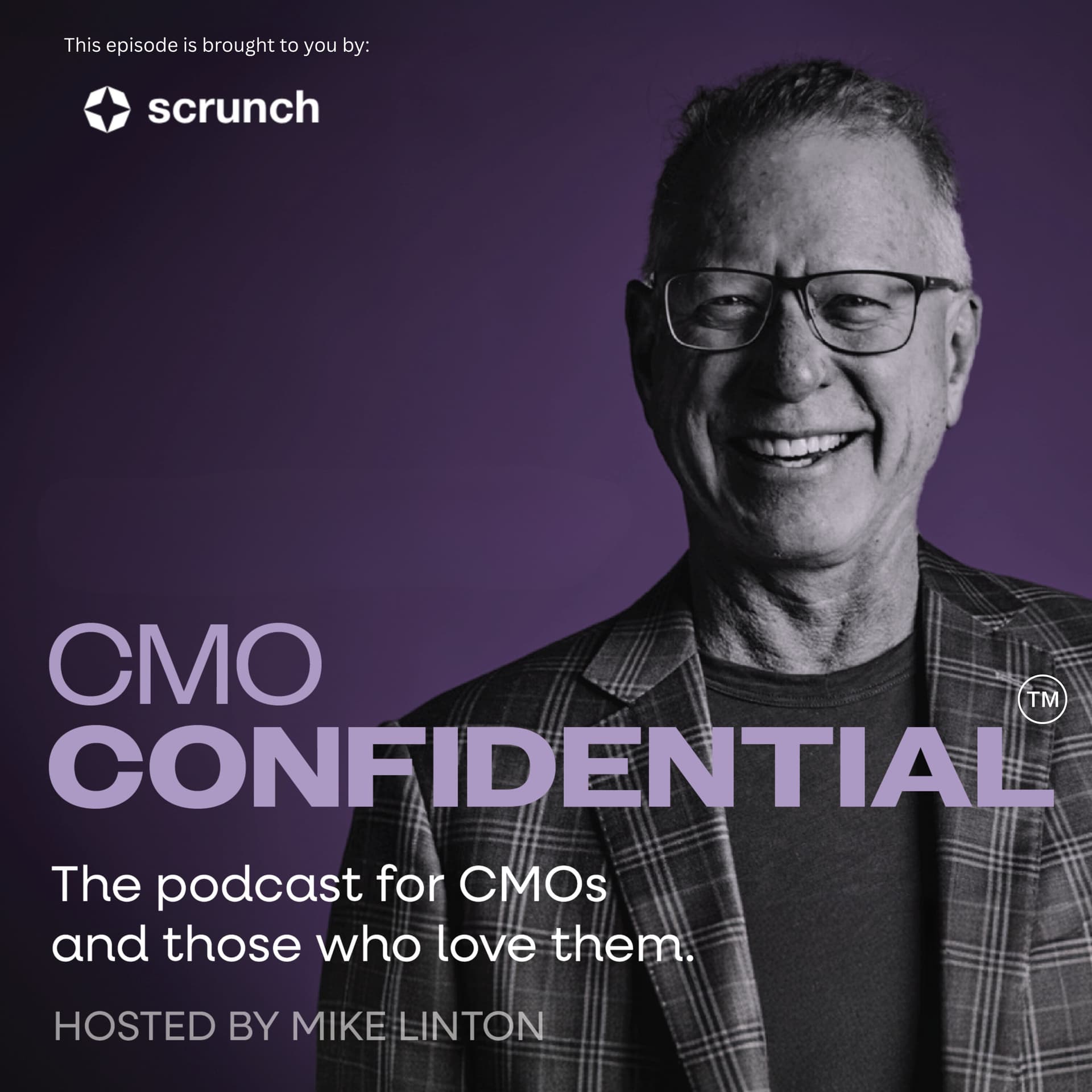
CMO Confidential Podcast Episode Summary
Podcast Overview
- Title: CMO Confidential
- Host: Mike Linton, former CMO of Best Buy, eBay, Farmers Insurance, and Ancestry.com.
- Description: The podcast explores the challenges and experiences of being a CMO, discussing the complexities of marketing decisions, budget management, team leadership, and navigating the fast-paced world of marketing.
Episode Details
- Episode Title: Pete Imwalle | Former CEO, RPA | Agency Economics in the Age of AI
- Guest: Pete Imwalle, former CEO of RPA and board member of 4A's.
- Episode Focus: Discussing the impact of technology, particularly AI, on agency economics, headcount, and the future of marketing.
---
Key Topics Discussed
1. Agency Economics and AI
- Shift in Agency Headcount:
- Tech Changes: Historically, tech advancements led to increased agency headcount.
- AI Impact: AI is reversing this trend, leading to smaller teams and reduced costs.
- Valuation Declines: Many agency valuations have dropped significantly in the past five years, approximately 40% decline noted.
2. Brand Building
- Infrastructure Analogy: Building a brand is likened to creating infrastructure; it's essential for long-term success but often neglected in favor of short-term gains.
- Publicis Example: Publicis is highlighted as an outlier, successfully leveraging AI in its operations.
3. In-Housing
- Debate on In-Housing:
- Many companies consider bringing marketing functions in-house to save costs.
- Importance of recognizing that in-housing requires significant investment in tools and analytics that agencies typically provide.
4. AI Dynamics
- 2nd Mover Advantage:
- Agencies that are not first adopters of AI tools may have a strategic advantage by learning from early implementers.
- Challenges and Opportunities:
- Agencies face pressure to reduce headcounts while still meeting client demands.
- AI presents opportunities to streamline processes and reduce costs.
5. Future of Agencies
- Agency Types:
- AI-Native: New agencies built around AI; high margins and small teams.
- AI-Emergent: Traditional agencies that adopt AI to enhance their services; likely to survive and thrive.
- Obsolete: Agencies that fail to adopt new technologies; likely to go out of business.
6. Recommendations for Agencies
- Testing and Innovation:
- Agencies should focus on low-hanging fruit and repetitive tasks that can be optimized through AI.
- Cultivating a culture of curiosity and adaptability is essential for future success.
---
Conclusion
- Final Advice from Pete Imwalle:
- Reject the notion of "future-proofing" and instead focus on building a team that is adaptable and curious.
- Emphasize the importance of honesty and collaboration between agencies and clients, especially in leveraging new technologies.
---
Key Takeaways
- Emphasizing long-term brand building over short-term performance metrics is crucial for sustainable growth.
- The rise of AI necessitates a reevaluation of traditional agency structures and pricing models based on headcount.
- Agencies must be proactive in adopting AI tools to remain competitive and profitable.
- Successful navigation through the complexities of modern marketing requires a focus on innovative and efficient practices.
---
Tags
- CMO Confidential, Marketing Leadership, Agency Economics, AI in Marketing, Brand Building, In-Housing, Marketing Strategy, Digital Transformation.
For more insights, subscribe to the CMO Confidential podcast available on Spotify, Apple, and YouTube.
Written by AI. May contain mistakes. Listen to the episode to check what was said.
Chapters
Tap a time to open that second in VOAgency Economics in the Age of AI
2:15 to 2:56
Discussion on changes in agency economics over the past decades.
“Today's topic, agency economics in the age of AI.”
The Evolution of Digital Marketing
2:56 to 4:04
Exploration of how digital marketing has transformed consumer behavior.
“So yeah, that campaign did win a lot of Effies, and I am super proud of it.”
Key Changes in Marketing Strategies
4:04 to 5:05
Insight into how agencies adapted to digital and mobile changes.
“I think my career and a lot of yours hit at just the right time for the biggest change in a 30-year history of marketing.”
The Role of Leadership in Agency Success
5:05 to 9:01
The importance of leadership's willingness to adapt in agencies.
“It wasn't core to anything we did for business.”
Challenges Facing Agencies Today
11:29 to 14:01
Discussion on financial pressures and the perception of advertising.
“Yeah, and you're wasting a lot of reach there too, usually, unless you are a very, very broad reach brand.”
Marketing Performance and Brand Building
14:01 to 15:00
Explore the challenges of performance marketing versus brand building.
“you're going to juice things for this quarter, but it's going to get more and more expensive.”
The Future of Agencies in the Age of AI
15:01 to 18:00
Discuss the implications of AI on agency workflows and economic models.
“Tell us your assessment of all of that stuff I just popped out.”
Client Expectations and Agency Relationships
18:01 to 19:41
Analyze client expectations regarding efficiency and pricing models in agency relationships.
“No, I think that's, I mean, clients are expecting it.”
Types of Agencies in an AI-driven World
19:42 to 21:02
Examine the three types of agencies as AI transforms the landscape.
“There's always a tension between the agency wanting more people, both to do the work, to make the work easier to do for the number of people they add, and to make more money so they can grow their teams and people.”
The Need for Automation in Agencies
21:03 to 23:03
Understand the necessity of automating repetitive tasks in agencies.
“That's the biggest challenge we have right now is the labor means your price is higher.”
Show all 18 chapters
Market Trends and Agency Valuations
23:04 to 24:29
Discuss current trends in agency valuations and their implications for the future.
“What I mean is there's so much data pulling and grunt work that's done before the human intervention and value add.”
The Second Mover Advantage in AI
24:30 to 26:19
Explore the concept of second mover advantage in the AI landscape.
“So if you look at just pure valuations, a lot of them are down 40 % over a five-year window.”
Building Successful Client-Agency Relationships
26:20 to 28:00
Learn strategies for fostering transparency and collaboration in agency-client relationships.
“How should the agencies be talking to clients?”
The Balance of Automation and Employment
28:00 to 29:19
Explore the impact of AI on agency employment and the balance of automation.
“So to me, the thing that I would look at first is that low-hanging fruit of build agents that replace the repetitive labor-intensive work that you do.”
In-Housing vs. Outsourcing Marketing
29:20 to 30:59
Discuss the advantages and challenges of in-housing marketing functions.
“Talk about in-housing and your thoughts on that.”
Build vs. Buy: The Right Marketing Tools
31:00 to 32:39
Learn the considerations for building or buying marketing tools and solutions.
“But just remember, some of those things that you invest in, you might build a team for Programmatic Today and programmatic today might be completely AI driven next month.”
Embracing AI for Future Success
32:40 to 35:56
Understand the importance of adopting AI in marketing and change management.
“when you and I look at marketing investment, we're thinking about what's the best return on investment we can get for this dollar.”
Redefining Future-Proofing
35:57 to 36:50
Challenge the notion of future-proofing by focusing on adaptability and curiosity.
“to our traditional last question, it's a two-parter.”
Transcript
Automatic transcript. May contain errors.0:00The CMO Confidential Podcast is a proud member of the I Hear Everything Podcast Network. Looking to launch or scale your podcast? I Hear Everything delivers podcast production, growth, and monetization solutions that transform your words into profit. Ready to give your brand a voice? Then visit IHearEverything.com. Welcome to CMO Confidential, the podcast that takes you inside the drama, decisions, and choices that go with being the head of marketing. Hosted by five-time CMO Mike Linton. When is the last time you researched something on a website? If you're like most people, AI did that work for you.
0:42And that raises a question. If AI is doing the work, what is your website really for? This behavioral shift means AI bots are becoming your most important new visitors. A challenge our sponsor, Scrunch, is taking head on. Scrunch is the customer experience platform that helps you understand how AI agents experience your site, when and why they show up, and what's blocking them from being retrieved, trusted, or recommended. Scrunch shows you the content and citation gaps and technical blockers and helps you fix them so your brand shows up when consumers start with AI, because your most important site visitor might not be a human.
1:28For our listeners, Scrunch is providing a free website audit that uncovers how AI sees your site and how you're showing up in AI versus the competition. Run your site through it at scrunch.com slash CMO. Welcome marketers, advertisers, and those who love them to Chief Marketing Officer Confidential. CMO Confidential is a program that takes you inside the drama, the decisions, and the politics that go with being the head of marketing at any company in what is one of the most scrutinized jobs in the executive suite. I'm Mike Linton, the former chief marketing officer of Best Buy, eBay, Farmers Insurance, and Ancestry.com, and I'm here today with my guest, Pete Imwala.
2:15Today's topic, agency economics in the age of AI. Now, Pete worked at RPA, one of the largest independent agencies in the U.S. for over 32 years, most recently as the CEO. RPA has over 500 employees and some notable clients, including Honda, Apartments.com, and Lazy Boy. He also served on the board of the 4As. Full disclosure, I worked with Pete during my time at Farmers, which included that Professor Burke, we know a thing or two since we've seen a thing or two campaign, probably the creative I am actually most proud of in my career. Welcome to the show, Pete. Thanks, Mike. It's great to be here.
3:02I've been looking forward to this discussion I also regard that Farmers Campaign as one of the favorites of my career and I'm sure you heard that it recently won the sustained Effie for 10 years of effectiveness excellence creative people love Clios and Cannes Awards and all those things but I think as business people we love the Effies because they demonstrate effectiveness not just creativity you actually have to have business results attached to the creative to win an Effie. So yeah, that campaign did win a lot of Effies, and I am super proud of it. And I want to start by saying congrats on a great run.
3:4032 years is an accomplishment for anybody. And I think you're in the catbird seat to be able to track the agency business through all the technology transformations, including digital, mobile, and now the age of AI. Give our listeners the cliff notes on how things have changed over the last three decades. And then we'll drill down into a couple of these things. Yeah, it's funny. I think my career and a lot of yours hit at just the right time for the biggest change in a 30-year history of marketing. If you look at this period, all that happened with digital has changed everything we do and the way we do it.
4:23I started at RPA in 1993, and it just happened to be the year that we actually added the Prodigy Network to the media plan. And when you think about it, the early days of the internet, people think was the World Wide Web, but the early days of the internet for most consumers was one of three flavors, Prodigy, AOL, or CompuServe. And each of them was basically a walled garden that you could get into and look at their content. But it wasn't until later in the 90s when the Netscape Navigator came along and all of a sudden there were browsers that let the average person go to websites. In the early days, if you think about it, we used to call it web surfing because it was a hobby and curiosity.
5:07It wasn't core to anything we did for business. I always think that things that become core to business are the things that actually change consumer behavior. And I don't think consumer behavior really changed in the digital space until two things happened. One, Google came along and made it easy to find what you were looking for. There were search engines before that, but they didn't work quite as well. The other thing that happened was in the mid 90s to 2000s, we started to get more and more broadband. And it wasn't until everybody could just turn on their computer or pick up a phone and be on the internet that it changed the way people actually behave.
5:47Before that, you had to dial up and get information. It was faster to get movie information from the newspaper than to wait for your modem to connect to AOL. Oh, I used to make that. And now, so we'll move from the Wayback Machine, we'll move up to, and then mobile first. So the game changed digitally and then mobile comes on and changes everything on top of that. I think that's the next big wave. And, and then, yeah. Yeah. And I think when mobile came along, a couple of things happened with clients and agencies. There were a lot of clients and agencies that didn't jump into that first wave of digital.
6:31right because you're like oh my gosh we can't if someone else will figure it out it's really slow right i don't want to make the mistakes i don't want to learn on my dime let somebody else do it the funny thing is over the last 30 40 years that's completely changed now everybody wants to be first and be early adopters because they want to get credit for that but in those when mobile came along there were a whole bunch of marketers who said i got to be first at this we got to be we're going to have a mobile first strategy i hate the idea of a mobile first strategy or an AI first strategy or, you know, your strategy should be about your product and your market situation, not whatever's trending right now.
7:11And if you really look at it, mobile changed a lot because now that computer that you used to connect to the internet on was in your pocket and available. And you talk about always on now it's always on and always with you. So I think the biggest changes have happened since that. And then, you know, obviously we're in AI, which we'll talk about in a minute, but you got the agencies on the other side of this. You got the marketers, companies working on all this stuff. And now put us in the seat of the agencies. How did they adapt? And when you look back on the strategic and executional wins and losses agencies made during these revolutions?
7:54What goes through your head? Well, to me, I think that the biggest key to success in those early days of digital, and it continues to be as every new technology comes along, is you've got to have ownership and leadership that has a willingness to adapt and change. I always had a little bit of a techno geek in me, so I love the digital playground. But I think when I look at the people who helped build the early days of digital, they weren't all geeks and nerds. They were just curious and open-minded. They were people who weren't satisfied that the status quo was going to be the best way to do it forever.
8:29They were people who dug in and saw the opportunity in new things and embraced them. I think the agencies that adapted best had that tolerance for experimentation and failure. And there was all kinds of pressure on the creative and then the cost and then the speed and then the can you actually keep up with the marketplace? What made the agencies that kept up the ones that kept up versus the ones that disappeared or got bought up? What were the big differences? So I think it was basically that idea of the leadership being willing to invest in things that weren't paying off yet. For me, I always looked at the idea of the internet and digital advertising as when I went to our owners, Jerry Rubin and Larry Poster and wanted to make an investment.
9:20I would say, we think this might be a huge part of our business in the future. And that becomes both an offense and defensive play. You need to be there for the growth with your current clients, but you also need to make sure you have those skill sets so that your client doesn't need to go hire the next new digital boutique to do those things that might become core to the business. So in retrospect, I think it was pretty sound to look at what might be and invest along the way. What I don't like is the idea of trying to guess where that next thing will be and build everything and put all your chips in on that.
9:56Yeah. Those kinds of decisions can can turn against you in the long run. But digital really changed so much when you think about it. The the early days of digital back in 1993, where I started talking about it, we could reach 40 percent of America by being on Cheers. and today the only place you can get 40 % of America is the Super Bowl and how many marketers can afford$7 million for a 30-second commercial or$14 million if you actually want to get noticed with a 60. We are taking a short break for a word from our sponsor, Scrunch AI. Over the weekend, I asked AI to do dozens of things for me. Please help me make this dishwasher start working.
10:39Settle a debate between me and my partner. Is it safe to sleep at 80 degrees? It's not. Please help me find a robotics kit for a five-year-old operating at a middle school level. And even help me compare the Scrunch Agent Experience platform with Adobe's LLM Optimizer. In every one of these interactions, I never once visited a website. In this day and age, what's your website actually for? The truth is almost everything on your website is now for AI consumption. The Scrunch Agent Experience platform helps manage, optimize, and deliver content directly for AI to retrieve.
11:28Now back to our show. Yeah, and you're wasting a lot of reach there too, usually, unless you are a very, very broad reach brand. So now we get to AI and you're watching agencies deal with this, like so much change at so much speed. And then we'll talk about the economics in a little bit. But when you look at AI and how it's impacting agencies and also the headcount structure, the creative changes, tell us what's going through your head. Well, there's a number of factors that are making life difficult for agencies right now. And AI is just one of them. I think the biggest challenge for agencies, I think, financially is the one that you've covered extensively, which is there are fewer and fewer people on boards and in C-suites who actually believe that advertising is an investment.
12:20They think about advertising as an expense. And I think that's partly because there are more lawyers and accountants on boards and fewer people who came up through the product and marketing side. And I think it was much more common to have people who believed in advertising. The other challenge is that we're in this short-term financial model where everybody's looking at this quarter. And when you think about it, this quarter, really, if you're thinking about what do I have to do to make this quarter good, you're making short-term decisions. VCs are always looking at not what's the best thing to run this business over the next decade.
12:59They're thinking about what do I do to make this property value up? So when I flip it to private equity. When I do the next amount, I get another amount or I get out or I do an IPO and then I'm out. Right. So their only existence is about maximizing the valuation of the company, not building a product or service that's better. Private equity does the same thing. They just try to maximize the valuation so they can flip it either to an IPO or another private equity. They trade them back and forth. there are fewer and fewer people running companies who are actually trying to create the best product and service and more people trying to make a good earnings call this quarter.
13:38If you're a CMO or a CEO, diverting dollars into brand advertising is a really difficult thing to do. Brand advertising is like infrastructure. If you have it, it's really easy to market. It's really easy to sell. It's really easy to build. If you don't have that infrastructure of brand advertising, and you put all your money at the bottom of the funnel, you're going to juice things for this quarter, but it's going to get more and more expensive. You need more sales, more incentives. Brand building will help the next CMO, but not necessarily me. Well, and it's like trying to get fit in one quarter.
14:14If you're out of shape and you decide, I'm going to get fit in one quarter, it's really, really challenging to do it, even though we know Rocky did it. But I guess the other thing, We've had a couple shows on this, and I'd love your thoughts on it. The first was performance marketing is one of the biggest brand misleading things in history, because all marketing should be performance marketing, but it actually squeezed out a lot of the brand money. And then the second thing we had, the head of the Marketing AI Institute, Paul Reitzer, come on and talk about AI is going to be an extinction event for a lot of agencies, particularly the ones that are wed to the branding stuff.
15:02Tell us your assessment of all of that stuff I just popped out. Well, first off, I thought the interview with Paul was great. And it's funny, looking back, that was a couple of years ago. Yeah. And a couple of years ago, his predictions were pretty right on. He talked about the idea of agencies needing to adapt or die in this model. And we talk about adapt or die all the time in business. But this is one of those ones where I believe it's true. In my opinion, that transition to AI-powered workflows and agentic solutions is the answer to many of those challenges I just outlined. Labor pools keep growing.
15:43As the digital expansion happened, we've got so many bodies that are required to do all the different tasks. When you talk about performance marketing, when you talk about programmatic search, they're all driven by data and teams of resources. Those teams of resources are growing faster than media budgets are growing. So clients can't afford all the labor that it takes to use all these new tools we're using. agents solutions from ai and automation are actually potentially the solution to all those things that are ailing the agencies we're having trouble making money because we've been growing faster from a body count point of view than we have from a financial point of view and one of the biggest if the biggest expense at agency is headcount right it's by most agencies are 60 to 75 percent salaries.
16:38That's the whole story. Yeah. So this adopt or die thing, which everyone says they're going to do, but this adopt or die thing means you have to cut that line item. And that is really a challenge, right? Yeah. And I think the biggest thing to me, I've been really excited about the AI opportunity for agencies, because for me, one of the problems is there's always a way to do it with fewer people than the best way, the way that takes all those bodies. But generally that way was cutting corners. It was finding a way to limit exploration or ideation. The thing about AI is it's going to take away a lot of the blocking and tackling and the time, you know, the really, really time intensive tasks.
17:25If those things can be shrunk, then there's more time for the thinking. If you think about it, there's so much work that's done in media and strategic planning before we ever even buy or create anything. Oh yeah, huge amounts of work. Those days and hours that are taken up, a lot of it is just pulling all the information that a strategist or planner needs so that they can make educated recommendations. If you can create an agent to pull all the sources that you generally tap into for a strategic plan, you can create an agent to do that it would put you on third base you jump right to the part where i use my brain instead of pulling data i'm just looking at it but this is this is a dramatic change for a huge amount of agencies because it says you have to be able to do this with the new tools you have to have faith in the new tools and you have to lose the heads at somehow simultaneously while you're doing this because your clients expect you to do all this, right?
18:31Yep. So this is the agency. Oh, go ahead. No, I think that's, I mean, clients are expecting it. And it's funny because I think clients are getting directions from their board CEOs and lawyers saying two things. Get us the savings that will come from this cheaper workflow and cheaper production, but don't do anything that will risk our IP or data. and so they're hesitant but hopeful and i think that we're at that point where we really can give clients more work for the same or less money than they've already paying because we really can shrink that work one of the biggest challenges though is that almost all client agency relationships are based on ftes yeah procurement people love ftes the problem with ftes in an ai transformation.
19:23And that's full-time equivalent if you're keeping score. Right. You're de-incentivizing efficiency. Yes. You're saying the bigger your team is potentially, if you can sell that big team, you make more money. What we really want is a way to say, let's pay for the outcomes. Let's pay for the deliverables, not let's pay for the bodies and the headcounts. There's always a tension between the agency wanting more people, both to do the work, to make the work easier to do for the number of people they add, and to make more money so they can grow their teams and people. I believe that AI is the way that we can do all the work that our clients need and keep those costs manageable and down.
20:06Well, inherent in what you have just said is agencies that don't do this will either have a massive profitability squeeze because the clients will be shopping or they'll go out of business. Is that a fair way to look at it? I believe so. I think your conversation with Paul was really interesting in that he broke it down and said there's three kinds of agencies in the future. AI native, those agencies that are new, they're built from the ground up with AI at their core. They have high margins, small head counts. They move fast. AI emergent, existing agencies that aggressively adopt AI to transform their services and business models.
20:47They'll survive and potentially thrive. And I think that's where the majority of agencies will be, some more emergent and faster than others. And then there's the obsolete, the agencies that ignore AI or wait too long to adapt. they will quickly see that their scope of work can't be done at a competitive price to their competitors who are using these tools. That's the biggest challenge we have right now is the labor means your price is higher. So if you want to do things by hand, you can, but they're going to cost more and then no one's going to choose you. And give me a breakdown for, you know, AI native versus emergent versus out of business.
21:28when you just look at the whole agency landscape, go out like four or five years and say, how many will be in each category? Like what percent of business or anything like that could you give me just? I don't know. It's hard to say, but I would say there will be no big and successful agencies that are doing it all by hand that aren't using tools. They're just, it takes too much labor to do the work today. So there are so many teams of people that are taking existing data from one source and pasting it into another source and then running analysis of those tools. All of that can be shrunk into an agentic solution that automates.
22:12So I think that there's a couple of things here. There's a lot of agencies that are waiting for the big new AI tool that comes to them like the Office Suite, right? Where you hand me the tool and now I just have to learn the tool and use it. And I've been saying for the last three years, we developed a task force three years ago and said, okay, start experimenting, start learning, start educating the rest of us so that we can stay up on this and make the investments where it makes sense. The biggest place that I see investment opportunities turn into better business right away is in the low-hanging fruit of what are the repetitive tasks.
22:53Media planning is thousands of hours of data. It's thousands of hours of pulling data from known resources. And I don't mean that there's no human intervention or value add there. What I mean is there's so much data pulling and grunt work that's done before the human intervention and value add. That part can all be shrunk. If you're not shrinking that right now, you're not going to be here in five years. It's just, you won't be competitive. You'll just be too expensive in the way that you work. And you'll get to faster, better solutions with these tools that give your people more time to think and ideate.
23:31And then when I look at the landscape, I think there's been, you know, just we hear from a lot of our listeners that Publicis has been doing pretty well and is moving pretty hard on this front. the merger of Omnicom and, you know, that may not be, it may not work as well as hoped or on paper. And a lot of this is open field for, you know, bidding on business and moving stuff around. How do you look at that landscape? Yeah, I'm really curious to see how the holding company model changes. I do think Publicis, by all measures, has done the best job of the major holding companies in integrating these tools and selling clients on their solution.
24:21Agency valuations are down dramatically over the last five years, and part of that has to do with the other things we've been talking about, COVID. When you say dramatically, what percentage is that? So if you look at just pure valuations, a lot of them are down 40 % over a five-year window. Now, the only one that's actually up over a five-year window is Publisus. And that has mostly to do with media buying investments. If you look at where their business growth has come, it's mainly been around media and data investments. So those media data investments they made and they have been able to capitalize on those better than the other holding companies.
25:06I think that one of the challenges, though, and one of the interesting things about this is there's this, I saw an interesting article the other day that was talking about in AI, there may be a second mover advantage, which I love that we create terms for. I wasn't first and I wasn't last, but being second is probably. I've always thought that being inside the bleeding edge of development was a safe, smart place to be. And I think that's what the second mover thing is. When you think about it, the AI tools like the early days of web browsers, you'd build your website for Netscape 2.0. By the time you finished it, you needed Netscape 3.2.
25:48And today we're in the same thing where people that built all their agent tools and AI solutions two years ago, good, you were ahead of the game. Bad news is the tools to do all those things today are readily available right out of the box. You don't have to build all that stuff. And the people trying to build it to catch up have an easy task ahead of them. because we just had a venture capitalist on talking about no one knows how much compression is going to come on this and the circular trading of money and investing may all be for not if you find a whole new technology for processing so there's lots of lots of things to watch so So what should our listeners be thinking about as they evaluate their agency or do their pitches or they're working with their agencies or vice versa?
26:50How should the agencies be talking to clients? Well, for me, I think the most important thing you can do when looking at these new tools is there's a lot of misinformation. There's a lot of expectation. There's a lot of fear that you're going to be doing things with AI and charging me for labor. There's a lot of fear that people will be in housing. To me, the most important thing in any good client relationship between agencies and clients is just honesty, integrity, sharing where you're at, looking at the challenges, sharing some of those expenses, sharing some of the learnings. One of the things that's good about an agency for a client is that generally an agency has this same experience and learning curve going on with 15 or 20 other clients.
27:39That learning can benefit you. So being open to the idea of, hey, we did this for farmers, it might work for you. We did this for somebody else, it might work for you. Or we saw that this didn't work for apartments.com. I wouldn't want you to make the same mistake. Those are all good things, but I think there's legal challenges. There's development challenges. So to me, the thing that I would look at first is that low-hanging fruit of build agents that replace the repetitive labor-intensive work that you do. Be open and honest about it. Find a pricing model that works. The agency should be able to build an agent and use it for less than they're charging for all the FTEs right now if it's truly done well in replacing a lot of labor.
28:24At the very least, let the agency keep the same fee and start replacing people with tools. Now, I know that sounds Machiavellian, that we're just getting rid of jobs and we're going to replace them with people. But the reality is the agencies and the client structures that replace people with tools will protect most of their people. The agencies and clients that don't want to replace any of their people with tools will protect none of their people from the future. So to me, we've got to keep finding that balance. And this to me is the marketplace. You can't, the marketplace is going to do this, whether you do it or not.
29:05So you, you probably, it's like gravity. You, you, you know, you've touched on something here that I want to follow up on, which is a lot of companies are thinking about in-housing a lot of this stuff saying, we'll just do it ourselves, these agencies aren't fast enough, or we're not big enough to do it. Talk about in-housing and your thoughts on that. So in-housing has been really interesting. For the last five years, I think every ANA event I've been to, they talk about in-housing. And I think where the pressure to in-house is coming from goes back to the earlier discussion about advertising is expensive.
Read the full transcript
29:43And if it's looked at as an expense, not an investment, we definitely want to figure out how to spend less. So I think there's this sense of if we did these things ourselves, we could save money. Now, I think there's two points of view on that. One, there are some things that clients can do themselves that they're paying outside people for. But I do think that CFOs and boards and CEOs that are pushing this are sometimes forgetting that it's not just the programmatic or performance marketing team you need, you need the data analytics team that comes behind it. And you need the licenses for Simmons and MRI and Nielsen and all these tools that agencies have that they share and amortize over many clients.
30:28I would say the place to take things in-house are those things that you can own where you're not missing out on the skill sets that agencies amortize over lots of clients. There's lots of production work. There's lots of versioning work. There's lots of data management work that clients can take in-house. I think there are some clients who can take all their marketing in-house. I would say, look at those places that you think you can actually replicate internally for the same or lower cost and look at that. But just remember, some of those things that you invest in, you might build a team for Programmatic Today and programmatic today might be completely AI driven next month.
31:11Yeah. Everyone was buying all their own ad servers a number of years ago. So if you build those tools, you're going to have to rebuild all of them. Even as an agency leader, I always looked at, is this something we should build or something we should buy? If it's something that like MediaOcean is the big one or NetSuite, big programs that lots of agencies buy. Well, you buy them because even though you probably have the technical skills to build those things, it's this much of what you do. Some other company that builds that tool can amortize those development costs over thousands of clients. So they're going to be able to keep investing in it and stay at the front of the marketplace.
31:50If we build it ourselves, we're going to build it, and then it's going to degrade over time, and we're going to have to build it again or then buy it. So I always think that build versus buy solution is a good one. And I think that's a good one. And beneath that, I hear you saying, look, there's economies of scale here where a lot of the things you may have to build give you no edge. They're just infrastructure things. And that you should be really aware of when it's just an infrastructure economy of scale versus some kind of thing you think you have to own because you're going to drive the cost down.
32:25Yeah. And I think it's interesting. I was just doing some research on consulting in this space. And one of the things that I've seen within housing is that it's frequently driven purely by efficiency. And again, back to our earlier conversation, when you and I look at marketing investment, we're thinking about what's the best return on investment we can get for this dollar. If you look back in the early days of Geico, Warren Buffett bought that company and said, what's keeping you from growing? And they said, well, every time we advertise, we see spikes, but we can't afford to keep advertising.
33:04So So we get this up and down whenever we can advertise. And he's like, okay, well, here's 100 million more. Advertise more and let's see how it goes. Those spikes kept happening every time they advertised. So they went from$100 million to$1.3 billion in investment before they actually saw a lack of return on that additional investment. Right. Sadly, I was playing against them then. And they were just like, they were, I mean, the most expensive category, I think, in the marketplace was insurance. Hey, so Pete, before we get to our traditional last question, and you're talking to all the agencies and marketers out there, what should people test by the end of 2026 or a list of things they should absolutely test so they have a better view of 27?
34:00So I think the thing to test is, first off, if you're not already deeply involved in this digital transformation to AI tools, obviously that's where it starts. I think the thing that people have to realize is we need to look at it from top down. You have to have senior management involved in AI and indoctrinating and pushing people because what you've got are lots of different people who adopt to new innovation differently. And you have some people who think, I have this curiosity, I want to learn about it, what can this tool do for me? You have other people who think, will this replace me? Yeah.
34:39The most valuable people are the people who think, what can I do with these new tools? And the biggest lifts that we've gotten from AI and the places that I've been involved is from people figuring out how to adopt AI in their current workflow. Just look at the current workflow, we started by asking people, we went on, had an offsite and we asked everybody before the offsite, spend the next three weeks asking your teams what their biggest pain points are for work, just work in general. Don't tell me what AI tools you need. Tell me what isn't working. Tell me where you're spending a lot of time and labor that doesn't seem valuable.
35:15And they came back with almost everything they came back with was tedious work that automation could solve. Those tedious things that automation could solve are the first wins. You can solve them easily. You can get wins. You can build momentum. And you can teach those people who thought maybe my job will be replaced by this. Instead of resisting it, I'll be one of the people who learns how to adopt it. So to me, there's a big, big need for culture and change management. You got to get people into the idea that these tools are coming, whether you like it or not. So be one of the people that learns how to use them instead of one of the people that resists them.
35:55I think a great way to bring us to our traditional last question, it's a two-parter. You have to take one or you can take both, but you must take at least one. Practical advice we haven't discussed yet and or the funniest story you can tell on the air. Yours to go with at least one of those two things or both. So there's lots of funny stories. I think the challenge is almost all of them would embarrass somebody and most likely me. You're okay with that on CMO conference. I'll go with the practical advice because one term I hear in business in general, in marketing, and definitely as it relates to digital transformation and AI is this idea of future proofing.
36:43I hear it all the time, and I hate the term future-proofing because what future-proofing generally means is I have to look into the crystal ball, predict what the future will be, and then build for that solution. The problem is nobody has a crystal ball. We haven't been good at figuring out what's going to happen in 2027, in 2025. five. So for me, the most important way to future-proof yourself is not try to guess and use clairvoyance, but it's to try and appreciate and support the people who are curious. Build a team of explorers instead of a group of people who want to build to what they think the future will look like.
37:24And if you have people that work together and are curious and are continually learning, you're going to have a team that can compete with anybody in the future. So So for me, future-proofing isn't jumping to the future. It's building a team that's adaptive. It's building a team that you can support through thick and thin. They're not always going to get it right, but they're going to get it right more often than they're going to get it wrong. They're going to get a lot more right than the future-proofers who, if three and a half years ago had predicted the AI revolution, no one actually predicted that.
37:57So a lot of future-proofing is, I think, pretty hilarious. and sage advice. Thank you, Pete. And thanks to everyone for listening to CMO Confidential. If you're enjoying CMO Confidential, like, subscribe, and share. New shows drop every Tuesday on Spotify, Apple, and YouTube. Our catalog gives you access to over 150 shows, including What Your Agency Wants to Tell You But Won't, parts one, two, and three. Colonel Mustard, in the study with the job spec, how poor design is shortening CMO lifespans. Is AI an extinction event for agencies? And is the CMO position the hardest job in business? Hey, all you marketers, stay safe out there.
38:44This is Mike Linton signing off for CMO Confidential. When is the last time you researched something on a website? If you're like most people, AI did that work for you. And that raises a question. If AI is doing the work, what is your website really for? This behavioral shift means AI bots are becoming your most important new visitors, a challenge our sponsor, Scrunch, is taking head-on. Scrunch is the customer experience platform that helps you understand how AI agents experience your site, when and why they show up, and what's blocking them from being retrieved, trusted, or recommended. Scrunch shows you the content and citation gaps and technical blockers and helps you fix them so your brand shows up when consumers start with AI, because your most important site visitor might not be a human.
39:40For our listeners, Scrunch is providing a free website audit that uncovers how AI sees your site and how you're showing up in AI versus the competition. Run your site through it at scrunch.com slash CMO.
From the publisher
A CMO Confidential Interview with Pete Imwalla, former CEO of RPA and 4A's board member. Pete shares his take on how many tech changes resulted in additional agency headcount, how AI is rapidly reversing that trend, and why many agency valuations have dropped significantly over the last 5 years. Key topics include: why brand building is like infrastructure; how Publicis is bucking the trend; how to think about "in-housing;" and why Paul Roetzer's CMO 2023 CMO Confidential show was prescient. Tune in to hear about the "2nd mover advantage" and why he hates the concept of "future proofing."
Agency economics are getting rewritten in the age of AI. Mike Linton sits down with Pete Imwalle 32-year RPA veteran and former CEO to dissect what’s changing—and what leaders should do about it. They cover the shift from reach to relevance, why FTE-based fees are misaligned in an AI world, how to separate automation from actual advantage, and where in-housing does and doesn’t work. Along the way: the sustained business impact of the Farmers “We know a thing or two…” campaign, the rise of agentic workflows, and why “future-proofing” starts with culture, not clairvoyance.
Chapters
00:00:00 – Cold open + show setup
00:00:22 – Mike’s intro, Pete’s background, and today’s topic
00:01:18 – Farmers campaign wins Sustained Effie) and effectiveness creativity
00:02:18 – 30 years of change: from Prodigy/AOL/CompuServe to Netscape and the open web
00:03:24 – Google + broadband: when digital finally changed consumer behavior
00:04:33 – Mobile’s second wave and the trap of “mobile-first/AI-first” strategies
00:06:01 – How agencies adapted: leadership, curiosity, and tolerance for experimentation
00:07:42 – Investing ahead of revenue: offense + defense in capability building
00:08:22 – Reach fragmentation: from “40% on Cheers” to only the Super Bowl
00:09:18 – The real squeeze: boards treating advertising as expense, not investment
00:10:13 – Short-termism, PE/VC incentives, and brand vs. performance
00:12:21 – “Adapt or die”: AI as an extinction event? (hat tip: Paul Roetzer)
00:13:28 – Agentic workflows: shrinking grunt work (esp. media & strategy ops)
00:16:00 – Client asks: “give me savings, don’t risk my IP”
00:16:36 – Why FTE pricing disincentivizes efficiency; pay for outcomes instead
00:17:51 – Three futures: AI-native, AI-emergent, or obsolete
00:21:39 – Holding-company moves; why Publicis is outpacing peers
00:22:00 – Agency valuations: ~40% decline over five years; second-mover advantage in AI
00:26:37 – In-housing: when it works, when it backfires, and true cost to own
00:28:48 – Build vs. buy: amortization, maintenance, and staying current
00:30:16 – The Geico lesson: investing through the curve until returns flatten
00:31:22 – What to test by EOY 2026: culture, change management, and low-hanging automation
00:34:02 – Ditch “future-proofing”; hire for curiosity and adaptability
00:35:35 – Wrap + where to find more CMO Confidential
Tags
CMO Confidential,Mike Linton,Pete Imwalle,RPA,agency economics,advertising,marketing leadership,AI in marketing,agentic workflows,media planning,marketing strategy,brand vs performance,FTE pricing,procurement,in-housing,holding companies,Publicis,Omnicom,Super Bowl ads,Effie Awards,Farmers Insurance campaign,Geico case study,change management,digital transformation,marketing AI,MarTech,measurement,short term vs long term,CMO,CEO,CFO,board governance
See Privacy Policy at https://art19.com/privacy and California Privacy Notice at https://art19.com/privacy#do-not-sell-my-info.